From camera obscuras and anamorphic images to paper theaters and Kinora reels, early optical devices transformed art, entertainment, and visual perception before cinema.
Encompassing a highly unusual grouping of optical and perspectival devices, vues d’optiques, and games, this rare collection charts the nature of visual perception in European culture in the 18th and 19th centuries. Objects range in subject and date from a French camera obscura (ca. 1700) executed in the shape of a folio volume to common period items such as Kinora picture reels, which entertained mass audiences in their time but survive today in limited numbers.
The collection includes over 100 megalographs, which demonstrate the importance of projected images in the late 18th century, numerous 18th-century anamorphosis watercolors with their original cone or cylinder viewers, collapsible paper Engelbrecht theaters dating from the mid-18th century, and such fundamental viewing devices as a camera lucida, a Lorrain mirror, and a hand-held camera obscura. Such tools were the basis of artistic practice for two centuries.
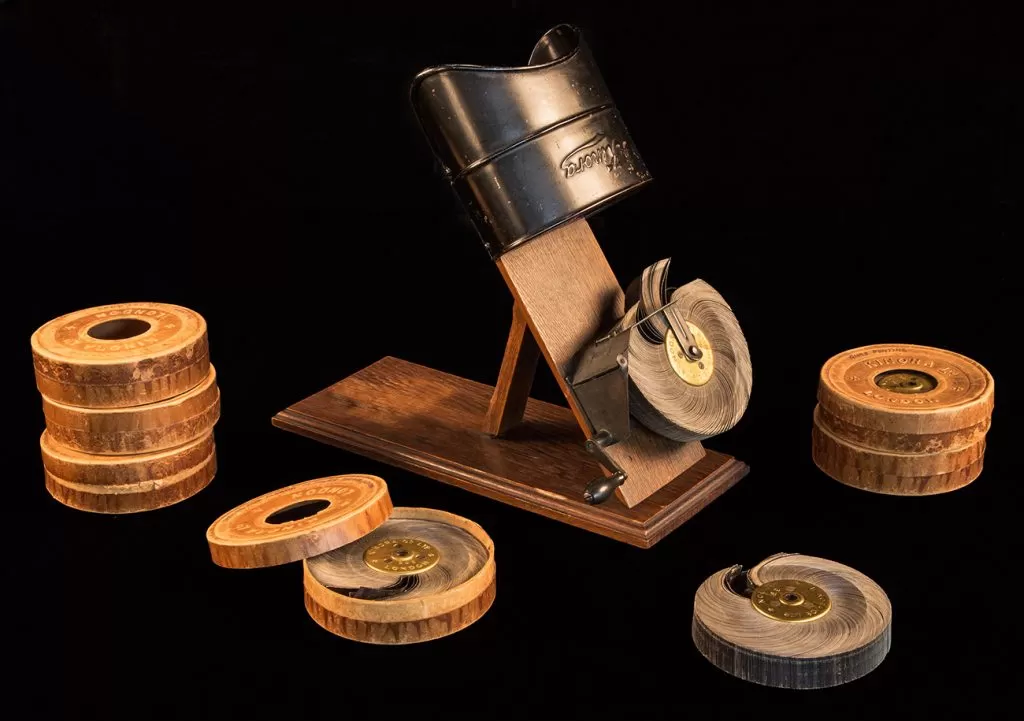
Founded in 1896, Kinora Ltd. produced some of the first motion pictures in history. It converted the Lumière brothers’ Cinématographe into a home entertainment movie machine. Printed film reels could be purchased or rented, and personal “moving portraits” could be taken in a photographic studio. In 1908 the company also began offering a camera for amateur movie makers. The technology was short lived, however: Kinora ceased to produce its machines after its London factory burned in 1914.
The Getty Research Institute’s special collections house a Kinora viewer and six picture reels from about 1910. See the picture reels in action in the videos above: opening and closing of Tower Bridge, London; a lady and gent skating; girls punting; an elephant procession, Delhi Durbar, India; dancing; and boats at Henley on Thames, UK.
Originally published by the J. Paul Getty Museum, 09.26.2016, under a Creative Commons license
About the Author