His Supreme Court will weigh in.

By Dr. Carol Nackenoff
Richter Professor Emerita of Political Science
Swarthmore College

By Dr. Julie Novkov
Professor of Political Science and Women’s, Gender and Sexuality Studies|
University at Albany
State University of New York
Introduction
As President-elect Donald J. Trump prepares to implement sweeping policy changes affecting American immigration and immigrants, one of the issues under scrutiny by his allies appears to be birthright citizenship – the declaration in the 14th Amendment to the Constitution that anyone born on U.S. soil is a U.S. citizen, regardless of their parents’ nationalities or immigration status.
Some prospective members of Trump’s team, including anti-immigration advisers Stephen Miller and Thomas Homan, have said they intend to stop issuing federal identification documents such as Social Security cards and passports to infants born in the U.S. to undocumented migrant parents, according to The New York Times.
This first step down a path to deny citizenship to some individuals born in the United States reflects a conflict that’s been going on for nearly 200 years: who gets to be an American citizen.
Debates in American history over who gets citizenship and what kind of citizenship they get have always involved questions of race and ethnicity, as we have learned through our individual research on the historical status of Native Americans and African Americans and joint research on restricting Chinese immigration.
Nonetheless, even in the highly racialized political environment of the late 19th century, the U.S. Supreme Court endorsed an expansive view of birthright citizenship. In an 1898 ruling, the court decreed that the U.S.-born children of immigrants were citizens, regardless of their parents’ ancestry.
That decision set the terms for the current controversy, as various Republican leaders, U.S. Sens. Tom Cotton of Arkansas and Marsha Blackburn of Tennessee, as well as Vice President-elect JD Vance, have claimed that they will possess the power to overturn more than a century of federal constitutional law and policy and deny birthright citizenship.
Citizenship by Birth
Most citizens of the U.S. are born, not made. Before the Civil War, the U.S. had generally followed the English practice of granting citizenship to children born in the country.
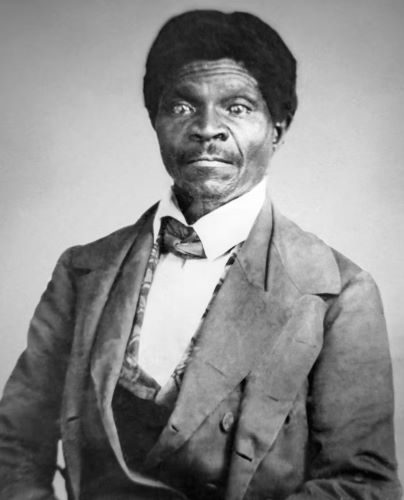
In 1857, though, the Supreme Court had decided the Dred Scott v. Sandford case, with Chief Justice Roger Taney declaring that people of African descent living in the U.S. – whether free or enslaved, and regardless of where they were born – were not actually U.S. citizens.
After the Civil War, Congress explicitly rejected the Dred Scott decision, first by passing legislation reversing the ruling and then by writing the 14th Amendment to the Constitution, which specified that “[a]ll persons born or naturalized in the United States, and subject to the jurisdiction thereof, are citizens of the United States and of the State wherein they reside.”
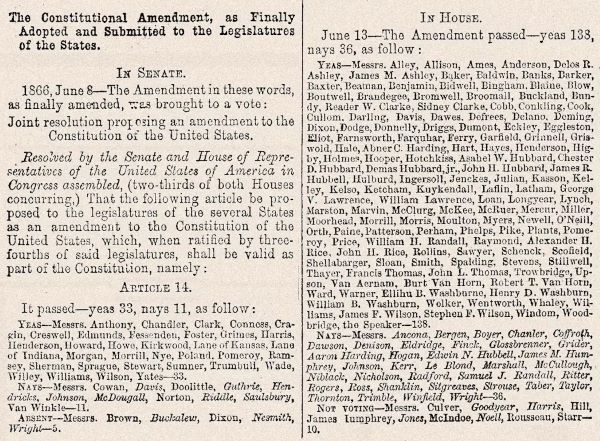
This broad language intentionally included more than just the people who had been freed from slavery at the end of the Civil War: During legislative debate, members of Congress decided that the amendment should cover the children of other nonwhite groups, such as Chinese immigrants and those identified at the time as “Gypsies.”
Still Barring Some People from Citizenship
This inclusive view of citizenship, however, still had an area judges hadn’t made clear yet – the phrase “subject to the jurisdiction thereof.” In 1884, the Supreme Court had to interpret those words when deciding the case of a Native American who wanted to be a citizen, had renounced his tribal membership and attempted to register to vote.
The justices ruled that even though John Elk had been born in the U.S., he was born on a reservation as a member of a Native American tribe and was therefore subject to the tribe’s jurisdiction at his birth – not that of the United States. He was, they ruled, not a citizen.
In 1887, Congress did pass a law creating a path to citizenship for at least some Native Americans; it took until 1924 for all Native Americans born on U.S. soil to be recognized as citizens.
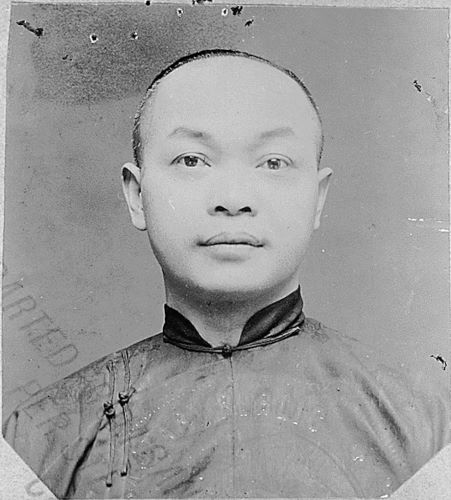
The text of the 14th Amendment also became an issue in the late 19th century, when Congress and the Supreme Court were deciding how to handle immigrants from China. An 1882 law had barred Chinese immigrants living in the U.S. from becoming naturalized citizens. A California circuit court, however, ruled in 1884 that those immigrants’ U.S.-born children were citizens.
In 1898, the Supreme Court took up the question in United States v. Wong Kim Ark, ultimately ruling that children born in the U.S. were, in the 14th Amendment’s terms, “subject to the jurisdiction” of the United States, so long as their parents were not serving in some official capacity as representatives of a foreign government and not part of an invading army. Those children were U.S. citizens at birth.
This ruling occurred near the peak of anti-Chinese sentiment that had led Congress to endorse the idea that immigration itself could be illegal. In earlier rulings, the court had affirmed broad powers for Congress to manage immigration and control immigrants.
Yet in the Wong Kim Ark ruling, the court did not mention any distinction between the children of legal immigrants and residents and the children of people who were in the United States without appropriate documentation. All people born in the United States were automatically simply citizens.
The Long Reach of Wong Kim Ark
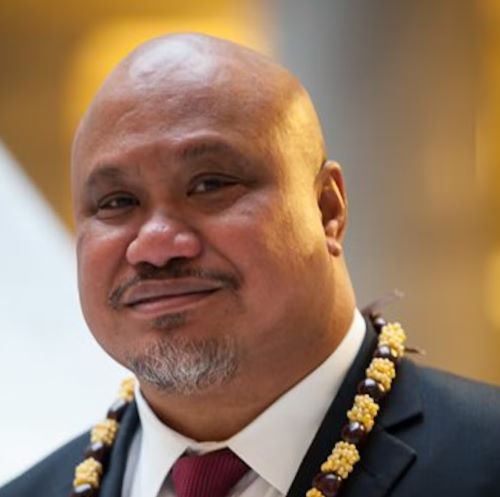
Since the Wong Kim Ark ruling, birthright citizenship rules haven’t changed much – but they have remained no less contentious. In 1900 and 1904, leaders of several Pacific islands that make up what is now American Samoa signed treaties granting the U.S. full powers and authority to govern them. These agreements, however, did not grant American Samoans citizenship.
A 1952 federal law and State Department policy designates them as “non-citizen nationals,” which means they can freely live and work in the U.S. but cannot vote in state and federal elections.
In 2018, several plaintiffs from American Samoa sued to be recognized as U.S. citizens, covered by the 14th Amendment’s provision that they were born “within” the U.S. and therefore citizens. The district court found for the plaintiffs, but the 10th U.S. Circuit Court of Appeals reversed, ruling that Congress would have to act to extend citizenship to territorial residents.
A new debate has ignited over whether Congress has the power to alter birthright citizenship, and even over whether the president, either through an executive order or through directing the State Department not to recognize some individuals as citizens, can change the boundaries around who gets to be a citizen. Efforts to alter birthright citizenship are sure to provoke legal challenges.
Trump is just the latest in a long line of politicians who have objected to the fact that Latin American immigrants who come to the U.S. without legal permission can have babies who are U.S. citizens. Most legal scholars, even those who are quite conservative, see little merit in claims that the established rules can be altered.
At least until now, the courts have continued to uphold the centuries-long history of birthright citizenship, dating back to before the Constitution itself and early American court rulings. But if the Trump administration pursues the policies that key figures have discussed, the question seems likely to reach the Supreme Court again, with the fundamental principle hanging in the balance.
Originally published by The Conversation, 12.05.2024, under the terms of a Creative Commons Attribution/No derivatives license.
About the Author