Evidence underscores the need for transparency and accountability if immigration policy is to reflect actual public safety threats rather than political imperatives.

By Matthew A. McIntosh
Public Historian
Brewminate
Introduction
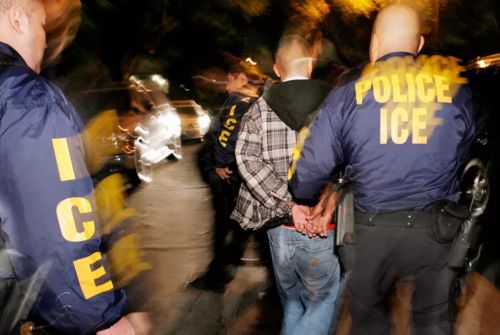
President Donald Trump campaigned on removing “violent criminal immigrants,” presenting the effort as a targeted crackdown on rapists, murderers, and other high-risk offenders. But new reporting shows that the fastest-growing category in Immigration and Customs Enforcement detention is made up of people with no criminal record at all, including legal residents and, in some documented cases, U.S. citizens. Detention rates for individuals without convictions surged under Trump’s renewed enforcement push, revealing a widening gap between the administration’s stated goals and its actual outcomes.
The pattern has raised red flags among civil liberties advocates and policy researchers. Data shows that only five percent of people held in ICE custody have violent convictions, while seventy-three percent have no convictions of any kind. These findings underscore growing concern that the administration’s immigration dragnet has expanded far beyond the violent offenders Trump frequently highlights in his speeches.
Trump’s Campaign Rhetoric vs. Enforcement Reality
Donald Trump built both of his presidential campaigns around the argument that the United States was being endangered by violent immigrant crime, repeatedly emphasizing the need to remove rapists, murderers, and other high-risk offenders. That framing helped define his approach to immigration policy, shaping public expectations about who would be targeted under tougher enforcement. The message was blunt and memorable, but it obscured a statistical reality that has been documented for years by policy researchers and government data.
Analyses of immigration enforcement statistics show that Trump’s rhetoric is not reflected in the people ICE actually detains. Claims suggesting seventy percent of undocumented immigrants arrested by ICE were “criminals” rely on misleading definitions that count civil immigration violations and low-level infractions as “crimes.” This categorization inflates the numbers without demonstrating a serious threat to public safety, and it does little to substantiate claims that undocumented immigrants pose unusually high rates of violent behavior.
Independent research further challenges the narrative of a dangerous immigrant population. Data shows that only five percent of ICE detainees have violent convictions, while nearly three-quarters have no convictions at all. These findings align with decades of criminal justice research showing that immigrants, both documented and undocumented, have lower rates of criminal offending than native-born citizens. The administration’s emphasis on violent criminals therefore rests on a subset of cases that represent a small fraction of those detained.
This gap between political messaging and enforcement outcomes has implications for both public understanding and policy legitimacy. When the stated goal is to remove violent offenders, but the majority of detentions involve people with no criminal history, the public receives a distorted sense of risk. It also raises concern that enforcement priorities are being shaped to bolster a political narrative rather than reflect actual patterns of crime. The result is an immigration system increasingly detached from the realities it claims to address.
Who ICE Is Actually Detaining
Despite the administration’s emphasis on removing violent offenders, federal data shows that ICE’s detention patterns increasingly target people with no criminal history. The fastest-growing category of detainees under Trump’s enforcement surge consists of individuals without any convictions. This marks a significant shift from the stated focus on “hardened criminals” and signals that the agency’s actual practices sweep far more broadly than the campaign’s rhetoric.
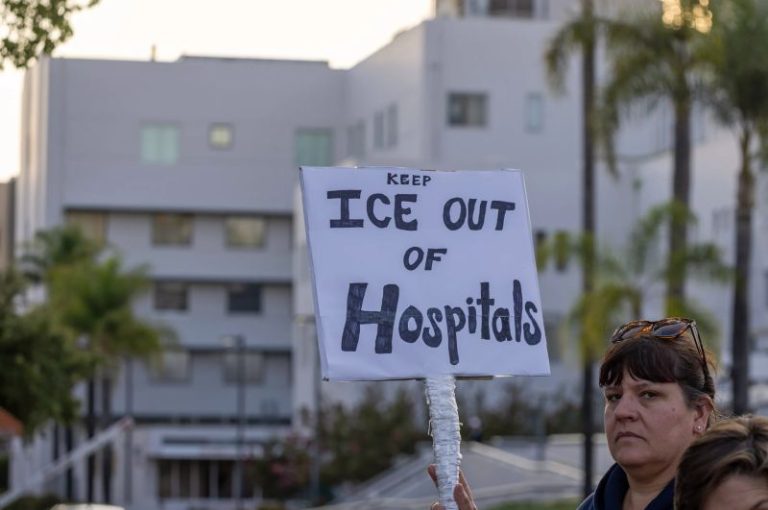
Legal residents, and not only undocumented immigrants, are being affected by expanded enforcement. According to their investigation, lawful permanent residents have been detained following traffic stops, routine paperwork checks, or interactions that triggered database flags unrelated to violent crime. In some cases, the individuals had old or low-level offenses that had already been adjudicated yet still found themselves placed into ICE custody under newly aggressive policies.
These patterns are consistent with long-standing concerns raised in congressional oversight hearings. ICE classifications often group civil immigration violations together with criminal offenses, creating a misleading picture of who is being detained. Administrative and non-violent infractions inflate the appearance of criminality, even when detainees pose no public safety threat. This practice contributes to public confusion about the population ICE is holding.
Independent datasets reinforce the scale of the disconnect. Only five percent of ICE detainees have violent convictions, while seventy-three percent have no convictions at all. The picture is clear: the majority of people detained by ICE under Trump’s enforcement policies are not the violent offenders central to his campaign messaging. Instead, the detentions reflect a broad, generalized enforcement strategy.
The result is an enforcement system that captures a wide range of people, many of whom have deep ties to their communities and no history of violence, while offering little evidence that the approach is effectively targeting those Trump described as threats. This dynamic complicates public understanding of the policy, raising questions about whether the government’s actions align with its stated objectives. It also underscores a growing gap between the administration’s narrative and the realities of who is actually being detained.
Legal Immigrants and U.S. Citizens Caught in the System
The expansion of ICE enforcement has also swept up legal immigrants whose status should protect them from detention. Lawful permanent residents have been taken into custody after routine checks, such as traffic stops or document reviews, when outdated or inaccurate database entries flagged them as potential targets. Some of these individuals had decades-old infractions that had already been resolved by courts, yet they were still detained under policies that cast a far wider net than those announced publicly by the administration.
These detentions expose persistent flaws in federal immigration databases, which have long contained errors that lead to wrongful arrests. Investigations show that database mismatches, incomplete record updates, and mistaken identity have contributed to people being detained despite having no deportation orders or criminal histories. The cases documented in the reporting demonstrate how the system’s structural weaknesses can place law-abiding residents into custody with little warning or recourse.
Instances of U.S. citizens being detained are less common but well documented. There have been an number of cases in which citizens were mistakenly held due to data errors or misidentification. Because these documented incidents occurred within the same enforcement framework that the current reporting describes, they provide important context for understanding the risks created by system-wide inaccuracies.
These cases underscore a central concern raised by civil liberties advocates and policy researchers: when enforcement expands beyond high-risk offenders and relies on flawed data systems, legal residents and citizens become vulnerable to detention. These incidents do not reflect targeted removal of violent criminals but instead reveal an enforcement approach that can misfire, sweeping in people who were never the intended targets.
Why the Gap Exists: Incentives, Quotas, and Public Messaging
The widening gap between Trump’s public focus on violent criminals and the reality of ICE enforcement stems in part from how the agency classifies offenses. ICE routinely counts civil immigration violations, such as overstaying a visa, alongside criminal offenses, creating a statistical impression that most detainees are “criminals” even when no criminal activity has occurred. This approach, rooted in internal categorization rather than actual threat levels, makes it easier to present enforcement data as evidence of success against dangerous offenders.
Congressional oversight materials add further clarity to how this discrepancy developed, showing that lawmakers have repeatedly challenged ICE for using broad categories to describe detainees, including people with administrative infractions or nonviolent misdemeanors. This blending of civil and criminal classifications inflates the agency’s public metrics and allows officials to claim they are prioritizing threats while sweeping up far larger numbers of nonviolent individuals.
The statistical structure of ICE’s reporting plays a central role in shaping public perception. By grouping all convictions together, regardless of severity, the agency is able to present large totals that appear to justify aggressive enforcement. But the underlying data shows that only a very small percentage of detainees have violent convictions, raising questions about how closely operations align with the administration’s stated emphasis on serious crime.
This disconnect also reflects political incentives. Trump’s campaigns relied heavily on public messaging that emphasized violent immigrant crime, even though the population of violent offenders within immigrant communities is comparatively small. By classifying low-level infractions alongside serious offenses and expanding enforcement to include non-criminal cases, the administration is able to generate large detention numbers that reinforce a narrative of widespread danger, despite the evidence showing that most detainees do not pose the threat described in the political rhetoric.
Human Consequences
The broad expansion of enforcement has had significant effects on families and communities, particularly among immigrants with long-standing ties to the United States. Reporting describes legal residents who were detained during routine encounters, leaving spouses, children, and employers scrambling to respond with little warning. These disruptions often unfold with no connection to violent crime, yet they carry consequences comparable to those associated with more serious enforcement actions.
Data shows a sharp rise in the detention of individuals with no criminal history, many of whom have lived in the country for years. For these residents, detention represents not just a legal setback but a sudden rupture in daily life. People who were working, supporting families, or attending school can find themselves transferred into custody based solely on civil immigration violations or database errors rather than any demonstrated threat to public safety.
The uncertainty that follows such detentions can be profound. Families may go days without knowing where their loved ones have been taken, a problem documented across multiple news reports and highlighted indirectly by the inconsistencies in ICE’s database systems. These gaps in communication are not hypothetical; they are tied to structural issues and in the congressional oversight materials, which detail longstanding problems with record accuracy and information flow.
Research underscores that most detainees do not present the danger described in the administration’s public statements, raising questions about the proportionality of the harm imposed. When the majority of people held in custody have no criminal convictions, the burdens placed on families (emotional, financial, and legal) can appear disconnected from the risks the policy claims to address. This mismatch complicates efforts to evaluate the policy on its merits.
The reporting reveals a system in which the human impacts fall disproportionately on people who were never aligned with the violent-criminal narrative that shaped the administration’s political messaging. Families face separation, missed wages, and prolonged legal uncertainty, while communities absorb the ripple effects of detentions that do not align with the stated goal of targeting dangerous offenders. These consequences highlight the stakes of misaligned enforcement strategies and their capacity to destabilize the lives of people far removed from the threats emphasized in national discourse.
Historical and Political Significance
The widening divide between Trump’s public claims and ICE’s actual enforcement patterns fits into a long historical tradition of using immigration policy as a political instrument. Throughout U.S. history, administrations have framed certain immigrant groups as threats during moments of social or economic anxiety, even when the evidence did not support those characterizations. The contemporary data demonstrates a similar dynamic: the narrative of violent immigrant crime is driving a policy response that affects people who bear little resemblance to the publicized threat.
This approach has implications for how Americans understand both crime and immigration. When civil violations and low-level infractions are grouped with serious offenses, the resulting statistics give the impression that noncitizens commit dangerous crimes at far higher rates than the data shows. Reports show how these inflated numbers shape public belief and fuel support for aggressive enforcement. Without context, the public receives a distorted picture of the risks posed by immigrants, making it difficult to evaluate policy claims on a factual basis.
The political incentives behind this system are clear. Trump built both of his presidential campaigns around the idea that the country faced an urgent threat from violent immigrants. Yet the evidence shows that the majority of those detained are not violent offenders. This gap allows the administration to cite large enforcement totals as proof of fulfilling campaign promises while avoiding the reality that the population being detained does not match the rhetoric used to justify the policy. The strategy creates a self-reinforcing cycle: broad enforcement produces high numbers, and those numbers are then used to validate the political narrative.
The broader significance lies in what this means for constitutional protections and public trust. When policies marketed as tools to remove dangerous criminals end up targeting legal immigrants, asylum seekers, and even citizens due to data errors, it signals a tension between political messaging and the rule of law. Reporting illustrates how easily enforcement can extend beyond its stated mission when oversight, accuracy, and transparency lag behind political imperatives. In that sense, the current moment echoes earlier periods in U.S. history when immigration enforcement became less about genuine public safety threats and more about projecting political strength, often at the expense of civil liberties.
Conclusion
Reporting and data reveal an enforcement landscape far removed from the violence-centered narrative that has defined Trump’s political messaging. Rather than focusing primarily on dangerous offenders, the system now disproportionately detains individuals with no criminal history, including legal residents whose encounters with ICE result from administrative issues or flawed databases. This disconnect raises fundamental questions about the purpose and effectiveness of the administration’s immigration strategy.
The consequences extend beyond statistics. Families face sudden separations, workplaces lose employees, and communities absorb the instability generated by detaining people who pose no demonstrated threat. The underlying data does not support the claims that justify these actions. When enforcement practices diverge so sharply from their stated aims, the public is left with a distorted understanding of risk and a diminished capacity to assess policy decisions accurately.
What emerges is a pattern in which immigration enforcement serves as a symbolic tool rather than a targeted response to violent crime. The administration gains political advantage by emphasizing danger, while the people most affected by the policy are often those least connected to that narrative. Evidence underscores the need for transparency and accountability if immigration policy is to reflect actual public safety threats rather than political imperatives.
Originally published by Brewminate, 12.02.2025, under the terms of a Creative Commons Attribution-NonCommercial-NoDerivatives 4.0 International license.
About the Author