
By Dr. Jeffrey Fields
Associate Professor of the Practice of International Relations
Dornsife College of Letters, Arts and Sciences
University of Southern California
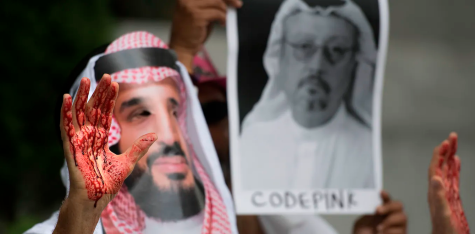
Saudi Crown Prince Mohammad bin Salman “approved an operation … to capture or kill Saudi journalist Jamal Khashoggi,” according to a scathing new report from the Biden administration. Yet President Joe Biden says the U.S. will not sanction the Saudi government, calculating that any direct punishment could risk Saudi Arabia’s cooperation in confronting Iran and in counterterrorism efforts.
Like his predecessors, Biden is grappling with the reality that Saudi Arabia is needed to achieve certain U.S. objectives in the Middle East.
This is a change from Biden’s criticism of Saudi Arabia on the campaign trail. He said his administration would turn this repressive kingdom – a longtime U.S. ally – into a global “pariah.”
The Khashoggi affair highlights a persistent oddity in American foreign policy, one I observed in many years working at the State Department and Department of Defense: selective morality in dealing with repressive regimes.
A panoply of dictators
The Trump administration was reluctant to confront Saudi Arabia over the killing of Khashoggi, a Washington Post columnist who lived in Virginia. Beyond revoking the visas of some Saudi officials implicated in Khashoggi’s death, Trump did nothing to punish the kingdom for Khashoggi’s torture, assassination and dismemberment.
Trump and other White House officials reminded critics that Saudi Arabia buys billions of dollars in weapons from the U.S. and is a crucial partner in the American pressure campaign on Iran. Biden has taken a slightly tougher line, approving the release of the intelligence report that blames bin Salman for Khashoggi’s murder and sanctioning 76 lower-level Saudi officials.
Saudi Arabia isn’t the only nation to get a free pass from the U.S. for its terrible misdeeds. The U.S. has for decades maintained close ties with some of the world’s worst human rights abusers. Ever since the United States emerged from the Cold War as the world’s dominant military and economic power, consecutive American presidents have seen financial and geopolitical benefit in overlooking the bad deeds of brutal regimes.
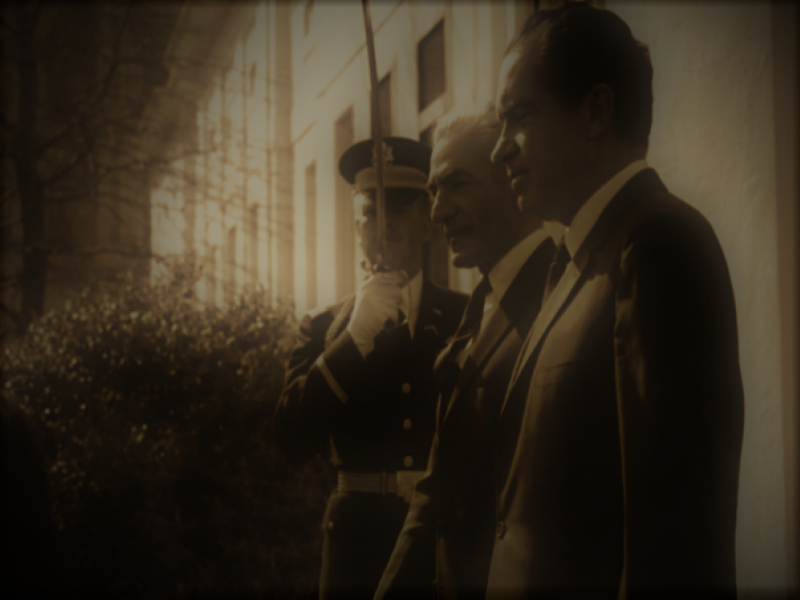
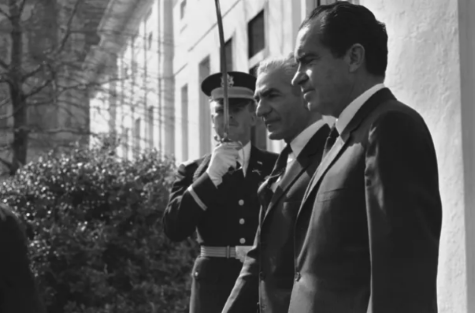
Before the Islamic revolution in 1979, Iran was a close U.S. ally. Shah Reza Pahlavi ruled harshly, using his secret police to torture and murder political dissidents.
But the shah was also a secular, anti-communist leader in a Muslim-dominated region. President Nixon hoped that Iran would be the “Western policeman in the Persian Gulf.”
After the shah’s overthrow, the Reagan administration in the 1980s became friendly with Iraqi dictator Saddam Hussein. The U.S. supported him with intelligence during Iraq’s war with Iran and looked the other way at his use of chemical weapons.
And before Syria’s intense bloody civil war – which has killed an estimated 400,000 people and featured grisly chemical weapon attacks by the government – its authoritarian regime enjoyed relatively friendly relations with the U.S.
Syria has been on the State Department’s list of state sponsors of terrorism since 1979. But presidents Nixon, Jimmy Carter, George H.W. Bush and Bill Clinton all visited President Bashar al-Assad’s father, who ruled from 1971 until his death in 2000.
Why Saudi Arabia matters
Before the alleged assassination of Khashoggi by Saudi operatives, the 35-year-old crown prince was cultivating a reputation as a moderate reformer.
Salman has made newsworthy changes in the conservative Arab kingdom, allowing women to drive, combating corruption and curtailing some powers of the religious police.
Still, Saudi Arabia remains one of the world’s most authoritarian regimes.
Though women may now obtain a passport without the permission of a male guardian, they still need a guardian’s approval to get married, leave prison or obtain certain medical procedures. And they must have the consent of a male guardian to enroll in college or look for a job.
The Saudi government also routinely arrests people without judicial review, according to Human Rights Watch. Citizens can be killed for nonviolent crimes, often in public. Between January and mid-November 2019, 81 people were executed for drug-related crimes.
Saudi Arabia ranks just above North Korea on political rights, civil liberties and other measures of freedom, according to the democracy watchdog Freedom House. The same report ranks both Iran and China ahead of the Saudis.
But its wealth, strategic Middle East location and petroleum exports keep the Saudis as a vital U.S. ally. President Obama visited Saudi Arabia more than any other American president – four times in eight years – to discuss everything from Iran to oil production.
American realpolitik

This kind of foreign policy – one based on practical, self-interested principles rather than moral or ideological concerns – is called “realpolitik.”
Henry Kissinger, secretary of state under Nixon, was a master of realpolitik, which drove that administration to normalize its relationship with China. Diplomatic relations between the two countries had ended in 1949 when Chinese communist revolutionaries took power.
Then, as now, China was incredibly repressive. Only 16 countries – including Saudi Arabia – are less free than China, according to Freedom House. Iran, a country the U.S. wants Saudis to help in keeping in check, ranks ahead of China.
But China is also the world’s most populous nation and a nuclear power. Nixon, a fervent anti-communist, sought to exploit a growing rift between China and the Soviet Union.
Today Washington retains the important, if occasionally rocky, relationship Kissinger forged with Beijing, despite its ongoing persecution of Muslim minority groups.
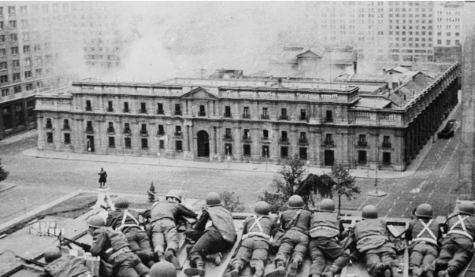
American realpolitik applies to Latin America, too. After the Cuban Revolution of 1959, the U.S. regularly backed Central and South American military dictators who tortured and killed citizens to “defend” the Americas from communism.
U.S. not ‘so innocent’
U.S. presidents tend to underplay their relationships with repressive regimes, lauding lofty “American values” instead.
That’s the language former President Barack Obama used in 2018 to criticize Trump’s embrace of Russia’s authoritarian president, Vladimir Putin, citing America’s “commitment to certain values and principles like the rule of law and human rights and democracy.”
But Trump defended his relationship with Russia, tacitly invoking American realpolitik. “You think our country’s so innocent?” he asked on Fox News.
As Trump alluded to, the U.S. has maintained close ties to numerous regimes, and still does, whose values and policies conflict with America’s constitutional guarantees of democracy, freedom of speech, the right to due process and many others.
It has for decades.
Saudi Arabia’s crown prince had a dissident journalist killed. American realpolitik explains why the tight U.S.-Saudi relationship will likely continue anyway.
Originally published by The Conversation, 03.03.2021, under the terms of a Creative Commons Attribution/No derivatives license.