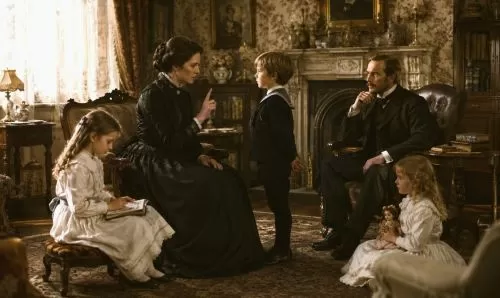
Victorian parenting made childhood a moral project, shaping children through discipline, innocence, class expectations, gender roles, schooling, and reform.

By Matthew A. McIntosh
Public Historian
Brewminate
Introduction: The Victorian Child Between Sin, Innocence, and Social Order
The phrase “children should be seen and not heard” has become the shorthand by which Victorian parenting is often remembered, and like many cultural clichés, it preserves a truth by flattening it. Victorian children were expected to obey, to wait, to restrain appetite, to master manners, to submit to adult authority, and to absorb the moral grammar of household, church, school, and nation. Yet the era did not possess a single parenting philosophy. It inherited older Protestant anxieties about sin and willfulness, absorbed Enlightenment and Romantic arguments about education and innocence, and reshaped them under the pressure of industrialization, class hierarchy, gender ideology, domestic respectability, and imperial confidence. Childhood was not merely a biological stage. It was a moral territory to be governed.
This made Victorian parenting unusually tense. Children could be imagined as naturally wayward creatures whose desires had to be checked before they hardened into vice, but they could also be sentimentalized as pure, fragile, and spiritually revealing. The same culture that disciplined children for speaking out of turn also filled books, paintings, sermons, and family rituals with images of childhood innocence. That contradiction was not accidental. Victorian adults often believed that innocence survived only through discipline, supervision, religious instruction, emotional restraint, and careful protection from corrupting influences. The child was both endangered and dangerous, precious and suspect, beloved and governed.
These philosophies also varied sharply by class. In prosperous households, parenting often meant moral formation through nurseries, nannies, governesses, boarding schools, household rules, controlled leisure, religious observance, and the cultivation of self-command. Affection could exist, sometimes deeply, but it was filtered through ideals of reserve, obedience, and respectability. Among working-class families, childhood was shaped less by domestic theory than by wages, hunger, overcrowding, child labor, street life, schooling laws, and reformist scrutiny. Poor parents were frequently judged by middle-class standards they could not afford to meet, while their children were treated as economic contributors, moral risks, charitable objects, or future citizens in need of discipline.
The history of Victorian parenting, then, is not a simple story of cruelty giving way to kindness. It is a history of competing moral claims placed upon children’s bodies, speech, appetites, emotions, labor, education, and souls. Across the nineteenth century, the Victorian child moved through overlapping identities: sinful will, innocent heart, family possession, economic burden, gendered apprentice, religious pupil, social investment, and protected subject of reform. To study Victorian parenting is to see how a society tried to reproduce itself through the child, turning private upbringing into a miniature politics of obedience, class, gender, morality, and social order.
Before Victoria: Evangelical Discipline, Original Sin, and the Child’s Will

Parenting in the Victorian era did not begin with Queen Victoria. Its strictest assumptions had older roots in Protestant moral theology, household government, and eighteenth-century debates over education. Long before 1837, British parents, clergy, teachers, and moral writers had inherited a view of childhood shaped by the doctrine of original sin. The child was loved, but not trusted. Innocence did not mean natural goodness so much as moral incompletion. Children were believed to arrive in the world with unruly appetites, stubborn wills, and a dangerous tendency toward selfishness. Parenting became an act of spiritual discipline, not merely practical supervision.
Evangelical religion sharpened this inheritance by making the child’s will the central battlefield of moral formation. In many evangelical households, a child who cried for indulgence, resisted instruction, lied to escape punishment, answered back, or defied a parent was not simply misbehaving. Such acts could be interpreted as early signs of rebellion against divine and earthly authority, and as symptoms of a deeper spiritual disorder. The parent’s duty was to intervene before habit hardened into character, because repeated disobedience was thought to train the soul in self-rule rather than submission. This was why obedience carried such heavy moral weight. To obey a parent was to rehearse obedience to God; to resist parental authority was to reveal the heart’s disorder. Discipline was not imagined as cruelty by its defenders. It was imagined as rescue. Even severity could be justified as a painful mercy, a necessary correction applied in childhood so that the adult would not be abandoned to vice, pride, or eternal danger.
This religious logic helps explain why early nineteenth-century child-rearing advice so often warned against indulgence. A child’s wish was not treated as neutral. Appetite, comfort, laziness, curiosity, anger, vanity, and self-pity could all become spiritual dangers if left unchecked. The parent who gave way too easily might appear kind in the moment, but moral writers feared such softness would produce a future adult unable to master desire. Small household battles over food, speech, toys, sleep, lessons, and posture acquired enormous significance. The nursery became a training ground for the soul, where the child learned that desire was not command and impulse was not law.
The language of “breaking” the child’s will must be handled carefully, because it did not describe every household in the same way, nor did all parents practice discipline with identical severity. Still, the concept was real within older religious and disciplinary traditions. It reflected the belief that the child’s independent will had to be brought under moral authority before genuine virtue could develop. This did not necessarily mean destroying personality, though it could produce emotional severity and harsh punishment. It meant subordinating self-will to conscience, scripture, parental command, and social order. The ideal child was not expressive, spontaneous, or self-defining. The ideal child was obedient, teachable, modest, truthful, and inwardly governed.
These assumptions did not exist in isolation from broader intellectual traditions, and Victorian child-rearing emerged from a complicated inheritance rather than a single theological command. John Locke’s educational writings had emphasized habit, reason, self-command, and the careful formation of character, arguing that children could be trained through repeated practice into disciplined judgment. Jean-Jacques Rousseau’s Emile, by contrast, offered a far more romantic vision of natural development, childhood distinctiveness, and the dangers of premature social corruption. Victorian culture inherited both, but it rarely absorbed them in pure form. Locke’s stress on training and habit fit comfortably with Protestant discipline, while Rousseau’s image of childhood helped feed later sentimental ideas of innocence. The early Victorian household, was still more likely to treat the child as a being to be formed than as a self to be released. Freedom, when it appeared at all, came after discipline, not before it. Even the more affectionate or enlightened parent could accept the premise that character had to be built through restraint, routine, and moral guidance before a child could safely exercise independence.
By the time Victoria came to the throne, then, British parenting culture already carried a powerful moral architecture. Children were to be watched because they were vulnerable to sin, instructed because ignorance was dangerous, corrected because willfulness threatened character, and restrained because desire could become tyranny. This inheritance did not disappear as the century advanced. It survived inside Sunday schools, household manuals, boarding schools, sermons, punishment practices, and the quiet expectations of domestic life. Even when Victorians later spoke more tenderly about childhood innocence, they often continued to believe that innocence could survive only under discipline. The Victorian child entered the century not as a free spirit awaiting discovery, but as a soul to be governed.
Early Victorian Domestic Authority: Father, Mother, Nursery, and Moral Government
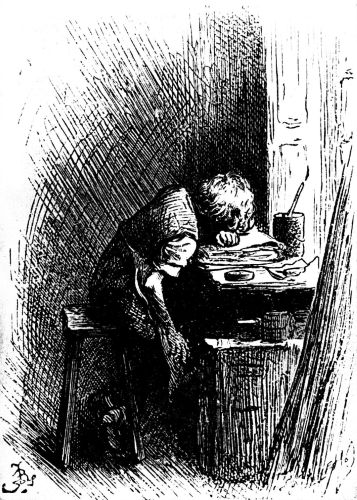
Early Victorian parenting rested on the assumption that the household was not merely a place of affection, shelter, and reproduction, but a moral institution with its own hierarchy. The family was imagined as a small commonwealth, ordered by authority and duty, where children learned the habits that would later govern their conduct in church, school, workplace, marriage, and public life. In this structure, parental command was not simply personal preference. It was understood as part of a wider moral order linking God, father, mother, child, servant, teacher, and social superior. The child who learned obedience at home was being trained to recognize authority elsewhere. The child who resisted domestic rule appeared to threaten more than household peace. Domestic disobedience could be read as the seed of spiritual rebellion, class unruliness, failed gender formation, or future social disorder. This is why so many ordinary household expectations carried such disproportionate moral weight. A child’s posture at table, silence before guests, willingness to pray, promptness in answering, and ability to accept correction were treated as signs that the household had successfully translated moral order into character.
The father’s place within this system was associated with government, provision, discipline, and public standing. In middle-class ideology especially, the father represented the household before the world and carried the formal authority of name, inheritance, property, and social position. He was expected to embody firmness, reason, self-command, and moral seriousness, even if his daily intimacy with children varied widely from family to family. Some fathers were affectionate and involved; others were remote, absorbed in work, politics, commerce, or professional duty. Yet even absence could reinforce authority, because the father’s will often remained the final court of appeal. His study, chair, voice, approval, and displeasure could become symbols of order, and children learned that domestic space had ranks as surely as public life did.
The mother’s authority was different but no less important. Early Victorian domestic ideology elevated the mother as the moral heart of the home, the guardian of conscience, piety, manners, emotional tone, and daily habit. Writers such as Sarah Stickney Ellis placed enormous emphasis on women’s responsibility for shaping national character through domestic influence, presenting the household as the place where moral civilization was quietly made. This ideal gave mothers a powerful cultural role, but it also burdened them with nearly impossible expectations. A mother was to be tender but not indulgent, watchful but not vainly anxious, religious but practical, affectionate but morally firm. If a child became disobedient, selfish, coarse, idle, or irreligious, maternal failure could be implied even when fathers, schools, poverty, illness, temperament, and social pressure also shaped the child’s life.
The nursery made this moral government visible. In prosperous homes, the nursery was not simply a room for play; it was a managed environment where bodily routines, speech, obedience, sleep, diet, cleanliness, dress, and early lessons were regulated. Young children might spend much of their time under the care of nurses, nursemaids, governesses, or older female servants, especially in families with the resources to separate adult and child spaces. This arrangement complicates the sentimental image of the Victorian family gathered constantly around the hearth. The household could be celebrated as sacred while much of its child-rearing labor was delegated. Children learned hierarchy not only from parents, but also from servants who supervised them while remaining socially below the family. The nursery trained children in authority from both directions: they obeyed those set over them, while also absorbing the class assumptions that distinguished family from servant.
The governess occupied an especially revealing position in this domestic order. She was expected to educate, discipline, refine, and morally guard children, particularly girls, yet her own social status was unstable. She was usually not a servant in the ordinary sense, but neither was she a family equal. Her presence showed how parenting among the middle and upper classes often depended on paid female labor while still representing moral formation as a natural function of the family. For children, the governess could be a teacher, chaperone, disciplinarian, emotional companion, or lonely authority figure. For parents, she helped transform domestic ideals into daily practice: lessons, manners, music, scripture, handwriting, deportment, French, needlework, and controlled reading. Through her, the family extended parental authority without surrendering the fiction that moral upbringing remained private, intimate, and domestic. Her ambiguous place also exposed one of the central contradictions of Victorian respectability: the household praised feminine moral influence while making many educated women economically dependent on selling that influence inside homes where they did not fully belong. Children under her care witnessed authority as both intimate and socially uneasy, embodied by a woman empowered to command them yet often denied secure adult status herself.
Manners were one of the central languages of this household government. Children were expected to learn when to speak, how to answer, how to sit, when to leave the room, how to address adults, how to greet visitors, and how to behave in the presence of social superiors. These rules were not empty formalities. They taught children to read rank, age, gender, and circumstance. A child who answered “Yes, sir” or “No, ma’am,” who waited before interrupting, who did not contradict adults, and who controlled bodily restlessness was performing a miniature version of Victorian respectability. Such habits were particularly important in middle-class households anxious to distinguish themselves from both aristocratic idleness and working-class disorder. Politeness became moral evidence. Good manners suggested inner discipline; bad manners hinted at defective training.
This domestic authority was also gendered from the beginning. Boys and girls were both expected to obey, but they were being prepared for different futures. Boys were gradually trained toward independence, public competence, command, and self-possession, though often through strict discipline and emotional restraint. Girls were trained toward modesty, service, domestic skill, religious feeling, and moral influence within the home. The mother’s example mattered especially for daughters, who were expected to absorb femininity as both character and duty. Sons, meanwhile, might be formed by maternal piety in childhood before passing more fully into masculine institutions such as preparatory schools, public schools, apprenticeships, universities, professions, or imperial service. The household prepared children not merely to become adults, but to occupy gendered stations within a social order that treated masculinity and femininity as moral destinies.
Early Victorian domestic authority, then, was not reducible to harshness, nor should it be romanticized as orderly affection. It was a system of moral government, layered through fatherhood, motherhood, servants, governesses, nurseries, manners, religion, and class expectation. It made the home into the first school of hierarchy. Children learned that love could command, that obedience could be spiritual, that silence could be virtuous, and that character was built through the regulation of small daily acts. This model would change across the nineteenth century as sentimental childhood, educational reform, medical advice, and child welfare gained force. Yet its early Victorian foundations remained powerful: the family was imagined as the root of society, and the disciplined child as the proof that the household had fulfilled its moral office.
Denial, Appetite, and Self-Control: The Moral War Against Indulgence
If domestic authority made the household a moral government, denial made that government practical. The child’s desires were not treated as harmless preferences waiting to be satisfied. They were signs to be interpreted, habits to be shaped, and possible threats to future character. Food, toys, comfort, sleep, speech, curiosity, temper, and pleasure all became tests of discipline. A child who demanded what he wanted and received it too quickly might learn that appetite had authority. A child who waited, submitted, accepted refusal, and controlled disappointment was being trained in self-command. Victorian parenting turned ordinary household moments into moral exercises, making the refusal of small desires part of the larger formation of obedience.
This philosophy drew strength from religious and moral traditions that associated unchecked appetite with sin, selfishness, and weakness. The problem was not merely that children wanted too much, but that wanting itself could become a school of self-rule if adults surrendered to it. To indulge a child was to risk teaching the child that feeling should govern action. This fear gave moral weight to practices that might otherwise appear minor or arbitrary: denying sweets between meals, refusing extra attention after a tantrum, insisting on plain food, limiting toys, enforcing punctual bedtime, requiring quiet after correction, or making children finish tasks before play. Such measures were meant to discipline the will by separating desire from entitlement. The child had to learn that not every hunger should be fed, not every discomfort removed, and not every wish answered.
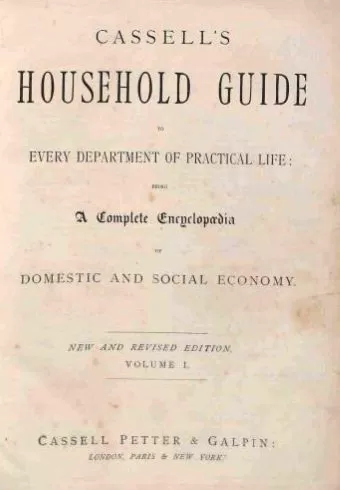
Domestic advice literature helped translate this moral suspicion of indulgence into everyday routines. Manuals and household guides did not simply tell parents how to run homes; they taught readers how to see household management as character formation. Cassell’s Household Guide, first published in the late 1860s, belongs to this wider culture of practical instruction, where economy, diet, manners, health, and discipline were treated as connected parts of domestic order. Advice about children’s meals or habits was rarely only practical. Regularity in eating trained regularity in conduct. Plainness in food discouraged luxury. Refusal taught obedience. Routine restrained the chaotic claims of appetite. The well-managed household was imagined as one in which desire was organized by rule. This was especially important because the domestic manual addressed the household as a system, not as a collection of isolated tasks. Clean rooms, orderly meals, punctual habits, frugal spending, proper dress, controlled servants, and disciplined children all belonged to the same moral economy. A mother or household manager who regulated food and comfort was also regulating time, class identity, respectability, and the emotional climate of the home. The child’s appetite, then, was folded into a larger Victorian dream of order: a house in which everything had its place, every hour had its use, and every desire was subject to moral supervision.
Food became one of the most visible arenas of this philosophy because appetite was bodily, immediate, and difficult to disguise. A hungry or greedy child seemed to reveal the untutored self in its rawest form. Victorian parents and advisers often valued plain meals, fixed times, moderation, and restraint, not only for health but for moral training. Rich foods, excessive sweets, irregular snacks, and fussiness at table could be interpreted as signs of indulgence, vanity, or poor discipline. Table behavior mattered as much as diet itself. Children were expected to sit properly, wait their turn, accept what was provided, refrain from complaint, and show gratitude. The meal trained the body, but it also trained hierarchy. Adults served, withheld, permitted, corrected, and judged; children received, waited, thanked, and submitted.
The same logic applied to toys, play, praise, and comfort. Victorian culture did not reject childhood amusement altogether, and middle-class children increasingly inhabited a world of books, games, dolls, puzzles, and educational playthings. Yet play was expected to remain bounded by discipline. It should instruct, refine, refresh, or prepare the child, not create idleness, noise, selfishness, or disorder. Praise likewise had to be measured. Too much admiration might cultivate vanity; too much sympathy might reward weakness; too much comfort might make the child dependent. Parents who withheld immediate consolation could understand themselves as strengthening rather than neglecting the child. The moral problem was excess. Victorian selfhood was supposed to be governed from within, but that inward government had to be built from repeated outward refusals. Even affection could be drawn into this logic of moderation. A parent might love deeply while still fearing that visible softness would make discipline harder, or that indulgent tenderness would encourage manipulation, dependence, and emotional display. The child’s tears, like the child’s appetite, had to be interpreted: were they evidence of real pain, willful protest, vanity, exhaustion, or a habit of seeking power through distress? Such questions could make parenting intensely watchful. The adult had to decide when to soothe and when to refuse, when to praise and when to correct, when play refreshed the child and when it loosened discipline. Victorian restraint was not merely the absence of pleasure. It was an entire interpretive system in which every expression of desire asked to be morally classified.
This war against indulgence was also classed. Middle-class families could make restraint into an ideal because they possessed enough comfort to regulate it. They could choose plainness as discipline, restrict sweets as training, or limit toys as moral instruction. Poor families often faced denial as necessity rather than philosophy. Hunger, cold, overcrowding, illness, and early labor did not need to be manufactured as lessons; they were already present. Yet middle-class reformers frequently judged working-class households through the language of appetite and self-control, interpreting poverty, irregular domestic life, drinking, street play, or unruly children as evidence of moral failure. The ideal of disciplined desire became a way to distinguish respectable poverty from supposedly degraded poverty, and respectable childhood from dangerous childhood.
The Victorian fear of indulgence reveals one of the era’s deepest assumptions: character was made by learning to say no to the self. Childhood was not supposed to be a realm of ungoverned expression, even when later Victorians increasingly sentimentalized innocence. The obedient child was one whose appetites had been placed under authority, whose speech had been moderated, whose body had been disciplined, and whose wants no longer ruled the household. Such discipline could produce resilience, patience, and self-control, but it could also encourage emotional repression, fear, and shame. Its power lay in its fusion of the ordinary and the eternal. A biscuit before dinner, a sulk after correction, a toy demanded too loudly, or a tear indulged too long could become, in Victorian eyes, a small rehearsal for the moral future of the soul.
Hardening the Body: Cold Baths, Plain Diets, Clothing, Health, and Character

Victorian parenting did not separate the body from the soul. The child’s posture, appetite, clothing, cleanliness, sleep, endurance, and physical habits were treated as outward signs of inward formation. A child who could bear discomfort without complaint seemed to possess more than health; he or she displayed moral promise. Bodily discipline became one of the everyday instruments through which parents, nurses, governesses, schoolmasters, physicians, and domestic advisers tried to build character. Cold water, plain meals, early rising, stiff garments, fresh air, regular exercise, and controlled rest were not merely health practices. They were lessons in restraint, toughness, obedience, and self-command.
This philosophy drew on older traditions of moral discipline, but it gained special force in the nineteenth century because Victorians worried intensely about weakness. Luxury, softness, nervousness, idleness, urban crowding, overfeeding, poor ventilation, sexual danger, and physical decline all became linked in advice literature, medical writing, and domestic conversation. A child raised too comfortably might become delicate, selfish, cowardly, or morally slack. The body had to be trained not to expect ease. Cold baths, rough towels, simple bedding, walks in bracing air, and resistance to fussing were often imagined as protections against both illness and indulgence. Hardening was preventive. It sought to make the child less vulnerable to disease, but also less vulnerable to appetite, emotion, and dependency. This is why bodily discomfort could be treated as a kind of moral inoculation. To endure cold water, plain food, stiff clothing, or physical fatigue was to rehearse a broader resistance to temptation and complaint. The child’s body became the first arena in which self-mastery was expected to appear, long before the child could articulate moral principles. Parents and advisers could interpret ordinary physical routines as safeguards against a future life of weakness, vanity, nervous fragility, and sensual excess.
Cold bathing became one of the most memorable symbols of this approach because it joined hygiene, endurance, and obedience in a single ritual. For some families, especially those with the means to organize domestic routines around health ideals, cold or cool washing was understood to stimulate the body, strengthen the nerves, and discourage softness. The child did not merely become clean. The child learned to submit to discomfort without protest. The morning wash or bath trained punctuality, physical control, and emotional restraint before the day had properly begun. Even when medical opinion varied, the cultural meaning of cold water remained powerful: it promised vigor, discipline, and a refusal to let the child’s comfort govern the household.
Plain diet worked in a similar way. The Victorian suspicion of indulgent appetite shaped not only when children ate, but what they were given. Simple food, regular meals, moderation, and avoidance of rich dishes or excessive sweets were treated as both hygienic and moral practices. Children who accepted plain fare without complaint demonstrated obedience and gratitude. Children who fussed, demanded special treatment, or sought treats outside appointed times revealed a will insufficiently trained. Diet was also tied to class performance. Middle-class plainness could be chosen as discipline, an intentional rejection of luxury, while working-class plainness often reflected scarcity. Yet in both cases, food carried moral meaning. The child’s stomach became another place where the household tried to teach hierarchy, patience, and self-control. Meals also trained children to accept the authority of time and order. They ate when the household schedule allowed, not when impulse demanded. They accepted the portion placed before them, not the quantity appetite desired. They learned to distinguish need from want, gratitude from complaint, and appetite from entitlement. The table became a daily classroom in which bodily hunger was disciplined into social obedience.
Clothing also participated in bodily hardening, though often in gendered and class-specific ways. Stiff collars, heavy fabrics, tight boots, restrictive dresses, stays, layers, hats, gloves, and formal school garments helped train children into the bodily discipline of respectability. Clothes were supposed to shape conduct as well as appearance. A child dressed properly was expected to move properly, sit properly, speak properly, and remember the social rank represented by the garment. For boys, clothing could mark the transition from nursery dependence toward schoolboy toughness and masculine self-command. For girls, dress trained modesty, neatness, restraint, and the controlled display of femininity. Comfort mattered less than form. The disciplined body had to look disciplined, and clothing made that discipline visible.
Medical and domestic advice increasingly reinforced these practices with the language of health. Nineteenth-century concern with sanitation, ventilation, exercise, infant care, and nervous strength gave parents new reasons to regulate the body with precision. The child was to sleep at proper hours, breathe clean air, avoid overheating, eat moderately, exercise regularly, and maintain cleanliness. This did not necessarily soften discipline; it often made discipline more systematic. The parent who enforced routines could now claim not only moral authority but scientific or medical prudence. As child-rearing became more entangled with expert advice, older assumptions about obedience and self-denial were translated into the vocabulary of hygiene, development, and physical management. A command could be framed as care, a restriction as protection, and a discomfort as treatment. This helped expand adult supervision over areas of life that might otherwise have seemed ordinary or instinctive. Bathing, sleep, dress, food, posture, and exercise could all be subjected to expert judgment. The parent’s eye, the nurse’s routine, the doctor’s recommendation, and the household manual’s instruction converged around the same child’s body, making health another language through which Victorian authority spoke.
Hardening always revealed the inequalities of Victorian childhood. The cold bath of a middle-class nursery was not the same as the cold room of a poor tenement. A plain diet chosen to restrain appetite was not the same as hunger. Bracing outdoor exercise was not the same as exhausting labor, street exposure, or industrial work. Respectable discomfort could be framed as character-building because it was supervised, limited, and morally interpreted by adults who possessed choices. Poor children often endured hardship without the protective fiction that it was training. This contrast exposes the class privilege hidden inside some Victorian ideals of toughness. Hardening could be a philosophy for those secure enough to choose discomfort, while for others bodily suffering was simply the condition of life.
The Victorian effort to harden children’s bodies shows how deeply parenting was tied to the making of social character. The body was not allowed to belong entirely to the child. It was washed, clothed, fed, corrected, strengthened, restrained, and displayed according to adult expectations. In the disciplined body, Victorians hoped to see the disciplined soul: clean, obedient, modest, enduring, grateful, and resistant to excess. Yet the same practices could also make childhood a place of needless discomfort, emotional suppression, and bodily shame. The Victorian child was taught that character lived in posture, appetite, clothing, endurance, and silence. To stand straight, eat plainly, endure cold, and complain little was to become legible as properly formed.
Affection, Reserve, and the Management of Emotion

Victorian parenting is often remembered as emotionally cold, but that judgment is too simple. The period did not lack parental love, grief, tenderness, or sentimental attachment. Victorian families mourned children intensely, preserved locks of hair, kept portraits and memorial objects, wrote affectionate letters, and filled domestic culture with images of childhood sweetness. Yet emotion was expected to be governed. Love was not supposed to weaken authority, praise was not supposed to inflate vanity, grief was not supposed to become spiritual rebellion, and tenderness was not supposed to make children dependent. The problem was not affection itself, but affection without discipline. Victorian parents could love deeply while still believing that visible softness, uncontrolled sympathy, or too much indulgent attention might harm the child’s moral formation.
This emotional reserve was tied to the same suspicion of appetite that shaped food, comfort, and bodily discipline. Tears, anger, fear, sulking, excitement, and affection were all subject to adult interpretation. A crying child might be genuinely hurt, but might also be testing authority, seeking attention, dramatizing disappointment, or refusing self-command. A visibly angry child might be expressing pain, but could also be revealing pride, temper, or rebellion. Because emotion was morally legible, parents had to decide which feelings deserved comfort and which required correction. This made Victorian emotional life intensely supervised. Children were not simply told what to do; they were taught how to feel, when to show feeling, and how quickly feeling should be brought back under control.
The management of emotion also reflected class and gender. Middle-class respectability prized composure, self-command, and properly measured feeling. A well-trained child did not collapse into noise before visitors, contradict adults in anger, demand excessive attention, or display uncontrolled joy in formal settings. Emotional regulation was a visible sign that the child had absorbed household discipline deeply enough to carry it into public life. Boys were especially pressed toward courage, stoicism, and the concealment of fear or pain, preparing them for school, work, empire, profession, and public authority. They were expected to master fear before it became cowardice, tears before they became weakness, and dependency before it compromised masculine independence. Girls were allowed, and often expected, to be more openly tender, sympathetic, and morally sensitive, but their emotions were no less regulated. Feminine feeling had to serve others. It was to soothe, inspire, forgive, comfort, and refine, not erupt into anger, desire, ambition, or defiance. A girl who felt deeply could be praised as spiritually refined, but a girl who felt too loudly, too selfishly, or too rebelliously risked being judged undisciplined, immodest, or morally dangerous. The same culture that associated women and girls with emotion also disciplined them into emotional usefulness.
Physical affection occupied an uneasy place within this system. Some Victorian parents embraced, kissed, comforted, and played with their children, and the surviving evidence of family life does not support a single image of universal coldness. Advice culture and domestic expectations often warned against excessive petting, overpraise, nervous fussing, and indulgent sympathy. The parent who rushed too quickly to console might be accused of training weakness; the parent who admired too lavishly might encourage vanity; the parent who centered the child’s feelings too completely might invert the household hierarchy. Affection had to be rationed through judgment. The ideal was not lovelessness, but controlled tenderness: enough warmth to bind the child to family, faith, and conscience, but not enough to loosen obedience.
This produced one of the central emotional contradictions of Victorian childhood. The child was increasingly sentimentalized as innocent, beautiful, spiritually precious, and worthy of protection, yet actual children were often expected to suppress the very spontaneity that made innocence attractive to adults. Childhood could be adored in memory, literature, mourning, and art while being disciplined in the nursery, schoolroom, pew, and dining room. Victorian parenting made emotion another branch of moral government. The disciplined child was not only clean, punctual, obedient, and properly dressed. The disciplined child knew how to suffer quietly, receive correction humbly, desire moderately, grieve piously, and love without demanding too much. In that world, affection did not disappear. It was trained to kneel beside authority.
Sabbatarian Childhood: Sunday, Scripture, Silence, and Sacred Time
Sunday discipline gave Victorian childhood a weekly rhythm of sacred restraint. In many households, especially those shaped by evangelical Protestantism and middle-class respectability, the Sabbath was not treated as ordinary leisure with a church service attached. It was a different kind of time, governed by reverence, silence, scripture, and moral seriousness. Children were expected to feel the difference in their bodies and habits: quieter speech, restricted play, formal clothing, church attendance, Bible reading, catechism, hymns, family prayers, and the suspension of weekday amusements. The Sabbath trained children to understand time itself as morally ordered. Six days might allow work, errands, lessons, and some recreation, but Sunday belonged to God, and the child’s behavior had to show it.
This made Sunday one of the clearest examples of Victorian parenting as moral government. Toys could be locked away, secular books forbidden, noisy games stopped, and outdoor play restricted or closely supervised. The point was not simply to prevent fun, though to many children it must have felt precisely that way. Adults who defended strict Sunday observance believed they were teaching reverence, obedience, self-denial, and spiritual attention. The child who wanted to run, shout, play with dolls, read adventure stories, or escape the long stillness of the day was confronted with the same lesson that governed appetite and comfort elsewhere: desire did not define duty. Sacred time required submission. Sunday became a recurring exercise in subordinating impulse to command, pleasure to piety, and childish restlessness to religious order.
Scripture stood at the center of this discipline. Bible reading, memorization, catechism, sermons, and Sunday school instruction placed children inside a sacred narrative that explained obedience, sin, salvation, punishment, and duty. The Bible was not merely read for information; it was used to shape conscience. Children encountered stories of obedient sons, rebellious peoples, divine judgment, sacrifice, providence, and redemption, often through adult interpretation that emphasized moral application. The Sunday school expanded this work beyond the household, especially among working-class children, making religious literacy and moral discipline part of a broader social project. It taught reading, hymns, doctrine, punctuality, cleanliness, attention, and respectability. Even when Sunday school softened the harshest edges of family discipline by providing community and instruction, it still reinforced the idea that children’s minds, voices, and habits had to be guided toward moral order.
Sabbatarian childhood also exposed class differences. For middle-class families, Sunday restraint could be staged within comfortable homes, clean clothes, family pews, religious books, and supervised quiet. The day might be austere, but it was framed as moral cultivation. For working-class families, Sabbath observance could be more complicated. Sunday might be the only day free from labor, the only day for rest, visiting, walking, public recreation, or domestic repair. Campaigns against Sunday trading, drinking, transport, museums, parks, or popular amusements often carried class tension beneath their religious language. Middle-class reformers could condemn working-class recreation as irreverence while enjoying private forms of comfort unavailable to poorer families. Children absorbed these inequalities. A quiet Sunday in a respectable parlor and a constrained Sunday in an overcrowded urban dwelling were not the same childhood experience, even when both were governed by the language of Sabbath duty.
The emotional tone of Sunday could be especially powerful. Its stillness was meant to cultivate reverence, but it could also produce boredom, anxiety, or dread. The child who sat through long sermons, repeated catechism answers, wore uncomfortable clothes, and avoided ordinary play learned that holiness was inseparable from restraint. Yet Sunday could also offer structure, music, family closeness, communal identity, and a sense of belonging to something larger than the household. Hymns, church bells, seasonal observances, Bible stories, and ritualized family practices gave religious discipline emotional depth. Victorian Sabbatarianism was not simply repression. It was a formation of memory. For some children, Sunday meant warmth, rhythm, and sacred seriousness; for others, it meant silence, surveillance, and the weekly confiscation of joy.
By making one day each week a school of sacred discipline, Victorian parenting linked private child-rearing to national religious culture. The Sabbath trained children to inhabit a moral universe in which time, speech, pleasure, reading, clothing, and movement could all be divided between the permissible and the forbidden. It reinforced the idea that obedience was not occasional but habitual, not limited to punishment but woven into the calendar itself. The disciplined Victorian child did not merely obey a parent in the nursery or a teacher in the schoolroom. On Sunday, the child learned to obey sacred time. That lesson gave Victorian parenting one of its deepest structures: the belief that character was formed not only by what children were allowed to do, but by what they were taught to withhold.
Class Divisions: The Governed Child, the Working Child, and the Child as Burden

Victorian parenting cannot be understood as though all children lived in nurseries, answered to governesses, ate regulated meals, and surrendered toys on Sundays. Class divided childhood at nearly every point: space, food, education, labor, discipline, leisure, affection, danger, and expectation. Middle- and upper-class children were more likely to be imagined as dependents requiring formation, protection, education, and moral refinement. Working-class children, especially in poorer households, often occupied a less sheltered position. They might be loved intensely by their families, but they also entered the household economy early, caring for siblings, running errands, taking paid work, assisting parents, scavenging, selling small goods, or contributing wages when family survival required it. Childhood was not abolished by poverty, but it was compressed by necessity.
For the middle classes, the child increasingly became a project of formation. Parents invested in education, manners, health, religion, clothing, controlled recreation, and future respectability because the child represented both family affection and family continuity. The properly raised child confirmed the moral competence of the household. A son might carry the family name into profession, business, empire, clergy, or civic life; a daughter might carry domestic values into marriage, motherhood, and social influence. This did not mean middle-class childhood was free or easy. It could be rigid, watched, gendered, lonely, and emotionally restrained. Yet it was framed as preparation. The child was being shaped for a future assumed to belong to him or her, even if that future was constrained by gender and social rank.
Working-class childhood operated under different pressures. In families living close to hunger, rent arrears, illness, seasonal employment, and insecure wages, children could become economic actors before they became moral projects in the middle-class sense. Their work might be formal or informal: factory labor, domestic service, street selling, agricultural work, workshop assistance, coal mining before reforms, textile work, message carrying, childcare, cleaning, or helping a mother take in laundry or sewing. Even when legislation gradually restricted the labor of children in factories, mines, and workshops, poverty did not disappear. Families often depended on children’s earnings, and reformers who condemned child labor sometimes underestimated the desperation that made those wages necessary. For poor parents, the problem was not simply whether a child should be protected from work, but whether the family could survive without that child’s contribution. The moral language of childhood innocence could sound very different inside a household where an extra wage helped buy bread, pay rent, replace shoes, or keep a family out of the workhouse. Sending a child to work was not always evidence of indifference. It could be a painful calculation made within a narrow field of survival, where parental love and economic need collided rather than canceled each other out. The working child exposes the limits of middle-class parenting ideals, because those ideals often assumed time, space, money, and domestic stability that poor families did not possess.
This economic reality shaped parental authority itself. Middle-class discipline often aimed to restrain indulgence; working-class discipline often had to manage scarcity, danger, and overcrowded life. A poor child might need to obey quickly not because manners required it, but because streets, workplaces, machinery, hunger, landlords, police, and adult employers created immediate risks. Household order was harder to maintain when several people slept in one room, food was irregular, clothing was worn thin, and parents worked long hours outside the home. The ideal of constant maternal supervision, so powerful in middle-class domestic ideology, could become an accusation against poor mothers whose labor kept the family alive. If a working mother left children unattended or sent them into the streets, reformers might read neglect where the underlying cause was economic compulsion.
The language of burden followed poor children with particular force. To middle-class observers, the working child could appear as victim, nuisance, moral danger, sentimental object, or future citizen, depending on the observer’s politics and purpose. Street children, pauper children, orphans, illegitimate children, and children of the urban poor became central figures in philanthropic writing, social investigation, journalism, and reform campaigns. They were pitied as innocent sufferers and feared as future criminals. They were described as neglected, undisciplined, dirty, precocious, corrupted, or tragically adult before their time. Such descriptions could generate real reform, but they also allowed middle-class society to judge poor families from above. The child became evidence in a larger argument about poverty, morality, labor, and the supposed failures of working-class domestic life. This burdened child was often made to carry adult anxieties about the city itself. Industrial streets, lodging houses, markets, alleys, workshops, and public entertainments were imagined as places where children might be physically endangered and morally contaminated. Reformers could turn the poor child into a symbol of national shame, but also into a symbol of social threat. A hungry child invited pity; an unsupervised child invited suspicion. A child selling goods in the street might be read as industrious, exploited, disorderly, or criminalized, depending on the viewer. Victorian society struggled to decide whether poor children were to be rescued from their families, disciplined for their environment, trained into labor, educated into citizenship, or sentimentalized as victims of conditions adults had created.
This class judgment produced one of the sharpest contradictions in Victorian parenting culture. Middle-class parents could delegate child-rearing to nurses, governesses, tutors, schools, and servants without being accused of abandoning their children, because delegation took place inside respectability. Poor parents who relied on neighbors, siblings, streets, workplaces, or charitable institutions faced far harsher judgment. The difference lay not simply in who cared for the child, but in the social meaning attached to that care. A governess suggested refinement; an older sibling minding younger children while a mother worked could suggest neglect. A boarding school could represent education; a workhouse school could represent poverty and stigma. Victorian class culture often mistook resources for virtue and deprivation for parental failure.
Working-class families were not passive objects of reform. They developed their own practices of care, discipline, loyalty, and survival. Children contributed to family economies, but they also belonged to networks of kin, neighbors, siblings, streets, chapels, schools, workshops, and mutual aid. Older children watched younger ones. Mothers stretched food, clothing, credit, and time with extraordinary skill. Fathers, where present and employed, could be affectionate, stern, absent, exhausted, or proud of children’s earnings and endurance. Poor families made moral choices under conditions that middle-class advice literature rarely understood. Their parenting could include tenderness, sacrifice, discipline, and ambition, even when it did not resemble the regulated nursery ideal.
By the late nineteenth century, reform, compulsory schooling, child labor legislation, and child protection movements increasingly challenged the idea that poor children should be treated primarily as workers or burdens. Yet these reforms did not erase class hierarchy; they often transformed it. The state, school boards, philanthropists, inspectors, courts, and charitable organizations gained greater authority to evaluate family life. Children were more often defined as vulnerable persons with claims upon protection, education, and welfare, but poor parents were also subjected to expanding scrutiny. Victorian childhood moved unevenly toward protection. Middle-class children were governed for respectability; working-class children were governed for labor, rescue, reform, and social order. The child at the center of Victorian parenting was never one child. There was the child in the nursery, the child in the factory, the child in the street, the child in the Sunday school, the child in the workhouse, and the child in the reformer’s imagination. Each revealed a different Victorian answer to the same question: what was a child for?
Gendered Childhoods: Boys, Girls, Independence, Domesticity, and Sexual Innocence

Victorian parenting made gender into a discipline long before children reached adulthood. Boys and girls were not simply expected to grow into different social roles; they were trained toward those roles through clothing, play, speech, schooling, bodily posture, emotional expression, religious instruction, and expectations of obedience. The household became one of the first places where masculinity and femininity were made practical. Children learned not only what they were allowed to do, but what kind of person they were supposed to become. A boy’s future was imagined in relation to independence, public action, profession, command, and moral firmness. A girl’s future was imagined in relation to modesty, domestic competence, moral influence, marriage, motherhood, and service to others. Gender was not an abstract ideology hovering above family life. It was rehearsed daily in the nursery, schoolroom, parlor, dining room, church pew, and garden.
Boys were expected to move gradually away from the protected world of early childhood toward a more public and competitive masculine formation. In infancy and early childhood, they might be under the care of mothers, nurses, and governesses, sharing domestic routines with sisters. But as they aged, their upbringing increasingly emphasized courage, discipline, endurance, self-command, and preparation for school or work. Middle- and upper-class boys might be sent to preparatory schools and public schools where separation from home became part of masculine training. Working-class boys might enter paid labor, apprenticeships, street economies, or family trades much earlier. These futures differed sharply by class, but they shared an assumption that boys had to become useful beyond the household. The boy was trained not merely to obey, but eventually to command himself and, depending on rank, others.
This masculine training often required emotional restraint. Boys were encouraged to master fear, pain, tears, and dependency, especially as they moved closer to school, work, or public life. Tenderness might be tolerated in small boys, but prolonged softness could be judged dangerous. Parents, teachers, and advisers worried that boys raised too gently might become weak, idle, cowardly, effeminate, or morally unstable. The ideal boy was not necessarily loveless or unfeeling, but he was expected to regulate feeling through courage and self-control. This expectation could produce genuine resilience, but it could also teach boys to associate vulnerability with shame. The nursery’s discipline of appetite and emotion fed directly into masculine formation. To endure, to wait, to obey, to stand straight, to avoid complaint, and to conceal distress were all parts of becoming a proper Victorian boy. The same logic shaped boys’ reading, games, friendships, and bodily training. Adventure stories, school tales, organized sports, military imagery, and imperial adventure increasingly taught boys that masculinity required bravery, loyalty, competition, and controlled aggression. Even play could become rehearsal for public manhood. A boy who climbed, fought, raced, endured punishment, or learned to lose without tears was being prepared for a world that expected men to govern both themselves and others. The cost was that emotional complexity often had to disguise itself as toughness. Fear could be converted into discipline, grief into silence, affection into duty, and longing for comfort into a private shame the boy was expected to outgrow.
Girls were trained toward a different kind of discipline. Their obedience was not usually imagined as a temporary stage before independence, but as preparation for a life of relational duty. Victorian domestic ideology taught that women exercised moral power through influence rather than command, through purity rather than ambition, and through service rather than self-assertion. Girls were raised to be modest, patient, sympathetic, religious, neat, restrained, and attentive to the needs of others. Their education might include reading, writing, arithmetic, scripture, music, drawing, French, needlework, household management, and accomplishments designed to refine rather than emancipate. Even when girls received serious education, that education was often justified as preparation for better wifehood, motherhood, conversation, and moral influence within the home.
Domesticity was not presented merely as practical training; it was moral destiny. Girls learned to associate femininity with order, care, sacrifice, and self-control. Dolls, sewing, domestic play, supervised reading, careful dress, and instruction in manners all helped prepare them for the household as their expected sphere. This does not mean Victorian girls were passive or identical. Many were intellectually ambitious, mischievous, physically active, resistant, or imaginative beyond the roles prescribed for them. Some families encouraged serious study, and expanding educational opportunities later in the century created new possibilities. Yet the dominant philosophy of girlhood still placed limits around aspiration. A girl might be cultivated, but not too bold; intelligent, but not unfeminine; affectionate, but not passionate; morally influential, but not publicly authoritative. Her childhood trained her to make restraint appear natural. The domestic ideal also taught girls to read themselves through other people’s needs. A good girl anticipated discomfort, smoothed conflict, restrained anger, noticed disorder, cared for younger children, guarded her reputation, and learned to turn competence into service. Even her pleasures could be domesticated: music, drawing, reading, needlework, gardening, and correspondence were acceptable when they refined taste, softened manners, or prepared her for social and familial usefulness. The danger lay in any cultivation that seemed to produce independence without submission. Victorian girlhood often expanded the mind while narrowing the permitted uses of that expansion.
Sexual innocence intensified these gendered expectations. Respectable girls were often protected from sexual knowledge while being prepared, paradoxically, for marriage and motherhood. Ignorance could be treated as purity, and purity as a family asset. Parents, governesses, schools, and religious advisers guarded girls’ reading, friendships, movement, dress, and speech to preserve modesty and reputation. A girl’s body was watched not only for health and posture, but for signs of sexual danger, vanity, forwardness, or contamination. Boys, too, were subject to sexual discipline, especially through warnings against vice, masturbation, bad companions, and urban temptation, but the moral burden placed on girls was especially severe. Female respectability could be damaged by suspicion alone. Sexual innocence became a form of surveillance, binding girlhood to silence, caution, and the management of appearance.
Gendered parenting reveals the deeper structure of Victorian childhood: boys and girls were both governed, but they were governed toward unequal futures. Boys were disciplined so they could eventually act in the world as independent moral agents, workers, husbands, citizens, professionals, or rulers of households. Girls were disciplined so they could preserve the moral order of others, especially husbands, children, siblings, and the domestic sphere. Both ideals could be affectionate and sincere, and both could be constraining. Victorian parents often believed they were preparing children for happiness, virtue, and social stability. Yet the very methods of preparation taught children that gender was destiny before it was choice. The boy learned that self-command should lead outward. The girl learned that self-command should turn inward, becoming modesty, service, purity, and domestic grace.
Schooling, Manners, Punishment, and the Public Extension of Parental Authority
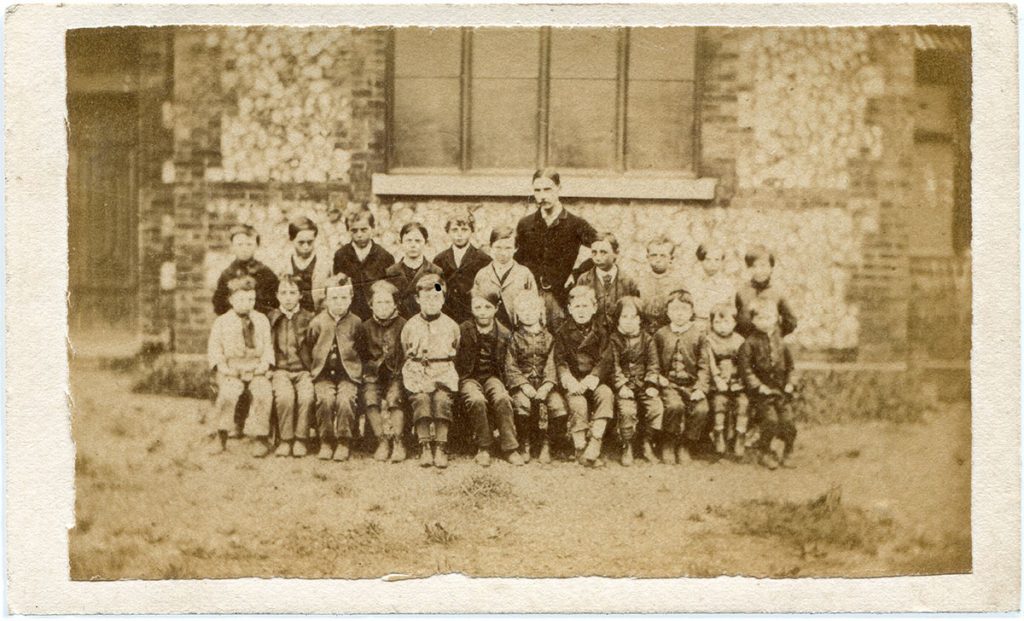
Victorian schooling extended the moral government of the household into public and semi-public institutions. The child who had learned obedience in the nursery, silence before adults, regularity at meals, and reverence on Sunday encountered similar expectations in the schoolroom. Education was not imagined merely as the transfer of information. It was training in attention, punctuality, posture, memory, deference, cleanliness, and self-command. Whether in dame schools, charity schools, Sunday schools, private academies, public schools, board schools, or workhouse schools, children were expected to submit their bodies and voices to institutional order. The classroom made visible what Victorian parenting often assumed: that character was formed through repeated habits of discipline.
Manners linked home and school because they translated hierarchy into daily conduct. Children were taught how to stand when addressed, how to answer respectfully, how to keep hands still, how to speak in turn, how to address teachers and adults, and how to distinguish proper behavior from vulgarity or insolence. These practices were not ornamental. They taught children to recognize authority before they understood argument. A child who sat upright, recited clearly, waited silently, and accepted correction was demonstrating more than academic progress. He or she was performing social teachability. Schooling strengthened the household’s work by making obedience portable. The child carried domestic discipline into the classroom, the pew, the workplace, and eventually the adult world. Manners also marked class aspiration and class judgment. To speak properly, avoid slang, keep clothes neat, control gestures, and defer to adults could signal that a child was being lifted into respectability, while rough speech or bodily restlessness might be treated as evidence of deficient home training. The schoolroom became a place where children learned not only letters and numbers, but the social grammar of Victorian life. They were trained to know where they stood, whom they must obey, and how authority expected to be answered.
Punishment occupied a central place in this educational order. Corporal punishment, detention, public shame, extra tasks, loss of privileges, isolation, copying lines, and verbal rebuke all reflected the assumption that misbehavior had to be corrected visibly and promptly. The rod, cane, strap, or ruler was defended by many teachers and parents as a necessary instrument of moral formation, especially when children were believed to be stubborn, idle, deceitful, or resistant to authority. Punishment was not always indiscriminate, and practices varied by school, teacher, class, gender, and period. Yet the larger logic was clear: pain, shame, or inconvenience could be used to interrupt self-will and imprint obedience. The disciplined child was expected not only to obey, but to accept punishment as deserved correction.
The famous Victorian public school system gave this philosophy a particularly influential form for middle- and upper-class boys. Schools such as Rugby became associated with muscular Christianity, games, prefect systems, moral seriousness, and the production of disciplined Christian gentlemen. Thomas Arnold’s reforms at Rugby were later remembered as an attempt to join scholarship, piety, character, and social leadership, though the mythology of the public school often became larger than the historical reality. For boys, separation from home could be treated as necessary hardening. They were expected to learn courage, loyalty, endurance, obedience to rules, and command within hierarchy. The school became a masculine world where family authority was replaced by masters, prefects, house systems, peer discipline, and codes of honor. Parenting did not disappear when boys left home. It was delegated to an institution that claimed to finish the moral work the family had begun.
For poorer children, schooling carried a different but related meaning. Charity schools, ragged schools, Sunday schools, workhouse schools, and later board schools aimed to discipline as well as educate. They taught reading, writing, arithmetic, scripture, punctuality, cleanliness, industry, and respect for authority, often under the assumption that poor children were especially vulnerable to idleness, crime, irreligion, and street corruption. The expansion of state involvement in education during the later nineteenth century, especially after the Elementary Education Act of 1870, marked a crucial shift. Childhood increasingly became a matter of public policy. Yet compulsory schooling did not simply replace labor with enlightenment. It also imposed new schedules, inspections, attendance requirements, moral standards, and judgments upon working-class families. Parents who needed children’s wages could find themselves pressured or penalized by a system that treated school attendance as both moral duty and civic necessity. Children who had once moved between street, home, workshop, errand, and casual labor were increasingly drawn into classrooms where time was divided by lessons, bells, registers, and examinations. This could expand literacy and opportunity, but it also brought poor families under a new kind of official gaze. The school promised improvement while measuring the home, and it often treated the child’s behavior as evidence of parental success or failure.
Victorian schooling reveals how parenting philosophies moved beyond parents themselves. The child was governed by a network of adults and institutions: mother, father, nurse, governess, teacher, clergyman, inspector, magistrate, employer, and reformer. Each claimed some authority over the child’s future. Manners taught children to inhabit hierarchy; punishment taught them that authority had consequences; schooling taught them that obedience could be organized by timetable, desk, lesson, bell, examination, and rule. As the century advanced, education increasingly carried the language of opportunity and national improvement, but its older disciplinary purpose remained deeply embedded. The Victorian child was not only raised at home. The child was schooled into society.
Innocence, Sentiment, and the Later Victorian Child

As the nineteenth century advanced, Victorian childhood was increasingly wrapped in the language of innocence. This did not replace the older belief that children required discipline, correction, and moral supervision, but it changed the emotional frame through which children were imagined. The child became not only a will to be governed, but a fragile soul to be protected, a figure of purity set against the corruption of the adult world. Domestic art, children’s literature, family photography, memorial culture, religious writing, and philanthropic rhetoric all helped elevate childhood into a sentimental ideal. The later Victorian child was still expected to obey, restrain appetite, accept correction, and submit to authority. Yet that same child was also more often described as precious, vulnerable, imaginative, spiritually receptive, and worthy of tenderness. This sentimental language did not make Victorian parenting modern in any simple sense. It did not produce a general belief that children should define themselves, speak freely, or escape adult discipline. Rather, it made childhood more emotionally charged. The child’s purity became something adults could admire, mourn, guard, and use as a mirror for their own anxieties about modern life. Industrial cities, class conflict, religious doubt, commercial entertainment, and sexual danger all made innocence seem more fragile, and more in need of supervision.
This sentimental turn drew on older Romantic ideas but became distinctively Victorian in its domestic and moral intensity. Childhood was imagined as a lost country, a realm adults could remember, mourn, idealize, and use as a measure of moral truth. Writers and artists often presented children as closer to nature, closer to heaven, or less corrupted by ambition and social compromise. Such images appeared in literature, painting, mourning cards, family albums, religious tracts, and stories of early death. The dead child became a powerful sentimental figure, imagined as preserved in innocence and gathered into divine care before the world could stain the soul. This emotional culture did not mean actual children were free from discipline. It meant adults increasingly invested childhood with symbolic value, turning the child into an emblem of purity that had to be guarded.
Literature played a central role in this transformation. Charles Dickens repeatedly used children to expose moral failure in adults and institutions, presenting childhood suffering as an indictment of cruelty, neglect, poverty, and social indifference. Lewis Carroll’s Alice books offered a different but equally influential vision of child consciousness, play, language, and imaginative disruption. Later Victorian children’s literature expanded the sense that children possessed a distinct inner world, not merely an incomplete adult mind awaiting correction. Yet even this literary recognition of child imagination remained shaped by adult control. Books written for children could celebrate curiosity while disciplining it, invite fantasy while enclosing it within moral order, and sentimentalize innocence while teaching obedience, duty, charity, gender roles, and religious feeling. The child reader was invited to dream, but rarely without supervision. This was one of the subtler forms of Victorian authority: it allowed children imaginative space while defining the moral boundaries of that imagination. Adventure could be permitted when it returned the child to courage, loyalty, empire, family, or faith. Nonsense could be enjoyed when it remained safely framed as play. Sympathy could be cultivated when it trained charity rather than rebellion. Literature helped create a richer idea of the child’s mind, but it also helped adults organize that mind according to Victorian expectations.
The cult of innocence also intensified anxieties about corruption. If children were pure, then the world around them became dangerous in new ways. Urban streets, cheap print, sexual knowledge, bad companions, irreligion, poverty, alcohol, theaters, markets, and uncontrolled leisure could all be imagined as threats to the child’s moral and spiritual safety. Protection became another form of regulation. Parents, governesses, teachers, clergy, and reformers watched what children read, where they went, whom they met, what they heard, how they played, and what they knew. Girls were especially enclosed within this protective logic, since female innocence was tied to family respectability and sexual purity. But boys too were guarded against vice, bad habits, and premature knowledge. Sentimental childhood did not loosen adult authority; it often expanded it by giving supervision the language of love.
This later Victorian ideal also sharpened class contrasts. Middle-class children could be sheltered, photographed, educated, memorialized, and surrounded by objects that reflected their sentimental value: toys, books, portraits, nursery furnishings, religious keepsakes, and family rituals. Poor children, by contrast, were often used as the raw material of sentimental reform. Philanthropic writing and social investigation portrayed them as innocent victims of hunger, neglect, drunken parents, overcrowded housing, dangerous streets, or exploitative labor. Such portrayals could inspire real concern and reform, but they also risked turning poor children into symbols rather than fully complex people. Their innocence had to be proven against dirt, labor, rough speech, street knowledge, and family poverty. The middle-class child was presumed protectable; the poor child was often first imagined as damaged, endangered, or in need of rescue from surroundings that reformers only partly understood.
The later Victorian child stood at the intersection of sentiment and control. The older disciplinary child did not disappear; he or she was overlaid with new emotional meanings. Innocence made childhood more precious, but also more supervised. Imagination made children more interesting, but also more carefully managed. Vulnerability made reform more urgent, but also justified deeper intervention into poor families. Victorian adults increasingly cherished childhood while continuing to regulate children’s bodies, emotions, reading, speech, movement, sexuality, and futures. The result was one of the defining paradoxes of the age: childhood was idealized precisely as actual children remained under intense authority. The Victorian child became sacred in the imagination even as daily life continued to train that child in silence, obedience, modesty, and self-command.
Expert Parenting, Medical Advice, Hygiene, and the Scientific Management of Childhood

By the later nineteenth century, Victorian parenting was increasingly shaped by expert advice. Older assumptions about obedience, restraint, and moral discipline did not disappear, but they were joined by a growing belief that children should be managed according to medical, hygienic, educational, and developmental knowledge. The household manual, the physician’s guide, the public health report, the educational treatise, and the domestic advice book all helped turn parenting into a field of specialized instruction. Mothers and nurses were still expected to rely on moral judgment and inherited domestic wisdom, but they were also increasingly told that proper child-rearing required information: how to feed an infant, ventilate a nursery, regulate sleep, prevent contagion, manage teething, clothe the body, respond to nervousness, and recognize dangerous symptoms. Parenting became not only a duty of love and authority, but a practice that could be corrected by experts.
This expert culture reflected the larger Victorian fascination with order, classification, and improvement. The same society that mapped cities, inspected factories, counted populations, regulated schools, and debated sanitation also began to look more closely at children’s bodies and habits. Childhood could be observed, measured, scheduled, and improved. Infant mortality, infectious disease, malnutrition, overcrowding, and poor sanitation made child health a pressing public concern, especially in urban Britain. Advice about washing, fresh air, clean bedding, proper food, and regular habits carried urgent practical significance. Yet these recommendations also extended adult authority more deeply into the child’s daily life. The child’s body became a site where household care, medical knowledge, public health reform, and moral discipline converged.
Hygiene was one of the clearest bridges between old and new parenting philosophies. Cleanliness had long carried religious and moral associations, but nineteenth-century public health concerns gave it new scientific urgency. A clean child suggested not only respectability but competent supervision. A well-aired nursery, washed clothing, regular bathing, clean bedding, and orderly feeding practices became visible signs that a household understood its duties. For middle-class families, hygiene could become part of domestic respectability, a way of displaying moral and managerial competence. Clean children and clean rooms announced that the household was governed, watchful, and properly ordered. Dirt, by contrast, could be read as danger: danger of disease, danger of neglect, danger of moral looseness, and danger of social disorder. For working-class families, hygienic advice often collided with poverty. Clean water, space, ventilation, fuel, spare clothing, and time were not equally available. A mother might be blamed for failing to maintain standards that her housing, wages, and working conditions made nearly impossible. Reformers sometimes treated dirt as moral failure when it was also the material evidence of overcrowding, low wages, poor housing, and inadequate infrastructure. Hygiene became both a genuine public health necessity and a class-coded measure of parental worth.
Medical advice also reshaped the interpretation of childhood behavior. Crying, restlessness, appetite, sleep, fear, precocity, fatigue, and excitability could be read not only as moral signs, but as symptoms. This did not necessarily make parenting gentler. A nervous or difficult child might still be disciplined, but he or she could also be examined through emerging ideas about development, heredity, overstimulation, education, and bodily weakness. The late Victorian child was increasingly understood through the relationship between mind and body. Excessive study might strain the nerves; improper reading might excite the imagination; poor diet might weaken character as well as health; masturbation, bad company, or premature sexual knowledge might be framed as medical and moral danger together. Scientific language did not replace moral anxiety. It often gave moral anxiety a new vocabulary.
The scientific management of childhood also strengthened the authority of schedules and routines. Feeding times, sleep hours, lessons, walks, bathing, exercise, and rest could all be organized according to advice that presented regularity as both healthy and morally desirable. This was especially important for infants and young children, whose dependence made them central to debates about maternal duty and nursery management. The good mother was increasingly expected to be observant, informed, disciplined, and responsive to expert instruction. She had to notice symptoms without becoming hysterical, follow rules without losing tenderness, and manage the child’s body as carefully as she managed the household economy. The nurse, too, became more significant as a trained or semi-trained figure whose competence could determine whether domestic care met modern standards. Child-rearing was becoming professionalized even within the home.
Yet expert parenting carried a paradox. It could improve children’s lives by encouraging sanitation, better infant care, vaccination, ventilation, nutrition, and attention to health. It could also make parents, especially mothers, more anxious and more closely judged. The mother who had once been morally responsible for the child’s soul was now increasingly responsible for the child’s body, nerves, habits, diet, development, and environment. Failure could be interpreted through medicine as well as morality. Victorian parenting moved toward modernity without leaving its older discipline behind. The child remained a soul to be governed, but also became a body to be managed, a mind to be observed, a nervous system to be protected, and a future citizen whose health mattered to family, class, and nation. In that shift, the nursery became not less regulated, but more intensely watched than ever.
Reform, Protection, and the Late Victorian Child Welfare Turn
The following video from “Drowsy Historian” covers child labor in Victorian London:
By the late nineteenth century, Victorian parenting was no longer treated as an entirely private matter. The home remained the central moral institution of childhood, but reformers, physicians, teachers, magistrates, philanthropists, clergy, inspectors, and legislators increasingly claimed that children had interests that could justify intervention beyond parental authority. This was a major shift. Earlier Victorian culture had emphasized obedience within the household, but later Victorian reform placed greater stress on neglect, cruelty, exploitation, health, schooling, and the child’s vulnerability before adult power. Parents still possessed enormous authority, but that authority was becoming conditional. A household that failed to feed, educate, protect, or discipline children properly could be judged not simply unfortunate or immoral, but socially dangerous and legally suspect.
This child welfare turn emerged from several overlapping concerns. Industrial labor had exposed children to exhaustion, injury, and premature adult responsibility. Urban poverty placed children in overcrowded housing, polluted streets, irregular employment, and public visibility. Compulsory education made attendance, literacy, and school discipline matters of public oversight. Medical and sanitary reform made infant mortality, hygiene, nutrition, and domestic cleanliness objects of investigation. Campaigns against cruelty to children, especially in the final decades of the century, challenged the older assumption that parental power should remain largely protected from scrutiny. Reformers increasingly argued that children were not merely dependents inside families, but vulnerable persons whose suffering could indict society itself. This did not abolish hierarchy, but it changed the moral vocabulary. The child became a subject of rescue as well as discipline.
Yet protection was never neutral. Late Victorian child welfare often carried middle-class assumptions about proper family life, cleanliness, gender, religion, respectability, and emotional order. Reformers could intervene against real abuse, hunger, abandonment, and exploitation, but they also judged poor households by standards shaped by their own domestic ideals. A working mother, a crowded room, an irregular wage economy, rough speech, street play, or dependence on older siblings could be interpreted as evidence of neglect even when the deeper cause was poverty. The same society that had long depended on working-class labor now scrutinized working-class parenting for the visible consequences of deprivation. Protection contained a contradiction: it could save children from genuine harm while also expanding surveillance over the poor. The child’s vulnerability became a moral claim, but also an administrative opening. Once the neglected child became visible to philanthropic and legal systems, the family itself could become an object of inspection, classification, and correction. Visitors, school authorities, charitable workers, and child protection advocates did not simply ask whether a child suffered; they often asked whether the household resembled the respectable domestic model they already valued. This meant that welfare could blur the line between rescue and regulation. A starving child, a beaten child, or an abandoned child clearly demanded intervention, but many cases existed in murkier territory, where poverty, overcrowding, maternal labor, illness, or informal childcare looked like parental failure to outsiders. The late Victorian language of protection expanded compassion while also sharpening the power of outsiders to define what counted as a proper home.
The late Victorian welfare turn also altered the meaning of parental failure. In earlier moral frameworks, bad parenting might be understood as indulgence, irreligion, weak discipline, or defective domestic government. By the end of the century, failure could also be described through neglect, cruelty, insanitary conditions, malnutrition, truancy, improper guardianship, and danger to the child’s development. This expanded the number of people authorized to speak about childhood. Teachers reported absences. Inspectors assessed homes and institutions. Doctors commented on infant care and disease. Charitable visitors entered poor neighborhoods. Courts and reformatories claimed authority over children deemed neglected, delinquent, or endangered. The parent remained central, but no longer stood alone. Childhood had become a public concern, and parenting was increasingly measured against standards produced outside the family.
The Victorian child welfare turn did not simply replace severity with compassion. It reorganized authority. Children were increasingly imagined as beings with claims upon protection, education, health, and rescue, but they were also drawn more deeply into systems of classification, inspection, and correction. The sentimental child of late Victorian culture became the protected child of reform, yet the protected child was also the watched child. This transformation carried real humanitarian force, especially where it challenged cruelty, labor exploitation, abandonment, and preventable suffering. But it also preserved older Victorian habits of discipline, class judgment, and moral supervision. By the century’s end, parenting had become both more accountable and more exposed. The child still belonged to the family, but now also to the school register, the medical report, the reform society, the court, and the state’s widening imagination of social responsibility.
Conclusion: The Child Victorian Parenting Tried to Make
Victorian parenting tried to make a child who could be loved without being indulged, protected without being freed from authority, and educated without being encouraged toward uncontrolled self-expression. Across the nineteenth century, the child was treated as a moral being whose body, speech, appetite, emotions, reading, play, manners, and labor all required adult interpretation. Parents, nurses, governesses, teachers, clergy, doctors, reformers, and eventually the state all claimed some role in this work of formation. Childhood was not understood as a private realm of innocence alone. It was a training ground where the future adult, household, class order, gender system, religious conscience, and national character were supposed to take shape.
This formation rested on a deep tension. Victorian adults increasingly sentimentalized children as pure, fragile, imaginative, and spiritually precious, yet they also continued to discipline them as willful, unruly, vulnerable to corruption, and in need of constant supervision. The same child could be kissed in the nursery, corrected at table, silenced before guests, inspected for cleanliness, hardened by cold water, protected from sexual knowledge, punished at school, and idealized in literature as the emblem of lost innocence. This was not hypocrisy in the simplest sense. It was a structure of belief. Many Victorians thought innocence survived only when carefully guarded, and that guarding required obedience, restraint, religious instruction, moral surveillance, and the refusal of indulgence.
Class and gender ensured that this child was never one universal figure. The middle-class child was governed for respectability, education, domestic refinement, and future social position. The working-class child was more often drawn into labor, reform, suspicion, rescue, schooling, and public scrutiny. Boys were disciplined toward independence, endurance, command, and useful public action, while girls were disciplined toward modesty, service, purity, emotional care, and domestic influence. These distinctions did not erase affection, nor did they make all Victorian families equally severe. But they show that parenting was one of the central ways the culture reproduced hierarchy. The child was taught where to stand before learning fully how to ask why.
By the end of the Victorian era, parenting had become both more sentimental and more supervised, more protective and more public, more scientific and more anxious. The older child of original sin had not vanished; the newer child of innocence had not escaped discipline. Instead, they coexisted inside the same nursery, schoolroom, chapel, factory town, reform society, and domestic manual. The child Victorian parenting tried to make was obedient but morally alive, innocent but watchful, self-controlled but affectionate, useful but protected, gendered but respectable, dependent but already burdened with the future. In trying to shape that child, Victorian society revealed its deepest fears: disorder, indulgence, poverty, sexuality, weakness, irreligion, class instability, and the frightening possibility that the next generation might not reproduce the world adults had built.
Bibliography
Affiliate disclosure: Amazon links on this site are paid links. As an Amazon Associate I earn from qualifying purchases.
- Altholz, Josef L. The Religious Press in Britain, 1760–1900. Westport, CT: Greenwood Press, 1989.
- Arnold, Thomas. Sermons Preached in the Chapel of Rugby School. London: B. Fellowes, 1832.
- Behlmer, George K. Child Abuse and Moral Reform in England, 1870–1908. Stanford, CA: Stanford University Press, 1982.
- Carroll, Lewis. Alice’s Adventures in Wonderland. London: Macmillan, 1865.
- Cassell’s Household Guide: Being a Complete Encyclopaedia of Domestic and Social Economy, and Forming a Guide to Every Department of Practical Life. Vol. 1. London: Cassell, Petter, and Galpin, 1869.
- Cunningham, Hugh. Children and Childhood in Western Society Since 1500. London: Routledge, 1995.
- Davidoff, Leonore, and Catherine Hall. Family Fortunes: Men and Women of the English Middle Class, 1780–1850. London: Hutchinson, 1987.
- Davin, Anna. “Imperialism and Motherhood.” History Workshop Journal 5:1 (1978), 9–65.
- Dickens, Charles. Oliver Twist; or, The Parish Boy’s Progress. London: Richard Bentley, 1838.
- Donnison, Jean. Midwives and Medical Men: A History of Inter-Professional Rivalries and Women’s Rights. London: Heinemann, 1977.
- Ellis, Sarah Stickney. The Mothers of England: Their Influence and Responsibility. London: Fisher, Son, & Co., 1843.
- —-. The Women of England: Their Social Duties and Domestic Habits. London: Fisher, Son, & Co., 1839.
- Fildes, Valerie. Breasts, Bottles and Babies: A History of Infant Feeding. Edinburgh: Edinburgh University Press, 1986.
- Frost, Ginger S. Victorian Childhoods. Westport, CT: Praeger, 2009.
- Furneaux, Holly. “Children of the Regiment: Soldiers, Adoption, and Military Tenderness in Victorian Culture.” Victorian Review 39:2 (2013), 79-96.
- Gaskell, Elizabeth. The Life of Charlotte Brontë. London: Smith, Elder, & Co., 1857.
- Gorham, Deborah. “The ‘Maiden Tribute of Modern Babylon’ Re-Examined: Child Prostitution and the Idea of Childhood in Late-Victorian England.” Victorian Studies 21:3 (1978), 353-379.
- —-. The Victorian Girl and the Feminine Ideal. Bloomington: Indiana University Press, 1982.
- Gubar, Marah. Artful Dodgers: Reconceiving the Golden Age of Children’s Literature. Oxford: Oxford University Press, 2009.
- Hendrick, Harry. Child Welfare: Historical Dimensions, Contemporary Debate. Bristol: Policy Press, 2003.
- Hilton, Mary. Women and the Shaping of the Nation’s Young: Education and Public Doctrine in Britain, 1750–1850. Aldershot: Ashgate, 2007.
- Honey, J. R. de S. Tom Brown’s Universe: The Development of the Victorian Public School. London: Millington, 1977.
- Humphries, Jane. Childhood and Child Labour in the British Industrial Revolution. Cambridge: Cambridge University Press, 2010.
- Laqueur, Thomas W. Religion and Respectability: Sunday Schools and Working Class Culture, 1780–1850. New Haven: Yale University Press, 1976.
- Locke, John. Some Thoughts Concerning Education. Edited by John W. Yolton and Jean S. Yolton. Oxford: Clarendon Press, 1989.
- Macleod, Dianne Sachko. Art and the Victorian Middle Class: Money and the Making of Cultural Identity. Cambridge: Cambridge University Press, 1996.
- Mangan, J. A. Athleticism in the Victorian and Edwardian Public School: The Emergence and Consolidation of an Educational Ideology. Cambridge: Cambridge University Press, 1981.
- Mayhew, Henry. London Labour and the London Poor. Vol. 1. London: Griffin, Bohn, and Company, 1861.
- McLeod, Hugh. Religion and Society in England, 1850–1914. New York: St. Martin’s Press, 1996.
- Murdoch, Lydia. Imagined Orphans: Poor Families, Child Welfare, and Contested Citizenship in London. New Brunswick: Rutgers University Press, 2006.
- Nelson, Claudia. Family Ties in Victorian England. Westport, CT: Praeger, 2007.
- —-. Precocious Children and Childish Adults: Age Inversion in Victorian Literature. Baltimore: Johns Hopkins University Press, 2012.
- Peterson, M. Jeanne. “The Victorian Governess: Status Incongruence in Family and Society.” Victorian Studies 14:1 (1970), 7-26.
- Pinchbeck, Ivy, and Margaret Hewitt. Children in English Society. Vol. 1 and 2, From Tudor Times to the Eighteenth Century. London: Routledge and Kegan Paul, 1969.
- Plotz, Judith. Romanticism and the Vocation of Childhood. New York: Palgrave, 2001.
- Poovey, Mary. Uneven Developments: The Ideological Work of Gender in Mid-Victorian England. Chicago: University of Chicago Press, 1988.
- Rousseau, Jean-Jacques. Emile, or On Education. Translated by Allan Bloom. New York: Basic Books, 1979.
- Schatz, Stephanie L. “Lewis Carroll’s Dream-child and Victorian Child Psychopathology.” Journal of the History of Ideas 76:1 (2015), 93-114.
- Shammas, Carole. “Training, Restraining and Sustaining: Infant and Child Care in the Late Nineteenth Century.” Material Culture Review 30 (1989), 5–16.
- Shuttleworth, Sally. The Mind of the Child: Child Development in Literature, Science, and Medicine, 1840–1900. Oxford: Oxford University Press, 2010.
- Smith, F. B. The People’s Health, 1830–1910. New York: Holmes & Meier, 1979.
- Smith, L., S. J. Thornton, J. Reinarz, and A. N. Williams. “Please, Sir, I Want Some More.” BMJ: British Medical Journal 337:7684 (2008), 1450-1451.
- Stearns, Peter N. Anxious Parents: A History of Modern Childrearing in America. New York: New York University Press, 2003.
- Stephens, W. B. Education in Britain, 1750–1914. New York: St. Martin’s Press, 1998.
- Tholfsen, T. R. “Moral Education in the Victorian Sunday School.” History of Education Quarterly 20:1 (1980), 77–99.
- Tosh, John. A Man’s Place: Masculinity and the Middle-Class Home in Victorian England. New Haven: Yale University Press, 1999.
- Vicinus, Martha. Independent Women: Work and Community for Single Women, 1850–1920. Chicago: University of Chicago Press, 1985.
- Vincent, David. Literacy and Popular Culture: England 1750–1914. Cambridge: Cambridge University Press, 1989.
Originally published by Brewminate, 05.28.2026, under the terms of a Creative Commons Attribution-NonCommercial-NoDerivatives 4.0 International license.
About the Author