Moscow’s All-Union Fashion House aimed to bring stylish clothing to Soviet citizens after World War II. Factory quotas and shortages complicated the work of its ambitious designers.

By Dr. Jukka Gronow
Professor of Sociology
Uppsala University

By Dr. Sergei Zhuravlev
Senior Researcher
Institute of Russian History
Russian Academy of Sciences
The Moscow House of Fashion Design of Clothes was founded in the beginning of 1944 under the People’s Commissariat of Light Industry-more than a year before the end of the war! Knowing that the final victory was approaching the Soviet Government gave an unusual present to its people, thus concretely showing that they took care of their own. What could be done to brighten the lives of people returning home after four hard war years? What could be more natural than to promote the production of decent civilian clothing? It was crucial for the citizens to be able to throw away their uniforms and quilted jackets and dress themselves beautifully and fashionably, to enjoy the fruits of victory. Fashion and beauty were excellent medicine for the wounds of war. This is what we can imagine the leaders of the country reasoned among themselves. They decided to forcefully promote the emergence of real professional fashion design in the country. It was decided that the best artists and designers should thenceforth have the main responsibility for designing new clothing. Furthermore, the garment factories were also expected to reorient their production following these better clothing patterns and not their own old pre-war ones. What was needed, above all, was to rapidly enlarge the clothing market, which had been very restricted during the war. In practice, the only options people had were to repair and remake their pre-war clothes or wear their old military uniforms and war loot that they brought back from the front.
According to the plans, all goods that were out of fashion and unattractive would disappear. Soon Soviet people would be able to find in any clothing shop only the most exclusive and fashionable clothes. The great advantages of the socialist, planned economy would become evident in the production of fashion too. The state planning and control of the garment factories would guarantee the provisioning of high quality textiles, highly qualified workers, modern machines and the latest technology, and exclusively fashionable sewing patterns. Consequently there would not be anything to prevent the population of the USSR from changing their outer appearance completely in the near future, dressing themselves in brand new clothes and feeling themselves real “aristocrats of fashion.” This is how it all looked in the plans, which unfortunately proved to be as far removed from reality as the whole coming Communist society.
The moment for this revolution of fashion was well selected. After the end of the war the garment factories already had to reorient their production for the needs of peaceful existence, which had been almost totally neglected during the four long years of war. It was only natural to take advantage of the situation and to start producing from the very beginning civilian clothes of only the best and most fashionable kind. The authorities thought this could best be achieved by the same methods of military directives and commands that had been effective during wartime. As soon became evident, however, fashion was not as easy to command as the army.
The textile and garment industry concentrated under the People’s Commissariat (later Ministry) of Light Industry had the main responsibility for the rapid recovery and strengthening of the market for mass-produced consumer goods with the help of fashionable, high-quality clothing. These factories did not, however, have their own designers and pattern makers anymore since the research and development laboratories and workshops that had been established shortly before the war had all been closed down during the war. There was also another problem: in order to provide the factories with the new clothing patterns to be sewn on assembly lines it was not enough just to provide pleasing new designs. Also needed were total setups of technical documentation, including detailed industrial patterns and instructions. In order to solve the problem, a centralized system of professional design and pattern makers was created within the People’s Commissariat of Light Industry with the explicit purpose of serving all the garment factories in the whole country.
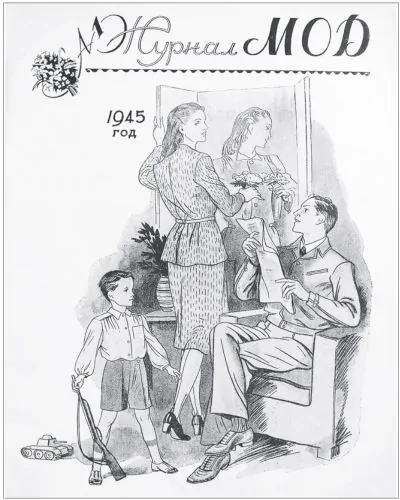
Such a system was created over a few major stages and periods. In the rst stage (1944–1948) only a few regional houses of fashion design existed in the major cities of the country, the Moscow House of Fashion Design (MDMO) from 1944 onwards as the leader among them. A decree of the Soviet of the People’s Commissars of the RSFSR (the Government of the Russian Republic; April 23, 1944), with an almost simultaneous order from the Moscow City Administration of Light Industry, founded the MDMO in April 1944.165 (Fig. 4.1.) The archival documents reveal that the original plans stem from January 1944, when the war was still being fought on all fronts and the siege of Leningrad had not yet been broken. The Leningrad House of Fashion Design appeared a bit later, in 1945.
By August 1948 such houses existed in Moscow, Leningrad, Kiev, Minsk and Riga. By the beginning of the next year their number had increased to 12.166 They provided new clothing designs with the attached complete technical documentation to the garment factories mainly in their own Soviet Republic or region.
In 1949 the Moscow House of Fashion Design received the status of the All-Union House (ODMO) and the whole system of fashion design institutions became centrally organized. All the other houses of fashion design and other institutes in the field were subsumed under its leadership in questions of design methods, trend-setting, quality control and so on. During 1944–1948 designing was separated from pattern making and consequently MDMO and the other regional houses of fashion design under the Ministry of Light Industry concentrated their efforts on developing new designs. In general, pattern making was the prerogative of the garment factories. In 1949, when ODMO was created and the whole system was reorganized, this division of labor was considered a mistake. Starting in 1948–1949 all the houses of fashion design designed prototypes of new clothes, made their patterns, and provided factories with the necessary technical documentation. In other words, they provided the clothing factories with everything they needed to start producing new designs at once. In a way this concluded the first stage of the construction of the system of fashion design in the Soviet Union.167 In the 1970s, the number of the republican and regional houses of fashion design was almost 40 and their activities covered all the republics and regions belonging to the country.
Many of the main principles of Soviet fashion as well as the general Soviet approach to fashion design were set down as early as the second half of the 1940s and the beginning of the 1950s, mainly through the practice of the Moscow, later All-Union, House of Fashion Design. From its foundation in 1944 it was expected to be economically self-sustaining, covering its expenses mainly by selling its new designs to the garment factories in the Moscow region. These enterprises, often working on minimal budgets, preferred not to order anything at all, instead using their own pre-war designs. They could get away with this because under the post-war conditions the consumer demand of the population was very modest – not only fashionable but also almost any kind of cheap or practical clothing could find customers immediately. Therefore, the only alternative MDMO had was to create and propose new designs for the factories on its own initiative, often at great economic risk and often resulting in great losses. In addition to serving the factories in the capital area, in the second half of the 1940s the designers in Moscow started to cooperate with the enterprises in other areas of the country, including regions which had only recently suffered from German occupation and which were therefore entitled to special help without any extra financial compensation.168
Since industrial design proved to be unpro table under the prevailing conditions, MDMO’s main source of income in 1944–1947 was in fact the orders from the Glavosobtorg, a department of the Ministry of Trade engaged in commercial trade, which was allowed in the country in those years. People were willing to pay high, commercial prices only for fashionable and good quality clothes. MDMO not only worked out new fashion designs on the orders of Glavosobtorg but even started to sew them in small series. For this purpose a pattern making department as well as a workshop for sewing light female clothing were both opened at Kuznetskii Most Street.169
The establishment of such workshops or departments sewing clothes in smaller series could have become important alternatives to industrial mass production even if they could never seriously threaten its leading position. After the whole system of post-war commercial trade was shut down at the end of the 1940s170 the production of small series did not immediately end at Kuznetskii Most street: the department of “multiple items” or small series of designer clothes was closed down only in 1962. It was said not to fit the profile of the House as an All-Union theoretical and experimental center of fashion.171 Even after that the House would produce some 50–150 experimental pieces of their own new designs, which were then sold in the Moscow clothing shops in order to get information about the demand for their designs. However, these minimal amounts of clothing could not have any real impact on the commercial markets since, as a rule, they hardly ever reached the normal shops and were mostly distributed privately by the various employees of the Ministry of Trade.
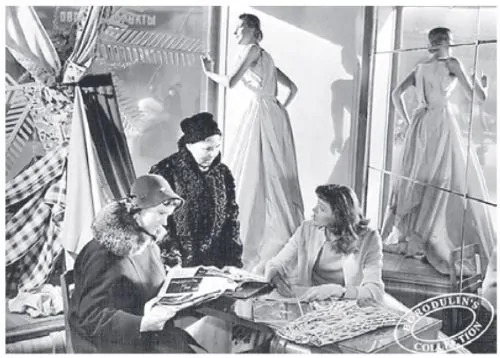
In the 1940s the specialists at Kuznetskii Most street designed not only for industry but also for the system of state ateliers and dressmakers. Therefore, the House of Fashion Design opened an artistic atelier of custom made clothes which took orders from the population for clothes sewn using MDMO’s own designs. This practice was also understood to be a form of market research. It enjoyed great popularity among the Muscovites and the visitors to the capital and was part of the structure of MDM/ODMO until the beginning of the 1960s when it was closed down as not fitting the profile of the House. This was claimed to be a consequence of the increasing burden caused by the more central tasks of ODMO.172 (Fig. 4.2.)
Similar ateliers existed in the post-war period at the other houses of fashion design at the Ministry of Light Industry. For instance, the Moscow (later All-Union) House of Fashion Design of Knitwear had one in its early days. In 1963 it already had two ateliers. One of the ateliers, in addition to fulfilling individual orders, sewed women’s underwear, to be sold in small series. In addition to the ateliers, the House of Fashion Design of Knitwear had a small experimental factory under its administration. In 1962, for instance, it produced 82,000 items of underwear as well as 68,000 items of knitwear.173 Thus, the Houses of Fashion Design under the Ministry of Light Industry, which were the most professional and largest organizations of fashion design in the postwar years, combined various functions in their activities, from the design of individual clothes to the production of small industrially produced series of clothes. In the long run, these organizations developed in the direction of greater specialization, cutting down other production functions which did not quite fit their core profile.
The basic principle that guided the Soviet industrial design of clothes was, just as in other countries, seasonality. Every year, all the institutes of fashion design prepared two main collections: spring-summer and autumn-winter. MDMO/ODMO, for instance, designed men’s, women’s, and children’s wear, women’s underwear, and head wear. Women’s clothes dominated fashion design in the USSR just like in the rest of the world. As early as the fourth quarter of 1944 when the war was still going on but the victory of 1945 was already concretely in mind, the specialists of MDMO designed 137 items of women’s clothing, 54 men’s and women’s suits, 108 items of children’s wear, 11 pieces of women’s underwear and 18 hats.174
In 1945 – during its first whole year of existence – MDMO offered about one thousand clothing patterns to the garment industry.175 In 1949 the designers worked out as many as 2591 new designs and 2844 in 1950.176 The staff of MDMO was rather small: on the first of January 1946 it employed 29 designers and 17 design engineers.177 In the beginning of 1950 ODMO already had 617 employees, among them 32 fashion designers.178
The design work took place under the conditions typical of the immediate post-war years. Practically everything was in great shortage and much had been destroyed in the war years: there were no electric light bulbs to light the design halls, no pins or pencils for the pattern makers. Often many basic raw materials were missing as well. The annual report of MDMO declared in 1945 that “the provisioning with basic textiles took place with breaks.”179 To save the situation, the director gave orders to MDMO to organize their own production of fashion dolls, lasts, hangers and other similar production items, all necessary for the designers’ work.
As soon became evident, to create a design for a beautiful garment was only half the job. It was equally important to manage taking it into production in the original form. This proved to be a very labor intensive task in 1945, as well as later on. By referring to many objective difficulties, from old and worn out machinery and the lack of qualified workers and necessary textiles to the extra labor which the production of fashionable items necessarily demanded and which did not fit into the strict labor norms of the plans, the factories could refuse to take more developed designs into production. They either demanded the designs’ modification or greatly simplified them by their own efforts.
During the war the workers at these factories had experienced a remarkable transformation. They had become professionally unqualified. The workers had become used to sewing one and the same piece of cloth from one month to another and one and only grey greatcoat or military uniform. They did not have experience of sewing more complicated or demanding clothes, which were more varied in style and demanded the knowledge and skills of a larger number of difficult operations. The workers were also not used to the stress of continuously adapting to the demands of civilian apparel, which changed following the fashion cycles. The new post-war demands took them mostly by surprise.
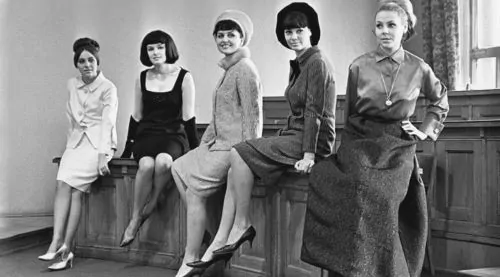
Since the garment factories in the Soviet Union were not directly dependent on customer demand and oriented themselves mainly towards the fulfillment of their state quotas measured in total production quantities, their ideal was the production of technically simple clothes in great quantities and in minimal variety, which did not demand complicated or labor intensive operations. It was also important for them not to have to change their assortment too often. Such an approach to clothing production was the direct opposite of constantly changing fashion, the interests of the consumers, and also the wishes of the designers, who would have liked to see their original and unique designs in mass production. Gradually, due to their long-term experience of communication with the representatives of the garment factories the designers underwent a process of creative “self-censorship” by giving way to the practical demands of the dressmakers. The fact that the design organizations were punished with a loss of income in the form of bonuses due to the low percentage of designs taken into production also encouraged them to adjust to the harsh reality.
However, the appearance on the shop shelves of out-of-fashion, low quality and badly sewn garments incited the righteous anger of the population. The Minister of Light Industry – and the future Soviet Prime Minister – Kosygin lost his patience in 1947. In consequence, the leading designers of MDMO were partly liberated from their creative work and sent to the factories to closely follow what was concretely turned out on the production sites of the garment enterprises. The purpose of this measure was to control the quality of clothing designs in the factories. The degree to which they followed fashion, fulfilled the demands of the population and the aesthetic characteristics of their products were used as the main criteria of evaluation in the inspection. The comprehensive inspection work continued in 1947 and 1948 and its results proved to be quite devastating. Many products were taken completely out of production. For the first time both some factories and whole regions of the country were prohibited from designing and making the patterns for their own clothes. Under the circumstances the creation of a centralized All-Union system of fashion design, with ODMO at its head, was considered to be the best solution for light industry.
After these scandalous revelations the MDMO alone, or rather the new All-Union ODMO now under planning, was supposed to satisfy for the time being the need for all new designs even outside the capital region.180 It was entrusted with inspecting and controlling the garment enterprises to ensure that their clothes were fashionable enough.181 As a consequence, the system of regular curators was established at the end of the 1940s at ODMO and in the other regional houses of fashion design at the Ministry of Light Industry: particular designers were henceforth connected to particular factories engaging in the – from the point of view of the factories – rather humiliating control over which new designs were taken into production and how. These control functions were in fact out of the range of the designers’ professional expertise. Yet they were preserved intact in the Soviet houses of fashion design all through Soviet times. The houses of fashion design did not, however, enjoy any formal legally binding rights in their control functions. The curator could not, for instance, simply order simplified and distorted designs to be taken out of production.
After the establishment of the system of fashion design for industrial production the time had come to change the system for customized sewing of clothes at fashion ateliers. After the war no unified system existed in the Soviet Union. The fashion ateliers that functioned in the regions belonged to various ministries, cooperatives or units of local administration. The best ateliers in Moscow belonged, for instance, to the conglomerate Mosindodezhda under the Moscow City Administration, which created its own design organizations and in the 1950s opened its own house of fashion design with a staff of professional designers and pattern makers. As a consequence of the establishment of this parallel system, the houses of fashion design under the Ministry of Light Industry stopped designing clothes for the ateliers and concentrated on industrial designs only.
However, in the first post-war years new designs were understandably in great shortage, and the ateliers mainly used designs from foreign fashion journals and from patterns which they had acquired as war loot. In 1946 the MDMO was therefore expected to make sure that the ateliers used only “our own, Soviet designs.” When discussing and judging the new designs its artistic council decided which designs would be recommended to the factories and which to the ateliers. As a rule, designs which were thought to be too difficult and complicated for industrial production because of the great number of details or an increased demand for raw materials in comparison to the existing norms were directed to the ateliers. The employees of MDMO gave out special albums each quarter for the use of the ateliers, with detailed instructions and sewing patterns for the new designs worked out by their designers.182
The artistic director of ODMO, Anna Fedorovna Blank, claimed in 1949, with good reason, that everything that took place in the ateliers of individual sewing, in particular in the provinces, “was covered in darkness.”183 For years, no one had inspected or controlled their work from the point of view of fashion or taste. The first inspection tour by the Moscow designers, with the aim of inspecting the ateliers of customized sewing in the city of Ivanovo, revealed that the assortment offered to the citizens “did not at all correspond to the modern style.”184 An order of the Ministry of the Light Industry in 1950 obliged ODMO to control and coordinate the collaboration with the garment factories as well as with the ateliers of individual sewing in their ongoing renewal of design according to fashion trends. Thus ODMO became, at least formally, a real dictator of Soviet fashion. In practice, however, it had very limited means and resources to force its will on the numerous Soviet garment factories and design organizations.
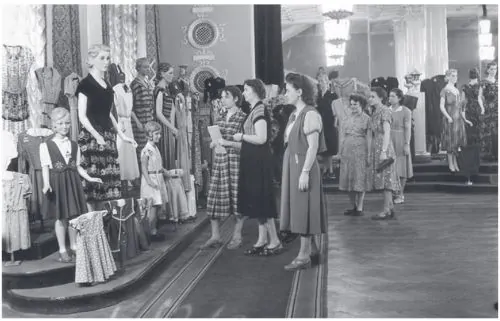
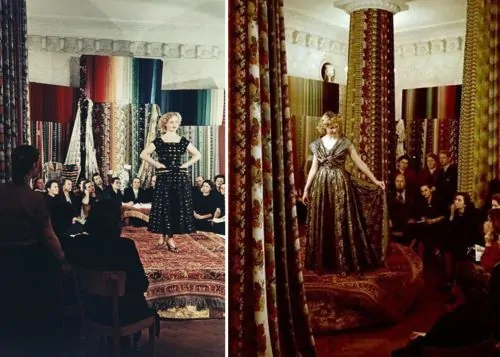
The archival data about MDMO for 1944–1947 reveal that, in many ways, it continued the tradition of the Moscow (later Central) House of Fashion Design that had come into being in 1934. At the same time its functions also differed quite drastically. The main difference was not only the amount of workers or the amount of accomplished work but above all larger variety and breadth of its functions and obligations. As early as the second part of the 1940s, MDMO and later ODMO had turned into a veritable “institute of fashion.” In addition to its main practical tasks, the servicing of the factories and ateliers with new fashion designs, it took care of the publishing and distribution of works on fashion, the propaganda of the culture of dress (with the help of lectures, fashion shows and exhibitions in its demonstration hall among other things), research in the theory and method of Soviet fashion, the analysis and prognosis of the trends of world fashion, and so on.185 (Fig. 4.3.) The annual report of 1945 mentioned that MDMO was at that time already engaged in the “design of clothes with the future in perspective.”186
The reorganization of MDMO into ODMO in 1948–1949 opened a new stage in Soviet fashion design. In 1949 ODMO started to organize annual All-Union meetings with the leading Soviet fashion specialists from the various regions with consultations and presentations of recent trends and perspectives in fashion. During these regular meetings the republican and regional houses of fashion design working under the Ministry of Light Industry demonstrated their new collections.187 This was a concrete way of reporting their creative activities to the higher authorities. These meetings, which continued until the end of the Soviet Union, had an important function in unifying and centralizing the Soviet fashion system and in improving the qualification of its laborers.
One of the main tasks of MDMO/ODMO from the mid-1940s to the mid-1950s was the creation of common standards and the coordination of the creative activities of the Soviet houses of fashion design under the Ministry of Light Industry. In addition, it engaged in theoretical analysis and the practical realization of the concept of “Soviet fashion.” What were the real criteria of Soviet fashion and what was typical of it? The search for a specific “Soviet style” went on quite intensively during the post-war years. As far as the silhouette, textiles, colors, details, and so on of Soviet fashion were concerned, these questions were first raised concretely and comprehensively in the annual report of 1950.188 The subject had, in fact, been first raised a year earlier in 1949. Naumova, the head of the artistic consultants of ODMO, discouraged the use of foreign fashion journals and copying their designs. At the first All-Union methodical meeting of the fashion designers in June 1949 she suggested the following universal formula of Soviet fashion:
“One should combine the dream and the fantasy of the artist with the mastery of the pattern maker and the modern production technique.”189
It was understandably quite difficult for anyone to argue against sucha formula, but in its abstractness it gave only vague guidelines for the concrete design tasks at hand.
A couple of months before this first All-Union meeting, on the 18th of April 1949, the administration and the leading designers of ODMO had, together with the editorial board of the popular journal Sovetskaya zhenshchina (Soviet Woman) organized a meeting with the “representatives of Moscow women.” This meeting discussed the “open letter” whicha group of women, all research workers by occupation, had addressed to the editors of the journal. In the name of “intellectual Soviet women” who all appreciated fashion and took care of their style they expressed their desire not to “follow blindly” Western fashion anymore. In addition, they asked the Soviet women to launch a public campaign against any uncritical copying of Western fashion and actively promote the creation of “our own Soviet fashion.”
During the discussion started by the letter, Moscow women of various ages and occupations expressed their open dissatisfaction with the quality, assortment and color scale of the clothes for sale in Soviet shops. At the same time they were very interested in issues of fashion in general and strongly appealed to the authorities to take drastic measures to improve the situation. The participants made many practical proposals which were taken quite seriously and at least partly realized later on. The suggestion to start a new fashion journal, relatively cheap and available to everyone, was one of these. The Soviet women also demanded that Soviet designs should be actively propagated in the mass media in general, distributed in illustrated publications and in documentary films, and so on. They wanted to increase the number of fashion shows and exhibitions open to ordinary Soviet citizens.
These political campaigns of 1949 against the westernization of Soviet fashion were undoubtedly a part of the general campaign against “cosmopolitanism” ongoing in the Soviet Union. These campaigns had not only political but also very practical dimensions. Soviet fashion became, for the first time, the focus of public debates. Ordinary consumers used the opportunity to openly complain about shortcomings in the provision of clothes. More principally, the debates led to the promotion of folk and national motifs in Soviet clothing design. This was by no means a totally new idea since in the world of Soviet fashion: Lamanova had made it one of the leading principles in her aesthetics in the 1920s. These ethnic motifs were now expected to distinguish the creations of Soviet fashion favorably from the West, at the same time as emphasizing its popular image.
The remedies suggested included other elements too. In the first place, it was important to study the positive Soviet experience of the 1920s and 1930s. The main distinction of Soviet fashion was, however, claimed to be the wide use of folk motifs. “To follow the popular form of the achievements of our people, to renovate it and to make it the bearing point under the conditions of our life”190 – this is how the task was presented to the designers at ODMO. Early on they recommended that one should not, however, just blindly follow any popular motifs but rather use them creatively in order to better adapt them to the purposes of modern fashion. The annual report of MDMO from 1945 expressed the issue as follows:
“The artist should pay attention to such features in the creation of the ways of dress which combine original characteristics while generally following international fashion which correspond to the independent lifestyle of our Soviet women.”
The work on the creative adaptation of the popular forms opened up the wide and demanding task of the creation of Soviet fashion.191
Soviet fashion was also supposed to distinguish itself with its democratic nature, “mass-character,” and general availability. It was not tied to any social estates. In distinction from the West where the best designers served only the taste of the rich social elite, the Soviet designers oriented themselves to the needs of all the categories of citizens in equal measure.192 However, it was said that there was one privileged group of people in fashion, the children. It was decided to pay special attention to the design of children’s clothes. Children should be dressed “cheaply, beautifully and elegantly, in a rich variety of clothes” using the same professional standards of design applied to grown-ups. For instance, in 1945 the designers at MDMO designed 115 new garments for boys and 340 for girls (the ratio of boys’ to girls’ designs was about the same as that of both sexes among adults).
The future Soviet fashion was supposed to make use of the best international experience of the most advanced developments in fashion design and pattern making. In order to do so, the Soviet fashion designers were expected to scientifically study the general laws of the growth of fashion, its history and the activities of the leading fashion houses abroad. The development of “prospective design” and the prognoses of fashion were understood to be particularly important in the Soviet planned economy. Together with the knowledge of the general laws of fashion it was supposed to make the system of fashion more predictable for the needs of long-term planning.
From the 1940s onwards the future perspectives of Soviet fashion concerned mainly the design of whole ensembles of clothes which, in the understanding of the fashion experts, consisted in the creation of a uni ed concept of dress based on the harmonious composition of all its parts (including the main garment, head wear, shoes, accessories, and socks as well as decorations and jewelry). The concept of the design of a whole set of clothes was also popular elsewhere. In the Soviet Union it was, however, difficult to realize because it demanded financial resources and the successful coordination and cooperation of the factories and specialists of various fields. The Soviet experts had great expectations that the planned economy would prove its superiority even in this respect and help to solve this problem. In the 1945 annual report of MDMO, the design of such whole sets of clothes was claimed to be the beginning of the creative search for the “expressive style and its individual realization.”193 At the same time, in order to concretely promote the principle of the design of clothing collections, MDMO organized special groups and departments for the design of the more important “complementary” items of clothing such as shoes and ladies’ head wear.194
Soviet designers’ and art historians’ efforts to create genuinely “Soviet fashion” were important for the propaganda and education of taste of the Soviet citizens. The annual report of 1945 mentioned that during the coming year MDMO faced the important task of “teaching the different groups of the population to dress with taste.”195 At one of its meetings in 1949, the representative of the Leningrad House of Fashion Design emphasized in particular the educational nature of the designers’ work in an authoritarian tone:
“We should dictate fashion to the population, we should educate and improve their taste.”196
Such statements implied that in the minds of the experts, Soviet men and women were not cultured enough, had no fine taste and did not know how to dress properly.
At the turn of the 1940s and 1950s the question of the importance of studying and controlling consumer preferences by educating them in the best possible taste became unexpectedly acute. Trade had strong motivation in this role since it had received in the end of the 1940s the right to study consumer demand and to use this knowledge to make orders to light industry to produce the items that were in fact needed. This irritated the dressmakers, who did not want to leave these questions to trade alone. In announcing in 1949 the decision to establish a chain of its own shops under the Ministry of Light Industry, the director F. D. Muraviev emphasized that the garment industry aimed at using shops to influence people’s perceptions about fashion “in order not to end up being dependent on all kinds of fashions existing in the world.”197 The search for an effective means of exercising an impact on fashion trends in order to direct them never ended during the existence of the USSR.
MDMO/ODMO engaged actively in the propaganda for Soviet fashion both in the concrete form of its own designs and in other ways, many of which proved to be quite traditional. The numerous fashion shows organized regularly in the demonstration hall at Kuznetskii Most street with the participation of live models were among the most important such ways. In 1945 five such shows took place.198 At this time, fashion exhibitions of new designs were common at MDMO. In 1949, 69,000 persons visited them. MDMO also studied the public opinion. Questionnaires were distributed to the visitors in order to collect information about their remarks and wishes concerning the exhibited items. This information was then analyzed, taking into account the visitors’ social position, educational level and profession.199 Thus, the workers at MDMO were engaged in market research of fashion as early as 1945.200 Moreover, from 1951 onwards the designer-consultants were always on call at the exhibitions. The visitors could ask them anything about the choice of fashionable clothes and their personal style free of charge. Such new forms of work helped to make the fashion designers’ achievements very popular in the Soviet Union.201
While the war was still going on, in October 1944, MDMO organized the first All-Russian competition in the best men’s, women’s, and children’s wear. Altogether 228 designs took part in this creative competition, which garnered a lot of attention – and not only among professional designers. The specialists from MDMO, from the Moscow factories under the administration of light industry, and from the trust Mosindodezhda took part in it along with representatives of the garment factories from Leningrad, Sverdlovsk, Gorky, Saratov, Tula and several other towns. The designers at MDMO had created 20 of the 24 clothing designs which received a prize and were specially acknowledged during the competition.202 On the eve of the final take-over of Berlin by the Soviet troops in March 1945, the All-Union exhibition of clothes took place in Moscow. MDMO took the self-evident first place among the competitors there as well.203
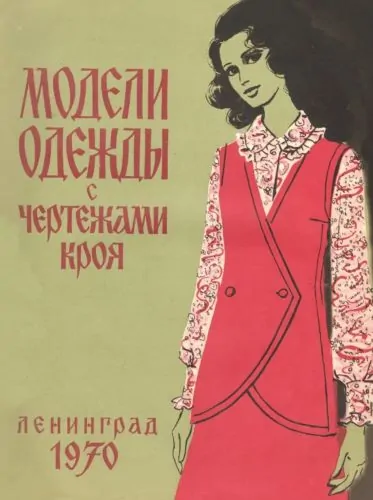
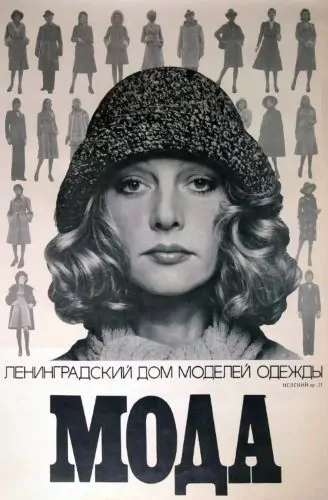
After the war, the publication of fashion journals got off to a new start. Two issues of the journal Moda (Fashion) came out in 1945 at the publishing house of the People’s Commissariat of Light Industry. They presented altogether 123 designs made at MDMO.204 In the same year, MDMO started its own publishing activities by printing four albums with its own designs. In 1948 the magazine Zhurnal mod (Journal of fashion) debuted with an edition of 50,000. It was produced mainly by the efforts of MDMO/ODMO and later by VIAlegprom. MDMO also published a fashion album with the title Modeli odezhdy (Clothing designs with 70,000 copies).205 Zhurnal mod became the main fashion journal in the USSR. Its editions as well as those of the other fashion publications grew regularly, reaching hundreds of thousands in the 1970s.
After the war, all the design organizations of the USSR (houses of fashion design, conglomerates of ateliers, experimental-technical institutes, etc.) established their own artistic councils which exercised aesthetic and ideological control over fashion design.206 Formally, these were independent social organizations – always authorized, however, by their respective ministries. For instance, their members were not paid for their work. Without their permission no new designs or trends could be approved or passed on to the production lines. After the authorization of the artistic council, the new designs received their technical instructions and other necessary documentation, their pattern drawings, prices, and so on.
The idea was that the artistic council should consist of authoritative experts who had good artistic taste, the necessary professional expertise, and were known to be respected citizens with a good public and professional reputation. They were in practice people from different professions – famous artists, sculptors, writers, art historians and other public figures, but first of all representatives of trade and industry, engineers and economists who, in one way or another, had a role in clothing production or in the production of the necessary machinery and instruments.
MDMO/ODMO had an artistic council established as early as 1945 and consisting of 23 members. Its task was to discuss the principles and standards of design work and the fashion of the season as well as to evaluate the main designs worked out by the MDMO specialists. In addition, the artistic council had a role as a consultant to the other houses of fashion design. Later on their other functions disappeared and the council was only engaged in inspecting and approving of the new designs. The council did not meet regularly but gathered together seasonally from a couple of times a year to every month and sometimes more often. For instance, in 1947 the artistic council of MDMO met 12 times. It judged 1269 so-called principal designs out of the well over 2100 created by the designers at the Moscow House of Design during that year. Of all inspected, 1103 were approved for further production – the rest were declined. Many famous people sat on the artistic council: the author and journalist Il’ya Grigoryevich Ehrenburg, Molotov’s wife and Minister P. S. Zhemchuzhina, already referred to before, as well as Maxim Gorky’s first wife, Ekaterina Pavlovna Peshkova.207
Just like their predecessors, the members of the recently organized artistic council of ODMO were in 1949 invited to monthly meetings to approve new fashion designs. Beginning in the same year, ODMO also demonstrated its new designs once every three months for the representatives of the trade organizations of the Moscow region. They were thought to be the mediators between the customers and the designers. The trade organizations were encouraged to select new designs that they thought would enjoy a demand among their customers and place their orders accordingly for the next year. Ideally, the garment factories were expected to sew clothes following these orders, making sure that they satisfied a truly existing demand. In reality, however, things did not turn out quite like that.
It is possible to get an idea of what kinds of fears and hopes about the future of Soviet fashion were common among the members of the artistic council from the minutes and short typewritten notes preserved in the archives. These also give an impression of the aesthetic ideals and conceptions that guided the members in their choices. The orders concerning the houses of fashion design also give interesting insight into the practical organization of their work. Many of them are quite revealing. For instance, the order number 79 on ODMO, 12 April 1951, declared that “in order to improve the culture of exhibiting the designs” one should organize the demonstration of new designs exclusively as parts of a whole set of clothes: “The pattern makers should allow the models to perform only with all the specific accessories belonging to the designs, not let them appear in sports clothes with high heeled shoes, or children with short summer socks in winter coats, etc.”208
In evaluating new designs the artistic council was supposed to pay attention primarily to their aesthetic quality and fashionableness. In practice other and often more concrete questions played a more important role in its judgements. What was often most decisive was the real chance of taking the designs into production. In designing their new models the designers had to take into account the very strict norms concerning the use of materials, the limited assortment of fabrics and threads available, the elementary conditions of the technical equipment at the factories, and so on. As a result any “beautiful and fashionable” design could remain a prototype because the dressmakers simply could not sew it. For instance, at the All-Union demonstration of the new designs in August 1948 an original design of a female dress by the designer Matrosina was declined because the Deputy Minister of Light Industry S. G. Lukina, who was a member of the jury, argued, according to the minutes, that “I can see that its realization will be very labor intensive which cannot be defended by the beauty of the design.”209 The Deputy Minister used her right to veto by reminding everyone of the “realities” of the fashion industry. In this particular case, one can only guess what her real motives were since, in her opinion, the design was not only labor intensive but also too “daring and feminine.”
The founding of MDMO/ODMO in many ways started a new era in Soviet fashion design. In later years and decades a whole huge system – or rather several parallel systems – of fashion design institutions were added to it which covered the whole country and all the Soviet Republics. In the next chapter we shall describe in detail the development and functioning of this comprehensive Soviet system of fashion design. All through the post-war decades ODMO not only preserved its leading role in this system but in many ways set an example for all the other fashion organizations, which all, with some minor variations, followed the same patterns in their organization and functioning. They also shared also many of the same assets and problems familiar from the experience of ODMO quite early on.
See endnotes and bibliography at source.
Chapter 4 (78-91) from Fashion Meets Socialism: Fashion Industry in the Soviet Union after the Second World War, by Jukka Gronow and Sergey Zhuravlev (Suomalaisen Kirjallisuuden Seura, 03.06.2018), published by OAPEN under the terms of a Creative Commons Attribution-NonCommercial-NoDerivs 2.0 Generic license.
About the Author