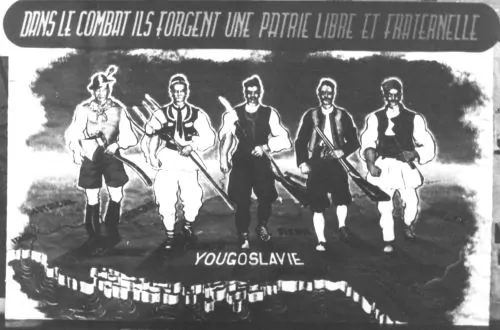
In occupied Yugoslavia, Tito’s Partisans fought for liberation while rival Chetniks and competing Allied interests shaped a wider struggle over the country’s political future.

By Donny Gluckstein
British Historian
Edinburgh College
At first glance Yugoslavia does not appear to conform to a pattern of parallel wars. In the final stages of combat Tito’s resistance army, supplied by Britain and assisted by the Red Army, took on and defeated the Axis. The appearance belies the reality, however. Before the triumphant conclusion there was a bitter armed struggle between Tito’s partisans and Mihailovich’s chetniks. It was a fight over the very meaning of the Second World War.
In conquering Yugoslavia in March 1941, Hitler was entering one of the most backward and oppressed countries in Europe. Eighty percent of its 16 million people were peasants. Land distribution was highly unequal: a mere 7,000 landowners owned twice as much land as a third of the rural population. The country’s 1.1 million workers worked the longest hours in Europe, while 500,000 were unemployed. All this was presided over by an authoritarian royal government that banned the Yugoslav Communist Party (YCP) as early as 1921.1 Eight years later King Alexander abolished parliament and seized full power. He was assassinated and was succeeded by Peter II who, being too young to rule directly, ceded power to his cousin, the Regent Prince Paul. In the run-up to the Second World War the country balanced uncomfortably between the Allied and Axis power blocs.2 In 1940 this led a British official to suggest bribing the General Staff because: ‘Rumour has it that several Yugoslav Generals have built themselves villas with money supplied by the Germans. Perhaps we could help them to add wings?’3
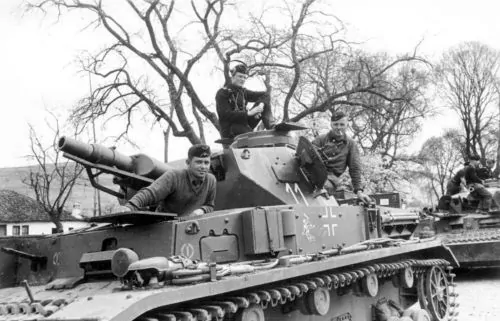
At the outbreak of the Second World War the authorities were keen to be found on the winning side, but no-one knew which that would be. Eventually, in 1941 Prince Paul’s cabinet gambled on Axis victory and opted to sign its Tripartite Pact. Another section of the establishment, doubting the value of this alignment, launched a military coup. Prince Paul was deposed and replaced by the still under-age King Peter. Mass anti-fascist demonstrations welcomed this outcome, but, in a sign of its lack of conviction, the new government tried to play for time by adhering to the Pact and simultaneously negotiating with the Allies.4 British representatives lamented the ‘somewhat puzzling and rather discouraging news from Belgrade. Government seems to have put out a statement that their foreign policy isn’t changed!’5 In this chaotic situation Hitler showed a typically brutal decisiveness and launched ‘Operation Punishment’ to conquer the country.
Military defeat was swift because the regime refused to arm the population or accept left-wing assistance. It was privately admitted that the government feared the occupiers less than the people, something shown by its treatment of the population in Belgrade.6 Djilas, a leading communist, described how under a hail of bombs:
The police and the [Serbian nationalist] Chetniks, roaming the streets in trucks, were trying to establish ‘order’ in a city that had been reduced from 300,000 to 30,000 inhabitants. They were shooting people, allegedly purging the city of its ‘fifth column’ and its deserters … The very same policemen who had manhandled students and workers in recent years were rushing all over the city with Chetnik insignia. We Communists had to hide, even though we were the staunchest defenders of the country.7
Djilas added that when King Peter’s government fled to London it left a feeling of ‘great bitterness’: ‘There was something rotten in this government. A profound moral disintegration that was seeping down from the state apparatus, from the top military ranks.’8
The Axis then dismembered Yugoslavia. A puppet state was established in Croatia/Bosnia-Herzegovina under the ferocious rule of Pavelic’s Ustasha militias; Slovenia was split between German and Italian zones of influence; Italy took Montenegro. Serbia, under full German occupation, and ruled by the quisling Nedic regime,9 lost territory to Hungary, Bulgaria and Albania.
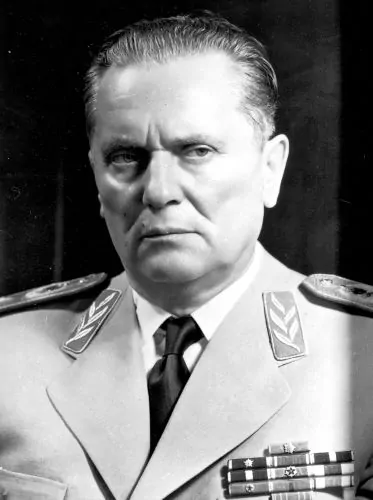
Out of this turmoil emerged two resistance forces. The chetniks of Serbia were a group of army officers who took their name from squads who fought the Turks during the First World War. They were led by Colonel Mihailovich, who was duly appointed Minister of War by the exiled royal government.10 Although he claimed that as a soldier ‘politics never interested me’,11 he soon adopted the slogan: ‘With faith in God, for King and Fatherland!’12 A fuller programme emerged later:
- Struggle for the freedom of the whole country under the sceptre of His Majesty King Peter II;
- To create a great Yugoslavia and in it a great Serbia, ethnically pure within the frontiers …
- The cleansing of state territory from all national minorities and non-national elements.13
Like pro-imperialist currents elsewhere, the logic of the chetnik programme was to recover national independence, so as to restore the pre-war social order with its divisive ethnic contours. However, military collapse and flight into exile had discredited the old state machine. This both emboldened its domestic opponents and decreased the ability of the chetniks to suppress them. Mihailovich, like King Peter, dared not fight for independence by mobilising the home population. Without that option his only hope of success was to wait for the Allies to expel the invaders. Such a policy, which appeared in many countries, has been labelled ‘attentism’.
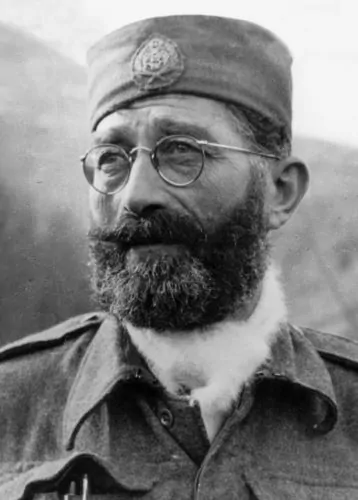
In 1941 Mihailovich had reason to expect large-scale British aid. With the Hitler–Stalin pact in force, France defeated, and the USA neutral, Britain was isolated and unable to conduct military operations on the Continent. So Churchill created the Special Operations Executive (SOE) to encourage resistance movements which might ‘set Europe ablaze’.14 Reports of Mihailovich’s activity, which reached Britain in the spring of 1942, were the first news of guerrilla warfare behind Axis lines. This made the Serb a ‘hero of European resistance, and … a shining example to the rest …’.15
Churchill had an additional motive for helping the chetniks. When Hitler launched Operation Barbarossa (the invasion of Soviet Russia) Stalin pleaded for a second military front to be established in France, to relieve German pressure on the eastern front. The British PM needed an alibi for refusal. He told Roosevelt:
‘The paramount task before us is, first to conquer the African shores of the Mediterranean [from which] to strike at the under-belly of the Axis in effective strength and in the shortest time.’16
The Balkan area was that under-belly and it also lay conveniently on Britain’s strategic route to India.
Tito’s partisans were a rival resistance group to the chetniks. Views of this movement tend to be sharply polarised. For example, one American historian has recently ridiculed their claim to be a ‘coalition of all democratic and progressive parties’ and suggested their aim was ‘the imposition of a Communist regime on the people of Yugoslavia.’17 At the time an opposite view of the partisan movement was expressed by Jones, a Canadian major who parachuted into their camp as a liaison officer:
‘It was the unity of the community, symbolised in the local committee that was the strength of the Freedom Front Movement in Jugoslavia. It was democracy at its best. People in any free community were absolutely free to do as they wished … .’18
The partisans were communist-led so an understanding of the YCP is essential. Djilas has described his conversion. It began with ‘a deep dissatisfaction with existing conditions and an irrepressible desire to change life…’.19
‘[We] began by gossiping and spreading inflated news of insignificant and serious matters alike: the cost of the Queen’s evening dress, gold teeth in the mouth of a government minister’s dog … Should my country be ruled by such people? Should I live like a slave all my life? … At every step one faced misery and luxury, brute force and despair… .’20
Despotism only strengthened the feeling of ‘solidarity, a fighting spirit, dedication to the ideals of the working people and to the efforts to improve their lives.’21
The YCP’s secret conference of 1940, demonstrated how much its 8,000 members had sacrificed. Pijade, who had recently completed over 14 years in prison and concentration camps, opened proceedings. Of the 101 delegates 80 per cent had been arrested and 40 per cent had served average sentences of two years.22 War brought no respite. When Belgrade was liberated in October 1944, by a combined Red Army/partisan operation, the latter encountered:
not one – literally not one – member of the party. There were thousands of sympathizers, even wildcat non-party groups, but the party members had been wiped out in camps, in gas extermination trucks, and on execution grounds. At the execution ground in Jajinici night after night – every night in the course of three and a half years – hundreds of hostages and patriots, mostly communists and the sympathizers, were executed … .23
The communists had a unique attitude to the thorny issue of ethnicity. When Yugoslavia was formed in 1918 the monarch and army command were Serbian, a tradition Mihailovich wished to continue. However, as its formal name indicated – ‘the Triune Kingdom of the Serbs, Croats and Slovenes’24 – Yugoslavia contained many groups, the main ones being Serbs (39 percent) and Croats (24 percent). One reaction to Serbian dominance was to assert ethnic autonomy, here expressed by the leader of the Croatian Peasant Party: ‘the whole Croat peasant people are equally against your centralism and against militarism, equally for a republic…’.25
Tito and his supporters rejected the ethnic exclusiveness of both Serb chetniks and Croat Ustashi. He himself was the son of a Slovenian mother and Croatian father,26 and in the most diverse region – Bosnia – the partisan rallying cry was:
‘neither Serbian nor Croatian, nor Moslem, but Serbian and Moslem and Croatian.’27
Strengthened by a desire to urgently draw Axis forces away from the Russian front, Tito also opposed the chetnik strategy of waiting for a British/American landing. The importance of the USSR for communists cannot be underestimated. As Djilas put it:
We were not taught the Biblical ‘truth’ that a just life in this world prepares a man for the next. We were taught something far greater: to expect a paradise in this world… that was what people who had been to the Soviet Union and seen the ‘truth’ in practice told us. And we believed it. Misery and despair were all around us, and the more unbearable life became, the closer we were to the new world.28
This adulation had a contradictory result. Although the partisans rejected both Axis occupation and a return to pre-war conditions, the YCP swallowed the Russian line that social demands must be laid aside until the defeat of the occupiers and their quislings. Tito was explicit: ‘It was incorrect to call the National Liberation Struggle an antifascist revolution’.29 The struggle was ‘not on class lines but on the lines of the National Liberation struggle.’30 If that limited the role of people’s war, in the sense of discouraging social and economic demands, it was nevertheless true that beneath a shared rhetoric of unity against the invader, chetnik and partisan movements struggled for fundamentally different goals.
This emerged at the first meeting between Mihailovich and Tito, when the communist leader held out the hand of friendship. He explained later:
‘Our idea, desire and intentions were to unite all forces in the struggle against the invaders. Mihailovich was an intelligent and very ambitious man. I offered him the supreme command.’31
Mihailovich ostentatiously refused the offer, rebuking the partisans for destroying land ownership records and supporting disorder.32
Even military cooperation was rejected. Mihailovich claimed there was little point in mounting joint chetnik/partisan operations. Firstly, Axis defeat appeared so far off.33 Secondly, though he was forced to defend Serbs from Ustasha violence, he justified inaction against the Nazis by referring to Hitler’s vow that one hundred Yugoslavs would be sacrificed for every German loss. He could point to the 5,000 civilians massacred at Kraljevi and Kragujevac in retribution for 20 German casualties.34
The fact that Tito brushed aside such fears has led one critic to accuse him of using Nazi atrocities for his own ends:
‘people escaping from such fearful retribution made useful recruits and the breakdown of normal society is one of the keystones of revolution …’.35
This charge is unfounded. The communists were involved in all-out combat with the Axis because the longer they ruled the more innocent civilians would die. Mihailovich’s refusal to act alongside Tito arose because he feared partisan victory would threaten the social order, something which took precedence over his desire for national liberation.
Mihailovich is reported to have said:
‘His main enemies were the partisans, Ustasha, Muslim and Croats – in that order – and only when he had dealt with them would he turn his attention to the Germans and Italians.’36
This policy was confirmed in chetnik practice and justified the suspicion expressed by Djilas in March 1942 that:
To protect their privileges, the Greater Serbian gentlemen in London have begun a class war, their tactic being to destroy the most dangerous opponent – that is, the Communist Party and the partisan movement – while temporarily collaborating with the remaining opponents … The adherents of the London government have had to take the path of open collaboration with the invader because of the force and scope of the national uprising against that invader.37
An important difference between chetniks and partisans was the backing for their movements. If Mihailovich looked to the exiled government in London, Tito’s forces depended on mass support from below. The process began with a spontaneous uprising in Montenegro during July 1941. Djilas was on the spot:
The entire population – those with rifles and those without – rose up against the invader. Gathering at customary meeting grounds, the men came – young and old, grouped by families, villages and clans – and set out against Italian garrisons in towns. Poorly organized but enthusiastic, they were given leadership by the Communists. Not everyone agreed to Communist leadership, but no one was strong enough to challenge it. The Communists were not only the sole organized force, but a new one, uncompromised. Their propaganda concerning the rottenness of the ruling parties had been confirmed in the recent war. No other political movement could have waged the struggle, for all were confined by regional bounds or carried away with excessive ethnic nationalism.38
In September 1941 further attempts to bridge the widening gap between Tito’s and Mihailovich’s positions failed. On 1 November chetnik forces attacked the partisans’ headquarters at Uzice. The counter-attack came within 1km of Mihailovich’s base at Ravna Gora on 12 November.39 The very next day his representative sat down with the head of German Intelligence to ask for aid to fight Communism.40
The die had been cast and soon the Mihailovich camp was sending out messages like this:
The attempt of the Communists to penetrate into Serbia has been repulsed by us and now we are to further our operations until their extermination, which can be accomplished if our units are not in conflict with outer forces. German forces have not interfered with us in this last operation even though we do not have any contact or agreement with them. So that we will not make difficult or jeopardise the arranged operations against the Communistic group, it is necessary to stop all operations against the Germans, but the propaganda must continue.41
The ‘extermination’ of the partisans required arms, and the chetniks were not fussy about where these came from. An officer of the Office of Strategic Services (OSS – the US equivalent of Britain’s SOE) attached to the chetniks reported instances where the Wehrmacht left them truckloads of weapons.42 Another alleged that chetniks were ‘fighting with the Germans and Italians against the partisans’.43 Intercepts proved that ‘the Germans were receiving intelligence on a routine basis from some chetnik units in relation to the location and movement of Partisan forces’ and identified ‘particular chetnik commanders in joint operations with the Germans against the partisans.’44
Despite this, it is important not to bracket Mihailovich with quisling figures like France’s Marshal Pétain or Yugoslavia’s own Nedic. The chetnik leader reflected the interests of an Allied government-in-exile, and was driven to collaborate by the logic of the parallel wars. The Germans may have worked with the chetniks against the partisans, but they did not want the 60,000 chetnik soldiers45 to increase in number. So not long after the 1941 meeting with German intelligence Mihailovich faced a near fatal German assault.
Far from turning to action against Nazism, this only strengthened his determination to wait for the Allies and he directed his followers either to return to their villages and await orders, or take cover among Nedic’s forces. Historians have debated whether this move signified open collaboration or self-protection. Apologists talk about how bearing arms for Nedic was necessary ‘camouflage’46 and ‘most of the men in these units were loyal to Mihailovich’.47 Critics see it as a policy that ‘the chetniks and Nedic government should cooperate in the struggle against the partisans …’.48 Whatever the correct interpretation, the chetniks were not primarily anti-fascists, but fought to re-establish the old order in league with the imperialist Allied powers.
What of the partisans? They were involved in a fight whose savagery was shocking even for the Second World War. The overall death toll in Yugoslavia exceeded 1.7 million victims or 11 percent of the population.49 In a partisan stronghold he visited, Jones found women scarred by: ‘the memory of their menfolk being enticed to the local church by appeals for labour from Italian officials, and there locked in, petrol poured in through the windows and the church set on fire, with machine-guns surrounding the pyre that none might escape’.50 The murderous Croat Ustashi exhibited ‘a ferocity that horrified even the German and Italian authorities’.51
By the end of 1943 the 300,000 partisans were holding down some 200,000 Germans and another 160,000 auxiliary troops.52 But the cost was high. The partisans lost 305,000 men and more than 400,000 were wounded.53 Yet they should not be portrayed as whiter than white. For example, Djilas himself felt uneasy about some of their methods, because:
‘imprudent, hasty executions, along with hunger and war weariness, were helping to strengthen the chetniks. Even more horrible and inconceivable was the killing of kinsmen and hurling of their bodies into ravines … .’54
Furthermore, Tito himself was not above negotiating with the occupiers, who were always ready to use divide and rule tactics. In the spring of 1942 discussions of a prisoner exchange with the Germans developed into something more ambitious. The partisans had been on the run and just survived a crucial battle with chetniks on the Neretva River. They were hoping that the Wehrmacht might accept a ceasefire that would allow them to return to Serbia, their original base. Djilas was one of the negotiators and he describes Tito’s approach in these terms:
‘There was not a word about the cessation of fighting between the Germans and ourselves, but this was understood.’55
In the end no truce materialised and only the prisoner exchange took place because:
‘The Germans couldn’t permit our stabilization and expansion, and we couldn’t permit them to gain strength … .’56
Discussing the strengths and weaknesses of the partisans, Basil Davidson, an SOE officer who spent time in Yugoslavia, has argued that:
I am not saying that they were saints, nor even extraordinary people in the general run of events, nor that fearful things were not done … [But] participation in the companionship of resistance to evil became, of itself and out of its own nature, more than a mere joining of wills. It became the shaper of a new state of mind. It became a mental and moral commitment to the good that opposes evil.57
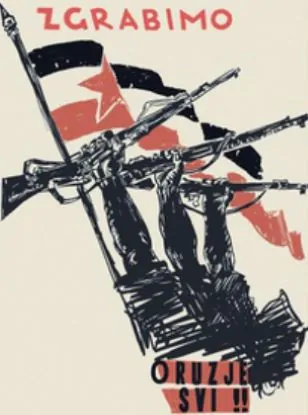
In spite of Nazis, chetniks, quislings, and Ustashi, the partisans triumphed because they were a genuine liberation movement. Many accounts attest to their popularity:
Poverty, backwardness, and the devastation of war were everywhere. But the local peasants were proud to receive their own army, though it meant depriving their children of milk and corn meal, and their sheep of lambs. The old men and young girls in the local government and organisations – the young men were all in the army – worked hard and competently. Everyone obeyed them without coercion, which kept the community together and carried on the war.58
As with all resistance movements facing organised state machines, the supply of weapons was crucial, and this depended on Allied recognition. One obstacle was Mihailovich’s reputation as the representative of a legitimate government-in-exile, a status which even Russia accepted. Tito found this infuriating and protested to Moscow:
‘Incessant fighting has left our Partisans exhausted … they have no ammunition left. The whole people curse the Yugoslav government in London which through Draza Mihailovich is aiding the invader. On all sides the people are asking why the Soviet Union does not send aid.’
The communist leader objected to the BBC talking about the ‘common fight’ of partisans and chetniks against the invader:
‘That is a horrible lie. Please do all you can to expose this terrible treachery and tell the whole world about it … .’59
Gradually, however, the Allies understood the relative contributions made by each resistance movement. In 1943 General Donovan, who led the OSS, concluded the partisan’s record stood ‘in favorable contrast to Mihailovich’s relative lack of activity and narrow field’.60 That same year an OSS liaison officer reported the partisan movement was of ‘far greater military and political importance than is commonly realized in the outside world’ and their struggle against Axis forces was ‘at times almost beyond the imagination’.61
But this was already old news in London. In the summer of 1942 the British SOE cynically reported:
‘As we know, any activities in Yugoslavia should really be attributed to the Partisans. But for public consumption we can see no harm in a certain amount of this going to the credit of Mihajlovic.’62
During the winter of 1942/3 that line was still maintained even though, as the Foreign Secretary readily admitted, Mihailovich was ‘not fighting our enemies’.63 He should be backed ‘to prevent anarchy and Communist chaos after the war.’64 An official added that:
‘This support must, we feel, be given independently of whether or not he continues to refuse to take a more active part in resisting and attacking Axis forces in Yugoslavia … .’65
The central issue of defeating the Nazis only displaced anti-communism when British plans for a Balkan landing matured. This made Mihailovich an increasing liability. He was given a last ditch opportunity to prove himself and was asked to mount anti-German sabotage operations. The chetnik leader briefly went through the motions but soon returned to inaction, using Allied military supplies against the partisans rather than the Axis. At last the Foreign Office concluded that people’s war was preferable to no war at all:
‘The only way we can put ourselves right, is to free ourselves at once from our commitments in connexion with Mihailovich for which we cannot possibly find any justification which we could put to the British public … .’66
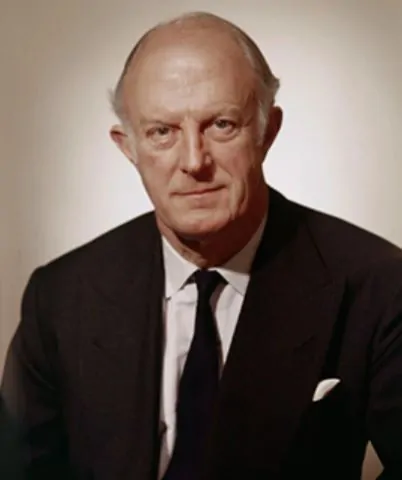
The point was reinforced by a ‘blockbuster’ report from Churchill’s envoy Fitzroy Maclean, a Tory MP. In contrast to the chetniks, he painted the partisans as ‘a far more considerable military and political force than we had imagined’67 who had the ‘whole-hearted support of the civil population’ and dominated ‘the greater part of Yugoslavia’.68
So in November 1943 the Allies meeting in Teheran finally announced:
‘The partisans in Yugoslavia are to be assisted to the greatest possible extent in supplies and materials… .’69
That decision had been a long time coming.
From this point on the partisans received increasing military support from Britain. The shifting fortunes were reflected in arms drops. Mihailovich was the sole recipient between 1941 and June 1943, when 23 tons were provided.70 From July and September 1943 107 tons were delivered to Mihailovich and 73 tons to Tito.71 In 1944 only the latter was supplied. A belated attempt was made to salvage the political situation by encouraging an accord between Tito and the Yugoslav King, but despite formal agreements the royalty was not to be re-established.
If the British took their time to break from Mihailovich and back the active resistance, the US prevaricated for even longer, maintaining a mission with him until November 1944. Once again, the determining factor was not which movement fought the Axis most vigorously. When British support tilted towards Tito’s communists the US State Department stuck with the chetniks because now ‘both the Russians and the British may have interests in the Balkan and Mediterranean area which we would prefer not to support.’72 It added later: ‘we disapprove of any plan for building up Tito forces at the expense of the Serbs’ [i.e. chetniks].73
While British and American policy was influenced by a heavy dose of anti-communism, one would not have expected Russia to show the same hesitation in respect of the partisans. Yet the history of its relations with the Yugoslav CP confirms the two-war thesis also. Stalin had a purely instrumental attitude towards the foreign Communist parties. In the late 1930s he had the emigré Yugoslav leadership in Moscow all but wiped out by purges, and its total dissolution was canvassed.74 Tito, the sole survivor, found that ‘during the war it was easier because at least during war you know where your enemies are’. ‘When I went to Moscow I never knew whether I would come back alive.’75
Tito judiciously hailed ‘the victories of the Red Army’ and set his party tasks such as ‘a greater popularization of the USSR and the building of socialism’.76 But a problem remained. Stalin’s calculations were driven not by general political principles but the need for good relations with the Allies, and so he had recognised King Peter’s administration the day before the Nazi invasion. For his part Tito realised that victory depended on popular struggle against both the monarchy (including its Minister of War, Mihailovich) and the fascists:
Our struggle would not be so stubborn and so successful if the Yugoslavia peoples did not see in it not only victory over fascism but also victory over all those who have oppressed and are still trying to oppress, the Yugoslav peoples … if it did not have the aim of bringing freedom, equality of rights and brotherhood to all the peoples of Yugoslavia.77
Moscow found this approach inconvenient. In August 1941 the Kremlin criticised the formation of a partisan Liberation Committee.78 Further, Dimitrov, Tito’s Kremlin link, instructed him to ‘not raise the question of the abolition of the monarchy’ or ‘put forward any republican slogans’.79 For a long period the Moscow-run Free Yugoslavia radio station refused to mention chetnik collaboration with the Axis or publicise partisan struggles.80 When the First Proletarian Brigade (composed of mobile shock troops from the core of the partisan army) was established, Russia complained that this would provoke British suspicions of ‘the partisan movement taking on a Communist character aiming at the Sovietization of Yugoslavia’.81
It was not as though the pain of Moscow’s criticisms were assuaged by any practical aid. An exasperated Tito radioed Dimitrov that:
‘Hundreds of thousands of refugees are threatened by death from starvation. Is it really impossible after twenty months of heroic, almost superhuman fighting to find some way to help us?’ The reply was evasive: ‘The moment there are conditions we shall do all that is most urgent. Can you possibly doubt this?’82
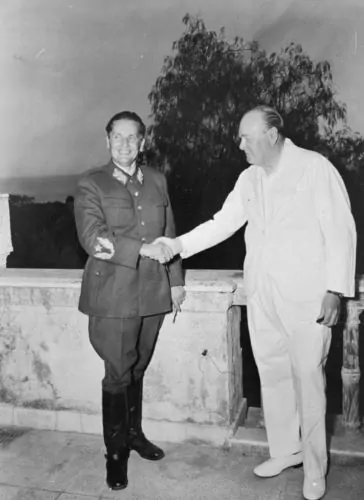
In August 1942 Tito asked why nothing was broadcast about ‘the traitorous role of the Yugoslav government and of the superhuman sufferings and hardships of our people, who are fighting against the invaders, the Chetniks, the Ustashi etc.? Don’t you believe what we are telling you daily?’83
It took until the Teheran conference, when the worst of the Yugoslav fighting was over, for the Kremlin to go beyond carping from the sidelines. At last supplies were forthcoming and the Red Army joined partisans in liberating Belgrade. At that moment the parallel wars temporarily converged with Britain, the US and Russia all supporting the partisans’ efforts in the final act of liberation.
The fact that Tito was not dependent on a single imperialist power, but could balance them off against each other, proved significant in the long run combined with the success of a massive and dogged people’s war, that provided the basis for a genuinely independent state after 1945. Yugloslavia was able to steer clear of Cold War entanglements and stay outside of both Western and Russian-dominated blocs. In the 1990s this balancing act came to an end and the country was torn apart once again by internal crisis and inter-imperialist rivalry.
Endnotes
- A. Donlagic, Z. Atanackovic and D. Plenca, Affiliate disclosure: Amazon links on this site are paid links. As an Amazon Associate I earn from qualifying purchases.Yugoslavia in the Second World War, Belgrade, 1967, pp. 11–14.
- T. Judah, The Serbs, New Haven, 1997, pp. 110–112.
- H. Williams, Parachutes, Patriots and Partisans, London, 2003, p. 27.
- P. Auty, Tito: A Biography, Harmondsworth, 1974, p. 193; Donlagic et al., p. 29.
- H. Williams, Parachutes, Patriots and Partisans, London 2003, p. 32.
- Milan Grol, a government minister, at a meeting of Royal government on 28 April 1941. Donlagic et al., p. 32n.
- M. Djilas, Memoir of a Revolutionary, New York, 1973, p. 383.
- Djilas, pp. 384–5.
- Quisling was the notorious leader of the Norwegian Nazis whose name became a by-word for collaboration.
- Judah, p. 117.
- Judah, p. 120.
- K. Ford, OSS and the Yugoslav Resistance 1943–1945, Texas, 1992, p. 170.
- Donlagic et al., p. 58n.
- Williams, p. 7.
- Williams, p. 46.
- C. Wilmott. The Struggle for Europe, Hertfordshire, 1997, p. 118.
- Ford, pp. 32–3.
- W. Jones, Twelve Months with Tito’s Partisans, Bedford, 1946, p. 22.
- Djilas, Memoir, p. 6.
- Djilas, Memoir, p. 21.
- Djilas, Memoir, p. 228.
- Auty, p. 184n and p. 185. Donlagic et al., p. 46.
- Djilas, Wartime with Tito and the Partisans, London, 1977, p. 419.
- See B. Davidson, Scenes from the Anti-Nazi War, New York, 1980, pp. 236, 181–2.
- Stjepan Radic, quoted in Judah, p. 106.
- Jones, p. 11.
- Judah, p. 120.
- Djilas, Memoir, pp. 228–9.
- Djilas, Wartime, p. 79.
- YCP statement of June 1942 quoted in Donlagic et al., p. 90.
- Auty, p. 228.
- Williams, p. 60.
- Williams, p. 44.
- For Keitel’s directive on this see Auty, p. 225. See also Williams, pp. 60–1, Judah, p. 118 and Ford, p. 6.
- Williams, p. 60.
- Williams, p. 110.
- Djilas, Wartime, p. 147.
- Djilas, Wartime, p. 23.
- Auty, p. 229.
- Donlagic et al., p. 68. Williams gives the earlier date of 11 November, p. 63.
- Ford, p. 53.
- Ford, pp. 53–4.
- Farish, quoted in Ford, p. 34.
- Ford, p. 55.
- These figures are for 1944. Mihailovich claimed 57,440 men mobilised and the possibility of mobilising over 450,000, though the US liaison officer thought there were probably only 35,000 under arms. Ford, p. 46.
- Williams, p. 63.
- Ford, p. 46.
- Donlagic, et al., p. 58.
- Donlagic et al., p. 121.
- Jones, p. 31.
- Williams, p. 39.
- Auty, pp. 256, 258. Ford, p. 66. These figures are inevitably imprecise and disputed.
- Donlagic et al., p. 212.
- Djilas, Wartime, p. 149.
- Djilas, Wartime, p. 231.
- Djilas, Wartime, p. 244.
- B. Davidson, Scenes from the Anti-Nazi War, New York, 1980, p. 199.
- Djilas, Wartime, p. 311.
- Auty, p. 245.
- Ford, p. 32.
- Ford, p. 34.
- Davidson, p. 103.
- Eden on 3 January 1943, quoted in E. Barker, ‘Some Factors in British Decision-making over Yugoslavia 1941–4’ in P. Auty and R. Clogg (eds), British Policy towards Wartime Resistance in Yugoslavia and Greece, London 1975, p. 52n.
- Auty and Clogg, p. 47.
- My emphasis. Quoted in Barker, in Auty and Clogg, p. 52n, and Davidson, p. 106.
- Barker, in Auty and Clogg, p. 40.
- Williams, p. 180.
- Ford, p. 33.
- 28 November 1943. Quoted in Donlagic et al., p. 145.
- Auty, p. 252.
- Ford, p. 29.
- G. Kolko, The Politics of War, New York 1990, p. 133.
- Kolko, p. 134.
- R. Medvedev, Let History Judge, London, 1971, p. 221.
- Auty, p. 179.
- Djilas, Wartime, p. 123.
- Tito in December 1942, quoted in Donlagic et al., p. 138.
- Donlagic et al., p. 71.
- Auty, p. 248.
- Djilas, Wartime, p. 144.
- Auty, p. 238.
- Auty, p. 254.
- Djilas, Wartime, p. 199.
Chapter 2 (25-37) from A People’s History of the Second World War, by Donny Gluckstein (Pluto Press, 06.14.2012), published by OAPEN under the terms of an Creative Commons Attribution-NonCommercial-NoDerivatives 4.0 International license.
About the Author