Honorius’s work offers another way to read the didactic potential of the built environment.

By Dr. Karl Patrick Kinsella
Shuffrey Junior Research Fellow in Architectural History
University of Oxford
The paper explores Honorius Augustodunensis’s description of the medieval church and its typological qualities in the Gemma animae. Where the text overlaps with his exemplary sermons there is an indication that the church building was used as part of a horizontal learning context. Honorius’s ‘love of viewpoints’ and material culture informs the nature of an important development in twelfth-century pedagogies, one that seeks to incorporate aspects of the tangible world to anchor abstract concepts or imperceptible events. Honorius’s Gemma animae provides a fascinating insight into the development of these kinaesthetic teaching methods that were directed at fellow monks and canons, and mark the text and his sermons as important examples of horizontal learning and teaching.
Horizontal learning presupposes that knowledge exists within a community whose members are willing to teach each other; it enters the community and then disseminates through it without strict adherence to a hierarchical social structure. Beginning with that premise, this essay illuminates the processes and means through which horizontal learning was applied to architecture within the twelfth-century monastery. More specifically, it will examine the phenomenon of horizontal learning in Honorius Augustodunensis’s (d. c. 1140) liturgical commentary called the Gemma animae, contrasting it with two of his sermon collections: the Speculum ecclesiae and the Sacramentarium. In each of these works, Honorius drew attention to the church’s structural framework (e.g., columns, windows, pavements, etc.) and created a set of potential meanings for many parts to help students learn history through the liturgy. In the case of the Gemma animae, the flexibility of the architectural symbolism implies that Honorius did not intend to create an uncompromising, rigid system but one that responded to the educational and liturgical context of the reader and student. In contrast to this, the sermons are didactic and strict when the preacher assigned meaning to the building. In essence, Honorius used religious architecture to encourage monks and canons to reflect on their inner life; in this way, the building becomes a partner in the learning process, it is dynamic, flexible, and mutable like any good learning partner should be.
This essay contrasts the differing contexts of Honorius’s writings, texts that use similar content but are framed in very different ways. Sermons have, necessarily, a vertically oriented pedagogical structure, but the Gemma animae is much more flexible in its ability to respond to the internal life of the monastic student. The Gemma animae’s representation of architecture aligns well with contemporary ideas of architecture’s affective power in monastic praxis. In this present volume, Marc Saurette highlights a specific example of didactic architecture at Cluny; Honorius’s work offers another way to read the didactic potential of the built environment, one that flourished within relatively popular works. In this context, architecture is intended to stimulate both mnemonic powers and the generation of knowledge. Whereas Honorius’s sermons are directed at a certain audience, the Gemma animae requires much more work by the reader, and this essay investigates the consequences of that situation.
Honorius was one of the most commonly copied authors of the twelfth century. His concern for teaching methods make him important to any study of pedagogical strategies during the period.1 His first work, the Elucidarium, appears in 336 manuscripts and was translated into vernacular languages soon after completion, demonstrating a distinct popularity amongst his peers.2 Its widespread dissemination offers a significant snapshot of pedagogical practices at the beginning of the twelfth century. His many innovations, and perhaps even his popularity, derive from the effective and imaginative way he took advantage of the students’ environment, such as the architectural descriptions in the Gemma animae. By considering horizontal learning in light of Honorius’s work, we see that monastic architecture was a vital tool for learning. This sort of materialistic emphasis demonstrates a distinct development in the way in which texts were encountered, thus reflecting on the learning practices of Honorius’s readers.
Despite his obvious importance to twelfth-century intellectual culture, Honorius’s identity remains shrouded in mystery. While this essay does not address that issue in detail, it is important to contextualize what we know of Honorius’s aims and, hence, the relationship between his works.
Much scholarship has concentrated on uncovering Honorius’s biography, but, despite such sustained focus, many aspects of his life remain unclear.3 The difficulty derives from Honorius’s own reticence in revealing his real name, choosing to hide it out of fear of his opponents.4 V.I.J. Flint argued that Honorius’s real name was Heinricus, based on evidence from contemporary manuscripts and a bequest given by a German religious of that name, which contained a relatively large number of Honorius’s works.5 Honorius was most likely born in Germany or northern Italy during the final quarter of the eleventh century, where he was educated and became a canon regular.6 At the end of the eleventh century he travelled to Canterbury. It is possible that Honorius went there in the household of Anselm of Canterbury (d. 1109), with whom he had a close intellectual relationship. Honorius did not remain in Canterbury but most likely travelled to the midlands and northern England, where he wrote his first commentary on the Song of Songs, possibly during the years that Anselm was in exile.7 After Anselm died, Honorius became cloistered in Saint James’s Abbey in Regensburg, where he wrote most of his works. He may have died there or in Lambach in Austria, to where he moved at the end of his life.8
Honorius authored approximately 30 works in his lifetime, listing many of them in the conclusion to his final text, the Lucidarium.9 While the details of Honorius’s life are not yet known, the list in the Lucidarium may be chronological, giving us some insight into the links between his works.10 The subjects range from allegories of the liberal arts to a polemical treatise on the rights of monks to preach. Such variety demonstrates the extraordinary range of sources that he had available to him, and, as we will see, his possible intentions for writing: to create encyclopaedic texts that emphasize breadth of knowledge.11 Monks and canons alike commonly copied his work across Europe. Honorius authored monastic textbooks with the aim of supporting the rapid expansion of monastic foundations at the beginning of the twelfth century. Some of the prologues to Honorius’s better-known works support this view.
Eva Matthews Sanford called for caution when examining the prologues to Honorius’s works when investigating his life; however, they do tell us a little about Honorius’s intentions.12 Three of Honorius’s earliest works give his reasons for writing and indicate the status he gives to readers as learners. Towards the end of the Imago mundi’s13 prologue, for instance, he claims that he writes ‘for the instruction of many things for those without a well-equipped library’.14 Honorius’s objective is to reinvigorate the encyclopaedic genre, which fell out of fashion after the Carolingian period.15 By doing so, Honorius hoped to plug the intellectual gaps in small and new foundations. The aims of the Imago mundi are clearly didactic: setting out the formation of the world and a history of its parts in short chapters with content that is unequivocal in tone. Honorius believed himself to be writing a text that communicated the truth of history and the properties of the cosmos, and he believed that his readers viewed him as a teacher.16 This concern for the correct training and education for monks is perhaps related to English monastic reforms in the late eleventh century, where the education of the laity became the responsibility of local monks.17 Either way, Honorius appears to identify himself, as do his readers, primarily as a teacher.
While Honorius’s concern was to provide works for foundations with small libraries, he may see the relationship between him and his peers along horizontal lines. The opening of Honorius’s ‘most widely read work’, the Elucidarium, situates the text as one begun alongside his fellow students.18 He writes that ‘I have often been asked by fellow students (condiscipulis) to explain certain little questions’.19 Thus the Elucidarium can be viewed as Honorius’s response to his fellow students’ uncertainties about orthodox theology. This being the case, while the work is in the form of a dialogue between a master and his student, the prologue establishes that the relationship is between Honorius and his peers. By presenting the Elucidarium as a dialogue, Honorius made a specific pedagogical decision. One possible reason appears in the prologue to Honorius’s scientific work, the Clavis phyisicae. Honorius wrote that his preference for the dialogue format is rooted in a desire to emulate the ‘best philosophers’ – including Socrates, Plato, Augustine, and Boethius – and, because the dialogue format is particularly effective at teaching and introducing a subject, it echoes previous works and lends an authorial voice to Honorius’s efforts.20 Thus the dialogue format may not be as vertically oriented in its relationship with its readers as it f irst appears and may simply suggest Honorius’s awareness of different possible pedagogical structures for his texts, as well as a desire to emulate the past. By putting words in the mouth of a master, Honorius created a rhetorical strategy that masks a perceived equivalence between author and reader.
We can draw two conclusions from this: first, that Honorius’s intention when writing the Imago mundi, and other didactic works, was to provide books for small foundations; second, that he saw the dialogue format as an efficient teaching genre, but this does not mean he had a strictly vertical teaching arrangement in mind when writing, referring instead to his condiscipuli. Honorius has a flexible view of himself as educator and author, adapting the structure of his texts in response to his intended reader, and that is nowhere more apparent than in the Gemma animae.
The Gemma animae represents the development of an innovative and inf luential pedagogical strategy that presented material culture, and the fabric of the medieval church in particular, as a partner in the learning process. Honorius gives his ‘fellow-students’ the means to reassess their environment, making it an active element that supported constant learning through the liturgy. Honorius gives the different parts particular meanings; in fact, he gives different parts of the building many different potentialities that shift and change depending on one’s position in the church, the point in the liturgy, or even the time of the year. Moreover, in the Augustinian tradition Honorius was not ‘giving’ meanings to the different parts of the building; instead he was simply making plain the inherent symbolic significance behind them.21 In essence, he did not create the meanings, but through typological exegesis illustrated the church building’s material link to Christian history. By presenting a loose array of meanings, the student must take responsibility to draw what he needs, using the church as a learning partner. The outcome of this approach identifies the church and its components as a series of invitations for the reader-monk to meditate on his place within the Church and its history. There is no strict hierarchical structure in this process, as there was in the Imago mundi; instead, there is an impetus for the learner to reflect on his environment by using a flexible symbolic system that acts as a catalyst to reflection and thought.
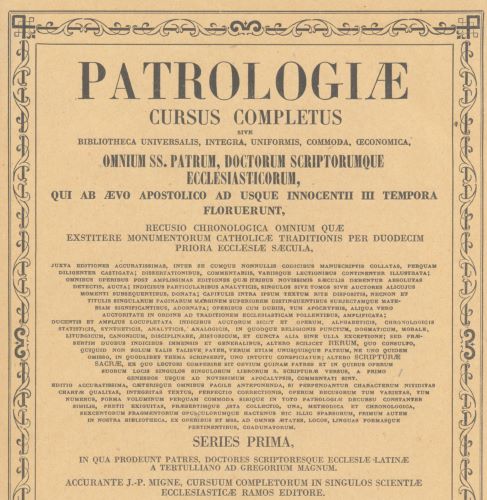
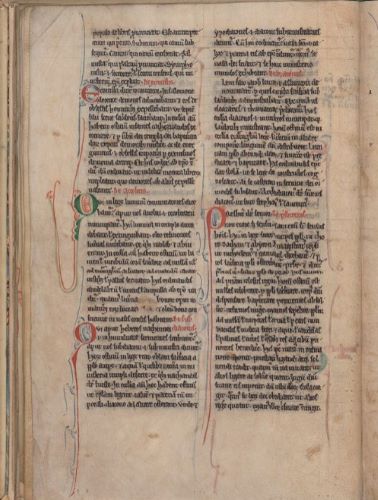
The Gemma animae has been described as a liturgical commentary in four books.22 The first book, containing 243 chapters, is concerned with the Mass and the church building. The second book, of 68 chapters, focuses on the canonical hours, examining the celebrations that take place during the day. The third book contains 164 chapters and provides a commentary on the liturgical year, beginning with Advent Sunday. The final book of 188 chapters considers festivals throughout the year, beginning with Septuagesima. Chapters can be relatively short, ranging from one sentence to a small paragraph in the Patrologia Latina edition. Its structure makes the work easy to consult and allows one to find information rapidly. The sources for much of the work remain unclear, but Flint argued that at least one important influence was only available in England and Normandy at the beginning of the twelfth century, thus placing the work near the beginning of Honorius’s career and part of his English output.23 The work appears third in the list of Honorius’s works at the end of the Lucidarium, supporting the view that the list is chronological.
The description ‘liturgical commentary’ does not fully describe the contents of the Gemma animae and does not indicate its potential usefulness within a twelfth-century religious community. Honorius divides Book One into two sections: the first considers the Mass; the second the church in which it takes place. At the beginning of the first book, Honorius places emphasis on seeing the Mass and the church, not just reading about them.24 He re-emphasizes visuality when introducing the second section, writing ‘[H]ere we briefly spoke about the mass, now we look at a few things in the church, in which it takes place’.25 Honorius’s use of the verb ‘to see’ in both instances suggests that he wants the reader to recall or to consider the architectural structures as physical edif ices, not just as textual representations. The student ought to engage the imagination and memory when meditating on the allegorical content of the Gemma animae, stimulated when one can see the church during the Mass or daily offices.26
The second part of Book One extends from Chapter 122 to 243, at which point Book Two begins. In this architectural section, Honorius does not treat the church consistently; for example, toward the end of the section he addresses subjects with little relevance to the church building. Chapter 122, titled ‘The Altar’, immediately follows the introduction to the architectural section of Book One.27 The chapter begins by identifying the first Christian altar in history, writing that ‘Noah constructed the first altar to the Lord, next Abraham, Isaac and Jacob are read to have built one which are thought to be nothing other than piled up stones’.28 The chapter continues by referencing the altar on which Cain and Abel sacrificed their offerings to the Lord, although there is no explicit reference to it in Scripture.29 The short chapter switches from a typological commentary to an etymological explanation of the term, differentiating between the two synonyms altare and aram.30
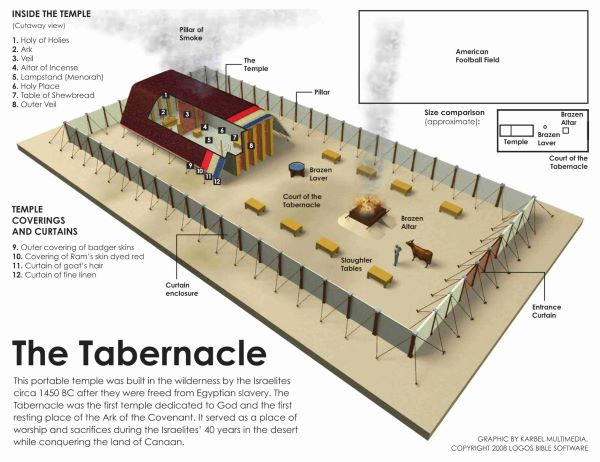
The following chapter (no. 123) is titled ‘On the Tabernacle of Moses’ and at first glance appears to deviate strangely from Honorius’s previous focus on the altar. The chapter begins with a summary of the events of Exodus 26 and the Lord’s instructions to Moses regarding the appearance, shape, and size of the Tabernacle, as well as the liturgical vessels used by the priests. Honorius then makes a common typological link by comparing the Tabernacle to the Temple built by Solomon. The connection between this chapter and the previous one, on the altar, only becomes apparent at the end, where Honorius refers to the ‘gold altar’ that was made for the Temple. The final sentence completes the typological exegesis: ‘it [the Temple] prefigured the Church, and the Christian people formed the churches which were made according to its form [the Temple]’.31
The first six chapters in the architectural section (nos. 122-127) consider the altar. We have already seen that the chapters on the altar and the Tabernacle of Moses are linked by their focus on the meaning of the altar. In the following chapter, ‘On the Tabernacle of the People’, Honorius focuses on the space in which the medieval altar is placed, typologically linking it with the ‘Holy of Holies’, the most holy space and innermost part of the Tabernacle. Honorius even argues that ‘the Tabernacle was formed according to the shape of the world’; by doing so, he implies that the church building was also formed according to the same shape.32 Chapter 125, which considers the Temple, offers a typological reading of the Temple in Jerusalem as the celestial Jerusalem.33 Yet again Honorius focuses on the altar and its significance in the context of the church building, writing, ‘the gold altar is Christ and the glory of the saints. All the chosen priests and cantors will be in this Temple’.34 As should be clear, the altar now embodies a wide range of meanings that shift and change depending on the context, the altar holds potential meanings which are made explicit by Honorius, but are interpreted by the reader and viewer.
Chapters 126 and 127 further Honorius’s commentary on the entire building, implying that he sees the altar standing in for the entire building, a metonymic symbol for the whole of Christianity. The chapter on the basilica (no. 127) stands at the end of this section on the altar and summarizes the typological content:
This house is the basilica; that is, it is named from royalty, because the king of kings is ministered to in it. Basileus is king, like the base of the people, it is called the column of the people, because it is supported with their control.35 This house is a κυριακὴ, that is named from Sunday, because he, the lord of lords, is served in it. Kyrius is called lord. Here, the house calls to God, because the Lord is worshiped in it. Here is a house of prayer, because the faithful come together to pray in it. Here is called the hall of God, because the eternal royal companion is celebrated in it. Here is called an oratory, because it is the place of prayer for the faithful. Here, this Temple is called like a good roof, because the people have come together in it, as if under one roof.36
Honorius’s ‘love of viewpoints’ is evident in this section. The continuous use of demonstrative pronouns gives a sense of immediacy and presence to the commentary. Having focused on the east end of the church up to this point, Honorius takes the point of view of the monastic reader standing at the east end of the church – implied by the previous focus on that location – summing up his commentary on the church building so far. While the structure of the Gemma animae’s architectural section is loose, it is not, I think, arbitrary. It begins in the holiest part of the church, the section that typologically reflects the holy of holies in the Israelite’s Tabernacle in the wilderness and the Temple in Jerusalem. By structuring the chapter in this manner, Honorius has assumed that his reader’s experience will be in the east end.
This short description demonstrates Honorius’s strategy in each chapter of the Gemma animae. In this and other chapters, he provides the subject in the rubric, then enumerates the object’s link with other objects from the past, such as the altar of Noah and that used by Cain and Abel. A historical reading is sometimes supplemented by a literal analysis that disambiguates possibly confusing terms. This historical and literal exegesis is usually supported by a typological reading that seems to be Honorius’s primary focus in many of the chapters. These forms of exegesis became formalized during the Middle Ages and can be seen especially in the works of Honorius’s contemporary, Hugh of Saint Victor (d. 1141).37 However, Honorius’s approach in the Gemma animae offers a different catalyst to the primarily textual focus laid down by Saint Augustine and Hugh: namely, the material church.
By beginning with the altar and then, as we will see, focusing on the church’s different parts, Honorius offers a structure for reading the text as well as putting it into practice. He requires the learner not just to read the text but ‘to see’ the church building and interpret it as a text for reflecting on history and the liturgy. Honorius reinforces this architectural structure by the sequence of the chapters. While each chapter has a loose but overall consistent structure, the relationship between those chapters can be unclear. However, if a student wished to use the church as a learning partner, the text must relate, somehow, to how that student used the church in the first place.
We have already noted that Honorius starts the architectural section of the Gemma animae at the altar; that is, the high altar situated in the east end of many Western European churches. The altar was the holiest place in the church and the focus of the liturgy.38 The sequence of the subsequent chapters initially seems to move from east to west, from the holiest part of the church in the east, then expanding outwards to encompass other buildings such as the cemetery and cloister. The sequence is: 122 – De altari, 123 – De tabernaculo Moysi, 124 – De tabernaculo populi, 125 – De Templo, 126 – De ecclesia habente septem vocabula, 127 – De basilica, caeterisque templo nominibus, 128 – De capellis, 129 – De situ ecclesiae, 130 – De fenestris ecclesiae, 131 – De columinis ecclesiae, 132 – De pictura, 133 – De corona in ecclesiae, 134 – De pavimento, 135 – De cruce, 136 – De propitiatorio, 137 – De palliis, 138 – De ostio, 139 – De choro, 140 – De concordia chori, 141 – De corona, 142 – De campanis, 143 – De turribus, 144 – De campanario, 145 – De statione, 146 – De mulieribus, 147 – De coemeterio, 148 – De claustro, and 149 – Quod claustrum sit paradisus.39 The particular objects upon which Honorius comments can be clearly located in the medieval church: for example, the altar, the choir, the towers, the cemetery, and the cloister, a clear indication that the sense of direction moves from inside the church to the buildings and structures adjacent to it.
The focus of the chapters following those on the altar seem much more arbitrary, but there is still some suggestion that Honorius intended the reader to remain in the east end, at least conceptually. Chapters 129, 130, and 131 are titled De situ ecclesiae, De fenestris ecclesiae, and De columinis ecclesiae respectively. The chapter on the site of the church begins by stating that the ‘church is oriented toward the east’.40 At the end of the chapter, Honorius emphasizes the importance of the east end, writing that it represents the early Church made up of Jewish members.41 The following two chapters, concerning windows and columns, could refer to almost any part of the church; however, it may be meaningful that Honorius distinguishes them in the title as ‘of the church’. Chapter 133, titled De corona in ecclesia, is similar and comments on the importance of the chandelier in the sanctuary. Chapter 141, De corona, refers to the same object and so must be in a different location. This follows a chapter that considers the choir and another that examines how the shape of the choir facilitates the singing of the daily offices. This sequence suggests that Chapter 141 refers to the chandelier in the choir or the nave.42 It is feasible, then, that the addition of ecclesiae to the titles that concern the windows, columns, and chandeliers is primarily meant to refer to those at the east end of the medieval church.
The two chapters (nos. 139 and 140) devoted to the choir move the reader’s attention westward from the altar. Honorius considers the different ways in which music was important for praising God, stating that Solomon was said to have instituted singers to sing around the altar accompanied by different instruments.43 In Chapter 140 he then moves from a typological reading to a historical one that considers the twin-choir as part of wider reforms during Late Antiquity by the bishops Flavianus and Diodorus.44 It is clear that Honorius’s attention, in this case, is on the use to which the choir was put by the monks who sang in it. So much of the monk’s daily life was centred in the choir that Honorius’s commentary must have encouraged contemplation of its historical and typological significance. According to the Gemma animae, the choir represents nothing less than the cosmos itself, and through the singer’s voices one can experience the harmony of the planets.45 These ideas were inherently embedded in the fabric of Christianity and must have encouraged the monks to meditate on their role within Christian history.
The final part of the architectural section focuses on the west end of the church, at which point Honorius shifts attention to sites outside of the church building, providing chapters on the cemetery and the cloister. Honorius focused on the western towers and the bells within them. Supporting the idea that this section considers the west end and not a crossing tower, in Chapter 143 Honorius envisions two towers, presumably one to the south and another to the north.46 Further on he discusses the significance of the bell’s materials before finally ending in a discussion of the bells themselves, which are meant to refer to the preachers of the church. Again, the west end of the church is implied here, because Honorius follows with a reference to the cockerel that would have been placed at the top of a tower.47
The structure of the architectural section of the Gemma animae is clear. Honorius asks readers ‘to see’ the different parts of the church, but in doing so he encourages them to move in a particular direction – east to west. This sort of imaginative movement through a church is not unknown and implies that Honorius had a monastic reader in mind, one who was able to freely move through the church, bringing the meanings of the different parts to mind while progressing through it.48 While the structure of the Gemma animae is relatively clear at this stage, it still does not fully explain what the text is for, nor does it account for the frequently contradictory meanings given for the different parts of the church.
One example of these divergent meanings has already been alluded to above. First, the altar, as the main focus of the liturgy, embodies a wide spectrum of meanings, many of which are concerned with Christ or Jerusalem. It can also have negative meanings. For example, in Chapter 79 of Book One, Honorius describes a moment when the priest comes toward the altar. As he does so, ‘it is like David moving against the Philistine enemy’.49 At this point, the meaning of the altar takes precedence over its status as the holiest part of the church when, in the liturgy, the altar signifies the enemy of David. Its new identity is surprising. The altar suddenly becomes primarily a tool for learning and for reflecting on Christian history. It asks the viewer to see Christian history come alive within the church, casting the bishop as king of the Israelites. If one went searching for a definitive set of meanings for the church building and its parts, the Gemma animae would be a confusing and frustrating work.
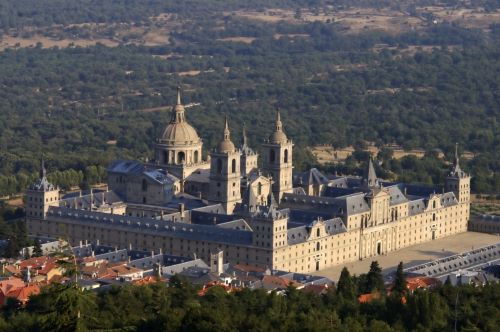
Mary Carruthers and others have described the adoption of architectural representations within an imaginative framework.50 According to this reconstruction of monastic meditative praxis, architecture provided the backdrop for mnemonic activity, where the monk constructed a building in his mind and used it to house signifiers of memories. The monk, by walking through the imaginary structure, could remember the content and order in which it appears. Crucially, this technique was not limited to mere recall of information but facilitated a meditative process on the subject’s relationship with Christ. According to this view, architecture and architectural representations in the Middle Ages took part in non-verbal communication with the viewer. The Gemma animae, and the flexible symbolism it describes, echoes this practice. The shifting meaning of the church and its parts encourages flexibility of thought, which is rooted in the tangible materiality of the church and monastic experiences. The Gemma animae represents a means for the subject to reflect on his experiences and embed those experiences within stone and timber; as a result, there is no strict vertical teaching arrangement in the text: rather, it reflects the subjectivity of the reader and viewer.
Underlining the structure of the Gemma animae and its tangible relationship with the church building is its commentary on the liturgy for the dedication of the church. Instead of moving through the church from east to west, in this section, Honorius focused on a particular liturgical moment and applied the same literal, historical, allegorical and typological exegetical commentary to a self-contained celebration of the church building. There is no clear reason for shifting the focus to the dedication ceremony; however, some of the meanings invested in the architecture of the church contradict the meanings allotted to the same structures earlier in the Gemma animae. By doing so, Honorius gave the student an opportunity for a richer experience of the dedication ceremony, allowing him to use the church building to recall and imagine moments of history. The church is nothing less than a container for collective memory of the institutional church. In this final part, I contrast the nature of the dedication ceremony as it appears in the Gemma animae with Honorius’s sermons. By doing so, the non-hierarchical nature of the Gemma animae comes into focus, demonstrating that the work’s contradictory meanings are purposeful and significant.
In the Gemma animae, Honorius established the switch in focus from the church building in general to a specific ceremony with the title of Chapter 150: De dedicatione ecclesiae (‘On the Dedication of the Church’). This part of the commentary starts outside the church at the beginning of the ceremony, thus establishing a chronological structure for the section. The section contains approximately 22 chapters.51 These are titled: 150 – De dedicatione ecclesiae, 151 – De domo non consecrata, 152 – De portis, 153 – De alphabeto, 154 – De quatuor angulis ecclesiae, 155 – De dextro angulo, 156 – De illo, Deus in adjutorium, 157 – De sale et cinere, 158 – De vino et aqua, 159 – De templo, 160 – De altari et cruce, 161 – De ministris, 162 – De oleo et altari, 163 – De chrismate, 164 – De incenso, 165 – De vasis et ornamentis, 166 – De reliquiis sanctorum, 167 – De veste animarum, 168 – De die judicii, 169 – De certo loco et sacrificio, 170 – De violata ecclesia, and 171 – De constructione ecclesiae. In the dedication section, the chapter sequence is determined by the liturgy of the ceremony. Honorius begins in the atrium, where the bishop blesses the fountain.52 He then moves on to the church itself, outlining the reasons for the dedication, commenting on each part and ending with a chapter on the construction of the church.
The content of each chapter is like those on the altar. Honorius provides a historical, allegorical, and literal commentary to draw out the significance of a certain object and its place in the ceremony. By doing so, however, Honorius seems to contradict earlier meanings he has assigned the objects, such as the altar. For example, in Chapter 160 Honorius discusses the significance of the ‘altar and the cross’.53 In the earlier section, the altar signified Christ, Goliath, and the Church; in Chapter 160, as part of the dedication ceremony, the altar ‘portrays the early church in Jerusalem’.54 This distinctly historical meaning is then supported by the allegorical actions taking place around the altar and within the context of the dedication. For example, ‘water with hyssop is sprinkled on it, the bitter grass is thought to penetrate into the hard stone, and signifies the flesh of Christ grown bitter during the passion, through whom baptism is given’.55 While this historical and allegorical approach is similar to the earlier sections, the meaning ascribed to the same object is variable, exactly as we have seen above in the earlier part of the Gemma animae.
Before moving on to a discussion of the dedication commentary in the sermon collections – the Speculum ecclesiae and the Sacramentarium – it is worth noting antecedents to this type of liturgical commentary to determine how Honorius’s work is different and what this can tell us about his intentions. The ninth-century Quid significant duodecim candalae provides an extended commentary on the actions of the priest during the ceremony.56 Flint seems to accept that Honorius was influenced by the text, which is sometimes attributed to the Amalarius of Metz (d. 850), although she does not specify which part of the Gemma animae took inspiration from the Quid significat.57 Honorius is known to have favoured Carolingian texts and is credited with revitalizing the encyclopaedic genre at the beginning of the twelfth century, taking earlier examples, such as by Amalarius, as inspiration.58 The key difference between the Quid significat, the Gemma animae, and both sermon collections is that whereas the Carolingian author prioritizes the past and historical value of the ceremony, Honorius’s works begin with the present. He cites the actions taking place before the viewer’s eyes and gives them an allegorical significance. For example, the Quid significant begins: ‘One who, recalling ancient history, remembers with how much celebrity the Tabernacle of the testimony and the Temple constructed by Solomon, at the Lord’s command, was dedicated, knows that the custom which the holy church holds in the solemn consecration of the house of the Lord is not of any [comparable] sort of dignity’.59 Here the author begins with the past, by ‘recalling ancient history’; hence for the listener or reader to grasp the significance of the building within the liturgy, knowledge of that past is needed before the dedication begins. Honorius instead begins with the church and describes it allegorically: ‘In the dedication of the church there is a union between the church and Christ. The bishop who does the consecration is Christ, he who was joined to the Church’. Honorius immediately presents the bishop as Christ, that is, the person present during the ceremony.
The Patrologia Latina gives two sermon collections attributed to Honorius: the Speculum ecclesiae; and the Sacramentarium.60 The Speculum ecclesiae is a collection of sermons for feast days and set occasions such as the dedication of the church.61 Flint argues that the accessible nature of the sermons and Honorius’s advice to make sermons short suggest that the collection was preached in the vernacular.62 She describes the second sermon collection, the Sacramentarium, as ‘a condensed version of some of the material contained in the Gemma animae’.63 Like the Imago mundi, Honorius devised the work for those without a large library.64 Both collections end with sermons for the dedication ceremony and convey the meaning behind some of the actions, objects, and moments of the ceremony. Both dedication sermons take material from the Gemma animae, but Honorius takes them from two separate parts of the liturgical commentary. By comparing both sermons on the dedication of the church, it is possible to clarify Honorius’s intention in disseminating symbolic values to the various parts of the church.
First we will examine the sermon in the Speculum ecclesiae. Honorius first asks the congregation to consider the building: ‘Dearly beloved, one ought to consider the construction of this building, of prayer, which today we honour with solemnity for the feast of dedication’.65 He then moves on to consider particular parts of the building: ‘[T]he sanctuary in which the people stand, has that portion at the front of the building, it holds the active [life] in which the secular people are; the church [ecclesia] holds the contemplative life’.66 The separation of the church in this way, between the active and contemplative life of its members, appears in Chapter 129 of the Gemma animae, where Honorius considers the site of the church.67 The following parts of the sermon deal with the objects of the church building in the order that they appear in the architectural section of the Gemma animae. First Honorius discusses the significance of the altar: ’The altar is in the sanctuary, in which the relics of the saints are, here Christ is in the Church’.68 The sermon then moves on to the windows, the pictures on the ceiling, and the cross on top of the altar.69 This section of the sermon, devoted to the church building, ends with reference to the ‘towers’ and the bells in them:
This basilica is illuminated by the windows; that is, the doctors, through whom the heavenly light comes into the church. Here, in the church, are images on the ceiling; that is for the decoration of Sunday, they signify the life and example of the saints, who, in their piety, are imitated in the church. Here, having been set-up, the cross of Christ is worshiped, and Christ’s passion is venerated by all Christians. That cross is a gate through which we follow, because we ought to follow in the footsteps of Christ if we wish to come to the heavenly Temple. Those towers are the church’s preachers, and the bells are their sermons.70
This sequence of architectural objects follows the order of the Gemma animae chapters; namely, numbers 130, 132, 135, 143, and 144 respectively. The structure Honorius gave the Gemma animae is, at least partly, defined by the liturgy of the dedication. The arrangement of the chapters allows those hearing the sermon to follow the action and to reflect on the parts of the church without strictly defining the exact appearance of the building; that is, the process works with any building containing the objects mentioned.
The way the objects are presented in the above quote echoes Chapter 127 of the Gemma animae: a series of demonstrative pronouns indicating the presence of a speaker possibly gesturing to the different parts of the church and indicating their respective significance. Indeed, the intent behind the Speculum ecclesiae reflects the sermon’s affective purpose. As Flint points out, the sermon collection was most likely intended for a lay audience, one with a limited knowledge of Christian history’s details.71 In the Speculum, Honorius provided only a sparse and highly didactic approach to the architecture and the dedication ceremony, but one that ‘ensured better comprehension and ideally able to instil a greater sense of devotion and reverence in the devout’.72 Chapters 122-149 of the Gemma animae provide the structure for the sermon and much of the content, but that content is used within a vertical teaching relationship between the preacher and the churchgoers. The sermon on the dedication of the church in the Sacramentarium supports this reading, by taking its content from the dedication section of the Gemma animae and presenting it in a highly didactic manner.
The commentary on the dedication in the Sacramentarium begins similarly to the Carolingian text: ’When the church is dedicated, twelve candles are lit inside’, and these symbolize the twelve apostles.73 The ceremony starts outside, before moving into the interior, reflecting the structure of the dedication commentary as it appears in the Gemma animae. The sermon quickly moves through the content of the dedication chapter sequence in the Gemma animae. The sermon includes different details, however, suggesting that Honorius had different readerships in mind when writing the texts. For example, the Sacramentarium specifies that the lintel through which he enters the church signifies the mind of man at the beginning of the ceremony, ‘which is filled with demons’.74 The Gemma animae gives no significance to the lintel, only a description of what happens during the ceremony.75 The meanings ascribed to the different parts of the church during the ceremony are definitive, and there is no room for alternative readings, thus working in a very different manner to the Gemma animae. The speaker gestures to the different parts of the building with no discussion from the listeners; it is a strictly hierarchical approach to teaching.
It is clear that Honorius took two different parts of the Gemma animae and structured his sermons around it in different ways, the Speculum ecclesiae being simpler than the content in the Sacramentarium. The latter provides much more detail about the actions of the liturgy while still giving the parts of the building a singular meaning. One possible reason for this difference may be due to the way in which the historical and allegorical content of the Sacramentarium was intended to be received. While the content of the commentary and the sermons is largely similar, the sequence of conflicting meanings in the former implies that it has a different function than the latter.
The Gemma animae and its symbolic contradictions encouraged an interaction between the reader or viewer and the fabric of the monastic church, an interaction that was very different to vertically-oriented pedagogical teaching strategies, as in the sermons. Parts of the building, such as the altar, were encoded with several meanings simultaneously and ref lect a mode of monastic practice that encouraged a flexible symbolic system of architecture. While Honorius brings to light the inherent meaning within the structures, he does not expect the reader and viewer to interpret the building in a singular way. Instead, he presents a series of meaningful possibilities, providing catalyst for the reader to engage with architecture, giving a literal structure to medieval meditative praxis, one that responds to the particular buildings readers would have known so well. In contrast to this, the sermons provided a highly structured reading of the church fabric in a way that makes it difficult to reinterpret them in any other way. We are left with a symbolic system that has been completely predefined by the preacher and, ultimately, Honorius. This system is strictly vertical in the way it was communicated, allowing no interaction between the listener and the speaker.
Honorius’s flexible approach to teaching, using the environment as a form of didactic materialism, was highly successful and influential. A number of works followed Honorius’s approach; for example, the Speculum ecclesiae mysteriae, formerly attributed to Hugh of Saint Victor, replicates some of the Gemma animae’s details.76 Sicard of Cremona’s (d. 1215) Mitralis also considers the same subjects as Honorius, but in much more detail.77 William Durand’s (d. 1296) Rationale divinorum officiarum remained popular until the sixteenth century and overshadowed the Gemma animae, which influenced its content.78 The popularity of works such as these are a testimony to Honorius’s innovative use of religious material culture as a tool for teaching. According to this framework, the church is not a text to be read, like a book, but a dynamic and ever-shifting set of relationships between the past, present, and future, all set within the building. We can come to appreciate this diversity by contrasting Honorius’s sermons with his ‘liturgical commentary’, the former providing a strict system of symbolic content for the viewer to understand, the latter a set of possible meanings offering an opportunity for reflection and insight by using an architectural backdrop. But the meaning is ultimately dependent on the unique relationship between the reader or viewer and architecture.
Endnotes
- V.I.J. Flint divides Honorius’s work up into several genres, including ‘didactic and exegetical works’; however, many of the works assigned to different genres can be described as didactic because their aim is to teach their readers about specific branches of knowledge. See Flint, ‘Honorius Augustodunensis’, in Authors of the Middle Ages, 144-149.
- The list of manuscripts and fragments containing the Elucidarium can be found in Gottschall, Das ‘Elucidarium’, 297-306. Flint added to the number of manuscripts in Flint, ‘Honorius Augustodunensis’, in Authors of the Middle Ages, 162. For a discussion of the early manuscripts see Flint, ‘The Original Text’, 91-94.
- Much modern scholarship erroneously refers to Honorius as ‘Honorius of Autun’. Honorius’s link to Autun was prevalent in the nineteenth century, but in 1906 Joseph Endres convincingly demonstrated that there is little evidence that Honorius was from Autun or had any significant link to it; see Endres, Honorius Augustodunensis.
- Honorius’s resistance to giving his name appears in the Elucidarium, see Honorius Augustodunensis, Elucidarium, 359.
- Flint, ‘Honorius Augustodunensis’, in Authors of the Middle Ages, 162.
- The outline of Honorius’s life given in the body of the text is largely taken from Flint’s f inal work on Honorius and represents the most extended discussion of the subject, Flint, ‘Honorius Augustodunensis’, in Authors of the Middle Ages, 95-128. It is worth noting that there is significant disagreement with Flint’s biography. See Matthews Sanford, ‘Honorius, Presbyter and Scholasticus’, 397-425 for an earlier synthesis. For arguments that seek to place Honorius in twelfth-century France see Garrigues, ‘Qui était Honorius Augustodunensis?’, 20-49 and Garrigues, ‘Quelques recherches’, 338-45. For arguments regarding Honorius’s possible Irish origins see, Reynolds, ‘Further Evidence for the Irish Origin of Honorius’, 1-7. This argument is repeated in Southern, Saint Anselm, but not in Southern’s later work on Anselm.
- Heslop, ‘The English Origins’, 792.
- Flint, ‘The Career of Honorius’, 63-65.
- The list is most likely incomplete. Flint includes a list of additional and doubtful works attributed to Honorius in the appendix to her final work about him. Flint, ‘Honorius Augustodunensis’, in Authors of the Middle Ages, 177-180.
- Flint, ‘The Chronology of the Works’, 215-42; Flint, ‘Honorius Augustodunensis’, in Authors of the Middle Ages. 98.
- Considering Honorius’s output and obvious influence on his twelfth-century audience, the scholarship on him is surprisingly limited. The most recent bibliography is Kinsella and Smith, ‘Honorius Augustodunensis‘ . Possibly the most important desideratum is a sustained analysis of Honorius’s sources. For more information on Honorius’s sources, D’Alverny, ‘Le cosmos symbolique, 31-81; Bell, ‘The Basic Source’, 163-70.
- Sanford, ‘Presbyter’, p. 401.
- The Imago mundi was consistently changed and edited by Honorius up to 1137. Flint’s edition of the text attempts to recreate Honorius’s final revision, Flint, ‘Honorius Augustodunensis: Imago Mundi’, 7-153.
- ‘Ad instructionem itaque multorum quibus deest copia librorum’. Flint, ‘Imago Mundi’, p. 49. This could also be rendered as ‘for the instruction of many things, for those without a well-equipped library’.
- Excerpts from Honorius’s Elucidarium, Speculum ecclesiae, and Gemma animae appear in encyclopaedic texts such as the twelfth-century Hortus deliciarum. Bischoff, ‘Le Texte’, 37-61. For Honorius’s use of Carolingian texts see, d’Alverny, ‘Le Cosmos’, and Gersh, ‘Honorius Augustodunensis’, 162-173.
- Flint, ‘Imago Mundi’, 48.
- Flint, ‘The Elucidarius of Honorius Augustodunensis and Reform’, 183-189.
- Novikoff, ‘Anselm, Dialogue’, 413.
- Honorius Augustodunensis, Elucidarium, 359: ‘Saepius rogato a condiscipulis quasdam quaestiunculas enodare’.
- Honorius Augustodunensis, Clavis physicae, 3: ‘Cuius stilum ideo verti in dialogum quia summis philosophis, Socrati scilicet et Platoni ac Tullio nec non nostro Augustino et Boetio, visum est id genus codendi quam maximum vim optinere introducendi’.
- For a discussion on the significance of objects and history see G.E. Evans, ‘Hugh of Saint Victor’, 228.
- There is no modern edition of the text. It appears in Patrologia Latina, edited by Jean-Paul Migne, vol. 172: 541-733: all subsequent references are to this edition.
- The strong relationship between the Gemma animae and England is reinforced by a newly discovered twelfth-century English copy of the text in York (Minster Library, MS X VI.I.xi), which does not appear in Flint’s manuscript list, Flint, ‘Honorius Augustodunensis’, in Authors of the Middle Ages, 164-65. It possibly escaped notice because it appears under the title Gemma ecclesiae instead of its correct title. A late fifteenth-century note states that ‘Gemma ecclesiae constans Capelle Hospitalis de Sh[ir]burn’. Its possible presence in the north of England in the twelfth century supports Flint’s thesis that Honorius collected sources for this work during his time at Worcester and possibly further north.
- Honorius Augustodunensis, Gemma animae, 543A: ‘In primis ergo De missa, per quam nobis vita redditur, et de Ecclesia, in quo agitur, et de ministris Ecclesiae, per quos celebratur, videamus’. ‘In first place is the mass, through which life is returned to us, and then we see about the church, in which it takes place, and then the ministers, through whom it is celebrated’.
- Honorius Augustodunensis, Gemma animae, 583D:‘Haec breviter de missa dixerimus, nunc pauca de ecclesia, in qua agitur, videamus’.
- Flint highlights Honorius’s emphasis on sight when describing his ‘love of viewpoints’. Flint, ‘Heinricus of Augsburg’, 151.
- This chapter follows the chapter titles in the Patrologia Latina edition; however, the titles are not consistent in the twelfth-century manuscript copies.
- Honorius Augustodunensis, Gemma animae, 583D: ‘Noe primus altare Domino construxisse; deinde Abraham, Isaac et Jacob altaria aedificasse leguntur, quae non aliud quam lapides erecti intelliguntur’.
- Cf. Genesis 4:1-18.
- Honorius contends that altare derives from alta (’high’). The connection between the two appears in Isidore of Seville’s Etymologiae. However, Honorius’s root for ara is area (’flat’) or ardore (’fire’). The latter appears in Isidore’s entry for the term, but not the former. Isidore of Seville, Etymologiae, 310.
- Honorius Augustodunensis, Gemma animae, 584A-B: ‘Quod quia utrumque Ecclesiam praef iguravit, secundum formam utriusque populus Christianus ecclesias formavit’.
- Honorius Augustodunensis, Gemma animae, 584C: ‘Tabernaculum secundum mundum erat formatum’.
- The chapter appears as 215 in the PL edition, but this is an editing error.
- Honorius Augustodunensis, Gemma animae, 585A: ‘In quo altare aureum est Christus gloria sanctorum. In hoc templo omnes electi sacerdotes et cantatores erunt’.
- Again, where we might expect Honorius to have used Isidore of Seville’s Etymologiae we see only a partial link. The architectural metaphor, ‘the base of the people’, does not appear in Isidore’s work, and may be Honorius’s invention. Isidore of Seville, Etymologiae, 201.
- Honorius Augustodunensis, Gemma animae, 585C-D: ‘Haec domus est basilica, id est regalis nuncupatur, quia in ea Regi regum ministratur. Basileus namque rex, quasi basis laos, id est columna populi dicitur, quia ejus regimine fulcitur. Haec domus e[s]t κυριακὴ, id est Dominicalis appellatur, quia in ea Domino dominorum servitur. Kyrius quippe dominus dicitur. Haec quoque domus Dei vocatur, quia in ea Dominus adoratur. Haec domus orationis, quia in ea populus fidelium ad orationem congregatur. Haec etiam aula Dei nuncupatur, quia in ea convivium regis aeterni celebratur. Haec quoque dicitur oratorium, quia locus est orationis fidelium. Haec templum quasi amplum tectum vocatur, quia conventus populi in ea quasi sub unum tectum coadunatur’.
- See for example, Hugh of Saint Victor, Didascalicon, 120-121.
- The altar was thought to represent the whole church, Braun, Der Christliche altar, 752.
- Chapter 150 and the following concern the dedication of the church and are discussed below.
- Honorius Augustodunensis, Gemma animae, 586A: ‘Ideo autem ecclesiae ad Orientem vertuntur’.
- Honorius Augustodunensis, Gemma animae, 586A: ‘Sanctuarium est primitiae Ecclesiae de Judaeis collectae’.
- There are a number of examples of chandeliers in the choir or nave which are roughly contemporary with Honorius. For example, the ‘wheel-shaped Hezilo chandelier’ at Saint Mary’s cathedral in Hildesheim from 1061. Giese, Lutz, and Wolter-von dem Knesebeck, ‘Hildesheim: Center of Medieval Art’, 5. Similar examples can be found at Aachen and a modern recreation at Buckfast Abbey, Smith, ‘Mediaeval Chandeliers’, 268.
- Honorius Augustodunensis, Gemma animae, 587D.
- Honorius Augustodunensis, Gemma animae, 588A. The source for this is Theodoret’s Historia ecclesia, which details the history of the Arian debate in the fifth century. Theodoret was a critic of Nestorius during the Nestorian controversy during the fifth century. He was a monk, although not ordained. See Theodoret of Cyrus, Historia ecclesiastica.
- Honorius Augustodunensis, Gemma animae, 587D: ‘Harmoniam planetarum resonantium’.
- These two towers are meant to signify ‘the two laws’. Honorius Augustodunensis, Gemma animae, 588D.
- Honorius Augustodunensis, Gemma animae, 589B: ‘Non autem sine causa gallus super campanarium ponitur’. ‘It is not without reason that the cockerel is placed at the top of the bell towers’. Underlining the importance of the cockerel placed atop the western end, there is one at this location in the twelfth-century architectural representation of Canterbury Cathedral in the Eadwine Psalter.
- Oh ly, ‘Die Kathedrale Als Zeitenraum’,171-273.
- Honorius Augustodunensis, Gemma animae, 568C: ‘Quasi David adversus Philistaeum procedit’.
- Carruthers, The Craft of Thought, 34-35.
- It is difficult to determine the relationship between chapters and Honorius’s overall intention for the structure because there is no indication of where sections, such as that on the dedication, end.
- Honorius Augustodunensis, Gemma animae, 590D: ‘Episcopus fontem in atrio benedicit’.
- Honorius Augustodunensis, Gemma animae, 593C-594A.
- Honorius Augustodunensis, Gemma animae, 593C: ‘Altare hic primitivam Ecclesiam in Hierusalem exprimit’.
- Honorius Augustodunensis, Gemma animae, 593D: ‘Aqua cum hyssopo aspergitur, quae amara herba duritiam lapidum penetrare fertur, et signat Christi carnem in passione amaricatam, per quem baptismus datur’.
- Repsher, The Rite of Church Dedication, 34. The English edition of the commentary may be found at pp. 171-193.
- Following Repsher, I have shortened the title of the Carolingian work to Quid significat.
- Flint, ‘Works’, 225.
- Repsher, Church Dedication, 171.
- There was, most likely, a third sermon collection titled Refectio mentum, but it is now lost. Flint, ‘Works’, 216.
- There are at least two recensions of the Speculum ecclesiae, Flint, ‘Honorius Augustodunensis’, in Authors of the Middle Ages, 137.
- Flint, ‘Honorius Augustodunensis’, in Authors of the Middle Ages, 137.
- Flint, ‘Honorius Augustodunensis’, in Authors of the Middle Ages, 139.
- Honorius Augustodunensis, Gemma animae, 737C: ‘[u]t quibus deest librorum copia’.
- Honorius Augustodunensis, Gemma animae, 1103B: ‘Dilectissimi, consideranda est contructio hujus domus, orationis, cujus hodie solemnia colimus festivae dedicationis’.
- Honorius Augustodunensis, Gemma animae, 1103B: ‘Sanctuarium habet in quo clerus anteriorem domum in qua consistit populus: ita et Ecclesia habet contemplativam vitam, in qua spirituales, habet et activam, in qua constituti sunt saeculares’.
- In the Gemma animae, col. 586A, the commentary states that: ‘Sanctuarium est primitiae Ecclesiae de Judaeis collectae; anterior domus, in activa vita Deo servientes’.
- Honorius Augustodunensis, Gemma animae, 1103B: ‘In sanctuario est altare, in quo sunt reliquiae sanctorum, hoc est in Ecclesia Christus’.
- In the dedication sermon, Honorius does not give the three reasons for the pictures’ presence in the church and omits Gregory the Great’s well-known rationale, that they act as ‘literature for the illiterate’. For a discussion on Honorius’s use of Gregory’s idea see, Duggan, ‘Was Art Really the “Book of the Illiterate”?’, 71.
- Honorius Augustodunensis, Gemma animae, 1104B-1105A: ‘Fenestrae quibus haec basilica illustratur, sunt doctores per quos coeleste lumen in Ecclesiam ingreditur. Laquear picturae quoque haec Kirica, id est Dominicalis decoratio, significat vitam et exempla sanctorum quae quique pii in Ecclesia imitantur. […] Crux Christi hic f ixa adoratur, et Christi passio a cunctis Christianis veneratur. Quod crux portatur nos sequimur, quia Christi vestigia sequi debemus, si ad coeleste templum venire volumus. Turres sunt Ecclesiae praelati, campanae eorum praedicationes’.
- Carolyn Muessig has highlighted Honorius’s willingness to modify the content of sermons depending on the intended audience, see Muessig, ‘Audience and Preacher’, 255-278.
- Horie, Perceptions of Ecclesia, 59.
- Honorius Augustodunensis, Gemma animae, 801D-802A: ‘Cum ecclesia dedicatur, duodecim candelae sunt incensae interius’.
- Honorius Augustodunensis, Gemma animae, 802A: ‘Pluribus occupatam daemoniis’.
- Honorius Augustodunensis, Gemma animae, 891A: ‘Pontifex super luminare [sic] ostii cum baculo ter percutit’. ‘The bishop hits the lintel of the door three times with a staff ’.
- Migne attributes the text to Hugh based on readings from several manuscripts. However, recent scholarship has indicated that this is not possible by means of a later dating. See Harkins and Van Liere, Interpretation of Scripture, 482.
- Sicardus of Cremona, Mitralis, see 791-94.
- Joseph Sauer, Symbolik des Kirchengebäudes, 11.
Chapter 7 (141-161) from Horizontal Learning in the High Middle Ages: Peer-to-Peer Knowledge Transfer in Religious Communities, edited by Micol Long, Tjamke Snijders, and Steven Vanderputten (Amsterdam University Press, 07.19.2019), published by OAPEN under the terms of a Creative Commons Attribution-NonCommercial 3.0 Unported license.
About the Author