Knowledge circulation and information technologies in 17th-century Russia.

By Dr. Clare Griffin1
Assistant Professor, Department of History
Assistant Professor, Robert F. Byrnes Russian and East European Institute
Indiana University Bloomington
Introduction
In 1628, physicians in the Russian palace’s medical department were presented with a root, and ordered to give their opinion on it.2 The root in question had been taken as evidence in a witchcraft case, as possession of herbs and roots was commonly seen as evidence of malefic magic in seventeenth-century Russia. So the medical experts—foreigners, and graduates of prestigious Western European universities—spoke in Latin on the medical and magical properties of this root, a response that was translated and taken down in Russian, and then sent from the medical department to the Military Service Chancery (Razriadnyi prikaz), the department handling the case, and from whom the order for the report had been received.
This was by no means an unusual event: the medical experts of the Apothecary Chancery, as the seventeenth-century Russian palace medical department was called, were commonly called upon to compose learned reports for their own department, the tsar, and other parts of the Muscovite administration. Reports covered a range of subjects: autopsies to establish cause of death, “physicals” of servitors to see if they were still fit to serve, investigations into the private trade in medical drugs, proposed courses of treatments, notes regarding unsuccessful treatments, and considerations of illnesses, medicines, and medical practices. In every case, Russian bureaucrats posed a specific, practical question; medical experts answered orally or in writing in Latin, drawing on their expertise and their books; the answer was translated into Russian and circulated to the relevant bureaucrats in writing, but often read aloud; the further progress of the case at hand was decided in part on the basis of that expert knowledge; and the report was then stored within the relevant case-file. Such a process can be seen as an information technology. This term, widely used yet rarely explicitly defined, is most commonly used to refer to modern devices such as computers, but it has also been applied to early modern technologies such as printing.3 Discussions of the nature of information technologies revolve around a device or system’s capacity not only to communicate a concept, but to reify it, making it storable.4
We can thus see information technology as a device or system which allows the encoding, recording, communication, storage, and retrieval of information, a definition which applies to computers, the printing press, paper technologies more generally, and, most significantly here, the Apothecary Chancery’s reporting system. The Apothecary Chancery’s reports thus allows us to investigate knowledge circulation and information technologies in the context of seventeenth-century Russian administration, and in turn to see what the Russian case can reveal about information technologies in the early modern context.
The Apothecary Chancery, the Chancery System, and Knowledge for the State
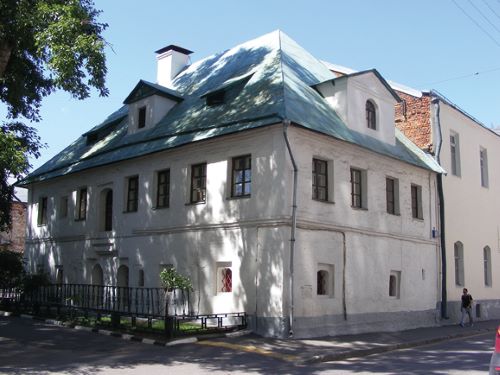
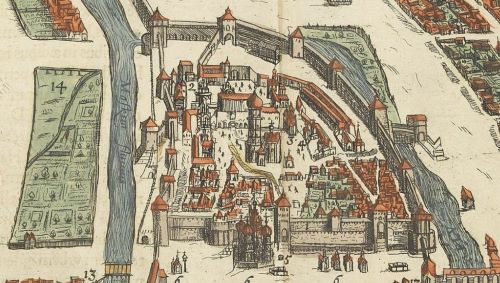
The 1628 case concerning the potentially magical root involved documents being passed between the regional governor in Rzhev—where the accused witch, Andrei Loptunov, had first been arrested—the regional governor in Toropets, Loptunov’s home town, the Moscow jail in which Loptunov was being held, the Military Service Chancery, who were investigating the case, and the Apothecary Chancery, who were providing expert testimony on the properties of said root. Such a circulation of documents was a feature of Muscovite administration. This administrative network, known as the chancery system, was composed of around sixty departments, or chanceries. Not all these departments were permanent fixtures, with some only lasting a matter of years, and yet the number of departments remained relatively constant across the century.5 Departments were created to deal with all significant areas of Muscovite life: finances and tax-collection; military affairs; administration of regions, especially those recently acquired; court life; and the Church. Where chanceries shared similar duties, close collaboration was necessary. For example, there were different chanceries responsible for general military and service activities, new formation regiments, and foreign mercenaries, all of whom had to cooperate to allow the Muscovite armed forces to function effectively. Alongside these central chanceries, Muscovy was also administered through the use of provincial governors, who communicated with the central chanceries on a number of issues. Chancery directors played a key role in this system, as conducting correspondence with other branches of the Muscovite governmental system was a vital part of their duties.
The chancery directors were helped in their duties by the secretaries, another key group who undertook much of the day-to-day record-keeping. Across the course of the seventeenth century there were significant changes in chancery staffing. N. F. Demidova has shown that the overall number of secretaries rose dramatically across the seventeenth century: in the 1640s, there were 837 secretaries and under-secretaries in central chanceries; by the 1680s, this number had risen to 2,739.6 The growth in secretary numbers identified by Demidova is consistent with the figures provided by Grigorii Karpovich Kotoshikhin (ca. 1630–67), a former chancery secretary who defected to Poland and, later, Sweden, and author of the only contemporary Russian account of the chancery system. During the 1660s, Kotoshikhin puts the numbers of secretaries and governors at 100, and the number of undersecretaries at 1000; consideration of his numbers would suggest that the numbers of secretaries rose most precipitously between the 1660s and the 1680s.7 Some departments were more reliant upon specialist staff than secretaries. The Apothecary Chancery only employed 2–3 secretaries at a time, with the vast majority of its staff consisting of medical practitioners. Like the secretaries, the numbers of medical practitioners employed at the Russian court rose dramatically across the seventeenth century. Figures compiled by Sabine Dumschat give the overall number of Apothecary Chancery medical staff in the period 1600–20 as 17; by 1680–96 there were 112.8 This rise in staff numbers of both medical practitioners and secretaries is indicative of a general expansion of the chancery system across the seventeenth century.
The expansion of the chancery system necessitated and drove an institutionalised form of literacy. Literacy in seventeenth-century Russia was commonly seen as a specialised skill, and was largely (although by no means exclusively) restricted to those who read and wrote professionally, such as the administrators and monastic copyists.9 The chancery system, as it required the transmission of orders and information, relied heavily upon written documentation to perform its duties, leading to a proliferation of administrative documents. As departments communicated with one another, or with other government agents in Russia or abroad, written documents were used to ensure accurate transmission and to record those communications.
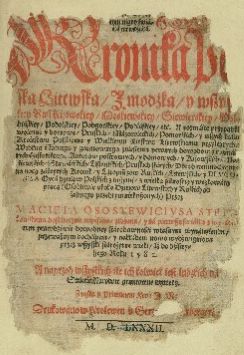
The chancery system produced and circulated a great variety of documents, each with its own name: petitions (chelobitnye gramoty pl., chelobitnaia gramota sg.); orders from the tsar (pl. ukazy, sg. ukaz), his counsellors (prigovory pl., prigovor sg.), and from department heads; communications between department heads (pamiati pl., pamiat′ sg.); responses from underlings to their superiors confirming that they had fulfilled an order (otpiski pl., otpiska sg.); interrogation records (rassprossnye rechi pl., rassprosnaia rech′ sng.); torture records (pytochnye rechi pl., pytochnaia rech′ sng.); and reports such as those created by the Apothecary Chancery medical experts (skazki pl., skazka sg.).10 Some departments produced special kinds of document, like the Vesti-Kuranty, a modern term for Russian translations of foreign newspapers produced by the Ambassadorial Chancery, and discussed elsewhere in this volume by Ingrid Maier and Daniel C. Waugh. A number of chanceries owned or produced books. The Ambassadorial Chancery produced a large number of translations, like Maciej Stryjkowski’s Polish Chronicle.11 Simeon Ushakov, who worked in the Armoury (Oruzheinyi prikaz), proposed (although never completed) a manual on icon painting.12 Nikolai Diletskii produced a textbook of music theory to help musicians at the Russian court understand and compose music.13 The Apothecary Chancery owned a library of medical, natural historical and other miscellaneous books.14 A number of those medical works were translated, and in the later seventeenth century Apothecary Chancery employees also composed their own texts.15 A central feature of the chancery system was thus its production, storage and circulation of documents.
In the historiography of the chancery system as a whole, and in the historiography of individual chanceries, the issue of function has always been seen as important. Attempts have been made to classify the chanceries, by dividing them up into their relative spheres.16 Eve Levin, Maria Unkovskaya, and a number of historians of the chancery system have all proposed that the Apothecary Chancery was either exclusively or primarily a court institution.17 This view is particularly dependent upon the treatment of patients undertaken by the Apothecary Chancery: a substantial proportion of patients were members of court, therefore the Apothecary Chancery was a court institution. It should be noted, however, that the department also provided medical services for the army from at least 1632.18 Other scholars of the Apothecary Chancery have seen it as having a somewhat wider purview: M. B. Mirskii highlighted the fact that the Apothecary Chancery had some responsibility for the health of Muscovites outside of court circles and the army; M. K. Sokolovskii described the department as acting in several capacities, including as an Academy of Sciences, referring to both its library and its production of reports.19 Such approaches are in line with the views of K. A. Nevolin, who suggested that the Apothecary Chancery was defined by its function, medicine, not by its relationship to the court.20 In such a schema, then, the Apothecary Chancery is commonly seen as a court department, concerned primarily or exclusively with the medical needs of the palace, with little or no competencies outside of those duties.21 However, such an analysis excludes or undervalues certain aspects of the Apothecary Chancery’s work. Most importantly for our purposes here, the Apothecary Chancery was frequently called upon to provide reports to various institutions.22 What, then, does this reporting work tell us about the function of the Apothecary Chancery, and about the functioning of the chancery system as a whole?
Work on information technologies, information management, paper technologies, and paperwork provide useful models here. The study of information in early modern Western Europe has focussed on the idea of an ‘information overload’, that early modern Europeans had access to an impossibly large amount of information, hence much intellectual work of the period was directed towards sorting, categorising, preserving and managing that information. This problem was particularly acute for two groups: experts and bureaucrats, the same groups involved in the Apothecary Chancery reporting system. This literature reveals the great variety of ways in which early modern Europeans sought to organise information: Ann Blair has written about manuscript notes and printed reference books; Anke Te Heesen has emphasised the influence and various utilities of double-entry book-keeping; various medical historians have looked at case-books; and Staffan Müller-Wille and Isabelle Charmantier have looked at the great Swedish botanist Carl Linnaeus’s use of index cards.23 All these historians focus on the issue of paper, manuscript and print, either singularly or in interaction. Paper was also vital to the Apothecary Chancery, and indeed the chancery system as a whole. Yet following the path of Apothecary Chancery reports highlights another issue: the spoken word as a meaningful part of how knowledge was created and circulated.24 Orders for reports to be made were given orally; reports were either written down immediately, or spoken out loud and then transcribed; they were conveyed to bureaucrats in speech. Oral communication was a fundamental, inalienable part of the system. This is an aspect of knowledge exchange the focus on paper tends to obscure: although orality has been discussed as a part of early modern scientific exchange, it is not seen as an integral part of early modern scientific information technologies.25 Here, then, we will use the term information technology, rather than paper technology, to highlight that it is the information—the reports—that we choose to follow and to highlight, and not the paper. The concept of information technology gives us a new way to approach the chancery system, one which focuses on how departments worked together, rather than what divided them; conversely, the Russian case highlights the interactions of paper with speech as a fundamental part of knowledge circulation.
Ordering Knowledge
Returning again to 1628, the Military Service Chancery, having heard the testimony of both Loptunov and his master, decided on further tests of Andrei’s story, and his characterisation of the root as medicinal, by sending the root to the Apothecary Chancery for examination. The resulting report states,
Doctor Valentine [Bills] and his colleagues, having looked at the root, said that this root [is called] Goose-flesh, and is used in medicines, and has nothing evil in it, and [people] put that root in the mouth. And if someone wished to commit a crime, and [if] he used the good herb badly, for criminality or witchcraft, that they do not know, [and they do not know] if there is a curse on that root.45
In this case, the report was created in part by an examination of a natural object. That examination was informed by the expertise of the physicians, and their ability to identify a root and to know and recount its properties, based on the training in botany and natural history that Western European university-trained physicians possessed. This process of selecting brief snippets of information from a much larger corpus of knowledge in order to give a focussed answer to a specific question was central to the Apothecary Chancery reporting system.
Reports created from a combination of experience and expert knowledge made up a substantial proportion of such texts, with particular emphasis on natural objects and human bodies. All of the reports produced for witchcraft and medical malpractice trials involved such examinations, usually of herbs and roots. Interestingly, these were the only cases in which Russians played a role as experts rather than patrons. Until 1654, all medical practitioners were foreigners from Western Europe. After that date, the Apothecary Chancery began to train medical practitioners for the first time: field surgeons, to serve the army; and apothecaries, to prepare medicines.46 The department also employed Russians as herb collectors (travniki) who were expected to be knowledgeable in the properties of local plants. These Russian medical practitioners occasionally took part in report creation. In the 1685 p′ianoe zelie case all the examiners were foreign medical practitioners.47 With one exception (1703), all of the medical experts who composed testimony for witchcraft trials were foreign.48 In contrast, in a 1679 medical malpractice case two separate groups of experts were consulted, the first group being led by foreigners, and the second group entirely consisting of Russians.49 Examination of a natural object was often a central part of the report-creation process, and in cases involving herbs and roots, Russians played a role in creating knowledge, as well as ordering it.
A second substantial group of examination-based reports involved human bodies. Such was the case with post-mortems, for example that of the unfortunate Danish servitor killed in 1644. The report on his cause of death stated “that cupbearer is wounded by a harquebus [and] the wound is just under the right eye”.50 Unusually for post-mortems in Muscovy, the doctors then went on to attempt to remove the bullet by cutting into the body: such incisions were rarely made. In this case the incision was unproductive, as the bullet failed to materialise, with the doctors proposing that it likely had gone too deep into the skull to be easily retrieved. Whether a post-mortem included an internal probe, as in this case, or was only external, close examination of the body was key to creating the report.
As well as examining natural objects and human bodies whose state was in question, Apothecary Chancery medical experts also referred to books in making their reports. In such cases, the only experts involved were foreigners, although the Apothecary Chancery did own Russian-language texts. The use of books was made explicit in the 1685 report on the questionable herb p′ianoe zelie, as the Apothecary Chancery experts declared it unfit for use in internal medicine after an examination of texts in the Apothecary Chancery library revealed that it was not listed as medicinal.51 The report further added that p′ianoe zelie was a dangerous herb, capable of causing amnesia (zabvenie uma) and even death; such information may well also have been taken from a book.52 In this case, multiple works from the Apothecary Chancery library were apparently used to construct the report.
Many reports mention individual authors and authorities. Samuel Collins’s 1664 report on obesity cites Hippocrates.53 Andreas Lichifinus’s 1657 report on the Indian unicorn references both Marco Polo and Andrea Bacci, a sixteenth-century papal physician.54 In Laurentius Blumentrost’s 1690 report on the education of medical graduates from Padua (one of whom was then seeking a position in the department), he praised their knowledge of Galen and humoural medicine, but railed against their ignorance of chemical medicine, a practice he ascribed not only to Paracelsus and Jan Baptist von Helmont (two of the most important chemical medical thinkers of early modern Europe), but also Hippocrates, Plato, and “other most ancient teachers, who are now and from ancient [times] accepted and respected”.55 In this case, like Collins and Lichifinus before him, Blumentrost only makes mention of specific elements of a huge corpus of writing and ideas, selecting only the parts which make sense in the context of his report. Books and their authoritative and expert authors were important to Apothecary Chancery reports, but only small pieces of information were chosen from a vast amount of available and relevant medical and natural historical thought in order to craft a direct, expert answer to a particular question.
On rare occasions, Apothecary Chancery reports even delved into the Bible as a form of textual authority. The Latin version of Samuel Collins’s report on venesection, written in 1664, contains several Biblical references.56 In creating an apologia for astrology as both medically useful and acceptable to Christianity, Collins included three Biblical quotations: Daniel 5. 27, Job 38. 31, and Judges 5. 20. All these quotations deal with God as an interventionist force in the universe, manipulating it according to his will and leaving signs for Christians to interpret. A marginal comment by Collins references the first century Roman-Jewish scholar Flavius Josephus, on Seth, the third son of Adam and Eve, to whom Josephus attributes the discovery of many of the secrets of astronomy.57 Here Collins took on two enormous corpora—the Bible, and Biblical scholarship—and, like his colleagues using other learned authorities, selected specific elements to support his argument. In this he was apparently unsuccessful: the Russian version of Collins’s report excludes all these references, an issue dealt with below. Nevertheless, Collins’s attempt to include in his report quotations from the most authoritative of all authorities in early modern Europe, the Bible, demonstrates the fundamental importance of brief, selective use of major textual authorities to create the Apothecary Chancery reports.
In all of these cases the Apothecary Chancery reports took one, short, aspect of a larger textual authority, and re-contextualised it. Such an approach was by no means typical for early modern experts when dealing with information; they produced and reproduced information, and textual authority, in a variety of fashions. In perhaps the shortest format, Linnaeus placed individual words on index cards.58 At the other end of the scale, many intellectuals produced critical editions of ancient world texts in their entirety, often accompanied by substantial glosses, which could rival the length of the original work. Florilegia, miscellanies, botanical works, medical recipe books and natural histories all reproduced shorter textual elements, ranging from a paragraph to several pages of a chapter.59 The Apothecary Chancery’s methods of dealing with textual authorities thus sat within a variety of approaches to such in the early modern world, which ranged from wholesale reproduction and even extension of the original, to the use of individual words. Considered in this context, Apothecary Chancery reports are notable for their selection of sentence-long pieces of information from textual authorities to be contextualised within longer prose compositions.
The creation of expert reports by the Apothecary Chancery was conducted on two bases, which often overlapped: examination of a natural object, and reference to established textual authorities. Interestingly, the only cases in which Russians worked as experts who created knowledge, rather than bureaucrats who ordered that knowledge be created, are those cases concerning examinations. It was the Western European, university-trained physicians who produced reports using textual authorities. The use of those authorities is hugely significant: the Hippocratic corpus, which comes up multiple times, is massive. Apothecary Chancery reports select only one or two elements from within this, and other extensive collections of writing, to create a selective, direct answer to a specific question.
Translating Knowledge
A particular feature of knowledge circulation in the Apothecary Chancery was the central role of translation. The medical staff members were commonly native speakers of English, German or Dutch, although there were also occasionally French, Italian and Greek speakers present as well. Those trained in universities, such as the physicians, would have known Latin; those trained in guilds, such as apothecaries and surgeons, may not have done. Bureaucrats, both department heads and secretaries, were Russian speakers, only a few of whom knew foreign languages. This situation necessitated translation as a key part of knowledge exchange. This could take place as written translation, with the medical practitioners providing a Latin text, in which case the documents use the phrase “translated from a Latin document” (perevod s Latinskogo pis′ma). It could also take place as an oral interpretation, with the Latin being spoken aloud, interpreted into Russian, and then taken down. In such cases, the verb “to say” (skazat′ inf.) is used. Such was the case in Loptunov’s 1628 witchcraft trial, in which the document records: “And Doctor Valentine [Bills] and his colleagues, having looked at the root, said [my emphasis]…”.60
This was common, both within the Apothecary Chancery, and within the chancery system more widely: the same formulation is used in reports on cooling medicines61 and on worms62 in 1643, a report on the uses of animal parts in medicine in 1664,63 and autopsies in 167764 and 1679.65 It is notable that all of these reports were particularly brief, even by the standards of the Apothecary Chancery: the autopsies, and the 1628 report on Loptunov’s root, each run to only a few sentences; the other reports a couple of paragraphs. It thus seems that orally translated reports were made for particularly brief answers, when perhaps the process of composing a text and then translating it would have been unnecessarily time-consuming.
Transcription of oral reports could significantly shape the final form of the report. On 1 January 1658 a priest’s wife was found dead, and three Apothecary Chancery physicians—Lichifinus, Engelhardt and Graman—examined the body for signs of plague. Engelhardt said: “That woman had scrofula of the stomach… and that [scrofula] does not cause the plague”.66 Graman agreed, stating that: “That woman had scrofula of the stomach… and that [scrofula] does not cause the plague”.67 A significant feature of these two statements is the high level of similarity between them; they are almost identical. It likely indicates that these were not the exact words of Engelhardt and Graman, as the sole difference between them is orthographical: variant spellings of the word for scrofula (zolotukha and zolotik). It is probable that the scribe reproducing Engelhardt’s and Graman’s statements paraphrased their words; as noted by Daniel E. Collins, such minor adjustments are common in other Muscovite documents that transcribe speech.68 Despite the lack of an original for comparison, we can nevertheless see that oral reports do seem to have been subject to adjustments by scribes.
The process of translation can be traced in greater detail when both an original and a translation are extant, as is the case in a number of the written reports. Significantly, although Apothecary Chancery medical staff spoke many languages, and even wrote some documents in other languages during their time in Russia (letters relating to their delays by officious border guards are typically written in German), all extant originals of the reports are in Latin. This was likely simply a practical consideration: reports were most commonly composed by the physicians, who all knew Latin; restricting the reporting to one language limited the numbers of translators the department required, which staff group was always in high demand across the chancery system.
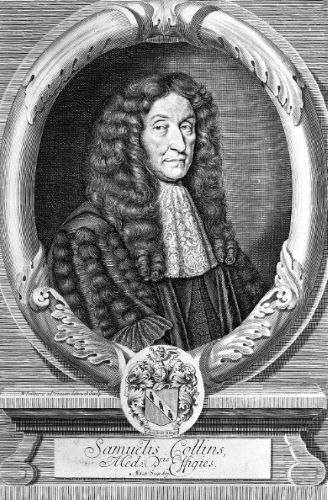
The translation process was used to edit reports. As noted above, although Samuel Collins attempted to marshall Biblical authority in his defence of astrology as a useful and Christian activity, the sentences in which Collins references the Bible in his Latin original were redacted in the Russian translation.69 A. P. Bogdanov, who first noted that parts of the Latin original of this text were not preserved in the Russian translation, calls the removed sections insignificant (maloznachitel′nye).70 Alternatively, Maria Unkovskaya argues that the edited sentences were concerned with cosmology, and were not translated due to the ban she proposes existed in the Apothecary Chancery on the discussion of medical theory or natural philosophy.71 However, as shown in examples above, various other Apothecary Chancery reports do mention medical theorists, medical theories, and natural philosophy, often relying on works owned by the department. Moreover, sentences present in Collins’s original Latin that are absent from the Russian are all Biblical, and not cosmological or natural philosophical. For example, Collins wrote
There is an ancient custom among the Persians, to which the Prophecy of Daniel in the presence of King Belshazzar may have referred with the word ‘Tekel’: You have been weighed on the scales and found wanting. [Emphasis my own]
The reference to Daniel’s conversation with Belshazzar remains in the final Russian version, but Daniel’s interpretation of the Word of God has been removed: you have been weighed, and found wanting (see Daniel 5. 13–28). In each case where sentences are removed, they were extracted from different parts of the text, in a way which leaves the remaining text comprehensible, but removes direct quotations from the Bible. This is likely due to concerns over heresy. In contrast to the highly adaptive approach to text and translation found in the Apothecary Chancery reports, and for that matter the Vesti-Kuranty, the text of the Bible and other religious works were approached entirely differently: the word, and the words, of God, were sacrosanct, and changing them was fundamentally problematic.72 This was evidenced by the problems of Patriarch Nikon’s Church reforms of the 1660s, which revolved around proposed changes to the service books. According to David Frick, many of those involved in the Muscovite religious debates were using Polish Bibles, but went to great lengths to conceal that fact.73 The Book of the Bible that Collins was citing here—Daniel—was in the Slavonic Bible, but Collins was not citing the Slavonic Bible; he was citing a Western European Bible. For Muscovites, this difference was substantial. The Slavonic Book of Daniel was canonical; a Western European Book of Daniel was heretical. Collins’s text was familiar to Russian scribes, but nevertheless sufficiently alien and problematic to necessitate excision. In this case, then, the translation process led to the deliberate removal of whole sentences deemed inappropriate for religious reasons.
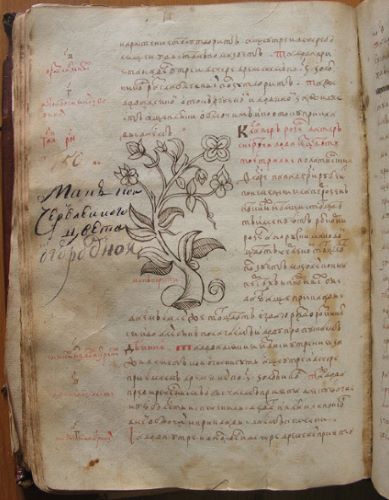
The translation process was also used to add information to a report. In the 1665 text on valerian root Collins covers the physical appearance, properties, methods of preparation and modes of consumption of the plant.74 In the Russian version of the document there is an additional section, introduced in the report as excerpts from the herbal with 520 chapters, an as-yet unidentified Russian-language herbal. As the text specifies that the origin of the additional articles is a Russian-language herbal, it is unlikely that Collins, who knew very little Russian, could have chosen those excerpts to accompany his report; they are more likely to have been chosen by a Russian-speaking member of the Apothecary Chancery staff, perhaps the scribe who prepared the final, Russian version of Collins’s report. The articles from the herbal complement Collins’s abstract description of the properties of the root by providing specific recipes for its use. Here, Russian scribes used their ability to change the text of a report to include extra material relevant to the topic.
Close examination of the translation stage in the Apothecary Chancery’s reporting information technology reveals two significant points: the impact of translation upon the content of a report, and the respective roles of the spoken and written word. The Russian text of a report could substantially differ from the Latin original, often because of deliberate changes to the text undertaken by the translator, who either added or removed elements. Translation was thus a form of editing, which could have a major influence on the final content of a report. Alongside these written reports, reports were also spoken aloud, then translated and transcribed, which process also affected the final form of the report. In the chancery system, the spoken word was a fundamental part of report creation, and so of the chancery system’s form of information technology. The chancery system was a literate bureaucracy, but it also relied heavily upon the spoken word.
Circulating Knowledge
Once an Apothecary Chancery report had been written and translated, it was then circulated. In the case of the 1628 witchcraft trial with which we began, it was sent back to the Military Service Chancery bureaucrats overseeing the case, and possibly forwarded to the governor of Rzhev, under whose authority the arrest was initially made, and, for that matter, the governor of Toropets, the accused’s home town, and the Archangel monastery in Ustiug Velikii, to which he was then sent. That report thus circulated not just within the Apothecary Chancery, or even between that department and the palace, but within the wider Muscovite administrative system. It is even possible that the accused himself, Loptunov, a peasant from a rural noble estate, and his master, Mikhail Polibin, who was losing a peasant, were also made aware of the contents of the report affecting Loptunov’s fate. That would again expand the circulation of this report of expert Western European medical knowledge, out into Muscovite society. Following the further progress of Apothecary Chancery expert reports thus tells us about how these reports circulated, and whom in Muscovite society was the end user of this information technology.
Commonly, the end user of a report was the man who had ordered it: the Apothecary Chancery head, the head of the Military Service Chancery or other section of the administration, or indeed the tsar himself. In all the cases for which such information is available, the orderer was at least part of the circle to whom the report was distributed. The head of the Apothecary Chancery was a particularly vital part of this distribution system. As well as receiving his own reports, reports written by his department for others were sent to him first and, in the case of reports to be passed on to the tsar, he then personally delivered them. Such was the case in 1655, with the report on unicorn horn, and the 1679 autopsy of the boyar Vorotynskii.75 Similarly, when reports requested by other departments were completed, they were always first sent to the Apothecary Chancery director before being delivered to the relevant chancery. Such was the case in 1679, for the autopsy of one of the Patriarch’s grooms on behalf of the Land Chancery (Zemskii prikaz).76 The head of the Apothecary Chancery was thus a vital figure in circulating reports created by his department to a relevant audience.
Consuming a report did not necessarily mean reading it. We know from other sources that reports were commonly read to the tsar and his advisers.77 Far from all Russian nobles were functionally literate, so this was an efficient system for transmitting information. Leaving aside the literacy issue, there are reasons that the spoken word is particularly helpful in exchanging information. As pointed out by more than one colleague during the workshop from which this essay emerged, academics regularly fly around the world to speak face-to-face, even though we could rather more easily send a text to each other to read. This circumstance is (hopefully) not a statement on the literacy of the academics involved, but rather reflects the special role the spoken word can play in knowledge exchange (the opportunity to exchange that knowledge in chic local restaurants is merely a pleasant by-product).There were also good reasons to use the spoken word to convey certain reports at the seventeenth-century Russian palace. The number of people holding a counsellor rank, and so who could advise the tsar, went from around thirty before 1645, to approximately seventy in the latter part of the century.78 In reality, the tsar’s council was often rather smaller, but he could still be in discussion with perhaps fifteen people.79 Reading the report aloud to such a group would be a rather more efficient way of conveying the information than making and circulating anything from sixteen to seventy-one manuscript copies, or alternatively circulating a smaller number of copies among that many people. In such situations, the spoken word was a more efficient way to communicate reports.
Apothecary Chancery reports were also made available to people outside the chancery system. When the department produced reports for witchcraft and medical malpractice trials, that report may well have been shown to the defendant, a person who often came from outside the chancery system. Indeed, in 1690, one of the defendants in a witchcraft and blasphemy case, Perfilii Rokhmaninov, a townsman (posadskii chelovek) from Galich, petitioned for the herbs found in his possession to examined by the Apothecary Chancery, asking that “those herbs be examined in the Apothecary [Chancery], and those herbs are not magical”.80 The date of Rokhmaninov’s request is significant: in the late seventeenth century, former and current Apothecary Chancery staff members were compiling self-help medical texts aimed at literate Russian audiences.81 This circumstance likely raised the profile of the Apothecary Chancery as a centre for medical expertise in Russian society, and this possibly motivated Rokhmaninov’s request. Rokhmaninov knew that having an expert Apothecary Chancery report written for his case was a possibility, suggesting a significant knowledge of that department’s reporting activities even outside the chancery system.
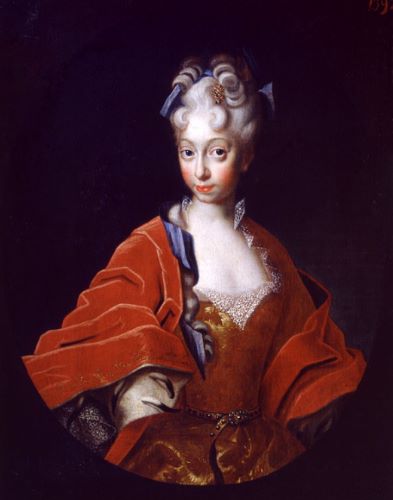
There is also some evidence that Apothecary Chancery reports may have been made available to foreign governments. We return here to the 1644 autopsy of Count Valdemar’s retainer.82 The servitor in question died from a gunshot wound to the face, which wound he received in front of numerous witnesses. An autopsy would then seem to serve little purpose here, unless it was to send on to the Danes as part of an official response to the incident. In 1715 an autopsy report was written on the death of Charlotte Christine of Brunswick-Lüneburg, Tsarevich Alexei’s wife. In this case, it is the language of the report that is odd: the file appears to be complete and undamaged, and yet it contains only a German and a Latin version of the autopsy, and no Russian text.83 Charlotte Christine was the sister-in-law of the Holy Roman Emperor Charles VI, whom Russia hoped to count as an ally in an expected war against the Ottomans. It is thus very possible that the report on her death was prepared primarily to send to Charles VI, in which case the languages of the report would make perfect sense. These two cases thus show that the chancery system’s form of information technology could communicate information not only outside the chancery system, but potentially even outside of Russia.
The readership of Apothecary Chancery reports highlights vital aspects of knowledge circulation in the Russian context. Firstly, it speaks to the role of the Apothecary Chancery within the chancery system, and indeed our ideas of how the chanceries worked as a system, rather than merely a group of institutions. The Apothecary Chancery is commonly viewed as a palace instrument, as indeed it often functioned. But devoting attention to the flow of reports reveals the broader networks in which the Apothecary Chancery was involved, linking together the wider Muscovite administration beyond the walls of the Kremlin, some parts of Russian society, and even, potentially, other governments. Secondly, looking at circulation shows us how things circulated: the spoken word was as important here as the written word. Muscovites were as likely to find out the contents of a report by having it read to them as by reading it themselves. The Apothecary Chancery’s reporting system shows substantial circulation of medical knowledge, circulation that was achieved by the purposeful use of both manuscript and the spoken word.
Storing Knowledge
The final stage of all Apothecary Chancery documents was storage. In a sense though, this was a stage long in preparation through the very processes of creating the document. As the orders, reports, and responses circulated through the system, they gained a manuscript form of metadata, data about data. When the order for a report on Loptunov’s root reached the Apothecary Chancery in 1628, it did not arrive merely as an order, but was accompanied by a précis of the case up until the moment the order arrived at the department. That précis was then used to form a file in the Apothecary Chancery, along with a copy of the report; similarly, a copy of the report was also sent back to the Military Service Chancery to be included in their file. In many cases, we have both draft versions of a document (chernovik) and the final, clean version (belovik). The existence of drafts and clean copies reflects the great care taken in creating these documents. In the seventeenth century Russia still imported much of its paper. Nevertheless, even the most mundane of documents was drafted and redrafted before a final version of the document could be approved, showing the meticulous construction of Muscovite files.
These files were stolbtsy, scrolls, which were used for the majority of Russian administrative documents until around the 1690s.84 This was a security measure: as each document was added to a file, it would be glued to its predecessor and an elaborate signature made across the back of the join, so that original documents could not be removed, nor fakes introduced, without someone noticing. One reason for such care was to ensure that one could refer back to the documents accurately. We have evidence that the Apothecary Chancery did just that on a number of occasions: several prescriptions contain a note that either they were created on the basis of an earlier prescription, or that a prescription was repeated later.85 I have not come across any such notations in the reports discussed here, but the careful recording and storage of these documents indicates that reports, like the Apothecary Chancery prescriptions, were kept for the possibility of such reference.
The knowledge created by the Apothecary Chancery was directed towards particular, limited, problems and questions, but it was not transitory. On the contrary, like all chancery documents, it was created in a secure and traceable manner, both to aid its real-time use and to help its storage for potential later reference. Direct evidence of such references only exists for prescriptions, not reports. Nevertheless, it is important that this was a possibility that was anticipated and allowed for by the system itself. The Apothecary Chancery information technology ensured that data, once created, could be retrieved.
Conclusion
We began this essay in 1628, when the arrest of a man possessing a peculiar root set in action the massive bureaucracy of the Muscovite administration, allowing us to follow the process by which expert reports were ordered, created, translated, circulated, and stored. Examining these processes reveals the nature and role of information technology and knowledge exchange in seventeenth-century Russia, and also gives us a specific case of an early modern information technology to help us to examine that concept more closely. The Apothecary Chancery reporting system allowed the creation of orders for specific pieces of knowledge, the creation of knowledge to that particular end, the transformation (translation) of that knowledge into a form fit for usage in context, the circulation of that knowledge around a system, and the storage of that knowledge for potential later retrieval. This was an information technology.
Looking at the Apothecary Chancery reporting system as a form of information technology gives us a new view on that department, the chancery system as a whole, and indeed the running of the seventeenth-century Russian state. The chancery system has often been studied by dividing it up, with the Apothecary Chancery seen as limited to palace medicine. Looking at the report circulation, it is clear that, while the Apothecary Chancery did indeed serve the court, it fulfilled a number of functions beyond merely treating the sick, and also regularly provided expert knowledge to a number of other departments. Tracing such interactions shows the chancery system to be dynamic and interactive, with the Apothecary Chancery being far more than simply a dispensary for the Muscovite elite.
Most interesting is how this information technology functioned. The chancery system was a bastion of literacy in a culture where literacy was not always highly valued. Literacy and documentation played a substantial role in the encoding and storage of Apothecary Chancery knowledge. Printed texts likely played a part as reference texts in the Apothecary Chancery library, but it was the chancery manuscript scrolls which took centre stage. Orality was also a major element in this system. Orders were given orally; some reports were produced, and translated, orally before being written down; and reports were consumed orally. Here, the spoken word was not subordinate to the written word, nor used when one could not read or write. It was used alongside writing, and even in preference to it, because orality has its own utility. In the Apothecary Chancery’s early modern information technology, manuscripts and the spoken word were the key mediums; this argues for the inclusion of oral communication in interaction with written, and printed, communication in histories of early modern information technologies.
Endnotes
- This chapter started life as a part of my Ph.D. dissertation, before undergoing a number of transformations, aided at every stage by the kindness and generosity of funders and colleagues, into its present state. I would like to thank the Arts and Humanities Research Council, who funded my graduate work, the Wellcome Trust and the Max Planck Institute for the History of Science, Berlin, who have funded my postdoctoral work, for their financial support. Endless comments, criticisms, suggestions, revisions, and improvements to this chapter—and its previous incarnations—were suggested by a great number of colleagues during my Ph.D. work, the workshop from which this volume emerged, and the Pre-Modern Conversation Seminar Series at the Max Planck Institute for the History of Science, and in particular by Sergei Bogatyrev, Harold J. Cook, Simon Dixon, Sebastian Felten, Lauren Kassell, Elaine Leong, Martyn Rady, and Faith Wigzell, as well as the three anonymous peer reviewers of the present volume. My thanks also go, as ever, to the staff of the Russian State Archive of Ancient Documents (RGADA), Moscow, for the use of their materials, and for the wonderful work they do. Finally, thanks also to our tireless editors, Simon and Katia, without whom this chapter would have been much less than it is. All remaining mistakes and deficiencies are entirely my own.
- N. Ia. Novombergskii, Materialy po istorii meditsiny v Rossii, 5 vols (St Petersburg: M. M. Stasiulevich, 1905), 3. 1, pp. 9–12. This case is discussed in Eve Levin, ‘Healers and Witches in Early Modern Russia’, in Affiliate disclosure: Amazon links on this site are paid links. As an Amazon Associate I earn from qualifying purchases.Saluting Aron Gurevich: Essays in History, Literature, and Other Related Subjects, ed. by Yelena Mazour-Matusevich and Alexandra S. Korros (Leiden: Brill, 2010), pp. 105–33 (pp. 117–18). For an analysis of how the documentary process worked in Russian witchcraft trials in general, see Valerie Kivelson, Desperate Magic: The Moral Economy of Witchcraft in Seventeenth-Century Russia (Ithaca and London: Cornell University Press, 2013), pp. 38–51.
- See for example Jeremiah E. Dittmar, ‘Information Technology and Economic Change: The Impact of the Printing Press’, The Quarterly Journal of Economics, 126 (2011), 1133–72.
- See Michael E. Hobart, and Zachary S. Schiffman, Information Ages: Literacy, Numeracy, and the Computer Revolution (Baltimore: Johns Hopkins University Press, 2000), especially pp. 4 and 212.
- Peter B. Brown, ‘How Muscovy Governed. Seventeenth-Century Russian Administration’, Russian History, 36 (2009), 459–529 (p. 476).
- N. F. Demidova, Sluzhilaia biurokratiia v Rossii XVII v. i ee rol′ v formirovanii absoliutizma (Moscow: Nauka, 1987), p. 37.
- G. K. Kotoshikhin, O Rossii v tsarstvovanie Alekseia Mikhailovicha (Moscow: ROSSPEN, 2000), p. 141.
- Sabine Dumschat, Ausländischer Mediziner im Moskauer Russland (Stuttgart: Franz Steiner Verlag, 2006), p. 104.
- Clare Griffin, ‘In Search of an Audience: Popular Pharmacies and the Limits of Literate Medicine in Late Seventeenth- and Early Eighteenth-Century Russia’, Bulletin for the History of Medicine, 89 (2015), 705–32.
- On the different kinds of document, see S. O. Shmidt and S. E. Kniaz′kov, Dokumenty deloproizvodstva pravitel′stvennykh uchrezhdenii Rossii XVI–XVII vv. Uchebnoe posobie (Moscow: MGIAI, 1985); O. F. Kozlov et al. Gosudarstvennost′ Rossii: gosudarstvennye i tserkovnye uchrezhdeniia, soslovnye organy i organy mestnogo samoupravleniia, edinitsy administrativno-territorial′nogo, tserkovnogo i vedomstvennogo deleniia (konets XV veka –fevral′ 1917 goda): slovar′-spravochnik, 6 vols (Moscow: Nauka, 1996–2009); Peter B. Brown, ‘Early Modern Russian Bureaucracy: The Evolution of the Chancellery System From Ivan III to Peter the Great’ (Ph.D. dissertation, University of Chicago, 1978), pp. 147–58; M. N. Tikhomirov, Rossiiskoe gosudarstvo XV–XVII vekov (Moscow: Nauka, 1973), pp. 364–69.
- Christine Watson, Tradition and Translation: Maciej Stryjkowski’s Polish Chronicle in Seventeenth-Century Russian Manuscripts, Studia Slavica Upsaliensia XXXXVI (Uppsala: Acta Universitatis Upsaliensis, 2012).
- Lindsey Hughes, ‘The Moscow Armory and Innovations in Seventeenth-Century Muscovite Art’, Canadian-American Slavic Studies, 13 (1979), 204–23.
- Claudia R. Jensen, Musical Cultures in Seventeenth-Century Russia (Bloomington and Indianapolis: Indiana University Press, 2009), pp. 122–23, p. 277, n. 54.
- Katalog knig iz sobraniia Aptekarskogo prikaza, ed. by E. A. Savel′eva (St Petersburg: Al′faret, 2006), pp. 19–25. See also M. I. Slukhovskii, Bibliotechnoe delo v Rossii do XVII veka. Iz istorii knizhnogo prosveshcheniia (Moscow: Kniga, 1968), pp. 87–89; S. P. Luppov, Kniga v Rossii v XVII veke (Leningrad: Nauka, 1970), pp. 203–08.
- On the translation of medical texts by the Apothecary Chancery, see 1672 translation of a German medical book, L. F. Zmeev, Russkie vrachebniki. Issledovanie v oblasti nashei drevnei vrachebnoi pis′mennosti, Pamiatniki drevnei pis′mennosti i iskusstva, no. 112 (St Petersburg: [n. pub.], 1896), pp. 72–73. In 1679 ten medical books were ordered to be translated, RGADA, coll. 143, descr. 2, file 1290. On the lack of a translator hampering translation work in the Apothecary Chancery: Mamonov, Materialy, 4, pp. 989–94. On the compilation of medical texts by the Apothecary Chancery staff see Griffin, ‘In Search of an Audience’.
- For a detailed analysis of this historiographical trend, see Peter B. Brown, ‘Muscovite Government Bureaus’, Russian History, 10 (1983), 269–330.
- D. V. Liseitsev, N. M. Rogozhin and Iu. M. Eskin, Prikazy Moskovskogo gosudarstva XVI–XVII vv. Slovar′-spravochnik (Moscow and St Petersburg: Tsentr gumanitarnikh initsiativ, 2015), pp. 33–35; Eve Levin, ‘The Administration of Western Medicine in Seventeenth-Century Russia’, in Modernizing Muscovy: Reform and Social Change in Seventeenth Century Russia, ed. by Jarmo Kotilaine and Marshall Poe (London and New York: Routledge Curzon, 2004), pp. 363–89 (pp. 366–67); Maria Unkovskaya, ‘Learning Foreign Mysteries: Russian Pupils of the Aptekarskii Prikaz, 1650–1700’, Oxford Slavonic Papers, 30 (1997), 1–20 (p. 2); N. V. Ustiugov, ‘Evoliutsiia prikaznogo stroia russkogo gosudarstva v XVII v.’, in Absoliutizm v Rossii XVII–XVIII vv: Sbornik statei k semidesiatiletiiu so dnia rozhdeniia i sorokapiatiletiiu nauchnoi i pedagogicheskoi deiatel′nosti B. B. Kafengauza, ed. by N. M. Druzhinin (Moscow: Nauka, 1964), 134–67 (p. 146); Brown, ‘Muscovite Government Bureaus’, pp. 292, 94.
- 1632 provision of medicines and field surgeons to the army: RGADA, coll. 143, descr. 1, file 114.
- M. B. Mirskii, ‘Aptekarskii prikaz (k 410-letiiu gosudarstvennogo upravleniia meditsinskimi delami v Rossii)’, Sovetskoe zdravookhranenie, 11 (1991), 72–77 (pp. 74–76); M. K. Sokolovskii, ‘Kharakter i znachenie deiatel′nosti Aptekarskogo prikaza’, Vestnik arkheologii i istorii, 16 (1904), 60–89 (pp. 60–61).
- K. A. Nevolin, Polnoe sobranie sochinenii K. A. Nevolina, 6 vols (St Petersburg: Tip. Eduarda Pratsa, 1857–59), 6 (1859), pp. 143–44, 168.
- N. P. Zagoskin, Vrachi i vrachebnoe delo v starinnoi Rossii (Kazan: Tip. Imperatorskogo Universiteta, 1891), p. 5; F. L. German, Kak lechilis′ Moskovskie tsari? (mediko-istoricheskii ocherk) (Kiev and Kharkov: F. A. Iorganson, 1895), p. 79; N. Ia. Novombergskii, Cherty vrachebnoi praktiki v Moskovskoi Rusi (kul′turno-istoricheskii ocherk) (St Petersburg: Tip. Ministerstva vnutrennikh del, 1904), pp. 53–54; N. V. Ustiugov, ‘Evoliutsiia’, p. 146; Brown, ‘Muscovite Government Bureaus’, pp. 292, 94; John Appleby, ‘Ivan the Terrible to Peter the Great: British Formative Influence on Russia’s Medico-Apothecary System’, Medical History, 27 (1983), 289–304 (p. 290); Mirskii, ‘Aptekarskii prikaz’, p. 74–76; Unkovskaya, ‘Learning Foreign Mysteries’, p. 2; Levin, ‘Administration’, pp. 366–67; N. V. Rybalko, Rossiiskaia prikaznaia biurokratiia v smutnoe vremia nachala XVII v. (Moscow: Kvadriga, 2011), p. 12.
- Sokolovskii, ‘Kharakter i znachenie’, pp. 60–61. Nevolin, Polnoe sobranie sochinenii, 6, pp. 143–44, 168.
- Ann M. Blair, Too Much to Know: Managing Scholarly Information Before The Modern Age (New Haven: Yale University Press, 2010); Staffan Müller-Wille, and Isabelle Charmantier, ‘Natural History and Information Overload: The Case of Linnaeus’, Studies in History and Philosophy of Science Part C: Studies in History and Philosophy of Biological and Biomedical Sciences, 43 (2012), 4–15; Anke Te Heesen, ‘Accounting for the Natural World: Double-Entry Bookkeeping in the Field’, in Colonial Botany: Science, Commerce, And Politics in the Early Modern World, ed. by Londa Schiebinger, and Claudia Swan (Philadelphia: University of Pennsylvania Press, 2005), pp. 237–51.
- The utility of orality in Muscovy has been discussed by Christoph Witzenrath. See Witzenrath, ‘Literacy and Orality in the Eurasian Frontier: Imperial Culture and Space in Seventeenth-Century Siberia and Russia’, Slavonic and East European Review, 87. 1 (2009), 53–77.
- See for example Eileen Adair Reeves, ‘Speaking of Sunspots: Oral Culture in an Early Modern Scientific Exchange’, Configurations, 13 (2007), 185–210; Walter J. Ong, ‘Orality, Literacy, and Medieval Textualization’, New Literary History, 16 (1984), 1–12.
- Novombergskii, Materialy, 3. 1, pp. 9–12; V. B. Kolosova, ‘Name—Text—Ritual: The Role of Plant Characteristics in Slavic Folk Medicine’, Folklorica, 10 (2005), 44–61 (p. 52).
- Borivoj Plavsic, ‘Seventeenth-Century Chanceries and Their Staffs’, in Russian Officialdom: The Bureaucratization of Russian Society from the Seventeenth to the Twentieth Century, ed. by Walter McKenzie Pintner and Don Karl Rowney (London: Macmillan, 1980), pp. 19–45 (pp. 25–26).
- Robert O. Crummey, ‘The Origins of the Noble Official: The Boyar Elite, 1613–1689’, in Russian Officialdom, ed. by Pintner and Rowney, pp. 46–75 (p. 75).
- Peter B. Brown, ‘Military Planning and High-Level Decision-Making in Seventeenth-Century Russia: The Roles of the Military Chancellery (Razriad) and the Boyar Duma’, Forschungen zur osteuropäischen Geschichte, 58 (2002), 33–43.
- George G. Weickhardt, ‘Bureaucrats and Boiars in the Muscovite Tsardom’, Russian History, 10 (1983), 342–49 (pp. 347–49).
- 31 For an overview of the careers of Apothecary Chancery directors, see Clare Griffin, ‘The Production and Consumption of Medical Knowledge in Seventeenth-Century Russia: The Apothecary Chancery’ (Ph.D. dissertation, University College London, 2013), pp. 221–23, http://discovery.ucl.ac.uk/1388075/
- Unusually for an Apothecary Chancery document, we are not given any further information about Gorikhvostov other than his name. Mamonov, Materialy, 1, pp. 39–40.
- 1643 report on cooling medicines: Mamonov, Materialy, 1, pp. 45–46. 1677 report on Blumentrost’s wife and daughter: Mamonov, Materialy, 4, pp. 908. 1679 report on the Patriarch’s groom: Mamonov, Materialy, 4, pp. 1161–62.
- Sobranie gosudarstvennykh gramot i dogovorov, khraniashchikhsia v gosudarstvennoi kollegii inostrannykh del, 4 vols (Moscow: N. S. Vsevolozhskii, 1813–28), 3, pp. 257–66.
- Mamonov, Materialy, 1, pp. 62–63.
- Mamonov, Materialy, 4, pp. 1304, 1198–99.
- Mamonov, Materialy, 1, p. 125.
- These reports are discussed in Robert Collis, ‘Magic, Medicine and Authority in Mid-Seventeenth-Century Muscovy: Andreas Engelhardt (d. 1683) and the Role of the Western Physician at the Court of Tsar Aleksei Mikhailovich, 1656–1666’, Russian History, 40 (2013), 399–427.
- On the use of unicorn horn as an objet d’art, see Aleksandr Plukowski, ‘Narwhals or Unicorns? Exotic Animals as Material Culture in Medieval Europe’, European Journal of Archaeology, 7 (2004), 291–313. On the use of the horn in medicine, see Brian Fotheringham, ‘The Unicorn and its Influence on Pharmacy and Medicine’, Pharmacy History Australia, 10 (2000), 3–7.
- Mamonov, Materialy, 2, p. 160.
- Ibid., pp. 311–12.
- 1657 witchcraft case against Andrei Durbenev: Mamonov, Materialy, 3, 676–77.
- RGADA, coll. 143, descr. 2, file 1618.
- 1685 investigation into the sale of p′ianoe zelie: RGADA, coll. 143, descr. 3, file 172.
- Novombergskii, Materialy, 3, part 1, pp. 9–12.
- Unkovskaya, ‘Foreign Mysteries’, p. 12; Zmeev, Vrachebniki, p. 266; V. F. Gruzdev, Russkie rukopisnye travniki (Leningrad: Voenno-morskaia meditsinskaia akademiia, 1946), p. 25.
- 1685 malpractice case: RGADA, coll. 143, descr. 3, file 172.
- 1703 witchcraft cases: RGADA, coll. 143, descr. 2, file 1618.
- 1679 malpractice case: Mamonov, Materialy, 4, pp. 1110–11.
- Mamonov, Materialy, 1, pp. 62–63.
- ‘v optekarskom prikaze v optekarskikh kn[i]gakh nigde ne napisana chtob ivo vnutr ch[e]l[o]v[e]komu upotrebliat’, RGADA, coll. 143, descr. 3, file 172.
- RGADA, coll. 143, descr. 3, file 172.
- Mamonov, Materialy, 3, pp. 787–89.
- Mamonov, Materialy, 2, p. 160.
- RGADA, coll. 143, descr. 3, file 322.
- RGADA, coll. 143, descr. 2, file 738.
- Flavius Josephus, The Antiquities of the Jews, trans. by William Whiston (Cirencester: The Echo Library, 2005), p. 444.
- Müller-Wille and Charmantier, ‘Natural History and Information Overload’.
- Blair, Too Much to Know.
- Novombergskii, Materialy, 3, part 1, pp. 9–12.
- Mamonov, Materialy, 1, pp. 45–46.
- Ibid., pp. 39–40.
- Novombergskii, Materialy, 1, pp. 54–55.
- 1677 report on Blumentrost’s wife and daughter: Mamonov, Materialy, 4, pp. 908.
- 1679 report on Patriarch’s groom: Mamonov, Materialy, 4, pp. 1161–62.
- Mamonov, Materialy, 3, pp. 694–95.
- Ibid.
- Daniel E. Collins, ‘Speech Reporting and the Suppression of Orality in Seventeenth-Century Russian Trial Dossiers’, Journal of Historical Pragmatics, 7 (2006), 265–92 (p. 283). See also Collins, Reanimated Voices. Speech Reporting in a Historical-Pragmatic Perspective (Amsterdam and Philadelphia: John Benjamins, 2001).
- RGADA, coll. 143, descr. 2, file 738.
- A. P. Bogdanov, ‘O rassuzhdenii Samuila Kollinsa’, in Estestvennonauchnye predstavleniia Drevnei Rusi ed. by R. A. Simonov (Moscow: Nauka, 1988), pp. 204–08. Bogdanov’s edition of the Russian text is published here pp. 206–08.
- Unkovskaya, ‘Foreign Mysteries’, p. 9.
- On adaptive translation in the Vesti-Kuranty, see Ingrid Maier, ‘Newspaper Translations in Seventeenth-Century Muscovy. About the Sources, Topics and Periodicity of Kuranty “Made in Stockholm” (1649)’, in Explorare necesse est. Hyllningsskrift till Barbro Nilsson, ed. by Per Ambrosiani, Elisabeth Löfstrand, Laila Nordquist, and Ewa Teodorowicz-Hellman (Stockholm: Acta Universitatis Stockholmiensis, 2002), pp. 181–90.
- David A. Frick, ‘Sailing to Byzantium: Greek Texts and the Establishment of Authority in Early Modern Muscovy’, Harvard Ukrainian Studies, 19 (1995), 138–57.
- Mamonov, Materialy, 3, pp. 791–94.
- 1655 report on purchase of unicorn horn: RGADA, coll. 143, descr. 2, file 147; Mamonov, Materialy, 2, p. 157; Mamonov, Materialy, 3, pp. 636–39. 1679 autopsy of Vorotynskii: Mamonov, Materialy, 4, p. 1304, pp. 1198–99.
- Mamonov, Materialy, 4, pp. 1161–62.
- Ingrid Maier and Wouter Pilger, ‘Second-hand Translation for Tsar Aleksej Mixajovich—a Glimpse into the “Newspaper Workshop” at Posol′skij Prikaz’, Russian Linguistics, 25 (2001), 209–42 (p. 215).
- Marshall Poe, The Russian Elite in the Seventeenth Century, 2 vols (Helsinki: Finnish Academy of Sciences and Letters, 2004), 1, pp. 13–15; Poe, ‘Tsar Aleksei Mikhailovich and the End of the Romanov Political Settlement’, Russian Review, 62 (2003), 537–64; Robert O. Crummey, Aristocrats and Servitors: The Boyar Elite in Russia, 1613–89 (Princeton and Guildford: Princeton University Press, 1983), p. 88. See also Hans-Joachim Torke, ‘Oligarchie in der Autocratie—Der Machtverfall Der Bojarenduma Im 17. Jahrhundert’, Forschungen zur osteuropäischen Geschichte, 24 (1978), 179–201.
- See P. V. Sedov, Zakat Moskovskogo tsarstva. Tsarskii dvor kontsa XVII veka (St Petersburg: Dmitrii Bulanin, 2008), pp. 13–19.
- N. Ia. Novombergskii, Vrachebnoe stroenie v do-Petrovskoi Rusi (Tomsk: Parovaia tipolitografiia Sibirskogo tovarishchestva pechatnogo dela, 1907), p. 93.
- See Griffin, ‘In Search of an Audience’.
- Mamonov, Materialy, 1, pp. 62–63.
- RGADA, coll. 143, descr. 2, file 1635.
- Shmidt and Kniaz′kov, Dokumenty, pp. 21–27.
- See for example the 1674 order to repeat a previous prescription: RGADA, coll. 143, descr. 2, file 1093, fol. 45. 1666 prescription for I. D. Miloslavskii from earlier prescription by Dr Engelhardt: RGADA, coll. 143, descr. 2, file 743, fol. 46.
Chapter 8: Bureaucracy and Knowledge Creation: The Apothecary Chancery, from Information and Empire: Mechanisms of Communication in Russia, 1600-1850 (edited by Simon Franklin and Katherine Bowers), published 11.27.2017 under the terms of a Creative Commons Attribution 4.0 International license.
About the Author