Pope Urban II’s call at Clermont unified pilgrimage, penitence, and holy war, catalyzing the First Crusade by transforming existing religious and social forces into a mass movement.

By Matthew A. McIntosh
Public Historian
Brewminate
Introduction: Catalyst and Context
The First Crusade did not emerge from a vacuum, nor can it be attributed solely to the will of a single individual. Yet the role of Pope Urban II at the Council of Clermont in November 1095 remains one of the most decisive moments in medieval history, where latent forces were transformed into a unified and unprecedented movement. Urban’s sermon, culminating in the reported cry Deus vult (“God wills it”), did not invent the idea of holy war or pilgrimage, but it fused them into a compelling call to action that resonated across Western Christendom. Urban stands not as the sole creator of the Crusade, but as the figure who catalyzed its formation at a specific historical moment when conditions were uniquely aligned.
By the late eleventh century, Western Europe was undergoing significant transformation. The reform papacy had expanded its claims to authority, while movements such as the Peace and Truce of God sought to restrain endemic knightly violence by redirecting it toward sanctioned ends. Pilgrimage to Jerusalem had taken on heightened religious importance, embedding the idea of sacred journey within the spiritual life of the laity and elite alike. These developments coexisted with increasing contact and tension between Latin Christendom and the eastern Mediterranean world, where the Byzantine Empire faced mounting pressure from Seljuk expansion. The Crusade emerged from a convergence of religious, social, and political currents that predated Urban’s intervention but required a unifying vision to coalesce into a mass movement.
Urban’s response to the appeal of Byzantine Emperor Alexius I Komnenos must be understood within this broader context. While the emperor likely sought limited military assistance, Urban reframed the request into a sweeping religious enterprise that promised both spiritual reward and collective purpose. His message drew upon established theological ideas, particularly the concept of penitential remission, offering participants the remission of sins in exchange for armed pilgrimage. This innovation transformed warfare into an act of devotion, collapsing the boundaries between martial and spiritual life in a way that proved extraordinarily effective. Urban’s achievement lay not in the creation of new ideas, but in the synthesis and amplification of existing ones, aligning them with the institutional ambitions of the papacy.
The central question is not whether Urban II caused the First Crusade, but how his leadership shaped its scale, character, and enduring legacy. Without him, the underlying forces that gave rise to the Crusade might still have produced conflict, but likely in more fragmented or localized forms. Urban’s intervention provided coherence, direction, and legitimacy, elevating disparate motivations into a shared enterprise that would define relations between East and West for centuries. To understand the First Crusade is to examine the interplay between structure and agency, where long-term developments set the stage, but decisive action transformed possibility into reality.
Background: Europe and the Mediterranean Before 1095
In the decades preceding 1095, Western Europe was marked by fragmentation, violence, and gradual institutional consolidation. Political authority remained localized, with power distributed among feudal lords whose rivalries often erupted into endemic warfare. The absence of strong centralized states meant that knights and minor nobles operated within a culture that both valorized and destabilized martial activity. This persistent violence was not merely a social condition but a structural feature of the medieval order, one that the Church increasingly sought to regulate and redirect. Efforts to impose discipline on the warrior class would become a crucial precondition for the emergence of crusading ideology.
The Peace and Truce of God movements, originating in the late tenth and eleventh centuries, represented one of the Church’s most significant attempts to curb internal violence. By restricting when and against whom warfare could be conducted, ecclesiastical authorities sought to protect noncombatants and sacred spaces while asserting moral oversight over secular conflict. Councils and synods across regions such as Aquitaine and Burgundy proclaimed protections for clergy, peasants, and merchants, while designating specific days and seasons during which fighting was forbidden. Although enforcement was inconsistent and often dependent on local cooperation, these initiatives reflected a growing ecclesiastical ambition to shape the conduct of warfare itself. This effort did more than simply restrain violence; it reframed it, introducing the idea that legitimate force could serve moral and religious ends when properly directed. Such thinking contributed to a conceptual shift in which warfare, rather than being merely tolerated, could be sanctified under certain conditions. This emerging framework would later enable the Church to present external conflict, particularly against perceived enemies of Christendom, as not only permissible but spiritually meaningful.
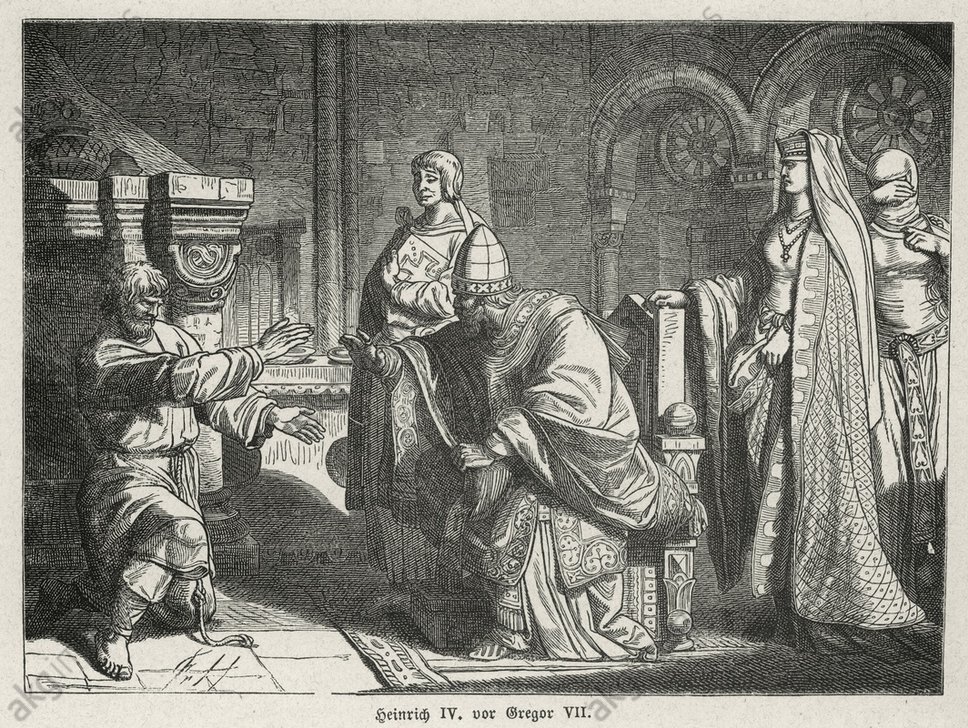
The papacy itself was undergoing a period of reform and expansion. The Gregorian Reform movement, associated with those such as Pope Gregory VII, sought to assert papal authority over both ecclesiastical and secular spheres, challenging the influence of lay rulers in Church affairs. This effort to centralize authority and define the papacy as the ultimate arbiter of Christian life created a more unified institutional structure capable of organizing large-scale initiatives. By the late eleventh century, the papacy had both the ideological confidence and administrative reach to project its influence beyond the immediate boundaries of Western Europe.
Beyond the Latin West, the eastern Mediterranean presented a landscape of shifting power and mounting instability. The Byzantine Empire, long a dominant force in the region, faced significant challenges following the defeat at the Battle of Manzikert in 1071, which opened much of Anatolia to Seljuk Turkish control. This loss not only weakened Byzantine territorial integrity but also disrupted key routes for pilgrimage and trade, undermining both economic stability and strategic defense. The empire struggled to reassert control over these regions, relying increasingly on diplomacy, alliances, and appeals for external support to manage the crisis. The expansion of Seljuk power introduced a new dynamic into Christian-Muslim relations, one that heightened perceptions of threat and urgency within the Latin West, even as the realities on the ground remained complex and varied. Reports of conflict, displacement, and insecurity circulated through networks of clergy, pilgrims, and merchants, contributing to a growing sense that the balance of power in the eastern Mediterranean was shifting in ways that directly affected Western Christendom. This perception, whether fully accurate or partially shaped by rumor and interpretation, played a significant role in preparing the ideological ground for a coordinated response.
Pilgrimage to Jerusalem, already an established practice, gained increasing prominence during this period as both a spiritual and social phenomenon. For many Western Christians, the journey to the Holy Land represented the ultimate act of devotion, a means of seeking penance, healing, and salvation. Reports of difficulties faced by pilgrims, whether exaggerated or grounded in reality, contributed to a growing sense that access to sacred sites was under threat. This perception, combined with the broader currents of reform, violence, and geopolitical change, created a context in which the idea of an armed pilgrimage could take root. By 1095, the conditions necessary for such a transformation were firmly in place, awaiting only the catalytic intervention that would bring them together.
The Byzantine Appeal: Alexius I and Western Opportunity
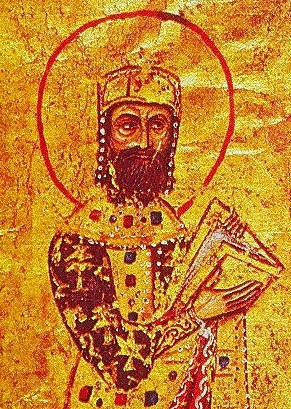
The appeal of Byzantine Emperor Alexius I Komnenos to the Latin West stands as one of the pivotal moments preceding the First Crusade, though its original scope and intention differed markedly from what followed. Facing mounting pressure from the Seljuk Turks, particularly after the catastrophic defeat at Manzikert in 1071, Alexius sought to stabilize his empire through calculated diplomacy as much as military action. His position was precarious, with Anatolia largely lost and imperial resources stretched thin, forcing him to navigate both internal instability and external threats simultaneously. The emperor turned to the West not for a mass movement, but for targeted military assistance, likely envisioning contingents of experienced mercenaries who could be integrated into Byzantine strategy. Such a request was consistent with long-standing imperial practice, reflecting a pragmatic approach to survival rather than an appeal for religious mobilization. Yet the very act of reaching beyond the empire’s traditional networks introduced a level of unpredictability that Alexius could not fully control, setting in motion a chain of events that would far exceed his initial expectations.
The nature of this appeal is most clearly preserved in the account of Anna Komnene, whose Alexiad presents her father’s efforts as pragmatic and controlled. Alexius, she suggests, intended to recruit disciplined Western knights to bolster imperial forces and recover lost territories, particularly in Asia Minor. This vision reflected established Byzantine practice, as the empire had long employed foreign soldiers within its armies. What he did not anticipate was the scale or independence of the response that would emerge once the appeal passed through the interpretive lens of the papacy. The gap between Byzantine expectation and Western mobilization would become one of the defining tensions of the First Crusade.
Pope Urban II’s reception of the Byzantine request transformed its meaning and scope. Rather than treating it as a limited military contract, Urban reframed the appeal as a broader religious mission that aligned with his own objectives and the evolving ambitions of the reform papacy. By incorporating the defense of Eastern Christians into a larger narrative of liberation and pilgrimage, he expanded the appeal beyond its original parameters and imbued it with a spiritual urgency that resonated widely. This reinterpretation allowed Urban to address multiple audiences simultaneously, appealing to knights seeking purpose, to clergy concerned with reform, and to laypeople drawn by the promise of spiritual reward. He effectively translated a regional political crisis into a universal Christian cause, one that could mobilize participation across social and geographic boundaries. The Byzantine request became the seed of a much larger enterprise, reshaped to fit the needs and ambitions of the Latin Church while simultaneously redefining the relationship between East and West.
This transformation also served important political and ecclesiastical purposes for the papacy. By positioning himself as the leader of a movement to aid the East, Urban asserted a form of moral authority that extended beyond the traditional boundaries of Western Christendom. The prospect of assisting the Byzantine Empire offered an opportunity to bridge, or at least mitigate, the divisions that had deepened since the formal schism of 1054. It allowed the papacy to project influence into regions that had historically resisted Latin control. The appeal from Alexius was not merely answered; it was appropriated and reimagined within a framework that elevated papal leadership.
The response in the West reveals how effectively this reframing resonated with contemporary concerns and conditions. News of the Byzantine appeal circulated alongside reports of Christian suffering and the loss of sacred territories, reinforcing a sense of urgency and moral obligation among diverse audiences. For many, the idea of aiding fellow Christians combined naturally with existing traditions of pilgrimage and penitence, creating a powerful motivational synthesis that transcended regional and social divisions. The appeal was not received in a vacuum but filtered through local contexts, where preachers, nobles, and communities adapted its message to their own circumstances. What began as a diplomatic request became a vehicle for broader mobilization, shaped as much by Western perception and expectation as by Byzantine necessity. The resulting movement bore only partial resemblance to the original appeal, reflecting instead the priorities, fears, and aspirations of those who answered it.
In retrospect, the Byzantine appeal can be understood as both a catalyst and a point of divergence. It provided the immediate occasion for Urban’s call to action, yet the movement it inspired quickly moved beyond Byzantine control and intention. The relationship between Alexius and the crusaders would remain complex and often fraught, as differing expectations and objectives came into conflict. This tension underscores a central theme in the history of the First Crusade: the transformation of a localized political request into a transcontinental religious movement. The appeal of Alexius I opened the door, but what passed through it was shaped by forces far larger than the emperor himself.
The Council of Clermont (1095): Speech and Message
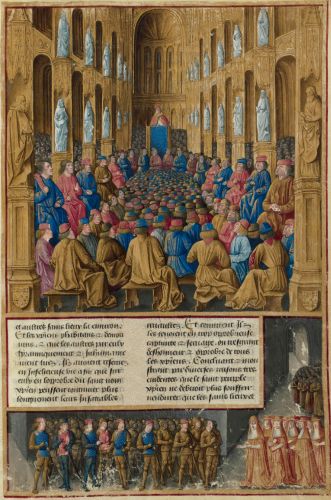
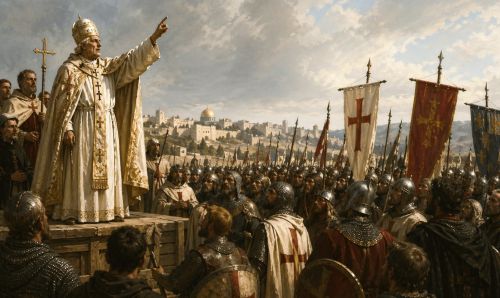
The Council of Clermont in November 1095 stands as the decisive moment at which Pope Urban II transformed a complex set of conditions into a coherent and mobilizing call for action. Convened in central France, the council was initially intended to address ecclesiastical reform and discipline, yet it quickly became the stage for a far more consequential announcement. Urban’s sermon, delivered near the close of the proceedings, reframed the concerns of the Latin Church into a unified appeal that combined religious devotion, martial purpose, and collective identity. It was here that disparate threads (pilgrimage, penitence, reform, and warfare) were woven into a single narrative capable of inspiring mass participation.
The content of Urban’s speech is not preserved in a single authoritative version, but rather in multiple accounts written after the event by chroniclers such as Fulcher of Chartres, Robert the Monk, Baldric of Dol, and Guibert of Nogent. Each version reflects the perspective, context, and theological priorities of its author, resulting in variations that complicate attempts to reconstruct the exact words spoken at Clermont. Fulcher’s account, often considered among the more restrained, emphasizes the call to aid Eastern Christians and liberate Jerusalem, while Robert the Monk’s version expands the emotional and rhetorical intensity of the appeal, incorporating vivid descriptions of suffering and sacrilege. Baldric and Guibert, writing slightly later, further shape the narrative to align with emerging crusading ideology, reinforcing themes of divine mandate and collective responsibility. These differences are not merely inconsistencies but evidence of how Urban’s message was received, interpreted, and adapted over time, reflecting the evolving needs of audiences who sought to understand and justify the Crusade. The multiplicity of accounts reveals as much about the development of crusading thought as it does about the original sermon itself.
Central to Urban’s appeal was the construction of a compelling moral and religious framework that redefined the nature of warfare. He presented the proposed expedition not as an ordinary military campaign, but as a divinely sanctioned undertaking that carried profound spiritual significance. The suffering of Christians in the East was depicted in vivid terms, designed to evoke both sympathy and outrage, while the loss of Jerusalem was framed as a collective affront to Christendom. By casting the conflict in these terms, Urban elevated it beyond the realm of political necessity, transforming it into a sacred obligation that demanded response. This rhetorical strategy allowed participants to view their actions not merely as justified, but as necessary expressions of faith.
The reported cry of Deus vult (“God wills it”) captures the emotional intensity of the moment and the extent to which Urban’s message resonated with his audience. According to several accounts, the crowd responded spontaneously to the sermon with this declaration, which Urban then embraced as confirmation of divine approval. Whether or not the phrase was uttered exactly as recorded, its presence in the sources reflects the perception of a collective and unified response, one that reinforced the legitimacy of the undertaking. The phrase itself became a powerful symbol, encapsulating the fusion of popular enthusiasm and theological justification that characterized the early stages of the Crusade.
Urban’s message also introduced a crucial theological innovation through the promise of remission of sins for those who participated. This offer, often described as a plenary indulgence, transformed the expedition into an act of penitence, aligning it with established practices of pilgrimage and spiritual discipline. By linking participation in the Crusade to the forgiveness of sins, Urban provided a clear and compelling incentive that resonated across social boundaries, from knights seeking redemption to common participants drawn by the promise of spiritual reward. This innovation did not emerge in isolation but built upon existing penitential traditions, extending them into a new and unprecedented context in which armed action could serve as a pathway to salvation. Urban effectively redefined the relationship between violence and piety, integrating them within a unified theological framework that would shape crusading ideology for generations. The promise of indulgence became one of the most powerful elements of the Crusade’s appeal, transforming it from a call to arms into a call to redemption.
The success of the sermon at Clermont lay not only in its content, but in its capacity to synthesize existing ideas into a message that was both accessible and compelling. Urban did not create new doctrines so much as he combined and amplified familiar concepts, presenting them in a form that addressed the concerns and aspirations of his audience. The result was a call to action that transcended regional and social divisions, setting in motion a movement that would reshape the medieval world. Clermont represents the moment at which possibility became reality, where the convergence of rhetoric, theology, and circumstance produced one of the most significant mobilizations in European history.
Theological Innovation: Indulgence and Sacred Warfare

One of the most consequential elements of Pope Urban II’s call at Clermont was the introduction of a theological framework that transformed participation in warfare into an act of spiritual devotion. While the idea of just war had long existed within Christian thought, Urban’s formulation went significantly further by integrating warfare directly into the penitential system of the Church. The promise of remission of sins for those who took up the cross reframed the expedition not as a morally ambiguous necessity, but as a positive and salvific act. Urban altered the moral calculus of violence, placing it within a context that endowed it with spiritual meaning and eternal consequence.
The concept of indulgence, as it applied to the Crusade, drew upon existing penitential practices but extended them in unprecedented ways. Traditionally, acts of penance such as fasting, pilgrimage, or almsgiving were prescribed to atone for sin, often accompanied by a structured process of confession and absolution administered through ecclesiastical authority. Urban’s innovation lay in equating participation in the Crusade with the fulfillment of such penance, effectively substituting armed pilgrimage for more conventional forms of spiritual discipline. This development did not emerge in isolation but built upon a growing emphasis within the Church on the performative and communal aspects of penance, as well as an increasing concern with the management of sin and its consequences. By linking military service to spiritual reward, Urban provided a powerful incentive that aligned personal salvation with collective action, transforming what had been an individualized process into a shared enterprise. The indulgence associated with the Crusade represented not only a theological adjustment but a reconfiguration of how penitential practice could be understood and enacted on a large scale.
Equally significant was the fusion of pilgrimage and warfare into a single conceptual framework. Pilgrimage to Jerusalem had long been regarded as a deeply meaningful act of devotion, associated with the physical and spiritual journey toward sacred space. By framing the Crusade as an armed pilgrimage, Urban preserved the language and symbolism of this tradition while fundamentally altering its nature. Participants were not merely travelers but warriors, tasked with securing access to holy sites through force if necessary. This synthesis allowed the Crusade to draw upon the emotional and religious resonance of pilgrimage while channeling it into a militarized form, creating a hybrid practice that was both familiar and radically new.
The theological justification for this transformation required careful articulation, particularly in reconciling the act of killing with Christian moral teaching. Urban and subsequent proponents of the Crusade addressed this tension by emphasizing the righteousness of the cause and the purity of intention required of participants. Violence, when directed toward the defense of the faith and undertaken in a spirit of devotion, could be understood as not only permissible but meritorious. This argument did not eliminate the moral complexity of warfare, but it provided a framework within which such actions could be interpreted as aligned with divine will. The Crusade became a context in which traditional prohibitions against violence were reinterpreted rather than abandoned.
The promise of indulgence also had important social and psychological implications, particularly for the knightly class. Many members of this group lived within a culture that valorized martial prowess while simultaneously confronting the spiritual dangers associated with violence and the burden of sin that accompanied it. The Crusade offered a resolution to this tension, presenting warfare as a means of achieving redemption rather than incurring guilt, thereby transforming the moral identity of the warrior. This alignment of martial identity with spiritual aspiration proved highly effective in mobilizing participation, as it allowed individuals to pursue honor and salvation simultaneously within a single framework. Moreover, the communal nature of the Crusade reinforced this transformation, as participants understood themselves as part of a larger, divinely sanctioned movement rather than isolated actors. The appeal of this synthesis extended beyond the nobility, resonating with broader segments of society who were drawn by the promise of divine favor and the opportunity to participate in an enterprise that combined personal piety with collective purpose.
In the broader history of Christian thought, the theological innovations associated with the First Crusade represent a significant turning point. By integrating indulgence, pilgrimage, and warfare into a unified framework, Urban II and his contemporaries created a model that would shape subsequent crusading movements for centuries. This development did not resolve the inherent tensions between violence and faith, but it established a precedent for their coexistence within a structured theological system. The Crusade stands as an example of how religious ideas can evolve in response to historical circumstances, producing new forms of practice that reflect both continuity and change.
Social and Cultural Conditions: Why Europe Responded

The extraordinary response to Urban II’s call cannot be understood solely through theology or papal authority; it must also be situated within the social and cultural fabric of late eleventh-century Europe. Western society at this time was structured around a warrior aristocracy whose identity was deeply tied to violence, honor, and status. Yet this same culture existed in tension with Christian moral expectations that condemned unchecked aggression. The Crusade offered a resolution to this contradiction, providing a socially acceptable and spiritually meaningful outlet for martial energies that had previously been directed inward. The widespread response reflects not only religious conviction but the alignment of the Crusade with existing social structures and needs.
The knightly class found in the Crusade an opportunity to reconcile its martial identity with the demands of piety. For generations, knights had been both celebrated for their prowess and admonished for their violence, creating a moral ambiguity that was difficult to resolve. The promise of indulgence, combined with the framing of the expedition as a divinely sanctioned mission, transformed warfare into a legitimate path to spiritual fulfillment. This shift did more than justify participation; it redefined the meaning of knighthood itself, aligning it with the defense of the faith. Participation in the Crusade became not only acceptable but desirable, offering both earthly prestige and eternal reward.
Beyond the nobility, broader social dynamics also contributed to the scale of the response. Patterns of inheritance, particularly primogeniture, often left younger sons with limited prospects for land and advancement within Europe. The Crusade presented an alternative avenue for mobility, promising not only spiritual benefits but the possibility of wealth, land, and status in newly conquered territories. While material motivations should not be overstated, they interacted with religious incentives in ways that made participation attractive across different segments of society. Economic pressures, local conditions, and personal circumstances all shaped how individuals interpreted the call to crusade, producing a wide spectrum of motivations rather than a single unified purpose. Some participants were driven primarily by piety, others by opportunity, and many by a combination of both, illustrating the complexity of medieval decision-making. The movement drew individuals whose reasons for joining were layered and interdependent, reflecting the intertwined nature of faith, ambition, and social constraint in the medieval world.
Religious culture itself played a central role in shaping the response. The late eleventh century was marked by heightened spiritual intensity, expressed through increased participation in pilgrimage, reform movements, and devotional practices. Apocalyptic expectations, while not universal, contributed to a broader sense that the world was entering a period of significant transformation. The call to liberate Jerusalem carried profound symbolic weight, resonating with deeply held beliefs about sacred space and divine history. The Crusade was not simply a reaction to external events, but an expression of internal religious currents that predisposed individuals to respond to such a call.
The mechanisms of communication and mobilization further amplified this response. Urban’s initial sermon at Clermont was followed by a sustained preaching campaign carried out by clergy, monks, and charismatic figures such as Peter the Hermit. These networks translated the papal message into local contexts, adapting it to the concerns and expectations of different communities. Preachers often employed vivid imagery, emotional appeals, and localized references to make the message resonate more deeply, ensuring that it was not perceived as distant or abstract. The act of “taking the cross” became a visible and communal commitment, reinforcing participation through shared identity and public affirmation. This ritualized commitment not only signaled individual intention but also created social pressure and collective momentum, encouraging others to join. Through these mechanisms, the Crusade spread rapidly across regions, evolving from a centralized call into a decentralized yet cohesive movement that drew strength from its adaptability and reach.
These social and cultural conditions help explain why the response to Urban II’s call was so immediate and expansive. The Crusade succeeded not because it imposed a new idea upon an unprepared society, but because it resonated with existing structures, beliefs, and aspirations. It offered solutions to social tensions, opportunities for advancement, and a framework for understanding violence within a religious context. It mobilized a diverse population whose participation reflected both individual motivations and collective dynamics. The scale of the response underscores the extent to which the Crusade was rooted in the lived realities of medieval Europe, rather than solely in the intentions of its initiators.
Urban II’s Preaching Campaign: From Idea to Movement
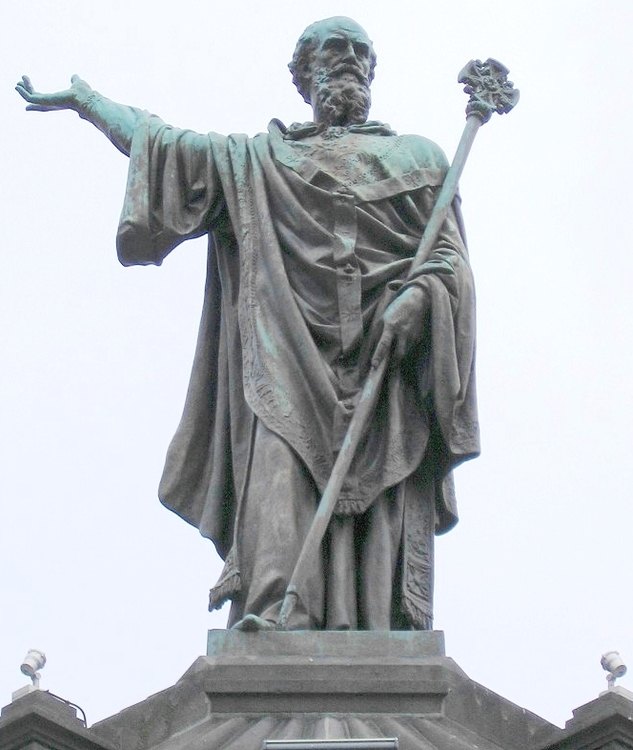
Following the Council of Clermont, Pope Urban II did not allow his message to remain confined to a single moment or location. Instead, he embarked on an extensive preaching campaign across regions of France, transforming what had been a powerful but localized appeal into a sustained and expanding movement. This phase was critical in translating the conceptual framework of the Crusade into practical mobilization, as Urban and his allies worked to ensure that the message reached diverse audiences. His efforts reflected an understanding that a single proclamation, however compelling, was insufficient to generate the level of participation required for such an ambitious undertaking. By continuing to preach and reinforce his message, Urban ensured that the call to crusade remained visible, urgent, and adaptable. The campaign reveals that the First Crusade was not the spontaneous result of a single speech, but the product of deliberate and organized efforts to cultivate participation across a wide geographic and social landscape.
Urban’s journey through cities such as Limoges, Angers, Tours, and Nîmes allowed him to tailor his message to different communities while reinforcing its central themes. At each stop, he reiterated the call to aid Eastern Christians and liberate Jerusalem, while emphasizing the spiritual benefits of participation. The repetition of these ideas, combined with the authority of the papal office, helped to standardize the core elements of the crusading message. The adaptability of the preaching ensured that it resonated within local contexts, addressing specific concerns and expectations that varied from region to region.
The effectiveness of this campaign depended not only on Urban himself but on a broader network of clergy, monks, and lay preachers who carried the message beyond the papal presence. Some such as Peter the Hermit played a particularly visible role, attracting large followings through charismatic preaching that emphasized both urgency and devotion. These secondary voices amplified the reach of the Crusade, often introducing their own interpretations and emphases while maintaining the overall structure of Urban’s appeal. The resulting diversity of messages contributed to the rapid spread of the movement, even as it introduced variations that would later influence its development.
A key feature of the preaching campaign was the formalization of commitment through the act of “taking the cross.” Participants publicly vowed to join the expedition and adopted the cross as a visible symbol of their intention. This ritualized act served both practical and symbolic functions, marking individuals as members of a collective enterprise while reinforcing the seriousness of their commitment. The public nature of the vow created a powerful social dynamic, as individuals were not only committing themselves privately but declaring their intentions before their communities. This visibility fostered accountability and encouraged imitation, as others were drawn into the movement through both persuasion and social pressure. The cross itself became a unifying emblem, transcending regional and social differences and binding participants together under a shared identity. The campaign transformed individual decisions into a communal phenomenon, strengthening the cohesion and momentum of the emerging movement.
By the time the Crusade began in 1096, Urban’s preaching campaign had succeeded in converting an idea into a large-scale mobilization that spanned multiple regions and social groups. The movement that emerged was both unified in its core objectives and diverse in its composition, reflecting the varied influences that shaped its formation. Urban’s role in this process underscores the importance of sustained communication and organization in historical change, demonstrating how leadership can translate abstract concepts into concrete action. The First Crusade was not merely proclaimed at Clermont; it was built through the continued effort to inspire, organize, and direct a willing population.
The Launch of the First Crusade (1096)
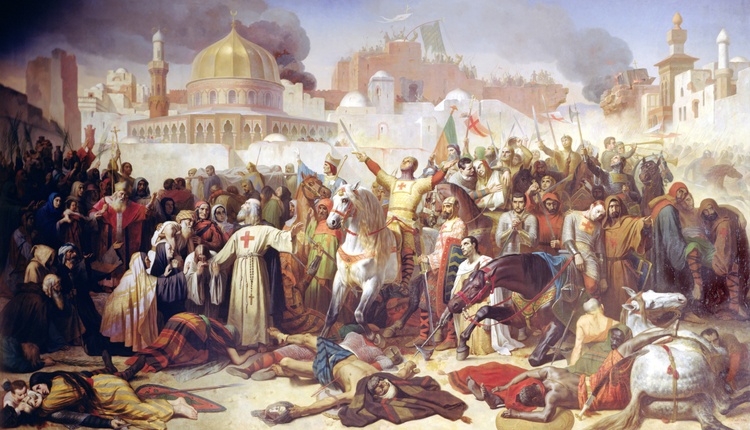
By the spring of 1096, the movement set in motion by Urban II’s preaching had begun to translate into physical departure, as groups across Western Europe prepared to journey east. What emerged was not a single, unified army, but a collection of contingents differing in leadership, composition, and level of organization. The initial wave, often referred to as the “People’s Crusade,” consisted largely of non-noble participants inspired by charismatic preachers such as Peter the Hermit. These groups, driven by intense religious enthusiasm but lacking discipline and logistical preparation, set out ahead of the more organized forces, illustrating both the breadth of the Crusade’s appeal and the challenges inherent in mobilizing such a diverse population.
The People’s Crusade quickly revealed the volatility of the movement in its earliest stages. As these groups traveled through the Rhineland and into Central Europe, they were responsible for a series of violent attacks against Jewish communities, marking one of the most troubling aspects of the Crusade’s initial phase. These actions, not sanctioned by the original call at Clermont, reflected the ways in which crusading fervor could be redirected toward local targets, fueled by a mixture of religious zeal, economic opportunism, and longstanding prejudice. The resulting massacres underscored the difficulty of controlling a movement that had spread rapidly beyond centralized authority, exposing the darker dimensions of its mobilization.
The main body of the Crusade, composed of more structured armies led by figures such as Raymond of Toulouse, Godfrey of Bouillon, and Bohemond of Taranto, departed later in 1096 with greater organization and resources. These contingents were better equipped to undertake the long journey to the eastern Mediterranean, bringing with them not only military capability but also clearer lines of leadership and coordination. Unlike the earlier waves, they were composed primarily of experienced knights and their retinues, supported by clergy and logistical personnel who could sustain a prolonged campaign. Their routes, though varied, were planned with greater deliberation, often following established corridors through Hungary and the Balkans before converging on Constantinople. This convergence was not merely geographic but organizational, as disparate forces began to recognize themselves as part of a larger enterprise, even while maintaining distinct identities and leadership structures. The presence of prominent nobles also lent the Crusade a degree of legitimacy and cohesion that had been lacking in its earliest manifestations, allowing it to transition from a loosely defined movement into a more structured military expedition.
The arrival of the crusading armies in Byzantine territory highlighted the tensions that had been inherent in the movement from its inception. Emperor Alexius I Komnenos sought to manage and direct the crusaders in a manner consistent with his original intentions, requiring oaths of loyalty and attempting to integrate them into imperial strategy. The crusaders often viewed their mission in terms that extended beyond Byzantine priorities, leading to misunderstandings and friction. This encounter revealed the divergence between the localized political aims of Byzantium and the broader religious objectives that had come to define the Crusade in the West.
Despite these challenges, the launch of the First Crusade marked the beginning of a sustained and transformative campaign that would reshape the political and religious landscape of the eastern Mediterranean. What had begun as a call to aid fellow Christians and reclaim sacred territory had evolved into a complex enterprise involving multiple actors, motivations, and expectations. The events of 1096 demonstrate both the power and the unpredictability of mass mobilization, as the Crusade moved from concept to reality. This transition exposed the strengths of the movement, particularly its capacity to inspire coordinated action across vast distances, but also its inherent fragility, as differing agendas and expectations threatened cohesion. In this unfolding process, the Crusade revealed itself as both a unifying force and a source of division, reflecting the broader dynamics that had shaped its emergence. The launch of 1096 stands not only as a beginning, but as a moment that encapsulated the possibilities and tensions that would define the Crusading movement for generations.
Agency vs. Structure: Could the Crusades Have Happened Without Urban II?

The question of whether the Crusades would have occurred without Pope Urban II invites a broader examination of the relationship between individual agency and structural forces in history. Urban’s role as the catalyst of the First Crusade is undeniable, yet the conditions that made such a movement possible were already well established by the late eleventh century. Political fragmentation, religious reform, pilgrimage culture, and Byzantine appeals for aid all contributed to a context in which large-scale mobilization could occur. The issue is not simply whether Urban caused the Crusade, but how his intervention shaped its form, scale, and coherence within an already dynamic environment.
From a structural perspective, the elements necessary for a crusading movement were already in place. The Church had begun to articulate frameworks for legitimizing violence through concepts such as just war and the Peace and Truce of God. Pilgrimage to Jerusalem had gained prominence as a form of penitential devotion, while increasing contact with the eastern Mediterranean heightened awareness of both opportunity and threat. The Byzantine Empire’s weakening position and its request for assistance provided a practical impetus for Western involvement. These factors suggest that some form of military-religious expedition might have emerged even without Urban’s direct involvement, though it would likely have been more limited in scope and less ideologically unified.
The argument for agency emphasizes the unique role that Urban II played in synthesizing these disparate elements into a single, compelling vision. It was not merely that the necessary conditions existed, but that they required articulation and coordination to produce a mass movement. Urban’s sermon at Clermont and his subsequent preaching campaign provided this unifying framework, transforming localized concerns into a shared enterprise that transcended regional boundaries. Without such leadership, the various motivations present in European society might have remained fragmented, producing smaller and less coordinated initiatives rather than a unified Crusade. Moreover, Urban’s authority as pope allowed him to legitimize this synthesis in a way that no secular ruler or regional leader could have achieved, lending the movement both spiritual credibility and institutional backing. His ability to frame participation as both a duty and an opportunity for salvation created a level of coherence and urgency that was essential for large-scale mobilization, reinforcing the idea that individual agency, when exercised effectively, can amplify and direct broader historical forces.
The importance of timing further complicates the relationship between agency and structure. Urban’s call came at a moment when social, religious, and political pressures were particularly acute, allowing his message to resonate with unusual force. A similar appeal at an earlier or later date might not have achieved the same level of response, suggesting that Urban’s effectiveness was closely tied to his ability to act within a specific historical window. This interplay between timing and leadership highlights the contingent nature of historical events, where outcomes depend on both underlying conditions and the actions of individuals who navigate them.
Alternative scenarios help to illustrate this balance. Without Urban II, the Byzantine Empire might still have sought Western assistance, leading to smaller-scale military interventions or continued reliance on mercenaries. Pilgrimage to Jerusalem might have persisted without developing into a militarized movement, or local conflicts might have taken on religious overtones without coalescing into a unified campaign. These possibilities indicate that while the underlying forces were significant, they did not inevitably produce the Crusade as it occurred. In some cases, efforts to assist the Byzantine Empire might have remained limited to diplomatic or contractual arrangements, lacking the ideological framework necessary to inspire mass participation. In others, localized conflicts might have escalated independently, producing regional campaigns that never achieved the scale or cohesion of the First Crusade. These hypothetical outcomes underscore the extent to which Urban’s intervention shaped not only the existence of the Crusade, but its distinctive character, demonstrating how individual decisions can redirect the trajectory of broader historical trends.
The First Crusade can be understood as the product of both structural conditions and individual agency, with neither alone sufficient to explain its emergence. Urban II did not create the underlying forces that made the Crusade possible, but he harnessed and directed them in a way that produced a movement of unprecedented scale and impact. The balance between these elements underscores a broader principle in historical analysis: that large-scale events often arise from the interaction of long-term developments and decisive moments of leadership. In the case of the First Crusade, Urban’s role as a catalyst ensured that existing conditions were not merely present, but activated, shaping the course of history in enduring ways.
Historiography: Interpreting Urban II and the First Crusade
Following is a video from “Herald of Ages” about Pope Urban II and the Birth of Holy War:
The historiography of the First Crusade has evolved significantly, reflecting broader changes in historical method and interpretive priorities. Earlier scholarship often emphasized the decisive role of Pope Urban II, portraying him as the visionary architect of a movement that reshaped medieval Christendom. In these accounts, the Council of Clermont and the papal initiative that followed were seen as the central driving forces behind the Crusade, with other factors treated as secondary or derivative. This perspective aligned with a more traditional focus on great individuals and pivotal events, situating Urban at the center of the narrative as the primary agent of change.
Later historians have shifted attention toward the structural conditions that made the Crusade possible, emphasizing the social, economic, and religious dynamics of eleventh-century Europe. Scholars have explored the development of crusading ideology, highlighting the importance of penitential practice, pilgrimage, and evolving concepts of sacred violence. From this viewpoint, the Crusade is understood less as a sudden creation and more as the culmination of long-term developments within Western Christendom. Urban’s role remains significant, but it is situated within a broader context that diminishes the notion of singular causation. This approach also reflects a broader historiographical trend away from person-centered explanations and toward analyses that privilege systems, institutions, and collective mentalities. By examining the Crusade through these lenses, historians have been able to situate it within wider patterns of medieval transformation, linking it to processes such as ecclesiastical reform, social stratification, and expanding networks of communication and exchange. The result is a more complex picture in which the Crusade appears not as an anomaly, but as a product of its historical environment.
More recent scholarship has sought to integrate these perspectives, examining the interaction between individual agency and structural forces. Historians have argued that the success of the First Crusade cannot be explained solely by either framework but must be understood as the product of both. Urban II’s leadership is recognized as crucial in articulating and mobilizing the movement, yet this leadership operated within conditions that were already conducive to large-scale response. This synthesis reflects a more nuanced approach to historical causation, one that acknowledges complexity and resists reduction to a single explanatory model.
Debates within the historiography have also focused on the motivations of those who participated in the Crusade. Earlier interpretations often emphasized material incentives such as land, wealth, and social advancement, portraying the Crusaders as driven primarily by pragmatic concerns. More recent studies have highlighted the importance of religious belief and spiritual aspiration, arguing that participants were motivated in large part by genuine piety and the desire for salvation. This shift has been supported by close analysis of contemporary sources, which frequently emphasize religious language and intention. The resulting debate underscores the difficulty of disentangling material and spiritual motives, suggesting that both were present and often intertwined. Rather than presenting a simple dichotomy, modern historians increasingly view motivation as a spectrum shaped by individual circumstance, social expectation, and cultural context. This interpretive shift has encouraged a more empathetic reading of the sources, recognizing that medieval actors understood their actions through frameworks that do not always align with modern categories. The Crusade is now more often seen as a movement in which belief and ambition coexisted, reinforcing rather than excluding one another.
These historiographical developments reveal the complexity of interpreting the First Crusade and the role of Urban II within it. Rather than a single, definitive explanation, the scholarship offers a range of perspectives that illuminate different aspects of the event. Urban emerges not as an isolated figure acting upon a passive society, nor as a mere product of structural forces, but as a leader whose actions interacted with broader historical conditions. The continuing evolution of this historiography reflects the enduring significance of the Crusade as a subject of study, as well as the challenges inherent in understanding events that combine ideology, power, and human experience on such a scale.
Conclusion: Deus Vult and the Power of Synthesis
The First Crusade stands as one of the most consequential moments in medieval history not because it introduced entirely new ideas, but because it brought existing ones together with unprecedented clarity and force. Pope Urban II’s call at Clermont did not create pilgrimage, penitential theology, or the concept of sacred warfare, yet it fused them into a single, compelling framework that could mobilize thousands across Europe. The cry Deus vult captured this synthesis in its simplest form, expressing a collective conviction that human action and divine will had become aligned. In that moment, a convergence of belief, authority, and opportunity transformed potential into movement, demonstrating how deeply embedded ideas can be activated through effective articulation. The power of this synthesis lay in its accessibility, as it translated complex theological and social currents into a message that resonated broadly across different classes and regions. By doing so, it enabled individuals to see their participation not as isolated acts, but as part of a larger, divinely sanctioned enterprise that transcended local concerns and connected them to a shared historical purpose.
Urban’s role is best understood not as that of a sole originator, but as a catalyst who recognized and activated the forces already present within his world. The conditions that made the Crusade possible (social tensions, religious reform, geopolitical instability, and the enduring significance of Jerusalem) had been developing for decades. What Urban provided was coherence: a narrative that gave these disparate elements direction and meaning. By articulating a vision that resonated across social and regional boundaries, he elevated localized concerns into a shared enterprise that could sustain participation on a continental scale.
The history of the First Crusade reveals the complexity and unpredictability of such synthesis. The movement that emerged from Clermont was not uniform or entirely controllable, as seen in the divergence between Byzantine expectations and Western actions, as well as in the violence that accompanied its early stages. These tensions underscore the limits of leadership, demonstrating that even the most carefully constructed vision can evolve in unforeseen ways once it enters the broader currents of society. The Crusade reflects both the power and the instability inherent in large-scale mobilization, where unity of purpose coexists with diversity of interpretation.
Deus vult represents more than a rallying cry; it symbolizes the capacity of ideas to reshape historical reality when they are articulated at the right moment and in the right form. The First Crusade was not inevitable, yet it was made possible by the alignment of long-term developments with decisive leadership. In this interplay between structure and agency, the Crusade emerged as a defining example of how historical change occurs not through isolated innovation, but through the synthesis of existing forces into a new and transformative whole.
Bibliography
Affiliate disclosure: Amazon links on this site are paid links. As an Amazon Associate I earn from qualifying purchases.
- Albert of Aachen. Historia Ierosolimitana: History of the Journey to Jerusalem. Translated by Susan B. Edgington. Oxford: Oxford University Press, 2007.
- Anna Komnene. The Alexiad. Translated by E. R. A. Sewter. Revised by Peter Frankopan. London: Penguin Books, 2009.
- Asbridge, Thomas. The First Crusade: A New History. Oxford: Oxford University Press, 2004.
- Baldric of Dol. Historiae Hierosolymitanae. In Recueil des historiens des croisades: Historiens occidentaux. Paris: Imprimerie Royale, 1866.
- Blaydes, Lisa and Christopher Paik. “The Impact of Holy Land Crusades on State Formation: War Mobilization, Trade Integration, and Political Development in Medieval Europe.” International Organization 70:3 (2016), 551-586.
- Bull, Marcus. Knightly Piety and the Lay Response to the First Crusade. Oxford: Clarendon Press, 1993.
- Erdmann, Carl. The Origin of the Idea of Crusade. Translated by Marshall W. Baldwin and Walter Goffart. Princeton: Princeton University Press, 1977.
- France, John. Victory in the East: A Military History of the First Crusade. Cambridge: Cambridge University Press, 1994.
- Frankopan, Peter. The First Crusade: The Call from the East. Cambridge, MA: Belknap Press, 2012.
- Fulcher of Chartres. A History of the Expedition to Jerusalem, 1095–1127. Translated by Frances Rita Ryan. Edited by Harold S. Fink. Knoxville: University of Tennessee Press, 1969.
- Guibert of Nogent. Gesta Dei per Francos. Translated by Robert Levine. Woodbridge: Boydell Press, 1997.
- Latham, Andrew A. “Theorizing the Crusades: Identity, Institutions, and Religious War in Medieval Latin Christendom.” International Studies Quarterly 55:1 (2011), 223-243.
- Munro, Dana C. “The Popes and the Crusades.” Proceedings of the American Philosophical Society 55:5 (1916), 348-356.
- —-. “The Speech of Pope Urban II. At Clermont, 1095.” The American Historical Review 11:2 (1906), 231-242.
- Peter the Hermit. Accounts in Recueil des historiens des croisades: Historiens occidentaux. Paris: Imprimerie Royale, 1866.
- Riley-Smith, Jonathan. The First Crusade and the Idea of Crusading. Philadelphia: University of Pennsylvania Press, 1972.
- Robert the Monk. Historia Iherosolimitana. In The First Crusade: The Accounts of Eyewitnesses and Participants, translated by August C. Krey. Princeton: Princeton University Press, 1921.
- Tyerman, Christopher. God’s War: A New History of the Crusades. Cambridge, MA: Belknap Press of Harvard University Press, 2006.
Originally published by Brewminate, 04.24.2026, under the terms of a Creative Commons Attribution-NonCommercial-NoDerivatives 4.0 International license.
About the Author