An examination of how aristocratic authority and institutional insulation delayed British Army modernization under Prince George, Duke of Cambridge.

By Matthew A. McIntosh
Public Historian
Brewminate
Introduction: Authority without Adaptation
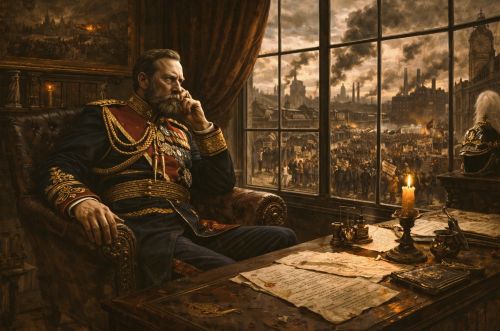
Prince George, Duke of Cambridge, served as Commander-in-Chief of the British Army from 1856 to 1895, an extraordinary tenure that spanned nearly four decades of industrial, technological, and imperial transformation. Appointed in the aftermath of the Crimean War, he occupied one of the most influential military positions in Britain during an era that witnessed the expansion of railways, the telegraph, rifled artillery, mass conscription systems on the continent, and increasingly bureaucratized models of warfare. His authority rested not only on formal office but also on lineage and proximity to the Crown. As a grandson of George III and cousin to Queen Victoria, he stood at the intersection of monarchy and military command, a symbolic and institutional bridge between aristocratic tradition and modern state power.
Yet the period of his command coincided with growing recognition that the British Army required structural reform. The Crimean War had exposed serious administrative weaknesses: logistical breakdowns, inadequate supply chains, medical catastrophes, and fragmented command structures that blurred responsibility between the War Office and field commanders. Public inquiries, parliamentary debate, and journalistic scrutiny brought these failures into the national consciousness, transforming military inefficiency into a matter of public concern rather than internal embarrassment. The press coverage of suffering troops and mismanaged supply systems undermined confidence in traditional command practices. At the same time, continental developments sharpened the contrast. Prussia’s General Staff system demonstrated the advantages of professionalized planning, systematic officer education, and centralized coordination. The wars of German unification further illustrated the potency of disciplined mobilization and integrated rail logistics. In this comparative environment, the British Army appeared increasingly dependent on custom rather than structured preparation. Adaptation was no longer a theoretical improvement. It was a strategic necessity demanded by shifting technological and geopolitical realities.
Prince George’s response to this evolving landscape reflected deep skepticism toward reformist enthusiasm. He defended regimental tradition, favored patronage networks over examination-based advancement, and expressed distrust toward formal military education institutions such as the Staff College. To his mind, character and aristocratic upbringing formed more reliable foundations for command than did academic study. While he did not oppose all change, his instinct was preservation rather than innovation. The result was a prolonged tension between civilian reformers and entrenched military hierarchy, a tension that defined much of late Victorian military policy.
Prince George’s tenure illustrates the structural consequences of insulated leadership in a period of rapid transformation. His resistance to modernization did not stem from intellectual incapacity but from cultural allegiance to a model of authority rooted in lineage and social continuity. In an age when industrialization reshaped the nature of war, institutional inertia became increasingly costly. The British Army did eventually reform, yet often in spite of, rather than because of, its long-serving Commander-in-Chief. The case of Prince George offers a broader reflection on the risks posed when authority remains secure enough to resist adaptation.
The British Army before Reform: Patronage and Aristocratic Command
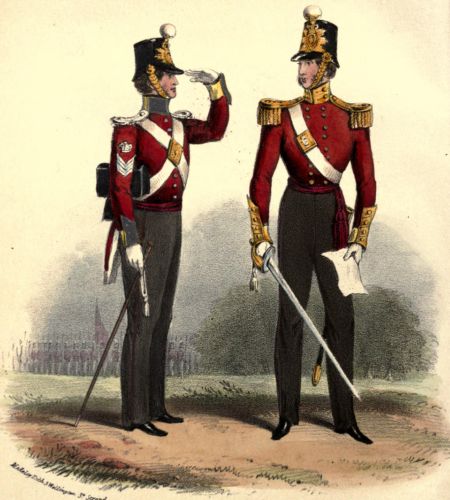
Before the reform movements of the later nineteenth century, the British Army operated within a structure deeply shaped by aristocratic patronage and regimental autonomy. Its officer corps was not organized primarily around professional examination or centralized training, but around purchase, lineage, and social standing. Commissions could be bought and sold within regulated price scales, embedding military advancement within the broader culture of landed wealth and social hierarchy. While the system was defended as a safeguard against political radicalism and as a guarantor of “gentlemanly” leadership, it tied authority to property rather than expertise. In such an environment, aristocratic presence was not incidental. It was foundational.
The purchase system served multiple functions beyond simple transaction. It provided financial security for officers leaving service, reinforced regimental cohesion through shared social background, and ensured that command remained in the hands of those deemed socially reliable. Proponents contended that officers who possessed private means were insulated from financial desperation and less vulnerable to corruption or political manipulation. The system also created a predictable career ladder, enabling families to treat commissions as both professional positions and economic investments. Yet the structural implications were significant. Advancement could depend more on wealth and patronage networks than on demonstrated tactical competence or sustained administrative performance. Even when battlefield merit was recognized, it operated within boundaries shaped by available funds and vacancies. The effect was not the total absence of capable officers, but the embedding of advancement within social hierarchy. Military leadership became an extension of aristocratic society, reproducing its assumptions about authority and deference.
Regimental tradition further reinforced decentralized authority. Units often functioned as semi-autonomous communities with strong internal identities. Officers cultivated loyalty to regiment before loyalty to centralized staff structures. This model fostered esprit de corps but complicated broader coordination. Administrative oversight from the War Office frequently struggled to impose uniform standards across dispersed formations. Training methods varied, logistical practices differed, and institutional knowledge was often transmitted informally rather than through standardized doctrine. Such fragmentation was sustainable in limited colonial engagements but revealed weaknesses in larger-scale operations.
Professional military education developed slowly within this framework. The Royal Military College at Sandhurst and the Staff College at Camberley existed, yet attendance and prestige did not universally determine advancement. Skepticism toward theoretical study persisted among segments of the officer corps, who viewed practical experience and aristocratic upbringing as superior preparation for command. Examinations were sometimes regarded as artificial filters rather than meaningful indicators of leadership capacity. Compared to the Prussian General Staff model, which systematically integrated education, planning, and promotion, the British approach retained a distinct reliance on personal reputation and regimental loyalty. Continental observers increasingly emphasized staff coordination, war planning, and doctrinal standardization, while British practice remained rooted in regimental initiative and inherited custom. Institutional coherence remained secondary to tradition, and reform proposals frequently encountered cultural resistance grounded in social identity rather than operational analysis.
The Crimean War exposed the consequences of these structural characteristics. Supply breakdowns, administrative confusion, inadequate medical support, and inefficient command coordination were not solely the product of individual incompetence. They reflected systemic limitations embedded within the army’s organizational culture and administrative fragmentation. The absence of a unified planning apparatus complicated logistical forecasting and troop deployment. Press coverage of suffering soldiers, coupled with parliamentary inquiry, transformed military shortcomings into public controversy. Investigations highlighted procedural weaknesses that could not be remedied by replacing a few officers. They suggested that structural reconfiguration was necessary if Britain were to compete effectively with continental powers undergoing professional transformation. The war functioned as a catalyst, revealing how aristocratic patronage and decentralized tradition could hinder performance in industrial-era conflict.
George inherited this structure rather than creating it. His long tenure must be understood within this inherited context. He represented continuity with an aristocratic military culture that equated leadership with social status and regimental tradition. To reformers, the system appeared outdated in an age of industrial acceleration and continental professionalization. To defenders, it embodied stability and national character. The tension between these interpretations defined the reform era and framed the resistance that would follow.
The Crimean Shock: Exposure of Structural Weakness

The Crimean War marked a watershed in the history of the British Army, not because it introduced entirely new problems, but because it revealed existing structural weaknesses under the glare of public scrutiny. Fought against the Russian Empire between 1854 and 1856, the campaign placed British forces in a theater that demanded sustained logistical coordination, medical organization, and strategic planning at a scale beyond recent colonial engagements. The war exposed the limits of a regimental system that functioned effectively in smaller, dispersed operations but faltered in prolonged continental conflict. Structural inefficiencies that had long remained obscured by tradition were brought into sharp relief.
Administrative fragmentation proved particularly damaging. Responsibility for military supply and organization was divided among the War Office, the Board of Ordnance, and the Commissariat, creating overlapping authority and blurred accountability. This diffusion of responsibility hindered efficient provisioning of troops and delayed responses to emergent crises. Soldiers endured inadequate shelter, insufficient winter clothing, and severe shortages of medical supplies. Mortality from disease far exceeded that from combat. The resulting public outrage was fueled by press coverage, including reports that vividly described conditions in the camps. For perhaps the first time, military mismanagement became a matter of national debate rather than private criticism within elite circles.
The crisis of logistics underscored deeper institutional shortcomings. The absence of a centralized staff system limited strategic coordination. Intelligence gathering, operational planning, and supply management were not integrated within a coherent bureaucratic structure comparable to that emerging in continental armies. Railways and telegraphy had begun to reshape the mechanics of war, yet the British Army struggled to harness these tools effectively. The campaign demonstrated that courage and regimental loyalty could not compensate for administrative incoherence. Structural reform, not merely personal replacement, was increasingly seen as necessary.
Public inquiries followed the conflict, amplifying calls for change. Parliamentary committees examined the failures of supply and organization, while reform-minded politicians and commentators argued for modernization of command structures and administrative procedures. Reports debated the adequacy of existing chains of command and questioned the purchase system’s compatibility with professional competence. The press sustained public attention, transforming military reform into a recurring theme of Victorian political discourse. The war also elevated figures such as Florence Nightingale, whose efforts in military nursing highlighted the deficiencies of existing systems and reinforced the case for professionalization. Her statistical analyses and advocacy linked humanitarian reform to administrative rationalization, demonstrating that efficiency and moral responsibility were intertwined. Reform was no longer framed solely as technical improvement. It became associated with national honor, imperial credibility, and the capacity of Britain to compete with rapidly modernizing continental powers. The army’s organizational structure was now understood as a reflection of the state’s broader administrative maturity.
When Prince George assumed office as Commander-in-Chief in 1856, he did so at the moment when these criticisms were most acute. The Crimean experience had shaken confidence in inherited practices, yet it had not eradicated the cultural assumptions underpinning them. The question confronting British leadership was whether the army would embrace structural transformation or defend continuity. The Duke’s tenure unfolded in the shadow of this shock, which exposed weaknesses but did not guarantee reform. His response would shape the trajectory of modernization in the decades that followed.
Resistance to Professionalization: Education and Merit
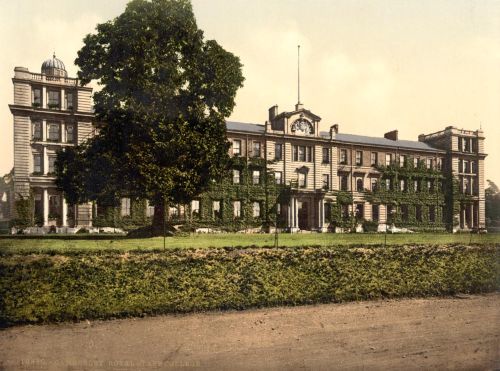
Efforts to professionalize the British Army after the Crimean War centered in large measure on education and merit-based advancement. Reformers argued that modern warfare required systematic training in strategy, logistics, and staff coordination. The expansion of the Staff College at Camberley and renewed attention to structured officer education reflected this conviction. Continental examples, particularly the Prussian General Staff system, demonstrated the advantages of institutionalized planning and examination-based promotion. For reform advocates, professional education was not an abstract ideal. It was a practical necessity in an era shaped by industrialized supply networks, rail mobilization, and increasingly complex battlefield coordination.
George approached these developments with skepticism. He did not deny the value of experience, but he distrusted what he perceived as excessive reliance on theoretical study. In his view, the qualities essential to command were cultivated through regimental service, personal character, and social formation rather than academic examination. He feared that an overemphasis on classroom instruction would produce officers skilled in abstract reasoning yet deficient in practical judgment and moral authority. This outlook reflected a broader aristocratic culture that equated leadership with upbringing and comportment rather than certification. Professionalization appeared to him as a potential erosion of traditional hierarchies that had long defined the army’s identity.
Merit-based reform also threatened the purchase system and its embedded assumptions about advancement. Competitive examinations and structured promotion implied that competence could be measured independently of wealth and lineage. Such implications unsettled defenders of aristocratic command, who argued that social standing provided stability and ensured loyalty to Crown and constitution. Prince George frequently resisted initiatives that would accelerate promotion through academic distinction alone, insisting that seniority, regimental loyalty, and established networks remained central to effective leadership. He questioned whether written examinations could adequately assess qualities such as decisiveness, courage, and authority in the field. Reformers, by contrast, contended that without institutionalized standards the army risked perpetuating uneven competence and limiting the development of specialized staff expertise. The debate extended beyond procedure into competing visions of what constituted legitimate authority. His opposition did not prevent incremental reform, but it slowed its integration into the institutional mainstream and preserved the influence of patronage in key appointments. Tension persisted between civilian ministers pressing for modernization and a military leadership wary of rapid transformation.
The resistance to professionalization reflected more than personal obstinacy. It embodied a cultural contest over the meaning of authority in a changing society. Industrial Britain increasingly valorized technical expertise and bureaucratic rationality. The army, by contrast, retained vestiges of an earlier model rooted in patronage and inherited status. Prince George stood as a guardian of that model. His reluctance to embrace education-centered reform illustrates how institutional culture can impede adaptation even when external pressures demand change. In a century defined by technological acceleration, hesitation toward professional merit became a structural liability.
The Cardwell Reforms and Institutional Friction
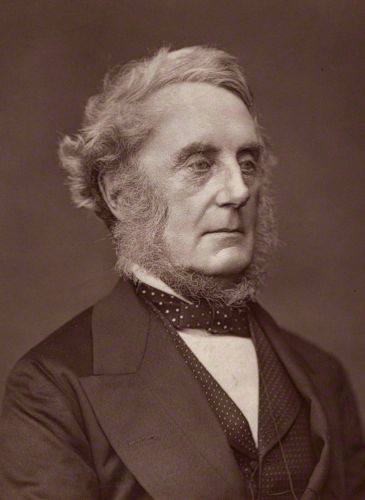
The reform movement that gathered momentum under Secretary of State for War Edward Cardwell in the late 1860s and early 1870s represented the most sustained attempt to restructure the British Army since the Crimean War. Cardwell’s program sought to modernize recruitment, administration, and promotion in response to both domestic critique and continental developments. The Franco-Prussian War of 1870–1871 reinforced the urgency of reform by demonstrating the operational effectiveness of a professionalized, centrally organized military system. For British policymakers, the lesson was unmistakable: institutional coherence and meritocratic advancement could no longer be deferred without strategic consequence. Reform became an issue not merely of efficiency but of national security.
Among the most consequential measures was the abolition of the purchase system in 1871. Ending the formal sale of commissions severed the most visible institutional link between wealth and advancement and signaled a shift in the philosophical foundation of military leadership. The reform aimed to create a more merit-based officer corps and to widen access to military authority beyond the narrow confines of aristocratic patronage. Abolition did not instantly transform the social composition of the officer class, but it disrupted the structural mechanism that had long embedded wealth within command progression. Cardwell also introduced short service enlistment, designed to create a reserve force capable of rapid mobilization, and implemented localized regimental districts intended to rationalize recruitment and strengthen territorial identity. Administrative centralization within the War Office sought to clarify chains of command and improve oversight. Together, these reforms attempted to reconcile regimental tradition with the demands of modern mobilization. For reformers, the changes represented not a repudiation of the army’s past but an adaptation necessary to sustain imperial credibility and strategic readiness.
Prince George did not embrace these reforms enthusiastically. While he remained Commander-in-Chief, his authority was increasingly circumscribed by civilian ministers determined to assert parliamentary oversight. He opposed aspects of the purchase abolition and expressed concern that rapid restructuring might erode regimental cohesion and undermine traditional bonds within the officer corps. His resistance reflected not simply personal conservatism but a conviction that the army’s identity rested upon continuity with inherited practices. The friction between the Duke and reform-minded politicians illustrated a broader constitutional dynamic: the growing primacy of civilian control over military organization in Victorian Britain.
The Cardwell era thus became a moment of institutional negotiation rather than abrupt revolution. Reform proceeded, but not without resistance and adjustment. The Duke’s long tenure ensured that reformist policy would encounter embedded skepticism at the highest level of military leadership. Yet the direction of change proved irreversible. By the late nineteenth century, the British Army had moved toward a more centralized and professional structure, even if vestiges of aristocratic influence endured. The friction of the Cardwell reforms revealed how institutional inertia can slow adaptation, but also how political pressure can gradually reshape entrenched systems.
Longevity and Insulation: Power without Accountability
Prince George’s tenure as Commander-in-Chief lasted nearly forty years, a duration that itself shaped the institutional culture of the British Army. Such longevity conferred stability, yet it also reduced the likelihood of internal correction. Leadership sustained across decades can foster continuity, but it may also entrench habits resistant to adaptation. In the Duke’s case, long service insulated him from the cyclical accountability that accompanies shorter appointments. Reform initiatives encountered not a transitional administrator but a permanent guardian of tradition. The persistence of his authority reinforced the perception that institutional change required negotiation with, rather than replacement of, entrenched leadership.
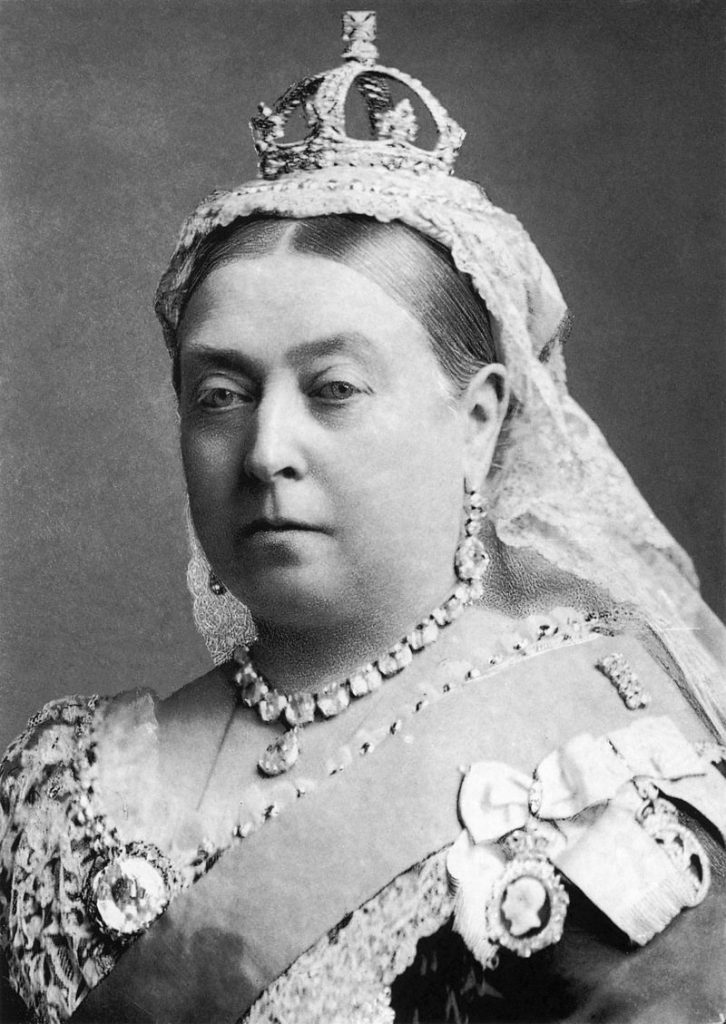
His close relationship with Queen Victoria further strengthened this insulation. As a member of the royal family, Prince George occupied a position that blended military command with dynastic proximity. Royal confidence in his judgment provided political protection during periods of reform controversy and shielded him from abrupt dismissal. The Queen valued continuity in military leadership and frequently expressed support for his conservative instincts. This backing complicated efforts by reform-minded ministers to accelerate structural change. While civilian authority in Victorian Britain was increasingly assertive, the symbolic weight of monarchy remained substantial. The Commander-in-Chief’s connection to the Crown thus created a buffer against rapid political recalibration. Insulation did not render him immune to criticism, but it limited the mechanisms through which dissent could alter leadership at the top, reinforcing a culture in which negotiation replaced decisive restructuring.
Comparative perspective underscores the significance of this arrangement. Continental armies, particularly in Prussia and later unified Germany, developed systems in which professional advancement and staff organization were institutionalized rather than personalized. Authority was embedded within bureaucratic frameworks designed to distribute responsibility and integrate planning, education, and promotion. Regularized pathways for advancement fostered adaptability and reduced dependence on individual temperament. In Britain, by contrast, the concentration of influence in a long-serving aristocratic figure preserved continuity but slowed structural recalibration. The absence of routine turnover at the highest level limited opportunities for cultural transformation and discouraged disruptive experimentation. Reform initiatives had to contend not only with institutional inertia but with the stabilizing presence of a commander whose tenure itself symbolized endurance. This contrast highlights how organizational design can shape the pace of adaptation in times of technological and geopolitical change.
Longevity also shaped internal culture. Officers advanced within an environment where the Commander-in-Chief’s preferences were well known. Signals from the top influenced attitudes toward education, promotion, and innovation. When leadership expresses skepticism toward reform, subordinates may hesitate to embrace new practices fully. Institutional adaptation thus depends not only on formal policy but on perceived endorsement from authority figures. Prince George’s cautious stance toward professionalization contributed to a climate in which reform could proceed but rarely accelerate.
The Duke’s long command illustrates how insulation can transform stability into structural liability. Power without frequent accountability may preserve continuity, yet it can also delay necessary recalibration. In an era of accelerating technological and strategic change, prolonged resistance at the apex of command slowed the integration of new norms. Prince George did not halt modernization entirely, but his sustained authority moderated its pace. His career invites reflection on how duration and proximity to power can shield leadership from corrective pressure, even as institutional demands evolve.
Public Critique and the Growth of Reformist Pressure
By the latter decades of the nineteenth century, public tolerance for military inefficiency had diminished markedly. The Crimean War had already demonstrated the power of the press to shape public opinion regarding military administration. As literacy expanded, telegraphy accelerated reporting, and newspapers multiplied across urban and provincial Britain, military organization ceased to be the exclusive concern of aristocratic insiders. Detailed battlefield dispatches, parliamentary summaries, and investigative commentary circulated widely, exposing administrative debates to a national readership. The armed forces became a recurring subject in public discourse, not merely as instruments of imperial pride but as institutions subject to evaluation and critique. In this evolving public sphere, the British Army was increasingly expected to justify its structure, expenditures, and leadership in terms intelligible to a politically engaged society.
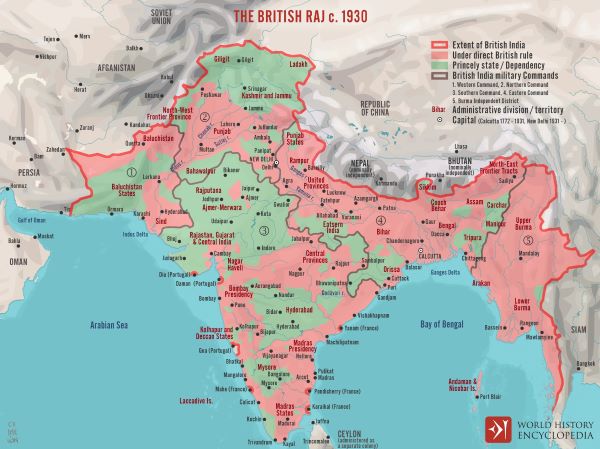
The expansion of empire intensified this scrutiny. Campaigns in India, Africa, and elsewhere placed British forces in increasingly visible and strategically significant engagements. While many of these conflicts ended in British victory, logistical strain and administrative friction persisted. Critics argued that structural weaknesses remained inadequately addressed despite earlier reform efforts. Military setbacks or operational embarrassments, even when limited in scope, provided ammunition for those who contended that deeper institutional modernization was necessary. Reform ceased to be an abstract principle and became linked to imperial credibility.
Parliamentary reformers increasingly framed modernization as a national imperative. Debates over army expenditure, officer education, and command structure became regular features of political life, particularly as questions of imperial defense and continental balance gained prominence. Critics of aristocratic patronage invoked continental comparisons, warning that Britain risked falling behind states that had embraced systematic staff training and meritocratic promotion. These arguments did not always call for wholesale imitation of Prussian models, yet they emphasized the dangers of complacency in a competitive international system. Advocates of reform stressed that industrialized warfare demanded administrative sophistication and strategic planning beyond the capacity of purely traditional structures. In this climate, military modernization became intertwined with broader Victorian commitments to efficiency, expertise, and bureaucratic rationality. The army’s organization was increasingly interpreted as a reflection of the nation’s administrative maturity.
Prince George became, in the eyes of some critics, a symbol of institutional conservatism. His long tenure and visible skepticism toward aspects of reform made him an identifiable focal point for dissatisfaction. Although many continued to respect his dedication and experience, others regarded his leadership as emblematic of a bygone era. Public critique did not uniformly condemn him, but it increasingly associated resistance to modernization with entrenched aristocratic authority. In this way, debates about structure became personalized through association with his office.
Intellectual currents within the military community also evolved. Officers who had engaged with continental military thought or who had attended staff institutions began to advocate more systematic planning and professional development. Military journals and lectures circulated reformist ideas that challenged older assumptions about regimental autonomy and social qualification. The army was no longer insulated from broader Victorian currents that valorized expertise, science, and bureaucratic rationalization. Pressure for adaptation emerged not only from civilian politicians but from within the officer corps itself.
By the closing years of Prince George’s command, reformist pressure had matured into expectation. The persistence of older practices appeared increasingly anomalous against the backdrop of industrial modernity and expanding imperial commitments. Parliamentary oversight grew more assertive, and military debates reflected heightened awareness of continental developments. Even those who valued tradition recognized that unmodified continuity risked strategic vulnerability. While his leadership had preserved stability and shielded inherited norms for decades, the broader trajectory of British military development was shifting toward professionalization and centralized planning. Public critique, parliamentary advocacy, and internal debate combined to reshape the institutional climate. The growth of reformist pressure illustrates how sustained scrutiny and structural change can gradually erode the authority of entrenched leadership, even when that leadership remains formally secure.
Structural Liability in an Age of Change
By the late nineteenth century, the pace of military transformation had accelerated beyond what regimental tradition alone could absorb. Industrial production altered the scale of armament manufacture, railways redefined mobilization timelines, and telegraph networks compressed decision-making cycles. Warfare increasingly depended upon coordinated logistics, centralized planning, and technically trained officers capable of managing complex systems. Resistance to professionalization ceased to be a matter of cultural preference. It became a structural vulnerability. Institutions that failed to adapt risked strategic obsolescence in a competitive imperial environment.
The British Army’s relative insulation from large-scale continental warfare delayed the full recognition of this liability. Imperial campaigns, often fought against less industrialized opponents, allowed traditional command models to function with limited immediate consequence. Yet structural weakness does not disappear merely because it remains untested. Continental powers demonstrated how systematic staff organization and meritocratic advancement could integrate technology with doctrine. As European military establishments evolved toward centralized coordination, Britain’s slower pace of adaptation created growing tension between inherited practice and emerging strategic reality.
Prince George’s tenure exemplifies how institutional culture can mediate the speed of change. His commitment to regimental identity and aristocratic leadership preserved cohesion within established frameworks, yet it moderated the embrace of innovation. Reform advanced, but cautiously and often incrementally. Structural liability thus manifested not as collapse but as delay. In an age of accelerating transformation, delay itself carries consequence. The gap between technological possibility and institutional readiness can widen until crisis exposes it.
The broader lesson extends beyond Victorian Britain. Leadership insulated from accountability may value continuity as stability, yet stability can mask stagnation. When organizational authority rests upon lineage rather than performance metrics, resistance to innovation acquires structural weight. Prince George did not embody incompetence. He embodied continuity in an era that required recalibration. Structural liability emerges when institutional design prioritizes preservation over adaptation. In an age defined by change, the cost of hesitation accumulates quietly until it can no longer be ignored.
Conclusion: Insulated Leadership and the Cost of Inertia
Prince George did not preside over collapse. He commanded during an era in which Britain retained imperial reach and military prestige. Yet his long tenure illuminates a subtler phenomenon: the gradual accumulation of institutional delay in a period of accelerating transformation. His resistance to professionalization, preference for patronage-inflected advancement, and skepticism toward educational reform did not paralyze the British Army. They moderated its adaptation. In a century defined by technological and bureaucratic evolution, moderation of change could become a liability.
The tension between continuity and reform during his command reflected deeper cultural divisions within Victorian Britain. Aristocratic authority had long shaped the officer corps, and regimental identity formed a core component of military cohesion. Reformers did not seek to erase tradition entirely, but to reconcile it with new strategic realities. The friction between these visions was not merely administrative. It was philosophical. It concerned the meaning of leadership, the value of merit, and the relationship between social hierarchy and professional competence. Prince George stood firmly on the side of inherited authority, even as industrial modernity redefined the requirements of command.
Institutional inertia rarely announces itself dramatically. It manifests through hesitation, incremental resistance, and selective acceptance of innovation. Under insulated leadership, such inertia can persist without immediate reckoning. Britain’s geographic security and imperial focus postponed the most severe consequences of delayed reform. Victories in limited imperial campaigns could reinforce confidence in inherited structures, masking underlying inefficiencies that would become more consequential in large-scale conflict. Yet structural weakness does not vanish through postponement. It accumulates quietly within organizational frameworks, shaping recruitment patterns, educational priorities, and command assumptions. The absence of immediate catastrophe can create an illusion of adequacy, encouraging further delay. The gap between evolving strategic demands and institutional preparedness widens. The cost of inertia is often revealed not in the tenure of the leader who sustains it, but in the demands placed upon successors who must confront crises with systems only partially modernized.
Prince George’s career offers a cautionary reflection on insulated authority. Stability without accountability can foster continuity, yet it can also impede necessary recalibration. Leadership that derives strength from lineage rather than demonstrable adaptability risks privileging preservation over preparedness. In the age of industrial warfare, the British Army required systematic modernization to meet emerging challenges. Reform eventually advanced, but not without prolonged friction. The history of his command underscores a broader principle: when institutions resist innovation under secure leadership, the price of delay may be paid later, and at greater cost.
Bibliography
- Beckett, Ian F. W. The Amateur Military Tradition, 1558–1945. Manchester: Manchester University Press, 1991.
- —-. “A British Profession of Arms: The Politics of Command in the Late Victorian Army.” Small Wars & Insurgencies 32:2 (2021), 409-412.
- —-. The Victorian Army and the Staff College. London: Eyre Methuen, 1972.
- Bektas, Yakup. “The Crimean War as a Technological Enterprise.” Notes and Records 71:3 (2017), 233-262.
- Bond, Brian. Victorian Military Campaigns. London: Hutchinson, 1967.
- Clayton, Anthony. The British Officer: Leading the Army from 1660 to the Present. Harlow: Pearson, 2006.
- Figes, Orlando. The Crimean War: A History. New York: Metropolitan Books, 2010.
- French, David. Military Identities: The Regimental System, the British Army, and the British People, c.1870–2000. Oxford: Oxford University Press, 2005.
- Holmes, Richard. Redcoat: The British Soldier in the Age of Horse and Musket. London: HarperCollins, 2001.
- Hoppen, K. Theodore. The Mid-Victorian Generation, 1846–1886. Oxford: Oxford University Press, 1998.
- Howard, Michael. War in European History. Oxford: Oxford University Press, 1976.
- Lambert, Andrew. The Crimean War: British Grand Strategy, 1853–56. Manchester: Manchester University Press, 1990.
- Sheppard, Edgar, ed. George, Duke of Cambridge: A Memoir of His Private Life Based on the Journals and Correspondence of His Royal Highness. London: Longmans, Green, and Co., 1906.
- Spiers, Edward M. The Army and Society, 1815–1914. London: Longman, 1980.
- Strachan, Hew. The Politics of the British Army. Oxford: Oxford University Press, 1997.
- —-. From Waterloo to Balaclava: Tactics, Technology, and the British Army, 1815–1854. Cambridge: Cambridge University Press, 1985.
Originally published by Brewminate, 03.02.2026, under the terms of a Creative Commons Attribution-NonCommercial-NoDerivatives 4.0 International license.
About the Author