The Constitution created a presidency strong enough to govern yet restrained enough to avoid monarchy, balancing executive energy with legislative control.

By Matthew A. McIntosh
Public Historian
Brewminate
Introduction: A Republic after a King
The American presidency was born in the shadow of monarchy. In 1776, the Declaration of Independence catalogued grievances not against a legislature but against King George III, portraying executive power as the primary instrument of oppression. The Revolution did not simply sever colonial ties; it reshaped political imagination. For a generation of American leaders, concentrated executive authority evoked standing armies, manipulated courts, suspended legislatures, and prerogative governance. Designing a national executive in 1787 required confronting the paradox of republican statecraft: how to create authority sufficient to govern without resurrecting the form of power that had just been repudiated.
The Articles of Confederation had provided one answer to this anxiety by effectively eliminating independent executive authority. Congress functioned as the central governing body, with administrative functions diffused through committees and temporary officers. Yet the deficiencies of that arrangement became increasingly evident. The Confederation Congress struggled to enforce treaties, manage interstate disputes, or compel fiscal compliance from the states. Political disorder and economic instability, culminating in episodes such as Shays’ Rebellion, exposed the limitations of a system lacking centralized enforcement capacity. Many reformers concluded that republican liberty required not the absence of executive authority, but its careful structuring.
At the Constitutional Convention, delegates faced a dilemma rather than a blank slate. The question was not whether to create an executive, but how to design one that avoided monarchical excess while correcting confederal weakness. Debates over a single versus plural executive, length of term, eligibility for reelection, and method of selection reflected deep ambivalence. Some feared that unity in the executive would replicate royal prerogative; others warned that fragmentation would invite paralysis. The eventual design of Article II embodied compromise: a single president with defined powers, selected indirectly, subject to impeachment, and dependent upon legislative authorization for funding and war. Authority was concentrated enough to enable decisive action, yet hedged by institutional constraints intended to prevent independence from the representative branch.
The presidency that emerged was neither a king nor a committee. It was an office constructed within a framework of separation and interdependence. Alexander Hamilton’s defense of “energy in the executive” in Federalist No. 70 argued for vigor, unity, and dispatch, but he paired that defense with careful distinctions between presidential authority and the powers of the British crown in Federalist No. 69. The executive could veto legislation, command forces once authorized, and conduct foreign negotiations, yet it could not legislate unilaterally or finance itself without congressional appropriation. Article II reflects a constitutional balancing act embedded at the founding moment: strength without sovereignty, initiative without autonomy. Understanding this design is essential to assessing whether later expansions of executive initiative remain tethered to legislative control or drift toward the concentration of power the framers feared.
The Problem of Executive Weakness under the Articles

The Articles of Confederation embodied revolutionary suspicion in institutional form. Ratified in 1781, the document created a unicameral Congress but provided no separate executive branch capable of enforcing national decisions. Administrative responsibilities were dispersed among committees and temporary officers, while implementation depended largely upon state cooperation. This structure reflected a deliberate rejection of centralized authority. The memory of royal governors and imperial administration remained fresh, and the framers of the Articles preferred decentralization to the risk of executive overreach. Yet the absence of a defined executive introduced structural fragility into national governance.
Without independent enforcement power, Congress struggled to ensure compliance with treaties and fiscal obligations. The Treaty of Paris in 1783 required the United States to honor debts and restore property to Loyalists, but enforcement varied widely across states. Several state legislatures enacted measures that conflicted with treaty commitments, and Congress possessed no coercive mechanism to secure uniform compliance. Foreign governments questioned the reliability of American promises when the national government could neither compel performance nor impose penalties for noncompliance. Trade policy presented similar difficulties. Congress could recommend commercial regulations and attempt to negotiate reciprocal agreements, yet it could not impose binding national standards upon the states. The result was a patchwork of competing tariffs and retaliatory measures that weakened American leverage in negotiations with Britain and Spain. In the absence of executive enforcement authority, even well-intentioned congressional resolutions often dissolved into advisory statements lacking practical force.
Fiscal instability compounded these weaknesses. Under the Articles, Congress possessed no authority to levy taxes directly. It relied on requisitions from the states, which were often ignored or only partially fulfilled. Efforts to amend the Articles to grant limited revenue powers failed to secure unanimous approval, as required by the Confederation framework. The inability to secure stable funding undermined the national government’s capacity to service war debts, maintain a standing army, or sustain diplomatic representation abroad. The problem was not merely inefficiency; it was structural incapacity rooted in the absence of centralized authority.
Domestic unrest further exposed the limitations of confederal governance. Shays’ Rebellion in 1786–1787, an uprising of indebted farmers in Massachusetts, underscored the fragility of state and national coordination. Although the rebellion was ultimately suppressed by state militia forces rather than national troops, the episode reverberated beyond Massachusetts. Reports of armed resistance to court judgments and tax collection fueled anxiety among political leaders who feared that republican government itself might collapse under economic strain and factionalism. The Confederation Congress lacked both the financial resources and the institutional machinery to respond decisively. It could neither raise a national force quickly nor intervene effectively across state lines. For reformers such as James Madison and Alexander Hamilton, the crisis illustrated the dangers of legislative authority without executive enforcement capacity. A republic that could not secure domestic tranquility risked either fragmentation or the eventual emergence of a stronger, less accountable power to restore order.
The weaknesses of the Articles did not produce a sudden embrace of executive power. Rather, they generated a recalibration of republican thought. Many delegates to the Constitutional Convention concluded that liberty required effective administration as well as representation. The challenge was to construct an executive capable of enforcing laws and conducting foreign affairs while remaining subordinate to legislative authorization. The problem of executive weakness under the Articles became a catalyst for constitutional innovation. The presidency that emerged in 1787 was designed not as a repudiation of republican principles, but as a structural correction intended to preserve them.
The Convention Debates: Fear of a New Monarch
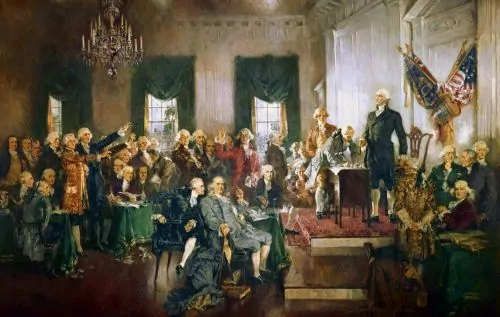
When delegates convened in Philadelphia in May 1787, the question of executive structure quickly became one of the most contentious issues before them. The Articles of Confederation had demonstrated the dangers of institutional weakness, yet the memory of monarchy remained potent. The Convention did not assume that an executive was necessary in the abstract; it grappled with how to design one without reproducing royal prerogative under republican forms. The presidency would be the most novel and sensitive feature of the proposed Constitution, requiring careful calibration of power and restraint.
One of the earliest and most divisive debates concerned whether the executive should consist of a single individual or a plural council. Proponents of unity, including James Wilson and later Alexander Hamilton, argued that a single executive would ensure decisiveness, accountability, and clarity in foreign affairs. Critics feared that vesting authority in one person risked recreating the concentration associated with kingship. A plural executive, they contended, would diffuse power and reduce the likelihood of tyranny. The Convention finally opted for unity, but not without embedding counterweights. The decision reflected a belief that fragmentation would produce inefficiency, yet it also demanded safeguards to prevent that unity from becoming monarchical in effect.
Term length and eligibility for reelection generated similar anxiety. Some delegates favored a single lengthy term to insulate the executive from legislative pressure; others warned that long tenure could encourage ambition and consolidation of influence. The final design settled on a four-year term with the possibility of reelection, striking a balance between independence and accountability. The president would not hold office for life, nor during good behavior, as judges would. Fixed tenure signaled that executive authority was temporary and renewable, subject to electoral judgment rather than hereditary succession.
The method of selection further illustrates anti monarchical sensitivity. Direct election by Congress risked legislative domination and compromised independence. Direct popular election raised concerns about demagoguery and the influence of populous states. The Electoral College emerged as a mediated solution, designed to buffer selection through state appointed electors exercising independent judgment. Although later political developments transformed the Electoral College into a more predictable mechanism, its original conception aimed to prevent both legislative capture and mass manipulation. The presidency would derive legitimacy neither from Parliament nor from hereditary right, but from a structured republican process.
Impeachment served as a decisive safeguard. Unlike the British monarch, who was politically unaccountable, the American president would be removable for “Treason, Bribery, or other high Crimes and Misdemeanors.” Delegates debated whether maladministration should constitute grounds for removal, ultimately narrowing the standard to avoid making the executive dependent on legislative displeasure while preserving a mechanism against corruption or abuse. The inclusion of impeachment reflected a fundamental departure from monarchy. The executive was powerful, but not inviolable.
The cumulative effect of these debates reveals a presidency constructed through anxiety rather than exuberance. Each design choice responded to the specter of concentrated power: unity counterbalanced by accountability, independence tempered by term limits, authority constrained by impeachment and legislative control over funding and war. Article II did not arise from admiration of executive dominance. It emerged from an effort to harness executive energy within a framework that prevented sovereignty from coalescing in a single office. The Convention debates demonstrate that fear of monarchy was not rhetorical flourish but structural principle embedded in the constitutional text.
Hamilton’s “Energy” and Its Limits

No defense of the presidency during ratification was more influential than Alexander Hamilton’s articulation of “energy in the executive.” In Federalist No. 70, Hamilton argued that vigor, decisiveness, secrecy, and dispatch were essential qualities in the administration of government. A feeble executive, he contended, would invite disorder, weaken enforcement of the laws, and undermine national security. Unity, in particular, served both efficiency and accountability: a single president could be watched, judged, and held responsible in ways that a plural executive could not. Yet Hamilton’s celebration of energy has often been misread as a blueprint for executive supremacy. In context, his argument was defensive. He sought to reassure skeptics that the presidency would not be too weak, not to argue that it should dominate the constitutional order.
Hamilton’s careful comparison of the proposed president to the British monarch in Federalist No. 69 underscores the limits embedded in his theory. The king of Great Britain possessed hereditary authority, the power to declare war, the ability to raise armies, and broad influence over legislation and appointments. The American president, by contrast, would serve a fixed term, share treaty making and appointments with the Senate, and depend upon Congress for funding and war declarations. Hamilton meticulously catalogued these distinctions to demonstrate that the presidency was subordinate in critical domains. Energy, in his formulation, operated within a system of separated and shared powers. It did not confer autonomous legislative or fiscal authority.
The veto power illustrates this balance. Hamilton described the qualified veto as a defensive weapon designed to protect the executive against encroachments by the legislature and to guard against hasty or ill-considered laws. The veto was not an instrument of unilateral policymaking. It required legislative override by a supermajority, preserving congressional primacy in lawmaking while enabling the president to demand reconsideration. This structure reinforced interdependence rather than supremacy. The president could resist legislation, but could not enact law independently.
Military authority reveals similar constraints. As Commander in Chief, the president would direct armed forces once raised and funded, ensuring unity in operational command. Yet Hamilton emphasized that the power to declare war and to raise armies remained with Congress. The president’s military role was executive in the literal sense: to execute and command forces authorized by statute. This division reflected enduring suspicion of monarchical prerogative, particularly the European tradition in which kings initiated wars without representative approval. The American design separated initiation from execution.
Hamilton’s conception of executive energy rested on structural dependency. Vigor did not imply sovereignty; decisiveness did not negate accountability. The presidency was crafted to act swiftly within a framework defined by legislative authorization and subject to removal through impeachment. Energy was a functional necessity in a large republic, but it was not a license for independent rule. When detached from congressional control, executive vigor risks transforming into the very concentration of authority Hamilton labored to distinguish from monarchy. The genius of Article II lies not in the celebration of strength, but in the careful confinement of that strength within constitutional boundaries.
Structural Constraints Built into Article II
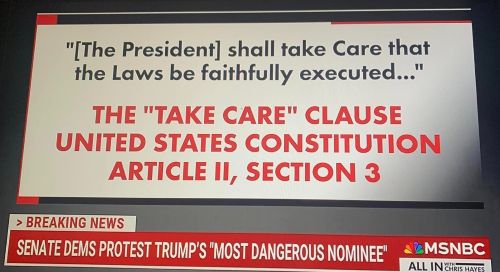
The text of Article II does not stand alone. Its meaning emerges in relation to Article I and the broader constitutional framework. The president’s powers, while defined in affirmative terms, are intertwined with legislative authority at nearly every point. The Vesting Clause grants “the executive Power” to a president, yet the scope of that power is shaped by enumerated authorities elsewhere in the document. Unlike Article I, which lists specific legislative powers in detail, Article II delineates fewer concrete authorities and presumes statutory infrastructure. The presidency was designed not as a freestanding source of national policy, but as an office operating within boundaries established by law. Even the Take Care Clause, which requires that the president “take Care that the Laws be faithfully executed,” presupposes the prior existence of laws enacted by Congress. Execution follows legislation. Initiative is structured through statute. The architecture of Article II reflects dependence as much as authority, embedding executive action within a legislative framework that defines both scope and legitimacy.
Appointments and treaties provide a clear example of this interdependence. The president nominates ambassadors, judges, and principal officers, yet appointments require the advice and consent of the Senate. Treaties negotiated by the executive become binding only upon approval by a two-thirds vote in the Senate. These provisions reflect a deliberate rejection of unilateral executive diplomacy. In European monarchies, foreign policy often lay within royal prerogative. The American Constitution diffused that authority, ensuring that international commitments and key appointments would rest on shared institutional judgment rather than singular will.
Financial dependence constitutes another structural limitation. The president cannot raise revenue, borrow funds, or allocate appropriations independently. Article I assigns these powers explicitly to Congress. Executive agencies operate within budgets authorized by statute, and even the most ambitious policy initiatives require legislative funding. This dependence was not incidental. Control over the purse served as a constitutional safeguard, preventing the executive from sustaining operations without representative approval. Appropriations legislation not only provides financial resources but also shapes administrative priorities, imposes reporting requirements, and limits the use of funds for specific purposes. Through detailed spending provisions, Congress can direct, restrict, or condition executive action. The inability of the president to finance initiatives unilaterally ensures that executive ambition remains institutionally tethered to legislative consent. Fiscal authority operates as both enabling mechanism and restraining device within the constitutional system.
Impeachment reinforces accountability at the highest level. The House of Representatives holds the sole power to impeach, and the Senate the sole power to try impeachments. The president is subject to removal for serious misconduct. This mechanism marked a sharp departure from the British model, in which the monarch was politically immune. Although impeachment was designed as an extraordinary remedy rather than a routine check, its inclusion underscored the principle that executive authority was conditional and revocable. The president governed not by inherent right, but by constitutional grant subject to institutional oversight.
Judicial interpretation has further clarified the boundaries of executive authority. In Youngstown Sheet & Tube Co. v. Sawyer (1952), the Supreme Court invalidated President Harry S. Truman’s attempt to seize steel mills during the Korean War absent statutory authorization. Justice Robert Jackson’s concurring opinion articulated a tripartite framework for assessing executive power based on congressional action or silence. When the president acts with congressional authorization, authority is at its maximum; when Congress is silent, power operates in a zone of uncertainty; when the president acts against congressional will, authority is at its lowest ebb. This framework captures the constitutional design embedded in Article II: executive energy is strongest when aligned with legislative approval and weakest when detached from it. Structural constraints were not accidental. They were essential to preventing the presidency from evolving into a sovereign office independent of republican control.
Early Practice: Washington and the Boundaries of Authority

The theoretical constraints embedded in Article II gained practical meaning during George Washington’s presidency. As the first occupant of the office, Washington established precedents that would shape constitutional interpretation for generations. His conduct did not treat the presidency as an independent center of sovereignty. Rather, he operated within a framework of legislative primacy, mindful that every action would contribute to defining the office itself. The absence of prior executive tradition heightened his sensitivity to constitutional limits. Unlike later presidents who inherited established norms, Washington moved without a roadmap, aware that overreach could permanently distort the institutional balance. His correspondence and public statements reveal a consistent concern with legitimacy and restraint. In exercising executive power, he sought not merely to act effectively but to model constitutional propriety, reinforcing the understanding that the presidency derived authority from law rather than from personal mandate.
Washington’s approach to appointments and consultation reflected this caution. He sought the advice of the Senate in person during early treaty deliberations, a practice that proved cumbersome but demonstrated respect for the constitutional requirement of shared authority. Although he later relied on written communication rather than direct consultation, the underlying principle remained intact: appointments and treaties required senatorial consent. The executive could recommend and negotiate, but binding commitments depended upon legislative approval.
The Neutrality Proclamation of 1793 provides a revealing case study. When war erupted between Britain and revolutionary France, Washington issued a proclamation declaring the United States neutral. Critics, including James Madison, questioned whether the president possessed authority to declare neutrality absent congressional action. Supporters argued that the executive held responsibility for conducting foreign relations and preserving peace unless Congress declared war. The ensuing debate clarified the contours of executive initiative. While Washington acted swiftly to assert neutrality, Congress retained authority over trade restrictions, military appropriations, and the ultimate decision to enter hostilities. The episode illustrates how executive action operated within a contested but bounded constitutional space.
Washington’s use of the veto power further demonstrates restraint. During his two terms, he exercised the veto sparingly, primarily on constitutional grounds rather than policy disagreement. His limited deployment reinforced the understanding that veto authority functioned as a defensive check, not as an instrument for directing legislative agendas. By refraining from frequent or expansive use, Washington contributed to a norm in which legislative initiative remained central to policymaking.
Military authority during the Whiskey Rebellion also illuminates constitutional balance. When western Pennsylvania farmers resisted federal excise taxes, Washington called forth militia forces to enforce the law. His actions relied upon statutory authorization under the Militia Acts passed by Congress. The episode demonstrated that executive energy could be decisive without becoming autonomous. The president executed the law, but the legal framework enabling force derived from legislative enactment. Enforcement validated statutory authority rather than substituting for it.
Taken together, Washington’s presidency reveals a pattern of bounded initiative. He did not reduce the office to ceremonial weakness, yet neither did he claim prerogatives beyond constitutional grant. His conduct reinforced the principle that executive authority flowed through and depended upon legislative authorization. Early practice aligned with the structural design of Article II: energy constrained by law, action conditioned upon statutory foundation, and accountability preserved through institutional interdependence. By consciously situating his decisions within the limits of congressional enactment and constitutional text, Washington helped establish a durable expectation that the presidency would operate within a system of shared power rather than above it. The example he set underscored a foundational lesson of the early republic: executive vigor was legitimate only insofar as it remained anchored to legislative consent and republican accountability.
When Executive Energy Detaches from Legislative Control
The constitutional architecture of Article II presupposes alignment between executive action and legislative authorization. Energy, in Hamilton’s formulation, was meant to ensure effective administration of laws enacted by Congress. The structural danger arises when executive initiative begins to operate independently of clear statutory grounding. The shift need not be abrupt or dramatic. It can emerge incrementally through expansive interpretations of authority, reliance on broadly framed statutes, or assertions of inherent power in moments of crisis. Such practices risk transforming a dependent office into a semi autonomous center of policymaking.
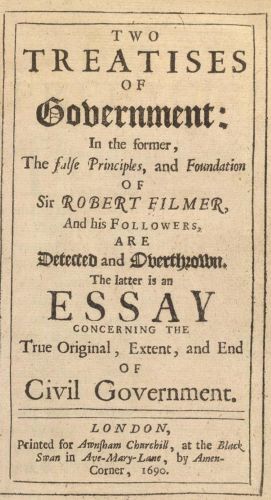
Philosophical foundations illuminate the tension. John Locke’s discussion of prerogative in the Second Treatise of Government acknowledged that executives may need discretion to act for the public good where law is silent. Yet Locke warned that prerogative must remain accountable to the people and subject to legislative supremacy. The American Constitution absorbed the insight about the necessity of decisiveness but rejected the notion of unchecked discretion. When presidents invoke inherent authority beyond statutory authorization, they tread close to a model of prerogative power that the framers sought to avoid. The question becomes whether silence from Congress constitutes permission or whether affirmative authorization is required.
Judicial doctrine reflects this tension. Justice Robert Jackson’s concurring opinion in Youngstown Sheet & Tube Co. v. Sawyer articulated a framework that situates executive power along a spectrum dependent on congressional action. When the president acts with express or implied authorization from Congress, authority is strongest. When Congress is silent, power exists in a zone of uncertainty. When the president acts contrary to congressional will, authority is weakest. Jackson’s formulation underscores a foundational principle: executive legitimacy is relational rather than self-generating. The presidency does not derive maximal authority from the Vesting Clause alone, but from its interaction with legislative enactment. When the executive stretches statutory language to justify expansive measures, courts must assess whether Congress has truly delegated such breadth or whether the action approaches contradiction of legislative intent. Detachment shifts executive conduct into contested territory, where claims of inherent authority confront constitutional limits and where institutional silence can be mistaken for endorsement.
Modern governance presents recurring scenarios in which this detachment can occur. Emergency declarations, expansive readings of national security statutes, and broad interpretations of administrative mandates provide avenues for executive initiative that may outpace detailed legislative direction. Even when grounded in statute, executive interpretation can stretch general language into comprehensive regulatory programs. Congress retains the power to clarify or restrict such interpretations, yet political polarization and institutional inertia often delay or prevent corrective action. In these intervals, executive policy becomes operative fact.
The normalization of unilateral executive tools reinforces the dynamic. Executive orders, signing statements, and emergency powers can reshape policy landscapes without new legislation. While each instrument may rest upon a legal foundation, cumulative reliance risks altering expectations about where initiative originates. If public and political actors increasingly look to the presidency as the primary driver of national direction, the symbolic center of governance shifts. The presidency becomes not merely executor but architect, even if formally dependent upon statutory scaffolding.
The founders feared not energy itself but concentration unmoored from accountability. Executive strength detached from legislative control approaches the model of prerogative authority characteristic of monarchy. The constitutional system anticipates vigor, yet it conditions that vigor on statutory grounding and political responsibility. When Congress declines to assert its prerogatives or to specify limits clearly, the balance tilts. Structural erosion rarely announces itself as revolution. It accumulates through precedent, habit, and institutional passivity. The preservation of republican governance depends on maintaining the linkage between executive initiative and legislative authorization. Energy without tether risks dissolving the boundary that distinguishes a constitutional president from a sovereign ruler, substituting efficiency for accountability and initiative for deliberation. The danger lies not in action, but in action unconstrained by the branch originally entrusted with defining the law.
Conclusion: Authority Sufficient to Act, Insufficient to Dominate
The presidency was conceived in tension. It arose from the demonstrated weakness of the Articles of Confederation and from an equally powerful fear of concentrated executive authority. Article II embodies that dual inheritance. It establishes unity, decisiveness, and operational competence while embedding structural constraints that prevent sovereignty from consolidating in a single office. The framers did not seek paralysis. They sought calibrated strength. Authority was made sufficient to act, but insufficient to dominate.
Throughout the Convention debates and the ratification struggle, defenders of the Constitution insisted that executive energy would operate within a legislative framework. Hamilton’s articulation of vigor rested upon comparison, limitation, and dependence. The president could recommend measures, veto legislation, and command forces once authorized, yet could not declare war, appropriate funds, or legislate unilaterally. Early practice under Washington confirmed that understanding. Initiative remained tethered to statute. Execution followed authorization. The presidency functioned as an instrument of republican governance rather than as its independent architect.
The enduring constitutional question is not whether the executive should be strong. The framers answered that affirmatively. The question is whether executive strength remains structurally anchored to legislative control and political accountability. When Congress delegates broadly, hesitates to clarify statutory boundaries, or declines to assert its constitutional prerogatives, the presidency may accumulate practical initiative beyond what Article II independently grants. Such expansion does not necessarily violate the text, but it alters the balance the text presupposes. Energy becomes less a means of execution and more a source of policy direction.
A republic after a king required both caution and confidence. The constitutional presidency reflects that synthesis. It was designed to ensure that government could act decisively without permitting authority to coalesce into unaccountable power. The boundary between vigor and dominance is maintained not by rhetoric, but by institutional practice. Authority sufficient to act preserves order and effectiveness. Authority insufficient to dominate preserves liberty. The constitutional design depends upon sustaining that distinction.
Bibliography
Affiliate disclosure: Amazon links on this site are paid links. As an Amazon Associate I earn from qualifying purchases.
- Articles of Confederation, 1777.
- Bailyn, Bernard. The Ideological Origins of the American Revolution. Cambridge, MA: Belknap Press of Harvard University Press, 1967.
- Ellis, Joseph J. His Excellency: George Washington. New York: Alfred A. Knopf, 2004.
- Farrand, Max, ed. The Records of the Federal Convention of 1787. 4 vols. New Haven, CT: Yale University Press, 1911.
- Freeman, Joanne B. Affairs of Honor: National Politics in the New Republic. New Haven, CT: Yale University Press, 2001.
- Hamilton, Alexander. “Federalist No. 69.” In The Federalist Papers. New York: Signet Classics, 2003.
- —-. “Federalist No. 70.” In The Federalist Papers. New York: Signet Classics, 2003.
- —-. “Federalist No. 77.” In The Federalist Papers. New York: Signet Classics, 2003.
- Jensen, Merrill. The New Nation: A History of the United States during the Confederation, 1781–1789. New York: Alfred A. Knopf, 1950.
- Locke, John. Second Treatise of Government. 1689.
- Madison, James. Helvidius Essays. 1793.
- —-. Notes of Debates in the Federal Convention of 1787. Edited by Adrienne Koch. Athens: Ohio University Press, 1966.
- Prakash, Saikrishna Bangalore. Imperial from the Beginning: The Constitution of the Original Executive. New Haven, CT: Yale University Press, 2015.
- Rakove, Jack N. Original Meanings: Politics and Ideas in the Making of the Constitution. New York: Alfred A. Knopf, 1996.
- United States. The Constitution of the United States of America, arts. I–II.
- United States Congress. Annals of Congress. Washington, DC: Gales and Seaton, 1834–1856.
- Wood, Gordon S. The Creation of the American Republic, 1776–1787. Chapel Hill: University of North Carolina Press, 1969.
- —-. Empire of Liberty: A History of the Early Republic, 1789–1815. New York: Oxford University Press, 2009.
- Youngstown Sheet & Tube Co. v. Sawyer, 343 U.S. 579 (1952).
Originally published by Brewminate, 03.05.2026, under the terms of a Creative Commons Attribution-NonCommercial-NoDerivatives 4.0 International license.
About the Author