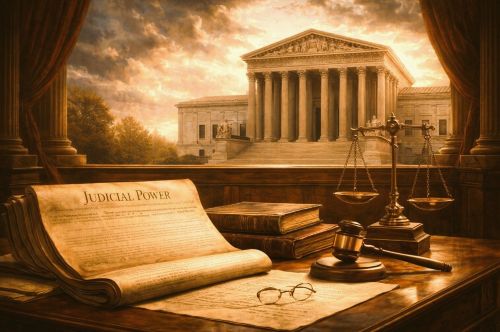
The Constitution granted the judiciary interpretive authority without coercive power, making its strength dependent on legitimacy rather than force.

By Matthew A. McIntosh
Public Historian
Brewminate
Introduction: Judgment without the Sword
In Federalist No. 78, Alexander Hamilton offered what remains the most enduring description of the American judiciary: it possesses “neither force nor will, but merely judgment.” That formulation was not rhetorical modesty. It was structural analysis. Unlike Congress, which controls the purse, and the presidency, which commands the sword, the courts were designed without independent enforcement capacity. Their authority would rest on interpretation rather than execution. The judiciary would declare what the law is, but it would depend on others to give that declaration practical effect.
Article III reflects this intentional limitation. It establishes the judicial power of the United States, provides life tenure during good behavior, and protects judicial compensation from diminution. These safeguards insulate judges from political retaliation, yet they do not equip the courts with coercive machinery. The Constitution does not grant the judiciary authority to enforce its own judgments through armed force or independent fiscal control. It confers jurisdiction, not command. Even the structure of judicial power, limited to “cases” and “controversies,” signals constraint rather than initiative. Courts cannot initiate policy or conduct investigations independently; they must wait for disputes to be brought before them. Instead of commanding resources or directing enforcement agencies, the judiciary relies on marshals, executive officers, and ultimately the broader administrative state to carry its rulings into effect. The institutional architecture assumes cooperation among branches. The courts speak; the other branches act.
Hamilton defended this arrangement as a safeguard against tyranny rather than a weakness. Because the judiciary exercises judgment rather than policy formation, it poses less immediate danger to liberty. Its power is reactive, confined to cases and controversies, and bounded by legal reasoning. Judicial review, though not explicitly enumerated in Article III, was justified as a necessary implication of written constitutionalism. If the Constitution is supreme law, courts must refuse to apply statutes that contravene it. Yet even this interpretive authority does not convert the judiciary into an autonomous sovereign. It remains dependent on the willingness of the political branches to comply with its rulings.
The strength of the judiciary lies not in coercion but in legitimacy. Courts command obedience because their judgments are accepted as authoritative within a shared constitutional culture. That authority is reinforced by professional norms within the legal community, by congressional respect for judicial independence, and by executive compliance with court orders. Historical experience demonstrates that enforcement crises arise not from judicial assertiveness alone, but from breakdowns in political acceptance. When presidents enforce controversial rulings despite political cost, or when Congress adjusts statutes in response to constitutional interpretation, legitimacy is reaffirmed. The American judiciary was constructed as the least dangerous branch precisely because it lacks independent means of enforcement. Its endurance depends on a durable commitment to the rule of law. When that commitment frays, the fragility embedded in Hamilton’s design becomes visible, and the judiciary’s authority rests precariously on whether other branches honor constitutional norms.
The Constitutional Design of Judicial Weakness

Article III of the Constitution is notably spare when compared to the detailed enumeration of powers in Article I. It establishes “one supreme Court” and permits Congress to create inferior courts, yet it does not elaborate an expansive catalogue of judicial authority. The brevity is instructive. The framers did not conceive of the judiciary as a coequal rival in policymaking, but as an adjudicative body embedded within a broader constitutional structure. Its powers are defined by jurisdiction rather than initiative. The courts decide cases; they do not originate laws, command armies, or raise revenue.
Life tenure during good behavior and protection against salary diminution are often cited as markers of judicial strength. Yet these features were designed primarily as shields, not swords. By insulating judges from electoral pressure and financial retaliation, the Constitution sought to preserve independence in interpretation, ensuring that decisions would not fluctuate with transient political winds. This insulation was a response to colonial experiences in which judges were dependent on executive favor or legislative salary adjustments. The framers intended to prevent such leverage. Independence, however, is not the same as enforcement authority. The judiciary was made secure from political interference in its decision making, but not endowed with mechanisms to impose compliance independently. Security of office ensures impartial judgment; it does not confer coercive capacity. The distinction is critical. Independence protects the integrity of reasoning, while enforcement power determines practical effect. Article III provides the former and withholds the latter.
The absence of an explicit enforcement apparatus underscores this limitation. Federal courts rely on the United States Marshals Service and other executive officials to execute warrants, carry out arrests, and implement orders. These officers operate within the executive branch, not under autonomous judicial command. The courts may issue directives, but they depend upon executive compliance to translate those directives into practical effect. This structural reliance reflects a deliberate separation of adjudication from execution. The judiciary interprets and declares; the executive enforces and administers.
Judicial review itself illustrates the balance between interpretive power and institutional restraint. Although the Constitution does not expressly grant the power to invalidate statutes, the logic of written constitutionalism implies that courts must refuse to apply laws inconsistent with the supreme law of the land. When Chief Justice John Marshall articulated this principle in Marbury v. Madison (1803), he strengthened the judiciary’s interpretive authority while simultaneously avoiding direct confrontation with the executive. The decision asserted the power of review but acknowledged the limits of enforcement. The Court could declare a law unconstitutional; it could not compel executive compliance without cooperation.
Congressional authority over jurisdiction further reinforces judicial dependence. Article III permits Congress to regulate the appellate jurisdiction of the Supreme Court and to establish inferior courts. Through statutes governing jurisdiction, Congress shapes the scope of federal judicial review, determining which categories of cases may be heard and under what conditions. This power to define and adjust jurisdiction functions as a structural check embedded within the constitutional framework itself. While life tenure insulates judges individually, the institutional judiciary remains intertwined with legislative design. Its reach depends upon congressional enactment, and its capacity to hear certain cases can be expanded or constrained through statute. The Exceptions Clause illustrates that judicial authority operates within boundaries subject to legislative specification. Although such authority must be exercised consistently with constitutional guarantees, its existence underscores that the judiciary is not wholly autonomous. Its institutional footprint is conditioned by congressional architecture.
The constitutional design reflects intentional modesty. The judiciary was empowered to interpret law authoritatively, yet deprived of independent means to enforce its judgments. Its insulation protects reasoning from political retaliation, but its dependence ensures that interpretation alone does not become coercion. Weakness in enforcement was not a flaw to be corrected; it was a safeguard against judicial dominance. The least dangerous branch was structured to derive its authority from reasoned judgment and from the willingness of other actors to honor its determinations. Its strength would be measured not by force, but by acceptance.
Marbury and the Construction of Judicial Review
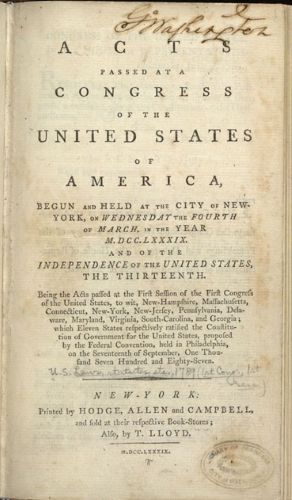
If Article III supplied the skeletal structure of judicial authority, Marbury v. Madison (1803) furnished it with interpretive muscle. The case arose from a political dispute at the end of John Adams’s presidency, when commissions for “midnight judges” were signed but not delivered before Thomas Jefferson assumed office. William Marbury petitioned the Supreme Court for a writ of mandamus compelling Secretary of State James Madison to deliver his commission. The dispute placed the Court in a precarious position. A direct order against the Jefferson administration risked defiance and institutional humiliation. Yet declining to act entirely would signal judicial impotence.
Chief Justice John Marshall crafted an opinion that simultaneously rebuked executive conduct and avoided confrontation. He concluded that Marbury had a legal right to his commission and that Madison’s refusal to deliver it was unlawful. However, Marshall held that the statutory provision granting the Court original jurisdiction to issue writs of mandamus exceeded constitutional bounds. Because the Constitution defined the Court’s original jurisdiction exhaustively, Congress could not expand it by statute. The relevant section of the Judiciary Act of 1789 was void. In denying Marbury relief, the Court deprived itself of the immediate capacity to enforce its judgment while asserting a broader constitutional principle. Marshall’s reasoning unfolded methodically, guiding readers through questions of right, remedy, and jurisdiction before reaching the constitutional issue. By structuring the opinion in this manner, he elevated the authority of constitutional text above statutory enactment without appearing partisan. The Court emerged not as an aggressor but as an interpreter constrained by higher law.
The reasoning at the heart of Marbury was transformative. Marshall declared that it is “emphatically the province and duty of the judicial department to say what the law is.” This formulation did not invent judicial review out of whole cloth, but it articulated with clarity the logic implicit in written constitutionalism. If the Constitution is superior law, and if courts are bound to apply law in deciding cases, then courts must disregard statutes that conflict with the Constitution. Judicial review emerged not as a claim to supremacy, but as a claim to interpretive obligation. The Court presented its authority as derivative of the Constitution itself rather than as an assertion of institutional dominance.
Equally significant was Marshall’s prudence. By invalidating a statutory grant of jurisdiction rather than directly ordering Madison to act, the Court avoided placing itself in direct opposition to the executive. The decision enhanced judicial authority without requiring executive enforcement. Marbury exemplifies the judiciary’s reliance on legitimacy. The power it claimed was persuasive rather than coercive. It rested on reasoning that political actors and the public would accept as constitutionally grounded.
Subsequent developments confirmed the gradual consolidation of judicial review through practice rather than force. In the decades following Marbury, the Supreme Court invoked judicial review in additional cases, but it did so selectively and cautiously. The political branches, even when critical of particular decisions, generally complied with the Court’s rulings, reinforcing its interpretive role. This acceptance was not inevitable; it was constructed through repetition, precedent, and the normalization of constitutional adjudication. By the time judicial review became a routine feature of constitutional discourse, its legitimacy rested less on the dramatic pronouncement of 1803 and more on sustained acquiescence across institutions. Congress adjusted statutes in response to constitutional decisions, presidents enforced judgments even when politically inconvenient, and legal education integrated judicial review into the canon of constitutional practice. Authority accumulated through cultural embedding rather than coercive assertion.
Marbury v. Madison illustrates the dual nature of judicial strength and fragility. The decision established a cornerstone of American constitutional law while underscoring the judiciary’s structural dependence. The Court expanded its interpretive authority in a manner calibrated to preserve legitimacy and avoid enforcement crisis. Judicial power grew through articulation and restraint, not through confrontation. The case stands as a reminder that the judiciary’s most consequential authority rests on judgment recognized as binding, not on force capable of imposing it.
Enforcement Crises: When Judgment Meets Resistance

The structural fragility of the judiciary becomes most visible in moments of resistance. While courts may declare constitutional principles with clarity, enforcement ultimately depends upon the willingness of political actors to comply. When executive officials or state authorities resist judicial rulings, the judiciary lacks independent means to compel obedience. Such crises test not only constitutional doctrine but also the durability of institutional norms. The Court’s authority in these moments rests less on formal power than on the broader political culture’s commitment to constitutional order.
One of the earliest and most cited examples is Worcester v. Georgia (1832). In that case, the Supreme Court held that Georgia’s extension of state law over Cherokee territory violated federal treaties and was unconstitutional. Chief Justice John Marshall’s opinion affirmed the supremacy of federal authority in Indian affairs and invalidated state interference. Yet enforcement depended upon executive cooperation. President Andrew Jackson did not actively deploy federal power to secure compliance, and Georgia effectively ignored the ruling. Whether or not Jackson uttered the apocryphal remark attributed to him, the episode revealed the judiciary’s structural limitation. A judgment unsupported by executive enforcement remained declaratory rather than decisive.
The Civil War era presented another confrontation in Ex parte Merryman (1861). Chief Justice Roger Taney, sitting as a circuit judge, ruled that President Abraham Lincoln lacked authority to suspend the writ of habeas corpus unilaterally. Lincoln did not comply with Taney’s directive, maintaining that wartime necessity justified executive action until Congress could convene. The constitutional dispute highlighted the tension between judicial interpretation and executive initiative in moments of national crisis. Taney’s opinion articulated a constitutional boundary, yet enforcement depended upon a president who believed his actions essential to preserving the Union. The Court’s reasoning did not translate into immediate constraint.
A century later, Brown v. Board of Education (1954) exposed a different form of resistance. The Supreme Court declared racial segregation in public schools unconstitutional, yet implementation encountered widespread opposition in several states. The Court’s follow up decision in Brown II called for desegregation with “all deliberate speed,” language that acknowledged both the limits of judicial enforcement and the political complexity of compliance. In Little Rock, Arkansas, executive intervention proved decisive. President Dwight D. Eisenhower deployed federal troops to enforce desegregation orders, demonstrating that judicial authority required executive backing to achieve practical effect. Without that support, the Court’s judgment would have remained aspirational.
These enforcement crises underscore a consistent structural reality. The judiciary’s interpretive supremacy does not guarantee immediate obedience. Its authority becomes effective only when other branches and the broader public accept its determinations as binding. In moments of resistance, the judiciary cannot marshal force independently. It must rely on executive enforcement or legislative reinforcement. Hamilton’s observation in Federalist No. 78 finds empirical confirmation. The courts possess judgment, not command. When judgment meets resistance, constitutional stability depends upon whether political actors honor the norms that sustain the rule of law.
Structural Supports of Judicial Authority

Although the judiciary lacks independent enforcement power, it is not without institutional supports. The constitutional system embeds mechanisms that reinforce judicial authority even in the absence of direct coercive capacity. These supports operate through structure, interbranch interaction, and constitutional culture. The judiciary’s fragility is real, yet it is buffered by arrangements that convert interpretation into effective governance when constitutional norms are respected.
One such mechanism is the contempt power. Courts possess authority to sanction individuals who defy lawful orders, including fines and imprisonment. While this authority ultimately depends upon executive officers to carry out detention, the contempt power provides an immediate procedural tool for enforcing compliance within judicial proceedings. It enables courts to maintain order, compel testimony, and ensure adherence to rulings in ongoing litigation. This power does not transform the judiciary into a coercive branch comparable to the executive, but it does provide limited internal enforcement capacity that reinforces the seriousness of judicial directives.
Congressional backing constitutes another structural reinforcement. Through legislation, Congress can authorize enforcement mechanisms, clarify jurisdiction, and provide resources necessary for judicial functioning. Federal statutes governing civil rights enforcement, habeas corpus procedures, and judicial administration exemplify legislative reinforcement of judicial authority. When Congress aligns statutory frameworks with constitutional interpretation, it amplifies the judiciary’s capacity to translate decisions into practical effect. Legislative action has often followed landmark rulings, embedding constitutional principles into detailed regulatory regimes. For example, civil rights legislation enacted after judicial decisions addressing segregation and voting rights supplied enforcement provisions and administrative structures that courts alone could not create. At the same time, Congress retains authority to adjust jurisdiction and procedural rules, underscoring the judiciary’s dependence on legislative architecture. This relationship is not merely supportive but reciprocal. Courts interpret statutes; Congress responds through amendment or clarification. Judicial authority operates within a statutory environment shaped by elected representatives, reinforcing both dependence and collaboration.
The executive branch also plays a pivotal role in sustaining judicial authority. Presidents and executive officials routinely comply with judicial rulings, even when they disagree with their substance. This compliance is not mechanically guaranteed by constitutional text; it reflects a norm internalized. Executive acceptance of adverse judgments reinforces the principle that constitutional interpretation binds all branches. Historical episodes in which presidents have publicly affirmed judicial authority, including enforcement of controversial rulings, contribute to the judiciary’s institutional legitimacy. Compliance transforms declaratory judgment into operative law.
Cultural legitimacy further supports judicial authority. The legal profession, academic institutions, and civic education cultivate an understanding of the courts as guardians of constitutional meaning. Public acceptance of judicial review as a standard feature of governance embeds judicial decisions within political expectations. The Court’s authority evolves in dialogue with public opinion rather than in isolation from it. This reciprocal relationship does not eliminate tension, but it situates judicial authority within a broader democratic framework. Legitimacy becomes a form of constitutional capital, accumulated through consistency, transparency, and perceived fidelity to law. Public trust influences whether controversial decisions are implemented peacefully or provoke sustained resistance. When the judiciary is perceived as adhering to principled reasoning rather than partisan impulse, its rulings are more likely to be accepted even by those who disagree with specific outcomes. Cultural acceptance functions as a stabilizing force that transforms interpretive pronouncements into socially embedded norms.
These structural supports compensate for the judiciary’s lack of force. Contempt authority, legislative reinforcement, executive compliance, and cultural legitimacy function as interlocking mechanisms that sustain judicial influence. None substitutes entirely for independent coercive power, but collectively they enable the courts to operate effectively within a system of separated powers. Judicial authority persists not because the courts command armies or control budgets, but because other institutions and the public recognize their interpretive role as integral to constitutional governance.
Legitimacy as Capital
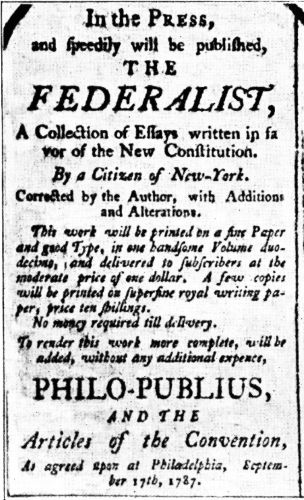
If the judiciary lacks the instruments of force, it compensates through the accumulation of legitimacy. Legitimacy operates as a form of institutional capital, enabling courts to exercise authority without direct coercion. It derives from public confidence, professional norms, and sustained adherence to procedural regularity. Unlike electoral mandates or military command, judicial legitimacy is intangible. Yet it is indispensable. When courts are perceived as principled and faithful to law, their decisions carry weight beyond the text of opinions. Alexander Hamilton anticipated this dynamic in Federalist No. 78, suggesting that judicial authority would rest upon public acceptance of its interpretive role rather than upon material enforcement capacity. Modern scholarship has expanded upon this insight, arguing that courts function effectively only when their decisions are treated as binding within a shared constitutional culture. Legitimacy becomes a reservoir of trust that allows judgment to substitute for force. Without it, the judiciary’s structural weakness would be exposed; with it, interpretation acquires practical authority.
The development of this capital depends in part upon consistency and transparency. Judicial reasoning that demonstrates engagement with precedent, statutory text, and constitutional structure reinforces the perception that decisions arise from law rather than preference. Patterns of restraint or fidelity to established doctrine cultivate institutional trust. Even controversial rulings can be absorbed into constitutional practice if they are perceived as grounded in reasoned interpretation. Legitimacy is not static; it is earned through method and reinforced through repetition.
Public opinion plays a complex role in this process. While courts are insulated from direct electoral accountability, they do not operate in isolation from the broader political community. The Supreme Court functions within a dialogue with the public, rarely straying far from dominant constitutional understandings for sustained periods. This does not reduce judicial review to majoritarianism. Rather, it suggests that legitimacy emerges from an equilibrium between interpretive authority and societal acceptance. Courts that depart dramatically from prevailing norms risk erosion of institutional capital, especially when enforcement requires cooperation from reluctant political actors.
Institutional reputation also shapes compliance among political elites. Members of Congress, executive officials, and state actors respond not only to formal authority but to the perceived standing of the judiciary. A court widely regarded as legitimate exerts persuasive influence even when its rulings are inconvenient. Conversely, when legitimacy is questioned, compliance may weaken. The judiciary’s dependence on executive enforcement and legislative reinforcement means that elite perception of judicial integrity has practical consequences. Authority flows through respect.
Legitimacy as capital becomes the currency through which judgment translates into governance. It accumulates slowly and can dissipate under sustained attack or perceived partiality. Because the judiciary cannot rely on force, it must rely on credibility. The framers’ design anticipated this reliance. A branch possessing neither purse nor sword would endure only if its judgments were accepted as authoritative. Legitimacy is not an accessory to judicial power. It is its foundation.
What Happens When Legitimacy Frays

The judiciary’s structural dependence on legitimacy means that erosion of public confidence carries constitutional consequences. When significant segments of the political community begin to doubt the impartiality or authority of the courts, compliance becomes less automatic. Decisions that once would have been absorbed into the ordinary functioning of government instead become focal points of political contestation. Because the judiciary lacks independent coercive means, it cannot restore credibility through force. Its authority contracts when legitimacy declines.
Historical episodes illustrate how fragile this equilibrium can be. During periods of intense political conflict, attacks on judicial authority have taken institutional form, including jurisdiction stripping proposals, court reorganization efforts, and public campaigns to delegitimize decisions. The controversy surrounding President Franklin D. Roosevelt’s 1937 court reorganization plan revealed how perceived judicial obstruction of legislative policy can provoke structural retaliation. Roosevelt framed the proposal as administrative reform, yet critics understood it as an attempt to alter the Court’s composition in response to adverse rulings. Although the plan ultimately failed in Congress, the episode underscored that judicial authority rests on political tolerance as well as constitutional design. It also demonstrated that the judiciary’s independence can be challenged through lawful political mechanisms rather than outright defiance. When political actors portray the Court as an impediment to democratic governance, institutional legitimacy becomes contested terrain, and public confidence may shift accordingly.
Erosion of legitimacy also affects enforcement dynamics. Executive officials may hesitate to expend political capital enforcing controversial rulings if public confidence in the judiciary is weak. State actors may resist compliance when judicial decisions are portrayed as partisan or unmoored from constitutional text. In such circumstances, the judiciary’s interpretive declarations risk becoming aspirational rather than operative. The system then depends heavily on whether other branches choose to defend judicial authority as an institutional value rather than as a partisan instrument.
The framers’ architecture anticipated that the judiciary would survive through respect rather than fear. When that respect diminishes, the constitutional order relies increasingly on voluntary adherence to norms. A judiciary that is viewed as principled can withstand disagreement; one perceived as politically compromised may struggle to command obedience. Declining trust can produce a feedback loop in which skepticism about impartiality fuels resistance, and resistance further undermines institutional standing. The erosion of legitimacy does not immediately dissolve judicial authority, but it narrows the margin within which judgment translates into governance. In a system where courts possess neither purse nor sword, legitimacy is not merely beneficial. It is indispensable, and its preservation requires sustained commitment from all branches to the norms that sustain constitutional governance.
Conclusion: Strength in Judgment, Fragility in Power
The American judiciary was constructed as a paradox. It holds interpretive authority of the highest order, yet it lacks the material instruments typically associated with power. In Hamilton’s formulation, it commands neither purse nor sword. Its role is to declare what the law requires, not to enforce compliance through force or fiscal leverage. That design was intentional. A republic wary of concentrated authority entrusted courts with judgment precisely because judgment was understood to be constrained by reason and dependent upon acceptance. The framers sought to prevent the judiciary from becoming a rival source of political initiative, even as they equipped it to safeguard constitutional boundaries. By denying it independent enforcement tools, they ensured that judicial authority would operate within a framework of interdependence. The courts would articulate principles, but their practical effect would hinge upon cooperation from coordinate branches and the consent of the governed. Power, in this structure, flows from recognition rather than compulsion.
Throughout constitutional history, judicial authority has expanded through articulation rather than coercion. From Marbury v. Madison to landmark rulings in civil rights and federalism, the Court’s influence has rested on the persuasiveness of its reasoning and the willingness of political actors to comply. Even when enforcement crises emerged, resolution depended upon executive action or legislative reinforcement. The judiciary’s strength has been relational. Its declarations become operative law when other institutions honor them as binding expressions of constitutional meaning.
This relational structure carries both resilience and vulnerability. Because judicial authority is embedded within broader political culture, it can endure controversy and disagreement without immediate collapse. Yet it remains susceptible to erosion if legitimacy declines. When confidence in impartiality weakens or when political actors frame the judiciary as adversarial rather than adjudicative, compliance becomes contingent rather than assumed. The Court cannot compel trust; it must cultivate it through fidelity to constitutional principle and institutional restraint. Its endurance depends on habits of compliance formed over generations, reinforced by professional norms, civic education, and executive adherence to judicial decrees. If those habits weaken, the judiciary’s structural limitations become more visible. A branch without purse or sword must rely on credibility. When credibility is questioned, authority narrows. Fragility emerges not from a single controversial decision, but from cumulative doubts about impartiality and constitutional fidelity.
Strength in judgment, fragility in power. That formulation captures the essence of Article III’s design. The judiciary was never meant to dominate the constitutional system. It was meant to interpret within it. Its authority depends on a shared commitment to the rule of law, sustained across branches and generations. In a constitutional order where courts lack independent enforcement capacity, legitimacy is not merely a supplement to power. It is the condition that makes power possible.
Bibliography
Affiliate disclosure: Amazon links on this site are paid links. As an Amazon Associate I earn from qualifying purchases.
- Amar, Akhil Reed. America’s Constitution: A Biography. New York: Random House, 2005.
- Eisenhower, Dwight D. The White House Years: Mandate for Change, 1953–1956. New York: Doubleday, 1963.
- Friedman, Barry. The Will of the People: How Public Opinion Has Influenced the Supreme Court and Shaped the Meaning of the Constitution. New York: Farrar, Straus and Giroux, 2009.
- Hamilton, Alexander. “Federalist No. 78.” In The Federalist Papers. New York: Signet Classics, 2003.
- —-. “Federalist No. 79 In The Federalist Papers. New York: Signet Classics, 2003.
- —-. “Federalist No. 81.” In The Federalist Papers. New York: Signet Classics, 2003.
- Hobson, Charles F. The Great Chief Justice: John Marshall and the Rule of Law. Lawrence: University Press of Kansas, 1996.
- Klarman, Michael J. From Jim Crow to Civil Rights: The Supreme Court and the Struggle for Racial Equality. New York: Oxford University Press, 2004.
- Leuchtenburg, William E. The Supreme Court Reborn: The Constitutional Revolution in the Age of Roosevelt. New York: Oxford University Press, 1995.
- Lincoln, Abraham. “Message to Congress in Special Session.” July 4, 1861.
- Marshall, John. Marbury v. Madison, 5 U.S. (1 Cranch) 137 (1803).
- —-. Worcester v. Georgia, 31 U.S. (6 Pet.) 515 (1832).
- Nelson, William E. Marbury v. Madison: The Origins and Legacy of Judicial Review. Lawrence: University Press of Kansas, 2000.
- Rakove, Jack N. Original Meanings: Politics and Ideas in the Making of the Constitution. New York: Alfred A. Knopf, 1996.
- Roosevelt, Franklin D. “Fireside Chat on the Reorganization of the Judiciary.” March 9, 1937.
- Taney, Roger B. Ex parte Merryman, 17 F. Cas. 144 (C.C.D. Md. 1861).
- Tyler, Tom R. Why People Obey the Law. Princeton, NJ: Princeton University Press, 1990.
- United States. The Constitution of the United States of America, art. III.
- Wood, Gordon S. The Creation of the American Republic, 1776–1787. Chapel Hill: University of North Carolina Press, 1969.
Originally published by Brewminate, 03.05.2026, under the terms of a Creative Commons Attribution-NonCommercial-NoDerivatives 4.0 International license.
About the Author