In Renaissance Florence, Girolamo Savonarola fused apocalyptic moral reform with political power, revealing how purification movements can drift toward coercive control.

By Matthew A. McIntosh
Public Historian
Brewminate
Introduction: Corruption, Crisis, and the Language of Purification
Late fifteenth century Florence was a city both brilliant and brittle. Under Lorenzo de’ Medici, it had flourished artistically and intellectually, cultivating humanist scholarship and patronizing some of the most celebrated artists of the Renaissance. Yet beneath this cultural radiance lay persistent political tensions. The Medici regime, though formally republican, operated through networks of patronage and informal dominance that left many Florentines uneasy. Republican institutions remained intact in form, but meaningful power circulated through carefully managed alliances, strategic marriages, and economic leverage. This gap between constitutional appearance and political reality fostered a climate in which accusations of corruption carried persuasive force. Critics complained not only of financial manipulation but of moral decline: luxury, vanity, and sensual indulgence were said to have softened civic virtue. Humanist celebration of classical culture coexisted uneasily with sermons warning of spiritual decay. Florence’s self image as a beacon of culture and liberty was shadowed by suspicion that prosperity had bred decadence. The language of decline was not invented by Girolamo Savonarola; it was already embedded in civic discourse, waiting to be intensified and redirected.
The crisis intensified after Lorenzo’s death in 1492 and the faltering leadership of his son, Piero de’ Medici. When King Charles VIII of France invaded Italy in 1494, Florence’s political order fractured. The French advance was interpreted by many not merely as geopolitical upheaval but as divine judgment. Apocalyptic expectation, deeply embedded in late medieval religious culture, provided interpretive scaffolding for contemporary events. Savonarola’s sermons, which had long warned of chastisement and renewal, suddenly appeared prophetic. The convergence of political instability and millenarian expectation created a receptive environment for rhetoric that framed civic crisis as moral corruption demanding purification.
Savonarola did not invent the critique of decadence, but he radicalized it. His preaching fused traditional calls for repentance with a sweeping denunciation of luxury, sexual immorality, and ecclesiastical corruption. Florence, he proclaimed, could become a “New Jerusalem” if it purged itself of vice and embraced reform. This language of purification was not merely spiritual metaphor. It implied civic transformation. The health of the republic depended upon the moral regeneration of its citizens. Corruption was not an abstract sin but a political toxin capable of inviting divine punishment and destabilizing the state. By linking private vice to public instability, Savonarola translated religious exhortation into a program for collective discipline. His rhetoric transformed moral reform into civic duty, collapsing the boundary between personal salvation and political responsibility. Luxury became treasonous softness; artistic indulgence risked divine wrath; complacency threatened communal survival. In presenting purification as both spiritual necessity and political remedy, Savonarola offered a coherent narrative in which repentance promised not only forgiveness but renewed civic strength.
Understanding Savonarola’s rise requires attention not only to his charisma but to the anxieties of his audience. Florence in the 1490s was a republic in flux, suspended between oligarchic tradition and popular participation, between humanist celebration and apocalyptic fear. The preacher’s call to moral purification resonated because it offered clarity amid uncertainty. In moments of perceived collapse, narratives of decline and redemption acquire unusual force. Savonarola’s genius lay in articulating that narrative with urgency, framing crisis as both punishment and opportunity. The language of corruption became the language of political reordering, and purification became a promise of restored sovereignty under divine mandate.
Apocalyptic Preaching and Political Mobilization
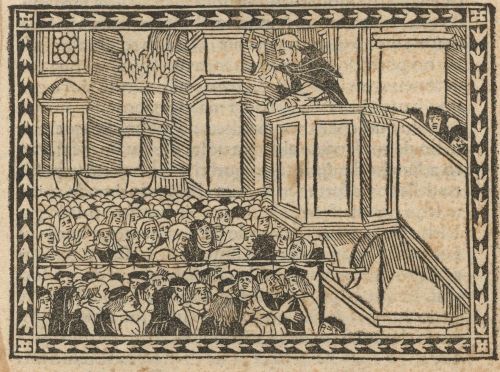
Savonarola’s authority rested first on the pulpit. Trained as a Dominican friar and steeped in scriptural exegesis, he cultivated a style of preaching that fused biblical prophecy with contemporary political commentary. Drawing heavily on the books of Revelation, Ezekiel, and other prophetic texts, he framed Florence’s turmoil within a cosmic drama of sin, chastisement, and renewal. His sermons did not merely exhort individual repentance; they narrated history itself as unfolding according to divine design. The French invasion, factional strife, and ecclesiastical corruption were interpreted as signs of imminent judgment foretold in scripture. This apocalyptic framing transformed political events into theological confirmation, granting Savonarola interpretive authority over crisis itself. He did not claim simply to comment on events but to decode them. In doing so, he positioned himself as mediator between divine intention and civic fate. Political uncertainty became legible through prophetic explanation, and that explanatory power amplified his influence. When history appears chaotic, the one who supplies meaning acquires extraordinary authority.
Central to his message was the conviction that Florence had been chosen for a special role in divine history. Savonarola proclaimed that the city could become a purified Christian republic, a “New Jerusalem” distinguished by moral discipline and civic righteousness. Such rhetoric elevated the stakes of political reform. Florence was not merely to stabilize its institutions; it was to serve as a model of spiritual regeneration for Christendom. The appeal of this vision lay in its clarity. In a moment of uncertainty, Savonarola offered not incremental adjustment but dramatic renewal. Apocalyptic expectation simplified complexity. Corruption explained misfortune. Purification promised deliverance.
Savonarola’s preaching moved beyond denunciation into mobilization. His sermons attracted large audiences, and his followers translated exhortation into organized action. Lay confraternities formed to promote devotional discipline. Citizens were encouraged to report vice and to renounce luxury. Political structures began to reflect Savonarolan influence, particularly after the expulsion of the Medici in 1494. The reorganization of the Florentine government along more participatory lines aligned with Savonarola’s rhetoric of collective moral responsibility. Although he held no formal political office, his moral authority shaped civic discourse and legislative priorities. Prophetic speech intersected with institutional transformation.
The mobilizing power of Savonarola’s rhetoric depended in part on performance. His sermons were emotionally charged, rich in imagery of fire, purification, divine wrath, and promised redemption. Contemporary accounts describe congregations moved to tears, public confessions, and visible acts of repentance. The theatricality of his delivery, the cadence of his warnings, and the vividness of his scriptural references created an atmosphere that blurred the line between worship and political assembly. His ascetic demeanor reinforced his credibility. He presented himself as uncorrupted by the luxuries he condemned, embodying the discipline he demanded. This alignment between message and persona intensified his influence. Charisma functioned as political capital. In a republic accustomed to rhetorical persuasion in public forums, Savonarola’s prophetic style proved especially potent because it framed persuasion as revelation. He did not merely argue; he proclaimed. The authority of his performance rested on the conviction that he spoke not only for himself but as an instrument of divine judgment.
Apocalyptic preaching also created boundaries. Those who embraced reform were cast as participants in divine renewal, while skeptics risked being labeled defenders of corruption. Moral language hardened into political distinction. Support for Savonarola became a marker of civic virtue; resistance could be interpreted as complicity in decadence. This dynamic did not immediately produce coercion, but it narrowed the space for neutral opposition. When spiritual urgency defines public life, dissent acquires moral weight. Apocalyptic rhetoric reorganized not only belief but belonging.
Yet Savonarola’s mobilization contained inherent tension. The same prophetic certainty that energized followers limited flexibility. Political negotiation, compromise, and incremental reform sat uneasily beside proclamations of divine mandate. As long as crisis appeared to confirm his predictions, his authority flourished. When events grew ambiguous, sustaining apocalyptic momentum proved more difficult. The mobilization of moral fervor can produce extraordinary solidarity, but it also heightens expectations that may be difficult to fulfill. In Florence, the fusion of prophecy and politics created a regime animated by conviction yet constrained by the volatility of belief.
The Bonfire of the Vanities: Symbol and Social Mechanism
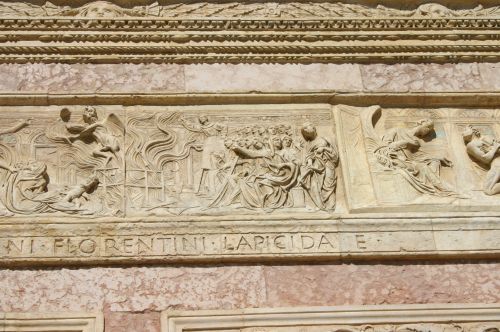
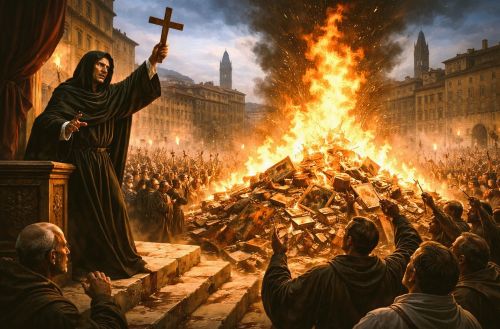
The Bonfire of the Vanities in 1497 stands as the most enduring image of Savonarola’s movement, yet it was more than an isolated spectacle of destruction. It emerged from months of preaching that equated luxury with moral decay and aesthetic indulgence with spiritual peril. Citizens were urged to renounce objects associated with pride, sensuality, and frivolity. Cosmetics, mirrors, secular paintings, playing cards, musical instruments, and even certain books were gathered and publicly consigned to flames in the Piazza della Signoria. The act was framed as purification, an outward sign of inward repentance. Fire, in Savonarola’s rhetoric, symbolized both divine judgment and cleansing renewal. The destruction of material “vanities” dramatized the rejection of corruption and the aspiration toward civic rebirth.
The organization of the event reveals its political dimension. Savonarola’s followers, including bands of boys sometimes referred to as fanciulli, played an active role in collecting items deemed sinful. These youth brigades moved through neighborhoods urging compliance and encouraging households to surrender luxury goods. While participation could be voluntary and enthusiastic, the social pressure surrounding the collections was palpable. Refusal risked suspicion. Public renunciation became a visible marker of loyalty to reform. The Bonfire functioned not only as a religious ritual but as a mechanism of communal alignment.
The spectacle itself amplified its impact. Contemporary descriptions depict a carefully constructed pyramid of objects rising high in the square, crowned with symbolic effigies. The ceremony combined prayer, song, and exhortation, transforming the piazza into a stage of moral drama. The collective act of watching goods burn reinforced solidarity among supporters. Participation was performative. Citizens demonstrated virtue not merely through private restraint but through visible renunciation. The ritual converted individual repentance into public theater, binding spiritual discipline to civic identity.
The Bonfire also operated as a redefinition of cultural authority. Florence had long prided itself on artistic patronage and aesthetic refinement. By targeting paintings, poetry, and decorative objects, Savonarola’s campaign challenged established hierarchies of taste and prestige. Humanist celebration of classical myth and courtly culture stood in tension with calls for austere devotion. The destruction of certain artworks did not represent wholesale rejection of artistic production, but it signaled a shift in evaluative criteria. Cultural value became subordinate to moral scrutiny. The reform movement asserted the right to judge which forms of expression were compatible with spiritual renewal.
Yet the symbolic purity of the Bonfire obscured underlying complexity. Not all Florentines embraced the campaign, and resistance simmered beneath the surface. Some citizens concealed prized objects; others quietly criticized the excesses of moral zeal. The event exposed fault lines within the republic. Enthusiasm coexisted with resentment. The more forcefully virtue was dramatized, the more conspicuous dissent became. Public purification heightened visibility, and visibility sharpened division.
In retrospect, the Bonfire illustrates how symbolic acts can function as instruments of social discipline. It mobilized religious devotion, reinforced group identity, and reoriented civic norms through spectacle. It revealed the precarious balance between voluntary reform and implicit coercion. Fire promised cleansing, but it also illuminated tension. The ritual’s power lay in its fusion of theology and politics, transforming repentance into a communal performance that reshaped Florence’s public life.
Reform or Coercion? The Institutionalization of Virtue
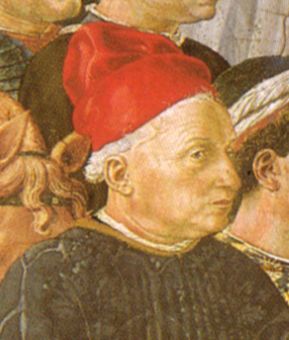
Savonarola’s influence did not remain confined to sermons and symbolic spectacles. As his authority deepened after the expulsion of the Medici, moral exhortation began to translate into civic policy. The Florentine Republic experimented with constitutional reform, including the establishment of a Great Council modeled in part on Venetian precedent, expanding participation among qualified male citizens. Savonarola supported these changes, presenting them as consonant with divine will and republican renewal. In his vision, institutional reform was not merely procedural adjustment but spiritual recalibration. Political participation would purify ambition by binding citizens to the common good under divine oversight. The republic’s legitimacy would rest not only on legal structure but on collective moral discipline. Yet the very fusion of religious authority with institutional restructuring blurred the boundary between persuasion and governance. When prophetic rhetoric informed legislative design, opposition to political arrangements could be framed as resistance to spiritual renewal. The integration of theology and constitutional experiment elevated reform beyond debate, granting it a moral urgency that reshaped civic expectations.
Legislation increasingly reflected Savonarolan priorities. Laws targeting gambling, blasphemy, sodomy, and ostentatious display signaled the moral direction of the regime. Public festivals were reshaped to emphasize devotion over spectacle. Civic life was expected to align with spiritual discipline. While many supporters embraced these measures as necessary correctives to decadence, enforcement mechanisms introduced new forms of surveillance. Denunciation became a tool of moral order. The expectation that citizens report vice transformed private conduct into public concern. Reform acquired regulatory teeth. The aspiration to cultivate virtue moved toward the administration of conformity.
The language of voluntarism often coexisted uneasily with social pressure. Savonarola insisted that genuine reform required inward transformation, not merely outward compliance. Yet the social environment he helped create made nonparticipation conspicuous. In a small republic attuned to reputation, refusal to conform carried reputational risk. Merchants, artisans, and elites alike navigated a landscape in which moral allegiance bore political significance. Support for Savonarola signaled commitment to the republic’s spiritual destiny. Distance from his program could invite suspicion of indifference or hostility to reform. The moralization of politics narrowed the space for neutral civic identity.
Savonarola did not construct a totalizing apparatus in the modern sense. Florence retained republican institutions, contested elections, and vigorous public debate. Opposition factions, sometimes labeled the Arrabbiati, criticized the friar’s influence and challenged the rigor of his reforms. The coexistence of moral legislation and political pluralism complicates any simple portrayal of the regime as monolithic. Savonarola’s authority derived from persuasion, charisma, and alignment with prevailing anxieties rather than from centralized bureaucratic control. Nevertheless, the moral tenor of governance intensified factional polarization. Disagreement over taxation, foreign policy, or constitutional procedure could quickly acquire spiritual overtones. Civic argument became intertwined with questions of fidelity to divine purpose. Even without a standing army of enforcers, the moral weight of Savonarola’s rhetoric exerted pressure on public life. The republic’s institutions endured, but their atmosphere shifted. Political competition unfolded within a climate shaped by heightened scrutiny and ethical absolutism.
The institutionalization of virtue revealed a fundamental tension. Reform movements grounded in moral absolutes aspire to elevate public life, yet their implementation risks coercive drift. In Florence, efforts to cultivate holiness intersected with mechanisms of enforcement that constrained dissent and amplified social scrutiny. The republic did not abandon its constitutional forms, but it experienced a transformation in civic expectations. Virtue became not only an ethical ideal but a measurable civic obligation. In that transformation, the line between reform and domination grew increasingly difficult to discern.
Papal Conflict and the Limits of Moral Authority
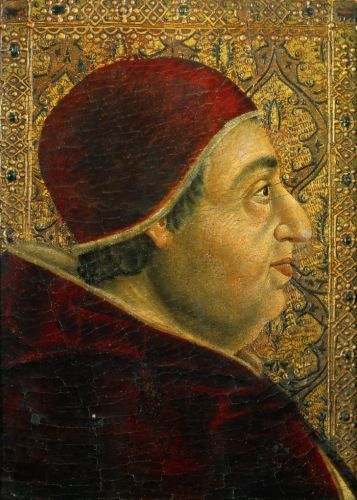
Savonarola’s denunciations increasingly extended beyond Florentine vice to the highest levels of the Church itself. Pope Alexander VI, whose pontificate was widely criticized for nepotism and political maneuvering, became a central target of Savonarola’s reformist rhetoric. The friar’s sermons condemned ecclesiastical corruption in sweeping terms, portraying a morally compromised papacy as symptomatic of broader spiritual decay. Yet attacking Rome carried profound risks. Florence’s experiment in moral republicanism existed within a larger ecclesiastical hierarchy that claimed universal authority. Savonarola’s prophetic posture collided with institutional power on a scale beyond local politics.
The conflict unfolded gradually. Alexander VI initially sought to restrain Savonarola through diplomatic pressure and ecclesiastical summons, wary of both the friar’s growing popularity and the political instability of Florence. The pope ordered Savonarola to appear in Rome to answer charges of disobedience and theological impropriety, a summons the friar resisted by citing ill health and the needs of his Florentine flock. When persuasion failed, Alexander forbade him from preaching, hoping to diminish his influence without provoking open rebellion. Savonarola responded with a complex strategy of partial compliance and rhetorical defiance. At times he suspended sermons; at others he resumed preaching, insisting that obedience to God superseded obedience to corrupt ecclesiastical superiors. He framed his stance not as schism but as fidelity to the true Church purified of moral decay. His appeals for a general Church council to address abuses further escalated tensions, implicitly challenging papal supremacy. What had begun as moral critique hardened into sustained resistance. In presenting himself as accountable to divine mandate rather than papal directive, Savonarola elevated the confrontation from administrative dispute to theological standoff.
Excommunication in 1497 marked a decisive turning point. The papal bull severed Savonarola formally from communion with the Church, undermining the spiritual legitimacy upon which his authority rested. Some Florentines remained loyal, interpreting the censure as unjust retaliation against a prophet. Others hesitated. The friar’s claim to divine favor grew more difficult to sustain when confronted with formal condemnation. Political allies within Florence calculated the costs of continued association. The moral certainty that had energized the movement now faced institutional repudiation, exposing the fragility of charisma when deprived of ecclesiastical recognition.
The papal conflict revealed the limits of prophetic politics within a hierarchical religious system. Savonarola’s authority had thrived on the perception that he articulated divine judgment more faithfully than compromised elites. Yet when Rome asserted its prerogative, the tension between individual revelation and institutional continuity became unavoidable. Florence could experiment with republican virtue, but it could not easily redefine the structure of the Church. The confrontation underscored a central paradox: movements grounded in moral absolutism often claim higher legitimacy than established authority, yet they remain vulnerable when that authority mobilizes its formal power. In Savonarola’s case, papal opposition narrowed his options and intensified internal division, setting the stage for collapse.
Collapse and Execution: The Implosion of Absolutism
Savonarola’s authority did not unravel in a single moment but eroded under mounting strain. By early 1498, Florence was fatigued by tension. Economic pressures, factional rivalries, and uncertainty in foreign policy tested the durability of reformist enthusiasm. The prophetic certainty that had once electrified the city began to feel burdensome. Apocalyptic expectation thrives in crisis, but it is difficult to sustain indefinitely. As predictions required continual confirmation, the distance between promised renewal and lived reality widened. The moral intensity that had unified supporters gradually sharpened skepticism among the undecided.
A pivotal moment came with the proposed trial by ordeal in April 1498. A Franciscan critic challenged Savonarola’s prophetic claims, and negotiations led to an agreement that divine truth would be demonstrated through a test by fire. The spectacle promised decisive vindication and seemed perfectly suited to Savonarola’s rhetoric of purification and judgment. Crowds gathered in anticipation, and the confrontation between Dominican and Franciscan representatives took on theatrical dimensions. Yet confusion over procedural details, disputes about who would carry sacred objects into the flames, and deteriorating weather conditions stalled the event. Hours passed in uncertainty. The ordeal never occurred. For many Florentines, the anticlimax proved more damaging than an unfavorable outcome might have been. The absence of miraculous confirmation undercut the aura of divine endorsement that had sustained Savonarola’s claims. Prophetic authority depends heavily on visible validation; when spectacle collapses into disorder, confidence falters. What had been framed as an opportunity for heavenly affirmation instead exposed the fragility of expectations built on dramatic proof.
Political opposition capitalized on this shift. Factions hostile to Savonarola regained momentum within civic institutions, presenting themselves as defenders of stability against religious extremism. The friar’s influence over the government, once heralded as moral guidance, became a focal point of criticism. Opponents argued that Florence’s diplomatic isolation and economic strain were consequences of uncompromising zeal. Public mood turned with surprising speed. The same piazzas that had echoed with hymns now resonated with protest. Violent unrest erupted at the convent of San Marco, Savonarola’s base of operations, as tensions escalated between supporters and adversaries. In May 1498, Savonarola and two close associates were arrested amid this turbulence. The movement that had mobilized fervent loyalty struggled to defend its leader once civic consensus fractured. Moral solidarity proved insufficient when confronted with coordinated political opposition and shifting public sentiment.
Interrogation and torture followed. Under duress, Savonarola offered statements that opponents used to question his prophetic authenticity. The spectacle of a preacher subjected to judicial procedure starkly contrasted with earlier claims of divine protection. Trials were conducted by Florentine authorities with papal involvement, reflecting the convergence of local and ecclesiastical power against him. The process exposed the limits of charismatic insulation. Moral absolutism did not shield its advocate from institutional reprisal. Instead, the mechanisms of governance reasserted themselves with severity.
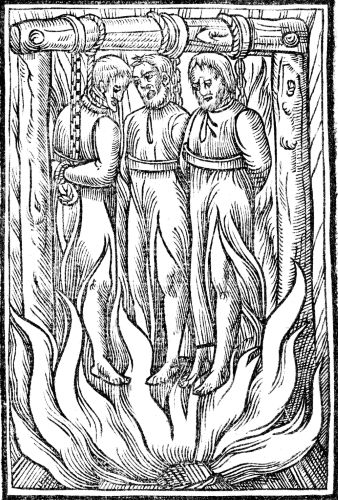
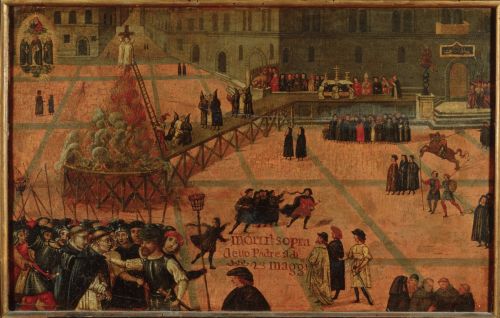
On May 23, 1498, Savonarola was hanged and his body burned in the Piazza della Signoria, the same civic space that had hosted the Bonfire of the Vanities. The symbolism was stark. Fire, once an emblem of purification, now consumed the reformer himself. The execution marked not only the end of a preacher but the collapse of a regime grounded in prophetic certainty. Supporters preserved his memory as martyrdom; critics interpreted the event as restoration of order. In either case, the dramatic reversal underscored the volatility of movements anchored in uncompromising moral vision.
The implosion of Savonarola’s authority illustrates a recurring dynamic in reformist politics. Moral absolutism can galvanize communities by offering clarity, urgency, and identity, especially in moments of perceived decay. It provides a vocabulary that simplifies complexity and assigns meaning to instability. Yet the same rigidity that energizes followers can hinder adaptation when circumstances evolve. When prophetic claims encounter ambiguity, compromise, or failure, the dissonance becomes acute. The more intensely a movement frames itself as divinely sanctioned and uniquely pure, the more devastating any setback appears. In Florence, the collapse did not extinguish desires for renewal, but it recalibrated expectations about how reform could be pursued. Savonarola’s downfall revealed that purification campaigns, however sincere, remain embedded in human institutions marked by negotiation, rivalry, and limitation. The execution signaled not simply the end of a man, but the exposure of an inherent vulnerability in movements that equate moral certainty with political inevitability.
Purity, Power, and the Paradox of Reform
Savonarola’s career in Florence reveals a persistent paradox at the heart of reform movements grounded in moral absolutism. Appeals to purity can generate extraordinary civic energy. They promise clarity in periods of confusion and offer a framework through which disorder appears intelligible. In the 1490s, many Florentines experienced political instability, foreign threat, and ecclesiastical scandal as symptoms of deeper corruption. Savonarola’s message supplied both diagnosis and remedy. Yet the very power of this framework depended on sharp moral boundaries. The clearer the distinction between purity and corruption, the more potent the call to reform. Such binary logic narrows space for ambiguity, compromise, and pluralism.
The Savonarolan movement did not begin as naked domination. It drew strength from genuine dissatisfaction with oligarchic manipulation and clerical excess. It encouraged devotional seriousness and civic participation. Its emphasis on communal responsibility resonated with republican ideals that valued active citizenship. Nevertheless, the fusion of spiritual identity with political allegiance created pressures that outlived initial enthusiasm. When virtue becomes the primary measure of civic legitimacy, disagreement risks moralization. Opponents are not merely wrong but suspect. Reform framed as moral necessity can evolve into expectation of conformity, especially when leaders present their vision as divinely authorized.
Savonarola himself embodied this tension. His ascetic life and denunciation of luxury reinforced his credibility, distinguishing him from elites he criticized. Yet his insistence on prophetic authority also concentrated interpretive power in his own person. The more forcefully he claimed insight into divine will, the more the movement’s coherence depended on acceptance of his judgment. Charisma provided cohesion but limited institutional resilience. When doubts arose, there was no stable mechanism to separate principle from personality. The fate of the reform became entangled with the fate of the reformer.
The Florentine episode illustrates how movements centered on purification can reproduce the human dynamics they condemn. Factionalism, rivalry, and ambition did not disappear under Savonarola’s regime; they reconfigured themselves within a moralized framework. Supporters competed for influence. Opponents mobilized counterarguments grounded in alternative visions of the republic. The language of virtue intensified rather than eliminated political struggle. Purity proved aspirational rather than self-sustaining. The effort to eradicate corruption confronted the persistent realities of civic life.
Savonarola’s rise and fall offer more than a cautionary tale about fanaticism. They illuminate the structural challenges facing reform movements that anchor authority in moral certainty. Purity inspires devotion because it promises transcendence of ordinary compromise. Yet political communities require negotiation, institutional continuity, and tolerance of difference. When reformers frame their project as the final defense against decay, they risk magnifying both hope and disappointment. In Florence, the aspiration to build a holy republic revealed the enduring difficulty of aligning spiritual absolutism with republican governance. The paradox remains instructive: the pursuit of moral clarity can strengthen civic commitment, but when fused too tightly with political power, it can also hasten instability.
Conclusion: Fire as Illumination and Destruction
The image of fire runs through Savonarola’s Florentine experiment with striking consistency. It illuminated sermons that warned of divine chastisement. It consumed objects deemed symbols of vanity and corruption. It ultimately destroyed the reformer himself in the same civic space that had witnessed his most dramatic assertions of moral renewal. Fire functioned as both metaphor and mechanism. It signified purification while enacting irreversible transformation. The duality captures the essence of Savonarola’s project: an effort to cleanse civic life that simultaneously destabilized the structures it sought to redeem.
Savonarola did not emerge from a vacuum, nor did he command a city devoid of agency. His influence grew from genuine anxieties about corruption, political fragility, and ecclesiastical scandal. The enthusiasm that propelled his reforms reflected more than manipulation; it expressed longing for coherence in unsettled times. Yet the language that granted clarity also imposed rigidity. When purification becomes the organizing principle of public life, complexity narrows into moral polarity. Civic disagreement risks recasting itself as spiritual deviation. The promise of renewal can drift toward exclusion.
Florence’s experience underscores the difficulty of translating apocalyptic moral vision into sustainable governance. Charismatic authority can mobilize extraordinary energy, but institutions endure through negotiation and adaptation. Savonarola’s fusion of prophecy and republicanism briefly reoriented civic identity around spiritual discipline, redefining citizenship in explicitly moral terms. Participation in the republic became intertwined with visible alignment to reform, and political debate carried heightened ethical stakes. Such intensity could inspire commitment, but it also raised expectations to levels difficult to maintain. When predictions faltered, when papal opposition intensified, and when internal divisions widened, the structure of authority built upon prophetic certainty proved fragile. The collapse revealed not merely personal failure but structural strain within a system that had bound spiritual legitimacy to political stability. Florence’s recalibration after Savonarola’s death did not erase the desire for reform, but it tempered faith in uncompromising moral governance as a durable foundation for civic order.
Fire can illuminate as well as destroy. Savonarola’s movement exposed corruption, galvanized devotion, and stimulated debate about the moral foundations of republican life. It demonstrated how the pursuit of absolute purity can intensify division and concentrate authority in precarious ways. The Bonfire of the Vanities and the execution in the Piazza della Signoria remain enduring symbols not because they represent simple triumph or tragedy, but because they capture a recurring tension in political history. Reform animated by moral certainty can clarify purpose, yet when fused too tightly with power, it risks consuming the very community it seeks to purify.
Bibliography
- Amato, J. G. “Savonarola’s Kiss: Reforming Epiphany in Renaissance Florence.” Sixteenth Century Journal 55:3-4 (2024), 789-811.
- Duffy, Eamon. Saints and Sinners: A History of the Popes. 4th ed. New Haven, CT: Yale University Press, 2014.
- Hankins, James. Virtue Politics: Soulcraft and Statecraft in Renaissance Italy. Cambridge, MA: Harvard University Press, 2019.
- Kent, F. W. Lorenzo de’ Medici and the Art of Magnificence. Baltimore: The Johns Hopkins University Press, 2007.
- Landucci, Luca. A Florentine Diary from 1450 to 1516. Translated by Alice de Rosen Jervis. London: J. M. Dent, 1927.
- Martines, Lauro. Fire in the City: Savonarola and the Struggle for the Soul of Renaissance Florence. Oxford: Oxford University Press, 2006.
- Najemy, John M. A History of Florence, 1200–1575. Malden, MA: Blackwell, 2006.
- —-. Savonarola: The Rise and Fall of a Renaissance Prophet. New Haven: Yale University Press, 2011.
- Orr, Randolph. Arrabbiati: The Memoir of Fra Giuliano Rondinelli (1473 – ca 1543), Independent Publication (2020).
- Polizzotto, Lorenzo. The Elect Nation: The Savonarolan Movement in Florence, 1494–1545. Oxford: Clarendon Press, 1994.
- Savonarola, Girolamo. Compendium of Revelations. In Selected Writings of Girolamo Savonarola, translated and edited by Anne Borelli and Maria Pastore Passaro. New Haven, CT: Yale University Press, 2006.
- Weinstein, Donald. Savonarola and Florence: Prophecy and Patriotism in the Renaissance. Princeton, NJ: Princeton University Press, 1970.
Originally published by Brewminate, 03.06.2026, under the terms of a Creative Commons Attribution-NonCommercial-NoDerivatives 4.0 International license.
About the Author