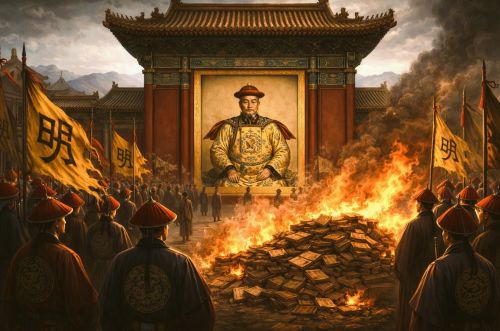
After conquering China, the Qing dynasty sought to control how the fallen Ming dynasty would be remembered, shaping historical writing to reinforce its own legitimacy.

By Matthew A. McIntosh
Public Historian
Brewminate
Introduction: Power, Memory, and the Politics of Historical Narrative
Throughout history, political regimes have recognized that authority does not rest solely on military conquest or administrative control. Legitimacy also depends upon the ability to shape how the past is remembered. Historical interpretation can frame political transitions as rightful restorations of order or as illegitimate seizures of power. For this reason, governments have often sought to influence the production of historical knowledge, supervising official histories while discouraging interpretations that challenge the ruling order. In imperial China, where historical writing held a central place within the intellectual and political traditions of the state, the relationship between power and historical memory assumed particular significance.
The transition from the Ming dynasty to the Qing dynasty in the seventeenth century presented precisely such a challenge. The Ming state collapsed in 1644 after a combination of fiscal crisis, military weakness, and internal rebellion destabilized the imperial government. The capture of Beijing by the rebel leader Li Zicheng marked the formal end of Ming rule in the capital, creating a moment of profound political uncertainty across the empire. Shortly thereafter, Manchu forces from beyond the Great Wall entered Beijing with the assistance of the Ming general Wu Sangui and established control over the imperial center. This intervention allowed the Manchu leadership to proclaim the founding of the Qing dynasty and begin the gradual consolidation of authority over territories formerly governed by the Ming. Yet the transition was far from immediate or uncontested. Throughout the following decades, remnants of Ming loyalist resistance persisted in southern China, while local elites and scholar-officials debated the legitimacy of the new regime. For many within the Confucian political tradition, the question of whether the Qing possessed the Mandate of Heaven remained open and deeply controversial. Conquest alone could not fully secure the loyalty of the empire’s predominantly Han Chinese population. The Qing rulers faced the delicate task of establishing political.
One of the most effective tools available to the Qing court was the supervision of historical writing itself. In the Chinese historiographical tradition, it was customary for a succeeding dynasty to compile the official history of its predecessor. These dynastic histories were not merely scholarly undertakings but authoritative records that shaped how later generations understood the past. By overseeing the compilation of the History of Ming (Ming Shi) and regulating alternative historical accounts, the Qing government sought to guide the narrative of the Ming collapse and Qing succession. Through editorial oversight, censorship, and the discouragement of dissenting interpretations, the state attempted to ensure that the fall of the Ming would be remembered as the natural transfer of the Mandate of Heaven rather than the triumph of foreign conquest.
The politics of historical narrative became a critical dimension of early Qing statecraft. By influencing how scholars wrote about the Ming dynasty and the transition of power in the seventeenth century, the Qing court attempted to stabilize its own legitimacy within the intellectual traditions of Chinese historical scholarship. The relationship between power and historiography during the early Qing period demonstrates that the supervision and suppression of historical narratives functioned as a deliberate strategy of governance. In doing so, it highlights how control over the interpretation of the past could serve as a powerful instrument for securing authority in the present.
Dynastic Collapse and Conquest: The Fall of the Ming and the Rise of the Qing

The collapse of the Ming dynasty in the mid-seventeenth century was the result of multiple structural pressures that gradually weakened the stability of the Ming state. By the early seventeenth century, the Ming government faced mounting fiscal difficulties driven by military expenditures, administrative inefficiencies, and disruptions in global silver flows that had long supported the empire’s monetary system. The state struggled to maintain its defenses along the northern frontier while also addressing internal unrest. These strains placed increasing pressure on local officials and rural populations, many of whom experienced heavy taxation and economic instability. As central authority weakened, the ability of the Ming court to maintain order across its vast territories deteriorated.
Environmental stress further compounded the crisis. A series of droughts, floods, and crop failures affected large regions of northern China during the late Ming period, creating conditions that fueled widespread famine and displacement. Climatic instability associated with the broader environmental fluctuations of the seventeenth century placed severe strain on agricultural production, particularly in the northern provinces that had long served as important grain-producing regions. Local communities already burdened by taxation and military requisitions found it increasingly difficult to sustain livelihoods under these conditions. In many areas, peasants abandoned their land, migrated in search of resources, or joined armed groups that promised relief from imperial obligations. Corruption and institutional breakdown within local government weakened the state’s capacity to respond effectively to these crises. Officials often lacked the resources or authority to provide famine relief or restore order, further undermining confidence in the imperial administration. Facing economic collapse and declining political legitimacy, local grievances frequently escalated into organized resistance against imperial authority. Bandit groups and rebel movements began to appear in several provinces, drawing support from populations suffering under financial hardship and administrative corruption. Among these movements, the forces led by Li Zicheng emerged as the most formidable challenge to Ming rule. His army expanded rapidly as it advanced across northern China, attracting followers from both rural communities and disaffected soldiers.
In 1644, Li Zicheng’s forces entered Beijing, effectively ending the political authority of the Ming dynasty at the imperial capital. The Chongzhen Emperor, faced with the collapse of the city’s defenses and the absence of reliable military support, took his own life as rebel troops approached the Forbidden City. Although Li Zicheng briefly proclaimed the establishment of a new regime, his control over the former Ming territories proved fragile. The political vacuum created by the fall of the capital opened the door for intervention by the Manchus, a rising power based beyond the northeastern frontier.
The Manchu state had been consolidating its strength for decades under the leadership of Nurhaci and his successor Hong Taiji. Through military reforms and the organization of society into the banner system, the Manchus developed a highly disciplined political and military structure capable of challenging Ming authority. Nurhaci had gradually unified various Jurchen groups in the northeast during the late sixteenth and early seventeenth centuries, building a centralized leadership that combined military organization with administrative governance. His creation of the Eight Banner system provided the institutional foundation for both military mobilization and social organization within the emerging Manchu state. Under Hong Taiji, this system expanded further, incorporating both Manchu and non-Manchu populations and transforming the movement into a more sophisticated imperial structure. Hong Taiji also adopted elements of Chinese political tradition, including bureaucratic practices and imperial titles, in order to strengthen the legitimacy of his regime. When the Ming general Wu Sangui sought assistance against Li Zicheng’s rebel army, Manchu forces were granted passage through the Great Wall. Together they defeated the rebel forces and secured Beijing, allowing the Manchu leadership to claim the imperial capital and proclaim the Qing dynasty.
Despite the capture of Beijing, the establishment of Qing rule over China was neither immediate nor uncontested. Loyalist regimes claiming allegiance to the fallen Ming dynasty continued to resist the new order in southern China for nearly two decades. These Southern Ming courts attempted to preserve the legitimacy of the previous dynasty while mobilizing military resistance against the Manchu conquest. Although ultimately unsuccessful, their existence prolonged the political and ideological struggle surrounding the Ming–Qing transition and complicated the effort of the Qing court to portray its rule as a legitimate continuation of imperial governance.
The fall of the Ming and the rise of the Qing represented more than a simple change of rulers. It marked a profound moment of dynastic transition in which questions of legitimacy, loyalty, and historical interpretation became deeply contested. For the new Qing rulers, establishing control over territory was only one aspect of securing imperial authority. Equally important was the task of shaping how the collapse of the Ming and the emergence of Qing rule would be remembered within the intellectual and historical traditions of the Chinese state.
Official History as Statecraft: The Qing Supervision of the History of Ming
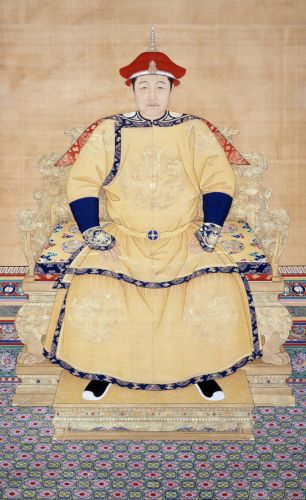
Within the Chinese imperial tradition, the writing of official history was not merely an academic exercise but an essential function of statecraft. Dynastic histories served as authoritative records that preserved the political, administrative, and moral evaluations of previous regimes. According to long-standing historiographical practice, the ruling dynasty was responsible for compiling the official history of the dynasty it had replaced. This convention reinforced the idea that legitimate rulers possessed both the authority and the obligation to interpret the past. When the Qing dynasty consolidated its rule over China in the seventeenth century, the supervision of historical writing became a significant tool through which the new regime could shape the narrative of the Ming collapse and its own emergence as the rightful holder of imperial authority.
The compilation of the History of Ming (Ming Shi) was undertaken with careful attention from the Qing court. The project began during the reign of the Shunzhi Emperor and continued under the Kangxi Emperor, drawing upon teams of scholars who were tasked with gathering documents, court records, and earlier historical materials from the Ming period. As with previous dynastic histories, the work was organized according to established historiographical categories, including annals of emperors, biographies of officials, institutional records, and treatises on key aspects of governance. The structure followed precedents established in earlier dynastic histories such as the History of Yuan, ensuring continuity with the broader tradition of Chinese historical scholarship.
Yet the process was not entirely neutral. The Qing court recognized that the interpretation of the Ming dynasty’s decline could influence how Qing authority would be perceived. By supervising the editorial process, imperial authorities could guide the narrative toward explanations that emphasized internal weakness, corruption, and administrative breakdown within the late Ming state. Such interpretations supported the broader ideological claim that the Ming had lost the Mandate of Heaven through misrule, thereby justifying the rise of the Qing as a restoration of order. This interpretive framework aligned with a long-standing political philosophy in Chinese thought, which held that dynasties rose and fell according to their moral conduct and ability to govern effectively. By highlighting episodes of factional conflict, fiscal instability, and ineffective leadership in the final decades of the Ming, the official history could present the dynasty’s collapse as the predictable outcome of systemic failure rather than the result of external conquest alone. In doing so, the narrative subtly redirected attention away from the foreign origins of the Manchu rulers and toward the moral deficiencies of the fallen dynasty. Through this framing, the transition between dynasties could be presented not as a foreign conquest but as a morally sanctioned transfer of authority.
The editorial process also required careful negotiation with the scholarly elite responsible for producing the historical text. Many literati who participated in the compilation of the Ming Shi were themselves descendants of Ming officials or individuals whose intellectual formation had taken place within the Ming political order. Their participation reflected both the Qing court’s reliance on established scholarly traditions and the complex relationship between conquered elites and the new regime. By incorporating these scholars into the process of writing official history, the Qing government both utilized their expertise and encouraged their integration into the intellectual life of the dynasty.
The authority of the imperial court remained central to determining the boundaries of acceptable interpretation. The sponsorship of the History of Ming allowed the Qing state to establish a narrative of the past that carried the weight of official recognition. Alternative accounts that portrayed the Ming collapse differently, particularly those emphasizing loyalty to the fallen dynasty or resistance to Qing rule, could be marginalized or discouraged. In some cases, scholars who expressed strong sympathies for Ming loyalist narratives faced scrutiny or pressure to align their work with the ideological expectations of the new regime. The authority of the official history extended beyond the text itself, influencing the broader intellectual climate in which historical scholarship was produced. By establishing a sanctioned interpretation of the Ming period, the Qing court could indirectly regulate the boundaries of acceptable historical discourse. This dynamic illustrates how the production of official histories could serve as a subtle yet powerful instrument for guiding scholarly interpretation and reinforcing political legitimacy.
The supervision of the History of Ming illustrates how historiography could operate as a political instrument within imperial governance. By directing the production of authoritative historical texts, the Qing court participated actively in shaping how the recent past would be understood within Chinese intellectual culture. The official history served both as a record of the Ming dynasty and as a carefully constructed interpretation that reinforced the legitimacy of Qing rule. Through this process, the writing of history became inseparable from the exercise of imperial power.
The “Draft History of the Ming”: Alternative Narratives and Political Risk
While the Qing court supervised the compilation of the official History of Ming, alternative accounts of the fallen dynasty continued to circulate among scholars and former officials who had lived through the collapse of the Ming state. These writings included private chronicles, draft histories, and biographical collections that recorded the perspectives of individuals who had remained loyal to the previous dynasty or who viewed the Manchu conquest with suspicion. Many of these authors belonged to the literati class whose careers and identities had been shaped by service to the Ming government. For them, the collapse of the dynasty represented not only a political transformation but also a profound moral and cultural rupture. Writing about the final years of the Ming became a means of preserving memory and articulating explanations of events that differed from those endorsed by the new regime. Such works did not necessarily constitute organized political resistance, yet they preserved interpretations of the Ming–Qing transition that diverged from the narrative promoted by the Qing court. In particular, they often emphasized the moral legitimacy of Ming loyalists who continued to resist the new regime, portraying their actions as expressions of Confucian duty rather than futile opposition. Through biographies, personal reflections, and historical commentary, these texts preserved alternative perspectives on the fall of the dynasty and the responsibilities of officials during moments of political crisis.
Among the most sensitive of these materials were texts sometimes referred to collectively as draft histories of the Ming, unofficial compilations that attempted to record the final decades of the dynasty from the viewpoint of those who had experienced the political turmoil of the seventeenth century. Because these works were produced outside direct imperial supervision, they could include accounts that framed the Ming collapse differently from the official narrative. Some writers portrayed the Manchu conquest as a disruption of legitimate dynastic continuity rather than the restoration of moral order described in Qing-sponsored historiography. In doing so, these texts maintained memories of resistance movements and regional courts that claimed to uphold the authority of the fallen Ming dynasty.
The circulation of such writings carried potential political consequences. Within the Confucian intellectual tradition, historical interpretation was closely connected to moral judgment, and narratives about the past could implicitly comment on the legitimacy of the present. A text that praised Ming loyalists who had resisted Qing authority could be interpreted as an indirect criticism of the ruling dynasty. For this reason, the Qing state regarded certain historical writings not merely as scholarly interpretations but as possible expressions of political dissent. Authors associated with works that openly questioned Qing legitimacy sometimes faced official investigation, and the circulation of such texts could attract scrutiny from local authorities responsible for maintaining ideological stability.
This atmosphere of caution influenced the way scholars approached the writing of history during the early Qing period. Many literati sought to navigate the delicate balance between preserving historical memory and avoiding accusations of political disloyalty. For scholars who had once served the Ming government or who maintained personal ties with loyalist communities, the act of recording recent history carried significant emotional and moral weight. Openly criticizing the new dynasty could expose writers and their families to serious consequences. As a result, historians often adopted indirect literary strategies that allowed them to express sympathy for Ming loyalists while avoiding explicit condemnation of Qing authority. Some works emphasized the personal virtue, loyalty, and sacrifice of individuals who had resisted the conquest, allowing readers to draw their own conclusions about the moral meaning of these actions. Others circulated manuscripts privately among trusted networks of scholars rather than seeking broader publication. These strategies reflected the intellectual constraints imposed by the political environment of the early Qing period, in which the writing of recent history required careful negotiation between personal conviction and political caution.
The presence of alternative historical narratives illustrates the limits of official historiography as a tool of political control. Although the Qing court could supervise the production of the History of Ming, it could not completely eliminate competing interpretations of the past circulating within private scholarly communities. Nevertheless, by discouraging or restricting narratives that openly challenged the legitimacy of Qing rule, the state attempted to shape the broader intellectual climate in which history was written. The tension between official histories and unofficial accounts reveals how the writing of the past could become a site of political negotiation during periods of dynastic change.
Historiography and Censorship: Regulating the Writing of the Past
The early Qing dynasty recognized that the writing of history carried significant political implications, particularly during a period when the legitimacy of the new regime remained sensitive. As a result, the state developed mechanisms that allowed it to influence the intellectual environment in which historical scholarship was produced. While the compilation of official dynastic histories represented one avenue of narrative control, the regulation of scholarship more broadly formed an equally important component of Qing political strategy. By monitoring the circulation of texts and shaping the acceptable boundaries of historical interpretation, the imperial court sought to ensure that accounts of the Ming–Qing transition did not undermine the authority of the ruling dynasty.
This concern was reflected in the broader system of literary oversight that characterized Qing intellectual governance. The imperial state maintained the authority to examine manuscripts, investigate writings that appeared politically sensitive, and discipline scholars whose work challenged official orthodoxy. Historical narratives that portrayed the fall of the Ming in ways that cast doubt on the legitimacy of the Qing dynasty could attract official scrutiny. Such attention was not limited to overtly political treatises. Even works of biography, local history, or personal memoir could raise concerns if they appeared to praise Ming loyalists or present the Manchu conquest in unfavorable terms.
The potential consequences of such scrutiny encouraged caution among scholars engaged in writing history. Literati who wished to preserve memories of the Ming dynasty often had to navigate an intellectual landscape shaped by political sensitivity. Some historians limited their discussion of recent events, while others framed their narratives in ways that avoided direct criticism of the Qing court. In certain cases, authors relied upon subtle forms of expression, emphasizing moral virtues such as loyalty, integrity, and sacrifice without explicitly condemning the ruling regime. These strategies allowed scholars to preserve elements of historical memory while reducing the risk of attracting official attention.
The Qing state’s concern with textual control eventually became most visible in the phenomenon known as the literary inquisition (wenzi yu), in which writings judged to contain politically subversive meanings could lead to investigation or punishment. Although such cases varied in severity, they reflected the broader principle that textual production could be interpreted as an expression of political loyalty or dissent. Historical writing proved particularly sensitive because it addressed the recent past, a subject closely tied to questions of dynastic legitimacy. Authorities often examined texts for phrases, metaphors, or historical comparisons that could be interpreted as criticism of the ruling house or as praise for resistance to Manchu authority. In some instances, passages that seemed ambiguous or symbolic were treated as evidence of disloyal intent, demonstrating how the interpretation of texts could become intertwined with political suspicion. These investigations served not only to punish individuals but also to signal the boundaries of acceptable discourse within the scholarly community. By publicizing cases in which authors were censured or disciplined, the Qing state reinforced the message that historical interpretation was not politically neutral. The literary inquisition functioned both as a method of enforcement and as a warning mechanism designed to shape scholarly behavior across the empire.
The Qing dynasty did not seek to eliminate historical scholarship altogether. On the contrary, the imperial court actively sponsored major intellectual projects that reinforced the state’s role as patron of learning. Scholarly initiatives such as large-scale compilation projects and the preservation of classical texts demonstrated the dynasty’s commitment to cultural stewardship. By presenting itself as a guardian of Chinese intellectual traditions, the Qing state could strengthen its legitimacy while also influencing the intellectual framework within which scholars interpreted history.
These policies reveal the complex relationship between scholarship and authority in early Qing China. The regulation of historical writing was not simply a matter of suppressing dissent but part of a broader strategy aimed at guiding intellectual discourse. By supervising official histories, discouraging politically controversial interpretations, and supporting scholarly institutions aligned with imperial priorities, the Qing court sought to ensure that the writing of the past would reinforce rather than challenge the political order of the present.
Historical Narrative as Political Legitimacy
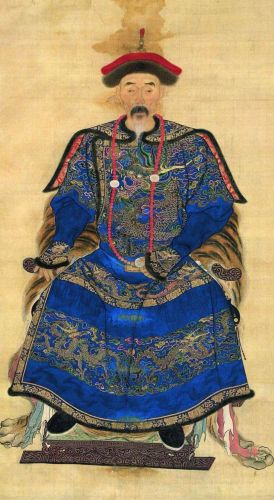
In the political culture of imperial China, historical interpretation was closely tied to questions of moral authority and dynastic legitimacy. The Confucian historiographical tradition viewed history not simply as a record of past events but as a moral framework through which the rise and fall of dynasties could be understood. Historians evaluated rulers according to their adherence to principles of ethical governance, administrative competence, and concern for the welfare of the population. Within this intellectual tradition, the concept of the Mandate of Heaven served as the central explanation for dynastic change. A ruling house that governed justly was believed to retain the mandate, while corruption, disorder, and social suffering signaled that Heaven had withdrawn its support. By shaping historical narratives about the late Ming period, the Qing dynasty could position its own rise within this established moral framework.
The portrayal of the Ming dynasty’s final decades played a crucial role in the political narrative promoted by Qing historians. Official accounts frequently emphasized the internal problems that had weakened the late Ming state, including factional conflict among officials, fiscal instability, administrative corruption, and the inability of the court to respond effectively to social crises. These interpretations presented the collapse of the dynasty as the cumulative result of systemic failure rather than the sudden consequence of external invasion. Chroniclers highlighted political struggles within the imperial bureaucracy, disputes between competing factions at court, and the growing disconnect between central authority and local administration. Economic strain further complicated governance, as declining revenues and the disruption of silver-based taxation undermined the fiscal foundations of the state. In addition, natural disasters and peasant uprisings revealed the weakening capacity of the Ming government to maintain order and provide relief during periods of hardship. By presenting these developments as symptoms of deep structural decay, Qing-sponsored historiography reinforced the argument that the Ming dynasty had lost the Mandate of Heaven through misrule. Within this interpretive structure, the emergence of Qing authority could be presented not as an opportunistic conquest but as the restoration of political stability following the moral and administrative failures of the previous regime.
The Qing court sought to integrate its rule into the broader intellectual and cultural traditions of the Chinese imperial state. The Manchu rulers recognized that their legitimacy depended in part on their ability to present themselves as custodians of Confucian political values. Through patronage of scholarship, participation in classical learning, and sponsorship of historical compilation, the Qing emperors cultivated the image of rulers committed to preserving the intellectual heritage of China. By aligning their authority with the moral language of Confucian governance, they attempted to transform the perception of the dynasty from that of foreign conquerors to rightful participants in the established order of Chinese imperial rule.
Historical narrative also served a longer-term political purpose by shaping how subsequent generations would interpret the Ming–Qing transition. Official histories circulated widely among scholars preparing for the civil service examinations and among literati engaged in the study of classical texts and historical precedent. As a result, the interpretations embedded within these works became part of the intellectual tradition through which educated elites understood political authority and dynastic change. By influencing the content of these narratives, the Qing state helped ensure that its own rise would be understood within a moral and historical framework favorable to the dynasty.
The use of historiography as a mechanism of legitimacy demonstrates how control over historical interpretation could extend the reach of political authority beyond the immediate moment of conquest. By shaping the narrative of the Ming collapse and presenting the Qing dynasty as the rightful successor to imperial rule, the court sought to stabilize its position within the broader moral universe of Confucian political thought. In this way, historical writing functioned not merely as a record of the past but as a strategic instrument through which the legitimacy of the present could be affirmed.
Legacy: Memory, Authority, and the Writing of Chinese History
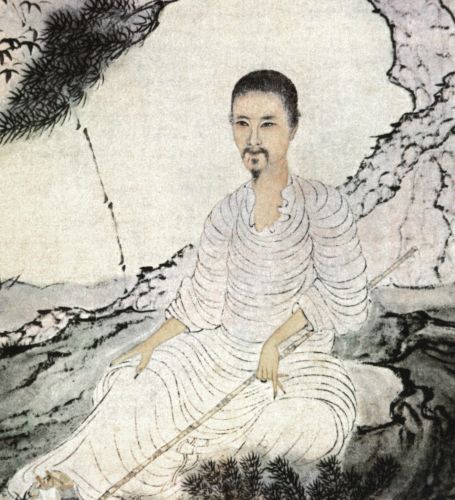
The Qing dynasty’s supervision of historical writing left a lasting imprint on the intellectual traditions of Chinese historiography. By directing the compilation of the History of Ming and regulating the circulation of alternative narratives, the Qing court helped shape the framework through which the late Ming period would be interpreted for generations. Official dynastic histories carried exceptional authority within the Chinese scholarly tradition. They were consulted by historians, officials, and scholars seeking to understand political precedents and moral lessons from earlier periods. As a result, the narrative structure established in the Ming Shi influenced not only the remembered image of the Ming dynasty but also the broader understanding of dynastic transition within Chinese political thought.
The influence of Qing historiographical policies extended beyond the immediate question of the Ming–Qing transition. By reinforcing the convention that the ruling dynasty possessed the authority to compile and interpret the history of its predecessor, the Qing state strengthened the institutional relationship between political power and historical scholarship. The process of producing official histories demonstrated how the state could shape intellectual discourse while simultaneously presenting itself as the guardian of cultural and scholarly traditions. This dynamic allowed the Qing dynasty to position itself within the long continuum of Chinese imperial governance, reinforcing the idea that its rule represented continuity rather than rupture.
The official narrative of the Ming dynasty’s decline became deeply embedded within historical scholarship. Later historians who examined the late Ming period often relied upon the interpretations preserved in Qing-sponsored texts, even when they attempted to reevaluate the political and social conditions that contributed to the dynasty’s collapse. The authority of the official history ensured that the Ming–Qing transition was frequently interpreted through the framework established by Qing historiography, in which the fall of the Ming appeared as the consequence of internal deterioration rather than external conquest alone. In this way, the political concerns of the early Qing state continued to shape the historiographical tradition long after the immediate struggles for legitimacy had passed.
The legacy of this relationship between political authority and historical writing illustrates the enduring influence of narrative control within the practice of history itself. The Qing dynasty’s efforts to regulate how the Ming past was recorded reveal how governments have often recognized the strategic value of shaping historical memory. By guiding the production of official histories while discouraging alternative interpretations, the Qing court attempted to ensure that the story of dynastic succession would reinforce rather than undermine its legitimacy. The resulting historiographical tradition demonstrates how the writing of history can serve not only as an intellectual pursuit but also as a powerful instrument of political authority.
Conclusion: Controlling the Past to Govern the Present
The early Qing dynasty confronted a political challenge that extended beyond military conquest and administrative consolidation. The transition from Ming to Qing rule raised fundamental questions about legitimacy within a political culture that placed great importance on moral authority and historical precedent. The interpretation of the recent past became inseparable from the stability of the new regime. By shaping how the fall of the Ming dynasty and the rise of Qing authority were recorded and interpreted, the Qing court sought to embed its rule within the established intellectual framework of Chinese dynastic history.
The supervision of the History of Ming, the regulation of alternative historical narratives, and the broader oversight of scholarly writing illustrate how historiography could function as a deliberate instrument of governance. Through official histories, the Qing state promoted interpretations that emphasized the internal weaknesses of the late Ming government while presenting the Qing dynasty as the rightful successor to imperial authority. The discouragement of alternative narratives that praised Ming loyalism or questioned Manchu legitimacy helped narrow the range of interpretations that could circulate openly within the scholarly community.
These efforts demonstrate the political significance of historical narrative within the Chinese imperial tradition. Historical writing was not merely a retrospective account of events but a medium through which moral judgments about rulers and dynasties were articulated. Within the Confucian historiographical framework, the evaluation of a dynasty’s conduct served as a guide for understanding the proper exercise of political authority. Historians assessed the virtues and failures of rulers in order to illustrate broader principles of governance, morality, and responsibility. By influencing how historians interpreted the Ming collapse, the Qing court sought to shape the moral conclusions that readers would draw about the legitimacy of the new dynasty. Official narratives that emphasized corruption, factional conflict, and administrative decline within the late Ming state reinforced the argument that Heaven had withdrawn its mandate from the previous ruling house. In this way, historiography became a mechanism through which the moral logic of dynastic succession could be aligned with the political interests of the ruling regime. Historical explanation functioned not simply as analysis of earlier events but as an implicit justification of contemporary authority.
The Qing experience illustrates a broader historical pattern in which governments seek to guide the interpretation of the past in order to stabilize the present. By supervising the production of official histories and discouraging interpretations that threatened its legitimacy, the Qing court attempted to ensure that the account of dynastic change would reinforce the authority of the ruling house. The writing of history became an arena in which questions of memory, legitimacy, and power were negotiated, demonstrating that control over the past can serve as a powerful means of governing the present.
Bibliography
Affiliate disclosure: Amazon links on this site are paid links. As an Amazon Associate I earn from qualifying purchases.
- Brook, Timothy. The Troubled Empire: China in the Yuan and Ming Dynasties. Cambridge, MA: Belknap Press of Harvard University Press, 2010.
- Crossley, Pamela Kyle. A Translucent Mirror: History and Identity in Qing Imperial Ideology. Berkeley: University of California Press, 1999.
- Ditmanson, Peter. “Imperial History and Broadening Historical Consciousness in Late Ming China.” Ming Studies 71 (2015), 23-40.
- Elliott, Mark C. The Manchu Way: The Eight Banners and Ethnic Identity in Late Imperial China. Stanford: Stanford University Press, 2001.
- Elman, Benjamin A. Classicism, Politics, and Kinship: The Ch’ang-chou School of New Text Confucianism in Late Imperial China. Berkeley: University of California Press, 1990.
- —-. On Their Own Terms: Science in China, 1550–1900. Cambridge, MA: Harvard University Press, 2005.
- Guy, R. Kent. The Emperor’s Four Treasuries: Scholars and the State in the Late Ch’ien-lung Era. Cambridge, MA: Harvard University Press, 1987.
- Hucker, Charles O. China’s Imperial Past: An Introduction to Chinese History and Culture. Stanford: Stanford University Press, 1975.
- Rowe, William T. China’s Last Empire: The Great Qing. Cambridge, MA: Harvard University Press, 2009.
- Spence, Jonathan D. The Search for Modern China. New York: W. W. Norton, 1990.
- Struve, Lynn A. The Southern Ming, 1644–1662. New Haven: Yale University Press, 1984.
- Wakeman, Frederic Jr. The Great Enterprise: The Manchu Reconstruction of Imperial Order in Seventeenth-Century China. Berkeley: University of California Press, 1985.
- Yin, Shoufu. “The Early Qing Compilation of the Ming History in Manchu: The Contexts, Contents, and Significance of the Ming gurun i suduri.” T’oung Pao: International Journal of Chinese Studies 109:5-6 (2023), 624-667.
Originally published by Brewminate, 03.10.2026, under the terms of a Creative Commons Attribution-NonCommercial-NoDerivatives 4.0 International license.
About the Author