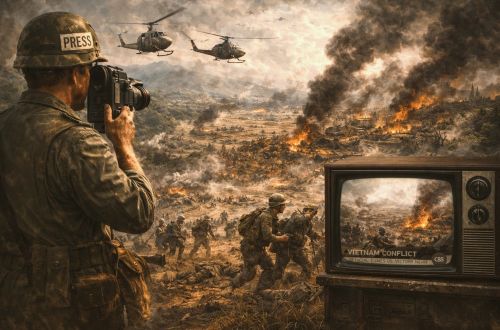
During the Vietnam War, official claims of progress increasingly clashed with battlefield realities, producing a widening credibility gap that eroded public trust.

By Matthew A. McIntosh
Public Historian
Brewminate
Introduction: War, Narrative, and Public Trust
The Vietnam War was not only a military conflict but also a struggle over narrative, interpretation, and public trust. From the early years of American involvement, government officials presented the war as a necessary effort to contain the spread of communism and protect political stability in Southeast Asia. Public statements by political leaders and military commanders often emphasized progress, suggesting that American intervention was gradually weakening the communist insurgency in South Vietnam. These assurances shaped how the conflict was understood by the American public during its early stages, framing the war as a manageable campaign that could eventually produce a favorable outcome.
As the conflict expanded during the 1960s, however, tensions began to emerge between official descriptions of the war and the realities reported from the battlefield. Military briefings frequently emphasized positive indicators such as enemy casualties, territory secured, or operations conducted successfully. Journalists and analysts increasingly reported evidence that suggested the war was far more complex and uncertain than official statements implied. The growing difference between government claims and observable developments created an atmosphere in which public confidence in official explanations began to weaken.
By the late 1960s, journalists and commentators had begun to describe this widening divide as the “credibility gap.” The phrase referred to the perceived distance between what government officials said about the progress of the war and what journalists, soldiers, and civilians believed they were witnessing. Events such as the Tet Offensive of 1968 intensified this perception by contradicting earlier assurances that the enemy was nearing defeat. Although the offensive ultimately failed to achieve its military objectives, it demonstrated the resilience and organizational capacity of North Vietnamese and Viet Cong forces, challenging the narrative that victory was imminent. Television coverage of the fighting brought images of the war directly into American homes, making it more difficult for official statements to control the public understanding of events. As reports from journalists, soldiers, and returning veterans circulated more widely, the gap between official optimism and public perception became increasingly difficult for political leaders to manage.
Understanding the Vietnam War requires attention not only to military operations but also to the political and informational environment in which the war was fought. Governments must sustain public support for prolonged conflicts, and this often involves presenting narratives that emphasize progress and the possibility of success. When events undermine these narratives, the consequences can extend beyond the battlefield, affecting political legitimacy and public trust in leadership. The Vietnam War provides one of the most prominent modern examples of how the relationship between official narratives and wartime realities can shape both the conduct of a conflict and the public’s understanding of it.
Cold War Strategy and the Origins of U.S. Commitment
American involvement in Vietnam emerged from the broader strategic framework of the Cold War. After the Second World War, U.S. policymakers increasingly interpreted regional conflicts through the lens of global competition with the Soviet Union and the spread of communist ideology. Southeast Asia came to be viewed as a region of strategic importance, not only because of its geographic location but also because American leaders believed political developments there could influence the stability of neighboring states. Within this context, Vietnam was gradually incorporated into a larger strategic narrative about containing communism and maintaining American credibility among allies.
The origins of the conflict in Vietnam predated large-scale American involvement. Following the collapse of Japanese rule in 1945, Vietnamese nationalist forces led by Ho Chi Minh sought independence from French colonial control. France attempted to reassert authority over its former colony, leading to the First Indochina War between French forces and the communist-led Viet Minh. During this period, American policymakers increasingly supported the French effort, providing financial and logistical assistance as part of a broader strategy to resist communist expansion. Although the United States did not initially deploy its own combat forces, its growing support for France reflected the increasing importance of Vietnam within Cold War strategy.
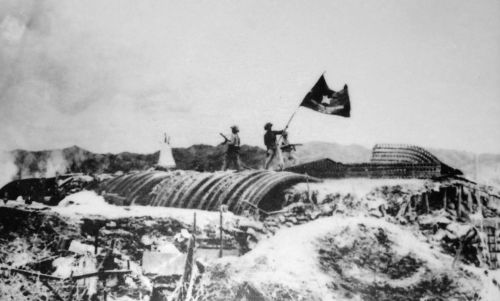
The defeat of French forces at the Battle of Dien Bien Phu in 1954 fundamentally altered the political landscape of Vietnam. The subsequent Geneva Accords temporarily divided the country along the seventeenth parallel, creating a communist government in the north and a non-communist state in the south. The agreements called for national elections that were intended to reunify the country, but these elections were never held. Instead, the division of Vietnam became a focal point of Cold War rivalry, with the United States supporting the government of South Vietnam as part of its effort to prevent communist expansion in the region. American policymakers feared that a unified communist Vietnam could strengthen revolutionary movements across Southeast Asia and weaken Western influence in the region. As a result, the division of Vietnam became more than a temporary political arrangement; it evolved into a central issue in the strategic competition between communist and non-communist powers.
American leaders increasingly justified their involvement through the concept known as the domino theory. According to this idea, the fall of one country to communism could trigger a chain reaction that would lead neighboring states to follow the same path. Policymakers feared that the collapse of South Vietnam might destabilize other countries in Southeast Asia, including Laos, Cambodia, and Thailand. Although historians have debated the extent to which this theory accurately reflected regional political dynamics, it played an influential role in shaping American strategic thinking during the 1950s and early 1960s.
By the early 1960s, the United States had expanded its presence in South Vietnam through military advisors, economic assistance, and political support for the South Vietnamese government. American officials believed that strengthening the South Vietnamese state could prevent the spread of communist influence without requiring direct large-scale military intervention. This strategy relied on training South Vietnamese forces and supporting counterinsurgency operations against the growing Viet Cong insurgency in the countryside. American policymakers attempted to promote political stability within South Vietnam, which was often undermined by internal divisions, corruption, and recurring leadership crises. These political weaknesses complicated efforts to build a durable anti-communist government capable of sustaining long-term resistance.
These developments gradually drew the United States deeper into the conflict. What had begun as limited support for an ally increasingly evolved into a broader commitment to defending South Vietnam. The strategic assumptions that guided early American policy suggested that firm support and controlled escalation could stabilize the situation without leading to a major war. Yet the complexity of the conflict, combined with the internal political challenges faced by the South Vietnamese government, made the situation far more difficult than policymakers initially anticipated.
Escalation and the Promise of Progress

By the mid-1960s, the United States had moved beyond limited advisory involvement and committed itself to large-scale military engagement in Vietnam. Following the Gulf of Tonkin incident in 1964, the administration of President Lyndon B. Johnson received congressional authorization to expand American military operations. U.S. forces were deployed in increasing numbers, and the conflict shifted from a primarily advisory role to a direct combat commitment. American leaders believed that a combination of military pressure and sustained political support for South Vietnam could weaken communist forces and stabilize the region.
Central to this strategy was the assumption that the application of overwhelming military power would eventually force North Vietnam to reduce its support for the insurgency in the south. The United States initiated a sustained bombing campaign known as Operation Rolling Thunder in 1965, targeting infrastructure and military installations in North Vietnam. American ground forces began conducting large-scale operations aimed at locating and destroying Viet Cong and North Vietnamese units operating in South Vietnam. These efforts reflected the belief that technological superiority, firepower, and mobility would allow U.S. forces to gradually erode the enemy’s capacity to wage war. Military planners expected that sustained pressure would disrupt supply networks, weaken enemy morale, and reduce the ability of communist forces to coordinate large-scale operations across the region.
Throughout this period, American officials regularly emphasized signs of progress in the conflict. Military briefings frequently highlighted statistics such as enemy casualties, weapons captured, and areas brought under government control. These measures were intended to demonstrate that communist forces were being steadily weakened. Public statements by political leaders and military commanders reinforced the idea that the war was moving in a favorable direction, even though the conflict remained intense and difficult to control across much of the countryside.
The strategy of emphasizing measurable indicators of success contributed to the broader narrative that the United States was gradually gaining the upper hand in Vietnam. Government officials often presented these metrics as evidence that continued military pressure would eventually compel the enemy to negotiate or abandon its objectives. This emphasis on quantifiable results reflected the broader managerial and technocratic mindset that shaped much of American strategic planning during the Cold War.
Despite these assurances, the realities of the conflict proved far more complicated. Viet Cong and North Vietnamese forces demonstrated a capacity to absorb losses while continuing to operate across large portions of South Vietnam. Guerrilla tactics, political organization in rural areas, and the ability to draw upon external support allowed communist forces to sustain their campaign despite the growing presence of American troops. Supply routes such as the Ho Chi Minh Trail enabled the movement of personnel and materials from North Vietnam into contested regions, allowing communist forces to replenish their strength even after major losses. As the war continued, the contrast between official claims of steady progress and the persistence of the conflict began to contribute to growing skepticism among journalists, policymakers, and the American public.
Media Coverage and the Transformation of Public Perception
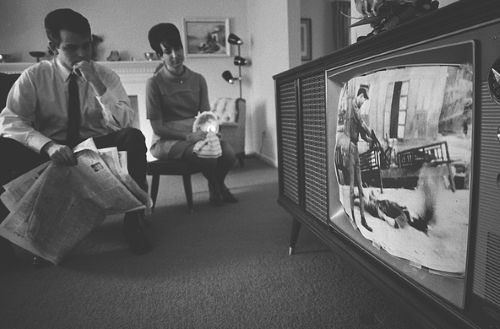
The Vietnam War unfolded during a period when mass media played an increasingly important role in shaping public understanding of international events. Unlike earlier conflicts, Vietnam was reported extensively through television broadcasts, newspaper coverage, and photographic journalism. Images from the battlefield reached audiences in the United States with unprecedented speed, bringing the realities of war directly into homes and living rooms. This visibility transformed the relationship between military operations, government communication, and public perception.
Journalists stationed in Vietnam operated with a level of access that differed significantly from the restrictions imposed during earlier wars. Reporters were able to travel with military units, observe operations in the field, and communicate their observations to editors and broadcasters. This access created a complex informational environment in which official statements about the war were often accompanied by independent reporting that could confirm or contradict government claims. Correspondents from major American and international news organizations spent extended periods in Vietnam, building relationships with military personnel while also seeking to document the broader conditions of the conflict. As journalists documented the experiences of soldiers and civilians alike, their reporting sometimes revealed aspects of the war that differed from the more optimistic assessments presented in official briefings.
Television coverage played a particularly significant role in shaping public attitudes toward the war. Nightly news broadcasts frequently included footage from combat zones, interviews with soldiers, and scenes of destruction caused by military operations. These visual accounts created a powerful emotional impact that written reports alone could not easily replicate. As the war intensified during the mid-1960s, the presence of television cameras on the battlefield contributed to a growing awareness of the human cost of the conflict.
The relationship between the government and the press became increasingly strained as the war continued. Military officials attempted to present the conflict in ways that emphasized progress and strategic control, while journalists often reported events that suggested a more uncertain situation. This tension reflected the broader challenge of communicating complex military developments to a domestic audience. Government briefings, sometimes referred to informally as “the five o’clock follies,” attempted to frame battlefield developments in positive terms, yet these briefings were often met with skepticism by reporters who had witnessed conditions in the field. As journalists compared official statements with their own observations, many became increasingly critical of the gap between government narratives and the realities of the war.
The influence of media coverage extended beyond the reporting of individual battles or operations. As journalists examined broader patterns within the conflict, they began to question whether official statements accurately represented the overall direction of the war. Reports on civilian casualties, difficulties faced by South Vietnamese forces, and the persistence of insurgent activity complicated the narrative of steady progress presented by administration spokesmen. These accounts contributed to a growing debate within the United States about the effectiveness of American strategy and the long-term prospects of the war.
By the late 1960s, media coverage had become one of the most important factors shaping public understanding of the conflict. The ability of journalists to transmit images and reports from the battlefield meant that the war could not be interpreted solely through official channels. Instead, competing narratives emerged, reflecting both government perspectives and the experiences reported by journalists and participants in the conflict. This evolving informational landscape played a central role in transforming public perception of the Vietnam War and contributed significantly to the broader credibility crisis that developed during the later years of the conflict.
The Tet Offensive and the Collapse of Official Narratives
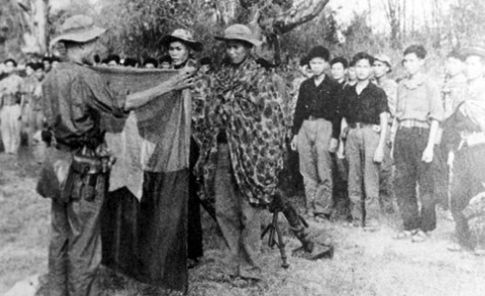
The Tet Offensive of January 1968 marked one of the most significant turning points of the Vietnam War, not only in military terms but also in the political perception of the conflict. During the Vietnamese lunar new year holiday known as Tet, North Vietnamese and Viet Cong forces launched coordinated attacks across numerous cities and military installations throughout South Vietnam. The scale and coordination of these operations surprised American and South Vietnamese commanders, who had previously suggested that enemy forces were losing their ability to conduct large-scale operations. Although the offensive did not ultimately achieve its military objectives, it demonstrated a level of organization and resilience that contradicted official claims about the weakening of communist forces.
The attacks struck multiple urban centers, including provincial capitals, military bases, and key infrastructure throughout South Vietnam. One of the most dramatic moments occurred when Viet Cong fighters briefly occupied the grounds of the United States embassy in Saigon, an event that carried enormous symbolic significance despite the rapid suppression of the attack. Fighting also erupted in cities such as Hue, where intense urban combat continued for weeks. These events made clear that communist forces retained the ability to strike across the country, even in areas that had been described as secure.
From a strictly military perspective, the offensive inflicted severe losses on Viet Cong and North Vietnamese units. Many of the attacking forces suffered heavy casualties, and the uprising that communist planners hoped would occur among the South Vietnamese population did not materialize. American and South Vietnamese forces ultimately repelled the attacks and retained control of most of the targeted areas. Yet the scale of the attacks and the geographic reach of the offensive demonstrated that communist forces still possessed significant operational capacity. The fact that coordinated assaults occurred across so many locations challenged the assumption that the enemy had been steadily weakened by years of American military pressure.
The impact of Tet on public perception in the United States was profound. For several years, American officials had repeatedly emphasized that the war was moving in a favorable direction and that communist forces were gradually losing strength. The sudden appearance of large-scale coordinated attacks across South Vietnam made those assurances appear increasingly doubtful. Television coverage of the fighting reinforced the impression that the war was far from being won, even though military officials continued to emphasize the losses suffered by communist forces during the offensive.
Journalists and analysts began to question whether official statements had accurately represented the state of the war. Reports from the battlefield suggested that the conflict remained highly contested despite years of American military escalation. Correspondents who had previously reported on the challenges faced by American and South Vietnamese forces now found their observations echoed in the scale of the Tet Offensive itself. The contrast between earlier claims of steady progress and the dramatic events of the offensive intensified public skepticism about government explanations of the war. As the credibility gap widened, many Americans began to doubt whether the conflict could be resolved through continued military escalation.
The Tet Offensive became a pivotal moment in the political history of the Vietnam War. Even though communist forces suffered substantial losses, the offensive fundamentally altered the public understanding of the conflict. The attacks exposed the limitations of the optimistic narratives that had shaped earlier government statements and demonstrated that the war remained far from resolution. Tet marked the point at which the gap between official explanations and public perception became impossible to ignore.
The Credibility Gap and the Crisis of Public Trust
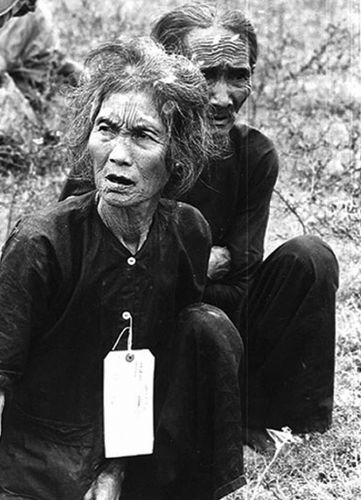
By the late 1960s, the concept of the “credibility gap” had become central to public discussion of the Vietnam War. Journalists used the term to describe the widening distance between official government statements and the realities reported from the battlefield. Although tensions between government messaging and media reporting had developed earlier in the war, events such as the Tet Offensive intensified public awareness of these contradictions. Many Americans began to question whether official accounts of progress accurately reflected the actual conditions of the conflict.
Public trust in government explanations eroded as the war continued without a clear resolution. Political leaders had repeatedly suggested that sustained military pressure would eventually weaken communist forces and produce favorable conditions for negotiation. Yet despite the deployment of hundreds of thousands of American troops and the extensive use of air power, the conflict persisted. Reports of ongoing combat, rising casualty figures, and the continued presence of Viet Cong forces in contested regions made it increasingly difficult for government accounts of steady progress to maintain credibility. As journalists, soldiers, and returning veterans shared their experiences with the public, the gap between official assurances and perceived realities became more widely recognized.
The credibility gap was also reinforced by the growing visibility of dissent within American society. As the war extended into the late 1960s, protests against the conflict expanded on university campuses and in major cities. Critics argued that the government had misrepresented the nature and progress of the war, while supporters of the administration often insisted that continued military effort was necessary to achieve strategic objectives. This public debate reflected the broader struggle to interpret the war and its consequences.
Government officials attempted to respond to these criticisms by emphasizing the complexity of the conflict and the challenges of communicating military developments to a domestic audience. Yet the persistence of contradictory information made these efforts increasingly difficult. Statements that had once been accepted as authoritative were now subject to scrutiny by journalists, policymakers, and members of the public who had become more skeptical of official explanations.
The credibility crisis surrounding the Vietnam War had lasting political consequences. The erosion of trust in government statements contributed to broader debates about transparency, accountability, and the role of the press in democratic societies. Many Americans began to question not only the conduct of the war itself but also the reliability of official information provided by political leaders. By the early 1970s, the credibility gap had become one of the defining political issues associated with the war, illustrating how prolonged conflicts can reshape the relationship between governments and the publics they seek to persuade.
Patterns of Narrative Collapse in Prolonged Wars
The Vietnam War illustrates a broader pattern that appears repeatedly throughout the history of warfare: the collapse of official narratives during prolonged conflicts. Governments entering war often present optimistic assessments designed to sustain public support and demonstrate strategic control. These narratives frequently emphasize early successes, measurable progress, and the expectation that continued effort will produce victory. While such messaging can help maintain political cohesion in the early stages of a conflict, it can become increasingly difficult to sustain when wars continue longer than anticipated.
Political leaders often rely on simplified frameworks to explain complex conflicts to domestic audiences. During wartime, governments must communicate strategic goals, justify sacrifices, and reassure the public that military operations are achieving meaningful results. As a result, official explanations frequently emphasize positive indicators while downplaying uncertainty or setbacks. This approach can create a gap between public expectations and the realities faced by soldiers and commanders on the battlefield.
When conflicts extend over long periods of time, the tension between official narratives and observable developments tends to grow. Casualty figures, battlefield stalemates, and visible destruction can contradict earlier claims that victory is near. Journalists, independent analysts, and returning soldiers may present accounts that differ from official briefings. As these competing narratives circulate within society, the credibility of government statements may begin to erode. The longer a war continues without a clear resolution, the more difficult it becomes for political leaders to maintain the optimistic narratives that initially justified the conflict.
The Vietnam War demonstrated how rapidly this process can unfold when information from the battlefield becomes widely available. Television coverage, newspaper reporting, and firsthand accounts allowed the American public to witness aspects of the war that were not fully reflected in official government statements. As reports of ongoing fighting and persistent enemy resistance continued to appear, the contrast between these observations and earlier assurances of progress became increasingly apparent.
Historical examples beyond Vietnam reveal that such narrative collapses are not unique to any single conflict. Governments facing prolonged wars have often struggled to reconcile political messaging with the unpredictable realities of military campaigns. Leaders frequently begin wars with expectations of rapid success, only to encounter complex conditions that undermine those assumptions. When official narratives remain fixed while battlefield realities evolve, the gap between explanation and experience can widen dramatically. In such situations, public skepticism tends to grow as citizens seek alternative sources of information to interpret events.
The broader lesson suggested by these patterns is that prolonged conflicts place extraordinary strain on political narratives. Maintaining public support for war requires explanations that appear consistent with observable events. When the gap between official statements and lived experience becomes too wide, confidence in government institutions can deteriorate rapidly. The Vietnam War serves as a powerful example of how narrative collapse can shape the political trajectory of a prolonged conflict.
Conclusion: War, Credibility, and Democratic Accountability
The Vietnam War demonstrated how the relationship between government narrative and battlefield reality can shape the political trajectory of a prolonged conflict. American leaders initially framed the war as a limited effort to contain communism and stabilize South Vietnam, presenting the conflict as manageable and ultimately winnable. The persistence of fighting, rising casualties, and the growing visibility of the war in American media challenged those early assumptions. As the conflict expanded, the optimistic narratives that had once justified escalation became increasingly difficult to sustain.
The credibility gap that emerged during the war reflected the difficulties democratic governments face when attempting to maintain public support for extended military operations. Political leaders must communicate strategic objectives and demonstrate progress, yet the unpredictable nature of warfare often complicates these efforts. In Vietnam, official statements that emphasized steady improvement gradually lost persuasive power as journalists, soldiers, and civilians encountered evidence suggesting a far more uncertain situation. Government briefings that once framed the conflict in terms of measurable progress increasingly faced scrutiny as independent reporting and firsthand accounts circulated more widely. As the gap between official explanations and public perception widened, many Americans began to question whether the war had been accurately represented by those directing it.
The erosion of public trust had significant political consequences. As skepticism about official narratives intensified, public debate over the war expanded across American society. Protests, congressional hearings, and critical media coverage reflected a broader effort to reassess the policies that had led to large-scale American involvement in Vietnam. The credibility gap became more than a rhetorical phrase; it symbolized a wider crisis of confidence in political leadership during one of the most controversial conflicts in modern American history.
The experience of the Vietnam War continues to shape discussions about the relationship between war, government communication, and democratic accountability. Prolonged conflicts inevitably generate uncertainty, and political leaders must balance the need to sustain public support with the responsibility to present accurate assessments of military realities. The credibility crisis associated with Vietnam illustrates the risks that arise when official narratives diverge too sharply from observable events. In democratic societies, the durability of wartime policy ultimately depends not only on military outcomes but also on the ability of governments to maintain the trust of the public they represent.
Bibliography
Affiliate disclosure: Amazon links on this site are paid links. As an Amazon Associate I earn from qualifying purchases.
- Bowden, Mark. Hue 1968: A Turning Point of the American War in Vietnam. New York: Atlantic Monthly Press, 2017.
- Clemis, Martin G. “The Enduring Lessons of Vietnam: Implications for US Strategy and Policy.” The US Army War College Quarterly: Parameters 55:2 (2025), 117-133.
- Freedman, Lawrence. Strategy: A History. Oxford: Oxford University Press, 2013.
- Gitlin, Todd. The Whole World Is Watching: Mass Media in the Making and Unmaking of the New Left. Berkeley: University of California Press, 1972.
- Halberstam, David. The Best and the Brightest. New York: Random House, 1972.
- Hallin, Daniel C. The Uncensored War: The Media and Vietnam. Berkeley: University of California Press, 1986.
- Herring, George C. America’s Longest War: The United States and Vietnam, 1950–1975. New York: McGraw-Hill, 1979.
- Knightley, Phillip. The First Casualty: The War Correspondent as Hero and Myth-Maker from the Crimea to Iraq. Baltimore: Johns Hopkins University Press, 1975.
- Lawrence, Mark Atwood. The Vietnam War: A Concise International History. Oxford: Oxford University Press, 2008.
- Logevall, Fredrik. Embers of War: The Fall of an Empire and the Making of America’s Vietnam. New York: Random House, 2012.
- McMahon, Robert. “Contested Memory: The Vietnam War and American Society, 1975–2001.” Diplomatic History 26:2 (2002), 159-184.
- Westad, Odd Arne. The Global Cold War. Cambridge: Cambridge University Press, 2005.
Originally published by Brewminate, 03.12.2026, under the terms of a Creative Commons Attribution-NonCommercial-NoDerivatives 4.0 International license.
About the Author