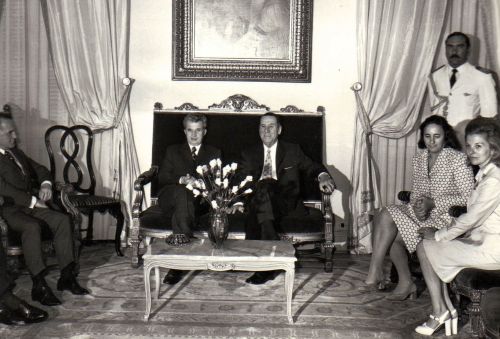
Juan Perón transformed Argentine politics by mobilizing emotion, loyalty, and working-class identity, creating a movement where political belonging often revolved around devotion to leadership.

By Matthew A. McIntosh
Public Historian
Brewminate
Introduction: Emotion, Authority, and the Politics of Loyalty
The political movement associated with Juan Perón emerged in mid-twentieth-century Argentina as one of the most influential examples of populist leadership in modern history. Unlike traditional political parties organized primarily around ideology or institutional platforms, Peronism developed as a movement rooted in emotional identification between leader and followers. Perón’s rhetoric, public appearances, and political messaging emphasized personal connection with the Argentine working class, presenting himself as the embodiment of the people’s aspirations and grievances. Through this relationship, political loyalty became intertwined with emotional attachment, transforming Peronism into a movement sustained as much by sentiment and symbolism as by policy or doctrine.
This emotional dimension was not accidental but carefully cultivated. Perón and his allies recognized the power of mass communication, public spectacle, and symbolic language in shaping political identity. Large rallies in Buenos Aires, particularly in the Plaza de Mayo, created moments of collective experience in which thousands of supporters expressed devotion to the leader who claimed to represent them. These gatherings were carefully staged political performances that reinforced the idea of a direct bond between Perón and the Argentine people. Supporters gathered beneath the balcony of the Casa Rosada to hear Perón address them as descamisados, or “shirtless ones,” a term that symbolically embraced workers and marginalized citizens who felt excluded from the country’s traditional political order. Radio broadcasts further amplified this message by carrying Peronist rhetoric into homes across the nation, allowing supporters far beyond the capital to participate in the emotional language of the movement. Through these channels, Perón’s image as a protector of workers and defender of social justice was reinforced repeatedly, encouraging followers to see themselves as members of a shared political community defined by loyalty, gratitude, and collective identity.
The role of Eva Perón further intensified this dynamic. Through her public speeches, charitable work, and personal engagement with the urban poor and organized labor, Eva became a powerful symbolic figure within the movement. Her advocacy for the working class and her visible compassion for marginalized communities helped translate Peronist ideology into a language of personal devotion and social redemption. For many supporters, the partnership between Juan and Eva represented a political and moral alliance that embodied the hopes of Argentina’s lower and working classes. Following Eva’s death in 1952, the emotional resonance of her image grew even stronger, contributing to the formation of a powerful mythology that reinforced loyalty to Peronism as a broader political identity.
The history of Peronism raises important questions about the relationship between political authority and emotional attachment in modern mass politics. Was Peronism primarily a program of social reform rooted in labor mobilization, or was it fundamentally a personalist movement sustained by symbolic loyalty to a charismatic leader? Scholars have long debated this question, interpreting Peronism alternately as a populist democratization of Argentine politics or as a form of charismatic personalism that blurred the boundaries between political leadership and political devotion. By examining the origins and development of Peronism, it becomes possible to explore how emotional identification, political symbolism, and charismatic authority combined to produce one of the most enduring and controversial movements in modern Latin American history.
Argentina in Transition: Social Change and Political Instability
The rise of Peronism cannot be understood without examining the profound social and economic transformations that reshaped Argentina during the first half of the twentieth century. For much of the nineteenth century, Argentina had been governed by a political and economic order dominated by landowning elites whose wealth depended heavily on agricultural exports. This oligarchic structure was reinforced by political institutions that limited the influence of broader sectors of society, particularly urban workers and rural laborers. Although the introduction of electoral reforms in the early twentieth century expanded participation within the political system, many Argentines continued to perceive the existing political order as distant from the needs and interests of the growing working class.
Industrialization accelerated these social changes. During the 1930s and early 1940s, Argentina experienced significant economic shifts as global disruptions, including the Great Depression and the Second World War, reduced reliance on agricultural exports and encouraged domestic manufacturing. Urban industrial employment expanded, drawing migrants from rural areas and neighboring countries into rapidly growing cities such as Buenos Aires, Rosario, and Córdoba. This expanding urban workforce developed new forms of social identity and political awareness as workers sought improved wages, labor protections, and recognition within national political life. Yet the institutions of government often struggled to respond effectively to these emerging demands.
The political instability of the period further complicated these developments. Argentina entered what historians often call the “Década Infame,” or Infamous Decade, following the military coup of 1930 that overthrew President Hipólito Yrigoyen. The governments that followed were widely criticized for electoral fraud, political repression, and corruption. Conservative coalitions maintained control through manipulated elections and alliances with powerful economic interests. These practices eroded public confidence in democratic institutions and deepened dissatisfaction among sectors of the population that felt excluded from meaningful political participation. Electoral manipulation, patronage networks, and restrictions on political opposition became characteristic features of the political system during this period. As a result, many Argentines came to view formal democratic procedures as hollow mechanisms controlled by entrenched elites rather than genuine expressions of popular sovereignty. This growing disillusionment created fertile ground for alternative political movements that promised to restore dignity and influence to ordinary citizens who believed themselves marginalized within the existing political order.
Labor movements expanded during these decades as workers organized to demand greater protections and representation. Trade unions became increasingly influential within urban industrial sectors, and labor activism emerged as a powerful force in Argentine politics. However, relations between workers and the state remained uneven and often contentious. Governments frequently alternated between repression and limited concessions, creating an environment in which labor organizations sought political allies capable of advancing their interests within national politics.
The military coup of 1943 marked another turning point in Argentina’s political trajectory. A group of nationalist officers seized power, criticizing the existing political system for corruption and weakness. Within the new military government, Colonel Juan Domingo Perón emerged as a key figure after assuming leadership of the Department of Labor and Social Welfare. From this position, Perón began cultivating alliances with labor unions and workers, promoting policies that expanded labor rights and improved working conditions. These initiatives brought him increasing support among the urban working class and laid the foundation for the political movement that would soon carry him to national power.
By the mid-1940s Argentina had become a society characterized by rapid social change, political uncertainty, and rising expectations among newly organized sectors of the population. Industrial workers sought recognition and influence within national politics, while traditional elites struggled to maintain their dominance over a changing social landscape. In this construct of transformation and instability, Perón’s message of social justice, labor rights, and national renewal resonated with millions of Argentines who believed that existing political institutions had failed to represent them. The conditions that preceded the rise of Peronism created fertile ground for a movement capable of translating social discontent into a powerful new form of political loyalty.
The Rise of Juan Perón: Labor, Military Power, and Mass Support
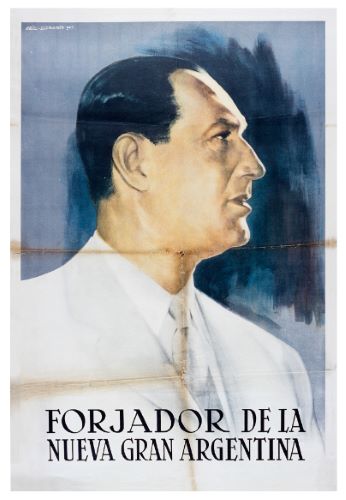
Perón’s ascent to national prominence occurred within the political upheaval created by the military coup of 1943. The group of nationalist officers who seized power sought to dismantle what they viewed as a corrupt political system dominated by conservative elites. Within this military government, Perón emerged as a skilled political operator capable of building alliances across different sectors of Argentine society. Although he initially held relatively modest positions within the new administration, his appointment to the Department of Labor and Social Welfare soon transformed his political influence and visibility.
Perón recognized that the expanding industrial workforce represented a powerful political constituency that had not yet been fully integrated into the country’s political system. As Secretary of Labor, he pursued policies designed to strengthen labor protections and establish closer ties between the state and organized workers. His administration supported collective bargaining agreements, expanded social welfare measures, and recognized the rights of unions to negotiate with employers. These initiatives included the establishment of labor courts to adjudicate disputes between workers and employers, as well as new regulations that strengthened wage protections and workplace conditions. Such policies provided workers with tangible benefits that many had long sought but had rarely received from earlier governments. As a result, labor organizations increasingly viewed Perón not simply as a government official but as an advocate capable of advancing their interests within the structure of the state. By presenting himself as a defender of workers’ rights and dignity, Perón began constructing a political base rooted in the loyalty of organized labor and the expanding urban workforce.
The relationship between Perón and Argentina’s labor movement was mutually reinforcing. Workers saw in Perón a government official willing to champion their demands for fair wages, improved working conditions, and social recognition. Perón understood that support from organized labor could provide the political legitimacy needed to expand his influence within the military government. Union leaders increasingly mobilized their members in demonstrations and public expressions of support for the policies emerging from the Department of Labor. Through this alliance, Perón began to cultivate the image of a leader who spoke directly for the working class and who sought to integrate labor into the national political community.
Perón’s growing popularity among workers soon alarmed other members of the military government as well as traditional political elites. Many officers feared that his expanding influence threatened the balance of power within the regime. In October 1945 these tensions culminated in a confrontation that led to Perón’s temporary removal from his positions and his detention by rival factions within the military leadership. His opponents believed that removing him from power would weaken the political networks he had built among labor organizations and reduce his growing public support.
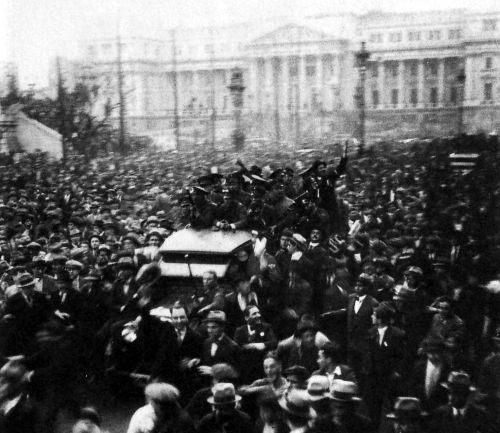
Instead, Perón’s arrest triggered one of the most significant mass mobilizations in Argentine political history. On October 17, 1945, thousands of workers from industrial suburbs and surrounding regions converged on Buenos Aires to demand his release. Many participants traveled long distances from working-class neighborhoods and industrial towns, crossing bridges and railway lines to reach the city center. The demonstration, centered in the Plaza de Mayo, revealed the depth of loyalty that Perón had cultivated among sectors of the urban working class who had come to view him as their political champion. Participants filled the square and surrounding streets, chanting in support of Perón and demanding his return to political life. The scale of the mobilization surprised both supporters and opponents of the detained leader, demonstrating that the alliance between Perón and organized labor had already evolved into a powerful social movement. Faced with the potential for widespread unrest and recognizing the intensity of public support for Perón, the military government ultimately decided to release him and allow him to address the assembled crowds from the balcony of the presidential palace.
The events of October 1945 transformed Perón from an influential government official into the central figure of a mass political movement. Shortly afterward he announced his candidacy in the presidential election of 1946, presenting himself as the representative of workers, national sovereignty, and social justice. Supported by powerful labor unions and a rapidly expanding base of loyal followers, Perón won the election and assumed the presidency the following year. His rise to power demonstrated how alliances between state institutions, organized labor, and charismatic leadership could reshape the political landscape of Argentina.
Populism and the Politics of the Descamisados
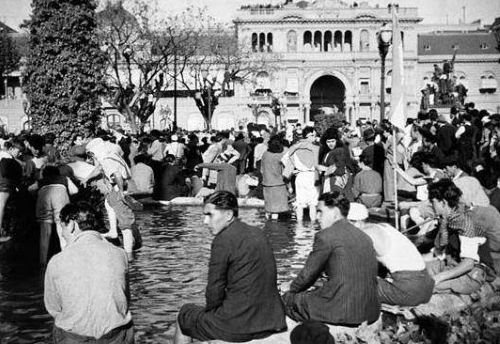
Central to the identity of Peronism was the political symbolism surrounding the descamisados, or “shirtless ones,” a term that came to represent Argentina’s urban working class and the marginalized sectors of society who felt excluded from traditional political life. The word carried both social and political meaning, suggesting a population that had long been overlooked by the country’s established elites. By embracing this label, Perón transformed what might once have been an insult into a badge of collective identity. Within Peronist rhetoric, the descamisados became the authentic people of the nation, whose dignity and rights had been ignored by oligarchic governments and who now stood at the center of Argentina’s political transformation.
Perón’s speeches and public messaging framed this relationship in explicitly emotional terms. He frequently addressed workers as companions in a shared struggle for justice and national renewal, portraying himself not as a distant statesman but as a leader who emerged from the same historical experience as his followers. This rhetorical strategy encouraged supporters to view Perón as a personal representative of their aspirations rather than simply as a political official. By presenting the state as a protector of labor and social welfare, Peronist discourse linked government authority directly to the everyday concerns of workers and their families.
Mass rallies became one of the most visible expressions of this emotional political culture. Gatherings in the Plaza de Mayo in Buenos Aires created powerful moments of collective participation in which supporters demonstrated loyalty to the Peronist movement. These events combined political messaging with spectacle, ritual, and symbolic language designed to reinforce the bond between leader and followers. The physical presence of large crowds chanting slogans and celebrating Perón’s leadership reinforced the perception that the movement represented the unified voice of Argentina’s working population. For many participants, attending these gatherings was not merely a political act but a shared public ritual that affirmed their identity as members of a broader social community. The repeated staging of these demonstrations helped cultivate a political culture in which emotional participation and public visibility became central components of Peronist identity.
The role of organized labor was central to sustaining this mobilization. Trade unions formed the institutional backbone of the Peronist coalition, linking the political leadership with workers in factories, ports, and industrial districts throughout the country. Union leaders often served as intermediaries between the government and their members, helping to mobilize support for Peronist policies and encouraging workers to participate in demonstrations and political campaigns. Through this alliance, Peronism integrated labor activism into a broader political movement that claimed to represent the social and economic interests of the working class.
Peronist populism relied heavily on symbolic language that portrayed Argentine society as divided between the people and their enemies. Supporters of the movement were described as patriotic citizens seeking justice and national dignity, while critics were often portrayed as representatives of oligarchic privilege or foreign influence. This rhetorical framing reinforced the emotional boundaries of the movement by encouraging followers to view political conflict as a moral struggle between popular sovereignty and entrenched elites. Peronist speeches, propaganda, and public celebrations frequently invoked themes of loyalty, gratitude, and collective destiny, presenting the movement as the authentic voice of the nation. By emphasizing this contrast between the virtuous people and their supposed adversaries, Peronist discourse strengthened internal solidarity among supporters while intensifying the emotional stakes of political competition.
The politics of the descamisados became a defining feature of Peronism’s political culture. By transforming workers into the symbolic heart of the nation, Perón created a movement that emphasized loyalty, participation, and emotional identification with the leader who claimed to defend their rights. This political language helped sustain the extraordinary mobilization that characterized Peronism during the 1940s and early 1950s and ensured that the movement would continue to shape Argentine political identity long after Perón himself left office.
Eva Perón and the Symbolic Power of Devotion
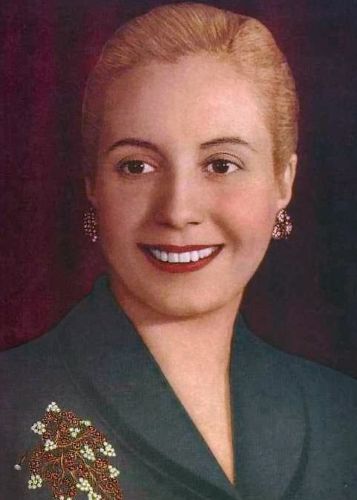
Eva played a decisive role in shaping the emotional and symbolic dimensions of Peronism. Born María Eva Duarte in 1919 in rural Argentina, she rose from modest circumstances to become one of the most influential figures in Argentine political life. Her early experiences in poverty and social marginalization shaped the public identity she later projected as a defender of Argentina’s disadvantaged citizens. After moving to Buenos Aires as a young woman to pursue a career in radio and theater, Eva became familiar with the urban culture of the capital and the growing influence of mass media in shaping public opinion. Her marriage to Perón in 1945 transformed her from a radio actress into a national political personality whose public identity quickly became intertwined with the movement that carried her husband to power. Eva cultivated a political persona centered on empathy for the poor and loyalty to the descamisados, presenting herself as a bridge between the Peronist government and Argentina’s marginalized populations.
Through her speeches and public appearances, Eva helped translate Peronist ideology into a language of emotional connection and social redemption. Her addresses frequently emphasized gratitude toward the working class and portrayed Perón as the protector of ordinary citizens against entrenched privilege. At mass rallies she spoke directly to workers and women who had previously been excluded from political life, framing Peronism as a movement that restored dignity to those long ignored by traditional elites. This rhetorical style strengthened the emotional bond between Peronist leadership and the movement’s supporters.
One of the most visible expressions of Eva’s influence was the creation of the Eva Perón Foundation, a charitable organization that distributed aid to the poor, funded hospitals and schools, and provided material assistance to workers and their families. The foundation became a powerful instrument for shaping public perceptions of Peronism as a movement devoted to social justice. Through widely publicized acts of charity, Eva cultivated an image as a compassionate advocate for the disadvantaged. For many Argentines who received direct assistance from the foundation, her work represented the tangible fulfillment of the promises associated with Peronist governance.
Eva also played an important role in expanding political participation among Argentine women. She became a leading advocate for women’s suffrage and helped mobilize support for the legislation that granted Argentine women the right to vote in 1947. Her involvement in the campaign for suffrage linked Peronism with broader struggles for political inclusion and social recognition. In the years that followed, Eva helped organize the Peronist Women’s Party, an organization that encouraged female political participation and integrated women into the broader Peronist movement. Through this organization, thousands of women became involved in political activism, public meetings, and electoral campaigns. Eva’s leadership helped legitimize the idea that women could play an active and visible role in national politics, reshaping traditional expectations about gender and political authority within Argentine society.
The emotional influence of Eva extended beyond policy and organization into the symbolic realm of political devotion. Supporters often referred to her simply as “Evita,” a name that conveyed affection and familiarity. Through her speeches, charitable work, and public image, she became a figure whose personal story appeared to embody the aspirations of Argentina’s working class. Many followers regarded her not only as a political leader but also as a moral example whose compassion reflected the ethical foundations of Peronism.
After Eva’s death in 1952, the symbolic power of her image intensified rather than diminished. Public mourning rituals and official commemorations transformed her memory into a central element of Peronist political identity. Portraits, monuments, and political slogans celebrated her life as a model of loyalty and sacrifice in service of the people. Eva’s legacy acquired a mythic dimension within Peronist culture, reinforcing the emotional language through which the movement continued to express its connection to Argentina’s working class.
Myth and Memory: The Cult of Evita after 1952
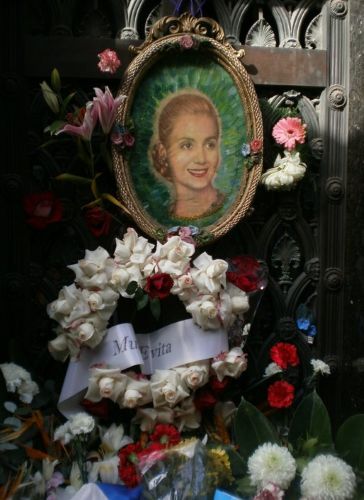
Eva’s death marked a turning point in the symbolic life of the Peronist movement. At only thirty-three years old, Evita died after a prolonged battle with cancer, an event that produced an extraordinary outpouring of grief throughout Argentina. Public mourning ceremonies drew massive crowds, and countless supporters gathered in Buenos Aires to pay their respects. The scale of the mourning reflected not only Eva’s popularity of but also the emotional bonds that had developed between her public persona and the working-class communities that viewed her as a champion of their interests.
In the days following her death, the Argentine government organized elaborate commemorative rituals designed to honor her legacy. State institutions and Peronist organizations sponsored public memorials, religious services, and processions that framed Eva’s life as a model of dedication to the people. Her image appeared widely in newspapers, posters, and public monuments, reinforcing the narrative that she had devoted herself entirely to the welfare of the nation’s most vulnerable citizens. Through these acts of remembrance, Eva’s life was presented not merely as the story of a political figure but as the embodiment of sacrifice, loyalty, and social justice.
One of the most striking features of this commemoration was the language used by many of her supporters. For numerous working-class Argentines, Evita came to symbolize compassion and protection in a political world often perceived as distant and indifferent. Expressions of devotion frequently adopted religious tones, with followers referring to her as a spiritual guardian of the poor. While the Peronist government did not formally encourage religious veneration, the emotional intensity surrounding Eva’s memory gave rise to a cultural phenomenon in which political loyalty blended with symbolic reverence.
The preservation of Eva’s body further contributed to the development of this mythic narrative. Perón ordered that her remains be embalmed and preserved, a decision that transformed her physical presence into a powerful political symbol. The embalming was carried out by the Spanish physician Pedro Ara, who devoted months to preserving the body in a state that appeared almost lifelike. Plans were announced to construct a monumental shrine that would commemorate her life and serve as a place of public homage where supporters could gather to express devotion. Although the ambitious project was never completed, the preservation of Evita’s body reinforced the perception that she had become more than a political figure. The careful presentation of her remains suggested permanence and continuity, encouraging supporters to view her legacy as an enduring presence within the Peronist movement.
The overthrow of Perón in the military coup of 1955 complicated the political meaning of Eva’s legacy. The new regime sought to dismantle the symbols and institutions associated with Peronism, including the public cult that had developed around Evita’s memory. Her embalmed body was removed from Argentina and hidden abroad for several years in an attempt to prevent it from becoming a rallying point for Peronist supporters. Yet these efforts did not erase the emotional attachment that many Argentines felt toward her image. Instead, the suppression of Peronist symbolism often strengthened the mythic character of Evita within the political imagination of her followers.
The memory of Eva Perón became one of the most enduring elements of Peronist political culture. Even during the years when Peronism was officially banned from Argentine politics, Evita’s image continued to circulate quietly among supporters who treated her story as a symbol of loyalty to the movement’s ideals. Songs, political narratives, and personal recollections kept alive the image of a leader who had dedicated her life to the welfare of the poor. Later generations of Peronists continued to invoke her memory as a moral example of devotion to social justice and national dignity. In this way, the symbolic power of Evita extended far beyond her lifetime, becoming an enduring element of Argentine political culture that shaped how Peronism was remembered, interpreted, and revived in subsequent decades.
Peronism as Movement: Loyalty, Identity, and Political Community
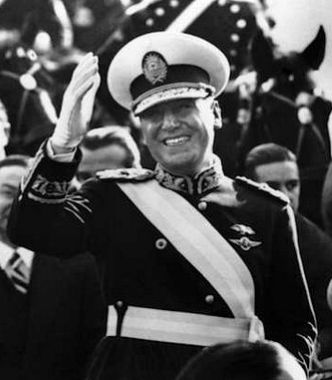
One of the defining characteristics of Peronism was its evolution beyond a conventional political party into a broader social movement rooted in shared identity and loyalty. While many political systems organize around formal party platforms or ideological programs, Peronism functioned as a political community centered on allegiance to Perón and the ideals he claimed to represent. Supporters often described themselves not simply as voters but as participants in a collective project devoted to social justice, national sovereignty, and the dignity of the working class. This sense of belonging gave Peronism a durability that extended well beyond electoral politics.
The structure of the movement reflected this emphasis on collective identity. Labor unions formed the institutional foundation of Peronist organization, providing channels through which workers could participate in political life and express loyalty to the movement. These unions maintained close relationships with the Peronist government, mobilizing members during elections, rallies, and public demonstrations. Through this alliance, organized labor became both a political constituency and a central pillar of Peronist governance. The connection between unions and the state reinforced the idea that Peronism represented the authentic voice of Argentina’s working population.
Political messaging further reinforced the emotional bonds that defined the movement. Peronist rhetoric frequently emphasized themes of loyalty, gratitude, and solidarity among the people who supported the government. Speeches, propaganda, and public ceremonies celebrated the unity of workers, the leadership of Perón, and the collective mission of building a more just society. These messages were communicated through a variety of channels, including radio broadcasts, newspapers aligned with the movement, and the highly visible gatherings that brought thousands of supporters into shared public spaces. The repetition of these themes created a political language in which loyalty to Perón became closely associated with loyalty to the nation itself. For many supporters, identifying as Peronist was not simply a matter of political preference but a declaration of belonging to a community that believed it was shaping the future of Argentina.
The movement’s emphasis on loyalty allowed it to incorporate a wide range of ideological positions. Peronism did not develop a rigid or systematic doctrine comparable to many twentieth-century political ideologies. Instead, its guiding principles emphasized social justice, economic nationalism, and the protection of workers’ rights, themes broad enough to attract supporters from diverse backgrounds. This ideological flexibility allowed Peronism to adapt to changing political circumstances while maintaining its core appeal as a movement representing the people.
Public rituals and political symbolism also played an important role in sustaining Peronist identity. Mass gatherings, commemorative events, and celebrations of key moments in the movement’s history reinforced a shared narrative of collective struggle and triumph. Symbols such as portraits of Perón and Eva, slogans celebrating social justice, and commemorations of events like the October 17 mobilization became central elements of Peronist political culture. These public rituals created opportunities for supporters to participate directly in the movement’s symbolic life, strengthening the sense that Peronism represented a shared historical experience rather than merely a political organization. By repeatedly invoking these symbols and events, Peronist culture encouraged followers to see themselves as participants in a continuing story of national renewal.
The transformation of Peronism into a durable political community helps explain its remarkable persistence within Argentine politics. Even after Perón’s overthrow in 1955 and the subsequent ban on Peronist political activity, the movement continued to exist through networks of labor unions, grassroots organizations, and loyal supporters who maintained their identification with its ideals. The survival of Peronism under conditions of repression demonstrated that the movement had evolved into more than a political organization. It had become a powerful social identity capable of sustaining political commitment across generations.
Opposition and Crisis: Conflict, Polarization, and the Fall of Perón
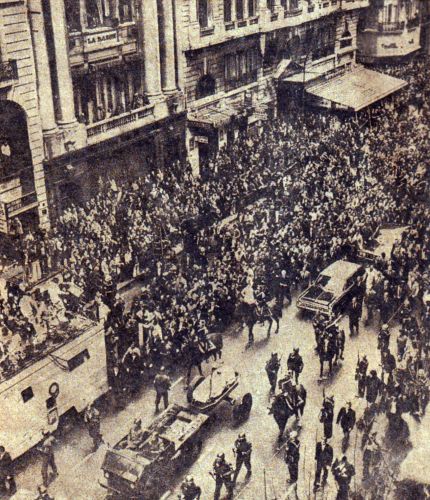
By the early 1950s, the political environment surrounding Perón had become increasingly tense. Although Peronism retained strong support among organized labor and many working-class Argentines, opposition to the regime was growing among sectors of the middle class, business elites, and elements of the military. Critics accused the government of concentrating power, restricting political dissent, and undermining institutional checks on executive authority. These tensions reflected deeper disagreements about the direction of Argentine society and the proper relationship between the state, the economy, and political freedom.
Economic difficulties intensified these conflicts. During the late 1940s, Perón’s government had been able to finance social programs and wage increases through favorable export conditions and accumulated wartime reserves. By the early 1950s, however, those advantages were diminishing as global commodity markets shifted and Argentina’s financial reserves were gradually depleted. Inflation increased, foreign exchange reserves declined, and economic growth slowed, placing new pressure on the Peronist economic model that had relied heavily on state intervention and redistribution. The government responded with policies designed to stabilize the economy, including wage restraints, adjustments to state spending, and efforts to encourage industrial productivity. Officials also sought to attract foreign investment in order to strengthen Argentina’s economic position. These measures reflected a significant shift from the earlier phase of Peronist policy and generated unease among segments of the working class who feared that the social gains of the previous decade might be eroding.
Political opposition also grew more vocal during this period. Independent newspapers, opposition parties, and segments of the Catholic Church criticized what they perceived as the authoritarian tendencies of the Peronist regime. The government often responded to these criticisms by imposing restrictions on dissent and strengthening its control over political institutions. Measures taken to limit opposition activity reinforced the perception among critics that Argentina was moving away from pluralist democratic practices and toward a more centralized form of leadership.
Relations between Perón and the Catholic Church deteriorated sharply in the early 1950s, contributing further to political polarization. Initially, the Peronist government had maintained relatively cooperative relations with church authorities, but disagreements emerged over educational policy, social legislation, and the broader role of religion in public life. Conflicts escalated when the government introduced measures such as the legalization of divorce and the removal of certain religious privileges in public institutions. These developments alienated many clergy and Catholic organizations, some of which began to align themselves with the growing anti-Peronist movement.
The escalation of political tensions culminated in a series of confrontations during 1955. Anti-government demonstrations increased, and factions within the military began openly discussing the possibility of removing Perón from power. In June of that year, a faction of the Argentine Navy launched an unsuccessful coup attempt that included the bombing of Plaza de Mayo in Buenos Aires, an attack that killed and injured numerous civilians gathered in the city’s central square. The bombing represented one of the most dramatic episodes of political violence in modern Argentine history and revealed the depth of hostility that had developed between Peronist supporters and their opponents. Although the rebellion failed in the immediate sense, the attack exposed the fragile condition of the regime and signaled that elements of the armed forces were prepared to use extreme measures in pursuit of political change.
Later that year, a broader coalition of military leaders organized a successful uprising that forced Perón to resign and flee the country. The coup of September 1955 ended the first Peronist government and inaugurated a period of political uncertainty in Argentina. The new regime sought to dismantle Peronist institutions and symbols, banning the movement from political life and attempting to erase its influence from public culture. Yet the dramatic nature of Perón’s removal and the subsequent repression of his supporters ensured that Peronism would remain a powerful force in Argentine politics, sustained by the loyalty of followers who continued to identify with the movement’s ideals.
Historical Interpretation: Populist Democracy or Personalist Cult?
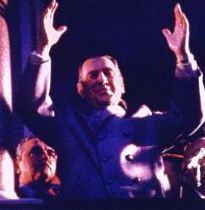
Historians and political scientists have long debated how best to interpret Peronism within the broader history of twentieth-century politics. Some scholars describe it as a form of populist democracy that expanded political participation and incorporated previously marginalized social groups into the national political system. Others emphasize the movement’s strong emphasis on personal loyalty to Perón and argue that it developed characteristics resembling a personalist political cult. These competing interpretations reflect the complex nature of Peronism, which combined elements of mass mobilization, social reform, and leader-centered authority. Because the movement simultaneously empowered large sectors of Argentine society while concentrating symbolic authority in the figure of the leader, scholars have found it difficult to classify Peronism within conventional categories of democratic or authoritarian politics.
One influential interpretation highlights the transformative role Peronism played in Argentine society by integrating the working class into formal political life. Before the 1940s, many industrial workers and migrants from rural areas had limited influence within Argentina’s political institutions. Peronism altered this dynamic by encouraging labor organization, expanding social welfare programs, and promoting the idea that workers were legitimate participants in national governance. In this perspective, the emotional loyalty associated with Peronism is understood less as blind devotion and more as a response to tangible improvements in living standards and political recognition.
Other historians emphasize the institutional features of Peronism that reinforced the central role of the leader. The movement’s political structure often revolved around the authority of Perón and the symbolic power associated with both him and Eva. Public ceremonies, mass rallies, and carefully crafted political imagery reinforced the perception that the movement derived its unity from the personal authority of its leadership. Critics of the regime argue that Peronism blurred the boundary between democratic participation and charismatic authority, creating a system in which loyalty to the leader became inseparable from loyalty to the political project.
The role of political communication has also attracted significant scholarly attention. Peronist governments made extensive use of radio broadcasts, public speeches, and symbolic imagery to cultivate emotional bonds with supporters. These tools allowed the leadership to communicate directly with large audiences and to frame political developments in terms that emphasized unity between the government and the people. Large-scale rallies and highly choreographed public ceremonies reinforced this relationship by creating shared experiences of collective identity among participants. Supporters often experienced these communications as expressions of solidarity and recognition, while opponents interpreted them as mechanisms of political manipulation. The same practices that fostered collective identity among followers appeared to critics as instruments of ideological control and centralized influence.
Comparative scholarship has further complicated the interpretation of Peronism by situating it within a broader tradition of populist movements in Latin America and beyond. In this framework, Peronism is examined alongside other political systems that mobilized mass support through appeals to national identity, social justice, and charismatic leadership. Scholars comparing Peronism with movements in countries such as Brazil and Mexico have noted similarities in the ways leaders used state power, symbolic rhetoric, and labor alliances to construct political legitimacy. These comparisons reveal that personalist leadership and emotional political language were not unique to Argentina but formed part of a wider pattern in twentieth-century populist politics. By placing Peronism within this broader context, historians are able to analyze its distinctive characteristics while also recognizing the structural and cultural forces that shaped populist movements across the modern world.
The continuing influence of Peronism in Argentine political life demonstrates the enduring significance of these debates. Decades after the fall of Perón’s first government, the movement remains a central force in national politics, capable of adapting to changing social and economic circumstances. Its survival suggests that Peronism cannot be reduced to a single explanatory framework. Instead, it represents a hybrid political tradition that combined democratic mobilization, social reform, and charismatic leadership in ways that continue to shape how Argentines understand their political history.
Conclusion: Charisma, Emotion, and the Legacy of Peronism
The history of Peronism illustrates how political movements can emerge from the intersection of social transformation, charismatic leadership, and emotional identification. Juan Perón rose to prominence during a period of profound economic and political change in Argentina, when new urban working populations were seeking representation within national institutions that had previously excluded them. By forging alliances with organized labor and presenting himself as the defender of the descamisados, Perón created a movement that spoke directly to the aspirations and frustrations of millions of citizens. The result was a political community that combined tangible social reforms with a powerful narrative of collective dignity.
Central to the durability of this movement was the emotional language through which Peronism framed political life. Mass rallies, symbolic imagery, and public ceremonies reinforced the idea that the government and the people were engaged in a shared national project. Perón’s speeches frequently emphasized loyalty, solidarity, and gratitude, framing political participation as a moral relationship between leadership and the people rather than merely a contest of competing policy proposals. The presence of Eva deepened these emotional bonds by personifying compassion and social commitment in ways that resonated strongly with working-class supporters. Through her public appearances, charitable initiatives, and highly visible engagement with the poor, Evita became a symbolic bridge between the leadership of the state and the daily struggles of ordinary Argentines. Even after her death, the symbolic power of Evita’s memory continued to sustain the cultural identity of the movement, reinforcing narratives of sacrifice, loyalty, and social justice that remained central to Peronist political culture.
The collapse of Perón’s first government in 1955 did not end the influence of the movement he had built. Instead, the years of exile and political prohibition that followed often strengthened the sense of solidarity among Peronist supporters. Networks of labor organizations, political activists, and cultural symbols preserved the movement’s identity during periods when its formal political participation was restricted. The persistence of Peronism during these years demonstrated that it had evolved beyond the leadership of a single individual and had become embedded within Argentina’s broader social and political landscape.
The continuing prominence of Peronism in Argentine politics underscores the enduring significance of the questions raised by its history. Scholars continue to debate whether it should be understood primarily as a populist democratic movement that expanded participation or as a system shaped by personalist authority and emotional loyalty to a leader. In practice, the historical evidence suggests that both elements were present. The legacy of Peronism lies not only in the policies of a particular government but also in the lasting transformation of Argentine political culture, where charisma, emotion, and collective identity remain central features of political life.
Bibliography
Affiliate disclosure: Amazon links on this site are paid links. As an Amazon Associate I earn from qualifying purchases.
- Collier, Ruth Berins, and David Collier. Shaping the Political Arena: Critical Junctures, the Labor Movement, and Regime Dynamics in Latin America. Princeton, NJ: Princeton University Press, 1991.
- Fraser, Nicholas, and Marysa Navarro. Evita: The Real Life of Eva Perón. New York: W. W. Norton & Company, 1996.
- Horowitz, Joel. “Industrialists and the Rise of Perón, 1943-1946: Some Implications for the Conceptualization of Populism.” The Americas 47:2 (1990), 199-217.
- James, Daniel. Resistance and Integration: Peronism and the Argentine Working Class, 1946–1976. Cambridge: Cambridge University Press, 1988.
- Levitsky, Steven. Transforming Labor-Based Parties in Latin America: Argentine Peronism in Comparative Perspective. Cambridge: Cambridge University Press, 2003.
- McNamara, Owen. “Peronist Bodies: The Populist and Antipopulist Semiotics of Protest.” Critique of Anthropology (2025).
- Perón, Juan Domingo. La Comunidad Organizada. Buenos Aires: Secretaría de Prensa y Difusión, 1949.
- Plotkin, Mariano Ben. Mañana es San Perón: A Cultural History of Perón’s Argentina. Wilmington, DE: Scholarly Resources, 2003.
- Rock, David. Argentina, 1516–1987: From Spanish Colonization to the Falklands War. Berkeley: University of California Press, 1987.
- Romero, Luis Alberto. A History of Argentina in the Twentieth Century. University Park: Pennsylvania State University Press, 2002.
- Sánchez-Román, José Antonio. “La Nación, Peronism, and the Origins of the Cold War in Argentina.” Culture & History Digital Journal 4:1 (2015), e004.
- Taylor, Julie M. Eva Perón: The Myths of a Woman. Chicago: University of Chicago Press, 1979.
- Torre, Juan Carlos. El 17 de Octubre de 1945. Buenos Aires: Ariel, 1995.
Originally published by Brewminate, 03.13.2026, under the terms of a Creative Commons Attribution-NonCommercial-NoDerivatives 4.0 International license.
About the Author