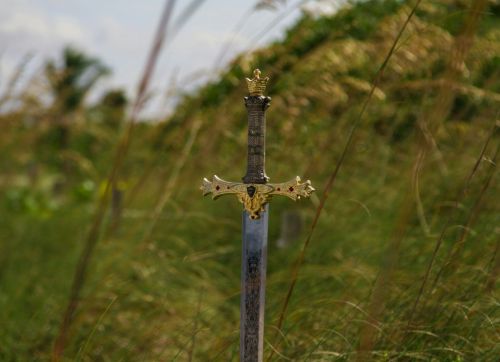
The hand and a half sword which people commonly call the bastard sword stands as a unique weapon which developed throughout history. The weapon functions as an intermediate option which connects compact one-handed weapons with complete two-handed battlefield swords. The combat system permits fighters to change their grip patterns between different fighting styles throughout battle because they need to adjust their fighting tactics. The combat system of modern armored sports like buhurt gives participants an advantage through its ability to adapt which enables them to handle various situations.
The sword category used blade length as a primary characteristic during historical periods to define its sword category which included handle shape and weight distribution. The extended grip enables users to adjust their leverage which results in alterations to both their striking speed and movement control. Many weapons which people use for training today function according to this same principle. The two-handed falchions and extended-grip blades created by Medieval Extreme manufacturers follow a mechanical design which uses longer handles and strengthened blades and specific balance points to enable users to execute both forceful swings and accurate directional movements.
Origins and Historical Use
Historical evidence shows that hybrid swords first appeared during the late medieval era because armored battle required soldiers to use weapons that could both slash their enemies and maintain control over them. The Royal Armouries Museum research shows that transitional swords existed throughout Europe from the 13th century to the 15th century because battlefield conditions changed during that time period. The extended grip length enabled fighters to execute strong attacks through leverage or conduct half-swording moves during their armored combat.
The results find support through iconographic sources. The Maciejowski Bible stands as one of the most frequently used sources because it contains a 13th-century illuminated manuscript which shows soldiers fighting with broad falchions and long-gripped swords. The images show how fighters could strike powerful blows through their curved blades and extended handles which let them attack both armored opponents and unprotected targets. The two-handed falchion which The Maciejowski Bible brought to life through Medieval Extreme directly follows this tradition although it uses modern buhurt competition design elements to create its weapon.
Museum collections show similarities between their weapons and other weapon types. The Metropolitan Museum of Art holds a curved storta which shows how southern European weapons combined saber-like blade shapes with wider cutting edges. This hybridization process led to the development of various falchion designs which spread throughout France and Italy. Medieval Extreme’s French two-handed falchion “God’s Mercy” draws inspiration from this historical lineage, translating museum-grade design elements into a weapon engineered for contemporary armored combat.
One-Handed and Two-Handed Fighting Options
The hand-and-a-half configuration provides fighters with its main benefit because they can use the weapon for different combat situations. Fighters can use the weapon in a single-handed grip for mobility or transition to a two-handed grip when maximum power is required. The fighter can modify his combat strategies because this ability enables him to do so during rapidly changing distance and pressure situations in armored sports.
Examples:
- Grand Falchion “Fang”: Length: 121 cm | Blade length: 81 cm | Handle: 40 cm | Weight: ~2300 g | Balance point: 12 cm. The widened blade tip increases impact force during downward strikes, while the long grip allows strong leverage.
- French Two-Handed Falchion “God’s Mercy”: Weight: 2300–2350 g | Blade length: 81 cm | Handle: 40 cm| Balance point: 7.5 cm. The closer balance point improves maneuverability and strike recovery speed.
- Two-Handed Falchion from the Maciejowski Bible: Weight: ~2300 g | Blade length: 83 cm | Handle: 38 cm | Balance point: 12 cm. Built from hardened 65G steel, this design prioritizes durability under repeated armored impacts.
Although these weapons are technically two-handed falchions, their proportions reflect the broader design philosophy of hand-and-a-half swords: extended handles, controlled balance, and adaptable fighting mechanics.
Why This Sword Fits Modern Buhurt and Training Formats
The falchion variants developed by Medieval Extreme illustrate how historical inspiration is translated into modern compliance. For instance, the French falchion “God’s Mercy” falls within the permitted weight range for long weapons while maintaining a balance point optimized for control. This ensures the weapon meets regulatory standards while still delivering effective striking power.
From a mechanical standpoint, heavier blades can produce stronger kinetic impacts, but they must remain manageable during extended matches. Research on historical sword dynamics published in the journal Acta Periodica Duellatorum indicates that swords between 1.2 kg and 2.5 kg tend to offer the most efficient balance between speed and impact in armored combat contexts. The falchions described above sit precisely within this operational range.
Another factor is durability. Weapons repeatedly strike steel helmets, shields, and plate armor. Materials such as hardened spring steel and reinforced blade spines increase resilience under these conditions. Combined with anti-slip leather grips that maintain control even when fighters wear thick gauntlets, these structural details ensure reliability during prolonged combat.
What to Know When Choosing a Hand and a Half Sword
Selecting a sword for armored combat involves more than aesthetics. Fighters must consider blade length, balance distribution, and grip ergonomics in relation to their fighting style. Weapons with forward balance points generate stronger cutting momentum, while those with balance closer to the guard allow faster directional changes.
The falchion models produced by Medieval Extreme illustrate how subtle variations influence combat behavior. The Grand Falchion “Fang” emphasizes striking power through its widened blade and forward balance, making it ideal for fighters who favor heavy, decisive blows. In contrast, the French Falchion “God’s Mercy” places the balance closer to the guard, allowing quicker strike recovery and improved maneuverability.
Historical inspiration also matters. The Maciejowski Bible falchion demonstrates how centuries-old weapon concepts can still inform modern combat design. By combining historical geometry with modern steel and safety modifications, these weapons provide both authenticity and practical battlefield performance.
For fighters seeking a weapon capable of delivering power, reach, and control, the extended-grip falchion represents a compelling option. Medieval Extreme continues to refine these designs for modern armored combat, bringing historically inspired engineering into the demanding environment of contemporary buhurt.
About the Author