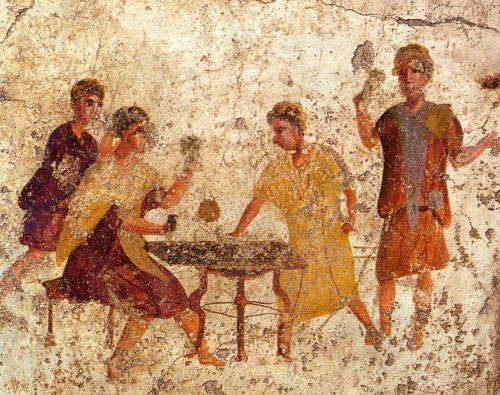
Pay close attention to this image (or a wall painting, to be more precise), where two men play some sort of a dice game on a table, while two others follow the game.
One calls out a win, “EXSI,” or “I won.” The other objects, insisting, “It is not three, it is two.” The image also shows a fritillus, a cup used for shaking and casting dice. That matters because it gives us more than a lively anecdote. It gives us a rare record of Roman leisure in action, complete with voice, dispute, equipment, and shared attention.
The fresco turns play into social history. It reminds us that taverns were not just places to buy food and drink. They were rooms where rules were known, outcomes were watched, and a simple throw could become a public event. For an informed reader, that is where the image becomes especially valuable. It does not stand at the edge of Roman history. It sits close to the center of daily urban life, showing how ordinary people filled time, tested luck, and gathered around forms of play that were already highly structured.
How Roman Play Became Structured Table Play
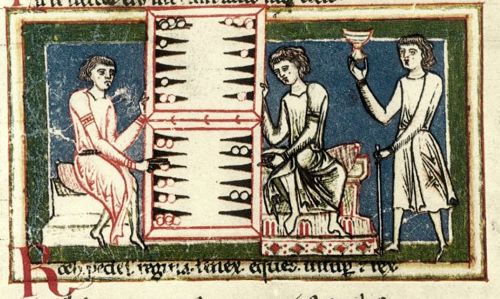
The strongest historical lesson in the fresco is that Roman leisure had already developed many of the habits later associated with organized table play, the concept of which would later be adopted by the casinos of luxurious Las Vegas, followed by the gaming sites offering contemporary casino table games online. That is the social frame from which later table games grew. The game known as duodecim scripta used a marked board, and later tabula refined that format further. A Roman tabula board, as described by the British Museum, used fifteen pieces for each player, moved in opposite directions by the roll of three dice. Getty’s reconstruction of ludus duodecim scriptorumadds more detail: players entered by dice, moved in turn, protected stacked pieces, attacked single pieces, and needed exact throws to bear pieces off.
The Roman logic behind modern table games
These games were not the same as modern gambling tables yet, but they already had the most important parts of table games. They had:
- a shared table,
- a clear order of play,
- rules about what players could do,
- and suspense created by luck inside a game with known rules.
This can be one reason why people think that modern casino table games have lots of common traits with those historic Roman games. Of course, the empire didn’t invent every game we are familiar with from the casino setting but it definitely conceptualized the philosophy: table games should be public, follow clear rules, and be easy for other people to watch and understand.
Even today, modern casino games still use that same basic pattern: everyone can see the table, the counting follows agreed rules, players take turns in order, and the people around the table help create the energy of the game.
Seen in that longer history, casino table games and modern casino games preserve something very old. They keep alive a Roman taste for games with dice that were both easy to gather around and rich enough to invite memory, argument, and repeat play.
Why Taverns Were Ideal Spaces for Leisure
The fresco makes more sense when set beside the physical record of Pompeii’s food and drink trade. Archaeology shows that these were not rare or marginal rooms. They were a dense part of the city’s fabric, placed where movement and attention were already strong. In that setting, play was not separate from tavern life. It was one of the things taverns were built to hold.
| Evidence from Pompeii | Figure | Historical meaning |
| Thermopolia in Pompeii | at least 80 | Quick meals and public gathering were routine parts of city life |
| Bars identified in a major archaeological survey | 158 | Food, drink, and leisure spaces were spread across the city |
| Bars at Pompeii documented in a marble survey | 49 | A large sample shows these places were studied as serious urban features |
| Stone pieces recorded on bars in Pompeii and Herculaneum | over 8,000 | Many counters were finished for display as well as service |
So, taverns were practical spaces, but also visually shaped and publicly visible ones. Their counters faced the street, their service areas were designed for access, and many had enough finish and decoration to draw the eye. In that kind of setting, a dice game was perfectly at home. The fresco does not show an unusual pastime entering a neutral room. It shows a form of leisure that belonged to the daily rhythm of an urban commercial world, where people would eat good food (archaeologists point to a round flatbread with toppings) and have some fun. And what connects Roman taverns to modern leisure? That’s right, still pizza, which keeps inspiring players, game creators, and chefs, of course:
Why the Fresco Still Matters to Historians
The deeper value of the fresco is that it helps historians read Roman leisure from the ground up. Large monuments tell us about power and wealth, but tavern scenes tell us how a city actually felt at eye level. That is why later excavations of Pompeian food outlets have drawn so much attention. When the Archaeological Park of Pompeii presented the fully excavated thermopolium of Regio V, Massimo Osanna called it “another insight into daily life at Pompeii.”
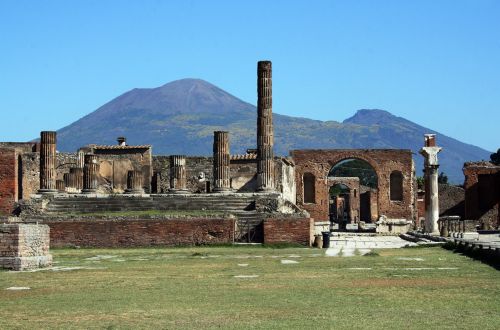
That short phrase fits the dice-players scene almost perfectly. Its importance lies in how much ordinary life it holds in so little space: speech, competition, furniture, gaming tools, and the social habit of gathering around a result. The continuing pull of that evidence is easy to measure. Official visitor data show 4,069,377 visits to Pompeii in 2024, a reminder that the site’s appeal now rests not only on villas and temples, but also on ordinary rooms where daily life still seems close enough to overhear. For historians, the fresco matters because it joins image and behavior. It shows that leisure in Roman taverns was not shapeless downtime. It had rhythm, shared expectations, and a public character that later gaming culture would keep developing in new forms.
About the Author