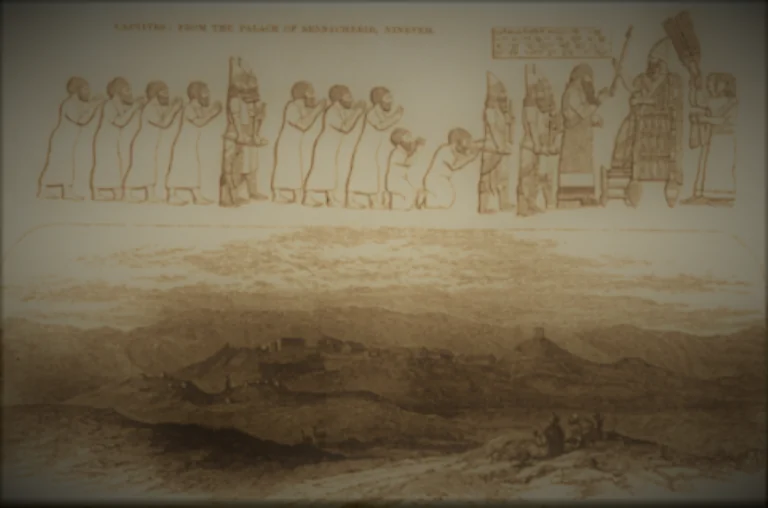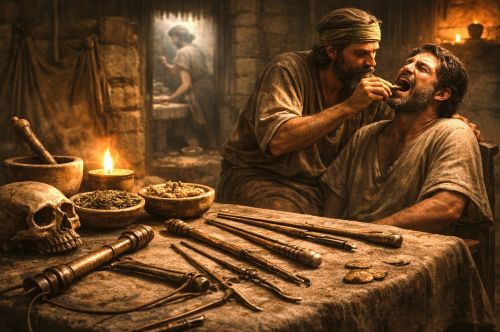
Ancient societies confronted dental pain with ingenuity, developing early treatments and techniques that reveal the origins of dentistry long before modern science formalized practice.

By Matthew A. McIntosh
Public Historian
Brewminate
Introduction: The Deep Origins of Dental Intervention
The history of dentistry begins not with formal institutions or trained specialists but with the most immediate and universal human experience: pain. Long before the emergence of organized medical systems, early human communities confronted dental disease as a persistent and often debilitating condition. Archaeological evidence suggests that tooth decay, abscesses, and wear were common even in prehistoric populations, driven by diet, environmental factors, and the absence of preventative care. In response, early humans developed practical, often improvised methods to alleviate suffering, marking dentistry as one of the oldest forms of medical intervention.
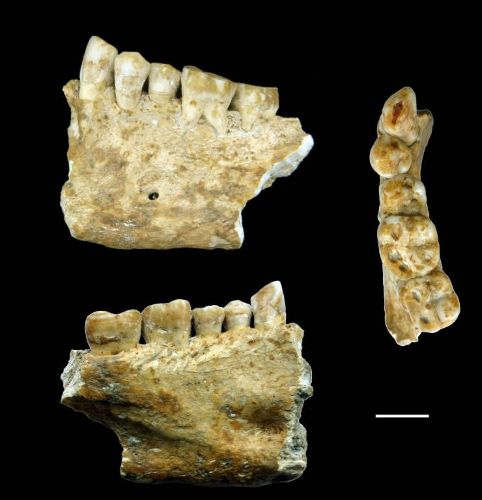
The earliest known examples of dental treatment date back to the Neolithic period, particularly at the site of Mehrgarh in present-day Pakistan. Skeletal remains from this region, dated to approximately 7000–5000 BCE, reveal clear evidence of intentional drilling into molars, likely to remove decayed material. These procedures were performed using bow drills, tools otherwise associated with woodworking, demonstrating an early capacity to adapt existing technology for medical purposes. Microscopic analysis of the drilled teeth shows characteristic concentric grooves consistent with rotary motion, confirming that the drilling was deliberate rather than accidental. Moreover, the presence of multiple treated teeth within the same individuals suggests that such procedures may have been performed repeatedly, indicating not only technical skill but also a degree of community acceptance or trust in the practitioner. The survival of some individuals after these interventions further implies that these procedures were at least partially effective in alleviating pain or slowing the progression of decay, even in the absence of antiseptic techniques or formal anatomical knowledge.
These early dental practices highlight a crucial distinction that would persist throughout the history of medicine: the divide between intervention and understanding. While prehistoric practitioners were capable of performing technically complex procedures, they operated without a scientific framework for disease. Tooth decay was not understood in terms of bacteria or pathology but was instead addressed through direct physical action. This emphasis on treatment rather than prevention reflects both the limitations and the ingenuity of early medical practice, in which empirical observation often preceded theoretical explanation.
The significance of these early interventions lies not only in their technical achievement but also in what they reveal about human adaptation. Dentistry emerged independently in multiple regions, shaped by local materials, cultural beliefs, and environmental conditions. Whether through drilling, extraction, or the application of rudimentary compounds, these practices represent a consistent effort to confront one of the most immediate sources of human suffering. The origins of dental technology are inseparable from the broader history of medicine itself, illustrating how necessity, experimentation, and resilience drove the earliest developments in healthcare.
Prehistoric Dentistry: Drilling, Decay, and Survival
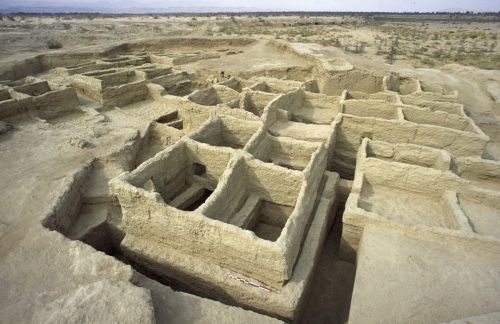
Prehistoric dentistry represents one of the earliest intersections between technological adaptation and medical necessity, emerging in response to the growing prevalence of dental disease in early agricultural societies. As human diets shifted from foraged foods to cultivated grains, the incidence of tooth decay increased markedly, creating new pressures on communities to address chronic pain and infection. Softer, carbohydrate-rich diets contributed to higher rates of cavities, while food processing methods introduced new patterns of wear and damage to teeth. Archaeological evidence from Neolithic populations demonstrates that these challenges were met not with passive endurance but with deliberate and often sophisticated forms of intervention. Dentistry was not a specialized field but a practical response to the immediate demands of survival, embedded within daily life rather than separated into a distinct profession.
The most compelling evidence for early dental procedures comes from the Neolithic site of Mehrgarh, where multiple human remains exhibit drilled molars with clear signs of intentional modification. These cavities, produced using flint-tipped bow drills, show consistent depth and placement, indicating a level of precision that suggests practiced technique rather than experimentation. Microscopic wear patterns confirm rotational drilling, while the absence of post-mortem damage supports the conclusion that these procedures were performed on living individuals. The presence of multiple treated teeth within a single population further implies that such interventions were not isolated but formed part of a repeated and recognized practice.
Despite this technical capability, prehistoric dental intervention was fundamentally constrained by limited anatomical knowledge and the absence of effective pain management. The drilling of teeth without anesthesia would have been an intensely painful experience, raising questions about how such procedures were tolerated and under what circumstances they were performed. It is possible that the severity of dental pain itself made intervention preferable to inaction, particularly in cases of advanced decay or infection. Social dynamics may also have played a role, with individuals placing trust in those within the community who demonstrated skill or experience in performing such procedures. This dynamic underscores the harsh realities of prehistoric life, where survival often depended on enduring or mitigating physical suffering through whatever means were available, even when those means carried significant risk.
In addition to mechanical intervention, there is some evidence to suggest that early practitioners may have attempted rudimentary forms of treatment beyond drilling. Residue analysis in certain archaeological contexts has pointed to the possible use of plant-based substances or resins, which may have been applied to drilled cavities. While the extent and effectiveness of these treatments remain uncertain, they indicate an emerging awareness of the need not only to remove decay but also to address the exposed tooth. Such practices hint at the beginnings of a broader therapeutic approach, even if it was not yet grounded in a systematic understanding of disease.
Ultimately, prehistoric dentistry reflects a balance between ingenuity and limitation, shaped by the constraints of environment, knowledge, and available tools. The use of bow drills to treat dental decay demonstrates a remarkable capacity for innovation, while the absence of preventive strategies highlights the reactive nature of early medical practice. These early interventions did not eliminate dental disease, but they represent a critical step in the long evolution of healthcare, illustrating how human communities confronted one of the most persistent sources of pain with creativity, resilience, and practical skill.
Early Fillings and Medicinal Compounds
As prehistoric dental intervention evolved beyond mechanical drilling, early societies began experimenting with substances intended to soothe pain, protect exposed tissue, and possibly slow the progression of decay. These proto-fillings and medicinal compounds represent an important transitional stage in the history of dentistry, marking the shift from purely physical intervention to a more complex therapeutic approach. Rather than simply removing damaged material, practitioners began to consider how best to stabilize and preserve the affected tooth, even if their understanding of disease remained limited. While these practices were not grounded in modern biochemical knowledge, they reflect careful observation of natural materials and their effects on the human body, as well as a growing willingness to experiment with combinations of substances in pursuit of relief.
Among the most commonly used substances were honey, plant resins, and beeswax, all of which possessed properties that made them suitable for rudimentary dental treatment. Honey has well-documented antibacterial qualities, which may have contributed to its effectiveness in preventing infection when applied to damaged teeth. Resins and waxes, on the other hand, provided a form of physical sealing, helping to protect exposed cavities from further irritation. Although it is difficult to determine the consistency or standardization of these treatments, their repeated appearance across different cultures suggests a shared recognition of their practical value.
Ancient Egyptian medical texts provide some of the earliest written evidence of such practices, offering insight into how dental conditions were understood and treated. The Ebers Papyrus, dating to around 1550 BCE, contains references to remedies for tooth pain that combine natural ingredients such as honey, crushed minerals, and plant-based compounds. These mixtures were often applied directly to the affected area, reflecting a localized approach to treatment. Egyptian practitioners appear to have recognized the importance of both soothing inflammation and protecting damaged tissue, even if their explanations for disease were rooted in broader cosmological or spiritual frameworks. Egyptian medicine frequently blurred the boundaries between empirical practice and spiritual belief, with some remedies incorporating incantations alongside physical substances, illustrating a holistic approach in which healing was understood as both a physical and metaphysical process.
Greek medical traditions further developed these approaches, integrating them into broader systems of medical theory. Practitioners associated with the Hippocratic tradition recommended mixtures of substances such as alum, salt, and pepper to manage dental pain and inflammation. These treatments were informed by humoral theory, which sought to balance bodily fluids as a means of restoring health. While this framework lacked scientific accuracy, it provided a structured way of thinking about disease and treatment, influencing medical practice for centuries.
These early fillings and medicinal compounds illustrate the gradual expansion of dental care from mechanical intervention to therapeutic management. Although limited in effectiveness by the absence of microbiological knowledge, these practices demonstrate a growing awareness of the need to treat not only the symptoms but also the underlying conditions associated with dental disease. They laid the conceptual groundwork for later developments in pharmacology and restorative dentistry.
Dental Prosthetics and Aesthetic Intervention
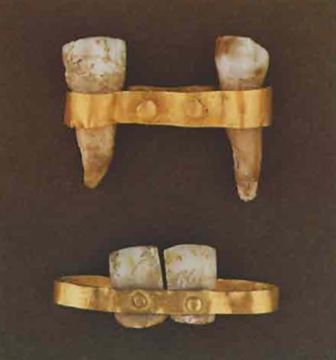
The development of dental prosthetics in ancient societies represents a significant expansion of dental practice beyond pain relief and basic intervention into the realms of restoration and appearance. While early dentistry focused primarily on alleviating discomfort or removing diseased tissue, the creation of artificial replacements and decorative modifications reveals a growing concern with both function and visual presentation. Teeth were not merely biological structures but also markers of identity, status, and cultural belonging, shaping how individuals were perceived within their communities.
One of the earliest and most sophisticated examples of dental prosthetics comes from the Etruscans of central Italy, whose practices date to around the seventh century BCE. Archaeological finds demonstrate the use of gold wire to secure replacement teeth, often using human or animal teeth as substitutes for those that had been lost. These dental bridges were crafted with remarkable precision, indicating both technical skill and an understanding of how to anchor prosthetics within the mouth. The use of gold, a material associated with wealth and durability, further suggests that such procedures were largely limited to elite individuals who could afford both the materials and the expertise required.
In ancient Egypt, evidence for dental prosthetics is more limited but still significant. Some mummified remains show attempts to stabilize loose teeth using ligatures, possibly as a means of preserving dental function or appearance after death. While there is debate among scholars about whether these procedures were performed during life or as part of funerary preparation, they nonetheless indicate an awareness of the importance of maintaining the integrity of the dentition. The harsh, abrasive diet of ancient Egyptians, which often included stone-ground grains, contributed to significant tooth wear and damage, making dental stability an ongoing concern. Even if true restorative prosthetics were rare, the effort to bind or support teeth suggests a recognition of both functional and aesthetic consequences of dental deterioration. Egyptian medical knowledge appears to have prioritized preservation where possible, even if technological limitations prevented the development of more advanced replacement techniques.
In Mesoamerica, particularly among the Maya, dental modification took on a distinct and highly developed cultural dimension. Rather than focusing solely on replacement, Mayan practitioners engaged in the deliberate alteration of living teeth, drilling small cavities into the enamel to insert decorative inlays made from jade, turquoise, shell, or other materials. These procedures required considerable precision to avoid damaging the inner structures of the tooth, suggesting a detailed empirical knowledge of dental anatomy. Unlike the prosthetics of the Etruscans, which emphasized restoration, Mayan dental practices were often aesthetic and symbolic, reflecting social status, identity, and cultural values.
These diverse practices highlight the multiple roles that dental intervention played in ancient societies. Prosthetics and modifications were not limited to functional concerns but were deeply embedded in cultural and social frameworks. The ability to repair or alter teeth could signal wealth, reinforce identity, or fulfill ritual and aesthetic expectations. These procedures demonstrate a willingness to experiment with the human body, pushing the boundaries of what early practitioners could achieve with limited tools and knowledge. In many cases, these interventions required not only technical ability but also a shared cultural acceptance of bodily modification, suggesting that dental practices were shaped as much by social norms as by medical necessity. The interplay between health, appearance, and identity ensured that dentistry occupied a unique position at the intersection of medicine and culture.
The legacy of these early prosthetic and aesthetic interventions is evident in the continued importance of restorative and cosmetic dentistry in the modern world. Techniques have become more advanced and scientifically grounded, but the underlying motivations remain strikingly similar. The desire to restore function, alleviate discomfort, and enhance appearance continues to drive innovation in dental practice. Ancient dental prosthetics represent not only a technical achievement but also an enduring expression of human concern with both health and identity.
Oral Hygiene: Prevention Before Science

Long before the emergence of scientific dentistry, ancient societies developed a range of practices aimed at maintaining oral health and preventing disease. These methods were not based on an understanding of bacteria or plaque but rather on observation, habit, and cultural transmission. The persistence of such practices across diverse regions suggests that early peoples recognized the relationship between cleanliness and comfort, even if they lacked the theoretical framework to explain it. Oral hygiene represents one of the earliest forms of preventative healthcare, grounded in experience rather than formal knowledge.
In ancient Egypt, evidence of deliberate oral hygiene practices is particularly well documented. Medical texts and archaeological findings indicate the use of tooth-cleaning powders made from crushed eggshells, pumice, and ash. These abrasive substances were likely applied with the fingers or rudimentary implements to remove food particles and surface deposits from the teeth. While such mixtures may have been harsh by modern standards, they reflect a clear attempt to manage oral cleanliness and reduce discomfort associated with dental buildup. Egyptian concern with bodily cleanliness more broadly appears to have extended naturally to the care of the mouth. Given the coarse nature of their diet, which often included bread containing small particles of stone from grinding processes, the need for such cleaning methods would have been especially acute. These practices likely became routine, embedded within daily hygiene habits that were reinforced by both cultural norms and practical necessity.
Elsewhere, the use of chew sticks provides another important example of early dental hygiene. These sticks, often derived from specific plant species such as Salvadora persica, were frayed at one end to create a brush-like texture. When chewed and rubbed against the teeth, they functioned as both mechanical cleaners and, in some cases, sources of beneficial plant compounds. The widespread use of chew sticks across Africa, the Middle East, and parts of Asia suggests a long-standing and effective tradition of oral care that persisted well into later historical periods. In addition to their cleaning function, certain plant fibers released compounds with mild antiseptic or anti-inflammatory properties, offering an added layer of protection against oral disease. The portability and accessibility of chew sticks also made them practical for daily use, allowing individuals to maintain oral hygiene without the need for specialized tools or prepared substances.
Despite the absence of microbiological understanding, many of these practices had practical benefits. Abrasive powders could remove surface debris, while certain plant-based materials used in chew sticks contained natural antimicrobial agents. These methods were not without limitations or potential harm, as overly abrasive substances could contribute to enamel wear. The effectiveness of early oral hygiene practices varied, reflecting a balance between beneficial cleaning and unintended damage, shaped by the materials and techniques available.
These approaches to oral hygiene demonstrate that prevention was not entirely absent from ancient medical practice, even if it was not fully conceptualized as such. Through repeated observation and cultural continuity, early societies developed methods that addressed the visible and sensory aspects of dental health. These practices form an important foundation for later developments in dentistry, illustrating that the impulse to prevent disease existed long before the scientific mechanisms behind it were understood.
Pain, Extraction, and the Limits of Knowledge
For much of ancient history, dental treatment was defined less by preservation than by removal. When decay, infection, or trauma reached an advanced stage, extraction became the most reliable, if brutal, solution. Without an understanding of internal tooth structure or the causes of infection, practitioners often viewed the tooth itself as the source of pain rather than the site of disease. Removing the offending tooth offered immediate, visible relief, even if it did little to address underlying conditions or prevent future problems.
The experience of dental pain in antiquity was likely intense and prolonged, shaped by diets that promoted wear and decay and by the absence of effective analgesics. While some natural substances may have provided limited numbing effects, there was no consistent or reliable form of anesthesia. This reality meant that dental procedures, particularly extractions, were physically traumatic events. The decision to remove a tooth was not taken lightly, but in many cases, the severity of pain or infection left little alternative. Individuals may have endured days or even weeks of escalating discomfort before seeking intervention, as the risks of extraction were well understood within communities. The act itself would have required restraint, assistance, and a tolerance for extreme pain, underscoring the severity of dental disease in the absence of effective treatment options. Extraction was not simply a medical procedure but a moment of crisis, shaped by both necessity and fear.
The individuals who performed extractions were rarely specialized medical professionals. In many cases, barbers, craftsmen, or itinerant practitioners took on the role, drawing on practical experience rather than formal training. This reflects the broader structure of premodern medicine, in which technical skill was often separated from theoretical knowledge. The tools used in these procedures, including early forms of forceps, pliers, and later the dental key, were designed to grip and remove teeth with force rather than precision. While effective in achieving their immediate goal, these instruments often caused additional damage to surrounding tissue.
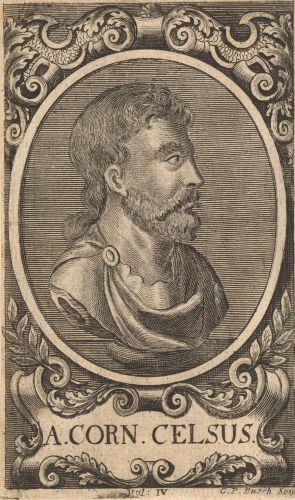
Ancient medical writers provide some insight into how these practices were understood and justified. In Roman texts such as those attributed to Aulus Cornelius Celsus, there are references to the extraction of teeth under specific conditions, along with warnings about potential complications. Celsus advised that teeth should only be removed when absolutely necessary, indicating an awareness of the risks involved. Such writings suggest that even within the limits of contemporary knowledge, there was recognition that intervention could be as dangerous as the disease itself.
Despite these limitations, extraction remained a central component of dental practice for centuries, precisely because it addressed the most immediate and visible problem: pain. The lack of preventive strategies and the limited effectiveness of other treatments meant that practitioners often encountered dental disease only at its most advanced stages. Extraction functioned as a form of crisis management, offering relief at the cost of permanent loss. The persistence of this approach underscores the reactive nature of early dentistry, shaped by necessity rather than long-term planning. This reliance on extraction also reinforced a cultural expectation that severe dental problems would ultimately result in tooth loss, further limiting the development of alternative treatments. The normalization of extraction as a solution reflects both the constraints of available knowledge and the enduring human desire for immediate relief, even when the long-term consequences were significant.
The history of extraction in ancient dentistry reveals both the ingenuity and the constraints of early medical practice. While practitioners developed tools and techniques capable of removing diseased teeth, they operated within a framework that lacked a full understanding of anatomy, infection, and prevention. This gap between capability and knowledge defined much of early dentistry, highlighting the limits of intervention in the absence of scientific insight. Yet even within these constraints, the consistent effort to relieve pain reflects a fundamental aspect of human experience: the drive to confront suffering with whatever means are available.
Cultural Meanings of Teeth and Modification Practices
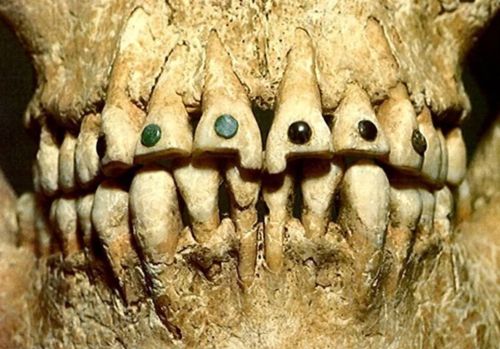
Teeth in ancient societies were not merely functional elements of the human body but carried deep cultural, social, and symbolic meanings. Across a wide range of civilizations, dental modification emerged as a deliberate practice that reflected identity, status, and belonging. These interventions extended beyond medical necessity, revealing how the body itself became a canvas upon which cultural values were inscribed. Dentistry cannot be understood solely as a response to disease but must also be seen as part of broader systems of meaning and representation.
Among the most striking examples of cultural dental modification are those found in Mesoamerican societies, particularly among the Maya. Archaeological evidence demonstrates that individuals underwent procedures in which small cavities were drilled into the front teeth to insert decorative inlays made from jade, turquoise, pyrite, or shell. These modifications required considerable technical precision, as practitioners had to avoid penetrating the pulp of the tooth while securing the inlay in place. The presence of such adornments is often associated with elite status, suggesting that dental modification functioned as a visible marker of social hierarchy.
Beyond Mesoamerica, various African and Asian societies also practiced forms of dental alteration, including filing, sharpening, and extraction for non-medical purposes. These modifications were often tied to rites of passage, signaling transitions such as adolescence, adulthood, or membership within a particular group. In some cultures, altered teeth were considered aesthetically desirable, enhancing an individual’s appearance according to prevailing standards of beauty. These practices demonstrate that dental intervention was not limited to health concerns but was deeply embedded in cultural conceptions of the ideal body. In certain regions, tooth filing or removal was associated with spiritual beliefs, intended to ward off evil or align the individual with community traditions. The consistency of these practices across generations suggests that they were reinforced through ritual, social expectation, and communal identity rather than individual preference alone.
The techniques used in these modifications reveal a high degree of skill and adaptation. Tools originally designed for other purposes were repurposed to shape or alter teeth, and practitioners developed methods to control the extent of modification without causing fatal damage. While pain would have been an unavoidable aspect of these procedures, their continued practice suggests that they were socially meaningful enough to justify the risk and discomfort involved. The ability to endure such interventions may itself have been interpreted as a sign of strength or commitment to communal values.
These practices also highlight the fluid boundary between medicine and body art in ancient societies. What modern perspectives might categorize as cosmetic or ritualistic often existed alongside therapeutic interventions, with little distinction between the two. The same techniques used to remove decay or stabilize teeth could be adapted for aesthetic purposes, reflecting a holistic view of the body in which health, appearance, and identity were interconnected. In many cases, the practitioner performing these modifications may not have been distinguished from a healer, artisan, or ritual specialist, further blurring the lines between medical and cultural roles. This overlap underscores the extent to which dentistry functioned within a broader system of knowledge that integrated physical care with symbolic meaning.
The enduring significance of dental modification lies in its demonstration of how human societies assign value to the body beyond its biological functions. Teeth, as highly visible and enduring features, became powerful symbols through which individuals expressed identity, status, and cultural affiliation. These practices remind us that the history of dentistry is not solely a story of medical progress but also one of cultural expression, shaped by the diverse ways in which societies understand and transform the human body.
Transition Toward Structured Dentistry
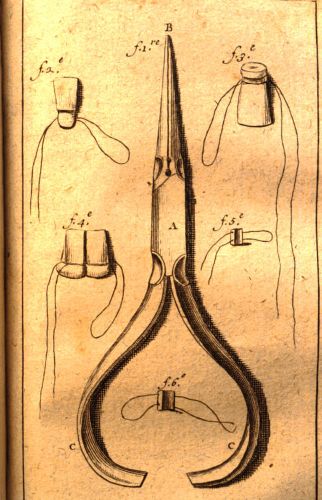
The gradual transition from informal dental practices to more structured forms of dentistry represents a critical turning point in the history of medicine. In earlier periods, dental care was largely embedded within broader healing traditions, carried out by individuals whose roles were not clearly defined or regulated. Remedies were often based on inherited knowledge, local customs, and experiential trial rather than systematic inquiry, and practitioners frequently combined dental work with other forms of treatment such as surgery, herbal medicine, or ritual healing. The increasing complexity of medical knowledge, combined with the growth of urban centers and educational institutions, began to reshape how dental care was understood and practiced. Expanding populations created greater demand for reliable treatment, while intellectual developments encouraged closer observation of the body and its ailments. This shift did not immediately produce a distinct dental profession, but it laid the intellectual and institutional foundations upon which one would eventually emerge, marking a slow but significant move toward organization, consistency, and professional identity.
Greek and Roman medical traditions played a central role in this transformation by introducing more systematic approaches to the study of the human body and disease. Writers such as Hippocrates and Celsus offered some of the earliest recorded discussions of dental conditions, including tooth decay, gum disease, and methods of extraction. These texts did not present dentistry as a separate discipline, but they incorporated dental issues into a broader medical framework, emphasizing observation, classification, and rational explanation. This integration marked an important step toward the formalization of medical knowledge, even if practical dental work remained largely in the hands of non-specialists.
The Roman period in particular saw an expansion in the documentation and dissemination of medical knowledge, facilitated by literacy, trade, and administrative organization. Medical texts circulated more widely, allowing ideas about treatment and procedure to reach a broader audience. While there is limited evidence for specialized dental practitioners in this period, there is clear indication that dental problems were recognized as distinct medical concerns requiring specific forms of intervention. This growing body of written knowledge helped to standardize certain practices, even as local variations persisted.
The development of early professional identities began to shape the practice of medicine, including its dental components. Physicians increasingly distinguished themselves through education and theoretical expertise, often drawing on established texts to support their authority and legitimacy. This emerging intellectual class sought to define medicine as a learned discipline, separating it from purely manual trades and emphasizing the importance of literacy, training, and philosophical grounding. In contrast, those who performed practical procedures, including dental extractions, continued to operate within more informal or trade-based frameworks, relying on hands-on experience rather than formal schooling. This division between theory and practice would become a defining feature of later medical systems, influencing how dentistry evolved as both a technical skill and a field of knowledge. The tension between these roles contributed to debates about authority, expertise, and the proper boundaries of medical practice.
Institutional developments further contributed to the movement toward structured practice. The rise of medical schools and the preservation of classical texts through late antiquity and into the medieval period created a more stable intellectual environment in which medical knowledge could be transmitted and refined. Centers of learning, whether formal schools or scholarly communities, played a crucial role in maintaining continuity with earlier traditions while also encouraging interpretation and adaptation. Although dentistry itself was not yet formalized as a separate discipline, its inclusion within broader medical curricula ensured that dental conditions were increasingly understood within a systematic framework. This process of integration helped bridge the gap between empirical practice and theoretical understanding, gradually elevating dental care from a set of isolated techniques to a recognized component of medical knowledge.
The transition toward structured dentistry was not a single event but a gradual process shaped by intellectual, social, and institutional change. While early practitioners lacked the scientific tools necessary to fully understand dental disease, they contributed to a growing body of knowledge that would eventually support the emergence of dentistry as a recognized profession. Their cumulative observations, recorded in texts and transmitted across generations, created a foundation upon which later innovations could build. The legacy of this period lies in its movement toward organization and standardization, setting the stage for later developments that would transform dental care into a specialized and regulated field, integrated within the broader evolution of scientific medicine.
Historiography: Rethinking Ancient Dentistry
The historiography of ancient dentistry has undergone significant transformation, reflecting broader shifts in how historians approach medicine, technology, and everyday life in the ancient world. Earlier scholarship often treated dental practices as marginal curiosities, emphasizing their rudimentary nature and measuring them against modern scientific standards. This perspective tended to frame ancient dentistry as primitive and unsystematic, reinforcing a narrative of linear medical progress. In recent decades, historians have increasingly challenged this interpretation, arguing that such assessments overlook the cultural, environmental, and intellectual contexts in which ancient practitioners operated.
A key development in this reassessment has been the integration of archaeological evidence with textual analysis. Skeletal remains, dental wear patterns, and evidence of intervention, such as drilled teeth or prosthetic devices, have provided material confirmation of practices that were only partially described in surviving texts. In some cases, microscopic analysis has revealed deliberate drilling techniques and the use of tools that suggest a degree of precision not previously assumed, particularly in sites associated with early agrarian societies. These findings have encouraged scholars to reconsider the level of technical skill and empirical knowledge present in ancient societies, challenging older assumptions that such interventions were accidental or purely experimental. Rather than viewing early dental work as crude experimentation, historians now recognize it as a form of applied knowledge shaped by observation, necessity, and accumulated experience, even in the absence of formal scientific frameworks. The convergence of physical evidence and textual interpretation has reshaped the field, allowing for a more grounded and materially informed understanding of early dental practices.
Historians have begun to pay greater attention to the social dimensions of dental care, exploring who performed these procedures and under what conditions. This line of inquiry has highlighted the diversity of practitioners, from household healers to itinerant specialists, and the ways in which dental treatment intersected with class, gender, and access to resources. By situating dental practices within broader social structures, scholars have moved beyond purely technical descriptions to examine how care was distributed and understood within different communities. This approach has also revealed the extent to which medical authority was negotiated rather than fixed, shaped by reputation, tradition, and local knowledge.
Another important shift in historiography has been the rejection of strictly Eurocentric narratives that privilege Greek and Roman sources at the expense of other traditions. Increasing attention to evidence from regions such as South Asia, the Near East, and East Asia has broadened the scope of inquiry, demonstrating that complex dental practices developed independently across multiple cultures. Archaeological discoveries from sites like Mehrgarh, for example, have shown evidence of early dental drilling dating back several millennia, suggesting that sophisticated intervention was not limited to classical Mediterranean contexts. Likewise, textual traditions from India and China reveal distinct approaches to oral health that developed within their own intellectual and medical systems. These comparative perspectives challenge the notion of a single trajectory of medical development and instead suggest a more interconnected and pluralistic history of dentistry. They underscore the importance of cross-cultural exchange and parallel innovation in shaping early medical practices, while also cautioning against privileging literate traditions over material evidence.
Ultimately, the historiography of ancient dentistry reflects a larger movement within historical scholarship toward contextualization and nuance. By moving away from judgments based solely on modern standards, historians have gained a deeper appreciation for the ingenuity and adaptability of ancient practitioners. This shift does not deny the limitations of early dental care, but it reframes those limitations as part of a dynamic process of knowledge formation. In reconsidering ancient dentistry on its own terms, scholars have opened new avenues for understanding the origins of medical practice and the diverse ways in which human societies have sought to manage pain, preserve health, and intervene in the body.
Conclusion: Innovation in the Face of Pain
The history of ancient dentistry reveals a persistent human effort to confront one of the most immediate and universal forms of suffering: pain in the body itself. Long before the emergence of modern science, individuals and communities developed ways to understand, manage, and alleviate dental discomfort using the tools and knowledge available to them. These responses were not random or purely superstitious, but often reflected careful observation, accumulated experience, and a willingness to experiment. Across cultures and time periods, the shared challenge of dental pain produced a range of practices that, while limited by contemporary understanding, demonstrate a consistent drive toward intervention and relief.
What emerges most clearly from this history is not a narrative of crude beginnings followed by inevitable progress, but a more complex picture of adaptation and ingenuity. Ancient practitioners operated within intellectual frameworks that blended empirical observation with cultural belief, yet they were capable of remarkable technical achievements. Procedures such as drilling, extraction, and even the creation of early prosthetics required skill, precision, and a practical understanding of the body. These innovations did not arise in isolation but were shaped by environmental conditions, available materials, and the social contexts in which care was delivered. Ancient dentistry reflects a broader pattern in the history of medicine, where necessity drove experimentation and gradual refinement.
The limitations of ancient dental care are an essential part of the story. Without knowledge of bacteria, anesthesia, or advanced surgical techniques, treatments were often painful, inconsistent, and sometimes dangerous. Yet these limitations should not obscure the significance of what was achieved. The willingness to intervene, even under uncertain conditions, represents an important step in the development of medical practice. It marks a shift from passive endurance of suffering to active attempts at treatment, laying the groundwork for later advances that would build upon these early efforts.
Ultimately, the evolution of dentistry in the ancient world underscores a fundamental aspect of the human experience: the refusal to accept pain as inevitable. The practices developed across different societies were shaped by their own cultural and intellectual contexts, yet they share a common purpose rooted in care, survival, and resilience. By examining these early efforts on their own terms, we gain not only a clearer understanding of the origins of dental medicine but also a deeper appreciation for the enduring human capacity to innovate in the face of discomfort and uncertainty.
Bibliography
- Almas, Khalid. “The Antimicrobial Effects of Extracts of Azadirachta indica (Neem) and Salvadora persica (Arak) Chewing Sticks.” Indian Journal of Dental Research 10, no. 1 (1999): 23–26.
- Alt, Kurt W., Friedrich W. Rösing, and Maria Teschler-Nicola, eds. Dental Anthropology: Fundamentals, Limits, and Prospects. Vienna: Springer, 1998.
- Becker, Marshall J. “Etruscan Gold Dental Appliances: Three Newly Discovered Examples.” American Journal of Archaeology 99, no. 3 (1995): 509–521.
- Bryan, Cyril P., trans. The Papyrus Ebers. London: Geoffrey Bles, 1930.
- Celsus, Aulus Cornelius. De Medicina. Translated by W. G. Spencer. Cambridge, MA: Harvard University Press, 1935.
- Coppa, A., L. Bondioli, A. Cucina, D. W. Frayer, C. Jarrige, J.-F. Jarrige, G. Quivron, M. Rossi, and R. Vidale. “Palaeontology: Early Neolithic Tradition of Dentistry.” Nature 440 (2006): 755–756.
- Guerini, Vincenzo. A History of Dentistry from the Most Ancient Times Until the End of the Eighteenth Century. New York: Lea & Febiger, 1909.
- Irish, Joel D., and Greg C. Nelson, eds. Technique and Application in Dental Anthropology. Cambridge: Cambridge University Press, 2008.
- Jackson, Ralph. Doctors and Diseases in the Roman Empire. Norman: University of Oklahoma Press, 1988.
- Larsen, Clark Spencer. Bioarchaeology: Interpreting Behavior from the Human Skeleton. Cambridge: Cambridge University Press, 1997.
- Leek. F. Filce. “The Practice of Dentistry in Ancient Egypt.” The Journal of Egyptian Archaeology 53 (1967), 51-58.
- Nunn, John F. Ancient Egyptian Medicine. Norman: University of Oklahoma Press, 1996.
- Nutton, Vivian. Ancient Medicine. 2nd ed. London: Routledge, 2012.
- Raymond, Edward H. “Ancient and Modern Dentistry.” The North American Review 156:438 (1893), 631-634.
- Ring, Malvin E. Dentistry: An Illustrated History. New York: Abradale Press, 1985.
- Scott, G. Richard, and Christy G. Turner II. The Anthropology of Modern Human Teeth: Dental Morphology and Its Variation in Recent Human Populations. Cambridge: Cambridge University Press, 1997.
- Siraisi, Nancy G. Medieval and Early Renaissance Medicine: An Introduction to Knowledge and Practice. Chicago: University of Chicago Press, 1990.
- Tiesler, Vera. The Bioarchaeology of Artificial Cranial Modifications: New Approaches to Head Shaping and Its Meanings in Pre-Columbian Mesoamerica and Beyond. New York: Springer, 2013.
- Totelin, Laurence M. V. Hippocratic Recipes: Oral and Written Transmission of Pharmacological Knowledge in Fifth- and Fourth-Century Greece. Leiden: Brill, 2008.
- Zias, Joseph and Karen Numeroff. “Ancient Dentistry in the Eastern Mediterranean: A Brief Review.” Israel Exploration Journal 36:1/2 (1986), 65-67.
- Zysk, Kenneth G. Asceticism and Healing in Ancient India: Medicine in the Buddhist Monastery. New York: Oxford University Press, 1991.
Originally published by Brewminate, 03.31.2026, under the terms of a Creative Commons Attribution-NonCommercial-NoDerivatives 4.0 International license.
About the Author