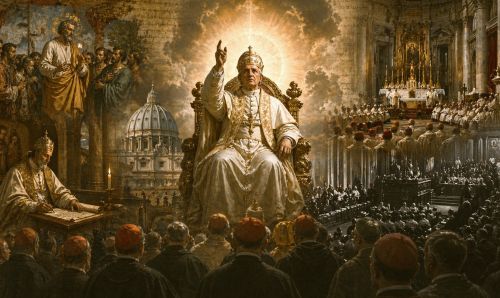
Papal infallibility emerged gradually from early Christian authority claims into a defined doctrine in 1870, shaped by conflict, theology, and the institutional need for certainty.

By Matthew A. McIntosh
Public Historian
Brewminate
Introduction: Authority, Certainty, and the Question of Error
The doctrine of papal infallibility, formally defined in 1870 at the First Vatican Council, stands as one of the most striking assertions of authority within the history of Christianity. It declares that the pope, when speaking ex cathedra on matters of faith and morals, is preserved from error by divine assistance. This claim, however narrowly defined in its official formulation, raises profound questions about the nature of authority, the limits of human knowledge, and the relationship between institutional structures and divine truth. To modern observers, it can appear either as the culmination of a long theological tradition or as a dramatic assertion shaped by the anxieties of a changing world.
At its core, papal infallibility must be understood in contrast to a commonly misunderstood concept: impeccability. The doctrine does not assert that the pope is morally perfect or incapable of personal error in all matters, but rather that under specific conditions, his formal teachings on doctrine are protected from error. This distinction is crucial, yet historically contested, as critics have often conflated the two and challenged the legitimacy of papal claims. Even within Catholic theology, the precise boundaries of infallibility have been subject to debate, particularly regarding what constitutes an ex cathedra statement and how such authority relates to the broader teaching office of the Church. These internal debates have shaped both the application and interpretation of the doctrine, highlighting the tension between clarity and flexibility within the Church’s understanding of its own authority. The effort to define infallibility has been as much about limiting and specifying its scope as it has been about asserting its existence, reflecting an ongoing concern to balance institutional certainty with theological nuance.
The historical roots of this doctrine are complex and layered, extending back to early interpretations of biblical passages such as Matthew 16:18–19 and John 21:15–17. These texts were understood to grant a unique role to the apostle Peter, whose authority was later associated with the bishops of Rome. Yet the leap from primacy to infallibility was neither immediate nor universally accepted. For centuries, the authority of the Roman see was expressed in terms of leadership, guardianship, and doctrinal reliability, rather than in terms of absolute immunity from error. The development of infallibility as a formal doctrine required not only theological reflection but also the gradual consolidation of institutional power.
Papal infallibility is best understood as the product of a long historical process in which theological ideas, ecclesiastical structures, and political circumstances converged. From its biblical and early church foundations through its medieval elaboration and eventual definition at Vatican I, the doctrine reflects an ongoing effort to articulate certainty in a world marked by division and change. By examining this development across time, it becomes possible to see papal infallibility not as a static or inevitable feature of Christian belief, but as a constructed response to enduring questions about authority, truth, and the possibility of error.
Biblical Foundations: Peter, Authority, and Interpretation
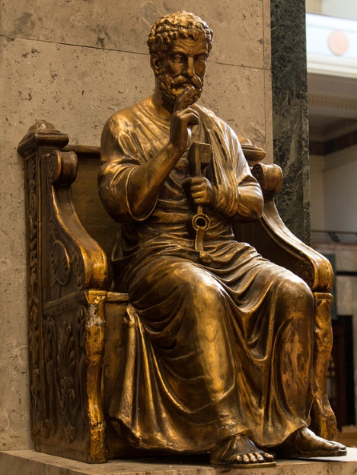
The doctrine of papal infallibility finds its earliest foundations not in explicit statements of doctrinal immunity from error, but in scriptural passages that were later interpreted as establishing a unique authority for the apostle Peter. Among these, Matthew 16:18–19 occupies a central place: “You are Peter, and on this rock I will build my church…I will give you the keys of the kingdom of heaven.” This passage has been read within Catholic tradition as conferring a singular role upon Peter, one that includes authority to bind and loose, understood as both disciplinary and doctrinal. Yet the meaning of this text has been debated since antiquity, with interpretations varying widely across different theological traditions.
Closely related is John 21:15–17, in which the risen Christ instructs Peter to “feed my sheep.” This passage has often been taken to imply a pastoral authority extending over the entire Christian community. Early Christian writers saw in this exchange a symbolic reaffirmation of Peter’s leadership following his earlier denial of Christ, reinforcing the idea that Peter held a distinctive position among the apostles. Yet the text itself does not explicitly articulate a doctrine of infallibility, nor does it define the scope or limits of Peter’s authority, leaving considerable room for later interpretation and development.
The interpretation of these passages in the early Church was neither uniform nor uncontested. While some writers emphasized Peter’s prominence, others understood the “rock” of Matthew 16 as referring to Peter’s confession of faith rather than to his person. This distinction would later become a central point of divergence between Catholic and Protestant interpretations, particularly during the Reformation, when scriptural authority was revisited with renewed intensity. Even within early Christian communities, authority was often understood in collegial terms, shared among bishops rather than concentrated in a single figure, reflecting patterns of governance inherited in part from Jewish synagogue leadership and Greco-Roman civic structures. The absence of a clearly defined doctrine of papal infallibility in the New Testament reflects the broader reality that early Christianity operated within a fluid and evolving structure of leadership, one in which hierarchy was emerging but not yet rigidly defined, and in which competing interpretations of authority could coexist without immediate resolution.
Despite this ambiguity, the association of Peter with Rome gradually elevated the status of the Roman Church. By the second and third centuries, appeals to Rome in matters of doctrinal dispute became more common, and the Roman bishop was increasingly viewed as a figure of reference for maintaining orthodoxy. This development was not based on a single scriptural mandate, but on a cumulative tradition that linked apostolic authority with institutional continuity. The idea that Rome possessed a special role in preserving doctrinal truth began to take shape, even if it had not yet been formalized into a precise theological claim.
The tension between scriptural interpretation and institutional development remained a defining feature of the tradition. While later doctrines would draw heavily on these biblical passages, their meanings were continually reinterpreted in light of changing historical circumstances, including theological controversies, schisms, and the growing need for centralized authority. The authority attributed to Peter became a flexible concept, capable of supporting a range of ecclesiological models, from conciliar systems that emphasized collective decision-making to more hierarchical frameworks centered on the bishop of Rome. This adaptability was both a strength and a source of contention, as different groups could appeal to the same scriptural foundations while arriving at markedly different conclusions about authority and truth. The path from biblical text to formal doctrine was neither linear nor uncontested but marked by ongoing negotiation between interpretation and institutional necessity.
The biblical foundations of papal infallibility are best understood as a starting point rather than a finished doctrine. The New Testament provides language and imagery that can be read in support of Petrine authority, but it does not explicitly define the later claims associated with the papacy. The development of infallibility as a doctrine depended on the interplay between scripture, tradition, and historical context, as successive generations sought to interpret these foundational texts in ways that addressed their own theological and institutional needs.
Early Church Thought: Primacy without Infallibility
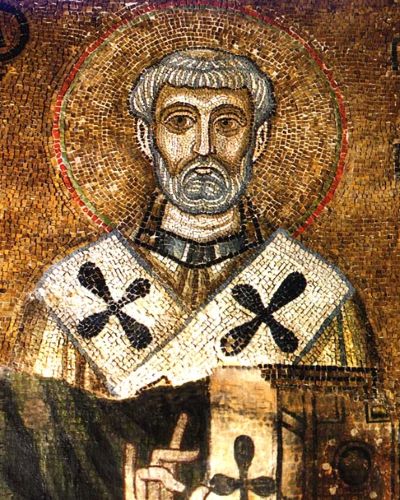
In the centuries following the apostolic age, the authority of the bishop of Rome developed within a broader framework of episcopal collegiality, rather than as a singular and absolute doctrinal voice. Early Christian communities were governed by networks of bishops who understood themselves as successors to the apostles, sharing responsibility for preserving orthodoxy. Within this structure, the Roman bishop gradually came to occupy a position of prominence, often appealed to in disputes, yet this primacy did not equate to an established doctrine of infallibility. Authority was recognized, but it remained relational, negotiated, and embedded within the collective life of the Church.
One of the earliest examples of Roman intervention appears in the late first century with the letter known as 1 Clement, traditionally attributed to Clement of Rome. Addressed to the Corinthian church, the letter urges unity and the restoration of order, reflecting an early exercise of moral and pastoral authority beyond Rome’s immediate jurisdiction. While later interpreters would see in this correspondence a sign of emerging Roman primacy, the text itself presents a tone of fraternal correction rather than juridical command. It demonstrates influence, but not an explicit claim to doctrinal supremacy or immunity from error.
By the second century, theologians such as Irenaeus of Lyons articulated a more developed view of the Roman Church’s significance. In his efforts to combat heresy, particularly Gnosticism, Irenaeus emphasized the continuity of apostolic teaching preserved through episcopal succession, highlighting Rome as a central point of reference. He described the Roman Church as possessing a “preeminent authority,” a phrase that has been the subject of extensive scholarly debate and interpretive nuance. Some later Catholic theologians would read this language as anticipating stronger claims of papal authority, while many modern historians caution against retroactively imposing later doctrinal developments onto earlier texts. For Irenaeus, Rome’s importance lay in its role as a reliable witness to authentic tradition, especially in a time when competing teachings threatened to fragment Christian belief. His appeal to Rome functioned as an argument from continuity and visibility rather than from juridical supremacy, grounding authority in the preservation of apostolic teaching rather than in an inherent guarantee of doctrinal correctness. This distinction underscores the fundamentally historical and evidentiary nature of his argument, which sought to persuade through lineage and consistency rather than through claims of absolute theological certainty.
The third century further illustrates the limits of Roman authority within the early Church. Disputes such as the controversy over the rebaptism of heretics revealed significant tensions between Rome and other episcopal centers. Cyprian of Carthage, for example, acknowledged the honor of the Roman see but firmly rejected any notion that it possessed unilateral authority over other bishops. He argued for the equality of episcopal office, insisting that each bishop held responsibility within his own jurisdiction. These debates demonstrate that while Rome was respected, its authority was neither uncontested nor absolute.
Theological reflection during this period continued to reinforce the distinction between primacy and infallibility. Early Church Fathers frequently emphasized the importance of consensus, tradition, and the guidance of the Holy Spirit within the entire Church, rather than locating doctrinal certainty in a single office. Even when Rome played a decisive role in resolving disputes, its authority was often persuasive rather than coercive, grounded in its reputation for orthodoxy rather than in a formally defined charism of infallibility. The concept of doctrinal reliability was tied to the collective witness of the Church across time and space, not to the pronouncements of a single individual. This broader ecclesiological vision allowed for disagreement, debate, and even conflict without collapsing into fragmentation, as unity was maintained through shared tradition rather than enforced uniformity. Such a framework reveals that early Christianity possessed mechanisms for preserving doctrinal coherence that did not depend on the later articulation of infallibility, highlighting a significant difference between early and later understandings of authority.
The early Church provides a picture of Roman primacy that is significant but not yet absolute. The bishop of Rome functioned as a center of unity and a guardian of tradition, yet without the later theological framework that would define infallibility. This period reveals a crucial stage in the development of papal authority, where influence and respect laid the groundwork for future claims, even as the concept of doctrinal immunity from error remained undeveloped and, in many respects, unimagined.
Late Antiquity and the Early Middle Ages: Authority Expands
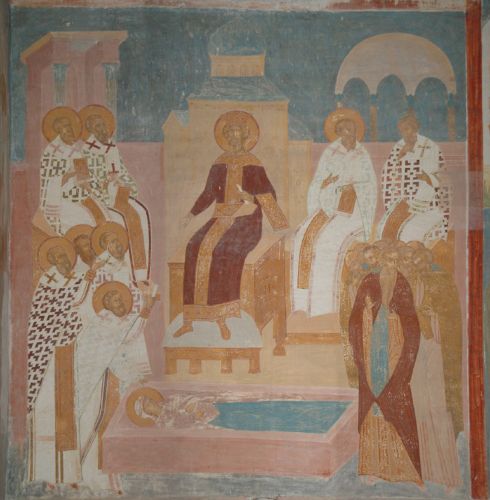
As the Western Roman Empire declined and eventually collapsed in the fifth century, the institutional landscape of the Mediterranean world underwent a profound transformation. In this environment of political fragmentation and uncertainty, the bishop of Rome increasingly assumed roles that extended beyond purely spiritual leadership. Without a strong imperial presence in the West, the papacy became a stabilizing force in the city of Rome and its surrounding regions. This shift did not immediately produce a doctrine of infallibility, but it did expand the practical authority of the papal office in ways that would later support more developed theological claims.
The pontificate of Leo I (440–461) represents a critical moment in this transition. Leo asserted the primacy of the Roman see with a clarity and confidence that surpassed many of his predecessors, grounding his claims in the authority of Peter and the continuity of apostolic succession. His Tome of Leo, presented at the Council of Chalcedon in 451, played a decisive role in shaping Christological doctrine, and its acceptance by the council enhanced the prestige of the papacy. Yet Leo’s authority was not exercised in isolation; it was affirmed within a conciliar framework, demonstrating that even at this stage, papal influence operated in dialogue with the broader episcopal community. The bishops gathered at Chalcedon famously responded, “Peter has spoken through Leo,” a phrase often cited as evidence of early recognition of Roman authority, though its meaning remains debated among scholars. Rather than indicating a fully developed doctrine of infallibility, this acclamation reflects the persuasive authority Leo commanded within a shared theological enterprise. His influence depended not only on claims of Petrine succession but also on his ability to articulate doctrine in a manner that resonated with the broader consensus of the Church, reinforcing the idea that authority at this stage was both asserted and received.
The development of papal authority continued in the late fifth century under Gelasius I (492–496), who articulated the influential “theory of the two powers,” distinguishing between sacerdotal authority and royal power. In his letter Duo sunt, Gelasius argued that while both spheres were divinely ordained, the spiritual authority of the priesthood ultimately held greater weight in matters of salvation. This formulation provided an intellectual foundation for later claims about the superiority of ecclesiastical authority over secular rulers, even as it stopped short of asserting direct political control. Gelasius’s thought illustrates how theological reflection began to intersect with the realities of governance, shaping a more expansive vision of papal influence.
The sixth century further accelerated this process, particularly during the pontificate of Gregory I (590–604). Known as Gregory the Great, he operated in a context where Byzantine authority in Italy was weak and often ineffective. Gregory took on responsibilities that resembled those of a civic administrator, organizing the defense of Rome, negotiating with the Lombards, and managing the extensive papal estates known as the patrimony of St. Peter. His correspondence reveals a figure deeply engaged in both spiritual and temporal concerns, navigating the complexities of leadership in a fragmented political landscape.
Gregory’s actions did not amount to a formal claim of sovereignty, yet they effectively positioned the papacy as a governing authority within central Italy. His willingness to act in the absence of imperial direction demonstrated a pragmatic approach to power, one that prioritized stability and the welfare of the population. This included overseeing grain distribution, addressing famine conditions, and coordinating relief efforts that would otherwise have fallen to imperial officials no longer capable of fulfilling those roles. Gregory maintained a theological humility, famously adopting the title servus servorum Dei (servant of the servants of God), which underscored the tension between expanding authority and spiritual ideals of service. This dual identity, at once pastoral and administrative, became a defining feature of the medieval papacy and helped legitimize its growing involvement in temporal affairs without fully abandoning its spiritual self-conception.
By the early Middle Ages, the cumulative effect of these developments had significantly elevated the status of the papal office. The bishop of Rome was no longer merely a prominent figure within a network of bishops, but a central authority whose influence extended across both religious and political domains. Although the doctrine of infallibility remained undefined, the conditions that would make such a doctrine conceivable were taking shape. Authority had expanded in practice, and with it came the need to articulate more clearly the theological basis for that authority in an increasingly complex and contested world.
Medieval Developments: Seeds of Infallibility

The medieval period marked a decisive turning point in the development of papal authority, as theological reflection, canon law, and institutional expansion began to converge in new and more systematic ways. While earlier centuries had emphasized Rome’s primacy within a collegial structure, the Middle Ages witnessed a gradual shift toward more centralized claims of authority, often in response to both internal disputes and external pressures on the Church. This transformation did not immediately produce the doctrine of infallibility, but it did cultivate the intellectual and institutional conditions that would make such a doctrine conceivable. The papacy increasingly presented itself not only as a guardian of tradition but as the definitive interpreter of it, a role that required clearer assertions of doctrinal reliability. As ecclesiastical structures became more complex and geographically expansive, the need for a unifying authority capable of resolving disputes with finality became more pronounced, further elevating the importance of the papal office in both theory and practice.
One of the most significant factors in this evolution was the rise of canon law, particularly through collections such as Gratian’s Decretum in the twelfth century. Gratian’s work sought to reconcile contradictory legal traditions within the Church, and it elevated the role of papal decretals as authoritative sources of law. The papacy became central to the resolution of legal and doctrinal disputes, and its pronouncements were increasingly treated as binding across Christendom. This legal centralization reinforced the perception that the pope possessed a unique authority to define and clarify doctrine, even if the precise theological justification for such authority remained under development.
Theological thinkers of the high and late Middle Ages further contributed to this process by exploring the nature and limits of papal authority. Some such as Thomas Aquinas acknowledged the pope’s role as the highest visible authority in the Church, yet they also emphasized the importance of scripture and tradition as ultimate standards. Aquinas did not articulate a doctrine of infallibility in the later sense, but his work helped frame the papacy within a broader theological system in which truth was both divinely revealed and institutionally mediated. Debates over the relationship between pope and council, particularly during periods of crisis such as the Avignon Papacy and the Great Western Schism, revealed ongoing tensions about where ultimate authority resided.
It was within the Franciscan tradition of the late thirteenth century that more explicit ideas resembling infallibility began to emerge. Thinkers such as Peter John Olivi argued for the reliability of papal judgments in matters of faith, particularly in the context of disputes over poverty and ecclesiastical authority. These arguments were often motivated by practical concerns, as theologians sought to defend the legitimacy of papal decisions against critics who questioned the consistency or authority of earlier rulings. The notion of papal reliability began to take on a more defined conceptual shape, suggesting that under certain conditions the pope’s authoritative teachings could not lead the Church into doctrinal error. While still far from the later formal definition, these ideas represented a significant step toward articulating a theological basis for papal certainty, moving beyond mere primacy into questions of doctrinal protection and continuity. The emergence of such arguments reflects a broader medieval concern with stability and coherence in an increasingly complex and often contested ecclesiastical landscape.
By the end of the medieval period, the papacy had accumulated both the institutional power and the intellectual framework necessary for stronger doctrinal claims. Although the idea of infallibility remained contested and undefined, the trajectory of development was clear. The pope had become not only a central figure in governance and law but also a focal point for theological authority. The seeds of infallibility had been sown within a complex interplay of legal innovation, theological reflection, and historical circumstance, setting the stage for their eventual definition in the modern era.
Conciliarism vs. Papal Supremacy (14th–15th Centuries)

The fourteenth and fifteenth centuries brought the most serious institutional crisis the medieval papacy had yet faced, forcing a direct confrontation between competing models of authority within the Church. The Avignon Papacy (1309–1377) and the subsequent Great Western Schism (1378–1417), during which multiple claimants to the papal throne existed simultaneously, shattered the perception of a singular, unified papal authority. In this space of division and uncertainty, the question of where ultimate authority resided became unavoidable. If rival popes could each claim legitimacy, then the Church required a mechanism for resolving such disputes that did not rely solely on papal assertion.
Conciliarism emerged as a powerful response to this crisis, arguing that an ecumenical council held authority superior to that of the pope in certain circumstances. The Council of Constance (1414–1418) embodied this principle most clearly in the decree Haec Sancta, which declared that a general council derived its authority directly from Christ and that all Christians, including the pope, were bound to obey it. This assertion represented a significant challenge to papal supremacy, proposing a model of governance in which collective deliberation could override individual authority. The council ultimately resolved the schism by deposing or accepting the resignation of rival popes and electing Martin V, demonstrating the practical effectiveness of conciliar intervention.
Despite its success in addressing the immediate crisis, conciliarism did not achieve lasting dominance. The Council of Basel (1431–1449) attempted to continue and expand conciliar principles, but it faced increasing resistance from the papacy, which sought to reassert its authority. Papal supporters argued that councils themselves required papal approval to be legitimate, thereby subordinating conciliar authority to the papal office. This debate revealed a fundamental tension within ecclesiology: whether the Church’s ultimate authority resided in a collective body or in a singular office. The resolution of this tension would shape the future trajectory of papal power.
The intellectual and theological arguments on both sides were deeply rooted in earlier traditions but took on new urgency in light of contemporary events. Conciliarists drew on ideas of corporate unity and the shared responsibility of the episcopate, while proponents of papal supremacy emphasized the necessity of a visible, stable center of authority. The experience of schism itself became a key point of interpretation, with conciliarists viewing it as evidence of the dangers of unchecked papal power, and papalists interpreting it as a consequence of disobedience and fragmentation that required stronger central leadership. These competing readings underscore how historical crises can reshape theological arguments, as each side sought to align its position with the preservation of unity and truth.
By the late fifteenth century, papal supremacy had largely reasserted itself, though not without leaving a lasting imprint from the conciliar movement. The failure of conciliarism to establish a permanent alternative did not erase its challenge, but it did reinforce the papacy’s determination to consolidate its authority in more systematic and defensible ways. In the aftermath of these conflicts, papal theorists increasingly emphasized continuity, stability, and the necessity of a singular doctrinal voice capable of preserving unity across a diverse and expanding Christian world. This intellectual shift helped lay the groundwork for later developments, as the Church sought not merely to assert papal authority, but to define its scope and limits with greater precision. The conciliar crisis contributed indirectly to the eventual articulation of doctrines such as papal infallibility, as it exposed the dangers of ambiguity and division while highlighting the perceived need for a clear and reliable center of doctrinal authority. The struggle between council and pope represents a crucial chapter in the long evolution of ideas about authority, setting the stage for further developments in the early modern and modern periods.
Early Modern Period: Reformation and Counter-Reformation

The early modern period marked a profound rupture in Western Christianity, as the Protestant Reformation challenged not only specific doctrines but the very structure of ecclesiastical authority. Reformers such as Martin Luther and John Calvin rejected the notion that doctrinal truth required validation through the papacy, instead emphasizing the primacy of scripture and the authority of individual conscience informed by it. The authority of the pope was not merely questioned but fundamentally redefined, stripped of its central role in determining orthodoxy. This confrontation forced the Catholic Church to clarify and defend its own claims with greater precision than ever before.
At the heart of the Reformation critique was a rejection of what reformers perceived as the overreach of papal authority. Luther’s opposition to indulgences quickly expanded into a broader challenge to the papal system, culminating in his assertion that councils and popes could err, a claim that directly undermined centuries of developing assumptions about Roman reliability. This argument was not made in isolation but was embedded within a wider theological framework that prioritized scripture as the ultimate authority, thereby relocating the source of doctrinal certainty away from institutional structures. The fragmentation of Western Christianity that followed created an environment in which competing authorities claimed legitimacy, intensifying the need for clear and authoritative definitions within the Catholic tradition. In this fractured landscape, the question was no longer whether authority existed, but where it resided and how it could be recognized as legitimate.
The Catholic response took shape most decisively at the Council of Trent (1545–1563), which sought to address both doctrinal disputes and institutional reform. While Trent did not define papal infallibility, it reinforced the authority of the Church as the interpreter of scripture and tradition, thereby indirectly strengthening the position of the papacy within that framework. The council emphasized the continuity of apostolic teaching and rejected the principle of sola scriptura, asserting that divine revelation was transmitted through both written and unwritten traditions. This reaffirmation of institutional authority provided a foundation upon which later doctrines, including infallibility, could be more clearly articulated, even as it carefully avoided concentrating doctrinal authority exclusively in the person of the pope. Instead, Trent operated within a conciliar framework, illustrating the continued importance of collective deliberation while nonetheless reinforcing the structures that supported papal leadership.
In the post-Tridentine period, the papacy continued to consolidate its authority through both theological and administrative means. The development of centralized structures, such as the Roman Congregations, allowed for more consistent oversight of doctrine and discipline across the Catholic world. Theologians engaged in increasingly sophisticated discussions about the nature of ecclesiastical authority, exploring questions that would later become central to the definition of infallibility. These developments reflected a broader effort to create a more unified and resilient Church in the face of ongoing challenges.
The intellectual climate of the early modern period also contributed to the shaping of papal authority. The rise of confessional states and the increasing entanglement of religion with political power created new pressures on the Church to assert its independence and coherence, particularly as rulers sought to control or influence ecclesiastical structures within their territories. In some cases, movements such as Gallicanism in France and similar tendencies elsewhere attempted to limit papal authority in favor of national churches, raising fundamental questions about the balance between local autonomy and universal jurisdiction. These tensions highlighted the need for a clearer articulation of spiritual authority that could withstand both internal dissent and external political pressure. Theological reflection increasingly turned toward defining the unique role of the papacy in safeguarding doctrinal unity, even if the precise contours of that role remained under debate.
By the end of the early modern period, the groundwork had been laid for the eventual definition of papal infallibility, even if the doctrine itself remained formally undeclared. The Reformation had exposed the vulnerabilities of a system in which authority was contested and fragmented, while the Counter-Reformation had responded by reinforcing institutional coherence and doctrinal clarity. The idea of a definitive teaching authority became increasingly compelling, setting the stage for its formal articulation in the nineteenth century as the Church continued to navigate the challenges of modernity.
The Nineteenth Century Context: Crisis and Centralization
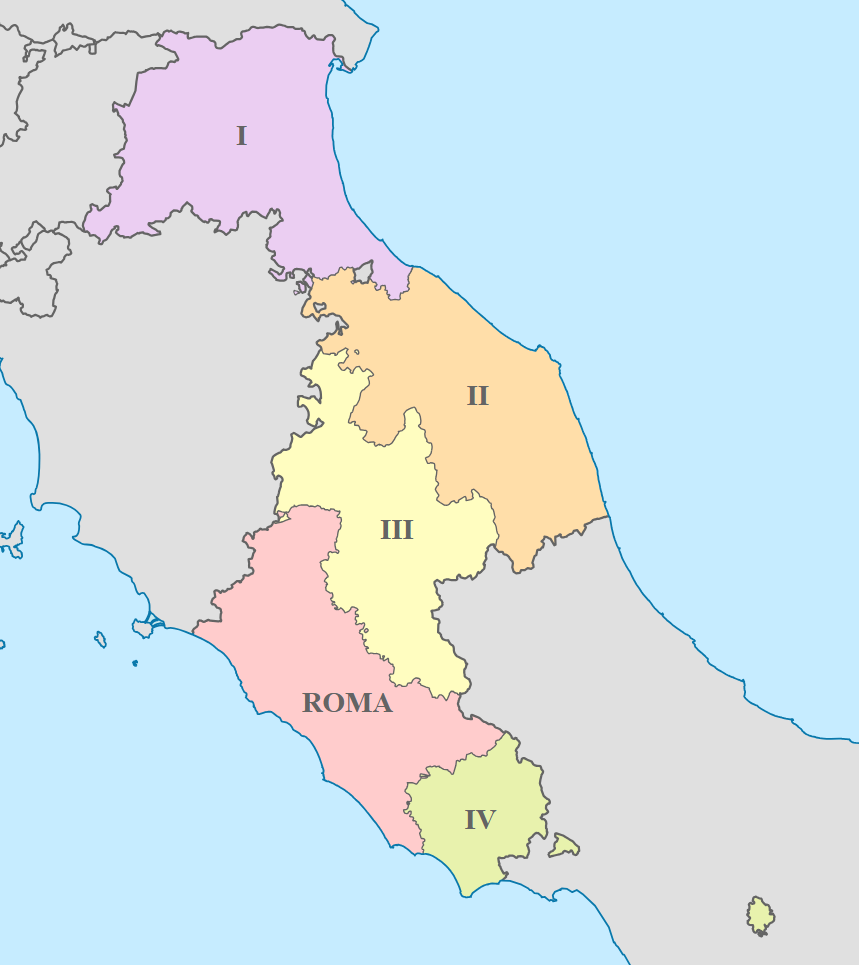
The nineteenth century provided the immediate historical context in which the doctrine of papal infallibility would be formally defined. It was an era marked by profound political upheaval, intellectual transformation, and challenges to traditional authority across Europe. The French Revolution and the subsequent rise of secular nationalism had significantly weakened the temporal power of the papacy, culminating in the gradual erosion of the Papal States. The Church faced the dual challenge of defending its spiritual authority while adapting to a rapidly changing political landscape that increasingly marginalized religious institutions.
Central to this period was the pontificate of Pope Pius IX (1846–1878), whose long reign witnessed both the collapse of papal temporal sovereignty and the consolidation of doctrinal authority. Initially perceived as a reform-minded pope, Pius IX became increasingly conservative in response to the revolutionary movements of 1848 and the growing influence of liberalism, which he came to view as fundamentally incompatible with the Church’s claims to authority. The loss of the Papal States in 1870 symbolized a decisive shift, as the papacy was stripped of its territorial base and forced to redefine its role within a new political order dominated by nation-states. The emphasis on spiritual authority intensified, contributing to a climate in which stronger doctrinal claims became both possible and desirable. This transformation was not merely reactive but strategic, as the papacy sought to convert the loss of temporal power into a more concentrated and universal form of spiritual leadership.
The intellectual currents of the nineteenth century further shaped this development. Rationalism, scientific advancement, and historical criticism challenged traditional religious beliefs, raising questions about the reliability of established doctrines and the authority of ecclesiastical institutions. These developments did not occur in isolation but were part of a broader cultural shift that privileged empirical evidence and critical inquiry over inherited tradition. The Catholic Church sought to assert a clear and stable foundation for truth that could withstand these challenges, positioning itself as a guardian of certainty in an increasingly skeptical age. The idea of infallibility offered a way to affirm the reliability of doctrinal teaching in the face of growing doubt, providing a theological counterpoint to the uncertainties introduced by modern intellectual movements. Infallibility functioned not only as a doctrinal claim but as a response to a wider crisis of authority that extended beyond the Church itself.
The rise of Ultramontanism played a crucial role in promoting the centralization of papal authority. This movement emphasized the supremacy of the pope over local churches and national influences, advocating for a strong, unified leadership centered in Rome. Ultramontane thinkers argued that only a clearly defined and universally recognized authority could preserve the unity and integrity of the Church in an age of fragmentation. Their influence extended beyond theology into the broader culture of Catholicism, shaping both popular devotion and institutional structures.
The First Vatican Council (1869–1870) must be understood against this backdrop of crisis and centralization. Convened by Pius IX, the council addressed a range of issues, but its most enduring legacy was the definition of papal infallibility in the constitution Pastor Aeternus. This document declared that when the pope speaks ex cathedra on matters of faith and morals, he is preserved from error by divine assistance. The definition was carefully circumscribed, applying only under specific conditions, yet its significance was unmistakable. It represented the culmination of centuries of development, formally articulating a principle that had long been implicit in various forms. The debates surrounding the definition were intense, with supporters emphasizing the need for doctrinal clarity and opponents warning of the potential consequences for ecclesiastical balance and unity. The council’s decision reflected the prevailing conviction that a clear assertion of papal authority was necessary to meet the challenges of the modern world.
The definition of infallibility was not without controversy, even within the Church. Some bishops opposed the doctrine, fearing that it would disrupt the balance between papal authority and episcopal collegiality. Others questioned the timing of the definition, given the political instability of the period. Nevertheless, the council’s decision reflected a broader movement toward centralization and clarity, as the Church sought to assert its authority in an uncertain world. The nineteenth century stands as a decisive moment in the history of papal power, where crisis and consolidation combined to produce one of the most significant doctrinal developments in Catholic history.
Vatican I (1869–1870): Defining Infallibility
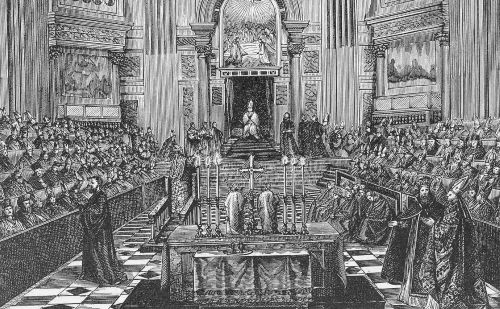
The First Vatican Council, convened in 1869 under Pope Pius IX, represented the decisive moment at which the long-developing idea of papal infallibility was formally defined. Gathering bishops from across the Catholic world, the council sought to address the challenges posed by modern political, intellectual, and cultural transformations. While multiple issues were on the agenda, the question of papal authority quickly emerged as central. The debates that followed revealed both widespread support for a strong papacy and significant concern about the implications of formally defining infallibility.
The definition itself was promulgated in the dogmatic constitution Pastor Aeternus on July 18, 1870. According to this document, the pope is infallible when he speaks ex cathedra, that is, when he defines a doctrine concerning faith or morals to be held by the whole Church. The conditions attached to this definition were carefully specified, emphasizing that infallibility applies only in limited circumstances and does not extend to all papal statements. This precision was intended to clarify the doctrine while addressing fears that it might grant the pope unrestricted authority in all matters. By outlining the exact criteria under which infallibility applies, the council sought to avoid both exaggeration and misunderstanding, framing the doctrine as a narrowly defined charism rather than a sweeping claim of personal perfection. It reinforced the distinction between the pope’s ordinary teaching authority and the exceptional conditions required for an infallible pronouncement, ensuring that the doctrine would function as a safeguard for doctrinal clarity rather than as a tool of arbitrary power.
The debates leading up to the definition were marked by both theological reflection and political tension. A substantial minority of bishops opposed the formal declaration, not necessarily rejecting the concept itself but questioning its necessity and timing. They feared that defining infallibility could alienate other Christian communities and exacerbate divisions within the Church. Some also argued that the doctrine had not been sufficiently developed or universally accepted to warrant formal definition. Despite these concerns, the majority ultimately supported the measure, viewing it as a necessary affirmation of the Church’s teaching authority.
The context in which the council concluded further underscored the significance of its decisions. Shortly after the definition of infallibility, the Franco-Prussian War erupted, leading to the withdrawal of French troops that had been protecting Rome. Italian forces soon entered the city, effectively ending the temporal power of the papacy. This convergence of events symbolized the transformation of the papacy from a territorial ruler to a primarily spiritual authority, with infallibility serving as a key element in this redefined role. The loss of political power coincided with the consolidation of doctrinal authority, marking a profound shift in how papal influence would be exercised in the modern world. In this new context, the authority of the pope was no longer grounded in territorial control or political sovereignty, but in the ability to provide a stable and authoritative voice in matters of faith and morals, a role that would shape the papacy’s engagement with modernity in the decades to come.
In retrospect, the definition of papal infallibility at Vatican I can be seen as both a culmination and a beginning. It crystallized centuries of theological development into a precise doctrinal statement, while also setting the terms for future discussions about the nature and exercise of papal authority. The doctrine did not eliminate debate or controversy, but it provided a clear framework within which such debates would take place. Vatican I stands as a pivotal moment in the history of the papacy, shaping its role in the modern world and influencing the trajectory of Catholic thought in the centuries that followed.
After Vatican I: Application and Limits

The formal definition of papal infallibility at Vatican I did not mark the end of debate, but rather the beginning of a new phase in which the doctrine had to be interpreted, applied, and often carefully limited. Despite the sweeping attention the definition received, the actual use of ex cathedra statements has been exceedingly rare. This restraint reflects an awareness within the Church that infallibility, while a powerful theological claim, carries significant implications and must be exercised with precision. The doctrine was not intended to transform the everyday function of the papacy, but to serve as a safeguard under specific and clearly defined circumstances.
One of the most frequently cited examples associated with papal infallibility is the definition of the Immaculate Conception by Pope Pius IX in 1854, articulated in the bull Ineffabilis Deus. Although this declaration predates Vatican I, it is often interpreted retrospectively as an instance of ex cathedra teaching, illustrating the kind of doctrinal definition the council had in mind. Similarly, Pope Pius XII’s proclamation of the Assumption of Mary in 1950, in the constitution Munificentissimus Deus, is widely regarded as a clear exercise of infallibility. These examples demonstrate that the doctrine has been applied sparingly and primarily in relation to Marian dogmas, rather than as a routine instrument of governance. Their rarity underscores the exceptional nature of ex cathedra pronouncements, suggesting that infallibility functions less as a frequently deployed tool and more as a theological safeguard invoked only under conditions of significant doctrinal importance. The careful and infrequent use of such declarations reflects an institutional awareness that overuse could undermine both the credibility and the intended purpose of the doctrine.
The twentieth century brought renewed attention to the limits and context of papal authority, particularly through the Second Vatican Council (1962–1965). While Vatican II did not revisit the definition of infallibility itself, it emphasized the role of the episcopal college and the importance of collegiality within the Church. The council’s constitution Lumen Gentium clarified that infallibility is not confined solely to the pope, but can also be exercised by the bishops when they are united in teaching on matters of faith and morals. This broader perspective reinforced the idea that infallibility operates within the life of the Church as a whole, rather than as an isolated attribute of a single office.
The distinction between infallibility and other forms of papal teaching has also remained a subject of ongoing theological discussion. Most papal statements, including encyclicals and apostolic exhortations, do not meet the criteria for ex cathedra pronouncements, even when they carry significant authority. This has led to careful efforts to categorize different levels of teaching, distinguishing between definitive doctrines and authoritative but non-infallible guidance. Such distinctions are essential for understanding how the doctrine practically functions, preventing both overextension and misunderstanding of its scope.
In the modern era, papal infallibility continues to serve as a symbol of doctrinal stability within a complex and often contested religious landscape. While rarely invoked, its presence shapes the broader framework of Catholic teaching, providing a point of reference for questions of authority and truth. The emphasis on collegiality and the limited use of infallibility reflect an ongoing effort to balance centralized authority with the collective life of the Church, ensuring that doctrinal certainty does not come at the expense of ecclesial unity or theological depth. The doctrine remains both a defining feature of Catholic theology and a carefully bounded instrument, shaped as much by restraint as by assertion, its significance lying not in frequent application but in its role as a guarantor of continuity and coherence within the Church’s teaching mission.
Modern Catholic Thought: Infallibility in Practice
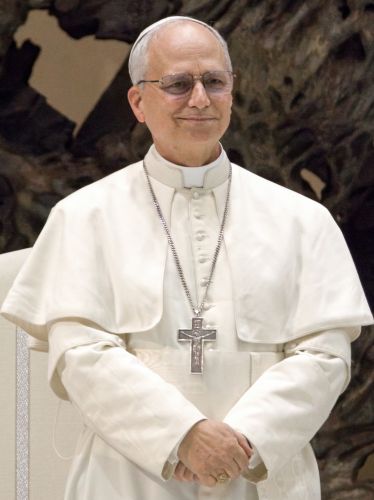
In the contemporary Catholic Church, papal infallibility remains a defined but carefully circumscribed doctrine, one that functions more as a theological boundary than as a frequently exercised authority. Modern Catholic thought has generally emphasized the limited scope of ex cathedra pronouncements, situating them within a broader framework of teaching that includes ordinary papal magisterium, episcopal teaching, and the lived tradition of the Church. This approach reflects a shift away from viewing infallibility as the central mechanism of doctrinal authority and toward understanding it as one element within a more complex and dynamic system.
The practical application of infallibility in the modern era has been shaped by both theological caution and pastoral sensitivity. Popes in the twentieth and twenty-first centuries have rarely invoked the doctrine explicitly, instead relying on other forms of teaching to guide the faithful through encyclicals, apostolic exhortations, and public addresses that carry significant authority without meeting the strict criteria of ex cathedra pronouncements. This restraint underscores an awareness that the authority of the papacy does not depend on frequent declarations of infallibility, but on the credibility and coherence of its broader teaching mission over time. It also reflects a recognition that the global Church operates within diverse cultural, political, and intellectual contexts, requiring a more dialogical and responsive mode of engagement. Infallibility operates as a latent authority, present but not constantly activated, shaping the boundaries of doctrine while allowing for pastoral flexibility and theological development.
Modern theologians have explored the relationship between infallibility and the sensus fidelium, the “sense of the faithful,” which refers to the collective discernment of the Church’s members guided by the Holy Spirit. This concept suggests that doctrinal truth is not imposed solely from above but emerges within the life of the Church as a whole. While papal infallibility retains its specific role, it is increasingly understood in relation to this wider process of discernment, reinforcing the idea that authority and reception are interconnected.
Debates in modern Catholic thought have also addressed the boundaries of infallibility, particularly in relation to teachings that are authoritative but not formally defined as ex cathedra. Questions have arisen about the status of certain doctrinal statements, such as those concerning moral theology or ecclesiastical discipline, and whether they carry a form of infallibility distinct from the classic definition. These discussions have been especially prominent in the context of modern ethical debates and ecclesial controversies, where the distinction between definitive teaching and authoritative guidance can have significant practical implications. Theologians have sought to clarify how different levels of teaching authority function within the Church, often emphasizing the need for careful interpretation and contextual understanding. This ongoing discourse highlights the complexity of applying a doctrine formulated in the nineteenth century to the evolving realities of contemporary Catholic life, as well as the importance of maintaining both doctrinal integrity and pastoral sensitivity.
The role of papal infallibility in modern Catholicism reflects a balance between continuity and adaptation. The doctrine remains a key element of the Church’s self-understanding, providing a foundation for claims of doctrinal certainty. Its limited use and careful interpretation demonstrate an awareness of the complexities of authority in a global and diverse religious community. Infallibility serves less as a tool of frequent intervention and more as a stabilizing principle, shaping the Church’s approach to teaching while leaving room for dialogue, development, and discernment.
Thematic Analysis: Authority, Crisis, and Institutional Survival

Across the long development of papal infallibility, a recurring pattern emerges in which moments of crisis generate new assertions of authority. From the fragmentation of the early Church to the upheavals of the Reformation and the political transformations of the nineteenth century, challenges to unity and legitimacy have consistently prompted efforts to clarify and strengthen the role of the papacy. These developments suggest that the doctrine of infallibility did not arise in isolation, but as part of a broader historical dynamic in which institutions respond to instability by redefining the terms of authority. In each case, the expansion of papal authority was not merely a matter of theological speculation, but a response to concrete pressures that threatened the coherence of the Church. This pattern reveals how authority is often constructed in reaction to crisis, with doctrinal development serving as both a reflection of and a response to institutional vulnerability.
One of the most striking themes in this history is the relationship between uncertainty and the desire for doctrinal certainty. Periods marked by theological dispute, political conflict, or intellectual change often produced heightened concern about the reliability of truth claims. In such contexts, the appeal of an authoritative voice capable of resolving disputes became increasingly compelling. Papal infallibility can be understood as a response to this recurring need, offering a mechanism through which the Church could assert continuity and coherence in the face of competing interpretations.
The development of infallibility reflects the gradual centralization of institutional power. Early Christian models of authority emphasized collegiality and shared responsibility, but the papacy emerged as a focal point for decision-making and doctrinal definition. This shift was not merely theological but also administrative and political, shaped by the practical demands of governing a diverse and expansive religious community. The consolidation of authority in the papal office provided a means of maintaining unity, even as it raised questions about the balance between central leadership and local autonomy.
Another important theme is the interplay between theory and practice. The doctrine of infallibility was not fully articulated until 1870, yet many of the conditions that made it possible had been developing for centuries. Papal actions, theological arguments, and institutional structures all contributed to a growing perception of the pope as a uniquely authoritative figure, even in the absence of a formal doctrinal definition. This process illustrates how doctrinal definitions often emerge after long periods of implicit development, formalizing ideas that have already taken shape within the life of the institution. It also highlights the iterative nature of theological development, in which practice informs theory as much as theory shapes practice. The eventual definition of infallibility can be seen not as a sudden innovation, but as the culmination of a gradual process in which lived experience and intellectual reflection converged.
The tension between authority and limitation also runs throughout this history. Even as the papacy asserted stronger claims, it often did so with careful qualifications designed to prevent overreach. The definition of infallibility itself reflects this balance, applying only under specific conditions and leaving room for other forms of authority within the Church. This dual emphasis on assertion and restraint highlights the complexity of maintaining institutional credibility while avoiding the pitfalls of absolutism.
The doctrine of papal infallibility can be seen as part of a broader strategy of institutional survival. Faced with repeated challenges to its authority, the Catholic Church developed mechanisms to preserve unity and continuity across time and space. Infallibility represents one such mechanism, providing a theological foundation for the stability of doctrine even in periods of profound change. Its significance lies not only in its formal definition, but in the historical processes that shaped its emergence, revealing how institutions adapt to crisis by reimagining the sources and limits of their authority.
Historiography: Interpreting the Development of Infallibility
The following video from “The Religion Teacher” is a brief tutorial on papal infallibility:
The historiography of papal infallibility reflects a wide range of interpretive approaches, shaped by differing assumptions about continuity, authority, and historical development. Some scholars have emphasized a “developmental” model, arguing that infallibility represents the organic unfolding of ideas present in early Christianity, particularly in the primacy attributed to Peter and the Roman Church. From this perspective, the definition at Vatican I is seen not as an innovation, but as the formal articulation of a principle that had been implicit for centuries. This view has often been associated with Catholic theological traditions that seek to reconcile historical change with doctrinal continuity.
Other historians have approached the doctrine as a product of specific historical circumstances, emphasizing discontinuity rather than gradual development. Scholars have argued that the concept of papal infallibility, as it was defined in 1870, cannot be directly traced to the early Church but instead emerged in the medieval period, particularly in the context of canon law and theological debate. This interpretation highlights the role of institutional and intellectual factors in shaping doctrine, suggesting that infallibility was constructed in response to evolving needs rather than inherited as a fixed tradition.
A third line of interpretation focuses on the interplay between theology and power, examining how claims of infallibility relate to broader patterns of ecclesiastical authority. From this perspective, the doctrine is understood as part of a larger process of centralization within the Church, in which the papacy gradually consolidated its position as the ultimate arbiter of doctrine. Historians often emphasize the political dimensions of theological development, exploring how shifts in power influenced the articulation of religious ideas and the consolidation of institutional authority. This approach highlights the ways in which theological claims can both shape and be shaped by political realities, particularly in periods when the Church’s influence intersected with emerging state structures and shifting social hierarchies. It does not necessarily deny the theological significance of infallibility, but it situates it within a broader context of institutional strategy, suggesting that doctrinal clarity and institutional consolidation often advanced together rather than independently.
Debates within the historiography have also addressed the role of crisis in shaping doctrinal development. Many scholars have noted that key moments in the evolution of papal authority coincide with periods of instability, such as the Great Western Schism or the upheavals of the nineteenth century. These crises created conditions in which existing structures of authority were called into question, prompting new efforts to define and secure doctrinal certainty. From this perspective, the definition of infallibility can be seen as both a response to and a product of historical disruption, reflecting the Church’s attempt to assert stability in uncertain times. This line of interpretation underscores the dynamic relationship between crisis and innovation, suggesting that doctrinal developments often emerge not in periods of calm continuity but in moments of acute tension that demand new solutions. By linking theological articulation to historical circumstance, this approach provides a framework for understanding infallibility as part of a broader pattern in which institutions respond to challenges by redefining their sources of authority.
These historiographical perspectives reveal the complexity of interpreting the development of papal infallibility. Whether viewed as an organic development, a historical construction, or a response to institutional needs, the doctrine resists simple categorization. Its history encompasses elements of continuity and change, theology and politics, assertion and adaptation. The ongoing debate among scholars underscores the richness of the subject, inviting further reflection on how doctrines emerge, evolve, and acquire authority within the life of the Church.
Conclusion: Certainty as Construction
The doctrine of papal infallibility stands at the intersection of theology, history, and institutional necessity, embodying a long process through which the Catholic Church sought to define the limits and guarantees of doctrinal authority. What emerged in 1870 at the First Vatican Council was not a sudden innovation, but the culmination of centuries of reflection, conflict, and adaptation. The language of infallibility, precise and carefully bounded, reflects both an aspiration toward certainty and an awareness of the conditions under which such certainty must be articulated. It represents an attempt to stabilize belief in a world where authority had repeatedly been challenged, fractured, and reimagined.
The historical development of infallibility reveals that certainty itself is not a static inheritance but a constructed response to particular circumstances. From early Christian appeals to Petrine authority to medieval debates over papal and conciliar power, the idea that the Church could speak without error evolved alongside shifting institutional realities. These developments were not linear or uncontested, but unfolded through disputes, reforms, and moments of profound uncertainty that forced clarification of authority. The definition of infallibility did not emerge in isolation from these dynamics but was shaped by them, particularly in moments of crisis when competing claims to authority demanded resolution. The doctrine reflects not only theological conviction but also historical contingency, rooted in the need to assert coherence in the face of uncertainty. It is precisely within these pressures, rather than outside them, that the language of certainty took its most definitive form.
Yet construction does not necessarily imply arbitrariness. For those within the Catholic tradition, infallibility is understood as a charism grounded in divine promise, even as its formal articulation bears the marks of historical development. The tension between divine origin and historical formulation lies at the heart of the doctrine’s interpretation, inviting both theological affirmation and critical analysis. Historians and theologians alike must grapple with this dual character, recognizing that doctrines can be both shaped by history and claimed as expressions of transcendent truth. The persistence of infallibility as a central teaching reflects its perceived necessity within the broader framework of Catholic ecclesiology.
The history of papal infallibility illustrates how institutions construct mechanisms of certainty to endure. Faced with internal dissent, external challenge, and the pressures of modernity, the Catholic Church articulated a doctrine that sought to anchor belief in a definitive source of authority. Whether viewed as a natural development, a strategic response, or a theological affirmation, infallibility reveals the enduring human desire for clarity in matters of faith. Its history is not merely the story of a doctrine, but a reflection of the broader struggle to reconcile authority, truth, and change across time.
Bibliography
Affiliate disclosure: Amazon links on this site are paid links. As an Amazon Associate I earn from qualifying purchases.
- 1 Clement. In The Apostolic Fathers: Greek Texts and English Translations. Edited and translated by Michael W. Holmes. Grand Rapids, MI: Baker Academic, 2007.
- Aquinas, Thomas. Summa Theologica. Translated by Fathers of the English Dominican Province. New York: Benziger Bros., 1947.
- Augustine of Hippo. Sermons and Letters.
- —-. Tractates on the Gospel of John. Translated by John W. Rettig. Washington, DC: Catholic University of America Press, 1988.
- Brandi, S.M. “When Is the Pope Infallible?” The North American Review 155:433 (1892), 652-660.
- Brown, Raymond E. The Gospel According to John. New York: Doubleday, 1966.
- Calvin, John. Institutes of the Christian Religion. Translated by Henry Beveridge. Peabody, MA: Hendrickson Publishers, 2008.
- Chadwick, Owen. A History of the Popes, 1830–1914. Oxford: Oxford University Press, 1973.
- Congregation for the Doctrine of the Faith. Donum Veritatis. 1990.
- Council of Constance. Haec Sancta, 1415.
- Council of Trent. Decrees and Canons. Various editions.
- Cullmann, Oscar. Peter: Disciple, Apostle, Martyr: A Historical and Theological Study. London: SCM Press, 1953.
- Cyprian of Carthage. On the Unity of the Catholic Church. In The Fathers of the Church. Washington, DC: Catholic University of America Press, 1958.
- Dulles, Avery. Magisterium: Teacher and Guardian of the Faith. Sapientia Press, 2010.
- Farrugia, Edward G. “Vatican I and the Ecclesiological Context in East and West.” Gregorianum 92:3 (2011), 451-469.
- Gelasius I. “Letter to Emperor Anastasius Augustus (Duo sunt).” In The Letters of Gelasius I, translated selections in Brian Tierney, The Crisis of Church and State, 1050–1300. Toronto: University of Toronto Press, 1988.
- Gratian. Decretum. In Corpus Iuris Canonici.
- Gregory I. Registrum Epistolarum (Letters of Gregory the Great). Translated selections in John R. C. Martyn. Toronto: Pontifical Institute of Mediaeval Studies, 2004.
- Hales, E. E. Y. Pio Nono: A Study in European Politics and Religion in the Nineteenth Century. London: Eyre & Spottiswoode, 1954.
- Irenaeus of Lyons. Against Heresies. Translated by Dominic J. Unger. New York: Paulist Press, 1992.
- Jedin, Hubert. A History of the Council of Trent. St. Louis: Herder, 1957.
- Leo I. Letters and Sermons of Leo the Great. Translated by Charles Lett Feltoe. Nicene and Post-Nicene Fathers, Second Series, Vol. 12.
- Luther, Martin. Address to the Christian Nobility of the German Nation. 1520.
- Markus, R. A. Gregory the Great and His World. Cambridge: Cambridge University Press, 1997.
- Oakley, Francis. The Conciliarist Tradition: Constitutionalism in the Catholic Church, 1300–1870. Oxford: Oxford University Press, 2003.
- O’Malley, John W. Trent: What Happened at the Council. Cambridge, MA: Harvard University Press, 2013.
- —-. Vatican I: The Council and the Making of the Ultramontane Church. Cambridge, MA: Harvard University Press, 2018.
- —-. What Happened at Vatican II. Cambridge, MA: Harvard University Press, 2008.
- Pastor Aeternus. First Vatican Council, 1870.
- Pius IX. Ineffabilis Deus. 1854.
- Pius XII. Munificentissimus Deus. 1950.
- Schatz, Klaus. Papal Primacy: From Its Origins to the Present. Collegeville, MN: Liturgical Press, 1996.
- Second Vatican Council. Lumen Gentium. 1964.
- Sullivan, Francis A. Magisterium: Teaching Authority in the Catholic Church. New York: Paulist Press, 1983.
- The Holy Bible, King James Version.
- Tierney, Brian. “Infallibility and the Medieval Canonists: A Discussion with Alfons Stickler.” The Catholic Historical Review 61:2 (1975), 265-273.
- —-. Origins of Papal Infallibility, 1150–1350. Leiden: Brill, 1972.
- Ullmann, Walter. The Growth of Papal Government in the Middle Ages. 3rd ed. London: Methuen, 1970.
- Verhoeven, Timothy. “Transatlantic Connections: American Anti-Catholicism and the First Vatican Council (1869-70).” The Catholic Historical Review 100:4 (2014), 695-720.
Originally published by Brewminate, 04.23.2026, under the terms of a Creative Commons Attribution-NonCommercial-NoDerivatives 4.0 International license.
About the Author