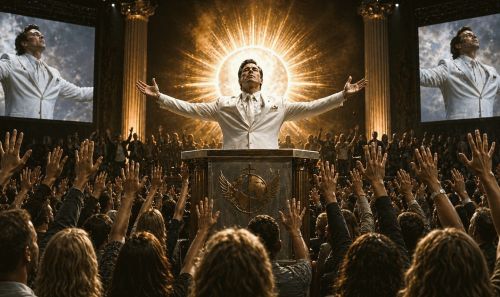
In the modern world, claims to divinity persist not as heresy to be crushed but as phenomena shaped by charisma, media, and the shifting boundaries of belief.

By Matthew A. McIntosh
Public Historian
Brewminate
Introduction: Divinity Without Structure in the Modern Age
In the modern world, claims to divinity persist, but they emerge within a radically different social and intellectual landscape than that of the medieval period. The structures that once tightly integrated religious belief with political and social authority have largely fragmented, particularly in secular and pluralistic societies. Religion, while still influential, is no longer the singular organizing force of public life in most regions, and the boundaries of belief are far more fluid. This transformation has altered not only how divine claims are made but also how they are received, interpreted, and contested within broader society.
The decline of unified religious authority has created an environment in which individuals can articulate extraordinary claims with fewer immediate institutional constraints. Unlike earlier periods, where such assertions would have provoked swift condemnation and punishment, modern claimants often operate within spaces defined by legal protections for religious freedom and expression. This does not mean that their claims are widely accepted, but rather that the mechanisms for suppressing them have changed. Instead of ecclesiastical courts or inquisitorial processes, responses are more likely to involve social marginalization, media scrutiny, or, in some cases, legal intervention framed in terms of fraud, abuse, or public safety.
The persistence of divine claims reflects enduring human concerns that transcend historical context. Questions of meaning, authority, and transcendence continue to shape individual and collective experience, particularly in times of uncertainty or rapid change. Modern claimants often draw upon established religious traditions while reinterpreting them in ways that resonate with contemporary audiences. Their authority frequently rests on charismatic leadership and personal narrative, rather than institutional validation, allowing them to construct alternative frameworks of belief that exist alongside, rather than within, established systems.
Modern claims to divinity are best understood not as isolated anomalies but as products of a transformed environment in which belief is no longer tightly regulated by centralized authority. The absence of a single dominant religious structure has created new possibilities for the expression of extraordinary claims, even as it has altered the forms of response they provoke. By examining these developments, it becomes possible to trace both continuity and change in the relationship between belief, authority, and social order, highlighting the ways in which the limits of divinity are negotiated in the modern age.
From Heresy to Pathology: Changing Interpretations of Divine Claims

The interpretation of individuals who claim divinity has undergone a profound transformation from the premodern to the modern era, reflecting broader changes in intellectual frameworks and institutional authority. In medieval contexts, such claims were primarily understood through theological categories, with heresy serving as the dominant explanatory model. To assert divine identity was to violate doctrinal boundaries and to challenge the authority of the Church, making the response both religious and political. In the modern world, the decline of unified religious authority and the rise of secular institutions have shifted the interpretive framework, relocating such claims from the domain of theology to that of psychology, sociology, and law.
One of the most significant developments in this shift has been the emergence of psychiatric and psychological explanations for claims of divinity. Rather than being treated as doctrinal errors, such assertions are often interpreted as manifestations of mental illness, particularly in cases where individuals exhibit delusional beliefs or grandiose self-conceptions. This approach reflects the broader medicalization of behaviors that were once understood in moral or religious terms, situating them within a framework that emphasizes diagnosis and treatment. While not all claimants are categorized in this manner, the availability of psychological explanation has fundamentally altered how they are perceived and evaluated.
The sociological study of religion has provided an alternative lens that moves beyond both theological condemnation and individual pathology. Scholars of new religious movements have emphasized the importance of context, examining how charismatic leaders construct systems of belief that resonate with specific audiences. Some such as Apollo Quiboloy or Ariffin Mohammed are often analyzed not simply in terms of personal belief but as founders of communities that provide meaning, structure, and identity for their followers. This perspective highlights the relational nature of authority, focusing on the interaction between leader and community rather than on the individual alone. It also draws attention to the ways in which such movements address gaps left by traditional institutions, offering alternative forms of belonging and purpose in increasingly fragmented societies. By situating divine claims within networks of followers, rituals, and shared narratives, sociological approaches reveal that the significance of these figures lies not only in what they claim but in how those claims are received, interpreted, and sustained.
Legal frameworks have also played a crucial role in shaping modern responses to divine claims. In many societies, the principle of religious freedom protects the right of individuals to hold and express unconventional beliefs, including claims to divine status. This protection is not absolute, and legal intervention may occur when such claims are associated with fraud, coercion, or harm. This creates a complex boundary in which belief itself is generally tolerated, but certain forms of action are subject to regulation. The distinction between protected expression and punishable behavior reflects the broader challenge of balancing individual rights with collective concerns.
The shift from heresy to pathology has not entirely displaced older modes of interpretation, particularly in regions where religious institutions continue to exert significant influence. In some contexts, divine claimants may still be framed in explicitly theological terms, and responses may draw upon both religious and secular forms of authority. This coexistence of interpretive frameworks underscores the diversity of modern responses, shaped by cultural, legal, and institutional variation. It also highlights the persistence of underlying tensions between belief and authority, even as the terms of that relationship have changed. In regions where religious identity remains closely tied to political or cultural structures, divine claims can still provoke reactions that echo earlier patterns of condemnation and suppression. Conversely, in more secularized societies, the same claims may be dismissed, ignored, or reinterpreted through psychological or cultural lenses. This variability demonstrates that modernity has not produced a single, uniform response but rather a spectrum of interpretations that reflect differing assumptions about the nature of belief and authority.
The transformation in how divine claims are understood reflects a broader reconfiguration of knowledge and power in the modern world. The movement from theological to psychological and sociological explanations does not eliminate the phenomenon but recontextualizes it within new systems of meaning. By examining these shifts, it becomes possible to see how modern societies negotiate the boundaries of belief in the absence of a single, dominant authority, revealing both continuity with the past and the distinctiveness of the present. This process also raises important questions about the limits of explanation itself, as no single framework fully captures the complexity of these phenomena. The coexistence of multiple interpretive models (religious, psychological, sociological, and legal) suggests that claims to divinity continue to occupy a space that resists simple categorization. In navigating this complexity, modern societies reveal not only their differences from the past but also their ongoing engagement with the fundamental questions of meaning, authority, and human identity.
Charisma in the Modern World: Authority Without Institution
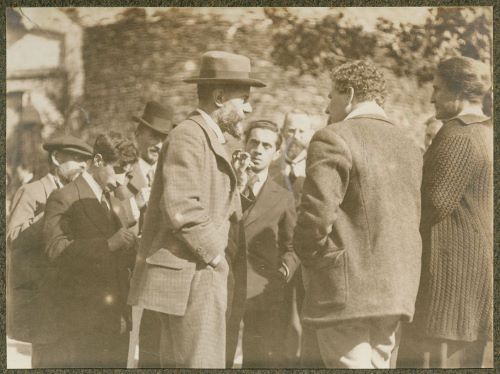
In the modern era, charismatic authority has become one of the primary mechanisms through which individuals who claim divine status establish influence, particularly in the absence of strong institutional religious structures. Unlike medieval figures who operated within or against a dominant ecclesiastical system, modern claimants often emerge in environments characterized by religious pluralism and institutional fragmentation. This shift allows charisma to function more independently, enabling individuals to construct authority through personal narrative, performance, and the cultivation of devoted followings. The legitimacy of a divine claim is less dependent on doctrinal validation and more on the ability to persuade and sustain belief within a community.
The concept of charisma, as articulated by Max Weber, provides a useful framework for understanding this phenomenon. Charismatic authority is rooted in the perception of extraordinary qualities attributed to an individual by their followers, rather than in legal or traditional forms of legitimacy. For modern divine claimants, these qualities often include assertions of spiritual insight, miraculous ability, or unique access to divine truth. Those such as Quiboloy and Alan John Miller exemplify how such authority can be constructed and maintained through ongoing interaction with followers, who validate and reinforce the leader’s claims through their participation and belief.
The absence of centralized religious authority in many modern societies has created conditions in which charismatic leaders can operate with relative autonomy. Without a single institution capable of defining orthodoxy or enforcing uniform standards of belief, individuals are free to develop alternative systems that draw selectively from existing traditions. This flexibility allows modern movements to adapt to diverse audiences, incorporating elements from multiple religious and cultural sources in ways that enhance their appeal. As a result, charismatic authority can be both highly personalized and widely accessible, extending across geographic and social boundaries. This decentralization also reduces the barriers to entry for new movements, making it possible for individuals with sufficient charisma and organizational skill to establish followings without formal recognition. Authority becomes increasingly tied to visibility, narrative coherence, and the ability to maintain engagement, rather than to institutional endorsement or doctrinal legitimacy.
The maintenance of charismatic authority in the modern world requires continuous reinforcement. Unlike traditional authority, which is sustained by established structures, or legal authority, which is grounded in formal rules, charisma depends on ongoing recognition by followers. Leaders must therefore engage in practices that reaffirm their status, whether through ritual, teaching, or the demonstration of perceived spiritual power. This dynamic creates a reciprocal relationship in which the authority of the leader and the commitment of the followers are mutually reinforcing, allowing the movement to persist even in the face of external criticism or skepticism.
Modern communication technologies have further transformed the dynamics of charismatic authority, enabling leaders to reach and influence audiences on a scale that was previously impossible. The use of media platforms, publications, and digital networks allows claimants to disseminate their message widely, attracting followers beyond their immediate physical environment. This expansion of reach not only increases the potential impact of such movements but also alters the ways in which authority is constructed, as visibility and accessibility become key components of influence. Digital media has created new forms of immediacy and intimacy, allowing leaders to engage directly with followers through video, social platforms, and online communities. This constant interaction helps sustain belief and reinforces the perception of personal connection, even across great distances. The same technologies that enable expansion also expose these movements to scrutiny and criticism, creating a complex environment in which authority must be continuously negotiated and defended.
The persistence of charismatic divine claimants in the modern era highlights the adaptability of this form of authority in changing social conditions. While the institutional frameworks that once constrained such claims have weakened, the underlying dynamics of belief and leadership remain consistent. Individuals continue to seek meaning, direction, and connection, and charismatic figures who present themselves as uniquely capable of providing these elements can still attract significant followings. By examining these patterns, it becomes clear that charisma remains a central force in the negotiation of authority and belief, even in a world defined by pluralism and decentralization.
Ariffin Mohammed (Ayah Pin): Syncretism and State Suppression
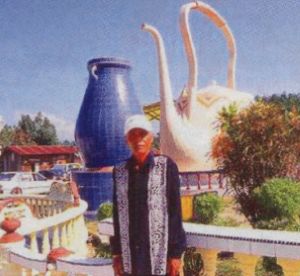
The movement founded by Ariffin Mohammed, often referred to as the “Sky Kingdom,” represents a distinctive case of modern divine claim shaped by syncretism, charisma, and state response. Emerging in Malaysia in the late twentieth century, Ayah Pin articulated a religious vision that drew upon elements of Islam, Christianity, Buddhism, and Hinduism, presenting himself as a unifying figure who embodied multiple divine identities. His claim to be an incarnation of those such as Jesus, Shiva, and the Buddha positioned him not within a single tradition but above them, asserting a form of authority that transcended established religious boundaries. This positioning allowed him to appeal to a wide range of followers, particularly in a multicultural society where religious identities coexist but are often institutionally separated. By presenting himself as the convergence point of these traditions, Ayah Pin effectively reframed religious difference as unity, offering an alternative model of belief that challenged both doctrinal exclusivity and institutional control. His emergence illustrates how modern claimants can draw upon globalized religious knowledge to construct identities that would have been far more difficult to sustain in earlier, more rigidly structured environments.
This syncretic framework was central to the appeal of Ayah Pin’s movement, as it allowed followers to engage with familiar religious concepts while participating in a novel system of belief. The blending of traditions created a sense of inclusivity, suggesting that truth could be found across religious divides and unified through the person of the leader. This approach challenged the exclusivist claims of established institutions, particularly within the Malaysian context, where Islam holds a constitutionally privileged position. By redefining religious identity, Ayah Pin’s teachings directly confronted the boundaries that structured both belief and authority.
The physical and symbolic expression of the Sky Kingdom further reinforced this challenge. The community constructed distinctive architectural features, including large teapots and symbolic structures, which served both as ritual spaces and as visible representations of the movement’s identity. These elements contributed to the formation of a shared environment in which beliefs were not only articulated but embodied, creating a cohesive social and spiritual framework. Such visibility also attracted attention from both the public and the state, increasing scrutiny of the movement and its practices.
The response of Malaysian authorities reflects the continuing role of the state in regulating religious expression, particularly in contexts where religion is closely tied to national identity. Ayah Pin’s movement was declared deviant, and actions were taken to dismantle its physical and organizational structures. Followers faced pressure to renounce their beliefs, and the leader himself was subject to legal and administrative measures aimed at curbing his influence. This response illustrates how, even in a modern setting characterized by pluralism, the state may act decisively when religious claims are perceived to challenge established frameworks of authority. The intervention was not limited to theological condemnation but extended into legal and social domains, reflecting the integration of religious regulation within broader systems of governance. By targeting both the leadership and the community infrastructure, authorities sought to eliminate not only the ideas themselves but also the conditions that allowed them to persist. This comprehensive approach underscores the extent to which certain forms of religious innovation remain constrained by institutional boundaries, particularly when they intersect with questions of identity, legitimacy, and political stability.
Ayah Pin highlights the complex interaction between syncretism, charisma, and institutional control in the modern world. His movement demonstrates how divine claims can be constructed through the integration of diverse traditions, creating systems of belief that resonate with followers while provoking opposition from established authorities. The state’s response underscores the limits of tolerance in contexts where religious and political structures remain closely aligned. The Sky Kingdom provides a compelling example of how modern divine claims continue to test the boundaries of belief and authority in ways that echo, yet differ from, earlier historical patterns.
Mitsuo Matayoshi: Divinity in Political Form
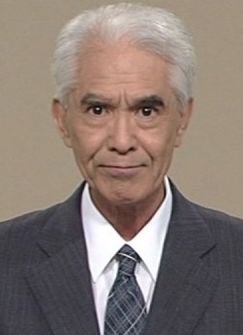
Mitsuo Matayoshi represents a distinctive modern variation on claims to divinity, one that merges religious assertion with formal political participation. Active in Japan in the late twentieth and early twenty-first centuries, Matayoshi founded the World Economic Community Party and declared himself both God and Christ, positioning his political activity as part of a divine mission. Unlike many modern claimants who operate primarily within religious communities, Matayoshi sought legitimacy through electoral processes, embedding his claims within the structures of a modern democratic system. This combination of spiritual authority and political ambition creates a unique case in which divine identity is articulated not outside institutional frameworks but directly through them.
Matayoshi’s ideology was structured around the concept of an imminent “Last Judgment,” which he proposed to enact through existing political institutions rather than through supernatural intervention alone. By participating in elections and public discourse, he framed his candidacy as both a practical and eschatological endeavor, linking governance with divine purpose. This approach reflects a reinterpretation of apocalyptic themes within a modern context, where institutional mechanisms replace or supplement traditional religious expectations. His repeated candidacies, though unsuccessful, served as platforms for disseminating his message and reinforcing his claimed authority.
The integration of divine claims with political structures also highlights the adaptability of charismatic authority in contemporary society. By engaging with electoral processes, Matayoshi transformed what might otherwise have remained a marginal religious claim into a public and visible phenomenon. This strategy allowed him to reach audiences beyond a confined religious community, utilizing the visibility and legitimacy of political participation to amplify his message. It exposed his claims to broader scrutiny, placing them within a context where they could be evaluated not only in terms of belief but also in terms of policy and governance. The act of running for office functioned as both performance and validation, creating repeated opportunities to restate and reinforce his identity in a public arena. Even without electoral success, the visibility generated through campaigns allowed him to maintain a presence within the political landscape, illustrating how institutional engagement can sustain and extend charismatic authority. This blending of religious assertion with civic participation demonstrates the fluidity of modern boundaries between belief and public life, where unconventional claims can be articulated through widely recognized channels.
The response to Matayoshi’s activities illustrates the different ways in which modern societies manage unconventional claims to authority. Unlike medieval or early modern contexts, where such assertions might have been met with direct suppression, his participation in the political system was largely tolerated within the bounds of legal norms. Public perception tended to frame him as eccentric or marginal rather than as a serious threat, reflecting a broader tendency to interpret such figures through lenses of skepticism or humor. This response underscores the role of cultural context in shaping the reception of divine claims, particularly in societies where secular institutions dominate.
Matayoshi demonstrates how claims to divinity can be reconfigured within modern institutional frameworks, taking forms that differ significantly from earlier historical examples. By situating his authority within the structures of democratic governance, he illustrates the potential for divine claims to intersect with secular systems in unexpected ways. This convergence highlights both the flexibility of charismatic authority and the changing boundaries within which such claims are negotiated, offering insight into the evolving relationship between belief, power, and public life in the modern world.
Apollo Quiboloy: Institutionalized Divine Authority

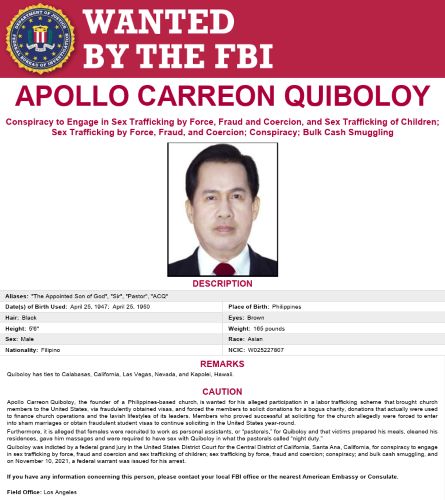
Apollo Quiboloy represents a form of modern divine claim that has moved beyond small-scale charismatic followings into a more structured and institutionalized religious organization. As the founder of the Kingdom of Jesus Christ, The Name Above Every Name, based in the Philippines, Quiboloy declares himself the “Appointed Son of God,” a status that positions him as the final authority in matters of salvation and divine revelation. Unlike more transient or loosely organized movements, his organization exhibits many features associated with established religious institutions, including hierarchical leadership, defined doctrines, and a global network of followers.
The development of this institutional structure reflects the consolidation of charismatic authority into a more durable form. Drawing initially on personal charisma and claims of divine appointment, Quiboloy was able to attract a substantial following, which in turn enabled the creation of organizational systems designed to sustain and expand the movement. These systems include formalized roles within the church, mechanisms for communication and instruction, and the establishment of physical and media infrastructure. Through this process, what began as an individual claim evolved into a structured entity capable of maintaining continuity beyond the immediate presence of the leader. This transition from charisma to institution is a key feature of many successful new religious movements, as it allows the group to stabilize its identity and extend its reach. The creation of administrative hierarchies and standardized practices provides a framework within which followers can operate, reducing reliance on spontaneous or purely personal forms of authority. These structures serve to preserve and transmit the leader’s teachings, ensuring that the core message remains consistent even as the organization grows.
Central to Quiboloy’s authority is the integration of religious teaching with a tightly controlled organizational environment. Followers are expected to accept his interpretations of scripture and his unique role within the divine order, reinforcing a system in which doctrinal authority is closely linked to personal loyalty. This dynamic creates a feedback loop in which belief and structure reinforce one another, allowing the movement to maintain coherence and resilience. The emphasis on obedience and centralized leadership distinguishes this form of divine claim from more diffuse or decentralized movements, highlighting the potential for charismatic authority to become institutionalized. In this system, the leader’s authority is not only spiritual but also organizational, shaping both the beliefs and the daily practices of followers. This integration can create a strong sense of community and purpose, as members participate in a shared framework that aligns personal identity with collective goals. It can limit the scope for dissent or alternative interpretation, reinforcing the central role of the leader in defining and maintaining the movement’s direction.
The visibility and scale of Quiboloy’s movement have also shaped the responses it has received, both within the Philippines and internationally. Unlike smaller groups that may operate with limited public attention, the Kingdom of Jesus Christ has developed a significant media presence and a broad organizational reach, bringing it into contact with state authorities and global institutions. This visibility has led to increased scrutiny, particularly in relation to allegations of misconduct and the legal challenges faced by the organization. He is currently wanted by the FBI for: Conspiracy to Engage in Sex Trafficking by Force, Fraud and Coercion, and Sex Trafficking of Children; Sex Trafficking by Force, Fraud, and Coercion; Conspiracy; Bulk Cash Smuggling. Such responses illustrate the ways in which institutionalization can both strengthen and expose movements, amplifying their influence while also subjecting them to greater oversight.
Quiboloy demonstrates how modern claims to divinity can evolve into complex organizational systems that extend beyond the initial assertion of authority. By combining charismatic leadership with institutional development, such movements can achieve a degree of stability and influence that distinguishes them from more transient expressions of divine claim. The tensions that arise from this process (between belief and regulation, authority and accountability) highlight the continuing negotiation of religious power in the modern world.
Alan John Miller (AJ): Reincarnation and Therapeutic Spirituality
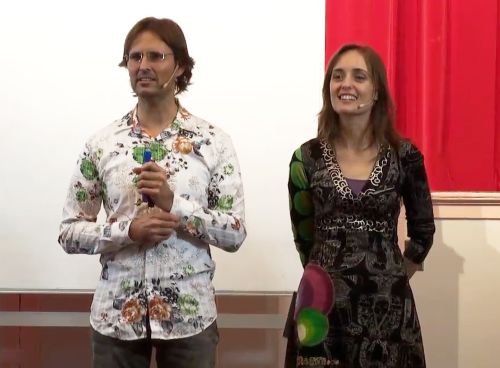
Alan John Miller illustrates a distinctive form of modern divine claim rooted not in institutional ambition or political engagement but in therapeutic spirituality and personal transformation. Miller, an Australian former IT professional, asserts that he is the reincarnation of Jesus Christ and presents his teachings through a framework he calls “Divine Truth.” Unlike movements that emphasize hierarchical structure or strict communal boundaries, his approach is characterized by a focus on individual emotional healing, relational ethics, and direct personal experience of the divine. This orientation situates his claims within a broader trend in contemporary spirituality that prioritizes self-development and experiential authenticity.
Central to Miller’s teaching is the idea that spiritual progress is achieved through emotional processing and alignment with divine love, concepts that resonate strongly with modern therapeutic culture. His reinterpretation of Christian themes places less emphasis on traditional doctrines such as sin and redemption and more on psychological and emotional states as pathways to spiritual growth. The claim to be Jesus functions not primarily as a basis for institutional authority but as a validation of experiential knowledge, positioning Miller as a guide who has unique insight into the nature of divine reality. This shift reflects a broader transformation in how authority is constructed, moving from external validation to internal experience.
The organizational form of Miller’s movement reflects this emphasis on personal engagement rather than centralized control. Gatherings, seminars, and online content serve as the primary means of communication, allowing followers to participate without the formal structures typically associated with religious institutions. This decentralized approach enables the movement to operate across geographic boundaries while maintaining a relatively fluid and adaptable identity. Miller’s personal presence and narrative remain central, reinforcing the importance of charisma even within a less hierarchical framework.
The reception of Miller’s claims highlights the role of cultural context in shaping modern responses to assertions of divinity. In largely secular societies such as Australia, his identification as Jesus is often interpreted through lenses of skepticism, curiosity, or psychological analysis rather than theological condemnation. Media coverage and public discourse tend to focus on the unconventional nature of his claims, framing them as part of a broader landscape of alternative spirituality. This response contrasts with the more direct institutional reactions seen in other contexts, underscoring the variability of modern interpretive frameworks.
Miller demonstrates how claims to divine identity can be reconfigured to align with contemporary values centered on individuality, emotional well-being, and personal autonomy. By integrating elements of religious tradition with therapeutic discourse, his movement exemplifies a form of spirituality that operates outside conventional institutional boundaries while still drawing on recognizable themes. This adaptation highlights the ongoing evolution of divine claims in the modern world, revealing how they continue to reflect and respond to changing social and cultural conditions.
Jehovah Wanyonyi: Local Authority and Global Marginality
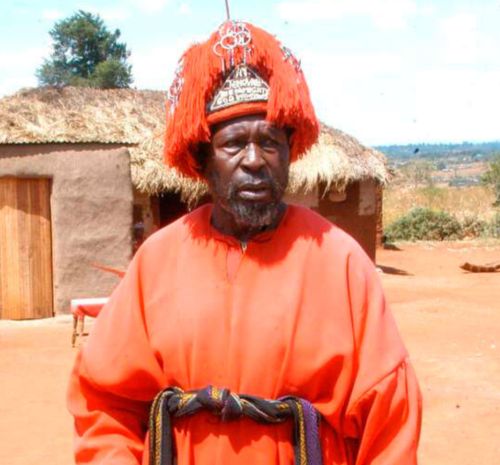
Jehovah Wanyonyi represents a form of modern divine claim that remained highly localized while nevertheless attracting international attention. Based in western Kenya, Wanyonyi declared himself to be God and established a small community of followers who recognized his authority. Unlike more globally organized movements, his influence was largely confined to a specific geographic and cultural setting, illustrating how claims to divinity can emerge and persist within localized social environments. Media coverage of his activities brought his case into broader public awareness, highlighting the tension between local belief systems and global perceptions.
Wanyonyi’s authority was rooted in direct interaction with his followers, who engaged with him not as an abstract leader but as a visible and present embodiment of divine power. This immediacy allowed for a form of religious experience that was grounded in everyday life, reinforcing the credibility of his claims within the community. His teachings and practices emphasized his unique role as the ultimate source of authority, shaping both belief and behavior among adherents. His movement reflects a pattern in which charisma is closely tied to proximity and personal engagement, rather than to institutional structure or broad dissemination. The ability to interact directly with followers enabled a level of trust and reinforcement that is often more difficult to sustain in larger, more dispersed movements. Daily encounters, shared rituals, and the constant presence of the leader helped to normalize his claims, embedding them within the rhythms of communal life. This proximity also allowed followers to interpret ordinary experiences through the lens of his authority, further strengthening the coherence and durability of the belief system.
The localized nature of Wanyonyi’s movement also influenced the way it was perceived and interpreted by outsiders. International media often framed his claims as eccentric or sensational, emphasizing their divergence from widely accepted norms. This portrayal reflects broader dynamics in which religious expressions that fall outside dominant frameworks are categorized and evaluated according to external standards. Such representations can obscure the internal logic and significance of the movement, reducing complex systems of belief to simplified narratives that prioritize novelty or deviation.
The persistence of Wanyonyi’s claims within his community underscores the importance of context in sustaining alternative forms of authority. Social, economic, and cultural factors all contribute to the conditions under which such movements can develop and endure. In environments where institutional structures are less dominant or less trusted, charismatic figures may be able to establish forms of authority that fulfill needs not met by existing systems. This dynamic highlights the adaptability of divine claims, which can take different forms depending on the specific circumstances in which they arise. In regions where access to formal institutions may be limited or where existing authorities are perceived as distant or ineffective, localized leadership can provide a sense of immediacy and relevance that resonates strongly with community members. The integration of belief with local concerns (whether social cohesion, moral guidance, or existential meaning) can create a powerful foundation for sustained adherence, even in the absence of broader recognition or legitimacy.
Wanyonyi thus illustrates the coexistence of local significance and global marginality in the modern landscape of divine claimants. While his influence remained limited in scale, his story reveals how such figures can operate effectively within particular communities while being perceived as peripheral or anomalous on a broader stage. This dual perspective provides insight into the ways in which belief, authority, and recognition are shaped by both local conditions and global frameworks, contributing to a more nuanced understanding of modern religious phenomena.
Media, Technology, and Amplification

The modern landscape of divine claimants cannot be understood without examining the transformative role of media and communication technologies. Unlike earlier periods, in which the spread of religious ideas depended on physical proximity, oral transmission, or limited textual circulation, contemporary figures operate within a global information environment that enables rapid and widespread dissemination. This shift has fundamentally altered the scale and speed at which claims to divinity can be communicated, allowing individuals to reach audiences far beyond their immediate geographic context. As a result, the potential influence of such claims is no longer constrained by local conditions, but instead shaped by the dynamics of media exposure and technological access.
Digital platforms have created new opportunities for charismatic leaders to construct and maintain authority. Through websites, video content, and social media, claimants can present their teachings directly to audiences without the mediation of traditional gatekeepers. This direct access allows for the cultivation of personalized narratives and the establishment of ongoing relationships with followers, reinforcing the perception of authenticity and immediacy. Quiboloy and Miller have utilized these tools to extend their reach, demonstrating how digital environments can sustain and expand movements centered on divine identity.
The amplification effect of media operates in multiple directions. While it enables the growth of followings, it also subjects divine claimants to increased scrutiny and critique. Journalistic coverage, online commentary, and investigative reporting can challenge the legitimacy of such figures, exposing contradictions or allegations that might otherwise remain localized. This dual dynamic creates a complex environment in which authority must be continuously negotiated, as visibility brings both opportunity and vulnerability. The interplay between promotion and criticism reflects the broader conditions of a media-saturated society, where competing narratives coexist and interact. The speed at which information circulates often intensifies this process, allowing both support and opposition to form rapidly and often simultaneously. Viral dissemination can elevate a relatively obscure figure to global attention within a short period, but it can just as quickly generate backlash or skepticism. This requires claimants to manage not only their message but also their public image, navigating a landscape in which authority is constantly being constructed, contested, and reinterpreted by diverse audiences.
Traditional media outlets continue to play a significant role in shaping public perception, particularly when they frame divine claimants as subjects of interest or concern. Coverage often emphasizes the unusual or controversial aspects of these figures, contributing to narratives that highlight deviation from social norms. Such attention can inadvertently increase visibility, drawing new audiences to the movement. This paradox illustrates the ambivalent role of media, which can simultaneously delegitimize and amplify the very phenomena it seeks to examine.
The technological mediation of belief also influences the internal dynamics of movements centered on divine claims. Online communities allow followers to connect with one another across distances, creating networks that reinforce shared identity and belief. These virtual spaces can function as extensions of the movement, providing forums for discussion, interpretation, and support. The result is a form of community that is less dependent on physical co-presence, enabling the persistence and growth of belief systems even in the absence of centralized structures or regular in-person interaction. These digital environments also facilitate the circulation of teachings in recorded and repeatable forms, allowing followers to revisit and reinterpret messages. This capacity for continuous engagement strengthens group cohesion and helps maintain a sense of collective identity, even among geographically dispersed participants. The reliance on mediated interaction can introduce new challenges, including the potential for fragmentation, misinterpretation, or the emergence of competing interpretations within the movement itself.
The role of media and technology in the modern world thus represents a critical factor in the evolution of divine claims. By facilitating both the expansion and the contestation of authority, these tools reshape the conditions under which belief is formed and maintained. They highlight the extent to which modern expressions of divinity are embedded within broader systems of communication, where visibility, narrative control, and audience engagement are central to the construction of authority. The boundaries between belief, performance, and representation become increasingly fluid, reflecting the complex interplay between technology and religious life.
Institutional Response: Law, Media, and Social Regulation
In the modern world, institutional responses to claims of divinity are shaped by a complex interplay between legal frameworks, media systems, and broader mechanisms of social regulation. Unlike the medieval period, where religious institutions exercised direct authority over belief and could impose immediate sanctions, modern societies operate within systems that prioritize individual rights while still seeking to maintain public order. This shift has transformed the way divine claimants are managed, replacing theological condemnation with a combination of legal oversight, public scrutiny, and cultural evaluation. The result is a more diffuse but no less significant set of constraints on the expression of extraordinary religious authority.
Legal systems play a central role in defining the boundaries within which such claims can be articulated. In many countries, protections for freedom of religion and expression allow individuals to assert unconventional beliefs without fear of direct suppression. Yet these protections are not unlimited, and legal intervention may occur when claims are associated with actions that violate established laws. Issues such as fraud, coercion, exploitation, or harm to followers can trigger investigations and prosecutions, shifting the focus from belief itself to its practical consequences. This legal approach reflects a broader principle in modern governance, in which the state refrains from adjudicating the truth of religious claims but retains the authority to regulate behavior.
Media institutions function as another key mechanism in shaping responses to divine claimants, often acting as intermediaries between the individual and the public. Through reporting, commentary, and analysis, media outlets frame these figures in ways that influence perception and interpretation. Some such as Quiboloy have been subject to extensive media coverage that both amplifies their visibility and subjects their claims to critique. This dual role highlights the power of media to both construct and deconstruct authority, as narratives of legitimacy and skepticism compete within the public sphere.
Social regulation operates alongside legal and media frameworks, encompassing the informal processes through which communities respond to unconventional beliefs. Public opinion, cultural norms, and social networks all contribute to the acceptance or rejection of divine claims, shaping the environment in which such movements develop. Social stigma or marginalization frequently functions as a powerful deterrent, limiting the reach of individuals whose claims are perceived as outside acceptable boundaries. Subcultures and alternative communities may provide spaces in which these claims can be sustained and validated, illustrating the diversity of responses within modern societies.
The interaction between these forms of institutional response creates a layered system in which divine claims are neither fully suppressed nor entirely unrestricted. Legal protections ensure that belief can be expressed, while regulatory mechanisms address potential harms. Media coverage increases visibility but also invites scrutiny, and social dynamics influence the extent to which such claims gain traction. This complexity reflects the broader challenges of managing religious diversity in pluralistic societies, where competing values and perspectives must be balanced.
The modern response to claims of divinity reveals a shift from centralized control to distributed regulation. Authority is no longer concentrated in a single institution but dispersed across legal, cultural, and communicative systems that collectively shape the boundaries of acceptable belief and practice. This transformation does not eliminate the tension between individual expression and collective order but reconfigures it within new frameworks. By examining these dynamics, it becomes possible to understand how modern societies negotiate the presence of divine claimants, maintaining a balance between tolerance and control in an increasingly complex environment.
Comparative Analysis: Medieval vs Modern Divine Claims

A comparative analysis of medieval and modern claims to divinity reveals both striking continuities and profound transformations in the relationship between belief, authority, and social structure. In both contexts, such claims emerge as challenges to established frameworks, testing the limits of acceptable religious expression. Yet the conditions under which they arise, and the mechanisms through which they are received and regulated, differ significantly. Medieval claims were embedded within a unified religious system that defined the boundaries of orthodoxy, while modern claims exist within pluralistic environments where those boundaries are more diffuse and contested.
One of the most important points of contrast lies in the role of institutional authority. In the medieval world, the Church functioned as the central arbiter of religious truth, with the power to define heresy and enforce doctrinal conformity. Figures such as Eon de l’Étoile or movements like the Cathars were evaluated within this construct, and responses were often immediate and severe. In the modern era, by contrast, no single institution holds comparable authority across society as a whole. Instead, religious, legal, and cultural systems operate in parallel, creating a more complex environment in which claims to divinity are assessed through multiple, sometimes competing, lenses.
Despite these differences, the role of charisma remains a consistent feature across both periods. Individuals who claim divine authority rely on their ability to persuade and mobilize followers, drawing upon shared beliefs and cultural symbols to construct legitimacy. Whether in the rural communities of medieval Europe or the mediated environments of the modern world, the success of such claims depends on the recognition of followers who are willing to accept and reinforce the leader’s authority. This continuity highlights the enduring importance of interpersonal dynamics in the formation of alternative religious movements.
The forms that divine claims take reflect the theological and cultural constraints of their respective contexts. In medieval Christianity, direct assertions of personal divinity were rare and often framed as extreme deviations from orthodoxy. More commonly, individuals approached the boundary indirectly through concepts such as mystical union or spiritual perfection. In the modern world, by contrast, claimants may assert divine identity more openly, often drawing on a wide range of religious traditions or combining elements in novel ways. Miller and Mohammed exemplify this flexibility, demonstrating how contemporary conditions allow for more explicit and diverse expressions of divine claim. This openness is closely tied to the erosion of centralized doctrinal enforcement and the rise of individual autonomy in matters of belief, which together create an environment in which unconventional ideas can be articulated with fewer immediate consequences. This flexibility does not eliminate constraint but redistributes it, as claims must still navigate social expectations, legal boundaries, and public perception. The result is a landscape in which diversity of expression is greater, but legitimacy remains contingent upon the ability to sustain belief within a competitive and often skeptical environment.
The responses to these claims further illustrate the shift from centralized to distributed systems of regulation. Medieval institutions relied on theological judgment and coercive power to suppress deviation, employing mechanisms such as the Inquisition to enforce conformity. Modern societies, by contrast, manage such claims through a combination of legal frameworks, media scrutiny, and social dynamics. While the consequences for claimants can still be significant, they are typically mediated through processes that prioritize individual rights and procedural norms, rather than direct doctrinal enforcement.
The comparison between medieval and modern divine claims underscores the adaptability of both belief and authority in changing historical contexts. While the structures that shape these phenomena have evolved, the underlying tensions between individual expression and collective order remain. Claims to divinity continue to function as points of friction within their respective societies, revealing the boundaries of acceptable belief and the mechanisms through which those boundaries are maintained. By examining these patterns across time, it becomes possible to see both the persistence of fundamental dynamics and the ways in which they are transformed by shifting social and institutional conditions.
Historiography: Cults, New Religious Movements, and Interpretation
The following video from Chris Shelton describes cult psychology:
The historiography of modern divine claimants reflects a broader shift in how scholars conceptualize religious innovation, particularly through the transition from the term “cult” to the more analytically neutral category of “new religious movements” (NRMs). Earlier interpretations, especially in popular discourse and some mid-twentieth-century scholarship, often framed such groups in pejorative terms, emphasizing manipulation, irrationality, or social deviance. These interpretations tended to focus on the perceived dangers posed by charismatic leaders, presenting divine claimants primarily as figures of suspicion or concern. While such perspectives captured certain dynamics, they often lacked the nuance required to understand these movements within their broader social and cultural contexts. The term “cult” itself became a contested label, carrying strong normative implications that shaped both public perception and scholarly inquiry. As a result, early analyses were frequently influenced by external judgments rather than grounded in systematic investigation, limiting their ability to account for the diversity and complexity of these phenomena.
The emergence of NRM studies as a distinct field in the late twentieth century introduced more systematic and less judgmental approaches to the analysis of such groups. Scholars have emphasized the need to examine these movements on their own terms, considering the beliefs, practices, and experiences of adherents rather than relying solely on external critique. This shift encouraged a move away from binary categorizations of legitimacy and deviance, toward a more descriptive and comparative framework. Individuals who claim divine status are analyzed not only as leaders with unusual beliefs but as central figures in systems of meaning that provide coherence and purpose for their followers.
Debates within the field have highlighted the continuing tension between analytical neutrality and ethical evaluation. Critics of purely descriptive approaches argue that they may understate the potential for harm within certain movements, particularly when strong authority structures limit individual autonomy. Some scholars have sought to integrate sociological analysis with attention to issues of power, coercion, and accountability. This perspective does not return to earlier condemnatory frameworks but instead aims to balance understanding with critical assessment, recognizing that divine claims can function both as sources of meaning and as mechanisms of control.
The role of media and public discourse has also influenced historiographical development, shaping how divine claimants are categorized and interpreted. High-profile cases often generate narratives that reinforce particular images of “cult” behavior, which can then influence both academic and popular understanding. Increased access to information and the voices of participants has complicated these narratives, allowing for more diverse perspectives to emerge. This interaction between scholarship and public discourse underscores the importance of context in shaping interpretation, as categories and conclusions are continually negotiated across different arenas.
The historiography of modern divine claimants reflects an ongoing effort to develop frameworks that can account for both the complexity and the variability of these phenomena. By moving beyond simplistic labels and engaging with multiple perspectives, scholars have been able to produce more nuanced analyses that situate divine claims within broader patterns of religious and social change. This approach highlights the importance of interpretation itself as a dynamic process, one that evolves in response to new evidence, theoretical developments, and the changing contexts in which these movements are studied. It also underscores the need for continued reflexivity within the field, as scholars must remain aware of how their own assumptions and categories shape the analysis they produce. The study of divine claimants is not only about understanding specific movements but also about examining the tools and frameworks through which knowledge about religion is constructed.
Conclusion: The Persistence of Divinity in a Secular World
The persistence of individuals claiming divinity in the modern world reveals a striking continuity beneath the surface of profound social change. Despite the decline of unified religious authority and the rise of secular institutions, the impulse to locate ultimate meaning in human form has not disappeared. Instead, it has adapted to new conditions, taking shapes that reflect contemporary values, anxieties, and possibilities. These claims are no longer constrained by a single doctrinal system, yet they continue to engage with enduring questions about authority, transcendence, and the nature of belief.
Modern societies, with their emphasis on pluralism and individual autonomy, provide a setting in which such claims can be articulated with fewer immediate constraints. Legal protections and cultural diversity create space for alternative forms of religious expression, even as they subject those expressions to new forms of scrutiny. Quiboloy or Mohammed demonstrate how divine authority can be constructed within these conditions, drawing on charisma, media, and organizational structure to sustain belief. Their existence highlights the ongoing negotiation between freedom and regulation that defines the modern religious landscape.
The varied responses to these figures illustrate the complexity of secularization itself. Rather than eliminating religious belief, secularization has redistributed it, shifting authority away from centralized institutions while allowing new forms of expression to emerge. Claims to divinity are now interpreted through multiple frameworks (psychological, sociological, legal, and cultural) each offering different insights into their meaning and significance. This multiplicity reflects a broader transformation in how societies understand and engage with religion, emphasizing interpretation over enforcement.
The study of modern divine claimants underscores the resilience of religious imagination in the face of changing historical conditions. Even in a world often described as secular, the desire to encounter or embody the divine remains a powerful force, shaping both individual experience and collective life. These claims, however marginal or contested, reveal the limits of purely rational or institutional accounts of belief, pointing instead to the enduring complexity of human engagement with the sacred.
Bibliography
Affiliate disclosure: Amazon links on this site are paid links. As an Amazon Associate I earn from qualifying purchases.
- Asad, Talal. Formations of the Secular: Christianity, Islam, Modernity. Stanford: Stanford University Press, 2003.
- Barker, Eileen. New Religious Movements: A Practical Introduction. London: HMSO, 1989.
- Berger, Peter L. The Sacred Canopy: Elements of a Sociological Theory of Religion. New York: Anchor Books, 1967.
- Campbell, Heidi A. Digital Religion: Understanding Religious Practice in New Media Worlds. London: Routledge, 2012.
- Durkheim, Émile. The Elementary Forms of Religious Life. Translated by Karen E. Fields. New York: Free Press, 1995.
- Foucault, Michel. Madness and Civilization: A History of Insanity in the Age of Reason. Translated by Richard Howard. New York: Vintage Books, 1961.
- Gallagher, Eugene V. “’Cults’ and ‘New Religious Movements’.” History of Religions 47:2/3 (2007-2008), 205-220.
- Habermas, Jürgen. The Structural Transformation of the Public Sphere. Cambridge, MA: MIT Press, 1989.
- Hassan, Riaz. Faithlines: Muslim Conceptions of Islam and Society. Oxford: Oxford University Press, 2002.
- Heelas, Paul. Spiritualities of Life: New Age Romanticism and Consumptive Capitalism. Oxford: Blackwell, 2008.
- Hoover, Stewart M. Religion in the Media Age. London: Routledge, 2006.
- Levine, Edward M. “Religious Cults: Their Implications for Society and the Democratic Process.” Political Psychology 3:3/4 (1981-1982), 34-49.
- Lewis, James R., ed. The Oxford Handbook of New Religious Movements. Oxford: Oxford University Press, 2008.
- Meyer, Birgit. Religious Sensations: Why Media, Aesthetics, and Power Matter in the Study of Contemporary Religion. Lecture at Vrije Universiteit Amsterdam, 2006.
- Peletz, Michael G. Islamic Modern: Religious Courts and Cultural Politics in Malaysia. Princeton: Princeton University Press, 2002.
- Reader, Ian. Religion in Contemporary Japan. Honolulu: University of Hawai‘i Press, 1991.
- Richardson, James T. Regulating Religion: Case Studies from Around the Globe. New York: Springer, 2003.
- Stark, Rodney, and William Sims Bainbridge. The Future of Religion: Secularization, Revival and Cult Formation. Berkeley: University of California Press, 1980.
- Wallis, Roy. The Elementary Forms of the New Religious Life. London: Routledge & Kegan Paul, 1984.
- Weber, Max. Economy and Society: An Outline of Interpretive Sociology. Translated by Guenther Roth and Claus Wittich. Berkeley: University of California Press, 1978.
Originally published by Brewminate, 05.01.2026, under the terms of a Creative Commons Attribution-NonCommercial-NoDerivatives 4.0 International license.
About the Author