Under slavery, trust could become deadly, as kidnappers, false allies, paternalists, and conditional reformers turned “help” into danger.

By Matthew A. McIntosh
Public Historian
Brewminate
Introduction: When Help Became Dangerous
American slavery made trust dangerous. Enslaved people and free Black communities faced obvious enemies: enslavers, overseers, slave patrols, hostile courts, proslavery politicians, and mobs willing to defend bondage with law or violence. Yet danger also came in less recognizable forms. A stranger might offer work, travel, shelter, legal assistance, or guidance toward freedom and then deliver a person into slavery. A reformer might denounce slavery while denying Black equality. A supposed benefactor might support emancipation only if free Black people disappeared from the United States. An ally might speak against bondage while centering white conscience, white leadership, or white suffering. In a society where Black life could be bought, sold, hunted, kidnapped, advertised, and litigated, “help” itself had to be judged carefully.
I distinguish between two kinds of harmful friendship under slavery. The first was deliberate treachery: kidnappers, slave catchers, informants, professional agents, and opportunists who posed as helpers, employers, guides, or lawful protectors while turning Black vulnerability into profit. Their work depended on deception because escape, movement, employment, and anonymity created moments when trust had to be extended quickly and at great risk. A free Black person offered a job, an enslaved person promised safe passage, or a fugitive introduced to a supposed conductor could discover too late that the language of aid had been converted into capture. The second kind was more complicated: sincere antislavery sympathy distorted by racism, paternalism, colonizationism, reckless strategy, or sentimental politics. These allies might oppose slavery while still refusing to respect Black citizenship, Black leadership, Black self-defense, Black political thought, or Black control over the terms of liberation. They might pity enslaved people without trusting them as strategists, speak for the oppressed while ignoring those already speaking for themselves, or imagine freedom as removal, dependency, or moral uplift supervised by white reformers. One group betrayed knowingly. The other could harm while believing itself benevolent. Both forms mattered because slavery operated not only through chains and statutes, but through claims about who could be trusted, who could speak, who could lead, and whose freedom would be allowed to define itself.
The difference matters because this is not an argument that abolitionists and enslavers were morally equivalent. They were not. Black abolitionists, white abolitionists, vigilance committees, Underground Railroad operatives, antislavery lawyers, radical churches, and ordinary households took real risks to resist slavery. Many saved lives. Many helped destroy the institution. But the antislavery world was never pure, simple, or free of hierarchy. It contained Black organizers who demanded equality, white reformers who struggled against their own prejudices, colonizationists who mistook removal for benevolence, and militants whose courage did not erase questions of consent, timing, and consequence. The history of slavery requires a sharper test than whether someone claimed to be “against slavery.” The deeper question is whether that person or movement respected Black humanity, autonomy, strategy, and survival.
Here I follow that problem chronologically, beginning with kidnapping and fraudulent capture in the early republic, then moving through colonization, slave catching, Black vigilance networks, the Fugitive Slave Act of 1850, paternalistic abolitionism, antislavery representation, John Brown’s militancy, Black political leadership, and the Civil War’s transformation of alliance. Across these settings, Black people were not passive recipients of help. They evaluated risk, built institutions, wrote narratives, exposed kidnappers, rejected colonization, organized conventions, sheltered fugitives, challenged paternalism, fought for citizenship, and forced the nation to confront slavery on terms it had tried to avoid. Harmful friendship during slavery is not only a story of betrayal or flawed allyship. It is a story of Black discernment in a world where survival often depended on knowing which hand extended in aid, which hand reached for a bounty, and which hand wanted control.
Kidnapping in the Early Republic: Free Black Vulnerability before 1850
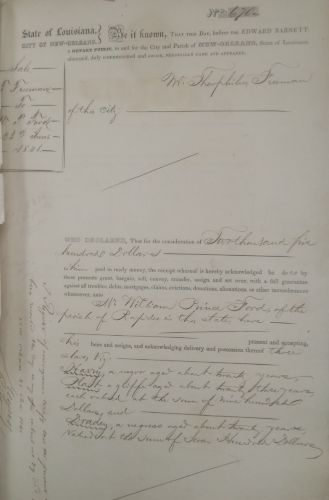
The danger of harmful friendship under slavery began long before the Fugitive Slave Act of 1850. In the early republic, free Black people lived under a precarious freedom that could be challenged, stolen, or converted into bondage through fraud and violence. Northern gradual emancipation, the growth of free Black communities, and the expansion of slavery in the South created a brutal contradiction: some states recognized Black freedom, while the domestic slave trade made Black bodies increasingly valuable commodities. This uneven legal landscape gave kidnappers room to operate. A person who was free in Pennsylvania, New York, or Massachusetts could be seized, transported, renamed, and sold into a region where proving freedom became nearly impossible. Freedom existed, but it had to be defended against a market built to deny it.
Kidnapping depended on deception as much as force. Some victims were lured by promises of employment, travel, entertainment, wages, or assistance. Others were seized outright and then buried beneath forged documents, false testimony, or claims that they were fugitives from slavery. The crime worked because slavery’s legal and commercial systems were willing to treat Black freedom as doubtful and Black captivity as profitable. A white claimant, trader, or kidnapper could often rely on racial presumption, distance, and paperwork to overpower the truth of a Black person’s legal status. Once removed from home, family, church, employer, or community witnesses, a kidnapped person faced a terrifying isolation. The betrayal was not merely physical capture. It was the destruction of the social evidence by which freedom could be known.
Solomon Northup’s case became one of the most famous examples because he survived to narrate it, but its horror lay in how ordinary its mechanisms were. Northup was a free Black man from New York, a husband, father, musician, and citizen of a free state. In 1841, he was deceived by men who offered him paid work as a performer, taken to Washington, D.C., and sold into slavery. His kidnappers did not approach him as open enemies. They came as employers, as men offering opportunity, wages, travel, and professional recognition. Their false friendliness made the trap possible because it turned ordinary economic hope into exposure. Northup’s willingness to travel for work was not foolishness; it was part of the mobility that free labor was supposed to permit. The betrayal lay in a society where Black mobility could be converted into vulnerability by white men willing to exploit racial disbelief. Once Northup was carried into the slave trade, his name, history, and freedom were violently overwritten. He was beaten when he insisted on his free status, renamed, transported southward, and forced into a world where every claim to his former life could be treated as insolence or fantasy. His narrative demonstrates how quickly personhood could be attacked when law, commerce, and racial disbelief worked together. The free man became cargo because the system had already learned how to turn Black testimony into something white authority could ignore.
The kidnapping of free Black people also reveals why northern freedom was never simply secure territory. Cities such as Philadelphia, New York, and Baltimore contained vibrant Black institutions, churches, schools, mutual aid societies, newspapers, and political networks, but they were also watched by slave catchers, informants, and professional kidnappers. Children were especially vulnerable, as were sailors, laborers, domestic workers, travelers, and people seeking employment. The boundary between free and slave states was not a clean moral border. It was a zone of contest in which Black mobility could be criminalized, doubted, or exploited. Even the documents that were supposed to prove freedom could be lost, stolen, challenged, or disregarded. A free Black person often had to carry proof of identity in a society determined to make Black identity itself suspicious.
This early history of kidnapping shows why trust became such a fraught matter in Black freedom struggles. A stranger’s offer of work might be real, or it might be a trap. A person claiming legal authority might be an officer, a kidnapper, or both. A supposed helper might be a broker for the slave trade. Free Black communities responded by building networks of warning, protection, legal defense, and mutual aid, but the danger remained severe because slavery’s economy rewarded betrayal. The early republic established one of the central patterns: harmful friendship did not always announce itself as hatred. Sometimes it arrived as opportunity, employment, guidance, or lawful assistance. For free Black people before 1850, the open enemy was dangerous enough, but the smiling stranger could be deadly.
Colonization as Harmful Friendship: The American Colonization Society and Black Rejection
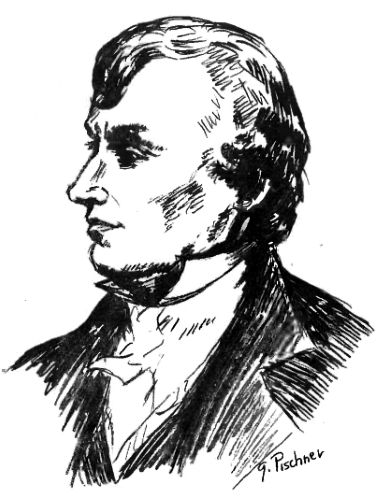
The American Colonization Society, founded in 1816 by Robert Finley, presented one of the clearest examples of harmful friendship in the early antislavery world. Its supporters described colonization as benevolent, Christian, practical, and humane: a plan to remove free Black people from the United States and settle them in Africa, eventually contributing to what became Liberia. Some white supporters sincerely believed colonization offered a path away from slavery and racial conflict. Others saw it as a means to strengthen slavery by removing free Black communities whose presence challenged proslavery ideology. The ambiguity was precisely the problem. Colonization could sound like help while treating Black freedom as a threat, Black citizenship as impossible, and Black belonging in the United States as something white society had the right to deny. It was not friendship on equal terms. It was a reform movement that too often imagined justice as removal.
Black opposition to colonization emerged quickly and forcefully because free Black communities understood what was at stake. In January 1817, Black Philadelphians gathered at Mother Bethel African Methodist Episcopal Church and overwhelmingly rejected the idea that they should be transported out of the country of their birth. Their response was not merely emotional attachment to place, though that mattered deeply. It was a political argument about rights, labor, citizenship, ancestry, and belonging. Free Black Americans had built churches, schools, businesses, families, mutual aid networks, newspapers, and reform societies in the United States. Many had fought, labored, paid taxes, purchased freedom, supported abolition, and claimed the promises of the Revolution more honestly than the republic itself had done. To ask them to leave was to suggest that white prejudice, not Black citizenship, would define the future. Colonization appeared not as liberation, but as surrender to racism disguised as benevolence. It also threatened to turn free Black achievement into evidence against itself. The stronger Black communities became, the more colonizationists could describe them as a “problem” requiring removal. Black churches, schools, conventions, and mutual aid societies proved capacity for citizenship, but white colonizationists often treated that same capacity as politically dangerous because it contradicted the racial order slavery required. Black rejection of colonization was not only defensive. It was assertive. It declared that Black Americans were not temporary occupants of the republic, but makers of its history and rightful claimants to its future.
James Forten and other Black leaders recognized that colonization shifted the burden of racism onto its victims. Rather than demanding that the United States abolish slavery and recognize Black equality, colonizationists often argued that racial coexistence was impossible and that free Black people would be better off elsewhere. That argument sounded sympathetic only if one accepted the permanence of white prejudice as a political fact beyond challenge. Black critics refused that premise. They understood that removing free Black people would weaken abolitionist organizing, separate families and communities, and reinforce the proslavery claim that people of African descent had no rightful place in American civic life. Colonization also threatened to erase the distinction between voluntary migration and coerced removal. Even when presented as voluntary, it operated within a culture where Black people were denied equal rights, harassed by law, exposed to kidnapping, and pressured by white hostility. A “choice” made under racial exclusion was not simple freedom.
The American Colonization Society’s harmfulness lay partly in its ability to gather very different white constituencies under one moral banner. Some evangelicals and gradual emancipationists saw it as humanitarian reform. Some slaveholders supported it because they feared free Black communities as sources of resistance and insurrectionary possibility. Some politicians embraced it as a way to avoid confronting interracial democracy. This coalition made colonization especially dangerous because it could speak the language of antislavery while accommodating white supremacy. It offered white Americans a way to imagine themselves benevolent without accepting Black neighbors as equals. In that sense, colonization was not only a policy proposal. It was a moral evasion. It allowed white reformers to pity slavery’s victims while refusing the harder demand made by Black activists: abolition with citizenship, not abolition followed by exile.
Black rejection of colonization became one of the foundational acts of 19th-century Black political thought. It clarified that freedom was not merely the absence of enslavement, but the right to remain, organize, speak, labor, worship, vote, educate children, defend families, and claim the nation that had profited from Black bondage. The colonization debate also exposed the limits of white-led reform when it proceeded without Black consent. A supposed ally who defines the solution while ignoring the people most affected becomes another form of control. For free Black communities, the question was not whether Africa mattered, nor whether some individuals might choose emigration for their own reasons. The question was whether white America could solve slavery and racism by exporting Black people rather than transforming itself. The answer from Black opponents was clear. Colonization was harmful friendship because it asked Black people to disappear so white society would not have to become just. It also forced a deeper distinction between sympathy and solidarity. Sympathy could pity Black suffering while still treating Black presence as inconvenient; solidarity required accepting Black people as political equals with the authority to define their own future. Black anticolonizationists saw that difference clearly. They did not simply reject a destination. They rejected a relationship in which white reformers claimed benevolent power over Black destiny.
Slave Catchers, Informants, and the Marketplace of Betrayal
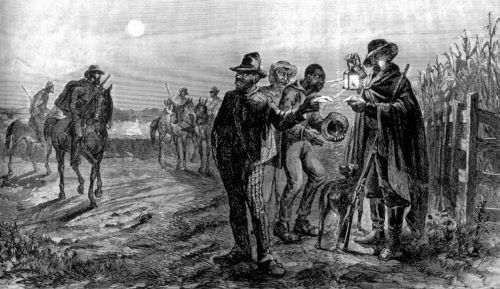
The machinery of slavery depended not only on enslavers, plantations, auction houses, courts, and statutes, but on an entire marketplace of betrayal. Slave catchers, professional agents, local informants, jailers, constables, traders, and opportunists all operated within a system that converted Black vulnerability into money. The fugitive from slavery was not simply a person pursued by one enslaver’s private anger. He or she entered a broader economy of capture in which information had value, suspicion could be sold, and trust could become a trap. A name, a route, a family connection, a workplace, a church, a boardinghouse, or a rumored hiding place might be enough to set the machinery in motion. This marketplace made danger mobile. It followed Black people across county lines, state borders, river towns, ports, railways, and northern streets. It also blurred the line between official authority and private predation. A person acting in the name of law might also be acting for a fee, a reward, a favor, or the hope of later profit. Slavery’s violence did not stop at the plantation boundary. It traveled through paperwork, rumor, pursuit, surveillance, and the willingness of ordinary people to turn another person’s freedom into income.
Informants were especially dangerous because they could operate within ordinary social life. They did not always appear as armed men. Some gathered information by listening, watching, pretending sympathy, or exploiting the desperation of fugitives who needed food, shelter, directions, forged papers, transportation, or work. A person claiming to know a safe route might instead lead a fugitive toward capture. A supposed employer might report a worker to authorities. A landlord, tavern keeper, ship captain, neighbor, or casual acquaintance might decide that a human life could be exchanged for money or favor. Betrayal was profitable because slavery made Black movement suspicious and white testimony powerful. The fugitive’s need for help created opportunity for those willing to sell assistance as a lie.
Slave catchers worked in a legal and commercial world that rewarded aggression. Under the Fugitive Slave Act of 1793, enslavers and their agents claimed federal support for recovering fugitives, while northern personal liberty laws and local resistance created conflict over enforcement. Even before the harsher 1850 law, fugitive recovery produced an atmosphere in which Black people could be seized, detained, and dragged into legal proceedings where the presumption of freedom was fragile. Professional slave catchers understood that paperwork, speed, intimidation, and local alliances mattered. They needed warrants or claims, but they also needed knowledge: where a person had gone, who might shelter them, which communities were vulnerable, which officials were cooperative, and which routes were watched. Capture was not only physical pursuit. It was intelligence work sustained by law, money, and racial power.
The danger extended to free Black people because the system did not sharply protect freedom from enslavement. A free person could be accused of being a fugitive, misidentified, kidnapped, or trapped in legal proceedings where Black testimony was discounted and white claims carried disproportionate force. This is why slave catching and kidnapping overlapped so often. The same racial assumptions that enabled fugitive recovery also made fraudulent capture easier. A Black person’s insistence on freedom could be dismissed as predictable denial. Documents could be challenged, destroyed, or ignored. Distance could sever a person from witnesses who knew their status. Once carried south, the kidnapped free person entered a market designed to erase origin, rename identity, and punish protest. This process did not require every participant to know the full truth. Some officials might accept weak claims because the system trained them to distrust Black freedom; others might look away because profit, convenience, or racial hostility made scrutiny unnecessary. The result was a terrifying legal and commercial machinery in which freedom had to prove itself repeatedly, while slavery could often proceed on presumption. Betrayal for profit blurred the line between law enforcement and criminal trafficking, because both could produce the same result: a Black body delivered into bondage.
Black communities and abolitionist networks recognized this marketplace of betrayal and organized against it. Vigilance committees monitored kidnappers, raised money for legal defense, warned fugitives, confronted slave catchers, circulated information, and sometimes physically resisted removal. Their work shows that the struggle against slave catching was also a struggle over knowledge. Who knew the routes? Who could be trusted with names? Who had a reputation for reliability? Who might be an informer? The Underground Railroad was not a romantic mist of benevolent secrecy; it was a dangerous, disciplined, uneven network of people making judgments under pressure. William Still’s records reveal how carefully stories, identities, routes, and helpers had to be managed. The existence of false friends made trusted networks essential. Freedom work required not only courage, but verification.
The marketplace of betrayal reveals one of slavery’s deepest corruptions: it monetized the destruction of trust. It taught people to profit from fear, hunger, displacement, and hope. It turned assistance into a possible lure and information into a commodity. It made Black mobility dangerous because every journey required contact with people whose motives could not be assumed. The slave catcher and the informer were not marginal figures; they were symptoms of a society in which law and commerce made betrayal useful. Open proslavery violence was horrifying, but at least recognizable. The more intimate danger came from those who approached as guides, helpers, neighbors, employers, or lawful agents while preparing to deliver someone into chains. Under slavery, the false friend did not merely deceive. He helped make freedom itself precarious.
Black Vigilance, Mutual Aid, and the Problem of Trust
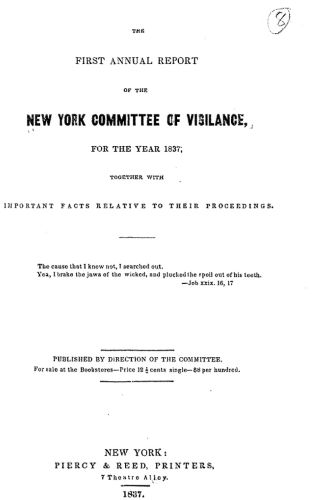
Black communities did not respond to kidnapping, slave catching, and fraudulent betrayal with passivity. They built systems of vigilance. In northern cities and border regions, free Black activists, church leaders, sailors, laborers, printers, householders, and fugitives themselves created networks to warn, shelter, transport, defend, and document those threatened by slavery’s reach. These networks were not merely charitable. They were political institutions formed under conditions of emergency. They recognized that slavery’s power did not end at the boundary of the plantation or the slave state. It moved through law, rumor, paper, money, and pursuit. Black vigilance began from a hard truth: freedom could not rely on the goodwill of the state, and survival required organized mistrust as well as organized care.
The problem of trust shaped every part of this work. A fugitive needed help quickly, but speed increased danger. A stranger asking for shelter might be exactly who he claimed to be, or he might be followed, watched, desperate, misinformed, or intentionally deceptive. A person offering assistance might be a genuine abolitionist, an inexperienced sympathizer, a paid informer, or a trap. Routes had to be guarded. Names had to be limited. Letters of introduction, community reputation, church affiliation, family ties, and the testimony of known activists became tools for separating reliable aid from danger. This did not mean Black vigilance networks were closed or paranoid in a narrow sense. They were disciplined. They understood that trust had to be built, verified, and managed because slavery had created a world in which misplaced confidence could mean re-enslavement or death. Even genuine sympathy could be dangerous if it came without caution. A careless helper might speak too openly, reveal a route, underestimate a slave catcher, or treat secrecy as drama rather than survival. The work of vigilance required emotional generosity joined to practical suspicion. To help someone escape slavery was not simply to feel compassion. It was to know when to open a door, when to close a mouth, when to ask questions, when to move quickly, and when to refuse a risk that might endanger an entire network.
Figures such as David Ruggles in New York and William Still in Philadelphia show how Black vigilance combined immediate rescue with long-term institution building. Ruggles worked through the New York Committee of Vigilance to confront kidnappers, aid fugitives, and challenge slave catchers in one of the nation’s most dangerous urban environments for Black freedom. His work was direct, public, and risky, especially because New York’s commercial ties to slavery and its racial hostility made antikidnapping activism dangerous. Still’s work with the Philadelphia Vigilance Committee later created one of the most important documentary records of fugitives’ experiences. His Underground Railroad Records preserved names, routes, stories, dangers, family separations, and acts of courage that otherwise might have vanished. These men did not simply “help” fugitives as isolated acts of kindness. They helped build a Black-led infrastructure of resistance.
Mutual aid was central because freedom required material support as well as moral commitment. Fugitives needed food, clothing, medical care, shelter, transportation, legal assistance, employment contacts, and sometimes funds to purchase tickets or move family members. Free Black communities raised money, opened homes, shared intelligence, organized churches, and connected local efforts to wider antislavery networks. This work could involve white allies, and many were indispensable, but the structure of trust often depended on Black leadership and Black community knowledge. A white abolitionist’s sympathy did not automatically make him safe, competent, or accountable. Black vigilance committees knew who had proven reliable, who understood the risks, who could keep silent, and who respected the judgment of those most endangered. Mutual aid was also a form of political authority. It placed Black decision-making at the center of the struggle for Black survival.
The work of vigilance also challenged the fantasy that the Underground Railroad was simply a secret path laid out by benevolent outsiders. It was instead a shifting set of relationships, improvisations, safe houses, legal strategies, transport routes, fundraising efforts, and emergency responses shaped by local conditions. Sometimes escape required stealth; sometimes it required public confrontation. Sometimes the safest path was flight to Canada; sometimes it was legal defense in a northern court; sometimes it was armed community resistance against kidnappers or slave catchers. This flexibility mattered because slavery’s agents adapted as well. They watched railroad stations, ports, boardinghouses, workplaces, churches, and Black neighborhoods. They studied the same routes that fugitives used. A successful vigilance network had to be both compassionate and strategic, both open enough to save lives and guarded enough to prevent betrayal.
Black vigilance transformed the problem of harmful friendship into a politics of accountable solidarity. The central question was never simply who claimed to oppose slavery. It was who could be trusted with a life. Trusted friends were those who accepted discipline, secrecy, risk, Black leadership, and the practical demands of rescue. Harmful friends were those who treated fugitives as symbols, clients, trophies, or occasions for white moral display rather than as people making dangerous decisions for themselves and their families. This distinction mattered because the struggle against slavery was not a morality play staged for white conscience. It was a life-and-death contest over bodies, routes, papers, children, names, witnesses, and futures. Black-led vigilance insisted that aid had to be answerable to those most endangered by failure. In a world where slave catchers and informants turned trust into profit, Black mutual aid turned trust back into protection. It did not eliminate danger, but it made freedom more possible by building communities capable of deciding, under pressure, whose help was real.
The Fugitive Slave Act of 1850: Law as Betrayal and “Aid” as Capture
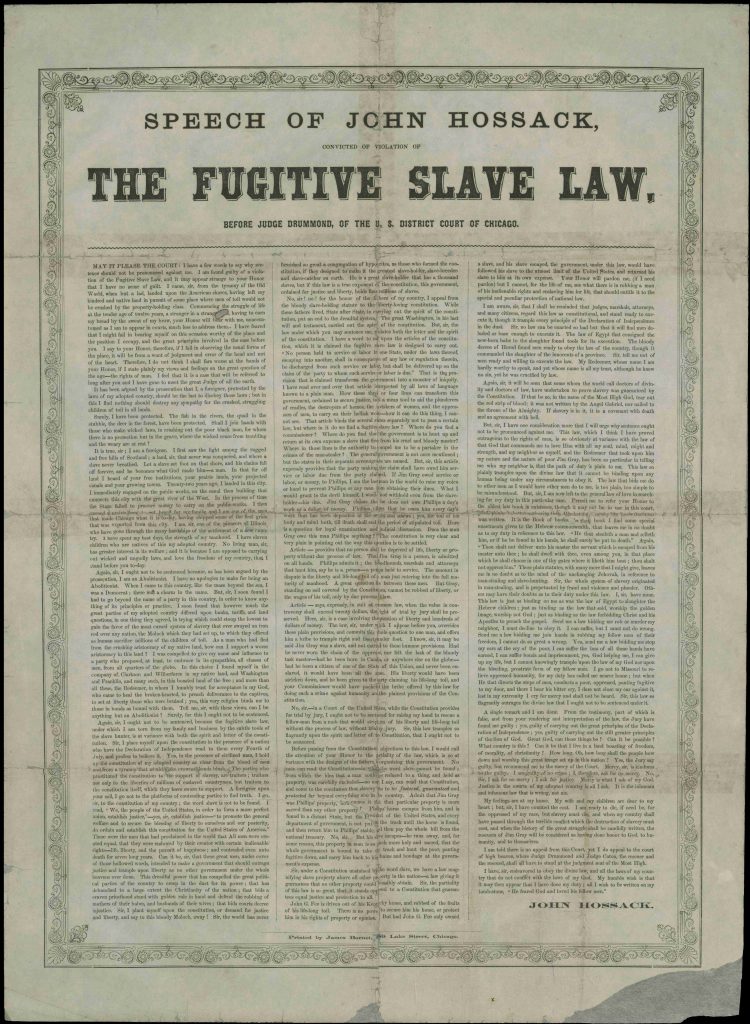
The Fugitive Slave Act of 1850 turned the problem of harmful friendship into a federal crisis. Earlier laws had already endangered fugitives and free Black communities, but the 1850 statute intensified enforcement, expanded federal authority, and made the recovery of alleged fugitives a national obligation. It denied alleged fugitives the protections of jury trial, restricted their ability to testify on their own behalf, imposed penalties on those who aided escape, and created incentives for commissioners who processed cases. The law made the free states less free. It announced that slavery’s reach did not stop at the Mason-Dixon line, the Ohio River, or the moral claims of northern communities. A person who had escaped bondage, or who was merely accused of doing so, could be seized under federal authority and forced back into slavery through a process designed to move quickly and favor claimants. Law itself became a vehicle of betrayal because it used the language of order to assist the destruction of freedom.
The statute also made “aid” legally dangerous while turning capture into a form of sanctioned assistance to enslavers. A neighbor who gave food, a minister who offered shelter, a Black household that hid a fugitive, a lawyer who challenged removal, or a crowd that interfered with slave catchers could be treated as obstructing federal law. This reversed the moral meaning of help. To assist a person fleeing enslavement became a punishable offense, while helping return that person to bondage became lawful cooperation. The Act did more than strengthen slave catching. It tried to discipline northern society into complicity. It asked citizens, officials, and communities to recognize the enslaver’s claim as more legitimate than the fugitive’s plea, more legally actionable than Black testimony, and more worthy of federal protection than liberty itself. The law did not merely permit betrayal. It organized it.
The danger was especially severe because the Act operated within a society already prepared to doubt Black freedom. Alleged fugitives could not rely on ordinary assumptions of personhood or equal legal standing. A claimant’s documents, witnesses, and affidavits might carry decisive force, while the accused person’s own voice could be legally marginalized. Free Black people understood that this created a terrifying vulnerability. If the machinery of removal could move quickly, if Black testimony was restricted, if financial incentives favored rendition, and if local resistance could be criminalized, then the difference between fugitive recovery and kidnapping became dangerously thin. The Act gave slave catchers and claimants a stronger legal costume. A person approaching under federal authority might be enforcing the law, abusing it, or both. The result was a system in which Black communities had to fear not only criminals operating outside the law, but legal actors empowered by the law itself.
The public cases that followed made this betrayal visible. The attempted rescue of Shadrach Minkins in Boston in 1851, the rendition of Thomas Sims that same year, the Christiana Resistance in Pennsylvania, the Jerry Rescue in Syracuse, and the Anthony Burns case in Boston in 1854 all revealed how deeply the law divided northern communities. These events were not simply local disturbances. They were tests of whether federal authority could compel participation in slavery’s preservation. Black and white abolitionists, vigilance committees, churches, lawyers, and ordinary residents responded in different ways: legal defense, public protest, physical rescue, fundraising, courtroom challenge, and sometimes armed resistance. Yet Black communities bore the most immediate risk. Every highly publicized case reminded free and fugitive Black people that the state could turn streets, courthouses, jails, and military escorts into instruments of removal. The law’s promise of order meant terror for those whose freedom it refused to presume.
The Fugitive Slave Act also exposed the limits of passive antislavery sentiment. It was no longer enough for northerners to dislike slavery from a distance while treating it as a southern institution. The law forced a practical question: would they obey when asked to help slavery function? Some did. Some looked away. Some opposed the law in speech but hesitated when resistance became costly. Others defied it openly, and many Black activists had been resisting such dangers long before white northern outrage became widespread. This distinction matters. The crisis did not begin when white northerners felt morally uncomfortable. It began whenever Black people were hunted, seized, accused, or dragged away. The 1850 law made that crisis harder for white citizens to ignore, but Black communities had already understood the central truth: a legal system that protects slavery cannot be trusted as a neutral friend of freedom. The statute tested allyship in concrete terms. Sympathy had to become action, or it remained morally thin. A person could condemn slavery in private and still become useful to slavery by complying with the law, refusing shelter, withholding testimony, avoiding risk, or treating Black resistance as disorder. The Act turned neutrality into collaboration because enforcement depended not only on federal commissioners and slave catchers, but on the silence, caution, and obedience of surrounding communities.
By nationalizing fugitive recovery, the Act transformed harmful friendship into a constitutional drama. The federal government claimed to uphold law, union, property, and compromise, but for enslaved and free Black people those words could conceal capture, silence, and forced return. The betrayal was not only that slave catchers lied or informants sold information. It was that the republic itself, while speaking the language of liberty, placed its authority behind the claims of enslavers. Black vigilance networks and abolitionist allies sharpened their resistance in response, insisting that moral law and human freedom outweighed statutes designed to protect bondage. The Fugitive Slave Act of 1850 belongs at the center because it made the problem unmistakable: under slavery, the person offering “lawful aid” might be aiding the enslaver, and the state that promised justice might become the most dangerous false friend of all.
Paternalistic Abolitionism: Sympathy without Equality

White abolitionism contained real courage, sacrifice, and moral clarity, but it also carried contradictions that Black activists had to confront repeatedly. Many white reformers opposed slavery because they understood it as a sin, a violation of natural rights, a national disgrace, or a threat to republican government. Some risked reputation, livelihood, safety, and even their lives in the struggle against bondage. Yet opposition to slavery did not automatically mean belief in Black equality. A person could condemn the auction block while still assuming white leadership, white moral authority, and white control over the terms of reform. This was the problem of paternalistic abolitionism: sympathy could coexist with hierarchy. The enslaved person might be pitied as a sufferer but not respected as a strategist; the free Black activist might be praised as evidence of human capacity but still marginalized when decisions were made. Paternalism was especially dangerous because it could sound humane while preserving unequal power. It did not defend slavery directly, but it could defend habits of white authority that slavery had helped create. The result was an antislavery politics that sometimes challenged bondage without fully challenging the racial order that made bondage thinkable.
Paternalism harmed the antislavery movement because it reproduced, in softened form, the racial assumptions abolition was supposed to destroy. Some white allies imagined themselves as rescuers and Black people as grateful recipients of rescue. They could speak movingly about cruelty, family separation, flogging, and sale, yet hesitate when Black leaders demanded full citizenship, political rights, equal education, self-defense, or independent leadership. The issue was not simply personal prejudice, though prejudice mattered. It was a structure of authority. White reformers often controlled presses, lecture platforms, funding networks, organizational offices, and access to sympathetic audiences. That control shaped which voices were amplified, which strategies were considered respectable, and which forms of Black anger, militancy, or autonomy were treated as inconvenient. Paternalism made antislavery sympathy conditional. Black suffering could be mourned, but Black power still had to be negotiated against white discomfort.
Black abolitionists challenged this arrangement by insisting that they were not symbols, witnesses, or moral exhibits for white reform. They were political thinkers and organizers in their own right. Frederick Douglass’s career illustrates this tension vividly. His early prominence within the Garrisonian abolitionist world depended partly on white sponsorship and the power of his testimony as a formerly enslaved man, but Douglass increasingly insisted on intellectual independence, editorial control, political judgment, and a broader vision of Black citizenship. Maria Stewart had already demanded that Black women’s public speech be taken seriously in the 1830s, while David Walker’s Appeal rejected gradualism, submission, and white control with uncompromising force. Henry Highland Garnet’s call for enslaved resistance, Martin Delany’s nationalism, Sojourner Truth’s public witness, and Frances Ellen Watkins Harper’s political and literary activism all made the same larger point in different ways: Black people were not merely the subject of antislavery politics. They were its authors.
The tension also appeared in debates over strategy. Some white abolitionists preferred moral suasion, nonresistance, and appeals to Christian conscience. Others embraced political abolitionism, free soil politics, legal resistance, or, later, armed struggle. Black abolitionists participated in all of these debates, but they often did so from a different position of urgency. For people who could be kidnapped, denied testimony, segregated, attacked by mobs, or dragged south under federal law, patience had a different cost. A white reformer might treat restraint as moral purity; a Black activist might experience the same restraint as exposure to danger. A strategy that seemed principled from the safety of a lecture hall could look dangerously abstract from the vantage point of a person whose spouse, child, parent, or friend might be seized. This did not mean Black abolitionists were uniformly militant or white abolitionists uniformly timid. The movement was more complex than that. But paternalism appeared whenever white allies assumed that their own conscience, comfort, or theory of reform should define the pace and method of Black liberation. The practical question was not whether a strategy sounded morally elevated, but whether it protected Black life, expanded Black power, and respected Black judgment under conditions of immediate danger.
Paternalistic abolitionism was harmful because it confused opposition to slavery with solidarity against white supremacy. The two could overlap, but they were not identical. To oppose slavery while doubting Black equality was to leave the deeper racial order partly intact. To pity enslaved people while ignoring free Black leadership was to preserve dependency inside the language of liberation. To speak for Black freedom while refusing to listen to Black political judgment was to turn allyship into control. The strongest antislavery politics emerged when Black voices were not merely included, but obeyed, debated, followed, and treated as authoritative. The question was never simply whether white allies hated slavery. Many did. The harder question was whether they could surrender the habit of command. Without that surrender, sympathy remained dangerous: sincere enough to help, but not equal enough to trust fully.
The Politics of Representation: White Suffering, Sentiment, and the Erasure of Black Pain
Antislavery literature depended heavily on representation because slavery was both everywhere and hidden from many of the white northern readers whose sympathy abolitionists sought to move. Narratives, speeches, images, pamphlets, novels, lectures, and newspaper accounts tried to make the violence of slavery visible across distance. This work was necessary and often powerful. Enslavers worked hard to conceal, sanitize, or justify the system, and abolitionists countered by exposing whipping, sale, sexual coercion, family separation, legal theft, and the destruction of personhood. Yet the politics of representation carried its own dangers. To make white audiences care, some antislavery writing translated Black suffering through sentimental conventions that centered white feeling, Christian domesticity, maternal grief, or white-coded vulnerability. The result could be simultaneously morally effective and racially compromised.
Sentimental antislavery culture often asked readers to imagine slavery as an assault on the family, the home, the child, and the mother. This strategy made sense in a society that claimed to value domestic virtue while tolerating a system that tore families apart for profit. By emphasizing mothers separated from children, husbands from wives, and children sold into unknown futures, abolitionists exposed the hypocrisy of a republic that celebrated family while protecting human property. But sentimentalism could also narrow the terms of sympathy. It sometimes made enslaved suffering legible only when presented in forms white middle-class readers already recognized as sacred: the Christian mother, the innocent child, the suffering wife, the patient victim, the morally purified sufferer. Black pain became most acceptable when it could be translated into familiar domestic grief rather than political rage, resistance, or demands for power. This mattered because slavery did not only wound the sentimental family. It also attacked labor, law, sexuality, language, memory, bodily autonomy, religious life, political identity, and the right to self-defense. When antislavery representation focused too heavily on passive suffering, it could make Black resistance seem secondary to white compassion. The reader was invited to feel, but not always to follow Black leadership or confront the full political meaning of Black freedom.
This problem appeared especially sharply in the use of white or white-coded suffering. Antislavery fiction and illustration often emphasized enslaved characters who were mixed-race, visually light-skinned, or described in ways that made their suffering easier for white readers to identify with. The “tragic mulatta” figure, common in 19th-century literature, exposed the sexual violence and racial hypocrisy of slavery, but it could also imply that enslavement became especially horrifying when its victim appeared closer to whiteness. Blackness itself risked being pushed to the margins of sympathy. The audience was invited to feel outrage because the victim looked like someone they might recognize as kin, daughter, sister, or neighbor. That tactic could unsettle racist complacency, but it could also reinforce the idea that Black suffering required mediation through whiteness before it became fully visible. The moral injury was real, but the representational method could be compromising. It suggested that the reader’s imagination needed a bridge away from Blackness to arrive at humanity. The enslaved person most easily mourned became the one who could be pictured within white domestic feeling, while darker-skinned, defiant, laboring, angry, or politically assertive Black people could remain less accessible to sentimental sympathy. That hierarchy of visibility did not overturn racism. It sometimes rearranged racism into a more emotionally acceptable form.
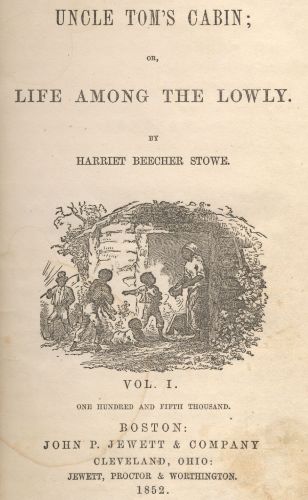
Uncle Tom’s Cabin illustrates both the power and the limits of sentimental antislavery representation. Harriet Beecher Stowe’s novel reached an enormous audience and helped make the cruelty of slavery emotionally unavoidable for many readers. Its scenes of family separation, Christian endurance, maternal anguish, and moral confrontation gave antislavery feeling a popular force few political tracts could match. Yet the novel also relied on racialized conventions that later Black critics and scholars have rightly examined: idealized suffering, saintly endurance, paternalistic characterization, and emotional appeals designed primarily for white Christian readers. Its influence cannot be dismissed, but neither can its limits. It helped many white readers feel slavery as a moral crisis, but it did so through literary forms that often asked Black characters to become instruments of white moral awakening.
Black writers and speakers challenged this representational imbalance by insisting on voice, testimony, anger, intellect, and self-definition. Frederick Douglass’s narratives and speeches did not merely display suffering; they analyzed slavery as a system of power and exposed the moral cowardice of a nation that demanded proof of Black humanity. Harriet Jacobs’s Incidents in the Life of a Slave Girl confronted sexual exploitation, motherhood, hiding, and survival from the perspective of a Black woman whose experience could not be honestly represented through innocent domestic sentiment alone. Jacobs’s narrative forced readers to face the gendered violence of slavery without allowing them the comfort of a simplified victim figure. Sojourner Truth, Frances Ellen Watkins Harper, William Wells Brown, and others made Black speech itself central to antislavery politics. Their work refused to let white audiences consume Black pain without also encountering Black judgment. They did not simply ask to be pitied. They demanded to be believed, heard, and recognized as political actors. This was a crucial difference. Pity could leave power untouched, but Black testimony challenged the listener’s authority to decide what counted as truth. In Black abolitionist writing and speech, suffering did not erase agency. It became evidence, indictment, memory, and political command.
The politics of representation belongs within the history of harmful friendship because even sympathetic depiction could reproduce inequality. White antislavery culture sometimes made slavery visible by making Black suffering serve white conscience. It could center the emotional transformation of the reader more than the agency of the enslaved. It could condemn cruelty while preserving assumptions about who had the authority to narrate, interpret, and lead. This did not make sentimental abolitionism useless or false, but it made it incomplete. The deepest antislavery representation did more than awaken pity. It restored Black subjectivity against a system built on objectification. It showed that the problem was not merely that white Americans had failed to feel enough, but that they had claimed the power to decide whose pain counted, whose voice mattered, and whose freedom could define the future.
John Brown and the Perils of Violent Allyship

John Brown occupies a difficult place in the history of harmful friendship because he was not a false ally in any simple sense. He hated slavery with a moral intensity that many white Americans refused to approach, and he worked with Black abolitionists rather than merely speaking over them from a safe distance. He believed slavery was a war already being waged against enslaved people, and he concluded that only force could answer force. That conviction made him different from paternalistic reformers who pitied Black suffering while resisting Black equality. Yet sincerity, courage, and antislavery militancy did not remove the dangers of strategy. Brown’s 1859 raid on Harpers Ferry raises one of the hardest questions in the history of allyship: when does a person committed to liberation risk making decisions whose consequences will fall most heavily on those already most endangered?
Brown’s plan was rooted in a vision of armed resistance. He hoped to seize the federal arsenal at Harpers Ferry, arm enslaved people, and spark a wider movement of liberation that would spread through the mountains and destabilize slavery from within. He did not imagine himself as a mere symbol-maker, though the raid became symbolic almost immediately. He imagined practical insurrectionary action. Black abolitionists and fugitives were not absent from his thinking or his movement. Shields Green, Dangerfield Newby, Lewis Leary, John Copeland, Osborne Perry Anderson, and others joined the raid or its wider preparations, and Anderson’s later account remains essential because it prevents Brown’s story from becoming only a tale of white martyrdom. Brown’s circle also included Black supporters and interlocutors who understood slavery’s violence firsthand. This matters because Brown should not be reduced to a reckless white savior acting in isolation. His project emerged from real interracial radicalism, even as it also exposed the dangers of command, timing, secrecy, and insufficient preparation.
Frederick Douglass’s refusal to join the raid reveals the dilemma sharply. Douglass admired Brown’s hatred of slavery and respected his courage, but he judged Harpers Ferry a fatal trap. To Douglass, the plan risked concentrating antislavery militants in a place where federal and Virginia forces could crush them before a broader movement could develop. His refusal was not cowardice or moderation. It was strategic judgment from a Black abolitionist who knew that failed revolt could bring savage reprisals, intensified surveillance, and renewed justification for proslavery violence. Brown’s danger as an ally lay not in bad faith, but in a willingness to act from a moral certainty that did not fully solve the practical problem of protection. He was right that slavery was violent. He was right that enslaved people had a right to resist. But righteousness did not guarantee that the plan could shelter those who would bear the consequences if it failed.
The aftermath confirmed both the power and the peril of Brown’s action. The raid failed militarily, and several participants were killed or captured. Brown’s trial and execution turned him into a martyr for many abolitionists and a nightmare figure for enslavers. In the South, the raid intensified fears of insurrection and hardened proslavery militancy; in the North, it forced many people to confront the violence already embedded in slavery and the moral inadequacy of endless compromise. Yet the symbolic victory came at terrible cost. Black participants risked and lost their lives, and the national panic that followed was borne most immediately by Black communities and enslaved people living under heightened suspicion. Southern authorities and slaveholders did not treat Harpers Ferry as an isolated raid. They treated it as proof of a wider conspiracy, using it to justify surveillance, repression, and renewed insistence that slavery required militant defense. This was the terrible asymmetry of Brown’s martyrdom: his death could be claimed as prophetic sacrifice, but enslaved people and free Black communities had to live inside the backlash his action helped unleash. Brown’s courage made slavery’s violence undeniable, but it also demonstrated that radical action could produce consequences beyond the control of the radical actor. Martyrdom could inspire, but martyrdom is not the same as accountability. The question remains whether an ally’s willingness to die can justify exposing others to death when the path to success is uncertain.
John Brown belongs not as a villain, nor as a fake friend, but as a warning against romanticizing allyship by courage alone. He represents the peril of violent solidarity when moral clarity outruns collective strategy, consent, and protection. Unlike colonizationists or paternalistic abolitionists, Brown did not ask Black people to disappear, remain dependent, or wait politely for freedom. He took slavery seriously as organized violence and answered it with the language of war. But even noble militancy required accountability to those most exposed to reprisal. The deepest lesson of Harpers Ferry is not that enslaved people should have waited, nor that armed resistance was inherently illegitimate. It is that liberation politics must ask who plans, who consents, who leads, who is protected, and who pays if the plan fails. A friend willing to fight may be invaluable. A friend who mistakes willingness for wisdom can still be dangerous.
Black Leadership and the Rejection of Conditional Friendship
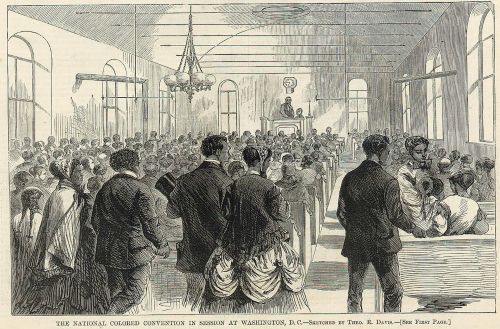
Black abolitionists did not merely ask whether white Americans opposed slavery. They asked what kind of freedom those opponents were willing to recognize. Conditional friendship, whether colonizationist, paternalistic, sentimental, or politically cautious, repeatedly offered aid while limiting Black autonomy. It could oppose the auction block while hesitating before Black citizenship. It could denounce cruelty while fearing Black self-defense. It could praise Black testimony while keeping Black leadership subordinate. Against this pattern, Black activists built a politics that insisted freedom must be defined by those whose lives were at stake. They did not simply receive assistance from antislavery allies. They evaluated, challenged, corrected, used, and sometimes rejected those allies when sympathy came without equality.
The Colored Conventions movement made this rejection of conditional friendship visible across decades of Black organizing. Beginning in the 1830s, Black delegates gathered to debate abolition, education, labor, voting rights, migration, self-defense, moral reform, and citizenship. These conventions were not side notes to white abolitionism. They were central institutions of Black political thought. They showed that free Black communities were already developing national strategies, building leadership networks, raising funds, publishing proceedings, and arguing over the future of Black life in the United States. The very existence of these conventions answered colonization and paternalism at once. Black Americans did not need others to define their interests for them. They were already doing so publicly, collectively, and with intellectual force.
Frederick Douglass’s political evolution also demonstrates the refusal of conditional friendship. Douglass worked with white abolitionists, benefited from antislavery networks, and honored genuine allies, but he increasingly insisted on editorial independence, political judgment, and Black authority. His move from the Garrisonian orbit toward his own newspaper and later political abolitionism was not simply a personal dispute. It reflected a broader question inside the movement: would formerly enslaved people be treated as witnesses whose suffering authenticated white reform, or as thinkers capable of shaping strategy? Douglass refused to remain an exhibit of slavery’s cruelty. He became one of the century’s most formidable interpreters of American democracy, constitutional meaning, citizenship, war, and freedom. His career made clear that true alliance required room for disagreement, growth, leadership, and self-definition.
Other Black leaders pushed the same principle in different directions. Martin Delany’s nationalism and emigrationist thought, Henry Highland Garnet’s call for resistance, Sojourner Truth’s public challenges to racism and sexism, Harriet Tubman’s direct action, Frances Ellen Watkins Harper’s literary and political work, and the activism of Black churches and mutual aid societies all rejected the idea that Black freedom should depend on white permission. They did not always agree with one another. Black political thought was diverse, strategic, and sometimes sharply divided over emigration, moral reform, armed resistance, electoral politics, and cooperation with white allies. But that diversity itself mattered. It showed that Black people were not a single constituency waiting to be represented by benevolent outsiders. They were a political people arguing over tactics, institutions, rights, and futures. Delany’s willingness to consider emigration differed sharply from the anticolonization stance of many Black activists, yet even that debate turned on Black self-determination rather than white removal schemes. Garnet’s militancy differed from Douglass’s evolving constitutional politics, and Tubman’s rescue work differed from Harper’s literary and lecture activism, but each insisted that Black freedom required Black decision-making. Their differences were not signs of weakness. They were evidence of a living political tradition, one that refused to let white reformers flatten Black struggle into a single acceptable posture of gratitude, patience, or suffering.
The safest ally, in this world, was not the person who merely felt sympathy. It was the person who accepted Black leadership, Black disagreement, Black urgency, and Black citizenship as nonnegotiable. Conditional friendship failed because it wanted to help without relinquishing control. Black abolitionists exposed that failure by building conventions, newspapers, churches, vigilance committees, military networks, lecture circuits, and literary traditions that made Black agency impossible to ignore. Their standard was clear: an ally who opposed slavery but feared Black equality remained unreliable. An ally who pitied Black suffering but resisted Black authority remained incomplete. The struggle against slavery required more than kindness. It required a transformation in who had the right to lead, define, and judge the meaning of freedom.
Civil War, Emancipation, and the Rewriting of Alliance
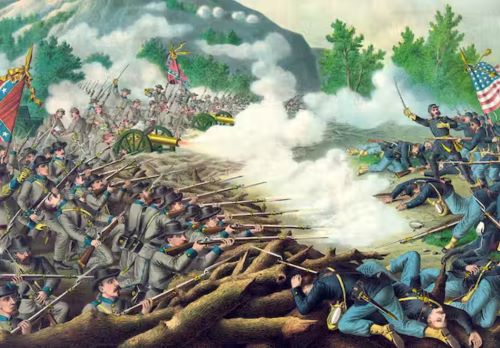
The Civil War transformed the question of harmful friendship by forcing the United States government to confront a truth Black people had long understood: slavery could not be contained, compromised with, or morally managed. Yet the Union did not begin the war as a reliable ally of Black freedom. In 1861, federal policy was cautious, uneven, and often hostile to enslaved people who fled to Union lines. Many white northerners fought to preserve the Union, not to abolish slavery, and some commanders returned fugitives or tried to avoid turning the war into a direct assault on bondage. For enslaved people, this meant that the army approaching from the North might be an opportunity, but not automatically a friend. The Union’s meaning had to be tested, pressured, and remade. Black people did not wait passively for that transformation. They began it by escaping, withholding labor, offering intelligence, aiding Union forces, and making slavery itself impossible to preserve as a neutral institution.
The “contraband” policy that emerged in 1861 marked one of the earliest signs of this shift, but it also revealed the limits of conditional alliance. When General Benjamin Butler refused to return escaped enslaved people to Confederate claimants at Fortress Monroe, he did not initially declare them citizens, soldiers, or fully free persons. He treated them as “contraband of war,” property useful to the enemy and subject to seizure by Union forces. This was a practical blow against slavery, but its language remained trapped inside the logic of property. Enslaved people had forced themselves into Union policy by crossing military lines, yet the first legal vocabulary available to many federal authorities still treated them through the category that slavery had imposed. The policy could protect some fugitives from return, but it did not yet recognize the full humanity or political agency of those who had liberated themselves by flight. It was help, but help shaped by military necessity rather than equal justice. That ambiguity mattered because it revealed how even antislavery movement by the state could remain morally incomplete. The Union could benefit from Black flight while hesitating to acknowledge Black freedom as a right. It could refuse to return people to enslavers while still treating them as displaced laborers, military assets, or administrative problems. For the people arriving at Union lines, this meant liberation began inside uncertainty: safety was possible, but food, shelter, wages, family protection, legal status, and long-term security were far from guaranteed. The first stage of federal “help” carried both promise and danger, because it weakened slavery without yet fully honoring the people whose actions had made that weakening possible.
Self-emancipation steadily pushed the Union beyond that limited framework. Enslaved people fled plantations, guided Union soldiers, sabotaged Confederate labor systems, shared knowledge of roads and terrain, protected family members, and transformed military occupation into a crisis for slavery. Their actions made clear that slavery was not a passive institution waiting for legislation. It was a war system, and Black people were already fighting it from within. Every person who fled weakened the Confederate economy, challenged enslavers’ authority, and forced Union officials to decide whether they would defend slavery’s claims or accept the reality that the enslaved were making themselves free. This was not incidental to the war. It changed the war’s structure. Enslaved labor built fortifications, raised food, maintained households, drove wagons, repaired roads, and sustained Confederate armies and plantations. When that labor was withdrawn, the Confederacy lost more than workers; it lost part of the social machinery that made rebellion possible. Black flight also carried intelligence: information about Confederate movements, local geography, supplies, morale, and the location of roads, rivers, and hidden paths. The enslaved did not merely run toward freedom. They made freedom into a military fact. The Emancipation Proclamation of 1863 was not simply a gift from President Abraham Lincoln or the federal government. It was a war measure shaped by military necessity, abolitionist pressure, and the actions of enslaved people whose movement made emancipation unavoidable.
Black military service further rewrote the meaning of alliance. Once Black men enlisted in the United States Colored Troops and other units, they did more than assist the Union cause. They claimed the right to fight for their own freedom and the freedom of their families. Their service challenged racist assumptions about courage, citizenship, discipline, and political belonging. Yet even here, alliance remained unequal. Black soldiers faced discrimination in pay, rank, treatment, and recognition. They risked enslavement or execution if captured by Confederate forces, and their families often remained vulnerable. Still, their participation changed the moral and political stakes of the war. The Union could no longer plausibly treat Black people only as laborers, refugees, symbols, or dependents. Armed service made Black claims on the nation impossible to dismiss without exposing the hypocrisy of asking men to die for a country that refused to recognize them fully.
Black women also reshaped the war’s meaning in ways too often pushed to the margins of emancipation narratives. They fled with children, sustained refugee camps, worked for wages under harsh conditions, served as nurses, laundresses, cooks, spies, scouts, and organizers, and struggled to reunite families torn apart by sale and war. Their labor exposed another form of conditional friendship. Union authorities often depended on Black women’s work while failing to provide adequate food, shelter, medical care, wages, or protection from exploitation and sexual violence. Freedom came not as a clean moment of deliverance, but as a hazardous process lived in camps, hospitals, occupied towns, military households, and uncertain labor arrangements. The same army that could shield fugitives from enslavers could also reproduce hierarchy, neglect, and coercion. Black women’s wartime experience makes clear that emancipation was not only a legal event or battlefield outcome. It was a struggle over the daily conditions under which freedom could become livable.
By the end of the Civil War, alliance had been fundamentally rewritten but not purified. The destruction of slavery required Union victory, federal power, abolitionist agitation, Black military service, and self-emancipation from below. Yet the war also showed that Black freedom could not safely depend on benevolent white intention alone. The Union became an instrument of emancipation only because enslaved and free Black people forced the issue, served the cause, and made themselves central to the conflict’s outcome. The central question shifted from whether Black people would be returned to bondage to whether the nation would recognize them as citizens, soldiers, workers, landholders, voters, parents, and political actors. Emancipation exposed the inadequacy of conditional friendship. An ally who opposed slavery only when it served military necessity, or accepted Black service while resisting Black equality, remained incomplete. Freedom required more than rescue from enslavement. It required power, rights, protection, land, family integrity, and recognition.
Patterns of Harmful Friendship: Profit, Paternalism, Spectacle, and Control
The following video from “Threads from the National Tapestry” covers the story of John Brown:
Across the history of American slavery, harmful friendship took different forms, but its patterns were recognizable. Some false friends were predators in disguise, using promises of work, guidance, shelter, or legal authority to capture free Black people and fugitives for profit. Others were reformers whose sympathy remained trapped inside white supremacy, offering help while denying Black equality or political authority. Still others turned Black suffering into sentimental spectacle, making slavery visible only when it could move white audiences through familiar images of family, innocence, Christian patience, or white-coded vulnerability. These forms were not identical. A kidnapper was not the same as a paternalistic abolitionist, and a reckless militant was not the same as a colonizationist. Yet all forced Black people to confront a common danger: the person claiming to help might still profit from, control, distort, endanger, or define Black freedom.
The first pattern was profit. Kidnappers, slave catchers, informants, traders, and opportunists operated within a world where Black bodies could be converted into money through capture, sale, fees, rewards, or political favor. Their betrayal was deliberate. They understood that trust had value because movement required vulnerability. A job offer, a travel opportunity, a supposed guide, a legal claim, or a promise of protection could become the opening through which freedom was stolen. This form of harmful friendship exposed slavery as not only a labor system, but a social corruption that taught people to monetize betrayal. It gave financial value to information, suspicion, rumor, and deception. A person who knew where a fugitive slept, which church sheltered strangers, which employer hired Black workers, or which family had free papers could turn that knowledge into danger. Profit made treachery practical.
The second pattern was paternalism. Colonizationists and some white abolitionists opposed slavery while refusing to accept Black people as equal political actors in the United States. Colonization framed removal as benevolence, asking free Black people to leave the country rather than demanding that the country abandon racism. Paternalistic abolitionism could condemn cruelty while still imagining white reformers as the natural leaders of Black liberation. It treated Black people as sufferers to be rescued more readily than citizens to be followed. This mattered because paternalism did not merely hurt feelings or produce awkward movement politics. It shaped strategy, funding, publication, representation, organizational power, and public respectability. It could decide whose voices were amplified, whose anger was restrained, whose analysis was considered too radical, and whose freedom was made conditional on white approval. A white ally might help raise money, circulate petitions, publish testimony, or challenge slavery in public, while still expecting Black activists to remain deferential within the movement’s internal hierarchy. That expectation reproduced the very structure abolition claimed to oppose: white judgment above Black experience, white leadership above Black expertise, white comfort above Black urgency. Paternalism was harmful because it fought slavery without always surrendering the habits of command slavery had taught.
The third pattern was spectacle. Antislavery representation had to expose suffering, but exposure could become another form of control when Black pain was arranged primarily for white moral awakening. Sentimental literature, lectures, images, and reform appeals often helped build antislavery feeling, but they could also ask Black people to appear as victims before they were recognized as thinkers, strategists, workers, parents, writers, soldiers, or political leaders. White or white-coded suffering sometimes became a shortcut to sympathy, implying that slavery became most horrifying when its victims could be imagined through proximity to whiteness. This did not make sentimental antislavery useless. It made it morally incomplete. Black abolitionists challenged that incompleteness by turning testimony into indictment rather than spectacle alone. They insisted that slavery’s horror did not need translation through white feeling to become real. Their pain was not an exhibit. Their words were evidence, argument, and demand.
The fourth pattern was control, especially the control hidden inside conditional alliance. Some allies supported emancipation only if it came slowly, peacefully, under white supervision, without Black equality, or without unsettling the nation too much. Some supported Black military labor while resisting Black citizenship. Some supported rescue but not self-defense, testimony but not leadership, sympathy but not sovereignty. Even the Union’s wartime movement toward emancipation revealed this pattern, because federal policy changed under pressure from Black flight, labor, intelligence, enlistment, and abolitionist agitation, not from pure benevolence alone. Harmful friendship was not limited to obvious betrayal. It appeared wherever help came with terms that preserved unequal power. Black freedom struggles answered that danger with vigilance, conventions, churches, newspapers, mutual aid, testimony, self-emancipation, military service, and political insistence. The central lesson was clear: real friendship required more than opposition to slavery. It required respect for Black authority over the meaning and future of freedom.
Conclusion: Trust, Freedom, and the Cost of Misplaced Friendship
The history of harmful friendship during American slavery reveals that danger did not always arrive wearing the face of open hostility. Enslaved people and free Black communities certainly knew the violence of declared enemies: enslavers, slave patrols, kidnappers, hostile courts, federal commissioners, mobs, and politicians who defended human bondage. But slavery also created more ambiguous dangers. A stranger could offer work and deliver a free person into the slave trade. A supposed guide could become a captor. A law claiming to preserve order could return a person to bondage. A reformer could denounce slavery while denying Black equality. A sentimental writer could expose suffering while turning Black pain into material for white moral awakening. Under slavery, trust was not simply a private virtue. It was a matter of survival, and misplaced trust could cost a person freedom, family, body, name, and life.
This does not mean that all allies were false or that antislavery movements were morally equivalent to slavery’s defenders. Many people risked imprisonment, violence, poverty, and death to resist slavery. Black and white abolitionists, vigilance committees, antislavery lawyers, church networks, fugitives, soldiers, writers, and ordinary households helped undermine one of the most brutal institutions in American history. Some hid fugitives at great personal risk, challenged slave catchers in court and in the streets, raised money for legal defense, printed antislavery newspapers, sheltered families, guided people toward safety, and turned private conscience into public resistance. But the central point is that opposition to slavery was not enough by itself. The test of friendship lay in whether aid respected Black autonomy, Black judgment, Black leadership, and Black survival. Colonization failed that test when it framed removal as benevolence. Paternalism failed it when it treated Black people as objects of rescue rather than makers of freedom. Sentimental spectacle failed it when it made Black suffering legible only through white feeling. Conditional wartime alliance failed it whenever it accepted Black labor, intelligence, and military service without accepting Black equality. Genuine solidarity required more than compassion. It required accountability to those most endangered by failure and a willingness to let Black people define the meaning, pace, strategy, and future of liberation.
Black communities answered these dangers with discernment and institution building. They organized vigilance committees, conventions, churches, newspapers, schools, mutual aid societies, rescue networks, lectures, military service, and political campaigns. They exposed kidnappers, rejected colonization, challenged paternalistic reform, narrated their own suffering, insisted on their own leadership, and forced the nation to confront slavery as a system that could not be morally compromised with or safely contained. Their struggle was not simply to find friends, but to define what friendship required. It required accountability. It required listening. It required risk borne with, not imposed upon, the people most endangered. It required surrendering the assumption that white sympathy gave white reformers the authority to control Black destiny. In that sense, Black freedom struggles made clear that allyship without equality could become another form of domination.
The cost of misplaced friendship was high because slavery had made betrayal profitable, paternalism respectable, spectacle persuasive, and conditional freedom politically convenient. Yet the deeper legacy of this history is not only caution. It is Black clarity. Enslaved and free Black people repeatedly demonstrated that freedom was not a gift to be bestowed by benevolent outsiders, nor a problem to be managed by those uncomfortable with Black equality. Freedom was claimed, organized, defended, narrated, fought for, and redefined by Black people themselves. The trustworthy friend was the one who understood that. The harmful friend was the one who did not. Under slavery, the open enemy could destroy lives with chains and law, but the false or conditional friend could endanger freedom by corrupting the very language of help. That is why the struggle against slavery was also a struggle over trust: who deserved it, who abused it, and who had earned the right to define liberation.
Bibliography
- American Colonization Society. The First Annual Report of the American Society for Colonizing the Free People of Color of the United States. Washington, DC: Davis and Force, 1818.
- Anderson, Osborne P. A Voice from Harper’s Ferry. Boston, 1861.
- Bacon, Margaret Hope. But One Race: The Life of Robert Purvis. Albany: State University of New York Press, 2007.
- Berlin, Ira, Barbara J. Fields, Steven F. Miller, Joseph P. Reidy, and Leslie S. Rowland, eds. Freedom: Volume 2, Series 1: The Wartime Genesis of Free Labor: The Upper South: A Documentary History of Emancipation, 1861–1867. Cambridge: Cambridge University Press, 1985.
- Blackett, R. J. M. Making Freedom: The Underground Railroad and the Politics of Slavery. Chapel Hill: University of North Carolina Press, 2013.
- Blight, David W. Frederick Douglass: Prophet of Freedom. New York: Simon & Schuster, 2018.
- Burin, Eric. Slavery and the Peculiar Solution: A History of the American Colonization Society. Gainesville: University Press of Florida, 2005.
- Campbell, Stanley W. The Slave Catchers: Enforcement of the Fugitive Slave Law, 1850–1860. Chapel Hill: University of North Carolina Press, 1970.
- Cover, Robert M. Justice Accused: Antislavery and the Judicial Process. New Haven: Yale University Press, 1975.
- Delany, Martin R. The Condition, Elevation, Emigration, and Destiny of the Colored People of the United States. Philadelphia, 1852.
- Douglass, Frederick. Narrative of the Life of Frederick Douglass, an American Slave. Boston: Anti-Slavery Office, 1845.
- —-. My Bondage and My Freedom. New York: Miller, Orton & Mulligan, 1855.
- —-. “What to the Slave Is the Fourth of July?” Rochester, NY, July 5, 1852.
- Downs, Jim. Sick from Freedom: African-American Illness and Suffering during the Civil War and Reconstruction. New York: Oxford University Press, 2012.
- Finkelman, Paul, ed. His Soul Goes Marching On: Responses to John Brown and the Harpers Ferry Raid. Charlottesville: University Press of Virginia, 1995.
- —-. An Imperfect Union: Slavery, Federalism, and Comity. Chapel Hill: University of North Carolina Press, 1981.
- Foner, Eric. The Fiery Trial: Abraham Lincoln and American Slavery. New York: W. W. Norton, 2010.
- —-. Gateway to Freedom: The Hidden History of the Underground Railroad. New York: W. W. Norton, 2015.
- Foreman, P. Gabrielle, Jim Casey, and Sarah Lynn Patterson, eds. The Colored Conventions Movement: Black Organizing in the Nineteenth Century. Chapel Hill: University of North Carolina Press, 2021.
- Forten, James, and Russell Parrott. Letters from a Man of Colour, on a Late Bill before the Senate of Pennsylvania. Philadelphia, 1813.
- Fugitive Slave Act of 1850. 9 Stat. 462.
- Garnet, Henry Highland. “An Address to the Slaves of the United States of America.” Buffalo, 1843.
- Glymph, Thavolia. The Women’s Fight: The Civil War’s Battles for Home, Freedom, and Nation. Chapel Hill: University of North Carolina Press, 2020.
- Harper, Frances Ellen Watkins. Poems on Miscellaneous Subjects. Boston: J. B. Yerrinton & Son, 1854.
- Hartman, Saidiya V. Scenes of Subjection: Terror, Slavery, and Self-Making in Nineteenth-Century America. New York: Oxford University Press, 1997.
- Hodges, Graham Russell Gao. David Ruggles: A Radical Black Abolitionist and the Underground Railroad in New York City. Chapel Hill: University of North Carolina Press, 2010.
- Hunter, Tera W. Bound in Wedlock: Slave and Free Black Marriage in the Nineteenth Century. Cambridge, MA: Harvard University Press, 2017.
- Jacobs, Harriet A. Incidents in the Life of a Slave Girl. Edited by L. Maria Child. Boston, 1861.
- Jones, Martha S. Birthright Citizens: A History of Race and Rights in Antebellum America. Cambridge: Cambridge University Press, 2018.
- Masur, Kate. An Example for All the Land: Emancipation and the Struggle over Equality in Washington, D.C. Chapel Hill: University of North Carolina Press, 2010.
- McDaniel, W. Caleb. The Problem of Democracy in the Age of Slavery: Garrisonian Abolitionists and Transatlantic Reform. Baton Rouge: Louisiana State University Press, 2013.
- Meyer, Eugene L. Five for Freedom: The African American Soldiers in John Brown’s Army. Chicago: Lawrence Hill Books, 2018.
- Morris, Thomas D. Free Men All: The Personal Liberty Laws of the North, 1780–1861. Baltimore: Johns Hopkins University Press, 1974.
- Newman, Richard S. Freedom’s Prophet: Bishop Richard Allen, the AME Church, and the Black Founding Fathers. New York: New York University Press, 2008.
- Northup, Solomon. Twelve Years a Slave. Auburn, NY: Derby and Miller, 1853.
- Oates, Stephen B. To Purge This Land with Blood: A Biography of John Brown. Amherst: University of Massachusetts Press, 1984.
- Painter, Nell Irvin. Sojourner Truth: A Life, a Symbol. New York: W. W. Norton, 1996.
- Power-Greene, Ousmane K. Against Wind and Tide: The African American Struggle against the Colonization Movement. New York: New York University Press, 2014.
- Quarles, Benjamin. Black Abolitionists. New York: Oxford University Press, 1969.
- Rael, Patrick. Black Identity and Black Protest in the Antebellum North. Chapel Hill: University of North Carolina Press, 2002.
- Reynolds, David S. John Brown, Abolitionist: The Man Who Killed Slavery, Sparked the Civil War, and Seeded Civil Rights. New York: Alfred A. Knopf, 2005.
- Rothman, Joshua D. The Ledger and the Chain: How Domestic Slave Traders Shaped America. New York: Basic Books, 2021.
- Schermerhorn, Calvin. The Business of Slavery and the Rise of American Capitalism, 1815–1860. New Haven: Yale University Press, 2015.
- Sinha, Manisha. The Slave’s Cause: A History of Abolition. New Haven: Yale University Press, 2016.
- Staudenraus, P. J. The African Colonization Movement, 1816–1865. New York: Columbia University Press, 1961.
- Stauffer, John. The Black Hearts of Men: Radical Abolitionists and the Transformation of Race. Cambridge, MA: Harvard University Press, 2002.
- Stewart, Maria W. Productions of Mrs. Maria W. Stewart. Boston: Friends of Freedom and Virtue, 1835.
- Still, William. The Underground Railroad Records. Philadelphia: Porter & Coates, 1872.
- Stowe, Harriet Beecher. Uncle Tom’s Cabin; or, Life among the Lowly. Boston: John P. Jewett, 1852.
- Tompkins, Jane. Sensational Designs: The Cultural Work of American Fiction, 1790–1860. New York: Oxford University Press, 1985.
- Walker, David. Appeal to the Coloured Citizens of the World. Boston, 1829.
- White, Shane. Somewhat More Independent: The End of Slavery in New York City, 1770–1810. Athens: University of Georgia Press, 1991.
- Williams, David. I Freed Myself: African American Self-Emancipation in the Civil War Era. Cambridge: Cambridge University Press, 2014.
- Wilson, Carol. Freedom at Risk: The Kidnapping of Free Blacks in America, 1780–1865. Lexington: University Press of Kentucky, 1994.
- Yee, Shirley J. Black Women Abolitionists: A Study in Activism, 1828–1860. Knoxville: University of Tennessee Press, 1992.
- Yellin, Jean Fagan. Women and Sisters: The Antislavery Feminists in American Culture. New Haven: Yale University Press, 1989.
Originally published by Brewminate, 05.12.2026, under the terms of a Creative Commons Attribution-NonCommercial-NoDerivatives 4.0 International license.
About the Author