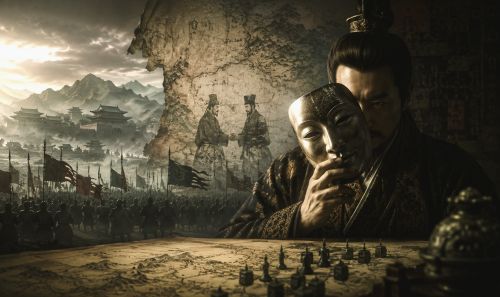
Deception became a political language in China’s Warring States period, shaping war, diplomacy, Legalism, and Qin’s path to unification.

By Matthew A. McIntosh
Public Historian
Brewminate
Introduction: Deception and the Collapse of the Old Zhou Order
The Warring States period did not create deception in Chinese political life, but it gave deception a new historical function. In the older Zhou imagination, political authority rested on ritual hierarchy, inherited rank, moral obligation, and the symbolic supremacy of the Zhou king. That world had never been as orderly as later memory sometimes made it appear, but it possessed a language of legitimacy that treated warfare, diplomacy, and rule as extensions of a larger ceremonial order. By the fifth century BCE, that language no longer restrained power in any meaningful way. Regional states fought not merely for honor, prestige, or punitive advantage, but for territory, population, revenue, administrative reach, and survival. The political problem had changed. A ruler who mistook old forms for real security could lose not just a battle, but his state.
This was the brutal inheritance of the Warring States age. The Zhou king remained as a symbolic figure for much of the period, but real authority had passed into the hands of competing territorial states. Qin, Chu, Qi, Yan, Han, Zhao, and Wei did not inhabit a stable diplomatic order governed by common rules. They inhabited a world of shifting threats, temporary coalitions, betrayals, reforms, military innovations, and increasingly ruthless calculations. The old aristocratic codes of conduct, already weakened during the Spring and Autumn period, became inadequate in a world where war was no longer confined to elite chariot combat or ritualized displays of noble courage. Armies expanded. Infantry, cavalry, crossbows, siege warfare, and mass mobilization altered the scale of violence. Victory required coordination, intelligence, logistics, discipline, and concealment. The battlefield became less a stage for aristocratic recognition than a test of state capacity.
Deception became more than an occasional tactic. It became a structure of thought. To deceive was not simply to lie. It was to manipulate what another ruler, general, envoy, minister, or population believed to be true. It meant concealing strength, feigning weakness, disguising intention, offering alliance while preparing abandonment, speaking morality while pursuing advantage, and presenting coercive rule as public order. The Warring States period made politics into an arena of managed appearances. What mattered was not only what a state could do, but what others believed it could do, what they feared it might do, and what they could be persuaded not to see until it was too late.
This transformation helps explain why the period produced such extraordinary strategic and philosophical literature. The Art of War treated deception as the foundation of warfare, not as a shameful exception to it. The Zhanguoce preserved a diplomatic world in which persuasion, rhetorical theater, and calculated misdirection shaped the decisions of rulers. Legalist texts, especially those associated with Shang Yang and later Qin statecraft, approached society itself as something to be engineered through law, punishment, reward, surveillance, and institutional design. Even thinkers who rejected ruthless power politics were responding to the same crisis. Confucians worried over the collapse of moral language. Mohists condemned destructive aggression and elite self-interest. Daoist writers exposed the artificiality of ambition, naming, and coercive order. The intellectual abundance of the age was inseparable from its violence.
The collapse of the old Zhou order also created a crisis of trust. Diplomatic promises remained necessary, but no state could afford to treat them as permanent. Alliances were instruments, not sacred bonds. Rulers listened to traveling persuaders who framed danger and opportunity in whatever form best served the moment. Ministers shifted loyalties. Smaller states balanced between fear and hope, often discovering too late that yesterday’s protector had become tomorrow’s predator. Sincerity could be useful, but only if it served strategy. Trust survived as a tactic, not as a foundation.
Qin’s eventual conquest of the other states between 230 and 221 BCE did not emerge from brute force alone. Its success rested on the fusion of military discipline, administrative reform, diplomatic manipulation, legal control, and the patient exploitation of rival weakness. Qin mastered the political grammar of the age because it understood that deception and order were not opposites. A state could deceive its enemies in war, discipline its subjects through law, manipulate allies through diplomacy, and still present its victory as the restoration of unity. That was the dark brilliance of the Warring States world. It taught rulers that the appearance of order could be manufactured through the very methods that had destroyed the older order.
The history of deception in the Warring States period is not a catalogue of clever tricks. It is the story of a political civilization learning to survive under conditions of existential competition. Deception moved from battlefield maneuver to diplomatic speech, from court intrigue to administrative structure, from philosophical diagnosis to imperial practice. By the time Qin unified China in 221 BCE, the old Zhou ideal of ritual hierarchy had been replaced by a harsher principle: power belonged to the state that could best control perception, mobilize violence, and call the result peace.
From Ritual Warfare to Strategic Survival: The Background to the Warring States Order
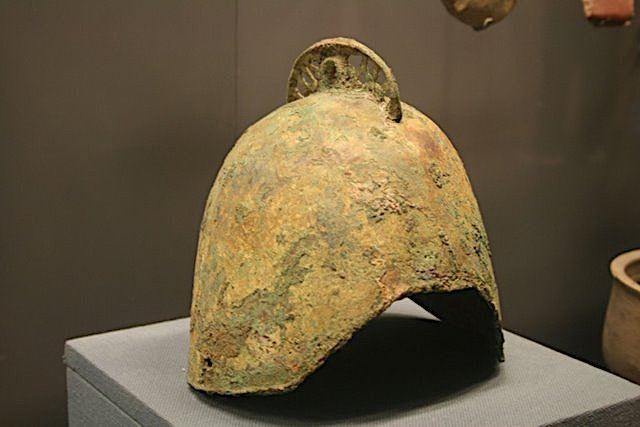
The Warring States period emerged from a long erosion of the political and military assumptions that had once given the Zhou world its shape. In the early Zhou imagination, warfare was bound to hierarchy, ritual propriety, aristocratic obligation, and the moral order claimed by the Zhou house. Combat among elites was not simply a practical act of violence; it was also a performance of rank, courage, legitimacy, and ancestral honor. War announced who possessed authority, who had violated the proper order, and who could claim the favor of Heaven through disciplined conduct as well as victory. Later texts often looked back on this earlier world with nostalgia, contrasting noble restraint with the brutality of later conquest. That memory should not be accepted too innocently, because early warfare was still violent and ambitious, and ritual language could conceal domination even when it claimed to restrain it. Yet the comparison matters because Warring States conflict did represent a profound shift. The older aristocratic world imagined violence as part of a ranked moral universe, while the later interstate system increasingly treated violence as an instrument of survival. War became less a ritualized contest among lineages and more a systemic struggle among territorial states capable of mobilizing land, labor, taxation, law, and military technology on an unprecedented scale. What had once been framed as the correction of disorder within a shared Zhou cosmos became, by degrees, a contest to determine which state would possess the capacity to absorb the others.
By the fifth century BCE, the older aristocratic framework had become increasingly unsuited to political reality. The authority of the Zhou king had been hollowed out, and powerful regional states no longer behaved as subordinate members of a shared ritual order. They competed as self-interested political organisms. Their rulers claimed titles, reformed institutions, built fortifications, absorbed smaller polities, and treated population and territory as measurable resources of survival. The battlefield reflected this transformation. Chariot warfare, once associated with elite status and aristocratic display, gradually lost its centrality as infantry, cavalry, crossbowmen, and siege techniques changed both the scale and character of combat. Armies were no longer merely retinues of nobles and their dependents. They became mass forces, sustained by bureaucratic organization and increasingly tied to agricultural production, tax systems, and state discipline.
This change altered the moral logic of war. In a world of limited aristocratic conflict, reputation and ritual restraint could still matter, even when violated. In a world of existential competition, restraint became dangerous when rivals refused to honor it. The Warring States order rewarded those who understood that appearances could be manipulated and that inherited status could be overcome by reform, planning, and ruthlessness. Military success depended not simply on bravery, but on intelligence, logistics, timing, secrecy, terrain, and the capacity to mislead. Deception became inseparable from the new warfare. To conceal troop movement, disguise intention, feign weakness, disrupt alliances, or lure an enemy into disadvantage was not dishonorable excess. It was often the difference between survival and absorption.
The political background of the period intensified this strategic logic. The major states did not merely fight isolated wars; they existed in a constantly shifting system of threat and calculation. A state could be an ally in one campaign, a rival in the next, and a target soon after. Smaller states learned that ceremonial assurances offered little protection against strategic necessity. Larger states learned that conquest required more than battlefield victory. They had to weaken enemies diplomatically, divide coalitions, attract defectors, gather intelligence, and present aggression in terms that would delay unified resistance. The line between war and diplomacy thinned. Court speech, alliance-making, hostage exchange, espionage, and military maneuver became parts of the same strategic field. The ruler who promised protection might be preparing annexation; the minister who invoked loyalty might be serving another court’s interests; the envoy who carried words of peace might be measuring roads, fortifications, and factional weakness. In this atmosphere, political intelligence became as valuable as military strength. States had to interpret not only armies and borders, but intentions, rumors, silences, marriages, gifts, titles, and delays. Deception flourished because every diplomatic gesture could carry more than one meaning, and every alliance contained the possibility of its own betrayal.
The Warring States world was not merely more violent than the old Zhou order. It was more analytical. States studied one another. Rulers listened to persuaders who promised advantage. Reformers sought to make subjects productive, soldiers obedient, ministers accountable, and enemies predictable. The old vocabulary of ritual order did not disappear, but it no longer governed events. It became one language among others, and often a mask for harder calculations. The transformation from ritual warfare to strategic survival was the necessary precondition for the age’s famous theories of deception. Sun Tzu’s insistence that warfare depends on misleading the enemy did not arise in abstraction. It answered a world in which survival belonged to states that could see beneath appearances while ensuring that others could not do the same.
Sun Tzu and the Theory of Deceptive War
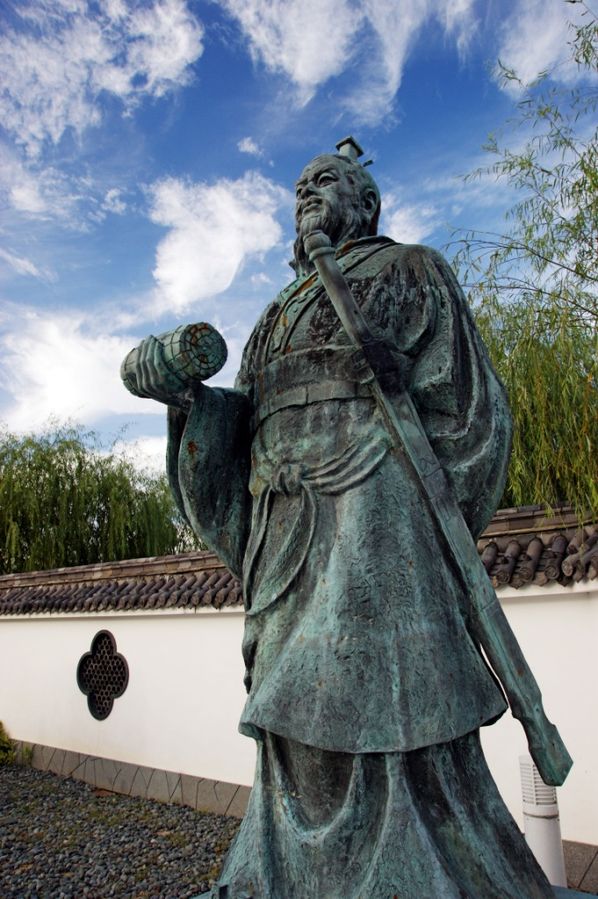
The strategic world of the Warring States period found one of its sharpest expressions in the text traditionally known as The Art of War. Whether associated with Sun Wu, Sun Bin, or a broader military tradition shaped across generations, the work reflects an age in which warfare had become too costly, complex, and politically decisive to be governed by aristocratic bravado alone. Its famous claim that warfare is grounded in deception does not appear as a stray maxim or clever aphorism. It stands near the center of a larger theory of conflict. War, in this vision, is not won simply by courage, numbers, weapons, or moral certainty. It is won by controlling what the enemy sees, expects, fears, misjudges, and believes to be possible. The general’s highest art is not slaughter but perception management, the disciplined manipulation of appearances until the enemy’s decisions serve one’s own design.
This theory marked a profound departure from any ideal of warfare as transparent contest. Sun Tzu does not imagine the battlefield as a place where honorable opponents reveal themselves openly and allow strength to meet strength in ritual clarity. The successful commander appears near when far away, far away when near, weak when strong, strong when weak, disordered when prepared, and hesitant when ready to strike. Such deception is not ornamental. It is the mechanism by which violence is reduced, redirected, or made decisive. The army that can mislead an opponent about its condition may choose the moment of engagement. The ruler who understands the enemy’s alliances may break them before battle. The general who attacks strategy rather than troops can defeat resistance before bodies begin to fall. The point is not merely to confuse an enemy in the moment, but to reorder the enemy’s understanding of reality so that every response becomes delayed, excessive, misdirected, or self-defeating. Deception transforms the enemy’s own judgment into a weapon against him. A commander who can make danger look like safety, opportunity look like risk, or weakness look like bait has already shifted the field before the first command is given. Deception becomes not the opposite of disciplined warfare, but its most refined form.
Sun Tzu’s thought also reveals how deeply Warring States warfare depended on calculation rather than impulse. The text repeatedly emphasizes assessment: terrain, distance, morale, command structure, supplies, advantage, timing, and the condition of both one’s own forces and the enemy’s. Deception works only when it is joined to knowledge. A false appearance must be crafted from a real understanding of circumstances, or it collapses into reckless improvisation. The general must know when to lure, when to avoid, when to divide, when to strike, and when victory is not worth its cost. This is why Sun Tzu’s deception is not mere lying. It is strategic interpretation converted into action. To deceive effectively, the commander must first refuse to deceive himself.
The place of spies in The Art of War makes this logic especially clear. Intelligence is not treated as a minor supplement to battle, but as one of the foundations of victory. The commander who understands the enemy’s plans, internal divisions, resources, and expectations can shape events before they harden into open conflict. Information becomes a weapon because it allows a state to act beneath the surface of visible war. Spies, defectors, informants, and hidden agents expose the enemy’s interior world, turning secrecy into vulnerability. This was particularly suited to the Warring States environment, where courts were filled with persuaders, ministers, rivals, hostages, envoys, and factional interests. The battlefield began long before armies met. It began in the space where knowledge was gathered, intentions were concealed, and decisions were quietly redirected.
Yet Sun Tzu’s theory of deception should not be mistaken for a celebration of chaos. The text’s highest ideal is not endless trickery, but victory achieved with minimal waste. The best commander does not destroy everything in his path simply to prove strength. He subdues the enemy’s plans, disrupts alliances, breaks resistance, and preserves resources wherever possible. This is a severe and unsentimental form of prudence. Deception serves economy. It prevents the ruler from mistaking bloodshed for success and teaches that the most impressive victory may be the one that appears almost effortless because the decisive work has already been done. In the Warring States period, where prolonged war could exhaust treasuries, ruin fields, and expose a state to attack from another rival, such economy was not mercy alone. It was survival. A costly victory could be strategically indistinguishable from defeat if it left the winning state weakened, exposed, or unable to exploit its success. Sun Tzu’s preference for breaking resistance before battle reflects the harsh arithmetic of interstate competition. Every soldier preserved, every city taken intact, every alliance disrupted without siege, and every enemy plan defeated before mobilization strengthened the victor for the next conflict. Deception was valuable because it conserved power while multiplying effect. It allowed a state to win not only the present contest, but the sequence of contests that defined the age.
The enduring importance of The Art of War lies in its recognition that power operates first through perception. Armies fight in physical space, but rulers and generals decide in mental space, where fear, hope, pride, misinformation, and uncertainty shape action. Sun Tzu’s general wins by entering that mental space before the enemy understands what has happened. This made the text a perfect expression of its age. The Warring States world rewarded states that could hide intention, exploit expectation, and turn the enemy’s judgment against itself. Deception was not an accidental feature of ancient Chinese warfare. In Sun Tzu’s hands, it became a theory of command, a discipline of statecraft, and a philosophical acknowledgment that survival belonged to those who could master both reality and its appearance.
The Persuaders’ World: Speech, Performance, and Diplomatic Manipulation

The Warring States period was an age of armies, fortifications, and administrative reform, but it was also an age of speech. Courts became theaters in which rulers, ministers, envoys, and wandering persuaders struggled to define reality before policy hardened into action. The collapse of the older Zhou order created a market for counsel. Rulers needed men who could explain danger, propose alliances, interpret rival intentions, and convert uncertainty into strategy. These persuaders did not merely offer neutral advice. They shaped perception. They arranged facts into arguments, selected historical examples that flattered or frightened their listeners, and transformed political choices into moral, strategic, or existential necessities. Speech became a weapon as consequential as the crossbow or the siege engine, because the decision to fight, ally, betray, delay, or submit often began as a successful act of persuasion.
The Zhanguoce, or Strategies of the Warring States, preserves this world with unusual vividness. Its anecdotes are not simple diplomatic records, nor should they be treated as transparent transcripts of what was actually said at court. They are literary and political constructions that reveal how Warring States culture imagined persuasion as a form of power. Speakers approach rulers through parable, analogy, threat, praise, irony, staged humility, and carefully arranged disclosure. A minister may seem deferential while maneuvering a ruler toward a predetermined conclusion. An envoy may pretend to explain another state’s interest while actually reshaping his own state’s position. A persuader may invoke loyalty, righteousness, fear of humiliation, ancestral duty, or military necessity depending on what will move the listener. The central drama of these episodes lies not simply in whether a proposal is true, but in whether it can make a ruler see the political world differently. That distinction matters because the persuader’s art often operated in the space between falsehood and selective truth. He could tell the truth in a way that distorted proportion, omit a fact that would weaken urgency, or arrange events so that one conclusion appeared to arise naturally from the evidence. The deception was frequently rhetorical rather than factual. It lay in the crafted pathway by which the ruler was led from anxiety to decision. The Zhanguoce preserves that pathway as a political drama, showing speech not as decoration around power, but as one of power’s most flexible instruments.
This made diplomacy performative in a deep sense. The successful persuader had to read the emotional and psychological condition of the court. Was the ruler ambitious, anxious, vain, cautious, resentful, isolated, or hungry for recognition? Was the court divided by factions? Was the state newly defeated, newly strengthened, or uncertain of its place between greater powers? Speech had to be adapted to those conditions. Persuasion was never merely intellectual. It was situational, theatrical, and diagnostic. The persuader entered a political room and interpreted its weaknesses. Then he performed a version of reality designed to exploit them. This is one reason deception in the Warring States period cannot be limited to false statements. Much of its force lay in emphasis, sequence, omission, timing, and emotional framing. A speaker did not need to invent everything. He needed to make one interpretation feel unavoidable.
The instability of interstate politics made such speech especially dangerous. In a world of shifting alliances, rulers were rarely deciding between clean moral alternatives. They were choosing among risks. Should a state resist Qin or align with it? Should it trust a coalition or seek separate advantage? Should it sacrifice a neighbor to buy time? Should it punish a minister whose advice had failed or retain him because he still understood the diplomatic map? The persuader’s task was to reduce this complexity into a course of action. That reduction was itself a kind of manipulation. By making one danger appear immediate and another remote, one alliance honorable and another foolish, one betrayal necessary and another shameful, the persuader reorganized political reality. He did not command armies directly, but he could decide where they would be sent. The most effective speeches in this world did not simply answer questions; they narrowed the ruler’s imagination until one policy seemed less like a choice than a necessity. This was especially powerful because rulers had to act with incomplete information. No court possessed perfect knowledge of another state’s intentions, military readiness, factional divisions, or hidden negotiations. The persuader entered precisely that uncertainty and filled it with a compelling pattern. He made ambiguity usable. He could save a state, doom it, or redirect its fear toward the advantage of another power.
The figure of the wandering persuader also reveals the weakened bond between service and inherited loyalty. In an older aristocratic order, counsel ideally belonged within stable relationships of lineage, office, and ritual obligation. During the Warring States period, expertise became mobile. Men of talent traveled among courts, offering strategic intelligence and rhetorical skill to rulers who could reward them. This mobility did not mean that every persuader was rootless or cynical, but it did mean that political knowledge circulated across borders. A man who understood one court’s fears might later advise another court on how to exploit them. Speech crossed state lines more easily than armies did, carrying with it rumors, techniques, arguments, and strategic habits. The same world that rewarded administrative centralization also rewarded the itinerant voice capable of bending rulers toward advantage.
The Zhanguoce belongs beside The Art of War as a central witness to Warring States deception, though its arena is different. Sun Tzu’s commander manipulates the enemy’s perception through movement, concealment, timing, and intelligence. The persuaders of the Zhanguoce manipulate perception through narrative, analogy, moral pressure, and political theater. Both operate on the same principle: power belongs to those who can shape what others believe before decisive action occurs. The court and the battlefield were not separate worlds. They were linked by the same strategic logic. A ruler deceived in council could lose a war before the army marched; a coalition weakened by persuasive intrigue could collapse before siege engines arrived. In the Warring States period, words did not merely describe power. They helped manufacture it. This is why diplomatic speech must be understood as part of the larger history of strategic deception, not as a softer alternative to warfare. The persuader’s sentence could do what an army might later complete: isolate an enemy, fracture trust, draw a ruler into overconfidence, or delay resistance until the balance of power had already shifted. Speech created the conditions under which violence became easier, cheaper, or unnecessary. The Warring States court was not a place outside war. It was one of war’s earliest battlefields.
Vertical and Horizontal Alliances: Diplomacy as Organized Betrayal

The Warring States period produced a diplomatic world in which alliance was rarely the opposite of deception. It was often one of deception’s most useful forms. The major states needed allies because no single power could safely ignore the possibility of encirclement, but alliance did not create lasting trust. It created temporary advantage under conditions of fear. States promised mutual defense, exchanged envoys, negotiated marriages, offered hostages, and proclaimed common cause, yet each commitment remained vulnerable to reversal the moment danger, opportunity, or bribery altered the calculation. The result was a diplomatic order defined less by stable blocs than by restless maneuver. What appeared to be cooperation could conceal preparation for abandonment; what appeared to be submission could buy time for reform; what appeared to be righteous coalition could mask rivalry among the partners themselves. Betrayal was not an interruption of diplomacy. It was one of diplomacy’s expected possibilities.
The terms often associated with this interstate maneuvering were “vertical” and “horizontal” alliances. Vertical alliances generally referred to efforts to unite several states along a north-south axis against a dominant or rising power, especially Qin. Horizontal alliances, by contrast, described arrangements in which individual states aligned with Qin or another strong power along an east-west axis for their own immediate advantage. These categories should not be treated as a perfectly fixed diplomatic map, because Warring States politics was too fluid for that. Their value lies in what they reveal about strategic imagination. Rulers and persuaders understood that the survival of any one state depended on the alignment or misalignment of many others. The diplomatic task was not simply to make friends. It was to prevent enemies from becoming friends with one another. To isolate a rival, divide a coalition, tempt a wavering court, or persuade a threatened state that its safest course was separate accommodation became as important as battlefield victory.
This was the world in which the persuader Su Qin came to represent the possibility of anti-Qin coalition, while Zhang Yi became associated with the counter-strategy of breaking such coalitions through separate agreements and inducements. The historical details preserved in the Zhanguoce and later tradition are complex, stylized, and not always easy to separate from literary construction, but the political logic is unmistakable. Coalition required collective discipline, and collective discipline was precisely what Warring States diplomacy made difficult. Every state feared Qin, but every state also feared its neighbors. A ruler might agree in principle that Qin should be resisted, yet worry that another member of the coalition would defect first and secure better terms. The mere suspicion of betrayal could become enough to make betrayal rational. Qin and other powers exploited that suspicion relentlessly. Diplomacy worked by turning prudence against solidarity.
The cruel brilliance of horizontal diplomacy lay in its ability to make submission appear temporary, practical, and even wise. A threatened ruler did not need to imagine himself as betraying the balance of power. He could imagine himself as preserving his state through limited concession. He could accept Qin’s promises while telling himself that other states were unreliable, that resistance was premature, or that a neighbor’s destruction would buy him time. This logic allowed larger powers to defeat coalitions without meeting them in full force. A state peeled away from a common front weakened the confidence of all the others. Once one court accepted separate terms, another had reason to do the same. The alliance dissolved not necessarily because its members had misunderstood the danger, but because each feared being the last loyal state in a league of opportunists. Betrayal became contagious because mistrust itself became strategic. Horizontal diplomacy turned survival into a series of small accommodations whose cumulative effect could be catastrophic. Each concession looked defensible in isolation. Each delay could be justified as prudence. Each private negotiation could be explained as insurance against the unreliability of others. Yet together these acts hollowed out the possibility of collective resistance. A ruler could preserve his throne for the moment while helping create the conditions for his state’s later destruction. That was the poisonous genius of the system: it made long-term defeat feel like short-term wisdom.
Vertical alliances had their own internal weaknesses. A coalition against a powerful state required coordination across courts with different interests, geographies, military capacities, and memories of conflict. Qi did not see the same danger as Zhao. Chu’s ambitions did not necessarily align with Wei’s needs. Han, caught in a vulnerable position near Qin, faced pressures different from more distant powers. Even when rulers could be persuaded that a common threat existed, they still had to determine who would provide troops, who would bear the greatest risk, who would command, who would benefit from victory, and who might secretly profit from delay. Such questions could not be solved by moral exhortation alone. They invited intrigue. A coalition publicly proclaimed unity while privately negotiating hierarchy, sacrifice, and suspicion. Its language was collective security; its internal reality was competitive calculation.
This made alliance diplomacy a form of organized uncertainty. Every pledge created new information and new opportunities for deception. Envoys reported not only official statements but tone, delay, court faction, military readiness, and signs of hesitation. Gifts, hostages, and marriage ties could signal sincerity, but they could also disguise weakness or buy time. A ruler might send troops slowly enough to preserve deniability, promise aid while waiting to see who won, or enter negotiations with both sides while publicly standing with one. The diplomatic field was layered. Beneath formal declarations lay private messages; beneath private messages lay factional interests; beneath factional interests lay the fear that another state had already made its own hidden arrangement. The more elaborate diplomacy became, the more space it created for strategic concealment. Even the rituals meant to stabilize interstate relations could become ambiguous signs requiring interpretation. Was a gift generous or desperate? Was a hostage a guarantee of trust or evidence of weakness? Was delayed military support the result of logistical difficulty, political hesitation, or deliberate sabotage? Diplomacy multiplied such questions because every act carried a visible meaning and a possible hidden one. States did not merely exchange promises. They exchanged signals, and each signal had to be read through suspicion.
The Zhanguoce captures this atmosphere not because every episode can be read as literal record, but because the text understands diplomacy as psychological warfare. Its speeches often try to convince a ruler that another state’s promise is a trap, that an ally’s hesitation proves bad faith, or that survival requires preemptive betrayal. These arguments did not merely describe mistrust. They produced it. Once a ruler accepted the premise that others were maneuvering against him, his own duplicity could appear defensive. He was not breaking faith; he was refusing to be deceived first. This inversion was one of the period’s most dangerous political habits. Treachery could be justified as prudence, and prudence could become indistinguishable from treachery.
Qin’s rise must be understood within this diplomatic ecology. Its military and administrative strength mattered enormously, but Qin’s conquest of the other states also depended on its ability to prevent durable unity among them. Qin could threaten one state, reward another, bribe ministers, exploit rivalries, negotiate separately, and strike when isolation had already done part of the work. Its enemies often recognized the danger, but recognition did not automatically produce solidarity. Each state still faced immediate local pressures, and immediate pressures often overpowered long-term collective interest. This was the tragedy of Warring States diplomacy: the states most in need of trust inhabited a system that punished trust before it could mature. Qin did not need to invent all of their divisions. It needed to understand them, deepen them, and move before they healed.
Vertical and horizontal alliances reveal deception at the scale of the interstate system. The issue was not simply that one ruler lied to another, or that one envoy tricked a court. The entire diplomatic order rewarded provisional loyalty and strategic reversal. Alliances were necessary because no state could survive alone, but dangerous because every alliance depended on partners who were also competitors. The Warring States period turned diplomacy into a theater of managed betrayal, where promises mattered, but rarely because they were permanent. They mattered because they shaped timing, perception, fear, and opportunity. The state that could manipulate those elements could win without fighting every enemy at once. Alliance diplomacy did not soften the violence of the age. It organized the conditions under which violence could become decisive.
Legalism and the Administrative Mask: Shang Yang’s Qin Reforms
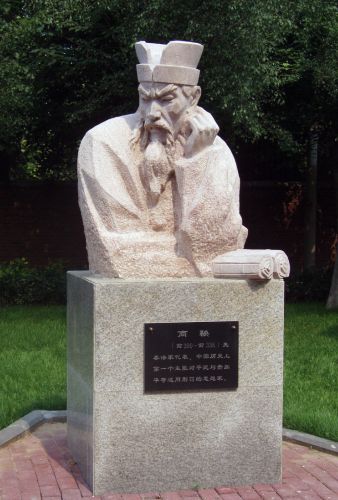
Qin’s rise was not the result of deception alone, but deception became far more effective when joined to administrative discipline. The state that eventually conquered the Warring States world did not simply outmaneuver its rivals in diplomacy or outfight them in battle. It reorganized itself with unusual severity. The reforms associated with Shang Yang in the fourth century BCE transformed Qin from a western power sometimes regarded as culturally marginal by eastern states into one of the most formidable political machines of the age. These reforms did not merely strengthen the army. They reshaped the relationship between ruler, minister, soldier, farmer, household, and law. Qin learned to make society itself serve war. In that transformation, deception acquired a new setting. It was no longer only a matter of misleading enemies abroad. It became part of a broader system in which the state managed appearances, controlled incentives, and compelled subjects to perform loyalty through institutions designed to expose, punish, and redirect human behavior. The genius, and the danger, of this system lay in the fact that it made coercion appear orderly, measurable, and even impersonal. Qin did not need every subject to believe in the moral beauty of the state. It needed them to understand that the state could see them, classify them, reward them, and destroy them. That was not deception in the theatrical sense of a false speech at court, but it was deception at the structural level: domination translated into administration, fear translated into discipline, and conquest prepared under the language of reform.
Shang Yang’s reforms rested on a hard judgment about human motives. Rather than trusting aristocratic virtue, ritual obligation, or inherited honor, the Qin state increasingly organized public life around reward and punishment. Agricultural production and military achievement were privileged as the foundations of state strength. Hereditary aristocratic status was weakened in favor of rank earned through measurable service, especially battlefield accomplishment. Households were grouped into units of mutual responsibility, making neighbors accountable for one another’s conduct and turning local society into an instrument of surveillance. Laws were meant to be clear, severe, and publicly enforced, so that subjects could not plausibly claim ignorance and officials could not easily substitute private favoritism for state command. The result was a political order that presented itself as rational and impersonal. Yet beneath that claim lay a profound manipulation of fear and desire. People did not need to love the state if the state could make obedience more profitable than disobedience and disloyalty more dangerous than silence.
This was the administrative mask of Legalist statecraft. It claimed to strip away hypocrisy by replacing noble posturing with law, office, and performance. In one sense, that claim had real force. Legalist reforms attacked older aristocratic privilege and insisted that service to the state mattered more than birth. They demanded practical results rather than elegant speech. They sought to discipline officials as well as commoners, reducing the ability of ministers and noble families to turn government into private property. But the same reforms also created a colder form of political deception. The law appeared as neutral order, while functioning as a technology of control. Rewards appeared as merit, while binding ambition to the ruler’s military aims. Punishment appeared as justice, while producing terror that reached into the household and village. Qin did not merely govern subjects. It trained them to calculate themselves through the eyes of the state.
The weakening of hereditary privilege was central to this transformation. In many Warring States polities, aristocratic lineages remained powerful obstacles to centralized rule. Their authority rested on land, ancestry, court influence, and inherited prestige. Shang Yang’s program struck at this world by tying rank and advancement to service that the state could measure. Military merit, agricultural productivity, and legal compliance mattered because they could be counted, rewarded, and punished. This was not only a social reform. It was a strategic revolution. A ruler who could detach status from lineage and attach it to state service could mobilize talent more aggressively and discipline elites more effectively. The older aristocratic order depended on memory, kinship, and reputation. Qin’s reformed order depended on records, ranks, quotas, and penalties. Such a system reduced the political space in which traditional elites could hide behind inherited dignity. It made loyalty visible, measurable, and coercible.
The deception in this system lay partly in its promise of transparency. Legalist administration treated clear standards as an antidote to corruption, faction, and aristocratic manipulation. In theory, everyone knew the law, everyone understood the rewards, and everyone faced consequences. But this transparency served the ruler’s opacity. The subject became legible to the state, while the state’s ultimate purposes remained beyond ordinary challenge. A farmer knew what production was expected. A soldier knew what battlefield achievement could earn. A household knew what concealment of crime might cost. Yet none of this meant that the people participated in defining justice, policy, or war. The system made subjects visible so that power could remain concentrated. It replaced the deception of aristocratic moral language with the deeper deception of administrative inevitability: the sense that obedience was not merely commanded by a ruler, but embedded in the very structure of reality. Once law appeared as the natural grammar of public life, the ruler’s will could disappear behind procedure. Punishment seemed to follow from the code rather than from political choice. Reward seemed to arise from merit rather than from a state-designed hunger for conquest. Surveillance seemed to protect order rather than produce fear. This was why Legalist administration could be so powerful. It did not simply command people from above; it rearranged the terms by which they understood risk, ambition, neighborly obligation, and self-preservation. The mask worked because it made domination feel less like personal tyranny and more like the unavoidable operation of a disciplined world.
Shang Yang’s reforms also changed the relationship between domestic order and military expansion. Qin’s later success depended on its ability to mobilize resources over time, sustain campaigns, absorb conquered territory, and maintain discipline across a growing state. Legalist institutions made such mobilization possible by aligning private survival with public extraction. The farmer who produced grain, the soldier who sought rank, the official who enforced law, and the household that reported misconduct all became parts of a larger war-making apparatus. This did not eliminate deception in the more familiar sense. Qin still used diplomacy, intimidation, bribery, espionage, and strategic misdirection against its rivals. But those external tactics were made more powerful by internal discipline. A state that could organize its own population with unusual efficiency could deceive enemies from a position of strength. Its promises were more dangerous, its threats more credible, and its patience more devastating.
Legalism’s suspicion of moral language also suited the Warring States environment. Confucian thinkers might call rulers back toward virtue, ritual, and humane government, while Mohists condemned aggressive warfare and wasteful elite conduct. Legalist writers were far less interested in recovering moral trust. They assumed that people pursued benefit and avoided harm, and that effective government must use those motives rather than preach against them. This gave Legalism a grim honesty, but also a new form of concealment. By claiming to reject empty moralism, it presented coercion as realism. By exposing the self-interest of others, it made the ruler’s own self-interest appear identical with order. The state no longer needed to pretend that its subjects were virtuous. It only needed to arrange incentives so that their lack of virtue could be made useful.
This is why Shang Yang belongs at the center of any history of deception in the Warring States period. His reforms did not resemble the dramatic tricks of battlefield feints or diplomatic betrayal, but they gave Qin the institutional foundation from which such tactics could succeed. Deception became administrative, routinized, and impersonal. The state did not merely mislead rivals. It reorganized social life so that people revealed one another, monitored one another, and pursued advancement through channels defined by the ruler. The old Zhou order had rested on a public language of ritual hierarchy and moral obligation, even when reality contradicted it. Qin’s Legalist order replaced that language with law, merit, punishment, and production. It seemed less deceptive because it was less sentimental. Yet its mask was colder and more durable: domination presented as order, fear presented as discipline, conquest presented as the logical reward of efficiency.
Philosophical Responses to a Deceptive Age: Confucians, Daoists, Mohists, and Legalists

The Warring States period was not only an age of deception in warfare and diplomacy; it was an age in which thinkers tried to understand why deception had become so powerful. The collapse of Zhou authority forced philosophers to confront a world in which inherited ritual, aristocratic identity, and moral speech no longer reliably governed conduct. Rulers praised virtue while pursuing advantage. Ministers spoke of loyalty while bargaining for position. States condemned aggression while preparing conquest. The intellectual ferment later remembered as the Hundred Schools of Thought emerged from this crisis of trust. Its debates were not abstract exercises detached from political violence. They were attempts to answer a terrifying question: when the shared language of order has become unstable, what can still bind human beings, rulers, and states to truth?
Confucian thinkers responded by treating deception as a symptom of moral and ritual collapse. For Confucius and later Mencius and Xunzi, political disorder began when names, roles, and conduct no longer corresponded. A ruler who behaved like a predator while claiming the dignity of kingship had corrupted the very name of rule. A minister who served personal advantage while speaking the language of loyalty had emptied office of its ethical meaning. Confucian thought sought to repair the relationship between appearance and reality through ritual cultivation, proper naming, humane government, and the moral education of elites. This was not naïve nostalgia, though Legalist critics often treated it that way. Confucians understood ambition and selfishness clearly enough. Their answer was that political life could not survive if public language became merely instrumental. If “king,” “minister,” “father,” “son,” “ritual,” and “righteousness” became masks rather than obligations, then the state might still command bodies, but it could no longer generate legitimate order.
Mohist thought approached the same crisis from a different direction. Mozi and his followers were especially concerned with the destructive consequences of elite partiality, offensive warfare, wasteful ritual expenditure, and aristocratic self-justification. In a world where rulers dressed aggression in noble language, Mohists insisted on standards of benefit, harm, order, and material welfare. Their critique of offensive war exposed one of the age’s most common deceptions: the ability of powerful states to describe conquest as righteousness while imposing death and ruin on ordinary people. Mohist argument was both moral and analytical. It asked what policies actually produced benefit for the world, not merely what sounded honorable to courts. This gave Mohism a sharp anti-deceptive edge. It tried to strip political language of ornamental prestige and test it against consequences. If a ruler claimed virtue while multiplying corpses and exhausting the people, Mohist reasoning demanded that the claim be judged by its effects, not its ceremony. This was a direct challenge to the courtly manipulation of words, because it refused to let rulers hide behind prestige, ancestry, rhetoric, or ritual splendor. Mohism’s language of impartial concern and practical benefit did not eliminate the harshness of Warring States politics, but it offered a standard by which deception could be exposed. The question was not whether a policy sounded noble, whether a conquest could be dressed in ancestral duty, or whether a ruler’s speech followed the expected forms of authority. The question was whether it reduced suffering, strengthened order, and benefited the people. In that sense, Mohist thought answered deception by demanding accountability to visible consequences.
Daoist texts offered a more radical suspicion of political performance itself. The Daodejing and Zhuangzi did not simply criticize particular lies or corrupt officials; they questioned the artificial structures through which states manufactured ambition, hierarchy, moral display, and control. From this perspective, the Warring States world was deceptive because it mistook naming, striving, possession, and domination for reality. Rulers sought order by multiplying laws, distinctions, punishments, and ambitions, yet these very efforts often deepened disorder. Daoist critique cut beneath the surface of policy. It exposed the way political language could trap people inside artificial desires, turning wisdom into cleverness and governance into interference. If Confucians wanted names to correspond properly to ethical roles, Daoist writers were more likely to ask whether the obsession with names had already distorted the world. Their response to deception was not to perfect political speech, but to loosen its hold.
Legalist thinkers answered the crisis with the least sentimental diagnosis. They did not trust moral cultivation, ritual sincerity, or persuasive ideals to restrain rulers, ministers, or commoners. In texts associated with Shang Yang, Shen Buhai, Shen Dao, and Han Fei, deception appears as a permanent feature of political life because human beings seek benefit, avoid harm, and conceal private interest behind public language. Ministers flatter rulers. Aristocrats protect privilege. Subjects evade labor and punishment when they can. Rulers themselves may be deceived when they trust personal loyalty rather than institutional control. The Legalist answer was not to restore sincerity, but to make sincerity unnecessary. Law, technique, positional power, surveillance, reward, and punishment would align behavior with the ruler’s purposes regardless of inner motive. It was a severe solution to a deceptive age: if people cannot be trusted to mean what they say, construct a state in which what they say matters less than what the system compels them to do. This made Legalism both an exposure of deception and a participant in it. Legalist writers stripped away the moral language through which elites justified themselves, but they did so to build a more effective apparatus of domination. They treated the ruler as someone who must not be deceived by the charm, eloquence, reputation, or apparent loyalty of ministers. Office, law, and performance would replace trust. Yet this same system concealed the ruler’s will behind impersonal standards, making coercion appear as procedure and fear appear as public order. Legalism did not cure the deceptive age. It mastered its assumptions and gave them administrative form.
These traditions disagreed profoundly, but they shared a common historical pressure. Each recognized, in its own way, that the Warring States period had fractured the relationship between words and realities. Confucians sought to restore ethical correspondence between name and conduct. Mohists tested claims against practical benefit and condemned rhetorical justifications for destructive rule. Daoists distrusted the artificiality of political categories and the restless cleverness that passed for wisdom. Legalists turned distrust into administration, assuming deception and building institutions to neutralize it or weaponize it. The result was not a simple debate between idealists and realists. It was a struggle over whether deception could be morally overcome, analytically exposed, spiritually escaped, or politically mastered.
This philosophical struggle also reveals why deception became so central to Warring States statecraft. The age did not lack moral language. It had too much of it, deployed too often by men whose actions contradicted their claims. Rulers spoke of order while destroying neighbors. Ministers spoke of service while maneuvering for survival. Strategists spoke of necessity while dressing expedience as wisdom. Philosophers understood that the danger was not only falsehood, but the corruption of the words by which truth might be recognized. Once every claim of righteousness could be suspected as strategy, political life required new methods of judgment. That is why the intellectual history of the period belongs inside the history of deception. The thinkers of the Warring States were not watching deception from the sidelines. They were fighting over the possibility of truth in a world where power had learned to wear every mask.
Espionage, Assassination, and the Politics of Hidden Action
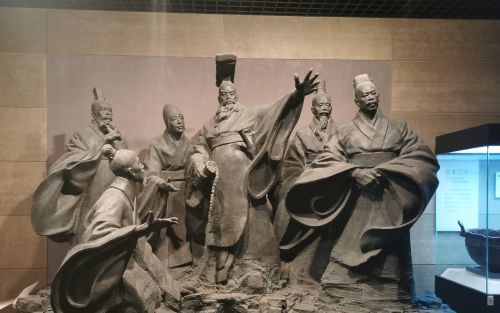
If battlefield deception manipulated armies and diplomatic speech manipulated courts, espionage and assassination operated in the darker space between them. The Warring States period made hidden action politically indispensable because open force was often too costly and formal diplomacy too unreliable. Rulers needed information that envoys would not officially reveal, ministers would not honestly confess, and enemy commanders would not display. A state that lacked knowledge of another court’s plans, factional divisions, military preparations, and internal anxieties could be defeated before recognizing the true shape of danger. Espionage answered this problem by turning secrecy itself into a battlefield. The spy, defector, informant, and double agent did not merely gather facts. They exposed the concealed interior of enemy power, allowing rulers to act before intention became mobilization.
The Art of War gives espionage a central place in strategic thought because knowledge determines the value of deception. A commander cannot successfully mislead an enemy without first understanding what that enemy expects, fears, and does not know. Sun Tzu’s discussion of spies assumes that war is not decided only by visible armies, but by hidden networks of information. Local spies, inward spies, converted spies, doomed spies, and surviving spies all represent different ways of penetrating or manipulating the enemy’s world. Their use reflects the broader Warring States movement away from aristocratic display and toward professionalized strategy. A ruler who relied only on public signs saw too little. He needed men who could cross boundaries, listen in dangerous spaces, purchase secrets, exploit resentment, and return with knowledge that could not be obtained through ceremonial diplomacy. Espionage was deception’s necessary twin: the state hid its own intentions while seeking to uncover those of others. This reciprocal structure gave intelligence work its peculiar intensity. Every state wanted to become opaque while making rivals transparent. Every court sought to conceal its plans while prying open the plans of others. The spy was not an accessory to war, but a figure who embodied the strategic condition of the age itself. He moved through a world where visible loyalty might conceal foreign service, where rumor could be weaponized, where false information could be planted deliberately, and where knowing what the enemy believed could matter as much as knowing what the enemy possessed.
Court politics made this work especially treacherous. Warring States courts were not unified instruments of royal will. They contained ministers, advisers, envoys, relatives, hostages, military men, and factions with competing interests. Some served from conviction, some from fear, some from ambition, and some because another state had offered better prospects. This internal complexity made every court vulnerable to infiltration and manipulation. A minister might reveal secrets for reward. A foreign envoy might cultivate factional allies. A defeated state might send someone who appeared submissive while carrying concealed instructions. A ruler might distrust the very men whose advice he needed most. Hidden action flourished because political power itself had become fragmented. The enemy was not always outside the walls. He might already be present in the court, wearing the language of loyalty. This was especially dangerous because Warring States politics depended on counsel. Rulers had to listen, interpret, delegate, and decide, yet every act of delegation created an opening for distortion. Advice could be shaped by bribery, fear, factional rivalry, or concealed allegiance. Reports from the frontier could be exaggerated or softened. Diplomatic messages could be delayed, rephrased, or selectively delivered. A court could be deceived not only by foreign enemies, but by the internal channels through which it understood the world. The ruler’s greatest vulnerability was not ignorance alone. It was dependence on people who could convert information into power before it reached him.
Assassination represented an even more desperate form of hidden action. Where espionage sought knowledge and influence, assassination sought to collapse policy through the death of one body. Its appeal lay in its economy. A weaker state that could not defeat Qin in open battle might imagine that one blade, one concealed plan, and one moment of access could accomplish what armies could not. Yet assassination also revealed the limits of strategic deception. It depended on performance, secrecy, timing, and the manipulation of ritual access, but it risked everything on a single encounter. Unlike espionage, which could gradually reshape decisions, assassination compressed political hope into an instant. It was the wager of those who believed that ordinary diplomacy had failed and conventional resistance had become impossible.
The attempted assassination of the King of Qin by Jing Ke in 227 BCE dramatizes this politics of hidden action with exceptional force. The story, preserved most famously in Sima Qian’s Records of the Grand Historian, belongs near the end of the Warring States period, when Qin’s power had become terrifyingly difficult to resist. Jing Ke’s mission depended on the performance of submission. He approached Qin under diplomatic cover, bearing objects meant to signal political concession, including a map within which a weapon could be concealed. The scheme required the forms of interstate protocol to become instruments of violence. Gift, audience, map, envoy, and court ceremony were turned into a mechanism for bringing death close to the ruler. The plot failed, but its failure does not diminish its significance. It exposes the extreme pressure Qin’s expansion placed on rival states and shows how deception could inhabit even the rituals meant to regulate diplomacy.
Jing Ke’s attempt also reveals the moral ambiguity surrounding hidden violence. Later memory could cast him as loyal, courageous, tragic, reckless, or doomed, depending on the interpretive frame. From one perspective, he was an assassin using deceit to violate diplomatic access. From another, he was the agent of a desperate state facing annihilation by a power that had already made ordinary resistance futile. The episode refuses a simple moral reading. It shows how the Warring States world made deception appear both dishonorable and necessary. If Qin’s conquests were themselves built through intimidation, division, and calculated force, then an act of concealed violence against Qin could be imagined as justice by other means. Yet the same logic could justify almost anything. Once survival became the supreme standard, hidden action could borrow the language of sacrifice while reproducing the very brutality it opposed. The assassin could appear as the last defender of a doomed state, but also as proof that politics had reached a point where trust, ritual access, and diplomatic exchange could no longer be insulated from violence. Jing Ke’s mission turned ceremony into vulnerability. It showed that the gestures meant to mark submission, communication, and interstate recognition could be repurposed as a route for murder. That is what makes the episode so revealing: it was not an abandonment of Warring States politics, but a concentration of its deepest logic.
Espionage and assassination also intensified the ruler’s problem of trust. A ruler needed advisers, envoys, guards, strategists, and diplomats, but each relationship created vulnerability. The more complex the state became, the more it depended on delegated knowledge, and delegated knowledge could be falsified. Legalist political thought responded to this danger by warning rulers against trusting ministerial eloquence, reputation, or personal affection. The ruler had to preserve distance, conceal his own preferences, and use law and technique to prevent servants from manipulating him. This was another form of hidden action, less dramatic than assassination but no less revealing. The ruler himself was expected to become opaque. He survived by refusing to expose desire, anger, affection, or intention too clearly. The court became a world in which everyone watched everyone else for signs of concealment.
The politics of hidden action completed the Warring States transformation of deception from tactic into system. Armies concealed movement, diplomats concealed intention, persuaders concealed manipulation beneath counsel, administrators concealed domination beneath law, and spies concealed identity itself. Assassins took this logic to its sharpest edge, turning the body into a disguised weapon and court ritual into opportunity. These practices were not marginal to the period. They belonged to a world in which the visible surface of politics could never be trusted as the whole truth. By the late Warring States period, power had learned to operate most effectively where it could not yet be seen. The state that mastered hidden action could strike before battle, divide before alliance, know before others knew they had been observed, and survive before rivals understood why they had failed.
Qin’s Final Strategy: Divide, Absorb, Conquer
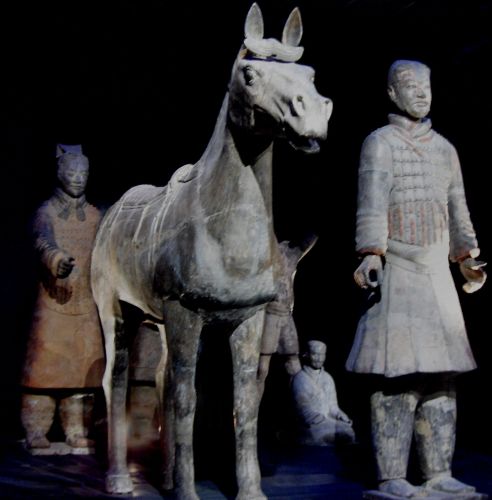
Qin’s final conquest of the Warring States world was not a sudden eruption of violence, but the culmination of a long strategic process. By the late third century BCE, Qin had already built the administrative, military, and diplomatic foundations that made unification possible. Its reforms had strengthened central authority, disciplined elites, expanded agricultural production, rewarded military achievement, and made the state unusually capable of sustained mobilization. Yet Qin’s success did not rest on internal organization alone. It also depended on its ability to prevent its rivals from acting together. The final conquest was not simply a story of battlefield superiority. It was a story of sequential isolation. Qin defeated the other states by ensuring that each faced the crisis of survival increasingly alone. This was the mature form of Warring States strategy: not one grand battle that settled the fate of all, but a carefully staged process in which diplomacy, intimidation, bribery, intelligence, and military force worked together. Qin did not need to destroy the entire interstate system at once. It needed to make that system incapable of coordinated self-defense. Once that had been accomplished, conquest became not effortless, but increasingly cumulative.
This strategy drew on the entire Warring States repertoire of deception. Qin threatened, negotiated, bribed, delayed, reassured, and attacked according to circumstance. Its diplomacy often worked to make collective resistance seem either impossible or premature. A rival state might be persuaded that another state was the immediate danger, that Qin’s hostility could be temporarily managed, or that survival required separate accommodation. Ministers could be bought or intimidated. Coalitions could be weakened by suspicion before armies marched. Qin did not need every rival to trust it. It needed them to distrust one another more. This was the strategic heart of its final expansion: Qin made the interstate system collapse inward before it delivered the final blows from without.
The conquest began in earnest with Han, the weakest and most exposed of the major states, which fell in 230 BCE. Han’s position made it particularly vulnerable because it lay close to Qin and lacked the depth and strength of larger powers such as Chu or Qi. Its fall was more than a territorial gain. It demonstrated the sequence by which Qin intended to proceed. Rather than face all rivals simultaneously, Qin absorbed one state, converted its territory and population into imperial resources, and then moved to the next. Conquest became cumulative. Each defeated state strengthened Qin’s ability to defeat the remainder, while each surviving state had to watch the balance of power worsen. The annexation of Han marked a decisive shift from competitive interstate politics to an accelerating process of imperial absorption. It also showed how geographic vulnerability and diplomatic isolation could become fatal when joined together. Han could not rely on distance, mass, or durable alliance to offset Qin’s pressure. Its fall sent a warning to every remaining state that Qin’s expansion was no longer a regional threat that might be managed through ordinary bargaining. It was a process of elimination. The old game of balancing, delaying, and maneuvering still continued, but after Han it operated under a darker clock.
Zhao, conquered in 228 BCE after years of brutal conflict, represented a more formidable obstacle. Its military tradition was stronger, and its resistance had earlier posed serious difficulties for Qin. Yet Zhao had been weakened by long warfare, internal problems, and the inability of anti-Qin coordination to hold with sufficient force. Qin’s victory over Zhao revealed the union of pressure and patience. States could be worn down militarily, divided politically, and then struck when weakened. The fall of Zhao also had psychological consequences. It showed other states that Qin could destroy not only the weak, but also one of the great military powers of the age. In a diplomatic world already shaped by mistrust, such victories deepened fear and made coherent resistance still harder. Every Qin triumph made future coalition both more necessary and more difficult.
Yan’s fate followed in the shadow of desperation. The attempted assassination of the King of Qin had already revealed the terror Qin inspired and the extremity of measures considered by threatened states. After the plot failed, Yan became a target of Qin retaliation and strategic advance. Its fall in 222 BCE demonstrated the failure of hidden action to substitute for durable military and diplomatic strength. Assassination had sought to collapse Qin’s expansion through one dramatic act, but Qin’s power did not reside only in one ruler’s body. It lay in institutions, armies, command structures, logistics, and a political project larger than any single moment. The failure of Jing Ke’s mission exposed a painful truth of the late Warring States period: dramatic deception could wound or shock, but it could not easily defeat a state whose entire system had been organized for conquest.
Wei fell in 225 BCE, after Qin forces reportedly redirected water to flood its capital, Daliang. Whether viewed as siegecraft, engineering, or terror, the episode illustrates how Qin combined military force with technical and environmental manipulation. It did not merely confront walls. It altered the conditions under which resistance could continue. The flooding of a capital also carried symbolic force. A city that embodied royal authority, administrative memory, and political identity could be made physically uninhabitable. Qin’s conquest was not only about killing armies. It was about dissolving the structures through which rival states imagined continuity. The destruction or forced surrender of capitals transformed political communities into administrative units waiting to be absorbed. In this case, deception and force met in the manipulation of landscape itself. Water became an instrument of strategy, and the city’s defenses were defeated not simply by soldiers at the wall, but by changing the environment around the wall. The method reflected a larger Qin habit: resistance was not always overcome by direct collision. It could be made impractical, exhausted, surrounded, flooded, isolated, or psychologically broken before surrender became unavoidable.
Chu, conquered in 223 BCE, posed one of the greatest challenges because of its size, resources, and distinctive regional culture. Qin’s struggle with Chu shows that deception and overwhelming force were not alternatives, but partners. Qin could misjudge, adjust, and return with greater strength. The conquest required enormous mobilization and careful command, but it also depended on timing and the exploitation of Chu’s vulnerabilities. Chu’s fall mattered because it removed the largest remaining counterweight to Qin domination. Once Chu was broken, the possibility of a balanced interstate order was effectively finished. The remaining states could no longer imagine survival through equilibrium. They could only hope for delay, accommodation, or mercy, and Qin had little reason to offer any of those beyond tactical convenience.
Qi’s surrender in 221 BCE completed the process. Its relatively limited resistance has often been understood in relation to Qin’s success in isolating it diplomatically. Qi had failed to intervene decisively while other states were consumed, and by the time Qin turned fully toward it, the strategic world that might have saved it no longer existed. Qi’s fall was the final proof of Qin’s sequential method. A state might preserve itself in the short term by avoiding confrontation, but neutrality in an age of conquest could become another form of self-deception. Qi survived while others fell, but each fall narrowed the space in which Qi itself could survive. Qin’s last victory was not only military. It was the harvest of years of fragmentation. The tragedy of Qi lay in the way caution became complicity with its own future isolation. By standing apart while others were destroyed, Qi may have avoided immediate devastation, but it also helped ensure that no meaningful coalition remained when its own turn came. Its surrender exposed one of the central lessons of the Warring States period: delay is not always strategy. Sometimes it is merely defeat arriving later, dressed for a while as prudence.
The final strategy of Qin joined division, absorption, and conquest into one political rhythm. First, rivals were separated from one another through fear, bribery, diplomacy, and suspicion. Then they were defeated in sequence. Their territories, populations, and institutions were absorbed into Qin’s expanding structure. This pattern transformed conquest from a series of raids into a system of state formation. Qin did not merely defeat enemies; it converted them into the means for further victory. The conquered became resources. Former borders became administrative lines. Rival courts disappeared, but their lands, labor, soldiers, and revenue were folded into the machinery that destroyed the next state.
This is why Qin’s unification cannot be reduced to brute military superiority, even though its armies were indispensable. The deeper achievement was strategic integration. Qin combined Legalist administration, military discipline, diplomatic deception, intelligence gathering, psychological pressure, and opportunistic violence into a single imperial method. Its rivals often understood parts of the danger, but they failed to answer the whole. They saw armies without fully defeating the diplomacy that isolated them. They feared Qin without trusting one another enough to resist it together. They recognized deception while still practicing the short-term calculations that made deception effective. Qin mastered the Warring States world because it became the state most fully adapted to that world’s brutal lessons.
By 221 BCE, Qin had ended the interstate system that had created its opportunity. Yet its victory carried a dark irony. Qin presented unification as the restoration of order after centuries of conflict, but the order it created had been achieved through the very arts that made the Warring States period so corrosive: manipulation, coercion, calculated betrayal, hidden action, administrative control, and relentless war. It conquered by dividing, absorbed by systematizing, and ruled by translating victory into law. The state that survived the age of deception did not transcend deception. It perfected it, then renamed the result unity.
221 BCE and the Imperial Afterlife of Warring States Deception
The following video from “GatesofKilikien” covers the Warring States Period:
Qin’s victory in 221 BCE ended the Warring States period, but it did not end the political habits that the period had produced. The new empire presented itself as the cure for centuries of disorder. The First Emperor and his ministers claimed to have abolished the chaos of rival courts, competing kings, shifting alliances, private armies, hereditary privilege, and regional fragmentation. Standardized weights, measures, coinage, writing, roads, law, administration, and imperial titles all helped create the image of a unified world remade under a single authority. Yet that image was itself a political construction. Qin did not simply discover unity waiting beneath disorder. It manufactured unity through conquest, coercion, classification, and the disciplined erasure of alternatives. The empire that claimed to end deception inherited the Warring States skill of controlling appearances and gave it a new imperial scale.
The title of “First Emperor” was central to this transformation. By rejecting older royal titles and adopting the new imperial style, Qin Shihuang announced that he was not merely another victorious king within the old Zhou order. He claimed to stand beyond that order. The new title suggested a beginning so absolute that the past could be reorganized around it. This was not only political ambition; it was symbolic strategy. The language of empire concealed the violence by which empire had been made. Conquest became unification. Annexation became standardization. The destruction of rival houses became the restoration of order. Qin’s ideological achievement lay in making domination appear historically necessary, as though the wars that had destroyed the other states had been leading inevitably toward one ruler, one law, and one realm.
This imperial afterlife of deception was especially visible in Qin administration. The empire abolished the independent kingdoms of the defeated states and replaced them with commanderies and counties governed by appointed officials. This system extended a principle already visible in Qin’s Warring States reforms: local power had to be made legible, transferable, and answerable to the center. Hereditary regional authority was dangerous because it preserved memory, loyalty, and alternative legitimacy. Appointed administration, by contrast, allowed the court to present rule as impersonal governance rather than personal conquest. A conquered region no longer appeared as the possession of a defeated royal house. It became a unit of administration. Its people became subjects within a standardized order. Its past did not vanish, but it was politically demoted. The administrative map became an instrument of historical revision. What had once been Chu, Zhao, Wei, Yan, Han, or Qi could be redescribed through offices, jurisdictions, tax responsibilities, labor obligations, and lines of command. This did not erase local identity in any immediate or total sense, but it forced such identity to exist beneath an imposed imperial vocabulary. Qin’s bureaucracy turned conquest into paperwork, and paperwork into political reality. The deception was not that the empire hid its power. It was that power appeared increasingly as structure rather than seizure.
The same logic shaped Qin’s approach to law. Legal uniformity appeared as a solution to fragmentation, but it also made imperial power harder to escape. Under the Warring States order, different courts, lineages, customs, and regional identities could still provide competing frameworks of obligation. Qin’s empire sought to eliminate such pluralism. Law was no longer one instrument among many in a competitive interstate environment. It became the grammar of imperial obedience. The subject did not need to know the personal will of every official or the local custom of every region. The law claimed to speak everywhere. This universality gave Qin rule its administrative power, but it also masked the violence of absorption. What had been conquered by armies was now normalized through documents, offices, punishments, and procedures.
Standardization worked in a similar way. The unification of weights, measures, coinage, writing forms, and road systems has often been remembered as one of Qin’s great achievements, and in practical terms it was extraordinary. Such measures made taxation, transport, commerce, military movement, and official communication more efficient across a vast territory. Yet standardization was not neutral. It was also a politics of memory and perception. To standardize is to decide which measure counts, which script is official, which administrative language will survive, and which local practices must become deviations. Qin’s standardizing project turned imperial power into everyday experience. The weight in the market, the coin in the hand, the characters on a document, and the road beneath a cart all taught the same lesson: the old multiplicity of states had been replaced by a single order.
This is where the afterlife of Warring States deception becomes most subtle. The empire did not rely only on spectacular violence, although violence remained central. It also relied on making its rule seem ordinary. A successful empire cannot rule forever by announcing conquest every day. It must convert conquest into routine. Qin attempted to do this by embedding imperial authority into law, units of measurement, administrative geography, labor obligations, written records, and official titles. The result was a political world in which the instruments of domination could appear as the necessities of civilization. A road was not merely a road. It was a military artery, an administrative channel, and a statement of imperial reach. A written standard was not merely a convenience. It was a method for subordinating regional diversity to central command. Qin’s genius was to make the empire visible everywhere while making the contingency of its creation harder to see. The more ordinary these imperial instruments became, the more they could hide their origin in conquest. A merchant using standardized measures, an official copying documents in approved forms, a laborer summoned according to imperial registers, or a traveler moving along state-built roads all participated in a new order that presented itself as practical necessity. That practicality was real, but it was also political. Qin made domination useful, and usefulness helped conceal domination’s violence.
Yet the empire’s ideological claims were unstable because its rule remained inseparable from fear. The same coercive logic that had served Qin so effectively during the Warring States period became more difficult to sustain after conquest. A state at war can justify severity through emergency. An empire claiming universal peace must explain why peace still feels like compulsion. Heavy labor demands, harsh punishments, forced relocations, military campaigns, palace and tomb construction, road building, and suspicion of dissent exposed the gap between Qin’s promise of order and the lived experience of imperial pressure. The First Emperor’s regime sought to control speech, memory, and political imagination, but such control revealed anxiety as much as confidence. An empire certain of its legitimacy would not need to fear the past so intensely.
The famous traditions surrounding the suppression of dissenting texts and scholars, whatever their precise historical reconstruction, belong to this larger problem of imperial memory. Qin’s political project required not only the defeat of rival armies, but the subordination of rival interpretations. The Warring States period had produced an argumentative world filled with competing philosophies, historical examples, moral vocabularies, and political models. Qin could tolerate administrative expertise, technical knowledge, and useful service, but open-ended appeal to antiquity or alternative models of rule threatened the ideological closure of empire. To control the future, Qin had to discipline the usable past. The struggle over books, memory, and speech extended the logic of Warring States deception into imperial form. Power sought not merely to mislead enemies, but to govern what could be remembered as truth.
The collapse of Qin shortly after the First Emperor’s death exposed the limits of domination disguised as order. The dynasty that claimed to inaugurate an eternal imperial succession lasted only a brief time. Its institutions were formidable, but its legitimacy was brittle. The severity that had helped Qin conquer rival states did not easily produce consent among conquered peoples, displaced elites, overburdened laborers, and officials caught inside a punitive system. The empire’s masks could not fully conceal the violence beneath them. Standardization, law, and centralization created a durable imperial blueprint, but the Qin house itself could not stabilize the emotional and political consequences of conquest. The result was one of the great ironies of early Chinese history: Qin failed as a dynasty while succeeding as a model. Its collapse revealed that administrative brilliance could not by itself substitute for legitimacy, memory, and accommodation. A conquered world could be reorganized quickly on paper, but the human consequences of conquest moved according to a slower and more dangerous rhythm. People remembered former states, suffered labor demands, feared punishments, resented officials, and judged imperial order not by its claims but by its burdens. Qin had mastered the art of transforming domination into structure, but it had not fully mastered the art of making that structure emotionally habitable.
The Han dynasty inherited that model while softening its presentation. Later rulers did not simply reject Qin; they learned from it. Commanderies, counties, centralized administration, imperial titulature, standardized governance, and the ideal of territorial unity survived beyond Qin’s fall. What changed was the ideological packaging. Han rule more successfully blended imperial administration with moral language, classical learning, ritual legitimacy, and a less openly severe political style. In that sense, the afterlife of Warring States deception did not end with Qin’s collapse. It adapted. The imperial state learned that naked Legalist control could conquer, but durable empire needed a broader mask. It needed to make centralized power appear not merely efficient, but moral, ancestral, and civilized.
Qin’s unification in 221 BCE stands as both an ending and a transformation. It ended the Warring States system of rival kingdoms, but it carried forward the system’s deepest lessons: control perception, discipline language, manage memory, reward service, punish deviation, isolate rivals, and convert violence into order. The First Emperor’s achievement was not that he escaped the age of deception. It was that he translated its strategies into imperial institutions. The battlefield feint became administrative opacity. Diplomatic manipulation became ideological standardization. Legalist discipline became imperial governance. The old Zhou order had collapsed because its ritual language no longer restrained power. Qin’s empire answered by creating a new language of unity, but beneath that language remained the same hard truth that had shaped the Warring States period from the beginning: power survives by mastering not only what people do, but what they are allowed to see, say, remember, and believe.
Conclusion: Deception as the Grammar of Survival
The Warring States period made deception into more than a tactic of crisis. It became a political language through which rulers, generals, ministers, diplomats, philosophers, and administrators interpreted survival itself. The old Zhou order had imagined authority as ritual hierarchy, inherited legitimacy, moral obligation, and properly ordered relationships. By the fifth century BCE, that language had not disappeared, but it had lost the power to restrain ambition among competing territorial states. War expanded, armies grew, diplomacy hardened, and courts became places where speech, fear, calculation, and hidden intention mattered as much as formal rank. In that world, deception was not simply the act of telling a lie. It was the strategic management of appearances in a political environment where the visible surface of events could never be trusted as the whole truth.
Sun Tzu gave this world one of its clearest military formulations. To deceive the enemy was to shape the enemy’s perception before battle, to make weakness appear as strength or strength as weakness, to strike where expectation failed, and to win by breaking judgment before breaking bodies. The persuaders of the Zhanguoce brought the same logic into courtly speech, where analogy, warning, flattery, fear, and selective truth could redirect rulers and fracture alliances. Vertical and horizontal diplomacy transformed interstate relations into a theater of provisional loyalty, where every coalition contained the possibility of betrayal and every separate negotiation weakened the hope of collective resistance. Espionage and assassination carried deception into hidden channels, revealing a world in which knowledge, access, and secrecy could become more decisive than open declaration. These were not separate categories neatly divided between battlefield, court, border, and archive. They reinforced one another. A deceptive speech could create the conditions for military movement; a hidden agent could make a diplomatic promise meaningless; an alliance could serve as camouflage for abandonment; a public claim of righteousness could conceal a campaign of annihilation. The Warring States world fused these techniques into a single strategic environment in which every gesture had to be read twice: once for what it said, and again for what it might be hiding.
Legalism gave deception its administrative form. Shang Yang’s reforms and Qin statecraft did not merely trick enemies; they reorganized society so that obedience, production, military service, and surveillance could be made predictable. Law appeared as order, reward as merit, punishment as justice, and centralization as necessity. Yet behind those claims stood a state that had learned to make human behavior legible while keeping its own purposes concentrated in the ruler and his apparatus. The philosophical traditions of the period understood this crisis from different angles. Confucians sought to restore correspondence between name and conduct. Mohists judged claims by material benefit and harm. Daoists exposed the artificiality of political striving and naming. Legalists accepted distrust as the starting point of government. Each tradition recognized that the age had fractured the bond between words and realities.
Qin’s victory in 221 BCE was the culmination of this historical transformation. It conquered by dividing rivals, absorbing states in sequence, exploiting mistrust, and joining military force to administrative discipline. Its final triumph was not merely the defeat of six rival kingdoms. It was the conversion of Warring States methods into imperial institutions. The empire claimed to end chaos, but it had been made through the tools chaos had sharpened: manipulation, coercion, calculated betrayal, hidden intelligence, legal regimentation, and the systematic control of political memory. The First Emperor’s regime renamed conquest as unification, domination as order, and standardization as civilization. That language did not make Qin’s achievement unreal. It made the achievement more revealing. Empire itself became the grandest mask produced by the age. Qin did not abolish the logic of deception when it abolished the rival states. It absorbed that logic into commanderies, counties, legal codes, roads, scripts, titles, measurements, punishments, and monuments. The strategies that had once helped one state survive among many became the instruments through which one empire claimed to speak for all. In that sense, 221 BCE was not a clean break from the Warring States period, but its imperial translation.
The tragedy of Qin was that the methods that enabled conquest could not by themselves create lasting legitimacy. Fear could discipline. Law could organize. Standardization could bind territory. Roads, scripts, measures, offices, and punishments could extend power across regions that had once belonged to rival states. But domination disguised as order remained vulnerable when subjects experienced that order as burden, extraction, and terror. Qin’s brief dynasty exposed the limits of strategic deception once conquest had ended. A state can deceive enemies into isolation, but an empire must persuade subjects to live inside its victory. Qin’s institutions survived because they answered real administrative problems. Qin’s house fell because its political mask could not fully cover the violence beneath it.
The Warring States period stands as one of history’s great laboratories of strategic politics. It revealed how quickly inherited moral vocabularies can become unstable when power is reorganized around survival. It showed that deception can operate through battle plans, speeches, alliances, laws, reforms, maps, titles, rituals, and memories. It also showed that deception is most dangerous when it ceases to look like deception at all, when it becomes procedure, prudence, efficiency, or peace. The state that mastered the age was not the one that lied most crudely, but the one that fused perception, violence, discipline, and administration into a coherent system.
That is the dark historical force of the Warring States period. It did not merely teach rulers to deceive. It taught them to build worlds in which deception became indistinguishable from survival. Qin ended the age by conquering its rivals, but it did not escape the age’s logic. It perfected it, institutionalized it, and handed its imperial descendants a lesson they would never fully abandon: power endures not only by commanding armies or issuing laws, but by governing what people fear, what they trust, what they remember, and what they mistake for order.
Bibliography
- Ames, Roger T., trans. Sun-tzu: The Art of Warfare. New York: Ballantine Books, 1993.
- Bodde, Derk. China’s First Unifier: A Study of the Ch’in Dynasty as Seen in the Life of Li Ssu, 280?–208 B.C. Leiden: Brill, 1938.
- Cook, Constance A., and John S. Major, eds. Defining Chu: Image and Reality in Ancient China. Honolulu: University of Hawai‘i Press, 1999.
- Crump, J. I. Jr, trans. Chan-kuo Ts’e. Oxford: Clarendon Press, 1970.
- —-. Intrigues: Studies of the Chan-kuo Ts’e. Ann Arbor: University of Michigan Press, 1964.
- Di Cosmo, Nicola. “The Northern Frontier in Pre-Imperial China.” In The Cambridge History of Ancient China: From the Origins of Civilization to 221 B.C., edited by Michael Loewe and Edward L. Shaughnessy, 885–966. Cambridge: Cambridge University Press, 1999.
- Duyvendak, J. J. L., trans. The Book of Lord Shang: A Classic of the Chinese School of Law. London: Arthur Probsthain, 1928.
- Graham, A. C. Disputers of the Tao: Philosophical Argument in Ancient China. La Salle, IL: Open Court, 1989.
- Griffith, Samuel B., trans. Sun Tzu: The Art of War. Oxford: Oxford University Press, 1963.
- Hui, Victoria Tin-bor. War and State Formation in Ancient China and Early Modern Europe. Cambridge: Cambridge University Press, 2005.
- Hulsewé, A. F. P. Remnants of Ch’in Law: An Annotated Translation of the Ch’in Legal and Administrative Rules of the 3rd Century B.C. Leiden: Brill, 1985.
- Ivanhoe, Philip J., and Bryan W. Van Norden, eds. Readings in Classical Chinese Philosophy. 2nd ed. Indianapolis: Hackett Publishing, 2005.
- Kern, Martin. “Early Chinese Literature, Beginnings through Western Han.” In The Cambridge History of Chinese Literature, Volume 1: To 1375, edited by Kang-i Sun Chang and Stephen Owen, 1–115. Cambridge: Cambridge University Press, 2010.
- Lewis, Mark Edward. The Early Chinese Empires: Qin and Han. Cambridge, MA: Harvard University Press, 2007.
- —-. “Ritual Origins of the Warring States.” Bulletin de l’École française d’Extrême-Orient 84 (1997), 73-98.
- —-. Sanctioned Violence in Early China. Albany: State University of New York Press, 1990.
- Li Feng. Early China: A Social and Cultural History. Cambridge: Cambridge University Press, 2013.
- Loewe, Michael, and Edward L. Shaughnessy, eds. The Cambridge History of Ancient China: From the Origins of Civilization to 221 B.C. Cambridge: Cambridge University Press, 1999.
- Mair, Victor H., trans. The Art of War: Sun Zi’s Military Methods. New York: Columbia University Press, 2007.
- Mencius. Mencius. Translated by Irene Bloom. New York: Columbia University Press, 2009.
- Pines, Yuri, trans. The Book of Lord Shang: Apologetics of State Power in Early China. New York: Columbia University Press, 2017.
- —-. Envisioning Eternal Empire: Chinese Political Thought of the Warring States Era. Honolulu: University of Hawai‘i Press, 2008.
- —-. “The Warring States Period: Historical Background.” In The Oxford Handbook of Early China, edited by Elizabeth Childs-Johnson. Oxford: Oxford University Press (2009), 581-594.
- Pines, Yuri, Gideon Shelach, Lothar von Falkenhausen, and Robin D. S. Yates, eds. Birth of an Empire: The State of Qin Revisited. Berkeley: University of California Press, 2014.
- Richter, Matthias L. The Embodied Text: Establishing Textual Identity in Early Chinese Manuscripts. Leiden: Brill, 2013.
- Sawyer, Ralph D. The Tao of Deception: Unorthodox Warfare in Historic and Modern China. New York: Basic Books, 2007.
- Schwartz, Benjamin I. The World of Thought in Ancient China. Cambridge, MA: Harvard University Press, 1985.
- Shaughnessy, Edward L. “Western Zhou History.” In The Cambridge History of Ancient China: From the Origins of Civilization to 221 B.C., edited by Michael Loewe and Edward L. Shaughnessy, 292–351. Cambridge: Cambridge University Press, 1999.
- Sun Tzu. The Art of War. Translated by Samuel B. Griffith. Oxford: Oxford University Press, 1963.
- Watson, Burton, trans. The Complete Works of Zhuangzi. New York: Columbia University Press, 1968.
- —-, trans. Han Feizi: Basic Writings. New York: Columbia University Press, 2003.
- —-, trans. Mo Tzu: Basic Writings. New York: Columbia University Press, 1963.
- —-, trans. Records of the Grand Historian: Qin Dynasty. Hong Kong: Columbia University Press, 1993.
- Zhang, Ellen Y. “Weapons Are Nothing but Ominous Instruments: The “Daodejing”‘s View on War and Peace.” The Journal of Religious Ethics 40:3 (2012), 473-502.
Originally published by Brewminate, 05.18.2026, under the terms of a Creative Commons Attribution-NonCommercial-NoDerivatives 4.0 International license.
About the Author