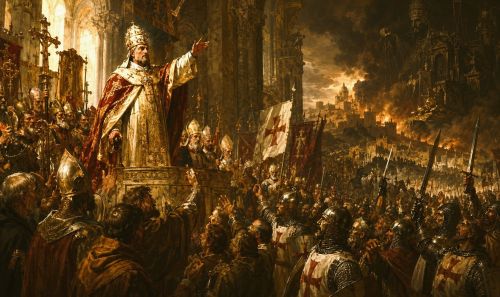
Urban II transformed eastern crisis into sacred propaganda, making papal ambition, aristocratic violence, and material gain sound like Christian salvation.

By Matthew A. McIntosh
Public Historian
Brewminate
Introduction: Holy War as Manufactured Necessity
The First Crusade did not begin as a simple eruption of medieval piety, nor can it be honestly reduced to a spontaneous popular response to Christian suffering in the East. It emerged from a crowded political and religious world in which papal reform, aristocratic violence, Byzantine military desperation, Latin ambitions, and apocalyptic expectation converged under the voice of Pope Urban II. At the Council of Clermont in 1095, Urban did not merely announce a campaign. He manufactured necessity. He took a complicated eastern crisis and translated it into a sacred emergency, one in which hesitation could be made to look like cowardice, violence could be made to look like obedience, and papal leadership could be made to appear indistinguishable from the will of God. The result was not only a military expedition to Jerusalem but a new ideological machinery for western Christendom.
That machinery depended on rhetoric as much as doctrine. Urban’s appeal, as preserved in later accounts, portrayed eastern Christians as victims of humiliation, dispossession, torture, and desecration at the hands of Muslim enemies. The historical situation behind those claims was real enough to be useful but too complicated to serve as propaganda without distortion. The Seljuk advance had shaken Byzantine power in Anatolia after Manzikert, and Emperor Alexios I Komnenos did seek western military assistance. Yet Urban’s message did not remain confined to Byzantine defense. It expanded the crisis into a universal Christian drama, transforming military aid into penitential warfare and regional conflict into sacred rescue. What had begun as an imperial request for support against Turkish pressure became, in Latin preaching, a moral theater of violated churches, suffering believers, and sacred geography waiting to be reclaimed. This required selection, emphasis, and simplification. Urban and the crusading tradition that followed him did not need to fabricate every detail to deceive. They needed only to arrange the facts so that one conclusion seemed unavoidable: that armed intervention under papal authority was not merely permissible but demanded by Christian duty. This was the first great deceit of the crusading movement: not necessarily the invention of suffering from nothing, but the conversion of selective suffering into a total moral indictment.
The absence of a verbatim transcript of Urban’s Clermont sermon is not a weakness in this argument. It is central to it. The famous versions by Fulcher of Chartres, Robert the Monk, Baldric of Dol, Guibert of Nogent, and others were written after the crusade had already begun to reshape Christian memory. They differ in tone, detail, and dramatic intensity, yet they preserve a recognizable ideological structure: Christians in the East were imperiled, sacred places were violated, western warriors were summoned, and remission of sins was promised to those who took up the cross. The precise words may be lost, but the pattern is clear. Urban’s appeal, and the tradition that carried it forward, made war legible as penitence. It did not ask knights to stop being violent. It taught them that violence, under papal authorization, could become holy.
Urban II’s call for the First Crusade should be understood as a calculated act of ecclesiastical political rhetoric, not merely as a sermon of religious zeal. Urban did not openly preach a campaign to enrich the church treasury, and his central promise was spiritual rather than material. Yet the crusade strengthened the papacy, redirected the military aristocracy under church command, expanded Latin Christian authority, moved property through vows, donations, and crusading finance, and helped establish a durable system in which violence could be blessed when it served ecclesiastical purposes. The lie, then, was larger than any single false statement. It was the holy costume placed over institutional ambition, the transformation of war into salvation, and the presentation of papal power as Christian necessity.
Before Clermont: Reform Papacy, Violence, and the Struggle for Command
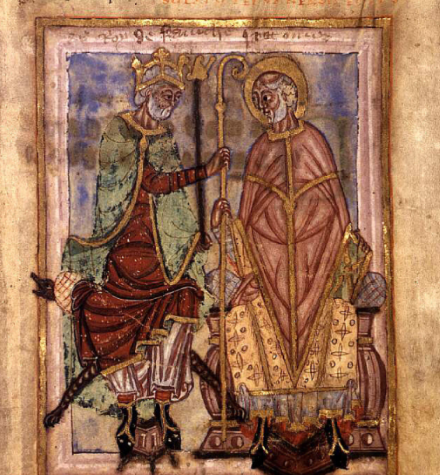
Before Urban II summoned armed Christians toward the East, the papacy had already been fighting a war over authority at home. The eleventh-century reform movement, often associated with Pope Gregory VII and continued under Urban, sought to free the church from lay domination, attack simony, enforce clerical discipline, and assert the independence of ecclesiastical power from kings and local aristocrats. These reforms were not abstract theological preferences. They were institutional claims about who had the right to appoint bishops, judge clergy, command Christian obedience, and define the boundaries between sacred and secular power. By the time Urban reached Clermont in 1095, the papacy had spent decades trying to become more than the religious ornament of European kingship. It wanted to become the commanding center of Latin Christendom.
Urban’s own position made that struggle immediate rather than theoretical. He was not reigning over a settled and universally obedient church. His papacy existed in the shadow of the Investiture Controversy, the long confrontation between reforming popes and secular rulers over the control of ecclesiastical office. The imperial-backed antipope Clement III still represented a rival claim to papal legitimacy, and Urban’s ability to act publicly, summon councils, and command loyalty was itself part of the contest. Clermont cannot be read merely as a religious meeting at which a pope happened to preach war. It was also a theater of legitimacy. Urban stood before bishops, abbots, nobles, and knights as the pope who could discipline the church, speak for western Christianity, and redirect the violence of lay society toward a goal he defined as sacred.
That lay violence had long troubled ecclesiastical reformers. Across parts of France especially, aristocratic warfare, private feuds, castle violence, raids, and attacks on church property had created a world in which noble power was often experienced locally as coercion. The Peace of God and Truce of God movements had tried to limit that violence by protecting clergy, peasants, merchants, women, churches, livestock, and holy days from armed aggression. These efforts did not create a peaceful society, but they show that church leaders were already experimenting with ways to discipline the warrior class. Bishops and abbots did not possess modern state power, but they could summon councils, invoke saints, display relics, threaten excommunication, and define certain acts of violence as sacrilege rather than ordinary lordly conduct. That distinction mattered. When violence against the unarmed, the poor, or the property of the church became an offense against God, clerical leaders gained a language by which they could judge the nobility itself. Urban’s crusading appeal grew from that world. It did not ask knights to abandon the sword. It offered them a sanctioned direction in which to carry it.
This redirection was crucial. The crusade did not abolish aristocratic aggression; it baptized it. Men trained for private war were invited to see themselves as pilgrims, penitents, and defenders of Christ’s people. The same habits that made knights dangerous within Latin society could now be reimagined as useful when turned outward. This was one of the great political achievements of crusading ideology. It allowed the papacy to present itself not only as a judge of violence but as its organizer. The church could rebuke feuding nobles for ravaging Christian lands while simultaneously authorizing armed expedition against enemies beyond Latin Christendom. The contradiction was not accidental. It was the logic of reform papal power: violence was sinful when uncontrolled, but holy when placed under ecclesiastical command.
Urban also inherited a tradition of papal and reformist militancy that had already blurred the line between spiritual authority and armed force. Gregory VII had imagined, though never successfully launched, armed service in defense of the church and eastern Christians. Reformers had supported military action when framed as protection of ecclesiastical rights or defense of Christian order. By 1095, Urban could draw upon these precedents while giving them a more compelling and expansive form. He could speak to a warrior aristocracy already accustomed to hearing clerics condemn, regulate, and ritualize violence, and he could offer something more intoxicating than restraint: consecrated action. The sword would not merely be tolerated if used properly; it could become the means by which a sinful knight pursued forgiveness. This was a radical development, because it did not simply place violence under moral limitation. It allowed ecclesiastical authority to redefine violence as penitential service when directed toward an enemy named by the church. The genius of Clermont was not that it invented the idea of sacred violence from nothing. It joined existing reform papal claims, aristocratic penitential culture, and anxiety over eastern crisis into a single summons. Urban made papal command feel less like institutional ambition and more like the natural voice of Christian duty.
The struggle for command before Clermont explains why the First Crusade became more than a response to Byzantine need or Muslim power. Urban’s sermon emerged from a reform papacy eager to prove that Rome could govern Christian society across political boundaries. It offered a solution to several problems at once: the papacy’s contested legitimacy, the disorder of the knightly class, the desire to project Latin authority, and the need to display moral leadership over kings and nobles. The crusade was born from this convergence. It was not simply a war preached by the church. It was a claim that the church, and specifically the pope, could decide when war itself became an instrument of salvation.
Byzantium’s Appeal: A Request for Aid Becomes a Latin Holy War

The eastern crisis that helped make Clermont possible began long before Urban II spoke in 1095. The Byzantine Empire had suffered a devastating defeat at Manzikert in 1071, and the consequences unfolded across Anatolia for decades afterward. Turkish power expanded into regions that had long supplied the empire with soldiers, taxes, and strategic depth, while Byzantine authority weakened under civil conflict and dynastic instability. By the time Emperor Alexios I Komnenos secured the throne in 1081, he inherited not merely a battlefield problem but a structural crisis. The empire needed trained military support, especially from the Latin West, where mounted warriors could be recruited, hired, or persuaded into service. Alexios’s appeal to the West was practical before it was apocalyptic. He sought help against Turkish pressure and hoped to recover imperial territory, not to unleash an autonomous Latin holy war that would eventually carve out western principalities in the eastern Mediterranean.
Urban’s response transformed that request. At the Council of Piacenza in 1095, Byzantine envoys reportedly sought assistance from the pope and western Christians. Their appeal gave Urban a powerful opening, because it allowed him to connect papal reform politics with an urgent eastern cause. Yet the campaign that emerged from Clermont was not simply a mercenary expedition in Byzantine service. Urban reframed assistance to Constantinople as a spiritual duty owed to suffering eastern Christians and, increasingly, to the holy places themselves. In this transformation, the pope took a limited military request and placed it within a much larger Latin theological imagination. Aid to Byzantium became rescue of the church. Defense of imperial territory became liberation. Service to an emperor became service to God, mediated through papal command.
That transformation required a deep simplification of Byzantine realities. The Byzantine Empire was not a helpless Christian victim waiting passively for Latin salvation. It was a sophisticated imperial power with its own diplomacy, armies, theology, legal traditions, and political aims. Alexios wanted assistance he could manage, not a massive armed movement whose leaders would prove difficult to control. The relationship between Byzantium and the Latin West was also marked by suspicion, cultural difference, and ecclesiastical estrangement after the widening breach between Greek and Latin churches in the eleventh century. Urban’s rhetoric muted these complications. The eastern Christians who mattered in crusading propaganda were not primarily Byzantine subjects with their own political agency. They became symbolic victims in a Latin story, useful because their suffering could summon western knights under papal leadership.
This mattered because the redirection from Byzantine aid to Latin holy war shifted the center of authority. If the expedition had remained a military response to Alexios’s needs, the Byzantine emperor might have stood as its natural beneficiary and coordinator. Instead, Urban’s preaching placed the pope at the ideological center. The campaign would move eastward through lands claimed by Byzantium, and many crusade leaders swore oaths to Alexios, but the moral identity of the movement did not belong to Constantinople. It belonged to Rome. This was the decisive political conversion. A request from an emperor became an opportunity for a pope to command transregional Christian violence, and the eastern crisis became evidence that Latin Christendom needed papal direction.
The consequences were immediate and long-lasting. Urban could present himself as the protector of eastern Christians while expanding western ecclesiastical authority beyond its normal boundaries. He could respond to Byzantine need while reshaping that need into a Latin project. He could invoke Christian unity while subordinating eastern complexity to western purpose. The First Crusade was born from a real appeal but not honestly contained by it. Alexios asked for help against the Turks. Urban answered by creating a movement that fused pilgrimage, penance, conquest, and papal supremacy. The distance between those two realities is where the machinery of crusading deceit began to operate most clearly.
Clermont, 1095: The Speech We Do Not Have and the Message We Can Reconstruct
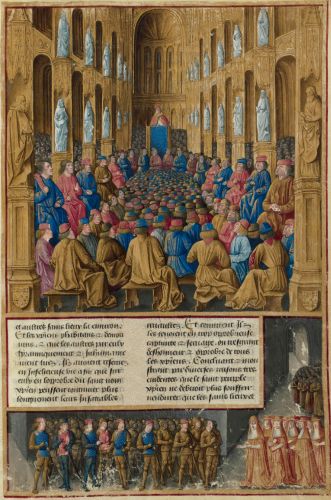
The Council of Clermont in November 1095 became one of the most consequential moments in medieval history, but its most famous event survives through a problem of memory rather than a secure transcript. No stenographic record preserves Pope Urban II’s exact words. What remains are later accounts shaped by distance, interpretation, and the startling success of the expedition that followed. Fulcher of Chartres, Robert the Monk, Baldric of Dol, Guibert of Nogent, and others did not simply record sound as it passed through the air at Clermont. They preserved, revised, intensified, and theologized the meaning of the appeal. That does not make their testimony useless. It makes it more revealing. The speech we do not have must be studied through the crusading imagination that claimed to remember it.
This source problem is not a minor technical obstacle. It is part of the argument itself. The different versions of Urban’s sermon show how crusading rhetoric matured almost immediately into a usable tradition. Some accounts are more restrained, while others are theatrical, bloody, and morally absolute. Fulcher’s version, often treated as comparatively sober, emphasizes the plight of eastern Christians and the need for western aid. Robert the Monk’s later account is more lurid, presenting Turkish violence in language designed to horrify and inflame. Guibert of Nogent and Baldric of Dol likewise reshape Urban’s appeal according to theological, literary, and political purposes. These writers were not neutral reporters standing outside the crusading movement. They wrote within a culture already trying to explain, justify, and sanctify what had happened after Clermont. The success of the expedition, the capture of Jerusalem, and the emergence of crusading memory all pressed backward upon the sermon, making Urban appear as the prophet of an outcome that had not yet occurred when he spoke. Together, these accounts do not give us one clean speech. They give us a chorus of remembrance, and in that chorus the central themes of crusading ideology are unmistakable.
Those themes reveal what Urban’s appeal needed to accomplish. It had to make a distant conflict emotionally immediate to a Latin audience. It had to turn eastern Christians into kin whose suffering demanded western intervention. It had to describe Muslim enemies in terms severe enough to remove hesitation from Christian warriors. It had to recast armed travel as pilgrimage, not mere campaigning. Most of all, it had to place the pope at the center of moral authorization. Urban was not merely describing an emergency; he was defining what counted as Christian obedience. The rhetoric remembered from Clermont did not only summon men eastward. It taught Latin Christendom how to imagine the war before the war had even begun.
The most striking common element in the tradition is the conversion of violence into penitential action. Urban’s appeal promised spiritual benefit to those who took up the journey, and this promise altered the moral meaning of armed force. Knights who had lived by feud, plunder, and local domination were invited to understand themselves as repentant servants. The sword did not disappear from their identity; it was spiritually reassigned. This is why Clermont cannot be understood simply as a recruitment speech. It was a theological reclassification. War, under the right authority and toward the right enemy, could become a path toward forgiveness. That claim gave the papacy a terrible and durable power, because it made ecclesiastical authorization the hinge between sin and sanctity. It also solved, or appeared to solve, a moral problem that had haunted the warrior aristocracy. Men whose social status depended on violence could now be told that the very skills that endangered their souls might, under papal direction, become instruments of redemption. The crusade did not merely excuse violence after the fact. It gave violence a religious future.
The variations among the accounts also expose the elasticity of crusading truth. The later the memory, the more easily Urban’s message could be sharpened into a drama of defilement and revenge. This does not mean that every chronicler invented freely, nor that Urban’s original sermon was gentle and later writers alone made it violent. It means that Clermont became a site where fact, memory, theology, and political need fused. The absence of exact words allowed the crusading tradition to preserve what mattered most to the movement: not the precise phrasing, but the moral architecture. Eastern Christians were suffering. The holy places were imperiled. Muslims were cast as violators. Western warriors were chosen instruments. The pope stood as the voice that named the emergency and offered redemption through action. In that sense, the uncertainty surrounding Urban’s words becomes historically revealing rather than merely frustrating. The tradition remembered what it needed Urban to have said, and that remembered message helped define the movement’s self-understanding. The sermon became less a fixed utterance than an origin story, one repeatedly adjusted to explain why thousands had marched, killed, suffered, and claimed divine sanction for doing so.
The speech we can reconstruct, then, is not a transcript but a structure of persuasion. Urban’s Clermont appeal transformed the eastern crisis into a universal Christian obligation by arranging selective facts into sacred necessity. The deceit lay less in one provable sentence than in the total framing of the campaign. Byzantine military need became Christian rescue. Aristocratic violence became penitential service. Papal ambition became pastoral duty. The Council of Clermont mattered because it gave Latin Christendom a new language in which conquest could sound like mercy and obedience to Rome could sound like obedience to God. That language would survive the uncertainty of the speech itself, because it was never dependent on exact words. It was dependent on a story powerful enough to make war holy.
Atrocity as Persuasion: Turks, Torture, Desecration, and the Emotional Politics of Rescue
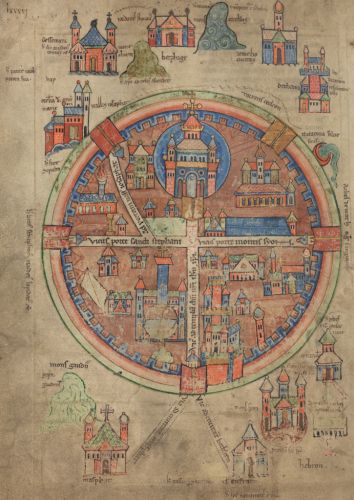
Atrocity was one of the most powerful instruments in the making of crusading necessity. Urban II’s appeal, as remembered by later chroniclers, did not merely announce that eastern Christians needed military assistance. It presented their suffering as intimate, bodily, sacrilegious, and unbearable. The enemy was not described only as a political force or military threat. He was made into a violator of Christian flesh, Christian women, Christian churches, and Christian honor. This distinction mattered because military danger alone might have justified aid to Byzantium, but atrocity rhetoric did something more potent. It transformed aid into vengeance, strategy into rescue, and distant conflict into a wound on the body of Christendom itself.
The most vivid version of this persuasion appears in Robert the Monk’s account of Urban’s sermon. Writing after the crusade’s success, Robert presents the Turks as agents of desecration and torture, accused of ravaging Christian lands, destroying churches, abusing bodies, and humiliating believers. The language is not simply descriptive. It is theatrical. It wants the hearer to recoil, to imagine suffering so obscene that neutrality becomes impossible. Robert’s account famously includes scenes of mutilation, forced violation, and bodily torment that far exceed the more restrained tone of Fulcher of Chartres. That difference does not mean Robert’s version should be dismissed as useless. It shows how the memory of Clermont became sharpened into a weapon. The more the crusade needed to justify itself, the more atrocity became the proof that holy war had been necessary all along.
This rhetoric worked by collapsing political complexity into moral immediacy. The Seljuk advance into Anatolia, Byzantine instability, local conflicts among Muslim powers, and the complicated status of eastern Christians under different rulers could not easily stir a mass western response. A world of shifting alliances, imperial rivalry, regional warfare, and religious diversity was too complex to move armies through emotion alone. Atrocity rhetoric solved that problem by replacing complexity with innocence and guilt. It removed the messy middle ground in which Byzantines might be political actors, Muslims might be divided among competing powers, eastern Christians might occupy varied social positions, and Latin intervention might serve ambitions beyond rescue. The language of violation made such distinctions feel irrelevant, even dangerous, because the suffering body demanded response before analysis. Eastern Christians became defenseless victims. Turks became monstrous persecutors. Latin warriors became rescuers. The papacy became the authority able to name the crisis and sanctify the answer. Such simplification was not incidental to crusading persuasion. It was the mechanism by which persuasion became possible.
The appeal to desecration was especially effective because it fused human suffering with sacred geography. The alleged abuse of Christians mattered deeply, but the violation of churches, altars, shrines, and holy places gave the crisis a cosmic dimension. Violence against bodies could be interpreted as violence against the church itself. Damage to sacred spaces could be presented as an insult to God. This was a crucial escalation. A military appeal asks men to fight for territory or allies. A sacred appeal asks them to fight because heaven has been insulted. Once the conflict was framed this way, ordinary prudence became morally suspect. To refuse the call was not merely to decline foreign service. It could be made to look like indifference to blasphemy.
The gendered language of atrocity also carried a particular emotional charge. Claims about the violation of Christian women, whether detailed or implied, functioned as a summons to masculine vengeance and aristocratic honor. Such language was not unique to the crusading movement, but in Urban’s context it did important work. It connected religious outrage to the social identity of knights, men trained to understand protection, domination, honor, and revenge as part of their public status. The suffering woman, the humiliated priest, the desecrated altar, and the tortured Christian body all became images through which western warriors could see themselves as necessary. The call to crusade did not merely instruct knights in doctrine. It touched the nerves of shame, kinship, masculinity, and fear.
The problem, historically, is not that violence against Christians in the East was impossible or that no suffering occurred. Warfare was brutal, and the Byzantine frontier had experienced real upheaval. The deceit lay in the transformation of partial, uneven, and politically embedded violence into a universal image of Muslim barbarity. Urban’s rhetoric and its later chroniclers created a moral world in which Muslims appeared chiefly as persecutors and Christians chiefly as victims, even though eastern Mediterranean realities were far more varied. This kind of persuasion does not require total fabrication. It requires selection, amplification, and repetition until the selected image becomes the whole truth. By turning atrocity into the emotional grammar of crusade, Urban and the tradition that remembered him made rescue inseparable from aggression, and aggression inseparable from salvation.
Remission of Sins: The Spiritual Bribe That Made Violence Holy
The most radical element in Urban II’s appeal was not the promise of land, treasure, or lordship, even though such rewards would later shape the conduct and expectations of many crusaders. It was the promise of spiritual benefit. Urban offered warriors something more powerful than plunder because it spoke to the deepest anxieties of a violent aristocracy living inside a penitential Christian world. Knights knew that bloodshed endangered the soul. Feud, vengeance, raiding, and coercion were not morally neutral activities simply because noble society depended on them. The genius, and danger, of Urban’s appeal lay in his ability to tell such men that violence itself could become part of their healing if directed toward the right enemy under the right authority. He did not merely call warriors to fight. He offered them a way to imagine fighting as repentance.
This promise turned the crusade into something more than an armed expedition. It fused pilgrimage, penance, and warfare into a new religious form. Earlier Christian tradition had often regarded killing, even when legally or politically justified, as spiritually hazardous. Warriors might need penance because violence stained the soul. Urban’s crusading message altered that moral relationship by presenting armed service as the penitential act itself. To take the cross, journey eastward, endure hardship, and fight for the liberation of eastern Christians and sacred places could be understood as an act of obedience with salvific consequences. The knight did not have to leave his martial identity behind to seek forgiveness. He could carry that identity into a holy project and have it redefined by the church.
The promise of remission of sins should be understood as a form of spiritual economy, not simply as devotional encouragement. Urban did not hand out salvation casually, nor did the early crusading indulgence yet possess all the later technical precision of medieval indulgence theology. Yet the meaning was clear enough to move people: participation in the crusade offered extraordinary spiritual reward. This gave the papacy immense power over the moral imagination of Latin warriors. The church could name sin, prescribe penance, authorize violence, and attach forgiveness to a specific military enterprise. That combination made crusading uniquely potent. It addressed guilt while preserving aggression. It made obedience measurable through movement, suffering, and combat. It allowed men who had spent their lives inside systems of coercion to see the road to Jerusalem as a road through which their violence might be converted into grace.
Calling this a “spiritual bribe” is deliberately sharp, but it captures the transactional force of the appeal. Urban’s promise did not work because medieval Christians were crude or insincere. It worked because they took sin, penance, and salvation seriously. The offer was powerful precisely because it met a real spiritual hunger and then bent that hunger toward papal war. A man burdened by violence, debt, ambition, fear of judgment, or desire for honor could hear in the crusade a terrifyingly attractive possibility: the same body trained for killing could now be placed in the service of God. This was not ordinary preaching against sin. It was the conversion of sin’s instruments into instruments of supposed redemption. The church did not merely forgive the warrior after violence. It invited him to perform violence within a sacred framework and call that performance penitence.
The consequences were enormous. By attaching remission of sins to armed pilgrimage, Urban expanded papal authority into the inner life of the knightly class and the public life of war. The pope became not only a preacher of repentance but the architect of a new penitential battlefield. This gave ecclesiastical approval a power no secular ruler could fully duplicate. Kings and lords could command service, promise pay, distribute land, or demand loyalty, but Urban could promise that fighting under the sign of the cross might heal the soul. That claim made the crusade emotionally and spiritually deeper than a campaign of conquest, even when conquest followed. It also made the deceit harder to expose, because the language of salvation clothed the violence in sincerity. The crusader could believe himself repentant while becoming an agent of expansion. The church could claim to rescue souls while mobilizing armies. In that fusion, holy war found its most enduring and dangerous form.
Papal Power in Motion: Clermont as a Claim to Rule Christendom
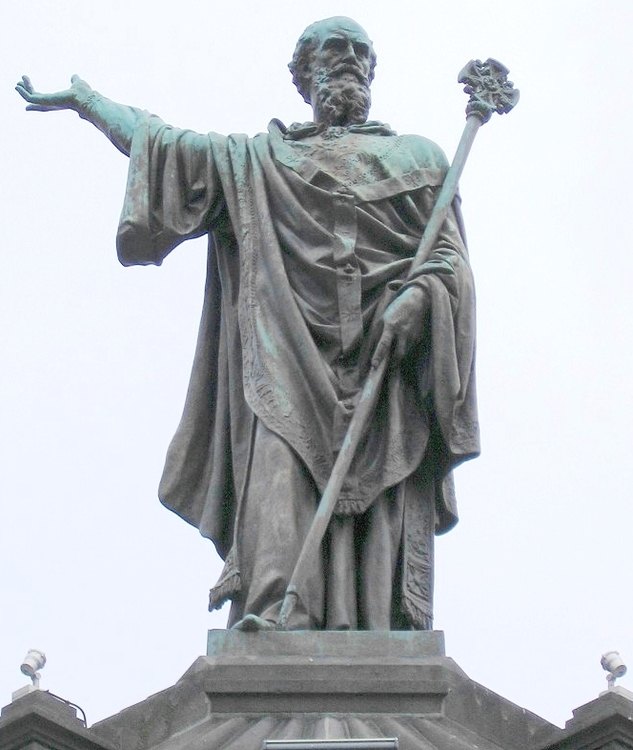
Clermont was not only a summons to war. It was a public claim about who possessed the authority to command Christian society. Urban II stood before bishops, abbots, nobles, and knights not as a local religious leader asking for help, but as the bishop of Rome asserting a power that reached across kingdoms. The council itself had begun as an assembly of reform, concerned with discipline, clerical order, and the correction of Christian life. Its crusading climax did not interrupt that reform agenda so much as extend it. If the papacy could regulate clergy, condemn abuses, judge rulers, and reform ecclesiastical institutions, Urban now implied that it could also direct the violence of lay elites toward an object defined by Rome as holy. This was reform enlarged into mobilization. The same papal office that claimed authority over clerical appointment, clerical conduct, marriage regulations, simony, and ecclesiastical discipline now asserted the right to define the moral use of the sword. Clermont fused internal correction with external war, making papal governance appear not merely administrative or sacramental, but military in consequence.
This was an extraordinary claim in a fragmented political world. Latin Christendom was not a single state. It was a patchwork of kingdoms, principalities, lordships, bishoprics, monasteries, cities, and kinship networks. Secular rulers could demand military service from their own dependents, but Urban’s appeal moved across ordinary political boundaries. It asked warriors from different regions, languages, and lordships to understand themselves as part of one Christian body under papal inspiration. That act of imagining mattered. The crusade created, or at least dramatized, a version of Christendom in which the pope could speak above kings and across territories. The battlefield began as an idea before it became a route eastward.
Urban’s position was especially important because papal authority in 1095 was still contested. The Investiture Controversy had exposed the deep conflict between reforming popes and secular rulers over the control of bishops and the meaning of ecclesiastical independence. The imperial-backed antipope Clement III had challenged the legitimacy of the reform papacy, and Urban’s own ability to command recognition was not guaranteed. Clermont served as a demonstration of papal capacity. A pope who could summon a council was powerful. A pope who could summon an army in the name of God was something more. By placing himself at the center of the crusading appeal, Urban transformed a contested pontificate into a visible engine of Christian mobilization.
The appointment of Adhemar of Le Puy as papal legate embodied this claim in practical form. Urban did not personally lead the expedition, but he gave it ecclesiastical direction through a representative whose authority flowed from Rome. This mattered because the crusade’s great secular leaders, men such as Raymond of Saint-Gilles, Bohemond of Taranto, Godfrey of Bouillon, and others, brought their own ambitions, rivalries, and regional interests with them. They were not puppets of the papacy. Yet the movement’s moral identity did not belong to any one prince. The cross, the vow, the indulgence, and the legatine presence marked the expedition as something more than a coalition of aristocratic armies. It was a papally authorized act of sacred violence, even when its leaders quarreled, maneuvered, and pursued worldly advantage. Adhemar’s role made that authorization visible on the march itself. He helped embody the claim that the crusade was not merely a lordly venture eastward, but a religious expedition under ecclesiastical supervision. His presence could not erase factionalism, hunger, ambition, or tactical disagreement, but it kept before the army the idea that its deepest legitimacy came from the church rather than from any single noble house. Through him, Urban’s authority traveled, even after the pope remained behind in the West.
This is why Clermont should be understood as papal power in motion. Urban’s speech did not create a centralized medieval state, nor did it give the pope administrative control over every crusader decision. The crusade remained messy, unstable, and often resistant to ecclesiastical discipline. But the ideological shift was enormous. Urban had shown that the papacy could define a military emergency, attach spiritual reward to participation, authorize violence beyond the borders of Latin Europe, and call warriors into a shared identity as defenders of Christendom. He made Rome the moral command center of a war fought by others. That was the brilliance of the move, and the danger. The pope did not need to wield the sword directly when he could teach warriors that their swords served salvation.
Wealth Without Saying Wealth: Property, Vows, Donations, and Ecclesiastical Gain
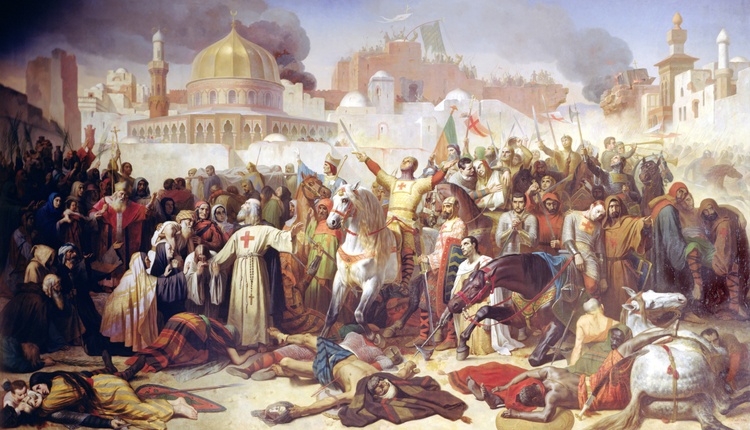
Urban II did not preach the First Crusade as a campaign to enrich the church, and reducing the movement to a treasury scheme would flatten the evidence. The central language of Clermont was penitential, not commercial. Its most powerful promise was remission of sins, not material profit. Yet that distinction should not obscure the material consequences of the crusading system Urban helped create. A movement that required thousands of armed men to leave home, finance travel, secure dependents, arrange inheritance, settle debts, and place their souls under ecclesiastical protection inevitably moved property. The crusade did not need to announce wealth as its purpose to generate wealth as one of its effects. Its economy was built into its spirituality. This is precisely why the material question is so important. The church’s gain did not have to appear as crude greed because it operated through pious forms: gifts for the soul, mortgages for the journey, donations for prayer, legal protections for absentees, and vows administered through ecclesiastical structures. Wealth did not stand outside the religious meaning of the crusade. It circulated through that meaning.
The crusading vow was at the center of this transformation. To take the cross was not merely to express enthusiasm for a military expedition. It created obligations that touched law, property, family, and ecclesiastical authority. A crusader had to fund the journey, and the journey was expensive. Horses, armor, weapons, servants, food, transport, and the maintenance of households left behind all required resources. Some participants sold land. Others mortgaged estates, borrowed money, transferred rights, or made pious donations before departure. Churches and monasteries often stood close to these transactions because they possessed institutional continuity, literacy, archives, legal influence, and spiritual authority. In practical terms, crusading converted private anxiety about salvation into public acts involving charters, gifts, pledges, and property movement.
This does not mean every ecclesiastical transaction was cynical. Many departing crusaders gave land or rights to monasteries because they believed such gifts would benefit their souls, support prayer, and bind them to sacred communities while they faced danger abroad. Monastic houses also served as guardians of memory, recording names, preserving obligations, and praying for benefactors. But the sincerity of devotion does not cancel the institutional gain. Indeed, it often made that gain more durable. A gift offered for the soul was harder to treat as an ordinary sale, because it entered the moral world of salvation, commemoration, and divine judgment. The church’s material accumulation grew through transactions that were not merely economic, but sacramental in atmosphere. Property passed into ecclesiastical hands wrapped in the language of repentance, protection, and eternal reward.
The papacy benefited from this economy even when Rome did not directly receive every acre, coin, or privilege. Crusading expanded the church’s jurisdiction over the lives of lay warriors by making ecclesiastical authority central to their departure, protection, and spiritual status. Crusaders received special protections for their families and property. Their vows required recognition and enforcement. Their debts, disputes, and absences created legal questions that church authorities could help adjudicate. The more crusading became an institution, the more the church stood as mediator between violence and salvation, between property and penance, between household arrangements and holy obligation. Urban’s genius was not that he passed a collection plate for papal conquest. It was that he helped create a system in which the road to Jerusalem passed through ecclesiastical authority at nearly every stage.
This is why “wealth without saying wealth” is the more accurate formulation. The church did not need to preach greed to benefit materially from crusading. The spiritual structure itself produced material effects. A knight fearing death might endow a monastery. A noble preparing for departure might sell land to a bishopric. A family seeking protection might deepen its dependence on ecclesiastical institutions. A crusader seeking remission might bind his estate to prayer, memory, and clerical oversight. In each case, the stated motive could be pious and the institutional result still profitable. Medieval religious life did not separate wealth and salvation as neatly as modern categories might wish. Land could be prayer. Donation could be penance. Property could become a bridge between guilt and grace. The very language that made these transactions spiritually meaningful also made them institutionally useful. Once wealth passed into sacred hands, it was not merely transferred; it was morally transformed. The church could receive property as a guardian of souls rather than as a political actor accumulating resources, even when the practical outcome was the expansion of ecclesiastical holdings, influence, and local authority.
The deceit lay not in a simple hidden promise that crusading would make the church rich, but in the sanctified mechanism that made enrichment appear incidental, even holy. Urban’s rhetoric elevated the crusade above ordinary worldly ambition by speaking in the language of rescue and forgiveness. Yet the movement he launched depended on wealth, reorganized wealth, and often transferred wealth toward ecclesiastical institutions. The church gained not only land and donations, but a deeper authority over the material life of the aristocracy. Crusading made the knight’s sword, soul, estate, debts, family, and memory matters of church concern. That was power of a high order. It was wealth made obedient to salvation, and salvation made dependent on the church’s command.
Noble Ambition and Sacred Cover: Land, Plunder, Lordship, and the East

Urban II’s message at Clermont emphasized penitence, rescue, and remission of sins, but the men who answered that call did not leave their ambitions behind when they took the cross. The crusade drew nobles, knights, retainers, clergy, noncombatants, and adventurers into a movement whose religious language was powerful enough to gather many motives beneath one sign. Some crusaders likely understood themselves with deep sincerity as pilgrims seeking forgiveness. Others saw opportunity in distance, war, reputation, and conquest. Many almost certainly carried both impulses at once. Medieval devotion and worldly ambition were not opposites sealed in separate chambers of the soul. They could inhabit the same person, justify the same journey, and march under the same banner.
This mixture of motives is essential to understanding the political consequences of the First Crusade. Urban’s rhetoric gave western warriors a sacred framework in which the pursuit of honor, lordship, plunder, and territorial advancement could appear as service to God. That does not mean the crusade was only a land-grab disguised as piety. Such a claim would be too crude. Many crusaders endured enormous expense, danger, hunger, disease, and death with little realistic guarantee of profit. Yet it is equally misleading to pretend that material possibility did not matter. The East was imagined not only as a theater of suffering but as a field of opportunity. For some nobles, especially those whose prospects in the West were constrained by inheritance, rivalry, debt, or political frustration, crusading opened a horizon that ordinary local warfare could not provide. Reputation could be remade. Failure at home might be redeemed abroad. A younger or lesser lord might discover that the road to Jerusalem also passed through cities, fortresses, titles, and negotiations. The language of holy rescue did not erase noble ambition. It gave that ambition a consecrated cover.
The leading figures of the expedition reveal this tension clearly. Raymond of Saint-Gilles, Bohemond of Taranto, Godfrey of Bouillon, Baldwin of Boulogne, and other nobles entered the crusade with reputations, households, dependents, rivalries, and political expectations already attached to them. They did not become pure instruments of papal will by sewing crosses onto their garments. Bohemond in particular brought with him the memory of Norman warfare against Byzantium and a sharp eye for opportunity in the eastern Mediterranean. His conduct around Antioch showed how crusading purpose could bend toward dynastic calculation, especially when military success created openings for personal rule. Baldwin’s later acquisition of Edessa likewise showed how quickly crusading could move from penitential journey to territorial authority, even before Jerusalem itself had been reached. Godfrey’s eventual position in Jerusalem and Raymond’s long maneuvers around power and prestige also reveal that the crusade’s leaders were not simply marching as anonymous penitents. They were aristocrats acting within a culture that understood honor, lordship, lineage, and military success as deeply connected. The campaign’s sacred language could coexist with hard political calculation because the crusade did not abolish aristocratic culture. It gave aristocratic culture a holy road east.
Plunder also occupied an ambiguous place within the movement. Crusaders needed resources to survive, and armies moving over vast distances frequently depended on coercion, seizure, bargaining, and violence. Hunger and desperation could make the boundary between necessity and robbery thin. The promise of booty belonged to the ordinary expectations of medieval warfare. Men who risked their lives in battle expected reward, whether in treasure, ransom, horses, arms, provisions, or status. Crusading did not erase those assumptions. It placed them inside a penitential structure. The result was morally unstable but politically useful: warriors could seek material gain while still imagining the larger campaign as holy. The same man could pray, fast, kill, loot, and believe himself a servant of God.
The creation of Latin lordships in the East exposed the full consequence of this fusion. Edessa, Antioch, Jerusalem, and later Tripoli were not merely liberated spaces returned to an imagined universal Christian order. They became centers of Latin rule, aristocratic settlement, ecclesiastical reorganization, and military defense. The crusade that had been preached as aid to eastern Christians and rescue of holy places produced new western principalities that often answered more to Latin interests than Byzantine restoration. These settlements required Latin bishops, fortified centers, military households, vassalage, revenue systems, and negotiated relationships with local Christian, Muslim, Jewish, Armenian, Greek, and Syriac communities. In other words, the result was not a purified spiritual geography but a colonial political order built from the habits of western lordship. The crusaders did not simply enter the East as temporary rescuers. Many stayed as rulers, and their rule required the conversion of sacred victory into administrative permanence. This was the political afterlife of sacred cover. Once conquest had been achieved, it required government, landholding, fortification, taxation, episcopal structures, and inheritance. Holy war had created lordship, and lordship required the ordinary machinery of power.
This does not make the crusaders hypocrites in a simple sense. The more troubling reality is that many did not need to choose between faith and ambition. Crusading ideology allowed them to experience the two as mutually reinforcing. A noble could seek remission of sins and still seek a principality. A warrior could fight for Jerusalem and still seize goods along the way. A leader could claim obedience to God while negotiating, betraying, or competing with fellow Christians. Urban’s rhetoric made such contradictions livable by placing them beneath the sign of sacred purpose. That was the genius and danger of the crusading idea: it did not eliminate worldly desire, but gave it a holy vocabulary. In the East, salvation and lordship marched together.
The Massacre at Jerusalem: The Moral Collapse of Holy Rescue
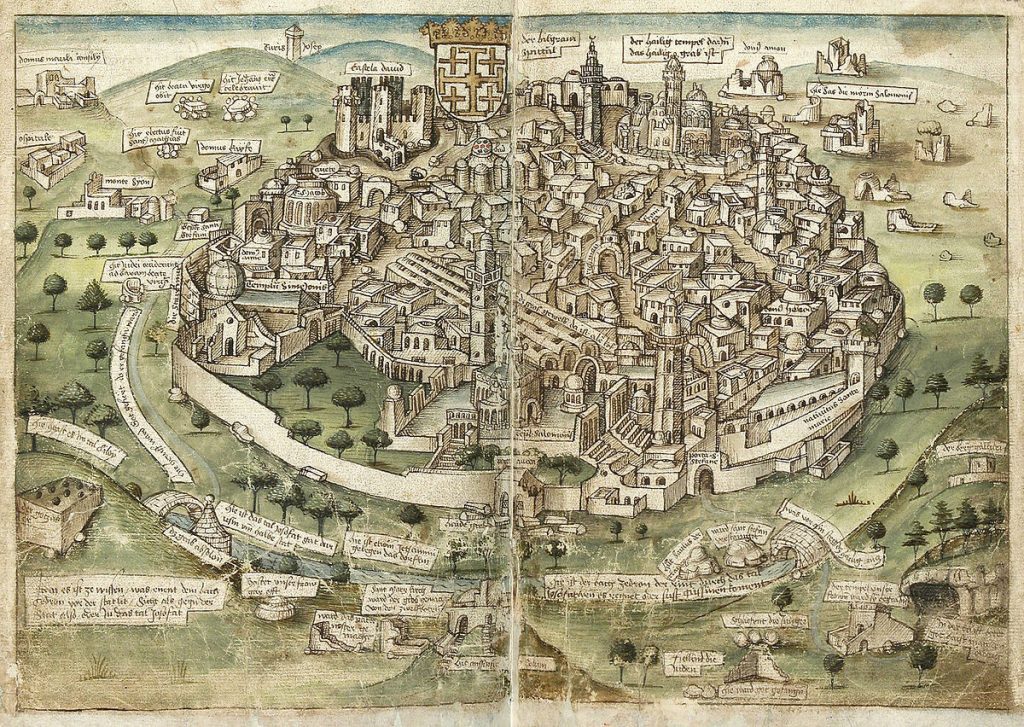
The capture of Jerusalem in July 1099 exposed the terrible moral contradiction at the heart of the First Crusade. A campaign preached as rescue, penitence, and liberation ended in slaughter. After years of hardship, hunger, disease, siege warfare, and internal rivalry, the crusaders entered the city that had become the emotional and theological center of their journey. Jerusalem was not merely a strategic objective. It was the imagined end point of suffering, vow, and divine testing. That sacred expectation made the violence more, not less, dangerous. Once the city fell, the crusaders did not simply claim victory over a military opponent. They enacted a purification drama in which killing could be absorbed into the language of fulfillment.
The chroniclers did not hide the bloodshed. Some described it with horror, others with triumph, and still others with a strange devotional satisfaction that reveals how thoroughly violence had been sacralized. Raymond of Aguilers’ famous account of blood in the streets, whether literal, rhetorical, or biblical in its imagery, shows how massacre could be narrated as holy consummation rather than moral failure. Fulcher of Chartres, the Gesta Francorum, and later writers likewise preserved the sense that the city’s capture marked divine favor. Their accounts are not identical, and the scale and imagery of the killing have to be read critically, especially where biblical language and triumphal exaggeration shape the narrative. Yet even when one allows for rhetoric, the moral meaning assigned to the violence remains unmistakable. The slaughter was not treated simply as an unfortunate excess committed after a difficult siege. It was woven into the story of divine victory, as if bloodshed could confirm rather than compromise the righteousness of the cause. The dead were not merely casualties in an urban conquest. They were signs within a providential story. The crusaders had suffered, marched, starved, and killed their way to the place where earthly geography and heavenly promise seemed to meet. In that atmosphere, restraint could appear almost like disobedience.
This was the logical consequence of atrocity rhetoric. For years, the enemy had been imagined as defiler, persecutor, occupier, and obstacle to God’s will. Muslims had especially been cast not simply as political adversaries but as violators of sacred order, while the city itself had been imagined as a captive holiness waiting to be freed. When such a moral universe reaches its climax, violence no longer needs ordinary justification. It becomes a ritual of reversal. Those described as polluters are destroyed so that the holy place may be cleansed. Those cast as tormentors are killed so that Christian suffering may be avenged. The massacre at Jerusalem cannot be separated from the emotional architecture built before the army ever arrived. Urban’s rhetoric and the crusading imagination that grew from it had prepared Christians not merely to fight for Jerusalem, but to see extreme violence there as spiritually meaningful.
The massacre also reveals the limits of the crusade’s claim to rescue eastern Christians. The city contained Muslims, Jews, and eastern Christians of varied communities, and the political world into which the crusaders entered was far more complex than the simple binary of oppressed Christian and Muslim tyrant. Yet the logic of holy conquest had little patience for such complexity. The goal had become possession, purification, and Latin triumph. The result was not the restoration of a peaceful Christian order but the creation of a new regime grounded in conquest and sanctified by victory. The crusaders’ violence in Jerusalem made plain what had been latent in the movement from Clermont onward: once war is framed as salvation, the enemy’s death can be made to look like proof of God’s approval.
Urban II did not live to celebrate the news. He died in July 1099, apparently before learning that Jerusalem had fallen. The irony is severe. The pope who had summoned western warriors with the language of penitence and holy rescue did not see the full consequences of the movement he unleashed. Yet his absence at the moment of victory does not absolve the logic he helped authorize. The massacre at Jerusalem was not an accidental blemish on an otherwise pure pilgrimage. It was the moral collapse of holy rescue into sacred violence. In the streets of Jerusalem, the crusade’s central deceit became visible: a war preached as mercy could end in slaughter and still call itself blessed.
After Urban: Institutionalizing the Deceit
The following video from “Herald of the Ages” covers the beginning of the Crusades:
Urban II died before the crusading movement could fully reveal what it would become. The capture of Jerusalem in 1099 gave his appeal the appearance of divine vindication, but it also created a problem of permanence. A temporary expedition had produced lasting Latin lordships, ecclesiastical claims, military obligations, and devotional expectations. The crusade could no longer be treated simply as an extraordinary response to an eastern emergency. Its success invited repetition. The language that had made the First Crusade possible, atrocity, penitence, liberation, papal command, and sacred geography, became a model that later popes, preachers, rulers, and institutions could adapt for new enemies and new purposes. What had begun as a supposedly urgent rescue hardened into a system.
The institutionalization of crusading depended on memory. Jerusalem’s capture became proof that God had favored the enterprise, and that proof could be invoked whenever later campaigns needed legitimacy. The messiness of the First Crusade, its hunger, massacres, political rivalries, broken promises, and territorial ambitions, could be softened by the glow of success. In sermons, chronicles, charters, and later crusading appeals, the movement was remembered less as a chaotic fusion of motives than as a sacred precedent. This mattered because precedent is one of power’s favorite disguises. Once a violent act has been remembered as holy, later violence can claim inheritance from it. The original deceit became portable: war could be preached as repentance, conquest as liberation, and papal strategy as obedience to God.
Later crusading expanded the logic far beyond the original eastern context. The machinery first refined around Jerusalem could be applied to Iberia, the Baltic, southern France, Italy, and political conflicts within Latin Christendom itself. Muslims remained major targets, but they were not the only ones. Heretics, pagans, schismatics, and even papal political enemies could eventually be placed within crusading categories. This expansion reveals the underlying structure more clearly than the First Crusade alone. If the crusade had been only about Jerusalem, its logic might have remained geographically limited. Instead, the papacy discovered a flexible instrument. By defining an enemy as a threat to Christian order, attaching spiritual reward to armed service, and authorizing violence through ecclesiastical command, Rome could mobilize war in multiple theaters while presenting each campaign as sacred necessity. The Albigensian Crusade against Cathars in southern France made this flexibility especially clear, since crusading language could now be turned inward against Christians judged heretical by ecclesiastical authority. Northern campaigns in the Baltic likewise showed that the rhetoric of conversion, defense, and holy expansion could sanctify conquest far from Jerusalem. The crusade became less a single road to the Holy Sepulchre than a category of authorized violence, portable wherever the church could define an enemy and promise salvation to those who fought.
The system also became more legally and administratively sophisticated. Crusading vows, indulgences, taxation, preaching campaigns, legatine authority, property protections, and ecclesiastical privileges developed into recognizable structures. The church learned how to summon, finance, regulate, and reward crusading activity with increasing precision. What Urban had launched through an electrifying appeal at Clermont became an institutional grammar. The cross was not merely a symbol sewn onto cloth. It became a legal and spiritual status. The crusader was not merely a warrior moved by enthusiasm. He became a person whose obligations, protections, sins, debts, and privileges could be defined by ecclesiastical authority. The papacy did not have to command every sword directly. It could create the conditions in which swords moved under the sign of salvation.
This development intensified the relationship between deceit and sincerity. Many later crusaders, like many first crusaders, were not pretending. They believed in penance, feared damnation, revered holy places, honored vows, and accepted the church’s authority to define sacred duty. That sincerity made the system more powerful, not less deceptive. Institutional deceit often works best when it does not require every participant to be cynical. The preacher could believe the campaign was holy. The knight could believe his violence was penitential. The donor could believe his gift served God. The pope could believe he defended Christendom while also expanding papal jurisdiction. The danger lay in the structure that made these beliefs mutually reinforcing, so that violence, property, ambition, and obedience could all be gathered beneath the language of redemption. That structure allowed moral certainty to survive contact with material benefit. Land could be seized while souls were supposedly healed. Enemies could be annihilated while mercy remained the public vocabulary. Papal authority could grow while presenting itself as pastoral necessity. This was not hypocrisy in its simplest form, which is precisely why it was so durable. It was a system in which conviction and advantage fed each other until the distinction between holy duty and institutional expansion became almost impossible for participants to see.
By institutionalizing crusade, the medieval church preserved Urban’s central transformation: the conversion of selective crisis into sacred obligation. The rhetoric of rescue could survive long after the original circumstances had changed. The promise of remission could attach to campaigns far removed from Clermont’s eastern emergency. The language of violated Christians, endangered faith, and holy necessity could be redeployed whenever ecclesiastical power required mobilization. This was the afterlife of Urban’s deceit. It did not remain frozen in one sermon or one expedition. It became a reusable form of authority, a way for the papacy to bless violence, command resources, and make institutional ambition appear as the defense of God’s order. The First Crusade ended in Jerusalem, but the system it created kept marching.
Conclusion: The Lie That Made War Sound Like Salvation
Urban II’s achievement at Clermont was not merely that he inspired men to march east. It was that he helped create a moral language in which war could be heard as repentance, conquest could be preached as rescue, and papal command could appear as the voice of Christian necessity. The First Crusade did not arise from one motive, one grievance, or one lie. It emerged from a carefully charged convergence of reform papal ambition, Byzantine military need, aristocratic violence, penitential anxiety, sacred geography, and exaggerated atrocity. Urban’s genius was to arrange these forces into a story powerful enough to move armies. That story did not need to be wholly false to deceive. Its force lay in selection, amplification, and sanctification.
The deceit was larger than a single fabricated claim about Muslim cruelty or church enrichment. It was the transformation of partial truths into total obligation. Eastern Christians had suffered, but their suffering was turned into a universal indictment of Islam and a summons to Latin intervention. Byzantine aid was requested, but that request was expanded into a papal holy war that exceeded Byzantine control. Knights did fear sin, but their fear was redirected into a system that made violence itself appear penitential. The church did gain wealth and power, but not always through open demands for wealth and power. It gained them through vows, gifts, property protections, spiritual privileges, jurisdictional claims, and the authority to define when killing served salvation. The lie worked because it did not look like greed. It looked like rescue.
This is what made the crusading idea so dangerous and so durable. It did not require every participant to be cynical. Many crusaders believed deeply in what they were doing. Many feared damnation, revered Jerusalem, trusted the church, honored their vows, and understood suffering on the road as proof of spiritual seriousness. But sincerity did not purify the structure. A sincere belief can still serve a violent system, and a holy vocabulary can still conceal institutional ambition. Urban’s rhetoric gave the military aristocracy a path by which aggression could be reimagined as obedience, while giving the papacy a mechanism for commanding resources, bodies, land, and memory across political boundaries. The result was not merely a war blessed by religion. It was a new Christian grammar of authorized violence.
The First Crusade ended with Jerusalem in Latin hands, but its deeper legacy was the machinery it left behind. Later generations would reuse the same emotional and theological architecture: endangered Christians, sacred insult, sinful warriors, promised remission, papal authorization, and enemies rendered fit for holy violence. In that sense, Urban’s most consequential victory was not geographical. It was imaginative. He helped teach western Christendom how to see war as salvation when the church named the enemy and blessed the road. The central lie of the crusade was not that every fact was invented. It was that war, once wrapped in penitence and proclaimed by sacred authority, could cease to be war’s old brutal self. It could not. It only learned to kneel before it killed.
Bibliography
Affiliate disclosure: Amazon links on this site are paid links. As an Amazon Associate I earn from qualifying purchases.
- Albert of Aachen. Historia Ierosolimitana: History of the Journey to Jerusalem. Translated by Susan B. Edgington. Oxford: Oxford University Press, 2007.
- Anna Komnene. The Alexiad. Translated by E. R. A. Sewter. Revised by Peter Frankopan. London: Penguin Books, 2009.
- Asbridge, Thomas. The Creation of the Principality of Antioch, 1098–1130. Woodbridge: Boydell Press, 2000.
- —-. The First Crusade: A New History. Oxford: Oxford University Press, 2004.
- Baldric of Dol. Historiae Hierosolymitanae. In Recueil des historiens des croisades: Historiens occidentaux. Paris: Imprimerie Royale, 1866.
- Bernard of Clairvaux. In Praise of the New Knighthood. Translated by M. Conrad Greenia. Kalamazoo, MI: Cistercian Publications, 2000.
- Blumenthal, Uta-Renate. The Investiture Controversy: Church and Monarchy from the Ninth to the Twelfth Century. Philadelphia: University of Pennsylvania Press, 1988.
- Brundage, James A. Medieval Canon Law and the Crusader. Madison: University of Wisconsin Press, 1969.
- Bull, Marcus. Knightly Piety and the Lay Response to the First Crusade. Oxford: Clarendon Press, 1993.
- Cole, Penny J. The Preaching of the Crusades to the Holy Land, 1095–1270. Cambridge, MA: Medieval Academy of America, 1991.
- Constable, Giles. “The Historiography of the Crusades.” In The Crusades from the Perspective of Byzantium and the Muslim World, edited by Angeliki E. Laiou and Roy Parviz Mottahedeh, 1–22. Washington, DC: Dumbarton Oaks Research Library and Collection, 2001.
- —-. Monastic Tithes: From Their Origins to the Twelfth Century. Cambridge: Cambridge University Press, 1964.
- Cowdrey, H. E. J. “Pope Urban II’s Preaching of the First Crusade.” History 55, no. 184 (1970): 177–188.
- France, John. Victory in the East: A Military History of the First Crusade. Cambridge: Cambridge University Press, 1994.
- Frankopan, Peter. The First Crusade: The Call from the East. Cambridge, MA: Belknap Press, 2012.
- Fulcher of Chartres. A History of the Expedition to Jerusalem, 1095–1127. Translated by Frances Rita Ryan. Edited by Harold S. Fink. Knoxville: University of Tennessee Press, 1969.
- Gesta Francorum et aliorum Hierosolimitanorum: The Deeds of the Franks and the Other Pilgrims to Jerusalem. Edited and translated by Rosalind Hill. London: Thomas Nelson and Sons, 1962.
- Gregory VII. The Register of Pope Gregory VII, 1073–1085. Translated by H. E. J. Cowdrey. Oxford: Oxford University Press, 2002.
- Guibert of Nogent. Gesta Dei per Francos (The Deeds of God through the Franks). Translated by Robert Levine. Woodbridge: Boydell Press, 1997.
- Harris, Jonathan. Byzantium and the Crusades. 2nd ed. London: Bloomsbury Academic, 2014.
- Head, Thomas, and Richard Landes, eds. The Peace of God: Social Violence and Religious Response in France around the Year 1000. Ithaca, NY: Cornell University Press, 1992.
- Housley, Norman. Fighting for the Cross: Crusading to the Holy Land. New Haven: Yale University Press, 2008.
- —-. “A Necessary Evil? Erasmus, the Crusade, and War against the Turks.” In The Crusades and Their Sources: Essays Presented to Bernard Hamilton, edited by John France and William G. Zajac, 31–45. Aldershot: Ashgate, 1998.
- Innocent III. “Quia maior.” In The Crusades: A Reader, edited by S. J. Allen and Emilie Amt, 2nd ed. Toronto: University of Toronto Press, 2014.
- Kostick, Conor. The Social Structure of the First Crusade. Leiden: Brill, 2008.
- Madden, Thomas F. The New Concise History of the Crusades. 2nd ed. Lanham, MD: Rowman & Littlefield, 2009.
- Mayer, Hans Eberhard. The Crusades. Translated by John Gillingham. 2nd ed. Oxford: Oxford University Press, 1988.
- Munro, Dana C. “The Speech of Pope Urban II. At Clermont, 1095.” The American Historical Review 11:2 (1906), 231-242.
- Murray, Alan V. The Crusader Kingdom of Jerusalem: A Dynastic History, 1099–1125. Oxford: Prosopographica et Genealogica, 2000.
- Ralph of Caen. The Gesta Tancredi of Ralph of Caen: A History of the Normans on the First Crusade. Translated by Bernard S. Bachrach and David S. Bachrach. Aldershot: Ashgate, 2005.
- Raymond of Aguilers. Historia Francorum qui ceperunt Iherusalem. In The First Crusade: The Accounts of Eyewitnesses and Participants, translated by August C. Krey. Princeton: Princeton University Press, 1921.
- Riley-Smith, Jonathan. The First Crusade and the Idea of Crusading. Philadelphia: University of Pennsylvania Press, 1972.
- —-. The First Crusaders, 1095–1131. Cambridge: Cambridge University Press, 1997.
- —-. “The Idea of Crusading in the Charters of Early Crusaders, 1095–1102.” In Le concile de Clermont de 1095 et l’appel à la croisade, 155–166. Rome: École Française de Rome, 1997.
- —-. What Were the Crusades? 4th ed. San Francisco: Ignatius Press, 2009.
- Robert the Monk. Historia Iherosolimitana. In The First Crusade: The Accounts of Eyewitnesses and Participants, translated by August C. Krey. Princeton: Princeton University Press, 1921.
- —-. Robert the Monk’s History of the First Crusade: Historia Iherosolimitana. Translated by Carol Sweetenham. Aldershot: Ashgate, 2005.
- —-. “Urban II: Speech at Clermont 1095.” In Internet Medieval Sourcebook, edited by Paul Halsall. Fordham University.
- Robinson, I. S. The Papacy, 1073–1198: Continuity and Innovation. Cambridge: Cambridge University Press, 1990.
- Rubenstein, Jay. Armies of Heaven: The First Crusade and the Quest for Apocalypse. New York: Basic Books, 2011.
- Shepard, Jonathan. “Cross-Purposes: Alexius Comnenus and the First Crusade.” In The First Crusade: Origins and Impact, edited by Jonathan Phillips, 107–129. Manchester: Manchester University Press, 1995.
- Somerville, Robert. “The Council of Clermont and the First Crusade.” Studia Gratiana 20 (1976): 325–337.
- Strack, Georg. “The Sermon of Urban II in Clermont and the Tradition of Papal Oratory.” Medieval Sermon Studies 56 (2012), 30–45.
- Tyerman, Christopher. God’s War: A New History of the Crusades. Cambridge, MA: Belknap Press of Harvard University Press, 2006.
- —-. The Invention of the Crusades. Toronto: University of Toronto Press, 1998.
- Urban II. “Speech at Clermont, 1095.” In The First Crusade: The Chronicle of Fulcher of Chartres and Other Source Materials, edited by Edward Peters, 2nd ed. Philadelphia: University of Pennsylvania Press, 1998.
Originally published by Brewminate, 05.18.2026, under the terms of a Creative Commons Attribution-NonCommercial-NoDerivatives 4.0 International license.
About the Author