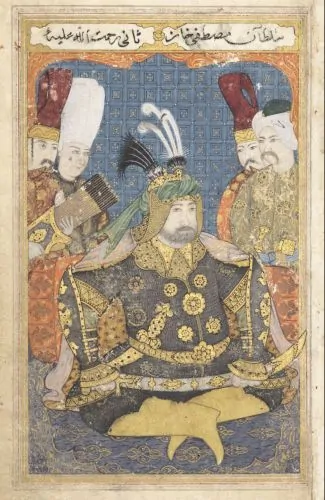
The Edirne Rebellion of 1703 turned demands for redress into Mustafa II’s overthrow, revealing how opposition could remove a sultan while preserving the Ottoman dynasty’s authority.

By Matthew A. McIntosh
Public Historian
Brewminate
Introduction: When Redress No Longer Seemed Possible
In the summer of 1703, opponents of Mustafa II’s government demanded the removal of Şeyhülislam Feyzullah Efendi and the return of the Ottoman court from Edirne to Istanbul. These demands still assigned the reigning sultan a decisive role in correcting the government conducted under his authority. Within weeks, an insurgent force was advancing toward Edirne, and Mustafa’s brother Ahmed III replaced him on the throne. The movement from petition to deposition marks the central political development of the rebellion, but its explanation requires more than a narrative of mounting anger. What needs investigation is how removing the sovereign became an acceptable and enforceable answer to grievances initially presented for his resolution.
The immediate outbreak concerned unpaid military personnel, beginning among the cebecis, the corps responsible for weapons and military equipment. Their resistance to further service expanded into a confrontation involving other military formations and substantial participation from Istanbul’s inhabitants. Different groups entered that confrontation with interests that overlapped without becoming identical. Religious scholars whose prospects of advancement had narrowed could oppose Feyzullah’s appointments, while officials excluded from influence had reasons to challenge the household through which he exercised power. Mustafa’s prolonged residence in Edirne gave these disputes a wider urban significance because the court’s location affected livelihoods and opportunities to approach the government. Edirne possessed an established place in Ottoman imperial life, and residence there did not by itself constitute abandonment of the responsibilities of sovereignty. Its political meaning depended on the circumstances in which Istanbul’s inhabitants experienced the court’s departure and assessed the administration that remained. The controversy concerned whether government remained accessible to those who expected attention from it, as well as where the sultan chose to live. Understanding these connections also requires recognizing Mustafa’s own participation in the arrangements under attack, including his sustained support for Feyzullah.
Evidence about the insurgents’ intentions complicates any account of a unified movement gradually changing its mind. The English ambassador Sir Robert Sutton distinguished between the public emergence of deposition as an objective and what he believed to have been the earlier intentions of its organizers. He associated the open declaration against Mustafa with news of the treatment of the petitioners yet also reported intelligence suggesting that leaders had intended the sultan’s removal from the beginning. Such information deserves scrutiny alongside Ottoman narratives that assigned responsibility differently and explained the disturbance through their own understandings of legitimate government. Sutton’s access to informants makes his testimony valuable, while the indirect character of that access leaves the alleged private plans open to question. The changing language of collective demands supplies firmer evidence of the movement’s public development than of a simultaneous conversion among everyone who directed or joined it.
Petitioning created a political relationship whose failure could carry serious implications for the sovereign. Those seeking correction acknowledged an authority capable of hearing their complaints and acting upon them; the obstruction of their representatives brought the effectiveness of that relationship into doubt. Mustafa’s eventual concessions must be assessed within this deteriorating situation, where dismissal of an official could no longer automatically guarantee that the grievances surrounding his influence would be addressed. The credibility of a settlement depended partly on what would happen after armed opponents dispersed and the court recovered freedom of action. Insurgent organization made that uncertainty politically effective by sustaining an alternative administration and assembling the means to confront the government beyond Istanbul. Its authority included compulsion, and restrictions imposed within the city prevent its decisions from being treated as an uncomplicated expression of unanimous popular judgment. Ahmed III’s accession ultimately preserved the Ottoman dynasty, while the subsequent displacement of prominent insurgents demonstrated how limited their control over the settlement could become. Mustafa’s defeat exposes the process through which a coalition secured the removal of a reigning sultan without establishing an enduring right to direct his successor. The central question is how enough armed and institutionally influential opponents came to regard his continued rule as an obstacle to a settlement they could trust.
Reading a Rebellion through Unequal Sources
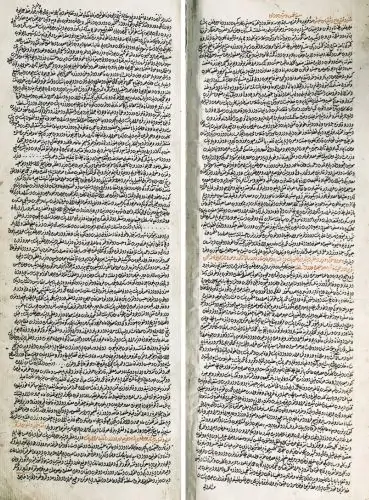
Surviving descriptions of the events of 1703 offer different kinds of access to the disturbance. An official could understand the procedures of appointment while knowing little about deliberations taking place elsewhere. A detailed account of a conversation might preserve information obtained from a participant, or reproduce a passage borrowed from another writer. Even the date attached to an episode requires examination, since the time of an event, the arrival of news, and the composition of an account need not coincide. The first task is to establish how each author acquired the information presented and what happened to it during the construction of a narrative.
Silâhdar Fındıklılı Mehmed Ağa’s Nusretnâme and Defterdar Sarı Mehmed Paşa’s Zübde-i Vekayiât are indispensable precisely because their authors stood close to the governing establishment. That proximity requires careful definition. Silâhdar was in Edirne when the rising began in Istanbul, so his detailed treatment of developments in the capital cannot be attributed wholesale to personal observation. Sarı Mehmed, appointed chief treasurer in May 1703, likewise experienced the disturbance from within the administration at Edirne. His displacement from office and subsequent recall to obtain money for accession payments placed him directly within the practical difficulties attending the change of ruler. Such experience gave him knowledge of administrative operations, while also making his own career part of the history he narrated. His chronicle was composed in 1714–1716, which separates participation in the events from the later arrangement of their explanation. Its account brings together a participant’s knowledge and a retrospective understanding formed during the intervening years. Neither author’s institutional position determines the reliability of every passage, but each position helps identify where unusually informed testimony might be found and where further corroboration is needed.
Textual transmission creates another distinction between the apparent abundance of testimony and the number of independent accounts. Özgür Oral’s comparison demonstrates that Silâhdar incorporated substantial material about the Istanbul phase from Rahıkî Ali Çelebi’s narrative without acknowledging that source. The relationship explains how an author situated in Edirne could supply such an extensive account of proceedings elsewhere. Râşid’s subsequent use of earlier histories, including Silâhdar’s work, introduces another stage through which the same material entered the historical record. Agreement among these texts can establish the circulation and acceptance of a narrative, but passages sharing a common origin cannot be counted as separate witnesses to the events described. Differences introduced during borrowing also deserve attention, since alteration can disclose how a later author adjusted an inherited account to his own purposes.
The unidentified writer of the Anonim Osmanlı Tarihi, covering 1688–1704, presents a different problem of attribution. Internal evidence led its editor, Abdülkadir Özcan, to associate the author with service near grand viziers, although that remains a reconstruction rather than an established identity. The account’s extensive treatment of Istanbul makes it valuable for recovering developments that receive less space in other narratives. Anonymity supplies no assurance of freedom from political attachments, and the work cannot simply be adopted as the unmediated testimony of the city’s inhabitants. Its descriptions must be examined for the distinctions it makes among people assembled in the same place and for the authority it assigns to those who speak. A crowd’s reported response, for example, does not disclose the opinions of everyone within it, much less those of residents who stayed away. Estimates of attendance also depend on whether an observer counted the initial participants or included people who gathered afterward. Language identifying people as legitimate representatives or dangerous disturbers adds a further interpretive layer. Such classifications reveal how the author understood political conduct, even where they provide an uncertain guide to the composition or intentions of the groups being described.
Correspondence sent to London by Sir Robert Sutton supplies a record produced for a different audience and purpose. The ambassador needed to assess what changes in Ottoman government might mean for the interests of the power he represented, including the possible effects on European alliances. His reports can draw attention to matters that Ottoman chroniclers treated briefly, while their diplomatic purpose also shaped the selection and evaluation of information. As Ahmet Büyükaksoy’s study demonstrates, Sutton sometimes arranged material without adhering to a strict sequence of events, making the order of his exposition an unsafe substitute for chronology. Calendar conversion presents a separate difficulty, since his 6 July Old Style corresponds to 17 July in the Gregorian calendar. Recognizing that difference resolves some apparent discrepancies, but disagreements remaining after conversion still require investigation. His dispatches are useful when read as successive assessments made under conditions of incomplete information, with each claim tested according to its stated basis and its relationship to evidence preserved elsewhere.
Reconstruction requires matching the question being asked to the kind of evidence capable of answering it. An appointment recorded by several independent channels may be established with considerable confidence, while an explanation of the appointee’s secret ambitions remains more difficult to substantiate. Administrative documentation can help verify transactions and the exercise of office, although its formal categories reveal less about the pressures surrounding a decision. Conversely, a speech recorded in a chronicle may illuminate the reasoning an author considered persuasive without preserving the words spoken on the occasion. Legal arguments need similarly careful treatment, distinguishing the justification attributed to an action from evidence of how the decision was actually reached. Rifa‘at Ali Abou-El-Haj’s analysis offers an essential framework by locating the rebellion within changing relationships among political households and institutions, rather than measuring every departure from concentrated sultanic authority as evidence of deterioration. That framework directs attention to connections that a succession of accusations against individual officeholders might otherwise conceal. It must still be tested against the uneven record of specific episodes, allowing disagreement between sources to identify uncertainty instead of concealing it beneath a seamless narrative. The resulting account can establish developments at different levels of confidence while preserving the distinction between documented conduct and the explanations contemporaries attached to it.
Mustafa II’s Government after War and Territorial Loss
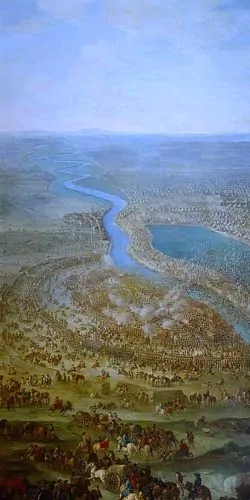
Mustafa II assumed the throne in February 1695 with an explicit commitment to personal leadership. The empire remained engaged in the prolonged conflict that had followed the failed siege of Vienna in 1683, and the new sovereign presented his own participation in campaigning as a means of reversing its fortunes. In an imperial statement preserved by Sarı Mehmed Paşa, Mustafa associated earlier reverses with rulers’ neglect of their duties and invoked Süleyman I as an example of the conduct he intended to recover. He also ordered more regular meetings of the imperial council, connecting military initiative with closer attention to administration. These declarations established expectations against which subsequent events could be judged. His opening position made the effectiveness of his government unusually dependent on demonstrating that his intervention could produce results.
The campaigns of 1695 and 1696 initially gave that undertaking substance, although their achievements fell short of recovering the territories lost during the preceding decade. In 1695, Ottoman forces captured Lippa and defeated a Habsburg army near Lugos, where its commander, Federico Ambrosio Veterani, was killed. Mustafa returned from the expedition with tangible evidence of success, supporting the presentation of a sovereign actively confronting the empire’s enemies. Conditions across the several fronts remained difficult, and Russia’s capture of Azov in 1696 exposed the limits of victories obtained elsewhere. The third campaign ended disastrously at Zenta in September 1697, when Eugene of Savoy attacked Ottoman troops during their crossing of the Tisza. Mustafa and part of the army had already crossed, while the infantry and Grand Vizier Elmas Mehmed Paşa remained exposed on the other bank. The grand vizier’s death accompanied the loss of soldiers and equipment on a scale that severely damaged the expedition. Zenta demonstrated how operational decisions could defeat a major mobilization despite the presence of the sovereign himself. The political importance of the disaster lay partly in this collision between the promise of restored military leadership and the outcome of a campaign conducted under Mustafa’s command.
Negotiation produced a settlement whose geographical extent made the losses impossible to dismiss as a temporary battlefield reverse. The agreements concluded at Karlowitz in January 1699 recognized Habsburg possession of most of Hungary and Transylvania, while leaving the Banat of Tımışvar under Ottoman control. Poland recovered Podolia, and Venice retained the Morea together with gains in Dalmatia. Russia’s position was settled separately through the Constantinople agreement of 1700, under which it retained Azov. These arrangements formalized the surrender of territories whose conquest had formed part of earlier Ottoman achievement. They also preserved extensive remaining dominions after a war fought against several adversaries. Assessing the government’s response requires holding together the severity of the concessions and the practical reasons for accepting a negotiated settlement that reduced immediate military demands.
Amcazâde Hüseyin Paşa, appointed grand vizier after Zenta, made securing peace a central responsibility of his administration. A member of the Köprülü family, he brought experience and connections associated with a household that had supplied several of the empire’s most powerful ministers. Ottoman representatives at Karlowitz included Râmi Mehmed Efendi, the chief secretary, and the imperial interpreter Alexander Mavrocordatos, whose participation illustrates the importance of specialized diplomatic knowledge in obtaining the settlement. Implementation required further work after the agreements had been signed. Commissioners had to establish boundaries, and the government needed to regulate conduct along frontiers where established practices of raiding could conflict with treaty obligations. Ali Yaycıoğlu’s examination of the Karlowitz settlement emphasizes the significance of these commitments to frontier security and continuing diplomacy. Their importance need not imply that Ottoman rulers had previously lacked an understanding of negotiated borders or that aspirations to recover territory disappeared in 1699. For Mustafa’s ministers, the immediate requirement was to make restraint effective among people whose activities could reopen hostilities. Maintaining peace became an administrative undertaking through which the government sought to protect what it still possessed.
The cessation of major hostilities also created opportunities for financial recovery. Extraordinary wartime burdens could be reduced, and Mustafa’s government achieved a degree of budgetary stabilization during the years following Karlowitz. Such improvement could coexist with delayed payments or unequal treatment among those dependent on government funds, since aggregate receipts reveal less about when money became available for a specific obligation. The continuing cost of military establishments made the management of expenditure a political question even when the overall fiscal position improved. The later appearance of unpaid personnel must be examined within those arrangements, with attention to allocation and payment procedures before conclusions are drawn about the condition of the treasury as a whole.
Fiscal adjustment had begun before the military defeat and the peace negotiations. The malikâne system, introduced in 1695, offered lifetime rights to collect designated revenues in exchange for a substantial initial payment followed by annual remittances. Its timing places it within the government’s efforts to finance the continuing war, although its development would extend well beyond that conflict. Şevket Pamuk interprets the arrangement partly as a form of longer-term borrowing, with future tax income supporting the advance obtained by the treasury. The rights involved concerned revenue collection, while the legal ownership of much agricultural land remained with the state. Longer contracts were also expected to give holders an interest in protecting the productive capacity of the taxpayers from whom receipts were obtained. The system connected the government to people able to supply capital, making their cooperation valuable to the operation of imperial finance. Those relationships could strengthen the treasury’s immediate resources while giving contractors a continuing interest in the revenues assigned to them. Their political implications emerged through the terms on which the government secured cooperation and the interests it created among those participating in collection.
Administrative recovery depended equally on relations within the highest offices of government, where the authority needed to carry out policy could become a source of contention. Amcazâde’s tenure included military and naval reforms, but his position deteriorated amid conflict with Feyzullah Efendi and attacks on members of his circle. His resignation in September 1702 ended an administration that had managed the transition from war to peace for approximately five years. The short tenure of his successor, Daltaban Mustafa Paşa, exposed further disagreement, including disputes over policy toward the Crimean frontier and the preservation of peace. Daltaban’s dismissal and execution in January 1703 were followed by the elevation of Râmi Mehmed Paşa, whose experience at Karlowitz had already established his importance in imperial affairs. Tahir Sevinç interprets Mustafa’s empowerment of Feyzullah as an attempt to restrain grand viziers associated with powerful political households. This interpretation gives the sultan a strategic role in the distribution of authority, while leaving open how successfully he anticipated the effects of his choices. A minister entrusted with extensive responsibilities needed sufficient influence to govern, yet that influence could become unwelcome to the sovereign who had authorized it. By early 1703, Mustafa presided over an administration that had negotiated peace and pursued significant adjustments, while struggles over the exercise of ministerial power had brought repeated disruption to its leadership.
Two Imperial Cities and the Meaning of the Sultan’s Absence

Edirne possessed a history of Ottoman sovereignty that gave residence there an authority of its own. Before the conquest of Constantinople, it had served as a principal dynastic seat, and its subsequent development preserved a substantial imperial presence. The palace complex and monuments such as Selim II’s great mosque identified the city with successive generations of Ottoman rule. Its location along the routes into the Balkans also made it useful for assembling expeditions and conducting affairs connected with the European provinces. A sultan residing in Edirne could draw upon established buildings and services, together with the city’s recognized place in dynastic history. Mustafa’s preference belonged within this geography of monarchy, even as it generated objections elsewhere.
The extended residences of Mehmed IV had strengthened Edirne’s position during the second half of the seventeenth century. Court movement in these decades reflected concerns about security in Istanbul as well as the attractions of the surrounding countryside. Tülay Artan connects the shift with the dangers posed by disturbances in the capital and the advantages that ministers could perceive in distancing the sovereign from competing interests there. Hunting became closely associated with Mehmed’s reputation, but the residences used by his entourage also accommodated the ordinary requirements of a travelling court. Ayşe Kaplan’s research on palaces and stopping places between Istanbul and Edirne places those buildings within a broader pattern of royal movement. This interpretation gives the architecture a governmental significance that accounts organized around the ruler’s recreation can obscure. Dynastic ceremony likewise flourished at Edirne, where the elaborate festivities of 1675 included the circumcision of the future Mustafa II and Ahmed III. Mustafa, who had also been born there, knew Edirne as a setting for the public affirmation of his family’s standing. His later attachment to the city developed within a court culture in which important occasions of monarchy had long taken place beyond Istanbul.
Movement between the two cities required a considerable supporting organization. Accommodation had to be prepared, and the household’s progress generated demands for transport and supplies along the route. A 1701 expenditure register examined by Büşra Bulut records costs associated with Mustafa and his family travelling from Istanbul to Edirne, alongside other expenses incurred during that year. Entries concerning furnishings and lighting help reveal the material work required to sustain the household at its destination. The document also cautions against imagining a single departure followed by an entirely static court, since the residences remained connected through repeated journeys and continuing expenditure. Officials and attendants participated in this movement, while couriers carried information between those who travelled and those who remained behind. Royal residence was maintained through a network of places whose usefulness depended on the services available along the way.
Istanbul still retained institutions through which imperial authority continued to operate. The grand vizier’s deputy represented the central government there, while military establishments and judicial offices remained active. Topkapı Palace preserved its institutional importance, and the city’s religious foundations continued to associate the dynasty with worship and public provision. Its markets and port also sustained demands that government could hardly disregard because the sultan was elsewhere. Residence at Edirne produced a distribution of responsibilities across the two cities, with important decisions requiring communication between officials separated by distance. The existence of a deputy demonstrated that Istanbul continued to be governed, while leaving open whether residents considered the arrangements sufficient.
For businesses closely connected with court consumption, the location of royal households carried direct economic importance. Orders for palace provisions and other supplies supported relationships whose value depended on repeated purchasing. The departure of senior officeholders could extend the effects beyond the sovereign’s immediate establishment, since their own households employed servants and commissioned goods. Some suppliers might pursue that business to Edirne, but doing so required resources and connections that others lacked. A workshop or shop tied to Istanbul could experience diminished opportunities even while commercial activity continued vigorously in other parts of the city. Sutton’s account of the grievances presented in 1703 records a claim that the court’s absence had brought widespread impoverishment. That assertion conveys the political force of perceived economic injury without establishing the scale of aggregate losses or proving that every occupation suffered equally. Istanbul’s trading relationships reached far beyond palace demand, making it hazardous to treat its entire economy as dependent on the resident court. The clearest connection lies in the exposure of identifiable interests to decisions about where the dynasty and its leading servants would spend their money.
Obtaining attention from powerful people created a further geography of advantage. Written petitions could travel to Edirne, and intermediaries could act for people unable to appear themselves. These possibilities still involved the practical difficulty of identifying someone willing and able to advance a request. A petitioner who needed to follow a case in person faced the expense of travel and the uncertainty of waiting away from home. Those already attached to the household at Edirne occupied a more favorable position for learning when a decision might be made or approaching someone capable of influencing it. Distance could accordingly sharpen inequalities between people seeking assistance through occasional representation and people whose daily employment placed them near influential officeholders. The issue concerned the effectiveness of available approaches to government as much as the continued existence of procedures for making them.
Anxiety became more acute when developments at Edirne suggested that a prolonged residence might become permanent. Contemporary chroniclers associated unrest with the construction of palaces for Mustafa’s daughters Ayşe and Safiye, together with reports that personnel from Istanbul’s Old Palace would be transferred. As Artan observes, such projects could be understood as preparations for a more durable dynastic establishment. Buildings intended for members of the imperial family gave observers something more substantial to interpret than the sovereign’s stated preference for a season in the countryside. Their implications extended to the servants and provisioning arrangements that a settled household would require. Rumors about the movement of personnel enlarged the possible significance of construction by suggesting that functions associated with Istanbul would follow the family. These indications support the seriousness of fears about lasting relocation, although they do not by themselves establish that a formal transfer of capital status had been proclaimed. For people concerned about their future position, expectations could influence conduct before any definitive institutional change occurred. The uncertainty itself made reassurance difficult, since maintaining Istanbul’s title as capital did not settle where the activities most valuable to its inhabitants would be concentrated.
The controversy brought competing assessments of the court’s location into a shared political dispute. From the government’s perspective, Edirne offered an established royal setting with advantages for handling affairs in the Balkans. Istanbul’s interested inhabitants could acknowledge those advantages while insisting that their own claims deserved greater weight. Appeals for the court’s return connected immediate losses with the standing of a city whose imperial institutions remained in place. Such appeals could attract people concerned about different aspects of residence, including those seeking employment and those seeking a better opportunity to present grievances. Their ability to express these concerns together depended partly on the distinction between an accepted period away and an absence whose ending could no longer be confidently anticipated. By the opening years of the eighteenth century, the dispute had made proximity to the sovereign a contested resource, with the benefits of residence increasingly judged against the disadvantages experienced by those left at a distance.
Feyzullah Efendi and the Concentration of Power
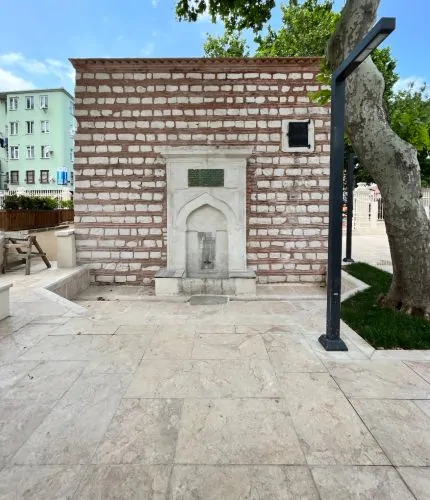
Feyzullah Efendi’s return to high office in 1695 restored a relationship formed decades before Mustafa became sultan. Educated within the scholarly circles of Erzurum, he entered court life through Vanî Mehmed Efendi, his teacher and subsequently his father-in-law. His responsibilities included instructing the young Mustafa and later the prince Ahmed, giving him an enduring association with both brothers. He had already served briefly as şeyhülislam in 1688 before dismissal and residence in Erzurum interrupted his career. Mustafa’s accession enabled his reinstatement, bringing an experienced scholar back into the governing establishment. The renewed appointment joined institutional standing to the confidence of a former pupil whose authority now extended across the empire.
The office he resumed carried responsibilities that had developed well before his tenure. As the senior figure in the Ottoman learned hierarchy, the şeyhülislam issued authoritative opinions on Islamic law and exercised substantial influence over appointments within the judicial and teaching establishment. These functions made the position important to people whose livelihoods depended on advancement through learned service. A recommendation could affect access to a prestigious judgeship, while recognition of rank influenced the prospects of those awaiting subsequent employment. Such responsibilities also brought the officeholder into sustained dealings with ministers who submitted proposals and secured the sovereign’s approval. Legal opinions and appointment decrees performed different functions, even when the authority behind one helped determine the content of the other. Feyzullah’s exceptional position developed through the combination of these established responsibilities with his personal influence over Mustafa. His intervention could reach decisions extending beyond the advancement of scholars, including the selection and removal of executive officials. The concentration involved the accumulation of influence across several procedures, each of which retained its own formal requirements.
A household of this standing extended considerably beyond the immediate family. The Ottoman kapı brought together dependants and clients whose service could continue after they obtained appointments elsewhere. Suraiya Faroqhi’s examination of Feyzullah places his conduct within a political environment in which prominent officeholders were expected to cultivate protégés and assist their entry into government. Successful appointments strengthened the patron’s position by placing trusted associates where they could provide information or support. Marriage offered another means of establishing durable connections, and Feyzullah’s family became linked with prominent learned households and members of the Köprülü circle. These relationships crossed the boundaries between professional establishments, helping explain how a scholar’s influence could extend into areas ordinarily associated with viziers. Michael Nizri’s household study develops this interpretation by examining the social organization and resources that sustained Feyzullah’s ascendancy.
Fethullah’s designation as his father’s intended successor gave the family’s advancement a more provocative dimension. Already holding the office of nakîbüleşraf, responsible for the recognized descendants of the Prophet, he received an imperial assurance that he should eventually become şeyhülislam. This was a prospective designation, not an accession to an office that his father still occupied. Its significance lay in the attempt to secure the family’s future possession of the highest learned position before a vacancy existed. Other sons also received substantial appointments, including Mustafa, whose service as judge of Mecca appears in his father’s autobiographical account. Feyzullah recorded these careers approvingly, presenting the success of his children alongside the honors bestowed upon himself. His account makes family advancement part of a satisfactory life of service, offering a revealing contrast with contemporary complaints about excessive favoritism. For those outside the household, the designation of a successor could suggest that the end of Feyzullah’s tenure would bring little improvement in their own prospects. Their concern extended beyond losing a single competition for employment to the possibility that a leading family would retain control of opportunities across generations. The arrangement joined rapid advancement in the present to an assurance about the future, making the scale of preferential treatment more difficult for rivals to accommodate.
Endowments supplied an additional basis for maintaining family standing. Feyzullah established institutions that supported teaching and worship, with foundations extending beyond the cities in which he personally resided. Nizri’s analysis of their deeds shows that these public functions operated alongside provisions reserving income and administrative responsibilities for members of the founder’s family. Property granted by the sultan could support institutions whose operation also sustained household beneficiaries. These arrangements gave material continuity to relationships otherwise vulnerable to the uncertain duration of office, while providing substantive services to people outside the family.
Contemporary accusations against Feyzullah must be understood within a learned establishment where family advantage already formed part of professional life. Established scholarly households possessed educational resources and connections that assisted their descendants long before his rise. The objections directed against him concerned the extent of that advantage and the influence used to maintain it. Training and seniority supplied grounds on which disappointed candidates could criticize accelerated promotion, although exclusion alone cannot establish that every rival possessed superior qualifications. Feyzullah’s own teaching career and legal scholarship gave him credentials that the language of favoritism can easily obscure. Those accomplishments provided no general resolution to disputes over the distribution of posts or the reach of his intervention in ministerial affairs. His household’s expansion made advancement in several areas appear dependent on association with a single powerful patron. The intended succession sharpened this perception by extending it beyond his lifetime. Competition for individual appointments had acquired a larger stake in how the governing elite renewed its membership and whether those excluded could reasonably expect another opportunity.
Religious Reform and the Grounds of Opposition
Religious instruction offered Feyzullah another means of addressing the disorders he perceived in Ottoman society. His initiatives belonged to a longer history of efforts to strengthen knowledge of Sunni belief and observance, rather than beginning an entirely new undertaking in 1702. Derin Terzioğlu’s research places such activity within the spread of instructional literature and attempts to define the religious responsibilities of ordinary Muslims. The term nasihat encompassed morally corrective advice whose implications extended beyond the transmission of information. Teaching people how to fulfill their obligations could become a governmental responsibility when neglect of those obligations was understood to endanger collective welfare. Feyzullah’s program gave this connection an ambitious administrative form, making the religious competence of subjects an object of organized intervention.
Orders issued in 1702 envisaged instruction across a wide social and geographical range. Nir Shafir reconstructs a sequence beginning with Bosnia, followed by directions concerning Albania and then a broader extension that included Istanbul. The material to be taught concerned the knowledge necessary for Muslim religious life, including the requirements of ritual prayer and other prescribed duties. Attention to children’s education formed part of a project that also addressed adults whose knowledge was considered inadequate. Rural and mobile populations were included within its intended reach, requiring instructors capable of working beyond established urban institutions. The authorities responsible for teaching were themselves to undergo scrutiny, with examination and possible replacement of those judged insufficiently prepared. That provision made the program relevant to people already employed within the religious establishment, since its implementation could affect their professional standing. It also raised a question about who possessed the competence to judge the knowledge of others. The envisaged system connected assessment of instructors with supervision of the population, giving the central authorities a means of seeking greater consistency in instruction. Its prescribed coverage was extensive, although the orders alone cannot establish how fully that ambition was realized.
Implementation depended on people whose willingness to carry out the instructions could not be taken for granted. Correspondence associated with Râmi Mehmed Paşa urged progress in Bosnia, indicating that issuing a directive did not ensure its satisfactory execution. The instructions also prescribed restraint, requiring teachers to avoid inflammatory preaching and ground their admonitions in respected religious learning. These qualifications matter because they reveal an effort to regulate the conduct of reformers as well as the behavior of those they addressed. The surviving record supports an organized initiative with difficulties of execution, while leaving the experiences and responses of many intended recipients uncertain.
Feyzullah’s involvement in Christian ecclesiastical affairs demonstrates another application of religious correction. Cesare Santus’s study of his relationship with the Armenian patriarch Awetik examines cooperation directed against the expansion of Catholic missionary influence. Awetik’s elevation in 1702 benefited from Feyzullah’s support, and the patriarch’s claim to office emphasized his ability to bring people back to Armenian Apostolic allegiance through admonition. The arrangement connected the authority of a Christian prelate with the interests of an Ottoman official who regarded Catholic expansion as a problem of imperial security. European diplomatic protection of missionaries gave disputes about religious allegiance an additional political dimension. Yet cooperation between the two men did not settle differences within the Armenian population or remove disagreements among Ottoman officeholders. Opponents challenged Awetik’s methods and his reliance on powerful patrons, while negotiations with Catholics complicated the application of a consistent policy. Religious affiliation mattered here through concrete disputes over pastoral authority and the treatment of converts. The resulting conflicts show how an initiative presented as restoration of proper communal order could expose its sponsors to accusations about the means by which they sought obedience.
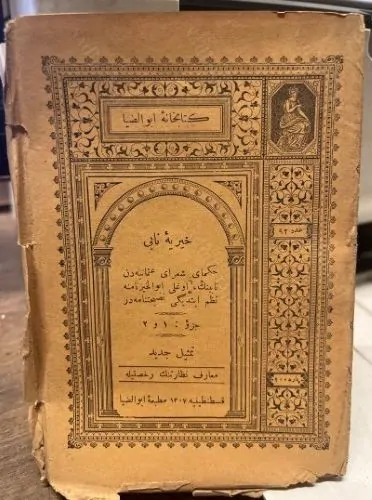
Nâbî’s Hayriyye, composed around 1701, presents a different relationship between moral correction and public authority. Addressing his son, the poet combined guidance on personal conduct with severe criticism of the dangers and abuses attending official life. His treatment of judges and other officeholders made ethical judgment applicable to the very people entrusted with administering society. Shafir reads the work as an alternative understanding of nasihat, in which cultivation of the self could sustain a searching criticism of public institutions. Nâbî’s connections with patrons, including Feyzullah, prevent an uncomplicated division between an independent critic and the world he described. The poem supplies evidence of contemporary moral argument, without establishing that its author directed the opposition of 1703 or that insurgents shared his recommendations.
Accusations against Feyzullah’s religious standing introduced a more aggressive form of criticism. Shafir identifies hostile descriptions that represented him as a heretical mufti and connected him with discrediting Persian or Kizilbash associations. Such language attacked the credibility of a man whose position authorized him to pronounce upon the religious obligations of others. Its significance lies in the attempt to deny him the standing his office claimed, rather than in its reliability as a description of his beliefs. References to ancestry or origin could be made to imply doctrinal deviation without demonstrating it. These allegations also transformed objections to conduct into assertions that the person directing correction was himself religiously suspect. Their circulation among different kinds of observers gives them importance, but does not establish a single theological position shared by everyone hostile to Feyzullah. The appeal of an accusation could vary according to the grievance of the person repeating it. A charge useful against a powerful adversary might express conviction, calculated hostility, or some combination whose proportions cannot now be recovered.
The religious program adds a substantive dimension to the explanation of opposition while imposing limits on what can be concluded. Scrutiny of teachers could threaten established reputations, and intervention in communal affairs could generate resistance among people who objected to its purposes or methods. These possibilities deserve consideration alongside the appointment disputes examined earlier, since material disadvantage and religious disagreement could reinforce one another. The available evidence does not demonstrate that the instruction campaign directly caused the military outbreak in July 1703. Shafir’s interpretation is strongest as a reason to investigate hostility that accounts centered on family advancement leave insufficiently explained. Nor does resistance to Feyzullah establish rejection of religious regulation in general, since opponents could invoke their own understanding of proper observance against him. His initiatives made the authority to correct others a matter of contention, exposing the reformer’s credentials and judgment to the standards he sought to apply. Religious reform entered the crisis through that disputed exercise of authority, not merely through the vocabulary attached to it.
Unpaid Soldiers and the Outbreak in July 1703
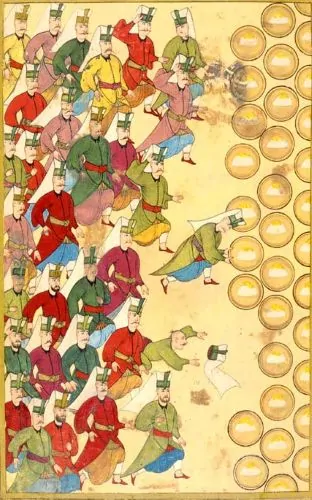
Preparations for an expedition to western Georgia brought the government’s difficulties with military payment into an immediate confrontation. The force being assembled included cebecis, the armorers responsible for maintaining weapons and military equipment, whose service was required alongside other troops. Ottoman intervention concerned disputes within tributary principalities where the court sought to uphold its authority over local rulers. Orders for deployment reached men who were still waiting for compensation already owed to them. Their refusal to embark made further service contingent upon settlement of that existing obligation, placing the enforcement of military commands directly against the government’s handling of their remuneration.
The arrears had an administrative history extending into the spring. Abou-El-Haj reconstructs a shortage in April associated with the diversion of money to other services, followed by an unsuccessful effort to complete payment in May. Contributions from the sultan’s private treasury supplied an additional resource without resolving the outstanding claim. Allegations of embezzlement then focused responsibility on the corps commander, Hasan Ağa, and his assistants. Archival material examined by Tahir Sevinç places the investigation and replacement of the commander in May, establishing these proceedings as antecedents to the July disturbance. Removing officials identified with mishandled funds did not itself ensure that the men received what they expected. It also supplied a concrete basis for questioning the conduct of those responsible for disbursement. Some accounts subsequently attributed encouragement of the cebecis to their new commander, Boşnak İbrahim Ağa, acting in association with ministerial opponents of Feyzullah. Such allegations place the dispute within existing political rivalries, but the documented payment failures preceded the public outbreak and require explanation in their own right.
On 17 July, the cebecis’ refusal developed into collective armed resistance. They secured themselves within the armory and bound their continued assembly to the receipt of their arrears. Silâhdar’s account describes an oath against dispersal before full payment, giving their demand the force of a mutual commitment. He also reports violence against officers within their own establishment who opposed their course, indicating that discipline among the protesters could involve compulsion. Occupation of the armory provided immediate protection and access to military resources, while making it increasingly difficult to represent their conduct as an ordinary appeal through superiors. Remaining together now served both the pursuit of payment and protection against punishment for defiance.
An early attempt at mediation left room for a financial settlement. Hâşimzâde Murtaza Ağa, the sekbanbaşı and a senior Janissary officer, approached the armorers and sought to establish their demands. The chronicle passages compared by Özgür Oral describe the men insisting upon their pay, after which Murtaza obtained money through the Istanbul deputy, Abdullah Paşa. The available sum came from funds associated with the palace gatekeepers’ wages, illustrating the provisional character of the arrangement. According to these accounts, the cebecis initially accepted it with an undertaking that the remainder would follow. They then returned the money and abandoned that agreement amid encouragement to seek support beyond the armory. Sutton’s report also records a rejected payment offer, although his compressed presentation supplies less of the preceding negotiation. The sequence preserved in the chronicles is important because acceptance of a partial sum shows that bargaining remained possible during the opening exchanges. Its reversal also shows how quickly agreement could become vulnerable to arguments about the dangers of dispersal and the advantages of continuing together. By this stage, securing payment involved decisions about the soldiers’ collective safety as well as the amount obtainable from the authorities.
The movement toward the Janissary quarters widened the practical possibilities available to the cebecis. On 18 July, they proceeded through Istanbul toward Et Meydanı, the parade area beside the Janissary New Barracks, where contact with a much larger military establishment might protect them from isolation. The gates had been closed against them, demonstrating that cooperation between the corps could not be assumed. The armorers and people accompanying them forced access, but entry into the square did not immediately settle the allegiance of the Janissaries in their quarters. Officials still sought to separate the participants and preserve troops capable of suppressing the disturbance. Control of entrances and assembly places mattered to whether the original detachment could be contained.
Murtaza’s changing role exposes the speed with which those efforts deteriorated. Having first acted as an intermediary, he subsequently worked with Abdullah Paşa to assemble forces loyal to the government. Accounts of the opening confrontations describe difficulties in coordinating these preparations, including the closure of palace gates when Murtaza sought access with troops. More decisively, men expected to oppose the cebecis proved unwilling to fight fellow soldiers. Their refusal deprived the officer of the dependable support required to carry out suppression and left him exposed to his opponents. Within days of the outbreak, Murtaza was captured and killed, with accounts differing over the precise circumstances and sequence of his final confrontation. His death eliminated a senior officer who had attempted both accommodation and coercion, sharply reducing the government’s ability to recover control through its existing military leadership in Istanbul. Abdullah’s subsequent withdrawal into hiding compounded that loss. The cebecis had survived the immediate threat of forcible dispersal, while the breakdown of command allowed participation to extend beyond the men whose unpaid service had initiated the disturbance.
The Making of an Insurgent Coalition
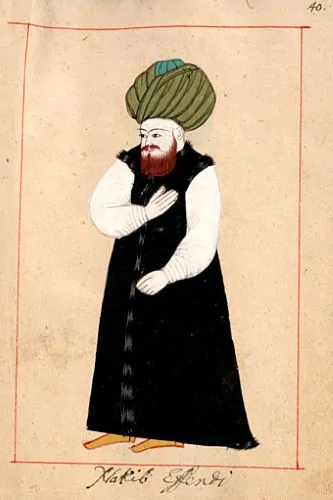
Military participation expanded through the addition of formations whose functions and relationships differed from those of the initiating corps. Contemporary accounts name mounted troops and artillerymen among those joining the movement, alongside members of the palace guard establishment. Their involvement increased the insurgents’ resources while complicating any attempt to restore obedience through a single chain of command. Cooperation could also be secured through pressure, as illustrated by reports that the bostancıbaşı Mehmed Ağa was compelled to associate himself with the rising. The participation of a commander or contingent needs to be distinguished from a unanimous decision by every member of an establishment. As the number of implicated units grew, suppressing the disturbance became increasingly dependent on soldiers whose own associates might already be among its participants. Religious and learned networks extended recruitment beyond these military connections. Seyyids, who claimed descent from the Prophet, appear as active figures in the mobilization, together with medrese students and members of the ulema. These descriptions identified different kinds of standing and should not be treated as interchangeable names for a single body. A claim of distinguished descent did not itself establish a place within the learned bureaucracy, although an individual could possess both qualifications. Students likewise occupied a position distinct from that of scholars already holding senior appointments. Their participation brought people with different expectations into the same gathering, where familiarity with religious language could assist the presentation of a shared cause. Sutton records appeals reaching Galata and Pera and crossing the Bosphorus to Üsküdar, indicating recruitment across the wider urban region. Such activity enlarged the territory from which support could be drawn and gave the meetings at the insurgents’ assembly places a significance extending beyond their immediate surroundings.
Established office supplied a means of recruitment whose effectiveness could survive the unwillingness of its holder. Seyyid Mahmud Efendi, the judge of Istanbul, was reportedly brought forcibly to Et Meydanı and required to address an invitation to other scholars. The use of his authority made attendance appear connected with an acknowledged position in the judicial establishment. Accounts of the summons also describe threats against those who failed to appear, including the prospect of being brought by force or having their houses plundered. Scholars assembling in response arrived under circumstances that varied considerably. Some had reasons of their own to support the movement, while others had immediate grounds for fearing refusal. The resulting attendance gave the insurgents access to learning and recognized status, but could not establish the voluntary agreement of everyone whose presence enhanced their standing.
Urban participation also extended beyond people whom the sources identify through military service or learned rank. Merchants and artisans brought concerns about the conduct of government into an assembly initially formed around a military demand. Their entry could occur through occupational relationships, while people without a prominent position in an established organization could join through the opportunities created by public gathering. Marinos Sariyannis’s work on Ottoman crowds draws attention to the political activity of such participants, whose importance can disappear when a narrative concentrates upon titled officials. Chroniclers’ dismissive descriptions of lesser-known people cannot settle whether those people possessed considered aims or exercised influence. Nor does a person’s occupation establish that an entire guild had authorized his conduct. Formal participation by occupational bodies and the actions of individual members must be examined separately, especially where established interests encouraged caution about prolonged disruption. A merchant concerned about insecurity could favor corrective action while remaining apprehensive about the assembly claiming to pursue it. The movement’s growth rested partly on its ability to accommodate these qualified forms of support, even when participants differed about how far action should proceed.
The distinction between soldiers and civilians was itself complicated by the social organization of Istanbul. Cemal Kafadar’s research shows how military affiliation could coexist with employment in trades, bringing regimental relationships into contact with commercial activity. A participant might accordingly have interests in military remuneration while also depending on the conditions under which a shop or workshop operated. Such overlap provided practical opportunities for communication and recruitment, although occupational organizations retained interests that could conflict with those of particular soldiers. Shared connections could make cooperation possible without removing the differences of status and livelihood through which people assessed the risks of involvement.
Individual histories disclose further reasons for entering the alliance. Karakaş Mustafa Ağa, a dispossessed timar sipahi living in Üsküdar, had reportedly attempted to obtain redress in Edirne after losing his livelihood through the intervention of a functionary attached to Feyzullah. His unsuccessful approach supplied a grievance that the rising gave him an opportunity to pursue. Contemporary accounts subsequently credited him with organizational ability, showing how someone outside the highest offices could acquire responsibilities within the movement. His case connects a personal injury with the practical work of sustaining collective action. Other participants brought experience gained in military command or the households of senior ministers, making their previous careers useful to an undertaking that required coordination. Abou-El-Haj’s reconstruction also identifies Köprülü connections among people serving on opposing sides. Family association supplied relationships on which individuals could draw, but did not dictate a common political choice. Recruitment followed intersecting careers and specific disputes, producing alignments that a simple division between the court and one opposing household cannot adequately explain.
Cooperation among these participants required decisions about conduct that could expose disagreement within the assembly. The controversy over Friday prayers on 20 July revealed uncertainty about how opposition to Feyzullah affected the position of the sovereign. Some participants understood their grievance as directed against the şeyhülislam and accordingly saw no sufficient reason to interrupt the usual observance. Others regarded the government’s failures as grounds for withholding it. The question was referred to Paşmakçızâde Ali Efendi, a senior jurist present at the gathering, whose attributed response made the ruler’s justice a condition relevant to the propriety of the prayers. That consultation demonstrated the influence scholars could exercise over the conduct of armed participants, while leaving the implications for Mustafa open to further argument. The coalition had acquired people capable of making authoritative judgments about the obligations of government. Its members could act together while continuing to dispute how those judgments should shape their next decisions.
Governing Istanbul against the Sultan’s Government
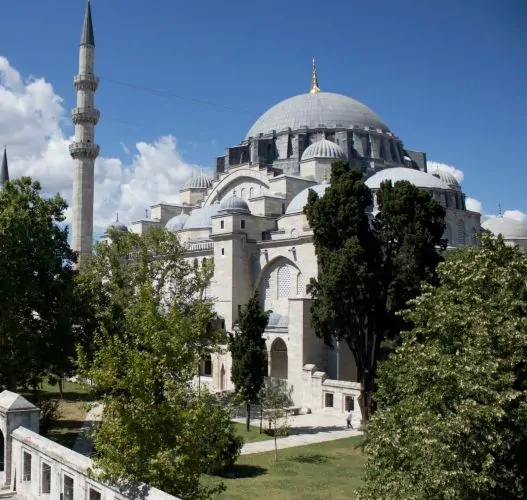
The collapse of the court’s command in Istanbul left the insurgents with responsibilities that protest alone could not discharge. Soldiers required commanders, and decisions taken in the assembly needed officers capable of enforcing them beyond its immediate surroundings. Initially, the appointments could be presented as measures to restore an interrupted administration. Çalık Ahmed Ağa assumed the position of sekbanbaşı left vacant by Murtaza’s death, while Sohrablı Ahmed Paşa, also known as Kavanoz Ahmed, became the sultan’s deputy in Istanbul in place of the absent Abdullah Paşa. Neither appointment initially required the declaration that Mustafa had forfeited his throne. Yet both established a dangerous precedent for the court, because men selected under insurgent pressure were beginning to exercise offices whose occupants ordinarily derived their commissions from the ruler.
Appointments within the learned establishment carried a more direct challenge, since Feyzullah remained in office at Edirne while the Istanbul assembly selected someone to replace him. Paşmakçızâde Ali Efendi was its first choice, but he subsequently sought release on grounds of illness, and İmam Mehmed Efendi, himself a former şeyhülislam, succeeded him as the insurgents’ nominee. The substitution mattered beyond the personal standing of either scholar. It showed that the movement was developing a procedure for replacing its own senior representatives when they could no longer, or would no longer, serve. Nominations to other leading learned offices extended this arrangement into a recognizable alternative administration. On July 22, Çalık Ahmed’s elevation to the command of the Janissary corps marked a further advance beyond the earlier practice of filling vacancies. These developments should not be compressed into a single founding moment, as Sutton’s account tends to do. Their sequence reveals officials gradually acquiring powers that exceeded the limited justification under which the first appointments had been made. Familiar titles gave the arrangement institutional credibility, but they also exposed the widening discrepancy between the insurgents’ declared respect for the sultan and their capacity to determine who would govern without awaiting his decision.
Commercial regulation made this competing command visible to inhabitants who never attended the assembly. Shops were ordered to remain closed, with exceptions for businesses supplying food; the anonymous chronicler identifies bakers, butchers, and grocers, while Silâhdar also mentions public baths. The exceptions suggest an attempt to sustain necessary services while preventing ordinary commercial life from absorbing the movement’s participants or making the emergency appear finished. Closure placed the costs of continued resistance upon shopkeepers and customers as well as those bearing arms. A merchant might welcome the prospect of political change while finding the means used to secure it increasingly burdensome, so obedience to these orders cannot be treated as a reliable measure of enthusiasm.
Restrictions on movement reveal more sharply whose conduct the insurgent leadership believed it could regulate and whose presence it considered undesirable. Sutton reports that Christians were prohibited from entering Istanbul and that Christian residents of the walled city, Galata, and Pera were forbidden to leave their homes except to obtain provisions. Even this permission was qualified by prohibitions on moving in groups or speaking with people encountered outside. Ottoman accounts also describe restrictions affecting women and children, although the surviving reports do not establish that every measure operated identically throughout the crisis. Such regulations narrowed access to streets that armed participants were using to conduct political business. The government taking shape around the assembly did not offer the city’s entire population an equal opportunity to join its deliberations or witness its proceedings. Its leaders sought a public gathering large enough to demonstrate strength while controlling the surrounding population and limiting unsupervised encounters. The evidence does not securely establish whether every restriction arose from fears of disorder, suspicion of communication, or assumptions about who properly belonged in the assembly. What it does establish is a selective distribution of freedom within the city, enforced by men whose own ability to assemble depended upon resisting orders from the established government.
Protection of property supplied another means of demonstrating administrative competence. Guards were assigned to the bazaars, making the preservation of commercial premises an insurgent undertaking even while their owners were prevented from conducting normal business. The anonymous chronicler also describes a public announcement concerning a lost purse and presents the conduct of the gathering as unusually orderly. As Marinos Sariyannis emphasizes, this testimony is striking because the writer could disparage the social standing of participants while acknowledging behavior inconsistent with a simple picture of indiscriminate criminality. The incident cannot establish that theft or intimidation disappeared from Istanbul, especially when other episodes reveal the use of threats against selected opponents. Its significance lies in the political value attached to restraint. Disciplined conduct helped the insurgents argue that they possessed the capacity to protect inhabitants and deserved recognition as people pursuing justice.
The administrative experiment changed the circumstances in which any accommodation with Edirne would have to occur. The assembly now had officeholders whose standing depended upon decisions made during the uprising, alongside regulations whose enforcement demonstrated that the court’s instructions no longer possessed an uncontested claim upon obedience. Ending the disturbance would require more than persuading individuals to leave a meeting place. It would also require deciding what became of appointments made without prior royal authorization and whether those who had enforced insurgent orders could safely return to ordinary service. These were practical obstacles to reconciliation even for participants who still regarded Mustafa as their legitimate ruler. They also gave leaders reasons to preserve the machinery through which they could negotiate collectively, since dispersal would surrender the means of securing compliance with any settlement. The emerging administration should not be mistaken for evidence of an agreed doctrine that sovereignty belonged to the assembled population. Its offices remained Ottoman, and its claims rested heavily upon restoring lawful government. What had changed was the location of effective decision making. Istanbul’s insurgents were increasingly determining how legitimate administration should operate while withholding obedience from the men whom the sultan had authorized to conduct it.
The Petition and the Possibility of Reconciliation
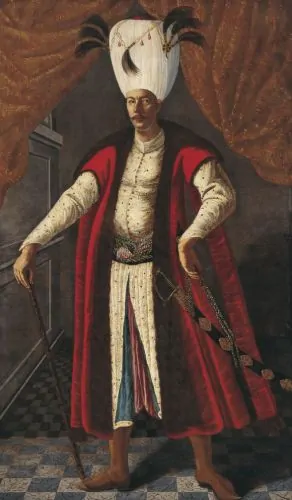
On Saturday, July 21, the insurgents converted their grievances into a collective written address to Mustafa II. The petition was read before the assembly and reportedly authenticated by approximately three hundred signatories drawn from the participating groups. Its form belonged to an established Ottoman practice through which communities presented complaints to the ruler, whose superior authority was supposed to provide relief against abuses committed by his servants. As Halil İnalcık’s work on petitioning demonstrates, approaching the sovereign for redress was an acknowledged part of government. The circumstances in Istanbul gave that procedure an exceptional force, since the petitioners remained armed and had already displaced royal appointees. By submitting a document, they specified actions through which Mustafa could respond, making their demands something more definite than a general denunciation of his administration.
Agreement on the wording required negotiation within the gathering itself. Accounts of the drafting describe an initial appeal for the sultan’s return being rejected as excessively deferential, with the proposed text torn up and a more commanding formulation demanded. Sutton similarly reports that listeners objected to language that merely requested Mustafa’s presence in Istanbul. The narrative versions examined by Özgür Oral preserve an even sharper revision, requiring the ruler to arrive within five days and threatening that, if he failed to come, he should surrender the authority entrusted to him. Their use of emânet, meaning a trust or entrusted charge, placed his possession of sovereign responsibility under an explicit condition. It does not, by itself, identify physical regalia that he was expected to dispatch. These formulations also survive through chroniclers whose accounts have textual relationships, rather than as independently preserved copies of the signed original, so their differences should remain visible. Even with that qualification, the petition cannot be characterized as an uncomplicated expression of confidence in Mustafa. Its reported language already made his continued tenure vulnerable to refusal. What remained available was his acceptance of the demands, an outcome distinguishable from a decision to remove him regardless of what he did.
Feyzullah’s surrender was central to the proposed settlement, although the accounts differ over the treatment specified for his family and dependants. Abou-El-Haj emphasizes the requirement that he be delivered alive, while Sutton describes a demand for his trial in Istanbul according to Islamic law. Removing him from office would leave open questions about punishment and the influence he might continue to exercise; delivering him into the petitioners’ reach would transfer those questions to a setting dominated by his opponents. The insistence upon legal proceedings supplied a recognizable justification for that transfer, without guaranteeing an impartial hearing. For Mustafa, compliance would involve surrendering control over the fate of the adviser whose position he had sustained.
The choice of messengers provides a different indication of how the petitioners expected their demands to be received. The delegation included Türk Hasan Efendi, whose earlier palace service and connections with supporters of Mustafa’s father, Mehmed IV, made him more than an anonymous spokesman for the gathering. Taşçızâde Abdullah Efendi, another learned participant, had preached during Mustafa’s campaigns and was also known at court. Abou-El-Haj interprets these backgrounds as reasons for their selection, since personal familiarity might facilitate an audience and make it harder to dismiss the delegation as consisting entirely of habitual enemies of the dynasty’s reigning branch. That interpretation is persuasive as an explanation of the available intermediaries, though it cannot establish how warmly Mustafa was expected to receive them. Representatives of the military divisions and the city’s trades accompanied the learned envoys, reportedly with two men selected from each participating division. Their presence gave the mission a broader representative character than a private approach by a few prominent scholars would have possessed. Travel allowances were provided before the delegation departed that afternoon, giving the collective undertaking practical support as well as formal authorization. The envoys were being sent to obtain an answer for the assembled petitioners, whose acceptance would remain necessary for any agreement to take effect.
Reconciliation was still possible within the petition’s declared terms, but those terms left Mustafa little freedom to define an adequate remedy himself. Compliance required visible acts, especially his return and Feyzullah’s delivery, whose performance could be assessed in Istanbul without relying solely upon assurances from Edirne. The short deadline expressed impatience with postponement while reducing the interval available for clarification or compromise. Sutton’s information about concealed plans among the leadership remains a reason to doubt that every organizer would have accepted a settlement preserving Mustafa. It does not establish that every signatory had already rejected such an outcome, just as participation in petitioning cannot establish personal trust in the ruler. The document’s political significance lay in making conditional allegiance a collective position that could accommodate different expectations about what would follow. Some participants could anticipate correction, while others could regard noncompliance as the occasion for pursuing removal. Mustafa was still being addressed as the sovereign capable of resolving the grievance, but the petition warned that his refusal could make his own possession of authority the next matter to be decided.
Arrested Envoys and the Failure of Access

Messages leaving Edirne initially addressed an Istanbul administration whose capacity to carry out instructions was rapidly disappearing. Surviving correspondence urged the kaymakam to consult religious dignitaries and other dependable supporters, proceed cautiously, and send frequent reports. These letters assumed that the disturbance could still be managed through officials cooperating within the established hierarchy. Another exchange concerned the prompt dispatch of an intermediary who could explain developments accurately, showing that the government was seeking information through several channels. Yet a courier carrying instructions toward Istanbul stopped at Silivri after learning how far the uprising had spread. Communication was already failing in a practical sense, as orders continued to invoke arrangements that events had overtaken. This mismatch helps explain the court’s uncertain response without requiring the assumption that everyone at Edirne possessed the same information or understood its implications equally.
The delegation’s approach offered an opportunity to hear the petitioners’ demands through their appointed representatives. On July 24, an advance party reached Edirne to announce the mission’s arrival, bringing notice to the grand vizier’s establishment before the main body entered the city. What followed reversed the purpose of that approach. Forces commanded by the Edirne bostancıbaşı intercepted the envoys near Havsa, and accounts describe their subsequent confinement at Eğridere. The precise dating of the interception varies, as do descriptions of the petition’s destruction, which some narratives represent as burning and others as tearing. Those differences prevent the construction of an entirely uniform account from every surviving detail. The detention itself rests on firmer evidence. Abou-El-Haj identifies an entry in the imperial order registers naming Şaban and Süleyman among the military representatives placed under custody with members of the Istanbul mission. That administrative record supports the conclusion that the seizure became an official act involving government personnel and places of confinement. It cannot establish the private conversation that produced the order, or prove that Mustafa had been deliberately excluded from the decision. What had certainly failed was the delegation’s intended approach to the ruler, whose government had taken control of its members before they could present their case as planned.
Officials at Edirne had reasons to regard the approaching mission with apprehension. Its members represented an armed gathering that had displaced the sultan’s servants, and the killing of Murtaza had supplied a powerful argument for treating the disturbance as rebellion. The petition’s ultimatum could also be understood as an attempt to dictate royal decisions under threat. These circumstances make a security explanation for the interception plausible, although plausibility does not establish either its legality or its wisdom. By detaining the messengers, the authorities converted a dangerous opportunity for negotiation into an additional grievance that would itself require an answer.
Accounts of Mustafa’s discovery of the arrests often explain the episode through the same concentration of influence that the insurgents were challenging. In one familiar version, Feyzullah directed the interception while the sultan remained insufficiently informed; when Mustafa learned what had happened, he angrily demanded an explanation from Râmi Mehmed Paşa. The grand vizier reportedly answered by recalling the ruler’s own instruction that he should follow Feyzullah’s guidance. Another account, discussed by Tahir Sevinç, gives Mustafa’s sister Hatice Sultan a role in bringing disturbing information into the dynastic household, with Moralı Hasan Paşa subsequently confirming developments to the ruler. These stories assign different people the task of overcoming the sultan’s isolation. They also distribute responsibility in politically useful ways, presenting Mustafa as deceived and Râmi as constrained while concentrating blame upon the şeyhülislam. Their explanatory neatness warrants caution. Knowledge that trouble existed in Istanbul was different from knowledge of its scale or the treatment of its representatives, and the evidence does not permit those distinctions to be reduced to a single moment of revelation. Even if Mustafa’s anger is accepted as authentic, it demonstrates a response after the event rather than proving his complete ignorance beforehand. His reported dependence upon others for an accurate account remained damaging to the image of a ruler able to supervise his own government.
News reaching Istanbul acquired force through successive reports whose evidentiary value was unequal. In the sequence reconstructed from Silâhdar, a bostancı associated with the advance party returned after receiving a warning that arrests were being prepared. He could describe the circumstances of his escape, but his information about the main delegation’s subsequent treatment was not necessarily eyewitness testimony. A cavalryman who had accompanied the mission later claimed to have witnessed its seizure near Havsa, supplying a more direct account. He also alleged an intention to kill the delegates, a charge that goes beyond what the surviving administrative evidence establishes. Further confirmation reportedly came from Mustafa Efendi, the grand vizier’s secretary, who acknowledged having written the order for their arrest and removal. The significance of that admission lay in connecting accounts of coercion to the government’s own documentary procedures. Suspicion could no longer be dismissed simply as something generated within the insurgent gathering. Still, the arrival of several reports did not make every allegation contained in them equally reliable, and their reception gave opponents of accommodation material with which to challenge reassuring messages from the court.
The arrests changed the question that an acceptable royal response would have to resolve. Alongside the original complaints stood the government’s treatment of people sent to obtain a hearing, making the safety of intermediaries an immediate political concern. Negotiation continued afterward, so this episode did not permanently close communication between the two cities. It weakened the presumption that an official approach would produce an intelligible answer without exposing its bearers to punishment. For participants willing to distinguish Mustafa from the misconduct of his advisers, the episode demanded evidence that he could restrain those acting through his authority. For those already hostile to him, it supplied an argument that seeking correction through the existing court merely returned complainants to the control of the people they accused. Neither interpretation depended upon proving that Mustafa had personally ordered the seizure. The damage arose from the observable conduct of his administration, which made access to the sovereign appear contingent upon the permission of officials whose behavior the petitioners wanted him to judge.
Why Dismissing Feyzullah Did Not End the Rebellion
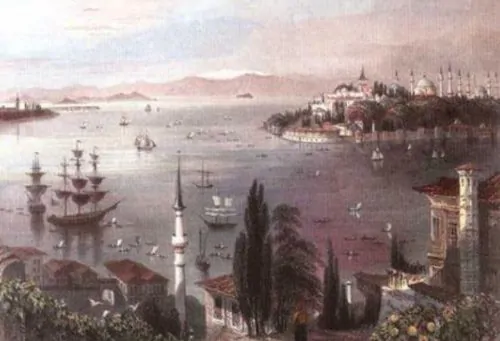
Feyzullah’s dismissal in late July altered the composition of Mustafa’s government without resolving the dispute over who could hold its former chief adviser accountable. The court arranged for his departure from Edirne while withholding him from the Istanbul assembly that had demanded his delivery for trial. Removal from office and surrender to his opponents remained separate decisions, although reports of dismissal could make them appear parts of a single concession. The distinction mattered because the petitioners had sought a judgment upon his conduct, rather than merely an interruption of his official duties. Mustafa retained control of the means by which that judgment might occur. His response conceded that Feyzullah could no longer remain openly at the center of government, while preserving royal discretion over what would happen to him afterward.
Correspondence sent to provincial governors reveals how narrowly the administration presented this retreat. A circular dated July 29 explained the disturbance through disagreements between Feyzullah and Istanbul’s ulema concerning senior appointments. It described the remedy as his relocation elsewhere to prevent further disorder and instructed recipients to disregard unfavorable reports circulating through other channels. This explanation contained an identifiable element of the conflict, but it reduced a confrontation involving the capital’s military and inhabitants to a manageable disagreement within the learned establishment. The document also employed the language of transfer rather than announcing a judicial finding against Feyzullah. Such wording helped protect the government’s standing before officials whose continued cooperation it required. Abdülkadir Özcan additionally notes that a reassuring imperial message addressed to the dismissed şeyhülislam encouraged the impression that Mustafa’s separation from him was incomplete. These indications justify doubt about the extent of the intended break, though they do not establish a secret promise of eventual reinstatement. Abou-El-Haj’s suggestion that Mustafa hoped to recall his mentor remains an interpretation of the court’s conduct. The securely documented position is more limited. The government was removing Feyzullah while resisting an account of events that would acknowledge the full force of the accusations against him.
Other measures gave the opposition more substantial grounds for considering an agreement. The court accepted nominees selected in Istanbul, incorporating decisions made during the uprising into the exercise of royal patronage. A surviving letter of August 1 informed İmam Mehmed Efendi that an imperial rescript had entrusted the şeyhülislamate to him and urged him to come to Edirne because important affairs required his judgment. This was a documented grant of office, carrying more institutional substance than a vague assurance that complaints would receive attention. The invitation also sought to restore the personal relationship between sovereign and appointee through which such an appointment ordinarily became effective. For the recipient, accepting recognition and accepting the risks of appearing at Edirne had become distinguishable choices.
Agreement also depended upon which side would act first. Mustafa made his return to Istanbul conditional upon the dispersal of the insurgent gathering, placing the restoration of ordinary obedience before the personal journey demanded of him. From the ruler’s perspective, entering a city controlled by armed opponents could mean submitting his household and government to decisions made under coercion. Requiring dispersal was compatible with a serious desire to resume administration while recovering freedom of action. For those assembled in Istanbul, dispersal would remove the collective force through which they expected to secure fulfillment of the court’s promises. Neither side offered the other a convincing reason to accept that exposure. The government’s concurrent military preparations made the difficulty sharper, since orders summoning provincial commanders demonstrated that Mustafa was preparing an alternative to accommodation. Those preparations do not prove that negotiation was fraudulent; a ruler uncertain of his opponents’ intentions could seek an agreement while providing for its failure. Yet the troops being summoned also gave insurgent leaders a concrete basis for arguing that compliance with the demand to disperse might leave them vulnerable to punishment. The dismissal of one official could not settle a disagreement about the conditions under which either party would relinquish its capacity to compel the other.
Türk Hasan’s reception after the delegation’s eventual release demonstrates that reconciliation was also being obstructed within Istanbul. The returning representatives had obtained an audience with Mustafa and brought back a conciliatory account of the court’s response, but their earlier representative standing no longer guaranteed them a sympathetic hearing. Chronicles describe accusations that royal gifts had compromised the mission, allegations that should not be converted into established evidence of bribery. Türk Hasan was reproached for behaving as a mediator rather than as an unequivocal partisan of the insurgents, threatened, and ordered to remain near his home. His treatment shows how an intermediary could lose authority precisely because he presented grounds for compromise. It also prevents the continuation of the uprising from being explained entirely through Mustafa’s failures or the deficiencies of his concessions. Leaders in Istanbul helped determine which information would be accepted and whether negotiation remained politically permissible. Feyzullah’s dismissal failed to end the rebellion through this combination of incomplete compliance at court and increasingly restrictive judgments among its opponents about what could count as an acceptable settlement.
Deciding That Mustafa Had to Go
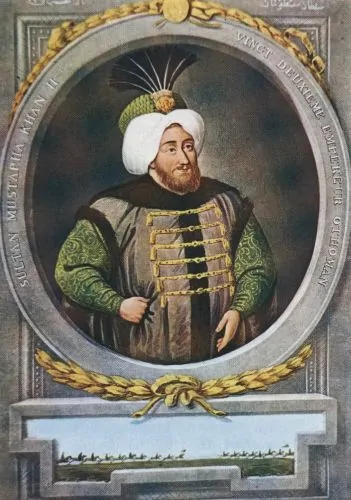
Mustafa’s opponents increasingly treated his own decisions as evidence that the failures of government could no longer be corrected through changes of personnel. An anonymous chronicler preserves an accusation that made this judgment through a pointed comparison. The body of one of the sultan’s deceased sons had reportedly reached Istanbul from Edirne within two days, while Mustafa had failed to appear within the period specified by the petitioners. A funeral convoy and a royal journey presented different practical requirements, so the comparison cannot establish that his delay lacked any defensible explanation. Its political purpose was to represent continued absence as a choice revealing the ruler’s priorities. What had begun as criticism of the arrangements surrounding the sovereign was becoming an indictment of his willingness to discharge the responsibilities attached to his position.
Three legal opinions preserved in the anonymous history gave that indictment a form capable of authorizing action. The first described a ruler who abandoned his entrusted responsibilities under the pretext of hunting, oppressed his subjects, and dissipated public resources without lawful justification. Its answer denied that such conduct possessed religious sanction. The next question addressed the standing of Muslims who rose against an unjust imam, meaning the ruler of the community, to bring his injustice to an end; the response rejected their classification as a seditious group. A third opinion denied the propriety of assisting that ruler against those resisting him. These formulations challenged both Mustafa’s claim to obedience and the justification available to men who might defend him. Their effectiveness depended upon accepting the descriptions embedded in the questions, which already characterized the sovereign as unjust and his opponents as seeking a legitimate remedy. The opinions supplied legal reasoning for that characterization rather than independently establishing the truth of every accusation. As Marinos Sariyannis emphasizes, arguments of this kind drew upon the community’s obligation to oppose wrongdoing, giving resistance a recognizable place within Ottoman political thought. Supporters of Mustafa employed the same broader legal tradition to stress rebellion’s disruption of order and the punishment owed for the killing of an imperial officer. Religious law furnished competing grounds for action, making the identification of the rightful cause central to the struggle for allegiance.
Criticism of the peace settlements supplied another argument against Mustafa’s fitness, although its transmission differs from that of the three opinions. Sutton reported information obtained through the secretary of a participant in private deliberations, according to which the surrender of Muslim territories and the terms governing those concessions called the ruler’s conduct into question. Abou-El-Haj places the reported discussion before the first petition’s departure, so it should not be presented as a fourth opinion newly issued after the failure of negotiations. This accusation extended responsibility beyond the recent confrontation with Istanbul to Mustafa’s stewardship of the empire. It also demonstrates that some participants had considered a more comprehensive case against him before the publicly stated conditions of reconciliation had been tested. The surviving report does not establish that everyone subsequently supporting his removal had shared that earlier judgment.
Securing learned approval for deposition required further argument and pressure within the insurgent gathering. The anonymous account describes religious dignitaries confronting reports that armed participants intended to attack Edirne and burn its houses. They reminded their associates that their involvement had rested upon seeking a lawful settlement and warned against allowing a dispute among Muslims to become indiscriminate warfare. Military spokesmen denied the destructive intentions attributed to them and represented their preparations as compatible with restraint, while insisting that they would answer force if attacked. These exchanges reveal disagreement about what support for the movement would oblige its members to accept. Scholars could regard endorsement of a change of ruler as a means of limiting greater violence, even when they had reservations about the people demanding it. Their capacity to refuse was also constrained by the gathering’s renewed commitments to remain united, which threatened those abandoning the common cause with treatment as traitors and death. Such measures made withdrawal increasingly hazardous once political objectives became more drastic. Learned participation helped define the proposed action as lawful, while coercion reduced the freedom with which that definition could be contested. The resulting agreement cannot be read as an unqualified expression of a single conviction shared throughout the assembly.
The designation of Sohrablı Ahmed Paşa as grand vizier gave the emerging decision an executive consequence. Previously serving as the insurgents’ Istanbul kaymakam, he now received a title still held by Râmi Mehmed Paşa in the sultan’s government. This appointment went beyond supplying a replacement for an official who had disappeared from the capital. It asserted the leadership’s authority to displace a functioning minister and organize an administration for the political settlement it intended to impose. Râmi’s earlier usefulness as a possible intermediary had been overtaken by the judgment that he remained implicated in the government’s actions. The movement was preparing to act upon the conclusion that Mustafa’s administration, including its sovereign, could no longer provide an acceptable resolution. That conclusion had been produced through legal argument and enforced solidarity as well as accumulated grievances. Deposition was becoming a collective undertaking whose supporters claimed justification for proceeding even against the commands of the reigning sultan.
The March Toward Edirne
Movement out of Istanbul began in stages around August 10–11, as religious dignitaries and military contingents transferred to encampments beyond the city. Sutton describes learned participants departing ahead of the principal Janissary force, indicating an organized concentration rather than a single departure by everyone associated with the uprising. Davutpaşa became an important assembly point before the westward advance, although accounts differ over the precise date on which the main army began marching. By mid-August, the confrontation was moving along the road toward Edirne. Transferring the gathering from urban headquarters to a campaigning force required arrangements that attendance at the Istanbul assembly had not demanded. Participants now needed an organization capable of sustaining them away from their homes and barracks while maintaining pressure upon a government preparing to resist.
Access to imperial military resources gave the expedition capabilities that its leaders could not have produced simply by attracting a large following. Accounts describe the acquisition of cannon and mortars, together with ammunition and substantial quantities of digging equipment. Although their numerical inventories differ, they establish preparations for an operation in which fortified positions might have to be constructed or overcome. The participation of soldiers accustomed to handling these resources made their possession more useful than the indiscriminate collection of weapons would have been. Artillery required specialist labor, while moving it imposed demands upon transport and the pace of the column. Financing also became an immediate responsibility. Sutton reports a distribution of five kuruş per participant, and Ottoman accounts describe the seizure of wealth belonging to Feyzullah and his associates to meet the uprising’s expenses. These reports reveal several ways of supporting the expedition, without providing a complete account of its revenues or expenditure. Appropriating the former şeyhülislam’s property could be represented as recovering resources wrongfully accumulated, but it also supplied material incentives for continuing the movement. The army’s equipment and funding demonstrate how control established within Istanbul could be converted into the means of operating against the court elsewhere.
Provisioning connected the advance to the capital through a planned combination of maritime and overland transport. An arrangement reported through Silâhdar envisaged barges carrying food from Istanbul to Silivri, where carts would convey it onward to the troops. Using a coastal landing place would reduce the amount that had to accompany the column throughout its journey, while preserving access to supplies gathered in Istanbul. The evidence establishes the plan more securely than the successful arrival of every intended shipment. Even so, its design shows that the leadership anticipated continuing requirements beyond the provisions distributed before departure. The force was attempting to maintain a supply connection with its urban base while moving far enough away to threaten Mustafa’s position.
The government’s response extended across a wider area than the road between the two imperial cities. Orders sought to restrict passage through approaches to Istanbul while directing reinforcements toward positions from which they could support Edirne. A letter to Hüseyin Paşa at İzmit instructed him to watch movements closely and prevent attempted passage, making the Asian approaches part of the contest over the capital’s military resources. Other correspondence concerned the movement of household troops and provincial soldiers toward Çardak, opposite Gallipoli. Instructions changed as the emergency developed. Nu‘man Paşa, the governor of Anatolia, was eventually to remain responsible for his province while his deputy and forces proceeded westward; troops previously directed toward Çardak were subsequently urged to reach Edirne without delay. These distinctions matter because the government was allocating responsibilities as well as requesting men. Removing every senior official from his district could weaken control outside the immediate confrontation, while waiting for every contingent to assemble could postpone assistance until it was useless. The repeated demands for speed expose the difficulty of concentrating dispersed forces against an army already assembling near Istanbul. They record the court’s intended response, although an instruction to mobilize cannot establish that every requested body reached its destination.
Contemporary estimates of the opposing forces offer an uncertain measure of what those preparations achieved. Reports commonly assign the Istanbul movement a following of roughly sixty thousand, but the sources do not consistently count the same categories of participants or distinguish total attendance from effective fighting strength. Sutton’s estimate of approximately thirty thousand on the royal side is challenged by accounts crediting Mustafa with a substantially larger army, a disagreement examined closely by Ahmet Büyükaksoy. These figures cannot securely establish a numerical advantage sufficient to explain the campaign’s outcome in advance. Possession of trained troops and serviceable equipment also mattered, as did the ability to bring reinforcements into position before the opposing column arrived. Commanders were acting amid uncertainty about the strength they would encounter, which gave continued recruitment and communication an immediate military purpose. The advance through Silivri toward Çorlu brought the insurgents into contact with a forward royal force commanded by Çakırcı Hasan Paşa. Hasan’s responsibilities combined military command with efforts to discover whether an agreement remained possible, so the approach of armed formations did not immediately end the exchange of messages. His troops confronted the advancing force near Çorlu, but withdrew without an engagement. This withdrawal permitted the insurgents to continue toward Babaeski while Râmi Mehmed Paşa’s principal army prepared near Havsa, closer to Edirne. The movement had now passed beyond demonstrating that Istanbul could withhold obedience. It was carrying an armed demand into the vicinity of the sultan’s residence, where officials would have to decide how to enforce their claim to command. The progress of the column also narrowed the time available for persuasion, since each further stage brought the possibility of fighting closer to the court. Yet the failure of the forward force to stop it did not by itself determine what the main royal army would do. Mustafa still possessed commanders and assembled soldiers whose willingness to confront the approaching troops had to be tested.
Defection and the Collapse of Mustafa’s Rule
At Havsa, Mustafa attempted to make his personal presence reinforce the military preparations undertaken in his name. The imperial standard had been brought into the field, senior commanders had declared their loyalty, and the government possessed religious opinions authorizing resistance to the approaching insurgents. These arrangements gave the royal camp the recognizable attributes of an Ottoman army defending its sovereign. Mustafa’s arrival in the third week of August was intended to strengthen that position, although the accounts differ over its precise date. His immediate difficulty was to obtain effective obedience from the forces already assembled around him. The formal acknowledgment of his command still had to become willingness to carry out orders against other Ottoman soldiers.
Material guarantees reveal how urgently the government sought to secure that willingness. A letter of August 17 directed Hasan Paşa to announce a substantial concession to the Rumeli troops called into service. When holders of timars and zeamets died, their assignments were to pass to sons or other specified relatives, excluding outsiders from succession. The pledge concerned revenue rights associated with military service, and its application should not be expanded into a general conversion of Ottoman territory into unrestricted hereditary property. Its intended beneficiaries received an assurance extending beyond immediate payment to the security of their families. The order was to be read publicly and preserved by the appropriate official, giving soldiers a documentary basis upon which to claim fulfillment. A separate assurance, preserved through Şefik’s account and discussed by Abou-El-Haj, promised protection against removal from the Janissary payroll and exemption from fiscal levies for those serving loyally. Such measures addressed interests that exhortations alone could not satisfy. They also show Mustafa attempting to bind future rewards to present service at a moment when the survival of his government was uncertain. The promises were substantial, but their practical value depended upon the recipients continuing to regard defense of this ruler as an acceptable undertaking.
Sutton explains the immediate failure through a refusal to prepare for fighting. In his account, orders to dig defensive trenches met objections from officers who described the approaching men as fellow Muslims rather than religious enemies. Pressure from Râmi Mehmed Paşa and other commanders then provoked open mutiny, including movement against the sultan’s tent. This version presents a direct confrontation between an instruction from above and a contrary judgment among those expected to execute it. The reported language of brotherhood offered a justification for refusal that challenged the government’s classification of the insurgents as punishable rebels. It cannot establish the private motives of every soldier, but it records an argument through which disobedience could be represented as a defensible choice.
Ottoman narratives describe a different sequence, giving greater prominence to communication between the camps and preparations made before the final rupture. Silâhdar and Sarı Mehmed indicate that contacts with the insurgents existed while Mustafa’s troops continued to appear obedient. Trenches were prepared, and outward participation in the defense concealed an intention to withdraw. Mehmed Giray supplies a more detailed account of how departures spread through the Janissary units. He places the immediate crisis at an order to move artillery into position, after which the fifth oda discharged a volley and left, followed by the first oda and then further contingents. Guns and ammunition wagons accompanied the departing soldiers. This account makes the collapse a succession of observable actions, as the departure of one formation created circumstances in which others could follow. The anonymous chronicle likewise describes gunfire producing confusion before the movement of troops and equipment made the situation unmistakable. These descriptions do not fit neatly into Sutton’s account of an initial refusal to dig. Their common significance is that the royal army lost its capacity to act together before a conventional engagement could determine the contest.
The departures did not all lead to the same destination or demonstrate identical political commitments. Sutton distinguishes soldiers who returned toward Edirne from those who joined the Istanbul forces, making complete unanimity an unsafe description of the army’s conduct. Men could abandon Mustafa’s defense without necessarily accepting every objective of the insurgent leadership. Their divergent choices still produced a common military result, because the remaining command could no longer rely upon an organized force capable of stopping the advance. Transfers of artillery and ammunition made the loss more damaging than a simple reduction in numbers would have been. Mustafa’s opponents gained resources while his government lost the men required to use those resources on its behalf.
Râmi Mehmed Paşa’s actions expose the rapid change in the position of senior officeholders once that defense dissolved. The anonymous account depicts him trying to discover the meaning of the gunfire before recognizing that the camp was breaking apart. Ottoman narratives then place him advising Mustafa to return to Edirne, where the grand vizier also sought safety before concealing himself. His subsequent flight cannot independently establish that he had arranged the defections, whatever suspicions his earlier relationships might encourage. The accounts of his conduct instead require attention to the distinction between losing command and secretly engineering its destruction. One description has him freeing enslaved members of his household before disappearing, portraying preparations made under the expectation that his official position would no longer protect those attached to him. Recep Ahıshalı’s study notes that Râmi retained the imperial seal after his escape. Possession of that instrument could preserve a connection with his former office, but it could not restore the military obedience upon which his ability to govern had depended. The man whose correspondence had summoned forces and conveyed royal decisions was now dependent upon concealment and personal assistance.
Mustafa’s withdrawal preserved his immediate safety while exposing the extent of his political defeat. Ottoman accounts describe the removal of sacred objects, including the mantle revered as the Prophet’s, as the ruler returned toward the palace. Silâhdar also records an attempt to console him by recalling the severe disturbances endured by earlier sultans. Mustafa rejected the reassurance and insisted that the situation had become hopeless because his viziers and military commanders were united with the approaching opposition. The reported reply conveys his conviction that abandonment had reached the officers through whom he expected to direct government and war. It identifies where he believed responsibility lay, without supplying proof that every minister had participated in a single coordinated conspiracy. His return to the palace placed him within a royal residence, but offered no evident means of rebuilding the force that had just deserted his command.
The decisive change was the destruction of an enforceable relationship between Mustafa and the armed formations assembled to sustain him. Those formations had not been defeated through the physical destruction of their fighting strength; substantial bodies remained capable of movement and collective action, now directed away from his defense. Virginia Aksan’s emphasis on the household relationships underlying Ottoman warfare helps explain why formal rank and public declarations could not settle their allegiance permanently. Military service depended upon arrangements of privilege and mutual obligation that could become contested when a sovereign demanded action against other members of the same political community. The guarantees offered in Mustafa’s name demonstrate an effort to renew those arrangements, while the defections demonstrate its failure at the moment of greatest need. For the insurgents, the arrival of men previously counted among their opponents removed an immediate danger that Mehmed Giray’s account represents them as having taken seriously. Their success had remained uncertain until the royal camp began to disintegrate. They could now prescribe a settlement with the assistance of forces Mustafa had summoned to prevent them from doing so.
Feyzullah’s Killing and the Limits of Insurgent Justice
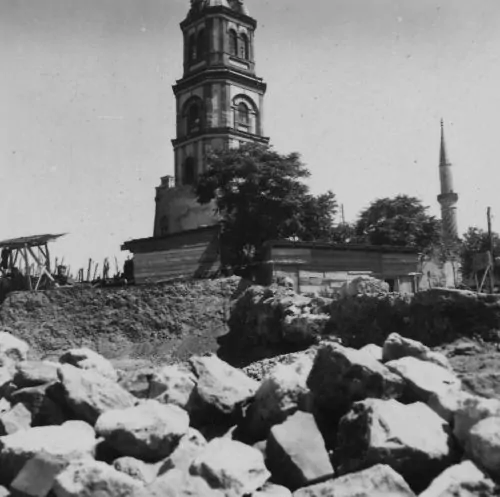
Feyzullah’s forced return to Edirne exposed him to a punishment that removal from office had temporarily postponed. His attempted escape ended in capture, placed at Pravadi in the standard modern account, although the chronicles differ over his movements before he was brought back. By the time he was killed in early September, Ahmed III had succeeded Mustafa, making the treatment of the former şeyhülislam a problem within the political order established by the uprising. The prisoner’s fate tested more than the defeated government’s capacity to protect its servants. It revealed how the victors would handle a man whose surrender they had demanded in the name of lawful judgment. His death emerged from custody and organized coercion after the military confrontation had been resolved.
Feyzullah’s standing presented obstacles that his enemies reportedly sought to overcome through changes in his recognized status. An anonymous account, discussed by Abou-El-Haj, describes the removal of the green turbans worn by Feyzullah and his sons as signs of descent from the Prophet. It then relates the preparation of appointments assigning them military responsibilities, a maneuver represented as removing protections associated with their membership in the learned establishment. Mehmed Giray similarly describes Feyzullah receiving a military title before being dismissed and imprisoned, and assigns the new grand vizier, Ahmed Paşa, a role in this arrangement. These narratives should not be mistaken for surviving records of a complete judicial proceeding. Their significance lies in the effort they describe to make an intended punishment permissible by altering the prisoner’s official classification. The green turban marked prophetic descent, so its removal also publicly attacked a claim to distinction extending beyond his former office. Neither learned rank nor descent had provided absolute security against execution, and assertions that killing a chief mufti lacked any precedent were historically incorrect. The accounts indicate that contemporaries recognized a threshold requiring explanation. Administrative forms became instruments through which that threshold could be crossed, allowing the victors to claim procedural authority while determining in advance that the prisoner should become vulnerable to death.
Interrogation also pursued a more immediately material objective. Sutton and Ottoman narratives connect Feyzullah’s torture with demands that he disclose the whereabouts of concealed wealth, while describing his refusal to acknowledge possessions beyond those already identified. These reports establish financial extraction as an important purpose of his captivity, although they cannot reduce every participant’s conduct to the same motive. The accusations against his accumulation of resources made demands for disclosure politically intelligible, but did not make information obtained through torture a reliable account of his assets. His body had become a means of searching for money as well as an object of punishment. That combination brought personal vengeance into close contact with the financial interests created by victory.
The killing was made public through acts that extended punishment beyond the termination of his life. Accounts describe Feyzullah being placed on a draught horse and taken through Edirne under insult before his beheading. Giray identifies Karakaş Mustafa and Duracen among those responsible for bringing him out of confinement and conducting the procession, giving the episode named organizers rather than leaving it attributable to an undifferentiated crowd. The subsequent display of his severed head made recognition of the victim part of the spectacle. Reports also describe the dragging of his corpse, the compelled participation of Christian priests, and its eventual disposal in the Tunca River. Nir Shafir draws attention to the religious meaning of these humiliations, through which a former chief jurist could be represented as excluded from the community he had claimed authority to instruct. Christian rites imposed upon the treatment of his body intensified that attempted exclusion. The priests’ participation was itself coerced, so their presence cannot establish that Christians collectively endorsed the violence or acted as willing partners in it. The performance subjected another religious community to the captors’ commands while denying the victim the honors ordinarily associated with Muslim burial. Its political message depended upon controlling how Feyzullah would be seen after the loss of office, wealth, and life.
Such degradation did not secure an uncontested interpretation of his death. Giray repeatedly identifies Feyzullah as a martyr and relates stories in which perpetrators suffered blindness, illness, or madness as divine punishment for their actions. These passages offer evidence of a moral interpretation of the killing, rather than verification of supernatural retribution. They reverse the direction of judgment, assigning impiety to those who humiliated the prisoner and restoring sanctity to the man they sought to dishonor. This sympathetic portrayal does not establish the justice of Feyzullah’s earlier administration. It demonstrates that condemnation of his treatment could coexist with the political defeat of his household, and that the victors could not determine how every observer understood the violence committed in their name.
The distinction between demanding punishment and controlling its justification is essential to assessing the limits of insurgent justice. A demand for trial could accommodate a severe sentence, but it also required grounds for judgment beyond the ability to seize and torment an accused official. The surviving narratives place considerable emphasis upon coercing disclosure and manipulating protective status, leaving the examination of clearly specified charges much less visible. Their accounts of official participation also prevent responsibility from being confined to disorderly soldiers supposedly acting beyond government. The killing implicated people who had acquired positions through the uprising, even where the precise authorization of individual acts remains uncertain. Fethullah’s later execution in Istanbul extended the reprisals, while other sons survived, making the household’s destruction uneven rather than complete. Exemplary punishment could be understood by its participants as the fulfillment of justice, and this possibility deserves recognition without accepting their judgment as sufficient justification. Feyzullah’s fate exposes the danger in allowing the power to define an enemy, remove his protections, and determine his punishment to accumulate among the same victorious interests. The movement had compelled a reckoning with the former government, but its treatment of the prisoner showed how readily that reckoning could serve those now exercising power.
Ahmed III and the Preservation of the Dynasty
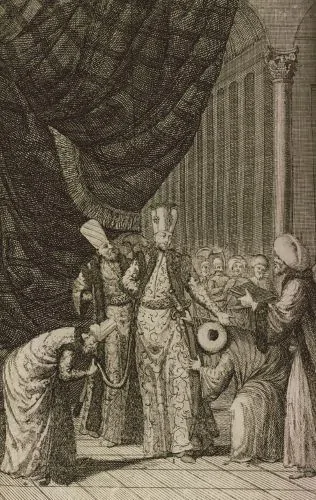
The selection of Ahmed provided a successor whose eligibility could be recognized through the same dynastic framework that had sustained Mustafa’s reign. Twenty-nine years old and another son of Mehmed IV, he offered the movement an adult Ottoman prince around whom a new government could be constituted. His acceptance enabled participants to separate their judgment against the reigning sultan from their willingness to acknowledge another member of his family. That distinction made an agreement possible among people whose complaints did not imply identical preferences about the future. Yet Ahmed’s eventual enthronement should not obscure the disputes preceding it. Preserving the dynasty was an outcome reached through political choices, including the rejection of alternatives within and beyond its reigning branch.
One objection concerned precisely how much Ahmed’s accession would preserve. The anonymous history reports unease that he was Mustafa’s brother and the son of the same queen mother, Gülnuş Emetullah Sultan. To those voicing that concern, a change between brothers might leave influential household relationships intact. Their preferred alternative was İbrahim, the son of Ahmed II, a child of about eleven whose accession would shift the throne to a different branch of the family. The choice involved more than finding someone with an acceptable claim of descent. It raised questions about whose influence would accompany a new ruler into office and whether the personnel surrounding him would reproduce arrangements the uprising had challenged. Supporters of Ahmed emphasized the availability of a mature prince, making adulthood a persuasive argument against the younger candidate. That preference belonged to the circumstances of this contested succession and should not be converted into a general Ottoman prohibition against child sultans. Nor do the accounts place every stage of the discussion securely before the march began. What they preserve is a disagreement over how far replacement needed to reach, with Ahmed’s closest familial connections becoming grounds for opposition as well as recognition.
More extensive possibilities appear in reports examined by Feridun Emecen. A later account in which Baltacı Mehmed defended his own conduct claimed that some participants proposed a Giray prince or a member of the İbrahimhanzade family. The latter descended from Sokollu Mehmed Paşa and İsmihan Sultan, giving them an Ottoman connection through the female line. Such testimony deserves attention because it challenges the assumption that an alternative to the reigning male lineage was inconceivable, although a retrospective defense of personal conduct cannot establish an agreed program. These suggestions show a wider range of possibilities being attributed to participants than Ahmed’s eventual accession might imply. Their failure to prevail helps define the settlement’s limits without making the dynasty’s survival inevitable.
Correspondence involving Gülnuş makes the construction of that settlement unusually visible. Documents published by İsmail Hakkı Uzunçarşılı show the insurgent leadership requesting Ahmed’s enthronement while offering assurances against harm to Mustafa, his children, and their mother. The petitioners sought installation of the new sovereign before their forces entered Edirne, followed by their appearance to perform allegiance. This proposed sequence connected the choice made among the insurgents with implementation inside the palace. Gülnuş’s replies to Kavanoz Ahmed Paşa and the şeyhülislam Mehmed Efendi accepted the collective decision communicated in their petitions and stated that action had been taken accordingly. Her participation supplied an intermediary within the dynastic household who could acknowledge the change while attending to the security of its displaced members. The language of agreement also gave the transfer an appearance of coordinated action across the divide between palace and army. It cannot measure the freedom with which consent was given under military pressure. Ahmed’s installation on August 22, 1703, and the broader allegiance ceremony that followed brought these negotiations into public political form. The movement’s demand for removal had become a succession in which members of the ruling household participated rather than merely awaited the arrival of its opponents.
Chronicle accounts place Mustafa’s response within those same familial relationships, though their reported conversations require a different kind of reading from the correspondence. Mehmed Giray depicts the defeated ruler acknowledging that his allotted tenure had ended and blessing his brother’s possession of the throne. Silâhdar records Mustafa telling Gülnuş that the soldiers had removed him and made Ahmed sultan, while entrusting his children and household women to his successor. These scenes render the transfer intelligible through kinship and responsibility for dependants, with their language shaped by the chroniclers’ presentation of defeat. They do not make the military pressure behind Mustafa’s withdrawal disappear. His confinement deprived him of the ability to continue governing while leaving the immediate settlement short of killing the former sovereign. The protection offered to his household helped separate the removal of its head from an attack upon the dynasty’s continued existence.
Ahmed’s first confirmations of officeholders connected the insurgent victory to the operation of a new reign. Kavanoz Ahmed Paşa’s grand vizierate and Mehmed Efendi’s şeyhülislamate received recognition, while Çalık Ahmed’s Janissary command was accompanied by vizierial rank. Those who had helped determine the succession sought authority through offices granted or acknowledged by the sovereign they had elevated. Ahmed initially depended upon their support, but the settlement also restored a ruler from whom commissions and honors could issue. As Marinos Sariyannis’s work on Ottoman monarchy helps clarify, the readiness to remove an individual sovereign could coexist with a strong attachment to government under a sultan. Emecen’s evidence qualifies that interpretation by showing that the identity of the ruling family could also become an object of dispute. In 1703, the prevailing choice retained the House of Osman while exposing the vulnerability of one of its members to a judgment enforced outside the palace. The dynasty survived through a settlement that deprived Mustafa of the throne and gave his opponents new stakes in the authority of his brother.
Restoring Government and Displacing the Victors
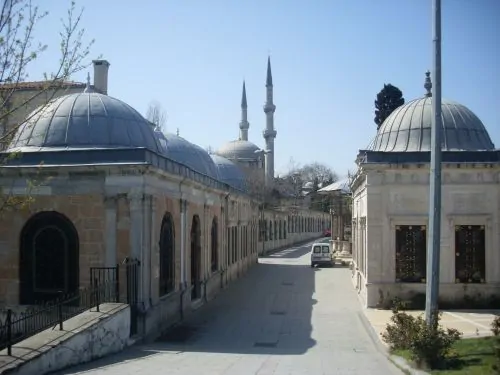
Clearing assembled troops from Edirne became an immediate requirement of the new reign. Orders directed the former royal forces to return to their stations, threatening those who remained beyond the prescribed time with death. This measure reduced the possibility of another confrontation between armed formations, but left inhabitants exposed to soldiers whose participation in the uprising encouraged expectations of reward. The government also needed its supporters to disperse, and that required meeting financial claims as well as issuing commands. Accession had created obligations of its own through the customary distribution of the cülûs bahşişi, alongside demands for unpaid salaries. Ahmed’s freedom to administer his government depended partly upon satisfying men who still possessed the means to make their continued presence burdensome.
The resources used to meet those obligations came through several channels. Palace funds provided substantial assistance, supplemented by other revenues and contributions whose proportions cannot safely be reconstructed from every contemporary estimate. Confiscation formed part of this effort, but expectations of a windfall from defeated officials should not be confused with a verified account of money received. A surviving directive to the governor of Aleppo ordered the recovery of documents and revenues associated with Feyzullah’s household tax farms, with registers prepared and funds remitted to the treasury. Such instructions sought to convert the household’s defeat into administratively controlled receipts, distinct from the private appropriation reported during the upheaval. The anonymous chronicle also describes borrowing against valuables pledged as security for money held in deposited funds, insisting upon the transaction’s propriety. That insistence shows the importance attached to presenting emergency financing as compatible with recognized obligations toward those whose resources were being used. Meeting military demands required more than identifying wealthy enemies. It involved assembling usable funds through institutions whose cooperation the new administration needed to preserve, even while pressure from armed claimants made delay dangerous.
The court’s arrival in Istanbul in mid-September fulfilled an important objective of the uprising. Ahmed’s visit to Eyüp for the sword-girding ceremony and his ceremonial entrance into the capital placed the new reign within established forms of sovereign recognition. For inhabitants whose principal grievance concerned the prolonged residence of government elsewhere, the relocation offered a substantial reason to accept the settlement. It also changed the circumstances in which insurgent leaders sought continued support, since resistance could no longer be sustained around the same demand for the court’s return. Istanbul again became the principal setting of royal administration, while disputes increasingly concerned the distribution of benefits and control of office within the government now resident there.
Questions of entitlement soon complicated the attempt to settle military claims. Different groups disputed whether their registration and service qualified them for accession payments, making membership in the recognized military establishment a material issue. Men whose names had been struck from the payroll subsequently occupied barracks and demanded readmission, seeking the status through which further benefits could be claimed. Their eventual dispersal without the recognition they wanted demonstrated that participation in renewed collective pressure did not necessarily secure acceptance. Palace guards presented another difficulty through demands for arrears, provoking proposals for drastic reorganization of their corps. Veteran guards resisted the application of collective penalties to men claiming long and faithful service, and obtained exceptions. These negotiations prevented restoration from proceeding through a single policy imposed equally upon every claimant. They also exposed divisions that the struggle against Mustafa had temporarily accommodated, because satisfying one recognized category did not settle the claims of everyone standing near it. The government could concede some demands while refusing others, gradually reducing the likelihood that dissatisfied groups would act together.
Çalık Ahmed’s removal revealed how precarious a leading insurgent’s position could become. Sutton found the reversal startling because Ahmed had recently attended a banquet at the Janissary commander’s residence, publicly displaying exceptional favor. In November, Çalık was dismissed and sent away by sea, separating him from the capital and the soldiers upon whose support his influence depended. Accounts of his repeated pursuit of the grand vizierate help explain the conflict, although hostile descriptions of his manners should not substitute for analysis of the power he exercised. Silâhdar’s report of Janissary protests also prevents the conclusion that his removal followed the complete disappearance of military support. The court had found a means of acting despite that support, and Çalık’s subsequent execution ended his opportunity to recover his former position.
Kavanoz Ahmed Paşa lost the grand vizierate in November as well, but his treatment followed a different course. Removed on November 17, he was exiled to Chios and later returned to provincial service. His displacement cannot be grouped indiscriminately with the executions of other prominent participants. Criticisms of his administration furnished arguments for dismissal, and the şeyhülislam Mehmed Efendi himself assisted in undermining his position by questioning his suitability for the office. The alliance that had elevated them supplied no permanent guarantee of mutual protection. Moralı Hasan Paşa’s succession to the grand vizierate strengthened the position of a man connected to the royal family through his marriage to Ahmed’s sister Hatice Sultan. Sutton attributed considerable influence over this advancement to Hatice and Gülnuş, though that attribution does not establish an exclusive explanation of the appointment. What can be observed is a redistribution of access and office through relationships that increasingly reduced the independence of the men who had directed the uprising.
Learned officeholders were also vulnerable, despite their contribution to the justification of Mustafa’s removal. Mehmed Efendi’s assistance in displacing Kavanoz did not preserve his own tenure; in January 1704 he was dismissed and sent to compulsory residence in Bursa, where he continued teaching. Meanwhile, proposals to revive resistance on behalf of fallen leaders encountered disagreement among former participants. Some Janissaries reportedly argued that the new administration had paid their entitlements and acknowledged the sultan’s prerogative to appoint and dismiss officials. Their position was a political judgment about acceptable government, rather than proof that soldiers had always been indifferent to questions beyond remuneration. Others regarded the removal of their associates as a betrayal of the commitments made during the rebellion. Ahmed’s recovery of control depended upon that divergence, which allowed support for his government to survive the destruction of influential men who had helped establish it. The uprising had secured tangible changes, including the court’s return, while its leaders failed to preserve their collective capacity to determine who would govern afterward.
Did the Rebels Change Their Aim, or Reveal It?
The following video from MYAI FACTS discusses the fall of Sultan Mustafa II:
The strongest challenge to an interpretation organized around changing demands is that the sequence may record the disclosure of an existing objective more accurately than the formation of a new one. Influential organizers could have favored Mustafa’s removal before asking him to correct his government, presenting narrower requirements because those requirements attracted support that an immediate call for deposition would have endangered. From this perspective, the treatment of the petitioners furnished an effective justification for a course already contemplated. Rifa‘at Ali Abou-El-Haj gives considerable weight to strategic concealment, interpreting the establishment of an alternative administration and the subsequent open challenge to the sultan as stages in a calculated struggle for control. Yet his analysis also acknowledges that the question of premeditation cannot be resolved conclusively. The objection remains substantial because the order in which demands became public cannot, by itself, establish when their principal advocates adopted them.
Sutton supplies the most pointed evidence for an intention concealed behind the initial appeal. In his account written after Mustafa’s overthrow, the ambassador maintained that the leaders had resolved upon deposition from the beginning, citing intelligence obtained from an unnamed Polish convert employed as secretary to a prominent member of the ulema. Such employment plausibly provided access to discussions unavailable to an observer following proclamations and assemblies. Sutton’s statement deserves serious consideration precisely because it distinguishes the leadership’s alleged private purpose from the later announcement of that purpose. Its evidentiary limits are equally important. As Ahmet Büyükaksoy notes, the Latin enclosure to which the ambassador referred has not been located, leaving Sutton’s description available for examination without the underlying communication against which to check it. Neither the secretary’s attendance at decisive discussions nor the breadth of the agreement he reportedly described can be established from that description. The dispatch also followed the successful overthrow, a circumstance that could encourage participants and informants to represent an uncertain undertaking as the fulfillment of an original design. None of these qualifications makes the intelligence disposable, but together they support a narrower finding than a coordinated conspiracy embracing the entire movement.
Organizational readiness lends additional force to the challenge. The rapid assumption of offices and acquisition of military resources suggest that experienced participants could translate discontent into an effective contest for government. Preparations for a march also made sense as protection against suppression and as support for bargaining, so their existence cannot determine whether compromise had already been excluded. Connections between men serving the opposing administrations provided channels through which an anticipated change of ruler could be discussed, but shared associations do not establish agreement about its timing or necessity. These circumstances make advance planning persuasive as an explanation of some leaders’ conduct while leaving the distribution of their intentions unresolved.
Public demands require closer attention than a division between sincere grievance and concealed ambition permits. A petition could express a negotiated position among groups whose preferred settlements differed, allowing participation without requiring agreement about the ultimate fate of the ruler. Its terms might also give cautious supporters a reason to remain involved while obliging more determined opponents to justify any further escalation. The revised petition’s conditional treatment of Mustafa’s tenure already makes it impossible to describe the movement’s starting position as uncomplicated loyalty. Yet a conditional threat to replace a sovereign was not equivalent to an irrevocable commitment to remove him regardless of his response. Feyzullah’s dismissal and the documented appointment of İmam Mehmed Efendi demonstrate that the exchanges produced institutional changes, although these measures fell short of satisfying the insurgents. Their rejection cannot establish that every earlier demand was fraudulent, just as their acceptance by the court cannot establish that reconciliation would have endured. Leaders who treated concessions as inadequate were helping determine which settlement remained acceptable, rather than simply announcing a judgment independently reached by everyone beneath them. Even where negotiation served a strategic purpose, its course altered the arguments available within the coalition and the risks attached to abandoning it.
Accepting this counterpoint requires a more precise account of what changed during the rebellion. The surviving evidence does not warrant attributing a common inward transformation to the people who participated, and it leaves considerable room for organizers who sought deposition before the confrontation over access to the sultan. What can be followed more securely is the process through which replacement became the movement’s binding position. An objective initially favored within a narrower circle could acquire wider acceptance through events, while pressure against dissent helped prevent alternative settlements from receiving an effective hearing. Failed exchanges mattered because they enabled advocates of removal to explain why continued negotiation offered insufficient protection, even if those advocates had distrusted Mustafa from the outset. The interpretation must relinquish any assumption that reformist demands transparently disclosed the intentions of the men directing them. It can retain the argument that Mustafa’s overthrow required political work within a divided coalition, through which a possible outcome became an enforceable demand.
Conclusion: Removing the Sultan to Preserve the Sultanate
Mustafa II’s opponents ultimately made the restoration of acceptable government depend on his departure. Complaints about administration acquired their destructive force when his responses ceased to offer sufficient assurance that abuses would be corrected or that submission would be safe. The confrontation helped make removal defensible to participants whose reasons for joining had differed, while giving determined organizers opportunities to exclude compromise. Some may have wanted this result before the first petition was sent; their success still required making that preference effective among people who had joined for other purposes. Mustafa’s failure lay in his inability to recover the cooperation needed to govern through institutions that continued to recognize Ottoman sovereignty.
Istanbul’s mobilization gave grievances institutional force. Military service created claims on the treasury, while the city’s learned offices supplied authoritative terms for judging the conduct of a ruler. Those claims overlapped with the interests of residents for whom a distant court meant reduced access to patronage or redress. Residence in Edirne did not invalidate Mustafa’s reign, but it became an accusation when separation appeared to protect ministers from scrutiny and weaken his attention to those obligations. Opposition drew strength from principles the monarchy itself recognized, invoking justice and the proper exercise of entrusted authority. Its legal arguments challenged obedience to a ruler described as unjust, although their force depended on accepting the insurgents’ account of his behavior. Participation in that challenge was distributed unequally. Armed organizers could compel attendance and restrict movement, while Feyzullah’s killing exposed how little protection demands for justice might afford a defeated enemy. The breadth of resistance demonstrated a capacity to interrupt government and demand its correction without making the insurgent leadership an uncontested representative of the imperial population.
Ahmed III’s accession separated the dynasty’s continuing authority from the rejection of Mustafa. It gave officeholders a route back into service without requiring them to defend the government that had lost the struggle. Arguments about a sovereign’s duties could sustain a change of monarch while preserving the sultanate as the foundation of the resulting settlement. As Marinos Sariyannis’s analysis of Ottoman political thought helps clarify, criticism of an individual ruler could operate within a durable commitment to monarchy. The victory revealed how vulnerable a reigning sultan could become without creating a standing institution entitled to determine his successor’s policies.
Success gave the coalition no secure entitlement to direct the restored administration. Ahmed’s return to Istanbul and the accommodation of financial claims answered important demands, while the subsequent displacement of leading insurgents curtailed their influence over senior offices. As participants obtained different portions of what they had sought, maintaining common pressure became harder, and the new sultan acquired greater freedom to choose his servants. These developments belonged to the substance of the settlement, which redistributed opportunities as well as replacing the occupant of the throne. The victors’ removal does not erase the changes they imposed or make their original grievances insincere. It shows that the power to unseat a ruler did not necessarily become a durable claim to govern through his successor. Mustafa’s overthrow could be presented as a restoration of lawful authority because Ahmed inherited powers that the insurgents still needed a sovereign to exercise. Their achievement made one sultan dispensable while leaving the work of government dependent on the office from which they had expelled him.
Bibliography
Affiliate disclosure: Amazon links on this site are paid links. As an Amazon Associate I earn from qualifying purchases.
- Abou-El-Haj, Rifa‘at Ali. The 1703 Rebellion and the Structure of Ottoman Politics. Leiden: Nederlands Historisch-Archaeologisch Instituut te Istanbul, 1984.
- —-. “The Narcissism of Mustafa II (1695-1703): A Psychohistorical Study” Studia Islamica 40 (1974), 115-131.
- —-. “The Ottoman Vezir and Paşa Households 1683-1703: A Preliminary Report.” Journal of the American Oriental Society 94:4 (1974), 438-447.
- Ágoston, Gábor. The Last Muslim Conquest: The Ottoman Empire and Its Wars in Europe. Princeton: Princeton University Press, 2021.
- Ágoston, Gábor, and Bruce Masters, eds. Encyclopedia of the Ottoman Empire. New York: Facts on File, 2008.
- Ahıshalı, Recep. “Râmi Mehmed Paşa.” In Türkiye Diyanet Vakfı İslâm Ansiklopedisi, 34:449–451. Istanbul: Türkiye Diyanet Vakfı, 2007.
- Aksan, Virginia H. Ottoman Wars, 1700–1870: An Empire Besieged. Harlow: Pearson Longman, 2007.
- Aktepe, M. Münir. “Ahmed III.” In Türkiye Diyanet Vakfı İslâm Ansiklopedisi, 2:34–38. Istanbul: Türkiye Diyanet Vakfı, 1989.
- Anonim Osmanlı Tarihi (1099–1116/1688–1704). Edited by Abdülkadir Özcan. Ankara: Türk Tarih Kurumu, 2000.
- Artan, Tülay. “Royal Weddings and the Grand Vezirate: Institutional and Symbolic Change in the Early Eighteenth Century.” In Royal Courts in Dynastic States and Empires: A Global Perspective, edited by Jeroen Duindam, Tülay Artan, and Metin Kunt, 339–399. Leiden and Boston: Brill, 2011.
- Bulut, Büşra. “II. Mustafa Dönemi’ne ait 1701 Tarihli Bir Masraf Defteri’nin Değerlendirilmesi.” Karamanoğlu Mehmetbey Üniversitesi Edebiyat Fakültesi Dergisi 3:2 (2020), 199–224.
- Büyükaksoy, Ahmet. “Sir Robert Sutton’un Gözünden Edirne Vakası.” Marmara Türkiyat Araştırmaları Dergisi 10:1 (2023), 32–59.
- Defterdar Sarı Mehmed Paşa. Zübde-i Vekayiât (1066–1116/1656–1704). Edited by Abdülkadir Özcan. Ankara: Türk Tarih Kurumu, 1995.
- Emecen, Feridun M. “Osmanlı Hanedanına Alternatif Arayışlar Üzerine Bazı Örnekler ve Mülahazalar.” İslâm Araştırmaları Dergisi 6 (2001), 63–76.
- Faroqhi, Suraiya. “An Ulama Grandee and His Household.” Osmanlı Araştırmaları 9 (1989), 199–208.
- Feyzullah Efendi. “Feyzullah Efendi’nin Kendi Kaleminden Hal Tercümesi.” Translated and edited by Ahmed Türek and Fahri Çetin Derin. Tarih Dergisi, 23 (1969), 205–218; 24 (1970), 69–92.
- Finkel, Caroline. Osman’s Dream: The History of the Ottoman Empire, 1300–1923. New York: Basic Books, 2006.
- Gülnuş Emetullah Sultan and the insurgent leadership. Correspondence concerning Mustafa II’s deposition and Ahmed III’s accession, 1703. Reproduced in İsmail Hakkı Uzunçarşılı, “Osmanlı Tarihinde Gizli Kalmış veya Şüphe ile Örtülü Bazı Olaylar ve Bu Hususa Dair Vesikalar,” Belleten 41:163 (1977), 532–535.
- Imber, Colin. The Ottoman Empire, 1300–1650: The Structure of Power. New York: Palgrave Macmillan, 2002.
- İnalcık, Halil. The Ottoman Empire: The Classical Age, 1300–1600. London: Phoenix, 1973.
- —-. “Şikayet Hakkı: ‘Arz-ı Hâl ve ‘Arz-ı Mahzar’lar.” Osmanlı Araştırmaları 7–8 (1988), 33–54.
- Kafadar, Cemal. Between Two Worlds: The Construction of the Ottoman State. Berkeley: University of California Press, 1995.
- —-. “Janissaries and Other Riffraff of Ottoman İstanbul: Rebels Without a Cause?” International Journal of Turkish Studies 13:1-2 (2007), 113–134.
- Kaplan, Ayşe. “The Ottoman Court on the Road: Royal Mobility and the Imperial Residences between Edirne and Istanbul, 1657–1703.” PhD diss., Sabancı University, 2023.
- Mehmed Giray. Târîh-i Mehmed Giray. Transcribed and edited by Uğur Demir. Master’s thesis, Marmara University, 2006.
- Nâbî. Hayriyye-i Nâbî: İnceleme-Metin. Edited by Mahmut Kaplan. 2nd ed. Ankara: Atatürk Kültür Merkezi, 2008.
- Nizri, Michael. Ottoman High Politics and the Ulema Household. London: Palgrave Macmillan, 2014.
- —-. “The Religious Endowments of Şeyhülislam Feyzullah Efendi: The Waqf Institution and the Survival of Ottoman Elite Households.” In Society, Law, and Culture in the Middle East: “Modernities” in the Making, edited by Dror Ze’evi and Ehud R. Toledano, 31–43. Warsaw and Berlin: De Gruyter Open, 2015.
- Oral, Özgür. “Osmanlı Tarihyazımındaki İntihallere Bir Örnek: Silahdâr’ın Nusretnâme’sindeki Edirne Vakası Anlatısı.” Anadolu ve Balkan Araştırmaları Dergisi 5:10 (2022), 533–556.
- Ottoman imperial orders concerning religious instruction, 1702. Condensed translations in Rifa‘at Ali Abou-El-Haj, Formation of the Modern State: The Ottoman Empire, Sixteenth to Eighteenth Centuries, 113–119. Albany: State University of New York Press, 1991.
- Özcan, Abdülkadir. “Ahmed Paşa, Kavanoz.” In Türkiye Diyanet Vakfı İslâm Ansiklopedisi, revised 2nd ed., supplement 1:49–50. Ankara: Türkiye Diyanet Vakfı, 2020.
- —-. “Defterdar Sarı Mehmed Paşa.” In Türkiye Diyanet Vakfı İslâm Ansiklopedisi, 9:98–100. Istanbul: Türkiye Diyanet Vakfı, 1994.
- —-. “Edirne Vak‘ası.” In Türkiye Diyanet Vakfı İslâm Ansiklopedisi, 10:445–446. Istanbul: Türkiye Diyanet Vakfı, 1994.
- Özcan, Tahsin. “Mehmed Efendi, İmâm-ı Sultânî.” In Türkiye Diyanet Vakfı İslâm Ansiklopedisi, 28:453–454. Ankara: Türkiye Diyanet Vakfı, 2003.
- Pamuk, Şevket. “Institutional Change and the Longevity of the Ottoman Empire, 1500–1800.” Journal of Interdisciplinary History 35:2 (2004), 225–247.
- Râmi Mehmed Paşa. Letters to the Istanbul kaymakam and cebecibaşı, 1703. Transcribed in Ersin Kırca, “Sadaret Yazışmalarını Hâvî Bir Münşeât Mecmuası (1114–1116/1703–1704) (İnceleme-Metin),” 437–438. PhD diss., Marmara University, 2015.
- Repp, R. C. The Müfti of Istanbul: A Study in the Development of the Ottoman Learned Hierarchy. London: Ithaca Press, 1986.
- Santus, Cesare. “Sheikh ül-Islam Feyzullah Efendi and the Armenian Patriarch Awetik‘: A Case of Entangled Confessional Disciplining?” In Entangled Confessionalizations? Dialogic Perspectives on the Politics of Piety and Community-Building in the Ottoman Empire, 15th–18th Centuries, edited by Tijana Krstić and Derin Terzioğlu, 233–254. Piscataway, NJ: Gorgias Press, 2022.
- Sariyannis, Marinos. “Ottoman Ideas on Monarchy before the Tanzimat Reforms: Toward a Conceptual History of Ottoman Political Notions.” Turcica 47 (2016), 33–72.
- —-. “Unseen Rebels: The ‘Mob’ of Istanbul as a Constituent of Ottoman Revolt, Seventeenth to Early Nineteenth Centuries.” Turkish Historical Review 10:2-3 (2019), 155–188.
- Sevinç, Tahir. “II. Mustafa’nın İktidar Mücadelesi ve 1703 Edirne İsyanıyla Tahttan İndirilmesi.” Osmanlı Mirası Araştırmaları Dergisi 4:9 (2017), 25–42.
- Shafir, Nir. “Moral Revolutions: The Politics of Piety in the Ottoman Empire Reimagined.” Comparative Studies in Society and History 61:3 (2019), 595–623.
- Silâhdar Fındıklılı Mehmed Ağa. Nusretnâme: İnceleme-Metin (1106–1133/1695–1721). Edited by Mehmet Topal. Ankara: Türkiye Bilimler Akademisi, 2018.
- Sutton, Robert. “The Despatches of Sir Robert Sutton.” SP 97/21, State Papers Foreign, Turkey. The National Archives, Kew.
- Tayşi, Mehmet Serhan. “Feyzullah Efendi, Seyyid.” In Türkiye Diyanet Vakfı İslâm Ansiklopedisi, 12:527–528. Istanbul: Türkiye Diyanet Vakfı, 1995.
- Terzioğlu, Derin. “Where ‘İlm-i Hāl Meets Catechism: Islamic Manuals of Religious Instruction in the Ottoman Empire in the Age of Confessionalization.” Past & Present 220, 1 (2013), 79–114.
- Turnbull, Stephen. The Ottoman Empire 1326–1699. Oxford: Osprey Publishing, 2003.
- Yaycıoğlu, Ali. “Karlofça Ânı: Osmanlı İmparatorluğu 18. Yüzyıla Nasıl Başladı?” Tarih ve Toplum Yeni Yaklaşımlar, 18 (2021), 8–56.
Originally published by Brewminate, 11.11.2026, under the terms of a Creative Commons Attribution-NonCommercial-NoDerivatives 4.0 International license.
About the Author