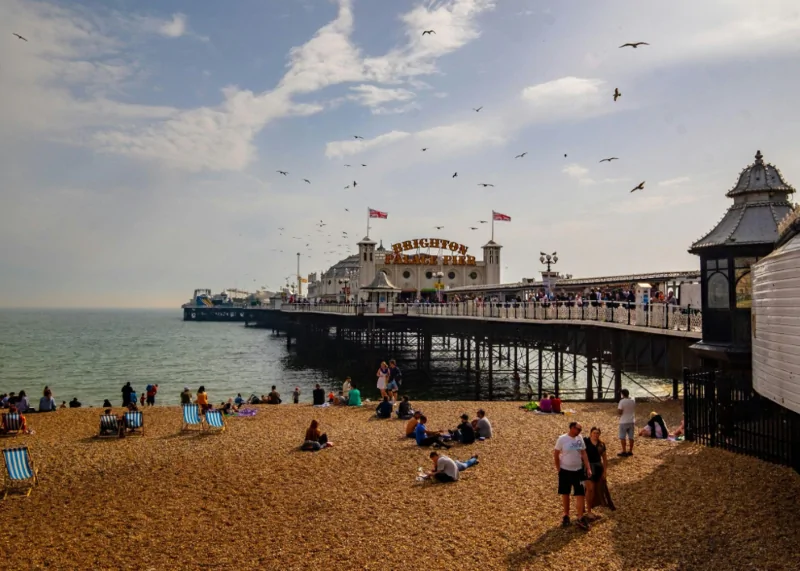
Walk to the end of almost any British pier on a drizzly August afternoon and you’ll get the full set. Chips going cold in paper, gulls eyeing them up, a slightly battered fortune teller booth and the steady clatter of the 2p machines. My grandad used to take me along Southend Pier as a kid, and I remember being genuinely amazed that you could walk that far out over the sea and still find somewhere selling ice cream.
The arcades are different now, of course. Penny-in-the-slot peep shows have given way to bright LED screens, licensed operators and regulated slot games sitting alongside claw machines and air hockey. But the basic idea hasn’t budged in about 150 years. We still troop out there for an hour of silly, cheap fun with the sea slopping about underneath, and we’ve got the Victorians to thank, or blame, for that.
Funny thing is, piers were never meant for any of this. They were basically jetties for boats.
How the Railways and the Bank Holiday Built the Pier
From landing stage to promenade
The earliest piers weren’t really about fun at all. They were practical bits of kit, built so paddle steamers could drop passengers off without everyone wading through the shallows in their best clothes. Ryde, over on the Isle of Wight, got its first one back in 1814. Pretty soon folk twigged that a wander out over the water was lovely even if you weren’t catching a boat anywhere, and towns cheekily began charging a penny or so for the privilege.
Cheap trains change everything
The real turning point was the railway. Once tracks snaked out to Brighton, Blackpool and Scarborough in the 1840s and 50s, a day trip stopped being something only the gentry did, since cheap fares were within reach of a mill hand’s wages. Up in Lancashire they had wakes weeks, where a whole mill would close its doors and you’d find most of your street on the same packed train heading for the sands. Suddenly resorts had crowds, and crowds needed somewhere to go.
A day off by law
1871 is the year to remember, when an MP called Sir John Lubbock, a banker by trade oddly enough, got the Bank Holidays Act through Parliament. Workers now had fixed days off, the August one included, and you can guess where most of them headed. Pier building went into overdrive. Eugenius Birch alone designed fourteen of them, including Brighton’s West Pier, and towns competed hard to have the longest, grandest or most fashionable one on the coast.
What Victorians Actually Did on a Pier
Seeing and being seen
A lot of the early appeal was simply showing off. You put on your best hat, walked slowly to the end and back, and quietly sized up everyone else doing exactly the same thing. Doctors banged on about the benefits of sea air, so nobody could call it idle vanity, it was practically medicine. And if you were courting, a turn along the pier was about the only public outing where your aunt wouldn’t have a word with your mother afterwards.
Pavilions, bands and music halls
Give it another couple of decades and the far ends were crowded with pavilions, theatres and bandstands, some topped with onion domes that looked like they’d wandered over from somewhere far more exotic than Kent. After lunch you’d likely catch an oompah-ing brass band. In the evenings there’d be concert parties, comic singers and music hall acts, some of whom went on to become proper national stars. Paying a penny to get on the pier and then a bit more for a show was a cheap, cheerful night out that didn’t involve the pub, which pleased the more respectable end of Victorian society no end.
The first penny machines
Towards the end of the century, coin-operated machines started appearing in pier kiosks. There were fortune tellers in glass cases, strength testers, and mutoscopes, the famous What the Butler Saw machines, which were rather less scandalous than their reputation suggests. They were cheap thrills in the most literal sense, and they planted the seed for the amusement arcade that every pier would eventually have.
The Pier’s Legacy in Modern British Leisure
Fires, storms and survival
Piers have had a rough ride since their heyday. Gales have chewed them up and fires have burnt plenty down to the stilts. In 1940 the army even cut gaps in a fair few, worried that German troops might use them as ready-made landing stages. Over in Brighton, the West Pier is now a spindly black frame poking out of the waves, and I’ll admit I find it gorgeous at sunset. Dozens of others vanished completely. That the survivors are still standing at all owes a lot to local campaigners and a stubborn national fondness for them.
The arcade takes centre stage
As theatres and bandstands faded, arcades moved in to fill the gap. By the mid twentieth century the noisy, flashing amusement hall had become the beating heart of many piers. Coin pushers, crane grabbers and fruit machines kept the lights on, quite literally, paying for maintenance that no council budget could cover. Today that side of things is properly licensed and overseen, which is a long way from the Wild West days of the early penny machines.
Why we keep going back
There’s something about a pier that still works on us. It’s a bit tatty, a bit nostalgic and completely unpretentious. You don’t need much money, you don’t need to be good at anything and nobody’s judging you for shrieking on a ride or spending an hour on the 2p machines. The Victorians invented the idea that ordinary workers deserved a proper day of fun, and every time we stroll out over the waves with a bag of chips, we’re keeping that idea going.
About the Author