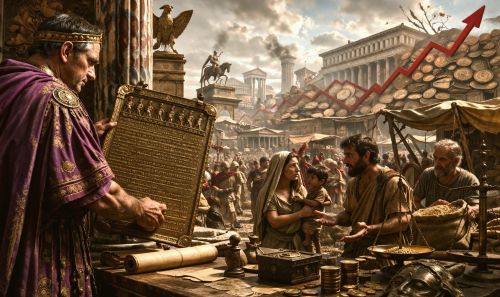
Diocletian’s price edict sought to tame inflation through control, yet exposed the limits of authority when economic realities resist coercion and markets adapt beyond law.

By Matthew A. McIntosh
Public Historian
Brewminate
Introduction: Crisis, Control, and the Illusion of Stability
The Edict on Maximum Prices issued by Emperor Diocletian in 301 CE stands as one of the most ambitious and controversial economic interventions in the history of the Roman Empire. Conceived in a period of profound instability, the Edict sought to impose order through sweeping price controls across goods, services, and wages. It reflected not only an attempt to stabilize markets but also an assertion that imperial authority could regulate economic life. The Edict was both a statement of power and a policy instrument, revealing the late Roman state’s increasing reliance on centralized control to address systemic crises.
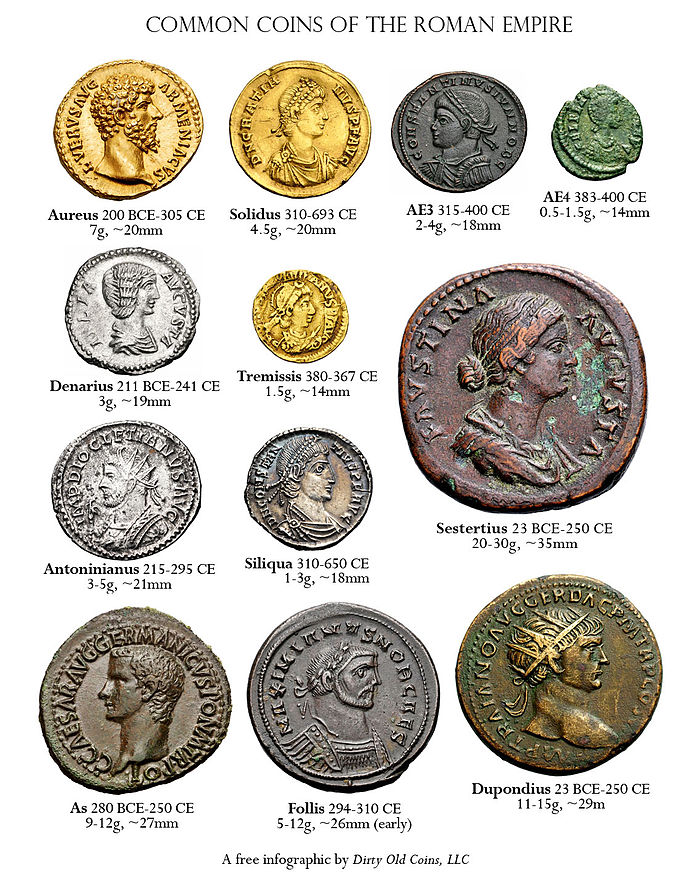
The Edict emerged during sustained economic and political turmoil. The third century had witnessed decades of civil war, military upheaval, and administrative fragmentation, all of which placed immense strain on imperial finances. The rapid turnover of emperors, many of whom rose through military acclamation and fell through assassination or defeat, created a climate of uncertainty that destabilized both governance and economic planning. External pressures along the empire’s frontiers demanded constant military expenditure, further intensifying fiscal stress. Successive emperors responded by debasing the currency, particularly the silver content of the antoninianus, to stretch limited resources. This policy, while offering short-term relief, progressively undermined the value of Roman coinage, eroding trust among merchants, soldiers, and taxpayers alike. Prices rose due to market fluctuations but because the currency itself had lost credibility, making exchange increasingly unpredictable and often forcing transactions into barter or alternative forms of valuation. Inflation was not an isolated phenomenon but a symptom of deeper structural disruptions that had accumulated over generations, reflecting the interconnected crises of governance, military obligation, and monetary instability.
Diocletian’s response to this crisis was characteristic of his broader reform program, which aimed to restore order through administrative rationalization and expanded state oversight. His reorganization of imperial governance, taxation, and military provisioning sought to reassert control over both people and resources. The Edict on Maximum Prices must be understood within this wider framework, as an attempt to fix prices at levels deemed just and sustainable while protecting soldiers and civilians from what the regime framed as exploitative practices. Yet it imposed rigid ceilings on a dynamic and uneven economic system, one that varied significantly across regions and was already strained by shortages, logistical challenges, and declining trust in currency.
The Edict ultimately failed because it misdiagnosed the crisis it sought to resolve. By targeting high prices rather than the underlying causes of inflation, particularly monetary debasement and fiscal instability, it disrupted market mechanisms without restoring confidence or supply. The result was not stability but further distortion, as goods disappeared from official markets, informal exchange networks expanded, and enforcement measures generated fear rather than compliance. The Edict’s failure illustrates the limits of coercive economic policy in the absence of structural reform, offering a powerful case study in the unintended consequences of state intervention.
The Economic Crisis of the Third Century: Roots of Inflation

The economic crisis that culminated in Diocletian’s Edict resulted from prolonged instability that had been building throughout the third century. Beginning in 235 CE, the Roman Empire entered a period marked by political fragmentation, military upheaval, and administrative breakdown, commonly referred to as the Crisis of the Third Century. Emperors rose and fell with alarming speed, often elevated by the army and removed by violence, creating an environment in which long-term economic planning became nearly impossible. This instability disrupted not only governance but also the broader structures that supported economic life, including taxation, trade, and monetary confidence.
At the center of this crisis was the immense financial burden imposed by continuous warfare and imperial defense. The empire faced persistent threats along its frontiers, including invasions by Germanic tribes in the west and pressure from the Sasanian Empire in the east. Maintaining large standing armies and funding military campaigns required vast resources, placing extraordinary strain on the imperial treasury. As revenues proved insufficient to meet these demands, emperors increasingly turned to expedient solutions, prioritizing immediate fiscal needs over long-term economic stability. This reliance on short-term measures exacerbated underlying weaknesses in the imperial economy and contributed to a cycle of financial instability. Moreover, the need to secure loyalty from troops through donatives and increased pay further intensified fiscal pressure, tying political survival directly to economic policy in ways that encouraged unsustainable practices. The military became both the guarantor of imperial authority and one of its greatest financial liabilities, reinforcing a system in which economic decisions were driven by immediate political necessity rather than structural reform.
One of the most consequential responses to this fiscal pressure was the systematic debasement of Roman coinage. The silver content of the antoninianus, once a relatively stable currency, was progressively reduced as emperors sought to produce more coins with fewer precious metals. While this practice allowed the state to stretch its resources, it had profound and destabilizing effects on the economy. As the intrinsic value of the currency declined, so too did public confidence in its reliability. Prices began to rise not merely as a function of supply and demand but as a reaction to the diminishing purchasing power of coinage, leading to a form of inflation rooted in monetary degradation rather than market dynamics alone.
The erosion of monetary trust produced cascading effects throughout the Roman economy. Merchants and producers became increasingly reluctant to accept debased coinage at face value, often raising prices to compensate for perceived losses or refusing to engage in transactions altogether. In some regions, barter systems re-emerged as a practical alternative to unreliable currency, further complicating economic exchange. Taxation, which depended heavily on monetary payments, also became more difficult to administer effectively, as the value of collected revenue fluctuated unpredictably. These developments contributed to a fragmentation of economic activity, with local conditions diverging sharply from one region to another. Price variability became more pronounced across the empire, as the absence of a stable monetary standard made it difficult to establish consistent valuations for goods and services. This instability undermined long-distance trade and discouraged investment, as economic actors could no longer rely on predictable returns or stable pricing mechanisms.
Compounding these monetary issues was the disruption of trade networks that had previously sustained the empire’s economic cohesion. Political instability and insecurity along key routes hindered the movement of goods, while the breakdown of centralized authority reduced the state’s ability to maintain infrastructure and enforce safe passage. Urban centers, which had long depended on regular supplies of grain and other necessities, experienced increasing difficulty in securing provisions. This strain on supply chains further intensified price volatility, as scarcity and uncertainty drove up costs in ways that could not be easily controlled through administrative measures.
By the time Diocletian came to power in 284 CE, the Roman economy was characterized by deep structural imbalances that extended far beyond simple price fluctuations. Inflation was not an isolated problem but the visible manifestation of systemic dysfunction rooted in political instability, fiscal strain, and monetary erosion. Any attempt to stabilize prices without addressing these underlying issues was unlikely to succeed. The conditions that gave rise to the Edict were the product of decades of compounding crises, making clear that the challenge facing Diocletian was not merely economic but fundamentally structural in nature. These accumulated pressures created an environment in which decisive action appeared necessary, yet the complexity of the crisis made effective solutions difficult to implement. The temptation to impose order through direct control, rather than undertaking the slower and more uncertain process of structural reform, would ultimately shape the policies of Diocletian’s regime and contribute to the unintended consequences that followed.
Diocletian’s Reforms: Order through Centralization
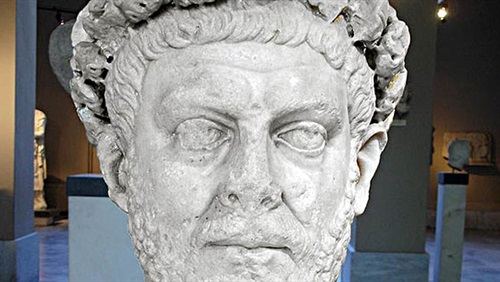
Diocletian’s accession in 284 CE marked a decisive turning point in the Roman Empire’s response to the crises of the third century. Recognizing that the instability of the previous decades stemmed not only from external threats but from internal administrative weaknesses, he embarked on a sweeping program of reform aimed at restoring order and authority. Central to this effort was the conviction that the empire required stronger, more systematic governance, capable of managing its vast territories and complex economic demands. Diocletian’s reforms were not isolated measures but part of a broader strategy to stabilize the state through centralization, standardization, and enhanced control over both resources and populations.
One of the most significant elements of this transformation was the establishment of the Tetrarchy, a system in which imperial authority was divided among two senior emperors (Augusti) and two junior emperors (Caesares). This arrangement was designed to address the problem of succession and to ensure more effective military and administrative oversight across different regions of the empire. By distributing power geographically while maintaining a unified imperial structure, Diocletian sought to reduce the likelihood of usurpation and improve the responsiveness of the state to external and internal challenges. The Tetrarchy also reflected a broader ideological shift, presenting imperial rule as a coordinated and hierarchical system rather than the domain of a single, vulnerable ruler.
Alongside these political reforms, Diocletian undertook a comprehensive reorganization of the empire’s administrative framework. Provinces were subdivided into smaller units, increasing the number of officials and reducing the concentration of power at the local level. These provinces were then grouped into larger dioceses, each overseen by a vicarius, creating an additional layer of oversight that strengthened central control. This restructuring aimed to improve the efficiency of tax collection, enhance legal administration, and limit the potential for local elites to challenge imperial authority. By expanding the bureaucracy and clarifying lines of responsibility, Diocletian attempted to create a more predictable and controllable system of governance. The proliferation of administrative offices increased the state’s capacity to monitor and intervene in local affairs, extending imperial presence into regions that had previously operated with greater autonomy. This expansion of bureaucratic reach also required a more reliable flow of resources, linking administrative reform directly to fiscal policy and reinforcing the interdependence of governance and economic management within Diocletian’s system.
Economic reform was equally central to Diocletian’s program, particularly in the realm of taxation and resource management. The introduction of more systematic census procedures allowed the state to assess populations and landholdings with greater accuracy, forming the basis for a more regularized and equitable taxation system. Taxes were increasingly collected in kind, especially for the provisioning of the army, reflecting both the instability of the currency and the practical needs of imperial logistics. This shift tied economic production more directly to state requirements, integrating local economies into a centralized system of supply. While these measures improved the state’s ability to sustain its military and administrative apparatus, they also increased the burden on provincial populations and reinforced the intrusive presence of imperial authority in daily life.
Within this broader context, the Edict can be understood as a logical extension of Diocletian’s commitment to centralized control. Just as administrative and fiscal reforms sought to regulate governance and taxation, the Edict aimed to regulate the marketplace itself, imposing order on economic activity through direct intervention. It reflected a belief that stability could be achieved by setting clear limits and enforcing compliance, even in the face of complex and fluctuating conditions. Yet this approach also revealed the limitations of centralization, as the attempt to impose uniform standards across a diverse and dynamic empire would encounter practical and structural obstacles. Diocletian’s reforms, while effective in reasserting imperial authority, set the stage for both the ambitions and the failures of his economic policies.
The Edict on Maximum Prices: Scope and Intent
The Edict, issued in 301 CE, represents one of the most comprehensive attempts at economic regulation in the ancient world. Inscribed on stone and distributed across the empire, the Edict sought to impose fixed maximum prices on a vast array of goods and services, ranging from staple foods and clothing to transportation, labor, and professional fees. Its breadth was unprecedented, reflecting an ambition to stabilize not just isolated markets but the entire economic system. The document itself, preserved in fragments across multiple provinces, reveals a detailed and methodical approach, listing hundreds of items alongside their legally mandated price ceilings. These inscriptions, often placed in public spaces such as marketplaces and administrative centers, were intended to ensure visibility and compliance, making the law a constant presence in daily economic life. The sheer scale of the Edict underscores the extent to which Diocletian’s government sought to impose uniformity and predictability on an economic environment that had become increasingly volatile and fragmented.
At its core, the Edict was driven by a moral and political rationale as much as an economic one. Diocletian framed rising prices as the result of greed and exploitation, particularly by merchants and intermediaries who were accused of taking advantage of scarcity and instability. The preamble to the Edict presents this perspective explicitly, portraying the law as a necessary corrective to restore fairness and protect ordinary citizens, especially soldiers and urban populations, from unjust economic practices. The Edict was not merely a technical intervention but a statement of imperial justice, asserting the state’s responsibility to regulate behavior in the interest of the common good.
The scope of the Edict extended across the entire empire, imposing uniform price limits regardless of regional variation in supply, demand, or production costs. This universality was both a strength and a weakness. On one hand, it demonstrated the reach and authority of the imperial government, reinforcing the idea of a cohesive and centrally governed economy. On the other, it ignored the practical realities of a geographically vast and economically diverse empire, where local conditions could differ dramatically. Prices that might have been sustainable in one region could be entirely unworkable in another, creating immediate tensions between legal requirements and economic feasibility. This rigidity meant that the Edict could not adapt to local shortages, transportation costs, or variations in labor availability, all of which influenced the real price of goods. The policy imposed a rigid framework onto a fluid system, increasing the likelihood of non-compliance and economic distortion.
Enforcement of the Edict was intended to be strict and uncompromising, with severe penalties imposed for violations. Sellers who exceeded the prescribed price limits could face capital punishment, reflecting the seriousness with which the regime approached the problem of inflation. This reliance on harsh enforcement underscores the extent to which the Edict depended on coercion rather than market incentives to achieve compliance. It also reveals a fundamental assumption underlying the policy: that economic behavior could be controlled through legal authority alone. As subsequent developments would demonstrate, this assumption would prove deeply flawed, as the complexity of the Roman economy resisted such rigid and universal regulation.
Market Disruption: Shortages and Withdrawal of Goods

The immediate economic consequence of Diocletian’s Edict was a profound disruption of market activity, particularly in the form of shortages and the withdrawal of goods from legal exchange. By imposing price ceilings that often fell below the cost of production or acquisition, the Edict created a situation in which merchants and producers could not profitably sell their goods within the confines of the law. In any economic system, when prices are artificially constrained below sustainable levels, supply contracts, and the Roman economy proved no exception. Rather than stabilizing availability, the Edict reduced it, as economic actors adjusted to new constraints.
Producers, facing the prospect of losses, frequently chose to withhold goods from the market altogether. Agricultural producers, artisans, and traders who could not recover their costs under the mandated prices found little incentive to continue selling through official channels. This withdrawal was not necessarily an act of defiance but a rational response to untenable conditions. The result was a visible decline in the availability of goods, particularly in urban centers that relied heavily on regular supply networks. Markets that had once been vibrant with exchange became increasingly sparse, as legal transactions diminished and the flow of goods slowed. In many cases, producers may have chosen to limit production itself, reducing output rather than risk financial loss, which further tightened supply and deepened shortages across multiple sectors of the economy.
The impact of these shortages was felt most acutely among ordinary consumers, especially those in cities who depended on market access for basic necessities. As goods disappeared from official markets, the very populations the Edict aimed to protect faced increasing difficulty in obtaining food, clothing, and other essentials. Price controls intended to make goods affordable instead rendered them inaccessible, creating a paradox in which legal prices were low but actual availability was severely limited. This disconnect between nominal affordability and practical access illustrates one of the central flaws of the policy: it addressed price levels without ensuring supply. For many consumers, the result was not relief but increased anxiety and competition for scarce resources, as the absence of goods in official markets forced individuals to seek alternative means of acquisition, often under more difficult and uncertain conditions.
The disruption of supply chains further exacerbated these problems. Long-distance trade, already weakened by political instability and insecurity, became even less reliable under the constraints of fixed pricing. Merchants operating across regions encountered varying costs that could not be reconciled with uniform price ceilings, leading many to abandon or reduce their activities. Transportation costs, risks of loss, and regional differences in production all made compliance with the Edict impractical, contributing to a broader contraction of commercial exchange. The interconnected nature of the Roman economy meant that disruptions in one area quickly reverberated across others, amplifying the effects of localized shortages.
In addition to reducing the availability of goods, the Edict altered the behavior of economic actors in ways that further undermined market stability. Producers and merchants became more cautious, limiting production or avoiding transactions that might expose them to legal penalties. Some may have shifted their activities toward subsistence or localized exchange, reducing their participation in broader market networks. This contraction of economic engagement diminished overall productivity and weakened the mechanisms through which goods circulated, reinforcing the cycle of scarcity and instability.
The shortages and withdrawal of goods from legal markets highlight the fundamental tension between imposed price controls and economic reality. By attempting to dictate prices without addressing underlying costs and conditions, the Edict disrupted the incentives that sustained supply. The resulting contraction of market activity not only failed to alleviate inflation but intensified the very hardships it sought to resolve. The Edict’s impact on supply demonstrates the limits of coercive economic policy when it conflicts with the practical considerations that govern production and exchange. Rather than restoring equilibrium, the policy introduced new distortions that compounded existing problems, illustrating how well-intentioned interventions can produce outcomes that diverge sharply from their intended goals when they fail to align with the underlying structure of the economy.
Black Markets and Informal Economies

The shortages created by Diocletian’s Edict did not eliminate demand but redirected economic activity into informal and illicit channels. When goods became scarce in official markets due to enforced price ceilings, buyers and sellers sought alternative means of exchange outside the reach of the law. These emergent black markets functioned as parallel economic systems, where prices were no longer constrained by imperial decree but instead reflected actual supply, demand, and risk. The Edict did not suppress market forces but displaced them, shifting economic activity from visible, regulated spaces into hidden and less controllable environments.
Participants in these informal economies faced increased risks, and those risks were reflected in higher prices. Sellers operating outside the law had to account not only for production and transportation costs but also for the danger of punishment if discovered. Goods that were subject to price ceilings in official markets often sold at significantly higher prices in black markets, exacerbating the very inflationary pressures the Edict sought to contain. Consumers, meanwhile, were often willing to pay these inflated prices out of necessity, particularly for essential goods that had disappeared from legal circulation. The combination of scarcity and risk created a pricing structure that diverged sharply from the intended outcomes of imperial policy.
The expansion of black markets also undermined the authority of the state by reducing its ability to monitor and regulate economic activity. Transactions conducted in secret were difficult to tax, supervise, or control, depriving the government of both revenue and oversight. This shift weakened the effectiveness of the broader administrative reforms that Diocletian had implemented, as the state’s capacity to enforce compliance depended on visibility and participation within official systems. As more economic activity moved underground, the gap between imperial policy and economic reality widened, eroding the credibility of the law and the institutions that enforced it. In practical terms, this meant that even well-intentioned regulations became increasingly symbolic rather than effective, as enforcement mechanisms struggled to keep pace with the scale and adaptability of informal exchange networks.
In addition to their economic impact, informal markets contributed to broader social and legal tensions within the empire. The criminalization of ordinary economic behavior placed merchants, producers, and consumers in conflict with authorities, fostering an environment of suspicion and mistrust. Individuals who engaged in black market transactions were not necessarily motivated by defiance but by necessity, yet they were nonetheless subject to severe penalties. This dynamic blurred the line between legality and survival, as compliance with the law became increasingly impractical. The resulting tension highlighted the limits of coercion as a tool for regulating complex economic systems.
The growth of black markets in response to the Edict illustrates a recurring pattern in economic history, in which attempts to impose rigid controls on prices lead to the proliferation of informal exchange networks. Rather than eliminating undesirable economic behavior, such policies often reshape it, creating new forms of activity that are more difficult to regulate. In the case of Diocletian’s reforms, the rise of black markets not only negated the intended effects of price controls but intensified the underlying instability of the economy. By driving commerce underground, the Edict weakened both market transparency and state authority, demonstrating how interventions that fail to align with economic realities can produce outcomes that are both unintended and counterproductive.
Violence and Enforcement: Law, Fear, and Resistance
The enforcement of Diocletian’s Edict relied not merely on administrative oversight but on coercion backed by the threat and reality of violence. The imperial government, recognizing the difficulty of imposing price controls across a vast and diverse empire, attempted to compel compliance through severe penalties, including fines, confiscation of goods, and execution. Such measures reflected both the seriousness with which the Edict was intended to be applied and the limitations of the state’s ability to ensure voluntary adherence. Enforcement became a visible and often brutal component of economic regulation, transforming market activity into a space of legal risk and fear.
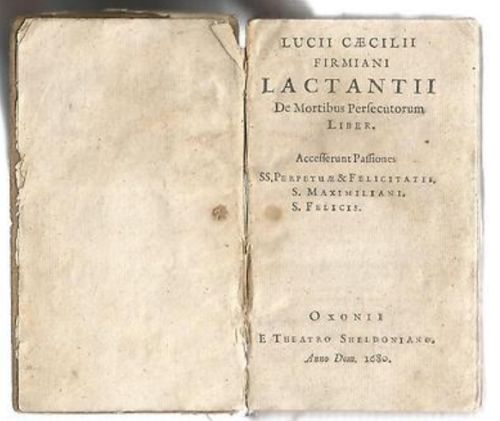
Contemporary sources, most notably Lactantius, provide vivid accounts of the consequences of enforcement. In De Mortibus Persecutorum, he describes how individuals accused of violating price limits were subject to harsh punishment, sometimes leading to violence and bloodshed in marketplaces. While Lactantius wrote with a polemical intent against Diocletian and his regime, his testimony nevertheless suggests that enforcement was both aggressive and uneven. The spectacle of punishment served as a deterrent but also contributed to an atmosphere of instability, as the boundaries of lawful behavior became increasingly fraught and uncertain for ordinary participants in the economy. Public punishments, whether carried out as exemplary justice or reactive enforcement, reinforced the visibility of imperial authority but also heightened anxiety among traders, who could not always predict how strictly or arbitrarily the law would be applied in practice.
The reliance on punitive enforcement paradoxically discouraged legal economic activity rather than promoting compliance. Merchants and producers, aware of the severe consequences of even minor infractions, often chose to withdraw from official markets altogether rather than risk punishment. This withdrawal further reduced the availability of goods, compounding shortages and reinforcing the shift toward black market transactions. The threat of violence did not strengthen the functioning of regulated markets but instead accelerated their decline, as fear became a central factor shaping economic decision-making.
Resistance to the Edict took both passive and active forms, reflecting the impracticality of strict enforcement in a complex economic environment. Passive resistance included noncompliance, concealment of goods, and participation in informal exchange networks, all of which undermined the reach of imperial authority without direct confrontation. More active forms of resistance may have included evasion of officials, falsification of transactions, and, in some cases, conflict between merchants and enforcers. These responses illustrate the extent to which economic actors adapted to the constraints imposed upon them, finding ways to navigate or circumvent regulations that threatened their livelihoods.
The uneven application of enforcement further weakened the credibility of the Edict. Given the vast geographic scope of the Roman Empire, local conditions, administrative capacity, and the discretion of officials varied widely, resulting in inconsistent implementation. In some regions, enforcement may have been rigorous and punitive, while in others it was limited or largely symbolic. This inconsistency created opportunities for evasion and contributed to perceptions of arbitrariness, as individuals could not rely on predictable or uniform application of the law. Such variability undermined both compliance and trust in the broader system of governance, as economic actors adjusted their behavior not to the law itself but to their expectations of how and where it might be enforced.
The reliance on violence and coercion to enforce the Edict reveals the limitations of state power when confronted with economic realities that resist simple regulation. While the imperial government sought to impose order through fear, the resulting climate of uncertainty and resistance weakened both the effectiveness of the policy and the legitimacy of its enforcement. Rather than stabilizing the economy, the use of punitive measures deepened its dysfunction, illustrating how the intersection of law, force, and economic behavior can produce outcomes that diverge sharply from intended goals when coercion substitutes for sustainable policy. The Edict stands as a cautionary example of how reliance on fear as a governing mechanism may achieve short-term compliance but often at the cost of long-term stability and institutional trust.
Administrative Limits: The Challenge of Governing a Vast Empire
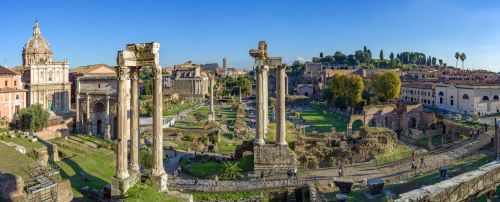
The failure of the Edict cannot be understood solely through its economic consequences but must also be examined within the administrative realities of governing a vast and diverse empire. The Roman Empire of the early fourth century stretched across multiple continents, encompassing regions with widely differing economic conditions, production capacities, and systems of exchange. Implementing a uniform pricing system across such a landscape required a level of bureaucratic coordination and local compliance that exceeded the practical capabilities of imperial administration. Though ambitious in scope, the Edict assumed a degree of centralized control that was difficult to achieve in practice. Even with expanded bureaucratic structures, the sheer scale of the empire meant that imperial directives were inevitably filtered through layers of local authority, each with its own priorities and constraints, complicating the consistent application of policy.
Diocletian’s broader reforms had sought to strengthen imperial administration through increased centralization, expanded bureaucracy, and clearer hierarchies of authority. The Tetrarchic system, with its division of power among multiple emperors, was intended to improve governance and responsiveness across the empire. While these reforms enhanced certain aspects of administrative control, they did not eliminate the fundamental challenges of communication, oversight, and enforcement across distant provinces. Orders issued from the imperial center had to pass through multiple layers of officials before reaching local markets, creating opportunities for delay, distortion, or selective implementation.
Regional variation further complicated the enforcement of the Edict. Prices that might have been reasonable in one part of the empire could be entirely impractical in another due to differences in local production costs, availability of goods, and transportation expenses. A fixed price for grain, textiles, or labor did not account for these variations, making compliance more difficult in regions where costs were higher or supply chains more fragile. Local officials, aware of these discrepancies, may have exercised discretion in applying the Edict, leading to uneven enforcement that undermined its effectiveness as a universal policy.
Communication limitations also played a significant role in restricting the reach of the Edict. In an era without rapid or reliable means of transmitting information, the dissemination of imperial decrees depended on physical copies, inscriptions, and the actions of local administrators. Delays in communication could result in inconsistent awareness of the law, while the interpretation of its provisions could vary depending on local context. These factors contributed to a fragmented implementation, in which the Edict’s provisions were understood and applied differently across regions, further weakening its impact. In many areas, the law may have arrived late, been incompletely transmitted, or been interpreted in ways that aligned more closely with local economic realities than with imperial intent, illustrating how logistical constraints shaped the lived experience of governance.
The administrative burden of enforcement placed additional strain on the imperial system. Monitoring compliance required personnel, resources, and coordination that were already stretched thin by other demands, including military defense, tax collection, and governance. Local officials tasked with enforcing price controls had to balance these responsibilities, often with limited capacity to do so effectively. In some cases, enforcement may have been deprioritized or applied selectively, reflecting practical constraints rather than deliberate resistance. This uneven allocation of administrative effort further contributed to the gap between policy and practice.
The challenges of administering the Edict across a vast empire reveal the limits of centralized control in the face of local complexity. While Diocletian’s reforms sought to impose order through structured governance, the realities of distance, diversity, and limited administrative capacity constrained their effectiveness. The Edict’s failure was not simply a matter of flawed economic reasoning but also a reflection of the structural difficulties inherent in governing a large and heterogeneous polity. The administrative limitations of the Roman Empire played a crucial role in shaping the outcomes of one of its most ambitious economic interventions.
Economic Misdiagnosis: Treating Symptoms, Not Causes

At the core of the Edict lay a fundamental misdiagnosis of the empire’s economic crisis. The Edict treated rising prices as the primary problem, framing them as the result of greed, speculation, and moral failure among merchants and producers. It addressed the visible symptoms of inflation rather than its underlying causes. By attempting to impose order through price ceilings, the policy assumed that prices could be controlled independently of the structural forces that shaped them, an assumption that proved deeply flawed when confronted with the realities of the Roman economy.
The roots of inflation in the third-century Roman Empire were complex and deeply embedded in monetary and fiscal practices. Decades of currency debasement had significantly reduced the intrinsic value of coinage, as emperors repeatedly lowered the silver content of coins to meet military and administrative expenses. This erosion of confidence in currency led to price increases that reflected not merely opportunistic behavior but rational adjustments to declining monetary value. In such a context, rising prices were not the cause of economic instability but a symptom of broader systemic issues tied to state finance and imperial policy.
By focusing on price controls rather than monetary reform, the Edict failed to address the mechanisms driving inflation. The attempt to fix prices without stabilizing the currency created a disconnect between official valuations and economic reality. Producers and merchants, aware that the purchasing power of coinage continued to fluctuate, could not rely on fixed prices to sustain their activities. The Edict imposed artificial constraints on transactions without restoring the underlying conditions necessary for stable exchange, further complicating an already fragile economic environment. In practical terms, this meant that even when prices were legally fixed, the underlying instability of money continued to distort trade, making compliance economically irrational and encouraging avoidance, withdrawal, or alternative exchange practices.
The moral framing of the Edict also contributed to its misdiagnosis. By attributing high prices to greed and corruption, the policy cast economic actors as the source of instability rather than participants responding to systemic pressures. This perspective justified harsh enforcement measures but obscured the structural nature of the problem. The behavior of merchants and producers reflected adaptive responses to changing conditions, including currency instability, supply disruptions, and regional variation. By misidentifying these responses as causes rather than consequences, the Edict targeted the wrong aspects of the economic system.
The failure of the Edict highlights the consequences of addressing economic symptoms without confronting their underlying causes. Effective intervention would have required reforms aimed at stabilizing currency, restoring confidence in monetary systems, and addressing fiscal imbalances. Instead, the imposition of price controls created additional distortions while leaving foundational issues unresolved. The resulting policy not only failed to halt inflation but contributed to broader economic disruption, illustrating how misdiagnosis can transform intended solutions into sources of further instability.
Comparative Perspectives: Price Controls across History

Diocletian’s Edict is not an isolated example but part of a broader historical pattern in which states have attempted to regulate prices during periods of crisis. Across different eras and societies, governments facing inflation, scarcity, or social unrest have turned to price controls as a means of restoring stability and protecting populations from perceived exploitation. While the specific contexts vary, these interventions often share common characteristics, including the imposition of ceilings, moral rhetoric about fairness, and reliance on enforcement mechanisms to ensure compliance. The Roman experience provides an early and influential case within a long continuum of economic regulation.
In the early modern period, similar efforts can be observed in European responses to food shortages and inflation. Authorities frequently imposed maximum prices on grain and other essential goods, particularly during times of famine or war. These measures were often justified as necessary protections for urban populations, yet they frequently produced outcomes comparable to those seen under Diocletian. Merchants and producers, unable to sell at mandated prices, reduced supply or diverted goods to unofficial channels, leading to shortages and the growth of informal markets. These recurring dynamics suggest that the tension between price control and market behavior is not confined to any single historical context but reflects broader economic principles.
The French Revolution offers another instructive comparison, particularly through the implementation of the Law of the Maximum in 1793. Intended to curb rising prices and ensure the availability of essential goods, the policy imposed strict limits on prices and wages while employing severe penalties for violations. As in the Roman case, enforcement relied heavily on coercion, and the policy contributed to market disruption, reduced supply, and widespread evasion. Although the revolutionary context differed significantly from that of the late Roman Empire, the outcomes reveal striking similarities, reinforcing the idea that price controls, when detached from underlying economic conditions, tend to produce unintended consequences.
Modern examples further illustrate the persistence of these patterns. During the twentieth century, governments implemented price controls in response to wartime economies, inflationary crises, and energy shortages. While some of these measures have achieved short-term stabilization under highly controlled conditions, many have also led to distortions such as rationing, black markets, and reduced production. The effectiveness of such policies has often depended on the broader context, including the degree of state capacity, the availability of complementary measures, and the willingness of populations to comply. Nevertheless, the challenges observed in earlier periods remain relevant, demonstrating the enduring complexity of regulating prices in dynamic economies.
Diocletian’s Edict emerges as part of a recurring historical phenomenon rather than a unique failure. Across time, price controls have repeatedly confronted the same fundamental dilemma: the difficulty of imposing fixed values on goods within systems shaped by fluctuating supply, demand, and costs. While the motivations behind such policies often reflect genuine concerns for social stability and fairness, their outcomes frequently reveal the limits of administrative intervention when it conflicts with economic realities. In this broader perspective, the Roman experience offers not only a historical case study but also a lens through which to understand the enduring tensions between state authority and market behavior.
Historiography: Interpreting the Edict’s Failure
Following is a video about the failure of Roman price controls:
Scholarly interpretations of Diocletian’s Edict have evolved significantly, reflecting broader shifts in how historians understand the late Roman economy. Early historians often interpreted the Edict as a clear and dramatic failure, emphasizing its impracticality and the violence associated with its enforcement. Influenced in part by the hostile account of Lactantius, these interpretations framed the Edict as an example of imperial overreach and economic misunderstanding. The narrative that emerged presented Diocletian’s intervention as both misguided and counterproductive, reinforcing a broader view of the later Roman Empire as characterized by decline and administrative excess.
Twentieth-century scholarship introduced more nuanced perspectives, particularly as historians began to reassess the nature of the Roman economy and the intentions behind imperial policy. Rather than viewing the Edict solely as a failure, some scholars have emphasized its role within a broader program of reform aimed at stabilizing the empire after a prolonged period of crisis. From this perspective, the Edict can be understood as a rational, if ultimately ineffective, response to genuine economic pressures. Historians have situated the policy within its historical context, arguing that it reflected the limitations of available administrative tools rather than simple misjudgment. This line of interpretation places greater emphasis on the structural challenges facing the Roman state, including fiscal strain, administrative complexity, and regional variation, suggesting that the Edict’s shortcomings were as much a product of circumstance as of policy design.
More recent scholarship has further complicated the historiographical picture by challenging assumptions about the uniformity of the Edict’s implementation and impact. Studies of regional variation and local economic conditions suggest that the effects of the Edict may have differed significantly across the empire, with some areas experiencing more disruption than others. Additionally, scholars influenced by economic theory have revisited the Edict as part of a functioning market economy, emphasizing the interaction between state intervention and market forces. These approaches highlight the importance of considering both structural conditions and local contexts when evaluating the policy’s outcomes.
The historiography of Diocletian’s Edict reveals a shift from simplistic narratives of failure toward more complex interpretations that account for context, intention, and variation. While the Edict is still widely regarded as unsuccessful in achieving its aims, modern scholarship emphasizes that its shortcomings must be understood within the constraints of the late Roman state and the challenges it faced. The evolving debate underscores the importance of historiographical perspective in shaping how historical events are interpreted, reminding us that the meaning of policies like the Edict is not fixed but continually reassessed in light of new evidence and analytical frameworks.
Conclusion: Authority, Markets, and the Limits of Control
Diocletian’s Edict on Maximum Prices stands as one of the most ambitious attempts in antiquity to impose order on a complex and unstable economic system. Conceived in a moment of crisis, it sought to restore fairness, protect consumers, and stabilize markets through direct intervention. Yet the Edict’s failure reveals the inherent difficulty of controlling economic outcomes through decree alone. By attempting to regulate prices without addressing the deeper structural forces driving inflation, the policy disrupted established patterns of exchange and undermined the very stability it aimed to achieve.
The experience of the Edict underscores the tension between state authority and market behavior, a dynamic that extends far beyond the Roman world. Markets operate through networks of production, distribution, and exchange shaped by incentives and constraints that cannot be easily overridden. When policy imposes conditions that conflict with these underlying mechanisms, economic actors adapt in ways that often circumvent or resist regulation. In the Roman case, this adaptation took the form of withdrawal from official markets, the expansion of black market activity, and a general erosion of compliance, illustrating how attempts at control can generate unintended and counterproductive outcomes.
The Edict reflects the broader challenges faced by the late Roman state in maintaining cohesion across a vast and diverse empire. Administrative limitations, regional variation, and communication constraints all contributed to the gap between imperial intention and practical implementation. These factors highlight that the effectiveness of policy is not determined solely by its design but also by the capacity of institutions to enforce and sustain it. The Edict’s failure was as much administrative as it was economic, rooted in the structural realities of governance as well as the dynamics of the marketplace.
Diocletian’s intervention serves as a cautionary example of the limits of centralized control in complex systems. While the desire to stabilize and regulate economic life is understandable, the Roman experience demonstrates that durable solutions require alignment with underlying conditions rather than attempts to override them. The Edict’s legacy lies not only in its immediate consequences but in the broader lesson it offers about the relationship between authority, economic behavior, and the constraints that shape both. In this enduring tension, the story of Diocletian’s price controls continues to resonate as a reminder of the challenges inherent in governing economies across time and place.
Bibliography
- Ando, Clifford. Imperial Ideology and Provincial Loyalty in the Roman Empire. Berkeley: University of California Press, 2000.
- —-. Imperial Rome AD 193 to 284: The Critical Century. Edinburgh: Edinburgh University Press, 2012.
- Bagnall, Roger S. Egypt in Late Antiquity. Princeton: Princeton University Press, 1993.
- Barnes, Timothy D. Constantine and Eusebius. Cambridge, MA: Harvard University Press, 1981.
- Burnett, Andrew. Coinage in the Roman World. London: Seaby, 1987.
- Corcoran, Simon. The Empire of the Tetrarchs: Imperial Pronouncements and Government AD 284–324. Oxford: Oxford University Press, 1996.
- Crawford, Michael H. and Joyce Reynolds. “The Publication of the Prices Edict: a New Inscription from Aezani.” The Journal of Roman Studies 65 (1975), 160-163.
- Duncan-Jones, Richard. Money and Government in the Roman Empire. Cambridge: Cambridge University Press, 1994.
- Garnsey, Peter. Famine and Food Supply in the Graeco-Roman World: Responses to Risk and Crisis. Cambridge: Cambridge University Press, 1988.
- Garnsey, Peter, and Richard Saller. The Roman Empire: Economy, Society and Culture. Berkeley: University of California Press, 1987.
- Harl, Kenneth W. Coinage in the Roman Economy, 300 B.C. to A.D. 700. Baltimore: Johns Hopkins University Press, 1996.
- Jones, A. H. M. “Inflation under the Roman Empire.” The Economic History Review 5:3 (1953), 293-318.
- —-. The Later Roman Empire, 284–602: A Social, Economic and Administrative Survey. Oxford: Blackwell, 1964.
- Kaplan, Steven L. Bread, Politics and Political Economy in the Reign of Louis XV. The Hague: Martinus Nijhoff, 1976.
- Kelly, Christopher. Ruling the Later Roman Empire. Cambridge, MA: Harvard University Press, 1964.
- Kent, Roland G. “The Edict of Diocletian Fixing Maximum Prices.” University of Pennsylvania Law Review and American Law Register 69:1 (1920), 35-47.
- Lactantius. Of the Manner in Which the Persecutors Died. Translated by J. L. Creed. Oxford: Clarendon Press, 1984.
- Lefebvre, Georges. The French Revolution, Vol. 1: From Its Origins to 1793. New York: Columbia University Press, 1962.
- Potter, David. The Roman Empire at Bay, AD 180–395. London: Routledge, 2004.
- Reynolds, Joyce. “The Aphrodisias Copy of Diocletian’s Edict on Maximum Price.” Zeitschrift für Papyrologie und Epigraphik 33 (1979), 46.
- Rockoff, Hugh. Drastic Measures: A History of Wage and Price Controls in the United States. Cambridge: Cambridge University Press, 1984.
- Southern, Pat. The Roman Empire from Severus to Constantine. London: Routledge, 2001.
- Sutherland, C.H.V. Roman Coins. London: Barrie & Jenkins, 1974.
- Temin, Peter. The Roman Market Economy. Princeton: Princeton University Press, 2012.
- Wassink, Alfred. “Inflation and Financial Policy under the Roman Empire to the Price Edict of 301 A.D.” Historia: Zeitschrift für Alte Geschichte 40:4 (1991), 465-493.
- Wilson, Andrew. “Machines in Greek and Roman Technology.” In The Oxford Handbook of Engineering and Technology in the Classical World, edited by John P. Oleson. Oxford: Oxford University Press (2008), 337-368.
Originally published by Brewminate, 04.07.2026, under the terms of a Creative Commons Attribution-NonCommercial-NoDerivatives 4.0 International license.
About the Author