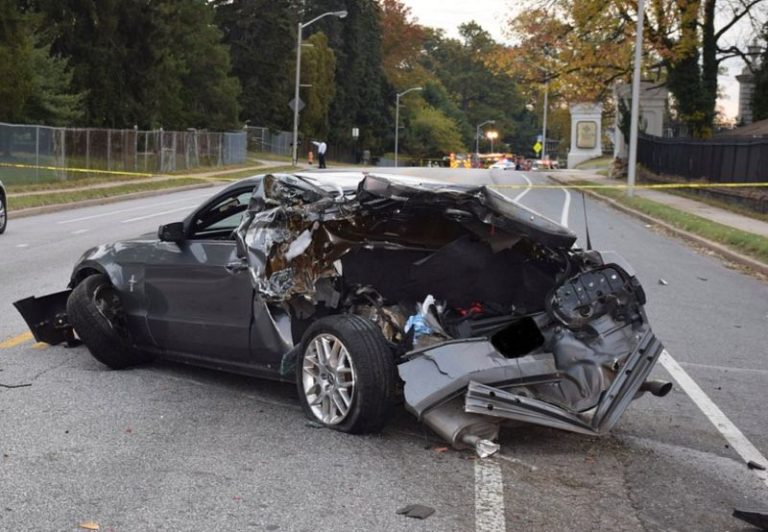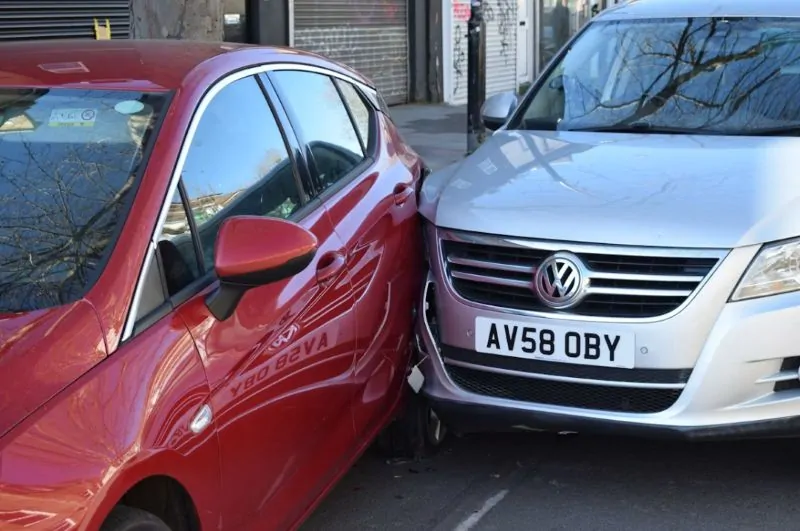
Have you ever wondered how two individuals can be involved in similar accidents and walk away with vastly different results?
One gets a full settlement. The other gets nothing.
It almost never boils down to who got injured more badly. Negligence cases break down into 4 words: duty, breach, causation and damages. These four pillars support all negligence claims in the nation. Remove just one… and the whole house of cards collapses.
Here is how each one works.
What you’ll uncover:
- Why Negligence Is The Whole Ball Game
- Pillar #1: The Duty Of Care
- Pillar #2: The Breach
- Pillar #3: Causation
- Pillar #4: Damages
- What Happens When One Pillar Is Weak
Why Negligence Is The Whole Ball Game
Motor vehicle crashes remain a common occurrence on roadways throughout the United States. According to estimates from the NHTSA, 36,640 people died as the result of a traffic crash in 2025. Millions more were injured severely enough to seek medical attention.
But here’s the thing…
Insurance companies don’t settle claims because someone had a scary wreck or because their hospital bill was enormous. Insurance companies pay claims when somebody can demonstrate that the other driver was negligent, meaning at fault under the law. Negligence…has a definition.
Negligence turns “they hit me” into “they owe me.” When you build it, that’s pretty much what good car accident attorneys do all day. They take the chaotic mess of skid marks/witness statements/half remembered details and sort every single item into one of four legal categories. Where you file your claim matters too. Court rules, filing deadlines and jury attitudes can vary dramatically county to county – which is just one reason why hiring a Houston auto accident lawyer matters more than hiring whichever attorney has the largest billboard along I-45. The stronger each pillar becomes, the more leverage your injury victim has at the negotiating table.
So here’s the breakdown of all four.
Pillar #1: The Duty Of Care
Duty is by far the simplest of the four pillars. It refers to the legal obligation one individual owes another.
Every driver who turns on their ignition owes a duty of care to every other person on the road. Drivers, passengers, bicyclists, pedestrians – you name it. They don’t have to sign anything. They don’t have to agree to it. As soon as the vehicle is in motion, the duty is there.
In practice, that duty means:
- Obeying speed limits and traffic signals
- Keeping a safe following distance
- Staying off the phone
- Driving sober and alert
- Adjusting for rain, fog or heavy traffic
Duty goes farther than most realise. A trucking company has a duty to maintain its brakes. A city has a duty to maintain its intersections in a reasonable manner.
This pillar is seldom argued in most crash cases. The battle is won or lost on the other three.
Pillar #2: The Breach
Breach is the moment that duty gets ignored.
Running a red light is a breach. Texting while driving at 70 mph is a breach. Not yielding while turning left is a breach. The law asks one question: would a reasonably prudent driver have acted the same way in the same situation? If not, the duty was breached.
Negligent behavior on the road accounts for these statistics. Nearly 50% of vehicle occupants who lost their lives in 2024 were unbelted at the time of the crash.
Proving breach takes evidence, not opinions.
Evidence that proves a breach includes:
- The police crash report and any citations issued
- Dashcam, traffic camera or nearby business security footage
- Cell phone records showing calls or texts at the time of impact
- Black box (event data recorder) downloads showing speed and braking
- Witness statements taken while memories are fresh
Most of this evidence doesn’t last long. Security footage is overwritten in days. Skid marks fade away. That is precisely why car accident attorneys begin investigating on day one, not day ninety.
Pillar #3: Causation
Causation is where good claims go to die.
A driver can be negligent, someone can be injured and the claim can still fail — because no one linked the two. Causation is that link. Courts divide it into two components.
Cause In Fact
This is the “but for” test. Plain English all the way. But for the actions of the other driver (running the light), would the accident have occurred? If not, then cause in fact has been established.
Proximate Cause
Foreseeability asks whether the injury was the predictable result of the negligent action. Did someone rear-end you and cause whiplash? Absolutely foreseeable. Did some freak accident caused by random events injure you? Much more difficult to blame the driver for.
Insurance adjusters love to poke at this pillar every chance they get. Their favorite trick is finding a gap in treatment and saying the individual couldn’t possibly be that injured.
The solution is boring but strong: get to a doctor right away and never miss your appointments. Medical records that begin on the date of the accident and continue in a consistent stream are the strongest evidence of causation you will ever have.
Pillar #4: Damages
The final pillar is the one people think about first — the actual losses.
No injury, no claim even though the other driver was totally reckless. Physical and mental.
Economic damages are the losses with receipts attached:
- Emergency treatment, surgery and follow-up care
- Future medical costs and rehabilitation
- Lost wages and lost earning capacity
- Vehicle repair or replacement
Non-economic damages refer to injuries that can’t be calculated monetarily: physical pain and suffering, emotional trauma, scarring and disfigurement, loss of enjoyment of life.
The error in this situation is signing too soon. Herniated discs and concussions are two injuries that show their true price several months down the road. Once you sign a release it’s closed, permanently.
What Happens When One Pillar Is Weak
Imagine pillars as table legs. Three good legs and one broken leg still drops everything resting on top.
Texas has one more layer to this called modified comparative fault. You can recover damages as long as you are 50% or less at fault. However, your award is reduced by your percentage of fault. Once you reach 51% your award goes down to nothing. That’s why insurance companies work so hard to place some percentage of fault on the injured driver.
That’s also why they get built together, rather than sequentially. Prove up breach of contract elements usually proves causation. Prove up causation medical records also prove damages. It’s all interlocking.
Tying It All Together
Every negligence claim rests on the same four supports:
- Duty — the other party owed a responsibility
- Breach — they failed to meet it
- Causation — that failure caused the crash and the injuries
- Damages — real, provable losses followed
Insurance companies have these pillars memorized and they will test each of them. The only ones who win are those who treat Evidence as Emergencies, Seek Medical Treatment Immediately, and Know What Must Be Proven BEFORE you spend your first dollar.
About the Author