Under Emperor Commodus, entitlement and staged adulation transformed imperial authority into spectacle, revealing how performance displaced governance in late second-century Rome.

By Matthew A. McIntosh
Public Historian
Brewminate
Introduction: Inheriting Greatness, Performing Supremacy
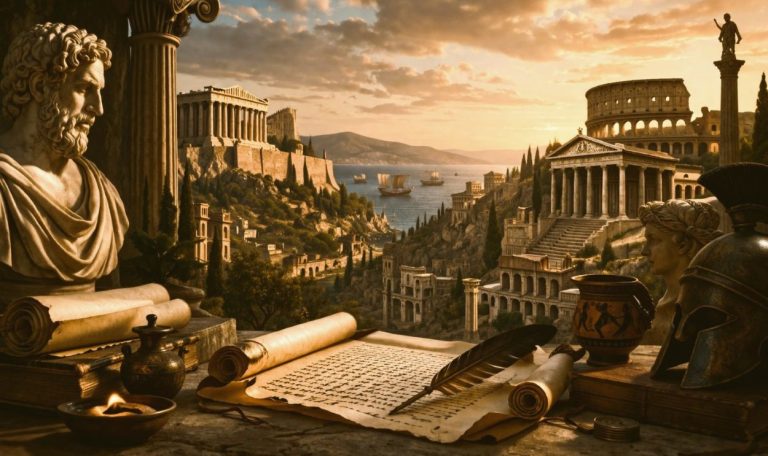
When Commodus ascended to sole rule in 180 CE, he inherited more than the Roman Empire. He inherited the moral prestige of Marcus Aurelius, a ruler remembered for discipline, philosophical restraint, and wartime endurance. The transition marked the first time since the establishment of the principate that a reigning emperor was directly succeeded by his biological son after a prolonged and stable reign. The Antonine settlement appeared secure, its institutions functioning, its borders largely intact, and its political culture habituated to relative continuity. Yet embedded within that continuity was a structural tension. Legitimacy accumulated through personal merit does not automatically transfer with bloodline. Marcus Aurelius’ authority had been forged through military crisis, administrative engagement, and the cultivation of senatorial cooperation. Commodus assumed the symbolic apex of that achievement without having undergone its formative pressures. The succession exposed a latent question within the principate itself: could an empire stabilized by disciplined stewardship withstand the personalization of inherited supremacy?
Ancient sources describe a ruler who reoriented the imperial office toward personal adulation. Cassius Dio and Herodian portray Commodus as increasingly invested in spectacle, divine identification, and theatrical self-display. He styled himself as Hercules reborn, renamed Rome and its institutions in his honor, and demanded extravagant affirmations of loyalty from Senate and army alike. Whether these accounts exaggerate or moralize, they converge on a consistent theme: the imperial office became an instrument of personal validation. The emperor did not merely occupy the state. He staged himself as its living embodiment. Identity and authority fused in ways that blurred the distinction between governance and symbolic display.
Modern scholarship has moved beyond the caricature of decadence to examine Commodus within the structural evolution of the Roman principate. The imperial system, though stabilized by precedent, remained heavily dependent upon personal authority and elite cooperation. Augustus had embedded monarchy within republican language, creating a framework in which imperial power required continual negotiation with senatorial dignity and military expectation. By the second century, this balance had become customary, yet it had not become autonomous. The Senate’s role was limited yet symbolically vital. The military’s loyalty was indispensable and transactional. The emperor stood at the intersection of these constituencies, tasked with maintaining equilibrium through measured authority. When the office is personalized to the degree described under Commodus, the cumulative weight of personalization thinned reciprocity between emperor and elite. Demands for devotion replace expectations of shared governance. Flattery becomes currency. Correction becomes risk. The appearance of stability may persist, sustained by ritual and fear, but its foundations grow increasingly narrow as institutional consultation yields to theatrical affirmation.
Commodus transformed inherited prestige into sustained theater. Raised within imperial insulation and granted co-emperorship at a young age, he governed without having first navigated the political disciplines that shaped earlier rulers. His reign illustrates how entitlement can evolve not from simple moral failing but from structural distortion. When identity fuses with state authority and performance displaces prudence, the imperial office becomes mirror rather than mechanism. The assassination that ended his rule did not erupt from sudden chaos. It emerged from accumulated elite fatigue beneath prolonged spectacle. In Commodus, the Roman Empire reveals the fragility of legitimacy when greatness is inherited but not renewed.
Marcus Aurelius and the Inheritance of Moral Capital

Marcus Aurelius occupies a singular position in Roman political memory. Philosopher, general, and administrator, he embodied a model of restrained authority that later generations would romanticize. His reign was marked by sustained military conflict along the Danube frontier, episodes of plague, and fiscal strain, yet his public persona emphasized duty over spectacle. The image preserved in his Meditations reinforces this perception of inward discipline and self-scrutiny. Although the work was private rather than propagandistic, it contributed retrospectively to the construction of Marcus as the philosopher-king, a ruler whose moral seriousness aligned with imperial responsibility. In the Roman imagination, authority under Marcus appeared purposeful rather than theatrical. He was not remembered primarily for architectural extravagance or theatrical self-display, but for endurance and deliberation. Even in wartime, his authority seemed measured. This reputation, cultivated through conduct and later reinforced by literary transmission, generated a form of moral capital that outlived his administration. By the time of his death, Marcus Aurelius had come to symbolize not only imperial stability but ethical gravity.
This moral capital was not merely literary. Marcus governed through cooperation with the Senate, careful management of provincial administration, and attention to legal procedure. He maintained the Antonine tradition of presenting imperial power as stewardship rather than domination. While ultimate authority resided firmly with the emperor, its exercise was embedded within established institutions. Military campaigns were conducted as necessity rather than self-glorification. Public ceremonies reinforced hierarchy yet rarely descended into overt personal deification. By the time of his death, Marcus had accumulated not only formal legitimacy but reputational gravity. His authority rested on a perceived harmony between office and character.
The inheritance of such capital presents a paradox. Moral authority forged through adversity cannot be transmitted in the same manner as territory or title. Commodus inherited the aura of disciplined governance without having earned it under comparable pressures. The expectations attached to his accession were amplified. He was not merely another emperor. He was the son of Marcus Aurelius. The memory of a restrained ruler intensified scrutiny of his successor’s conduct. Every deviation from moderation would appear sharper against the backdrop of Stoic restraint. The moral capital that stabilized the father risked destabilizing the son.
The Antonine system had matured in ways that made visible continuity essential. Stability had become normalized rather than extraordinary, woven into the expectations of both Senate and army. In such an environment, the successor’s task was not dramatic expansion but steady preservation. This required patience, institutional sensitivity, and a willingness to subordinate personal impulse to administrative equilibrium. The difficulty lies in the psychology of inherited greatness. When authority is perceived as guaranteed by lineage, the discipline required to sustain institutional reciprocity may weaken. The presence of overwhelming prestige can produce an illusion of invulnerability. Marcus’ example demonstrated that personal restraint could reinforce imperial authority. Commodus would demonstrate how quickly that equilibrium could shift when inherited prestige was converted into personal affirmation rather than administrative stewardship. The moral capital that once fortified the principate became a silent measure against which its erosion could be judged.
Raised within the Palace: Imperial Insulation from Youth
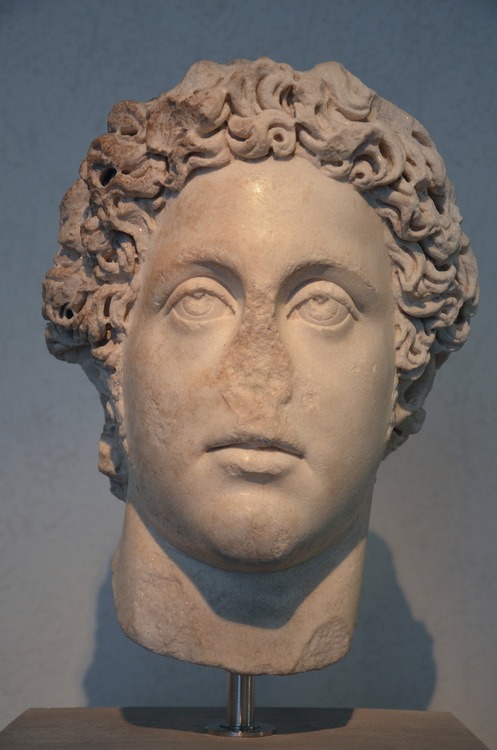
Commodus’ political formation differed markedly from that of earlier emperors who had risen through senatorial careers or military distinction. Born in 161 CE and elevated to the rank of Caesar at a young age, he grew up not as a contender for power but as its presumptive inheritor. By 177 CE, he had been named co-emperor alongside Marcus Aurelius, a gesture intended to secure dynastic continuity during ongoing frontier wars. This early elevation placed Commodus within the machinery of imperial authority before he had confronted its disciplines. The palace, rather than the cursus honorum, became the site of his education. Authority was experienced as environment rather than achievement.
The Roman imperial court, though less rigidly formalized than later monarchies, nonetheless functioned as a sphere of filtered access and curated perception. Proximity to the emperor conferred influence, and influence depended upon favor. A prince raised within this structure would encounter deference as routine rather than exceptional. Advisors, tutors, military officers, and household officials operated within a hierarchy shaped by caution and self-preservation. Speech was calibrated. Disagreement required tact. While Marcus Aurelius may have attempted to instill philosophical discipline and ethical seriousness in his son, the institutional reality of imperial succession surrounded Commodus with affirmation. The difference between guidance and flattery can narrow in such environments, especially when the heir’s position is secure and his future uncontested. Political inevitability diminishes the corrective force of dissent. When no rival looms and no election awaits, the incentive to challenge the heir’s assumptions weakens. Insulation develops not through explicit conspiracy but through accumulated deference.
Unlike predecessors such as Vespasian or even Trajan, Commodus did not ascend through a sequence of competitive appointments that tested administrative resilience. His authority was insulated from external validation. Military experience during the Marcomannic Wars introduced him to frontier conditions, yet these campaigns occurred under the shadow of his father’s command. He did not secure power through victory over rivals or through senatorial negotiation. Instead, he inherited a system already stabilized by precedent. The absence of formative political struggle can produce confidence, but it can also limit exposure to institutional constraint. Power encountered early and continuously may be perceived less as responsibility than as identity.
Imperial insulation from youth also shapes expectations in more subtle ways. When authority is normalized within daily experience, the boundaries between personal will and public office blur gradually rather than abruptly. The palace reinforces hierarchy through ritualized audiences, ceremonial hierarchy, and tightly controlled access to the imperial person. For a young heir, repeated affirmation of status can foster an understanding of sovereignty as natural rather than conditional. Praise becomes ambient. Obedience becomes routine. The Roman principate preserved republican language in public discourse, yet within the imperial household the reality of concentrated power was unmistakable. The heir witnessed the machinery of empire revolving around a single figure. This environment may cultivate an intuitive association between personal desire and public command. The distinction between serving the state and embodying it can erode when formative political memory lacks moments of vulnerability, compromise, or negotiated limitation.
By the time Commodus assumed sole rule, he had spent years inhabiting a world structured around his eventual supremacy. The habits formed in such an environment matter profoundly. Insulation reduces friction. Friction, however, is often the medium through which prudence develops and institutional sensitivity matures. An emperor who has never faced credible institutional resistance may interpret critique as disloyalty rather than correction, especially if critique disrupts an established pattern of affirmation. The palace, designed to protect the heir and ensure continuity, can generate a subtle distortion of political perception. Stability secured through dynastic succession risks producing a ruler for whom power feels innate and unquestionable rather than contingent and negotiated. In Commodus’ case, this insulation would prove consequential once the full weight of empire rested solely upon him, and the deference of youth hardened into expectation of absolute devotion.
Identity as Empire: Hercules and the Theatrical Self

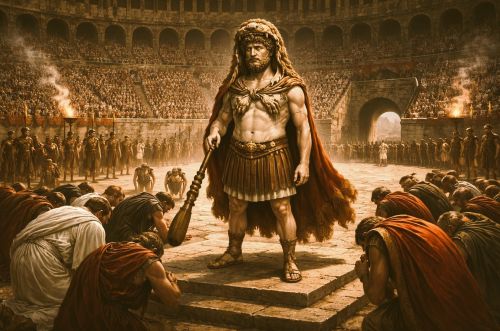
Commodus’ most striking departure from Antonine precedent lay in the deliberate fusion of personal identity with imperial symbolism. Ancient sources emphasize his self-presentation as Hercules Romanus, a living embodiment of the mythic strongman. Statues depicted him draped in the lion skin and bearing the club, visual markers that translated legendary heroism into contemporary authority. This was not a casual aesthetic choice or a minor embellishment within established imperial iconography. It represented a recalibration of imperial imagery at the highest level. Where earlier emperors emphasized civic restoration, dynastic continuity, or military discipline within recognizable Roman frameworks, Commodus foregrounded mythic personhood as the primary language of power. The emperor ceased to be first magistrate cloaked in republican vocabulary and became heroic spectacle in his own right. The shift was subtle in form yet profound in implication. Authority was no longer primarily institutional. It was embodied, dramatized, and mythologized in the emperor’s physical presence.
The association with Hercules carried layered political meaning. Hercules was not merely a warrior. He was a civilizing conqueror, a figure who subdued chaos and established order through strength. By appropriating this iconography, Commodus claimed not only physical prowess but cosmic legitimacy. The message embedded in coinage and statuary suggested that the emperor’s body itself embodied Roman power. Divine proximity was not mediated through traditional priesthood or abstract virtue. It was staged directly in the person of the ruler. The boundary between mortal authority and mythic archetype narrowed visibly.
This transformation extended beyond imagery into civic renaming and ceremonial innovation. Cassius Dio records that Commodus renamed Rome as Colonia Commodiana and rebranded months and legions in his honor. Whether implemented fully or exaggerated in hostile accounts, the symbolic intent is clear. The city, long imagined as eternal and supra-personal, was rhetorically subordinated to the emperor’s identity. The imperial office ceased to orbit Rome. Rome was made to orbit the emperor. Such gestures signal a shift from stewardship to personalization. The state became reflective surface.
Theatrical self-presentation also functioned as political insulation. By presenting himself as Hercules reborn, Commodus elevated critique into sacrilege. If the emperor is mythic, dissent becomes impiety rather than disagreement. The fusion of identity and authority intensifies asymmetry and narrows the conceptual space for opposition. Under the principate, republican forms had masked monarchy through calibrated language and ritual balance. Senators retained dignity through participation in governance, even as real power rested elsewhere. Commodus’ iconography strained that equilibrium by foregrounding singular embodiment over shared political form. The emperor was no longer merely guardian of Roman greatness. He was its incarnation. The implications for senatorial identity were profound. Participation in governance risked being recast as participation in homage. Ritual affirmation expanded while meaningful consultation contracted. In this way, mythic self-styling operated not only as spectacle but as structural reinforcement of unilateral authority.
This theatricalization of rule did not emerge in a vacuum. Roman imperial ideology had long incorporated divine association, especially after death. Augustus had been deified posthumously. Successors invoked divine favor. Commodus’ innovation lay in collapsing temporal distance. Apotheosis was no longer retrospective honor but living performance. The imperial body became political message. Arena appearances reinforced this imagery, as the emperor enacted strength before mass audiences. Myth and spectacle converged. The performance was not peripheral to governance. It increasingly defined it.
In fusing identity with empire, Commodus exposed a latent tension within the principate. The system depended upon personal authority yet preserved institutional language to temper it. When personal image overwhelms institutional mediation, equilibrium falters. The emperor’s need for affirmation can overshadow the administrative demands of rule. Theatrical self-construction promises invulnerability, yet it often masks insecurity. By converting Hercules into political theology, Commodus transformed inherited prestige into visible myth. The cost of that transformation would become apparent as institutional reciprocity thinned beneath sustained spectacle.
Arena Politics: Performance as Governance
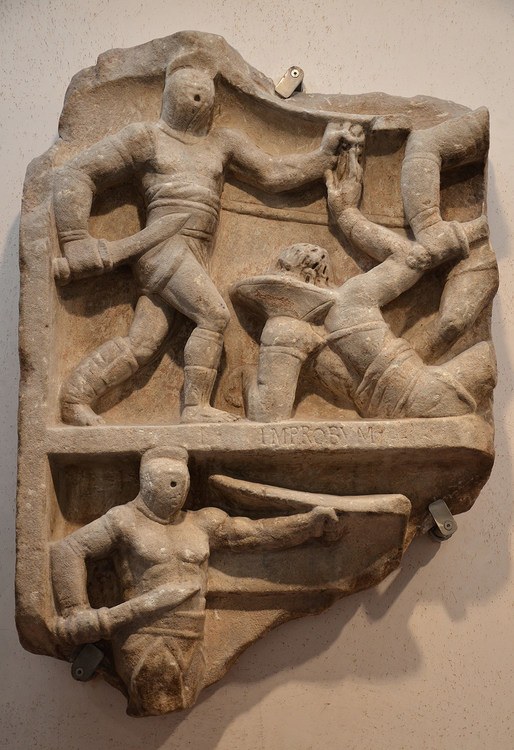
Commodus’ appearance in the arena marked one of the most visible expressions of his theatrical rule. Unlike earlier emperors who sponsored games to reinforce civic generosity and affirm their role as benefactors, Commodus entered the spectacle himself. Cassius Dio and Herodian describe him participating in gladiatorial displays and staged hunts, often presenting these appearances as evidence of moral decline. Yet beyond moral judgment, the arena performances reveal a deliberate political strategy embedded within imperial self-fashioning. The emperor did not simply sponsor games as patron. He entered them as protagonist. Governance itself became visible display. In a political system that lacked electoral accountability yet depended on public perception, the arena offered direct feedback. Applause provided affirmation. Silence or discomfort signaled risk. By stepping into the amphitheater, Commodus shortened the distance between ruler and crowd, transforming imperial authority into a recurring visual event rather than a distant abstraction.
The arena offered a medium uniquely suited to imperial self-dramatization. It was a space where hierarchy was absolute, violence was ritualized, and victory was choreographed. By descending into that space while maintaining overwhelming control of its outcome, Commodus could display strength without risking genuine vulnerability. His opponents were carefully selected. His victories were assured. The symbolism mattered more than the contest. In staging himself as triumphant combatant, he converted imperial authority into visible physical dominance. Strength was not abstract. It was enacted.
Such performances also recalibrated the emperor’s relationship with different constituencies. To the urban populace, arena appearances could signal accessibility and virility. The emperor appeared not distant but dramatically present. To the Senate, however, these displays risked degrading imperial dignity. Roman aristocratic culture valued gravitas and restraint. An emperor who sought applause in the amphitheater inverted expectations. The same act that generated popular fascination could generate elite discomfort. Performance unified and divided simultaneously.
Financial dimensions further complicate this theater of governance. Ancient sources emphasize the lavish expenditures associated with Commodus’ spectacles and note the payments he allegedly demanded for his arena appearances. Whether exaggerated or not, such accounts reflect anxiety about fiscal priorities and the symbolic redirection of imperial resources. Spectacle is expensive, requiring elaborate staging, animal procurement, gladiatorial training, and urban maintenance. When imperial resources are redirected toward personal performance, administrative functions risk appearing secondary. Even if the treasury remained solvent, the optics of expenditure mattered. The perception that the emperor valued acclaim over governance could intensify senatorial alienation and erode confidence in imperial seriousness. Fiscal strain becomes politically dangerous not only when it produces crisis but when it signals misalignment between spectacle and stewardship. The arena functioned as both stage and ledger, dramatizing authority while quietly inviting scrutiny of imperial priorities.
The arena also intensified the fusion of identity and authority. By presenting himself repeatedly as Hercules in combat, Commodus reinforced mythic self-construction through action rather than image alone. The emperor’s body became political text. Each staged victory reaffirmed his narrative of invincibility. Yet repetition can diminish rather than elevate authority. What begins as dramatic innovation may devolve into routine exhibition. Spectacle risks appearing compulsive rather than strategic. The emperor’s need to perform can overshadow the quieter obligations of administration.
Arena politics exemplify the transformation of governance into theater. The Roman principate had always required symbolic communication, carefully balancing republican language with monarchical reality. Commodus expanded that symbolic register into sustained and highly personalized performance. Applause substituted for consultation. Physical display substituted for institutional engagement. The emperor’s presence in the arena blurred the boundary between civic ritual and personal exhibition. While outward stability endured, the center of gravity shifted from negotiated authority toward staged supremacy. The amphitheater, designed for entertainment and ritualized violence, became an implicit metaphor for rule itself: hierarchical, choreographed, and centered upon a single dominant figure. Under Commodus, political authority increasingly resembled spectacle, and spectacle increasingly resembled governance.
Demands for Personal Devotion

As Commodus’ reign progressed, the language of loyalty appears increasingly reframed in personal rather than institutional terms. Roman emperors had always required allegiance, yet that allegiance was typically articulated as fidelity to the res publica under imperial stewardship. Under Commodus, according to Cassius Dio and Herodian, devotion shifted toward the emperor’s person as primary object. The distinction between obedience to office and reverence for individual narrowed. Honors multiplied. Titles expanded. The emperor’s presence demanded acknowledgment not merely as magistrate but as quasi-divine figure. Political loyalty acquired the tone of personal veneration.
Such a shift alters the texture of governance in profound ways. When loyalty is directed toward an individual identity rather than an institutional role, dissent becomes more dangerous and more personal. Critique of policy risks being interpreted as insult to personhood. Ancient accounts emphasize Commodus’ sensitivity to perceived disrespect, noting purges and executions among those suspected of insufficient enthusiasm. Whether exaggerated or not, these narratives reflect a climate in which personal affirmation became politically charged. The Senate, already diminished in formal authority, confronted an environment in which symbolic gestures of deference mattered intensely. Compliance was not merely procedural. It was expressive. Senators were required not only to approve measures but to celebrate them, not merely to acknowledge imperial power but to exalt imperial persona. The psychological pressure of such expectations reshaped elite behavior. Silence could be construed as disloyalty. Hesitation could appear as contempt. In this atmosphere, the boundary between governance and homage eroded, narrowing the space in which principled disagreement could safely exist.
The Senate’s predicament reveals the asymmetry inherent in personal devotion regimes. Senators could outwardly praise imperial initiatives, erect statues, and endorse honors. Such gestures satisfied ceremonial expectation but did not necessarily signal genuine alignment. Compulsory affirmation risks hollowing institutional dignity. Public loyalty may expand even as private resentment accumulates. The performance of devotion becomes survival strategy. The more the emperor demands visible reverence, the less reliable that reverence becomes as measure of stability. Ritual compliance can mask simmering alienation.
The military presented a parallel but distinct dynamic. Soldiers required patronage, donatives, and leadership credibility. Commodus’ emphasis on spectacle did not eliminate the need for military support. Instead, devotion was reinforced through material incentives and symbolic association with strength. By styling himself as Hercules and appearing publicly as conqueror, Commodus projected martial vitality. Yet military loyalty is transactional at its core. It depends upon sustained provision, fair distribution of rewards, and confidence in leadership. When devotion is framed as personal worship rather than professional allegiance, its durability may hinge on continued satisfaction. Commanders, like senators, could comply outwardly while recalibrating privately. A soldier may cheer the emperor in the arena, yet still measure him by pay, security, and campaign competence. If spectacle substitutes too visibly for strategic seriousness, respect may thin beneath formal acclamation. Personal devotion cannot permanently override institutional expectation without strain.
Demands for personal devotion also affect administrative networks in subtler ways. Imperial governance required collaboration among equestrian officials, provincial governors, legal advisors, and financial administrators. These actors sustained the empire’s daily functioning. If advancement depended upon enthusiastic affirmation rather than competence, incentives could shift gradually but decisively. Courtiers attuned to imperial mood might rise more quickly than cautious managers focused on fiscal or provincial stability. The balance between ability and flattery can tilt toward the latter. Administrative posts risk becoming arenas of competition for favor rather than arenas of problem-solving. Institutional resilience diminishes when personal approval eclipses meritocratic evaluation. Devotion displaces deliberation. The cumulative effect is not immediate collapse but progressive weakening, as experienced administrators withdraw, adapt, or align their advice with perceived imperial preference rather than objective assessment.
The emperor’s perception of loyalty may diverge from its substance. Visible affirmation becomes abundant and honors proliferate. Yet beneath this surface, the foundations of cooperation thin. The very intensity of required devotion can generate fatigue among elites compelled to sustain it. Commodus’ eventual assassination underscores the fragility of loyalty rooted primarily in personal adulation. Absolute devotion, when demanded continuously, risks exhausting those required to perform it. Political systems endure when allegiance aligns with shared interest. They weaken when allegiance becomes theater sustained by fear and affirmation alone.
Governance by Proxy: Favorites, Corruption, and Drift

As Commodus increasingly invested his energy in spectacle and symbolic self-presentation, the mechanics of administration shifted toward intermediaries. Roman imperial governance required constant supervision of finances, provincial appointments, military logistics, and legal appeals. An emperor could delegate, but delegation required oversight. Under Commodus, ancient sources suggest that delegation hardened into dependence. The emperor’s presence at the center of symbolic politics coincided with the rising influence of court figures who exercised authority in his name. Governance did not cease. It was mediated.
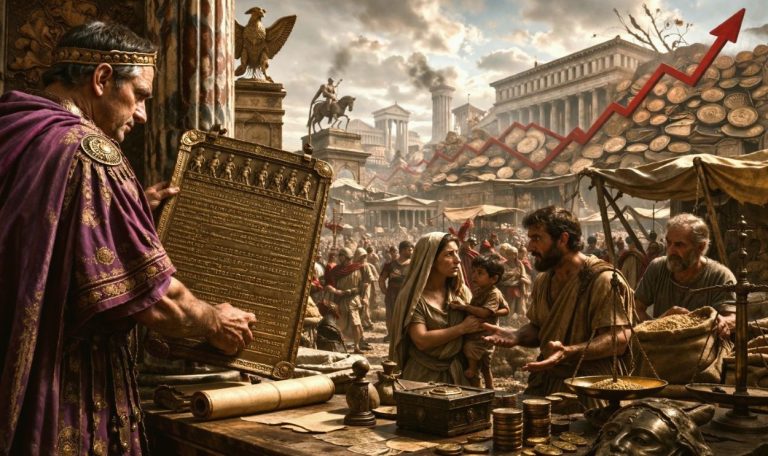
Among these figures, the praetorian prefects and powerful freedmen played pivotal roles. Cassius Dio and Herodian emphasize the prominence of Cleander, who rose from relatively modest origins to become a dominant intermediary within the imperial household. His ascent illustrates how proximity could substitute for pedigree in shaping policy. Whether ancient accounts exaggerate the scale of his corruption, the structural pattern they describe remains revealing. Access to the emperor became political currency, and that currency could be exchanged for office. Cassius Dio famously alleges that administrative posts were effectively sold under Cleander’s supervision, creating a marketplace for authority. Even if this depiction reflects senatorial hostility toward upstart officials, it signals anxiety about the erosion of traditional channels of advancement. Offices once associated with cursus honorum progression and senatorial dignity now appeared subject to palace negotiation. Patronage networks expanded, and equestrian and freedman intermediaries assumed heightened influence. The court became gatekeeper not only of influence but of state function, concentrating administrative leverage within a narrow circle whose legitimacy derived from personal favor rather than institutional standing.
This concentration of authority in favorites altered the equilibrium between emperor and elite. Senators, already wary of theatrical rule, now confronted a system in which decisions might be shaped by individuals whose legitimacy derived solely from personal access. Such arrangements could temporarily streamline governance by insulating the emperor from administrative burdens. Yet they also intensified resentment. When the perception spreads that imperial authority is filtered through opportunists, institutional trust erodes. Governance by proxy risks becoming governance by faction.
Corruption, whether systemic or perceived, compounds this drift. The sale of offices and manipulation of appointments weaken professional continuity. Provincial governors who secure posts through patronage may prioritize extraction over stability. Fiscal strain intensifies when oversight loosens. Even if the empire’s structural foundations remain intact, the sense of administrative seriousness can wane. Under such conditions, elite fatigue deepens. The emperor’s theatrical dominance contrasts sharply with the visible irregularities of state management. Spectacle masks drift only temporarily.
The broader implication is not that Commodus abandoned governance entirely, but that the balance between personal performance and institutional stewardship shifted decisively. An emperor who devotes increasing energy to symbolic affirmation may rely more heavily on intermediaries. When those intermediaries operate with limited constraint, the distance between imperial will and administrative reality widens. Governance becomes reactive rather than deliberate. Drift sets in not through dramatic collapse but through incremental distortion. By the end of Commodus’ reign, the cumulative effect of proxy rule, patronage expansion, and elite resentment would render the system acutely vulnerable. The assassination that followed did not arise in isolation. It emerged from years of administrative imbalance concealed beneath imperial theater.
Elite Fatigue and the Mechanics of Assassination

By the final years of Commodus’ reign, the cumulative strain on Rome’s political elite had become palpable. Spectacle had not collapsed the empire. Administrative machinery still functioned. Military frontiers remained largely intact. Taxation continued. Legal appeals were heard. The façade of continuity endured. Yet beneath this outward stability, senatorial patience had thinned in measurable ways. The emperor’s theatrical self-presentation, his escalating demands for affirmation, the renaming of institutions, and the perceived empowerment of court favorites generated a climate of quiet exhaustion rather than immediate revolt. Fatigue differs from outrage. It accumulates slowly, deepening through repetition. It intensifies when symbolic gestures replace reciprocal governance and when institutional dignity is repeatedly subordinated to personal validation. The Roman aristocracy, long habituated to constrained participation under the principate, could tolerate marginalization within limits. Prolonged humiliation, however, erodes tolerance. The strain was psychological as much as political. Each compelled acclamation, each ceremonial exaggeration, layered upon the last, producing a corrosive sense that the equilibrium of the Antonine order had shifted irreversibly.
Cassius Dio’s narrative captures this mounting tension with particular sharpness. Writing as a senator who had personally witnessed aspects of the reign, he describes a Senate compelled to endorse honors that strained plausibility and to perform enthusiasm under the shadow of reprisal. Whether colored by retrospective hostility or shaped by rhetorical convention, his account underscores the psychological cost of sustained compliance. Public ceremonies required repeated affirmation of imperial supremacy in forms that exceeded customary precedent. The emperor’s renaming initiatives and divine styling demanded ritual endorsement, often without space for moderated resistance. Each act of compliance reinforced asymmetry between ruler and elite. The repetition of forced devotion may erode the stabilizing function of ritual itself. Roman political ceremony traditionally mediated hierarchy through shared forms and recognizable language. When ceremony ceases to mediate authority and instead amplifies personal dominance, its integrative power diminishes. Participation becomes hollow performance. In such conditions, loyalty is enacted but not necessarily internalized. The Senate’s outward compliance could not indefinitely compensate for inward alienation.
The Praetorian Guard and palace insiders formed another critical constituency. Elite fatigue does not produce change without mechanism. In monarchic systems, correction often emerges through conspiracy rather than formal procedure. Commodus’ reliance on favorites and fluctuating patronage networks created instability within the imperial household. Those who benefited from access could also become vulnerable to sudden shifts in favor. In such environments, proximity breeds both opportunity and fear. Assassination becomes conceivable when confidence in predictable rule erodes. The calculus shifts from loyalty to survival.
Herodian’s account of Commodus’ final days highlights the role of intimate betrayal in translating fatigue into action. The emperor was not overthrown by open rebellion in the provinces nor displaced by a military insurrection at the frontier. He was eliminated through coordinated action within his inner circle. The method matters because it reflects where instability had concentrated. When dissatisfaction is diffuse but leadership remains centralized, removal often occurs at the center rather than at the margins. Those closest to the emperor possessed both access and motive. The palace that had once insulated Commodus from criticism now contained individuals whose security depended upon anticipating danger before it fully materialized. The conspiracy’s success underscores how personalization of authority can narrow the field of decisive actors. Institutional pathways for correction were limited. Informal elimination became the only viable option for those convinced that continuation meant further deterioration.
The aftermath confirms the structural nature of the rupture. Commodus’ death initiated rapid political turnover, revealing how thin institutional consensus had become. The year that followed exposed the fragility beneath prolonged theatrical rule. Assassination did not create instability ex nihilo. It crystallized tensions long in accumulation. Elite fatigue, shaped by demands for devotion and governance by proxy, found resolution through removal. The principate endured, but the illusion of seamless Antonine continuity did not. Commodus’ end illustrates that personal adulation can sustain power temporarily, yet without reciprocal legitimacy, endurance remains conditional.
Comparative Calibration: Commodus, Nero, and Caligula
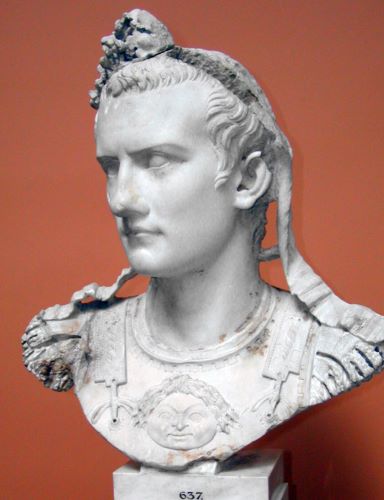
Commodus is frequently grouped with Nero and Caligula as exemplars of imperial excess, yet the comparison requires calibration rather than caricature. All three rulers are remembered through hostile literary traditions shaped by senatorial perspective. Suetonius and Tacitus portray Nero as artist-emperor and persecutor, while Suetonius and Cassius Dio depict Caligula as erratic and theatrically divine. Commodus shares thematic parallels with both figures: a heightened emphasis on personal display, sensitivity to insult, and symbolic self-elevation. Yet his reign unfolded within a more mature and structurally stabilized principate. Unlike Caligula, whose accession followed the transitional instability of the Julio-Claudian house, Commodus inherited an empire habituated to Antonine continuity. Unlike Nero, whose reign coincided with elite factionalism and provincial revolt, Commodus presided over relative frontier stability for much of his tenure. The comparison illuminates pattern without erasing context.
Caligula’s self-presentation involved provocative divine association and humiliation of senatorial elites, destabilizing political norms through calculated unpredictability. His short reign amplified the dangers of concentrated power in a still-evolving imperial framework. Commodus’ appropriation of Hercules imagery echoes Caligula’s divine experimentation, yet the institutional setting differed. By the late second century, the principate’s mechanisms were well established. Senate, army, and bureaucracy had developed routine modes of cooperation with imperial authority. Commodus’ theatrical identity strained a stabilized structure rather than a fragile one. The shock was less about novelty and more about deviation from inherited restraint.
Nero presents a closer analogue in the realm of performance. His cultivation of artistic persona and public display reoriented imperial dignity toward spectacle. Tacitus describes the tension this generated among elites compelled to applaud imperial exhibitions. Commodus’ arena performances similarly blurred the boundary between governance and entertainment. Both rulers leveraged popular venues to construct direct connection with the populace, potentially bypassing senatorial mediation. Yet important differences remain. Nero’s reign was marked by significant provincial unrest and civil war following his death. Commodus’ assassination produced turbulence, but not immediate systemic collapse. The empire endured because its administrative and military foundations were more entrenched by the late second century.
The comparison also clarifies the mechanics of elite fatigue. Under Caligula and Nero, resistance emerged amid broader instability. Under Commodus, fatigue accumulated within a relatively stable political environment. His reign demonstrates how prolonged personalization of authority can generate resentment even absent external crisis. Where Nero’s dramatic gestures coincided with rebellion, Commodus’ theatricalization operated within a functioning imperial apparatus. This distinction matters. It suggests that structural maturity can delay visible rupture while intensifying internal exhaustion. The system absorbs strain longer, but the eventual release may concentrate within the court rather than erupt in civil war.
Comparative calibration refines interpretation. Commodus was neither identical to Nero nor derivative of Caligula. He governed at a different stage of imperial development and inherited a different form of legitimacy. What unites the three is the fusion of identity with office and the prioritization of personal affirmation over institutional equilibrium. What distinguishes Commodus is the context of inherited stability. His reign reveals how theatrical supremacy, when imposed upon a mature administrative order, can corrode elite confidence without immediately dismantling imperial structure. In this respect, Commodus exemplifies not the birth of autocratic excess but its late-stage distortion within an established system.
Conclusion: When the State Becomes the Emperor’s Mirror
Commodus’ reign illustrates how inherited legitimacy can be transformed into sustained self-dramatization when institutional equilibrium weakens. He did not seize power through civil war, nor did he dismantle the Roman administrative state. He inherited an empire stabilized by precedent, fortified by the moral capital of his predecessor, and habituated to Antonine continuity. The structures of governance remained intact. Provincial administration continued. Military frontiers held. The Senate retained ceremonial relevance. Yet stability of form does not guarantee stability of balance. The transformation of the imperial office into a vehicle for personal affirmation altered the texture of governance at its center. When the emperor’s identity becomes the primary axis of political life, institutions risk becoming reflective surfaces rather than mediating structures. Ceremony amplifies persona. Policy bends toward validation. The state ceases to shape the ruler through reciprocal constraint. Instead, the ruler increasingly reshapes the state in his own image, converting inherited prestige into theatrical supremacy.
This process unfolds gradually rather than abruptly. Arena performance, divine styling, demands for devotion, and reliance on favorites each represent incremental adjustments rather than revolutionary change. No single act destroyed institutional balance. Instead, the cumulative weight of personalization thinned cooperative engagement between emperor and elite. Senators complied, soldiers acquiesced, administrators adapted. Outward continuity masked inward fatigue. The Roman principate had always depended upon careful calibration between symbolic supremacy and practical cooperation. Under Commodus, that calibration contracted into spectacle.
The assassination that ended his reign was not merely a reaction to excess. It was the mechanism through which accumulated imbalance corrected itself. Institutional exhaustion, intensified by prolonged theatrical governance, converged with palace vulnerability. The emperor who had fused identity with empire found that empire could still act without him. The state, though strained, retained enough structural integrity to remove its embodiment when reciprocity collapsed. The lesson is not that spectacle alone destabilizes regimes, but that spectacle without institutional recalibration erodes confidence.
When the state becomes the emperor’s mirror, political life reflects personality more than principle. The ruler then imprints himself upon institutions that once moderated his authority. Such reflection may project strength, charisma, and mythic resonance. It may even generate temporary enthusiasm. Yet durability depends upon shared investment in institutions that outlast individual will. Commodus’ reign underscores the fragility of systems in which personal validation displaces structural reciprocity. Inheriting greatness does not guarantee its preservation. Without renewal through disciplined governance, prestige becomes spectacle, and spectacle invites fatigue.
Bibliography
- Birley, Anthony R. Marcus Aurelius: A Biography. Rev. ed. London: Routledge, 1966.
- Cassius Dio. Roman History. Translated by Earnest Cary. Cambridge, MA: Harvard University Press, 1914–1927.
- Hannah, Robert. “The Emperor’s Stars: The Conservatori Portrait of Commodus.” American Journal of Archaeology 90:3 (1986), 337-342.
- Hekster, Olivier. Commodus: An Emperor at the Crossroads. Amsterdam: Gieben, 2002.
- Herodian. History of the Roman Empire. Translated by C. R. Whittaker. Loeb Classical Library. Cambridge, MA: Harvard University Press, 1969.
- Kyle, Donald G. Spectacles of Death in Ancient Rome. London: Routledge, 1998.
- Łuć, Ireneusz. “Emperor Commodus’ ‘Bellum desertorum’.” Res Historica 49 (2020), 61-95.
- Marcus Aurelius. Meditations. Translated by Gregory Hays. New York: Modern Library, 2002.
- Millar, Fergus. The Emperor in the Roman World. Ithaca: Cornell University Press, 1977.
- Southern, Pat. The Roman Empire from Severus to Constantine. London: Routledge, 2001.
- Speidel, M. P. “Commodus the God-Emperor and the Army.” The Journal of Roman Studies 83 (1993), 109-114.
- Suetonius. The Twelve Caesars. Translated by Robert Graves. London: Penguin Classics, 2007.
- Tacitus. The Annals. Translated by John Jackson. Cambridge, MA: Harvard University Press, 1931.
Originally published by Brewminate, 02.26.2026, under the terms of a Creative Commons Attribution-NonCommercial-NoDerivatives 4.0 International license.
About the Author