
Looking at the protections offered by the two countries for investigative reporting, raising crucial questions about journalism’s role in democracy.

By Dr. Michael J. Socolow
Associate Professor of Communication and Journalism
University of Maine
Sometimes the best journalism tells us the worst news.
The United States has a tradition of learning troubling news through extraordinary reporting efforts from combat zones. During the Vietnam War, award-winning journalism revealed the slaughter of Vietnamese civilians by American soldiers at My Lai. More recently, reports describing the torture and abuse of prisoners at Abu Ghraib in Iraq embarrassed the U.S. government.
Such investigative reporting ultimately helped American citizens hold accountable those charged with acting in their name. But that didn’t mean the news was welcome, or even appreciated, at the time.
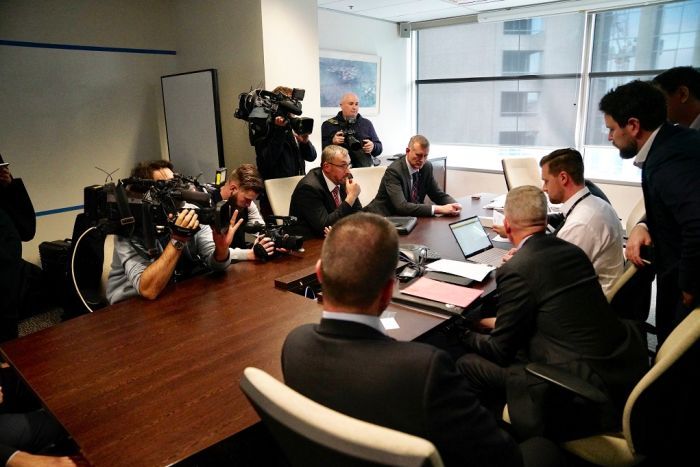
It’s important to recall these examples in light of the raid by the Australian Federal Police at the headquarters of the Australian Broadcasting Corporation on June 5.
As an American Fulbright Research Scholar studying media at the University of Canberra in Australia, I’ve watched this controversy closely.
Comparing the way these two western democracies protect – and undermine – investigative reporting raises important questions about journalism’s role in democracy.
Journalists and their sources
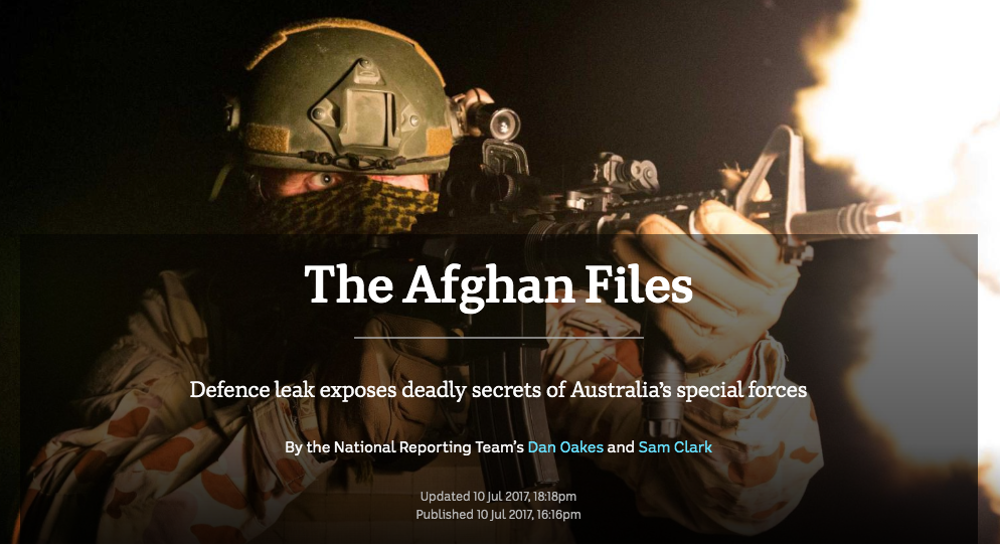
The Australian police acted in response to a series of online and broadcast news stories, called “The Afghan Files,” that originally appeared in 2017 and 2018. The reports alleged atrocities were committed in Afghanistan by Australian soldiers.
The police obtained a warrant to search the premises and computers of the Australian Broadcasting Corporation in order to uncover – and possibly indict and prosecute – the sources informing the story.
The leaking of such embarrassing secret information likely violated Australian law, leaving both the leaker and the Australian Broadcasting Corporation vulnerable. The Australian police’s broad warrant allowed the police to spend hours copying “data holdings” including hard drive files, emails and other documents, and they left the network’s headquarters in possession of USBs filled with electronic files related to the Afghanistan stories.
Australian Broadcasting’s lawyers secured a two-week period in which to carefully review the documents seized by police. But Australian journalists lack both the constitutional protections and the established body of case law that often allow American journalists to protect their sources.
Power from profitability is no more
The destruction of the advertising profits that funded ethical and professional journalism has made journalistic outlets less enthusiastic about supporting bold and difficult reporting. There are fewer reporters to carry out this painstaking and time-consuming reporting, and the financial peril faced by many news organizations has left them much more vulnerable to attack.
Journalism is now in a transitional state. The kind of power that outlets like CBS News and The Washington Post possessed in the Watergate era was based in the enormous commercial profitability that effectively insulated investigative journalism.
Controversial reportage – no matter how accurate and verified – is now regularly derided as “fake news.” Whether produced by CNN in the United States, Al Jazeera in Qatar, or even by a state broadcaster like the Australian Broadcasting Corporation (which has seen its funding cut in recent years), unwelcome information is quickly attacked and dismissed.
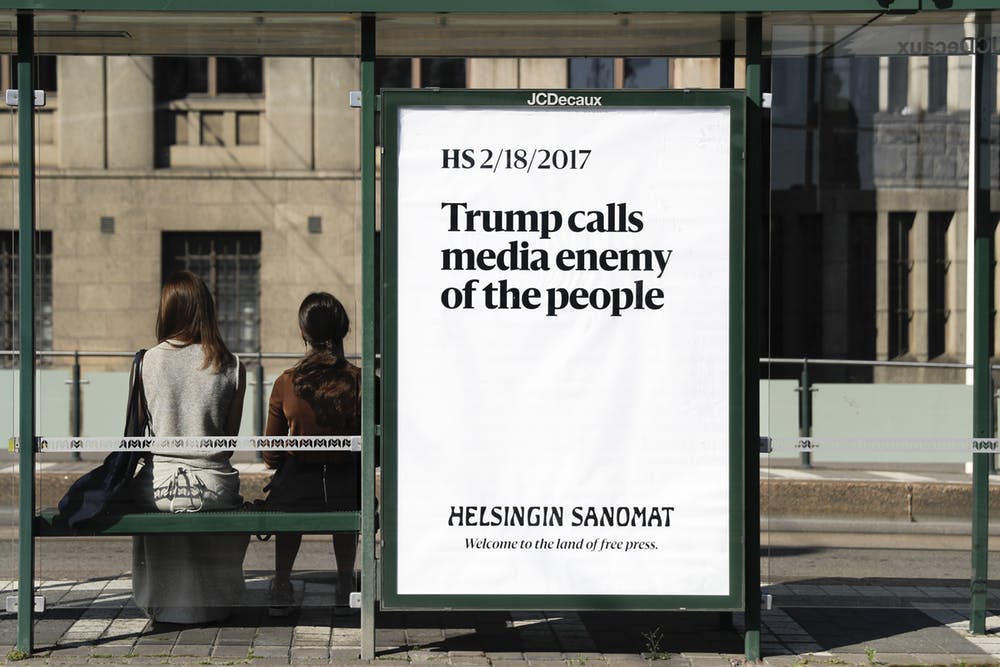
The public’s support for independent and critical reportage is essential to sustaining it. Without it, the governments of such leaders as Donald Trump, Saudi Prince Mohammad bin Salman, Rodrigo Duterte in the Philippines, and even Prime Minister Scott Morrison in Australia, can act with impunity to intimidate – and even silence – journalists.
The global attacks on the media are having a cumulative effect. Support for journalism is eroding even in Western democracies, according to journalism advocates Reporters Without Borders.
Police warrants mean intimidation

The Australian police raid wasn’t the only one aimed at journalists in recent weeks. On May 24, San Francisco’s chief of police was forced to apologize for raiding a journalist’s home two weeks earlier.
Aside from violating the Constitution, the San Francisco police department may have broken California’s journalistic shield law. That law was designed to protect the ability of journalists to keep sources confidential.
But in Australia, shortly before the Australian Broadcasting Corporation raid, authorities seached a newspaper journalist’s home in the nation’s capital looking to discover her source for a report about a secret government surveillance plan. Though the press howled in outrage, the raid was legal.
In the United States, the closest parallel to the Australian Broadcasting Corporation search occurred in 1971, in response to the CBS Reports documentary “The Selling of the Pentagon.”
That program revealed how taxpayer funding underwrote domestic propaganda to convince Americans to support the military during the controversial Vietnam War. “The Selling of the Pentagon” made allegations of impropriety and illegality. Public controversy erupted immediately.
At least two government representatives claimed the film had been manipulated to alter the substance of their remarks, resulting in a congressional subcommittee demanding to see CBS News’ draft scripts and film outtakes.
Frank Stanton, the president of CBS, rejected the subpoena, arguing that all reporting materials were protected by the First Amendment. After announcing he was prepared to go to jail to protect CBS journalism, the public rallied in favor of the network and the House committee voted to stand down.
Public support for journalistic liberty
Stanton’s ability to challenge Congress occurred because he had the backing of his corporate board. And his defiance was empowered by public support for journalistic liberty.
By the time “The Selling of the Pentagon” aired on CBS, the American public had turned against the Vietnam War and viewed the Pentagon with suspicion. Attacking CBS News backfired on Congress and the Pentagon, as the charges made in “The Selling of the Pentagon” were given new life by continuing press coverage.
The same thing seems to be occurring with the heavy-handed tactics employed by the Australian police now.
Australians are, courtesy of the police, being reminded of the original ABC reporting. It’s become so embarrassing to the government that Prime Minister Morrison – after stating he’s “never troubled” by police who are upholding the law – has now said that his government “is absolutely committed to freedom of the press.”
In my opinion, Morrison’s reversal is simple: He’s sensed public opinion turning against his administration’s anti-press tactics.
The chilling effect
Whether it was “The Selling of the Pentagon” or the “Afghan Files,” these intimidation tactics are never primarily concerned with the reporting at hand. In both cases, the stories were already public. Any damage they caused had already been absorbed by the time the governments sought remedy.
The real purpose of these legal actions is to discourage new independent reporting in the public interest.
Courageous journalism is critical to democracy, and its role in checking the power of state authority is essential. So these moves against future investigative stories are actually attacks by the state on democratic governance and the authority of the citizenry.
If law enforcement in the U.S. or Australia can lodge doubts and instill fear in the minds of journalists and their sources, or if they can get news organizations to shy away from controversial stories, then these raids will have served their purpose – even if no follow-up charges result.
It’s called the “chilling effect,” and its success can only be measured in the negative, when stories aren’t reported.
That hesitation and uncertainty in the mind of every journalist and confidential source represents the real damage to democracy. But it’s something that will receive far less publicity than any police raid.
Originally published by The Conversation, 06.11.2019, under the terms of a Creative Commons Attribution/No derivatives license.