Kepler’s Somnium imagined the heavens from the Moon, revealing Earth as another celestial body while testing what fiction and calculation could establish about an inaccessible world.

By Matthew A. McIntosh
Public Historian
Brewminate
Introduction: A World That Appears to Stand Still
For an inhabitant of the Earth-facing hemisphere of Levania, the Moon of Johannes Kepler’s Somnium, our planet would be a conspicuous object in the heavens. The surface beneath that observer’s feet would seem secure, while celestial appearances invited explanations grounded in the apparent immobility of the observer’s own world. An astronomer on Levania might possess the same confidence in local stillness that helped make a moving Earth seem implausible to terrestrial observers. Kepler used this comparison to question the authority people granted their accustomed surroundings. The difficulty concerned how an observer decided which motions belonged to the objects being watched and which arose from the position and movement of the observer. Transferring the inquiry to the Moon made a familiar judgment available for examination under unfamiliar circumstances. Earth could then enter an astronomical description as something seen from elsewhere, carrying its inhabitants through motions that their immediate experience did not readily disclose.
Copernican astronomy had made that problem consequential well before anyone possessed a telescope. Arguments about Earth’s movement involved mathematical models and physical explanations, but they also encountered the persuasive force of ordinary experience. People saw the Sun cross the sky without feeling themselves carried around beneath it, and such appearances required explanation within any account that attributed motion to Earth. Kepler’s lunar setting addressed this difficulty by asking readers to consider whether inhabitants of another moving body might find their own surroundings equally reassuring. Their confidence would make the feeling of rest an uncertain guide to the arrangement of the cosmos.
Access to Levania comes through an elaborate sequence of narrators whose testimony could not be independently confirmed by any reader. Kepler’s narrator dreams of reading a book in which Duracotus recounts how his mother summons a daemon capable of describing lunar transportation and astronomy. Duracotus listens to this exposition; the narrative does not follow him through a completed expedition to the Moon. Importantly, the work’s astronomical authority cannot depend on the experience of a traveler returning with discoveries. Instead, its descriptions must acquire credibility through their reasoning and through the explanations Kepler supplies around them. The astronomical question had roots in his student work of 1593, while the narrative composed in 1609 became the center of a much larger undertaking as he accumulated commentary before his death in 1630. Published posthumously in 1634, Somnium brought together materials developed across decades of astronomical investigation. Its annotations repeatedly draw the reader out of the story to consider how certain descriptions were constructed or what they were intended to mean. Classical precedents and the conventions of extraordinary flight belong within this arrangement, providing resources through which an inaccessible environment could become a subject of sustained inquiry. The relationship between those inherited forms and Kepler’s explanatory ambitions is essential to understanding why he chose to present lunar astronomy through a dream.
The central achievement of Somnium lies in making the effects of an altered observing position available for close consideration. Astronomical reasoning gives portions of the lunar account a precision that exceeds the possibilities of unrestrained invention, yet that precision does not extend equally to everything the daemon describes. The difficulties of carrying a vulnerable human body beyond Earth expose physical problems that supernatural assistance can resolve within the story without demonstrating a practicable means of travel. Descriptions of lunar life likewise extend beyond what calculations of celestial motion can establish. Attention to these differences is required because the work’s imaginative persuasiveness can otherwise obscure the varying grounds of its claims. Kepler’s fiction weakens an objection to terrestrial motion founded on familiar appearances, while leaving the larger astronomical argument dependent on evidence and explanation developed outside the imagined journey. Reading Somnium through that distinction reveals how an invented location could support serious investigation; it allowed Kepler to examine judgments formed on Earth by considering how those judgments might appear to someone standing on another world.
The Problem of a Moving Earth

When Nicolaus Copernicus published De revolutionibus orbium coelestium in 1543, he assigned Earth motions that had traditionally belonged to the heavens. Daily rotation accounted for the apparent daily circuit of celestial bodies, while an annual journey around the Sun helped explain the changing appearances of the planets. The backward movement of an outer planet against the stars, for example, could be understood through the changing relationship between its orbit and Earth’s. The observer participated in the configuration being described. Mercury and Venus acquired a related explanation for their restricted distance from the Sun in the sky. These connections gave the arrangement considerable explanatory appeal, although Copernicus retained a complicated apparatus of circular motions. His achievement did not consist in replacing difficult calculations with a universally simpler procedure, nor did his tables immediately establish an overwhelming superiority in predictive accuracy. He offered a reorganization of planetary astronomy whose implications extended into questions about the physical constitution of the world. Accepting that reorganization required considering whether Earth could perform the movements assigned to it.
A falling stone posed an immediate difficulty. If Earth rotated, critics required an explanation of why an object released above its surface did not fall behind the ground beneath it. Copernicus maintained that terrestrial bodies participated in Earth’s motion, but this answer raised further questions about how that participation continued when an object left its support. Within Aristotelian natural philosophy, heavy bodies also tended toward the center of the cosmos, giving Earth’s position a physical significance that mathematical rearrangement could not simply remove. A satisfactory defense of terrestrial motion needed an account of what moving bodies did and why they did it.
Stellar observations presented a different obstacle, one that could not be settled through arguments about falling objects. An annual terrestrial orbit changed the location from which the stars were observed, apparently requiring their directions to shift over the course of a year. Such annual parallax remained undetected with the instruments available to Copernicus and Brahe. Copernicans could answer that the stars stood at distances so immense that the displacement became imperceptible, but this response introduced outomes that deserved examination. Stars appeared to possess small yet discernible angular widths. Combining those apparent dimensions with the enormous distances required to conceal parallax implied stellar bodies of extraordinary physical size. Brahe regarded this result as a serious objection to the Copernican arrangement, rather than accepting that every difficulty could be resolved by enlarging the universe. Those visible widths were not reliable measurements of actual stellar surfaces, a distinction that historians must preserve without assuming it was readily available to the participants. The disagreement concerned how observations should constrain an astronomical model when both distances and physical dimensions remained uncertain. An argument that now appears to rest on a mistaken measurement could nevertheless have considerable force within contemporary observational practice. Earth’s movement carried a burden of explanation extending far beyond the arrangement of the planets around the Sun.
Brahe’s alternative accommodated important features of that arrangement while retaining a stationary Earth. In his system, the Sun and Moon traveled around Earth, while the other planets circled the Sun. This construction preserved many of the geometrical relationships that made Copernican astronomy attractive, and it must be distinguished from the older Ptolemaic organization of planetary motions. Even the telescopic discovery of the phases of Venus did not decide between the two alternatives. Those appearances supported a solar orbit for Venus that both arrangements could accommodate. Observational discoveries could undermine established assumptions without uniquely selecting a moving Earth. Brahe’s position demonstrates why the controversy cannot be adequately described as a contest between people who followed astronomical evidence and people who refused to consider it.
Johannes Kepler brought a distinctive demand to this unresolved dispute. The paths assigned to planets should express an intelligible physical ordering. Working intensively with Brahe’s observations of Mars, he subjected proposed arrangements to exacting comparisons with measured positions. In Astronomia nova, published in 1609, he presented the elliptical orbit and the relationship between elapsed time and the areas swept out by a line joining a planet to the Sun. These results emerged through a prolonged investigation in which geometrical constructions were tested alongside hypotheses about the causes of planetary movement. His efforts to identify a solar agency governing orbital behavior remained embedded in physical ideas that would themselves require revision, but they made the choice of a world system more than a matter of computational convenience. The question behind Somnium addressed another aspect of this undertaking. Its lunar standpoint invited examination of the observer’s contribution to astronomical description, an issue that improvements in orbital calculation could not make irrelevant. To explain a recorded celestial position, astronomy had to consider the situation of the person recording it. Kepler’s imaginary setting developed that requirement beyond the terrestrial locations from which astronomical observations had actually been assembled.
A Book Inside a Dream: How the Lunar Account Reaches the Reader

Kepler places the opening of his dream in 1608, when conflict between Emperor Rudolf II and his brother Matthias encouraged comparisons with episodes from Bohemian history. The framing narrator’s reading leads him to Libussa, a legendary Bohemian ruler associated with magical knowledge. After contemplating the night sky, he falls asleep and imagines himself taking a book from a shelf. This sequence connects the extraordinary account that follows to recognizable activities: reading historical narratives and examining the heavens. Libussa’s presence also establishes an association between female authority and exceptional knowledge before the reader encounters Duracotus’s mother. The passage gives no reason to accept the legendary material as documented history, but its inclusion matters to the conditions under which the dream begins. An investigation prompted by contemporary political events has opened onto accounts whose credibility cannot be judged simply by identifying the kind of writing in which they appear.
Within the dreamed book, Duracotus speaks retrospectively, introducing himself through his homeland and family circumstances. His account identifies Iceland with the ancient designation Thule, placing his origins within a geography familiar to learned readers through classical literature. He explains that his mother, Fiolxhilde, has recently died and that her death permits him to disclose information she had required him to withhold. Her prohibition makes the act of writing effective before the lunar exposition begins. According to Duracotus, she feared people who misunderstood unfamiliar arts and used their ignorance to support punitive laws. The son’s testimony comes with an account of why it could not previously circulate. Kepler has supplied his invented book with a history of restricted transmission, making its emergence depend on the removal of a prohibition within the household. That device encourages attention to the possible dangers of disclosure without establishing that the protected knowledge is true. Duracotus’s position as a surviving witness grants him an opportunity to speak, while his mother’s absence prevents readers from hearing her explain or defend his representation of their past.
The separation that first sends Duracotus abroad begins with damaged merchandise. Fiolxhilde gathers herbs and prepares small bags that she sells to seafarers, bringing her reputed abilities into an exchange through which the household supports itself. When her son opens one of these bags and disrupts its contents, she gives him to a ship’s captain in place of the spoiled purchase. His departure emerges from anger and commercial loss rather than a deliberate program of education. The episode introduces a disturbing uncertainty into maternal authority. The person who possesses knowledge unavailable to her son also exposes him to displacement and dependence.
Hven supplies a different setting for his development. The captain’s voyage brings Duracotus into contact with Brahe, whose household becomes the site of an education that the boy had neither planned nor possessed the means to obtain independently. Learning Danish makes communication possible, and Brahe’s students help introduce him to unfamiliar practices. The account gives considerable importance to the circumstances that allow instruction to occur. Duracotus requires accommodation and the willingness of others to speak with him before his curiosity can become sustained astronomical study. His descriptions of nightly work and impressive instruments connect the fictional career to recognizable procedures of learned observation. Brahe’s appearance does more than attach a famous name to an adventure; it provides a social setting in which the acquisition of expertise can be described. There is also a revealing complication in Kepler’s choice of teacher. The astronomer whose observations contributed so much to Kepler’s work had rejected terrestrial motion, yet the fictional pupil receives indispensable training in his household. Mathematical competence and observational authority do not here require agreement about the arrangement of the cosmos. By the time Duracotus returns to Iceland, he possesses knowledge that he expects will improve his standing among his countrymen, although the narrative is about to challenge his assumption that intellectual advantage travels only outward from an established center of learning.
Fiolxhilde’s response to her son’s return unsettles that expectation. She takes pleasure in what he has learned but also explains that knowledge is available in the homeland whose limitations he has come to recognize. Their conversations allow her to compare his education with information obtained through her own extraordinary associates. Her account differentiates between being transported somewhere and learning about a place through questioning a knowledgeable intermediary. This distinction prepares the daemon’s exposition. An adequate description might give access to circumstances that its recipient has never personally encountered. The reunion prevents Brahe’s observatory from becoming the sole source of legitimate inquiry within the story. The mother can recognize the value of her son’s accomplishments while claiming that his education remains incomplete. Their exchange poses a question about how unfamiliar testimony should be evaluated, particularly when it comes from someone whose authority does not resemble the institutional learning he has acquired abroad.
The summons changes the manner in which information reaches both Duracotus and the reader. Fiolxhilde performs the prescribed actions, returns to sit beside her son, and demands silence; their covered heads make listening central to the encounter. The daemon announces itself through a voice and speaks in Icelandic, the language of those immediately receiving the account. Kepler’s learned audience encounters that supposedly spoken discourse through a Latin composition. The movement between languages belongs to the fiction’s presentation, rather than documenting a translation from an independently preserved Icelandic source. Familiar speech gives the extraordinary visitor a means of communicating with its listeners, while the published text carries the resulting exposition into a different intellectual setting. These arrangements qualify any impression that readers have simply been placed before the lunar scene itself. What they receive is an extended account delivered under exceptional circumstances, embedded within Duracotus’s recollections and the framing narrator’s dreamed reading. Kepler must make that account worth considering through the substance of what it says and the explanations he provides, since the scene of its delivery cannot supply ordinary corroboration.
A storm finally interrupts the dream, returning the framing narrator to his immediate surroundings while the daemon’s description remains unfinished. The sleeper discovers his own covered head and body, an apparent correspondence with the concealment described within the dreamed encounter. This detail permits a reading in which bodily circumstances have helped shape the fantasy, although it does not provide a definitive explanation of how the entire dream arose. The awakening also withdraws access to the book whose contents the narrator has been following. Readers are left with the reported discourse after the imagined occasion of reading has ended. Its astronomical propositions remain available for examination, but the succession of speakers has made the route by which they arrived impossible to ignore. The interruption gives importance to the work Kepler undertakes outside the narrative, where he can explain statements whose fictional delivery has raised questions about their authority.
Earth in the Lunar Sky: Becoming Volva
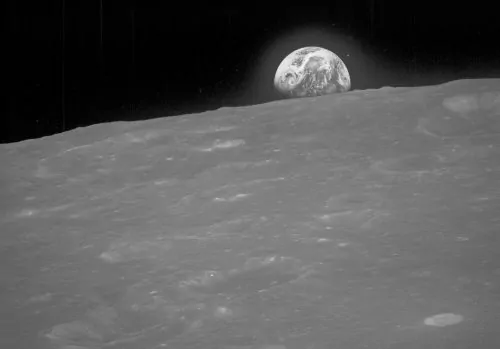
The name Volva introduces a change in geographical allegiance. Within the daemon’s account, the body familiar to Kepler’s readers as Earth receives a designation appropriate to those who encounter it overhead. Levania supplies the inhabited ground from which its appearance is described. These names allow the exposition to proceed without continually translating everything back into terrestrial terms, although the reader must retain both sets of associations to understand it. Earth remains identifiable through its physical characteristics, even as its place within ordinary language changes. Kepler thereby makes the adoption of lunar terminology part of the reader’s task. A description that habitually calls one globe “our world” must now accommodate another community’s use of an equivalent distinction. Volva can be observed without its inhabitants occupying the center of the account. Its significance emerges through its relationship to specific locations on the Moon, where the familiar terrestrial division between the ground and the heavens has been rearranged.
Subvolva and Privolva identify the two principal lunar regions through their relationship to Earth’s visibility. The former faces Volva, while the latter is deprived of its appearance. Their boundary, which Kepler calls the divisor, gives this distinction a geometrical expression on the lunar globe. It does not separate a permanently illuminated hemisphere from one condemned to perpetual darkness, since both experience the alternation of sunlight and night. Kepler has organized the Moon around the presence or absence of a celestial object. That choice makes the hemispheres unequal in an observational respect before the daemon develops the environmental differences assigned to them.
For observers within Subvolva, Volva’s position above the horizon depends on where they stand. Near the center of the Earth-facing hemisphere it occupies the region overhead; toward the divisor it appears progressively lower. In Kepler’s principal construction, it remains at approximately the same elevation for a given location, providing a persistent feature of the local sky. The arrangement follows from the Moon’s presentation of the same general face toward Earth. It also produces an important difference between the two globes as objects of observation. Terrestrial inhabitants ordinarily encounter the Moon rising and setting, whereas Subvolvans possess an Earth whose center stays near a place above their surroundings. This stability must be distinguished from immobility relative to the stellar background. The daemon describes stars passing behind Volva and emerging from its opposite side, making its apparent steadiness a relationship to the lunar horizon rather than an attachment to the constellations. Kepler’s description separates several motions that a casual account might combine. Where a globe appears in the sky and what happens within or behind its visible outline become distinct matters requiring explanation.
Volva’s apparent dimensions make it conspicuous. Kepler estimates its diameter as a little less than four times that of the Moon seen from Earth, giving its disk roughly fifteen times the apparent area. The distinction between diameter and area matters because it conveys how extensively the terrestrial globe would occupy the lunar observer’s field of vision. These are estimates within his account, but they establish an intelligible comparison for readers accustomed to examining the Moon. Earth becomes large enough in appearance to invite sustained attention to features within its outline, rather than being represented as an undifferentiated point of light.
Changes of illumination introduce another kind of variation without requiring Volva to leave its accustomed position. Kepler gives Earth phases comparable to those through which terrestrial observers follow the Moon. The relationship is approximately complementary. When the Moon appears full from Earth, the terrestrial hemisphere presented to a lunar observer is largely unilluminated, while a new Moon corresponds to an Earth whose visible face receives sunlight. This reciprocity allows the reader to connect an appearance already familiar at home with a different view of the same configuration. The changing illuminated portion of Volva results from the relative positions of the globes and the Sun. Its make terrestrial appearance dependent on circumstances beyond Earth’s own surface. They also give the lunar description a continuity that the division into Subvolva and Privolva alone cannot supply. Remaining in one place, a Subvolvan could follow a sequence of alterations in the neighboring globe, with the Sun determining which portions became available to sight.
Across that changing disk, terrestrial markings undergo their own movement. Kepler projects the known differentiation of Earth’s surface into an appearance accessible from the Moon, where the shapes associated with land and water become features to be followed across Volva. Their recurrence takes a little more than one terrestrial day and night in his description. The distinction is more precise than a simple assertion that Earth turns once every twenty-four hours, since the observer’s lunar situation also enters the apparent period. Volva can remain near a fixed part of the horizon while presenting successive portions of its surface. Familiar geography acquires a temporal dimension. A recognizable region approaches the visible boundary and subsequently returns, allowing its progress to be compared with that of other markings. The daemon also describes changes in the orientation through which these features appear to travel, giving the account more complexity than a single rotating diagram would convey. Readers who know Earth as a collection of places must consider how those places form patterns when viewed together on a globe. The exercise depends on carrying geographical information into an astronomical construction; Kepler has no lunar observations against which to check the resulting appearance. Nevertheless, the regular recurrence of markings gives his account something that a merely decorative image of Earth would lack: an internal sequence through which a distant observer could recognize the persistence of features.
Kepler further makes Volva useful for determining positions on the Moon. Its elevation varies from place to place, while its relationship to the lunar poles supplies additional information for geographical description. His proposal should not be reduced to the claim that measuring Earth’s height above the horizon would, by itself, reveal a unique longitude. The method depends on combining spatial relationships, rather than treating one angular measurement as a complete coordinate system. Its appeal becomes clearer against the difficulty of establishing terrestrial longitudes, a problem the daemon explicitly invokes in comparing the resources available to the two communities. Subvolvans possess a prominent reference associated with the orientation of their inhabited hemisphere. In this account, Earth helps organize the description of locations on another globe, extending its role beyond that of a spectacle. The passage gives the imagined setting a practical specificity. Lunar geography can include procedures through which inhabitants distinguish and relate places.
The distribution of these opportunities limits how broadly the Volvan view can be attributed to lunar inhabitants. Someone living well within Privolva would have no direct sight of the globe whose phases and markings occupy so much of the daemon’s exposition. Kepler’s regional division implies that knowledge of those appearances would require a journey to another part of the Moon or information supplied by those who could observe them. Subvolvan experience cannot automatically stand for everything accessible throughout Levania. This restriction gives substance to the work’s invented geography, because an observer’s location determines which claims could receive direct confirmation. It also qualifies the apparent comprehensiveness of the daemon, whose discourse can move between regions more readily than the inhabitants whose circumstances it describes. Volva becomes a celestial object through a specifically situated account, with some observers able to examine it and others excluded from that experience. Kepler’s description makes Earth available as an object of astronomy while preserving the geographical differences that govern who could know its appearance.
Lunar Days and Altered Heavens: Reconstructing the Observer’s Experience
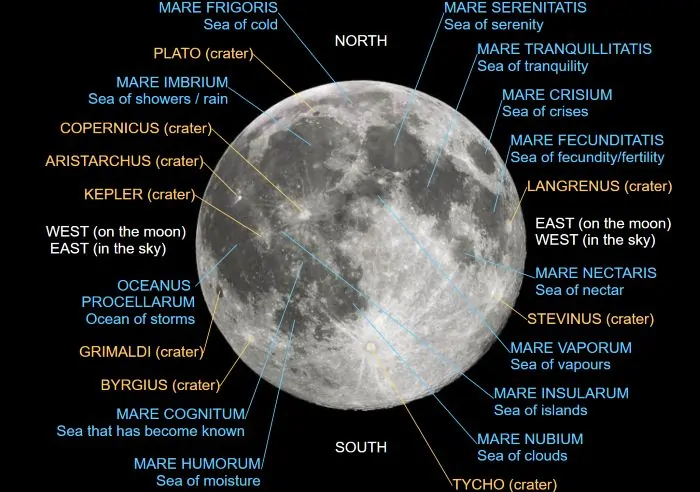
On Levania, the interval between successive sunrises would give the word “day” a scale unfamiliar to terrestrial routines. A complete cycle of daylight and darkness occupies approximately twenty-nine and a half Earth days, making a lunar date potentially misleading unless the unit is specified. Kepler repeatedly translates between the two systems so that readers can follow periods whose names otherwise suggest the wrong duration. Away from the polar regions, a stretch of sunlight would last roughly a terrestrial fortnight before giving way to a comparably prolonged night. The difference affects how an astronomical event could be recorded and compared with another. An observation made on the following lunar morning would belong to a sequence separated by weeks in terrestrial reckoning. Kepler requires his audience to adjust its understanding of elapsed time alongside its conception of celestial appearance. The lunar setting acquires a temporal structure through which observations could be organized, even before the daemon considers the conditions of life beneath that sky.
The Sun and the fixed stars also complete their apparent circuits in different intervals. Rotation measured against the stars takes approximately twenty-seven and a third terrestrial days, while the return of the Sun requires the longer period associated with the lunar day. During that interval, the Sun’s direction against the stellar background has changed, requiring additional rotation before the same solar alignment returns. Kepler expresses the distinction through a nineteen-year comparison involving approximately 235 solar circuits and 254 stellar circuits. These counts describe different measures of recurrence within the same span, giving the imagined astronomer grounds for distinguishing a calendar governed by sunlight from one based on stellar returns.
Planetary appearances introduce further complications because the observing body itself travels around Earth. The daemon describes additional variations superimposed on those already familiar to terrestrial astronomy, making lunar observations part of a system of relative positions rather than an independent set of celestial events. Their interpretation requires following the Moon’s changing relation to bodies whose own movements continue throughout the comparison. Kepler’s language retains an instructive connection to older astronomical practice. The daemon includes the Sun alongside the five visible planets when enumerating the wandering bodies under discussion. Such usage does not indicate that Kepler has abandoned his physical commitments. It reflects the continuing usefulness of a category organized around appearances in the sky. A Copernican author could describe the Sun’s apparent movement without assigning it the physical journey that an Earthbound description might seem to imply. The lunar exposition repeatedly obliges readers to distinguish the vocabulary of observed motion from an explanation of what produces it.
A terrestrial lunar eclipse supplies a clear case of how the identity of an event changes with the observer’s location. From Earth, the Moon darkens as it enters the terrestrial shadow. For a suitably situated observer on the Moon, Earth instead passes across the Sun and obstructs its light. The event becomes a solar eclipse within the lunar account, although its cause remains the same alignment of bodies. Kepler can relate two descriptions through the path taken by sunlight, giving the comparison a physical coherence that a simple exchange of names would lack. The correspondence also requires attention to local circumstances. During a partial lunar eclipse, observers across the illuminated lunar surface would not all experience the same degree of solar coverage. Some would stand within the darker portion of Earth’s shadow while others received more of the Sun’s light. The geometry must account for those differences if the daemon’s explanation is to describe conditions on an extended surface rather than treating the entire Moon as a single observing point.
Across Volva’s illuminated face, a terrestrial solar eclipse would produce another recognizable phenomenon. The Moon’s shadow would traverse part of Earth’s disk, appearing as a localized dark patch against the surrounding brightness. Kepler distinguishes this passage from an obscuration of the whole terrestrial globe. A person watching from Earth might experience the disappearance of the Sun, while the lunar account would follow a moving shadow over a limited portion of the neighboring world. The difference in extent becomes essential to understanding why an eclipse that dominates one observer’s immediate surroundings occupies only a small region within another observer’s view.
The numerical predictions attached to planetary appearances reveal how much this reconstruction depends on the distances adopted in the calculations. In the narrative, Kepler allows Mars to appear from certain lunar locations roughly twice as large as it does from Earth. That striking enlargement cannot be treated as a consequence established simply by moving the observer to the Moon. In his annotation to the passage, Kepler relates the prediction to older proportions between celestial distances and substantially reduces the difference when considering the revised proportions employed in the Rudolphine Tables. The earlier arrangement made the lunar orbit much larger in relation to the distance of the Sun, giving displacement from Earth to Moon a correspondingly greater effect on the observer’s distance from another planet. Revising those proportions changed the predicted appearance while preserving the question the calculation addressed. The commentary exposes a dependency that the confident narrative description might otherwise conceal. A geometrical procedure could be intelligible even when its numerical premises required correction. This example also cautions against attributing equal standing to every detail in the lunar survey. Some relationships follow securely from the arrangement being considered, while magnitudes depend on estimates that Kepler continued to reconsider.
An additional demand emerges from the duration of the cycles the daemon describes. A visitor watching one sunrise or witnessing an eclipse could not personally establish all the recurring patterns included in this account. The nineteen-year comparison presupposes an extended sequence of observations or a calculation capable of relating events beyond the observer’s immediate experience. Kepler’s fiction supplies access to that accumulated acquaintance with the lunar sky through an exposition that moves freely between a local occurrence and its place within a longer period. The daemon offers more than the impressions available at a moment of arrival. Its discourse presents Levania as a world whose astronomical regularities have already been investigated, allowing the reader to consider how individual observations might fit into a developed system of comparison. The imagined transfer to the Moon includes a less conspicuous extension through time, giving the lunar astronomer a history of recurrent events against which an appearance can be assessed.
Carrying a Human Body beyond Earth
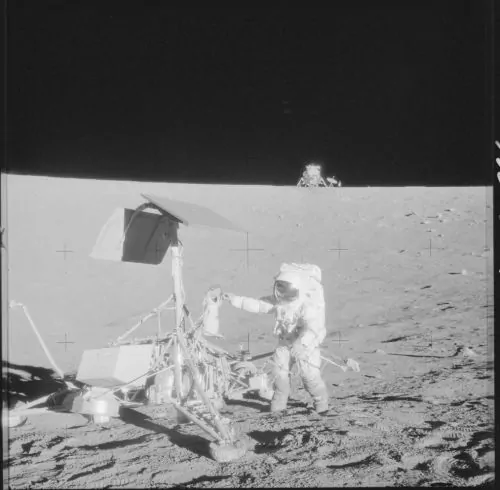
The daemon’s first concern in accepting a passenger is endurance. People accustomed to sedentary comfort make unsuitable candidates, while experienced riders and seafarers offer more promising examples of bodies habituated to difficult movement. Their qualifications include tolerating unpleasant conditions and sustaining themselves without the conveniences of settled life. Kepler draws on recognizable terrestrial experiences to give the selection a practical character, although the daemon’s preferences do not amount to tested standards of fitness. The capacity to acquire astronomical knowledge is distinct from the capacity to reach the place where unfamiliar observations might be made. A learned reader could follow the lunar exposition without possessing the constitution its transportation required. This distinction makes bodily preparation part of the account from the outset. The person carried beyond Earth must survive a succession of disturbances before being able to undertake any investigation of the destination.
Departure presents the most violent immediate danger. The daemons gather their strength to raise the passenger, and exploding gunpowder supplies Kepler’s comparison for the initial shock. That analogy makes the forceful beginning conceivable through a destructive technology familiar within his own world. It also directs attention toward injuries that an account concerned only with traversing distance could overlook. A human body contains vulnerable connections between its members, and the sudden movement threatens to separate parts that must remain together if the passenger is to survive. Kepler describes the need to arrange the limbs carefully against this violence, without supplying a complete protective apparatus. The daemons’ ability to lift a person does not exempt that person from injury. Their extraordinary strength creates a further responsibility because its application must be compatible with the constitution of what they carry. Kepler introduces a mechanical difficulty within the supernatural action itself. Power sufficient to begin the ascent may also destroy the passenger.
Opiates address a different aspect of the ordeal. The traveler is to be rendered insensible before departure, sparing conscious experience of its violence. In his annotation, Kepler expressly distinguishes relief from pain from preservation against physical destruction. Someone who feels nothing can still be crushed or dismembered, and he leaves the provision of adequate protection unresolved. The qualification substantially limits what the proposed drugging accomplishes. It allows the narrative to describe an unconscious passenger without pretending that unconsciousness establishes the safety of the movement.
Cold and the deprivation of air introduce hazards that cannot be reduced to the shock of leaving the ground. Kepler’s commentary treats air as necessary to human survival, comparing a person deprived of it with a fish removed from water. This recognition gives the journey an environmental difficulty independent of the passenger’s courage or experience. Habituation to strenuous travel cannot make a human body indifferent to the absence of something it requires to live. The daemon’s account supplies moistened sponges applied at the nostrils as an expedient for impaired breathing, but the explanatory notes do not establish how this measure could sustain respiration throughout the crossing. Kepler acknowledges that natural explanation fails him at this point. The admission deserves as much attention as the remedy, because it prevents the passage from becoming a straightforward record of successfully solved problems. Damp sponges belong to the narrated management of the traveler; their presence does not demonstrate that the conditions of survival have been adequately supplied. The cold likewise remains something against which assistance must be given, rather than a difficulty eliminated by identifying it. Kepler can specify necessities that the body carries beyond its accustomed surroundings while remaining unable to show how those necessities would be met.
The changing ease of movement during the passage draws on his account of attraction between bodies. Earth’s influence predominates near departure, but lunar attraction becomes increasingly important as the passenger approaches the destination. Kepler discusses such tendencies through an analogy with magnetism, giving the journey a physical organization that varies with proximity to the two globes. The daemons can reduce their immediate assistance during part of the crossing, although the account should not be detached from the ideas of matter through which he explains it. His commentary associates the passenger’s curled configuration with the attraction of the body’s own parts when the larger opposed attractions balance. This explanation concerns the relations among different portions of matter as well as the competition between Earth and Moon. His use of inertia also assigns matter a resistance to movement and a tendency toward rest. The reduced labor described midway through the passage does not imply that Kepler has supplied a general law under which a launched traveler simply continues indefinitely without assistance. The episode belongs to an attempt to understand how several tendencies might act upon one body at different stages, with extraordinary agents still available wherever their intervention is required.
Lunar attraction creates another danger at arrival. Movement toward the destination must be restrained if it is not to end in a destructive collision, so the daemons move ahead of their passenger to prevent a damaging impact. Reaching the Moon requires management at the end of the passage as well as at its beginning. The bodily aftermath also extends beyond the moment of contact. The traveler is said to awaken with profound exhaustion and to recover the ability to walk only slowly. Kepler includes this lingering incapacity within the account of a successful transfer. Survival delivers a person whose physical condition still limits what can immediately be done.
The crossing’s schedule imposes a further restriction, this time through the requirements of the carriers. The daemon allows at most four terrestrial hours for the journey, and access depends on the circumstances of an eclipse. Earth’s shadow provides conditions in which beings threatened by sunlight can undertake the passage. This arrangement links their extraordinary activity to celestial events whose timing belongs within astronomical calculation. A favorable opportunity must occur, and the assistance must be completed before its protection is lost. The narrative places human dependence within another set of dependencies. Those responsible for carrying the passenger possess capacities accompanied by restrictions of their own. Kepler can calculate a window of availability more confidently than he can explain how every bodily hazard would be overcome within it. The rigor of the schedule and the acknowledged deficiencies of the remedies coexist throughout the transport account, preserving a distinction between specifying the circumstances of a journey and establishing that a human being could endure it.
Why a Daemon? Dreams and Astronomical Authority
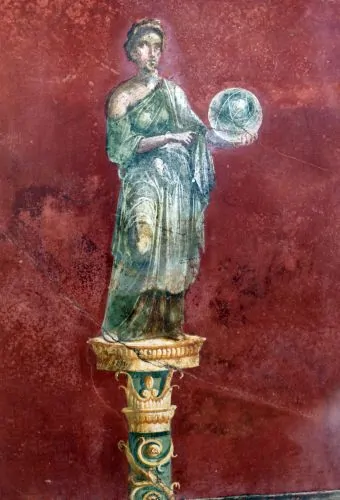
Kepler explicitly associates Fiolxhilde’s spirits with forms of learned knowledge. In his explanatory notes, he interprets daemons as sciences that disclose causes and supports this reading through an etymological association between the Greek term and knowing. The association belongs to his own account of the fiction’s meaning; it should not be treated as an uncontested derivation that settles every implication of the word. He also connects the gentle spirit favored by Fiolxhilde with astronomy or Urania, its classical muse. These glosses give the summoned instructor a recognizable intellectual identity. Kepler further distinguishes the sciences represented by his spirits from malignant beings associated with magical commerce, resisting an interpretation that would identify his astronomical speaker simply with an evil power. The daemon can speak as a personification of the discipline whose claims it develops. Its extraordinary access gives narrative expression to astronomy’s ability to describe circumstances that exceed the immediate experience of its practitioners.
Classical lunar writing supplied precedents for combining exceptional journeys with arguments about the heavens. Kepler expressly identifies Lucian’s True History, in which a ship is carried upward by a whirlwind, among the sources relevant to his invention. Lucian’s extravagant account makes travel beyond Earth available to satire, exposing the possibilities of a narrative released from ordinary standards of geographical testimony. Plutarch’s On the Face in the Moon offers a different relationship between argument and extraordinary report. Its discussion of lunar appearance and physical constitution eventually accommodates an account involving souls and daemons, with knowledge conveyed through distant intermediaries. Kepler’s work on a Latin translation of Plutarch makes this connection substantial. The ancient text furnished an example in which natural philosophy and a concluding supernatural account occupied the same composition without performing identical tasks. Kepler could draw on more than a stock destination or a convenient means of ascent. These predecessors offered different ways to organize the relationship between what could be argued about the Moon and what might be narrated concerning it. His own use of a daemon belongs within that history of experimenting with the authority of accounts set beyond ordinary human reach.
The cosmic dream tradition added expectations about the significance of privileged instruction. Earlier works often related encounters with celestial regions to moral or spiritual understanding, allowing an exceptional guide to explain an order inaccessible to the dreamer’s customary experience. Dean Swinford places Somnium within this inheritance while emphasizing the tension created by its astronomical commitments. Kepler employs conventions developed within earlier cosmologies to accommodate an account in which Earth itself moves. The inherited form remains productive, although its familiar correspondences cannot simply determine the meaning of everything the astronomical exposition contains. A dream capable of conveying instruction has become a setting in which established habits of interpretation also require reconsideration.
The daemon’s choice of elderly women as suitable passengers connects this learned inheritance with contemporary representations of extraordinary flight. Their supposed familiarity with riding goats or traveling on cloaks supplies an experience that the narrative treats as relevant to a much greater journey. Such examples depend on recognizable stories about witches, giving the selection a cultural specificity that disappears if it is read only as a prediction of bodily training for space travel. Kepler’s commentary also records his reading of Martín del Río’s work on magic, providing direct evidence of engagement with learned demonological literature. The motif belonged to an active intellectual environment as well as to storytelling. What remained uncertain was the status of the experiences to which those stories referred, and whether familiarity with their descriptions implied acceptance of their material reality.
Debates over witches’ night-flight made that uncertainty important. Writers including Johann Weyer and the jurist Georg Gödelmann questioned accounts of bodily transportation while retaining frameworks in which demons and their effects remained possible. Skepticism could concern whether an alleged journey had occurred physically, whether an experience resulted from deception, or what a court was entitled to establish from the testimony available. Victoria Flood situates Kepler’s fiction within these disputes, arguing that the contested reality of night-flight made it a useful resource for imagining lunar passage. Kepler’s own conditional language supports the importance of that qualification. In discussing transportation, he reasons that if reports accepted by many tribunals about witches being carried through the air are true, then the removal of a body from Earth to the Moon might also be possible. The condition remains operative. The existence of prosecutions does not by itself establish the reality of flight. His analogy draws on a debated claim whose uncertainty remains visible in the formulation. Reading the passage this way preserves the relevance of contemporary witch-theory without forcing Kepler into either unquestioning acceptance or a complete rejection of supernatural agency.
Even the characters associated with the summons resist reduction to a single secure explanation. Discussing their number, Kepler acknowledges that he has forgotten why he originally selected twenty-one. He then observes that Astronomia Copernicana contains twenty-one letters, while also proposing associations with planetary pairings and combinations of two dice. The astronomical phrase offers an attractive interpretation, especially beside his identification of the daemon with learned inquiry, but his admission prevents it from becoming a conclusively recovered original cipher. The commentary supplies several possible meanings rather than documenting one unmistakable intention. This retrospective uncertainty qualifies attempts to translate every supernatural element into a fixed astronomical equivalent. Kepler gives readers grounds for recognizing a personified science while leaving other associations available within the scene. The daemon’s authority emerges through that combination. Classical instruction and contemporary accounts of extraordinary flight help give astronomy a speaking presence, without making its literary identity entirely stable.
Living through the Lunar Day: Environment and Conjecture
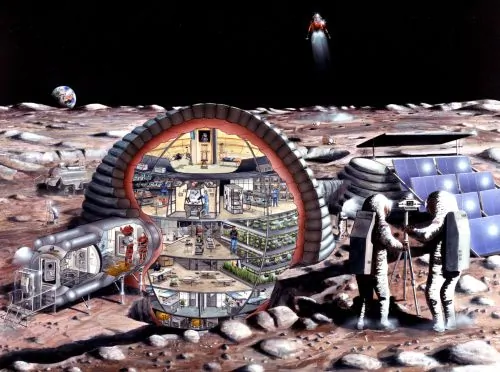
Extended exposure to sunlight turns lunar chronology into a problem of survival. Privolva undergoes severe heating followed by nights of frost and powerful winds, making shelter a necessity for anything living there. Subvolva receives a comparatively temperate character, with the presence of Earth contributing to the difference Kepler imagines between the hemispheres. He assigns a warming influence to reflected terrestrial light and supports this reasoning through his reported experience of warmth from concentrated moonlight. That appeal carries an uncertain terrestrial observation into a much larger claim about another world’s climate. The resulting asymmetry cannot be derived simply from the duration of daylight, since additional assumptions determine how illumination affects the surface. Kepler nevertheless makes regional differences central to the organization of lunar life. Exposure varies enough across Levania that its inhabitants cannot be understood through a single uniform environment.
Water moves through this imagined world on a scale that transforms its habitable surface. Subvolva is inundated during its daylight, while a subsequent retreat exposes fields during the night; the circulation also brings water into relations with the needs of Privolva. Ground that supports activity at one stage may disappear beneath a flood at another. Kepler joins the periodic movement of water to an explanation of how organisms might endure otherwise destructive circumstances. His notes identify the proposed transfers as conjectural and acknowledge difficulties in making them physically credible. Mountains and the boundaries of apparent bodies of water obstruct the easy communication that such a circulation would require. Deep channels offer a possible route through the terrain, although their existence must itself be supposed. He also recognizes a weakness arising from comparison with terrestrial tides. These qualifications leave the hydrological scheme dependent on passages that cannot be inspected and on a correspondence with Earth that fails to resolve every difficulty. Water makes the lunar environment more survivable within the fiction while increasing the explanatory demands placed on its unseen geography.
Deep valleys and extensive caves provide more localized refuges. Their significance lies in the protection they offer against the extremes imposed above ground, allowing living beings to withdraw from destructive exposure. Kepler also imagines hot water entering caves through narrow passages and cooling along the way. The route between the exposed surface and the interior becomes part of the means of preservation. Such details give the underground spaces an environmental function, although they do not establish a complete hydraulic system whose operation could be demonstrated.
Homes and movement acquire different patterns across the two hemispheres. Subvolva possesses features comparable to terrestrial villages and towns, with cultivated places that make its landscape intelligible through settled habitation. Privolva’s occupants have no equivalent attachment to fixed dwellings. They follow the changing distribution of water, making departure an ordinary requirement of existence. Some have exceptionally long legs suited to covering great distances, while others can fly. Boats provide a further means of accompanying the waters on which survival depends. Kepler’s commentary makes the constructive character of these provisions unusually clear; he acknowledges supplying capacities for movement so that the creatures can follow the water. Their forms answer difficulties generated by the world he has already devised. This relationship gives the lunar population coherence, but it also reveals how conveniently a conjectured organism can be equipped to meet a conjectured need. The terrain imposes a demand, and the author furnishes the means of satisfying it.
Gigantic bodies and brief lives extend the biological speculation beyond those immediate requirements. Kepler presents unusually large beings whose growth proceeds rapidly and whose existence may be completed within a single lunar day. These characteristics are not confined to Privolva, nor does he explain them solely through the need to escape heat or pursue retreating water. His annotations relate bodily proportions to the magnitude of lunar mountains and examine duration through correspondences involving natural faculties and celestial rhythms. The physical character of a world can become a guide to the scale of its living occupants. This is a broader analogical procedure than the attribution of long legs to migrating creatures. A correspondence between mountains and organisms does not furnish the same kind of explanation as a limb’s usefulness in locomotion, although both enter the lunar natural history. Kepler moves among these explanatory possibilities without consolidating them into a single biological theory. The enormous inhabitants embody expectations about how the parts of an unfamiliar world might fit together, including expectations that exceed what its climate alone could establish. Their rapid development also changes the meaning of the long day. A period oppressive to a terrestrial visitor can contain an entire sequence of growth and death.
Vegetation participates in this accelerated development, with some plants arising and perishing during one lunar day. Growth is sparse on the mountain summits, making the distribution of living things dependent on terrain as well as time. Protective coverings occupy a conspicuous place in the bodies Kepler imagines. Bark and skin are thick and porous, with exposed surfaces hardening or scorching before peeling away later. His comparisons with terrestrial bark and shells make these structures understandable through familiar forms of protection. The extension lies in their proportions and in the severity of the circumstances they must withstand, not in a demonstrated process through which lunar species acquired them.
Some of the stranger organisms disturb an uncomplicated sequence from birth to death. Beings that appear lifeless can regain vitality at night, while pinecone-shaped masses release creatures when their coverings open. Kepler connects such possibilities with reported wonders in terrestrial natural history, including northern accounts of death and revival and stories associated with barnacle geese. These materials bring a different evidentiary inheritance into the lunar setting from the astronomical calculations used to establish its rhythms. Reports about unusual generation or suspended vitality offered examples through which an unfamiliar creature could become conceivable. Their usefulness as analogies did not settle the reliability of the reports themselves. Kepler’s lunar biology combines ordinary features of plants and animals with exceptional stories whose standing was less secure. It would misrepresent this mixture to extract only the details that resemble later accounts of organisms surviving harsh environments. The imagined population also owes its character to a natural history in which remarkable cases could be enlisted to enlarge the range of what living matter might do.
Telescopic discoveries sharpened the problem of deciding which parts of this inhabited landscape had acquired observational support. In his notes, Kepler distinguishes earlier conjectures about lunar mountains from the subsequent evidence for relief revealed through the telescope. Galileo’s examination of illumination and shadow made an uneven lunar surface an object of sustained argument. Caves and protected interiors remained more difficult to establish, while the presence of buildings required a further inference still. In the separate Conversation with Galileo’s Sidereal Messenger of 1610, Kepler considered whether circular excavations might serve as sheltered settlements. Visible circularity could encourage that suggestion, but it could not identify builders or demonstrate their purposes. His treatment of lunar air likewise shows that rejecting optical arguments did not necessarily remove the larger supposition they had been used to support. The environment developed in Somnium received uneven assistance from new observations. Mountains could gain a stronger empirical foundation while the creatures supposedly moving among them remained products of conjecture. What made the inhabited Moon compelling was the detailed interdependence of its parts. Refuges answered exposure, and living forms were furnished to negotiate the demands of the landscape. That coherence explains the force of the imagined environment while leaving the existence of its population an additional claim.
When Commentary Outgrows the Story: The Making of Somnium
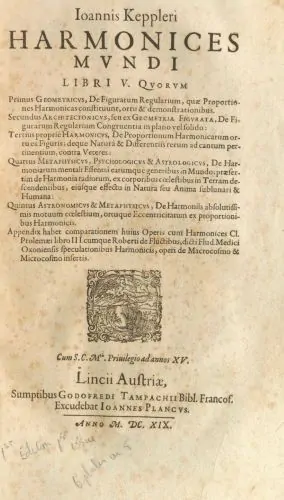
The awakening that ends the dream leaves much of the published book still to be read. In the 1634 edition, the narrative occupies pages 1 through 28, followed by a principal commentary running from pages 29 through 79. Its numbered sequence reaches 223, although the entries vary considerably and some numbered positions contain no substantive explanation. The proportions matter because they establish an experience of reading quite different from following the story alone. A brief expression can become the point of departure for an extended investigation, sending the reader back to reconsider words encountered much earlier. Narrative momentum gives way to the slower work of consultation. The printed volume preserves both activities, making the completion of the dream an invitation to begin another kind of reading.
Between 1620 and 1630, according to the heading attached to the annotations, Kepler successively assembled explanations around a narrative composed in 1609. This interval places the commenting author at a considerable distance from the writer of the earlier fiction. Retaining that fiction alongside subsequent discussion allowed earlier formulations to remain visible even when his interests or conclusions had developed. The resulting book contains statements made at different stages of an investigation, and their proximity on the printed page can obscure their separation in time. Its retrospective passages also record a writer explaining decisions whose original circumstances were no longer equally accessible to him. Yet the annotations extend well beyond the recovery of intention. A calculation addresses a different question from an explanation of a name, and each demands a different form of scrutiny. The reader moves between arguments about the natural world and historical statements about the making of the composition. Treating all these entries as equivalent additions of scientific information would flatten the variety of work Kepler undertakes.
Manuscript circulation had already given the fiction a life beyond its author before the commentary reached this extent. Kepler records its movement in 1611 from Prague through Leipzig to Tübingen, identifying a route through learned networks. Such movement establishes neither a large readership nor a uniform understanding among those who encountered a copy. It does show that the story could be read separately from the explanatory material later attached to it. The expanding annotations addressed a text whose transmission Kepler could describe retrospectively, but whose reception had begun before the printed volume supplied its extensive directions for interpretation.
References to other publications extend the reader’s work beyond the boundaries of Somnium. Among the annotations are directions to Harmonices mundi and the Epitome astronomiae Copernicanae, placing the lunar fiction in contact with substantial investigations pursued elsewhere in Kepler’s writings. These references change the function of the apparatus. An entry may provide enough explanation to clarify a local passage, or it may direct an inquiry outward to an argument too extensive to reproduce there. Following such directions presupposes access to additional books and the mathematical preparation needed to use them. The annotations offer different depths of engagement to readers with different resources. Someone can recognize the relevance of a reference while remaining unable to reconstruct the reasoning behind it. Somnium occupies one position within Kepler’s larger body of work, where an abbreviated explanation can depend on discussions developed for another purpose. Its apparent compactness rests partly on arguments dispersed across publications that the diligent reader might have to bring together.
Optical demonstrations furnish a revealing instance of the practical material recovered through commentary. Kepler describes preparing a darkened room with a small aperture and a white receiving surface, arranging reversed lettering outside so that its projected appearance could be read within. He expressly compares these preparations with ceremonies represented in the fiction. Actions that resemble the preliminaries of conjuration can be considered alongside the handling of light during a learned demonstration. Elsewhere, he recalls observing the solar eclipse of 1605 without a suitable darkened room and using cloaks over the observers’ heads to exclude daylight. This recollection gives an experimental setting to a gesture that also appears within the imagined summons. The explanations bring the circumstances of observation into contact with literary invention through concrete practices. They also leave room for several associations to operate at once, since the same commentary acknowledges material drawn from writings on magic. Kepler’s glosses locate selected details within his working experience while preserving their participation in a scene assembled from other sources. Reading the annotations can turn an apparently incidental action into evidence about the author’s methods of composing.
Two supplementary lunar works further enlarge the volume’s structure. A selenographical appendix addressed to the Jesuit mathematician Paul Guldin follows the principal commentary and carries an additional set of annotations of its own. Kepler’s Latin translation of Plutarch’s lunar dialogue then occupies pages 97 through 182, becoming the largest single component of the 1634 printing. The classical text is present as a substantial work that readers can examine, rather than merely as an authority named in passing. These additions situate the short dream among further lunar studies and translated ancient philosophy. The volume permits comparison across those materials without assimilating them to one continuous narrative.
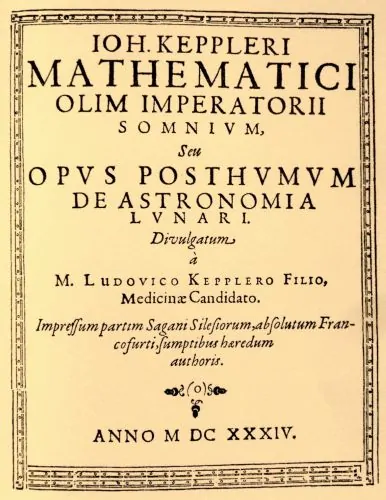
Death interrupted the production of the book before its eventual publication by Ludwig Kepler. In his prefatory dedication, dated at Frankfurt on September 18, 1634, Ludwig explains that printing had been underway when his father died. Jacob Bartsch subsequently undertook its continuation but also died before completing the undertaking. Ludwig then received incomplete printed material and arranged for the work to be brought to completion. The imprint preserves the two places involved in production, Sagan and Frankfurt, giving the physical publication a history extending across locations as well as successive participants. This sequence supplies firmer evidence than conjectures about an editor’s desire to regularize or reinterpret the inherited writings. Johannes had continued to elaborate his project, while the people who survived him faced the task of issuing material whose production remained unfinished. The volume published in 1634 brought the accumulated components together after his own participation had ended. Its date marks the completion of that publication effort, several years after the author’s last opportunity to revise it.
Dangerous Readings: Learned Fiction and the Witchcraft Trial
Katharina Kepler lived in Leonberg as a widow with household resources and connections extending beyond the town. She used herbal remedies, as many contemporaries did, but did not earn her living as a healer. Her circumstances included independent travel and relationships through which she could seek assistance. Ulinka Rublack’s reconstruction of the prosecution restores these features to a woman often reduced to her relationship with a famous son. They matter because a stock portrait of an isolated, habitually troublesome old woman can make an accusation appear to follow naturally from the defendant’s character. Katharina’s documented circumstances demand a more specific explanation. Her vulnerability emerged through accusations and legal action within a community, rather than being an inevitable ramification of occupying a recognizable social type. Ursula Reinbold’s allegation in 1615 concerned illness attributed to a drink Katharina had offered her. The complaint connected bodily suffering with an earlier encounter and assigned responsibility to the person associated with it. Such an accusation contained several questions that could easily become entangled. Reinbold might have experienced genuine illness without correctly identifying its cause, while evidence that a drink had been consumed would not establish that its giver had intended harm. The interpretation of the encounter was crucial. A remembered act of hospitality could acquire a sinister meaning when reconsidered through subsequent suffering. Neither the existence of symptoms nor the strength of the sufferer’s conviction resolved the question of magical action. The prosecution developed around allegations of harmful conduct whose force depended on how events were connected.
Testimony accumulated as other experiences entered the investigation. Memories of illness or injury could be brought together into a portrait that appeared stronger than any individual allegation considered separately. Reputation helped organize that accumulation, encouraging encounters to be recalled through an increasingly settled expectation about the accused. Yet a collection of suspicions still depended on the quality of its components and the grounds on which witnesses attributed harm. Kepler would challenge precisely these transitions from remembered incident to criminal responsibility. The dossier’s apparent coherence became one of the matters requiring examination.
Arrest in August 1620 placed Katharina’s body under the control of a process that had already extended across several years. Her confinement eventually included imprisonment at Güglingen, separating her from the ordinary arrangements through which she had managed her life. Johannes Kepler’s intervention demanded practical commitments alongside the arguments for which he is better remembered. He traveled and devoted substantial attention to the documents, working to secure a defense within the institutions empowered to judge the case. His standing as imperial mathematician helped him act as an advocate, but the proceedings still required engagement with legal procedures and assistance. A favorable reputation in astronomy could not settle the allegations by assertion. The labor of defending Katharina involved reconstructing events and identifying what the testimony actually established. For the family, the dispute concerned the possibility of coercive interrogation and punishment, not merely the correction of an unfavorable opinion.
In defending his mother, Kepler examined chronology, hearsay, and purported connections between encounters and subsequent injuries. He supplied ordinary explanations for illnesses that witnesses attributed to sorcery, questioning whether the available testimony identified any specific magical act. This approach could accept that a person had suffered while disputing the accusation drawn from that suffering. It also operated within a world in which harmful sorcery remained possible for Kepler himself. His position did not depend on abolishing that possibility before the court could find the charges inadequate. The more immediate issue was whether general beliefs about witches justified conclusions about this defendant. A witness’s interpretation required scrutiny even when the kind of harm alleged belonged to an accepted category of wrongdoing. Kepler’s defense combined medical reasoning with attention to the obligations of proof. Rublack’s treatment places these arguments within contemporary legal and religious assumptions, preserving their significance without turning their author into a spokesman for convictions he did not hold.
During the final stage of the proceedings, Katharina faced a formal threat of torture intended to obtain a confession. She maintained her innocence, making her resistance an essential part of the history alongside the work performed on her behalf. Release came in October 1621, after approximately fourteen months of imprisonment, without the threatened physical torture being inflicted. She died in April 1622, leaving only a brief period of life beyond the prosecution. The outcome belongs to her persistence as well as to the arguments and decisions through which her confinement ended.
Somnium enters this history most directly through Kepler’s retrospective concern about the damage that readers could cause. In his annotations, he connected the manuscript’s circulation with hostile interpretation and gossip affecting his family. Those remarks document a vulnerability he believed his writing had created. But establishing that the fiction caused the prosecution would require evidence showing how it entered the accusation or influenced the legal proceedings. The chronology of circulation and prosecution cannot establish that connection unaided. Rublack’s reconstruction provides a detailed local history of alleged injuries and the pursuit of a case against Katharina, which must be examined on its own evidentiary grounds. Kepler’s comments answer another question: how he understood the danger of having composed a story whose family relationships could attract damaging associations. His apprehension remains historically important even where a causal path from manuscript to prosecution has not been demonstrated. It records the difficulty an author faced when interpretive possibilities extended beyond the learned purposes through which he explained his work. Fiolxhilde’s resemblance to the author’s mother also creates a danger for later accounts of Katharina’s life. The fictional woman’s commerce and exceptional knowledge can tempt readers to use the story as a substitute for biographical evidence. That substitution would import invented conduct into the history of someone whose actions had already been subjected to hostile interpretation. Kepler’s explanatory remarks deserve attention as statements made by an involved family member, with his own memories and purposes, rather than as neutral confirmation of every resemblance. The prosecution records and the fiction demand different uses even when they illuminate aspects of the same intellectual and domestic world. Keeping them distinct protects the specificity of Katharina’s experience, including her participation in resisting the charges. The danger posed by a suggestive literary portrait extends beyond its first circulation when subsequent readers continue to treat resemblance as knowledge about a real person.
Does the Lunar Journey Explain More Than the Astronomy Already Assumes?
The following video from “RedFlower Project” is a discussion of Kepler’s Somnium:
I must consider how much of the astronomical argument would survive if the story were removed. A mathematical exposition could assign an observer a position on the Moon and derive the resulting appearances without introducing Duracotus or a supernatural instructor. Diagrams could express the relevant spatial relationships, while calculations could establish periods and angular dimensions. These procedures would still involve imagining circumstances unavailable to contemporary observers, but they would not require the literary construction Kepler chose. The usefulness of a hypothetical lunar station cannot automatically establish the explanatory importance of the dream surrounding it. This objection reaches beyond the familiar recognition that Somnium produces no measurements made on the Moon. It asks whether the fiction contributes understanding that its astronomical content has not already secured through other means. The presence of serious mathematics within a literary work establishes its intellectual substance, but leaves the contribution of its narrative form open to examination.
The daemon’s apparent independence presents a related difficulty. Kepler determines the speaker’s information and constructs the circumstances within which its statements become intelligible. Volva appears through a terrestrial author’s astronomical commitments, carrying assumptions that relocation within the fiction cannot independently validate. An internally consistent lunar survey may establish what follows from those commitments while leaving their physical truth unsettled. The alternative standpoint can seem more external to the argument than it actually is; its authority ultimately returns to the reasoning used to produce it.
Persuasive intention must also be distinguished from demonstrated historical effect. Kepler identifies resistance to terrestrial motion as a target, but that declaration cannot establish how readers responded to his chosen means of persuasion. The mathematical preparation needed to appreciate parts of Somnium might have restricted its reach beyond the learned circles already debating the relevant problems. Even among qualified readers, the supernatural framework could attract attention or create an additional obstacle to assent. Establishing its influence on astronomical convictions would require evidence of reception, such as correspondence or readers’ annotations showing how some arguments were understood and used. The circulation of the manuscript and the completion of the printed book establish opportunities for such encounters. Claims that the fiction changed the course of acceptance demand a further historical demonstration, beyond identifying the effects its author hoped to achieve.
Deduction can nevertheless enlarge understanding without adding observations, and mathematical equivalence does not determine every intellectual use of a representation. Frédérique Aït-Touati’s analysis of cosmological writing offers grounds for examining narration as part of the work of natural philosophy. Her approach suggests a response to the objection that the fiction merely decorates conclusions obtained elsewhere. A diagram can locate an observing point without specifying what it would take for a living being to remain there. Sustaining that position as an inhabited place brings bodily necessities into contact with astronomical relationships, exposing questions that a restricted calculation can leave aside. The resulting demands may exceed the author’s resources for answering them, as Kepler’s admissions about transportation demonstrate. In this respect, the narrative can test the completeness of an astronomical world even when it cannot confirm the truth of its governing theory. Its value includes making inadequacies harder to overlook. A conventional treatise could pursue comparable questions, but their concentration within one imagined environment remains an identifiable feature of this composition. The contribution belongs to the connections Kepler develops through the fiction, rather than to an exclusive power possessed by fictional writing.
The lunar journey should accordingly be understood as a sustained conditional investigation of what a proposed world would entail. Its astronomical propositions retain the burden of justification appropriate to them, and its imaginative coherence supplies no substitute for that work. The narrative brings those propositions into an environment whose occupation raises further demands, allowing the adequacy of the larger construction to become a subject of scrutiny. This interpretation relinquishes claims that the story was logically indispensable or that its persuasive success follows from its design. It preserves a more specific achievement. Kepler made an astronomical standpoint answerable to questions about existence at that location, extending the inquiry beyond what the assignment of coordinates could settle.
Conclusion: What Leaving Earth Made Thinkable
Earth remains the source of Kepler’s questions even when it takes its place overhead in the lunar exposition. Its geography provides features for the imagined observer to follow, and terrestrial experience furnishes the comparisons through which life elsewhere becomes conceivable. The effort to describe Levania changes the intellectual status of the point of departure. Attributes ordinarily accepted as the setting of human existence, including access to breathable air, become local provisions whose absence would have profound ramifications. An inhabited globe is simultaneously a physical object and the support of beings capable of investigating it. Kepler’s sustained comparison brings those identities together within an examination of celestial relations. The attachment of human life to Earth acquires significance through the attempt to imagine circumstances in which that attachment would be interrupted.
The published volume preserves this inquiry across successive periods of work. Earlier formulations remain in contact with explanations developed after the narrative had begun to circulate, allowing readers to encounter the project through several stages of its history. Its composite structure records the effort involved in returning to a problem whose implications continued to expand. Publication eventually brought that labor together after Kepler’s participation had ended. The historical identity of Somnium includes this prolonged engagement, with its uneven resolutions and the supplementary materials through which the lunar investigation grew.
Learned invention also took place among people whose judgments carried consequences beyond the interpretation of a book. The daemon’s intellectual associations could guide a reader toward astronomy, while its other attributes remained connected with disputed claims about extraordinary powers. Kepler’s concern about harmful readings belongs to that environment of overlapping meanings. Katharina’s prosecution must retain its independent documentary history, and her son’s fears cannot establish what set the case in motion. Her experience nevertheless places a human limit on the freedom with which the family represented in the fiction can be interpreted. An ingenious allegorical reading cannot determine what a real woman did, just as an accusation cannot acquire adequate grounds through resemblance to a literary figure. Attention to these differences keeps the people around the composition from disappearing into its symbolism. The author who could assign a daemon its astronomical learning had far less control over what others might believe about a member of his family.
The achievement belongs to an early modern effort to give inaccessible worlds a place within reasoned discussion. Kepler sustained an investigation whose subject could not be visited, allowing its demands to extend beyond the explanations he could satisfactorily provide. His Moon remained partly constructed from terrestrial materials, yet those materials changed their significance when assembled under another sky. Imagined distance exposed the dependence of inquiry on the place where its questions originated, even as it enlarged the range of circumstances those questions could address. An observer’s home could remain indispensable to knowledge while becoming one of the things that knowledge had to explain.
Bibliography
Affiliate disclosure: Amazon links on this site are paid links. As an Amazon Associate I earn from qualifying purchases.
- Aït-Touati, Frédérique. Fictions of the Cosmos: Science and Literature in the Seventeenth Century. Translated by Susan Emanuel. Chicago: University of Chicago Press, 2011.
- Bellinson, Nicholas. “Goodnight Moon: Kepler’s Somnium.” JHI Blog. October 26, 2015.
- Bezzola Lambert, Ladina. Imagining the Unimaginable: The Poetics of Early Modern Astronomy. Amsterdam and New York: Rodopi, 2002.
- Bozzetto, Roger and Arthur B. Evans. “Kepler’s ‘Somnium’; Or, Science Fiction’s Missing Link (‘Le Songe’ de Kepler, ou le chaînon manquant de la science fiction).” Science Fiction Studies 17:3 (1990), 370-382.
- Caspar, Max. Kepler. Translated and edited by C. Doris Hellman. New York: Dover Publications, 1959.
- Chen-Morris, Raz. “Shadows of Instruction: Optics and Classical Authorities in Kepler’s Somnium.” Journal of the History of Ideas 66:2 (2005), 223-243.
- Christianson, Gale E. “Kepler’s Somnium: Science Fiction and the Renaissance Scientist.” Science Fiction Studies 3:1 (1976), 79-90.
- Christie, Thony. “Johannes Kepler’s Somnium and Katharina Kepler’s Trial for Witchcraft: The Emergence of a Myth.” The Renaissance Mathematicus. July 30, 2014.
- Clark, Stuart. Thinking with Demons: The Idea of Witchcraft in Early Modern Europe. Oxford: Oxford University Press, 1997.
- Copernicus, Nicolaus. De revolutionibus orbium coelestium (On the Revolutions). Edited by Jerzy Dobrzycki. Translated with a commentary by Edward Rosen. Baltimore: Johns Hopkins University Press, 1992.
- Flood, Victoria. “Johannes Kepler’s ‘Somnium’ and the Witches’ Night Flight.” Interfaces: A Journal of Medieval European Literatures 8 (2021), 74–97.
- Galilei, Galileo. Sidereus Nuncius, or The Sidereal Messenger. Translated with an introduction, conclusion, and notes by Albert Van Helden. Chicago: University of Chicago Press, 1989.
- Giacomini, Gustavo Santos. “A Link between Science and Literature: Johannes Kepler’s Somnium.” Khronos, Revista de História da Ciência 9 (2020), 68-80.
- Hoffleit, Dorrit. “Kepler’s Lunar Speculations.” The Wilson Quarterly 11:5 (1987), 175.
- Kepler, Johannes. Kepler’s Conversation with Galileo’s Sidereal Messenger. Translated with an introduction and notes by Edward Rosen. New York: Johnson Reprint Corporation, 1965.
- —-. Kepler’s Somnium: The Dream, or Posthumous Work on Lunar Astronomy. Translated with a commentary by Edward Rosen. Madison: University of Wisconsin Press, 1967.
- —-. A New Astronomy. Translated by David Peck Todd. New York: American Book Company, 1897.
- —-. Somnium, seu opus posthumum de astronomia lunari. Edited by Ludwig Kepler. Sagan and Frankfurt, 1634.
- Lucian. Lucian. Vol. 1. Translated by A. M. Harmon. Cambridge, MA: Harvard University Press, 1913.
- Menzel, Donald H. “Kepler’s Place in Science Fiction.” Vistas in Astronomy 18 (1975), 895-904.
- Montgomery, August. The Moon Travelers: Classic Tales of Lunar Voyages from Ariosto to Wells. Houston: Heritage Wonder Press, 2025.
- Nadis, Fred. “‘Astronomical Dream’: Johannes Kepler Wrote the First Science-Fiction Story.” Astronomy, June 2, 2025.
- Nicolson, Marjorie. “Kepler, the Somnium, and John Donne.” Journal of the History of Ideas 1:3 (1940), 259-280.
- Plutarch. Moralia. Translated by Harold Cherniss and William C. Helmbold. Loeb Classical Library 406. Cambridge, MA: Harvard University Press, 1957.
- Rublack, Ulinka. The Astronomer and the Witch: Johannes Kepler’s Fight for His Mother. Oxford: Oxford University Press, 2015.
- Stephenson, Bruce. Kepler’s Physical Astronomy. New York: Springer-Verlag, 1987.
- Swinford, Dean. “The Lunar Setting of Johannes Kepler’s Somnium, Science Fiction’s Missing Link.” In Classical Traditions in Science Fiction, edited by Brett M. Rogers and Benjamin Eldon Stevens, 27–45. New York: Oxford University Press, 2015.
- —-. Through the Daemon’s Gate: Kepler’s Somnium, Medieval Dream Narratives, and the Polysemy of Allegorical Motifs. New York: Routledge, 2006.
- Thoren, Victor E. The Lord of Uraniborg: A Biography of Tycho Brahe. Cambridge: Cambridge University Press, 1990.
- Westman, Robert S. The Copernican Question: Prognostication, Skepticism, and Celestial Order. Berkeley: University of California Press, 2011.
- Włodarczyk, Jarosław. “’Out of a laborinth of errors’: Lunar astronomy in London before Kepler.” Notes and Records 76:3 (2022), 371-386.
- Winters, Sabine. “A View from the Moon: Kepler’s Somnium as a Thought Experiment in Astronomy.” Master’s thesis, Radboud University, 2022.
Originally published by Brewminate, 10.20.2026, under the terms of a Creative Commons Attribution-NonCommercial-NoDerivatives 4.0 International license.
About the Author