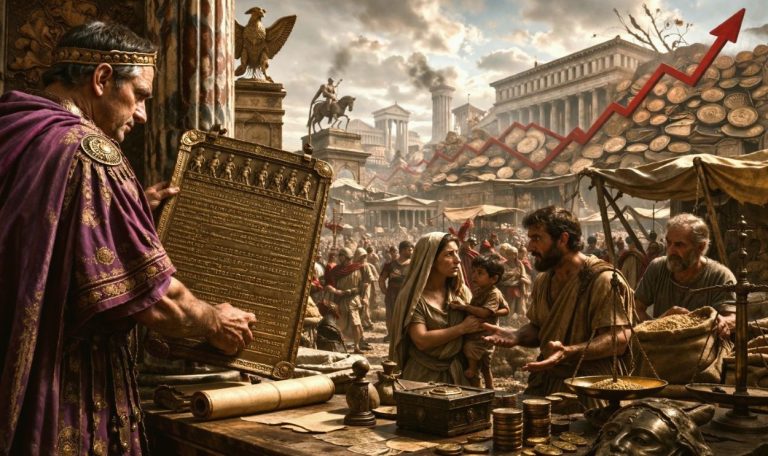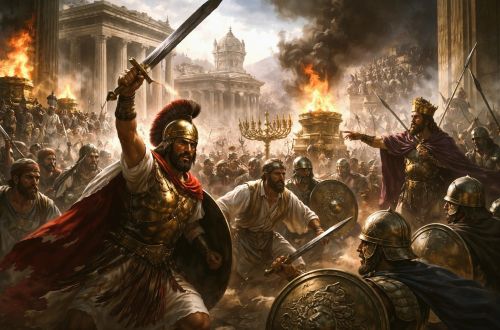
In the second century BCE, Seleucid attempts to suppress Jewish religious practices transformed cultural identity into political resistance, igniting the Maccabean Revolt and reshaping Judaea’s future.

By Matthew A. McIntosh
Public Historian
Brewminate
Introduction: Empire, Religion, and Political Suspicion in the Hellenistic World
The Hellenistic world that emerged after the death of Alexander the Great in 323 BCE consisted of vast, culturally diverse empires governed by Greek-speaking dynasties over populations with long-standing local traditions. Among these states, the Seleucid Empire controlled an immense territory stretching from the eastern Mediterranean deep into Asia. Managing such diversity depended on balancing imperial authority with local autonomy. In many regions the Seleucid rulers permitted traditional religious practices to continue, recognizing that temples, priesthoods, and ancestral customs formed the foundations of local political order. Yet the stability of this arrangement depended on the perception that provincial communities remained loyal to imperial authority. When political tensions intensified, cultural and religious difference could become entangled with concerns about loyalty and control.
Judaea occupied a particularly sensitive position within this imperial construct. Situated between the Seleucid and Ptolemaic spheres of influence, the region had long been a contested frontier in the struggle between the two Hellenistic kingdoms. Its population maintained a distinctive religious identity centered on the Jerusalem Temple and a body of laws governing communal life. These traditions were not merely matters of private belief but deeply embedded in political authority, social organization, and legal practice. The boundaries between religion, law, and politics were inseparable. For imperial officials accustomed to integrating cities and elites into the broader structures of Hellenistic governance, such a system could appear resistant to the cultural forms that underpinned imperial administration.
The reign of Antiochus IV Epiphanes in the mid second century BCE unfolded during a period of instability for the Seleucid state. Military conflict with the Ptolemaic Kingdom, financial strain, and internal rivalries among regional elites placed pressure on imperial authority. Antiochus had come to power after a complex succession that reflected the fragility of Seleucid dynastic politics, and his reign was marked by repeated efforts to stabilize imperial finances and maintain military readiness in the face of external threats. Within Judaea, divisions among Jewish elites over the adoption of Greek civic institutions further complicated the political landscape. Competing factions sought control of the high priesthood, and some leaders pursued closer alignment with Hellenistic cultural and political norms, including the establishment of a gymnasium and the introduction of Greek civic practices in Jerusalem. This situation drew the attention of Seleucid authorities, who increasingly viewed local conflicts through the lens of imperial security. Antiochus IV’s intervention in Jerusalem was not simply a cultural policy but part of a broader attempt to manage a strategically important province whose internal disputes appeared capable of undermining stability along the empire’s southern frontier. The measures that followed, including restrictions on key Jewish religious practices and the alteration of Temple worship, reveal an imperial strategy that equated the consolidation of political authority with the reduction of cultural distinction.
These policies had profound consequences. By treating distinctive religious practices as signs of political unreliability, the Seleucid government transformed cultural difference into a matter of imperial security. Rather than stabilizing the province, this approach intensified tensions within Jewish society and contributed to the outbreak of the Maccabean Revolt in the 160s BCE. The conflict that followed shows how imperial attempts to suppress minority religious traditions produced the very instability they sought to prevent. Examining these events within the broader dynamics of Hellenistic imperial rule reveals how religious identity, political suspicion, and cultural coercion became intertwined in one of the most consequential rebellions of the ancient Mediterranean world.
The Seleucid Empire in Crisis: War, Succession, and Political Fragility

By the early second century BCE the Seleucid Empire faced mounting pressures that weakened its ability to govern distant provinces effectively. The empire had inherited an enormous territorial inheritance from the conquests of Alexander the Great, stretching from the eastern Mediterranean to parts of Central Asia. Maintaining authority over such a vast and culturally diverse domain required continuous military activity, complex administrative coordination, and the cooperation of local elites. These demands placed persistent strain on the Seleucid state, particularly as rival powers challenged its authority and internal political disputes disrupted dynastic stability.
One of the most significant turning points came after the defeat of Antiochus III by the Roman Republic in the Roman–Seleucid War. The resulting Treaty of Apamea in 188 BCE imposed heavy financial indemnities on the Seleucid state and forced the surrender of important territories in Asia Minor, including lands west of the Taurus Mountains that had previously contributed valuable revenue and strategic depth to the empire. The treaty also required the Seleucid rulers to limit their military capabilities in the region and deliver hostages to Rome, a symbolic demonstration of Roman authority in the eastern Mediterranean. The loss of territory and resources significantly weakened the Seleucid state’s economic foundation at a moment when the maintenance of armies and fortifications remained essential for preserving imperial control. Large annual indemnities to Rome placed continuing pressure on royal finances, forcing Seleucid administrators to seek new revenue streams and intensify oversight of remaining provinces. These financial constraints not only affected military capacity but also shaped the political environment within the empire, as provincial taxation and local political arrangements increasingly became matters of urgent concern for the central government.
The weakened Seleucid state also intensified its long-standing rivalry with the Ptolemaic Kingdom in Egypt. These two Hellenistic powers had fought a series of conflicts known collectively as the Syrian Wars over control of Coele-Syria and surrounding regions. Judaea lay directly within this contested frontier zone, making it strategically significant to both sides. Control of the region was not simply a matter of provincial administration but part of a broader geopolitical struggle. When Antiochus IV later engaged in campaigns against Egypt, the security of territories along the southern frontier became an issue of direct military importance.
Dynastic politics further contributed to instability within the empire. After the death of Antiochus III in 187 BCE, the Seleucid throne passed to his son Seleucus IV Philopator. His reign was marked by the ongoing burden of Roman tribute and by tensions within the royal court. In 175 BCE Seleucus IV was assassinated, creating a sudden succession crisis. Antiochus IV, who had previously spent time in Rome as a political hostage following the Treaty of Apamea, seized the opportunity to claim the throne. Although he eventually secured his position, the circumstances of his accession reflected the fragile nature of Seleucid dynastic legitimacy during this period.
The new ruler inherited an empire facing both external threats and internal uncertainty. Antiochus IV pursued an active foreign policy and attempted to strengthen royal authority across the empire. His campaigns in Egypt demonstrated his willingness to intervene aggressively in regional power struggles, temporarily occupying parts of the Nile Delta and exerting influence over the Ptolemaic court. These actions reflected the broader Seleucid objective of reclaiming influence in territories that had long been contested between the two Hellenistic kingdoms. However, the limits of Seleucid power became dramatically visible during the episode often referred to as the “Day of Eleusis” in 168 BCE, when the Roman envoy Gaius Popillius Laenas confronted Antiochus near Alexandria and demanded that he withdraw his forces from Egypt. Faced with the implicit threat of Roman military intervention, Antiochus complied and abandoned the campaign. The incident demonstrated that the Seleucid Empire now operated within a geopolitical environment increasingly dominated by Roman authority. For Antiochus IV, the episode underscored the precarious nature of imperial power and reinforced the necessity of maintaining firm control over the territories that remained securely within Seleucid influence.
The political situation in Judaea gained heightened significance. Internal divisions among Jewish elites regarding Hellenistic cultural reforms and control of the high priesthood created an environment that Seleucid authorities could interpret as unstable. For an empire already confronting fiscal pressures, dynastic uncertainty, and military competition with rival powers, such disputes risked undermining the security of a strategically sensitive region. The interventions of Antiochus IV in Jerusalem must be understood not merely as isolated acts of religious policy but as part of a wider imperial effort to maintain authority during a period of geopolitical and political fragility.
Hellenization and Elite Competition in Jerusalem
The cultural and political tensions that later erupted into open revolt did not begin with the decrees of Antiochus IV Epiphanes. Long before the Seleucid government imposed restrictive policies on Jewish religious practice, Judaea had already experienced significant interaction with the broader Hellenistic world. After Alexander the Great, Greek language, administrative structures, and civic institutions spread across the eastern Mediterranean. These developments did not replace local traditions outright but instead created a layered cultural environment in which local elites often adopted elements of Greek culture as a means of participating in the political and economic networks of the Hellenistic kingdoms. In many regions this evolution unfolded gradually and without widespread coercion, producing a hybrid cultural landscape rather than a simple replacement of indigenous practices.
In Jerusalem, the influence of Hellenistic culture emerged most visibly among segments of the Jewish elite. Participation in imperial administration, diplomacy, and trade often required familiarity with Greek language and customs. Some members of the priestly and aristocratic classes saw advantages in aligning themselves more closely with Hellenistic civic norms. It did not necessarily represent a rejection of Jewish tradition but instead reflected pragmatic efforts by local leaders to operate within a Greek-dominated political environment. The process of cultural adaptation, however, was uneven and controversial, particularly because religious law shaped many aspects of Jewish communal life in ways that differed from the civic structures of Greek cities.
One of the most significant episodes illustrating this tension involved the high priest Jason in the early years of Antiochus IV’s reign. According to ancient accounts, Jason secured the high priesthood through negotiation with the Seleucid court and introduced reforms intended to transform Jerusalem into a polis modeled on Greek civic institutions. Central to these reforms was the establishment of a gymnasium, an institution associated with Greek education, athletics, and civic identity. The creation of such a facility in Jerusalem symbolized the growing influence of Hellenistic cultural forms within the city. For supporters of these reforms, the gymnasium represented an opportunity to integrate Jerusalem more fully into the political and cultural networks of the Hellenistic world. Greek-style civic organization also implied new forms of political participation, public education, and elite socialization that could strengthen connections between Jerusalem’s leadership and the ruling Seleucid administration. The reforms reflected more than simple cultural imitation. They represented an attempt by certain Jewish elites to reposition Jerusalem within the administrative and diplomatic structures of the Hellenistic kingdoms. Such changes, however, inevitably raised questions about the link between Greek civic identity and the distinctive religious traditions that structured Jewish communal life.
This shift generated substantial opposition. For many Jews, the introduction of Greek civic institutions raised concerns about the erosion of traditional religious practices and communal boundaries. Participation in gymnasium culture involved activities and social norms that some observers believed conflicted with Jewish law and identity. Ancient sources describe anxieties surrounding the abandonment of traditional customs and the increasing prestige associated with Greek cultural practices. Although these accounts are shaped by later perspectives, they nevertheless reflect the depth of the cultural debate taking place within Jerusalem during this period.
The conflict intensified when Jason was later replaced as high priest by Menelaus, who reportedly offered even greater financial support to the Seleucid authorities in exchange for the position. This transition deepened divisions within the Jewish community and contributed to political unrest in Jerusalem. Competing factions aligned themselves with different leaders, and the struggle for control of the high priesthood became entangled with questions of cultural orientation and imperial loyalty. The office of high priest was not only a religious authority but also the central political leadership position within Jewish society, making the contest for control especially consequential. Menelaus’ accession, which appears to have involved substantial financial arrangements with Seleucid officials, reinforced the perception that imperial interests had become deeply embedded in Jerusalem’s internal politics. As rival groups competed for influence, accusations of impiety, corruption, and political betrayal circulated within the community. For Seleucid authorities observing these events, the disputes may have appeared less as theological disagreements and more as signs of political disorder that threatened stability in a strategically important province.
These internal rivalries played a crucial role in drawing the Seleucid state more directly into the affairs of Jerusalem. What had begun as debates within the Jewish community over cultural adaptation and religious tradition increasingly became matters of imperial administration and political security. Antiochus IV’s later interventions occurred against the backdrop of an already divided society in which elite competition, financial negotiations with imperial authorities, and disputes over cultural identity had destabilized the local political order. The tensions created by these conflicts helped transform the question of Hellenization from an internal debate into a confrontation between imperial power and communal religious identity.
Antiochus IV and the Criminalization of Jewish Religious Practice
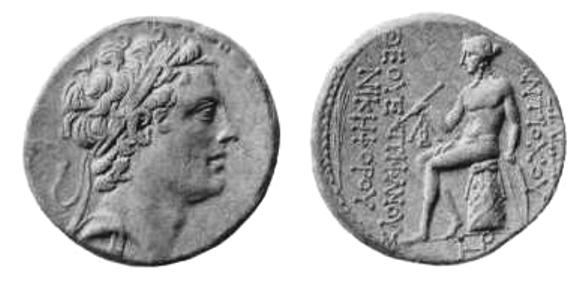
The most dramatic escalation of tensions between the Seleucid state and the Jewish population of Judaea occurred during the reign of Antiochus IV Epiphanes in the 160s BCE. After returning from campaigns in Egypt and confronting political unrest in Jerusalem, Antiochus implemented a series of measures that fundamentally altered the link between imperial authority and Jewish religious life. Ancient sources describe decrees that prohibited central elements of Jewish religious observance, including circumcision, Sabbath observance, and adherence to dietary laws. These measures transformed long-standing religious practices into acts that could be interpreted as violations of imperial policy. By criminalizing distinctive aspects of Jewish law, the Seleucid administration effectively framed religious observance as a form of political defiance.
The suppression of Jewish ritual practices marked a departure from the generally pragmatic approach that Hellenistic rulers often adopted toward local religions. In many parts of the Hellenistic world, temples and priesthoods were incorporated into imperial administration without requiring the abandonment of local traditions, and rulers frequently supported local cults as a means of reinforcing political legitimacy. The situation in Judaea appears exceptional in both scale and intensity. Some historians have argued that Antiochus IV intended to eradicate Jewish religious traditions altogether, interpreting the decrees as evidence of a deliberate program of religious persecution. Others, however, suggest that the policies were more narrowly aimed at suppressing forms of communal identity that imperial authorities perceived as obstacles to political integration and administrative stability. From this perspective, the Seleucid government may have regarded distinctive Jewish practices as markers of separation that complicated the incorporation of the province into the cultural and political structures of the Hellenistic state. Regardless of the precise intention, the effect of these policies was to place the daily religious life of Jewish communities under direct imperial scrutiny. Practices that once served as ordinary expressions of communal identity were suddenly recast as violations of imperial authority.
The transformation of the Jerusalem Temple stands as the most symbolically significant element of Antiochus’ program. The Temple had long served as the religious and institutional center of Jewish life, functioning not only as a place of worship but also as the focal point of communal authority and identity. According to the accounts preserved in 1 Maccabees and 2 Maccabees, the Seleucid authorities introduced Greek religious rites into the Temple and constructed an altar associated with the worship of Olympian Zeus. This act fundamentally altered the ritual character of the sanctuary and represented a direct challenge to the religious framework that governed Jewish society. For many observers, the reconfiguration of the Temple signaled that the Seleucid government intended to redefine the religious order of the province.
The enforcement of these decrees used coercive measures that brought imperial authority into everyday life within Jewish communities. Ancient sources recount episodes in which individuals who continued to observe Jewish law faced punishment, including the execution of those who performed circumcision or refused to abandon traditional practices. While the details of these accounts must be evaluated critically, they nevertheless reflect the perception that religious identity had become inseparable from resistance to imperial authority. The decrees required local officials and collaborating authorities to monitor private behavior in ways that blurred the boundary between religious practice and political obedience. Families who circumcised their children, observed the Sabbath, or refused to participate in the new rituals could be accused of violating imperial law. This transformation turned ordinary acts of religious devotion into political statements that carried potentially severe consequences. As a result, Jewish communities were forced to confront the reality that loyalty to their religious traditions might be interpreted by imperial authorities as disloyalty to the state itself.
These measures had immediate and profound consequences. By attempting to eliminate the visible markers of Jewish religious identity, Antiochus IV unintentionally strengthened the association between religious observance and political resistance. What may have been conceived as a strategy for imposing cultural conformity instead produced widespread opposition and contributed directly to the outbreak of the Maccabean Revolt. The criminalization of Jewish religious practice marked a turning point in the relationship between the Seleucid state and the Jewish population of Judaea, transforming an imperial province into the center of a sustained rebellion that would reshape the political landscape of the region.
Religion as Political Loyalty: Imperial Logic and Cultural Conformity
Ancient empires often interpreted religious behavior as a reflection of political allegiance. In the Hellenistic construct, rulers governed populations with widely differing languages, traditions, and systems of belief. Maintaining authority across such diversity required mechanisms that could signal loyalty to imperial power. Religious institutions frequently played this role, since temples, priesthoods, and public rituals functioned not only as spiritual centers but also as civic institutions embedded within local political structures. Participation in imperial cults, public sacrifices, and state-sponsored festivals carried political significance, signaling that local communities acknowledged the legitimacy of imperial rule.
Distinctive religious practices could appear problematic when they marked a community as culturally separate from the wider imperial order. Jewish law emphasized forms of communal distinction that were visible in everyday life, including dietary restrictions, Sabbath observance, and circumcision. These practices created clear boundaries between Jewish communities and surrounding populations. From the perspective of imperial authorities seeking to integrate provincial elites into the structures of Hellenistic governance, such boundaries might be interpreted as barriers to political cohesion. Cultural uniformity, or at least the public appearance of shared customs, often functioned as a stabilizing element within multiethnic empires. Greek civic culture, with its institutions such as gymnasia, assemblies, and public festivals, provided a recognizable framework through which imperial officials could interact with local elites across different regions. Communities that participated in these shared cultural forms were more easily incorporated into the diplomatic and administrative networks that linked cities throughout the Hellenistic world. Conversely, communities that maintained distinctive legal or ritual systems sometimes appeared resistant to these integrative mechanisms, particularly when their customs visibly distinguished them from surrounding populations in daily life.
Antiochus IV’s policies in Judaea can be understood within a broader imperial logic that linked cultural conformity with political reliability. The Seleucid state did not typically seek to eliminate local religions, yet rulers sometimes encouraged the adoption of Greek civic institutions and cultural forms as a means of strengthening administrative integration. In the case of Jerusalem, the existence of internal disputes among Jewish elites may have reinforced the perception that traditional practices were connected to political factionalism. By promoting Hellenistic civic norms and restricting practices that emphasized Jewish communal distinctiveness, Antiochus may have believed he was reinforcing loyalty to imperial authority.
Such assumptions, however, underestimated the depth of the connection between Jewish religious practice and communal identity. For many Jewish communities, observance of the law was not merely a cultural preference but the defining framework of collective life. Religious commandments regulated social behavior, legal authority, and the rhythm of communal existence. Attempts to suppress these practices carried implications far beyond religious ritual. They threatened the entire structure through which Jewish communities understood their identity and their relationship with the divine.
The Seleucid attempt to equate religious conformity with political loyalty produced the opposite result. Instead of dissolving communal boundaries, imperial coercion strengthened them. Practices that had once been routine elements of everyday life became symbols of resistance and solidarity. The enforcement of cultural uniformity intensified the association between Jewish religious identity and political autonomy. Communities that had previously debated the role of Hellenistic cultural practices within Jewish society now found themselves united in opposition to imperial interference in religious life. The pressure exerted by the Seleucid state transformed religious observance into a visible marker of defiance, making acts such as Sabbath observance or circumcision expressions of political resistance as well as spiritual devotion. The crisis in Judaea illustrates a recurring pattern in imperial history: when rulers treat cultural difference as evidence of political disloyalty, attempts to enforce conformity may provoke resistance that transforms local traditions into powerful instruments of rebellion.
The Maccabean Revolt: Religion, Resistance, and the Mobilization of Identity
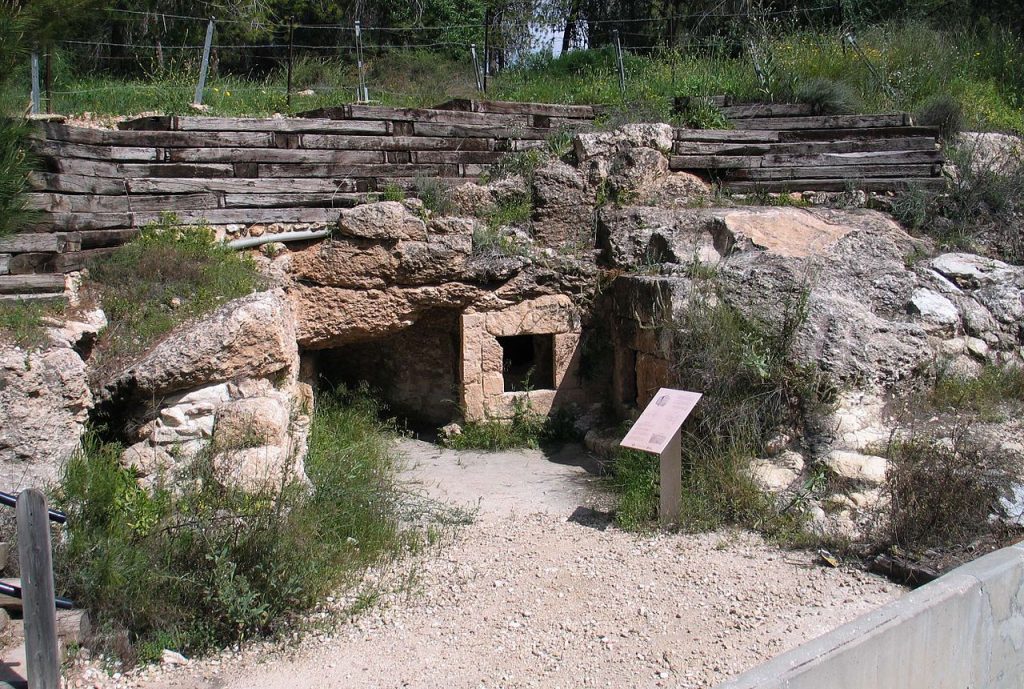
The policies imposed under Antiochus IV Epiphanes eventually provoked a violent reaction within Judaea that would become known as the Maccabean Revolt. The uprising began in the rural town of Modein, where the priest Mattathias and his sons resisted the enforcement of Seleucid religious decrees. According to the account preserved in 1 Maccabees, Mattathias refused to perform a sacrifice demanded by imperial officials and killed a fellow Jew who stepped forward to comply with the order. This act of defiance triggered an open rebellion against Seleucid authority and signaled the emergence of an organized resistance movement. A localized act of resistance quickly expanded into a broader campaign against imperial control.
After the death of Mattathias, leadership of the revolt passed to his son Judas, later known as Judas Maccabaeus. Under his command the rebellion developed into a disciplined insurgency that relied on mobility, knowledge of the local terrain, and the support of rural communities. Judas and his followers avoided direct confrontation with the larger Seleucid armies whenever possible, instead employing ambushes and raids against garrisons and collaborators. These tactics allowed the rebels to disrupt Seleucid control over large portions of the countryside despite the empire’s superior military resources. The insurgency gained momentum as opposition to the imperial decrees spread among Jewish communities. Rural populations, priests displaced by the new religious policies, and groups committed to preserving traditional practices found common cause in the rebellion. The leadership of Judas Maccabaeus gradually transformed what began as scattered resistance into a coordinated movement capable of challenging Seleucid authority in multiple regions. Through a combination of military adaptability and ideological messaging centered on religious restoration, the rebellion established itself as a sustained insurgency rather than a short-lived uprising.
Religious identity played a central role in mobilizing support for the revolt. The leaders of the rebellion framed their struggle not simply as a political uprising but as a defense of the covenant and the sacred traditions of Israel. Observance of the law became intertwined with resistance to imperial authority, transforming religious devotion into a powerful symbol of communal solidarity. The rebels sought to restore practices that had been restricted under Seleucid rule, presenting their cause as the preservation of ancestral traditions rather than the pursuit of political revolution. This framing helped attract support from groups that might otherwise have remained neutral in a purely political conflict.
The military successes achieved by Judas Maccabaeus further strengthened the legitimacy of the movement. Several engagements described in 1 Maccabees, including victories over Seleucid forces at Emmaus and Beth Zur, demonstrated that the rebels were capable of confronting imperial armies under favorable conditions. These victories not only weakened Seleucid control in the region but also encouraged broader participation in the revolt. As the movement expanded, the rebels established stronger organizational structures and coordinated military operations across multiple regions of Judaea.
The most significant symbolic achievement of the revolt was the recapture and purification of the Jerusalem Temple in 164 BCE. After driving Seleucid forces from the city, Judas and his followers removed the foreign altar and rededicated the sanctuary according to Jewish law. The event marked the restoration of traditional worship at the central institution of Jewish religious life and became commemorated in later Jewish tradition through the festival of Hanukkah. The rededication of the Temple held immense symbolic weight, as the sanctuary represented the spiritual center of Jewish communal identity and the focal point of religious authority. By reclaiming and purifying the Temple, the rebels demonstrated that the policies imposed by Antiochus IV had been successfully reversed. The event also provided a powerful narrative of divine favor and communal perseverance that strengthened the legitimacy of the rebellion and reinforced the connection between religious observance and political resistance.
Although the revolt initially focused on the restoration of religious practices, its consequences extended into the political sphere. The weakening of Seleucid authority in the region eventually enabled the Maccabean leadership, later known as the Hasmonean dynasty, to establish an independent Jewish state. The uprising demonstrated how a conflict that began as resistance to religious repression could evolve into a broader struggle for political autonomy. The Maccabean Revolt illustrates how religious identity can become a powerful force for mobilization when communities perceive their traditions to be under threat from imperial authority.
Long-Term Consequences: From Revolt to the Hasmonean State
The success of the Maccabean Revolt reshaped the political and religious landscape of Judaea far beyond the immediate conflict with the Seleucid Empire. What had begun as a resistance movement focused on restoring traditional religious practices gradually evolved into a new political order under the leadership of the Maccabean family, later known as the Hasmoneans. The weakening of Seleucid authority during the later second century BCE created opportunities for local leaders to consolidate power within the region. Through a combination of military success, political negotiation, and the symbolic authority derived from their role in defending Jewish religious traditions, the Hasmoneans established themselves as the dominant political force in Judaea.
The early stages of Hasmonean rule were shaped by the continuing instability of the Seleucid state. Internal conflicts within the Seleucid dynasty and competing claims to the throne allowed Jewish leaders to negotiate greater autonomy while formally acknowledging Seleucid sovereignty. Figures such as Jonathan and Simon, brothers of Judas Maccabaeus, secured recognition as high priests and political leaders of the Jewish community. These arrangements gradually expanded the authority of the Hasmonean leadership beyond purely religious responsibilities. The office of high priest became intertwined with military command and civil administration, creating a new form of leadership that combined religious legitimacy with political power. Diplomatic maneuvering also played an important role. Jonathan and Simon cultivated alliances and recognition from competing Seleucid claimants, using the fractured political environment of the empire to strengthen their own authority. As Seleucid rulers sought support during internal struggles, they increasingly granted concessions to Jewish leaders in exchange for political loyalty or military assistance. These negotiations gradually shifted the balance of power in Judaea, enabling the Hasmonean leadership to exercise authority that increasingly resembled autonomous rule.
By the later second century BCE, this consolidation of authority led to the emergence of an effectively independent Jewish state. Simon’s leadership marked a turning point, as Jewish sources describe a moment in which the people formally acknowledged him as both high priest and political leader. Although the Seleucid Empire continued to exist, its capacity to exercise direct control over Judaea diminished significantly. The Hasmoneans used this period of relative autonomy to strengthen their position, reorganize regional governance, and expand their influence over neighboring territories.
The development of the Hasmonean state also transformed the ties between religious authority and political power within Jewish society. Earlier traditions had maintained a distinction between priestly leadership and royal rule, but the Hasmoneans gradually combined these roles. Members of the dynasty assumed both the high priesthood and the functions typically associated with monarchy, including military leadership and territorial expansion. This concentration of authority allowed the new state to pursue an ambitious regional policy that extended its control into surrounding areas such as Idumea and parts of the Transjordan. In several cases these expansions involved the incorporation of neighboring populations into the Jewish political and religious framework. Historical sources indicate that some conquered communities were compelled to adopt Jewish practices as a condition of political integration. These policies reflected the transformation of a movement that had once resisted cultural coercion into a state capable of exercising similar forms of authority over others. The Hasmonean rulers presided over a political system in which religious identity and territorial governance became closely intertwined.
These policies, however, generated new tensions within Jewish society. Some groups questioned the legitimacy of the Hasmonean dynasty, particularly because its members were not traditionally associated with the Davidic royal lineage. Other critics viewed the expansion of territorial control and the forced incorporation of neighboring populations as departures from earlier religious ideals. The transformation of a resistance movement into a ruling dynasty introduced new political and theological debates about authority, legitimacy, and the proper relationship between religious leadership and state power.
Despite these internal tensions, the Hasmonean state remained a defining feature of Jewish political life for roughly a century. Its existence demonstrated that the revolt against Seleucid policies had produced consequences far beyond the restoration of religious practices in Jerusalem. The uprising ultimately created a new political entity that reshaped the balance of power in the region and redefined the relationship between religious identity and political authority in Judaea. The legacy of the revolt extended well beyond its initial objectives, illustrating how movements rooted in religious resistance could give rise to enduring political transformations.
Conclusion: Empire, Identity, and the Limits of Cultural Coercion
The conflict between the Seleucid Empire and the Jewish population of Judaea during the reign of Antiochus IV Epiphanes reveals the fragile balance that ancient empires had to maintain when governing culturally diverse societies. Hellenistic rulers generally relied on pragmatic accommodation, allowing local religious traditions to continue as long as political loyalty remained intact. In Judaea, however, a combination of imperial instability, internal elite competition, and geopolitical pressure transformed religious difference into a perceived political threat. The resulting policies attempted to reshape the cultural identity of the province by suppressing practices that defined Jewish communal life.
The attempt to enforce cultural conformity through imperial decree ultimately misunderstood the nature of Jewish religious identity. Practices such as circumcision, Sabbath observance, and Temple worship were not merely private rituals but the foundation of social organization and collective memory within Jewish society. When these practices were criminalized, the effect was not assimilation but resistance. Religious observance became inseparable from political defiance, and acts of devotion were reinterpreted as statements of communal loyalty in opposition to imperial authority. Policies intended to strengthen imperial control instead mobilized opposition by transforming cultural difference into a rallying point for rebellion.
The Maccabean Revolt demonstrated how attempts to suppress deeply rooted traditions could generate political consequences that extended far beyond the initial conflict. What began as a resistance movement defending religious law eventually produced a new political order under the Hasmonean dynasty. The revolt reshaped the political structure of Judaea and altered the regional balance of power in the eastern Mediterranean. It reinforced the enduring connection between religious identity and political autonomy within Jewish historical memory. The events surrounding the revolt illustrate how struggles over cultural and religious authority could reshape both local and imperial political landscapes.
The crisis in Judaea reflects a broader pattern seen in many imperial systems. When rulers equate cultural or religious difference with political disloyalty, coercive policies often intensify rather than resolve tensions within diverse societies. Efforts to impose uniformity may undermine the very stability they seek to achieve by strengthening the identities they attempt to suppress. The experience of the Seleucid Empire in Judaea offers a powerful historical example of the limits of cultural coercion and the complex relationship between imperial governance, religious identity, and political resistance.
Bibliography
- Collins, John J. Between Athens and Jerusalem: Jewish Identity in the Hellenistic Diaspora. Grand Rapids: Eerdmans, 1983.
- —-. Jewish Wisdom in the Hellenistic Age. Louisville: Westminster John Knox Press, 1997.
- Eckstein, Arthur M. Rome Enters the Greek East: From Anarchy to Hierarchy in the Hellenistic Mediterranean. Oxford: Blackwell, 2008.
- Flavius Josephus. Antiquities of the Jews. Translated by William Whiston.
- Goldstein, Jonathan A. I Maccabees: A New Translation with Introduction and Commentary. New York: Doubleday, 1976.
- Goodman, Martin. Rome and Jerusalem: The Clash of Ancient Civilizations. New York: Vintage Books, 2007.
- Grabbe, Lester L. A History of the Jews and Judaism in the Second Temple Period, Volume 2. London: T&T Clark, 2004.
- Grainger, John D. The Syrian Wars. Leiden: Brill, 2010.
- Gruen, Erich S. Heritage and Hellenism: The Reinvention of Jewish Tradition. Berkeley: University of California Press, 1998.
- Hengel, Martin. Judaism and Hellenism: Studies in Their Encounter in Palestine during the Early Hellenistic Period. Philadelphia: Fortress Press, 1974.
- McDonald, A. H. “The Treaty of Apamea (188 B.C.).” The Journal of Roman Studies 57:1/2 (1967), 1-8.
- Orian, Matan. “Spartans or Samaritans? Revealing the Creativity of the Author of 1 Maccabees.” Harvard Theological Review 116:3 (2023), 376-398.
- Polybius. The Histories. Translated by Robin Waterfield. Oxford: Oxford University Press, 2010.
- Schwartz, Daniel R. 2 Maccabees. Berlin: De Gruyter, 2008.
- Sheldon, Rose Mary. “Taking on Goliath: The Jews against Rome, AD 66-73.” Small Wars & Insurgencies 5:1 (1994), 1-28.
- Sherwin-White, Susan, and Amélie Kuhrt. From Samarkhand to Sardis: A New Approach to the Seleucid Empire. Berkeley: University of California Press, 1993.
Originally published by Brewminate, 03.20.2026, under the terms of a Creative Commons Attribution-NonCommercial-NoDerivatives 4.0 International license.
About the Author