The printing press transformed Europe’s information landscape, allowing Reformation pamphlets and images to circulate rapidly, spreading propaganda, shaping belief, and creating the first mass communication ecosystem.

By Matthew A. McIntosh
Public Historian
Brewminate
Introduction: Printing and the Transformation of Information
The invention of movable-type printing in mid-fifteenth-century Europe fundamentally transformed the circulation of information. Before the appearance of printing presses, texts moved slowly through manuscript copying, a labor-intensive process that restricted the number of available works and limited their geographic reach. Literacy remained concentrated among clerical, academic, and administrative elites, and the reproduction of books required skilled scribes working within monastic or university settings. As a result, written communication developed gradually and remained relatively contained within institutional networks.
Johannes Gutenberg’s development of movable metal type in Mainz during the 1450s allowed printers to reproduce identical copies of texts far more efficiently than manuscript copying had ever permitted. Within several decades, printing presses appeared in major cities across the Holy Roman Empire, Italy, France, the Low Countries, and England. Technological innovation created a new commercial market for printed materials that included religious works, classical texts, legal documents, and eventually political and polemical pamphlets. Printers and booksellers became central intermediaries in a rapidly expanding communication network that connected urban markets, universities, and emerging reading publics. The printing press did not merely accelerate the reproduction of existing texts; it reshaped the entire structure through which information circulated within European society.
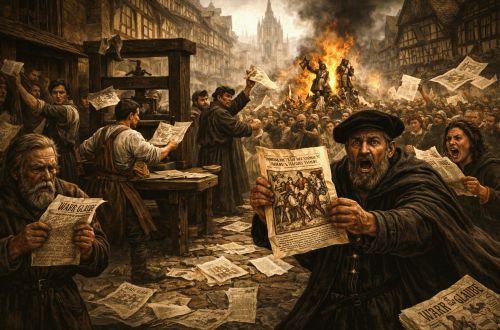
The political and religious upheavals of the sixteenth century demonstrated the full implications of this new media environment. When Martin Luther’s criticisms of the Catholic Church began circulating after 1517, the printing press allowed reformist ideas to move across Europe with unprecedented speed. Pamphlets, broadsheets, and translated sermons carried theological debates far beyond academic or clerical circles and into urban marketplaces and household reading communities. Printers quickly discovered that religious controversy created strong commercial demand, encouraging the rapid production of polemical texts designed to attract attention and provoke emotional reactions. The Reformation became one of the first major historical events shaped by a mass information system.
Print culture created the first large-scale European media ecosystem capable of spreading misinformation across entire regions. Competing religious factions used pamphlets, illustrated broadsheets, and sensational narratives to portray their opponents as corrupt, heretical, or morally depraved. Because printed texts carried a powerful aura of authority, such claims could circulate widely and influence public opinion even when they were exaggerated or entirely fabricated. By examining the intersection of printing technology, religious conflict, and narrative persuasion, this study explores how the early modern print revolution reshaped the relationship between information, belief, and political power.
Manuscript Culture before Print: Limits of Information Circulation

Before the development of movable-type printing, the circulation of written information in Europe depended almost entirely on manuscript production. Books were copied by hand, usually by trained scribes in monastic scriptoria, cathedral schools, or university workshops. This process required considerable time, skill, and expense, limiting the number of copies produced for any text. Manuscripts were valuable objects, often owned by institutions rather than individuals, and their distribution followed relatively narrow intellectual and ecclesiastical networks.
The labor involved in manuscript copying imposed strict limits on the speed at which texts could circulate. A single manuscript might take weeks or months to reproduce depending on its length and complexity. Even when multiple scribes worked simultaneously, the total output remained small compared with what later printing presses would achieve. Written ideas typically spread gradually through scholarly correspondence, clerical communication, and the movement of students between universities. Slow transmission allowed intellectual debate but constrained the geographic reach of most controversies.
Access to written information was also shaped by patterns of literacy and education. Latin remained the dominant language of scholarship, theology, and administration throughout much of medieval Europe. Those capable of reading and producing manuscripts were usually members of the clergy, university scholars, or trained administrators serving secular governments. Lay literacy existed in urban commercial environments, particularly among merchants and officials, but the majority of the population remained outside the networks that produced and consumed written texts. Even among literate groups, access to books was uneven because manuscripts were expensive and often scarce. Libraries maintained by monasteries, cathedrals, and universities served as crucial repositories of learning, but their collections were limited in size and carefully curated according to institutional priorities. For most readers, encountering written works required access to specific institutional settings rather than the open commercial markets that would later emerge with print culture.
The structure of manuscript culture also reinforced institutional control over knowledge. Monasteries, cathedral chapters, and universities functioned as important centers of intellectual production and preservation. These institutions determined which works were copied, studied, and transmitted to later generations. Because manuscripts required significant resources to produce, decisions about copying texts were often shaped by theological priorities, academic curricula, or patronage networks. This system stabilized medieval intellectual life but limited the diversity and speed of information circulation.
Despite these constraints, manuscript culture was not static or isolated. Letters, sermons, legal documents, and theological treatises traveled across considerable distances through clerical and scholarly networks. Students carried texts between universities, diplomats exchanged documents across political boundaries, and merchants sometimes transported written materials along commercial routes. Yet even within these active networks, the spread of ideas remained relatively slow and dependent on personal or institutional relationships rather than open markets. The absence of large-scale commercial book production meant that controversial ideas rarely reached audiences beyond relatively small intellectual communities. The structure helped contain many theological and political disputes within academic or ecclesiastical circles, preventing them from spreading rapidly among wider populations. The arrival of the printing press would disrupt this equilibrium by introducing an entirely new mode of information distribution capable of reaching far larger and more diverse audiences.
Gutenberg and the Printing Revolution

The emergence of movable-type printing in fifteenth-century Europe marked a major technological transformation in the history of communication. Although various forms of printing had existed earlier in East Asia, the development of durable metal movable type and efficient press mechanisms in Europe created a system capable of producing large numbers of identical texts at unprecedented speed. Innovation fundamentally altered the economics of book production and expanded the potential audience for written works. Within a few decades, the printing press would reshape the intellectual, religious, and political landscape of Europe.
Gutenberg, a metalworker and entrepreneur from the city of Mainz in the Holy Roman Empire, is generally credited with perfecting the combination of technologies that made European printing viable. During the 1450s he developed a system that integrated movable metal type, oil-based ink suitable for printing on paper, and a modified screw press capable of applying even pressure to printed sheets. These components created a durable and efficient method of producing large numbers of identical pages. Gutenberg’s background in metalworking proved essential to the success of the project, since it enabled him to produce precisely cast type pieces that could withstand repeated use without losing clarity. The process required the creation of molds for individual letters, which could then be assembled into lines of text and reused for multiple pages. Gutenberg’s most famous product, the forty-two-line Latin Bible, demonstrated the aesthetic and technical possibilities of the new technology while simultaneously revealing its commercial potential. The printed Bible closely resembled high-quality manuscript books in appearance, complete with carefully arranged text and space for decorative illumination, showing that printing could replicate the visual authority traditionally associated with handwritten manuscripts.
The success of Gutenberg’s method quickly attracted investors, craftsmen, and apprentices who spread printing technology beyond Mainz. By the late fifteenth century, printing presses had appeared in numerous European cities including Cologne, Strasbourg, Venice, Paris, and London. These early printers formed a network of workshops that produced a wide variety of texts, ranging from religious works and classical literature to legal documents and educational materials. The rapid diffusion of printing technology meant that within roughly fifty years, much of Europe possessed access to printed books and pamphlets.
Printing also introduced new economic incentives that reshaped the production of knowledge. Unlike manuscript copying, which depended largely on institutional patronage, printing required substantial financial investment in equipment, paper, and skilled labor. Printers operated as commercial entrepreneurs who needed to anticipate market demand. Popular religious texts, devotional manuals, and educational works became reliable products in the emerging book trade. The commercial dimension encouraged printers to publish materials for wider audiences, gradually expanding the social reach of written communication. Printers often formed partnerships with booksellers and financiers to distribute their products across regional markets. Book fairs, particularly those held in cities such as Frankfurt, became central gathering points where printers and merchants exchanged large quantities of printed material. Through these commercial networks, printed texts circulated across linguistic and political boundaries, connecting readers throughout Europe in an increasingly integrated information market.
The technological advantages of printing were accompanied by important cultural consequences. Printed texts offered a level of consistency and reproducibility that manuscript copying rarely achieved. Identical copies allowed readers in different locations to engage with the same version of a text, reducing variations that often appeared in handwritten manuscripts. Standardization contributed to the stabilization of scholarly texts, the spread of humanist learning, and the wider availability of religious literature. The multiplication of printed works increased the overall volume of information circulating through European society.
By the early sixteenth century, printing had become an established feature of urban life across much of Europe. Bookshops, printing houses, and commercial distribution networks connected cities through a rapidly expanding information market. The printing press created the material infrastructure for a new form of public communication. When the Protestant Reformation began in the early sixteenth century, this infrastructure allowed religious controversy to spread at a speed and scale that had previously been impossible within the older manuscript-based information system.
The Reformation as a Media Event

The Protestant Reformation unfolded at precisely the moment when printing technology had matured into a powerful system for distributing ideas across Europe. The religious debates that began in the early sixteenth century became inseparable from the rapidly expanding print industry. Theological disputes that might once have remained confined to university faculties or ecclesiastical councils now circulated widely among urban populations. Pamphlets, broadsheets, sermons, and vernacular translations of religious texts moved through commercial markets, transforming a scholarly controversy into a public and political conflict.
Martin Luther’s challenge to the authority of the Catholic Church in 1517 illustrates how this new media environment functioned. Luther’s criticisms of indulgences and ecclesiastical corruption were quickly printed, translated, and distributed across the German-speaking world and beyond. Within months, printers in multiple cities were producing editions of Luther’s writings, often without his direct involvement or control. These publications reached audiences far larger than those who originally encountered Luther’s academic arguments. The speed with which his ideas spread demonstrated how printing had created a communication system capable of rapidly amplifying religious dissent.
Printers played a central role in shaping how Reformation ideas were presented to the public. Many of Luther’s theological writings were adapted into shorter pamphlets that emphasized clear arguments and vivid language. Publishers often recognized that controversy generated strong demand, encouraging the production of texts that highlighted conflict between reformers and church authorities. This commercial dynamic meant that religious debate increasingly appeared in formats designed for broad readership rather than exclusively scholarly audiences. Printers frequently selected works they believed would sell quickly, sometimes producing simplified summaries or edited versions of longer theological texts to reach wider audiences. In doing so, they acted not merely as passive transmitters of ideas but as active participants shaping public discourse. Their decisions about what to print, how to format texts, and how widely to distribute them influenced which arguments gained visibility within the expanding print market. The result was a communication environment in which religious controversy could spread rapidly through the combined forces of ideological commitment and commercial opportunity.
The Reformation also revealed how printed materials could mobilize popular participation in religious debates. Vernacular pamphlets allowed readers who were not trained in Latin theology to encounter reformist arguments directly. Urban artisans, merchants, and literate householders became active participants in discussions about doctrine, church authority, and moral reform. Public reading, shared pamphlets, and discussions in taverns and marketplaces extended the influence of printed texts even to individuals who could not read themselves. In many cities, pamphlets circulated widely through informal networks in which a single printed copy might be read aloud to groups of listeners or passed from household to household. A collective engagement with printed material spread ideas beyond individual literacy and transformed theological debate into a broader social phenomenon. Through these practices, printed media encouraged new forms of political awareness and religious participation that reshaped the cultural landscape of early modern Europe.
For historians, the Reformation represents one of the earliest examples of a major political and religious transformation shaped by mass communication. The printing press did not create religious dissent, but it dramatically expanded its scale. By allowing ideas to circulate quickly across regional boundaries, printing connected previously isolated debates and created a shared environment of controversy throughout Europe. The Reformation illustrates how new communication technologies can alter the dynamics of ideological conflict by expanding the reach and intensity of public discourse.
Pamphlet Wars: Print Propaganda and Religious Conflict
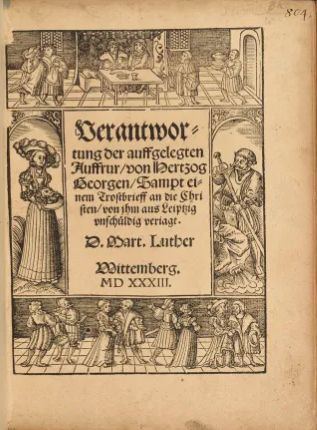
One of the most striking features of the early Reformation period was the explosive growth of pamphlet literature. Short printed texts were produced quickly and sold cheaply, making them ideal tools for spreading religious and political arguments. By the 1520s, pamphlets had become one of the most widely used forms of communication in the religious conflicts dividing Europe. These publications transformed theological debate into a highly visible public struggle in which competing factions sought to persuade readers and shape the interpretation of unfolding events. Unlike lengthy theological treatises intended for scholars, pamphlets were designed for rapid production and broad circulation. Their brevity allowed printers to respond quickly to current controversies, while their relatively low cost made them accessible to a much larger reading public than traditional books. As a result, pamphlets became the primary vehicle through which religious polemics reached urban markets and everyday readers.
Protestant reformers were particularly effective at using pamphlets to promote their ideas. Writers associated with the Reformation produced short, accessible texts that summarized theological arguments and criticized the practices of the Catholic Church. Many of these pamphlets were written in the vernacular rather than in Latin, which allowed them to reach broader audiences beyond universities and clerical institutions. By addressing readers directly in familiar language, reformist authors were able to connect complex theological debates with the everyday concerns of urban populations.
Catholic authorities and writers soon responded with their own printed polemics. Catholic pamphleteers defended traditional doctrines, attacked the credibility of reformist leaders, and warned readers about the dangers of religious fragmentation. These texts sought to portray Protestant teachings as dangerous innovations that threatened both spiritual authority and social order. As a result, the print market became a contested space in which both sides attempted to define the meaning of religious reform.
The style of many pamphlets reflected the emotional intensity of the conflicts they described. Authors frequently employed satire, ridicule, and dramatic accusations to attract attention and persuade readers. Allegations of corruption, moral hypocrisy, and doctrinal betrayal appeared regularly in these texts. Pamphleteers often framed religious opponents as enemies of truth or agents of moral decay, transforming theological disagreements into moral confrontations. Such rhetoric intensified the sense of urgency surrounding religious debates and encouraged readers to view the conflict as a struggle between righteousness and corruption. The persuasive power of pamphlet literature depended not only on theological arguments but also on the ability of writers to evoke outrage, fear, and moral indignation.
Visual imagery also played an important role in these pamphlet wars. Many publications included woodcut illustrations that conveyed messages through symbolic scenes or caricatures of religious figures. These images enabled pamphlets to communicate arguments quickly, even to readers with limited literacy. Illustrations depicting the pope as a tyrant or Protestant leaders as heretics provided powerful visual shorthand for the ideological battles of the period. Artists and printers collaborated to produce images that reinforced the themes presented in the text, creating visually striking representations of religious conflict. Because these images could be understood immediately, they extended the influence of pamphlets to audiences who might otherwise struggle with complex theological prose. The integration of visual propaganda with printed argument expanded the persuasive reach of Reformation polemics.
The pamphlet wars of the Reformation reveal how the printing press transformed religious conflict into a form of mass communication. Short printed works circulated rapidly through cities, marketplaces, and trade networks, ensuring that controversies reached audiences far beyond the original centers of debate. Printers, authors, and readers all participated in this expanding information system, which allowed religious disputes to spread across Europe with unprecedented speed. The result was a media environment in which persuasion, propaganda, and misinformation became powerful forces shaping the course of religious transformation.
Woodcuts, Images, and Visual Propaganda
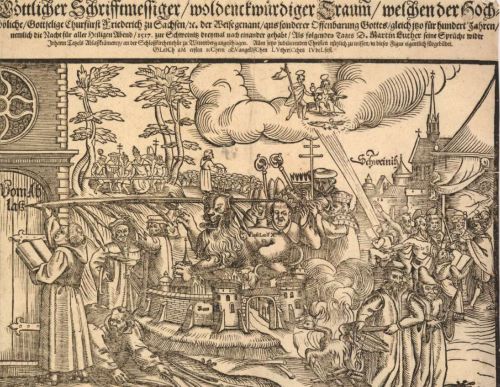
While printed pamphlets carried the arguments of religious controversy in textual form, visual imagery played an equally powerful role in shaping public perceptions during the Reformation. Woodcut illustrations, which could be carved into blocks and printed alongside text, became a common feature of early modern publications. These images allowed printers to communicate political and religious messages quickly and memorably, often condensing complex theological disputes into simple visual symbols. In an environment where literacy levels varied widely, such imagery expanded the persuasive reach of printed propaganda.
Woodcuts proved particularly effective because they could convey meaning immediately without requiring extended reading. A single image might portray the pope as a monstrous tyrant, depict corrupt clergy indulging in luxury, or represent reformers as defenders of true Christian faith. These visual depictions relied on recognizable symbols and exaggerated features that readers could interpret at a glance. Artists frequently employed allegory, biblical symbolism, and caricature to communicate moral judgments in ways that transcended linguistic barriers. Because such images could be understood quickly, they were particularly effective in public settings where pamphlets might be displayed, shared, or discussed among groups of readers and listeners. The immediacy of visual imagery made woodcuts one of the most powerful communicative tools available within the emerging print culture of the sixteenth century.
Protestant printers quickly recognized the potential of visual satire as a tool of persuasion. Artists associated with reformist circles created images that criticized the authority and behavior of the Catholic hierarchy. Such images often depicted the papacy as corrupt or tyrannical, using allegory and caricature to dramatize theological criticisms. For example, illustrations might portray the pope as the Antichrist or depict monastic figures engaging in scenes of greed and moral decadence. These images reinforced written accusations about clerical corruption while presenting them in vivid and memorable forms. Because they were reproduced in large numbers alongside pamphlets and broadsheets, these illustrations helped establish a recognizable visual language for Protestant propaganda. Repeated imagery reinforced particular interpretations of the religious conflict and contributed to the formation of collective perceptions about the legitimacy or corruption of religious authority.
Catholic writers and printers responded with visual propaganda of their own. Illustrations portraying Protestant leaders as heretics or social agitators appeared in publications defending the authority of the Church. These images warned readers that religious reform threatened not only theology but also political stability and social order. Visual propaganda became a contested medium in which opposing religious factions competed to define the moral meaning of the Reformation.
The integration of images with printed text also strengthened the memorability of propaganda messages. Readers encountering a pamphlet might recall its illustrations long after forgetting the details of its arguments. Visual representations reinforced the emotional impact of polemical writing, embedding accusations and stereotypes in the public imagination. In many cases, images functioned as interpretive guides that shaped how readers understood the accompanying text. A provocative illustration could frame a theological argument in moral terms before the reader even encountered the written explanation. Furthermore, repeated circulation of the same visual motifs allowed particular accusations or symbolic associations to become deeply embedded within the cultural memory of religious conflict. The combination of text and image created a powerful form of communication capable of shaping both immediate reactions and long-term perceptions.
The widespread use of woodcut imagery during the Reformation demonstrates how visual culture contributed to the early modern media environment. Printed images allowed propaganda to move beyond scholarly debate and enter the realm of public spectacle. By transforming religious conflict into a series of powerful visual narratives, printers and artists helped shape the emotional landscape in which theological controversies unfolded. These images became an enduring component of the broader information ecosystem created by the printing press.
Atrocity Narratives and the Spread of Religious Misinformation

Religious conflict during the Reformation era generated an enormous volume of printed material describing alleged crimes and atrocities committed by opposing confessional groups. Pamphlets, broadsheets, and sermons circulated vivid accounts of persecution, sacrilege, and moral corruption attributed to religious enemies. These stories often blended genuine incidents of violence with exaggeration, rumor, and invention. In a rapidly expanding print culture, such narratives became powerful tools for shaping public perception and reinforcing confessional identities.
One of the most effective rhetorical strategies used in Reformation polemics involved portraying religious opponents as perpetrators of shocking acts against innocent believers. Protestant writers frequently described the Catholic Church as an institution that persecuted reformers and suppressed religious truth through violence and deception. Stories of unjust executions, imprisonment, and torture appeared in pamphlets and martyrologies that celebrated the suffering of Protestant believers. These accounts served both as moral condemnation of Catholic authority and as inspirational narratives that strengthened Protestant solidarity.
Catholic authors responded with their own descriptions of Protestant violence and disorder. Pamphlets defending the authority of the Church warned that reformist teachings encouraged rebellion, sacrilege, and the breakdown of social hierarchy. Protestant leaders were sometimes portrayed as agitators whose teachings threatened the stability of Christian society. Reports of church desecration, attacks on clergy, and the destruction of religious images circulated widely within Catholic publications. These texts often framed such incidents as evidence that Protestant reform undermined both religious tradition and the social structures that sustained political authority. By emphasizing disorder and impiety, Catholic writers sought to portray the Reformation not simply as a theological disagreement but as a movement capable of unleashing chaos within Christian society. Printed narratives of Protestant violence attempted to rally support for traditional religious authority while warning readers about the dangers of religious innovation.
The spread of atrocity narratives was closely tied to the commercial dynamics of the print market. Sensational stories attracted readers and encouraged printers to produce additional editions of popular texts. Dramatic descriptions of persecution or moral corruption could generate strong emotional responses, making such material highly effective in attracting attention. In many cases, printers and authors amplified existing rumors or interpreted isolated incidents as evidence of systematic wrongdoing by religious opponents. The resulting publications blurred the boundaries between factual reporting, polemical exaggeration, and outright misinformation.
These printed narratives did more than describe events; they shaped how communities interpreted the religious conflicts unfolding around them. Readers encountering repeated accusations against a particular religious group might come to view those claims as credible simply because they appeared frequently in printed form. The authority associated with print reinforced the persuasive power of these stories, allowing rumor and speculation to gain legitimacy as apparent historical evidence. In many communities, such narratives circulated through both private reading and public discussion, where pamphlets might be read aloud or shared among groups of listeners. As stories of persecution or sacrilege were repeated across different texts and conversations, they gradually acquired the status of widely accepted truths within particular confessional communities. Printed misinformation could shape collective memory and reinforce deep divisions between religious groups.
The circulation of such narratives reveals how the Reformation print environment facilitated the spread of misinformation across large regions of Europe. Stories produced in one city could quickly be reprinted and distributed in distant markets, allowing particular interpretations of events to travel far beyond their original context. Through pamphlets, broadsheets, and illustrated publications, accusations of religious violence became part of a broader propaganda struggle between competing confessional communities. These narratives demonstrate how the emerging media ecosystem of early modern Europe could transform rumor and polemic into influential forces shaping public belief.
Networks of Distribution: Printers, Booksellers, and Markets
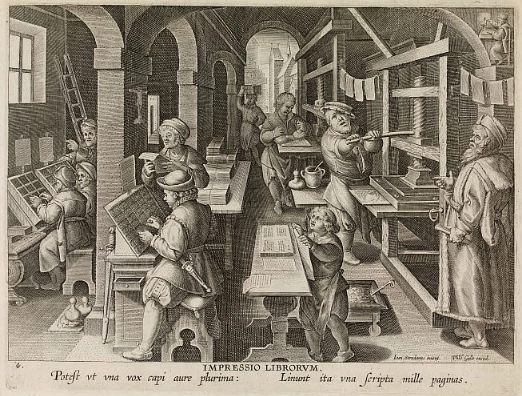
The rapid spread of printed material during the Reformation depended not only on technological innovation but also on the emergence of extensive distribution networks. Printers, booksellers, and merchants formed interconnected systems that moved pamphlets, broadsheets, and books across cities and regions. These networks allowed controversial religious ideas to circulate far beyond the locations where they were originally written or printed. The commercial infrastructure of the printing trade became an essential component of the broader information ecosystem that shaped religious conflict in early modern Europe. The success of Reformation polemics rested not simply on persuasive arguments or striking imagery but on the practical ability to reproduce texts cheaply and distribute them widely. Once pamphlets entered these networks, they could move rapidly through established commercial routes that already linked European markets. The result was a communication environment in which religious ideas traveled faster and farther than they ever had within the older manuscript culture.
Urban printing centers played a crucial role in this system of circulation. Cities such as Wittenberg, Augsburg, Basel, Strasbourg, and Nuremberg became important hubs for the production and distribution of Reformation literature. Printers operating in these locations often maintained relationships with booksellers and merchants who transported printed works along established trade routes. Through these connections, pamphlets printed in one city could quickly appear in markets hundreds of miles away. Geographic mobility ensured that religious controversies were not confined to local communities but instead became shared debates across large regions.
Booksellers functioned as vital intermediaries between printers and readers. Many operated small shops in urban marketplaces where printed materials were sold alongside other commercial goods. Others traveled between cities and fairs, carrying bundles of pamphlets and books that could be sold to local buyers or exchanged with other merchants. Because booksellers were closely connected to commercial markets, they helped transform religious debate into a form of public discourse that unfolded within everyday economic life.
Large commercial gatherings such as book fairs further expanded the reach of the print trade. The Frankfurt Book Fair, for example, became one of the most important meeting points for printers, publishers, and booksellers from across Europe. Merchants arriving at these fairs exchanged printed works in large quantities, ensuring that new publications could circulate quickly through international markets. These events allowed printers to distribute controversial texts widely while simultaneously expanding their commercial networks. Printers used these fairs not only to sell books but also to negotiate publishing agreements, exchange printing privileges, and acquire manuscripts that could be reproduced for new markets. Because representatives from many different regions attended such gatherings, a single successful pamphlet could be reprinted in multiple cities within a short period of time. In effect, book fairs functioned as hubs in an international communication system, accelerating the diffusion of both religious argument and polemical misinformation across the European print world.
Through the combined efforts of printers, booksellers, and merchants, printed information traveled across political borders and linguistic communities. Religious pamphlets produced in one region could be translated, reprinted, and distributed in multiple cities within a short period of time. The decentralized distribution system made it extremely difficult for political or ecclesiastical authorities to control the circulation of controversial material. As a result, the networks that sustained the early modern print market also facilitated the rapid spread of propaganda and misinformation during the religious conflicts of the Reformation.
Authority, Credibility, and the Printed Word

One of the most significant consequences of the printing revolution was the transformation of how people evaluated the reliability of information. In the manuscript culture that preceded print, texts were relatively scarce and often circulated within limited scholarly or clerical networks. The authority of a document typically depended on its association with recognized institutions such as monasteries, universities, or royal administrations. With the advent of printing, however, written works could be reproduced in large numbers and distributed widely among readers who had little direct connection to the original author or publisher. This shift altered the social meaning of written communication, allowing printed texts to acquire an aura of legitimacy simply by virtue of their material form.
Printed books and pamphlets appeared more stable and authoritative than handwritten manuscripts. The uniformity of printed pages, produced through mechanical reproduction, conveyed an impression of precision and reliability. Readers encountering a printed text often assumed that it had passed through some form of intellectual or institutional scrutiny before reaching the press. In reality, the early modern printing industry operated within a competitive commercial environment in which printers frequently produced controversial or sensational works to attract buyers. The physical appearance of print created a perception of credibility that was not always justified by the accuracy of the content.
The Reformation made extensive use of this perceived authority. Protestant reformers recognized that printed texts could legitimize their theological arguments by presenting them in a durable and widely distributed format. Martin Luther’s sermons, treatises, and pamphlets circulated throughout the German-speaking world, giving his criticisms of the Catholic Church an unprecedented reach. The rapid multiplication of Luther’s writings after 1517 illustrates how effectively reformers used the press to extend their influence beyond university debates or local sermons. Printers in cities across the Holy Roman Empire quickly reproduced his works, often issuing new editions within weeks of the original publications. These texts allowed reformist ideas to reach readers who had never heard Luther speak or studied theology directly. Catholic authorities recognized the same potential and produced their own printed defenses of traditional doctrine, including catechisms, polemical treatises, and official theological responses. The resulting print struggle created a dynamic environment in which competing interpretations of Christian doctrine circulated simultaneously, each presented in the authoritative form of printed argument. Print not only amplified theological disputes but also reshaped the scale at which religious debate occurred across Europe.
The authority associated with print also influenced how rumors and accusations were received by the public. When sensational claims appeared in pamphlets or broadsheets, they acquired a degree of credibility that oral rumor alone might not achieve. Readers encountering these texts might repeat their contents in conversation, further reinforcing the impression that the information was trustworthy. Printed material did not simply record existing beliefs but actively shaped how communities interpreted religious events and controversies. The material authority of print helped transform polemical accusations into narratives that many readers accepted as factual descriptions of reality.
The result was the emergence of a new informational environment in which credibility could be manufactured through the mechanics of print production. Because printers were capable of reproducing texts quickly and distributing them widely, a particular claim could appear simultaneously in multiple locations and editions. Repetition reinforced the impression that the information must be accurate. In the context of the Reformation, where theological disagreements were intertwined with political and social tensions, the perceived authority of printed texts played a crucial role in spreading both genuine argument and misleading propaganda across early modern Europe.
State and Church Responses: Censorship and Control
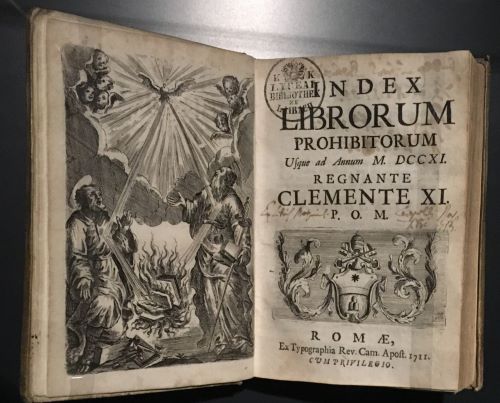
The rapid expansion of print during the Reformation quickly alarmed both political and religious authorities. Governments and church institutions recognized that the new printing technology had dramatically reduced their ability to control the circulation of ideas. Pamphlets criticizing rulers, attacking religious doctrines, or spreading rumors about political events could now be reproduced and distributed far more rapidly than in the manuscript era. Messages that once moved slowly through handwritten copies or oral transmission could suddenly appear in hundreds or even thousands of identical printed sheets. Acceleration of communication created a new environment in which political authority and religious orthodoxy could be challenged publicly and repeatedly. Rulers and church leaders increasingly understood that the printing press had introduced a powerful new medium capable of shaping public opinion across wide geographic regions. As a result, both secular and ecclesiastical authorities attempted to impose systems of censorship designed to regulate the production and distribution of printed material.
One of the earliest responses involved licensing systems that required printers to obtain official permission before publishing certain works. These regulations often placed responsibility on local printers and booksellers to ensure that texts did not contain heretical teachings or politically subversive ideas. Authorities sometimes required manuscripts to be reviewed by appointed censors before printing could proceed. Such policies aimed to prevent controversial material from entering the public sphere, though enforcement varied widely across different regions.
The Catholic Church developed one of the most systematic approaches to regulating print through institutions connected to the Counter-Reformation. The Roman Inquisition and the Congregation of the Index sought to monitor the spread of heretical literature and identify works that challenged Catholic doctrine. In 1559 the Church issued the first edition of the Index Librorum Prohibitorum, a list of prohibited books that Catholics were forbidden to read or possess. The Index attempted to control the influence of Protestant writings as well as other works considered doctrinally dangerous. Although enforcement differed across Catholic territories, the Index represented a major institutional effort to confront the informational consequences of the printing revolution.
Secular rulers also recognized the political implications of uncontrolled print circulation. Many governments issued decrees regulating printers, requiring them to register their presses and identify the authors or sponsors of the works they produced. Authorities sometimes punished printers who published unauthorized texts, imposing fines, confiscating equipment, or ordering the destruction of prohibited books. Such measures reflected a growing awareness that print could mobilize public opinion and influence political stability.
Despite these efforts, censorship rarely succeeded in fully suppressing controversial publications. The decentralized nature of the European print trade allowed printers to relocate to jurisdictions with more tolerant authorities. Works banned in one region could often be printed in another and then smuggled across borders. Printers and booksellers frequently developed informal strategies for evading censorship, including the use of pseudonyms, false publication locations, or clandestine printing operations. These practices allowed controversial pamphlets and polemical texts to continue circulating even when authorities attempted to restrict them.
The struggle between censorship and print culture illustrates the difficulty of controlling information in an expanding media environment. Although church and state authorities implemented increasingly sophisticated regulatory systems, the economic incentives of the printing industry and the mobility of distribution networks made comprehensive control nearly impossible. As a result, the Reformation era witnessed an ongoing contest between institutions seeking to regulate public discourse and printers who facilitated the spread of competing religious narratives across Europe.
Historiography: Print Culture and the Public Sphere
Modern historical scholarship has increasingly interpreted the Reformation not only as a theological movement but also as a transformation in communication systems. Historians have emphasized that the rise of print culture altered the ways in which information circulated, debated ideas, and shaped public opinion. The printing press enabled religious controversies to move beyond elite scholarly circles and enter broader social spaces where merchants, artisans, and urban readers encountered competing interpretations of religious authority. Historians argue that print contributed to the emergence of a new informational environment that made religious conflict visible and participatory on a much larger scale.
One influential interpretation emphasizes the concept of the “public sphere,” most prominently articulated by the philosopher Jürgen Habermas. Early modern print culture helped create spaces in which individuals could engage with political and religious debates through printed texts and shared discussion. Pamphlets, broadsheets, and printed sermons allowed readers to encounter arguments that challenged established institutions. These texts circulated not only through private reading but also through public discussion in marketplaces, workshops, and taverns where ideas could be debated collectively. Although Habermas originally associated the development of the public sphere primarily with the eighteenth century, many historians have argued that elements of this process were already visible in the print controversies of the sixteenth century. Scholars studying the Reformation period have reconsidered the relationship between communication technology and political participation, suggesting that the spread of print helped create early forms of public discourse that connected religious debate to broader questions of authority and governance.
Other scholars have approached the subject through the study of propaganda and persuasion. Research on Reformation pamphlets demonstrates that printers and authors deliberately crafted texts designed to mobilize readers emotionally and intellectually. These works often relied on vivid language, dramatic accusations, and simplified theological arguments to reach audiences who were not formally trained in scholastic debate. Historians have shown how printed propaganda played a central role in shaping the success of reform movements by translating complex doctrinal disputes into accessible narratives that could circulate widely among ordinary readers.
A different line of historiographical analysis focuses on the commercial and institutional structures that sustained the early modern print industry. Scholars studying the economic history of printing have emphasized the importance of printers, booksellers, and trade networks in determining which texts reached readers. From this perspective, the spread of Reformation ideas cannot be understood solely in terms of theology or ideology. Instead, historians argue that the practical realities of printing markets, distribution networks, and consumer demand played a decisive role in shaping which works circulated widely and which remained obscure. Printing was a commercial enterprise, and printers often made pragmatic decisions about which texts to produce based on anticipated sales rather than purely ideological commitments. As a result, certain pamphlets achieved broad influence because they appealed to large audiences or addressed controversies that generated strong public interest. By examining the economics of the print trade, historians have demonstrated that the Reformation media environment developed through a combination of intellectual debate and commercial opportunity.
Recent scholarship has also highlighted the interaction between visual culture and printed communication. Woodcut illustrations, emblematic imagery, and symbolic representations of religious figures often accompanied printed texts, enhancing their persuasive power. These visual elements made pamphlets accessible to audiences with limited literacy and helped reinforce the emotional impact of religious propaganda. Historians examining these materials argue that early modern print culture operated as a multimedia system in which images and texts worked together to shape popular understanding of religious conflict.
These historiographical approaches demonstrate that the printing press transformed more than the technical process of producing books. It altered the social structures through which information circulated and the ways in which communities debated religious authority. By examining the intersection of print technology, propaganda, commercial networks, and public discussion, historians have come to view the Reformation as one of the earliest examples of a large-scale media environment capable of shaping public opinion across entire regions.
Comparative Perspective: Early Modern Media and Modern Information Systems
Although separated by several centuries, the communication environment created by the printing press during the Reformation shares important structural similarities with modern information systems. In both contexts, technological innovation dramatically increased the speed at which information could circulate and expanded the number of individuals able to participate in public debate. The printing press enabled the rapid reproduction of texts and images, while modern digital networks allow information to spread instantaneously across global audiences. In each case, new communication technologies disrupted established systems of authority and created new opportunities for competing narratives to influence public opinion.
Historians have increasingly drawn comparisons between the early modern print revolution and the contemporary digital information landscape. The proliferation of pamphlets in the sixteenth century resembles the rapid spread of posts, articles, and commentary across modern online platforms. Just as Reformation pamphlets could be reproduced by multiple printers and distributed through commercial networks, modern information can be copied and circulated through social media, news websites, and digital archives. In both cases, the multiplication of information sources complicates efforts to verify claims and increases the likelihood that inaccurate or misleading narratives will spread widely.
Another important parallel concerns the relationship between communication technology and authority. The printing press weakened the informational monopoly once held by religious institutions and political authorities. Individuals could encounter arguments that challenged official doctrine without relying on clerical intermediaries. The shift gradually eroded the assumption that religious or political institutions alone possessed the authority to define legitimate knowledge. Printed pamphlets allowed reformers, critics, and independent writers to address audiences directly, bypassing traditional channels of authority. Modern digital media has produced similar effects by enabling individuals to publish and distribute information outside traditional journalistic or institutional frameworks. Blogs, social media platforms, and independent news outlets have expanded the number of voices participating in public discourse, often challenging established media organizations or governmental narratives. As a result, both early modern and contemporary societies have faced questions about how to evaluate credibility within increasingly decentralized information systems where authority is no longer concentrated in a small number of recognized institutions.
Significant differences distinguish the early modern print environment from modern digital communication. The speed and scale of contemporary information networks far exceed anything possible in the sixteenth century. Early modern pamphlets still required physical production, transportation, and sale before reaching readers. Digital technologies eliminate many of these constraints, allowing information to circulate globally within seconds. Nevertheless, the historical experience of the Reformation demonstrates that rapid expansions in communication technology have long been associated with intensified debates over truth, authority, and misinformation.
Examining the Reformation print revolution alongside modern information systems highlights recurring patterns in the history of communication. Technological changes that expand access to information often produce periods of uncertainty in which societies struggle to determine how knowledge should be evaluated and regulated. The spread of printed propaganda and religious polemic during the Reformation illustrates how new media environments can amplify both genuine debate and misleading narratives. Understanding these historical dynamics provides valuable perspective on contemporary discussions about misinformation, media credibility, and the challenges of governing information in an age of rapidly evolving communication technologies.
Conclusion: Print, Misinformation, and the Birth of Mass Communication
The invention of the printing press transformed the circulation of information in Europe and created the first communication environment capable of reaching large audiences across wide geographic regions. During the Reformation, pamphlets, broadsheets, sermons, and illustrated prints moved rapidly through urban markets and trade networks, carrying religious arguments far beyond the communities in which they originated. This expansion of communication altered the structure of religious debate by allowing competing interpretations of doctrine and authority to circulate simultaneously among readers who had previously been excluded from such discussions.
The spread of misinformation and exaggerated accusations became an important feature of religious conflict. Pamphlets describing atrocities, conspiracies, and moral corruption often blended genuine events with rumor or polemical invention. Because printed texts carried an appearance of authority and permanence, these claims could quickly influence how readers interpreted religious controversies. The multiplication of printed narratives reinforced particular interpretations of events, gradually shaping collective memory and strengthening confessional divisions within European society.
The Reformation represents one of the earliest historical examples of a media environment in which communication technology amplified both genuine debate and misleading narratives. Printers, booksellers, and merchants created networks that allowed information to move across political boundaries and linguistic communities. The commercial incentives of the printing industry encouraged the production of dramatic and emotionally charged publications that attracted public attention. The result was a communication system in which religious argument, propaganda, and misinformation circulated together within the same expanding marketplace of ideas.
Understanding the Reformation print revolution provides valuable perspective on the broader history of mass communication. Long before the emergence of modern journalism, radio broadcasting, or digital media, early modern Europeans experienced the disruptive effects of rapidly expanding information networks. The printing press created the first large-scale media ecosystem in which ideas could travel quickly, reach broad audiences, and shape public opinion across entire regions. These developments forced societies to confront questions about credibility, authority, and the regulation of information that remain familiar in modern media debates. The experience of the Reformation demonstrates that misinformation and propaganda are not uniquely modern phenomena but longstanding features of rapidly expanding communication systems. By examining how early modern Europeans navigated this new information landscape, historians gain insight into the recurring challenges that accompany technological transformations in communication.
Bibliography
- Bagchi, David. “Poets, Peasants, and Pamphlets: Who Wrote and Who Read Reformation Flugschriften?” Studies in Church History 42 (2006), 189-196.
- Briggs, Asa, and Peter Burke. A Social History of the Media: From Gutenberg to the Internet. Cambridge: Polity Press, 2002.
- Clanchy, M. T. From Memory to Written Record: England 1066–1307. 3rd ed. Oxford: Wiley-Blackwell, 2012.
- Edwards, Mark U. Printing, Propaganda, and Martin Luther. Berkeley: University of California Press, 1994.
- Eisenstein, Elizabeth L. The Printing Press as an Agent of Change: Communications and Cultural Transformations in Early-Modern Europe. Cambridge: Cambridge University Press, 1979.
- Febvre, Lucien, and Henri-Jean Martin. The Coming of the Book: The Impact of Printing 1450–1800. London: Verso, 1976.
- Gregory, Brad S. Salvation at Stake: Christian Martyrdom in Early Modern Europe. Cambridge, MA: Harvard University Press, 1999.
- Habermas, Jürgen. The Structural Transformation of the Public Sphere. Cambridge, MA: MIT Press, 1989.
- Koerner, Joseph Leo. The Reformation of the Image. Chicago: University of Chicago Press, 2004.
- Krentz, Natalie. “The Making of the Reformation. The Early Urban Reformation Between Continuity and Change.” Reformation & Renaissance Review 19:1 (2017), 30-49.
- Laube, Adolf. “Social Arguments in Early Reformation Pamphlets, and Their Significance for the German Peasants’ War.” Social History 12:3 (1987), 361-378.
- Parkes, M. B. Their Hands before Our Eyes: A Closer Look at Scribes. Aldershot: Ashgate, 2008.
- Pettegree, Andrew. The Book in the Renaissance. New Haven: Yale University Press, 2010.
- —-. Brand Luther: 1517, Printing, and the Making of the Reformation. New York: Penguin Press, 2015.
- Scribner, R. W. For the Sake of Simple Folk: Popular Propaganda for the German Reformation. Cambridge: Cambridge University Press, 1981.
Originally published by Brewminate, 03.19.2026, under the terms of a Creative Commons Attribution-NonCommercial-NoDerivatives 4.0 International license.
About the Author