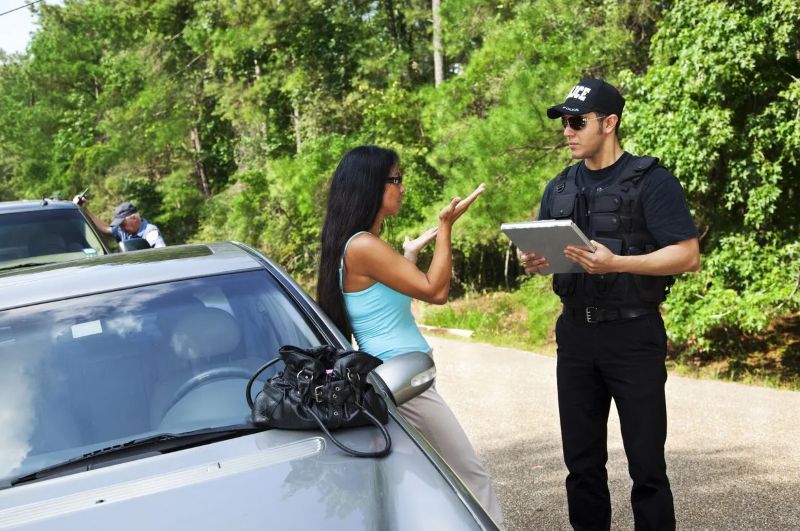
If you are pulled over without a license, stay in the car, keep your hands visible, and tell the officer plainly that you do not have it with you. Give your full name, date of birth, and address so the officer can look up your record.
What happens next depends on why the license is missing. Forgetting it at home is treated very differently from driving on a suspended license or never having been licensed at all.
The outcome ranges from a ticket you can clear later to an arrest and a towed car. Understanding what happens if you get pulled over without a license helps you avoid turning a small problem into a serious charge.
Handling the Stop Itself
Your behavior in the first two minutes shapes everything that follows. Officers watch for cooperation and consistency.
- Pull over promptly, turn off the engine, and turn on the interior light
- Keep your hands on the wheel until the officer asks for documents
- Say clearly that you do not have your license and explain why
- Hand over registration and insurance if you have them
- Answer identity questions honestly, and stay quiet about anything else
Never give a false name or someone else’s information. That one choice can turn a citation into a criminal charge.
Why the Reason Matters So Much
Police sort a missing license into a few separate situations. The category decides whether you get a ticket or handcuffs.
- Forgot the license: usually a citation for failure to display
- Never licensed: a misdemeanor in most states, with fines and possible jail
- Suspended or revoked: the most serious version, often bringing arrest
- Expired license: treated as unlicensed driving after the grace period
An officer can confirm within seconds whether a valid license exists in the state database. Claiming you have one when you do not almost always backfires.
What the Officer Is Allowed to Do
Traffic stops have limits. In Delaware v. Prouse, the Supreme Court held that police cannot stop a driver at random just to check a license without reasonable suspicion of a violation.
Once a lawful stop happens, the officer can require you to identify yourself and can order you out of the vehicle. Refusing to identify yourself during a valid stop can lead to arrest on its own.
If no licensed driver is present, the car is often towed. You still owe towing and storage fees even if the charge is dismissed.
Clearing a Failure to Display Citation
Many states let a forgotten license ticket be dismissed after proof of correction. You bring your valid license to the court clerk before the deadline on the citation.
The court usually charges a small administrative fee and closes the case. This option disappears if the license was suspended or never issued.
Penalties for Driving Unlicensed
Fines for a first offense commonly run between $100 and $1,000. Jail is possible but uncommon for a first charge with no other violations.
Suspended license cases carry heavier consequences. Repeat offenses can extend the suspension, add jail time, and trigger vehicle impoundment for 30 days or more.
Key Takeaways
- Stay in the vehicle and identify yourself truthfully at the stop.
- Forgetting a license is far less serious than driving on a suspended one.
- Never licensed and suspended driving are misdemeanors in most states.
- Police cannot stop you at random solely to check your license.
- Many courts dismiss a forgotten license ticket after you show proof.
- Vehicles are often towed when no licensed driver is available.
- Missing a court date creates a warrant and a new charge.
About the Author