Religious women shaped medieval Canterbury through devotion, patronage, service, memory, and sacred presence within a landscape defined by worship and community.

By Dr. Sheila Sweetinburgh
Lecturer in Medieval & Early Modern Studies
Co-Director of the Centre for Kent History & Heritage
Canterbury Christ Church University
Introduction
In her seminal work Gender and Material Culture: the Archaeology of Religious Women, Roberta Gilchrist devoted a chapter to nunneries in the medieval landscape, where she proposed a number of ideas regarding what she saw as the gender implications for the place of religious women as opposed to religious men in the landscape.1 In her chapter, she first considered the place of the institution itself, and its site in the landscape, before examining the estates of these nunneries, using examples drawn from across England. Such an approach has considerable merit regarding a broad understanding of the place of religious women, but by investigating the particularity of three houses in close proximity, it is feasible to offer a more nuanced analysis of the relationship between religious women and their landscape, and to assess the level of continuity and change over time. For in gender terms, place and space, have generated considerable theoretical debates among feminists and time, too, is increasingly seen as a gendered concept.2
Gilchrist’s assessment that ‘people invest their physical territory with social and symbolic meanings particular to the values of their own society’ is a valuable starting point, although it is worthwhile stressing the temporality of this statement in addition to matters of space regarding ‘their own society’ (emphasis added).3 Hence when thinking about the site, the meanings for both those inside and outside the religious house are likely to have altered over time depending on local, as well as regional and national, circumstances and, equally, this might have been true for different houses, even in what appears at first glance to be a similar landscape. Among her principal conclusions, Gilchrist views separation as characterizing the location of medieval nunneries, urban houses sited on the outer limits of settlement, which meant beyond any town walls and just beyond the urban fringe, perhaps on the other side of a river or in the least populated parish or in open fields. Thus, unlike certain male houses, nunneries were not found in conjunction with castles, and Gilchrist sees their position at least superficially as indicative of vulnerability, rather than denoting dominance.4 Rural nunneries were even more isolated topographically and, as she describes it,
were liminal places – located at the physical and psychological margins of society, their place in the wilderness keeping them away from towns, castles, and possibly even more importantly, male religious houses, and instead often at the outer margins of villages.5
Nonetheless, such isolation might paradoxically offer security, in addition to providing the opportunity to cultivate a more ascetic spiritual existence, albeit this desire was presumably far more in keeping with Cistercian rather than Benedictine ideals.
To a degree the sense of liminality discussed by Gilchrist was not confined to nunneries, and it has been linked to ideas concerning leper hospitals. Recent scholarship has stressed separation rather than isolation, noting that leper houses were often close to main roads, albeit they were frequently suburban institutions.6 Moreover, many had urban connections through their role as recipients of sub-standard produce from local markets or their place as beggars in urban parish churchyards.7 As noted above, this positioning is helpful in general terms, yet when close attention is given to specific houses it may mask more than it reveals, which demonstrates the value of case study analysis. In addition, how far if at all these religious women had an active role in the location of ‘their’ house is generally not known and was probably often severely limited.8 Yet, even if the cause of their placement in the landscape had been in the hands of others, the effect of that positioning might allow them to engage proactively as well as reactively, and thereby provided opportunities for female agency on behalf of their house and its sisters.9
Gilchrist explored the site of the religious house separately from its estates; this article maintains this differentiation. However, rather than an examination of this relationship in terms of agrarian production, this article investigates the presence of the female religious in their landscape during the establishment and early history of their site and consolidation of their estates; and the survival of their site and estates in the later middle ages. The three female religious houses that are the focus of this study comprise a nunnery and two leper hospitals which were close to the metropolitan city of Canterbury, although their landholdings extended across east Kent. Even though the surviving documentary sources vary regarding quantity and quality among the three institutions, and archaeological excavations have only occurred on part of the site of the best documented house, together they comprise useful contrasts and comparisons, from their foundation in the eleventh and twelfth centuries to their position in the late middle ages. Thus, individually and collectively they provide a long history regarding the place of the female religious house and its holdings in Canterbury and its hinterland that offer findings that may be more widely applicable in medieval England.
Early History: Establishment and Consolidation
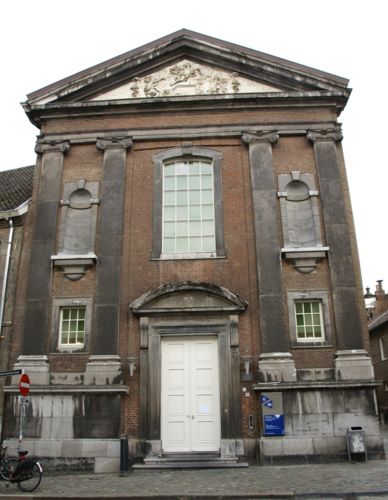
Looking first at the foundations of these three houses and the immediate aftermath, there is a marked contrast in terms of the level of female involvement from the greatest at Holy Sepulchre’s nunnery to the least at St. Lawrence’s hospital. Domesday records that four nuns had established their presence close to the city of Canterbury, holding four acres of land from St. Augustine’s abbey.10 Even though the exact location is not stated, when Archbishop Anselm came to regularize the community of nuns there soon after, he was establishing a religious house under archiepiscopal patronage within the great abbey’s territory when there was considerable friction between these two great ecclesiastical lords.11 Whether the nuns had sought the archbishop’s aid is unclear, but the location of their house dedicated to the Holy Sepulchre on the abbey’s land offered them, as well as the archbishop, a valuable foothold that would have been difficult to ignore in the competition for jurisdiction and control over territory in the suburbs of early post-Conquest Canterbury. For not only was the land on which the church of Holy Sepulchre sat held by the abbey, but it had ancient parochial responsibilities that placed it under the patronage of the archbishop of Canterbury.12
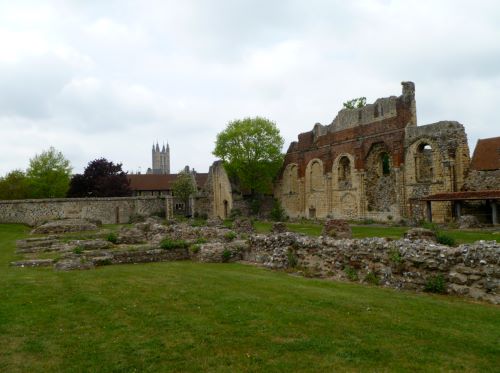
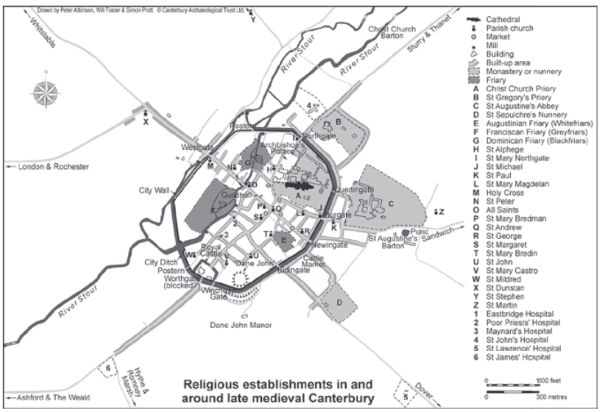
Furthermore, the nunnery’s position was, as John Speed showed, on the Dover road to the south-east of Canterbury ‘about 270 paces from the city gate: just beyond the urban fringe’.13 As noted, this spot was strategically valuable to the nuns, their patron the archbishop and the neighbouring great monastic house of St. Augustine’s abbey, but also to the local civic authorities. First, the nunnery not only abutted the main road to Dover but was on a corner plot, its northern boundary being a track, later a street, which marked the border between the lands of St. Augustine’s abbey’s home manor of Longport and the liberty of Canterbury city.14 Second, William de Cauvel, the city’s portreeve, was a major benefactor, perhaps even a joint founder with his friend Anselm, because his obit continued to be remembered, the Valor recording the dispensing of alms annually to mark the death of the nunnery’s founder.15 Thirdly, for the civic authorities this corner plot of the nunnery mattered because the Dover road was under the king’s jurisdiction and, as a royal town, the civic officers would be responsible to the king’s reeve.16 Moreover, the track way and the lands to the north towards Canterbury were within the city’s liberty.17 Also close by was a market and, notwithstanding little is known about its function, it is feasible that it is the one Anselm had castigated Cauvel for moving.18 Thus, although disputes over territorial jurisdiction were common in medieval towns and Canterbury was no exception, the presence of these Benedictine nuns under archiepiscopal patronage at this boundary location was of considerable importance to all parties.
Turning next to St. James’s hospital, although there is nothing to indicate that the female religious were as involved as their counterparts at Holy Sepulchre’s in the location of their house, the prioress and her sisters were possibly implicated in matters of patronage that were important from a strategic perspective. Even though many of the thirteenth-century charters of St. James’s hospital refer to brothers as well as the sisters, the early documentary sources only mention the sisters, and the house seems to have been a female religious establishment for much of its history.19 This hospital was also on a boundary, although not one that involved St. Augustine’s abbey. Instead, St. James’s abutted another major road out of Canterbury that was again a royal highway and the site of two markets, but, just as significantly, the hospital was located adjacent to the suburb known as Wincheap on land just outside the city’s liberty next to an ancient hollow lane and later the site of the city gallows.20 This, too, can be envisaged as a liminal space in Gilchrist’s terms, but it seems likely its strategic value was recognized by the prioress and sisters, Christ Church priory, the archbishop and the civic authorities.21 The early history of the hospital is unclear but it seems to have been established by a member of a lesser noble family who had links to the archbishop’s household by the mid twelfth century, but from about 1200 it was placed under the patronage of Christ Church priory.22
Questions surrounding this transference of patronage provide an example of what Patrick Geary has called remembering while forgetting, which might be said to have led to the production of narratives that place a different emphasis on the role of the women at St. James’s hospital due to the exclusion of certain documents.23 According to the ‘narrative’ compiled from copies of petitions and letters in one of the priory’s registers, by the early 1160s the hospital had fallen into a disordered and corrupt state where healthy women had sought to oust the leprous. Consequently, Pope Alexander III called on the prior at Christ Church to remedy the situation, a move supported by Henry II. Several decades later and following further financial mismanagement, prior Geoffrey II re-established the hospital, placing its assets under his control.24 Yet this would seem to conceal important events involving the hospital that offer a more complex narrative where the sisters at St. James’s were far less culpable, indeed could be seen as victims, and where their very passivity gave them female agency to secure a potentially powerful patron in the form of Christ Church priory. Using chronicles, copies of letters and petitions, and hagiography, much of it linked directly to the priory, this narrative shows that St. James’s became embroiled in the controversy during the 1180s between the priory and Archbishop Baldwin concerning his proposed new house of canons to the north of Canterbury. The details of this international dispute are not necessary here, but among the violent acts undertaken by the archbishop’s supporters was an assault on the leprous women and their possessions in 1188 when Robert de Bechetune and his followers were said to have driven off the hospital’s cattle and sheep.25 Such an attack seemingly cast the sisters as no more than helpless victims. Nevertheless, the leper engaged in his/her religious vocation might have been perceived as Christ in disguise, because lepers’ earthly suffering was thought to make them spiritually superior. As a result, the sisters could be viewed as patient sufferers with Christ and his martyr saints, many of whom were women, who would eventually triumph against the ‘wicked’ archiepiscopal party. For the sisters, this triumph may have rested on procuring protection through the auspices of the hospital’s master, a local physician who was especially active on the priory’s behalf during the dispute. After he initially sought papal protection, Master Feramin thereafter looked to the priory to protect St. James’s hospital, and the prior agreed to act as guardian and overseer, which involved the appointment of the three priests there and the twenty-five leprous women.26
Whether subsequently this protection brought in extra grants to the hospital is unknown, but the chance to exchange the patronage of a lesser noble family that was strongly connected to the archbishop for a powerful, local male religious house presumably looked highly desirable for both benefactors and beneficiaries. For the priory, too, St. James’s location outside the city’s liberty, although its home farm straddled the boundary, was highly desirable by association because it abutted the important commercial suburb of Wincheap, on the road to Battle abbey’s manor and town of Wye along the Stour river valley, and it was the area with the most diverse forms of landholding. As well as the king, others who held land in this suburb included the priory, to a far lesser extent St. Augustine’s abbey, certain Canterbury citizens and the hospital.27 Moreover, this seeming jumble of holdings was not totally settled in the twelfth century, which meant that by acquiring the patronage of the hospital, the prior was able to enhance significantly his position and power in the area, a reciprocal arrangement that benefited hospital and priory.
Unlike the foundation of Holy Sepulchre’s nunnery or the early history of St. James’s hospital, female agency at St. Lawrence’s hospital was probably absent concerning issues of location and patronage. The hospital community established by Abbot Hugh of St. Augustine’s in 1137 on abbey land comprised twelve brothers and sisters with a clerk and chaplain and it was sited abutting the Dover road but on the other side to the nunnery.28 Like Holy Sepulchre’s nunnery it was surrounded by a precinct wall and in the same way the wall formed a boundary between the lands under the abbey’s and the city’s jurisdiction, as well as the king’s highway. Even though strategically such a position may relate to the abbey’s desire to establish in stone tangible markers in the landscape, as residents at its daughter house the prioress and sisters may have been aware of the thirteenth-century territorial dispute between the civic authorities and the abbey.29
Once established in the landscape, like their male counterparts, female religious houses benefited from gifts of land, houses and other assets which provided them with a presence that extended beyond their precinct boundary. How far and in what ways varied considerably among individual houses, but for those established on suburban sites, their estates often comprised three areas: the house’s immediate neighbourhood, inside and outside the town and further afield. Furthermore, the identity and more especially the longevity of association, coupled with level of interest of patrons and benefactors – lay and ecclesiastical – towards ‘their’ religious house varied similarly. Yet, although none of the female houses in England developed estates comparable to the great, ancient Benedictine male houses, even modest houses such as these Canterbury institutions demonstrate ideas about presence and agency in the landscape.
The fragmentary nature of the surviving cartularies for the nunnery and St. James’s hospital means that a disproportionate part of the assessment relies on St. Lawrence’s hospital registers.30 Nonetheless, it is clear that all three institutions held land in the vicinity of their precincts, but only for St. Lawrence’s is it possible to ascertain the different relationships between benefactor and beneficiary. For even though the acquisition of these neighbouring holdings was seemingly understood as conforming to the language of charity, such grants differed and ranged from gifts in free and perpetual alms to those resembling a sale.31 Furthermore, some grantors were prepared to use these different forms in their relationship with St. Lawrence’s. In 1264, Thomas de Bery made his first grant of two shillings of free rent in pure alms to maintain a light at the high altar in the hospital’s chapel and to secure a priest there to celebrate mass for Thomas’s soul and those of his ancestors.32 Seven years later he made two further grants, one with the consent of his wife – which suggests the land was hers – of an acre near to the hospital’s mill, and 3s 7d of rent from various lands nearby. In each instance he expected to receive a fee from the hospital.33 Who was responsible for this impetus is unknown, yet it is conceivable that the hospital authorities may have been instrumental because they were prepared to pay over £7 in order to strengthen their position in the locality.
All three of these Canterbury religious houses held modest portfolios of land, property and rents within the city’s liberty which extended beyond the town wall.34 These ranged from central plots such as the St. James holding adjacent to the guildhall, St. Lawrence’s 6s 8d in rent from a tenement in the Mercery, and Holy Sepulchre’s comparable rent of 21s from three messuages, to St. Lawrence’s tenement in the peripheral parish of St. Mary Northgate for which the hospital was to pay to the sacrist at St. Augustine’s abbey and the grantor’s heirs a total of 4d annually.35 Certain benefactors, including a few women such as Susan de Planaz, were leading townspeople, yet why they supported these female religious houses is not clear, although John Turte in his grant referred to his sister Muriel, who was a sister at St. Lawrence’s.36
Similar factors such as personal connections, spiritual efficacy and a known willingness of the religious house to acquire holdings and other assets, may have been significant regarding the relationships these institutions developed with donors in other areas of east Kent. For the nunnery and St. James’s hospital their more distant estates also seem to have been a consequence of certain high-status benefactors. Henry II granted the rectory of Bredgar to St. James’s hospital and Holy Sepulchre’s nunnery numbered Hubert de Burgh among its donors.37 Moreover, as well as the status of the original donor, bonds of lordship appear to have influenced subordinates to follow suit in these areas. For example, the nunnery received subsequent gifts of land in Romney Marsh from William de Sylonesbregge.38 The relationship between St. James’s hospital and those at Bredgar seems to have drawn on all these factors, but there is little to indicate that this extended to any link to the parish church. Rather the hospital’s presence in the Bredgar landscape seems to have been predominantly as landlord. Yet in its role as the acquirer of holdings, often from several members of the same family, including a few women, it was potentially supporting such individuals through the initial payment and thereafter an annual rent to the grantor and then to his or her heirs.39 Nonetheless, distance from the religious house may have countered such ties, especially over succeeding generations; the hospital’s presence in Bredgar was as limited as the nunnery’s in Romney Marsh and, although closer, probably St. Lawrence’s in its most distant holdings at Chislet.40
Late Middle Ages: Survival
Turning to the later period, evidence of the roles female religious undertook in their landscape again relates to the location of their house and their estates. For the former, this is especially pertinent regarding St. Lawrence’s hospital which, in the early fifteenth century, was drawn into the dispute between abbey and city. An altercation at the hospital in 1436 between the city dignitaries and several monks was reported to have taken place during the annual civic procession to St. Lawrence’s on the patronal feast day. According to the city authorities, this was an ancient annual ritual that denoted the hospital’s location in St. Paul’s parish and within the liberty of Canterbury, thereby challenging the spatial relationship between the abbey and hospital.41 Whether this was the first occasion such ideas had been raised is not known, but the stress on the antiquity of the custom would suggest that the civic authorities were keen to authenticate their stance vis-à-vis the hospital’s place in the landscape at a time when they were seeking to intensify their opposition to the abbey’s long-running territorial claims. For the prioress and her sisters, the violence that took place when the civic procession arrived at the hospital’s gate must have been an uncomfortable reminder of their strategic boundary position, and may have been part of the catalyst for the production of three similar but not identical registers.42
It is likely that two of these, the first and the third, belonged to the community at the hospital, the other to St. Augustine’s abbey. The arrangement of the materials in the hospital’s two versions demonstrate greater similarity and apparently provide a narrative concerning the hospital’s place in society, thereby potentially re-establishing St. Lawrence’s in the physical and spiritual landscape of fifteenth-century Canterbury.43 Looking particularly at spatial dynamics, the compiler seems to have employed a deliberate strategy to stress the house’s identity in terms of its early history, to demonstrate the level of protection it enjoyed, highlight ideas concerning the continuity of its good governance and illustrate its place in Canterbury and east Kent. For example, the first section of these two registers provides an account of the hospital’s establishment: the name of its eminent founder; the connection to the abbey; the composition of the house’s initial community; the identity of its papal protectors; and the type and level of endowment provided to sustain this community.44 Such precision not only offered historical accuracy almost three hundred years after the hospital’s foundation, but might also be said to have at the very least superimposed a veneer of authority and authenticity. Theirs was an ancient and worthy religious house that had withstood the problems of human frailty, including the ‘greed’ of the civic authorities, who had tried to commandeer the place, for God was on the side of the women of St. Lawrence.
Yet this was not always the case, and although the female religious at St. Lawrence’s were not subject to archiepiscopal visitations, because like their mother house they were exempt, the prioress and sisters were answerable to the abbot, as well as having his deputy as the hospital’s custos or master. However, notwithstanding the hospital registers do not mention such visitations, the listing in the hospital’s registers of new regulations by Abbot Findon in 1294 and certain revisions by Abbot Colewell in 1356 point to their active oversight. Possibly the senior monks at St. Augustine’s realized that the imposition of these later ordinances in particular was best implemented through a spirit of collaboration, perhaps including the annual reading of these rules in English for the benefit of the whole community.45
As subject to archiepiscopal visitations, the female religious at Holy Sepulchre’s nunnery and St. James’s hospital, might have been seen and seen themselves as possessors of a more public ecclesiastical persona than their counterparts at St. Lawrence’s. For example, the prioress at St. James’s complained to the visitor in 1511 that the hospital’s precincts were violated by the misconduct of Richard Welles and his wife who were selling ale there.46 She also reported that Christ Church priory was not providing bread and wood as it was expected to do and, in the same year, the prioress at Holy Sepulchre’s complained about the great noise around the priory church, which was presumably due to the activities of local parishioners, not the nuns.47 However, such visitations might bring to light evidence of dissent or irregularities, such as the report, in 1368, of suspect persons at night in the chamber shared by Margery Chyld and Juliana Aldelose at the nunnery.48 Nonetheless, as Janet Burton has shown, such reports may sometimes reflect certain archiepiscopal expectations which were at odds with those of the community rather than serious problems.49 For the prioress and sisters at St. James’s such differing views may have been most acute during sede vacante visitations when the prior from Christ Church was the visitor. The subsequent issue of revised regulations in the early fifteenth century might imply a loss of female agency in the conduct of the life of the hospital, but conversely may indicate that previously the hospital sisters had, for example, seen themselves as independent of any religious order and had undertaken far more active roles in the celebration of the mass in the hospital’s chapel than were deemed appropriate by the monastic authorities.50
Whereas visitations might be viewed as mainly offering mechanisms for the female religious to be reactive as they responded to the injunctions imposed by higher male clerical authority, and at best a place where the prioress and her sisters might negotiate their status and conduct, some prioresses were prepared to be proactive in the city courts. Indeed, some were prepared to attend hearings in person rather than acting through their attorney as either plaintiffs or defendants. Even though the number of cases involving these three houses is very small in the surviving fifteenth-century Canterbury petty sessions, especially for St. James’s and St. Lawrence’s, at Holy Sepulchre’s nunnery Dame Johanna Whetefelde had been involved in several cases at the beginning of the century, and from the 1470s throughout her time as prioress, Dame Mildred Hale was even more active in the courts.51 For Holy Sepulchre’s, her attendance in the city’s guildhall meant that the prioress extended the nunnery’s presence well beyond its precinct, although there is nothing to suggest testators were drawn to support the house as a result.
Only four per cent of Canterbury’s male testators left anything to the nunnery and of the far fewer female testators this fell to three percent.52 These townsmen were even less likely to bequeath anything to either hospital, but women were as prepared to aid St. James’s as they were the nunnery. Yet this did not extend to St. Lawrence’s, which was apparently ignored by all bar a tiny number of testators. In part, this may reflect the greater distance of the hospitals from the city centre compared to the nunnery because the catchment area of its benefactors did extend across the city whereas those for the hospitals were predominantly from Canterbury’s southern and eastern parishes. Nevertheless, it is likely that other factors were significant such as the parochial role of Holy Sepulchre’s church, including the presence of a fraternity dedicated to Our Lady, as well as personal and familial links between those inside and outside the nunnery.53 For example, John Hale senior (1517) sought burial at the nunnery wherever the prioress would allow, associated prayers for his soul and a lamp to burn before the image of Our Lady in the nave; while John Colman (1535) bequeathed a featherbed, bolster and quilt to Alice Colman, a nun there.54 Yet why St. Lawrence’s hospital chapel did not benefit in the same way is not clear because it also seems to have had some form of parochial status. The only lay testator known to have sought burial in the churchyard there was Thomas Trendham and he similarly supported the chapel, leaving 6s 8d towards repairs.55 However, kinship and personal ties may explain certain bequests at both hospitals: John Nasshe’s sister had previously resided at St. Lawrence’s, while Sir Thomas Bekke, chaplain, wished to be remembered by Mistress Elizabeth, the prioress at St. James’s and perhaps his patron.56 Yet it seems only at the nunnery did the prioress sponsor a succession of minor clerics through holy orders.57
Interestingly, the nunnery’s role as the patron of the city parish of St. Mary Bredin does not seem to have attracted testamentary bequests to Holy Sepulchre’s.58 Even though this was partly a reflection of the small number of surviving wills from this parish, it may also indicate that parishioners had little interest in the nunnery, preferring instead to focus their bequests on the parish church and its clergy.59 Indeed, one of the very few from the parish who supported Holy Sepulchre’s was Robert Flete the vicar (1486), who remembered this relationship through his gift of 3s 4d to his patroness.60 This type of relationship was not available to the prioress at either hospital in terms of clerics seeking preferment locally, but St. James’s continued to hold the advowson of the church at Bredgar.61 Yet nothing in the wills made by parishioners from Bredgar indicates any spiritual interest in the hospital. The vicar, Sir John Laundy (1508), seemingly agreed with his parishioners; however the will of Sir John Mone, one of his predecessors, does include a bequest of 6d to each of the hospitals between Canterbury and Gravesend, but whether this included St. James’s is not clear.62 St. Lawrence’s, too, had interests in at least two parish churches outside Canterbury, receiving some of the tithes from Chislet and Stodmarsh, but in neither case does this seem to have generated testamentary bequests to the hospital from local parishioners.63 Notwithstanding the lack of a direct link, the master’s defence on several occasions of the hospital’s rights to these tithes, while valuable for the sisters, may not have endeared them to the parishioners.64
This hierarchical relationship between the prioress and sisters and their parishioners was not confined to tithe and, as landlords, the female religious houses all had tenants on their estates. Moreover, this presence in the landscape seems to have extended to their role as tax payers of murage locally in Canterbury. Such activities are illustrated in the extant rentals, accounts and murage book, for as well as collecting rents and paying taxes, the authorities at these three houses were buyers and sellers of produce and other items.65 However, the degree to which the prioresses were directly involved in these transactions is difficult to gauge.
In conclusion, it is hardly surprising that ideas about separation, liminality and especially vulnerability are discussed among historians when considering the place of religious women in the medieval landscape, particularly in relation to the small, poorly endowed communities of Cistercian sisters in Yorkshire. And while not completely rejecting this analysis, this article suggests, as Burton has done, that a broader picture can be fruitfully explored using case studies.66 These reveal that the presence of religious women in the landscape did not solely denote weakness. Indeed, at times their activities can be characterized as involving negotiation, exchange and reciprocity, implying the value some of these women placed on female agency. Furthermore, even where the founders and patrons of female religious houses were male, the female residents themselves on occasion took part in public life, as witnessed by their appearances in the civic courts. Finally, these Canterbury houses, and especially St. Lawrence’s hospital, highlight the value of the written word to construct an institutional identity that set these religious women in the religious and secular life of the city and east Kent, a position they had occupied for centuries and which they continued to hold until well into the sixteenth century.
Endnotes
- R. Gilchrist, Gender and Material Culture: the Archaeology of Religious Women (New York, 1994), pp. 63–91.
- Three of the foremost theorists on gender and place and space are still Judith Butler, bell hooks and Doreen Massey; see M. Mahtani, ‘Judith Butler’, K. McKittrick, ‘bell hooks’ and F. Callard, ‘Doreen Massey’, in Key Thinkers on Space and Place, ed. P. Hubbard, R. Kitchin and G. Valentine (2004), pp. 189–94, 65–71, 219–25. For work on gender and time, see V. Bryson, Gender and the Politics of Time: Feminist Theory and Contemporary Debates (Bristol, 2007).
- Gilchrist, Gender and Material Culture, p. 63.
- Gilchrist, Gender and Material Culture, pp. 63–5.
- Gilchrist, Gender and Material Culture, pp. 65–9.
- A. E. M. Satchell, ‘The emergence of leper-houses in medieval England’ (unpublished University of Oxford D.Phil. thesis, 1998), pp. 22–39; among her many works on this topic: C. Rawcliffe, Leprosy in Medieval England (Woodbridge, 2006), pp. 307–12; S. Sweetinburgh, The Role of the Hospital in Medieval England: Gift-giving and the Spiritual Economy (Dublin, 2004), pp. 79–81.
- Rawcliffe, Leprosy in Medieval England, pp. 313–15. For a Kent example of this link between lepers, begging and churchyards, see St. Anthony’s hospital near the causeway leading out of Sandwich and the note that the lepers were allowed to beg in the churchyard of St. Mary’s parish church (Kent History and Library Centre, PRC 17/6, fo. 70).
- Yet this was also the case concerning the foundation of male religious houses. Founders of both sexes saw the political advantages of particular sites from their own perspectives: J. Burton, ‘Fundator Noster: Roger de Mowbray as founder and patron of monasteries’, in Religious and Laity in Western Europe 1000–1400: Interaction, Negotiation, and Power, ed. E. Jamroziak and J. Burton (Turnhout, 2006), pp. 23–40; A. Mathers-Lawrence, ‘The Augustinian canons in Northumbria: region, tradition, and textuality in a colonizing order’, in The Regular Canons in the Medieval British Isles, ed. J. Burton and K. Stöber (Turnhout, 2011), pp. 59–66.
- As at Clementhorpe priory, where the nuns successfully appealed to the pope against their founder’s successor Archbishop Geoffrey; S. Thompson, Women Religious: the Founding of English Nunneries after the Norman Conquest (Oxford, 1991), pp. 194–5.
- Domesday Book: Kent, ed. P. Morgan (Chichester, 1983), vii. 11.
- Thompson believes the evidence may indicate that the nunnery formed from a community of anchoresses; Thompson, Women Religious, p. 36.
- William Thorne’s Chronicle of Saint Augustine’s Abbey Canterbury, ed. A. H. Davis (Oxford, 1934), p. 215.
- See Early English Books Online for J. Speed, The Theatre of the Empire of Great Britaine (1612), book 1, p. 7 <http://eebo.chadwyck.com.chain> [accessed 22 Oct. 2017]; Gilchrist, Gender and Material Culture, p. 64.
- T. Tatton-Brown, ‘The abbey precinct, liberty and estate’, in St. Augustine’s Abbey Canterbury, ed. R. Gem (1997), p. 134.
- W. Urry, Canterbury under the Angevin Kings (1967), pp. 62–3; A. Williams, ‘The Anglo-Norman abbey’, in Gem, St. Augustine’s Abbey, p. 61.
- According to Domesday, the straight roads inside and outside the city were the king’s and anyone doing ‘wrong’ there was subject to a fine to be collected by the king’s reeve (Domesday, C: 6).
- This map is much later, but it does illustrate the boundary of the liberty of the city at this point; C.C.A.L., Map 123.
- C.C.A.L., Lit. MS. C.20, pp. 58–59; Urry, Canterbury under the Angevin Kings, p. 62.
- British Library, Additional MS. 32098, fos. 3vff.
- C.C.A.L., CC/FA 12, fo. 75.
- S. Sweetinburgh, ‘Caught in the cross-fire: patronage and institutional politics in late twelfth-century Canterbury’, in Cathedrals, Communities and Conflict in the Anglo-Norman World, ed. P. Dalton, C. Insley and L. Wilkinson (Woodbridge, 2011), pp. 187–202. Rawcliffe, too, discusses liminal sites, but does not see boundaries as the norm for their location; Rawcliffe, Leprosy in Medieval England, pp. 258–9, 307–15.
- Godefrid de Malling’s daughter confirmed her parents’ gifts in the late 12th century, and she is known to have held lands in her own right in 1166; Brit. Libr., Add. MS. 32098, fo. 1; Urry, Canterbury under the Angevin Kings, pp. 53–4.
- P. Geary, Phantoms of Remembrance: Memory and Oblivion at the End of the First Millennium (Princeton, N.J., 1994), pp. 7–8.
- C.C.A.L., DCc/Register B, fos. 426–26v.
- The Historical Works of Gervase of Canterbury, ed. W. Stubbs (2 vols., 1879–80), i. 427.
- Sweetinburgh, ‘Caught in the cross-fire’, pp. 199–202.
- Urry, Canterbury under the Angevin Kings, pp. 276–80.
- Thorne’s Chronicle, pp. 85–86; C.C.A.L., Lit. MS. C.20, pp. 9–10.
- Thorne’s Chronicle, pp. 250–52; C.C.A.L., Lit. MS. E.19, fo. 58v.
- However, an idea of the grants the nunnery had received by the mid 13th century is possible; Calendar Charter Rolls, Henry III 1226–1257 (1903), 318–20.
- S. Sweetinburgh, ‘Supporting the Canterbury hospitals: benefaction and the language of charity in the twelfth and thirteenth centuries’, Archaeol. Cant., cxxii (2002), 237–55.
- C.C.A.L., Lit. MS. C.20, p. 51.
- C.C.A.L., Lit. MS. C.20, pp. 49–51.
- C.C.A.L., CC/FA 1, fo. 310.
- K.H.L.C., EK/U270/Q5; C.C.A.L., Lit. MS. C.20, pp. 75–6, 93–4; Cal. Chart. Rolls, 319.
- Cal. Chart. Rolls, 319; C.C.A.L., Lit. MS. C.20, p. 76.
- Brit. Libr., Add. MS. 32098, fo. 1v; Brit. Libr., Add. MS. 5516, fo. 9.
- Brit. Libr., Add. MS. 5516, fos 9–9v, 10v–11.
- Brit. Libr., Add. MS. 32098, fo. 3vff.
- Brit. Libr., Add. MS. 5516, fos 9–12v; C.C.A.L. Lit. MS. C.20, pp. 105–9.
- T.N.A., KB 27/706, rex rot. 29.
- S. Sweetinburgh, ‘Placing the hospital: the production of St. Lawrence’s hospital registers in fifteenth-century Canterbury’, in The Fifteenth Century, XIII. Exploring the Evidence: Commemoration, Administration and the Economy, ed. L. Clark (Woodbridge, 2014), pp. 110, 113–16.
- Sweetinburgh, ‘Placing the hospital’, pp. 118–21.
- C.C.A.L., Lit. MS. C.20, pp. 9, 34; Bodleian Library, MS. Top. Kent. D.3, fos. 5, 17. See also Thorne’s Chronicle, pp. 84–6.
- C.C.A.L., Lit. MS. C.20, pp. 1–8, 22–7; Bodl., Top. Kent. D.3, fos., 1–5, 11–13v.
- Kentish Visitations of Archbishop William Warham and his deputies, 1511–12, ed. K. L. Wood-Legh (Maidstone, 1984), p. 12.
- Visitations of Warham, 11, 12.
- Acta Stephani Langton, Cantuariensis Archiepiscopi, A.D. 1207–1228, ed. K. Major (Oxford, 1950), pp. 231–2.
- J. Burton, ‘Cloistered women and male authority: power and authority in Yorkshire nunneries in the later middle ages’, in Thirteenth-Century England X, ed. M. Prestwich, R. Britnell and R. Frame (Woodbridge, 2005), pp. 157, 163.
- J. Duncombe and N. Battely, The History and Antiquities of the Three Archiepiscopal Hospitals. At or near Canterbury viz St. Nicholas at Harbledown, St. John, Northgate and St. Thomas of Eastbridge, with some Account of the Priory of St. Gregory, the Nunnery of St. Sepulchre, the Hospitals of St. James and St. Lawrence and Maynard’s Spittle (1785), pp. 431–4.
- C.C.A.L., CC-J/B/215, fos. 3, 3v, 4v, 14; CC-J/B/276, fo. 61v; CC-J/B/282, fos. 6, 42v; CC-J/B/287, fo. 48; CC-J/B/289, fo. 38; CC-J/B/298, fos. 43, 66v; CC-J/B/302, fos. 1, 1v.
- The total number of surviving wills for the city and the closest parishes beyond the liberty up to 1540 is 1130.
- Among his bequests to St. Sepulchre’s church, William Hempstede (1499) left 8d to the high altar and 4d to the fraternity of Our Lady; K.H.L.C., PRC 17/7, fo. 144.
- K.H.L.C., PRC 17/13, fo. 106; PRC 32/15, fo. 321.
- K.H.L.C., PRC 17/2, fo. 338.
- K.H.L.C., PRC 32/3, fo. 93; PRC 17/14, fo. 270.
- This is shown most clearly in Archbishop Pecham’s registers, see The Register of John Pecham, Archbishop of Canterbury, 1279–1292, ed. F. N. Davis and D. Douie (2 vols., 1968–9), i. 190, 191, 196, 200, 204, 205, 211, 220, 229, 240; ii. 34.
- Registrum Thome Bourgchier Cantuariensis Archiepiscopi, A.D. 1454–1486, ed. F. R. H. Du Boulay (Oxford, 1957), pp. 237, 256, 258, 344.
- Only 16 wills survive from parishioners made prior to 1540.
- K.H.L.C., PRC 17/4, fo. 139.
- The Register of Henry Chichele, Archbishop of Canterbury, 1414–43, ed. E. F. Jacob (4 vols., Oxford, 1937–47), i. 143, 263, 276, 296, 311, 337; Registrum Bourgchier, 319.
- Sir John Mone; K.H.L.C., PRC 17/2, fo. 309; Sir John Laundy; PRC, 17/9, fo. 296.
- None of the 96 Chislet testators bequeathed anything to St. Lawrence’s hospital, although three men did remember St. John’s hospital in the city; K.H.L.C, PRC 17/3, fo. 282; PRC 17/3, fo. 431; PRC 32/3, fo. 252.
- C.C.A.L., Lit. MS. C.20, pp. 31–33.
- C.C.A.L., Lit. MS. C.20, pp. 77–79; Bodl. Top. Kent. D.3, fo. 25v. K.H.L.C., EK/U270/Q5. C.C.A.L., CC-BAD/1.
- Burton, ‘Cloistered women’, pp. 157–65.
Chapter 1 (9-23) from Gender in Medieval Places, Spaces and Thresholds, edited by Victoria Blud, Diane Heath, and Einat Klafter (University of London Press, 01.03.2019), published by OAPEN under the terms of a Creative Commons Attribution-NonCommercial-NoDerivatives 4.0 International license.
About the Author