“Human knowing is powerless in the study of another world.”
By Sh Fayzulloeva M
Assistant Professor
Tajik State University of Law, Business and Politics (TSULBP)
In the Middle Ages, ethical teachings had a religious character. At the center of these teachings was the love of God. Love was the main principle of ethics, and a norm of behavior was named a “golden rules». In the middle Ages, philosophers tried to answer the question “Does a person’s fate depend on his behavior or a wish of the Lord?”.
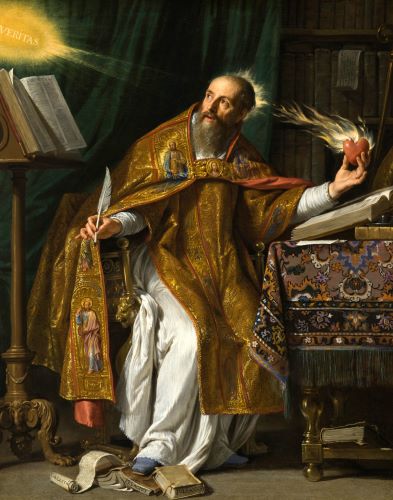
Aurelius Augustine Hipponensis (IV-V centuries) is an Italian philosopher. He, in his books “On the immortality of the soul”, and “Confession” noted that the Lord is the owner of a powerful force, he created man free, but human freedom has its limit; a person must do all for the consent (agreement) of God, and should follow the rules of morality for good.1
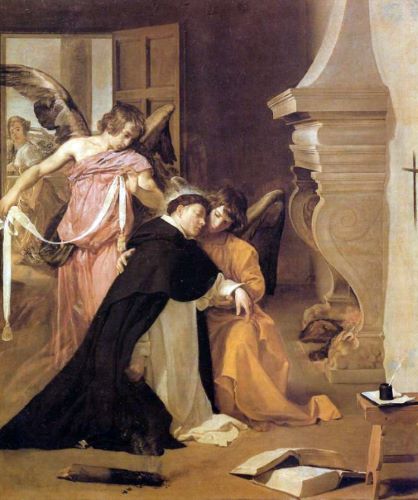
Thomas Aquinas (XIII century) is an Italian philosopher. He, in his book “About theology” wrote ethical ideas. He considers the necessary unity of mind and faith, philosophy and religion. He thinks that man must do the command God on Earth; the goal of science is to study our world, but above the knowledge of man there is another world, which is the world of Truth and only the Lord can know this world.2
Human knowing is powerless in the study of another world; therefore, philosophy should serve religion, since a guarantee of good; to be far from God is the transformation (or close) of a person to mercilessness; the highest point of happiness is divinity, and divinity is the knowing God, which can get through wisdom and morality; only with the Lord helps a person may an honest, mind is the basis of human freedom.
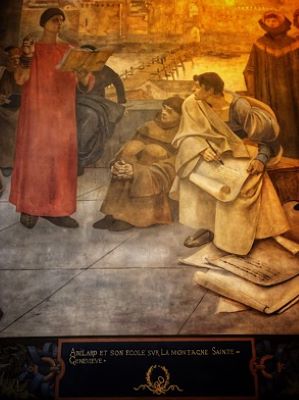
Pierre Abelard (XI-XII centuries) is French philosopher. He was the son of a landowner. But he refused his father’s inheritance and devoted his life to philosophy. Pierre wrote ethical thoughts in his books “Ethics”, “Yes or No”, and “History of my disasters”. He invented a new principle of morality: “Study to believe“.3
According to Abelard, a person can do a good deed with his will (or wish); human freedom is a fact of the greatness wisdom of the Lord; each person will answer for his actions, morality is the most valuable achievement of mankind.
In the Renaissance period (XIV-XVI centuries), all cultural achievements were directed to benefit of human. Scholars confirmed that men will physically dead, but spiritually he lives forever, and morality is a basis of human spirituality. In this epoch, morality becomes an instrument of knowledge of a person and the fulfillment of his inner opportunities and powers.
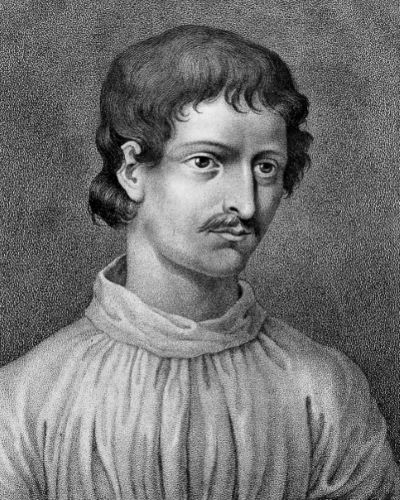
Jordano Bruno (XVI century) is a famous Italian scientist -astronomer. J. Bruno says that a perfect person is a person who directs his activity to the benefit of society, and always tries to progress; a person must improve his personality and his surroundings; striving from the wildness to the kindness is a development of morality; a person’s moral will reflects in his love; a loving person is a creator, serving society is an action of a moral person. These were the conclusions of J. Bruno about conscientious person.4
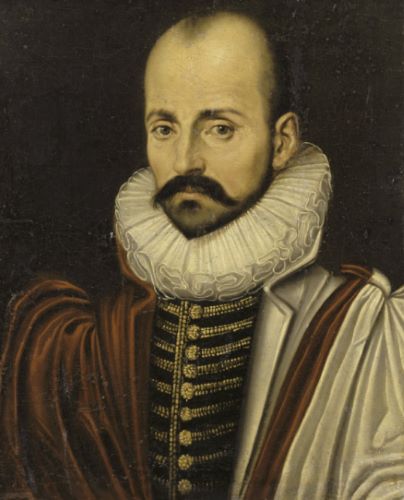
Michel de Montaigne (XVI century) is French philosopher. In his books “Experiments”, and “Friendship” he collected ethical experiences of all times and people. His ethical ideas were as follows: moral perfection is the actual development of a person; a thinking person is a moral person; all the best qualities are possible for a person, people’s morality is different and it is connected with the environment. Montaigne said: “I look at myself and see in myself shame and shamelessness, wisdom and madness, hard work and laziness, silence and chatter, kindness and lie, large heart and greed. In every person, you can see these conflicting qualities. Therefore, I cannot say anything surely about myself“
Montaigne’s moral conclusion is the following: “We must direct all our thinking and actions for our goods”. These ideas of Montaigne later became the basis of the ethics of bourgeois society.5
Thus, there were different ideas on ethics science in the middle ages and Renaissance periods. All thinkers tried to understand and study the essence of morality in life.
Endnotes
- Guseinov AA, Irrlitz G (1987) Brief History of Ethics. Moscow.
- Mirboboev М (2010) Philosophy. Khujand: Khuroson.
- Fayzulloeva M.Sh (2015) Ethics science of moral. Monogaph-Khujand, pp: 150.
- Fayzulloeva M.Sh (2016) Family and ethics of the family. Monograph-Khujand, pp: 165.
- Fayzulloeva M.Sh (2018) Ethical ideas in the philosophy of Abuhamid Muhammad al-Ghazali. European Union. Riga: Scholar’s Press, pp: 50.
Originally published by Annals of Bioethics and Clinical Applications 5:2 (Medwin Publishers), 06.02.2022, under the terms of a Creative Commons Attribution 4.0 International license.
About the Author