Victorian law moved from forbidding accused persons to testify to granting them a perilous choice between cross-examination and silence that jurors might interpret as guilt.

By Matthew A. McIntosh
Public Historian
Brewminate
Introduction: The Witness Who Could Refuse and the Prisoner Who Could Not Testify
A Victorian criminal courtroom contained a striking contradiction. An ordinary witness who was properly summoned and sworn could refuse to answer a question when the response would expose that witness to criminal prosecution, a statutory penalty, or forfeiture. The prisoner whose liberty, and sometimes life, depended upon the verdict occupied a very different legal position. For most of Queen Victoria’s reign, the accused was not merely protected from being compelled to testify but was legally incompetent to enter the witness box at all. Incompetency was a technical evidentiary status, not a judgment about intelligence or mental capacity: it meant that the defendant’s sworn account could not be received as evidence even when the defendant urgently wished to provide it. The witness possessed a selective privilege to withhold incriminating information, whereas the prisoner was denied the legal capacity to offer sworn exculpatory information. That contrast exposes the danger of treating Victorian self-incrimination law as though it already embodied a unified modern “right to remain silent.”
The distinction rested upon separate doctrines that produced superficially similar silences. Witness privilege operated question by question and depended upon a genuine danger arising from the requested answer; it did not ordinarily permit a witness to ignore a summons or reject examination altogether. In Regina v. Boyes in 1861, the Court of Queen’s Bench expressed the influential requirement that the threatened danger be “real and appreciable,” rather than remote, imaginary, or created by an excessively sensitive conscience. The accused’s silence, by comparison, followed from rules disqualifying parties with a direct interest in litigation and from assumptions that defendants would inevitably lie, invite perjury, or suffer intolerable pressure if placed under oath. Although prisoners could communicate with counsel and were sometimes permitted to make unsworn statements from the dock, those statements were not sworn evidence and could not be tested through ordinary cross-examination. The Victorian defendant was consequently neither wholly voiceless nor fully recognized as a witness.
This anomalous arrangement became more conspicuous as nineteenth-century reform dismantled other testimonial exclusions. The Prisoners’ Counsel Act 1836 strengthened professional advocacy in felony trials, while successive evidence statutes made interested parties increasingly competent to testify in civil proceedings. Cross-examination came to be regarded as a better test of credibility than categorical exclusion, yet criminal defendants remained largely outside the witness box. From 1872 onward, Parliament created offense-specific exceptions that allowed some accused persons to testify, producing an increasingly arbitrary system in which testimonial competency could depend upon the precise statutory charge appearing in an indictment. The Criminal Evidence Act 1898 established a general rule that an accused person was competent to testify for the defense, but only upon that person’s own application. It prohibited prosecutorial comment on a defendant’s failure to testify and restricted questioning about unrelated offenses or bad character, although those restrictions contained important exceptions and did not prevent judicial comment upon silence. The reform granted defendants a new legal agency while exposing those who exercised it to cross-examination, credibility judgments, and potentially damaging inquiries. Once testimony became possible, refusing to testify could acquire a significance that legally imposed silence had not possessed.
The Victorian history of self-incrimination is not a simple march from coercion toward liberty. It is a history of protections distributed according to procedural identity: one rule governed the witness facing an incriminating question, another governed the suspect questioned before trial, and still another governed the accused standing before a jury. The 1898 settlement did not merely confer a right to speak; it transformed silence from a condition imposed by law into an ostensibly voluntary but socially burdened choice. That transformation sharpened enduring tensions between autonomy and truth-seeking, protection and participation, and formal legal freedom and practical courtroom pressure. Although the principal common-law narrative concerns England and Wales, the wider British story must also account for Scotland’s distinct procedure and the 1898 Act’s express exclusion of Ireland. Examining these differences reveals that modern protections against self-incrimination emerged not from a single ancient privilege but from the uneven convergence of witness privilege, evidentiary reform, adversarial advocacy, and the accused’s contested claim to be heard.
Before Victoria: Nemo Tenetur and the Making of the Adversarial Trial

Long before the Victorian age, English lawyers possessed a language with which to condemn compelled self-accusation. The best-known formulation, nemo tenetur se ipsum accusare, declared that no person was bound to accuse himself, while related maxims stated that no one was obliged to betray or disclose himself. These principles drew upon medieval canon law and the wider European ius commune, where jurists had considered when a person could be required to reveal concealed wrongdoing. Yet the existence of a maxim did not establish a comprehensive privilege applicable whenever truthful speech might produce criminal consequences. Canonical procedure also recognized official investigations into notorious or publicly suspected misconduct, and ecclesiastical authorities attempted to reconcile such inquiries with restraints upon indiscriminate interrogation. In England, controversy centered particularly upon the ex officio oath, through which an ecclesiastical court proceeding upon its own authority could require a respondent to swear to answer truthfully. Because that oath might precede full disclosure of the accusation, critics believed it forced a person to search his own conscience and furnish the materials for a prosecution that the authorities had not independently proved.
The conflict became politically explosive under the early Stuart monarchy, when the Court of High Commission and the Court of Star Chamber were associated with searching interrogatories, religious conformity, and punishment of political opposition. John Lilburne’s prosecution in 1637 supplied the most celebrated example. Brought before Star Chamber for allegedly importing and distributing unlicensed books, Lilburne refused the ex officio oath on the ground that he had not been informed sufficiently of the charges against him. The oath would have required him to answer questions capable of implicating both himself and other people, transforming the accused into an unwilling instrument of investigation. Star Chamber responded with imprisonment, whipping, and the pillory, thereby making Lilburne’s resistance a public symbol of arbitrary government. The Long Parliament subsequently condemned the proceedings against him, and legislation enacted in 1641 abolished both Star Chamber and the High Commission. These measures destroyed institutions closely identified with compulsory interrogation, but they did not enact a general statutory privilege governing every witness, suspect, or defendant. Their enduring importance lay partly in the constitutional memory they created: compelled self-disclosure became associated with prerogative justice, religious persecution, and tribunals operating outside ordinary common-law restraints.
Abolishing the ex officio oath nevertheless did not immediately create an effective right of silence within the ordinary criminal trial. In seventeenth- and early eighteenth-century felony proceedings, the accused was generally unsworn and legally disqualified from giving testimony, but was expected to answer the prosecution’s witnesses personally, challenge their accounts, and supply an exculpatory narrative. Because felony defendants ordinarily lacked counsel capable of presenting a complete defense on the facts, the prisoner’s own speech remained the principal means of contesting the charge. Trials were frequently brief, witnesses testified directly in the accused’s presence, and judges questioned prisoners about damaging circumstances as they emerged. The accused was spared a compulsory testimonial oath while confronting intense practical pressure to speak, a system aptly characterized as the “accused speaks” trial.
That arrangement gradually changed as lawyers assumed a larger role in criminal litigation. The Treason Act 1695 permitted defendants charged with treason to employ counsel, obtain copies of indictments, and call sworn witnesses, although comparable protections did not immediately extend to ordinary felony defendants. During the eighteenth century, increasing numbers of prosecutors appeared with lawyers, prompting judges to allow defense counsel to cross-examine witnesses and argue questions of law. Counsel initially remained forbidden to address the jury fully upon the facts in most felony cases, leaving the accused responsible for giving a personal explanation, but skilled cross-examination could expose weaknesses that a frightened or inarticulate prisoner might have been unable to identify.
As advocacy expanded, criminal trials became organized more clearly around prosecution evidence, defense challenges, evidentiary objections, and the requirement that guilt be affirmatively proved. Silence consequently acquired a procedural foundation: an accused person could begin to rely upon counsel to contest the case without personally answering every allegation. The Prisoners’ Counsel Act 1836 completed this pre-Victorian transformation by allowing persons charged with felony to make a full defense through counsel. Enacted only a year before Victoria’s accession, the statute helped establish the lawyer-dominated adversarial structure within which protection against self-incrimination could become practically meaningful rather than merely rhetorical.
The pre-Victorian history supports neither a purely ancient nor an exclusively modern genealogy of the privilege. The older maxims furnished a principled vocabulary, while resistance to Star Chamber and the High Commission supplied a powerful constitutional narrative about the dangers of compelled disclosure. Nevertheless, the revisionist emphasis upon procedure identifies something that the traditional story can overlook: a prisoner who had to conduct his own defense possessed little practical freedom to remain silent, even when no oath could be imposed upon him. Defense advocacy, cross-examination, evidentiary rules, and an increasingly demanding conception of the prosecution’s burden converted noncompulsion into a usable courtroom position. By the beginning of Victoria’s reign, common law increasingly protected an ordinary witness from answering particular questions presenting a genuine danger of self-incrimination, while the accused remained protected from compulsory testimony largely because he was not competent to testify at all. Victorian law inherited several overlapping historical developments rather than one fully formed right: an inherited maxim, a constitutional hostility to inquisitorial oaths, a question-specific witness privilege, and an adversarial trial capable of proceeding without the prisoner’s personal testimony.
Competency and Privilege, Compellability and Silence
Victorian evidence law did not organize self-incrimination around one comprehensive right. It instead assigned different legal consequences to silence by asking several preliminary questions about the speaker’s procedural status. Competency determined whether a person could give testimony that the court would recognize as evidence. Compellability determined whether a competent witness could be required to attend, take the oath, and answer questions. Privilege excused an otherwise competent and compellable witness from providing particular information, while the law governing confessions decided whether an accused person’s earlier statements could be introduced against that person at trial. These doctrines sometimes protected the same individual, but they operated at different stages and rested upon different legal rationales. Failure to distinguish them makes the enforced silence of the Victorian prisoner appear misleadingly similar to a modern defendant’s voluntary refusal to testify.
Competency was a threshold rule controlling admission to the witness box. A person classified as incompetent was not simply someone whose credibility the jury might doubt; the law refused to receive that person’s sworn testimony altogether. Earlier common law had disqualified numerous witnesses because of criminal conviction, religious incapacity, direct financial interest, or status as a party to the litigation. The Evidence Act 1843 removed disqualification arising from crime or interest for many witnesses, reflecting the increasingly influential belief that doubtful testimony should be heard and evaluated rather than excluded categorically. It did not make the parties themselves generally competent. The Evidence Act 1851 crossed that boundary in civil proceedings by declaring parties competent and compellable, yet expressly preserved the existing exclusion of persons charged with criminal offenses. A criminal defendant remained unable to testify for the defense even when willing to endure cross-examination and determined to deny the accusation under oath. An unsworn statement from the dock might permit the prisoner to communicate an account, but it did not transform the prisoner into a witness or give that account the evidentiary standing of sworn testimony. The incompetency rule could be defended as protection against compelled self-accusation and perjury, but it simultaneously denied the accused the legal means available to other witnesses for establishing disputed facts.
Compellability addressed obligation rather than eligibility. A competent ordinary witness could generally be summoned and required to testify, with an unjustified refusal risking punishment for contempt. Competency did not invariably entail compellability because the law recognized certain relationships, offices, and privileges that limited the judicial power to demand evidence. The 1851 statute’s deliberate use of both terms demonstrated that Parliament understood permission to testify and liability to compulsion as separate matters. Consequently, making the accused competent would not by itself answer the politically decisive question of whether the prosecution could call that person or whether testimony would remain exclusively voluntary.
Privilege operated more narrowly by interrupting compulsory examination without disqualifying the witness. A witness claiming the privilege normally had to appear, be sworn, and respond to questions that carried no incriminating danger. The objection arose when a particular answer could expose the witness to prosecution, a penal sanction, or forfeiture; embarrassment, disgrace, civil liability, or damage to reputation was not ordinarily enough. Because the privilege belonged to the witness, it could be claimed even when the information was highly relevant to another person’s prosecution. The judge determined whether there was a legally sufficient danger, although demanding that the witness explain the danger too precisely could itself disclose the protected information. In Regina v. Boyes, the Court of Queen’s Bench insisted that the threatened consequence must be “real and appreciable” in the ordinary course of law rather than imaginary, remote, or dependent upon an extraordinary contingency. A pardon or equivalent legal protection could remove the danger and with it the justification for refusing to answer. Once the danger had been neutralized, compellability resumed because the privilege protected against incrimination rather than against questioning as such. Victorian witness privilege was accordingly genuine but conditional, personal, and ordinarily question-specific.
The admissibility of confessions presented a different problem because the accused had already spoken outside the witness box. Courts asked whether a confession had been made freely or had resulted from a threat, promise, or inducement offered by a person in authority. In Regina v. Baldry, the judges treated voluntariness as a condition governing whether the prosecution could place an accused person’s statement before the jury, while concluding that a statutory caution did not itself invalidate a subsequent confession. Later Victorian decisions continued to demand proof that a disputed confession had been freely made, especially when police officers, employers, prosecutors, or others possessing apparent authority had encouraged disclosure. The doctrine was concerned substantially with the danger that hope of advantage or fear of harm could produce an unreliable admission, although it also imposed a limited restraint upon official methods of obtaining evidence. It did not establish a general rule that every statement made without counsel, after arrest, or in response to police questioning was inadmissible.
“Silence” described several legally distinct conditions in the Victorian courtroom. An incompetent accused was silent because the law refused to hear sworn testimony from that person; a privileged witness was silent only as to questions carrying a sufficient danger of self-incrimination. A compellable witness who lacked a valid privilege was not legally entitled to remain silent at all. A suspect outside court might decline to speak, yet a confession judged voluntary could later be proved through the testimony of those who heard it. These categories also distributed authority among different legal actors: legislation determined broad questions of competency, the court enforced compellability, the witness asserted privilege, and the judge ruled upon the admissibility of a confession. The distinctions help explain why the expansion of testimonial competency could both liberate and endanger criminal defendants. Allowing the accused to testify would remove a disabling exclusion, but entering the witness box would subject that person to the ordinary machinery of oath, cross-examination, and credibility assessment. The central Victorian question was consequently not whether law favored speech or silence in the abstract, but who was speaking, in what legal capacity, under what degree of compulsion, and with what consequences.
The Transformation of the Criminal Trial and the Rise of Defense Counsel
At the beginning of the eighteenth century, the English felony trial remained fundamentally an encounter between the accusation and the accused. Prosecutors or their witnesses presented incriminating facts, after which the prisoner was expected to question them, dispute their claims, and supply an alternative account. The prosecution itself was frequently conducted without professional counsel, and trials could proceed rapidly under the active direction of the judge. Prisoners possessed no general right to have lawyers address the jury upon the facts, although counsel might advise them, argue points of law, and perform limited procedural tasks. Judges were traditionally described as counsel for the prisoner, but their obligation to preserve fairness was not equivalent to partisan representation. Because testimonial and defensive speech were joined together, an accused person who declined to answer damaging evidence risked appearing unable to answer it. Silence was theoretically possible, but within this “accused speaks” trial it could amount to the practical abandonment of the defense.
Professional advocacy entered criminal proceedings gradually rather than through a single legislative decision. Prosecutors increasingly retained counsel during the eighteenth century, particularly in complex, politically sensitive, or privately financed cases. Judges responded to the resulting imbalance by permitting defense lawyers to cross-examine prosecution witnesses, challenge the admissibility of evidence, and address legal questions. These concessions remained subject to judicial practice and did not give counsel an unrestricted right to narrate the defense or argue the factual merits directly to the jury. Nevertheless, the appearance of lawyers on both sides began to reorganize trials around competing examinations, objections, and interpretations of the prosecution’s proof.
Defense counsel learned to make their restricted authority perform broader work. A carefully designed cross-examination could reveal inconsistencies, suggest an alternative sequence of events, attack an identification, or imply that a witness possessed a corrupt motive. Counsel might be formally asking questions while effectively constructing a defense narrative through their order, wording, and accumulated implications. Evidentiary objections could exclude unreliable testimony before the prisoner was forced to explain it, while legal argument could narrow the issues the jury was permitted to consider. This professional intervention also shifted attention from the accused’s personal plausibility to deficiencies within the prosecution’s case. The prisoner no longer had to identify every contradiction or understand every technical defect without assistance. Yet the restricted advocate still could not ordinarily deliver a full factual speech in a felony trial, leaving the defense divided awkwardly between counsel’s questions and the prisoner’s personal responses. Representation before 1836 made the older trial increasingly adversarial without completely displacing its expectation that the accused would speak. The resulting tension helped generate demands for a clear statutory right to a complete defense by counsel.
The Prisoners’ Counsel Act 1836 authorized persons indicted for felony to make a full answer and defense through counsel or attorney, removing the formal restriction upon advocates addressing the jury concerning the facts. Supporters condemned the older rule as anomalous because counsel could speak fully in misdemeanor and treason cases, while defendants facing conviction for ordinary felonies, and often capital punishment, received less complete assistance. Opponents feared that advocates would confuse juries, intimidate witnesses, prolong trials, and transform criminal adjudication into a contest of professional ingenuity, but the claim that judges adequately represented prisoners had become increasingly difficult to sustain once prosecutors employed their own lawyers. The Act confirmed defense advocacy as a legal right rather than a concession dependent upon local custom or judicial indulgence, although it neither guaranteed that every prisoner could afford counsel nor instantly standardized practice throughout the criminal courts. The deeper importance of professional representation lay in its alteration of the trial’s central question. Under the older structure, attention commonly rested upon whether the accused could provide a convincing response to the accusation. In the emerging adversarial structure, counsel could insist that the prosecution’s evidence be tested before any explanation from the prisoner was required. Cross-examination, exclusionary rules, and increasingly explicit formulations of the prosecution’s burden encouraged jurors to evaluate whether guilt had been affirmatively established beyond reasonable doubt. A defense could consequently succeed by demonstrating uncertainty, unreliability, or legal insufficiency without proving an alternative account. This did not mean that juries ceased drawing informal conclusions from a prisoner’s demeanor or failure to answer, but it supplied a procedural basis for treating an unanswered allegation as something less than established guilt. The growing law of evidence likewise assigned lawyers and judges a larger role in determining which information the jury could hear, producing a more regulated contest than the rapid narrative exchanges characteristic of many earlier trials.
The rise of defense counsel made meaningful silence possible before it made the accused a competent witness. A represented prisoner could allow counsel to expose weaknesses in the prosecution’s case, yet for most of the Victorian period could not enter the witness box to deny the charge under oath. The lawyer’s voice partially replaced the prisoner’s defensive speech, protecting the accused from some pressures of personal confrontation while also making the accused’s formal testimonial exclusion more conspicuous. Representation remained uneven, and counsel’s competence, preparation, and financial resources varied greatly, so the adversarial ideal did not describe every courtroom experience. Even so, the structural transition was decisive for the history of self-incrimination because it separated the act of defending from the act of personally answering incriminating evidence. By the time Victorian reformers debated whether defendants should testify, they were no longer deciding whether an accused person should be allowed any defense at all; they were deciding whether the counseled defense should also include the prisoner’s voluntary sworn testimony, with all the dangers of cross-examination that such testimony entailed.
The Victorian Witness and the Privilege Against Incriminating Answers
Victorian law regarded the privilege against self-incrimination as an exception to the ordinary obligation of a witness to assist the administration of justice. A person summoned in a civil or criminal proceeding generally had to attend court, take the prescribed oath or affirmation, and answer all legally admissible questions. The privilege did not authorize the witness to disregard the summons, refuse to be sworn, or withdraw wholesale from the examination merely because incriminating matters might arise. Instead, it operated when counsel posed a particular question whose answer could supply evidence of an offense or expose the witness to a penal legal consequence. The witness might answer numerous questions about the same transaction while withholding only the response that created the incriminating danger. This question-specific operation distinguished privilege from testimonial incompetency, which prevented an entire class of persons from giving sworn evidence, and from noncompellability, which could prevent a person from being called at all. Victorian courts consequently understood the privileged witness as legally capable of testifying and ordinarily bound to do so, but temporarily protected at the point where compulsory disclosure threatened self-accusation.
The danger did not have to arise from a direct confession of guilt. An answer could be privileged when it would disclose one element of an offense, identify incriminating documents, establish the witness’s presence at a prohibited transaction, or provide a link from which other evidence could be obtained. Protection was not confined to a question as explicit as whether the witness had committed a named crime. The controlling consideration was the legal tendency of the answer and the practical use that prosecutors might make of it.
The privilege extended beyond exposure to an ordinary criminal indictment. Nineteenth-century authorities commonly described it as protecting a witness from answers tending to subject that person to criminal prosecution, statutory penalties, or forfeitures imposed because of unlawful conduct. This broader formula reflected a legal world in which regulatory statutes often enforced obedience through monetary penalties, loss of property, or forfeiture proceedings that combined civil forms with punitive purposes. Courts did not necessarily treat every disadvantage produced by testimony as incriminating. A witness could not ordinarily refuse an answer merely because it would cause disgrace, reveal immoral behavior, damage professional standing, weaken a civil claim, or establish liability for a private debt. Earlier evidence law had sometimes permitted witnesses to avoid scandalous answers unrelated to the issues, but by the Victorian period relevance and self-incrimination were increasingly treated as distinct questions. A relevant answer could be socially ruinous and still remain compulsory if it created no legally cognizable penal danger. Conversely, an answer that appeared innocuous to the public might be privileged if it helped establish liability under a criminal or penal statute. The doctrine protected against coercive participation in punishment, not against every painful consequence of truthful testimony.
The Evidence Act 1851 placed this protection within one of the century’s most important expansions of testimonial competency. Parliament made parties to civil proceedings, along with persons on whose behalf those proceedings were brought or defended, generally competent and compellable to testify. That reform rejected the assumption that direct personal interest made testimony too unreliable to be heard, entrusting courts and juries to assess credibility through observation, contradiction, and cross-examination. Yet Parliament expressly preserved the rule that no person was to be compelled to answer a question tending to incriminate that person. It also retained the incompetency of persons charged with criminal offenses to testify at their own trials. The statute drew a revealing boundary: evidentiary reform could enlarge the pool of available witnesses without making their exposure to punishment a condition of participation. Increased testimonial inclusion and protection against compelled self-accusation were presented as complementary principles rather than opposing policies.
Application of the privilege required a judgment about danger without compelling the witness to reveal the very facts that the doctrine protected. The witness or counsel normally raised the objection, but a bare assertion of fear did not conclusively determine whether an answer could be withheld. The judge examined the question in its procedural setting, considering the nature of the requested information, the surrounding evidence, and the existence of a law under which the witness might be prosecuted or penalized. Demanding a detailed explanation of how the answer would incriminate the witness could destroy the privilege by forcing an indirect disclosure. Courts had to infer danger where the connection was reasonably apparent while rejecting claims resting only upon speculative or legally impossible consequences. The privilege was personal to the witness and could not ordinarily be invoked merely to protect a relative, employer, associate, or party to the litigation. Nor did it exclude independently obtained evidence simply because that evidence concerned conduct about which the witness had refused to speak. Victorian witness privilege was consequently substantial but carefully confined: it restrained the court’s power to extract incriminating answers while leaving intact the wider duties of attendance, testimony, and cooperation upon which adversarial adjudication depended.
R. v. Boyes and the “Real and Appreciable” Danger

The leading Victorian formulation of the witness privilege emerged from an electoral bribery prosecution. At the parliamentary election held at Beverley in Yorkshire on April 29, 1859, Charles Boyes allegedly gave money to several voters to induce them to support the candidate Ralph Walters. Acting upon a resolution of the House of Commons, the attorney general filed an information charging Boyes with multiple acts of bribery. The prosecution depended heavily upon testimony from the voters who had received the payments, although their answers would necessarily reveal their own participation in the unlawful transactions. When John Best, one of the alleged recipients, was called at the Yorkshire Summer Assizes in 1860, Baron Martin informed him that English law did not require a witness to provide evidence exposing him to criminal prosecution. Best accordingly refused even to answer whether he knew Boyes. Crown counsel then presented him with a pardon under the Great Seal covering his involvement in the bribery, and Best accepted it. He nevertheless continued to refuse to testify, forcing the court to determine whether any legally sufficient danger survived the Crown’s act of clemency.
A valid pardon ordinarily removed the danger of prosecution at the suit of the Crown and removed the foundation of the privilege. Best’s objection rested upon an exceptional constitutional possibility created by the Act of Settlement: a pardon under the Great Seal could not be pleaded in bar of an impeachment brought by the House of Commons. A majority of the Court of Queen’s Bench accepted that the pardon would not prevent such an impeachment or preclude judgment by the House of Lords, although the Crown could grant another pardon after judgment. Justice Blackburn expressed doubt about that interpretation, but the judges agreed that its correctness did not decide whether Best could remain silent. A theoretical avenue of punishment still existed, yet the court had to determine whether its mere legal existence constituted the kind of danger that activated the privilege.
Chief Justice Cockburn rejected the proposition that a witness’s sincere declaration of fear conclusively established the right to refuse an answer. The court had to examine the circumstances and the nature of the proposed evidence and decide whether there was reasonable ground to apprehend legal danger. Judicial supervision was necessary because an unlimited right of refusal would permit useful evidence to be withheld whenever a witness invoked an improbable possibility of punishment. Once an actual danger had been shown, the witness was to receive considerable latitude in assessing the implications of particular questions. An apparently innocent inquiry might disclose one fact that completed a chain of incriminating proof, and the witness could understand that connection more readily than the judge. The court did not require a proposed answer to amount to a complete confession or directly prove every element of an offense. It required the underlying danger to be “real and appreciable” according to the ordinary operation of law and the ordinary course of events. An imaginary or insubstantial danger dependent upon an extraordinary and barely possible contingency was insufficient. The standard combined judicial control over the threshold claim with substantial protection for the witness once genuine jeopardy became apparent.
Applied to Best, that standard made the possibility of impeachment untenably remote. The court knew of no instance in which Parliament had impeached an ordinary recipient of an electoral bribe, despite the many bribery cases that had occupied the House of Commons. The Commons had itself also directed the attorney general to pursue Boyes through the ordinary courts, and the pardon had been supplied to obtain the testimony required by that prosecution. It would have been contrary to the evident course of events for the House to treat the pardon as meaningless and initiate an extraordinary impeachment against the witness whose evidence it had sought, so the trial judge was entitled to compel Best to answer.
R. v. Boyes consequently defined both the strength and the limits of Victorian witness privilege. The decision confirmed that courts could not compel a person to furnish evidence creating an appreciable risk of punishment, including answers that supplied only one link in a prosecutorial chain. Privilege was not an absolute power belonging entirely to the witness, nor could it be sustained by a danger that remained conceivable only in the most technical sense. A pardon eliminated the privilege to the extent that it eliminated the relevant legal peril, demonstrating that the doctrine protected against exposure to punishment rather than against disclosure, disgrace, or compulsory questioning in themselves. The court balanced personal protection against what it regarded as the public obligation to provide evidence necessary to the administration of justice. Its formulation left judges with considerable authority to distinguish realistic jeopardy from speculative anxiety, making the practical security of the privilege partly dependent upon judicial assessments of probability. The case became an enduring statement of the common-law principle that protected silence required more than imaginable peril, but did not require prosecution to be certain or even probable.
Cautions and Incriminating Statements Before Trial

Victorian protections against self-incrimination operated before trial as well as in the courtroom, but they did so within a preliminary process inherited from much older criminal procedure. Since the Marian statutes of the sixteenth century, justices of the peace had been expected to examine accused persons and prosecution witnesses and transmit written accounts to the trial court. These examinations originally served an investigative purpose, enabling magistrates to collect information, identify accomplices, and preserve evidence before indictment. By the nineteenth century, the preliminary hearing was becoming more recognizably judicial: the magistrate assessed whether sufficient evidence existed to commit the accused for trial rather than merely assisting the prosecution in constructing its case. That transition made direct interrogation of the prisoner increasingly difficult to reconcile with the magistrate’s emerging position as an impartial adjudicator. The Indictable Offences Act 1848, one of the measures commonly called the Jervis Acts, attempted to regulate this uneasy encounter between preliminary investigation and judicial examination.
Section 18 of the 1848 Act prescribed what the magistrate was to do after the prosecution witnesses had completed their evidence. The depositions taken against the accused were to be read, after which the magistrate was to ask whether the accused wished to say anything in answer to the charge. The statutory caution emphasized that the prisoner was not obliged to speak unless he desired to do so. It also warned that anything said would be taken down in writing and might be given in evidence against him at trial. A statement made in response was recorded, read back to the accused, and signed by the magistrate before becoming part of the materials transmitted to the trial court. The accused did not deliver this statement as a sworn witness and was not subjected to the ordinary structure of examination and cross-examination. Section 18 created a carefully documented opportunity to respond while recognizing that the magistrate could not properly demand an incriminating account.
The caution represented an important procedural safeguard because it replaced an ambiguous invitation to explain with an express warning about both choice and consequence. An uneducated or unrepresented prisoner might otherwise have assumed that answering the magistrate was legally compulsory or that cooperation would necessarily improve his position. The statutory formula made clear that silence itself was permissible at this stage, even though the accused remained legally incompetent to testify under oath at trial. It also reflected the changing conception of the magistrate, whose proper function was increasingly to supervise a committal proceeding rather than extract a confession.
Yet section 18 did not establish a comprehensive Victorian equivalent of the modern law governing custodial interrogation. Its caution applied to the formal examination conducted by the committing magistrate after the prosecution evidence had been heard. It did not automatically govern every question asked by a police constable during investigation, every conversation following arrest, or every exchange with a jailer, employer, relative, or other private person. Nor did failure to administer the statutory words outside the prescribed proceeding necessarily render a statement inadmissible. The police were developing greater institutional importance during precisely this period, but the legal regulation of their interrogations remained fragmentary and depended principally upon the common-law doctrine governing confessions. Courts asked whether a statement had been freely made, not whether the suspect had received a complete explanation of procedural rights. A statement obtained outside the committal examination could be proved at trial through the person who heard it, provided that no legally disqualifying inducement had produced it.
The distinction between a compelled examination and an admissible voluntary confession received important clarification in Regina v. Baldry in 1852. After Baldry had been taken before magistrates on a charge of murder, he received a caution stating that he was not obliged to say anything but that whatever he did say would be taken down and used in evidence. He subsequently made an incriminating statement, and the trial court reserved the question whether the caution itself rendered the confession inadmissible. The judges held that it did not. The established exclusionary rule was directed principally against confessions produced by threats or promises made by persons in authority, especially suggestions that speaking would bring some advantage or that silence would worsen the accused’s position. A warning that a statement might be used against the prisoner offered neither hope nor favor and instead revealed the danger of speaking. It could strengthen, rather than undermine, the conclusion that a subsequent statement was voluntary. Baldry accordingly confirmed that the statutory caution was compatible with the admission of confessions: its purpose was to preserve choice, not to prevent the prosecution from using words spoken after the accused had been warned. The decision also demonstrated that voluntariness and informed caution were related but not identical legal concepts.
The 1848 settlement protected silence within one defined pretrial setting without creating a general exclusionary regime for incriminating statements. Before the magistrate, the accused had to be told that speaking was optional and potentially damaging; elsewhere, the decisive question usually remained whether a confession resulted from an improper threat, promise, or inducement. Statements freely volunteered to police officers or other listeners remained admissible, as did answers elicited by questioning that courts did not regard as coercive. Victorian law drew a sharp line between forcing the accused to create evidence through a formal judicial examination and admitting evidence that the accused was considered to have supplied voluntarily. That line provided a meaningful restraint upon magisterial interrogation, but it left considerable room for investigative questioning beyond the statutory hearing. The caution was an important ancestor of later protections, yet it belonged to a narrower legal world in which voluntariness, official compulsion, and the practical pressures surrounding arrest were not treated as parts of a single comprehensive right.
The Accused at Trial: Incompetency as Protection and Disability
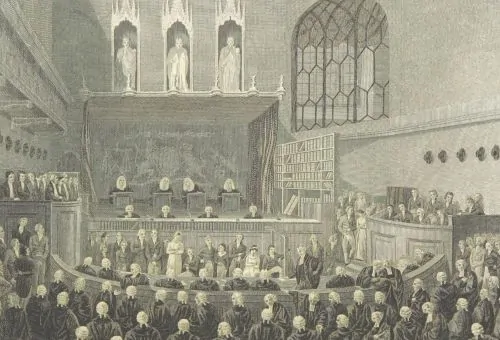
In Victorian evidence law, the accused’s incompetency had nothing to do with intellectual capacity, mental illness, or fitness to stand trial. It denoted a categorical rule that prevented a person charged with an offense from becoming a sworn witness in the resulting criminal proceeding. The disqualification applied even when the defense wished to call the accused and the accused possessed information directly relevant to innocence. Unlike privilege, it did not depend upon whether a particular question threatened self-incrimination; the witness box itself remained closed. Unlike noncompellability, it did not merely prevent the prosecution from forcing testimony while leaving voluntary testimony available. The rule imposed silence as a legal status rather than offering silence as a personal election. Victorian defendants could participate in their defense through counsel, instructions, challenges to jurors, questions, and permitted statements, but they could not convert their own factual accounts into sworn evidence.
This exclusion grew from the common-law distrust of witnesses whose interests appeared inseparable from the outcome of litigation. If a financial interest could tempt an ordinary witness to distort the truth, the accused’s desire to avoid conviction, imprisonment, transportation, or death seemed to provide the strongest imaginable incentive to lie. The oath also carried a religious and moral significance that made deliberate falsehood more than a procedural inconvenience: compelling a guilty person to deny the charge might add perjury and spiritual peril to the original offense. Some lawyers consequently treated exclusion as a means of protecting the judicial process from manufactured defenses. It also spared juries the supposedly impossible task of deciding how much weight to give testimony offered by a person whose liberty depended upon being believed. These assumptions rested upon categorical judgments about human behavior rather than an examination of the credibility of the individual defendant. The law trusted cross-examination to expose the interests of many increasingly competent witnesses while continuing to presume that the accused’s interest made useful sworn testimony unattainable.
Whatever its origins, incompetency furnished the accused with substantial practical protections. The prosecution could not call the prisoner, place him under oath, compel him to confirm incriminating facts, or expose inconsistencies through cross-examination. Because he gave no sworn testimony, he could not be prosecuted for perjury committed in the witness box. His character and prior misconduct could not be introduced merely as material with which to impeach testimony that the law forbade him to give. The rule insulated every defendant from a form of evidentiary pressure that might otherwise have transformed nominally voluntary testimony into a practical necessity.
The same protection could become a profound disability when the accused possessed the clearest, or the only, evidence capable of answering the prosecution. Charges involving private conversations, disputed intentions, possession of property, mistaken identity, or events witnessed by only two people could turn upon facts that no independent defense witness could establish. Counsel might expose contradictions in the prosecution’s case, but counsel could not testify to what the accused had seen, intended, understood, or been told. Nor could instructions privately communicated to counsel become evidence merely because an advocate incorporated them into an argument. An innocent defendant might watch a mistaken witness give a confident account under oath while remaining unable to contradict that account upon the same evidentiary footing. The problem extended to joint prosecutions, in which one accused person could be incapable of giving exculpatory evidence for another so long as that person’s own charge remained unresolved. Discontinuing proceedings against one defendant could remove the technical disqualification and suddenly make that person competent, revealing how imperfectly legal status corresponded to actual credibility. Incompetency could consequently exclude precisely the testimony that a fact-finding system most needed to hear.
Judicial practice softened the exclusion by allowing defendants to communicate with juries without becoming witnesses. The older prisoner-led trial had long permitted an accused person to answer accusations orally, and nineteenth-century judges increasingly allowed a formal unsworn statement from the dock, particularly as the injustice of complete testimonial silence became more apparent. Such a statement enabled the prisoner to deny the charge, describe events, explain suspicious conduct, or appeal directly to the jury without taking an oath. It also preserved the protective consequences of incompetency because the prosecution could not cross-examine the prisoner as an ordinary witness or prosecute the statement as perjury. Yet this compromise possessed an unavoidable weakness: an unsworn narrative was not sworn evidence and could be discounted because it had escaped the tests applied to prosecution witnesses. Its reception and practical weight were not always uniform, and a frightened, uneducated, or poorly represented prisoner might not understand how to use it effectively. The statement from the dock mitigated enforced silence without placing the accused on equal evidentiary terms with those who testified against him. The Victorian incompetency rule cannot be classified simply as either a safeguard or an injustice. It embodied a genuine refusal to make the accused an instrument of the prosecution, but it achieved that protection by denying him control over whether to offer sworn testimony for the defense. Its categorical form protected the guilty, the innocent, the articulate, and the vulnerable alike from cross-examination, while disabling them alike from supplying evidence that might determine the verdict. As Parliament dismantled interest-based exclusions in civil proceedings, the criminal exception appeared increasingly anomalous: the person most directly affected by the judgment remained the one participant whose testimony the jury was forbidden to assess. The eventual controversy over reform would turn upon whether cross-examination and jury evaluation were preferable to blanket exclusion, and whether formally voluntary competency could preserve the substance of the older protection. Incompetency kept the accused beyond the prosecution’s reach, but it did so by withholding an agency that Victorian evidence law was steadily extending to almost everyone else.
Not Entirely Silent: Statements from the Dock
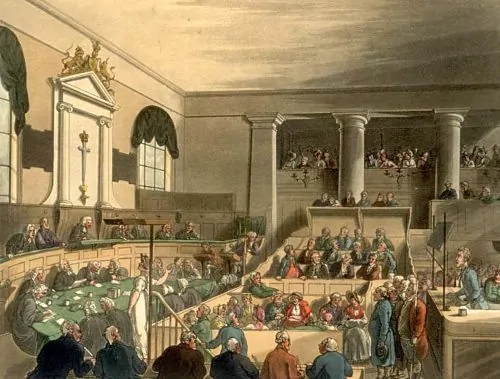
The testimonial incompetency of the Victorian accused did not reduce the prisoner to complete silence. English criminal procedure preserved an older practice under which defendants could address the court and jury personally from the dock. They spoke without taking an oath and without acquiring the legal status of witnesses. A prisoner might deny the accusation, explain suspicious conduct, challenge a witness’s recollection, describe an alibi, or offer an innocent interpretation of incriminating circumstances. The statement could also include pleas for mercy or descriptions of poverty, coercion, intoxication, and personal misfortune that blurred the boundary between defense and mitigation. This opportunity was valuable when the relevant transaction had occurred in private or depended upon the accused’s intentions. The resulting statement nevertheless occupied an uncertain position between argument, testimony, and personal appeal.
The Prisoners’ Counsel Act 1836 altered the setting in which such statements were delivered. Once counsel could present a complete factual defense in felony cases, the prisoner no longer had to perform every task of narration and advocacy personally. The statute did not make the accused a competent witness or establish a comprehensive procedure governing unsworn statements. Judicial custom consequently continued to determine how, when, and at what length a represented prisoner might address the jury in addition to the speech made by counsel.
A statement from the dock could communicate facts that defense counsel was not entitled simply to assert as though they had been proved. Counsel could analyze testimony, expose contradictions, and argue reasonable inferences, but an advocate’s speech could not itself establish what the accused had seen, intended, or been told. The prisoner’s own narrative helped fill the evidentiary void created by incompetency. Because the statement was unsworn, the prosecution could not subject its author to ordinary cross-examination or prosecute false assertions as perjury. That protection made speaking considerably less dangerous than entering a modern witness box, but it also weakened the statement’s authority. Judges commonly reminded juries that the prisoner’s account had not been given upon oath or tested through cross-examination. Jurors could listen to it and allow it to influence their assessment of the case, yet they were not required to treat it as evidence possessing the same formal standing as sworn testimony. A detailed and plausible statement might nevertheless create reasonable doubt, particularly when it corresponded with independent circumstances revealed during cross-examination. Conversely, an implausible explanation, an accidental admission, or a contradiction of established facts could strengthen the impression of guilt even though the prosecution lacked the power to question the speaker formally. The practice allowed defendants to be heard while denying them the evidentiary equality of witnesses.
Its usefulness also depended heavily upon social position, literacy, temperament, and legal assistance. An educated prisoner or one carefully advised by counsel might deliver a coherent narrative directed toward the decisive issues, whereas a frightened, confused, or inarticulate defendant could ramble, omit essential facts, or appear evasive. Defendants who could not read might struggle to use a prepared statement, while those unfamiliar with courtroom conventions could mistake an emotional appeal for an adequate answer to detailed evidence. Judges possessed considerable influence over the occasion through their control of proceedings and their later summaries to the jury. Even the decision to remain silent could carry an informal cost, because jurors accustomed to hearing prisoners offer explanations might regard the absence of one as suspicious despite the accused’s legal incapacity to testify. The statement from the dock softened the harshness of exclusion without overcoming the inequalities that made personal courtroom speech a precarious form of defense.
The Criminal Evidence Act 1898 made an accused person competent to testify for the defense, but it did not abolish the older practice. Parliament expressly preserved the right of a person charged to make an unsworn statement, thereby allowing defendants to choose between two legally different forms of speech. Sworn testimony possessed evidentiary status and could answer the prosecution directly, but it exposed the accused to cross-examination and, under specified conditions, questions concerning character or previous convictions. The dock statement avoided those dangers while remaining vulnerable to the criticism that it had not been tested upon oath. Its statutory survival demonstrated that Victorian reformers did not regard competency alone as a sufficient protection for every defendant. They retained a form of personal address inherited from the prisoner-led trial even as they completed the transition toward a lawyer-dominated adversarial proceeding. The unsworn statement was consequently neither a full substitute for testimony nor an empty ritual: it was a hybrid safeguard that gave the accused a voice while preserving the legal boundary between speaking and giving evidence.
Victorian Evidence Reform and the Attack on Testimonial Exclusion
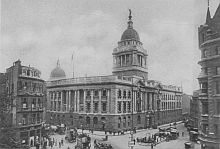
Victorian evidence reform was driven by a growing conviction that courts should hear relevant testimony rather than suppress it through categorical assumptions about credibility. Jeremy Bentham supplied the most systematic attack upon exclusionary rules, arguing that the proper purpose of procedure was the discovery of truth and that nearly every source of pertinent information should be admitted. Interest, criminal history, social status, and relationship to a party might furnish reasons for distrust, but they did not make a witness incapable of providing accurate evidence. Cross-examination, contradiction, judicial instruction, and the judgment of the fact-finder offered better means of exposing falsehood than automatic disqualification. Bentham’s critique also revealed the paradox produced by exclusion: the person with the greatest knowledge of a transaction was often silenced precisely because that person had the greatest stake in its outcome. Victorian reformers did not adopt his entire program, and many statutory changes arose from pragmatic dissatisfaction with inefficient litigation rather than philosophical conversion. Nevertheless, the Benthamite insistence that interest should affect weight rather than admissibility supplied a powerful language for dismantling the inherited law of testimonial incompetency.
The Evidence Act 1843, commonly associated with Lord Denman, marked a major legislative breach in the older system. It declared that witnesses were not to be excluded merely because they had been convicted of crime or possessed an interest in the matter being adjudicated. A person who stood to gain financially from the outcome could testify, leaving the opposing party to expose that interest through cross-examination and argument. The statute applied this inclusionary principle broadly but stopped short of making the parties named in the litigation competent witnesses. Parliament had rejected one general presumption of untrustworthiness while preserving the disqualification of those whose interests appeared most direct.
Experience soon weakened the distinction between an interested witness and an interested party. The expanding county courts permitted parties to testify in proceedings where the practical realities of small claims often left no other person capable of proving the disputed agreement, payment, or injury. Commercial growth likewise exposed the artificiality of deciding cases without hearing from the individuals who had conducted the transaction. The Evidence Act 1851 consequently made parties and persons on whose behalf civil proceedings were brought or defended generally competent and compellable witnesses. Their direct interest no longer barred them from the witness box, although it remained available for testing credibility. The Evidence Amendment Act 1853 extended the reform to husbands and wives of civil parties in many proceedings, further eroding exclusions based upon legal identity and presumed partiality. These measures did not eliminate every testimonial restriction, particularly in matrimonial controversies, but they reversed the governing presumption. Admission became increasingly normal, while exclusion required a special justification. The criminal accused was expressly left outside the new regime: the 1851 Act neither made a charged person competent nor permitted compulsion for or against that person.
That exception became more conspicuous with every successful reform. If juries could evaluate the testimony of convicted offenders, financially interested witnesses, civil litigants, and litigants’ spouses, it became difficult to maintain that they were inherently incapable of assessing the credibility of a defendant. The accused’s intense interest unquestionably supplied a reason for caution, but the Victorian law of evidence was progressively abandoning the proposition that intense interest justified enforced exclusion. Reformers could portray criminal incompetency as the last major survival of a discredited evidentiary philosophy. Opponents answered that criminal proceedings presented dangers unlike those encountered in civil litigation. A defendant permitted to testify would possess an overwhelming motive to commit perjury, while an innocent person might feel compelled to enter the witness box merely because jurors would treat silence as an admission. Cross-examination could enable skilled prosecutors to confuse vulnerable defendants, expose discreditable conduct, or secure convictions through poor performance rather than reliable evidence. James Fitzjames Stephen initially warned that competency could scarcely remain voluntary in practice because a prisoner who declined to testify would invite damaging speculation. Religious and moral objections also survived: placing the accused under oath might tempt the guilty person to add perjury to the charged offense, whereas the established rule permitted a defense without demanding a sworn denial. Supporters of reform responded that incompetency did not prevent false accounts, since defendants could already make unsworn statements from the dock. It merely ensured that truthful and false narratives alike remained beyond ordinary cross-examination and deprived innocent defendants of the authority attached to sworn evidence. The debate concerned not simply whether defendants could be trusted, but whether exclusion protected them from coercion or denied them the most effective means of establishing innocence.
Parliament approached criminal competency incrementally before accepting any universal principle. During the later nineteenth century, more than two dozen statutes created exceptions for particular offenses or proceedings, allowing accused persons, their spouses, or both to testify under carefully defined conditions. The Married Women’s Property legislation permitted testimony in certain prosecutions between spouses involving property, while the Criminal Law Amendment Act 1885 made defendants and their spouses competent but not compellable in prosecutions for specified sexual offenses. Other enactments concerning regulatory, commercial, and public-welfare offenses added further exceptions, producing a fragmented system in which an accused person’s ability to testify depended upon the statute under which the charge had been brought. These experiments undermined predictions that defendant testimony would necessarily corrupt criminal justice, yet they also demonstrated that competency alone did not resolve questions about compulsion, prosecutorial comment, cross-examination, character evidence, or previous convictions. By the final decade of Victoria’s reign, categorical exclusion had lost much of its intellectual foundation and much of its legislative consistency. The remaining issue was whether Parliament could replace it with a general right to give evidence while ensuring that testimonial permission did not become an indirect legal command to speak.
Reform by Experiment: The Statutory Exceptions after 1872
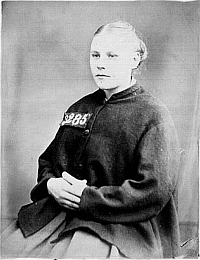
Parliament first breached the criminal accused’s general incompetency through legislation directed at particular regulatory problems rather than evidence law as a whole. Section 51 of the Licensing Act 1872 made the defendant and his wife competent to give evidence in summary proceedings under the Act. The provision covered a field in which guilt could depend upon the management of licensed premises, the conduct of employees, the defendant’s knowledge, and circumstances best known within the household or business. Competency enabled a publican to explain a disputed sale or rebut an inference that might otherwise rest largely upon the testimony of an inspector or constable. It did not make the defendant compellable, and preserved a formal distinction between permission to testify and compulsory self-accusation. Nor did Parliament announce that the inherited exclusion was generally irrational. The reform appeared as an incidental clause within licensing legislation, but it established the important precedent that an accused person could give sworn evidence without destroying the criminal process.
Other regulatory enactments soon adopted comparable provisions. The Sale of Food and Drugs Act 1875 allowed a prosecuted seller, if he thought fit, to tender himself and his wife for examination on his behalf, which could be crucial when the defense depended upon the source, condition, or supposed quality of an article. The Explosives Act 1875 admitted defendant testimony in specified proceedings, while the Merchant Shipping Act 1876 allowed a person accused of sending an unseaworthy vessel to sea to testify in support of statutory defenses concerning reasonable precautions or justification. In each field, Parliament encountered offenses for which the defendant’s knowledge and conduct formed an indispensable part of any fair evaluation of liability.
These provisions were closely connected to the growth of Victorian regulatory government. New statutes controlled trades, workplaces, shipping, public health, and dangerous materials through offenses that did not always resemble traditional felonies. Inspectors, analysts, official certificates, and statutory presumptions could establish much of the prosecution’s case, while defendants were sometimes required to prove reasonable belief, due diligence, a warranty, or another exculpatory condition. Excluding the person who had purchased the goods, managed the premises, supervised the machinery, or ordered the voyage could make such a defense nearly impossible. Competency served an immediate practical need even when legislators remained unwilling to reconsider the position of defendants charged with murder, burglary, or robbery. The Evidence Act 1877 went further in proceedings concerning the nonrepair of highways and bridges, public nuisances affecting highways, rivers, or bridges, and indictments brought to determine civil rights. It made accused persons and their spouses competent and compellable for either side, an exceptional arrangement reflecting the partly civil character of the proceedings it governed. The Married Women’s Property Acts of 1882 and 1884 supplied another distinctive exception by enabling spouses to testify in criminal proceedings brought by one against the other for the protection of property. These enactments were not components of a unified theory, but each showed that the absolute common-law categories of accused, party, and spouse could be modified when they obstructed a particular statutory purpose.
The Criminal Law Amendment Act 1885 carried the experiment into a much more consequential class of prosecutions. Section 20 made the accused and the accused’s spouse competent but not compellable in proceedings for offenses under the Act and for specified offenses involving rape, abduction, and the defilement of women and girls under the Offences Against the Person Act 1861. These were not minor commercial infractions but serious accusations capable of producing imprisonment, penal servitude, and lasting social disgrace. Their circumstances often arose from private encounters in which the accused might be the only available source of a direct denial or alternative explanation. Allowing sworn testimony in such cases weakened the argument that defendant competency was suitable only for technical or quasi-civil offenses, although it also exposed defendants to the formidable risks of prosecutorial cross-examination.
The exceptions continued to multiply. The Merchandise Marks Act 1887 permitted a defendant and spouse, if the defendant thought fit, to be sworn and examined like ordinary witnesses in prosecutions involving forged trademarks and false trade descriptions. Comparable clauses appeared in legislation concerning electoral wrongdoing, infant betting and loans, cruelty to children, dangerous machinery, and other specialized matters. By 1898, twenty-seven enactments had made accused persons, their spouses, or both competent in particular categories of criminal proceedings. Their wording was not uniform: some expressly limited testimony to the defense, some described the witness simply as competent but not compellable, and others conditioned a spouse’s testimony upon the defendant’s choice. They also differed over the stages of proceedings covered and over whether the special competency extended to a jointly charged person. The result could be arbitrary, because a defendant prosecuted under a newer statute containing an evidence clause might testify while another defendant facing a similar allegation under older legislation remained incompetent. Such distinctions were conspicuous where overlapping licensing, police, or public-order enactments permitted substantially similar conduct to be charged through different statutory routes. Incremental reform had demonstrated that defendants could function as sworn witnesses, but it had also produced an evidentiary patchwork increasingly difficult to defend.
These experiments altered the debate over self-incrimination without resolving it. Once an accused elected to testify, sworn answers became subject to ordinary testing, and the protection supplied by incompetency could no longer shield that defendant from questions concerning the charged transaction. Formal noncompellability preserved the option of silence, but jurors might naturally wonder why a defendant legally capable of answering the accusation had declined to do so. Reformers could point to years of specialized legislation as evidence that testimony by accused persons did not inevitably generate perjury, confusion, or injustice. Opponents could answer that selective experience in regulatory prosecutions revealed little about the pressures confronting defendants in ordinary felony trials and that permission might become practical compulsion once competency was universal. The statutory exceptions nevertheless reversed the burden of argument: incompetency was no longer an indivisible principle of English criminal law but a general rule already perforated by numerous legislative judgments. By the 1890s, the question was less whether any defendant could safely testify than whether Parliament could generalize the experiment while protecting the accused’s freedom not to enter the witness box.
Gender and the Silencing of Exculpatory Testimony

The incompetency of the accused was reinforced by a second exclusion that could silence the person best able to support the defense: the accused’s spouse. At common law, a husband or wife was generally incompetent to give evidence either for or against the other in criminal proceedings. Gender became a legal issue in testimony. This was not a personal privilege that the witness could waive, but a categorical disqualification enforced by the court even when both spouses wanted the testimony heard. Lawyers defended the rule through the doctrine of marital unity, the supposed identity of interest between spouses, and the desire to prevent courtroom accusations from producing permanent domestic discord. Because the accused could not testify, the spouse was also treated as too closely identified with the accused to supply independent sworn evidence. The rule protected a marriage from compelled betrayal, but it did so by denying each spouse the power to decide whether testimony would preserve rather than injure the household. Marital harmony became a justification for withholding evidence even when conviction posed the more immediate threat to the family’s stability.
The exclusion could be particularly damaging when the alleged conduct occurred within domestic life. A spouse might be the only person capable of confirming that the accused had been at home, explaining the presence of disputed property, identifying the source of money, or describing an illness that affected conduct or memory. Such facts could not become evidence merely because the accused told them to counsel or included them in an unsworn statement from the dock. The prosecution’s witnesses could speak under oath while a willing spouse possessing directly exculpatory knowledge remained legally silent.
Although the disqualification was expressed in formally reciprocal language, it operated within a legal and social order structured by gender. Coverture had long represented a married woman’s legal personality as absorbed into that of her husband, making the wife’s evidentiary exclusion appear to follow naturally from her supposed dependence upon his interests. Courts and commentators often assumed that affection, obedience, economic reliance, or male authority rendered her testimony either dangerously partial or morally improper. A wife who wished to defend her husband was denied recognition as an autonomous observer capable of giving credible evidence, while one who wished to accuse him was portrayed as threatening the unity of the home. Husbands were also excluded when their wives stood accused, but their civil status, property rights, and authority within marriage made the social consequences less symmetrical than the doctrinal language suggested. The rule could place a married female defendant at a particularly severe disadvantage when her husband controlled property, finances, correspondence, or access to other possible witnesses. Marriage itself created the disability: a sister, servant, neighbor, or unmarried partner might testify to the same facts that the lawful spouse was forbidden to relate. The law converted marital status into a barrier between relevant knowledge and the jury.
The Evidence Amendment Act 1853 exposed the instability of this reasoning by making husbands and wives generally competent and compellable in civil proceedings. Parliament thereby accepted that juries could evaluate spousal interest through cross-examination rather than automatic exclusion. The Act separately protected communications made between spouses during marriage from compelled disclosure, demonstrating that testimonial competency and marital confidentiality were distinct legal questions. A rule protecting confidential communications did not logically require the suppression of everything a spouse had personally seen, heard from others, or done. Criminal law nevertheless retained the broader incompetency, so a reform that recognized spouses as separate witnesses in disputes over money and property initially stopped at the boundary of criminal accusation.
Later statutory exceptions made the gendered contradictions increasingly visible. The Married Women’s Property Act 1882 recognized a married woman’s separate property and permitted criminal proceedings against her husband for its protection, expressly making husband and wife competent to testify against one another in those proceedings. The 1884 amending legislation clarified and extended the evidentiary machinery, even allowing compulsion except against the spouse who was the defendant. These provisions acknowledged that preserving an abstract marital unity could leave a wife without an effective remedy against appropriation of the property Parliament had declared to be hers. The Criminal Law Amendment Act 1885 created a different opening by making the accused and the accused’s spouse competent but not compellable at every stage, other than the grand jury, in prosecutions for specified sexual offenses. A wife could consequently provide an alibi or contradict an accusation against her husband in a rape or unlawful-defilement prosecution, although she remained incompetent to offer identical exculpatory evidence if he faced an ordinary assault or property charge outside a statutory exception. The legislation also permitted testimony by the husband of a female defendant, but the social image underlying parliamentary debate was frequently that of a wife called in a prosecution involving male sexual conduct. Competency allowed such women to speak, yet noncompellability also left unanswered whether their decision reflected independent choice, loyalty, economic dependence, intimidation, or fear of family dissolution. Reform removed the courtroom gag only in selected prosecutions and did not remove the pressures governing what a married witness might say.
Spousal incompetency stood at the intersection of self-incrimination, evidentiary exclusion, and Victorian assumptions about marriage. It prevented the prosecution from converting one spouse into an involuntary instrument against the other, but it simultaneously prevented the defense from presenting testimony that might establish innocence. Its statutory erosion showed that marital peace could be protected through limits upon compulsion and confidential communications without declaring a spouse incapable of testifying altogether. The growing patchwork also made the remaining exclusion appear arbitrary, because the admissibility of the same witness could depend upon the offense selected by the prosecutor. By the 1890s, the debate was no longer solely about whether accused persons should enter the witness box; it also concerned whether marriage should continue to deprive them of evidence available to every unmarried defendant. General reform would have to preserve protection against coerced betrayal while ceasing to treat husbands and wives, particularly wives, as legally voiceless extensions of one another.
One Kingdom, Several Legal Systems
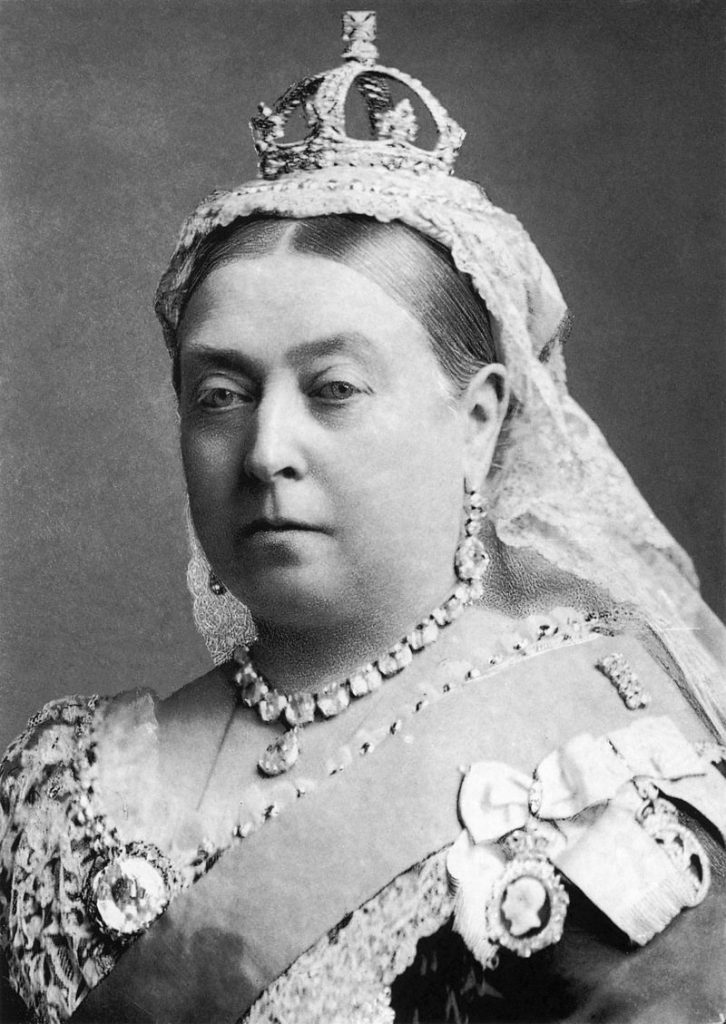
The phrase “Victorian criminal law” can conceal as much as it reveals. Throughout most of Victoria’s reign, the sovereign state was the United Kingdom of Great Britain and Ireland, but political union had not created a single domestic legal system. England and Wales formed one jurisdiction, although Welsh language, local conditions, and patterns of access to counsel could produce significant differences within it. Scotland retained its own substantive criminal law, courts, evidentiary doctrines, prosecutorial institutions, and procedural traditions under the settlement established by the Union of 1707. Ireland possessed a common-law system closely related to that of England, yet it was governed through separate courts, statutes, magistrates, police organizations, and Crown officials. Westminster could enact legislation for every part of the kingdom, but statutes frequently applied to only one jurisdiction or included special adaptations and exclusions. Consequently, the history of self-incrimination within the United Kingdom was not a single sequence of English rules spreading uniformly outward, but a collection of partially converging legal developments.
England and Wales supplied the framework most commonly presented as the Victorian common-law model. Assizes, quarter sessions, the Central Criminal Court, and magistrates’ hearings administered the rules concerning confessions, witness privilege, committal examinations, and the accused’s testimonial incompetency. The Indictable Offences Act 1848 regulated preliminary examinations and required the familiar caution that the accused need not speak but that any statement might be used at trial. It did notestablish a procedure automatically governing Scotland or Ireland. Decisions such as Regina v. Baldry and Regina v. Boyes became influential common-law authorities, but their institutional setting was specifically English and could not by itself describe what happened elsewhere in the kingdom.
Scotland presented the clearest alternative because its criminal process had developed from distinct historical foundations. Serious prosecutions were conducted in the name of the Crown under the authority of the lord advocate, with procurators fiscal performing local investigative and prosecutorial functions. Sheriffs and sheriff-substitutes possessed responsibilities that combined judicial supervision with participation in the preliminary investigation of crime, while the High Court of Justiciary occupied a position without an exact English equivalent. Instead of the English committal examination created by the Marian statutes and reshaped in 1848, Scots procedure employed a judicial examination at which an arrested person could “emit a declaration.” The proceeding generally occurred in private before a sheriff or other magistrate, with the accused responding to questions while a clerk reduced the resulting account to writing. The declaration was unsworn because Scots law regarded examination of an accused upon oath as an oppressive violation of the principle that no one should be compelled to swear to his own criminality. The prisoner was ordinarily warned that he was not bound to answer and that anything said might be used in evidence. Formal voluntariness existed alongside a setting in which judicial and prosecutorial authorities confronted a recently arrested person with the suspicions or evidence against him. What looked from England like an unusually inquisitorial survival was, within Scotland, an established component of a public system of investigation and prosecution.
The Scottish declaration possessed a particularly ambiguous relationship to protected silence. An innocent person could offer an explanation before committal and might benefit if that account appeared probable and corresponded with independent testimony at trial. More often, contemporary practitioners acknowledged, declarations supplied the Crown with admissions, contradictions, or circumstantial details prejudicial to the accused. A declaration was readily usable against its maker, whereas its exculpatory contents did not automatically constitute affirmative proof for the defense; prosecutorial control over whether it reached the jury could operate asymmetrically. The danger was intensified by leading questions, the privacy of the proceeding, and the accused’s lack of a general right to legal assistance during much of the century. Scotland’s corroboration requirement prevented a confession or admission from functioning in precisely the same manner as an isolated item of English proof, but the declaration itself could provide an important part of the evidentiary structure required for prosecution. The Criminal Procedure (Scotland) Act 1887 improved the position of the accused by recognizing access to a law agent, permitting a private consultation before examination, and allowing the agent to attend when the declaration was taken. These protections did not abolish the procedure, but they shifted the decision whether to speak closer to an informed personal choice.
Ireland stood nearer to England in legal doctrine but differed substantially in the organization and political environment of criminal justice. The Union of 1801 transferred legislative authority to Westminster without simply converting Ireland into an English judicial district. Irish courts administered a common-law system through assizes, quarter sessions, magistrates, and superior courts centered in Dublin, while territorial legislation frequently reproduced English reforms through separate Irish enactments. The Criminal Law (Ireland) Act 1828, for example, regulated examinations and informations in felony cases through provisions designed specifically for Ireland. The inherited rules excluding accused persons and their spouses from sworn testimony remained broadly recognizable to English lawyers, as did the doctrines concerning voluntary confessions and incriminating answers by witnesses. Institutional practice nevertheless differed because Ireland developed centralized policing, professional magistracy, and public prosecution earlier and more completely than England. The Royal Irish Constabulary and Dublin Metropolitan Police gathered information through networks closely connected to governmental administration, while resident magistrates supplied a permanent official presence in districts where unpaid local justices were considered unreliable or insufficient. Crown solicitors prepared prosecutions under the supervision of the Irish attorney general, and depositions and police intelligence could pass upward toward Dublin Castle. The person invoking silence in Ireland consequently encountered familiar common-law doctrines within a more centralized and visibly governmental apparatus.
Political conflict gave those institutional differences an additional significance. Agrarian violence, Fenian activity, the Land War, boycotting, and nationalist agitation repeatedly prompted exceptional legislation and intensified official concern with witnesses, juries, and local resistance to prosecution. The Criminal Law and Procedure (Ireland) Act 1887 expanded the authority of resident magistrates and enabled specified offenses to be handled through procedures justified as responses to intimidation and organized disorder. Such measures did not formally extinguish the common-law protection against compelled self-incrimination, but they altered the practical environment in which suspects were questioned, witnesses claimed privilege, and silence was interpreted. Disputes over venue, jury composition, police evidence, and the political loyalty of court officials made procedural safeguards inseparable from the larger question of whether Crown justice in Ireland was legitimate. A protection that appeared neutral in an English evidence treatise could acquire a distinctly political meaning when exercised against an Irish administration committed to suppressing organized resistance.
The final Victorian reform displayed the kingdom’s legal plurality in unusually explicit form. The Criminal Evidence Act 1898 made accused persons and their spouses competent witnesses for the defense in England, Wales, and Scotland, while insisting that the accused could be called only upon personal application. It prohibited prosecutorial comment upon the failure to testify, preserved unsworn statements, and restricted questioning about unrelated misconduct, although testimony exposed the defendant to cross-examination concerning the charged offense. Scotland received the reform through its own procedural framework, including a special requirement governing notice when a husband or wife was to appear on a defense witness list. Ireland was expressly excluded from the Act altogether. An English or Scottish defendant acquired a general statutory capacity to give sworn evidence while an Irish defendant remained subject to the older disability, despite all three living under the same Crown and Parliament. The exclusion cannot be explained as a minor drafting adjustment, for competency determined whether the accused could personally rebut prosecution testimony upon oath. Ireland did not obtain a comparable general settlement during Victoria’s reign, and the Irish Free State eventually enacted its own Criminal Justice (Evidence) Act in 1924. The geography of the 1898 Act exposes the central limitation of any unitary account: one kingdom could proclaim common commitments to voluntary testimony and protected silence while assigning materially different courtroom voices to its subjects.
The Parliamentary Battle over the Criminal Evidence Bill

The parliamentary struggle over accused persons’ testimony long predated the measure that became law in 1898. Evelyn Ashley introduced bills seeking general competency in 1876, 1877, and 1878, while broader efforts to codify criminal procedure offered another possible route to reform. James Fitzjames Stephen’s draft criminal code would have allowed an accused person to make an unsworn statement or undergo examination concerning the charge, with questioning restricted so that it could not become a general attack upon character. The Royal Commission appointed to revise the code adopted a different formulation, declaring the accused and the accused’s spouse competent witnesses for the defense while permitting judicial control over cross-examination affecting credit. A government bill incorporating that proposal reached a second reading in 1880 but was not carried further. A private criminal code bill introduced during the same year and another Criminal Law Amendment Bill in 1882 also failed. Sir Henry James, then attorney general, supported the principle in 1882 but argued that responsibility for such a fundamental change belonged to the government rather than a private member. The resulting Criminal Code (Indictable Offences Procedure) Bill of 1883 contained a competency provision, yet its enormous scope, procedural complexity, and exposure to delaying tactics caused it to collapse in committee. These failures persuaded reformers that testimonial competency had a better chance as a narrow measure than as one clause within a comprehensive reconstruction of criminal procedure.
The focused campaign began in earnest in 1884, when a proposal associated with Sir Henry James, Sir William Harcourt, and Solicitor General Farrer Herschell separated the evidence question from the larger codification project. Lord Bramwell presented a short bill that passed the House of Lords but failed to complete its passage through the Commons. A government measure introduced in 1885 attempted to protect defendants from questioning about unrelated offenses or convictions unless such evidence was independently admissible or the defendant had placed good character in issue. Further bills appeared in 1886 and 1887 without surviving the parliamentary calendar. In 1888, Attorney General Sir Richard Webster introduced a government bill making accused persons and their spouses competent but not compellable witnesses for the defense. That measure passed its Commons second reading, but Irish opposition generated sufficient delay to prevent enactment. What appeared to English reformers as a permission to speak appeared to many Irish members as another instrument that Crown prosecutors might use within a distrusted system of political justice.
The controversy persisted because the apparently simple distinction between competency and compellability did not resolve the pressures created by the witness box. Supporters maintained that defendants would merely receive an opportunity already granted under numerous special statutes and throughout much of the United States and British Empire. They pointed to prosecutions in which defendants permitted to testify had distinguished their conduct from that of guilty associates or explained facts that otherwise appeared incriminating. Opponents replied that a formally voluntary choice could become practically compulsory once jurors knew that the defendant had declined to answer the accusation upon oath. An innocent but frightened laborer, an inarticulate child, or a person carrying a discreditable history might make a disastrous witness even while telling the truth. Cross-examination became the central problem: unrestricted questioning threatened to expose previous convictions and unrelated misconduct, but extensive restrictions could prevent the prosecution from testing credibility effectively. Defendants who attacked the character of a prosecution witness might also open the door to disclosure of their own criminal records, creating what opponents described as a procedural trap. Members disagreed over whether silence could be mentioned by prosecutors or judges, whether competency should extend to magistrates’ courts and preliminary proceedings, and whether a spouse should be merely competent or also compellable for the defense. The repeated bills were consequently battles over the meaning of voluntary testimony, not simply over admission to the witness box.
Measures introduced in 1889 and 1891 again failed, while bills passed by the Lords in 1892, 1893, and 1894 died before the Commons could consider them. In 1895, Lord Halsbury and Lord Chancellor Herschell introduced substantially similar proposals, and Halsbury allowed Herschell’s version to proceed, only to watch it disappear when the government could not secure Commons time. The bills of 1896 and 1897 revealed continuing instability over cross-examination: the former imposed special restrictions, whereas the latter moved toward subjecting defendants to the ordinary tests applied to other witnesses. By 1898, Parliament had accepted the broad principle repeatedly without agreeing upon the protections necessary to make it safe. Arthur Balfour could observe that measures embodying that principle had passed second reading eight times in the Lords and four times in the Commons, a record demonstrating both the strength of reformist opinion and the remarkable capacity of procedure, scheduling, and unresolved detail to defeat it.
The decisive campaign of 1898 combined ministerial commitment with a carefully narrowed territorial and procedural strategy. Lord Chancellor Halsbury introduced the bill in the Lords and presented the existing law as a mass of indefensible anomalies under which the availability of sworn testimony depended upon the offense charged. Lord Herschell, although a political opponent, forcefully supported the reform, and the Lords accepted the measure without a division. Webster moved its second reading in the Commons on April 25, confronting opposition from lawyers who denied that professional opinion or judicial experience supported so radical a change. After more than eight hours of debate, the government prevailed by 233 votes to 80. The division was substantial but not conventionally partisan: prominent lawyers appeared on both sides, and disagreement crossed the boundaries between Conservatives, Liberals, Unionists, and Irish Nationalists. Supporters described the witness box as a means of illuminating cases that otherwise had to be decided without hearing from the person with the greatest knowledge of the facts. Opponents described the same mechanism as an invitation to prosecutors, judges, and juries to convert silence into evidence and poor testimony into guilt. Excluding Ireland removed the territorial dispute that had helped destroy the 1888 measure, but it accomplished parliamentary agreement by withholding the proposed benefit, and its possible dangers, from Irish defendants. The bill that emerged from this prolonged struggle was not the uncomplicated triumph of a right to testify. It was a negotiated attempt to reconcile sworn defense testimony with an older commitment that the state should not compel the accused to assist in obtaining a conviction.
Safeguards and Exceptions of the Criminal Evidence Act of 1898

The Criminal Evidence Act 1898 replaced the accused’s general testimonial incompetency with a statutory power to give sworn evidence for the defense. Every person charged with an offense became a competent witness at every stage of the proceedings, whether tried alone or jointly with others. Parliament did not permit the prosecution to summon the accused, for the defendant could be called only upon personal application. The choice formally belonged to the person whose liberty was at stake rather than to counsel, the prosecutor, or the court. Once called, the accused gave evidence from the ordinary witness box unless the court directed otherwise and acquired the status of a witness whose testimony could be evaluated alongside the rest of the evidence. The reform created something resembling a right to testify without converting the accused into a compellable source of prosecution proof. It replaced enforced silence with an election between sworn testimony, an unsworn statement from the dock, and complete silence.
Parliament attempted to protect that election by prohibiting the prosecution from commenting upon the failure of either the accused or the accused’s spouse to testify. This restriction recognized that overt prosecutorial argument could transform legal permission into practical compulsion. The prohibition did not expressly prevent judicial comment, nor could it eliminate the private conclusions jurors might draw after hearing that defendants were legally capable of answering the charge upon oath. The safeguard restrained one powerful source of pressure while leaving the social meaning of silence largely beyond legislative control. Formal voluntariness remained vulnerable to the courtroom expectation that an innocent person would naturally want to speak.
The defendant who entered the witness box also surrendered important protections concerning the offense charged. Section 1(e) allowed cross-examination even when an answer would tend to incriminate the accused in relation to that offense, since testimony could not be presented as evidence while its damaging implications remained immune from examination. Parliament nevertheless rejected the idea that election to testify should expose every aspect of the defendant’s life and character. Questions tending to show other offenses, previous charges or convictions, or general bad character were ordinarily forbidden, and the defendant was not required to answer them if they were improperly asked. That shield contained three broad exceptions. Prior misconduct could be raised when independently admissible as evidence of guilt on the current charge. It could also become available when the accused asserted good character or when the nature or conduct of the defense involved imputations against the prosecutor or prosecution witnesses. Finally, a defendant who gave evidence against a jointly charged person could be questioned about discreditable history. These exceptions sought fairness between witnesses, but they created formidable tactical hazards. A defense that attacked the honesty or morality of an accuser might open the defendant’s own record to the jury, meaning that vigorous advocacy could carry a price unrelated to the direct proof of the charged act.
The Act contained additional protections governing the order and consequences of testimony. When the accused was the defense’s only witness to the facts, the defendant had to testify immediately after the prosecution closed its evidence, preventing counsel from shaping that account in response to later defense witnesses. Calling the accused alone did not automatically restore a prosecution right of reply that would otherwise have been lost. The statute also preserved the existing right to make an unsworn statement, so defendants were not forced to choose exclusively between cross-examinable testimony and total silence. Husbands and wives became competent witnesses for the defense, normally upon the application of the accused spouse, while marital communications remained protected from compelled disclosure. For offenses falling within scheduled enactments (including specified sexual, maintenance, marital-property, and child-protection offenses) a spouse could be called for either side without the accused’s consent, and the Act preserved existing common-law exceptions. Scotland received the general reform with a special notice requirement when a spouse was to appear on the defense witness list. Ireland, by contrast, was entirely excluded, and courts-martial received the new rules only if they were extended through the appropriate military regulations.
The 1898 settlement was neither an unqualified victory for testimonial freedom nor a disguised abolition of protected silence. It gave defendants an evidentiary capacity previously denied to them, protected their choice against prosecution compulsion, and attempted to prevent cross-examination from becoming an unrestricted character trial. The accused who testified could be required to answer incriminating questions about the charged offense and might trigger exposure of previous misconduct through the manner in which the defense was conducted. The law’s safeguards also differed according to marital status, offense, jurisdiction, and procedural setting. Most importantly, the statute could regulate legal consequences without removing the practical pressure produced by a silent defendant facing an expectant jury. Its central achievement was to relocate the protection against self-incrimination: the accused was no longer safeguarded by compulsory incompetency but by a formally personal, and often perilous, decision whether to speak under oath.
After 1898: When the Right to Speak Made Silence Suspicious

The Criminal Evidence Act 1898 solved one injustice by creating another kind of pressure. Before the Act, a defendant’s failure to testify revealed nothing about personal choice because the law prohibited sworn testimony altogether. After competency became general, jurors knew that the accused could enter the witness box, deny the allegation, and answer the prosecution’s evidence. Silence could consequently be interpreted as a decision made in the presence of an available opportunity to speak. A defendant who remained silent might appear unable to withstand cross-examination, unwilling to repeat a dock statement upon oath, or fearful that testimony would expose damaging facts. The reform altered the social meaning of courtroom silence even though it preserved silence as a legal option. The new right to testify created an expectation of testimony that Parliament could restrain but could not eliminate.
The Act attempted to control that expectation by forbidding the prosecution from commenting upon the defendant’s failure to testify. Counsel could not openly argue that an innocent person would have entered the witness box or invite the jury to treat silence as a confession. This protection mattered because prosecutorial rhetoric could have converted a supposedly voluntary election into an unmistakable burden upon the defense. Yet the prohibition applied only to the prosecution and did not prevent jurors from drawing their own conclusions. Nor did it prevent the trial judge from directing attention to the defendant’s silence, provided the comments did not improperly relieve the prosecution of its obligation to prove guilt.
The distinction became clear almost immediately in Regina v. Rhodes in 1899. The Court for Crown Cases Reserved rejected the argument that the statutory prohibition upon prosecutorial comment also bound the judge. Judicial comment was treated as part of the judge’s responsibility to help the jury evaluate the evidence and identify matters that appeared to call for an explanation. A judge could observe that incriminating facts remained unanswered, although silence itself could not supply missing proof or reverse the burden of persuasion. In theory, this preserved the presumption of innocence because the prosecution still had to establish a case independently of the defendant’s failure to speak. Jurors might struggle to distinguish between being told that silence was not evidence and being invited to notice that only the silent defendant could explain the circumstances. The authority and apparent neutrality of the judge could make such an observation more influential than an advocate’s forbidden accusation. The statutory safeguard consequently displaced rather than extinguished the risk of adverse comment.
The accused’s decision was further complicated by the hazards attached to actual testimony. Once in the witness box, defendants could be cross-examined about every incriminating aspect of the charged transaction and could not claim a privilege against answering merely because a truthful response might strengthen the case against them. Aggressive attacks upon the character of prosecution witnesses could also open the door to questions about previous convictions or other misconduct. Counsel had to calculate whether a defendant’s explanation was valuable enough to justify the risks of contradiction, exposure, confusion, and poor performance under questioning. Silence might be entirely rational even when the defendant possessed an innocent account, especially if the accused was frightened, inarticulate, mentally impaired, socially stigmatized, or vulnerable to disclosure of a criminal record. The jury could interpret that tactical prudence as evidence that no credible answer existed.
Courtroom practice gradually reinforced a cultural presumption that defendants with persuasive explanations should deliver them under oath. The older unsworn statement survived after 1898, but its comparative weakness became increasingly apparent once sworn testimony was available. Judges and advocates could remind jurors that the dock statement had not been tested through cross-examination, reducing it to a defensive compromise carrying neither the security of silence nor the evidentiary authority of testimony. Defense lawyers also assumed greater responsibility for deciding whether their clients would appear convincing, but the statutory requirement of personal application preserved the fiction that the election belonged entirely to the accused. During the twentieth century, appellate courts continued to permit carefully limited judicial comment while insisting that silence could not repair deficiencies in the prosecution’s case. In Regina v. Bathurst in 1968, the Court of Appeal emphasized that jurors must be reminded of the defendant’s right not to testify and that the prosecution retained the burden of proof. Even such cautionary directions acknowledged that a prima facie case containing matters apparently calling for an explanation might make silence relevant to the jury’s evaluation. The Criminal Justice and Public Order Act 1994 eventually went further by authorizing specified adverse inferences from failures to mention facts during questioning or to testify at trial. That legislation did not originate the suspicion surrounding silence; it gave more explicit legal form to an expectation that had grown after defendants first acquired the general capacity to speak.
The history after 1898 complicates any account of testimonial competency as an uncomplicated expansion of liberty. The old law protected defendants through compulsory silence, but it also denied innocent people the most authoritative means of answering an accusation. The new law restored personal agency while placing every accused person before a choice whose alternatives carried unequal and potentially damaging meanings. Speaking exposed the defendant to cross-examination, while remaining silent risked appearing evasive and using the unsworn statement risked appearing untrustworthy. The deepest consequence of the reform was a redistribution rather than an abolition of coercion: legal incapacity disappeared, but courtroom expectation increasingly demanded that innocence demonstrate itself through speech.
Did the 1898 Act Weaken Rather Than Strengthen the Right to Silence?
The following video from “Well, I Never” discusses some notable crimes in the Victorian era:
Critics can plausibly argue that the Criminal Evidence Act 1898 weakened the right to silence by transforming silence from a legal necessity into a conspicuous personal choice. Before the Act, jurors could not ask why defendants had failed to testify because the law prohibited them from doing so. After 1898, the silent accused stood beside an visibly unused witness box and appeared to possess an explanation that had deliberately been withheld from examination. Parliament prohibited prosecutorial comment upon that failure, but legislation could not prevent jurors from noticing it. The decision in Regina v. Rhodes further permitted judges to comment upon a defendant’s failure to answer evidence that seemed to require an explanation. Although the prosecution still had to establish guilt independently, judicial attention could make silence seem inconsistent with innocence. In this respect, the Act replaced an absolute evidentiary barrier with a subtler form of pressure operating through expectation, inference, and courtroom psychology.
Yet the older rule should not be mistaken for a genuine right belonging to the accused. Testimonial incompetency denied defendants any legally recognized choice, including the choice to provide sworn exculpatory evidence. An innocent defendant who alone could explain disputed conduct was restricted to silence or an unsworn dock statement lacking the evidentiary authority of testimony and immune from the credibility produced by successful cross-examination. The pre-1898 system protected defendants from compulsion by depriving them of agency, making its apparent defense of silence inseparable from its compulsory suppression of potentially truthful speech.
The Act also contained substantial safeguards designed to prevent competency from becoming direct compulsion. The accused could be called only upon personal application and could not be summoned as a prosecution witness. Failure to testify could not be made the subject of prosecutorial comment, and calling the defendant did not automatically give the prosecution a new right of reply. Questions about previous offenses, convictions, or general bad character were restricted unless the defendant placed character in issue, attacked prosecution witnesses in a manner covered by the statute, testified against a jointly accused person, or encountered evidence independently admissible on the charge. The unsworn statement from the dock remained available, preserving an alternative for defendants unwilling to undergo cross-examination. These protections were imperfect, but they reveal that Parliament understood noncompulsion as an essential component of the reform rather than an obstacle to it. The Act did not authorize punishment for silence, reverse the burden of proof, or declare that failure to testify constituted evidence of guilt. Measured solely by its legal commands, it expanded the defendant’s available choices without formally withdrawing the choice to remain silent.
The difficulty lies in the unequal practical consequences attached to those choices. A composed, educated, and socially respectable defendant might use testimony to humanize the defense and answer damaging allegations, while an inarticulate, frightened, cognitively impaired, or socially stigmatized accused person could appear evasive even when truthful. Previous convictions created another inequality because defense counsel might avoid attacks upon an unreliable prosecution witness rather than risk exposing the defendant’s record. Women, children, poor defendants, and those speaking unfamiliar dialects could be vulnerable to hostile interpretations of manner, hesitation, or confusion. The statutory election was formally equal but exercised within a courtroom culture that associated credible innocence with controlled and persuasive speech.
Whether the Act strengthened or weakened the right to silence consequently depends upon what that right is understood to protect. If it means freedom from being legally compelled to testify for the prosecution, the Act preserved the principle while adding a valuable right to give sworn evidence for the defense. If it means freedom from adverse pressure or suspicion when declining to speak, the reform made the defendant’s position more precarious. The Act’s central paradox was that greater legal agency generated stronger cultural expectations about how an innocent person should use it. It neither abolished silence nor made silence inherently incriminating, but it helped create the conditions under which silence could appear evidentially meaningful. The most persuasive verdict is that the 1898 settlement strengthened testimonial autonomy while weakening the practical security of remaining silent, the tradeoff concealed by accounts presenting competency as an uncomplicated liberal triumph.
Conclusion: From Enforced Silence to Burdened Choice
The Victorian history of self-incrimination was not a straightforward advance from oppression to liberty. At the beginning of the reign, accused persons in England and Wales were ordinarily forbidden to give sworn testimony, a disability inherited from rules excluding interested parties rather than from a principled recognition of individual autonomy. This incompetency shielded defendants from prosecutorial compulsion and cross-examination because the law refused to recognize them as witnesses at all. Yet the same rule prevented an innocent person from presenting an alibi, correcting a damaging falsehood, or explaining conduct that appeared suspicious when described solely by the prosecution. The unsworn statement from the dock offered a limited voice, but it lacked the authority of evidence and could be discounted precisely because it had not been tested under oath. Spousal incompetency deepened the exclusion by silencing another person who might possess uniquely exculpatory knowledge. Enforced silence operated simultaneously as protection and deprivation: it obstructed the state’s search for admissions while withholding from defendants the most direct means of establishing innocence.
That contradiction intensified as Victorian criminal justice became more professional, centralized, and dependent upon information gathered before trial. Police interrogation, magistrates’ examinations, written depositions, and Scottish judicial declarations created opportunities for accused persons to speak long before they could appear as sworn witnesses in their own defense. Courts developed rules excluding confessions produced by threats or promises, and witnesses retained a privilege against answers tending to expose them to criminal liability. These protections nevertheless remained fragmented, highly dependent upon procedural status, and unequally experienced by defendants whose poverty, ignorance, isolation, or lack of counsel made formal freedom to remain silent difficult to exercise.
The multiplication of statutory exceptions gradually made the old testimonial prohibition indefensible. Parliament permitted accused persons to testify in selected prosecutions involving trade, licensing, property, sexual offenses, and other specially regulated matters, demonstrating that juries could evaluate their evidence without the criminal process collapsing into perjury or confusion. Those experiments also revealed the arbitrariness of a system in which the charge selected by the prosecutor determined whether the defendant could answer under oath. The Criminal Evidence Act 1898 generalized competency across England, Wales, and Scotland while preserving the requirement that the accused could testify only upon personal application. Its prohibition upon prosecutorial comment, restrictions on character cross-examination, retention of the unsworn dock statement, and qualified spousal provisions represented serious attempts to protect the voluntariness of that decision. Once defendants entered the witness box, they could be compelled to answer incriminating questions concerning the charged offense and could expose previous misconduct through particular defense strategies. Judges and jurors could also notice that testimony had been available but declined, making silence appear more suspicious than it had under compulsory incompetency. Ireland’s exclusion from the Act further demonstrated that the new testimonial freedom was not bestowed uniformly even within the United Kingdom.
Victorian law did not travel from coercion to an uncomplicated freedom of choice. It moved from a regime that protected defendants by denying them legal voice to one that granted voice while burdening the decision not to use it. That change enlarged human agency, enabled innocent defendants to offer sworn explanations, and dismantled evidentiary rules founded upon distrust of accused persons and married women. It also relocated coercive pressure from formal incapacity to cross-examination, tactical calculation, judicial comment, and juror expectation. The enduring legacy of the Victorian settlement is a paradox at the heart of the modern criminal trial: the right to speak can be essential to justice, but once speech becomes possible, the right to remain silent becomes far harder to exercise without cost.
Bibliography
Affiliate disclosure: Amazon links on this site are paid links. As an Amazon Associate I earn from qualifying purchases.
- Allen, Christopher J. W. The Law of Evidence in Victorian England. Cambridge: Cambridge University Press, 1997.
- Archbold, John Frederick. Pleading, Evidence, and Practice in Criminal Cases. London: Sweet and Maxwell, 1922.
- Beattie, J. M. Crime and the Courts in England, 1660–1800. Princeton, NJ: Princeton University Press, 1986.
- —-. “Scales of Justice: Defense Counsel and the English Criminal Trial in the Eighteenth and Nineteenth Centuries.” Law and History Review 9:2 (1991), 221–67.
- Bentham, Jeremy. Rationale of Judicial Evidence, Specially Applied to English Practice. Edited by John Stuart Mill. 5 vols. London: Hunt and Clarke, 1827.
- Bentley, David. English Criminal Justice in the Nineteenth Century. London: Hambledon Press, 1998.
- Best, William Mawdesley. The Principles of the Law of Evidence. 2nd ed. London: S. Sweet, 1860.
- Blackstone, William. Commentaries on the Laws of England. Vol. 1. Oxford: Clarendon Press, 1765.
- Bodansky, Joel N. “The Abolition of the Party-Witness Disqualification: An Historical Survey.” Kentucky Law Journal 70:1 (1981–82), 91–130.
- Cairns, David J. A. Advocacy and the Making of the Adversarial Criminal Trial, 1800–1865. Oxford: Clarendon Press, 1998.
- Farmer, Lindsay. Criminal Law, Tradition and Legal Order: Crime and the Genius of Scots Law, 1747 to the Present. Cambridge: Cambridge University Press, 1997.
- Great Britain. Parliament. An Act for Regulating of the Privy Council, and for Taking Away the Court Commonly Called the Star Chamber. 16 Car. I, c. 10. 1641.
- —-. An Act for Repeal of a Branch of a Statute Primo Elizabethae, Concerning Commissioners for Causes Ecclesiastical. 16 Car. I, c. 11. 1641.
- —-. Act of Settlement 1700. 12 & 13 Will. III, c. 2.
- —-. County Courts Act 1846. 9 & 10 Vict., c. 95.
- —-. Criminal Code Bill. Bill 2. House of Commons Parliamentary Papers, 1880.
- —-. Criminal Evidence Act 1898. 61 & 62 Vict., c. 36.
- —-. Criminal Evidence Bill. Bill 9. House of Lords Sessional Papers, 1884.
- —-. Criminal Evidence Bill. Bill 132. House of Commons Parliamentary Papers, 1888.
- —-. Criminal Law Amendment Act 1885. 48 & 49 Vict., c. 69.
- —-. Evidence Act 1843. 6 & 7 Vict., c. 85.
- —-. Evidence Act 1851. 14 & 15 Vict., c. 99.
- —-. Evidence Act 1877. 40 & 41 Vict., c. 14.
- —-. Evidence Amendment Act 1853. 16 & 17 Vict., c. 83.
- —-. Explosives Act 1875. 38 & 39 Vict., c. 17.
- —-. Hansard’s Parliamentary Debates. 3rd ser., vol. 31, cols. 497–501. February 17, 1836.
- —-. Hansard’s Parliamentary Debates. 3rd ser., vol. 34, cols. 760–78. June 23, 1836.
- —-. House of Commons. “Criminal Evidence Bill.” Parliamentary Debates, 3rd ser., vol. 324, March 22, 1888, cols. 68–147.
- —-. House of Lords. “Evidence in Criminal Cases Bill.” Parliamentary Debates, 4th ser., vol. 54, March 10, 1898, cols. 1171–78.
- —-. Indictable Offences Act 1848. 11 & 12 Vict., c. 42.
- —-. Licensing Act 1872. 35 & 36 Vict., c. 94.
- —-. Married Women’s Property Act 1882. 45 & 46 Vict., c. 75.
- —-. Married Women’s Property Act 1884. 47 & 48 Vict., c. 14.
- —-. Merchandise Marks Act 1887. 50 & 51 Vict., c. 28.
- —-. Merchant Shipping Act 1876. 39 & 40 Vict., c. 80.
- —-. Prisoners’ Counsel Act 1836. 6 & 7 Will. IV, c. 114.
- —-. Report of the Royal Commission Appointed to Consider the Law Relating to Indictable Offences. C. 2345. London, 1879.
- —-. Sale of Food and Drugs Act 1875. 38 & 39 Vict., c. 63.
- —-. Treason Act 1695. 7 & 8 Will. III, c. 3.
- —-. Union with Ireland Act 1800. 39 & 40 Geo. III, c. 67.
- —-. Union with Scotland Act 1706. 6 Ann., c. 11.
- Griffiths, C. C. “The Prisoners’ Counsel Act 1836: Doctrine, Advocacy and the Criminal Trial.” Law, Crime and History 4:2 (2014), 28–47.
- Helmholz, R. H. “Origins of the Privilege against Self-Incrimination: The Role of the European Ius Commune.” New York University Law Review 65 (1990), 962–1002.
- —-., et.al. The Privilege against Self-Incrimination: Its Origins and Development. Chicago: University of Chicago Press, 1997.
- Howlin, Niamh. “Nineteenth-Century Criminal Justice: Uniquely Irish or Simply ‘Not English’?” Irish Journal of Legal Studies 3:1 (2013), 67–88.
- Hume, David. Commentaries on the Law of Scotland Respecting Crimes. 2 vols. Edinburgh: Bell and Bradfute, 1797.
- Jackson, John D., and Sarah J. Summers. The Internationalisation of Criminal Evidence: Beyond the Common Law and Civil Law Traditions. Cambridge: Cambridge University Press, 2012.
- Langbein, John H. “The Historical Origins of the Privilege against Self-Incrimination at Common Law.” Michigan Law Review 92:5(1994), 1047–1085.
- —-. The Origins of Adversary Criminal Trial. Oxford: Oxford University Press, 2003.
- Macnair, Michael R. T. “The Early Development of the Privilege against Self-Incrimination.” Oxford Journal of Legal Studies 10:1 (1990), 66–84.
- May, Allyson N. The Bar and the Old Bailey, 1750–1850. Chapel Hill: University of North Carolina Press, 2003.
- McDowell, R. B. “The Irish Courts of Law, 1801–1914.” Irish Historical Studies 10:40 (1957), 363–391.
- Munday, R. J. C. “Reflections on the Criminal Evidence Act 1898.” Cambridge Law Journal 44:1 (1985), 62–86.
- Noble, Ronald D. “The Struggle to Make the Accused Competent in England and in Canada.” Osgoode Hall Law Journal 8:2 (1970), 249–75.
- Osborn v. London Dock Company (1855), 10 Exchequer 698; 156 Eng. Rep. 615.
- Phillipps, S. M. A Treatise on the Law of Evidence. London: Saunders and Benning, 1816.
- “The Proceedings in the Star-Chamber against John Lilburne, for Publishing Seditious Libels.” 1637. In A Complete Collection of State Trials and Proceedings for High Treason and Other Crimes and Misdemeanors, edited by T. B. Howell. Vol. 3. London: T. C. Hansard, 1742.
- Regina v. Baldry (1852), 2 Denison C.C. 430; 169 Eng. Rep. 568.
- Regina v. Bathurst. [1968] 2 Q.B. 99.
- Regina v. Boyes (1861), 1 Best & Smith 311; 121 Eng. Rep. 730.
- Regina v. Garbett (1847), 1 Denison C.C. 236; 169 Eng. Rep. 227.
- Regina v. Rhodes. [1899] 1 Q.B. 77.
- Regina v. Thompson [1893] 2 Q.B. 12.
- Roberts, Paul, and Adrian Zuckerman. Criminal Evidence. 2nd ed. Oxford: Oxford University Press, 2010.
- Schneider, Wendie Ellen. Engines of Truth: Producing Veracity in the Victorian Courtroom. New Haven, CT: Yale University Press, 2015.
- Shanley, Mary Lyndon. Feminism, Marriage, and the Law in Victorian England, 1850–1895. Princeton: Princeton University Press, 1989.
- Shapiro, Barbara J. “Beyond Reasonable Doubt” and “Probable Cause”: Historical Perspectives on the Anglo-American Law of Evidence. Berkeley: University of California Press, 1991.
- Shiels, Robert S. “Judicial Investigation of Crime in Mid-Victorian Scotland.” Law, Crime and History 12:1 (2024), 92–117.
- Stephen, James Fitzjames. A Digest of the Law of Evidence. London: Macmillan, 1887.
- —-. A General View of the Criminal Law of England. London: Macmillan, 1890.
- —-. A History of the Criminal Law of England. Vol. 1. London: Macmillan, 1883.
- Stetson, Dorothy McBride. A Woman’s Issue: The Politics of Family Law Reform in England. Westport, CT: Greenwood Press, 1982.
- Stone, Lawrence. Road to Divorce: England 1530–1987. Oxford: Oxford University Press, 1990.
- Taylor, John Pitt. A Treatise on the Law of Evidence as Administered in England and Ireland: With Illustrations from American and Other Foreign Laws. 8th ed. London: William Maxwell and Son, 1887.
- Twining, William. Theories of Evidence: Bentham and Wigmore. Stanford, CA: Stanford University Press, 1985.
- Walker, David M. A Legal History of Scotland. Vol. 6, The Nineteenth Century. Edinburgh: Butterworths, 2001.
Originally published by Brewminate, 08.06.2026, under the terms of a Creative Commons Attribution-NonCommercial-NoDerivatives 4.0 International license.
About the Author