When an eclipse foretold a ruler’s death, Assyrian scholars offered a chilling solution: crown another man, transfer the omen to him, and send him to meet the king’s fate.

By Matthew A. McIntosh
Public Historian
Brewminate
Introduction: Darkness at Noon
In the eponym year of Bur-Sagale, governor of Guzana, the Assyrian Eponym Chronicle recorded two disruptions of the established order. A revolt broke out in the city of Aššur, and in the month of Simānu an eclipse darkened the sun. Modern astronomical reconstruction identifies the latter event as the solar eclipse of June 15, 763 BCE, providing historians with one of the most important fixed dates in ancient Near Eastern chronology. The chronicle itself is strikingly restrained: it describes neither panic nor ritual response and makes no explicit claim that the eclipse caused the revolt. Yet the presence of both events in the same terse entry brought terrestrial rebellion and celestial disturbance into ominous proximity, preserving a moment when political disorder below coincided with darkness above.
To Mesopotamian observers, an eclipse was neither a meaningless accident nor a simple announcement of an unavoidable future. The heavens formed part of a divinely ordered system in which unusual phenomena could disclose possibilities concerning rulers, dynasties, armies, cities, harvests, epidemics, and foreign lands. Their messages were conditional and required interpretation. The significance of an eclipse could depend upon the month and day on which it occurred, the watch of the night, the direction from which the darkness advanced, the portion of the disc obscured, its color and duration, the accompanying winds or clouds, and the visibility of planets or stars. Different regions of the celestial body could correspond to Akkad, Elam, Amurru, or Subartu, allowing scholars to assign the threatened consequence to a particular kingdom rather than to humanity as a whole. None of this knowledge was self-evident to the frightened spectator who merely watched a luminary disappear. It belonged to trained scholars who compared observation with the accumulated precedents of celestial-omen literature, especially the great series Enūma Anu Enlil. Through their work, the fleeting darkness of an eclipse was converted into a written diagnosis of danger.
The concentration of that danger upon the monarch arose from the political theology of Mesopotamian kingship. The ruler was expected to maintain temples, administer justice, defeat enemies, secure abundance, and preserve the bond between the gods and the land; calamity directed against him could implicate the entire political community. An eclipse might portend royal death, military defeat, rebellion, dynastic displacement, famine, or the devastation of a city. The apparent confidence of royal inscriptions and the anxiety of private scholarly correspondence were not opposites, because the king’s extraordinary importance made his divine favor both indispensable and perpetually vulnerable.
Mesopotamian courts answered that vulnerability with organized interpretation and carefully graduated action. Observers stationed in several cities watched the sky; learned scribes consulted omen collections; diviners sought confirmation through other techniques; exorcists and lamentation priests prescribed prayers, purifications, offerings, restrictions, and rituals intended to avert an announced evil. Prediction did not rob an eclipse of religious significance, nor did ritual intervention require anyone to declare the omen false. A warning could be genuine while its consequence remained negotiable: the danger might be restricted to a foreign ruler, dissolved through an apotropaic ceremony, or transferred to a substitute. The most extreme expression of that logic was the Neo-Assyrian substitute-king ritual, in which another man temporarily received the endangered monarch’s title, regalia, throne, and foretold fate while the true ruler withdrew from public kingship under the designation “farmer.” The surviving evidence associates this elaborate procedure most securely with particular lunar eclipses, although solar eclipses also carried grave implications for kings and states; collapsing the two traditions would create a uniformity the sources do not support. Eclipse divination was not simply an irrational terror of darkness, but a court technology that joined sustained observation, textual scholarship, political intelligence, and ritual action. Its most unsettling achievement was not the prediction of a royal death, but the creation of a political and ceremonial mechanism through which someone else could be made to die it.
The Heavens as a Field of Signs
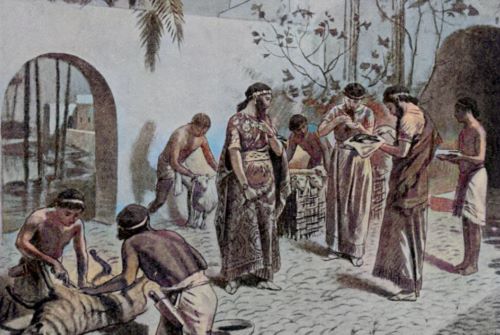
Mesopotamian celestial divination rested upon the conviction that the visible world was intelligible because it belonged to a divinely established order. The sun, moon, planets, stars, winds, clouds, and storms did not occupy a separate realm of “nature” sealed off from religion; their regular motions and unusual appearances existed within the same cosmos as temples, kingship, warfare, disease, and harvest. An Akkadian ittu, or sign, was an observable feature capable of indicating something beyond itself, while an omen connected such a feature with a possible consequence. That consequence was not necessarily apparent in the phenomenon alone. Darkness crossing the moon, a halo surrounding the sun, or an unexpected planetary conjunction became meaningful through an inherited system of interpretation. The heavens were a field of signs not because every observer instinctively understood them, but because trained scholars possessed the textual learning needed to recognize, classify, and explain their significance.
Mesopotamian divination included both signs that appeared without being requested and signs deliberately solicited in response to a question. Celestial phenomena generally belonged to the first category: the gods had not been asked to produce an eclipse, yet its occurrence could still disclose danger affecting a king, city, army, or land. Extispicy operated differently. A ruler could address a carefully formulated question to the sun god Šamaš, sacrifice an animal, and have a diviner inspect its organs for the divine answer. Dreams, abnormal births, unusual animal behavior, terrestrial occurrences, physiological features, and prophetic speech offered still other routes by which hidden knowledge might become accessible. These methods were neither wholly interchangeable nor governed by one uniform theology, but royal courts could employ several of them in succession. A celestial omen might raise an alarm, extispicy might test whether the threatened consequence applied to a proposed campaign or particular official, and ritual experts might then determine how the danger should be answered. Divination was less a single technique than an interconnected practice for identifying uncertainty, submitting it to authorized interpretation, and converting it into a basis for action.
The characteristic grammar of written omens expressed this system through conditional statements: if a specified phenomenon occurred, then a corresponding event would follow. Modern scholars conventionally call the observed condition the protasis and the predicted consequence the apodosis. The relationship between them did not ordinarily assert that one event physically caused the other, as an eclipse might cause darkness or rain might cause a river to rise. Instead, the two belonged to an established structure of correspondence in which the sign revealed a condition, tendency, or decision otherwise concealed from human knowledge. An eclipse associated with rebellion did not need to produce rebellion mechanically; it indicated that the two events had become meaningfully connected within the divinatory order.
That order was elaborate, but it was not simply a record of conclusions accumulated through repeated observation. Some omen associations may have grown from remembered coincidences, including political catastrophes retrospectively connected with striking celestial events. Others emerged from analogy, resemblance, contrast, wordplay, inherited symbolism, or systematic extrapolation from an existing pattern. Darkness could suggest defeat or death, movement toward one side of a celestial body could direct consequences toward a corresponding geographical region, and the appearance of a normally favorable planet could be altered by weakness, dimness, or an inauspicious position. Scribes could also generate related propositions by reversing directions, colors, dates, or outcomes, producing possibilities that may never have been separately witnessed. Historical apodoses invoking the fate of an earlier king did not necessarily preserve accurate contemporary records of his reign; they could lend antiquity and authority to later learned constructions. This mixture of empirical attention and theoretical extension explains both the extraordinary detail and the occasional artificiality of the omen series. Mesopotamian scholars were observing the world, but they were observing it through a textual discipline that told them which differences mattered and which consequences those differences could signify.
The conditional form of an omen also left space between warning and fulfillment. A prediction announced what was liable to occur under a particular configuration of signs, not always a future so immutable that human response had become pointless. Scholars could dispute whether a phenomenon had been correctly observed, whether the relevant tablet had been accurately copied, whether a geographical assignment redirected the danger elsewhere, or whether another sign cancelled or modified the first. Royal advisers might seek confirmation through extispicy, recommend a temporary restriction, prescribe prayer and purification, or perform a ritual intended to avert the threatened evil. None of these responses required the court to reject the original omen. On the contrary, action confirmed its importance: the gods had made danger perceptible early enough for knowledgeable servants to identify it and, perhaps, prevent its realization.
Modern divisions among astronomy, astrology, religion, magic, and political counsel consequently fracture a body of knowledge that Mesopotamian scholars practiced as an integrated discipline. Their observations could be careful, cumulative, and technically exact without conforming to modern scientific explanations of celestial motion. Their interpretations could depend upon divine agency and symbolic correspondence without being arbitrary collections of private fears. Calling the entire enterprise “superstition” mistakes disagreement with its premises for an explanation of its historical operation, while describing it simply as science risks concealing the gods, rituals, and royal interests that gave observation its purpose. The more revealing question is not whether Mesopotamian celestial divination was rational according to modern standards, but how its own standards of evidence and inference made the sky politically legible. A darkened luminary became dangerous through a sequence of learned judgments: someone had to observe it, identify its relevant features, locate an appropriate precedent, determine its human target, and recommend a response. The power of an eclipse lay not only in the heavens but in the scholarly institutions that transformed an extraordinary sight into authoritative knowledge about the future of a king.
From Observation to Canon: The Making of Enūma Anu Enlil
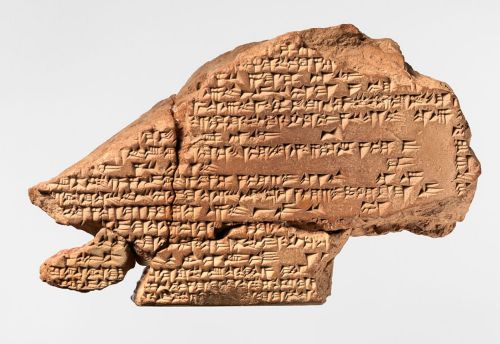
Long before Mesopotamian scholars assembled a formal series of celestial omens, rulers sought divine guidance from signs visible in the sky. In the twenty-second century BCE, the inscriptions of Gudea of Lagash already described a favorable heavenly sign confirming the god Ningirsu’s approval for the construction of a temple. Such evidence demonstrates an early conviction that celestial appearances could communicate divine decisions, but it does not establish the existence of a technical discipline resembling later Babylonian astrology. Written collections systematically connecting specified phenomena with predicted consequences appear only during the Old Babylonian period, when lists became the favored scholarly form for organizing subjects ranging from vocabulary and mathematics to medicine and divination. The eventual creation of Enūma Anu Enlil depended upon more than accumulated observation: it required a literate culture capable of converting individual signs into ordered, transmissible, and increasingly comprehensive bodies of knowledge.
The clearest early evidence for celestial divination in actual royal practice comes from Mari on the middle Euphrates around 1765 BCE. A courtier named Ašqudum informed King Zimri-Lim that a recent lunar eclipse had been investigated through extispicy and that the resulting signs indicated its evil did not threaten the king, although further divination was advisable. The letter preserves more than an isolated reaction to an alarming spectacle. It reveals an organized sequence in which an unsolicited celestial phenomenon prompted a deliberately solicited answer from another divinatory medium. The eclipse raised a question about concealed danger, while the entrails of sacrificed animals allowed specialists to ask whether that danger applied specifically to Zimri-Lim. Celestial interpretation had not yet displaced extispicy as the most authoritative courtly method of questioning the gods; instead, the two techniques performed complementary functions. The fact that Ašqudum communicated both the phenomenon and its interpretation in writing also shows how divinatory knowledge circulated through the administrative networks surrounding the palace. The king did not need to witness the eclipse personally or perform the investigation himself, because trusted intermediaries could observe, consult specialists, and transmit conclusions for royal consideration. Even a reassuring result did not close the matter completely, since the recommendation for additional divination acknowledged that uncertainty could persist after an initial favorable response. An unfavorable eclipse was already treated as conditional evidence rather than as an automatic sentence against the ruler. Its application could be tested, its target assessed more precisely, and its implications reconsidered through further consultation with the gods. Nothing in the Mari correspondence proves that Ašqudum possessed Enūma Anu Enlil or a direct ancestor of the later series, but it demonstrates that several of the institutional conditions behind that work (royal concern, specialist interpretation, written communication, coordination among divinatory techniques, and the conversion of celestial observation into political advice) were already present.
Old Babylonian celestial-omen tablets provide a more direct connection with the later textual tradition, although the surviving material remains sparse and uneven. Some contain formulations, subjects, and patterns recognizable in first-millennium copies of Enūma Anu Enlil, while others belong to local traditions whose relationship to the later series cannot be reconstructed securely. Their organization into lists allowed scribes to group phenomena by recurring features such as date, direction, color, luminosity, or position relative to another celestial body. Once one configuration had been assigned a consequence, related configurations could be produced by changing a single variable and adjusting the prediction accordingly. A sign observed in one historical circumstance could become the starting point for a much larger family of possible signs. This process preserved practical experience while freeing omen scholarship from dependence upon events that had actually occurred. What emerged was not simply a diary of remembered skies but a method for imagining the range of forms that divine communication might assume.
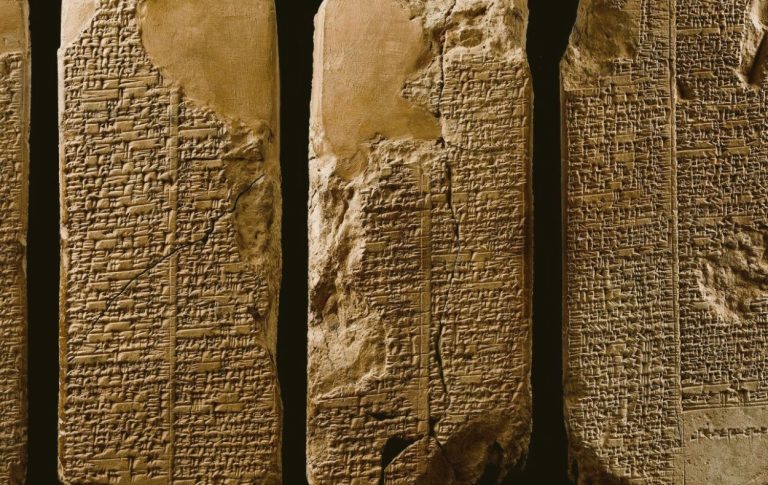
The work now called Enūma Anu Enlil took its name, as Mesopotamian compositions commonly did, from its opening words, invoking the time when Anu, Enlil, and Ea established the celestial order and appointed the heavenly bodies as signs. Depending upon the recension and system of numbering, the series comprised approximately sixty-eight or seventy tablets containing several thousand individual omens. Its arrangement imposed a broad conceptual order upon the visible heavens. The opening tablets treated appearances of the moon, particularly the first crescent, lunar horns, halos, and related phenomena; these were followed by a mathematical scheme concerning lunar visibility and a substantial group devoted to lunar eclipses. Subsequent sections addressed solar appearances and solar eclipses, followed by thunder, lightning, clouds, rain, wind, earthquakes, and other phenomena associated with the storm god Adad. The final portion concerned Venus, Mars, Jupiter, Saturn, Mercury, constellations, and fixed stars. The sequence was not a modern classification of astronomy and meteorology, since celestial bodies, atmospheric events, and divine agencies remained interwoven, but it made the sky searchable by assigning related signs to recognizable textual neighborhoods. Its overwhelming concern with kings, armies, cities, agriculture, epidemics, and relations among states also reveals that it was principally a corpus of public and political divination rather than a guide to individual fortunes.
Precisely when that architecture assumed a recognizable form remains disputed. Earlier scholarship commonly placed the compilation or canonization of Enūma Anu Enlil in the Kassite period or, more broadly, during the later second millennium BCE. The dating seemed plausible because Old Babylonian forerunners existed, celestial-omen traditions circulated beyond Babylonia during the Late Bronze Age, and first-millennium manuscripts presupposed a substantial history of compilation. More recent examination has shown that the evidence for assigning the completed series to a particular second-millennium moment is far less secure than the confidence of older reconstructions suggested. No surviving editorial declaration identifies one scholar, king, or institution as its creator, and the series may never have passed through a single act of definitive canonization. It is safer to understand its formation as a prolonged process of collecting, ordering, expanding, and reconciling materials inherited from different places and periods. By the early first millennium BCE the work possessed an established identity and sequence, but that authority had grown through repeated scholarly use rather than through one recoverable moment of publication. Nor did canonical status produce perfect textual uniformity. Manuscripts from different cities vary in wording, tablet numbering, omen order, and the inclusion or omission of individual passages. Solar-eclipse material is particularly important for revealing several distinguishable recensions, including versions identified with Babylon but arranged differently from one another. Catalogues from seventh-century BCE Aššur and third-century BCE Uruk list portions of the series by their opening lines, yet their discrepancies demonstrate that scholars separated by time and place did not inherit an entirely identical corpus. Excerpts, commentaries, alternative traditions, and tablets designated aḫû, or “extraneous,” further complicate any strict division between canonical text and material outside it. Enūma Anu Enlil was authoritative enough to define a profession, structure libraries, and guide interpretation, but flexible enough to accommodate local inheritance, editorial adjustment, and competing lines of learned explanation.
The Neo-Assyrian court reveals what this accumulated textual authority accomplished in practice. Scholars reporting to Esarhaddon and Ashurbanipal observed a lunar crescent, eclipse, halo, planetary conjunction, or atmospheric disturbance and then quoted or paraphrased omens that appeared to match it. They might explain an obscure line, offer a parallel tradition, correct a damaged reading, or argue that a rival had selected the wrong precedent. The tablets of Enūma Anu Enlil did not eliminate judgment, because no written formulation could reproduce every feature of an event, and differences among copies could generate more than one defensible interpretation. Instead, the series supplied the common learned language within which disagreements could be framed and royal advice justified. Its prestige was expressed in the title ṭupšar Enūma Anu Enlil, “scribe of Enūma Anu Enlil,” borne by specialists whose identity became inseparable from mastery of the corpus. Copies continued to be made after the fall of Assyria, and scholars at Babylon and Uruk still studied its omens during the Seleucid period, even as mathematical astronomy and horoscopy developed beside them. Through this long process, generations of scribes transformed the heavens into an archive and the archive into an instrument of government: an eclipse lasted only hours, but its written precedents allowed its danger to be examined, debated, and acted upon long after the light had returned.
Reading an Eclipse

A Mesopotamian eclipse did not carry one universal meaning waiting to be extracted from the darkened sun or moon. Its significance emerged from the conjunction of numerous variables, each of which could alter the geographical target, severity, duration, or political consequence of the omen. Scholars considered when the eclipse occurred, where darkness first entered the celestial disc, how far it spread, where the disc began to clear, what color the obscured luminary assumed, which wind was blowing, and what planets or stars remained visible. They then compared those features with several bodies of learned tradition rather than consulting a single rule applicable to every event. One variable might direct danger toward the Assyrian king, another toward Elam, and a third toward several lands simultaneously. Reading an eclipse was an act of synthesis in which the scholar had to reconcile overlapping signs and explain why one possible interpretation deserved priority over its rivals.
Time provided the first interpretive framework. Because the Babylonian month began with the observation of the new lunar crescent, a lunar eclipse necessarily occurred near the middle of the month, although variations in observation and calendrical reckoning could affect the numbered day assigned to it. Eclipse doctrine concentrated particularly upon the thirteenth through sixteenth days, assigning the thirteenth to Akkad, the fourteenth to Elam, the fifteenth to Amurru, and the sixteenth to Subartu. The twelve months were divided by another repeating scheme: Nisānu, Abu, and Kislīmu belonged to Akkad; Ayyāru, Ulūlu, and Ṭebētu to Elam; Simānu, Tašrītu, and Šabāṭu to Amurru; and Duʾūzu, Araḫsamna, and Addaru to Subartu. These correspondences did not mean that an eclipse occurring in a particular month was visible only in the land assigned to it. They meant that calendrical time itself had been made geographically significant. The night was further divided into evening, middle, and morning watches, and the watch in which an eclipse began or ended could affect both its target and its predicted consequence. Scholars also noted whether the darkness filled an entire watch, crossed from one watch into another, or remained on the moon when it rose or set. Duration could influence how long the omen remained effective or when its expected consequence would occur. Time was not merely the neutral container of the eclipse; month, day, watch, and duration constituted separate strands of divinatory evidence.
Direction supplied another way to transform a moving shadow into political knowledge. The moon’s disc could be divided into right, left, upper, and lower portions, while the movement of darkness could also be described through north, south, east, and west. Some traditions emphasized the point at which the eclipse began, whereas others placed greater weight upon the direction in which the shadow spread. The place where the moon first cleared could indicate the region released from danger, making the restoration of light as significant as its disappearance. A total eclipse enlarged the portent because darkness had not remained confined to one portion of the disc; in some interpretations, complete coverage extended the evil to all lands.
The geographical context underlying these judgments divided the political world into the four great regions of Akkad, Elam, Amurru, and Subartu, sometimes substituting Gutium for part of the latter designation. These names could represent actual kingdoms, broad directions, inherited geographical categories, or political identities claimed by contemporary rulers. One influential scheme equated the south with Elam, the north with Akkad, the east with Subartu and Gutium, and the west with Amurru. A separate division of the lunar face assigned its right side to Akkad, its left side to Elam, its upper portion to Amurru, and its lower portion to Subartu. The schemes were related, but they were not identical maps projected mechanically upon every eclipse. Different tablets preserved different methods for deciding whether the initial point, subsequent motion, cleared portion, month, day, or watch should identify the afflicted country. Nor were the four regional names fixed descriptions of immutable political frontiers. Amurru usually represented the western lands, Akkad the Babylonian south, and Subartu the Assyrian or northern sphere, but scholars could reinterpret inherited terminology when imperial boundaries and royal titles changed. Celestial geography was stable enough to authorize judgment yet flexible enough to remain politically usable.
A report by the scholar Munnabitu concerning a lunar eclipse in Simānu during 678 BCE reveals how these variables were combined. The month of Simānu indicated Amurru, while the fourteenth day indicated Elam. Because the observers did not know the precise quadrant in which the eclipse had begun, one potentially decisive piece of evidence was unavailable. Munnabitu emphasized that the darkness had spread toward the south and west, directing its evil toward Elam and Amurru. The moon cleared toward the east and north, which allowed him to interpret the return of light as favorable for Subartu and Akkad. Yet the moon had also been completely obscured, a feature capable of extending the portent to every country. The report did not conceal these competing implications or compress them into a single formula. It presented the king with a layered judgment in which some lands received the evil, others received favorable indications, and the totality of the eclipse prevented complete reassurance. What made the interpretation persuasive was not one isolated correspondence but Munnabitu’s demonstration that he knew how the correspondences interacted.
Direction and date were only part of the descriptive vocabulary. Eclipse texts distinguished different degrees of obscuration and described the eclipsed luminary as white, black, red, or yellow-green, although the regular sequence of colors in some omen groups reveals scholarly systematization as well as direct observation. The color of a lunar eclipse could genuinely vary, but scribes also extended established patterns by supplying alternative colors required by the logic of the series. Observers noted whether the disc was entirely covered, partially obscured, dim, bright, or surrounded by an unusual glow. Winds brought an additional geographical code: one standard arrangement associated the south wind with Elam, the north wind with Akkad, the east wind with Subartu and Gutium, and the west wind with Amurru. Clouds, rain, thunder, lightning, and other atmospheric disturbances could modify the interpretation or complicate the observation itself. The presence of planets and prominent stars mattered because a favorable body could counterbalance an evil indication, while another could intensify it or redirect it toward the land traditionally associated with that planet. Jupiter’s appearance, for example, could be invoked as protection for the king, whereas Saturn could strengthen the force of certain eclipse warnings. An eclipse was consequently read as a configuration of the entire visible sky rather than as an isolated darkening of one luminary. Solar and lunar eclipses belonged to related but distinguishable interpretive traditions. A lunar eclipse unfolded across the moon during one or more night watches and could be observed over a broad region, making its duration, moving shadow, disc quadrants, and surrounding stars useful for divination. A solar eclipse was geographically more restricted and had to be described through the hour of daylight, the portion of the sun obscured, its color or radiance, and the atmospheric conditions surrounding it. Solar eclipses could threaten kings and kingdoms, but they were not invariably more ominous than lunar eclipses and could yield favorable predictions alongside hostile ones. The solar eclipse of Ayyāru 29 in 669 BCE was interpreted as promising long life and abundance for the Assyrian king while announcing death for foreign rulers, a combination demonstrating that one phenomenon could distribute opposite destinies among several lands. The surviving correspondence associates the fully elaborated substitute-king procedure strongly with threatening lunar eclipses, although solar eclipses could also provoke apotropaic action and, in particular circumstances, some form of substitution. Treating every eclipse as ritually identical would erase distinctions that the ancient experts themselves preserved.
The accumulation of variables did not produce an automatic verdict. A ruler who governed both Assyria and Babylonia could not always dismiss an omen against Akkad as danger intended for someone else, while the identification of Assyria with Subartu could turn an apparently distant regional warning into a direct imperial concern. Conversely, an eclipse assigned to Elam or Amurru might be presented as welcome evidence of an enemy king’s approaching defeat. Complete obscuration, conflicting geographical indicators, or the simultaneous implication of several royal titles could prevent such convenient redirection. Scholars also had to decide whether clouds invalidated an observation, whether a planet had been correctly identified, and which textual recension best matched what observers had seen. Alternative interpretations were not necessarily evidence of cynical manipulation, because the learned tradition itself preserved multiple rules whose application required judgment. They nevertheless gave court experts considerable room to emphasize, reconcile, or rank particular signs. Their authority rested upon making that reasoning visible to the palace through reports that joined observation, quotation, explanation, and recommendation. The eclipse became politically consequential only after this interpretive labor had transformed darkness moving across a celestial disc into danger assigned to a recognizable place, ruler, and future.
Prediction Without Disenchantment

Modern accounts of ancient astronomy often assume that prediction must weaken belief in celestial omens. Once an eclipse could be anticipated as part of a recurring pattern, it might appear to cease being an unexpected intervention by the gods and become an ordinary event of nature. Mesopotamian evidence does not support so simple a progression from fear to calculation or from religion to science. Regularity belonged to the divinely established order rather than standing outside it, and a sign did not need to surprise its recipient to possess meaning. Predicting an eclipse could confirm the intelligibility of divine communication while giving the court additional time to prepare for its consequences. Knowledge of recurrence did not empty the heavens of significance; it made celestial danger administratively manageable.
The earliest stages of eclipse prediction were less exact than popular descriptions of Babylonian astronomical achievement sometimes imply. Seventh-century BCE Assyrian and Babylonian scholars recognized that lunar eclipse possibilities generally recurred after intervals of six months and, at particular points in the sequence, after five. They also understood that a lunar eclipse could occur only near full moon, when the moon stood opposite the sun, just as a solar eclipse belonged near conjunction at the new moon. This knowledge allowed observers to identify nights on which a watch should be maintained without guaranteeing that a visible eclipse would occur. The moon might pass outside the region required for an eclipse, the event might take place below the horizon or during daylight, or clouds might prevent observers from seeing it. Reports to the Neo-Assyrian court accordingly distinguish between eclipses that were expected, eclipses that were watched for but did not occur, and eclipses whose observation was frustrated by weather. Prediction identified a period of danger; observation still determined the actual beginning, duration, direction, color, and degree of obscuration upon which the omen’s detailed interpretation depended. Assyrian scholars could also estimate the likely time of an eclipse from the changing interval between the rising or setting of the sun and moon, but these methods remained approximate. The much more sophisticated mathematical astronomy documented in later Babylonian tablets should not be projected without qualification onto the court of Esarhaddon.
Systematic observation eventually disclosed a longer and more powerful recurrence. By the end of the seventh century BCE, Babylonian scholars appear to have developed a detailed predictive scheme based upon 223 synodic months, an interval of slightly more than eighteen years that modern writers conventionally call the Saros. The Babylonian texts themselves referred simply to “eighteen years,” and the modern name can misleadingly suggest that they possessed one abstract cycle identical to its present astronomical definition. Within the period, thirty-eight lunar eclipse possibilities were arranged in a recurring pattern of five- and six-month intervals. After 223 months, the sun and moon returned to approximately the same geometrical relationship, so an eclipse could resemble its predecessor in magnitude, duration, and direction. The recurrence was not exact, and its excess of roughly one-third of a day shifted the corresponding event by about eight hours. For lunar eclipses this still offered a remarkably useful predictive framework, but solar visibility was harder to determine because the same temporal displacement moved the region of visibility far across the earth.
The ritual response to an anticipated eclipse demonstrates why prediction did not produce disenchantment. In the eighth year of Cyrus, corresponding to 530 BCE, lamentation priests at Uruk and Larsa performed kettledrum rites on a date identified by the eighteen-year scheme as a lunar eclipse possibility. No eclipse occurred, and full moon itself came many hours after the ceremonies had begun. The relevant line of eclipses had already weakened within the recurring sequence, so experienced scholars may have considered an actual eclipse possible but unlikely. Nevertheless, the forecast was sufficiently serious to mobilize ritual personnel in more than one city. Depositions subsequently taken at Uruk suggest that the performances became the subject of official scrutiny, perhaps because the anticipated event failed to appear or because questions arose over the timing and propriety of the rites. The episode exposes both the authority and the limitations of predictive knowledge. Calculation could generate action before an omen existed in visible form, but an unsuccessful prediction could also generate controversy over the competence of specialists and the expenditure of institutional resources. Prediction did not replace ritual with certainty; it created a new category of uncertainty, the dangerous event that might occur and had to be met in advance.
During the later first millennium BCE, Babylonian scholars developed increasingly precise methods for predicting eclipses, lunar phases, and planetary phenomena. Astronomical Diaries preserved observations over generations, recording not only celestial appearances but also weather, commodity prices, river levels, and significant political events. Goal-Year Texts extracted observations from earlier years whose configurations could assist in forecasting future phenomena, while ephemerides generated numerical predictions through mathematical procedures now conventionally divided into systems such as System A and System B. These methods eventually allowed scholars to calculate celestial positions, eclipse magnitudes, and approximate times without narrating the physical causes of the phenomena. Their silence about gods in a numerical table does not prove that calculation had entered a wholly secular intellectual domain. A tablet designed to generate numbers did not need to repeat the theological and divinatory assumptions expressed in omen collections, prayers, rituals, or scholarly commentaries. Genres organized knowledge according to function: a diary recorded, an ephemeris calculated, an omen series interpreted, and a ritual text prescribed action. The same temples and scholarly families could preserve several of these forms of knowledge, while individual specialists might copy mathematical, observational, and divinatory works during the course of their training and careers. Learned experts continued to bear titles identifying them as scribes of Enūma Anu Enlil, even as their astronomical procedures became capable of achievements scarcely imaginable to the scholars who had compiled the older omen series. Eclipse rituals and omen interpretation likewise survived beside numerical prediction, although their relative importance and institutional setting changed across centuries and cities. The emergence of horoscopic astrology from the fifth century BCE further demonstrates that mathematical precision could create new forms of astral significance rather than dissolving them: increasingly accurate planetary positions were used to interpret the circumstances of individual births. Prediction could even intensify the authority of celestial specialists by enabling them to announce danger, select ritual dates, and advise patrons before a phenomenon became visible. Mesopotamian eclipse knowledge developed through accumulation, differentiation, and recombination rather than simple replacement. Improved prediction sharpened observation, observation refined calculation, and both could sustain the interpretation of the heavens as signs. The eclipse became more predictable without becoming less divine.
The Scholars Who Guarded the King

To say that scholars “guarded” the Assyrian king is not to confuse them with the armed men who protected palace gates or accompanied the royal chariot. Their duty of maṣṣartu, a term encompassing watch, vigilance, and protection, operated chiefly against dangers disclosed through divine signs or manifested in the king’s body, household, and ritual environment. Celestial specialists watched the heavens, diviners questioned the gods, exorcists neutralized evil, physicians treated illness, and lamentation priests restored damaged relations between the human and divine worlds. Because the king embodied the security and prosperity of Assyria, these tasks belonged to government as much as to religion. An eclipse threatening royal death could affect military planning, public appearances, court ceremonies, succession arrangements, and the daily operation of the palace. Scholarly protection joined observation to political action, seeking to recognize danger early enough for the ruler to avoid, redirect, or ritually overcome it. The scholars did not merely explain what an eclipse meant after it occurred; they maintained the system through which the king could continue ruling beneath a sky filled with potentially hostile signs.
The scholarly entourage was far more diverse than the convenient modern label “court astrologers” suggests. A list probably compiled shortly after Esarhaddon’s conquest of Egypt in 671 BCE names seven scribes of Enūma Anu Enlil, nine exorcists, five diviners, nine physicians, and six lamenters. The celestial scribes observed the sky and interpreted its phenomena through omen literature; diviners inspected sacrificial animals to obtain answers to deliberately formulated questions; exorcists diagnosed supernatural danger and performed rituals against it; physicians prescribed drugs and physical treatments; and lamenters conducted rites intended to appease angry deities. These professional divisions mattered, but surviving correspondence also reveals considerable overlap. Exorcists could recommend medicines, physicians could supply amulets or rituals, and celestial scholars could advise on illness, calendrical observance, travel, warfare, and the appropriate time for a royal audience. The broader designation ummânu, commonly translated as “expert” or “scholar,” emphasized mastery of an established discipline rather than membership in anything resembling a modern university profession. Many specialists inherited their learning through families that transmitted tablets, commentaries, ritual procedures, professional relationships, and access to restricted knowledge across generations. Ištar-šumu-ēreš, who rose to become chief scribe under Esarhaddon, belonged to a prominent scholarly lineage descended from Nabû-zuqup-kēnu, while his uncle Adad-šumu-uṣur served as chief exorcist. Yet the system was not confined to a few hereditary Assyrian families or to scholars physically residing at Nineveh. Advisers sent observations and interpretations from cities across Assyria and Babylonia, and the palace could summon capable experts, apprentices, or entire groups recommended by established scholars. The same court list that enumerates the five principal Mesopotamian disciplines also includes Syro-Anatolian bird watchers, Egyptian ritual specialists, and Egyptian scribes. Imperial conquest concentrated several traditions of learned service around the monarch, giving the king access to a range of methods while affirming his claim to rule a world whose knowledge had been gathered into his court.
Communication between these experts and the king usually proceeded through compact reports and more discursive letters. An astrological report might identify a celestial phenomenon, quote one or more matching omens, assign their consequences to particular lands, and add a brief judgment favorable or unfavorable to the crown. Letters allowed greater explanation: scholars answered royal questions, discussed damaged or contradictory tablets, justified ritual recommendations, reported cloudy weather, described a patient’s condition, or challenged another adviser’s interpretation. The king was not merely the passive destination of this information. Replies frequently preserve his questions and his quotations from earlier reports, revealing that he compared claims, requested clarification, and demanded that specialists defend their conclusions. Because advisers often reported separately, the palace received several partially independent descriptions of the same sky. Redundancy protected the king from the limitations of a single observer while turning scholarly disagreement into an instrument of royal supervision.
A dispute during the final months of Esarhaddon’s reign exposes both the strengths and the tensions of that arrangement. Plans for visits by the crown prince and other royal sons coincided with concern over the movements and radiance of several planets, making correct identification relevant to the selection of an auspicious date. Balasî and Nabû-aḫḫē-erība disputed the observations advanced by Ištar-šumu-ēreš, particularly whether Mercury or Venus was visible. Esarhaddon relayed each side’s claims to the other without initially revealing the rival’s identity. The scholars were consequently forced to evaluate an observation without knowing whose position they were attacking, although personal hostility soon became unmistakable. Balasî and Nabû-aḫḫē-erība accused the unnamed observer of ignorance, dishonesty, and an inability to distinguish one planet from another. Ištar-šumu-ēreš defended his reading through a learned commentary, while the king questioned the participants about the current month, the relevant day, and the meaning of the textual precedent they had cited. The disagreement ended only after the rivals met at the palace, went out together at night, and made a joint observation. A subsequent report tersely stated that they had seen the phenomenon and become satisfied, although it did not disclose which interpretation had prevailed. The episode demonstrates that court scholarship possessed procedures for comparison and correction, but it also reveals how easily technical disagreement became entangled with competition for royal favor. An accusation preserved in another letter claimed that, during Sennacherib’s reign, a courtier had conspired with scribes and diviners to report dangerous signs as merely obscure, thereby shielding himself from unfavorable predictions. Whether or not that allegation was true, its plausibility explains why Esarhaddon sought reports from separate sources and concealed their identities while testing them against one another. The king needed experts because he could not personally master every observation, text, and ritual, yet their control of specialized knowledge gave them opportunities to influence his decisions. Rank, family allegiance, access to the palace, and prospects for promotion hovered behind arguments ostensibly concerned only with the visibility of a planet. Scholarly rivalry did not make the resulting advice worthless; under careful royal management, it could expose weak observations and prevent any single faction from monopolizing the interpretation of divine will.
The scholars’ influence nevertheless remained advisory and dependent upon royal confidence. They could warn that an eclipse threatened Assyria, recommend restrictions upon the king, prescribe apotropaic ceremonies, or argue that a foreign land would receive the omen’s evil, but the ruler decided which interpretation to accept and which response to authorize. Their room for judgment made them useful because inherited tablets rarely matched observed circumstances perfectly, yet the same flexibility exposed them to suspicion that they were shaping omens to flatter patrons or injure rivals. Esarhaddon appears to have relied exceptionally heavily upon a comparatively small inner circle of experts, particularly during the politically troubled final years of his reign. Recent analysis has argued that many of these scholars lost influence soon after Ashurbanipal’s accession, even though Ashurbanipal collected scholarly tablets, advertised his mastery of scribal learning, and continued to consult selected advisers. The extraordinary surviving correspondence should not be treated as proof that every Assyrian king maintained an identical relationship with his experts. What it reveals with unusual clarity is a moment when scholarly knowledge stood close to the center of imperial decision-making without ever becoming independent of royal power. The scholars who guarded the king did not restrain him through law or command him in the name of an autonomous priesthood. They protected him by making concealed danger legible and by converting that knowledge into choices: whether to travel, fight, appear in public, postpone a ceremony, perform a ritual, or withdraw temporarily from kingship. When an eclipse darkened the sky, the king’s survival depended not upon one astrologer pronouncing a verdict but upon a network of observers, scribes, diviners, healers, and ritualists capable of carrying the warning from the heavens to the palace and from interpretation to action.
Royal Bodies Beneath a Cosmic Sky

An eclipse did not threaten an Assyrian king merely because he happened to be the most important individual beneath the darkened sky. It threatened him because his person concentrated relationships among the gods, the land, the army, the temples, and the machinery of imperial government. The king was not ordinarily worshipped as a god in the Neo-Assyrian period, but he ruled as the chosen representative and earthly servant of Aššur, responsible for extending divine order through conquest, justice, temple patronage, and correct ritual performance. Royal inscriptions consequently presented victory, agricultural abundance, political obedience, and cultic prosperity as interconnected results of his legitimate rule. An eclipse omen announcing that “the king will die” reached beyond one man’s mortality to the possible rupture of the order organized around him. His death could invite rebellion, expose disputed succession arrangements, encourage foreign enemies, interrupt ceremonies, and cast doubt upon the favor that had sustained Assyrian supremacy. The royal body was dangerous to lose because an entire political cosmos had been made to depend upon its continuity.
Official representation concealed much of that body’s vulnerability. Palace reliefs and monumental inscriptions displayed the king as erect, composed, physically commanding, richly clothed, and unmistakably distinguished from the men surrounding him. His carefully arranged hair, weapons, robes, gestures, and elevated position communicated bodily mastery as an attribute of legitimate kingship. The private correspondence of Esarhaddon’s court presents a strikingly different figure. Letters describe periods in which the king remained secluded, refused food, suffered recurrent ailments, or required continual attention from physicians, exorcists, and celestial scholars. After one three-day period without food, the astrologers Balasî and Nabû-aḫḫē-erība urged him to eat again, even if he began with only a small portion, because continued fasting endangered the health they were charged to protect. Other advisers discussed remedies for skin disorders, fever, bleeding, digestive complaints, ear pain, and disturbances of mood, although modern retrospective diagnoses remain uncertain and should not be imposed confidently upon fragmentary descriptions. These letters did not circulate as public portraits of an impaired monarch; they belonged to the restricted communications through which trusted experts tried to keep him capable of ruling. Their candor reveals the immense labor required to sustain the appearance of effortless royal strength. The ideal king shown on palace walls was not a falsehood so much as an institutionally produced body whose visible perfection depended upon concealing, treating, and ritually managing the frailty of the man who occupied the throne.
The king’s body also belonged to the same divinatory universe as the heavens above it. Changes in his skin, appetite, sleep, speech, movements, bodily fluids, and emotional state could become objects of expert scrutiny, just as scholars examined the color and direction of an eclipse. Physicians and exorcists did not necessarily offer competing “medical” and “religious” explanations, since drugs, diet, poultices, incantations, purification, and consultation of the gods could form parts of one therapeutic response. Nor did every symptom automatically become a portent: court letters contain practical observation, disagreement over treatment, guarded prognoses, and admissions that a specialist did not know what would happen. Heaven and body were distinct fields of knowledge, but both could disclose disruptions in the divinely ordered relationships upon which royal life depended.
When an eclipse implicated Assyria, Akkad, or one of the king’s political titles, the court attempted to prevent the threatened future from fastening itself upon his person. The resulting measures frequently subjected the royal body to temporary restrictions upon movement, public visibility, food, dress, or participation in ordinary activities, although the precise regimen varied with the omen, calendar, and ritual prescription. Withdrawal from view protected more than the king’s physical safety. It reduced his exposure during a period when appearing in the wrong place, undertaking a journey, entering battle, or performing an act on an inauspicious day could deepen the danger already announced by the sky. Particularly elaborate purification could be undertaken through bīt rimki, the “House of Ablution,” in which the king moved through a specially constructed ritual space, recited prayers, presented offerings, underwent washings, changed garments, and participated in rites transferring evil to disposable figures or substances. The procedure treated danger as something that could adhere to the person yet also be loosened, displaced, and carried away. Water, clothing, bodily movement, spoken incantation, and controlled space joined to restore a relationship with the gods that the omen had revealed as disturbed. When the eclipse foretold royal death, the still more radical substitute-king procedure temporarily separated the reigning monarch from the visible attributes of his office. The true ruler surrendered the public identity of king, withdrew under the designation “the Farmer,” and allowed another man to wear royal garments and occupy royal space. He did not necessarily cease directing affairs, since restricted correspondence could continue during his seclusion, but government became deliberately detached from his ordinary bodily presence. The ritual rested upon a remarkable proposition: if the danger had been directed toward the person publicly marked as king, then changing which body bore that identity might alter where the predicted death would fall.
It would be misleading to translate this system directly into the later European doctrine of the king’s “two bodies,” as though Assyrian scholars had formally distinguished an immortal body politic from the ruler’s mortal flesh. The evidence instead reveals a more fluid relationship among person, office, regalia, palace, titles, and territory. An eclipse could threaten the man because he was king, but the rituals devised against it suggest that royal identity was transferable enough for another body to receive its most dangerous consequences. This transfer did not reduce kingship to costume, since divine selection, dynastic descent, political command, and ritual legitimacy could not be permanently acquired merely by putting on a robe. It did show that the outward embodiment of kingship possessed a reality powerful enough to redirect an omen. The contrast between monumental invulnerability and documented illness exposes a central paradox of Assyrian rule: the king’s body was represented as superlatively strong precisely because the empire understood how catastrophic its failure could be. Court scholars, physicians, ritualists, guards, and servants all participated in maintaining that body as an instrument of government. Beneath a cosmic sky, royal flesh remained mortal, but Assyrian institutions labored to ensure that its mortality did not become the empire’s fate.
An Omen Was Not a Sentence
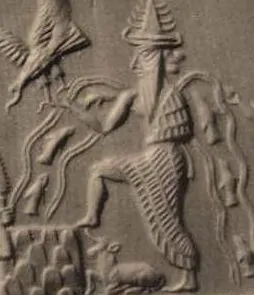
The written form of a Mesopotamian omen already resisted the idea that the future had been fixed beyond alteration. Most entries joined an observed phenomenon to a predicted consequence through a conditional construction conventionally translated as “if” and “then.” The protasis described the sign: if the moon was eclipsed on a particular day, if darkness entered from a particular direction, or if a planet stood in a specified place. The apodosis stated what that configuration portended for a king, land, army, harvest, or city. This grammatical structure did not express probability in the modern statistical sense, and some predictions were stated with terrifying directness. It nevertheless represented the predicted event as the consequence attached to an identifiable set of conditions rather than as an eternally predetermined destiny. An ominous eclipse disclosed a future that had become possible and divinely authorized, but not necessarily irreversible. It opened an interval between warning and fulfillment in which interpretation, prayer, ritual, and political action could intervene.
That conditional grammar corresponded to a broader conception of divine government. The gods maintained cosmic and political order, determined destinies, and communicated their decisions through signs, but they could also show mercy, receive petitions, and authorize the release of threatened persons from evil. Mesopotamian prayers and rituals frequently employed judicial language, treating a dangerous omen almost like an unfavorable verdict delivered by a divine court. The comparison must not be pressed into a formal legal system, since no surviving theological treatise explains exactly how every omen related to divine judgment. Yet the language of cases, decisions, verdicts, and changed destinies made ritual response intelligible. In a letter to Esarhaddon, the scholar Balasî emphasized that Ea, the divine source of wisdom associated with signs and ritual knowledge, had also provided the namburbi procedures capable of counteracting their evil. The same divine order that made an eclipse meaningful had supplied the means of responding to it. Performing a ritual did not require the experts to outwit the gods or deny the truth of the omen. It appealed to divine wisdom against the calamity announced through divine wisdom, asking that the warning accomplish its purpose without the threatened destruction becoming real. Fate remained serious enough to demand action but sufficiently open to permit negotiation.
Before any ritual could be selected, scholars had to determine what danger actually existed. They compared the eclipse’s month, day, watch, direction, duration, color, and degree of obscuration with the relevant textual precedents, while considering planets, winds, clouds, and other surrounding signs. A hostile indication against Akkad might be weakened by a favorable planetary appearance, redirected toward a foreign ruler, or complicated by the king’s possession of several territorial titles. Extispicy could then be used to ask a more specific question about whether the celestial danger applied to the Assyrian king or whether a proposed response met with divine approval. The future emerged from this accumulation of signs and consultations rather than from one isolated line mechanically extracted from Enūma Anu Enlil. Interpretive uncertainty was not merely an obstacle to action; it was one of the conditions that made several protective responses possible.
The most characteristic response to an unfavorable unsolicited omen was the namburbi, a category of apotropaic ritual intended to undo, release, or avert its predicted evil. There was no single ceremony performed identically against every danger. Texts prescribed different procedures for ominous animals, malformed births, disturbing household occurrences, dreams, illnesses, terrestrial signs, and celestial phenomena, while more general formulations could address several evils together. A ritual usually began by separating the threatened person from ordinary activity and preparing a purified location, sometimes beside a river or in another place removed from normal habitation. The exorcist established altars, prepared consecrated water, arranged offerings, and fashioned or selected objects through which the evil could be represented and transferred. The supplicant washed, changed garments, handled symbolic materials, or removed hair and nail clippings that embodied personal contact with the threatened fate. Prayers invoked Ea, Šamaš, Asalluḫi, and other relevant deities as judges, healers, and masters of ritual knowledge. Food, drink, incense, and water acknowledged divine authority while seeking a favorable reconsideration of the danger. Threads might be cut or unwound, vessels broken, figurines destroyed, skins stripped away, or contaminating substances wiped from the body. Such actions translated an invisible future into material forms that could be severed, washed off, buried, burned, or carried away. The evil was treated as capable of approaching and adhering to a person, but also as capable of being loosened from that person and returned to the natural or cosmic realm from which it had come. Disposal in a river was powerful because flowing water removed the material representation from human space and carried it toward the subterranean waters associated with Ea. The ritual created a controlled passage from threatened disorder back to ordinary life. An eclipse implicating the king could demand still more elaborate precautions, but even those extraordinary measures rested upon the same fundamental logic: what a sign had attached to one body might be detached, transferred, or exhausted elsewhere.
The availability of these measures did not mean that Mesopotamian scholars regarded every danger as easily reversible or that they could demonstrate the efficacy of a ritual with certainty. Court letters preserve anxiety, disagreement, repeated consultations, and requests for additional ceremonies, all of which show that protection remained an uncertain undertaking. Nor can the modern historian assume that every predicted disaster that failed to occur was retrospectively credited to successful ritual intervention, since the surviving evidence rarely records such reflections systematically. What can be established is that omen knowledge created obligations rather than passive resignation. The scholar had to report accurately, the exorcist had to choose and perform the appropriate rite, and the king had to observe restrictions, authorize expenditures, heed warnings, or modify his conduct. Failure to act would leave the announced evil unanswered, while action demonstrated vigilance toward both the gods and the kingdom. The omen system distributed agency without denying divine supremacy. A sign could be true as a warning even when its predicted catastrophe was prevented from becoming history. An eclipse was not a sentence in the sense of an irrevocable punishment; it more closely resembled a divine judgment disclosed early enough for appeal, negotiation, substitution, and release.
Before Assyria: Substitution and the Problem of Origins
The substitute-king ritual appears so thoroughly integrated into Neo-Assyrian celestial divination that it is tempting to imagine an unbroken tradition extending deep into Mesopotamian antiquity. The essential elements seem capable of great age: a portent threatens the ruler, another person assumes his identity, the threatened fate passes to that substitute, and the legitimate king returns after the period of danger. Yet similarity of ritual logic does not establish continuity of ritual practice. To demonstrate the existence of the specifically Assyrian šar pūḫi, the evidence should ideally combine several features: an omen directed against the king, the temporary enthronement of a living substitute, the transfer of royal identity through regalia or ceremony, the withdrawal or altered status of the true ruler, and the substitute’s eventual fulfillment of the predicted fate. Earlier evidence rarely preserves this complete configuration. The history of the rite must be separated from the much older and broader history of substitution itself. Assyrian scholars could assemble familiar concepts into a distinctive royal procedure without merely reproducing a ceremony unchanged from the distant past.
Substitution was deeply intelligible within Mesopotamian ritual thought. Akkadian possessed several terms expressing replacement, exchange, and substitution, including pūḫu and dinānu, but the occurrence of such vocabulary does not by itself identify a substitute-king ceremony. Figurines could be made to represent witches, enemies, demons, patients, or the bearers of approaching evil, after which the represented danger was burned, buried, broken, or carried away. Animals could become temporary counterparts of sick persons through physical contact, shared space, bodily materials, or spoken identification. Human beings might likewise speak or act on behalf of another person without becoming royal substitutes in the technical Assyrian sense. These practices supplied a powerful conceptual premise: identity was not confined absolutely within one body but could be reproduced, transmitted, and manipulated through names, clothing, touch, images, and ritual declarations. The šar pūḫi depended upon that premise, but dependence upon a widespread ritual grammar does not reveal when its particular sequence of royal substitution first appeared.
The most celebrated claim for an early origin comes from the First Dynasty of Isin in the nineteenth century BCE. According to the Chronicle of Early Kings, Erra-imitti placed his gardener Enlil-bani upon the throne as his substitute and set the royal tiara upon his head. The precaution failed spectacularly for the reigning monarch: Erra-imitti died in his palace while drinking hot broth, and Enlil-bani refused to relinquish the throne. Enlil-bani was a historical ruler who governed Isin for approximately twenty-four years, but contemporary records do not confirm either his supposed occupation as a gardener or the remarkable circumstances of his accession. The chronicle recounting the episode survives in first-millennium Babylonian manuscripts written more than a thousand years after the event. It does not identify the omen that caused the substitution, mention an eclipse, describe the king’s seclusion, or explain what would ordinarily have happened to the substitute. The detail of the royal tiara resembles the later Assyrian transfer of royal insignia, but that resemblance creates the very chronological problem it has often been used to solve. A late Babylonian author familiar with Assyrian practice could have projected the ritual backward when constructing an explanation for Enlil-bani’s irregular rise. The story may have preserved an old memory of temporary kingship, transformed a usurpation into an ironic tale of fate, or satirized the confidence of rulers who believed ritual could outmaneuver death. It might even contain a genuine recollection of an Old Babylonian substitution custom. None of those possibilities can be excluded, but the chronicle demonstrates what first-millennium Babylonians believed could have happened at Isin more securely than it establishes what actually happened there in the nineteenth century BCE. The unfortunate Erra-imitti is the ritual’s most famous alleged early practitioner and one of its least reliable witnesses.
More substantial evidence for royal substitution before the Neo-Assyrian period comes from Hittite Anatolia. Second-millennium Hittite ritual texts describe procedures in which an ominous sign threatened the king and another body was made to receive the danger intended for him. In one important composition, a prisoner of war was anointed, clothed, and explicitly designated as king, while the evil omen and the shortened life it portended were commanded to pursue the substitute instead of the true ruler. Some related procedures employed both a human substitute and a wooden image, creating more than one material destination for the approaching calamity. The captive could then be expelled or returned toward his homeland, carrying the danger away from the Hittite king and country, rather than being killed to complete a foretold royal death. These ceremonies display meaningful similarities to the Assyrian šar pūḫi: royal identity was temporarily reproduced, ominous danger was addressed as transferable, and a socially expendable person stood between the ruler and divine punishment. Cultural contact across Syria and Anatolia makes the movement of ritual knowledge entirely plausible, and some Hittite formulations may reflect Mesopotamian influence. The differences remain too important to flatten into a single institution. The Hittite substitute often functioned more like an expelled bearer of pollution, whereas the Assyrian substitute was enthroned so that the fatal prediction would become his own destiny. Hittite evidence proves that royal substitution belonged to the ritual possibilities of the wider ancient Near East long before Esarhaddon, but it does not establish a direct line of transmission into the Neo-Assyrian court.
The documentary record becomes secure only within Assyria itself. An administrative tablet from Kalḫu dating to the reign of Adad-nirari III in the early eighth century BCE records wine associated with a šar pūḫi, providing the earliest direct evidence for an Assyrian substitute king. The brief entry proves that the designation and an institutional apparatus supporting its bearer existed well before the richly documented reigns of Esarhaddon and Ashurbanipal. It does not disclose which omen provoked the ceremony, how the substitute was selected, what rites accompanied his enthronement, or whether every procedure known from seventh-century letters was already practiced. Equally significant is the absence of comparable contemporary documentation from Babylonia, despite abundant Babylonian evidence for eclipse observation, omen interpretation, lamentation, kettledrum rituals, and other forms of apotropaic response. The late story of Erra-imitti cannot fill that documentary gap without circular reasoning. On present evidence, the šar pūḫi is not a uniformly Mesopotamian institution most fully preserved by accident in Assyria; it is an Assyrian royal procedure constructed from ideas that circulated much more widely.
Three histories consequently remain possible. The Assyrians may have inherited an old Mesopotamian ceremony whose earlier documentation has disappeared, adapted a royal substitution practice transmitted through the interconnected cultures of Bronze Age Syria and Anatolia, or developed the rite within Assyria by combining older technologies of substitution with celestial omen scholarship and the requirements of imperial kingship. These possibilities are not mutually exclusive, since ritual traditions are seldom either wholly invented or passively inherited. A procedure could borrow a foreign action, employ ancient Mesopotamian terminology, absorb established purification rites, and acquire an unprecedented political function at the Assyrian court. The concentration of evidence in the eighth and seventh centuries BCE may partly reflect the exceptional survival of palace archives, but archival survival cannot be made to prove the existence of what earlier records do not mention.
The safest conclusion is not that Assyria invented substitution, nor that Esarhaddon’s experts revived an unchanged rite from ancient Isin. It is that Neo-Assyrian scholars transformed a broad and venerable logic of transferable identity into a particularly elaborate defense of the imperial monarch. The origins of the component ideas reach far beyond Assyria; the complete ritual, as history can presently recover it, does not.
The King Becomes the Farmer
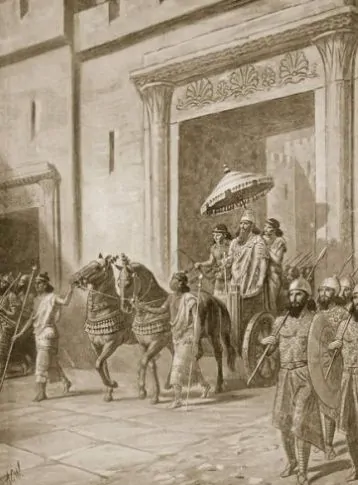
The reigning monarch could not remain fully recognizable as king while another man absorbed the fatal destiny attached to kingship. Once the court authorized the substitute-king ritual, Esarhaddon assumed the temporary identity of “the Farmer,” Akkadian ikkāru. Letters written during this interval addressed him by that designation rather than by his royal title, and the use of his ordinary name and kingship appears to have been ritually restricted. This replacement was not a playful pseudonym or a precaution intended merely to confuse human enemies. The eclipse had threatened a category, the king, and every visible sign continuing to identify Esarhaddon with that category risked preserving the connection between his body and the predicted death. Protection required more than placing someone else upon the throne; it demanded that the true ruler move away from the name, appearance, location, and ceremonial habits through which kingship ordinarily became embodied. The king survived by becoming, for a limited period, someone whom the omen had not condemned.
That transformation began only after scholars had judged the eclipse sufficiently dangerous and the king had authorized the extraordinary response. Purification rites, especially procedures associated with the bīt rimki or “House of Ablution,” helped detach ominous contamination from his person and prepare him for separation from royal identity. The surviving evidence does not preserve one complete account of every action performed upon Esarhaddon, and the ceremonies probably varied according to the eclipse, the affected territory, and the advice of the scholars directing them. Washings, prayers, offerings, changes of clothing, and movement through controlled ritual spaces nevertheless formed part of the larger process. Royal regalia could no longer function as neutral ornaments, because robes, crown, throne, weapon, table, and scepter visibly marked their possessor as the person against whom the divine judgment had been issued. Those insignia were transferred to the substitute, who was dressed, enthroned, and treated as the bearer of the threatened office. The true king correspondingly withdrew from the public spaces in which royal power was normally displayed. Modern descriptions sometimes call this a symbolic abdication, but that phrase can suggest a constitutional transfer of sovereignty that the Assyrian evidence does not support. Esarhaddon did not renounce his dynasty, release his subjects from allegiance, recognize a lawful successor, or surrender command of the empire. The substitute acquired the external identity of kingship without receiving its governing power, while the Farmer retained governing power without openly displaying the identity of king. Ritual action divided qualities that Assyrian ideology ordinarily joined within one person. The throne, regalia, titles, and fatal omen moved in one direction; authority, dynastic legitimacy, and the expectation of restoration remained with the secluded monarch.
Nothing in the surviving correspondence indicates that Esarhaddon literally cultivated fields during these intervals. The term ikkāru could denote a farmer, agricultural worker, or cultivator, but the texts do not explain why it was selected as the king’s alternative identity. Its social distance from imperial majesty made it an effective counter-title, reducing the ruler from conqueror of nations to a man associated with ordinary labor and the soil. Agriculture also carried honorable associations with fertility, abundance, and the ruler’s responsibility to sustain the land, so the designation need not have been purely degrading. Whatever its deeper symbolism, “the Farmer” created a verbal shelter: it identified the man clearly enough for trusted advisers to communicate with him while refusing to name him as the royal target of the eclipse.
Seclusion did not reduce the Farmer to passivity. Scholars continued to send him observations, medical advice, reports of rituals, warnings about political conditions, and recommendations concerning the substitute. Their letters preserve the usual deferential language of service even when the formal address avoids calling their recipient king, revealing that everyone within the restricted exchange understood who still possessed authority. Esarhaddon could ask questions, issue instructions, demand additional observations, and supervise affairs through the same specialists who managed his protection. The substitute, by contrast, performed no documented role in the ordinary government of Assyria. He occupied royal space and may have maintained a ceremonial household, but he did not direct armies, appoint governors, receive diplomatic submissions, or determine imperial policy. The separation between visible kingship and effective command depended upon strict control of access and information. A limited circle had to know how to reach the Farmer, while the wider machinery of state continued operating without treating the enthroned substitute as its actual sovereign. The surviving archive cannot reveal how broadly the arrangement was understood outside the scholarly and palace elite, nor whether provincial officials were always informed that a substitute had been installed. Concealment carried political risks of its own. The ruler’s physical absence from normal court life could encourage intrigue, disrupt patronage, and create uncertainty over who controlled access to royal decisions. One letter even reports that a substitute king learned of a conspiracy and demanded that accusations be presented before the Farmer, an extraordinary moment in which the ritual king became an informant protecting the political king whose place he outwardly occupied. Esarhaddon’s conspiracy crisis of 670 BCE demonstrates how dangerous any interruption of ordinary royal visibility could become, even if the substitute ritual alone did not cause the unrest. The scholars were guarding the monarch from two forms of peril at once: the death announced by heaven and the instability produced when imperial power temporarily lost its familiar human face.
The Farmer’s identity reveals the ritual’s central paradox. To preserve the most powerful man in the empire, the court had to strip him of the signs that made his power visible. While the true ruler moved away from kingship through purification, renaming, and seclusion, the substitute moved toward it through clothing, enthronement, proclamation, and the physical attachment of ominous texts to his person. These opposed movements were designed to persuade the divine order that the fatal prediction now belonged to the man who possessed the royal signs. Yet Esarhaddon remained neither an ordinary farmer nor a dethroned king awaiting another ruler’s permission to return. He occupied an intentionally suspended condition in which his royal identity was muted but his political will remained effective. The arrangement exposed how Assyrian kingship depended upon bodies, objects, names, and public recognition while never being reducible to any one of them. Becoming the Farmer did not abolish Esarhaddon’s kingship; it concealed its most vulnerable bearer until another body had carried its danger to completion.
A Crown Made for Death
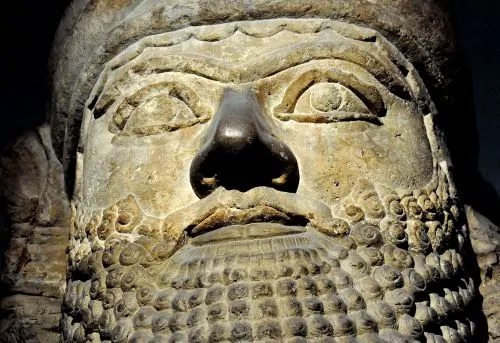
The elevation of a substitute began with a selection process that surviving letters illuminate only unevenly. Modern summaries often describe the chosen man as a condemned criminal, prisoner, gardener, or social outcast, but the Neo-Assyrian evidence does not support one fixed category from which substitutes were always drawn. The court required someone whose temporary assumption of kingship could be ritually convincing without creating a legitimate rival to the dynasty. His life also had to be politically expendable, since everyone organizing the ceremony understood that his elevation was directed toward death. Only one substitute can be identified with confidence: Damqî, the son of the temple administrator of Akkad, who possessed sufficient standing to embody Babylonian kingship but was also associated with resistance to Assyrian rule. Other substitutes remain anonymous behind their ritual title. This anonymity reflects the fragmentary archive, but it also suits a procedure intended to erase a man’s former identity beneath a borrowed one. He was selected not for who he had been but for what the court needed him to become.
Enthronement moved the chosen man toward the royal identity from which the true king was simultaneously withdrawing. He received royal garments and insignia, sat upon a throne, ate at a royal table, and possessed such emblems as the scepter and ceremonial weapon. References to a gold necklace, robes, furniture, and other objects show that kingship was reproduced through an ensemble rather than through a single crown. These objects did not merely decorate the substitute; they established visible and material contact between his body and the office condemned by the eclipse. Royal space reinforced the transformation. In one documented performance, the substitute sat upon the throne at Nineveh on the fourteenth day and spent the night of the eclipse within the king’s palace, placing himself precisely where the endangered ruler would ordinarily have been. Because Esarhaddon ruled both Assyria and Babylonia, an eclipse capable of threatening both crowns created an additional difficulty. Damqî was first enthroned in Assyria and then transported to Akkad, where he again sat upon a throne and assumed the danger directed against the king of Babylonia. His passage between the two cities followed the geographical reach of Esarhaddon’s royal titles. The substitute could not absorb a judgment against a kingship he had never been made to embody, so the court reproduced his enthronement wherever the omen required. Yet the display stopped short of transferring actual sovereignty. The substitute did not command armies, appoint governors, receive tribute, or determine policy. He possessed the signs of kingship because the omen needed a king to kill, not because the empire had accepted him as its ruler.
The fatal identity was strengthened by making the substitute assume the evidence against the king. Scholars collected ominous celestial, terrestrial, and birth signs, wrote them down, and had them recited before Šamaš, the divine judge. The substitute heard or repeated these accusations more than once, after which tablets bearing the omens could be bound into the hem of his garment. In another extraordinary act of incorporation, ominous birds were cooked and fed to the substitute and his female companion. The signs were not left as abstract predictions hovering above the palace: they were spoken over his body, attached to his clothing, and carried into him through food.
The substitute’s companion is conventionally called the substitute queen, although the evidence reveals much less about her identity and function than that title implies. She is described by a term better understood as “young woman” than automatically translated as “virgin,” and the sources do not establish that she underwent a formal royal marriage. Nor do they explain how she was selected, whether she consented, or why some performances apparently required her while others leave no trace of her presence. One letter indicates that the true king met the young woman before the ritual, but attempts to reconstruct the character of that encounter remain speculative. What is certain is that she joined the substitute in several decisive acts. The pair received wine, were washed with water, anointed with oil, and made to eat the birds associated with ominous signs. Their shared treatment drew her into the substitute’s identity and, ultimately, into his fate. She may have helped reproduce a complete royal household, since a king without a female counterpart would present an incomplete image of dynastic rule. She may also have served as an additional conduit connecting the true king, the substitute, and the mortal destiny being transferred between them. The surviving evidence cannot determine how those meanings were ranked by the ritualists themselves. Nor should the substitute king be imagined as an inert figure who simply waited beneath borrowed robes. In one remarkable letter, he demanded to know which omen had caused his enthronement and reported information about an alleged conspiracy to the secluded Farmer. His words reveal that temporary ritual identity did not extinguish personal awareness, fear, judgment, or political calculation. He could recognize the situation into which he had been placed and attempt to influence the ruler whose death he was expected to prevent. Nevertheless, neither cooperation nor loyalty offered a documented path to survival. The letters describe the substitute and his companion as proceeding to their “fate,” a conventional expression for death that also captured the ritual’s purpose with chilling precision. The method by which they were killed is not securely known, and later reconstructions involving poison or other means remain conjectural. What mattered was that a person publicly fashioned as king died while the omen remained valid. His reign possessed a predetermined conclusion that ordinary kingship struggled constantly to avoid.
The ritual’s political possibilities become clearest in the case of Damqî. A prophetess had reportedly announced that he would take the kingship, a declaration capable of turning a prominent Babylonian into the focus of opposition to Assyrian rule. By enthroning him as substitute, Esarhaddon’s agents made the prophecy come true in a form that ensured its beneficiary would die. Damqî became king, but only within an Assyrian ceremony that stripped his elevation of governing power and converted his predicted rise into protection for the dynasty he might have threatened. His death could fulfill a lunar omen, confirm a prophetic utterance, safeguard Esarhaddon and the Babylonian crown prince Šamaš-šumu-ukīn, and simultaneously remove a possible political adversary. This convergence should not be used to reduce every performance to a cynical execution disguised as religion. The scholars’ extensive efforts to identify dangerous eclipses, conduct purification rites, transmit omens, and protect the true king demonstrate that the ritual possessed genuine cosmological force within the court’s understanding of the world. Yet cosmology and politics were not separate arenas in which one explanation must exclude the other. The substitute’s crown protected the empire precisely because it could join a divine judgment to a human body selected by royal power. It raised a man high enough for heaven to recognize him as king, but never high enough for Assyria to permit him to live.
Esarhaddon and the Politics of Celestial Danger
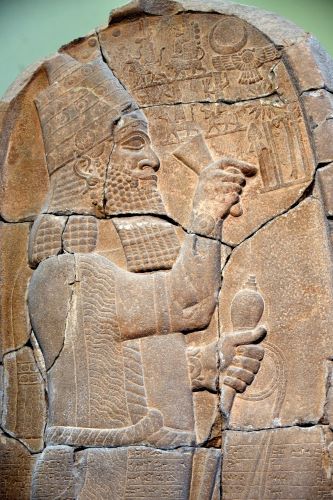
No Assyrian king needed to be reminded that the death of a monarch could become an invitation to civil war, but Esarhaddon had learned that lesson within his own family. His father Sennacherib was murdered in 681 BCE by one or more of Esarhaddon’s brothers, who attempted to prevent the designated heir from taking the throne. Esarhaddon returned from exile, defeated the opposing forces, and entered Nineveh as king, but victory could not erase the knowledge that princes, magnates, soldiers, and palace officials had participated in a struggle over the succession. His inscriptions converted that dangerous beginning into a demonstration of divine election: the gods had selected him, protected him from treachery, and delivered his enemies into his hands. The political meaning of that claim was inseparable from its religious meaning. If divine favor legitimated Esarhaddon’s survival, a celestial omen suggesting that the gods had withdrawn their protection could reopen the question of who ought to rule. An eclipse threatening the king touched a wound at the foundation of his reign. It announced not only possible death but the return of the dynastic uncertainty from which his kingship had emerged.
Esarhaddon’s recurrent illnesses intensified that vulnerability without allowing historians to reduce his policies to personal fear. Court letters describe fever, digestive distress, painful complaints, periods of fasting, and a conspicuous skin condition that his healers struggled to classify. Such ailments placed additional weight upon omens of royal death because bodily deterioration could appear to confirm a warning already written in the sky. Prophecies from Ištar of Arbela and other divine assurances repeatedly affirmed that the gods had chosen and would protect him. His reign was consequently surrounded by rival possibilities (divine favor and divine anger, promised victory and threatened extinction) which scholars had to reconcile through observation, ritual, and political advice.
The surviving correspondence suggests several performances of the substitute-king ritual during Esarhaddon’s reign, although the fragmentary chronology does not justify a confidently exact total. Letters concerning an earlier ceremony may relate to the solar eclipse of 679 BCE or the lunar eclipse of 674 BCE, while three performances during the final years of the reign can be dated more securely. The first of these began on the fourteenth day of Tammuz in 671 BCE, only eleven days after Assyrian forces won the opening battle of Esarhaddon’s successful Egyptian campaign. The timing exposes the inadequacy of any simple opposition between triumphant imperial policy and frightened ritual retreat. Military victory did not cancel celestial danger, because success on earth and judgment in heaven belonged to different but interacting fields of evidence. Esarhaddon could receive favorable prophecy, defeat an Egyptian army, and still accept that an eclipse threatened his life. While he withdrew as the Farmer, Assyrian forces continued their advance, captured Memphis, drove King Taharqa southward, and seized members of the Kushite royal household together with enormous quantities of treasure. The sources do not securely identify who exercised battlefield command during every stage of the king’s seclusion, but senior magnates possessed sufficient delegated authority to continue the campaign. The empire demonstrated that it could operate while the royal body remained hidden, even though its victories continued to be attributed to Esarhaddon. Substitute kingship did not suspend imperial expansion; it temporarily separated the ruler’s political agency from his public presence.
That separation was possible partly because Esarhaddon had already arranged the succession. In 672 BCE he designated Ashurbanipal as crown prince of Assyria and Šamaš-šumu-ukīn as heir to the Babylonian throne, requiring members of the royal family, court, army, provincial administration, and allied dynasties to swear elaborate loyalty oaths. The two princes could assume ceremonial and administrative burdens when their father withdrew, while scholars recommended protective rites for them as well as for the king. Yet their prominence also raised the stakes of every eclipse, because a danger interpreted against the royal house could threaten the carefully constructed settlement intended to prevent another fraternal war. Celestial protection and succession policy became parts of the same dynastic program.
The political danger became most acute after the Egyptian victory, when a prophetic movement gathered around a man named Sasî. A woman speaking in the name of Nusku at Harran reportedly proclaimed that kingship belonged to Sasî and that the name and descendants of Sennacherib would be destroyed. The statement was explosive because it denied the legitimacy not merely of Esarhaddon but of the succession already assigned to his sons. Sasî’s precise identity remains unknown, yet denunciations indicate that his cause attracted supporters among high officials and across several regions of the empire. Their confidence appears to have rested upon the belief that a god had declared the dynasty illegitimate, making rebellion an act of obedience rather than treason. Esarhaddon initially gathered information instead of striking immediately, while courtiers sent reports naming suspected conspirators and proclaiming their own loyalty. During this crisis he underwent another substitute-king ceremony, beginning on the fifteenth day of Tebet, after having completed an earlier period as the Farmer only a few months before. Seclusion may have protected him from assassins as effectively as it protected him from the eclipse, although the evidence does not prove that human concealment was the ritual’s original or primary purpose. Once the period ended, the king launched a devastating purge. The Babylonian Chronicle records with brutal economy that Esarhaddon killed many Assyrian magnates with the sword in 670 BCE, while other evidence indicates that officials, scholars, and their families suffered in the repression. Celestial and political danger had become impossible to separate: an eclipse justified the king’s disappearance, prophecy authorized resistance, divination investigated the rebels, and ritual seclusion gave the dynasty time to survive a challenge presented as the will of heaven.
Esarhaddon resorted to substitution once more in 669 BCE, entering another protected interval on the fourteenth day of Sivan. He emerged alive, only to die several months later while marching toward Egypt to suppress renewed resistance. His death did not necessarily demonstrate ritual failure within Assyrian terms, since the substitute was intended to absorb the danger attached to a particular omen during its period of validity, not to grant the monarch immortality. More important politically, the succession arrangements held: Ashurbanipal became king of Assyria, while Šamaš-šumu-ukīn assumed the throne of Babylonia. The rituals had preserved Esarhaddon long enough for his conquests, purges, and dynastic settlement to reshape the empire, but they had also made him unusually dependent upon scholars who determined when he could appear, travel, fight, eat, or resume his royal identity. Celestial danger was neither a private superstition nor a convenient disguise for calculated repression. It was a recognized category of political risk through which court experts, military commanders, princes, and the king himself negotiated the survival of a dynasty born from assassination. Esarhaddon’s repeated transformations into the Farmer reveal a ruler powerful enough to conquer Egypt yet vulnerable enough to abandon the visible signs of kingship whenever the moon suggested that heaven might repeat the violence of his accession.
From Ashurbanipal to Alexander at Babylon
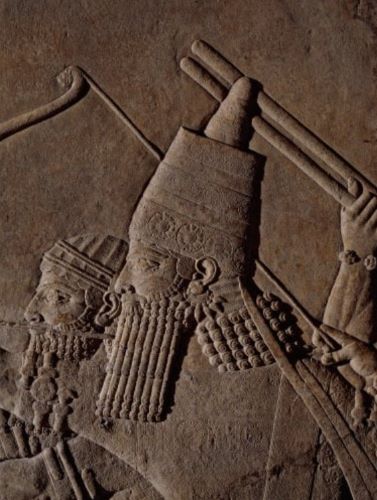
When Esarhaddon died in 669 BCE, the succession settlement he had defended through oaths, purges, and repeated periods as the Farmer worked as intended: Ashurbanipal became king of Assyria, while his brother Šamaš-šumu-ukīn eventually occupied the throne of Babylon. The new Assyrian ruler inherited his father’s scholars, archives, omen series, and techniques for managing celestial danger, but he did not inherit Esarhaddon’s willingness to let those experts determine the rhythms of royal life. As crown prince, Ashurbanipal had been trained in scribal learning and later celebrated his ability to read difficult texts, interpret celestial signs, and master knowledge inaccessible to ordinary rulers. He could confront scholarly advice as an informed participant rather than as a king wholly dependent upon specialists to explain what the heavens meant. During an eclipse in 667 BCE, he rejected the secrecy that had surrounded reports to his father and apparently declined to install a substitute. A year later, another eclipse produced a sharper conflict over what precautions were necessary and who possessed final authority to prescribe them. The office of the court scholar survived the dynastic transition, but the balance between expert interpretation and royal judgment had changed.
On 10 April 666 BCE, a partial lunar eclipse occurred while Jupiter was present, creating an omen whose implications could be read in more than one way. Some traditional formulations held that Jupiter’s appearance protected the king and caused an important official to die in his place, while the eclipse’s direction, timing, and affected portion of the moon could associate the danger with Subartu or Akkad. Ashurbanipal initially took no extraordinary action, even though Akkullānu, an experienced scholar who had served Esarhaddon, continued to press the matter. Within a month the sartinnu, one of the kingdom’s highest judicial officials, died, an event that could be interpreted as fulfillment of the prediction that a dignitary would perish instead of the king. Akkullānu nevertheless grew increasingly alarmed as the hundred-day period traditionally associated with eclipse danger approached its end. He accused the court of allowing month after month to pass without adequate protective action and recommended that Ashurbanipal remain within the palace while a substitution rite connected with Ereškigal was performed. The king eventually had a ṣalam pūḫi enthroned in Akkad, but the meaning of that phrase remains disputed. It may denote an inanimate substitute image, as such clay and wax figures were familiar instruments of Assyrian ritual, although earlier scholarship has understood it as referring to a human substitute functioning as the king’s image. Akkullānu was furious not only because Ashurbanipal had acted without consulting him but because the enthronement had occurred in Akkad, where he believed it would protect the Babylonian king Šamaš-šumu-ukīn rather than Ashurbanipal. The king may have followed another interpretive scheme according to which an eclipse in Nisan, occurring in the evening and departing through the relevant lunar quadrant, properly concerned Babylonia. What appears at first to be a ritual mistake may have been a deliberate royal decision made against one scholar’s advice. Ashurbanipal accepted the premise that celestial danger required management while refusing to reproduce the precise human and political arrangements favored under his father.
After 666 BCE, the direct documentary trail of the substitute king becomes faint. Ashurbanipal continued to request astronomical observations and employ apotropaic rites, but no surviving evidence securely demonstrates that he ever placed a living man upon the Assyrian throne to die in his place. The silence cannot prove that the ceremony vanished, since the later archives of his reign are much less abundant than the correspondence preserved from Esarhaddon’s court. It does show that substitution never became the automatic Assyrian response to every dangerous eclipse. When Nineveh fell to the Babylonian-Median coalition in 612 BCE and the last Assyrian resistance collapsed several years later, the political institution that had produced the fullest form of the rite disappeared with the empire. Babylonian scholars preserved much of the celestial knowledge on which Assyrian diviners had depended, but surviving Neo-Babylonian and Achaemenid documents do not attest an unbroken succession of living substitute kings.
Eclipse ritual nevertheless remained vigorous in Babylonia. In the eighth regnal year of Cyrus, lamentation priests at Uruk and Larsa began kettledrum rites because their calculations had identified a possible lunar eclipse, even though no eclipse actually occurred. Their actions demonstrate that prediction itself could create ritual obligations: the danger had to be addressed at the expected time rather than dismissed merely because clouds, daylight, or astronomical uncertainty might conceal the event. The later depositions concerning these performances also reveal disagreement over the accuracy of eclipse prediction and the authorization of expensive cultic responses. Hellenistic ritual tablets from Uruk preserve an elaborate lunar-eclipse ceremony involving temple personnel, offerings, kettledrums, songs, incantations, and texts directed against evil demons. The king retained a place within this ritual universe, but the surviving instructions do not require a condemned man to wear his regalia and die as his replacement. Babylonian scholars had preserved the larger conviction that eclipses threatened political and cosmic order while developing protective responses distinct from the Assyrian šar pūḫi. Continuity resided more securely in the interpretation of danger than in the unchanged performance of one ceremony.
Alexander entered that living tradition when he conquered Babylonia. A total lunar eclipse on 20 September 331 BCE, eleven days before the Battle of Gaugamela, was recorded by Babylonian observers and could be interpreted as announcing the defeat of Darius III and the arrival of a western conqueror. After his victory, Alexander entered Babylon, sacrificed to Marduk, confirmed elements of the existing administration, and allowed temple scholars to continue their work. To Babylonian record keepers he became simply “the king,” the latest bearer of an office whose fortunes remained legible in heaven. When he returned to Babylon in the spring of 323 BCE, Chaldean specialists reportedly met him after his crossing of the Tigris and urged him not to enter the city. Arrian, Diodorus, Plutarch, and other classical authors preserve different forms of the warning, but all associate it with the prediction that entry into Babylon would prove fatal. Diodorus names the leading Chaldean as Belephantes, a Greek rendering that may conceal the Babylonian name Bēl-apla-iddin, borne by an astronomer active during this period. Alexander attempted to approach the city by a route considered more favorable, but marshy ground obstructed the maneuver, and he eventually entered despite the warning. No surviving cuneiform document records the consultation, and no visible eclipse over Babylon in the spring of 323 BCE provides an undisputed cause for it. Babylonian calculations may nevertheless have identified a possible eclipse that would occur invisibly on 28 April, while planetary appearances, terrestrial events, malformed births, or combinations of signs could also have threatened the king. The reported advice is consistent with Babylonian practice without allowing the precise omen to be reconstructed.
The most extraordinary incident occurred after Alexander had entered the city. Diodorus relates that while the king was being anointed, a native prisoner somehow escaped his bonds, passed through the palace guards, put on the royal robe and diadem, and seated himself silently upon the throne. Alexander questioned him, received no explanation, consulted his seers, and ordered the man killed so that the predicted evil would fall upon the intruder. Plutarch identifies the man as Dionysius of Messenia and reports that he claimed the god Serapis had commanded him to take the throne and royal garments. In Arrian’s account, Alexander left his throne temporarily to satisfy his thirst, whereupon a prisoner under loose confinement passed through the eunuch guards and sat down. The eunuchs did not remove him but tore their clothing, struck their faces, and lamented as though a catastrophe had already occurred. Alexander had the man tortured to discover whether he belonged to a conspiracy, but the prisoner insisted that he had acted upon an inexplicable impulse. These narratives were written centuries after Alexander’s death, yet they drew upon earlier histories by participants such as Aristobulus and possibly Nearchus. Their contradictions concern the man’s identity, motive, route into the palace, and treatment, while their common structure remains remarkably stable. An expendable person assumed royal clothing, occupied the royal throne, became the bearer of a fatal portent, and was killed in the hope that his death would protect the reigning monarch. Even the eunuchs’ apparent refusal to remove him becomes intelligible if palace personnel understood that interrupting the ritual king’s enthronement would prevent the substitution from taking effect.
The Babylonian šar pūḫi offers the most persuasive explanation for that common core, but it does not permit the classical accounts to be treated as transparent descriptions of an Assyrian ceremony performed exactly as it had been three centuries earlier. The Greek and Roman authors turned the enthroned man himself into the ominous sign, whereas in the Neo-Assyrian procedure his enthronement had been a response to an omen observed beforehand. They say nothing about Alexander becoming the Farmer, undergoing purification, formally transferring accumulated signs, or remaining in seclusion while the substitute completed a prescribed reign. Alexander’s sudden discovery of the man upon his throne may reflect Macedonian ignorance of rites arranged by Babylonian specialists, later narrative compression, or the transformation of an incomplete ceremony into a dramatic portent of inevitable death. His execution could have been intended to redirect celestial danger, but it could equally have converted an alarming breach of palace security into an apotropaic act after the fact. Alexander died in Babylon on 11 June 323 BCE, an event recorded by a contemporary Astronomical Diary without any suggestion that a substitute had died before him or that a ritual had failed. His death nevertheless gave later historians a powerful conclusion: the conqueror who had defeated every terrestrial king could not escape the judgment announced by Babylon’s gods. From Ashurbanipal’s disputed substitute in 666 BCE to the stranger upon Alexander’s throne, the evidence reveals no simple, uninterrupted survival of one fixed rite. It reveals something more historically durable, the capacity of Babylonian scholars to make foreign and native rulers alike confront a political world in which royal identity could be transferred, divine danger negotiated, and one man’s death offered as the price of another man’s crown.
One Ancient Institution or a Modern Composite?
The following video from Cosmos discusses the origins of Babylonian astronomy:
The strongest challenge to any unified history of the substitute king begins with an uncomfortable fact: no ancient source provides a complete, authoritative description of an institution called “the substitute-king ritual.” What modern scholarship presents under that name has been reconstructed from administrative records, scholarly letters, omen reports, fragmentary ritual instructions, chronicles composed long after the events they describe, and still later Greek and Roman narratives. Each body of evidence preserves a different portion of the apparent ceremony. A ration tablet confirms that a šar pūḫi existed, court correspondence reveals decisions made during particular crises, and ritual fragments preserve actions without consistently identifying their historical occasions. Classical authors add compelling stories of temporary enthronement, but they translate Babylonian practices into literary narratives shaped by the ominous death of Alexander. The apparent coherence of the institution may owe something to the modern scholar who arranges these scattered remains into a single sequence. What looks like one ancient ritual could instead be a composite category imposed upon several related strategies for transferring royal danger.
The concentration of evidence around Esarhaddon makes that objection serious. His court archives survive in exceptional abundance, while the documentation from earlier Assyrian reigns, contemporary Babylonia, and the later Neo-Assyrian court is far less complete. Historians consequently risk treating the practices visible during one unusually well-documented reign as the standard form of an ancient and widely established institution. Even Esarhaddon’s letters do not describe a fixed liturgy unfolding identically on every occasion. They preserve hurried consultations, competing interpretations, requests for supplies, reports about enthronements, warnings about dates, and disagreements over the territories threatened by particular eclipses. One scholar might recommend substitution while another found a favorable feature that neutralized the omen. Some performances involved movement between Assyria and Akkad, whereas others appear to have been geographically limited. A female companion is visible in certain records but cannot be demonstrated as an indispensable participant in every case. The true king became the Farmer during Esarhaddon’s ceremonies, yet the available evidence does not prove that every earlier or later ruler assumed that identity. Even the expression ṣalam pūḫi used under Ashurbanipal can be understood either as a human being serving as the king’s image or as an artificial substitute fashioned for ritual use. Modern reconstructions must fill the spaces between these references, deciding which acts belonged to the ceremony’s essential structure and which responded only to a particular omen or political emergency. The danger is not fabrication in the ordinary sense, but harmonization: evidence produced by different people, at different times, for different purposes can be combined into a ritual more orderly and stable than any ancient performance ever was.
The longer history magnifies the problem. Hittite royal substitution, Mesopotamian figurine rites, the late Babylonian story of Erra-imitti, Neo-Assyrian enthronements, and the stranger who occupied Alexander’s throne all employed some combination of representation, exchanged identity, ominous danger, and an expendable body. Those similarities may reveal a shared ritual logic without proving that the ceremonies belonged to one continuously transmitted institution. The Hittite captive carried evil away rather than necessarily dying as the fulfillment of a royal omen, while the Erra-imitti story may be a retrospective explanation of an irregular accession. Later Babylonian eclipse rites relied upon lamentation, offerings, music, and incantation without demonstrably enthroning a living substitute. Calling all these practices versions of the substitute-king ritual risks replacing historically specific procedures with an artificial genealogy constructed from resemblance.
The uncertainty surrounding the substitute’s death further complicates the conventional picture. Neo-Assyrian letters describe the substitute and his companion as going to their “fate,” and the logic of the ceremony strongly indicates that their deaths completed the transfer of danger. Yet the surviving texts do not provide an unambiguous general instruction stating when, how, and by whose authority every substitute was to be killed. Neither do they establish that the predicted death always had to be inflicted rather than awaited, ritually represented, or attached to a person already condemned. Damqî’s political usefulness as a disposable rival makes his case particularly vivid, but it may also have been exceptional. Alexander’s alleged substitute presents an even greater difficulty because the classical accounts disagree over whether the enthroned man was a prisoner, a condemned criminal, a divinely inspired intruder, or a participant in a conspiracy. They also reverse the relationship between omen and ritual found in the Assyrian correspondence: the stranger’s occupation of the throne becomes the alarming portent itself rather than a carefully arranged response to an earlier sign. His execution may have been an improvised attempt to redirect danger, a punishment for violating royal space, or a later literary elaboration intended to foreshadow Alexander’s death. If that episode is removed from the ritual’s history, the evidence for survival into the Hellenistic period becomes substantially weaker. If it is retained without qualification, resemblance threatens to do the work of documentation. The institution can appear most continuous precisely where the sources are least capable of proving continuity.
This challenge modifies the interpretation of substitution but does not dissolve it. The seventh-century Assyrian evidence repeatedly joins a distinctive set of elements: an omen threatening the king, the temporary withdrawal or renaming of the legitimate ruler, the enthronement of another man, the transfer of royal objects and ominous signs, and the substitute’s anticipated death. Their convergence across independent letters, reports, administrative records, and ritual fragments makes it implausible that the Neo-Assyrian šar pūḫi is merely a modern invention. What cannot be sustained is the stronger image of a single, immemorial institution governed by an invariant script from ancient Isin to Alexander’s Babylon. The substitute king is better understood as the most elaborate Assyrian form of a wider repertoire of substitution, one whose procedures could be expanded, abbreviated, contested, or altered according to the omen and the political circumstances. Earlier Near Eastern practices supplied precedents and conceptual resources, while later Babylonian specialists could preserve, adapt, or independently reproduce particular elements without maintaining the entire Assyrian ceremony. Recognizing that variability strengthens the larger argument because it shifts attention from a supposedly fossilized rite to the scholarly work required to construct an effective response to each crisis. The court did not survive celestial danger by mechanically reenacting an ancient institution; it survived by repeatedly rebuilding royal identity so that a threatening fate could be made to belong to someone else.
Conclusion: The King Who Survived His Own Fate
An eclipse over the ancient Near East was never merely an interruption of light. Within Mesopotamian divination, it could expose a rupture in the relationship among the gods, the king, and the land, transforming an astronomical event into a crisis of government. Because the monarch embodied the order and prosperity of his realm, a celestial judgment directed against him threatened more than a single life. Assassination, invasion, rebellion, crop failure, and dynastic collapse all became imaginable consequences of the same ominous disturbance. Yet the future disclosed by heaven was not necessarily immutable. Observation identified the danger, interpretation determined its target, and ritual created the possibility that the prediction might be fulfilled without destroying the legitimate ruler. The substitute king emerged from that combination of fear and ingenuity: a man crowned so that death could recognize him as the sovereign whom the gods had condemned.
The procedure worked by separating qualities that royal ideology normally presented as inseparable. The true king abandoned his title, regalia, throne, and public presence to become the Farmer, while the substitute received the visible marks of kingship without acquiring its political authority. Scholars directed this exchange by reading the eclipse, defining the period of danger, selecting protective rites, transferring ominous signs, and advising when the ruler could safely reclaim his identity. Their work did not deny the divine judgment or dismiss it as a mistaken prediction. Instead, they constructed an alternative fulfillment in which the omen remained true but attached itself to another body. Esarhaddon’s repeated use of the rite demonstrates how thoroughly that ritual reasoning could enter the government of an empire. Illness made his body appear precarious, the murder of Sennacherib haunted the legitimacy of his accession, rebellion transformed prophecy into a weapon, and the division of the succession between Ashurbanipal and Šamaš-šumu-ukīn made dynastic continuity an urgent concern. Becoming the Farmer allowed Esarhaddon to withdraw from the fatal category of king while still communicating with scholars, supervising officials, and benefiting from campaigns conducted in his name. His temporary disappearance did not amount to abdication or political paralysis. It was a controlled reorganization of kingship through which authority remained with the hidden ruler while vulnerability was transferred to the enthroned substitute. The ceremony revealed that royal identity did not reside exclusively in blood, office, costume, location, title, or recognition, although it depended upon all of them. By distributing those elements between two men, the court could make one body govern and another body die as king. What looked like the monarch’s ritual humiliation was consequently an extraordinary assertion of royal power: even the identity condemned by heaven could be dismantled and assigned to someone else.
That achievement depended upon violence that should not disappear behind the sophistication of the ritual. The substitute and his female companion were not abstractions but human beings whose elevation was designed to make their deaths meaningful, necessary, and useful to the dynasty. The incomplete evidence leaves uncertainty about their origins, consent, treatment, and manner of death, just as it prevents every reported substitution from being reduced to one invariant ceremony. It does not erase the underlying inequality by which the state declared one life indispensable and another expendable. The substitute’s crown was magnificent precisely because it prepared him for destruction, converting political marginality into the temporary majesty required for a fatal exchange.
The later history of substitution confirms the durability of its logic more securely than the uninterrupted survival of its complete Assyrian form. Ashurbanipal disputed scholarly recommendations and may have preferred an image or abbreviated rite to the living replacement used under his father. Babylonian priests continued to confront eclipse danger through lamentations, offerings, music, incantations, and other apotropaic measures without consistently reproducing the Neo-Assyrian enthronement. The stranger who occupied Alexander’s throne in 323 BCE resembles a substitute king closely enough to preserve the possibility of adaptation, but the contradictory classical narratives cannot establish a direct institutional continuity. What endured was a repertoire of ideas: royal danger could be interpreted, identity could be transferred, and an ominous future could be redirected toward a specially prepared victim. That conclusion is more historically persuasive than the image of a single unchanging ceremony transmitted intact across centuries. The substitute king was the most elaborate expression of a political theology in which fate possessed authority but remained open to expert negotiation. The ritual did not promise that the monarch would never die; Esarhaddon eventually died on campaign, and Alexander perished in Babylon despite every warning and precaution. It promised only that a particular death announced for a particular king might be made to happen to someone else. The king survived his own fate because the court crowned another body, surrounded it with the material reality of sovereignty, and sent it forward to meet the destiny that had been written for him.
Bibliography
Affiliate disclosure: Amazon links on this site are paid links. As an Amazon Associate I earn from qualifying purchases.
- Aaboe, Asger, et.al. “Saros Cycle Dates and Related Babylonian Astronomical Texts”. Transactions of the American Philosophical Society 81:6, 1-75.
- Ambos, Claus. “Mißverständnisse bei Ersatzkönigsritualen für Assurbanipal und Alexander den Großen.” In Die Welt der Rituale: Von der Antike bis heute, edited by Claus Ambos et al., 96–101. Darmstadt: Wissenschaftliche Buchgesellschaft, 2007.
- —-. “Rites of Passage in Ancient Mesopotamia: Changing Status by Moving through Space: Bīt Rimki and the Ritual of the Substitute King.” Rivista degli Studi Orientali 86, supplement 2 (2013), 39–54.
- Annus, Amar. “On the Beginnings and Continuities of Omen Sciences in the Ancient World.” In Divination and Interpretation of Signs in the Ancient World, edited by Amar Annus, 1–18. Oriental Institute Seminars 6. Chicago: Oriental Institute of the University of Chicago, 2010.
- Arrian. Anabasis of Alexander. Vol. 2, Books V–VII and Indica. Translated by P. A. Brunt. Loeb Classical Library 269. Cambridge, MA: Harvard University Press, 1983.
- Beaulieu, Paul-Alain, and John P. Britton. “Rituals for an Eclipse Possibility in the Eighth Year of Cyrus.” Journal of Cuneiform Studies 46 (1994): 73–86.
- Bottéro, Jean. Mesopotamia: Writing, Reasoning, and the Gods. Translated by Zainab Bahrani and Marc Van De Mieroop. Chicago: University of Chicago Press, 1992.
- Brack-Bernsen, Lis, and John M. Steele. “Eclipse Prediction and the Length of the Saros in Babylonian Astronomy.” Centaurus 47:3 (2005), 181–206.
- Brown, David. “Astral Divination in the Context of Mesopotamian Divination, Medicine, Religion, Magic, Society, and Scholarship.” East Asian Science, Technology, and Medicine 25 (2006), 69-126.
- Brown, David, and Marc J. H. Linssen. “BM 134701 = 1965-10-14,1 and the Hellenistic Period Eclipse Ritual from Uruk.” Revue d’Assyriologie et d’Archéologie Orientale 91:2 (1997), 147–166.
- Bryce, Trevor. Life and Society in the Hittite World. Oxford: Oxford University Press, 2002.
- Caplice, Richard I. The Akkadian Namburbi Texts: An Introduction. Sources from the Ancient Near East 1, fasc. 1. Malibu, CA: Undena Publications, 1974.
- Cooley, Jeffrey L. “A Universal Namburbi: Ea, Shamash, and Asalluḫi 1.” In Reading Akkadian Prayers and Hymns: An Introduction, edited by Alan Lenzi, 403–419. Society of Biblical Literature Ancient Near Eastern Monographs 3. Atlanta: Society of Biblical Literature, 2011.
- de Jong, Teije. “On the Origin of the Lunar and Solar Periods in Babylonian Lunar Theory.” In Studies on the Ancient Exact Sciences in Honor of Lis Brack-Bernsen, edited by John M. Steele and Mathieu Ossendrijver, 105–126. Berlin Studies of the Ancient World 44. Berlin: Edition Topoi, 2017.
- Diodorus Siculus. Library of History. Vol. 8, Books XVI.66–XVII. Translated by C. Bradford Welles. Loeb Classical Library 422. Cambridge, MA: Harvard University Press, 1963.
- Fales, Frederick Mario, and J. Nicholas Postgate. Imperial Administrative Records, Part I: Palace and Temple Administration. State Archives of Assyria 7. Helsinki: Helsinki University Press, 1992.
- Fincke, Jeanette C. “Additions to Already Edited Enūma Anu Enlil (EAE) Tablets, Part IV: The Lunar Eclipse Omens from Tablets 15–19 Published by Rochberg-Halton in AfO Beih. 22.” KASKAL 13 (2016), 89–119.
- —-. “The Solar Eclipse Omen Texts from Enūma Anu Enlil.” Bibliotheca Orientalis 70 (2013), 582–607.
- Gaspa, Salvatore. “The King’s Body in Assyria as a Vehicle of Political, Religious, and Wisdom Communication.” In The Body of the King: The Staging of the Body of the Institutional Leader from Antiquity to Middle Ages in East and West, edited by Giovanni B. Lanfranchi and Robert Rollinger, 79–106. History of the Ancient Near East/Monographs 16. Padua: S.A.R.G.O.N. Editrice e Libreria, 2016.
- Gehlken, Erlend. Weather Omens of Enūma Anu Enlil: Thunderstorms, Wind and Rain (Tablets 44–49). Cuneiform Monographs 43. Leiden: Brill, 2012.
- Glassner, Jean-Jacques. Mesopotamian Chronicles. Edited by Benjamin R. Foster. Writings from the Ancient World 19. Atlanta: Society of Biblical Literature, 2004.
- Grayson, A. Kirk. Assyrian and Babylonian Chronicles. Texts from Cuneiform Sources 5. Locust Valley, NY: J. J. Augustin, 1975.
- Heebel, Nils P. “Dating EAE: When Was the Astrological Series Enūma Anu Ellil Created?” In “The Scaffolding of Our Thoughts”: Essays on Assyriology and the History of Science in Honor of Francesca Rochberg, edited by C. Jay Crisostomo, et.al., 253–263. Ancient Magic and Divination 13. Leiden: Brill, 2018.
- Heimpel, Wolfgang. Letters to the King of Mari: A New Translation, with Historical Introduction, Notes, and Commentary. Mesopotamian Civilizations 12. Winona Lake, IN: Eisenbrauns, 2003.
- Hunger, Hermann. Astrological Reports to Assyrian Kings. State Archives of Assyria 8. Helsinki: Helsinki University Press, 1992.
- —-. Astronomical Diaries and Related Texts from Babylonia. Vol. 6, Goal Year Texts. Including materials by Abraham J. Sachs. Vienna: Verlag der Österreichischen Akademie der Wissenschaften, 2006.
- Hunger, Hermann, and David Pingree. Astral Sciences in Mesopotamia. Handbook of Oriental Studies, Section 1, The Near and Middle East 44. Leiden: Brill, 1999.
- Jones, Alexander. “A Study of Babylonian Observations of Planets Near Normal Stars.” Archive for History of Exact Sciences.
- Jones, Christopher W. “The Decline and Fall of the Assyrian Court Scholar: A Social Network-Based Examination.” AVAR 2:2 (2023), 297–354.
- Koch-Westenholz, Ulla. “The Astrological Commentary Šumma Sîn ina Tāmartīšu Tablet 1.” Res Orientales 12 (1999), 149–165.
- —-. Mesopotamian Astrology: An Introduction to Babylonian and Assyrian Celestial Divination. Carsten Niebuhr Institute Publications 19. Copenhagen: Museum Tusculanum Press, 1995.
- Kümmel, Hans Martin. Ersatzrituale für den hethitischen König. Studien zu den Boğazköy-Texten 3. Wiesbaden: Otto Harrassowitz, 1967.
- Labat, René. “Le sort des substituts royaux en Assyrie au temps des Sargonides.” Revue d’Assyriologie et d’Archéologie Orientale 40 (1945–1946), 123–142.
- Læssøe, Jørgen. Studies on the Assyrian Ritual and Series Bît Rimki. Copenhagen: Ejnar Munksgaard, 1955.
- Lambert, W. G. “A Part of the Ritual for the Substitute King.” Archiv für Orientforschung 18 (1957–1958), 109–112.
- Leichty, Erle. The Royal Inscriptions of Esarhaddon, King of Assyria (680–669 BC). Royal Inscriptions of the Neo-Assyrian Period 4. Winona Lake, IN: Eisenbrauns, 2011.
- Maul, Stefan M. Zukunftsbewältigung: Eine Untersuchung altorientalischen Denkens anhand der babylonisch-assyrischen Löserituale (Namburbi). Baghdader Forschungen 18. Mainz am Rhein: Philipp von Zabern, 1994.
- Millard, Alan R. The Eponyms of the Assyrian Empire, 910–612 BC. State Archives of Assyria Studies 2. Helsinki: Neo-Assyrian Text Corpus Project, 1994.
- Nawotka, Krzysztof. “The Omina in Babylon and the Death of Alexander the Great.” Archäologische Mitteilungen aus Iran und Turan 46 (2017), 159–170.
- Nissinen, Martti. References to Prophecy in Neo-Assyrian Sources. State Archives of Assyria Studies 7. Helsinki: Neo-Assyrian Text Corpus Project, 1998.
- Parpola, Simo. Letters from Assyrian and Babylonian Scholars. State Archives of Assyria 10. Helsinki: Helsinki University Press, 1993.
- Parpola, Simo, and Kazuko Watanabe. Neo-Assyrian Treaties and Loyalty Oaths. State Archives of Assyria 2. Helsinki: Helsinki University Press, 1988.
- Plutarch. Lives. Vol. 7, Demosthenes and Cicero; Alexander and Caesar. Translated by Bernadotte Perrin. Loeb Classical Library 99. Cambridge, MA: Harvard University Press, 1919.
- Pongratz-Leisten, Beate. Religion and Ideology in Assyria. Studies in Ancient Near Eastern Records 6. Berlin: De Gruyter, 2015.
- Radner, Karen. “The Assyrian King and His Scholars: The Syro-Anatolian and the Egyptian Schools.” Studia Orientalia 106 (2009), 221–238.
- —-. “Royal Decision-Making: Kings, Magnates, and Scholars.” In The Oxford Handbook of Cuneiform Culture, edited by Karen Radner and Eleanor Robson, 358-379. Oxford: Oxford University Press, 2011.
- —-. “The Trials of Esarhaddon: The Conspiracy of 670 BC.” Isimu 6 (2003), 165–83.
- Reiner, Erica. Astral Magic in Babylonia. Philadelphia: American Philosophical Society, 1998.
- —-. “Lipšur Litanies.” Journal of Near Eastern Studies 15:3 (1956), 129–149.
- Robson, Eleanor. Ancient Knowledge Networks: A Social Geography of Cuneiform Scholarship in First-Millennium Assyria and Babylonia. London: UCL Press, 2019.
- Rochberg, Francesca. Aspects of Babylonian Celestial Divination: The Lunar Eclipse Tablets of Enūma Anu Enlil. Archiv für Orientforschung Beiheft 22. Horn, Austria: Ferdinand Berger & Söhne, 1988.
- —-. “The Catalogues of Enūma Anu Enlil.” In Assyrian and Babylonian Scholarly Text Catalogues: Medicine, Magic and Divination, edited by Ulrike Steinert, 121–136. Die babylonisch-assyrische Medizin in Texten und Untersuchungen 9. Berlin: De Gruyter, 2018.
- —-. “Continuity and Change in Omen Literature.” In Munuscula Mesopotamica: Festschrift für Johannes Renger, edited by Barbara Böck, Eva Cancik-Kirschbaum, and Thomas Richter, 415–425. Alter Orient und Altes Testament 267. Münster: Ugarit-Verlag, 1999.
- —-. “Empiricism in Babylonian Omen Texts and the Classification of Mesopotamian Divination as Science.” Journal of the American Oriental Society 119:4 (1999), 559-569.
- —-. The Heavenly Writing: Divination, Horoscopy, and Astronomy in Mesopotamian Culture. Cambridge: Cambridge University Press, 2004.
- —-. “‘If P, Then Q’: Form and Reasoning in Babylonian Divination.” In Divination and Interpretation of Signs in the Ancient World, edited by Amar Annus, 19–27. Oriental Institute Seminars 6. Chicago: Oriental Institute of the University of Chicago, 2010.
- —-. “Old Babylonian Celestial Divination.” In If a Man Builds a Joyful House: Assyriological Studies in Honor of Erle Verdun Leichty, edited by Ann K. Guinan, et.al., 337–348. Cuneiform Monographs 31. Leiden: Brill, 2006.
- —-. In the Path of the Moon: Babylonian Celestial Divination and Its Legacy. Studies in Ancient Magic and Divination 6. Leiden: Brill, 2010.
- Šašková, Kateřina. “‘Place in My Hands the Inexhaustible Craft of Medicine!’ Physicians and Healing at the Royal Court of Esarhaddon.” Chatreššar 2 (2018), 51–73.
- Soldt, Wilfred H. van. Solar Omens of Enuma Anu Enlil: Tablets 23 (24)–29 (30). Publications de l’Institut Historique et Archéologique Néerlandais de Stamboul 73. Leiden: Nederlands Historisch-Archaeologisch Instituut te Istanbul, 1995.
- Starr, Ivan. Queries to the Sungod: Divination and Politics in Sargonid Assyria. State Archives of Assyria 4. Helsinki: Helsinki University Press, 1990.
- Steele, John M. “Eclipse Prediction in Mesopotamia.” Archive for History of Exact Sciences 54:5 (2000), 421–454.
- Stevens, Kathryn. “Alexander the Great and the Substitute King.” Omnibus 70 (2015), 24–25.
- —-. Between Greece and Babylonia: Hellenistic Intellectual History in Cross-Cultural Perspective. Cambridge: Cambridge University Press, 2019.
- van der Spek, Robartus J. “Darius III, Alexander the Great and Babylonian Scholarship.” In A Persian Perspective: Essays in Memory of Heleen Sancisi-Weerdenburg, edited by Wouter Henkelman and Amélie Kuhrt, 289–346. Achaemenid History 13. Leiden: Nederlands Instituut voor het Nabije Oosten, 2003.
- Veldhuis, Niek. “On Interpreting Mesopotamian Namburbi Rituals.” Archiv für Orientforschung 42–43 (1995–1996), 145–154.
- —-. “The Theory of Knowledge and the Practice of Celestial Divination.” In Divination and Interpretation of Signs in the Ancient World, edited by Amar Annus, 77–91. Oriental Institute Seminars 6. Chicago: Oriental Institute of the University of Chicago, 2010.
- Verderame, Lorenzo. “A Glimpse into the Activities of Experts (ummânu) at the Assyrian Royal Court.” In From Source to History: Studies on Ancient Near Eastern Worlds and Beyond, edited by Salvatore Gaspa, et.al., 713–28. Alter Orient und Altes Testament 412. Münster: Ugarit-Verlag, 2014.
- —-. “Means of Substitution: The Use of Figurines, Animals, and Human Beings as Substitutes in Assyrian Rituals.” In Approaching Rituals in Ancient Cultures, edited by Claus Ambos and Lorenzo Verderame, 301–23. Pisa and Rome: Fabrizio Serra Editore, 2013.
- —-. “The Substitute King (Šar Pūḫi): An Assyrian Ritual of the First Millennium.” In The Ritual Sphere in Cultic Texts and Practices from the Ancient and Early Medieval East, edited by Paola Cotticelli-Kurras and Velizar Sadovski, 195–210. Oslo: Norwegian Institute of Philology and Hermes Academic Publishing, 2020.
- Wiseman, D. J. “The Nimrud Tablets, 1953.” Iraq 15:2 (1953), 135–60.
Originally published by Brewminate, 08.10.2026, under the terms of a Creative Commons Attribution-NonCommercial-NoDerivatives 4.0 International license.
About the Author