Many museums are wrestling with returning looted or unethically obtained ancient objects.

By Dr. Pinar Durgun
Department Head and Associate Curator
Ancient Seals and Tablets
Morgan Library & Museum
Introduction
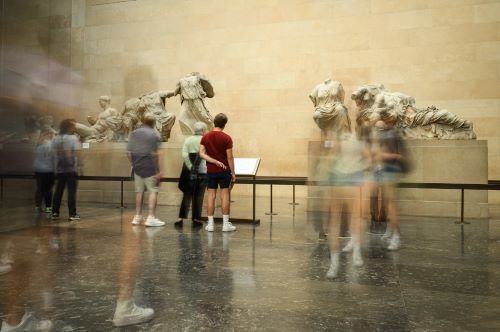
When lovers of ancient art want to see the Parthenon Marbles, many walk through the often-rainy streets of London, enter the British Museum, and make their way to the minimalist beige and gray galleries where the controversial works are displayed. The setting is a far cry from the marbles’ original home, the famed and dazzling Acropolis Hill in Athens. These friezes and sculptural decorations, carved around the fifth century B.C.E., portray festivals honoring the goddess Athena that once took place at the Parthenon, a temple dedicated to her. Between 1801 and 1805, British ambassador Lord Thomas Elgin removed half of the remaining sculptural decorations and later sold them to the British Museum, which exhibits the Parthenon Marbles despite Greece’s calls to return them.
This is hardly an isolated case. Many original ancient and historical artworks in European and North American museums, such as the Parthenon Marbles, come from areas once colonized or exploited under imperial forces or economic mandates. They were acquired through gift exchanges or deals between rulers, diplomats, the military, or businesspeople; on the legal and illegal art market; or through laws that required archaeological objects to be divided between excavating parties, landowners, and local governments.
Countries around the world are calling for some of these ancient objects and monuments to be returned to their homes—a process often called restitution. Not all archaeological objects are expected to be returned. Those that are requested are commonly symbols of national or historical importance. But many museums are reluctant to let go of these famous pieces. The result is often a stalemate.
Yet a paradox lies in this insistence on originals. When ancient objects are displayed in museums, they no longer tell the stories they would tell if they were exhibited where they were initially displayed or used. Even when a museum is close to the initial site, it is often difficult for visitors to truly get a sense of objects’ function and meaning because they are separated from their intended context.
On the flip side, people are aware that the archaeological record and museum collections are incomplete. Some objects have been destroyed by human actions, natural disasters, or time. And museums can’t display every object in a collection. The few objects they do showcase may be supported with reconstructed dioramas or models that contextualize them. So, even while visitors demand to see originals, they paradoxically accept that there is always an element of inauthenticity and incompleteness in museum displays, whether or not objects are original.
Is it possible that the solution to some restitution cases lies in the public’s paradoxical attitudes about authenticity and copies? How could we, as the public, transform museums if we fully acknowledged and embraced the benefits of copies?
Copies Were Once Respected
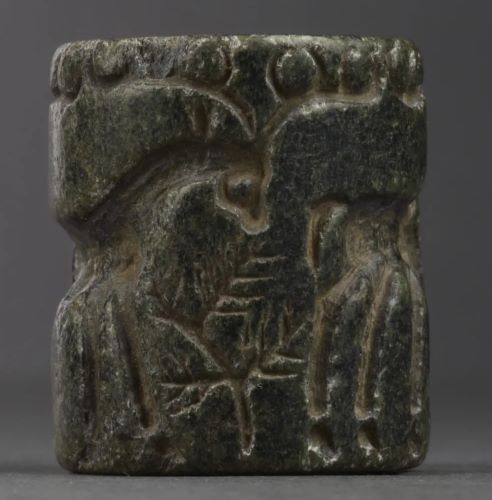
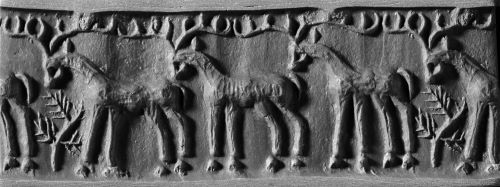
Historically, people widely considered copies to be art. Ancient artists and makers were well-versed in the craft of copying. In ancient Mesopotamia, for instance, when you owned a cylinder seal, you could make infinite copies of the image on the seal by rolling it over a large clay surface. Mesopotamians were not always concerned with “originality.” The image or its copy could equally stand in for whatever or whomever the image represented. In some cases, Mesopotamian artists and scribes copied the style of ancient texts and objects to make them look archaic. They even made copies themselves to preserve information.
The dichotomy between “the original” and “the copy” is culturally specific. Both historically and today, in countries such as China and Japan, people respect artfully made copies as much as the originals. In some cases, the value of the copy and its original changes over time or is even reversed.
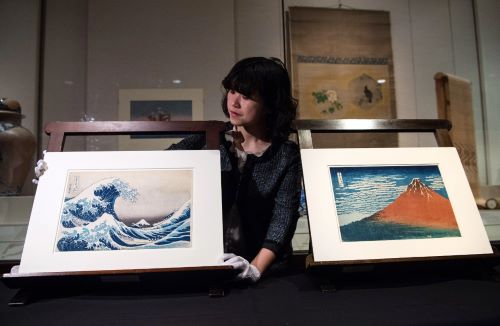
Take, for example, “The Great Wave,” a famous print by 19th-century Japanese artist Katsushika Hokusai. Some experts estimate that around 8,000 copies have been made from the original woodblock, some of which are in the collections of the British Museum and the Metropolitan Museum of Art in New York City. In the museum gallery, they are all treated as respectfully as an original painting would be today, even though at the time of their production, they were considered inexpensive.
Ancient Roman sculptors are also well-known for the art of copying. Many lost ancient Greek and Hellenistic works of art are known to us thanks to their Roman copies. Roman elites decorated their villas, pools, and gardens with these copies, which are still highly valued by museums and their visitors worldwide.
By the 16th century, casts of Classical sculptures (such as the Parthenon Marbles) were essential parts of sculpture and painting studios. Workshops in Europe sent copies and casts across borders and oceans to universities and museums, and they continue to do so today. One of these workshops is the Berlin State Museums’ Gipsformerei, which has been crafting plaster copies of sculptures for more than 200 years. Its artists spend many hours re-creating the form, material, color, and sheen of the original artworks. It is difficult, sometimes even for an expert, to distinguish the copies from the originals.
Before museums in North America started to collect original artworks, they built their art collections by ordering plaster copies from European museums and workshops. Reproductions of Classical and Renaissance statues were hugely popular. Have you ever wondered why many libraries or art institutes around the globe have copies of the world’s most famous sculptures? As more ancient objects and artworks were excavated and sold on the art market, large public museums expanded their collections of originals and gradually gave away, loaned, or sold their plaster copies.
Gradually, copies started to fall out of favor because of changing attitudes toward authenticity. The art world became “based on the artificial creation of scarcity,” wrote the late anthropologist David Graeber and artist Nika Dubrovsky in “Another Art World.” In a capitalist world order, value is based on scarcity. In addition, the invention of photography and film had an impact on the production of facsimiles and allowed masses to enjoy art like never before. These facsimiles challenged the capitalistic interest in the original, yet increased the value of originals by copying them.
Similarly, with the increasing use of AI–generated images today, exact copies cause anxiety in some museum visitors rather than admiration. Some say copies make them feel “duped,” even when the labels identify them as copies. Many experts, including critical theorists and museum professionals, still argue that original ancient objects have their own “aura.” And, in some ways, they do. People made, used, and sometimes discarded them for many different emotional and personal reasons; they touched and left their fingerprints on the objects.
But why does that have to mean people can’t have meaningful experiences with copies of these objects? Why are so many against displaying copies that would allow more of the public to enjoy and learn from ancient objects?
The Many Benefits of Copies
In Mumbai, India, the “Museum on Wheels” program from the Chhatrapati Shivaji Maharaj Vastu Sangrahalaya Museum uses copies wonderfully effectively: Two buses exhibiting replicas of ancient objects and natural specimens travel across rural parts of the region, allowing students and local communities to visit an exhibit. Their motto is: “If you cannot come to the museum, the museum will come to you.” This is only possible because copies can travel on a bus, and originals can’t.
Plaster or relatively low-cost 3D-printed copies can provide people with details about the scale and processes of making these ancient objects. And the bonus is that we can interact with them in ways we can’t with originals kept behind glass cases or ropes. Many archaeological objects on display were made to be held, not to be looked at on a pedestal. For preservation reasons, even museum professionals can’t touch originals without gloves and other protective measures. But we could all touch and even hold copies.
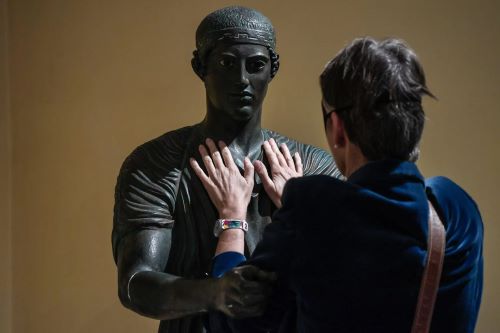
Some museums are already using touchable replicas to provide blind and partially sighted visitors a tactile experience of their collections. In addition, copies can be helpful tools in teaching about archaeological context. For example, a 3D-printed version of an ancient bread mold could be used for baking, helping the public learn through experimental archaeology. 3D models could also be accompanied by digital reconstructions of the site where they came from, allowing visitors to see the object in its intended setting.
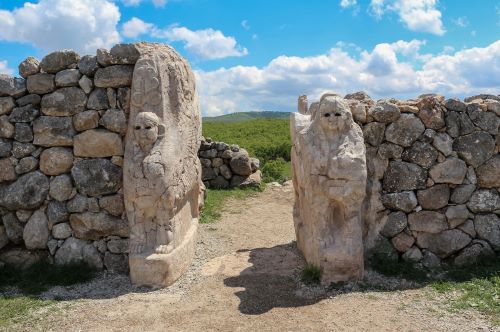
Currently, museums that display copies typically only provide information on the label about the original. Instead, they could also discuss why and where the copy was made and acquired. In cases where the original has been returned to its birthplace, the copy could be supplemented with information (written, audio, or video) telling the story of the object’s restitution.
In 2011, Berlin’s Museum of the Ancient Near East, one of the three departments housed in the famous Pergamon Museum, returned a gate sphinx excavated by the Germans in Hattusa, the ancient Hittite capital, back to Türkiye after the government’s insistent calls for its return. A copy of it was constructed by the Gipsformerei. It was put on display in the Pergamon Museum before its temporary closure next to its pair, which is also a copy, made in 1933.
Today the returned original sphinx is displayed in the Boğazköy Museum in Çorum, about a 15-minute walk from Hattusa. (You can visit the museum virtually to see the sphinx.) For preservation reasons, copies of these Hittite sphinxes also adorn the archaeological site of Hattusa where the originals once stood. The copies are now part of the object’s complex history.
Rethinking Copies and Originals
Nowadays, immersive art installations are popping up everywhere, featuring beloved works by Claude Monet, Vincent van Gogh, Frida Kahlo, and more. Thousands pay high entrance fees to be cocooned by digital images that make them feel like they’re inside their favorite paintings. Except there is not a single painting in these exhibits. Turn off the power, and you’d be standing in a black box.
In the future, museums will likely continue to include more digital art. Artist Refik Anadol is currently working on a museum and web platform dedicated to data visualization and AI arts.
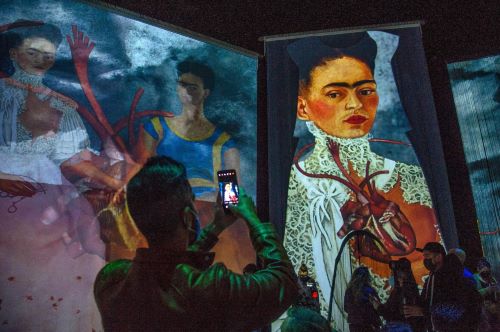
If we are happy with not seeing original Monet paintings in an exhibit about Monet, we can accept seeing copies of ancient objects in museums, especially when it means some of the originals can be returned to the places where they were created. Demanding to be able to visit a conveniently located museum at any time and see original ancient objects that were made abroad comes from a place of entitlement and feelings of superiority.
Copies and casts of the Parthenon Marbles are on display in the Acropolis Museum in Athens and the museum of the replica Parthenon in Nashville, Tennessee. In fact, there are already copies in the galleries of the British Museum.
Some may argue that if exact copies can be made and appreciated, why couldn’t copies be sent back to their places of origin and the originals kept in museums abroad? This raises other questions: Who owns the past? Who has a say in where objects belong?
Ideally, the locations of the originals and copies should be determined by descendant communities, heritage communities, and local communities in collaboration with heritage and archaeology experts who can provide more information on provenance, context, and conservation. Yet decisions about restitution are typically in the hands of museum leaders and the government officials currently in power, and are often determined by local and international laws.
Therefore, it is crucial to discuss this dilemma in the public sphere because, as the public, we can make a difference. What we as the public value can perpetuate the demand for originals or create a widespread appeal for reproductions and restitution.
How would you feel about visiting a museum knowing that some of the objects on display are copies and their originals were returned to the places where they were made?
Originally published by SAPIENS, 08.21.2024, under the terms of a Creative Commons Attribution-NoDerivatives 4.0 International license.
About the Author