In Plato’s Phaedo, familiar shores occupy a hollow within a greater Earth. The journeys of souls connect that hidden landscape with moral responsibility and the limits of knowledge.

By Matthew A. McIntosh
Public Historian
Brewminate
Introduction: Living beneath the World We Think We Know
The shores of the familiar world become the margins of a depression in a much greater Earth near the close of Plato’s Phaedo. The region extending from Phasis to the Pillars of Heracles, encompassing the Mediterranean and Black Sea world, occupies only a small part of this larger environment. Its inhabitants live below a purer surface, unaware of how their surroundings would appear from above. Socrates compares their situation to that of creatures whose confinement beneath water prevents them from understanding the world beyond it. The unsettling proposition is that extensive acquaintance with one’s surroundings can coexist with a fundamental misunderstanding of where one lives.
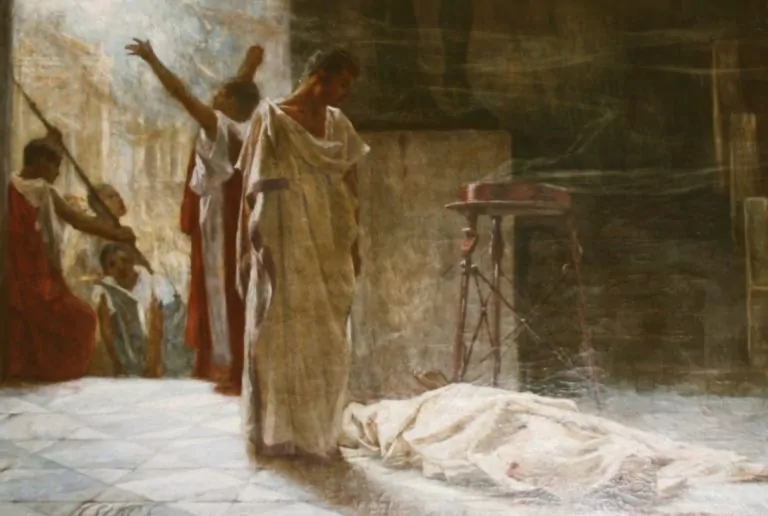
This geographical account appears within a conversation whose urgency comes from an approaching death. Plato’s fourth-century BCE dialogue reconstructs the final day of Socrates, executed at Athens in 399 BCE, through Phaedo’s subsequent narration to Echecrates. Its descriptions of inaccessible places address listeners confronting the loss of someone whose philosophical commitments they have shared and questioned. After arguments concerning the soul’s immortality, the discussion turns toward the conditions that might await it beyond bodily life. Subterranean waterways become routes through an environment in which different ways of living lead to different outcomes. The travelers whose destinations matter are souls, and their journeys extend the consequences of conduct beyond the reach of earthly observation. Reading the passage as a proposal for physical exploration would obscure that purpose, although its ethical setting does not make its descriptions of nature incidental. Emma Gee’s interpretation emphasizes precisely this integration. The Earth’s structure and movements belong to the same account as the soul’s postmortem fate. Geography gives the discussion of survival after death an organized environment through which its implications can be followed.
The diminished scale of familiar settlements does not make their inhabitants’ actions inconsequential. Within the imagined order, the character formed during an ordinary lifetime matters far beyond the places where that life unfolds. Spatial limitation and moral responsibility develop together as restricted access to the whole provides no exemption from caring for the soul. Sara Brill’s work helps expose the philosophical importance of this relationship by treating the final myth as a critical engagement with the preceding arguments and the perspectives informing them. On such a reading, the unfamiliar landscape prompts scrutiny of the assumptions people bring to thinking about their own existence, including assumptions that philosophical argument itself may leave insufficiently examined.
Socrates nevertheless places a qualification upon the extraordinary account he has offered. He declines to insist that its details correspond exactly to reality, while maintaining that belief in something resembling the described destinies is appropriate to the soul’s supposed immortality. That reservation makes the relationship between conviction and description a central interpretive problem. It leaves substantial commitments in place without granting every geographical feature equal certainty. Nor can the physical content simply be set aside once a moral meaning has been identified. Aristotle subsequently challenged the subterranean circulation described in the Phaedo, finding its explanation of rivers incompatible with his understanding of water’s movement and renewal. His objection establishes a difficulty that any philosophical interpretation must take seriously. An account can organize ethical expectations through natural processes whose operation remains open to criticism. Plato’s enlarged Earth should be examined through the connection it constructs between the limits of human perception and the impacts of human life. Imagining passage beyond the inhabited region changes the standpoint from which familiar existence is assessed, while Socrates’ caution prevents that imagined standpoint from becoming an uncomplicated claim to possess complete knowledge.
Athens, 399 BCE: Why the Geography Appears before an Execution
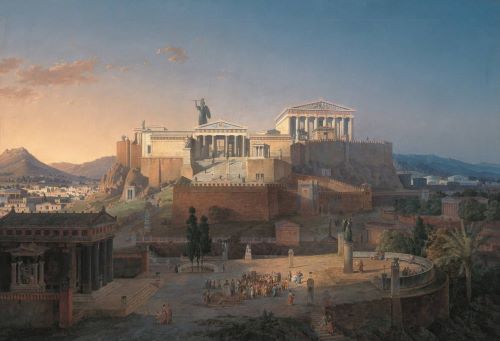
An Athenian religious observance determined when Socrates could be put to death. According to Phaedo, the city sent an annual sacred embassy to Apollo at Delos in fulfillment of a vow associated with Theseus’ deliverance of the young Athenians taken to Crete. The stern of the mission’s ship had been garlanded on the day before Socrates’ trial, beginning a period during which Athens was required to maintain ritual purity and suspend public executions. His imprisonment continued while the vessel completed its voyage, with the sentence remaining in force throughout the postponement. Once his companions learned that the ship had returned, they arranged to assemble unusually early for their next visit. A successful sacred journey supplied the immediate circumstances for the conversation about Socrates’ approaching departure. The opportunity for sustained discussion depended upon a civic obligation whose completion would also permit his execution.
The recollection reaches Echecrates at Phlius, beyond the prison and after the events being described. He already knows that Socrates died, but wants an account of what was said and who attended. Phaedo answers as a participant whose memories include his own unstable mixture of pleasure and distress. His tentative explanation that Plato was absent through illness makes the author’s distance from the gathering conspicuous. Readers encounter a carefully arranged account in which remembered reasoning is inseparable from the experience of listening to someone who will shortly be lost. The narrative preserves that emotional difficulty instead of allowing Socrates’ composure to determine everyone else’s response.
For Socrates, readiness to meet the sentence requires an explanation of what philosophical activity has already demanded of him. Early in the discussion, he defines death as the separation of soul and body and associates philosophical practice with cultivating the soul’s capacity to investigate independently of bodily interference. Pleasures can command attention that inquiry requires, while sensory appearances can encourage judgments that closer examination overturns. The proposed preparation for death involves a discipline undertaken during life, directing the thinker toward objects of understanding that bodily perception cannot adequately disclose. Yet the argument also creates an immediate difficulty. Separation can benefit the philosopher only if something capable of understanding survives it. Confidence in the value of philosophical preparation cannot by itself establish the continued existence of the person who has prepared. Socrates has already rejected the inference that someone who anticipates a better condition after death may end his own life. His appeal to divine guardianship places limits upon personal authority over departure, leaving him to defend his acceptance of an imposed death without making voluntary escape a philosophical entitlement.
The companions’ objections prevent this defense from becoming an uncontested expression of conviction. Simmias proposes that the soul might resemble the harmony produced by a musical instrument: something ordered and apparently superior to its material components, yet unable to endure their destruction. Cebes raises a different problem through the comparison of a weaver and the garments he has made. A weaver may outlast numerous garments without being immortal, just as a soul might survive successive bodies while eventually undergoing destruction itself. The distinction matters because evidence of endurance would still fall short of establishing that Socrates faces no final extinction. Phaedo recalls that these interventions unsettled the listeners sufficiently to threaten their confidence in their own ability to judge arguments. Socrates responds by warning against misology, the hostility toward reasoning that can develop when apparent demonstrations repeatedly disappoint those who trusted them. He also examines the pressure exerted by his own circumstances, acknowledging that an approaching death could give him a powerful interest in persuading himself. His request that the others attend to truth and challenge him when necessary makes intellectual correction part of the scene’s ethical demands. The authority of the condemned philosopher remains exposed to questions whose importance his courage cannot diminish.
Even after the final argument, agreement remains qualified. Simmias acknowledges the force of the reasoning while retaining doubts prompted by the magnitude of the subject and his estimation of human weakness. Socrates accepts that the original assumptions deserve further examination, preserving a task of inquiry beyond the conclusions reached that day. The subsequent account of the soul’s journey follows an exchange in which the grounds of belief have been tested without producing an identical degree of assurance in every listener. At this point, continued existence acquires a further practical significance. Socrates argues that care for the soul must concern the whole of its life, including whatever may follow bodily death. The discussion begins to consider what an enduring soul takes with it and how its condition bears upon what it encounters. Geography supplies a setting in which those questions can receive differentiated answers. Its appearance belongs to the movement from debating survival to considering the responsibilities that survival would entail.
Crito’s later request for instructions concerning Socrates’ children and other matters brings the conversation back to obligations recognizable within the household. Socrates responds by recalling the care his companions should take of themselves and the principles they have discussed before. Their ability to benefit him or his family depends upon whether they actually live accordingly; assurances given at the bedside cannot substitute for that continuing effort. The reply gives the impending separation a conclusion that requires no detailed knowledge of distant destinations. Those who remain will have to sustain their commitments without the familiar interlocutor who has questioned and encouraged them. The account of departure is addressed to people whose own practice of philosophy must continue after Socrates can no longer participate in it.
Inherited Journeys: The Underworld before Plato’s Reconstruction
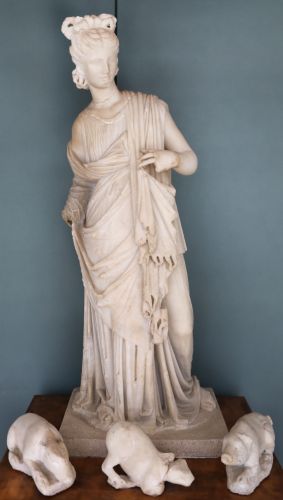
Circe’s instructions to Odysseus already connect the approach to the dead with recognizable geographical features. In the Odyssey, she describes a distant destination beyond Oceanus and identifies the meeting of rivers whose names would remain prominent in subsequent accounts of the underworld. Reaching the appointed place requires further knowledge of how communication with its inhabitants can be established. Odysseus performs the prescribed offerings, and the gathering shades approach while he waits to consult Tiresias. The encounter combines travel with ritual expertise, making access dependent upon instructions supplied by a divine adviser. Its purpose is also practical. The hero seeks information necessary for his return home. Homer provides an important precedent for journeys in which extraordinary knowledge becomes available through contact with the dead, although the episode offers no systematic account of the Earth’s interior. Its setting emerges through the requirements of the encounter, leaving considerable uncertainty about how its features belong within a comprehensive physical world.
The people Odysseus meets resist any simple description of a uniform Homeric afterlife. Achilles famously values even an impoverished existence among the living above sovereignty over the dead, making survival compatible with profound deprivation. Elsewhere in the same episode, Minos administers justice, and exceptional offenders undergo conspicuous punishments. Menelaus receives another prospect in a different part of the poem: eventual residence in Elysium, associated with his marriage to Helen and relationship to Zeus. These differences make an absolute opposition between an undifferentiated Homeric Hades and Plato’s morally ordered destinations untenable. The relevant question concerns how inherited distinctions were reorganized and extended.
Hesiod supplied a different resource through the immense depth assigned to Tartarus in the Theogony. The poem renders that distance imaginable by describing the fall of a bronze anvil; its descent from heaven to Earth takes nine days and nights, and an equivalent interval separates Earth from Tartarus. This striking comparison establishes a vertical scale whose lower reaches exceed ordinary experience as dramatically as the heavens above. The setting belongs principally to the struggle over divine sovereignty, especially the defeat and confinement of the Titans. Their imprisonment secures the victorious order by placing dangerous opponents beyond effective participation in it. Tartarus has a political function within the history of the gods as well as a spatial position beneath the human environment. Its formidable boundaries make divine victory durable, while the extraordinary distance reinforces the difficulty of return. When subsequent writers associate human wrongdoing with this depth, they draw upon a place already furnished with implications of exclusion and overwhelming restraint. Plato’s employment of Tartarus involves an adaptation of an established cosmic location. The name carries authority and menace before his account explains the work it performs within a system of postmortem destinations.
Initiatory traditions offered more explicit grounds for anticipating different conditions after death. The Homeric Hymn to Demeter distinguishes the portion awaiting those who have witnessed the goddess’s rites from the fate of those who remain without initiation. Participation confers a benefit extending beyond the life in which the ceremonies occur, although the hymn leaves its precise character largely undisclosed. Such reticence is important. The promise establishes a difference without supplying a detailed itinerary or a complete description of the privileged destination. Eleusinian expectations must be reconstructed with attention to the limits imposed by sacred secrecy. The surviving hymn supports confidence that initiation mattered to the expected fate of the dead; it cannot independently establish everything an initiate believed about the organization of their surroundings.
Pindar’s second Olympian Ode, composed for Theron of Acragas’s chariot victory in 476 BCE, demonstrates that morally differentiated prospects also appeared in poetry well before Plato wrote the Phaedo. The ode associates wrongdoing with judgment and describes a preferable existence relieved of the exhausting labor familiar to the living. Beyond this distinction, it links the most exalted prospect with repeated success in keeping the soul free from injustice. The passage toward the blessed island depends upon a history of conduct extending beyond a single ordinary lifespan. Its inhabitants include celebrated heroic figures, bringing exceptional destiny into contact with inherited traditions of heroic distinction. Yet the conditions described cannot be reduced to genealogy or public achievement alone. Moral requirements have become central to explaining why one destination is available to some and withheld from others. This material complicates any account that credits Plato with introducing ethical consequences into previously indifferent representations of death. His predecessors had already connected the quality of conduct with expectations about what followed it. Pindar’s presentation nevertheless belongs to an ode honoring a victor, where eschatological promises interact with the celebration of excellence and status. The passage should be read within that occasion, without converting its suggestive account into a complete religious system shared throughout the Greek world.
Small gold leaves deposited in graves bring the problem of passage into a more immediately personal register. Among the earliest surviving examples, the tablet from Hipponion in southern Italy dates to approximately 400 BCE, close to the period in which Plato’s philosophical activity developed. It preserves instructions concerning water sources and an encounter with guardians, including words through which the deceased can identify the appropriate claim to access. The relationship to Earth and starry Heaven asserted in such texts places the speaker within a larger divine genealogy. Knowledge of what to say becomes part of the equipment for reaching a desired destination. These inscriptions are often grouped under the description “Orphic” or “Bacchic,” but their variations require attention to texts and burial contexts. They do not preserve a single creed whose contents can simply be transferred to every person associated with initiation. Chronology imposes another constraint, since numerous examples belong to periods later than the composition of the Phaedo. Their collective evidence reveals a continuing repertoire of expectations and ritual claims, while the early Hipponion text establishes that some relevant forms were already available around Plato’s time. No surviving tablet proves that he consulted that inscription or borrowed his account from its wording. The comparison is strongest where it identifies a shared concern with qualified passage. A deceased person must possess the credentials appropriate to an encounter that would otherwise obstruct further movement.
Within the Phaedo, Socrates makes his appropriation of initiatory language explicit. He suggests that those who established the mysteries expressed an important truth enigmatically when they distinguished the polluted condition of the uninitiated from the blessed company awaiting the purified. He then identifies the genuine initiates with those who have practiced philosophy correctly. The intervention claims continuity with venerable religious teaching while assigning philosophical activity the decisive role in fulfilling its promise. It also makes an interpretive claim about what the founders of the rites intended, allowing Socrates to speak as someone capable of explaining their concealed significance. This is a substantial exercise of authority. Ritual language remains compelling, but its highest fulfillment is defined through the standards of the philosophical speaker.
An equally revealing revision occurs when Socrates considers the road to Hades. He disputes the simplicity of the route attributed to Aeschylus’s lost Telephus, reasoning that guides would be unnecessary if the way were straightforward. Customs associated with junctions and divided roads help him support the existence of a more complicated passage. Here the dialogue displays the reconstruction of tradition in the act of being performed. Poetic testimony is introduced, questioned, and modified through an appeal to ritual practice. Familiarity with a story does not oblige the speaker to accept its arrangement of places. As Radcliffe Edmonds’s work emphasizes, underworld narratives could become occasions for competing claims to authority through the reuse of recognizable materials. Plato’s version participates in that contest by changing the relationship between inherited destinations and the qualifications required to reach them. The vocabulary remains sufficiently familiar for readers to recognize its ancestry, while its organization prepares them for an Earth whose internal connections demand a much fuller explanation.
From Phasis to the Pillars: Reducing the Familiar World in Scale
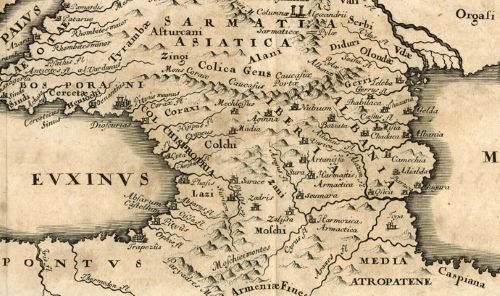
The geographical endpoints named by Socrates would have conveyed considerable reach to a Greek audience. Phasis was the river in Colchis conventionally identified with the Rioni, entering the eastern Black Sea in present-day Georgia. The Pillars of Heracles marked the passage through the Strait of Gibraltar toward the Atlantic. Between these references lay an extensive maritime region containing settlements whose relationships had developed through generations of movement and exchange. The eastern endpoint matters. Socrates’ formulation encompasses the Black Sea as well as the Mediterranean, reaching beyond the narrower basin most readily associated with Greek antiquity. He begins with places that locate his listeners within an intelligible geographical order. The scale of the subsequent comparison depends upon their recognizing how much territory these names ordinarily bring into view. An expanse that could demand substantial time and effort to traverse is about to acquire unexpectedly modest dimensions.
The pronoun “we” establishes the population whose position is being reconsidered. It refers to those dwelling between the specified endpoints, gathered around the sea, and should not silently become a designation for every person on Earth. Nor does the wording restrict this regional population to Athenians or make the surrounding lands exclusively Greek. The distinction becomes explicit when Socrates acknowledges other inhabitants elsewhere. His description situates its speakers and hearers within one area of residence, allowing their surroundings to lose their presumed representativeness without denying that they remain inhabited and important places.
Such a formulation gains historical substance from the dispersed settlement patterns examined by Irad Malkin in A Small Greek World. Greek communities had developed across widely separated coastlines, and their connections could make substantial distances compatible with a sense of participation in a shared world. Voyages carried information between places that possessed their own institutions and maintained different relationships with neighboring populations. A community could remain politically independent while participating in exchanges that extended well beyond its immediate territory. The water separating settlements also provided opportunities for contact, making the sea a practical reference point for understanding their distribution. Malkin’s account of these connections helps explain why residence around a body of water could express something historically recognizable to Plato’s readers. The philosophical effect arises when that same arrangement is viewed from a different scale. Coastal dispersion, which could testify to the breadth of Greek activity, becomes a pattern of concentration around one restricted feature. The comparison draws much of its force from reducing a region whose internal connections had made it seem extensive. Ants or frogs gathered around a pond supply the image through which Socrates performs that reduction. Their smallness is inseparable from the proportion between the creatures and the water beside which they congregate. Applied to people around the sea, the comparison momentarily grants the listener an observer’s view of an entire pattern of habitation. The maritime region becomes something that can be surveyed as a unit, with its residents distributed along its margins. Nothing requires the animals to symbolize social classes or defects of character. Their immediate function is to alter the dimensions within which human activity is apprehended. Differences that loom large within the community of coastal inhabitants become difficult to distinguish when the whole arrangement is regarded as the equivalent of life beside a pond.
Other populations extend the implications of the image beyond a clever diminution of Mediterranean importance. Socrates states that many people occupy other comparable regions, multiplying the possible settings of human residence. He supplies no catalogue of their settlements and offers no account of their customs. This absence limits what can responsibly be inferred about them, while the assertion itself prevents the named maritime span from exhausting the inhabited Earth. The passage does not merely place empty territory beyond the area known to the listeners. It assigns inhabitants to places outside the region around which their account of the world has been organized. Their existence complicates any easy identification of the speaker’s geographical horizon with the full distribution of human life. Nevertheless, the statement carries no developed political doctrine about relations among these populations, and it cannot independently establish an argument for their equality. Its more immediate impact is descriptive. The regional community designated by “we” becomes one population among others whose locations the dialogue leaves unspecified.
Socrates then connects this plurality to the depressions distributed across the Earth. These hollows differ in form and size, providing environments in which water and air accumulate. The familiar sea and its surrounding lands belong within one such setting, so ordinary elevation above sea level does not place their inhabitants upon the Earth’s outermost surface. A hollow can contain habitable ground and remain open overhead while occupying a lower position within the proposed structure. Two adjustments of scale must be distinguished. The first reduces the geographical extent of the region around the sea; the second changes its placement in relation to the surface beyond the depression. Their combination makes the account more disruptive than a simple assertion that the Earth contains additional territory. Enlarging a map could leave the observer’s understanding of his own location intact, whereas Socrates’ description requires the known region itself to be situated differently. Its residents can accurately recognize nearby features while misunderstanding the larger arrangement to which those features belong. The account makes room for detailed local knowledge within a seriously incomplete conception of the Earth.
Dissatisfaction with comprehensive geographical representations was already available within Greek inquiry. In the fourth book of his Histories, Herodotus mocks mapmakers who give the land a precisely circular outline, surround it with Ocean, and represent Europe and Asia as equal in size. His criticism provides a useful comparison because it shows that the authority of an orderly representation could be questioned before Plato, without establishing a direct line of influence between the two writers. Socrates’ intervention takes a different form, asking listeners to reconsider the standing of the entire region from which they ordinarily judge terrestrial space. That displacement should also be distinguished from the Earth’s position in the cosmos, which his account continues to place centrally. The claim concerns the limited extent and inferior location of an inhabited environment within the Earth. Navigation could reveal more of its coasts without establishing that its residents understood this larger relationship. Phasis and the Pillars remain useful geographical references, but their usefulness no longer warrants treating the world between them as an adequate measure of everything beyond it.
Looking Up from the Hollow: Perception and the True Earth

A spectator at the bottom of the sea could see the sun through water and still misunderstand the setting in which it appeared. In Socrates’ comparison, the mistake concerns the identification of the sea with heaven, despite the presence of visible objects beyond it. Repeated observations would remain confined by the same intervening medium. Lifting the head above the water would disclose a relationship that the submerged view had never made available.
For human beings, the corresponding difficulty concerns the air through which they observe the heavens. Socrates describes their surroundings as an accumulation within the depression they inhabit, whose conditions prevent them from recognizing the superior environment above. The analogy makes ordinary vision dependent upon something observers rarely consider while looking: the character of the medium separating them from what they see. A person might recognize an object without adequately understanding the circumstances of its appearance. Socrates develops the comparison through another hypothetical movement, imagining someone reaching the upper boundary of the air, perhaps by acquiring wings, and looking beyond it. Recognition would then depend upon that person’s nature being able to endure the sight. This condition gives the observer’s capacities a decisive role alongside the change of position. Merely reaching a vantage point would not guarantee that someone could withstand what became visible there. The account joins environmental difference to a possible transformation in the perceiver, giving the imagined ascent a significance that exceeds relocation. What becomes recognizable above is described as true heaven, true light, and true Earth. These expressions assign greater authority to the newly disclosed conditions, while the analogy explains why accustomed experience could have concealed their superiority.
Seen from above, the Earth possesses an appearance that Socrates compares to a ball assembled from twelve pieces of leather. The image allows a rounded object to display differentiated areas of color within a single visible composition. Some regions are golden, while others possess a whiteness surpassing familiar examples; additional colors exceed those available to ordinary experience. The description asks its audience to work from recognizable contrasts toward qualities that its members have never encountered. Even the depressions contribute to the overall pattern, taking on an appearance appropriate to their position within it. The imagined view retains the features previously described while allowing them to participate in an arrangement whose beauty cannot be judged from within one lower region.
Minerals provide the most sustained explanation of how such unfamiliar excellence can remain intelligible. Socrates treats the gemstones prized below as fragments of superior stones belonging to the purer Earth. What people regard as exceptional material offers a limited indication of qualities more fully present elsewhere. The account also explains deterioration through the damaging conditions associated with the lower environment, especially the action of salt water. Its contrast draws upon the recognizable difference between something preserved in an excellent condition and something altered through prolonged exposure. This reasoning extends beyond isolated precious objects to the ground and mountains themselves, making the landscape’s beauty a widespread property of its materials. Gold and silver are abundant and visible, accompanying stones whose excellence no longer appears as a rare interruption of otherwise ordinary terrain. Vegetation participates in the same improvement, so the scene includes flourishing organisms alongside its striking mineral surfaces. The inhabitants likewise occupy differentiated settings; some live inland, while others gather around the air in a relationship compared to human settlement beside water. Air serves them in a manner analogous to the role water performs below, and ether corresponds to their more favorable surrounding medium. Socrates further associates their seasonal conditions with freedom from disease and longer lives. The passage keeps returning to recognizable relationships between living creatures and their habitats, allowing bodily existence to acquire a substantially better condition. Its appeal depends upon the audience understanding how circumstances can improve life, even as the degree of improvement exceeds anything they have experienced.
Worship also changes under these conditions. The inhabitants possess sacred places where the gods are genuinely present, and their contact includes divine utterances and direct perception. Superior sight and hearing accompany greater intelligence, making the improvement of their surroundings relevant to their ability to understand what they encounter. Their clearer apprehension of celestial bodies belongs within this enlarged access, connecting observation of the heavens with a life in which divine presence is more immediately available.
The upper region’s material richness complicates its identification with the intelligible objects discussed elsewhere in the dialogue. A stone of extraordinary beauty remains an object, whereas the Beauty invoked in Socrates’ earlier argument explains what makes beautiful things beautiful. Purity alone does not erase that distinction. Kenneth Dorter’s interpretation is useful for approaching the intermediate character of a landscape whose objects possess heightened excellence while retaining their multiplicity and differentiated qualities. Such a setting can express philosophical aspirations without turning its plants and mountains into universal Forms. The inhabitants’ improved faculties raise a related issue. The passage imagines perception becoming more adequate when the conditions of perceiving improve. That possibility qualifies any reading of the dialogue which treats every exercise of bodily sense as equally incapable of contributing to understanding. A further distinction appears when Socrates later separates residence on the pure Earth from the condition of those sufficiently purified through philosophy to live without bodies. Their finer dwellings remain undescribed, preserving a limit beyond the unusually elaborate account of the upper landscape. Emma Gee’s treatment of the Phaedo as an integrated geography of soul helps situate these differences within the larger narrative. The vivid environment gives improved access to reality a form that listeners can imagine, while the account reserves another mode of existence beyond the bodily capacities it has described.
Why the Earth Remains in Place: Physical Explanation and the Good
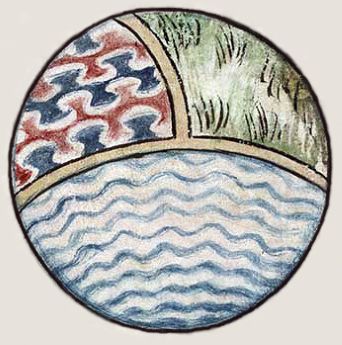
The Earth in Socrates’ account requires no supporting column or layer of air. Its stability depends upon the relationship between its position and the surrounding heaven. This answer recalls an earlier discussion of what an adequate explanation of nature should accomplish. Describing the circumstances under which something remains stationary may answer one question while leaving another unresolved: why should that arrangement be considered best?
The expectations Socrates attaches to Anaxagoras make this distinction clear. In the intellectual autobiography presented near the middle of the dialogue, he recalls an enthusiasm for investigating why things develop and cease to exist. His encounter with a book attributing the organization of everything to mind, or nous, seems to promise a more satisfying inquiry. He anticipates that an ordering intelligence will arrange each thing in the manner most appropriate to it, allowing an explanation of its condition through what is best. Applied to the Earth, this would require establishing whether it is flat or round and explaining the superiority of the shape it possesses. A central position would similarly demand an account of why occupying the center is better. Socrates eagerly obtains the books, expecting their author to make these connections explicit. The disappointment he subsequently describes arises from finding physical materials and movements invoked without the evaluative reasoning he had anticipated. His complaint concerns the explanatory use of mind. Naming an intelligent source of order has not supplied the reasons that would make its ordering intelligible. These expectations belong to Plato’s presentation of Socrates’ response to Anaxagoras and should not be mistaken for an independently established statement of the earlier thinker’s intentions.
Sitting in the prison provides Socrates with an example through which to sharpen his objection. An anatomical account could explain how his bones and sinews permit him to bend his limbs and maintain that posture. It would nevertheless leave unexplained his judgment that remaining under sentence is more just than escaping to another community. The same bodily structures could have carried him toward Megara or Boeotia if he had decided differently. Their presence establishes capacities whose exercise still requires an explanation appropriate to a chosen action. Socrates expressly acknowledges that he could not perform his decisions without a functioning body, preserving the importance of the conditions he distinguishes from the cause properly understood. Accepting punishment also remains separate from endorsing the Athenians’ judgment against him; their reasons for condemning him and his reasons for staying are different matters. The example makes the omission in the expected cosmology easier to grasp. An account can describe the means by which an arrangement is maintained while passing over the consideration that supposedly explains its adoption.
The search for a support beneath the Earth receives a pointed criticism in this context. Socrates mentions explanations involving a surrounding vortex or a foundation of air, representing their advocates as seeking something capable of sustaining the terrestrial mass. His reference to the search for a stronger Atlas exposes the explanatory pattern he finds unsatisfactory. Replacing a divine bearer with an enduring physical mechanism would still leave the question of goodness unanswered. What he wants to understand is the binding significance of the good within the organization of things, rather than another bearer whose strength accounts for their suspension. Yet he also admits that he has neither discovered the desired explanation nor learned it from someone else. That admission limits what readers can attribute to the discussion at this point. The demand for purposive explanation has been articulated without a completed account of how it should operate throughout nature. Socrates’ ensuing “second sailing” turns toward the examination of accounts and hypotheses, developing a method through which claims can be assessed by their implications. This procedure provides another route for inquiry after his disappointed expectations; it cannot simply be identified with a decision to compose the final geographical narrative. Nor does the ensuing appeal to Forms immediately establish that the Earth occupies its optimal position. The dialogue carries forward an explanatory ambition whose relation to its subsequent methods remains open to interpretation.
The later account of equilibrium approaches the problem through symmetry. A round Earth placed centrally within a uniform heaven has no greater inclination to move in one direction than another. Its balanced situation removes the need for an additional prop, since no directional preference supplies a reason for its departure. The argument explains continued rest on the stated assumptions, while leaving the goodness of those assumptions to be established separately.
David Sedley’s interpretation gives the return to terrestrial structure a substantial role within the dialogue’s larger argument. On his reading, the concluding myth answers expectations raised by Socrates’ earlier search for teleological explanation. Its arrangement of places acquires significance through the differences among souls and the conditions appropriate to them. The Earth becomes intelligible as a setting in which ethical distinctions have consequences, allowing its organization to participate in an account of purposes. This approach has considerable force because the earlier questions about terrestrial shape and position make their reappearance difficult to dismiss as incidental. The geographical narrative revisits subjects whose inadequate explanation had helped provoke Socrates’ methodological change. Nevertheless, the relationship between the passages requires reconstruction by the interpreter. Socrates does not explicitly demonstrate that equilibrium is the best possible terrestrial condition, and the absence of a directional inclination does not itself supply such a demonstration. A morally significant distribution of destinations also cannot establish every physical feature as uniquely optimal. Sedley’s reading is strongest when it identifies the myth’s contribution to the demand for purpose while preserving the difference between a coherent interpretation and a completed proof. The narrative develops the earlier question, even if its answer remains less explicit than the original expectations might lead a reader to require.
The scale at which goodness is evaluated presents a further difficulty. An arrangement judged best for an ordered whole need not maximize the immediate comfort or understanding of its ordinary inhabitants. Within the described Earth, human beings can occupy an inferior habitat despite the possibility that its position serves a more comprehensive purpose. The movement from Socrates’ personal decision to a proposed cosmic order requires care. Understanding why an individual chooses an action does not establish that the intentions governing nature are equally accessible. His example clarifies what a purposive explanation would need to provide without guaranteeing that the desired reasons have been found. The Earth’s unsupported rest gives the account a definite physical claim; its relation to the good remains a philosophical demand against which the adequacy of that claim must still be judged.
Where Rivers Disappear: Mediterranean Landscapes and Subterranean Possibility
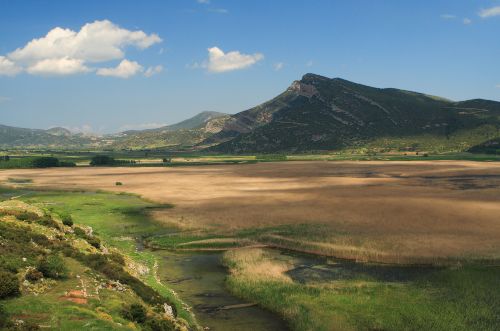
A stream entering an opening in the ground presents an immediate problem of explanation. Its disappearance establishes that water passes beyond the observer’s view, while leaving its subsequent course uncertain. A spring emerging elsewhere might suggest an answer, although proximity alone cannot demonstrate that the two belong to one waterway. Mediterranean landscapes offered numerous occasions for confronting this difference between witnessing an entry underground and knowing where the water went.
Much of the relevant terrain is described today as karst, a term for landscapes shaped by the dissolution of suitable rock, particularly limestone. Water moving through fractures gradually enlarges them, creating passages that can carry drainage beneath the ground. Surface streams may enter these openings, while water traveling underground can emerge through springs some distance away. Caves and enclosed depressions belong to the same range of landforms, although their dimensions and accessibility vary considerably. In sufficiently developed passages, the expression “underground river” can describe an actual flowing watercourse. Elsewhere, groundwater moves through smaller openings whose operation gives little indication of a spacious subterranean channel. This modern explanation clarifies the physical circumstances available for ancient observation without attributing its chemistry to ancient observers. Catherine Connors and Cindy Clendenon emphasize the importance of such terrain for interpreting Greek and Roman descriptions of hidden waters. Their approach directs attention toward features that could be encountered repeatedly within settled landscapes. The material plausibility of an underground route could begin with a familiar stream whose visible course ended abruptly.
Herodotus preserves a pertinent example in his account of the Erasinus. He reports the belief that its water originated in Lake Stymphalus, disappeared into an unseen chasm, and emerged again in the Argolid. His formulation records an attributed connection rather than the results of his own tracing of the water. The passage nevertheless establishes that explanations joining separated waters through an underground course circulated before Plato composed the Phaedo. It provides firmer chronological grounding for comparison than accounts preserved only by much later geographical writers.
The importance of these features extended into the practical conditions of settlement. Dora Crouch’s study of water management in Greek cities demonstrates how geological circumstances and access to water must be considered together when examining the development of inhabited places. Springs made underground drainage consequential even where its full course remained unknown. Their emergence could provide an accessible supply, while enclosed basins confronted residents with the behavior of water entering or accumulating within them. Blocked drainage openings could contribute to flooding, exposing the dependence of a usable surface upon passages beneath it. Such circumstances made the ground’s apparent solidity an unreliable guide to the movement of water through a district. They also created opportunities for accumulated local knowledge, since changes in flow could be noticed across repeated seasons. Practical familiarity need not have produced agreement about every connection between an opening and a resurgence. The distinction between observing a phenomenon and explaining its entire course remained substantial even where people depended upon it. Connors and Clendenon’s attention to the vocabulary of pits, lakes, and whirling waters helps recover the precision that some ancient descriptions possessed. Those descriptions could preserve close attention to terrain while also assigning its concealed connections a significance that observation alone could not establish.
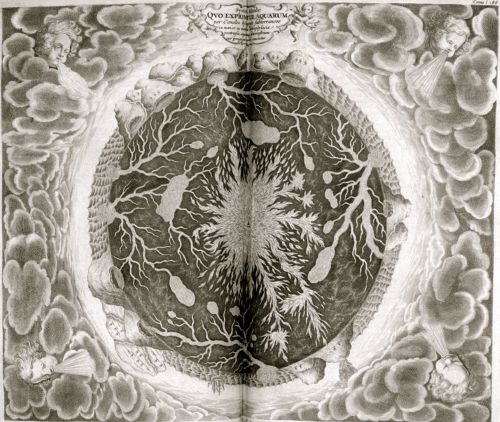
The Phaedo gives this problem a definite architectural form when Socrates turns from the surface depressions to the connections between them. Their openings vary in size, and passages of different widths permit water to move from one region into another. His comparison with mixing bowls makes the proposed communication intelligible through receptacles whose contents can be transferred. The description requires more than scattered empty spaces within the ground. Its cavities form an arrangement through which movement between separated places becomes possible. Familiar drainage phenomena provide an appropriate comparison for that possibility, although the dialogue extends communication across a scale no local disappearance could independently verify.
Sicily supplies an explicit terrestrial reference when Socrates broadens the account beyond ordinary water. He describes subterranean fire and fiery streams, together with mud whose behavior is compared to Sicilian flows. These details draw upon a different class of surface evidence from the streams that vanish into limestone openings. Volcanic material emerging from below gives visible expression to heat and movement within the ground, making the interior consequential through phenomena that can be witnessed above it. Yet limestone dissolution does not generate lava, and a modern explanation must keep the processes distinct. Plato’s description brings their effects into a shared account of what the Earth contains. The passage is historically revealing because it shows how different signs of subsurface activity could be assembled within one proposed arrangement. Sicily serves as a point of comparison through which unfamiliar interior conditions acquire recognizable manifestations. The text supplies neither a named eruption nor a claim that Socrates personally examined its source. Its use of the island warrants attention to Mediterranean physical experience while leaving the history of the author’s observations unresolved.
Geological comparisons establish the availability of relevant phenomena more securely than they establish the provenance of Plato’s design. The evidence does not permit each hollow in the dialogue to be assigned to a surveyed cave or every passage to a Mediterranean watercourse. Nor does the occurrence of genuine underground drainage demonstrate the existence of a single connected system encompassing the Earth. Plato’s description draws explanatory resources from a landscape in which water could disappear, return, and invite argument about the interval between those events. The existence of channels would still leave their extent, connections, and motive power to be explained.
Tartarus and the Circulation of the Earth’s Interior
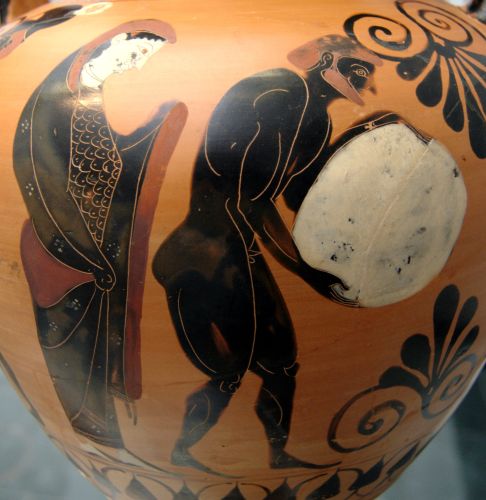
Tartarus becomes the principal connecting feature when Socrates identifies an immense chasm extending through the Earth. Waters gather into it and flow outward again, making it indispensable to the operation of the surrounding passages. He associates this opening with the depth named by Homer and other poets, incorporating an inherited designation into a newly specified pattern of movement. Its importance now depends upon its capacity to connect watercourses whose individual destinations and properties differ.
Movement originates in the liquid’s inability to settle upon a bottom or supporting base. Socrates describes it surging to and fro, with the accompanying air participating in the displacement. Powerful winds arise within the Earth as these movements carry air through its openings. Breathing supplies the explicit comparison through which the repeated inward and outward motion becomes intelligible. The analogy introduces a bodily rhythm into the explanation without independently establishing that the Earth is an organism. Elizabeth Pender’s reconstruction gives attention to this respiratory comparison and its relationship to the distribution of water through the larger arrangement. As the liquid moves toward different parts of the interior, it fills the channels leading away from the common chasm. Water reaches the places assigned to it, forming bodies at the surface or within the ground, before descending again through other openings. The account coordinates outward movement and return through a recurrent displacement, allowing different passages to participate in the same general process. A sea or spring can possess its own recognizable location while depending upon movement that originates elsewhere. The explanation requires its audience to connect such local features with a motion whose full extent remains concealed.
A limit governs the direction of descent. Returning streams enter Tartarus below the points from which they issued, sometimes after extensive winding courses. They can descend toward the Earth’s middle from either side, but continued movement beyond that point would become an ascent. “Down” acquires a center-related meaning, rather than indicating one direction that remains unchanged throughout every passage. The chasm runs through the Earth without supplying an indefinitely descending route.
Among the many streams, Socrates singles out four principal rivers. Oceanus is the greatest and outermost, following a circular course whose description retains the encircling character associated with its poetic name. Opposite it, and flowing in the contrary direction, Acheron passes through desolate regions before proceeding underground. Its course leads to the Acherusian Lake, which must be distinguished from both the river feeding it and Tartarus itself. The lake occupies a position within the arrangement, while the common chasm supplies the larger connection between departing and returning waters. These names identify different functions as well as different places. Their relationships establish a framework that later movements through the interior will depend upon.
Pyriphlegethon issues between the first two rivers and enters a region of intense fire near its point of departure. There it produces a lake described as larger than the sea familiar to Socrates’ listeners, seething with water and mud. The comparison lends the hidden basin a striking magnitude while specifying contents whose behavior can be imagined from terrestrial experience. Emerging turbid and muddy, the river continues through a winding underground course. It reaches the margins of the Acherusian Lake while preserving its waters from mixture with those of the lake. Further coils eventually bring it back into Tartarus at a lower level. Its fire-associated identity belongs to a watercourse whose contents include mud and disturbed liquid, giving it a more complicated composition than its name alone might suggest. Socrates also connects its activity with volcanic material expelled at the surface. The eruptions mentioned earlier in the description now acquire a named internal source, linking a visible disturbance to the passage beneath it. This connection makes Pyriphlegethon explanatory as well as topographical; its existence is used to account for something happening outside its own inaccessible course. Yet the river’s full circuit exceeds the evidence furnished by any outburst, since the narrative also assigns it relations to distant regions that an eruption could not disclose.
The remaining river emerges opposite Pyriphlegethon and first enters a wild region distinguished by its dark-blue appearance. This Stygian district contains the lake formed by its arrival, named Styx, where the water acquires formidable properties. The river subsequently follows an underground circuit opposed to that of Pyriphlegethon and approaches the Acherusian Lake from the other side. Its waters likewise remain unmixed before it returns to Tartarus opposite the fiery stream. Socrates identifies this fourth principal river as Cocytus. Styx is the name of the lake within its course, rather than an additional member of the four-river enumeration. Their opposed movements give Cocytus and Pyriphlegethon a paired relationship while preserving differences in the regions they traverse and the qualities they acquire.
Communication throughout this interior does not make its waters interchangeable. The courses retain distinct identities even where they approach the same destination. Socrates specifies their separation more fully than he explains the physical means by which every boundary between them is maintained. The resulting design combines a shared source of movement with relationships that preserve the identity of certain routes. Souls entering this environment will encounter both its extensive connections and the restrictions imposed by its differentiated paths.
Traveling after Death: The Character of the Soul
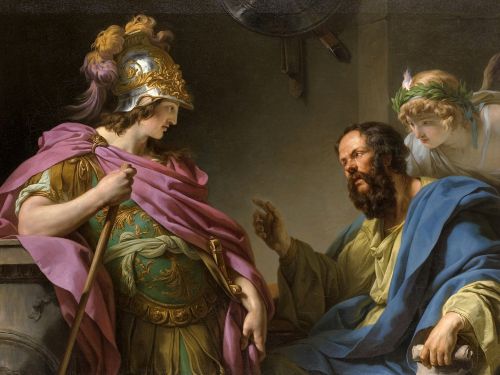
Education and upbringing accompany the soul when other possessions have ceased to matter. Socrates gives these a double significance, since their effects can benefit or injure the traveler from the beginning of its passage. The terms concern formation and nurture broadly, extending beyond instruction in specific subjects. Death leaves the soul answerable for dispositions acquired through living, with the quality of that preparation already affecting its ability to proceed.
A divine attendant supplies the first direction. Each person has been allotted a daimon during life, and this figure conducts the deceased toward the gathering associated with judgment. Guidance connects the person’s earlier existence with the arrangements governing departure, placing the traveler within an order it has not independently devised. The account then describes onward movement into Hades under appointed direction, followed, after the appropriate residence, by another guide’s conduct of the return. These functions establish stages of supervision without providing a complete explanation of the relationships among the beings who perform them. The passage does not make the identity of the first escort and the guide appointed for onward travel entirely explicit. The return guide is distinguished more clearly. What matters throughout is the allocation of responsibilities sufficient to move the dead between places they cannot simply claim for themselves. The personal attendant’s presence also gives departure an individual character before the deceased joins the larger gathering. Entry into the postmortem order begins through an assigned relationship whose existence does not depend upon the traveler’s having cultivated philosophical understanding.
For the intelligent, well-ordered soul, guidance receives a cooperative response. Socrates also credits it with understanding the circumstances in which it finds itself. Its readiness includes a capacity to recognize appropriate direction, giving earlier formation an immediate practical consequence. Competence here means participating properly in the journey, without requiring the traveler to possess exhaustive knowledge of the terrain through which it will pass.
Attachment to the body produces a more difficult departure. The soul that has made bodily gratification its overriding concern remains drawn toward the body and the visible surroundings from which it is being separated. Socrates describes an interval of lingering followed by a painful removal, during which the assigned attendant must overcome substantial resistance. The definition of death as separation does not make departure an equally uncomplicated event for every person. What has been desired repeatedly retains its power even when the circumstances permitting its familiar satisfaction have changed. The soul’s opposition expresses a continuity of inclination across the disruption of bodily death. An earlier passage develops a related idea through the apparitions associated with graves, which Socrates interprets as manifestations of souls still burdened with bodily qualities. Those images and the later account of forced departure belong to different stages of the discussion, but both associate difficulty in leaving with the consequences of prior attachment. Neither requires the assumption that the soul has ceased to possess every rational capacity. Its problem concerns the direction of its commitments and the power they continue to exercise. The attendant can compel movement without the narrative suggesting that coercion itself instantly reforms the traveler. Philosophical preparation acquires importance because a disposition formed before death affects how the soul responds when departure becomes unavoidable.
Serious wrongdoing introduces a further obstacle through the reaction of others. Souls implicated in unjust killings and comparable acts find themselves shunned by those who encounter them. Their isolation includes the refusal of companionship or guidance, leaving them to wander in perplexity through an appointed interval. Necessity eventually carries them to the residence appropriate to their condition. This episode makes the results of wrongdoing relational. The traveler’s predicament includes an inability to enter the company available to other souls, as well as difficulty reaching a destination.
Judgment establishes the authority under which such destinations are assigned. The initial description places it within the outline of departure, and the narration takes it up in greater detail after setting out the Earth’s interior. The later scene supplies substance to the earlier synopsis, bringing the lives of the arriving dead into relation with the places just described. Socrates says they are judged according to how they have lived, making their histories the basis of the distinctions that follow. The geography provides destinations and means of access, while assessment determines the outcome appropriate to an individual. Its waterways do not themselves conduct an inquiry into responsibility. The account is considerably more expansive about the resulting conditions than about the procedure through which a judgment is reached. It offers little detail concerning testimony or the deliberations of those making the assessment. Radcliffe Edmonds’s treatment of the journey helps direct attention toward this concentration on the traveler’s resulting state and appropriate place. A further philosophical commitment is involved here, since continued existence alone cannot establish that the dead will receive a just evaluation. The narrative supplies an ordered relation between conduct and consequence whose authority extends beyond the argument that a soul can survive.
On Acheron, souls whose lives have been intermediate embark on the conveyances appointed for them and travel toward the lake. The description places them in a recognizable activity of transit, providing an accommodation suited to the watery terrain. A ferryman and a payment for his services receive no mention here. Reading those familiar conventions into the scene would add requirements for passage that this account has not imposed.
Elizabeth Pender’s interpretation brings the continuing constraints of this environment into focus. She reads the interior as a larger corporeal setting within which souls remain exposed to disturbance after leaving their individual bodies. This approach draws out the difference between bodily separation and complete freedom from the conditions associated with bodily existence. The traveler can still be delayed or carried along, and its wishes do not establish an unrestricted capacity to move. Pender’s reading concerns the explanatory role of these circumstances; it does not require assigning each soul a newly constructed anatomical body. It also helps connect the varied responses to guidance with the physical passages that await those being guided. A well-prepared soul can recognize direction and cooperate, while others arrive with commitments that make their changed circumstances difficult to negotiate. The terrain gives these differences practical expression through encounters whose outcome the traveler cannot control merely by wanting it to change. Responsibility remains attached to the life through which the soul has been formed, while its subsequent movements reveal the extent to which that formation has prepared it for circumstances no longer governed by its accustomed desires.
Atonement and the Unequal Destinations of Souls
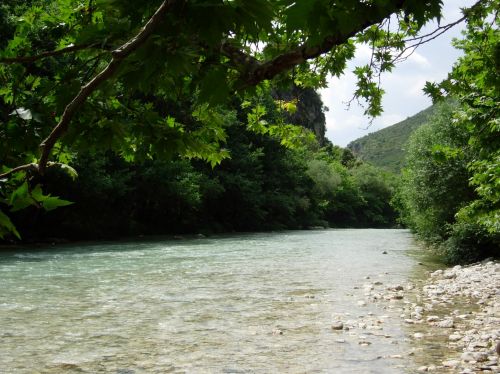
The Acherusian Lake accommodates lives containing a mixture of wrongdoing and beneficial action. Those assigned there undergo purification and pay penalties for their offenses, while also receiving honors for the good they have done. Their residence permits different aspects of a life to receive their due. The intermediate category has its own moral significance, recognizing that an individual history can require correction without being wholly defined by its failures.
For others, Socrates describes a judgment of incurability. Acutely grave sacrilege, unjust killings, and comparable offenses can place souls among those cast into Tartarus permanently. Their confinement has no stated endpoint and offers no procedure through which they might secure admission elsewhere. This outcome imposes an important limit upon interpretations that make all Platonic punishment an instrument of eventual improvement. The language of cure helps distinguish conditions of soul, but the account expressly allows a condition judged beyond remedy. Immortality acquires a disturbing implication: continued existence can preserve a state from which recovery is excluded. The narrative does not provide an exhaustive classification of the acts or histories that establish such irreparability. Its examples identify kinds of wrongdoing whose gravity warrants the judgment, leaving the assessment itself with the authority to determine whether reform remains possible. Nor does the passage describe a further opportunity through which these souls can contest their placement. Permanent exclusion constitutes one of the order’s acknowledged results, rather than an obstacle the remaining narrative promises eventually to overcome.
Grave offenses can nevertheless receive a different assessment when the person remains curable. Socrates gives the example of violence against a father or mother committed in anger and regretted throughout the remainder of the offender’s life. Homicide committed under comparable circumstances also belongs within this discussion, although the wording does not establish a modern legal category such as unintentional manslaughter. The circumstances of an act and the subsequent course of the person’s life matter alongside the harm inflicted. Lifelong remorse helps make possible a judgment that the offender can be corrected. It does not cancel the wrongdoing or secure exemption from the consequences assigned to it.
These souls initially spend one year in Tartarus. A surge then casts them into the rivers, carrying those responsible for homicide along Cocytus and those who assaulted their parents along Pyriphlegethon. Their courses bring them toward the Acherusian Lake, where another condition of release must be confronted. Expulsion from Tartarus marks a stage within their punishment, and the text does not specify that every later circuit must repeat the first year’s duration.
At the lake, offenders call to those they killed or subjected to outrage. They ask the injured people to receive them and permit their entry, making acceptance depend upon a response that punishment alone cannot supply. Successful persuasion ends the sufferings described for this stage of their sentence. Failure sends them back toward Tartarus and the rivers, prolonging the process until they obtain the necessary assent. The person responsible for the injury cannot determine unilaterally that sufficient remorse has been expressed or enough suffering endured. Someone else retains a significant voice in deciding whether the relationship can change. This requirement also prevents the offense from becoming an exclusively private defect of the offender, removable through a transformation that leaves the injured party irrelevant. The judges have already imposed a sentence whose operation includes this encounter, so acceptance fulfills a condition of the judgment rather than overturning it. “Forgiveness” is an appropriate interpretation of what occurs, provided it remains attached to the action explicitly described: willingness to admit and receive the supplicant. The narrative offers no formula that would compel such willingness. Its repeated opportunities allow reconciliation to remain possible while making the offender dependent upon more than the recurrence of the current.
Those whose lives have been distinguished by holiness escape the lower places of confinement. Their allotted home is the pure Earth, giving them a residence separate from the penitential conditions described below. The movement grants exemplary conduct a positive destination beyond the resolution of certain offenses. It also establishes a level of attainment that Socrates will immediately distinguish from the further condition available through sufficient philosophical purification.
The philosophers’ destination changes the terms of embodied existence. Those adequately purified through philosophy live thereafter without bodies and reach dwellings finer still, whose description Socrates declines because explanation would be difficult and the remaining time insufficient. The condition attached to this outcome deserves emphasis. The promise concerns a degree of purification achieved through philosophy. Identifying oneself with philosophical discussion does not by itself establish that the requisite transformation has occurred. The distinction reaches back to the dialogue’s demanding conception of how a person should live, extending its impacts beyond the advantages assigned to holiness. Yet the account supplies no detailed assessment procedure through which readers could determine who has met that standard. It announces the difference between the two outcomes more confidently than it describes the circumstances of the higher one. This restraint leaves the hierarchy clear while withholding a comparable geography for its culmination. Souls residing on the pure Earth and souls living without bodies cannot be placed within one undifferentiated reward. The latter condition exceeds the bodily possibilities through which the upper landscape had been made imaginable.
Victims’ authority over release remains one of the most difficult features within this distribution of outcomes. Elizabeth Pender draws attention to the problem that an injured person’s judgment need not be perfectly informed or free from faults. The narrative grants such people a decisive role without explaining how their willingness to receive an offender relates to an independent measure of adequate reform. A refusal could prolong suffering even after substantial change, while acceptance need not follow a uniform standard across different cases. The same provision that acknowledges the injured party introduces uncertainty about the proportion between correction and continued punishment. Pender cautiously suggests that the act of appealing might itself contribute to an offender’s internal reform, giving the encounter significance beyond obtaining permission to enter the lake. That possibility helps explain why the prescribed ordeal involves addressing particular people, although it cannot establish that every refusal or eventual agreement must be just. The passage preserves a demanding conception of reconciliation within a system that also authorizes permanent exclusion. Its unequal destinations depend upon judgments of character, but one route out of suffering also requires a relationship with another soul to be renegotiated. The resulting order is more difficult to interpret than a system in which pain automatically removes guilt; it places release within an encounter whose moral value is substantial and whose fairness remains open to scrutiny.
Qualified Confidence: What Socrates Asks His Listeners to Believe
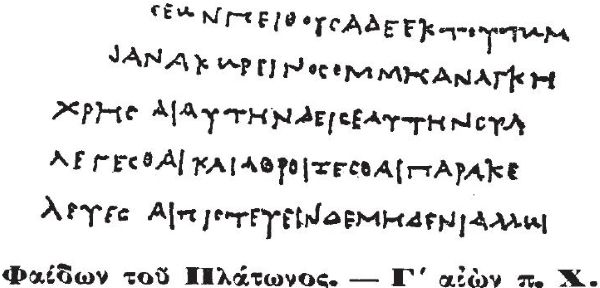
The final qualification changes the kind of assent Socrates requests. At 114d, he calls exact insistence upon the narrated account inappropriate for a person possessing understanding. This instruction concerns the responsible assertion of claims, giving the conclusion a different status from the vividness of the preceding descriptions. A listener’s ability to picture the scene does not establish an entitlement to affirm that events occur precisely in that manner.
Socrates nevertheless commends a broader belief concerning souls and their dwelling places. These things, or something resembling them, deserve to be taken seriously. The qualification leaves the resemblance unspecified, withholding a rule by which readers could separate indispensable features from dispensable elaborations. His stated basis is the account of immortality developed through the preceding discussion, which he continues to regard as persuasive. That reference gives the closing narrative an argumentative context without demonstrating every further claim it contains. A soul’s continued existence would not independently establish the distribution of punishments, much less the courses of the rivers through which some are administered. The relation between the argument and the story remains more demanding than a simple transfer of certainty from one to the other. Equally, the reservation does not declare the entire description false or identify all its physical features as symbols. Because Socrates speaks of souls and their dwellings together, the wording supplies no automatic exemption through which every moral outcome becomes certain while only its setting remains doubtful. Readers must assess what the account asks them to accept without imposing a division that the qualification itself does not expressly make.
His description of the venture as a “noble risk” acknowledges the distance between justified commitment and complete assurance. The adjective can also carry the sense of something fine or beautiful, giving the proposed risk an evaluative character. Socrates offers no numerical estimate of its likelihood and constructs no calculation demonstrating that belief carries only advantages. The commendation instead presents a venture worthy of someone who has followed the discussion and recognizes the importance assigned to the soul. Its appropriateness must be judged alongside those commitments, rather than established merely by the comfort it might provide.
Repetition gives this venture a practical form. Socrates recommends singing such accounts over oneself as an incantation, connecting that purpose with the considerable length of his narration. Earlier, Cebes had suggested that a frightened child remained within the listeners, requiring persuasion against the terrors associated with death. Socrates responded by recommending daily enchantment, and the prospect of his absence prompted the question of where a capable practitioner could subsequently be found. His advice extended the search across Greece and foreign peoples while also directing the companions toward one another. The exchange recognizes an enduring task of emotional formation, for which a single successful conversation might prove insufficient. Fear can persist through habits of imagination even when someone is prepared to acknowledge the force of an argument. The language of enchantment gives words a role in altering that response, making their repeated use significant beyond the moment of initial acceptance. Yet the sequence does not establish that emotional work supersedes examination. Immediately after this earlier discussion, Socrates resumes the analytical inquiry into what kinds of things can undergo dispersal. The proximity of the two activities permits a reading in which intellectual investigation and the treatment of fear sustain one another. Calling the concluding account an incantation identifies something it is intended to accomplish, while leaving its claims and persuasive means available for scrutiny.
Catalin Partenie and Sara Brill give different weights to these functions. Partenie interprets the myth as encouraging beliefs and conduct consonant with reason, without supplying another proof of immortality. His treatment regards its fantastical geography as part of a persuasive presentation whose significance depends upon its relationship to the dialogue’s reasoning. Brill assigns the narrative a more actively critical role, arguing that it exposes limitations in the perspectives through which the preceding discussions have approached soul and body. On her account, the difficulty concerns whether their conceptual distinctions adequately address the lives and deaths of embodied beings. The myth contributes by making the speakers’ own standpoint an object of attention, so its philosophical work exceeds rendering conclusions emotionally acceptable. Her judgment that the preceding arguments fail to persuade adequately is a substantive interpretation, rather than a verdict that all readers of the Phaedo must share. The difference between these approaches concerns how much inquiry the narrative itself performs. Socrates’ qualification can accommodate continuing debate about that contribution, since it neither grants the description demonstrative authority nor dismisses the exercise as intellectually expendable.
Simmias had earlier supplied a related model through his image of the strongest available human account serving as a raft. His first preference is to learn or discover the truth; provisional reliance becomes necessary when those stronger possibilities prove unavailable. A more secure divine account remains a conditional possibility within that speech. The comparison supports perseverance amid incomplete assurance, without itself identifying Socrates’ concluding narrative as revelation.
The closing exhortation makes the recommended direction of conduct more explicit than the specifics of the destination. Socrates turns to the soul’s appropriate adornment, naming moderation and justice alongside courage, freedom, and truth. These excellences concern the disposition of a person across activities, extending beyond skill in philosophical disputation. The contrast with bodily adornment relocates preparation within qualities whose cultivation belongs to the conduct of a life. Repeating the account cannot independently substitute for that work, since the reassurance is addressed to someone whose efforts have been directed toward such goods. Recognizing the clarity of the ethical recommendation does not settle whether the promised results have been adequately established. One can distinguish the character Socrates commends from the strength of his grounds for associating it with a postmortem condition. His qualified confidence holds those questions together, recommending a commitment whose consequences matter while refusing the claim to exact knowledge that his own description might otherwise appear to invite.
Aristotle’s Objection: Can These Rivers Actually Flow?

Aristotle names the Phaedo directly when rejecting its explanation of rivers and the sea. The criticism appears in the second book of the Meteorology, within an investigation of the sea’s persistence and salinity. His immediate question concerns the operation of water, bringing the proposed subterranean circulation under examination as a physical account. Channels and currents that explain surface phenomena must produce effects consistent with the behavior they are invoked to explain.
The surrounding discussion gives Aristotle’s challenge a definite context. Rivers continually deliver water to the sea, yet its volume does not simply increase without limit. Aristotle explains this persistence through processes that include the sun’s action upon moisture and its subsequent return. He distinguishes the finer, sweeter portion carried upward from the heavier saline residue that remains. Water raised into the upper region undergoes condensation and returns to the Earth, contributing to a recurring process of change. The sea occupies a position toward which waters move and within which their different components behave differently. He also argues that evaporation can account for the disappearance of incoming water across the sea’s extensive surface, comparing the behavior of a compact quantity with that of liquid spread more thinly. The problem requires an explanation of movement together with transformation. Against this background, the Phaedo’s common subterranean source appears to assign the sea and rivers relationships that Aristotle’s own account does not require.
Before objecting, he reconstructs the proposed arrangement in considerable detail. His summary includes the communicating channels, the central source, and the oscillation through which waters reach different regions. Crucially, he also repeats the restriction that descent extends only to the Earth’s center, beyond which continued movement becomes upward. His criticism cannot fairly be explained as a failure to notice Plato’s qualification about direction. The difficulty, as Aristotle presents it, arises from the power attributed to the surging source. River movement would depend upon whichever direction its displacement imposed, allowing streams to flow upward or reverse the sense Aristotle expects their courses to maintain. Plato has described a means of distribution, but Aristotle challenges whether it can produce the regular behavior of rivers. The objection addresses the consequences of the mechanism as a whole, rather than simply pointing to one descending passage and declaring its slope mistaken. It also operates within Aristotle’s understanding of natural movement, whose assumptions should remain visible when assessing its force. He provides no quantitative analysis of the proposed oscillation. His case rests upon the incompatibility he identifies between its directional effects and the movement that an adequate explanation of rivers should secure.
A second objection concerns the water continually generated and carried away as vapor. Aristotle construes the circulation as returning its entire outflow to the original source, preserving the same quantity within that arrangement. He then asks how such a description accommodates the formation and disappearance of water involved in the processes he has been discussing. This is his reconstruction of the model’s consequences, not an explicit declaration in the Phaedo that rainfall or evaporation cannot occur. The criticism exposes an explanatory omission whose importance follows from the breadth of the system’s proposed operation.
Observed destinations furnish another part of the argument. Aristotle maintains that rivers terminate in the sea or join other rivers, while streams swallowed by the ground emerge again. He connects the magnitude of the Nile and the Istrus with their extended courses and the tributaries they collect. This explanation gives their volume a geographical basis in the accumulation of contributing waters. A universal source in Tartarus, he argues, does not account adequately for these differences.
Acceptance of disappearing streams is important for understanding the disagreement. Elsewhere in the Meteorology, Aristotle treats Arcadian rivers that enter the ground as evidence of subterranean cavities and passages. Connors and Clendenon emphasize the distinction between this recognition and the further inference that all waterways communicate through one encompassing reservoir. The criticism leaves room for substantial unseen drainage while disputing the structure assigned to it. Aristotle’s own explanations nevertheless also extend beyond what can be inspected directly. He gives underground condensation a role in river formation, describing processes within the ground whose occurrence must be inferred from their supposed conditions and effects. Malcolm Wilson’s study cautions against identifying this manner of physical inquiry with modern empiricism. Evaporation and returning moisture do not make the whole Aristotelian explanation equivalent to a modern account of the hydrologic cycle. His proposals belong within a larger conception of natural processes, including the generation of water beneath the surface. Even the claim that rivers ultimately reach the sea must remain attributed to him, rather than adopted as an unrestricted statement about terrestrial drainage. The dispute involves different combinations of observation and causal inference, with neither writer limiting his account to visible watercourses. Aristotle’s challenge gains force from demanding that the inferred processes explain the observed patterns, while his alternative remains answerable to the same demand.
The consequences for interpreting Plato must be stated at the level the criticism reaches. Failure of the circulation would undermine this physical setting for the journeys, without independently disproving survival or postmortem judgment. Conversely, the account’s ethical significance cannot establish that its waters move as described. Dismissing Aristotle’s intervention as an inability to appreciate a philosophical narrative would evade the fact that the narrative assigns its interior a causal role. It explains eruptions and the distribution of waters through specified connections whose operation can be questioned. Aristotle makes that vulnerability explicit, requiring the proposed source of motion to account for the kinds of flow attributed to it. The geographical imagination has generated claims that can become subjects of argument in natural philosophy, including for readers who continue to find the larger story compelling.
Defending Plato’s Earth
By the fifth and sixth centuries CE, the geographical account had acquired a place within a much longer history of Platonic interpretation. Proclus examined its implications during his teaching at Athens, while Damascius subsequently reconsidered arguments inherited from earlier commentators. Their surviving documentation is uneven. Proclus’s complete commentary on the Phaedo is lost, whereas materials from Damascius’s teaching preserve discussions of its difficulties. Proclus’s extant commentary on the Timaeus supplies additional evidence of how one Platonic dialogue could help establish the meaning of another.
Damascius confronted interpretations that changed the identity of the Earth under discussion. Some associated it with an incorporeal principle, while others expanded its reference to the whole cosmos or the region beneath the Moon. These proposals offered ways of accommodating extraordinary descriptions by assigning them subjects different from the terrestrial body familiar to geographers. His response insists that Socrates appears to be discussing that same terrestrial body. The inhabitants’ perceptual activities and the references to seasons count among his reasons for resisting an exclusively incorporeal interpretation. A description involving differentiated colors and bodily capacities presents difficulties if its object is immediately identified with an immaterial Form. These observations give the account’s concrete wording argumentative authority within the commentary. Damascius does not treat its physical features as details that can be discarded once a more exalted interpretation has been proposed. Carlos Steel’s study emphasizes the seriousness of this engagement with natural philosophy, including the effort to supply arguments concerning the Earth’s position, shape, stability, and size. Commentary becomes a means of making the geographical claims more defensible than their relatively compressed presentation in Plato initially allows.
For Proclus, the Earth’s immobility also involved reconciling passages elsewhere in Plato. Marc-Antoine Gavray examines his use of the Phaedo while interpreting disputed wording in the Timaeus that could suggest terrestrial movement. Proclus argues that language associated with coiling or winding need not imply rotation, bringing lexical analysis into the defense of a stationary Earth. The Phaedo’s explanation of equilibrium supplies further support for this interpretation. Theological associations with Hestia reinforce the understanding of terrestrial steadiness, placing the physical claim within a conception of divine order. The argument draws authority from relationships among passages and doctrines as well as from the meaning of an expression. Its purpose is to establish a coherent Platonic position across works whose wording requires interpretation. This defense concerns the motion of the Earth itself, leaving the operation of its internal waterways as a distinct problem.
A separate Aristotelian challenge sharpened Damascius’s treatment of stability. If a body remains centrally situated simply because its surroundings give it no preference for movement, Aristotle had objected, the same reasoning should apparently keep fire there. Damascius answers by distinguishing the tendencies of the materials concerned. Earth’s downward weight and fire’s upward tendency cannot be treated as equivalent cases. The relevant balance must be understood together with the character of the body being balanced. His defense selectively employs distinctions recognizable within Aristotelian physics to resist Aristotle’s conclusion. Commitment to Plato could generate an argument through a rival philosopher’s conceptual resources.
Size created a different difficulty because the larger Earth had to be accommodated to geographical measurement. Damascius questions whether measurements associated with the inhabited region establish the dimensions of the purer surface described by Plato. Within his reconstruction, the circumference belonging to the lower level cannot simply determine that of the higher one. He reinforces the point through the possibility of observers situated still farther below, whose measurements would likewise underestimate what lay beyond their surroundings. The argument relocates the applicability of geographical calculation, allowing its results a restricted validity while challenging the scope assigned to them. A measured surface becomes one component of an arrangement whose full dimensions remain contested. Damascius also draws upon other Platonic materials, including Atlantis, when supporting the existence of territories exceeding those conventionally brought into consideration. This appeal reveals the importance of interpretation across the corpus. One geographical claim receives assistance from another text whose own status requires examination. Additional references to ocean depths and terrestrial elevations extend the range of comparisons through which the enlarged Earth might be defended. The commentary thereby subjects established measurements to questions generated by its reading of Plato. It does not independently demonstrate the greater dimensions merely by showing how existing calculations could be assigned to a lower surface.
Reports about exceptional mountains provide another strand of support. Damascius invokes summits said to rise above clouds and weather, together with accounts of prolonged illumination on the Caucasus. These belong to his reported evidence and should not be adopted as verified descriptions of mountain conditions. Their significance lies in the suggestion that considerable elevation could bring a region into circumstances unlike those experienced below. Features associated with the upper Earth appeared to possess terrestrial comparisons. Even granting the reports extraordinary height or freedom from some weather conditions would not verify the whole superior habitat. The argument supports a proposed possibility through selected resemblances, leaving a substantial distance between those resemblances and the complete description being defended.
Physical commitment did not exclude a further divine meaning. Damascius allows the upper Earth’s qualities to receive both physical and incorporeal interpretations, making the account significant at more than one level. Natural philosophy can describe something that also indicates superior principles or forms of life. Myth supplies an additional dimension of understanding without automatically cancelling the terrestrial reference upon which his earlier objections had insisted. The coexistence of these readings belongs to his interpretive method and cannot simply be assumed to reproduce Plato’s own intentions.
His willingness to reconsider the narrative becomes evident in the treatment of victims’ assent. Damascius asks how the punishment can operate if those who were injured are not present at the lake, and why release should depend upon their potentially disordered emotional responses. These questions expose difficulties within the moral procedure rather than merely defending its authority against external criticism. One solution he considers involves divine powers presenting likenesses of the injured people, allowing the prescribed encounter to occur under an intelligible administration of justice. Such a proposal changes what the offenders would be addressing, transferring the operation of the encounter toward a divinely provided representation. It also supplies an assumption absent from Socrates’ description. The repair preserves a larger philosophical conception of appropriate consequences, but its adequacy depends upon accepting that the narrative can receive this kind of supplementation. Damascius’s critical labor shows how fidelity to Plato could coexist with substantial reconstruction. His arguments establish the vitality of a later debate, while the differences between his solutions and the original wording remain essential evidence of what that debate required.
Does an Ethical Reading Explain Away Plato’s Physical Earth?
The following video from “Great Books Prof” is brief explanation of Plato’s Phaedo:
An ethical interpretation can acknowledge physical objections and still fail to take their impacts seriously enough. The danger arises when an unsuccessful explanation of nature is immediately redescribed as a successful vehicle for moral reflection. Such a procedure could preserve the interpreter’s preferred conclusion regardless of whether the proposed waterways make sense. Plato’s arrangement would then matter only when its details supported the reading, while difficulties counted for little because its supposedly essential message had already been placed beyond their reach.
The objection has substantial historical support. Aristotle examines consequences that follow from the circulation attributed to the Phaedo, treating its account as answerable for the behavior of rivers. Later Platonists likewise expend considerable effort defending terrestrial propositions through physical arguments and geographical comparisons. Their willingness to combine these defenses with theological interpretation makes it difficult to dismiss physical commitment as a failure to appreciate philosophical meaning. Socrates’ qualification concerns exact insistence upon his description; it does not expressly direct listeners to replace the whole account with an allegorical equivalent. He continues to commend belief concerning souls and their dwellings, preserving some proposed correspondence between the narrative and what awaits the dead. An ethical reading owes an explanation of what that correspondence requires. If the interior helps make assigned destinations appear appropriate, its organization contributes to the apparent credibility of the postmortem order. The failure of its causal explanation would weaken that representation of justice as something operating through the constitution of the Earth. This deserves recognition even though it would not independently establish that moral responsibility or survival after death is impossible.
Reception nevertheless cannot settle the original account’s intended status. In reviewing the collection containing Steel’s study, Cinzia Arruzza notes his concluding doubt that Plato meant the passage to expound a scientific theory of the Earth. She questions whether the reconstruction of later interpretations establishes that judgment. The disagreement identifies a limit applying in both directions. Later physical defenses cannot by themselves prove Plato’s original commitment, while dissatisfaction with those defenses cannot establish that he intended an exclusively nonphysical meaning. Either conclusion requires an argument from the dialogue’s own language and purposes, with the commentators providing evidence of interpretive possibilities rather than final authority over its author.
A stronger ethical reading responds by explaining why particular geographical relationships perform particular philosophical work. Brill’s emphasis upon the speakers’ own position offers such a response because it makes the inhabited depression significant to their inquiry. The comparison requires people to imagine a standpoint from which the surroundings they take for granted acquire a different appearance and standing. That operation depends upon the relation between the familiar region and the proposed surface beyond it; an arbitrary succession of rewards and torments would not produce the same problem. Even if the upper Earth does not exist, the imagined change of viewpoint can expose the possibility that experience feels comprehensive while remaining restricted. This establishes something about what the narrative enables its readers to consider. It does not authenticate the concealed world through which the consideration has been prompted. The distinction also narrows what can be claimed about the resulting ethical lesson. Geographical diminishment does not entail moral equality, and the account reserves its highest condition for those sufficiently purified through philosophy. Ordinary experience loses authority while a demanding philosophical standard receives exceptional recognition. The movement beyond accustomed surroundings can support a hierarchy of understanding as well as encourage intellectual modesty. An adequate interpretation must examine that allocation of authority, including the possibility that the narrative elevates the philosopher’s outlook through the same gesture that limits other perspectives. Its ethical significance includes commitments that remain contestable, rather than a single lesson whose desirability excuses every difficulty in its presentation.
My argument must stop short of treating ethical purpose as a resolution of the question of physical truth. Plato connects the assessment of lives with an articulated terrestrial order, and defects in that order belong to the interpretation of what he has constructed. Some philosophical effects can be identified without accepting the cosmology, especially the disturbance of confidence produced by a changed standpoint. Other claims require more: the suggestion that character receives an appropriate destination depends upon a correspondence the imagined geography represents without conclusively establishing. Taking that limitation seriously preserves a difference between analyzing the account’s activity and vindicating its assurances. It also prevents Socrates’ caution from becoming permission to remove whatever makes the description vulnerable. The unresolved issue is how much of the proposed world must remain credible for its promised connection between a life and its consequences to persuade.
Conclusion: Beyond the Inhabited World, Back to the Conduct of Life
Crito’s question about burial brings Socrates’ anticipated departure into contact with the body his companions will shortly have to handle. Socrates answers with a quiet laugh, asking his friend to distinguish the person now speaking from the corpse that will remain. His response expresses the conviction developed during the conversation while accepting that burial will still require practical arrangements. The exchange gives a consequence of that conviction to the living, whose words and actions must accommodate a separation they are struggling to understand. The geography has reached its limit, but the problem of identifying who departs and what remains continues within the room.
Plato’s imagined Earth makes such questions available through differences of place and condition. It invites readers to consider how much their understanding depends upon circumstances they have never had occasion to leave. The inhabited depression matters because it gives that dependence a spatial form, allowing an accustomed setting to become an object of assessment from elsewhere. The journeys then assign further significance to movement by relating a soul’s passage to the dispositions formed during its life. Access to another region becomes bound up with the kind of being capable of residing there. This construction makes humanity’s place a question of fitness as well as location, bringing standards of excellence into the description of terrestrial space. Its hierarchy remains demanding and sometimes troubling, specifically where permanent confinement or the highest philosophical distinction exceeds any assurance that all souls can attain the same condition. The account’s achievement includes making relationships imaginable whose justice and truth still require examination. A reader can recognize the force of its altered perspective without accepting that the resulting distribution of destinies has been established. Equally, the physical organization contributes enough to that distribution that its weaknesses must remain part of the philosophical assessment.
Aristotle’s intervention keeps the proposed circulation answerable for the effects attributed to it. Later commentators demonstrate that physical propositions could remain worth defending alongside further divine meanings. Their disagreements preserve different judgments about the authority of a difficult text and the arguments needed to sustain it. This history gives no warrant for dismissing the landscape as intellectually incidental, even where its mechanisms cease to persuade.
Before drinking the poison, Socrates asks whether a libation can be poured from it. The attendant explains that the prepared quantity is intended for drinking, and Socrates proceeds with a prayer for a fortunate change of dwelling. His anticipated relocation enters the scene through an action, giving the geographical account an immediate expression without reporting its fulfillment. The remaining narrative stays with those present at the death. They experience the loss and make the arrangements that follow, while the soul’s arrival remains beyond their testimony. Phaedo’s closing assessment concerns the wisdom and justice of the man he remembers. That judgment places the conversation’s hopes beside qualities whose expression his companions have attempted to witness and understand. The prayer leaves another dwelling in prospect; the narrated departure returns the reader to the conduct through which Socrates has prepared to seek it.
Bibliography
Affiliate disclosure: Amazon links on this site are paid links. As an Amazon Associate I earn from qualifying purchases.
- Aristotle. Meteorologica. Translated by W. D. Ross. Oxford: Clarendon Press, 1923.
- Arruzza, Cinzia. Review of Neoplatonism and the Philosophy of Nature, edited by James Wilberding and Christoph Horn. Aestimatio 11 (2014), 253–259.
- Betegh, Gábor. “Tale, Theology and Teleology in the Phaedo.” In Plato’s Myths, edited by Catalin Partenie, 77–100. Cambridge: Cambridge University Press, 2009.
- Brill, Sara. “The Geography of Finitude: Myth and Earth in Plato’s Phaedo.” International Philosophical Quarterly 49:1 (2009), 5–23.
- Burger, Ronna. The Phaedo: A Platonic Labyrinth. New Haven, CT: Yale University Press, 1984.
- Calder, William M. III. “The Spherical Earth in Plato’s ‘Phaedo’.” Phronesis 3:2 (1958), 121-125.
- Connors, Catherine, and Cindy Clendenon. “Mapping Tartaros: Observation, Inference, and Belief in Ancient Greek and Roman Accounts of Karst Terrain.” Classical Antiquity 35:2 (2016), 147–188.
- Crouch, Dora P. Water Management in Ancient Greek Cities. New York: Oxford University Press, 1993.
- Damascius. The Greek Commentaries on Plato’s Phaedo. Vol. 2, Damascius. Edited and translated by L. G. Westerink. Amsterdam: North-Holland, 1977.
- Dorter, Kenneth. Plato’s Phaedo: An Interpretation. Toronto: University of Toronto Press, 1982.
- Edmonds, Radcliffe G., III. Myths of the Underworld Journey: Plato, Aristophanes, and the “Orphic” Gold Tablets. Cambridge: Cambridge University Press, 2004.
- Foley, Helene P., ed. The Homeric Hymn to Demeter: Translation, Commentary, and Interpretive Essays. Princeton, NJ: Princeton University Press, 1994.
- Gavray, Marc-Antoine. “Au terme d’une tradition: Simplicius, lecteur du Phédon.” In Ancient Readings of Plato’s Phaedo, edited by Sylvain Delcomminette, Pieter d’Hoine, and Marc-Antoine Gavray, 293–310. Leiden: Brill, 2015.
- Gee, Emma. Mapping the Afterlife: From Homer to Dante. New York: Oxford University Press, 2020.
- Graf, Fritz, and Sarah Iles Johnston. Ritual Texts for the Afterlife: Orpheus and the Bacchic Gold Tablets. 2nd ed. London: Routledge, 2013.
- Herodotus. Histories. Translated by Robin Waterfield. Oxford: Oxford University Press, 1998.
- Hesiod. Theogony and Works and Days. Translated by M. L. West. Oxford: Oxford University Press, 1988.
- Homer. The Odyssey. Translated by A. T. Murray. Revised by George E. Dimock. 2 vols. Loeb Classical Library 104–105. Cambridge, MA: Harvard University Press, 1995.
- Malkin, Irad. A Small Greek World: Networks in the Ancient Mediterranean. Oxford: Oxford University Press, 2011.
- Morrison, J. S. “The Shape of the Earth in Plato’s ‘Phaedo’.” Phronesis 4:2 (1959), 101-119.
- Partenie, Catalin. Plato’s Myths. Cambridge: Cambridge University Press, 2009.
- Plato. Phaedo. In Plato: Complete Works, edited by John M. Cooper. Indianapolis: Hackett Publishing, 1997.
- Pender, Elizabeth. “The Rivers of Tartarus: Plato’s Geography of Dying and Coming-Back-to-Life.” In Plato and Myth: Studies on the Use and Status of Platonic Myths, edited by Catherine Collobert, Pierre Destrée, and Francisco J. Gonzalez, 199–233. Leiden: Brill, 2012.
- Pindar. Olympian Odes, Pythian Odes. Edited and translated by William H. Race. Loeb Classical Library. Cambridge, MA: Harvard University Press, 1997.
- Sedley, David. “Teleology and Myth in the Phaedo.” Proceedings of the Boston Area Colloquium in Ancient Philosophy 5 (1990), 359–383.
- Steel, Carlos. “Plato’s Geography: Damascius’ Interpretation of the Phaedo Myth.” In Neoplatonism and the Philosophy of Nature, edited by James Wilberding and Christoph Horn, 174–196. Oxford: Oxford University Press, 2012.
- Wilson, Malcolm. Structure and Method in Aristotle’s Meteorologica: A More Disorderly Nature. Cambridge: Cambridge University Press, 2013.
Originally published by Brewminate, 10.19.2026, under the terms of a Creative Commons Attribution-NonCommercial-NoDerivatives 4.0 International license.
About the Author