Henbane’s history in medieval Europe reveals the complexity of a plant that existed at the intersection of medicine, ritual, and imagination.

By Matthew A. McIntosh
Public Historian
Brewminate
Introduction: Poison, Power, and Perception
Henbane (Hyoscyamus niger) occupied a volatile place in medieval Europe, recognized at once as a medicinal resource, a poisonous hazard, and a plant surrounded by an aura of occult association. Classical writers such as Dioscorides and Pliny identified the plant as both therapeutic and dangerous, and their descriptions circulated widely in medieval manuscript traditions, shaping how later healers approached the plant’s properties and risks.1 The dual identity that emerged from these early authorities created a framework in which henbane became a substance that was valued for its usefulness yet feared for the disorientation, delirium, and physical collapse it could produce.2 This tension made henbane distinct among the psychoactive plants of the period.
By the high Middle Ages, henbane’s real pharmacological effects intersected with expanding vernacular healing traditions, and its use was no longer limited to monastic or formally trained medical practitioners. Rural healers and “cunning folk” incorporated henbane into poultices, fumigants, and mixtures intended to relieve pain, induce sleep, and create trance-like states, practices that appear in both surviving herbals and later ethnographic reconstructions.3 These traditions coexisted uneasily with clerical suspicion toward powerful botanicals, especially those handled by women, whose expertise in plant-based remedies often fell outside the boundaries of officially sanctioned medicine.4 The proximity between healing and perceived illicit sorcery grew steadily as the medieval period progressed.
At the same time, the physiological effects of henbane, driven by tropane alkaloids such as scopolamine and hyoscyamine, generated forms of altered consciousness that could be interpreted as spiritual or supernatural experience.5 Reports of night flight, shapeshifting sensations, or out-of-body travel described in later witchcraft narratives bear notable similarities to the hallucinations recorded in pharmacological and medical analyses of henbane and related plants in the Solanaceae family.6 Although these connections emerged more explicitly in early modern demonological texts, medieval uses of henbane created the experiential groundwork that later writers reinterpreted through frameworks of diabolism and witchcraft.
This essay argues that henbane’s place in medieval Europe cannot be understood purely through its botanical properties or through the lens of witchcraft persecution alone. Instead, its history reveals a complex intersection of plant chemistry, medical practice, folk knowledge, gendered suspicion, and cultural imagination. By examining classical texts, monastic herbals, vernacular healing records, and modern medical-historical scholarship, this study situates henbane at the center of a broader inquiry into how medieval Europeans interpreted powerful natural substances and how those interpretations later contributed to the formation of the witch archetype.
Botanical Identity and Early European Knowledge of Henbane

Medieval knowledge of henbane rested heavily on the transmission of classical botanical learning, which entered Europe through Latin manuscript traditions and monastic copying practices. Dioscorides described henbane in De Materia Medica as a plant that produced heaviness of the head and disturbed vision, while still noting its usefulness when applied carefully for pain relief.7 Pliny’s Natural History likewise warned that the plant could produce insanity-like symptoms if misused, findings that were preserved and reinterpreted across the early medieval period.8 These classical descriptions became foundational reference points for later herbalists, who often copied them directly or adapted them to local contexts.
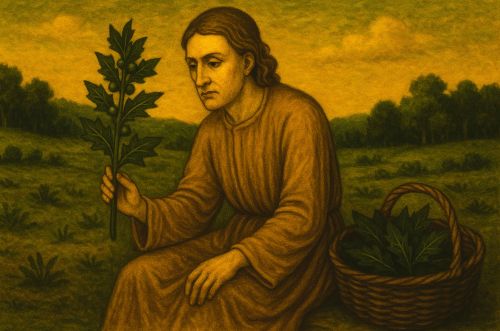
Early medieval herbals reveal how scribes and healers integrated classical information with practical observations of the plant’s appearance and behavior. The Herbarium Apuleii, a compilation circulating widely from late antiquity through the Middle Ages, included guidance on identifying henbane by its yellowish flowers, musky odor, and sticky leaves.9 Hildegard of Bingen, working in the twelfth century, offered her own discussion of henbane in the Physica, reinforcing its dangerous properties and advising extreme caution in its medicinal use.10 While her account drew heavily from earlier authorities, it also reflected the monastic setting in which botanical knowledge was studied, preserved, and systematized.
As manuscript culture expanded, distinctions between henbane and other members of the Solanaceae family became more refined. Medieval writers frequently compared henbane with mandrake and belladonna, plants that shared similar toxic and psychoactive effects but differed in morphology and potency.11 These comparisons appear in glosses added by later scribes, who attempted to clarify confusion among plants that carried overlapping medical reputations. The effort to distinguish these species helped shape a clearer understanding of henbane’s specific profile, even if vernacular classifications often remained imprecise.
Despite these attempts at precision, regional variation in plant identification persisted across Europe, in part because henbane grew widely in northern and central regions but was less familiar in Mediterranean environments. As a result, some herbals show considerable divergence in illustrations and textual descriptions, suggesting that local experience influenced how healers recognized and harvested the plant.12 This unevenness underscores the complexity of medieval botanical knowledge, which relied on the interplay of classical authority, monastic scholarship, and practical field familiarity. Henbane’s identity emerged from all three, forming the basis for its later medical and cultural significance.
Medicinal Applications: Pain Relief, Sedation, and Surgical Use

Henbane held a recognized place in medieval pharmacology as a substance capable of easing pain when administered in carefully controlled doses. Classical texts transmitted into the medieval period described the seeds and leaves as agents that could numb localized discomfort, and these recommendations persisted in the medical compendia that physicians and monastic healers consulted. Dioscorides explained that henbane could be applied externally to relieve neuralgic pain, and medieval writers drew on this tradition when preparing poultices for toothache, joint inflammation, and other sources of acute suffering.13 These applications entered both Latin medical manuscripts and vernacular recipe collections, demonstrating their acceptance across different levels of medical practice.
The plant’s sedative qualities also made it valuable for inducing sleep or calming agitation. Medieval pharmacologists working within the Galenic tradition often paired henbane with substances such as poppy or mandrake to produce more reliable soporific mixtures.14 These combinations appear in manuscripts intended for trained physicians as well as in household remedy books, illustrating the broad diffusion of knowledge about henbane’s effects. Although writers emphasized its usefulness, they regularly warned that excessive dosage could lead to confusion, delirium, or collapse, revealing an awareness of the fine line between therapeutic relief and toxic danger.15 The presence of such warnings suggests that healers recognized both the plant’s benefits and its substantial risks.
Henbane’s most striking medical application appears in formulas designed to dull pain during surgical procedures. Medieval physicians developed early anesthetic mixtures that took advantage of the synergistic effects of mandrake, opium, and henbane. These preparations, sometimes delivered as sponges soaked in infused liquids, were intended to induce deep sleep or semi-consciousness before procedures such as bone setting or cauterization.16 The existence of these recipes demonstrates that medieval medicine experimented seriously with pharmacological anesthesia, using henbane as one component in increasingly sophisticated attempts to manage pain.
The plant’s place within medieval therapeutics reflects a broader pattern in which powerful botanicals served multiple roles depending on who prepared them and under what circumstances. When handled by trained practitioners, henbane could be a legitimate ingredient in medical treatment, and its inclusion in authoritative manuscript traditions underscores this point.17 Yet its potency also made it vulnerable to misuse or misunderstanding, contributing to the suspicion directed at folk healers who employed it without formal sanction. This duality reveals how medical, social, and cultural factors shaped the meanings attached to henbane long before it became entangled in narratives of witchcraft.
Folk Healers, “Cunning Folk,” and the Transmission of Practical Knowledge
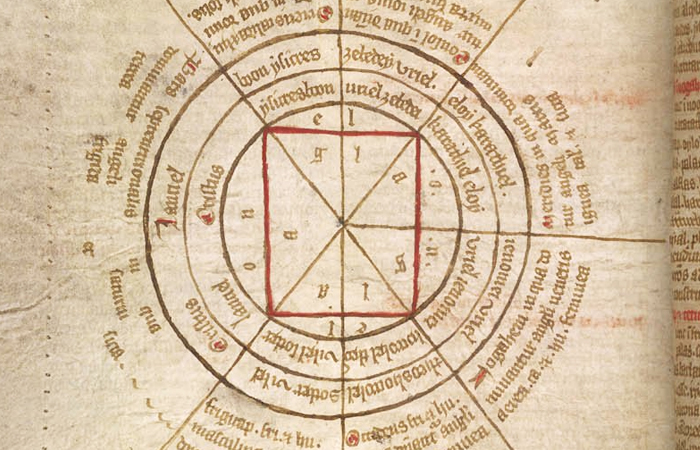
Henbane circulated widely outside formal medical institutions, and much of its practical use was shaped by the activities of rural healers and “cunning folk” who relied on inherited knowledge rather than university training. These practitioners operated in a world where written herbals were scarce and oral transmission played a significant role in maintaining plant lore.18 While their methods often paralleled those used by trained physicians, they had greater freedom to experiment with local flora, including plants considered too unpredictable for routine medical practice. This flexibility allowed henbane to flourish within vernacular healing traditions, where its reputation as both remedy and hazard developed over generations.
The plant’s prevalence in northern and central Europe helped ensure its familiarity among lay healers, who incorporated it into poultices for pain, salves for swelling, and fumigants intended to ease respiratory discomfort. Surviving vernacular manuscripts from England, Germany, and Scandinavia contain recipes that call for henbane seeds or leaves, sometimes mixing them with animal fats or other herbs to moderate their effects.19 These remedies reflect a world of practical experimentation, shaped by observation and experience rather than formal theory. Because henbane grew near settlements and disturbed ground, it became part of a readily accessible pharmacopoeia for those who lacked access to imported ingredients or expensive preparations.
The social structure of medieval healing further influenced how henbane was perceived. Rural women frequently served as midwives, herbalists, and keepers of medical knowledge within their communities, responsibilities that brought them into close contact with potent plants.20 Their expertise was often respected locally, yet it remained precarious in the face of clerical suspicion toward unsanctioned healing. When plants like henbane produced unpredictable effects, the boundary between respected skill and feared power could shift rapidly, particularly when outcomes were misunderstood or when illness coincided with spiritual anxieties. Gender played a central role in this dynamic, shaping who was trusted to use dangerous botanicals and who faced scrutiny.
Manuscript evidence also shows that cunning folk used henbane in ways that blurred the line between medicine and magic. Some remedies incorporated spoken charms or ritual gestures alongside plant applications, practices that appear in both early English leechbooks and later folkloric compilations.21 The inclusion of henbane in mixtures intended for divination, love philtres, or protective rites demonstrates that its significance extended beyond strictly medical contexts. While such uses rarely appear in academic medical texts, their persistence in vernacular traditions suggests a broader cultural appreciation of henbane’s transformative and perceptual effects.
By the late Middle Ages, the association between henbane and folk healing contributed to broader anxieties about illicit knowledge. As ecclesiastical authorities grew increasingly concerned about magic and superstition, the possession or use of powerful botanicals could become grounds for suspicion.22 This shift did not mark a sudden change in practice but rather a change in interpretation. What had long been understood as customary healing became vulnerable to accusations when cultural winds turned, and henbane’s potency made it an especially fraught substance in this environment. Its place in folk tradition set the stage for its later entanglement in accusations of sorcery and diabolism, even when the underlying practices had deep roots in legitimate community care.
Henbane as a Psychoactive: Hallucination, Trance, and Embodied Experience
Henbane’s psychoactive properties were well known in both classical and medieval medical literature, which consistently described its capacity to induce confusion, delirium, and visionary states when administered in excessive quantities. These effects were rooted in the plant’s tropane alkaloids, primarily scopolamine and hyoscyamine, compounds that modern pharmacological studies have identified as responsible for profound disturbances in perception, memory, and bodily coordination.23 Medieval healers lacked knowledge of the chemical mechanisms involved, yet their cautionary notes indicate recognition of henbane’s ability to alter consciousness in dramatic ways. The plant’s unusual effects on sensation and movement set it apart from common medicinal herbs.
Descriptions in later medieval sources suggest that experiences induced by henbane could include vivid hallucinations, bodily dissociation, and dreamlike narratives that blurred the line between waking and sleeping states. These symptoms are consistent with the well-documented toxicology of tropane-bearing plants, whose psychoactive effects have been recorded across multiple cultures and time periods.24 While medieval writers tended to describe these outcomes through the lens of humoral imbalance or divine punishment, the underlying physiological responses were real and observable. Some accounts refer to sensations of levitation, rapid movement, or transformation, experiences that would later be echoed in early modern witchcraft testimony.
The method of administration also shaped the character of the altered states produced by henbane. Topical application, particularly to areas of thin skin or mucous membranes, allowed the alkaloids to enter the bloodstream without the severe gastrointestinal distress caused by ingestion.25 This route of absorption appears in both medical and folk contexts, where ointments or salves containing henbane were applied to relieve pain or induce sleep. When such preparations included other psychoactive plants like mandrake or belladonna, the combined effects could create powerful hallucinations that lasted for hours. The physical sensations associated with these mixtures help explain why some later writers described experiences of nocturnal travel or metamorphosis.
These embodied effects became significant not only for their therapeutic or ritual uses but also for how they were later interpreted by demonologists. Early modern writers, encountering descriptions of trance states and hallucinatory journeys associated with plants of the Solanaceae family, retroactively framed these experiences as evidence of supernatural activity or diabolic influence.26 The medieval use of henbane predates these interpretations, yet the sensory phenomena it produced offered a physiological foundation for narratives that would later be transformed into accusations of witchcraft. Understanding henbane as a psychoactive substance therefore provides an essential link between medieval pharmacology and the imaginative landscapes that shaped early modern witch beliefs.
“Flying Ointments”: Textual Evidence and Historical Uncertainty

The association between henbane and so-called “flying ointments” emerges most clearly in early modern demonological literature rather than in medieval medical texts. Writers such as Johannes Nider in the fifteenth century and later authors of the Malleus Maleficarum described ointments used by accused witches to facilitate nocturnal travel or visionary experiences, often listing plants from the Solanaceae family among the ingredients.27 Although these works postdate much of the medieval practical use of henbane, they drew on existing knowledge of the plant’s psychoactive effects and incorporated them into narratives shaped by concerns about diabolism and spiritual corruption. The demonologists’ descriptions represent a reframing of phenomena that earlier writers had understood in more medical or naturalistic terms.
Modern historians have attempted to disentangle the layers of interpretation that surround these ointments, noting that many of the recipes attributed to witches closely resemble medicinal salves documented in earlier periods.28 John Riddle, for example, has argued that mixtures containing henbane, mandrake, and belladonna can be traced to ancient and medieval pharmacology, where they served anesthetic or analgesic purposes rather than magical ones.29 The transition from medical remedy to supposed instrument of witchcraft reflects a shift not in the botanical substances themselves but in the social and intellectual context in which they were understood. Demonologists redefined established plant lore through a theological lens that emphasized moral danger and illicit knowledge.
A key point of debate concerns how such ointments were actually used. Ethnobotanical research indicates that topical application of tropane-bearing plants produces hallucinations more consistent with dreamlike or visionary experiences than with physical mobility, suggesting that sensations of flight or rapid movement described in early modern accounts may originate from pharmacological effects rather than literal claims.30 This interpretation aligns with contemporary toxicology, which documents sensations of floating, soaring, or bodily separation following exposure to scopolamine-rich plants. While there is no conclusive evidence that medieval healers formulated ointments for this specific purpose, the physiological experiences induced by these plants provided fertile ground for later reinterpretation.
The historical uncertainty surrounding flying ointments underscores the methodological challenge of distinguishing lived practice from rhetorical construction. Demonological treatises were not neutral ethnographies but ideological documents that framed all bodily or psychological alteration as evidence of demonic influence.31 As a result, even when these texts accurately described ingredients found in medical or folk remedies, their explanations of purpose were shaped by theological and judicial priorities rather than empirical observation. Understanding henbane’s role within this discourse requires attention to both the pharmacological realities of the plant and the intellectual environment that transformed those realities into evidence of witchcraft. The ointment narratives thus reveal more about early modern anxieties than about medieval botanical practice.
Ritual and Magical Uses: Smoke, Fumes, and Love Concoctions

Ritual uses of henbane in medieval Europe drew on both classical precedent and vernacular belief, producing a set of practices that blended medicinal, magical, and symbolic functions. Ancient authors such as Pliny described the plant being burned for its fumes, a technique that survived in modified form in later European folklore.32 Medieval manuscripts and antiquarian collections from the early modern period preserve traces of these traditions, identifying henbane as a plant whose smoke could induce altered states of awareness useful for both ritual purification and divinatory rites.33 Although clerical writers often condemned such uses as superstition, their persistence indicates that henbane held a recognized place in local magical repertoires.
Another set of ritual applications involved henbane’s reputation as a component in love philtres and emotionally charged mixtures. While these uses appear primarily in folkloric sources and later demonological accounts, they have roots in ancient Mediterranean traditions that attributed erotic or binding properties to intoxicating plants.34 Medieval writers frequently warned against love potions, describing them as illicit manipulations that interfered with free will, and some of the ingredients listed in these condemnations correspond to plants associated with henbane in popular magic. These references reveal how the plant’s psychoactive properties may have been interpreted as influencing emotional or spiritual states.
Fumigation played an important role in ritual contexts where henbane was employed for symbolic purification or as a means of engaging with unseen forces. Vernacular healing traditions sometimes called for burning the seeds to create smoke that could drive away illness-causing spirits or reveal hidden influences.35 Although these rituals reflect pre-Christian or syncretic belief systems, they coexisted with Christian devotional practices well into the later Middle Ages. The survival of such rites in rural areas suggests that henbane remained embedded in a cultural landscape where medicinal and spiritual concerns overlapped.
The plant’s sensory qualities contributed to its ritual significance. Henbane’s pungent smell, sticky leaves, and dramatic physiological effects made it a natural candidate for practices centered on transformation and liminality.36 In cultural settings where altered consciousness was interpreted as a sign of spiritual contact or visionary insight, the plant’s ability to generate trance-like states positioned it as a powerful tool for mediating between human and otherworldly realms. These associations did not depend on formal magical doctrine but emerged organically from the experiential realities of handling a potent botanical substance.
By the late medieval period, ritual uses of henbane had become entangled with the emerging discourse of witchcraft, even though many of the practices in question were centuries old. Demonologists interpreted fumigation, salves, and love philtres through a theological lens that emphasized diabolic influence, transforming benign folk rituals into evidence of spiritual corruption.37 This reframing obscured the practical and symbolic functions henbane had held within earlier communities, replacing them with narratives that cast all non-sanctioned ritual use as inherently dangerous. The plant’s presence in magical lore thus became part of a broader cultural shift that redefined traditional practices as criminal or heretical.
Toxicity, Fear, and Persecution: Henbane in Witchcraft Accusations

Henbane’s documented toxicity played a significant role in shaping medieval and early modern anxieties surrounding its use. Medical writers repeatedly warned that the plant could induce delirium, loss of motor control, and life-threatening physiological collapse when misapplied, concerns that appear in both classical and monastic texts.38 These dangers made henbane a plant that required skilled handling, yet many healers who relied on it operated outside formal medical structures. The gap between trained and vernacular practice created an environment in which adverse reactions could easily be misinterpreted as signs of malicious intent rather than botanical error. This misinterpretation became increasingly consequential as ecclesiastical and secular authorities began to scrutinize unofficial healers.
The expansion of ecclesiastical jurisdiction over superstition and illicit healing in the later Middle Ages heightened fears surrounding potent plants like henbane. Records from inquisitorial and episcopal courts show that accusations often focused on individuals who possessed specialized knowledge of herbs capable of producing dramatic physical effects.39 Although many such healers practiced within established community norms, their expertise became suspect when illness persisted, when treatments produced unexpected results, or when social tensions erupted. Henbane’s capacity to induce confusion or hallucination made it particularly vulnerable to these shifting interpretations, since its effects could mimic the symptoms that authorities associated with demonic influence or magical interference.
Gender played a central role in this process, especially as women accounted for a large proportion of lay healers who used botanicals in childbirth, pain management, and domestic medicine. Scholars have noted that women’s involvement in plant-based remedies exposed them disproportionately to accusations during the period when magic and maleficium became intertwined with concepts of diabolic witchcraft.40 The same practices that once made women indispensable caregivers now marked them as potential threats when cultural anxieties intensified. Henbane, with its potent physiological effects and long-standing association with liminal states, amplified suspicions directed at those who handled it regularly.
By the early modern period, the plant’s earlier medicinal and ritual uses had been recast within a demonological framework that viewed any substance producing altered consciousness as evidence of forbidden arts. Demonologists reinterpreted the physiological symptoms caused by henbane as proof of demonic pacts or illicit supernatural power, and court records sometimes referenced herbs thought to harm livestock, disrupt households, or cause mysterious illnesses.41 While these accusations reflect ideological priorities rather than empirical observation, they demonstrate how henbane’s toxic profile contributed to its symbolic transformation from a challenging medicinal plant into a component of alleged witchcraft. The shift reveals the degree to which fear, misunderstanding, and theological reinterpretation shaped attitudes toward botanical knowledge.
Cultural Memory and the Formation of the Witch Archetype
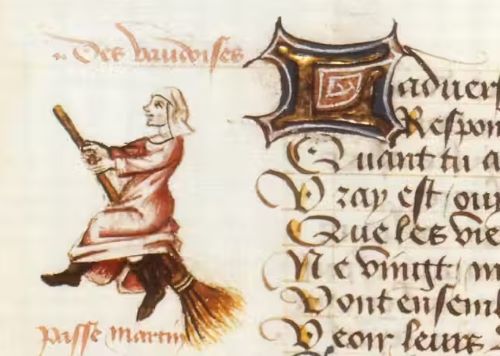
The cultural memory surrounding henbane contributed significantly to the development of the early modern witch archetype, even though many of its ritual and medical uses long predated the witch hunts. Artists, theologians, and polemic writers drew on both visual and textual traditions when constructing images of the witch, and these constructions often incorporated botanical elements associated with transformation, nocturnal travel, or altered states of consciousness.42 Henbane was one of several plants whose psychoactive effects aligned with themes of flight, shape-shifting, and liminality, making it a natural component in narratives that emphasized the uncanny or the dangerous. Although medieval sources rarely depicted witches in a consistent visual form, later imagery drew heavily on motifs connected to the experiential effects of plants in the Solanaceae family.
The broomstick motif, which emerged in early printed works during the fifteenth and sixteenth centuries, reflects the merging of botanical lore with symbolic representations of female labor and domestic space. Scholars have noted that the idea of witches applying ointments to broom handles or similar household objects may derive from the known transdermal application of psychoactive salves, which produced the sensations of levitation or rapid movement noted in demonological accounts.43 These sensations correspond closely to the effects of tropane alkaloids found in henbane and related plants, suggesting a physiological basis for imagery that later became iconic. While the medieval record does not confirm this practice directly, the alignment between symptom and symbolism shaped how artists and commentators developed the visual language of witchcraft.
Printed pamphlets and broadsheets also played an important role in establishing recognizable features of the witch figure. As literacy increased, woodcut illustrations depicting witches flying through the night, brewing potions, or performing inverted rituals circulated widely across Europe.44 Many of these works referenced ingredients associated with known hallucinogens, reinforcing the connection between toxic botanicals and diabolic practice. The link between henbane and other nightshade plants entered popular memory through these media, which reduced complex botanical knowledge to simplified symbols that could be readily understood by a broad audience.
At the same time, humanist scholars and early antiquarians contributed to the codification of witch imagery by collecting and commenting on folklore that blended classical myth with contemporary fears. They drew parallels between stories of ancient sorceresses and the charges levied against accused witches, emphasizing continuity between past and present uses of intoxicating or transformative substances.45 Henbane, which appeared in both classical and vernacular sources, became part of a broader intellectual discourse that saw dangerous plants as instruments of deception or spiritual corruption. These scholarly interpretations lent legitimacy to the visual tropes circulating in popular print.
The legal and theological frameworks of the early modern witch hunts further solidified the association between henbane and the witch archetype. Court interrogations and confessions, shaped by leading questions and demonological expectations, often included references to ointments or herbal mixtures used for harmful magic.46 Although such testimonies were unreliable as evidence of actual practice, they influenced later writers who treated these accounts as ethnographic fact. The repetition of these themes across trials, treatises, and sermons created a cultural feedback loop in which botanical substances like henbane became universally recognized components of witchcraft.
Over time, these layers of imagery, scholarship, and legal rhetoric produced the composite witch figure familiar today. The cultural memory that formed around henbane illustrates the process by which medicinal plants, folk rituals, and altered states of consciousness were transformed into symbols of malevolent sorcery.47 Rather than reflecting medieval practice faithfully, the witch archetype amalgamated physiological effects, misunderstood healing traditions, and theological anxieties into a single, enduring icon. Henbane’s role within this process underscores the importance of tracing how natural substances were reinterpreted as cultural symbols within shifting intellectual and social landscapes.
Conclusion: Henbane Between Reality and Representation
Henbane’s history in medieval Europe reveals the complexity of a plant that existed at the intersection of medicine, ritual, and imagination. Its documented therapeutic uses, rooted in classical pharmacology and transmitted through monastic and vernacular traditions, demonstrate that medieval practitioners understood both its value and its dangers.48 When prepared with precision, henbane could ease pain or induce sleep, contributing meaningfully to a medical world that sought to manage suffering with the tools available. These practical applications formed the foundation of the plant’s early reputation, one grounded in observable effects rather than supernatural associations.
At the same time, henbane’s psychoactive properties created experiences that challenged conventional explanations, producing altered states that could be understood as spiritual revelations, magical encounters, or symptoms of illness. The hallucinatory sensations arising from scopolamine and hyoscyamine provided a physiological basis for phenomena that later demonologists reframed through the language of flight, transformation, or nocturnal journeys.49 Medieval healers may not have intended such interpretations, yet the plant’s capacity to reshape perception made it uniquely susceptible to speculative and moralizing narratives in subsequent centuries.
The cultural evolution that transformed henbane from a medicinal resource into a symbolic component of witchcraft was driven more by intellectual and theological change than by shifts in botanical practice. Early modern writers, seeking to explain or condemn visionary experiences and folk rituals, interpreted the effects of henbane through a framework that emphasized spiritual danger and illicit knowledge.50 This reframing overwrote the older medicinal and ritual uses, replacing them with a moralized narrative that cast the plant as an instrument of diabolism. The divergence between practice and perception illustrates how vulnerable natural substances were to ideological reinterpretation.
Tracing henbane’s movement across these contexts highlights the importance of understanding medieval history not only through surviving texts but also through the cultural processes that shape memory and meaning. The plant’s role in healing traditions, its incorporation into ritual practices, and its transformation into a symbol of witchcraft all reflect broader tensions surrounding knowledge, authority, and the human body.51 Henbane’s story therefore helps illuminate how medieval Europeans navigated the boundaries between natural and supernatural explanations, and how later generations reimagined those boundaries to fit shifting cultural anxieties. Its legacy endures as a reminder of how deeply intertwined botanical reality and cultural imagination can be.
Appendix
Footnotes
- Dioscorides, De Materia Medica, Book 4; Pliny the Elder, Natural History, Book 25.
- John Riddle, Goddesses, Elixirs, and Witches (New York: Palgrave Macmillan, 2010), 85.
- Richard Kieckhefer, Magic in the Middle Ages (Cambridge: Cambridge University Press, 1989), 69.
- Monica Green, Women’s Healthcare in the Medieval West (Aldershot: Ashgate, 2000), 112.
- Richard Evans Schultes and Albert Hofmann, Plants of the Gods: Their Sacred, Healing, and Hallucinogenic Powers (Rochester: Healing Arts Press, 1992), 67.
- Karen Louise Jolly, Popular Religion in Late Saxon England (Chapel Hill: University of North Carolina Press, 1996), 138.
- Dioscorides, De Materia Medica, Book 4.
- Pliny the Elder, Natural History, Book 25.
- Herbarium Apuleii Platonici, ed. Henry E. Sigerist (Leipzig: Teubner, 1927), 112.
- Hildegard of Bingen, Physica, trans. Priscilla Throop (Rochester: Healing Arts Press, 1998), 67.
- Riddle, Goddesses, Elixirs, and Witches, 83.
- Minta Collins, Medieval Herbals: The Illustrative Traditions (London: British Library, 2000), 54.
- Dioscorides, De Materia Medica, Book 4.
- Henry E. Sigerist, A History of Medicine, vol. 1 (New York: Oxford University Press, 1951), 294.
- Hildegard of Bingen, Physica, 67.
- Riddle, Goddesses, Elixirs, and Witches, 102.
- Faith Wallis, ed., Medieval Medicine: A Reader (Toronto: University of Toronto Press, 2010), 221.
- Kieckhefer, Magic in the Middle Ages, 69.
- Leechbook III in Bald’s Leechbook, ed. and trans. M. L. Cameron (Oxford: Oxford University Press, 1993), 152.
- Monica H. Green, Women’s Healthcare in the Medieval West (Aldershot: Ashgate, 2000), 57.
- Jolly, Popular Religion in Late Saxon England, 138.
- Catherine Rider, Magic and Impotence in the Middle Ages (Oxford: Oxford University Press, 2006), 104.
- Schultes and Hofmann, Plants of the Gods, 67.
- Riddle, Goddesses, Elixirs, and Witches, 85.
- Michael Harner, Hallucinogens and Shamanism, (New York: Oxford University Press, 1976): 14–19.
- Stuart Clark, Thinking with Demons: The Idea of Witchcraft in Early Modern Europe (Oxford: Oxford University Press, 1997), 202.
- Malleus Maleficarum, trans. Christopher Mackay (Cambridge: Cambridge University Press, 2006), 120.
- Lyndal Roper, Witch Craze: Terror and Fantasy in Baroque Germany (New Haven: Yale University Press, 2004), 84.
- Riddle, Goddesses, Elixirs, and Witches, 101.
- Harner, Hallucinogens and Shamanism. New York: Oxford University Press (1976): 14–19.
- Clark, Thinking with Demons, 208.
- Pliny the Elder, Natural History, Book 25.
- Owen Davies, Grimoires: A History of Magic Books (Oxford: Oxford University Press, 2009), 42.
- Jeffrey Burton Russell, Witchcraft in the Middle Ages (Ithaca: Cornell University Press, 1972), 128.
- Jolly, Popular Religion in Late Saxon England, 142.
- Kieckhefer, Magic in the Middle Ages, 74.
- Brian Levack, The Witch-Hunt in Early Modern Europe (London: Longman, 1987), 51.
- Hildegard of Bingen, Physica, 67.
- Kieckhefer, Magic in the Middle Ages, 151.
- Levack, The Witch-Hunt in Early Modern Europe, 133.
- Clark, Thinking with Demons, 126.
- Charles Zika, The Appearance of Witchcraft: Print and Visual Culture in Sixteenth-Century Europe (Ithaca: Cornell University Press, 2007), 34.
- Roper, Witch Craze, 82.
- Zika, The Appearance of Witchcraft, 57.
- Marina Montesano, Classical Culture and Witchcraft in Medieval and Renaissance Italy (Basingstoke: Palgrave Macmillan, 2018), 19.
- Levack, The Witch-Hunt in Early Modern Europe, 75.
- Clark, Thinking with Demons, 215.
- John Scarborough, “Pharmacology in the Roman World,” in The Cambridge History of Medicine, ed. Roy Porter (Cambridge: Cambridge University Press, 2006), 65.
- Schultes and Hofmann, Plants of the Gods, 67.
- Clark, Thinking with Demons, 212.
- Zika, The Appearance of Witchcraft, 89.
Bibliography
- Bingen, Hildegard of. Physica. Translated by Priscilla Throop. Rochester: Healing Arts Press, 1998.
- Clark, Stuart. Thinking with Demons: The Idea of Witchcraft in Early Modern Europe. Oxford: Oxford University Press, 1997.
- Collins, Minta. Medieval Herbals: The Illustrative Traditions. London: British Library, 2000.
- Cameron, M. L., ed. and trans. Bald’s Leechbook. Oxford: Oxford University Press, 1993.
- Davies, Owen. Grimoires: A History of Magic Books. Oxford: Oxford University Press, 2009.
- Dioscorides. De Materia Medica. Book 4.
- Harner, Michael. Hallucinogens and Shamanism. New York: Oxford University Press (1976): 14–19.
- Kieckhefer, Richard. Magic in the Middle Ages. Cambridge: Cambridge University Press, 1989.
- Jolly, Karen Louise. Popular Religion in Late Saxon England. Chapel Hill: University of North Carolina Press, 1996.
- Levack, Brian. The Witch-Hunt in Early Modern Europe. London: Longman, 1987.
- Mackay, Christopher, trans. Malleus Maleficarum. Cambridge: Cambridge University Press, 2006.
- Montesano, Marina. Classical Culture and Witchcraft in Medieval and Renaissance Italy. Basingstoke: Palgrave Macmillan, 2018.
- Pliny the Elder. Natural History. Book 25.
- Porter, Roy, ed. The Cambridge History of Medicine. Cambridge: Cambridge University Press, 2006.
- Riddle, John M. Goddesses, Elixirs, and Witches: Plants and Sexuality Throughout Human History. New York: Palgrave Macmillan, 2010.
- Rider, Catherine. Magic and Impotence in the Middle Ages. Oxford: Oxford University Press, 2006.
- Roper, Lyndal. Witch Craze: Terror and Fantasy in Baroque Germany. New Haven: Yale University Press, 2004.
- Russell, Jeffrey Burton. Witchcraft in the Middle Ages. Ithaca: Cornell University Press, 1972.
- Schultes, Richard Evans, and Albert Hofmann. Plants of the Gods: Their Sacred, Healing, and Hallucinogenic Powers. Rochester: Healing Arts Press, 1992.
- Sigerist, Henry E. A History of Medicine. Vol. 1. New York: Oxford University Press, 1951.
- Sigerist, Henry E., ed. Herbarium Apuleii Platonici. Leipzig: Teubner, 1927.
- Wallis, Faith, ed. Medieval Medicine: A Reader. Toronto: University of Toronto Press, 2010.
- Zika, Charles. The Appearance of Witchcraft: Print and Visual Culture in Sixteenth-Century Europe. Ithaca: Cornell University Press, 2007.
Originally published by Brewminate, 12.01.2025, under the terms of a Creative Commons Attribution-NonCommercial-NoDerivatives 4.0 International license.
About the Author