How a military institution created to secure imperial authority could evolve into a force capable of reshaping the political structure it was meant to protect.

By Matthew A. McIntosh
Public Historian
Brewminate
Introduction
The Praetorian Guard occupied a singular place within the political architecture of imperial Rome. Formed from the personal bodyguards of late Republican commanders and formalized under Augustus, the Guard was intended to secure the emperor’s life and preserve the stability of the new regime.1 The concentration of elite soldiers in the capital, combined with privileged pay and legal status, gave the emperors a conspicuous symbol of authority. It also created an institution whose proximity to power endowed it with opportunities unavailable to any other military force.
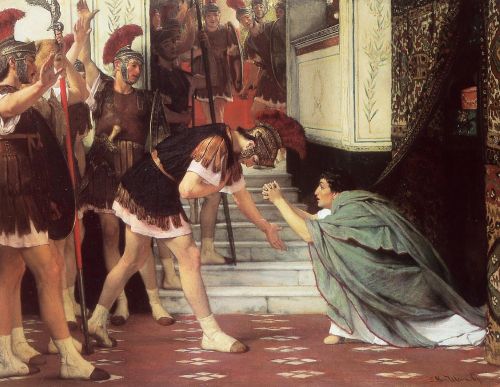
Yet from the outset, the Guard’s structural position contained tensions that Augustus could not entirely control. Tacitus and Cassius Dio record moments in which the Guard defended the emperor, but they also reveal the delicate balance between loyalty and coercion embedded within the institution.2 The Guard stood inside Rome’s political core, able to intervene in moments of uncertainty, and its presence shaped both the perception and practical mechanics of imperial rule. Its early role in the accession of Claudius demonstrated how easily bodyguards could become kingmakers when succession procedures were ambiguous.
By the second century, the political economy surrounding imperial accession had intensified the Guard’s capacity for influence. Donatives, ceremonial payments, and expectations of material reward fostered a system in which loyalty was increasingly tied to financial negotiation.3 Modern scholarship has emphasized that this system did not suddenly create corruption but rather amplified vulnerabilities inherent in a monarchy dependent on military favor.4 The Guard’s authority became embedded not only in its weapons but also in its ability to shape the conditions under which rulers rose or fell.
The crisis of 193 CE would reveal these pressures in their most dramatic form. The murder of Pertinax and the subsequent sale of the throne to Didius Julianus became emblematic of an institution that had drifted far from its original mandate. Cassius Dio’s account of the episode underscored how deeply the Guard’s intervention eroded imperial legitimacy and exposed the structural fragility of Rome’s political order.5 The repercussions of this event reverberated through later reforms, culminating in Constantine’s eventual dissolution of the Guard after the Battle of the Milvian Bridge.
What follows examines the long arc of the Praetorian Guard from its origins under Augustus to its destruction in the early fourth century, arguing that its evolution reflects the unresolved contradictions of Rome’s militarized monarchy. Rather than offering a simple narrative of decline, the study analyzes the structural, economic, and ideological mechanisms that transformed a bodyguard into a destabilizing political force. The Guard’s history illuminates the perennial tension between personal protection and concentrated military authority, a tension that shaped the fortunes of emperors and the political life of the empire itself.
Origins, Structure, and Early Function of the Praetorian Guard
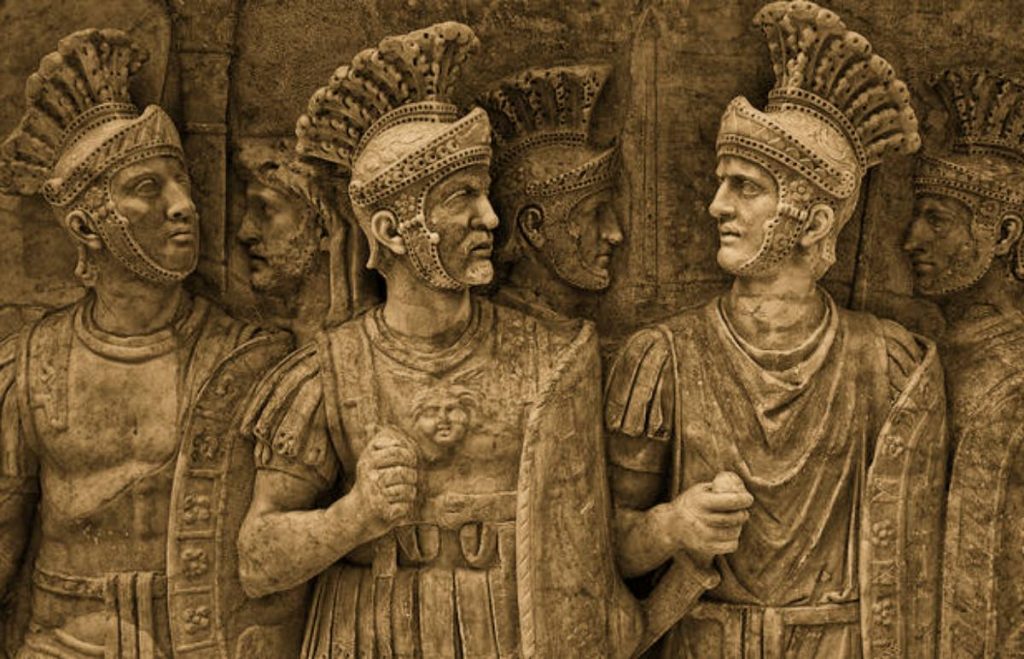
The Praetorian Guard emerged from a set of military traditions rooted in the late Republic, when prominent generals maintained personal bodyguards during campaigns. Augustus adapted this precedent in a more systematic way, integrating select Republican-era troops into a permanent formation intended to secure his authority.6 By formalizing these soldiers into identifiable cohorts, he converted an informal custom into an institution that mirrored the political consolidation of his new regime. The arrangement ensured that the emperor possessed a protective force distinct from the legions, but it simultaneously embedded a military unit directly within Rome’s evolving monarchy.
Although Augustus initially distributed Praetorian cohorts around Italy to avoid provoking public unease, their presence remained a visible expression of the new order. Tacitus notes that their early commanders, the praetorian prefects, operated with growing administrative responsibility, which expanded the Guard’s role beyond simple protection.7 Their differentiation from ordinary soldiers was reinforced by privileges that marked them as an elite body within the imperial hierarchy. Higher pay, shorter service requirements, and preferential treatment in civic settings elevated their social standing and fostered an internal identity linked to imperial favor. The Guard became a specialized corps whose benefits tied its welfare to the survival of the emperor.
The architectural landscape of Rome changed when Tiberius constructed the Castra Praetoria in the northeastern part of the city.8 This single fortified headquarters centralized the Guard’s manpower and provided a base from which the cohorts could operate with coherence and discipline. The concentration of soldiers within the capital altered the balance of political power by giving the Guard immediate access to imperial spaces. Their physical proximity to the palace meant that their intervention in political crises became logistically simple, a structural fact that would shape future events. The establishment of the Castra Praetoria signaled not only administrative efficiency but also the institutionalization of a force capable of decisive political action.
The early Julio Claudian period illustrates the varied nature of the Guard’s duties. While they were primarily tasked with security functions, they also performed ceremonial roles that symbolized imperial authority. Cassius Dio records instances in which they escorted emperors during public appearances, a gesture that linked their identity to the stability of the state.9 Their responsibilities included maintaining order in the capital, assisting in the supervision of key urban institutions, and supporting the prefecture’s administrative functions. These tasks reinforced the perception that the Guard existed to uphold the emperor’s legitimacy rather than challenge it. Their involvement in civic life made them both familiar and formidable in the urban environment.
The relationship between emperors and their protectors, however, contained latent tensions. The Guard’s privileged status fostered expectations regarding compensation and honor, and emperors were often required to court their loyalty through donatives.10 The political utility of these payments was clear, but scholars have observed that such financial incentives created a culture in which loyalty could be negotiated rather than assumed.11 The early imperial government relied on the Guard as a stabilizing force, yet the mechanisms used to secure its allegiance introduced elements of volatility. As emperors changed, the Guard’s expectations changed with them, creating cycles of reward and resentment that would shape later crises.
Modern scholarship debates whether the early Guard should be viewed primarily as a stabilizing presence or as an embryo of later disorder. Some historians argue that their initial operations reflect professionalism and discipline consistent with Augustus’ vision, while others maintain that the seeds of later corruption were already visible in their institutional design.12 Regardless of interpretation, the Guard’s early history demonstrates that its functions were inseparable from the political structure of the principate. The combination of elite status, centralized deployment, and direct access to the emperor created an institution inherently capable of supporting or undermining the regime. These foundational elements would shape its later evolution as an increasingly influential political actor.
The Economics of Loyalty: Money, Donatives, and the Market for Power
The political authority of the Praetorian Guard increasingly rested on an economy of financial expectation that linked imperial accession to material reward. Although donatives had precedents in Republican military practice, the imperial system transformed them into regularized payments that accompanied the confirmation of a new ruler. Cassius Dio describes how emperors offered substantial sums to secure the goodwill of the Guard, a practice that made financial negotiation an implicit component of stability.13 The Guard thus occupied a position in which loyalty became tied not only to personal allegiance but also to predictable economic incentives, creating a relationship in which political favor could be exchanged for monetary compensation.
The scale of these payments distinguished Praetorians from ordinary soldiers. Praetorian pay rates, already higher than those of legionaries, were augmented by accession donatives and special distributions.14 These benefits elevated their standard of living and signaled their importance within the imperial hierarchy. The combination of privilege and expectation shaped the Guard’s institutional culture, encouraging a sense of entitlement that emperors could not ignore. Historians have noted that the financial disparity between the Guard and the legions intensified political competition, since each new emperor faced pressure to confirm or surpass previous donatives.15 The cost of securing the Guard’s consent grew steadily as their role in determining succession expanded.
The economic dimension of the Guard’s power extended beyond individual soldiers to the office of the praetorian prefect. Prefects held some of the most lucrative posts in the Roman administrative system, with opportunities to accumulate wealth through legal authority, judicial functions, and proximity to the emperor.16 These positions attracted ambitious men whose influence at court could tip the balance during contested accessions. The prefecture’s administrative responsibilities also meant that financial flows, including the delivery of donatives, passed through offices controlled by the Guard’s leadership. This bureaucratic role reinforced the Guard’s importance in imperial politics and deepened its integration into the structures of governance.
The dependence on financial negotiation produced vulnerabilities that became increasingly clear during the second century. Herodian notes that emperors who failed to meet the Guard’s expectations risked resentment, and in some cases hostility.17 Payments that were once celebratory became compulsory, narrowing the space for emperors to cultivate loyalty through personal authority alone. The structural reliance on monetary incentives also contributed to a widening gap between the symbolic rhetoric of imperial legitimacy and the practical mechanisms required to maintain power. As economic pressures mounted, the Guard’s actions reflected a calculus grounded not in dynastic continuity but in the preservation of its own privileges.
Historians debate the extent to which financial expectation directly fueled corruption, yet there is broad agreement that the monetization of loyalty altered the dynamics of imperial succession. Some scholars argue that donatives served as predictable elements of political ritual, while others maintain that the practice encouraged opportunism and created an environment in which emperors were evaluated according to their ability to deliver tangible rewards.18 What is clear from both primary accounts and modern analysis is that the Guard’s economic power became inseparable from its political influence. The integration of financial expectation into the fabric of imperial governance laid a foundation for later crises, demonstrating how economic mechanisms could shape the trajectory of Roman political life.
Assassination, Intervention, and the Politics of Access

The Praetorian Guard’s proximity to the emperor granted it the unique ability to shape political transitions through direct action. Tacitus notes that the Guard played a decisive role during moments of uncertainty, often determining whether a ruler survived crises or succumbed to internal threats.19 Their position within the palace complex gave them immediate access to imperial chambers, a level of closeness unmatched by any other military institution in the Roman world. This physical access, combined with their elite status, made them central actors in episodes where political violence intersected with questions of legitimacy.
One of the earliest examples of this dynamic appears in the assassination of Caligula in 41 CE. Cassius Dio and Suetonius both describe how members of the Guard were involved in the attack and how their actions created a vacuum that demanded swift resolution.20 In the chaotic aftermath, the Guard elevated Claudius, whom they found hiding within the palace, and proclaimed him emperor.21 This episode revealed the Guard’s capacity to influence succession not merely through force, but through the symbolic authority of their endorsement. Their recognition of Claudius signaled continuity to the Senate and the populace, demonstrating how their decisions could shape the narrative of legitimate rule.
The rise and fall of Sejanus underscores another dimension of the Guard’s political impact. As praetorian prefect under Tiberius, Sejanus accumulated significant authority by consolidating the Guard’s power within the Castra Praetoria and expanding his influence at court.22 His eventual execution illustrates both the potential and the limits of prefectural authority, since Tiberius relied on the Guard itself to remove a prefect who had grown too powerful. The episode highlights how internal hierarchies within the Guard could influence broader political developments, with prefects serving as intermediaries between the emperor and a military corps that held considerable leverage.
During the later Julio Claudian and Flavian eras, the Guard’s interventions became increasingly systemic. Tacitus recounts episodes in which prefects exploited their access to intelligence and imperial correspondence to shape policy or manipulate court factions.23 Their capacity to control movement within the palace made them gatekeepers of imperial space, determining who could approach the emperor and under what conditions. This influence had tangible consequences, particularly during contested accessions, when rival claimants depended on the Guard’s cooperation to secure recognition and maintain order in the capital.
By the second century, the Guard’s political interventions reflected a broader trend in which military authority shaped imperial decision making. Modern scholars emphasize that the Guard did not merely react to crises but sometimes actively created them by withholding support or signaling dissatisfaction with an emperor’s actions.24 The institutional structure of the principate offered few mechanisms to counterbalance this influence. As a result, the Guard emerged as a decisive force in the politics of assassination, succession, and public legitimacy, revealing how access to the emperor could evolve into a tool for reshaping the political order.
The Crisis of 193 CE: Pertinax, the Auction of the Empire, and the Climax of Praetorian Corruption
The events of 193 CE revealed the full extent of the Praetorian Guard’s transformation into a political force capable of overriding imperial authority. The reign of Pertinax began under the promise of reform and fiscal discipline, yet his accession was overshadowed by tensions between the emperor and the Guard. Cassius Dio recounts that although Pertinax attempted to restore order after the chaos of Commodus’ final years, he refused to meet the Guard’s expectations for an exceptionally large donative.25 His reluctance to satisfy their demands created immediate discontent, undermining the short lived stability that his principate was meant to achieve. The fragility of his position illustrated how imperial legitimacy had come to rest on the Guard’s willingness to endorse a new ruler through financial negotiation.
The assassination of Pertinax on 28 March 193 demonstrated how the Guard’s institutional privileges had evolved into overt political power. Dio, who witnessed the struggle firsthand as a senator in Rome, describes how a group of frustrated Praetorians forced their way into the palace and killed the emperor.26 This act did not stem solely from personal grievance but reflected a broader political reality in which the Guard viewed its prerogatives as essential components of the imperial contract. The murder signaled that the emperor’s authority depended on maintaining a mutually beneficial relationship with a corps that believed itself entitled to determine the conditions of rule. The violent end of Pertinax’s reign thus marked a critical moment in the breakdown of the principate’s institutional norms.
In the immediate aftermath, the Guard took an unprecedented step by auctioning the imperial throne. Herodian provides a vivid account of how Didius Julianus and Titus Flavius Sulpicianus competed for the soldiers’ favor, each offering escalating sums to secure the empire.27 Julianus ultimately prevailed by promising the greater donative, an outcome that exposed the full commodification of political legitimacy. The spectacle shocked Roman elites, who viewed the transaction as a violation of both tradition and civic morality. The Senate ratified Julianus only under duress, revealing the erosion of its authority and the dominance of the Guard within the capital. The auction laid bare the extent to which imperial succession had become contingent on monetary incentive rather than dynastic continuity or senatorial consensus.
The repercussions of this event extended beyond Rome. Provincial legions, outraged by the Guard’s actions, refused to acknowledge Julianus and instead proclaimed rival emperors. Septimius Severus, commanding the legions in Pannonia, marched on Italy after receiving widespread support from his troops.28 His advance exposed the Guard’s vulnerability when confronted by experienced provincial armies. The Guard attempted to negotiate, but Severus moved quickly to neutralize their influence by promising clemency if they surrendered. His calculated approach demonstrated how external military forces could counterbalance the Guard’s dominance when political conditions aligned. The confrontation illustrated the broader tensions between Rome’s central military institution and the legions stationed across the empire.
Upon entering Rome, Severus removed the soldiers responsible for Pertinax’s death and reorganized the Guard. Dio reports that he dismissed the existing Praetorians, replacing them with loyal troops from the Danubian legions.29 This reconfiguration served both punitive and strategic purposes. By purging the old Guard, Severus eliminated a group whose actions had discredited the imperial office. By recruiting new members from his own forces, he ensured loyalty and strengthened his authority during a precarious transition. The shift also revealed an important structural reality: the Guard’s power depended on political circumstances, and when confronted by a determined emperor backed by provincial legions, it could be reshaped or displaced.
Modern scholarship views the crisis of 193 as a culmination of long-standing patterns rather than an isolated aberration. The auction reflected systemic weaknesses in the imperial system, including the absence of formalized succession procedures and the centralization of military force within Rome.30 The Guard’s ability to sell the principate exposed the fragility of a monarchy that relied on military endorsement while lacking mechanisms to constrain elite soldiers positioned near the emperor. The episode stands as one of the clearest examples of how institutional design, financial expectation, and political culture converged to undermine stability. It also foreshadowed the eventual dissolution of the Guard in the early fourth century, when later emperors sought to prevent a recurrence of such disruptions.
Reform, Retrenchment, and the Guard’s Final Dissolution under Constantine
The aftermath of the Severan reorganization altered the internal composition of the Praetorian Guard, yet it did not eliminate the structural tensions inherent in its role. Under later third century emperors, the Guard continued to serve as a principal military presence in Rome and maintained considerable ceremonial authority. Lactantius notes that Diocletian attempted to limit internal rivalries within the imperial court, and his reforms reshaped aspects of military administration, but the Guard remained in place as a prestigious institution linked to the palace.31 Their survival into the Tetrarchic era reflected the endurance of older political patterns even as emperors experimented with new strategies for governing a vast empire under mounting external pressure.
The Guard’s position during this period reveals a paradox. On the one hand, the Tetrarchy sought to decentralize power through multiple imperial residences and more mobile field armies. On the other, the traditional presence of the Praetorians in Rome ensured that they retained symbolic authority associated with the capital.32 The resulting tension revealed ambiguities in how imperial power was conceptualized during a time of administrative innovation. While the Guard did not exhibit the same overt interventions as in earlier centuries, their institutional status continued to reflect the older model of centralized monarchy. Their role persisted as part of an imperial system struggling to reconcile tradition with new political realities.
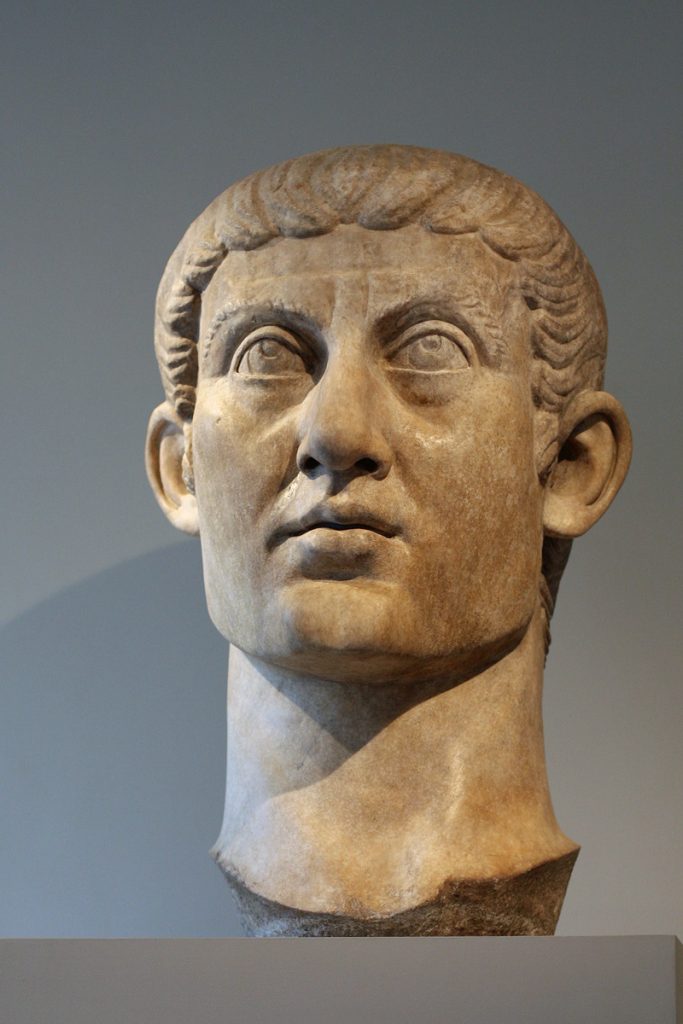
The decisive break came under Constantine, whose conflict with Maxentius directly implicated the Praetorian Guard in the outcome of civil war. Zosimus records that the Guard supported Maxentius, who relied on their presence in Rome to reinforce his claim to the throne.33 After Constantine’s victory at the Battle of the Milvian Bridge in 312, he eliminated the Praetorian Guard and dismantled the Castra Praetoria.34 This action was both punitive and strategic. By disbanding the Guard, Constantine removed a military institution that had historically intervened in succession and posed a potential challenge to his authority. The destruction of their headquarters symbolized the end of a long-standing force whose influence had shaped the political landscape of imperial Rome.
The dissolution of the Praetorian Guard reflected a broader reconfiguration of military power in the fourth century. Constantine favored mobile field armies and palace units whose allegiance was tied directly to the emperor’s person rather than to an institution rooted in Rome.35 This structural shift helped integrate military authority into a system less dependent on traditional urban centers and more adaptable to the demands of frontier defense. The end of the Praetorians thus marked not only the conclusion of a politically disruptive institution but also the reorientation of imperial security toward a model intended to prevent a recurrence of earlier crises. Their disappearance from the political stage signaled a transformation in how the empire conceived the relationship between military protection and centralized rule.
Long-Term Political and Cultural Consequences
The dissolution of the Praetorian Guard did not erase its impact on Roman political culture. Later Roman authors framed the Guard as an institution whose history illustrated the dangers of concentrating military force near the center of government. Ammianus Marcellinus, writing in the fourth century, referred to earlier palace troops with caution, emphasizing the need for emperors to guard against internal threats as carefully as external enemies.36 His perspective reflected a broader cultural memory in which the Guard’s interventions served as cautionary examples of how personal protectors could become political liabilities. This legacy influenced the ideological vocabulary of imperial rule, which increasingly stressed the virtues of stability, restraint, and properly controlled military hierarchy.
The organizational models that replaced the Praetorians reveal the adjustments emperors made in response to earlier crises. Constantine and his successors relied on scholae palatinae and other palace units designed to provide security without replicating the political vulnerabilities that had characterized the old Guard.37 These new formations emphasized loyalty to the reigning emperor while avoiding the accumulation of independent authority in a fixed urban location. Their deployment within a mobile court reduced the potential for troops to dominate the capital as a political stage. The shift toward more flexible military structures highlighted the lessons drawn from the long history of praetorian influence.
The Guard’s reputation also shaped how imperial succession was conceptualized in later antiquity. The absence of a centralized corps with the traditional privilege of endorsing an emperor encouraged the development of rituals that emphasized divine sanction, dynastic continuity, and administrative legitimacy.38 These strategies responded to earlier periods in which soldiers had intervened directly and dramatically in the transfer of power. By redefining the symbolic framework of imperial authority, fourth century rulers attempted to distance themselves from the precedent of military domination within the capital. The evolution of ceremonial language reveals the degree to which the memory of praetorian overreach continued to inform political thought.
In addition to its influence on political structures, the Praetorian Guard left a lasting mark on Roman historiography. Writers such as Cassius Dio, Herodian, and later the authors of the Historia Augusta narrated episodes involving the Guard with moralizing commentary, presenting their actions as both symptoms and causes of imperial decline.39 Modern scholars note that these narratives often served didactic purposes, warning readers about the dangers inherent in allowing elite military groups to shape political outcomes.40 The Guard’s story thus became a framework for interpreting the vulnerabilities of the Roman state, linking internal instability to broader concerns about the nature of power.
The cultural memory of the Praetorian Guard endured long after its disappearance, becoming a symbol of unchecked military influence within a monarchical system. Later Roman and Byzantine political thought continued to grapple with the tension between the need for personal protection and the danger of empowering forces located too close to the sovereign.41 The Guard’s history offered a stark example of how institutional design could either reinforce or undermine political order. Its legacy served as a reminder that the structures supporting imperial rule were not merely administrative conveniences but foundational elements whose configuration shaped the stability and identity of the empire itself.
Conclusion
The long history of the Praetorian Guard reveals how a military institution created to secure imperial authority could evolve into a force capable of reshaping the political structure it was meant to protect. From their formation under Augustus to their final dissolution under Constantine, the Praetorians occupied a position at the intersection of personal protection, public ceremony, and political coercion. Their proximity to the emperor amplified their influence, allowing them to intervene in crises that exposed the ambiguities of Roman monarchy. The contradictions embedded in their role highlight the complexities of governing an empire that relied on military force while attempting to preserve the appearance of civilian authority.42
The Guard’s evolution illustrates the cumulative effects of institutional privilege, economic expectation, and physical access to the emperor. Financial incentives tied to imperial accession created patterns of loyalty and resentment that shaped political behavior across generations. The events of 193 CE represented the extreme expression of pressures that had been building for more than a century, revealing the degree to which imperial legitimacy had become entangled with the preferences of elite soldiers stationed in the capital.43 The recurring need to negotiate with the Guard, through donatives or political concessions, reflected structural vulnerabilities that no emperor fully resolved until Constantine’s reforms.
The removal of the Praetorians did not erase the conditions that had produced their influence, but it marked a significant shift in how imperial power was conceptualized. Constantine’s reconfiguration of the palace guard and reliance on mobile units demonstrated an attempt to manage political stability through new military arrangements.44 The end of the Praetorians transformed the relationship between the emperor and the armed forces, redirecting authority away from an institution with a long history of intervention. This transition signaled an effort to redefine the balance between security and control, acknowledging earlier failures while crafting a model less susceptible to internal disruption.
The Praetorian Guard’s legacy persisted as a symbol of the dangers inherent in concentrating military power near the sovereign. Roman and later Byzantine thinkers continued to treat their history as a cautionary narrative, emphasizing the need for carefully structured institutions capable of protecting the ruler without undermining the state.45 Their story underscores the importance of institutional design in political systems that rely on armed forces to sustain authority. By tracing the trajectory of the Guard from formation to dissolution, this study highlights the enduring relevance of Rome’s experience in understanding how military structures can shape, support, or destabilize political order.
Appendix
Footnotes
- Tacitus, Annals, 4.2; Cassius Dio, Roman History, 55.1.
- Tacitus, Annals, 11.1; Cassius Dio, Roman History, 60.1; Suetonius, Claudius, 10.
- Herodian, History of the Empire, 2.6.
- J. B. Campbell, The Emperor and the Roman Army, 31 BC to AD 235 (Oxford: Clarendon Press, 1984), 130 to 146; Caroline Southern, The Roman Army: A Social and Institutional History (Oxford: Oxford University Press, 2006), 82 to 90.
- Cassius Dio, Roman History, 74.1 to 17.
- Cassius Dio, Roman History, 53.11.
- Tacitus, Annals, 1.7.
- Tacitus, Annals, 4.2.
- Cassius Dio, Roman History, 55.24.
- Suetonius, Tiberius, 48.
- Campbell, The Emperor and the Roman, 121 to 132.
- Barbara Levick, Tiberius the Politician (London: Routledge, 1976), 143 to 150.
- Cassius Dio, Roman History, 59.27.
- Yann Le Bohec, The Imperial Roman Army (London: Routledge, 1994), 48 to 52.
- Campbell, The Emperor and the Roman Army, 142 to 146.
- Andrew Lintott, Imperium Romanum: Politics and Administration (London: Routledge, 1993), 97 to 102.
- Herodian, History of the Empire, 1.17.
- Brian Campbell, “The Army,” in The Cambridge Ancient History, Vol. 12, ed. Alan Bowman, Peter Garnsey, and Dominic Rathbone (Cambridge: Cambridge University Press, 2005), 124 to 130.
- Tacitus, Annals, 14.48.
- Cassius Dio, Roman History, 59.29 to 60.1; Suetonius, Caligula, 56 to 58.
- Suetonius, Claudius, 10.
- Tacitus, Annals, 4.2; Cassius Dio, Roman History, 58.4.
- Tacitus, Histories, 1.25.
- Gwyn Morgan, 69 A.D.: The Year of Four Emperors (Oxford: Oxford University Press, 2005), 54 to 61.
- Cassius Dio, Roman History, 74.1.
- Cassius Dio, Roman History, 74.2 to 3.
- Herodian, History of the Empire, 2.6 to 2.7.
- Herodian, History of the Empire, 2.9.
- Cassius Dio, Roman History, 74.11.
- Anthony Birley, Septimius Severus: The African Emperor (London: Routledge, 1971), 92 to 100.
- Lactantius, On the Deaths of the Persecutors, 7.
- H. M. Jones, The Later Roman Empire, 284 to 602 (Oxford: Blackwell, 1964), 25 to 29.
- Zosimus, New History, 2.15.
- Zosimus, New History, 2.17.
- Noel Lenski, Failure of Empire: Valens and the Roman State in the Fourth Century A.D. (Berkeley: University of California Press, 2002), 52 to 56.
- Ammianus Marcellinus, Res Gestae, 14.1.
- Zosimus, New History, 2.17.
- Alan Cameron, The Later Roman Empire (Cambridge: Harvard University Press, 1993), 61 to 66.
- Cassius Dio, Roman History, 74; Herodian, History of the Empire, 2; Historia Augusta, Pertinax and Didius Julianus.
- Clifford Ando, Imperial Ideology and Provincial Loyalty in the Roman Empire (Berkeley: University of California Press, 2000), 112 to 118.
- Warren Treadgold, A History of the Byzantine State and Society (Stanford: Stanford University Press, 1997), 76 to 82.
- Fergus Millar, The Emperor in the Roman World (Ithaca: Cornell University Press, 1977), 16 to 23.
- Cassius Dio, Roman History, 74.1 to 17.
- Zosimus, New History, 2.17.
- Treadgold, A History of the Byzantine State and Society, 76 to 82.
Bibliography
- Ammianus Marcellinus. Res Gestae. Translated editions vary; use any standard modern translation such as the Loeb Classical Library edition.
- Ando, Clifford. Imperial Ideology and Provincial Loyalty in the Roman Empire. Berkeley: University of California Press, 2000.
- Birley, Anthony. Septimius Severus: The African Emperor. London: Routledge, 1971.
- Cameron, Alan. The Later Roman Empire. Cambridge: Harvard University Press, 1993.
- Campbell, Brian. “The Army.” In The Cambridge Ancient History, Vol. 12, edited by Alan Bowman, Peter Garnsey, and Dominic Rathbone, 124–130. Cambridge: Cambridge University Press, 2005.
- Campbell, J. B. The Emperor and the Roman Army, 31 BC to AD 235. Oxford: Clarendon Press, 1984.
- Cassius Dio. Roman History. Multiple modern translations available; the Loeb Classical Library edition is standard for citation.
- Herodian. History of the Empire. Translated editions available in the Loeb Classical Library.
- Historia Augusta. Use any reputable edition; Loeb Classical Library provides a standard scholarly translation.
- Jones, A. H. M. The Later Roman Empire, 284 to 602. Oxford: Blackwell, 1964.
- Lactantius. On the Deaths of the Persecutors. Translated editions widely available; often included in collections of early Christian writings.
- Le Bohec, Yann. The Imperial Roman Army. London: Routledge, 1994.
- Lenski, Noel. Failure of Empire: Valens and the Roman State in the Fourth Century A.D. Berkeley: University of California Press, 2002.
- Levick, Barbara. Tiberius the Politician. London: Routledge, 1976.
- Lintott, Andrew. Imperium Romanum: Politics and Administration. London: Routledge, 1993.
- Millar, Fergus. The Emperor in the Roman World. Ithaca: Cornell University Press, 1977.
- Morgan, Gwyn. 69 A.D.: The Year of Four Emperors. Oxford: Oxford University Press, 2005.
- Southern, Caroline. The Roman Army: A Social and Institutional History. Oxford: Oxford University Press, 2006.
- Suetonius. The Lives of the Caesars. Standard editions include the Loeb Classical Library translation.
- Tacitus. Annals. Standard modern translations include the Loeb Classical Library edition.
- Tacitus. Histories. Loeb Classical Library edition recommended.
- Treadgold, Warren. A History of the Byzantine State and Society. Stanford: Stanford University Press, 1997.
- Zosimus. New History. Standard scholarly translations available, including the Oxford Early Christian Texts edition.
Originally published by Brewminate, 12.03.2025, under the terms of a Creative Commons Attribution-NonCommercial-NoDerivatives 4.0 International license.
About the Author