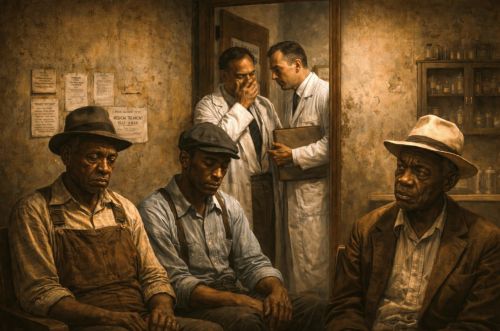
The Tuskegee Syphilis Study reveals how the suppression of medical information by government researchers eroded trust, exposed ethical failures, and reshaped modern research ethics.

By Matthew A. McIntosh
Public Historian
Brewminate
Introduction: Medical Knowledge, Power, and the Ethics of Information
Medical knowledge occupies a powerful position within modern societies. Physicians, researchers, and public health authorities are entrusted with the responsibility of diagnosing illness, providing treatment, and advancing scientific understanding for the benefit of the population. This authority rests not only on scientific expertise but also on an ethical expectation of honesty, transparency, and respect for human dignity. The relationship between physicians and patients ultimately depends on trust. When institutions responsible for health deliberately manipulate or withhold information, the ethical foundation of that relationship is fundamentally undermined.
The Tuskegee Syphilis Study, conducted between 1932 and 1972 in Macon County, Alabama, stands as one of the most troubling examples of institutional deception in the history of American medicine. Organized by the United States Public Health Service (USPHS) in cooperation with local physicians, the study followed hundreds of African American men infected with syphilis while concealing the true nature of their condition. Participants were told that they were being treated for “bad blood,” a vague term commonly used in the region to describe a variety of ailments. In reality, the study was designed to observe the long-term effects of untreated syphilis. Over the course of four decades, researchers continued to monitor the progression of the disease while failing to provide participants with the information and treatment that could have altered the course of their illness.
The ethical implications of this deception became even more severe after the development of penicillin as an effective treatment for syphilis in the 1940s. Rather than ending the study and providing participants with appropriate medical care, researchers allowed the project to continue. Participants were not informed that a cure existed, and in some cases they were actively prevented from obtaining treatment elsewhere. The decision to continue the study despite the availability of effective therapy illustrates how institutional priorities and racial assumptions could override the ethical obligations normally associated with medical practice.
The Tuskegee study ultimately became a defining example of how power over clinical knowledge and disclosure can be misused. By withholding diagnosis, treatment, and informed consent from vulnerable participants, government researchers transformed medical authority into a mechanism of control rather than care. The exposure of the study in 1972 triggered widespread outrage and forced a reevaluation of the ethical principles governing human research in the United States. Examining the origins and conduct of the Tuskegee study provides an important opportunity to understand how institutional control over medical knowledge can produce profound violations of trust and lasting damage to public confidence in health authorities.
Public Health and Racial Inequality in Early Twentieth-Century America

The Tuskegee Syphilis Study did not emerge in isolation but developed within a broader public health system shaped by profound racial inequality in the United States. During the late nineteenth and early twentieth centuries, American medicine underwent significant professionalization. Scientific research expanded rapidly, medical schools adopted more rigorous training standards, and public health institutions began to play a larger role in addressing disease. The reorganization of medical education following the 1910 Flexner Report helped standardize training and elevate scientific medicine as the dominant framework for understanding illness and treatment. Public health agencies at the federal, state, and local levels expanded their involvement in disease surveillance and prevention campaigns. Yet these developments occurred within a society structured by segregation and discrimination. African Americans, particularly in the rural South, often faced limited access to medical care, underfunded health facilities, and widespread neglect from government health programs. As medical institutions grew more sophisticated, the benefits of these advances were distributed unevenly, leaving many Black communities with fewer resources and limited opportunities to receive modern medical treatment.
Segregation influenced nearly every aspect of medical treatment and research during this period. Hospitals, clinics, and training institutions frequently operated under racially segregated systems that restricted access to resources for Black patients and physicians. Public health campaigns aimed at controlling infectious diseases sometimes targeted African American communities, but these initiatives were often shaped by paternalistic attitudes rather than genuine commitments to equitable care. As a result, many Black communities experienced both heightened scrutiny from public health authorities and persistent barriers to obtaining adequate medical treatment.
Prevailing medical theories about race further shaped the attitudes of researchers and public health officials. In the early twentieth century, some physicians and scientists promoted ideas suggesting that African Americans were biologically different from white populations in ways that influenced disease patterns and behavior. These claims often drew upon earlier pseudoscientific traditions that attempted to explain social inequalities through racial biology rather than structural discrimination. Although such theories lacked scientific validity, they circulated widely within segments of the medical profession and influenced the assumptions of some researchers studying disease within Black communities. These ideas could shape how physicians interpreted symptoms, how researchers designed studies, and how policymakers approached public health interventions. In some cases, racial stereotypes were used to justify research practices that treated African American communities as subjects for observation rather than as patients entitled to the same standards of care afforded to white populations. The boundaries between scientific investigation and racialized social assumptions could become blurred, creating conditions in which ethically questionable research could be rationalized as legitimate medical inquiry.
The prevalence of poverty in many rural African American communities also affected the delivery of medical services. In regions such as Macon County, where the Tuskegee study would later take place, economic hardship and limited infrastructure created significant barriers to health care. Many residents relied on small local clinics or traveling physicians for treatment, and specialized medical services were often difficult to obtain. These conditions made communities vulnerable not only to disease but also to research initiatives that promised medical attention while offering limited transparency about their true objectives.
Public health officials frequently justified their interventions by arguing that disease control required close observation of populations considered at high risk. Syphilis, a major public health concern in the early twentieth century, attracted particular attention from researchers seeking to understand its spread and long-term effects. The disease had significant social and medical consequences, and public health authorities launched campaigns aimed at tracking infection rates and promoting treatment. Government health agencies conducted surveys, treatment programs, and research initiatives designed to monitor infection across different regions of the country. Medical researchers increasingly viewed the systematic study of disease as an essential tool for improving public health knowledge. Yet these efforts also reflected broader power imbalances between researchers and the communities they studied. When populations with limited access to medical care became the focus of research programs, the promise of treatment or medical attention could encourage participation even when the objectives of the study were not fully explained. In such circumstances, the authority of government medical institutions carried considerable influence over individuals who had few alternatives for obtaining health care.
These historical conditions created a setting in which the Tuskegee study could be conceived and implemented. The combination of racial inequality, limited access to health care, and the authority of government medical institutions shaped the relationship between researchers and the men who would later become participants in the study. Understanding this broader context is essential for interpreting the ethical failures that followed, as it reveals how social inequality and institutional power intersected within the practices of early twentieth-century public health research.
The Origins of the Tuskegee Study (1932)

The Tuskegee Syphilis Study began in 1932 as a research initiative organized by the USPHS in cooperation with local medical institutions in Macon County, Alabama. At the time, syphilis represented a significant public health concern in many parts of the United States, particularly in rural areas where medical services were limited. Public health officials initially considered launching a treatment program designed to provide care to individuals infected with the disease. However, financial constraints during the Great Depression and the perceived scientific value of long-term observation gradually shifted the focus of the project. Rather than implementing a sustained treatment campaign, researchers chose to observe the natural progression of untreated syphilis in a group of infected individuals.
The study centered on a population of African American sharecroppers living in Macon County, many of whom had limited access to consistent medical care. Researchers recruited approximately 600 men for participation, including 399 who had syphilis and 201 who served as a control group without the disease. Recruitment often relied on the cooperation of local physicians, public health workers, and community intermediaries who were familiar to residents of the area. Because medical services in the region were scarce and often unaffordable, the promise of free examinations, meals, and transportation to clinics provided a strong incentive for participation. Researchers framed the program as a health initiative that would provide treatment and monitoring for “bad blood,” a broad local term used to describe a variety of ailments including anemia, fatigue, and other chronic conditions. By using this ambiguous language, investigators avoided revealing that the study specifically concerned syphilis. Participants were unable to give informed consent because they were never clearly told that they carried a sexually transmitted infection or that the project’s primary purpose was to observe the disease over time. The structure of recruitment reflected the unequal relationship between researchers and the men enrolled in the study, as medical authority and economic hardship combined to encourage participation without genuine understanding.
The involvement of the Tuskegee Institute, a respected educational institution within the African American community, also played an important role in facilitating the study. Although the institute did not control the research itself, its association with the project helped build trust among local residents. Public health nurses and local officials worked closely with community leaders to encourage participation and maintain contact with the men enrolled in the study. Through periodic medical examinations and follow-up visits, researchers collected data about the long-term effects of the disease while maintaining the appearance that participants were receiving legitimate medical attention.
From its earliest stages, the study relied on a structure that placed control over medical knowledge firmly in the hands of the researchers. Participants were not informed of their diagnosis, nor were they given a clear explanation of the goals of the project. Instead, the authority of government physicians and public health officials shaped the relationship between investigators and subjects. This imbalance allowed the study to proceed for decades, demonstrating how institutional power and the withholding of information could sustain a research program that fundamentally violated the ethical principles normally associated with medical practice.
Deception and the Withholding of Medical Information
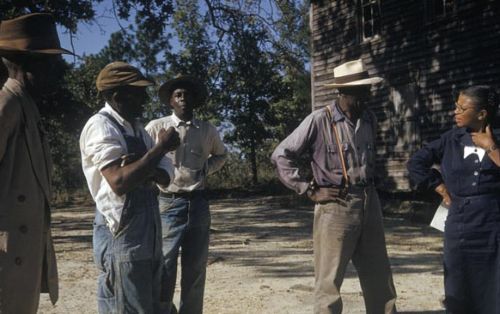
Central to the Tuskegee study was a systematic pattern of deception that allowed researchers to observe the progression of untreated syphilis without participants’ informed consent. From the beginning, the men enrolled in the study were not told that they had syphilis. Instead, investigators described their condition using the vague local expression “bad blood,” a phrase that could refer to a range of illnesses including anemia, fatigue, or other chronic conditions. By relying on this ambiguous terminology, researchers ensured that participants would not understand the true nature of the study or the seriousness of their illness. This deliberate withholding of information created a situation in which individuals believed they were receiving medical care while actually serving as subjects in a long-term observational experiment.
The deception extended beyond language to the structure of the medical procedures themselves. Participants were invited to periodic examinations conducted by physicians working with the USPHS. These visits included physical examinations, blood tests, and diagnostic procedures intended to document the progression of the disease. Researchers carefully framed these activities as therapeutic interventions rather than investigative procedures. In some cases, participants were told that the tests were necessary to improve their health or to provide specialized care unavailable elsewhere. One of the most invasive procedures involved spinal taps used to determine whether syphilis had affected the central nervous system. Rather than explaining the true diagnostic purpose of these tests, researchers described them as “special treatments” designed to help the patients. Letters sent to participants emphasized the importance of returning for these procedures, promising additional care and attention from medical professionals. By presenting diagnostic interventions as beneficial treatments, investigators maintained the illusion that the men were receiving meaningful medical assistance while the study continued to gather data about the progression of untreated disease.
Researchers also maintained the appearance of medical assistance by offering small incentives that encouraged continued participation. Free medical examinations, transportation to clinics, and occasional meals were provided during visits. Investigators promised burial insurance to participants, assuring their families that funeral expenses would be covered if they remained in the program until death. These incentives, while modest, carried significant weight in a community where economic hardship and limited access to health services were common. The benefits reinforced the perception that the study represented a legitimate health program rather than an experiment designed to observe untreated disease.
The most troubling aspect of the deception became apparent as medical knowledge about syphilis advanced. During the 1940s, penicillin emerged as a highly effective treatment capable of curing the disease in its early stages and preventing many of its long-term complications. Public health authorities across the United States began implementing treatment campaigns designed to control the spread of the infection and provide care to those already affected. In the context of these medical developments, the continuation of the Tuskegee study represented a profound ethical breach. Rather than informing participants about the availability of penicillin or offering them access to treatment, researchers allowed the project to continue in order to preserve the integrity of the observational data. In some instances, investigators actively intervened to prevent participants from receiving treatment elsewhere. Records indicate that public health officials contacted local physicians and military draft boards to ensure that the men involved in the study would not receive penicillin as part of routine medical care. By controlling access to treatment and limiting what participants were told about their condition, researchers ensured the study could continue even after an effective cure existed.
This pattern of deception reveals how authority over medical knowledge can create profound ethical vulnerabilities when combined with unequal power relationships. The participants in the Tuskegee study depended on government physicians and public health officials for information about their health, yet those authorities deliberately concealed crucial facts about diagnosis and treatment. The withholding of accurate medical information transformed the relationship between patient and physician into one defined by manipulation rather than care. As the study continued for decades, this imbalance allowed researchers to collect extensive data while the men involved remained unaware that their illness was being observed rather than treated.
Penicillin and the Decision to Continue the Study

The development of penicillin during the 1940s transformed the medical treatment of syphilis and fundamentally altered the ethical context of the Tuskegee study. Prior to the widespread availability of penicillin, treatment options for syphilis were limited and often dangerous. Earlier therapies such as arsenic-based compounds required lengthy and difficult regimens that were not always effective. The discovery that penicillin could reliably cure the disease represented a major breakthrough in modern medicine. By the mid-1940s, public health authorities in the United States recognized penicillin as the standard treatment for syphilis and began implementing national campaigns aimed at diagnosing and treating infected individuals.
For the men enrolled in the Tuskegee study, however, this medical advancement did not lead to improved care. Instead of informing participants about the new treatment or ending the study, researchers chose to continue observing the natural progression of the disease. The scientific objective of documenting the long-term effects of untreated syphilis remained the central priority of the project. This decision represented a critical turning point in the ethical history of the study, because the availability of an effective cure eliminated any justification for withholding treatment in the name of scientific observation.
Researchers took deliberate steps to ensure that participants did not receive penicillin from other sources. During the 1940s and 1950s, federal and state health programs increasingly offered treatment for syphilis through public clinics and medical facilities. In order to maintain the integrity of the study, officials associated with the project monitored these programs and intervened when necessary. Some participants who sought medical care elsewhere were redirected back to the study, where treatment continued to be withheld. Investigators also worked with local physicians and public health authorities to ensure that the men enrolled in the study were not inadvertently treated through broader public health initiatives.
The involvement of military draft boards further illustrates how researchers maintained control over access to treatment. During World War II, routine medical examinations conducted for military service often included testing for syphilis. Many young men diagnosed with the disease during these screenings were subsequently treated with penicillin before entering military service. Researchers connected to the Tuskegee project took steps to prevent participants from receiving such treatment, informing draft officials that the men were part of an ongoing study and should not be removed from the program. By coordinating with these institutions, investigators preserved the conditions necessary to observe untreated infection even as the wider medical community moved toward widespread treatment.
The continuation of the Tuskegee study after the introduction of penicillin demonstrates how institutional priorities can override ethical obligations in medical research. At a time when effective treatment was readily available, the decision to withhold therapy from participants reflected a profound disregard for patient welfare. The men involved in the study remained unaware that a cure existed, and many suffered severe complications or death as the disease progressed. This phase of the study demonstrates how control over clinical knowledge can enable harmful practices when accountability and transparency disappear.
Exposure and Public Outrage (1972)

For four decades the Tuskegee study continued largely outside the awareness of the broader American public. Although some physicians and officials within the public health system questioned aspects of the research over the years, the project remained largely protected by the institutional authority of the USPHS. Internal reviews occasionally raised concerns about the ethics of continuing the study, particularly after the introduction of penicillin as an effective treatment. Yet these discussions did not result in meaningful changes to the structure of the project. The study persisted within a bureaucratic framework that normalized its procedures and insulated it from external scrutiny.
The situation began to change in the late 1960s when criticism emerged from within the public health community itself. One of the most significant voices was Peter Buxtun, a social worker employed by the USPHS who became troubled after learning details about the study. Buxtun raised ethical objections through internal channels, arguing that the continuation of the study violated basic standards of medical practice and human research ethics. His concerns reflected a broader shift in medical thinking during the postwar period, when debates about informed consent and the rights of research subjects were becoming more prominent. Despite these concerns, Buxtun’s objections were initially dismissed by his superiors, who defended the study as scientifically valuable and justified by the data it had already produced. Officials within the public health system argued that terminating the research would waste decades of observation and undermine the project’s original purpose. These responses demonstrated how institutional priorities could override ethical concerns, allowing the study to continue despite mounting doubts about its legitimacy.
When internal appeals failed to halt the study, Buxtun eventually brought the issue to the attention of journalists. In 1972 investigative reporters began examining the details of the Tuskegee project and its decades-long observation of untreated syphilis among African American men. The story gained national attention when the Associated Press published a report revealing that government researchers had deliberately withheld treatment from participants despite the availability of effective medical therapy. The article exposed not only the existence of the study but also the deceptive practices that had sustained it for forty years.
Public reaction to the revelations was immediate and intense. Newspapers across the United States published editorials condemning the study, and civil rights organizations denounced the government’s conduct as a profound violation of human rights. Many observers were particularly outraged by the fact that the research had targeted a vulnerable population that had historically faced discrimination within the American health care system. The exposure of the study intensified existing concerns about racial inequality in medical treatment and raised broader questions about the ethical oversight of government-sponsored research. Members of Congress called for investigations into how such a study had been allowed to continue for so many years without intervention. Medical professionals, ethicists, and civil rights leaders joined the public debate, emphasizing that the case revealed serious weaknesses in the systems designed to protect human research participants. The controversy quickly expanded beyond the details of the Tuskegee project itself, becoming part of a larger national conversation about the responsibilities of government agencies, the ethics of scientific research, and the protection of vulnerable communities.
In response to the growing public outrage, federal authorities moved quickly to terminate the study. The Department of Health, Education, and Welfare convened an advisory panel to investigate the circumstances surrounding the project and evaluate the ethical issues involved. The panel concluded that the study was ethically unjustifiable and that participants had been denied the fundamental rights normally associated with medical care. Their findings confirmed that the men involved had not received informed consent and had been deliberately deprived of treatment that could have prevented severe illness and death.
The exposure of the Tuskegee study marked a turning point in American discussions about medical ethics and government accountability. What had once been treated within the public health system as a long-term scientific investigation was now widely recognized as a profound ethical failure. The national debate that followed forced policymakers, physicians, and researchers to reconsider the responsibilities associated with medical authority and the protection of human subjects. In revealing the extent of deception and harm involved in the study, the events of 1972 transformed Tuskegee from an obscure research project into a powerful symbol of the dangers posed by unchecked institutional power.
Reforming Research Ethics: Institutional Review and Informed Consent
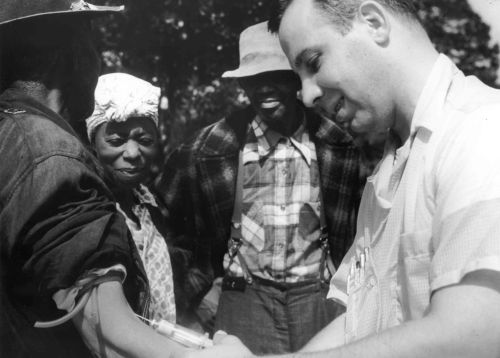
The exposure of the Tuskegee Syphilis Study in 1972 prompted a profound reassessment of ethical standards governing human research in the United States. Public outrage and congressional scrutiny revealed that existing systems had failed to prevent serious abuses of medical authority. Although professional guidelines concerning human experimentation had existed prior to the 1970s, they were often informal and inconsistently enforced. The Tuskegee revelations demonstrated that stronger institutional safeguards were necessary to ensure that research participants would be protected from deception, coercion, and unnecessary harm.
One of the most significant developments following the scandal was the creation of federal policies requiring formal ethical review of research involving human subjects. In 1974 the United States Congress passed the National Research Act, which established the National Commission for the Protection of Human Subjects of Biomedical and Behavioral Research. The passage of this legislation reflected growing concern within both the medical community and the broader public about the lack of clear oversight mechanisms governing research practices. Congressional hearings examining the Tuskegee study exposed the absence of consistent ethical review procedures and revealed how government agencies had been able to conduct long-term studies without meaningful external scrutiny. By creating the national commission, lawmakers sought to establish a body capable of examining existing research practices and recommending a set of ethical principles that would guide future investigations. The commission included physicians, legal scholars, ethicists, and public representatives, reflecting an effort to bring multiple perspectives into discussions about research ethics. Through public hearings, scholarly analysis, and consultation with experts in medicine and law, the commission began the process of developing a comprehensive framework for protecting individuals who participated in scientific studies.
The commission’s work contributed to the development of the Belmont Report, published in 1979. This influential document articulated three central ethical principles intended to guide human research: respect for persons, beneficence, and justice. Respect for persons emphasized the importance of individual autonomy and the requirement that participants enter research voluntarily with full understanding of the study. Beneficence required researchers to minimize harm and maximize potential benefits, ensuring that scientific inquiry would not place participants at unnecessary risk. The principle of justice addressed the fair distribution of the burdens and benefits of research, seeking to prevent vulnerable populations from being disproportionately targeted for experimentation.
Another major reform involved the establishment of Institutional Review Boards (IRBs) within universities, hospitals, and research institutions. These committees were designed to review proposed research projects before they began, evaluating whether the study met ethical standards and whether participants would be adequately protected. IRBs assess issues such as informed consent procedures, potential risks to participants, and the scientific justification for the research. By requiring independent review prior to the initiation of research, this system created a formal mechanism through which ethical concerns could be addressed before harm occurred.
The reforms that followed the Tuskegee scandal reshaped the ethical landscape of American biomedical research. Requirements for informed consent, institutional oversight, and federal regulation established new expectations regarding the treatment of human subjects. Although these policies cannot erase the harm caused by earlier abuses, they represent an attempt to ensure that scientific progress is pursued within a framework that respects human dignity and individual rights. The legacy of Tuskegee extends beyond the study itself, influencing the development of modern research ethics and the structures designed to protect participants in medical research.
Legacy: Trust, Medicine, and Historical Memory
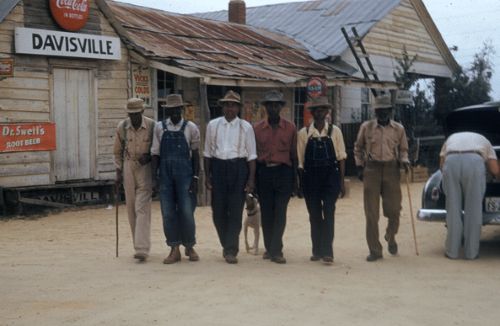
The Tuskegee Syphilis Study left a lasting imprint on American society that extended far beyond the immediate ethical reforms implemented after its exposure. Although the study officially ended in 1972, its consequences continued to shape discussions about medicine, race, and institutional authority for decades. The revelation that government researchers had withheld treatment from vulnerable participants profoundly damaged the credibility of public health institutions. For many Americans, the scandal represented not merely an isolated ethical failure but a powerful demonstration of how scientific authority could be misused when oversight and accountability were absent.
The impact of the study was particularly significant within African American communities, where historical experiences of discrimination had already created skepticism toward medical institutions. The Tuskegee revelations reinforced longstanding concerns about unequal treatment in health care and the exploitation of Black patients within medical research. Families of the men involved in the study, along with civil rights advocates and community leaders, emphasized that the deception reflected broader patterns of racial inequality in American medicine. As awareness of the study spread, it became a symbol of the dangers associated with unchecked medical authority and the withholding of information from marginalized populations.
Scholars have also examined how the memory of the Tuskegee study has influenced public attitudes toward health programs and medical research. Studies of public health communication have suggested that awareness of the Tuskegee experiment contributed to distrust among some individuals toward government-sponsored medical initiatives. In certain cases, this skepticism affected participation in clinical trials, vaccination campaigns, and disease prevention programs. Historians and sociologists have also explored how the narrative of Tuskegee became embedded within broader discussions about structural inequality in American medicine. The story of the study circulated through academic research, journalism, community dialogue, and public health debates, reinforcing its symbolic importance as an example of institutional betrayal. While scholars differ in their assessments of how directly the study influences contemporary health behaviors, there is broad agreement that Tuskegee has become a powerful historical reference point when communities evaluate the credibility of medical authorities and research institutions.
The study has also become a central reference point in the teaching of medical ethics. Universities, medical schools, and public health programs frequently examine the Tuskegee experiment as a case study illustrating the importance of informed consent, transparency, and respect for research participants. In classrooms and professional training programs, the study is used to demonstrate how ethical failures can develop gradually within institutions when critical oversight is absent. By analyzing the decisions made by researchers, administrators, and government officials, students are encouraged to consider how ethical principles must guide every stage of scientific investigation. The Tuskegee case also illustrates how social inequality and racial bias can influence research practices if ethical safeguards are not carefully maintained. Through this educational role, the story of Tuskegee serves as a cautionary example that highlights the potential consequences of placing scientific objectives above the welfare of human subjects.
Public recognition of the study’s historical significance also developed through formal acts of acknowledgment. In 1997 the President of the United States, Bill Clinton, issued an official apology on behalf of the federal government to the surviving participants and their families. The apology acknowledged that the study had violated fundamental principles of justice and medical ethics. This gesture represented an effort to confront the legacy of the research and to reaffirm the government’s commitment to protecting the rights of research participants in the future.
The legacy of the Tuskegee Syphilis Study extends across multiple dimensions of American historical memory. It shaped reforms in research ethics, influenced debates about racial inequality in health care, and continues to inform discussions about trust between citizens and medical institutions. By examining the study within its broader historical context, scholars and policymakers are reminded that the management of clinical knowledge and patient disclosure carries profound ethical responsibilities. The history of Tuskegee demonstrates how the suppression of medical truth can produce long-lasting consequences that reach far beyond the original circumstances of the research.
Conclusion: Suppressing Medical Truth and the Cost of Institutional Authority
The history of the Tuskegee Syphilis Study illustrates how control over clinical knowledge and treatment disclosure can become a powerful instrument of institutional authority. For four decades, government researchers maintained an observational study that depended on the systematic withholding of critical medical knowledge from its participants. The men involved believed they were receiving care for a vague illness, yet they were never informed of their diagnosis or the availability of effective treatment once it emerged. By controlling the flow of information and shaping the narrative presented to participants, the institutions responsible for the study created conditions that allowed the research to continue despite its profound ethical violations.
This manipulation of medical knowledge demonstrates how authority within scientific and public health institutions can obscure moral responsibility. The researchers involved in the study did not operate entirely outside the norms of their professional environment. Instead, they worked within a system that placed high value on scientific data and long-term observation while providing insufficient oversight regarding the treatment of human subjects. The authority associated with government medicine, combined with assumptions about racial hierarchy and social inequality, created an environment in which the suffering of participants could be rationalized as part of a legitimate research project. The suppression of accurate information became a structural feature of the study rather than an accidental oversight.
The exposure of the Tuskegee experiment revealed the dangers inherent in allowing institutions to control both scientific knowledge and the narratives surrounding its use. Once the details of the study became public, it became clear that the harm experienced by participants was not simply the result of individual decisions but of systemic failures within public health governance. The scandal demonstrated that the legitimacy of medical authority depends not only on scientific expertise but also on transparency, accountability, and respect for the rights of patients. Without these principles, the power to produce and manage knowledge can easily become a mechanism for exploitation.
The lessons of Tuskegee extend far beyond the historical circumstances of the study itself. They highlight the ethical responsibility that accompanies the production of medical knowledge and the importance of protecting the autonomy and dignity of research participants. Modern systems of ethical oversight, informed consent, and institutional review emerged in part as responses to the failures revealed by Tuskegee. Yet the enduring significance of the study lies in its reminder that public trust in medicine depends on honesty, transparency, and the careful stewardship of institutional authority. When medical truth is suppressed in the service of institutional objectives, the consequences can reverberate across generations.
Bibliography
Affiliate disclosure: Amazon links on this site are paid links. As an Amazon Associate I earn from qualifying purchases.
- Benedek, Thomas G. “The ‘Tuskegee Study’ of Syphilis: Analysis of Moral versus Methodologic Aspects.” Journal of Clinical Epidemiology 31:1 (1978), 35-50.
- Brandt, Allan M. “Racism and Research: The Case of the Tuskegee Syphilis Study.” The Hastings Center Report 8, no. 6 (1978): 21–29.
- Centers for Disease Control and Prevention. “The Tuskegee Timeline.” U.S. Department of Health and Human Services.
- Centers for Disease Control and Prevention. “U.S. Public Health Service Syphilis Study at Tuskegee.” U.S. Department of Health and Human Services.
- Clinton, William J. “Apology for the Tuskegee Syphilis Study.” Remarks at the White House, May 16, 1997.
- Gamble, Vanessa Northington. “Under the Shadow of Tuskegee: African Americans and Health Care.” American Journal of Public Health 87, no. 11 (1997): 1773–1778.
- Gray, Fred D. The Tuskegee Syphilis Study: The Real Story and Beyond. Montgomery, AL: NewSouth Books, 1998.
- Jones, James H. Bad Blood: The Tuskegee Syphilis Experiment. New York: Free Press, 1981.
- Katz, Ralph V. et.al. “Awareness of the Tuskegee Syphilis Study and the US Presidential Apology and Their Influence on Minority Participation in Biomedical Research.” American Journal of Public Health 98:6 (2008), 1137-1142.
- National Commission for the Protection of Human Subjects of Biomedical and Behavioral Research. The Belmont Report: Ethical Principles and Guidelines for the Protection of Human Subjects of Research. Washington, DC, 1979.
- Reverby, Susan M. Examining Tuskegee: The Infamous Syphilis Study and Its Legacy. Chapel Hill: University of North Carolina Press, 2009.
- Tuskegee Study Ad Hoc Advisory Panel. Final Report of the Tuskegee Syphilis Study Ad Hoc Advisory Panel. Washington, DC: U.S. Department of Health, Education, and Welfare, 1973.
- U.S. Congress. National Research Act, Public Law 93-348, 1974.
- Washington, Harriet A. Medical Apartheid: The Dark History of Medical Experimentation on Black Americans from Colonial Times to the Present. New York: Doubleday, 2006.
Originally published by Brewminate, 03.10.2026, under the terms of a Creative Commons Attribution-NonCommercial-NoDerivatives 4.0 International license.
About the Author