In the wars of Sengoku Japan, shinobi served as covert agents gathering intelligence, spreading misinformation, and sabotaging enemies, revealing strategic realities behind later myths of the ninja.

By Matthew A. McIntosh
Public Historian
Brewminate
Introduction: Covert Warfare in a Culture of Honor
The history of warfare in feudal Japan is often framed through the ideals of the samurai class, whose reputation rested on courage, loyalty, and martial honor. Later interpretations of samurai culture, particularly those influenced by the concept of bushidō, have emphasized open confrontation and personal bravery as defining features of the warrior ethos. Yet the realities of warfare in medieval Japan were far more complex. Military leaders operating in a fragmented political environment required not only battlefield skill but also intelligence and strategic secrecy. As a result, forms of covert warfare developed alongside the celebrated ideals of the warrior class, revealing a persistent tension between martial ideology and military necessity.
This tension became particularly pronounced during the Sengoku period, an era of near-constant warfare that followed the collapse of centralized authority in the late fifteenth century. Regional warlords competed for territory and political influence, forming shifting alliances and conducting campaigns that often depended on surprise and strategic information. In such an environment, commanders required reliable knowledge about enemy positions, supply lines, and internal politics within rival domains. Intelligence became an essential component of military strategy, even though the methods used to obtain it often fell outside the traditional image of honorable warfare.
Specialized agents known as shinobi emerged as practitioners of covert operations. Unlike samurai, whose status was tied to hereditary warrior elites, many shinobi came from more modest social backgrounds or from regions where irregular warfare had become a practical necessity. Their work involved espionage, infiltration, sabotage, and occasionally assassination, all carried out in secrecy rather than on the battlefield. These activities were frequently viewed as dishonorable within elite warrior ideology, yet they were widely employed by powerful daimyō who recognized their advantages. The existence of shinobi highlights the gap between the formal ideals of samurai culture and the pragmatic realities of warfare.
Understanding the role of shinobi requires moving beyond the image of the ninja that dominates modern popular culture. Medieval and early modern sources depict individuals engaged in intelligence gathering, deception, and survival-oriented tactics rather than supernatural warriors cloaked in mystery. By examining the historical context of the Sengoku period and the political pressures that shaped military strategy, it becomes possible to understand shinobi as practical agents of covert warfare. Their activities illuminate the broader dynamics of conflict in feudal Japan, where success often depended not only on battlefield valor but also on information, secrecy, and strategic adaptability.
The Sengoku Political Landscape and the Demand for Intelligence
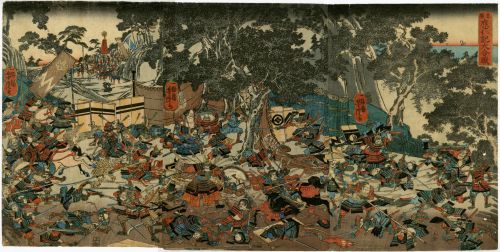
The emergence of shinobi activity cannot be understood without examining the political fragmentation that defined Japan during the Sengoku period. This era of prolonged conflict began in the aftermath of the Ōnin War (1467–1477), a destructive civil war that devastated Kyoto and undermined the authority of the Ashikaga shogunate. In the decades that followed, central political control weakened dramatically, allowing regional military leaders to consolidate power within their own territories. These warlords, known as daimyō, governed semi-independent domains and frequently clashed with neighboring rivals. The resulting environment was characterized by fluid alliances, territorial competition, and near-constant military preparation.
In this unstable political landscape, information became a critical strategic resource. Commanders needed reliable intelligence about enemy troop movements, defensive positions, and the internal conditions of rival domains. Because large-scale battles could be decided by surprise or by knowledge of an opponent’s weaknesses, information often determined the outcome of campaigns before armies even met on the battlefield. Military leaders sought to develop networks of informants and scouts capable of gathering intelligence beyond the front lines. This demand for information encouraged the expansion of covert reconnaissance and espionage activities.
The structure of Sengoku warfare further increased the importance of intelligence. Campaigns frequently involved the movement of armies across mountainous terrain, the construction or siege of fortified castles, and the management of complex logistical systems. Daimyō required knowledge not only of enemy forces but also of supply routes, terrain conditions, and the loyalties of local populations. A commander who understood the geography and social dynamics of a contested region held a significant advantage. Terrain knowledge, for example, could determine whether an army advanced through a narrow mountain pass, avoided a potential ambush, or secured control over vital river crossings and roads connecting key domains. Intelligence about castle defenses, the strength of garrisons, and the availability of provisions could also shape strategic decisions long before a siege began. Because Sengoku campaigns often unfolded across wide and difficult landscapes, reliable information reduced uncertainty and allowed commanders to plan operations with greater precision.
Intelligence gathering also played an important role in the politics of alliance building. Because Sengoku-era warfare often involved shifting coalitions between competing warlords, leaders needed insight into the intentions and reliability of potential allies. Rumors, communications, and negotiations could influence whether a campaign succeeded or collapsed. Agents who could travel discreetly between domains, gather information, and relay it to their patrons became valuable assets within this volatile political environment.
The growing reliance on covert intelligence reflected a broader transformation in Japanese warfare during the fifteenth and sixteenth centuries. Although battlefield valor remained an important element of warrior culture, military success increasingly depended on preparation, planning, and information. The expansion of castle networks and the development of organized armies required leaders to think strategically about both defense and offense. Commanders invested significant effort in learning about the strength and weaknesses of rival domains, including the political loyalties of local elites and the economic resources available to sustain prolonged campaigns. Intelligence gathering became part of a larger system of military administration that supported Sengoku warfare. Information about an enemy’s movements, morale, and internal divisions could shape the timing of attacks, the direction of troop deployments, and the negotiation of alliances.
Skills later associated with shinobi became particularly valuable. Individuals trained in stealth, disguise, and infiltration could operate behind enemy lines and provide commanders with information that conventional scouts could not easily obtain. Their activities complemented the military ambitions of Sengoku warlords who sought every possible advantage in their struggles for power. The demand for intelligence helped create the conditions in which covert agents could develop specialized roles within the broader structure of Japanese warfare.
Origins of the Shinobi: Iga and Kōga Networks
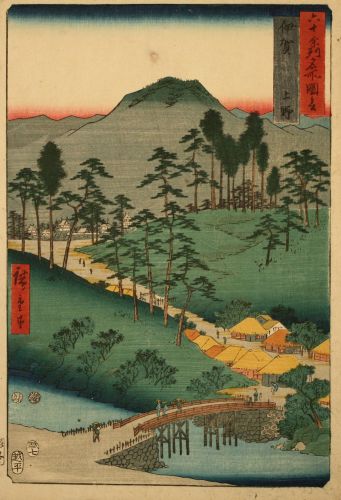
The emergence of shinobi traditions in Japan is closely associated with two neighboring mountainous regions in central Honshu: Iga and Kōga. These areas, located in what are now Mie and Shiga prefectures, developed reputations during the Sengoku period as centers for covert warfare and intelligence activity. Their geographic environment played an important role in shaping this development. The rugged terrain and relative isolation of these regions limited the direct control of powerful daimyō and allowed local warrior communities to maintain a degree of autonomy. Small groups of fighters developed skills suited to irregular warfare, including ambush tactics, infiltration, and reconnaissance.
Unlike the hierarchical warrior structures that dominated many other parts of Japan, the communities of Iga and Kōga appear to have been organized through networks of local families and cooperative associations. Rather than serving under a single powerful lord, these groups often operated through collective arrangements in which multiple families shared responsibility for regional defense and political decision-making. Historical evidence suggests that Iga in particular functioned as a kind of local confederation in which warrior households participated in councils that managed military affairs and resolved disputes. This decentralized structure encouraged flexibility and cooperation, qualities that proved useful for the kinds of covert operations later associated with shinobi activity. Members of these communities could be mobilized for specialized missions while maintaining strong local support networks, and their knowledge of the terrain and regional politics gave them advantages when operating outside conventional military hierarchies.
Historical sources suggest that the warriors of Iga and Kōga developed reputations for their ability to conduct unconventional operations. Their mountainous homeland required familiarity with difficult terrain, encouraging the development of skills related to stealth, navigation, and survival. Such abilities made them valuable to neighboring warlords who required scouts and infiltrators capable of operating in hostile environments. The reputation of these regions as sources of covert specialists spread throughout the Sengoku political landscape.
The relationship between these regional networks and larger political powers was complex. Daimyō frequently sought to employ fighters from Iga and Kōga for intelligence gathering and irregular military tasks. The independence of these communities sometimes brought them into conflict with expanding territorial states. One of the most dramatic examples occurred in 1581 when Oda Nobunaga launched a large-scale invasion of Iga in order to suppress its autonomous warrior groups. Nobunaga’s campaign involved tens of thousands of troops and demonstrated the determination of expanding warlords to eliminate independent military organizations that lay outside their control. The invasion devastated the region and forced many of its warriors to flee or enter the service of more powerful lords. Yet the very fact that Nobunaga considered such a large campaign necessary illustrates the resilience and reputation of the Iga networks within Sengoku military culture.
Although later legends often portray the shinobi of Iga and Kōga as members of secret clans with rigid hierarchies, the historical reality appears to have been more fluid. Individuals from these regions likely served in a variety of roles depending on the needs of the moment, sometimes acting as scouts, guides, messengers, or infiltrators rather than belonging to a permanent class of professional assassins. The skills associated with shinobi activity were less the product of secret training schools than the practical adaptation of local warrior communities to the political and geographic conditions of their environment.
The association of Iga and Kōga with shinobi traditions nevertheless became a lasting element of Japanese historical memory. As accounts of covert operations circulated during and after the Sengoku period, these regions came to symbolize the practice of unconventional warfare. Their reputation continued to grow in later narratives, eventually forming the foundation for the popular image of the ninja in modern culture. While much of this later mythology exaggerates or distorts the historical record, it reflects the enduring connection between these mountainous communities and the development of covert military practices in feudal Japan.
Training and Techniques: The Practice of Ninjutsu

The skills associated with shinobi activity were collectively described in later sources as ninjutsu, a body of practical techniques designed for survival, infiltration, and intelligence gathering. Unlike the martial disciplines practiced by samurai, which emphasized open combat and mastery of weapons such as the sword and bow, ninjutsu focused on adaptability and concealment. Its methods reflected the needs of covert agents operating behind enemy lines, where success depended on avoiding detection rather than defeating opponents in direct battle. Training emphasized situational awareness, stealth, and the ability to respond creatively to unpredictable conditions.
One of the most important elements of ninjutsu was the ability to move unnoticed through hostile territory. Practitioners trained to travel quietly, navigate unfamiliar terrain, and blend into their surroundings. Techniques included careful control of breathing and foot placement to reduce noise, as well as the use of shadows, vegetation, and natural terrain features to remain hidden from observers. These skills allowed operatives to approach enemy positions, observe military activity, and withdraw without being discovered. In many cases, the ability to gather information without confrontation was far more valuable than engaging in combat.
Disguise also formed a central component of shinobi training. Because covert agents often needed to pass through towns, castles, or military encampments, they learned to adopt the appearance and behavior of ordinary travelers, merchants, laborers, or religious figures. Mastery of disguise required not only changes in clothing but also the ability to imitate speech patterns, gestures, and social customs appropriate to different social roles. A convincing disguise depended on understanding the rhythms of everyday life, including how individuals of different professions carried themselves, how they spoke to superiors or strangers, and how they navigated the complex etiquette of feudal society. By blending into the everyday life of a community, shinobi could gather information, enter restricted areas, and move through enemy territory with minimal suspicion. In many cases, the success of an operation depended less on stealth in the physical sense than on the ability to appear completely unremarkable within the social environment.
Another important dimension of ninjutsu involved environmental survival and improvisation. Agents operating independently needed the ability to secure food, water, and shelter while avoiding capture. Training included knowledge of local geography, edible plants, weather patterns, and methods of constructing temporary shelters. These survival skills enabled shinobi to remain in the field for extended periods while maintaining mobility and independence from regular supply lines.
Although assassination and sabotage appear prominently in later legends about ninja, historical evidence suggests that such tasks represented only a portion of their activities. When violence was required, shinobi relied on practical weapons suited to close-range encounters or quick escape rather than elaborate duels. Tools such as short blades, small projectiles, or simple climbing equipment allowed operatives to navigate walls, escape confinement, or defend themselves when necessary. These techniques were intended to support the completion of a mission rather than to demonstrate martial prowess.
Many of these practices were recorded in manuals that attempted to systematize knowledge associated with covert operations. Texts such as the Bansenshukai, compiled in the seventeenth century, preserved descriptions of espionage methods, infiltration techniques, and strategies for gathering intelligence. These works also reveal how practitioners attempted to codify practical knowledge gathered during earlier conflicts, turning lived experience into written instruction for future generations. Manuals described not only technical skills but also the mental discipline required for covert work, including patience, observation, and the careful management of risk. Although written after the height of the Sengoku conflicts, these texts provide valuable insight into how practitioners understood their craft and how the tradition of ninjutsu was preserved in the early modern period. They show a system grounded less in mysticism than in careful observation, practical experimentation, and the disciplined application of techniques designed to navigate the complex realities of covert warfare.
Espionage and Intelligence Gathering
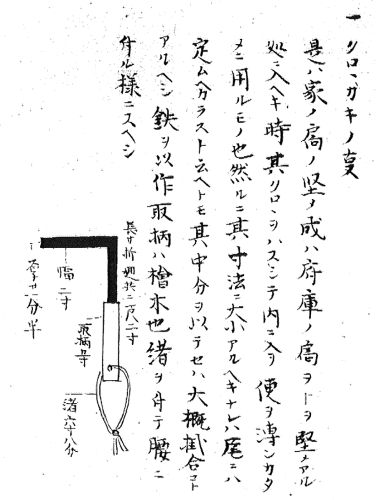
Among the many activities associated with shinobi, intelligence gathering was arguably the most strategically valuable. In the fragmented political environment of the Sengoku period, daimyō depended heavily on timely information about enemy troop movements, defensive preparations, alliances, and internal rivalries. Armies could number in the tens of thousands, and campaigns often depended on precise knowledge of terrain, supply routes, and the disposition of rival forces. Shinobi served as covert observers within this volatile landscape, infiltrating enemy territories to collect information that could shape military strategy. Their ability to operate discreetly allowed commanders to reduce uncertainty in an era where inaccurate intelligence could easily lead to catastrophic defeat.
Espionage required preparation and an understanding of both geography and human behavior. Shinobi might travel as merchants, itinerant monks, craftsmen, or entertainers, roles that allowed them to move between communities with relative freedom. These disguises enabled agents to observe roads, castles, and military encampments while avoiding suspicion. Once inside a region, they gathered information through conversation, observation, and the study of routine activities such as guard rotations or supply deliveries. In many cases, the most valuable intelligence came not from dramatic acts of infiltration but from quietly noting patterns of everyday life that revealed weaknesses in an opponent’s defenses.
The collection of intelligence extended beyond physical observation. Shinobi often served as intermediaries in the exchange of secret information, delivering messages between allied factions or sympathetic contacts within rival domains. Communication networks were essential to the success of covert operations. Methods for transmitting information could include coded messages, concealed documents, or memorized reports delivered verbally to commanders. Messengers might carry information hidden within ordinary items such as letters, containers, or clothing, reducing the risk of detection during travel. In some cases, agents relied on prearranged signals or meeting points to exchange information discreetly, avoiding written records that could compromise a network if intercepted. These systems minimized the risk of written evidence falling into enemy hands while ensuring that important intelligence reached decision-makers quickly, allowing commanders to react to changing conditions with greater confidence.
Espionage also involved the deliberate manipulation of information. Shinobi were sometimes tasked with spreading rumors, misleading enemy commanders, or creating confusion about the intentions of their employers. Such psychological tactics could disrupt coordination within opposing forces and force rivals to commit resources in response to false threats. By shaping an enemy’s perception of reality, covert agents could influence strategic decisions without engaging in direct combat.
These intelligence activities illustrate the broader strategic role of shinobi within Sengoku warfare. While popular imagination often focuses on dramatic acts of assassination or sabotage, the routine gathering and transmission of information formed the foundation of their work. Accurate intelligence allowed daimyō to anticipate enemy movements, plan surprise attacks, and exploit political divisions within rival domains. Shinobi functioned less as mythical warriors and more as practical instruments of strategic awareness within a highly competitive and unstable political environment.
Sabotage, Psychological Warfare, and Misinformation
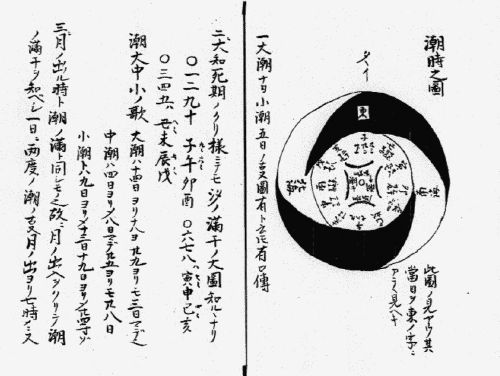
Beyond intelligence gathering, shinobi were sometimes employed in operations designed to weaken enemies indirectly through sabotage and psychological disruption. In the highly competitive environment of Sengoku warfare, commanders often sought advantages that could destabilize rival forces before open battle even began. Sabotage operations might involve setting fires within supply depots, damaging fortifications, or disrupting transportation routes that supported an enemy’s army. Because medieval Japanese campaigns depended heavily on logistical networks such as roads, river crossings, and storehouses, relatively small acts of destruction could have outsized strategic effects. A single burned granary or collapsed bridge might slow troop movements or create shortages that undermined morale among soldiers and civilians alike.
Fire in particular was a powerful weapon in this form of irregular warfare. Castles, towns, and storehouses frequently contained large amounts of wood and other flammable materials, making them vulnerable to carefully timed arson attacks. Shinobi tasked with such missions could infiltrate a settlement under disguise and ignite fires that spread rapidly through densely built structures. These actions did not necessarily aim to destroy an entire stronghold but rather to create confusion and panic. Even a small blaze could force defenders to abandon their posts, divert guards from gates and watchtowers, and weaken the coordinated defense of a fortified position.
Psychological warfare also formed an important dimension of covert activity. Rumors, staged incidents, and manipulated information could spread uncertainty among both military leaders and ordinary populations. Shinobi might circulate stories about approaching armies, betrayals within a ruling household, or the sudden appearance of enemy agents inside a castle. Such rumors could disrupt communication and foster suspicion among commanders who already operated within an atmosphere of political instability. In some cases, the mere belief that infiltrators were present could lead authorities to impose stricter security measures, inadvertently slowing their own operations and increasing internal tension.
Misinformation also played a role in battlefield strategy. False intelligence could be planted to encourage an opponent to commit forces in the wrong direction or to underestimate the strength of an approaching army. By shaping an enemy’s perception of the strategic situation, covert agents could influence decisions that would later determine the outcome of campaigns. These tactics reflected a broader understanding that warfare involved not only the destruction of enemy forces but also the manipulation of knowledge and belief.
Despite the dramatic reputation associated with such activities, the historical evidence suggests that sabotage and psychological operations were employed selectively rather than constantly. Commanders relied on covert tactics when they offered clear advantages, particularly in situations where conventional military strength alone might not guarantee victory. These methods complemented more traditional forms of warfare rather than replacing them. Shinobi acted as specialized instruments capable of exploiting opportunities that fell outside the normal structure of battlefield engagements.
The legacy of these activities contributed significantly to the later mythology surrounding ninja. Stories of fires appearing mysteriously inside castles or enemies suddenly struck by panic helped create an enduring image of invisible agents manipulating events from the shadows. While such narratives often exaggerate the scale and frequency of these operations, they reflect a genuine historical reality in which covert actions could shape political and military outcomes in subtle but meaningful ways. In the volatile environment of Sengoku Japan, sabotage and misinformation served as practical tools within a broader strategic system where information, fear, and uncertainty could be as powerful as armies themselves.
Shinobi and the Samurai Code
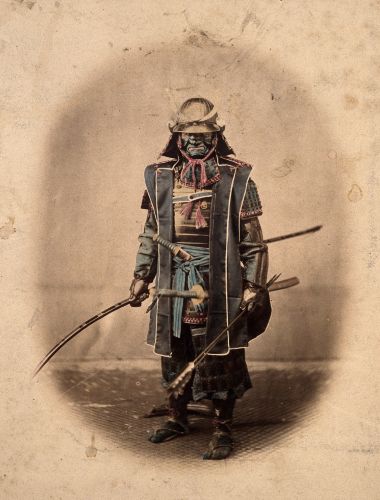
The activities associated with shinobi often appear to stand in stark contrast to the ideals traditionally associated with the samurai class. Samurai culture emphasized loyalty, honor, and martial skill demonstrated in open confrontation, values that later writers grouped under the concept of bushidō. In contrast, shinobi specialized in secrecy, deception, and infiltration, techniques that seemed to violate the ethical framework celebrated in many later narratives of samurai conduct. Because shinobi relied on disguise, surprise, and covert movement rather than open battlefield confrontation, they were frequently depicted as figures operating outside the moral universe of the warrior elite. This contrast has led to the widespread assumption that shinobi existed beyond the boundaries of respectable warfare, functioning as outcasts or dishonorable agents who did the kinds of tasks that samurai were unwilling to perform. Yet the historical reality was considerably more complex. The relationship between ideals of martial honor and the practical demands of warfare created a space in which covert practices could coexist with the public culture of the warrior class.
During the Sengoku period, the ethical boundaries of warfare were far more flexible than later romantic portrayals suggest. Daimyō engaged in a constant struggle for survival in which strategic success often mattered more than adherence to abstract codes of conduct. Espionage, surprise attacks, and deception were widely used by commanders seeking advantages over rival armies. The employment of shinobi did not necessarily contradict samurai values but rather reflected the pragmatic demands of a violent and unstable political landscape. Samurai leaders who publicly celebrated ideals of loyalty and bravery frequently relied on covert operatives to gather intelligence or disrupt enemy forces.
The later image of an uncompromising samurai code developed largely during the Tokugawa period, when prolonged peace encouraged intellectual reflection on the meaning of warrior identity. As Japan stabilized under the Tokugawa shogunate, warfare declined and samurai increasingly became administrators, scholars, and officials rather than battlefield commanders. In this new environment, writers and philosophers began to reinterpret the earlier era of civil war through a moral lens, emphasizing ideals of discipline, honor, and self-sacrifice as defining features of the warrior class. Texts that explored the philosophy of warrior conduct helped shape a cultural memory in which samurai were portrayed as paragons of ethical restraint and personal loyalty. Within this evolving discourse, the covert practices associated with shinobi came to be framed as morally ambiguous or dishonorable, reinforcing a cultural distinction between open combat and clandestine activity. This retrospective interpretation played a powerful role in shaping modern perceptions of ninja as figures operating outside the ethical framework of the samurai world, even though such distinctions were far less rigid during the period when shinobi activity was most common.
In practice, however, the relationship between shinobi and samurai authority was deeply interconnected. Many covert agents ultimately served the interests of samurai lords, and their activities formed part of the broader military systems that supported Sengoku warfare. Rather than representing a separate or oppositional tradition, shinobi techniques functioned as one component within a diverse range of strategies available to military leaders. The tension between ideals of honor and the realities of covert warfare reflects less a rigid cultural divide than the complex interplay between ethical narratives and the practical demands of political survival.
The Decline of Shinobi Warfare after Unification

The political unification of Japan at the end of the sixteenth century gradually transformed the conditions that had allowed shinobi activity to flourish. During the Sengoku period, the fragmented political landscape created constant demand for covert agents capable of gathering intelligence, sabotaging enemy positions, and infiltrating rival territories. Warfare was frequent, alliances shifted rapidly, and information often determined the success or failure of military campaigns. In this volatile environment, specialized skills associated with espionage and irregular warfare held clear strategic value. However, as powerful leaders such as Oda Nobunaga, Toyotomi Hideyoshi, and eventually Tokugawa Ieyasu consolidated authority over the Japanese archipelago, the political system that had sustained these practices began to disappear.
The unification campaigns themselves played a role in reshaping the networks associated with shinobi traditions. Nobunaga’s 1581 invasion of Iga, for example, targeted one of the regions most closely linked to the development of covert warfare. The destruction of autonomous warrior communities in Iga weakened the local structures that had supported independent shinobi activity. Many surviving fighters were forced to flee or enter the service of larger political authorities. As these individuals became integrated into the expanding military administrations of powerful daimyō, their specialized skills were absorbed into more centralized systems of governance and intelligence.
Under the Tokugawa shogunate, established in 1603, Japan entered a prolonged period of political stability known as the Edo period. Large-scale warfare largely disappeared, and the military class was gradually transformed into a bureaucratic elite responsible for administering domains and maintaining social order. Without constant warfare between rival states, the demand for covert infiltration and sabotage declined sharply. Intelligence work did not disappear entirely, but it increasingly took the form of internal surveillance and policing rather than the clandestine military operations that had characterized the Sengoku era.
Some former shinobi families and communities adapted to these changing circumstances by entering the service of the Tokugawa government. Historical records indicate that groups from Iga and Kōga were employed as guards, messengers, and security officials within the shogunate’s administrative structure. Their familiarity with surveillance, mobility, and information gathering made them useful in maintaining internal security rather than conducting foreign espionage. Members of these groups were sometimes assigned to protective duties within Edo Castle or tasked with monitoring movement along important routes leading to the shogunal capital. Their roles shifted from operating independently in hostile territory to functioning within an organized bureaucratic hierarchy that emphasized discipline and loyalty to centralized authority. Many of the skills once associated with covert warfare were repurposed for policing and administrative oversight, demonstrating how practices developed in wartime could be adapted to the needs of a stable political regime.
Even these administrative roles became less distinct as the Tokugawa system matured. The rigid social hierarchy of Edo-period Japan emphasized clearly defined status categories, and specialized traditions associated with covert warfare gradually faded from practical military life. What had once been flexible networks of irregular fighters became absorbed into broader samurai institutions or disappeared altogether as the conditions that had sustained them ceased to exist.
By the eighteenth and nineteenth centuries, shinobi traditions survived primarily in manuals, regional memory, and occasional references within historical narratives. The transformation of Japan from a landscape of competing warlords into a centralized state had removed the strategic necessity for many of the practices associated with ninjutsu. Yet the legacy of these covert specialists endured in cultural memory, eventually inspiring the elaborate legends and popular imagery that would later define the modern concept of the ninja.
Myth and Media: The Creation of the “Ninja” Legend
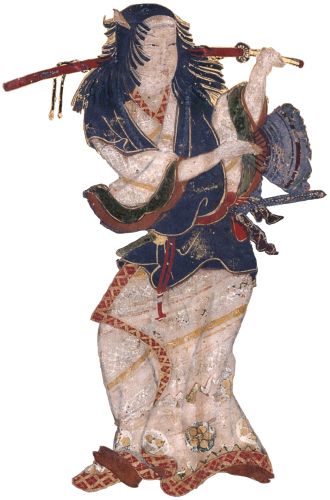
The modern image of the ninja owes far more to literature, theater, and popular media than to the historical practices of shinobi during the Sengoku period. As Japan entered the long peace of the Tokugawa era, the memory of the violent conflicts that had defined earlier centuries gradually transformed into stories and dramatic narratives. Popular entertainment began to incorporate figures associated with espionage and covert warfare, presenting them as mysterious agents capable of extraordinary feats. These portrayals emphasized secrecy, invisibility, and supernatural abilities, qualities that made such characters appealing within the storytelling traditions of the time. In this cultural environment, the historical figure of the shinobi slowly evolved into the legendary ninja of later imagination.
Kabuki theater and popular literature played a major role in shaping this transformation. Dramatic performances often introduced ninja characters who could vanish suddenly, infiltrate heavily guarded castles, or carry out daring acts of assassination. Stage effects, including trapdoors, smoke, and concealed entrances, created the illusion of supernatural movement and reinforced the idea that these figures possessed abilities beyond those of ordinary warriors. Theatrical conventions also influenced the iconic image of the ninja dressed in black clothing, an appearance derived from the stagehands who operated props and scenery while dressed in dark garments to remain inconspicuous to the audience. This visual convention became associated with the fictionalized ninja character itself.
In the modern era, novels, films, and television further expanded these myths, presenting ninja as elite martial artists endowed with extraordinary physical abilities and secret techniques passed down through hidden clans. Twentieth-century popular culture in Japan and abroad contributed to the global fascination with ninja imagery, often blending historical elements with fantasy and spectacle. These portrayals emphasized dramatic combat skills, acrobatic movements, and exotic weapons, creating a highly stylized image that bore little resemblance to the pragmatic intelligence work performed by historical shinobi.
The persistence of these myths illustrates how historical memory can be reshaped by cultural storytelling. While the real shinobi were covert agents whose activities centered on espionage, infiltration, and intelligence gathering, the modern ninja legend reflects the imaginative needs of literature and entertainment rather than the realities of Sengoku warfare. Yet the enduring popularity of these stories demonstrates the powerful appeal of hidden warriors operating beyond the boundaries of conventional combat, a narrative that continues to capture the public imagination long after the historical conditions that produced shinobi warfare have disappeared.
Conclusion: Intelligence, Survival, and the Reality of Shinobi Warfare
The history of shinobi warfare reflects the strategic realities of a fragmented political world in which information, deception, and adaptability could determine the outcome of conflict. During the Sengoku period, Japanese warlords faced a constantly shifting landscape of alliances, rivalries, and military campaigns. In such conditions, intelligence gathering and covert operations became essential tools of survival. Shinobi operated not as mythical assassins but as practical agents whose work supported the broader military strategies of competing f. Their activities reveal how warfare often depended as much on knowledge and secrecy as on battlefield strength.
Understanding shinobi history also requires recognizing the social and political conditions that produced these covert specialists. Regions such as Iga and Kōga developed networks of fighters whose skills reflected both their local autonomy and the demands of an unstable era. Their expertise in infiltration, disguise, and intelligence gathering emerged from practical necessity rather than romantic ideals of martial heroism. When employed by larger political authorities, these agents contributed to the complex military systems that shaped Sengoku warfare.
The later decline of shinobi activity illustrates how changes in political structure can transform military practices. As Japan moved toward unification under powerful central authorities, the strategic environment that had sustained covert warfare gradually disappeared. The establishment of the Tokugawa shogunate replaced the instability of the Sengoku period with a relatively stable political order, reducing the need for clandestine military operations. Many individuals connected with shinobi traditions adapted by entering administrative or security roles, while others faded from the historical record as the era of decentralized warfare came to an end.
Yet even as the practical role of shinobi diminished, their legacy continued to evolve through historical memory and cultural storytelling. The transformation of covert agents into legendary ninja demonstrates how societies reinterpret the past through the lens of imagination and entertainment. By separating myth from historical evidence, it becomes possible to appreciate the real significance of shinobi warfare: a system of intelligence and irregular tactics that reflected the demands of survival in one of the most turbulent periods of Japanese history.
Bibliography
Affiliate disclosure: Amazon links on this site are paid links. As an Amazon Associate I earn from qualifying purchases.
- Ansart, Olivier. “Loyalty in Seventeenth and Eighteenth Century Samurai Discourse.” Japanese Studies 27:2 (2007), 139-154.
- Berry, Mary Elizabeth. The Culture of Civil War in Kyoto. Berkeley: University of California Press, 1994.
- —-. Hideyoshi. Cambridge, MA: Harvard University Press, 1982.
- Bocking, Brian. “Neo-Confucian Spirituality and the Samurai Ethic.” Religion 10:1 (1980), 1-15.
- Conlan, Thomas D. State of War: The Violent Order of Fourteenth-Century Japan. Ann Arbor: University of Michigan Center for Japanese Studies, 1998.
- Cummins, Antony, and Yoshie Minami, trans. The Book of Ninja: The Bansenshukai—Japan’s Premier Ninja Manual. Tokyo: Tuttle Publishing, 2013.
- Elisonas, Jurgis. “The Inseparable Trinity: Japan’s Relations with China and Korea.” In The Cambridge History of Japan, Volume 4: Early Modern Japan, edited by John Whitney Hall. Cambridge: Cambridge University Press (1991), 235-300.
- Friday, Karl F. Samurai, Warfare and the State in Early Medieval Japan. London: Routledge, 2003.
- Hall, John Whitney. Government and Local Power in Japan, 500–1700: A Study Based on Bizen Province. Princeton: Princeton University Press, 1966.
- Hurst, G. Cameron III. Armed Martial Arts of Japan: Swordsmanship and Archery. New Haven: Yale University Press, 1998.
- Ikegami, Eiko. “Shame and the Samurai: Institutions, Trusthworthiness, and Autonomy in the Elite Honor Culture.” Social Research 70:4 (2003), 1351-1378.
- —-. The Taming of the Samurai: Honorific Individualism and the Making of Modern Japan. Cambridge, MA: Harvard University Press, 1995.
- Turnbull, Stephen. Ninja: Unmasking the Myth. Barnsley: Frontline Books, 2017.
- —-. Samurai Warfare. London: Arms and Armour Press, 1996.
- Yamamura, Kozo. “The Increasing Poverty of the Samurai in Tokugawa Japan, 1600–1868.” The Journal of Economic History 31:2 (1971), 378-406.
- Zoughari, Kacem. The Ninja: Ancient Shadow Warriors of Japan. Tokyo: Tuttle Publishing, 2010.
- Zoughari, Kacem, and Yoshie Minami. The Book of Ninja: The Bansenshukai—Japan’s Premier Ninja Manual. Tokyo: Tuttle Publishing, 2013.
Originally published by Brewminate, 03.18.2026, under the terms of a Creative Commons Attribution-NonCommercial-NoDerivatives 4.0 International license.
About the Author