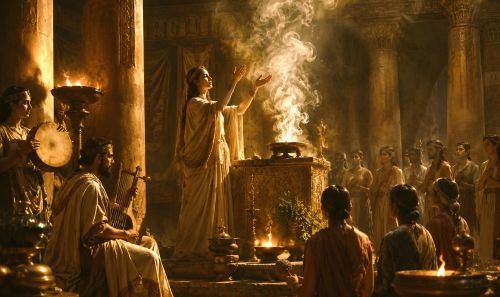
Ancient rituals transformed sacrifice, time, death, landscape, and power into repeated sacred actions that made fragile worlds feel ordered.

By Matthew A. McIntosh
Public Historian
Brewminate
Introduction: Ritual as the Architecture of the Sacred
Ancient religion was built less from abstract confession than from disciplined action. Religious ritual is a prescribed, repeatable action (such as prayer, sacrifice, purification, procession, or festival) through which people address sacred powers and enact shared obligations, identities, and ideas of cosmic order. The gods, ancestors, spirits, and cosmic forces of antiquity were not usually approached through private belief alone. They were approached through correct performance. A libation poured at the proper altar, an animal killed according to custom, a hymn sung at dawn, a bronze vessel placed before an ancestral tablet, a cult statue washed and clothed, a festival held at the right season, or an omen read before battle could bind human life to powers beyond ordinary sight. Ritual did not merely express religion after the fact. In many ancient societies, ritual was religion’s most concrete form, the medium through which invisible obligations became public, material, and socially enforceable.
This does not mean that ancient ritual was a simple bargain, though reciprocal exchange was one of its most enduring logics. The Roman phrase do ut des, “I give so that you may give,” captures one important pattern, but it should not be flattened into crude religious commerce. Ancient offerings could ask for rain, victory, fertility, healing, royal legitimacy, safe passage, or ancestral favor, but they could also enact gratitude, submission, purification, mourning, memory, and communal belonging. The act of giving to a god, ancestor, or spirit often carried meanings that exceeded any immediate request. It affirmed that human beings lived inside networks of obligation they had not created and could not fully control. In Mesopotamian temples, divine images were fed, clothed, and served because the god’s presence was understood as dwelling within a ritualized house. In Egypt, rites helped preserve ma’at, the ordered balance of gods, king, land, and cosmos. In Shang China, oracle bones and sacrifice made royal power intelligible through communication with ancestors and high divine forces. In Vedic ritual, fire offerings and sacred speech placed human action within a cosmic structure that had to be precisely maintained. In Greek and Roman cities, public sacrifice and festival calendars joined civic identity to sacred time. Across these differences, ritual constructed relationship. It gave form to dependence, debt, fear, hope, hierarchy, and trust. It also trained communities to imagine the sacred not as distant abstraction but as an active presence woven into harvests, wars, births, deaths, households, courts, and city streets.
Ritual also worked because it was embodied. Ancient sacred life was not silent, pale, or merely intellectual. It was thick with smoke, blood, fragrance, music, movement, fire, color, food, gesture, and crowd experience. Incense altered the air. Sacrifice made death visible and transformed killing into ordered exchange. Feasting turned divine offering into shared consumption. Processions mapped sacred power across streets, fields, rivers, and sanctuaries. Statues, masks, vessels, altars, and inscriptions gave material shape to beings and forces that could not otherwise be grasped. Divination translated uncertainty into signs. Festivals arranged time so that harvest, flood, solstice, royal accession, victory, mourning, and renewal became more than natural or political events. They became occasions for reordering the world. This sensory density mattered because ancient ritual rarely separated the body from thought. People did not simply believe ritual meanings. They smelled them, saw them, heard them, ate them, feared them, and remembered them.
The history of ancient ritual is a history of construction: of sacred space, sacred time, sacred authority, and sacred community. Temples were not isolated buildings but centers within broader ritual landscapes that could include roads, rivers, fields, tombs, mountains, groves, springs, city gates, and household shrines. Ritual specialists, whether priests, kings, diviners, shamans, priestesses, augurs, or ancestral mediators, controlled not only ceremonies but access to knowledge and legitimacy. At moments of crisis, ritual could intensify into purification, expiation, emergency sacrifice, omen consultation, or symbolic substitution, revealing how fragile order could seem when famine, plague, war, failed harvests, or political disorder threatened the community. I examine these constructions chronologically and comparatively, moving from early agrarian sacred landscapes to temple cultures, ancestral systems, civic sacrifice, imperial ritual, and crisis rites. Its central argument is that ancient ritual was not decorative religion. It was a technology of order, a way of making the cosmos habitable through repeated, public, and meaningful action.
| Rite or practice | Principal purpose | Civilizations or settings |
|---|---|---|
| Seasonal rites and communal feasting | Coordinate agricultural cycles, renew social bonds, and mark sacred time | Neolithic and early agrarian societies |
| Temple offerings and care of divine images | Sustain divine presence and maintain reciprocal relations with the gods | Mesopotamia and Egypt |
| Funerary and ancestral rites | Preserve bonds with the dead, affirm lineage, and secure protection | Neolithic societies, Egypt, Shang China, Greece, and Rome |
| Divination and omen reading | Interpret divine will and guide rulers, communities, or military action | Mesopotamia, Shang China, Greece, and Rome |
| Fire sacrifice and sacred recitation | Maintain cosmic order through precise offerings, speech, and performance | Vedic India |
| Public animal sacrifice and festivals | Honor the gods, distribute sacrificial food, and reinforce civic identity | Greece and Rome |
| Purification and expiation | Remove ritual pollution and restore order after wrongdoing or crisis | Mesopotamia, Greece, and Rome |
| Royal and imperial rites | Legitimize political authority by connecting rulers to divine or cosmic order | Egypt, Mesopotamia, Shang China, and Rome |
Neolithic and Early Agrarian Ritual: Fertility, Death, and the Sacred Landscape
Before temples, priesthoods, royal cults, and written liturgies gave ancient ritual its institutional form, early agrarian communities had already begun to organize sacred life through land, death, fertility, memory, and recurring seasonal action. The Neolithic world did not leave behind doctrinal texts explaining its gods, spirits, or metaphysical assumptions, which means its ritual life must be approached through material evidence rather than confident theological reconstruction. Burials, figurines, animal remains, feasting deposits, megalithic monuments, plastered skulls, carved stones, decorated vessels, and carefully arranged settlement spaces suggest that ritual was already embedded in the ordinary architecture of life. The shift toward agriculture made this especially powerful. Planting, harvest, animal domestication, rainfall, seasonal change, birth, and death all became bound to communities whose survival depended on cycles they could observe but not command. Ritual emerged as a way of living with that dependence. It gave repeated form to anxiety, gratitude, mourning, hope, and continuity in worlds where crop failure, disease, animal loss, and environmental uncertainty could threaten an entire community.
The evidence from sites such as Çatalhöyük in Anatolia shows how difficult it is to separate domestic life from ritual life in early agrarian settings. Houses were not merely shelters, and burials were not always segregated into distant cemeteries. At Çatalhöyük, the dead were often buried beneath house floors, keeping ancestors or remembered persons physically close to the living. Wall paintings, installations, animal symbolism, and repeated rebuilding patterns suggest that houses themselves could carry ritual meanings across generations. This does not mean every object was “religious” in a narrow sense, but it does suggest that the sacred was not confined to a separate institutional sphere. The household could be a place of memory, protection, continuity, and symbolic concentration. Death did not remove the dead from the community so much as relocate them within its architectural and social fabric. In that sense, early agrarian ritual was not only about fertility and harvest. It was also about making the past inhabit the present.
The treatment of the dead across Neolithic and early Bronze Age contexts reveals how strongly ritual was tied to ancestry, identity, and place. Secondary burial, skull removal, grave goods, collective tombs, and repeated use of burial spaces indicate that death was not always imagined as a single event completed at the moment of interment. It could be a process, marked by handling, remembering, relocating, or reassembling human remains. In parts of the Near East, plastered skulls from Pre-Pottery Neolithic contexts suggest practices of ancestral display or commemoration, though scholars rightly debate their precise meaning. In western Europe, chambered tombs and megalithic structures created durable places where the dead could become part of a community’s landscape. These monuments were not simply repositories for bodies. They were places to which the living returned, where memory could be staged, lineage materialized, and communal identity renewed. Ritual gave time a physical form. It allowed communities to bind themselves to predecessors, territories, and remembered origins.
Fertility is often invoked when discussing Neolithic ritual, but it should be treated with care. Earlier scholarship sometimes too quickly identified female figurines, animal imagery, and agricultural symbolism as evidence of a universal “mother goddess” religion, a claim that now requires much more caution. Still, fertility in a broad sense was undeniably central to early agrarian life because reproduction, food production, herd increase, and seasonal renewal were matters of survival. Figurines, animal bucrania, grain storage, feasting remains, and repeated symbolic attention to powerful animals may indicate ritual concern with abundance, danger, regeneration, and the mysterious productivity of land and bodies. These objects and practices did not need to belong to a single theological system to matter. A figurine might have marked household identity, bodily transformation, fertility, protection, play, memory, status, or some combination of meanings now lost to us. Animal skulls and horns could evoke domestication, danger, wealth, sacrifice, or the continuing power of wildness within settled life. Stored grain could simultaneously be ordinary food security and a symbol of future life. The point is not that all such objects meant the same thing everywhere. They did not. Rather, early farming communities appear to have ritualized the forces by which life continued. Human fertility, animal fertility, soil fertility, and ancestral continuity could overlap in symbolic systems that left no written explanation but left abundant traces of repeated, meaningful action. What survives archaeologically is not belief itself, but the pattern of attention: the things handled, placed, buried, displayed, rebuilt, consumed, or removed from ordinary circulation.
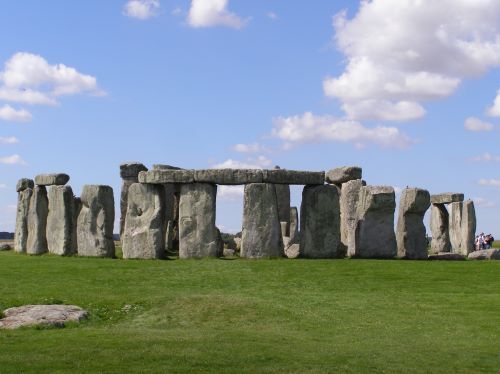
The sacred landscape also mattered before monumental temples came to dominate many later civilizations. Neolithic and early Bronze Age ritual was often anchored in natural or semi-natural places: caves, springs, rivers, hills, groves, wetlands, stone outcrops, burial mounds, and routes of movement. Some places seem to have become sacred not because they were built as temples but because they were encountered as powerful, liminal, or enduring. Megalithic monuments such as Stonehenge and the chambered tombs of Atlantic Europe show how architecture could intensify landscape rather than replace it. Alignments with solstices, horizons, and celestial events suggest that ritual time and natural time were joined through built form. The monument did not merely sit in the landscape. It organized perception, movement, gathering, and memory. People approached, circled, processed, buried, deposited, watched, feasted, and returned. Sacred landscapes were not passive scenery around ritual action. They were part of the ritual itself. A river could mark passage, cleansing, danger, or offering. A cave could suggest descent, enclosure, origin, burial, or contact with powers beneath the visible world. A mound could make ancestry visible from a distance, turning the dead into a landmark. A stone alignment could transform the horizon into a calendar and the sky into a participant in communal life. These places taught communities where to gather, how to move, when to return, and what kinds of memory belonged to the land. The sacred was not only an idea but a geography, one mapped by repeated acts across places that mattered.
These early agrarian rituals formed the deep foundations upon which later temple religions, royal cults, civic sacrifices, and priestly systems would build. Their world was not yet the world of Mesopotamian temple economies, Egyptian state ritual, Shang royal divination, Greek civic festivals, or Roman public priesthoods, but many of the essential elements were already present: offerings, sacred places, ritualized death, seasonal repetition, symbolic animals, communal feasting, ancestral memory, and the attempt to place human fragility within a larger order. The Neolithic sacred world should not be romanticized as simple, peaceful, or universally harmonious. Nor should it be dismissed as mute prehistory. Its rituals show communities learning to make meaning under the pressure of permanence: permanent houses, permanent fields, permanent dead, permanent monuments, and increasingly durable claims on land and memory. In that transition, ritual became one of humanity’s most powerful tools for turning settlement into belonging and survival into sacred order.
Mesopotamia: Feeding the Gods and Maintaining the City-Cosmos
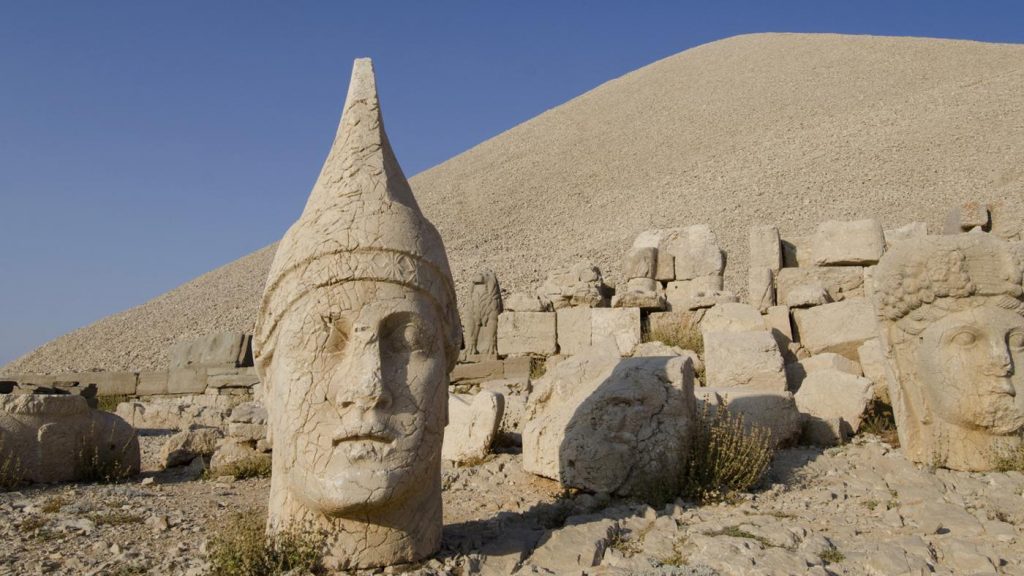
In Mesopotamia, ritual life became inseparable from the city. The great urban cultures of Sumer, Akkad, Babylonia, and Assyria did not imagine religion as a private sphere set apart from economics, kingship, labor, law, or political identity. The gods owned cities, guarded territories, received offerings, issued signs, punished disorder, and bestowed legitimacy upon rulers who claimed to govern under divine authority. Temples were not merely places where worshippers gathered. They were divine households, administrative centers, economic institutions, repositories of wealth, employers of labor, and ritual engines through which human society maintained its relationship with powers believed to sustain the world. The city was not simply protected by its god. In a profound sense, the city was organized around the god’s presence, and ritual was the means by which that presence was served, stabilized, and made publicly effective.
The Mesopotamian temple was imagined as the house of the deity, and this idea shaped the daily rhythm of ritual service. Divine statues were not treated as symbolic decorations in the modern sense. They were ritually enlivened images through which gods could be present, addressed, fed, clothed, honored, and served. The ritual animation of an image gave the statue a status that exceeded craftsmanship, for the object became a point of divine residence within the city’s most protected sacred space. Priests and temple personnel washed, dressed, perfumed, and presented food to the divine image, often with a formality that resembled royal court protocol. Meals were placed before the god, music and prayers accompanied the rites, and access to the most sacred spaces was carefully controlled. The daily cycle of service could include opening the shrine, purifying the space, presenting garments, arranging offerings, burning incense, reciting prayers, and withdrawing from the god’s presence in proper order. Such actions made divinity regular without making it ordinary. The god was near enough to be served, yet powerful enough to require layers of mediation, purity, and restricted approach. This daily care expressed a theology of divine embodiment and dependency that did not make the gods weak, but made their relationship with the city reciprocal and structured. Humans sustained the divine household with offerings, while the gods sustained the city with protection, fertility, victory, order, and favor. Ritual was not occasional ornament. It was maintenance work for the cosmos, performed through the disciplined repetition of gestures that made the god’s presence socially durable.
This ritual maintenance depended upon hierarchy and specialization. Mesopotamian religion required priests, lamentation specialists, singers, diviners, exorcists, scribes, temple administrators, craftsmen, cooks, brewers, herdsmen, and rulers who could endow, restore, or publicly participate in sacred service. The temple’s offerings came from fields, flocks, workshops, storehouses, and tribute networks, making sacrifice and food presentation part of a larger economy of divine ownership. Animals, grain, beer, oil, incense, garments, precious metals, and crafted objects circulated through systems in which the sacred and the administrative were not easily separated. This does not mean Mesopotamian ritual was merely economic theater. Rather, its economic structure reveals the seriousness of the cult. To feed a god required institutions capable of producing, collecting, preparing, and presenting offerings with reliable regularity. The sacred had to be provisioned, and that provisioning helped bind labor, land, kingship, and temple into a single civic order.
Divination gave Mesopotamian ritual another crucial function: it translated uncertainty into readable signs. Kings, generals, priests, and households sought divine knowledge through omens drawn from the heavens, dreams, unusual births, oil patterns, smoke, animal entrails, and especially the liver of a sacrificed sheep. This was not randomness dressed up as certainty. It was a learned discipline, recorded, categorized, interpreted, and transmitted by specialists trained to read the gods’ messages in the fabric of the world. Celestial divination linked the movements of stars and planets to earthly affairs, while extispicy made the sacrificial animal’s body into a text of divine intention. The liver, with its marks, shapes, and anomalies, could become a map of divine response, just as the sky could become an archive of warnings and possibilities. Omens were collected in scholarly series, compared with earlier observations, and interpreted through traditions that treated the world as patterned rather than mute. Before military campaigns, building projects, royal decisions, diplomatic moves, medical treatments, or moments of crisis, divination helped determine whether the gods approved, warned, or demanded correction. This gave ritual knowledge immense political weight. A ruler might command armies and labor, but he still required signs that his actions stood within divine tolerance. Diviners occupied a delicate position. They did not merely predict the future. They mediated between royal ambition and cosmic permission. In this system, the universe was communicative. The problem was not whether the gods spoke, but whether human beings could read their speech accurately enough to act.
Ritual also responded to danger, pollution, and cosmic instability. Mesopotamian texts preserve a wide range of prayers, incantations, purification rites, lamentations, and apotropaic ceremonies meant to avert evil, remove impurity, appease angry gods, or counter ominous signs. Illness, political disaster, eclipse, famine, military threat, and strange natural events could all indicate divine displeasure or demonic danger. The response was not only practical but ritualized: washing, substitution, confession, sacrifice, lament, fumigation, symbolic transfer, and spoken formula. The substitute king ritual, used in response to threatening celestial omens, reveals the intensity with which royal danger could be ritually managed. When an omen suggested harm to the king, another person could be temporarily placed in the king’s role, absorbing the predicted doom before the true ruler resumed his position. Such rites show a world in which political authority was cosmically exposed. Kingship was powerful, but it was also vulnerable to signs from above and forces from beyond ordinary control.
Mesopotamian ritual constructed a city-cosmos: a world in which temples housed gods, offerings sustained divine presence, kings ruled under sacred scrutiny, diviners read heaven and sacrifice, and communities sought order through repeated acts of service and interpretation. The system was not static. Mesopotamian ritual changed across periods, dynasties, cities, and empires, and no single description can cover every local tradition. Yet its central pattern remained strikingly durable. Human society had obligations to the divine powers who governed land, water, fertility, war, justice, and destiny. Those obligations had to be enacted, not merely believed. To neglect ritual was to risk disorder not only in the temple but in the city, the palace, the field, and the heavens. Feeding the gods was never just feeding the gods. It was a way of feeding the world’s order back into existence, day after day, before instability could consume it.
Egypt: Ritual, Kingship, Death, and the Preservation of Ma’at
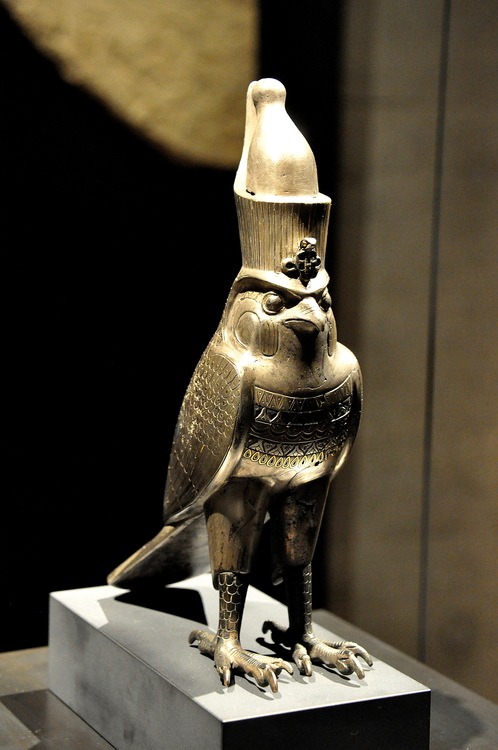
In ancient Egypt, ritual was inseparable from the preservation of ma’at, the principle of order, balance, justice, truth, rightness, and cosmic stability that stood against chaos. Egyptian religious practice did not merely honor gods as distant powers. It participated in the continued maintenance of creation itself. The sun had to rise, the Nile had to flood, the dead had to be sustained, the king had to mediate between divine and human realms, and temples had to renew the presence of gods through repeated acts of service. This gave Egyptian ritual a distinctive gravity. A rite performed in a sanctuary, tomb, palace, or festival procession was not an isolated act of devotion. It was a defense of the ordered world against dissolution. Disorder, foreign threat, drought, illness, death, and political instability could all be understood against the horizon of chaos, and ritual helped hold that chaos at bay by placing human action in alignment with divine order.
Kingship stood at the center of this ritual universe. The pharaoh was not simply a political ruler who happened to sponsor religion. He was the supreme ritual actor, the one whose office embodied the relationship between Egypt and the gods. Priests performed most daily temple rituals on the king’s behalf, but temple scenes repeatedly depict the king making offerings, presenting ma’at, burning incense, pouring libations, and receiving divine favor. This iconography was not casual decoration. It expressed the ideological structure of Egyptian religious life: the king offered order to the gods, and the gods returned life, stability, legitimacy, and abundance to Egypt. Royal ritual made political authority sacred without reducing it to ordinary power. The ruler’s task was not merely to command armies or administer land. It was to keep the world properly aligned. When the king appeared before the gods in reliefs and inscriptions, he represented Egypt as a ritually ordered community whose survival depended upon reciprocal maintenance between divine and human realms.
The daily temple cult translated this ideology into disciplined sacred labor. Egyptian temples were not primarily congregational spaces in the modern sense. Their most sacred interiors were restricted zones in which the divine image was awakened, purified, clothed, anointed, fed, praised, and protected. The god’s statue, hidden within the sanctuary, received offerings of bread, beer, meat, vegetables, incense, linen, and precious substances. Priests entered after purification, opened the shrine, recited ritual words, presented offerings, and withdrew in carefully ordered sequence. These actions repeated the logic of creation each day: darkness was opened, purity restored, the divine presence addressed, nourishment given, and the sanctuary returned to protected stillness. Like Mesopotamian temple service, this daily care treated the divine image as a living presence within a sacred house, yet Egyptian practice placed special emphasis on purity, cosmic renewal, and the symbolic defeat of disorder. The temple itself was a model of creation, often arranged as a sacred landscape in stone: pylons, courts, hypostyle halls, sanctuaries, sacred lakes, and relief-covered walls created a movement from outer world toward divine presence. Its architecture could evoke the primeval mound rising from the waters of chaos, while columns, ceilings, and carved decoration turned stone space into an ordered image of marsh, sky, horizon, and divine habitation. The physical movement from exterior court to inner shrine carried theological meaning. To pass inward was to move ritually toward the ordered center of the cosmos, where the hidden god received service that renewed the world beyond the temple walls.
Death gave Egyptian ritual one of its most elaborate and enduring forms. The dead were not simply remembered. They had to be transformed, equipped, named, fed, protected, and ritually sustained. Mummification preserved the body as an anchor of identity, while tombs, coffins, amulets, funerary texts, offering tables, and painted scenes helped secure the deceased’s passage into continued existence. The Opening of the Mouth ceremony restored the senses and capacities of the dead, enabling the deceased to breathe, speak, eat, see, and receive offerings in the afterlife. Texts such as the Pyramid Texts, Coffin Texts, and later the Book of the Dead provided spells, declarations, and ritual knowledge for navigating the dangers and judgments beyond death. These practices reveal a religious imagination in which death was not an end to social relationship. The living still owed offerings, prayers, and remembrance; the dead could remain effective, blessed, and connected to household and cosmic order. Egyptian funerary ritual made mortality bearable by refusing to let death become mere disappearance.
Festivals brought the hidden life of the temple into broader public movement. Although much daily ritual took place within restricted sacred interiors, festivals could carry divine images out into processions, river journeys, neighboring temples, and citywide ceremonies. These moments allowed communities to encounter divine presence through sound, motion, spectacle, and celebration. The Opet Festival at Thebes, for example, renewed relationships among Amun, the king, and the sacred landscape of Karnak and Luxor, while other festivals linked gods, shrines, ancestors, and local communities in cycles of procession and return. Festival ritual did not simply entertain. It animated sacred geography. Roads, river routes, barques, pylons, courtyards, and temporary stations became stages through which divine power moved visibly across the human world. The Nile itself could become a sacred corridor, carrying divine images between sanctuaries and binding river, city, temple, and procession into one ritual field. Crowds might not see the cult statue directly, since divine images were often enclosed in portable shrines or sacred barques, yet the movement of the god was still materially and emotionally present through music, incense, priestly action, royal display, decorated boats, offerings, and collective expectation. These public ceremonies also allowed royal authority to be seen as ritually renewed before the gods and the people. In these ceremonies, Egyptian ritual joined temple secrecy to public experience, allowing the gods to remain hidden and yet socially present, remote and yet intimately tied to land, city, king, and people.
Egyptian ritual constructed a world in which order had to be continually renewed. Kingship, temple service, funerary practice, festival movement, purification, offering, and sacred image all worked together to preserve ma’at against the pressures of chaos. This system was neither static nor uniform across Egypt’s long history. Ritual forms changed from the Old Kingdom through the Middle Kingdom, New Kingdom, and later periods, and local cults gave particular shape to divine relationships in different regions. Yet the central pattern endured with remarkable force. The gods required service. The king required divine legitimacy. The dead required sustenance. The land required renewal. The cosmos required defense. Egyptian ritual met these obligations not through abstract doctrine but through repeated, material, carefully staged acts. To perform ritual was to repair the world, to make life possible again, and to insist that creation, however fragile, could be preserved.
Shang and Early Zhou China: Ancestors, Oracle Bones, and Sacrificial Kingship
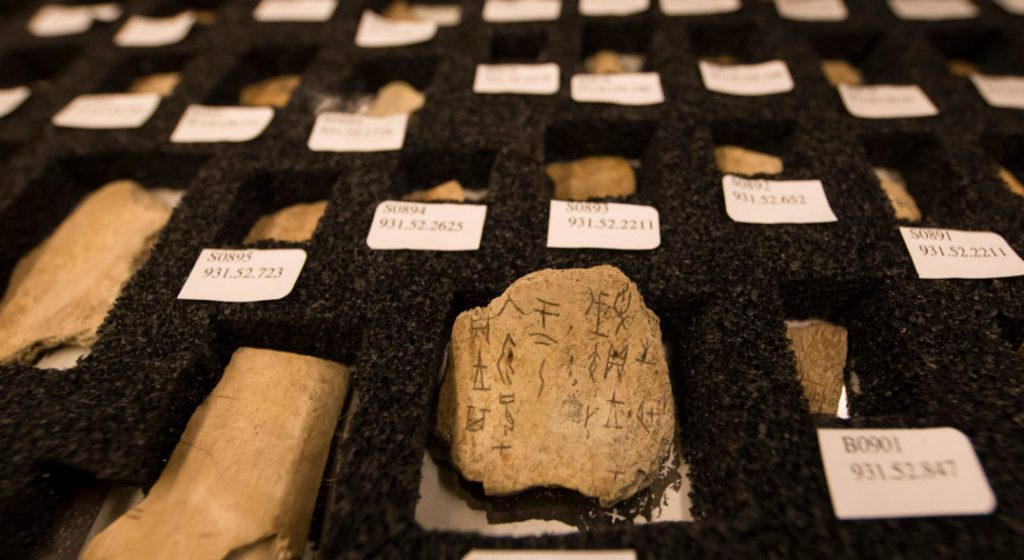
In early China, ritual authority developed around ancestry, divination, sacrifice, and the king’s capacity to mediate between the living community and powers beyond ordinary sight. The Shang dynasty, especially in its late period centered at Anyang, left one of the most remarkable ritual archives of the ancient world: inscribed oracle bones that preserve royal questions posed to ancestors, high powers, and divinatory forces. These inscriptions do not give a systematic theology in the later philosophical sense, but they reveal a world in which kingship depended upon communication with the dead, the management of sacrifice, and the interpretation of signs. Ritual was not merely a private act of reverence toward family ancestors. It was the operating structure of royal power. The king asked whether hunts would succeed, whether childbirth would be fortunate, whether rain would come, whether enemies would attack, whether illness had a supernatural cause, whether sacrifice should be made, and which ancestor or power required attention. Government, warfare, weather, lineage, fertility, and death converged in the ritual act of asking.
Oracle-bone divination made uncertainty visible, material, and authoritative. The process involved preparing turtle plastrons or animal scapulae, applying heat to produce cracks, interpreting those cracks, and often inscribing the charge, prognostication, and sometimes verification of the event. The bone became both instrument and archive. It preserved the question asked, the ritual situation in which it was asked, and the authority of the king or diviner who interpreted the result. This made Shang ritual unusually legible to historians, though only through a narrow royal lens. The inscriptions show a court deeply concerned with timing, correctness, and ancestral response. Divination did not simply predict the future. It structured decision-making by placing human action within a field of ancestral approval, divine danger, and ritually interpreted possibility. To ask was already to acknowledge dependence. To inscribe was to preserve the encounter. To act after divination was to move within a world where political choice required ritual permission.
The ancestors occupied a central place in this system. Shang royal ancestors were not passive memories of the dead but active powers who could influence harvest, warfare, illness, childbirth, and the stability of the ruling house. They had to be named, ranked, remembered, and ritually served. Sacrifices of animals, food, drink, and sometimes humans were offered within a complex system of ancestral obligation. These acts did not simply honor the past. They maintained the royal lineage as a living institution stretched across generations. The king’s authority rested partly on his ability to communicate with those ancestors and to satisfy them through proper ritual. This made genealogy political and sacred at once. A royal ancestor was a source of legitimacy, but also a potential source of danger if neglected or angered. The dead remained inside the field of government. They did not withdraw from history; they helped govern it.
Sacrifice in the Shang world could be large-scale, hierarchical, and severe. Animal offerings were central, but archaeological evidence and oracle-bone inscriptions also point to human sacrifice in royal ritual, including captives, retainers, and victims offered in connection with ancestors, funerary practice, military victory, or powerful supernatural recipients. This must be handled without sensationalism, because in Shang ritual violence was not random cruelty detached from social order. It belonged to a system in which royal authority, conquest, death, labor, hierarchy, and communication with unseen powers were bound together. Human victims could mark the terrifying reach of kingship, the subordination of enemies, the continuing needs of royal ancestors, and the capacity of the ruler to mobilize bodies for sacred ends. Sacrifice revealed the grandeur of the royal cult, but also its brutality. It made visible a world in which the sacred could demand not only food, bronze, wine, and animals, but human life.
Bronze ritual vessels gave this ancestral system a durable material language. The great vessels of the Shang and early Zhou periods were not merely works of art, though they are among the most visually powerful objects of the ancient world. They were instruments of offering, feasting, commemoration, and elite identity. Their forms, inscriptions, and contexts reveal how ritual dining, ancestral dedication, and political authority were intertwined. To possess, commission, inscribe, and use bronze vessels was to participate in a world of ranked lineage memory. Food and drink offered to ancestors through bronze vessels helped turn elite households and royal courts into ritual communities organized around descent and obligation. The vessel could preserve a name, commemorate a gift, mark a military or political achievement, and serve repeatedly in ceremonies that linked the living to the dead. In bronze, memory became heavy, portable, inheritable, and public.
The Zhou conquest of the Shang did not erase the ritual importance of ancestors, sacrifice, or bronze vessels, but it reframed political legitimacy through the Mandate of Heaven and a broader moral language of rule. Early Zhou ritual inherited much from the Shang, including ancestral ceremonies, elite vessel culture, and sacrificial practice, yet Zhou political thought increasingly tied legitimate kingship to Heaven’s approval and the ruler’s moral capacity to maintain order. This shift did not make ritual less important. It made ritual part of a larger argument about virtue, hierarchy, and cosmic-political responsibility. The early Zhou world still imagined society through ranked relations between living and dead, rulers and subjects, ancestors and descendants, Heaven and the royal house. But the fall of the Shang became a lesson: ritual power without moral order could fail. In that transformation, early Chinese ritual moved toward a tradition in which ceremony, lineage, hierarchy, memory, and ethical-political legitimacy would become inseparable. The sacred order of the ancestors remained, but it was increasingly joined to the idea that rule itself had to answer to a higher cosmic standard.
Vedic and Early South Asian Ritual: Fire, Speech, Sacrifice, and Cosmic Exchange

In early South Asia, ritual developed around fire, sacred speech, offering, priestly specialization, and the conviction that properly performed sacrifice participated in the ordering of the cosmos. The Vedic traditions, preserved in hymns, ritual prose, and later exegetical texts, present one of the ancient world’s most elaborate reflections on the power of ritual action. Here, sacrifice was not merely an offering made to distant deities. It was a structured exchange between human beings and divine powers, carried through fire, authorized by inherited speech, and governed by exact performance. The ritual ground became a temporary cosmos, carefully measured, purified, arranged, and activated through chant, gesture, implements, offerings, and priestly roles. Human action did not simply request divine favor; it entered a pattern understood to sustain prosperity, cattle, fertility, kingship, social hierarchy, and cosmic order. The Vedic sacrifice belonged to the same broad ancient world of reciprocal ritual, but it gave that reciprocity an unusually refined liturgical and speculative form.
Fire stood at the center of this ritual universe. Agni, both god and sacrificial fire, mediated between human and divine realms, carrying offerings upward and making communication possible. The fire was not merely a tool for burning substances. It was a divine presence, messenger, mouth of the gods, and ritual transformer. Offerings placed into fire changed status: clarified butter, grain, soma, milk, animals, and other substances passed from human possession into divine reception. This gave Vedic ritual a powerful material clarity. The offering disappeared, but its disappearance was not loss. It was transmission. Fire consumed, purified, translated, and transported. Around the fire, sacred space could be constructed even where no permanent temple stood. The altar, the hearth, the ladle, the chant, the rhythm of offering, and the bodies of officiants together made a ritual world in which the gods could be summoned, praised, nourished, and engaged.
Speech was as essential as fire. Vedic ritual depended on words that were not casual prayer but inherited, measured, and potent utterance. Hymns from the Rigveda, formulas from the Yajurveda, melodies associated with the Samaveda, and ritual knowledge elaborated in the Brahmanas formed a sacred technology of sound. To speak incorrectly, omit a formula, disorder a chant, or misalign word and act could threaten the efficacy of the rite. This emphasis on speech distinguished Vedic ritual from systems in which image, temple, or civic procession carried the dominant symbolic weight. The spoken word did not merely accompany ritual; it helped make ritual happen. Sound shaped the offering, named the deity, established sequence, and bound visible action to cosmic meaning. It also preserved continuity across generations, because ritual speech carried authority precisely by being received, memorized, repeated, and guarded. The oral transmission of Vedic material gave sound a durability that did not depend on stone temples or inscribed monuments. Meter, accent, intonation, and sequence mattered because the rite was not only saying something about the gods but doing something before them. In that sense, language itself became sacrificial matter. The correctly spoken formula could guide the offering, protect the sacrificer, invite the deity, repair an error, and align the human act with a cosmic order imagined as responsive to disciplined sound. In this world, sacred language was not decoration layered over sacrifice. It was one of sacrifice’s essential instruments, as real in ritual consequence as fire, altar, animal, or libation.
Vedic sacrifice also required specialized knowledge and carefully differentiated priestly roles. Larger rites involved multiple officiants, each responsible for distinct tasks of recitation, chanting, offering, supervision, correction, and ritual memory. The complexity of this system made ritual authority a form of learned discipline. Priests preserved not only texts but procedures, intonations, spatial arrangements, calendrical requirements, and interpretive traditions that connected earthly acts to cosmic structures. The sacrificer, often a householder or ruler, gained benefit from the rite, but the rite’s success depended on those trained to execute it properly. This created a social order around ritual competence. Knowledge was power not because it was abstractly intellectual, but because it governed the conditions under which exchange with the gods could be made effective. The more elaborate the rite, the more it revealed a society in which sacred precision, social hierarchy, patronage, and cosmic ambition were bound together.
The Vedic sacrificial system was not limited to simple offerings for immediate benefit. Some rites sought prosperity, rain, cattle, sons, health, victory, or protection, while others carried royal, cosmic, or transformative meanings. The horse sacrifice, or aśvamedha, later treated as a royal ritual of sovereignty, shows how sacrifice could project political authority into cosmic form. Soma rituals likewise reveal the intensity with which substance, chant, intoxication, divine vitality, and sacrificial exchange could converge. Vedic texts increasingly reflected on the inner structure of sacrifice itself, identifying correspondences between altar and cosmos, ritual body and human body, year and sacrificial sequence, speech and creation. The altar could be imagined as a built cosmos, the sequence of offerings as ordered time, and the body of the sacrificer as linked to larger structures of life and world. These correspondences made ritual a form of knowledge as well as action. The rite did not merely ask the gods for benefits; it disclosed a way of understanding reality through patterned equivalence. The sacrificial ground became a map where fire, breath, speech, seasons, animals, deities, social ranks, and cosmic regions could be brought into relation. This speculative tendency did not abolish ritual; it deepened its meaning. Sacrifice became a way to think with the cosmos. The ritual act could be read as a model of creation, a reenactment of ordering, and a controlled participation in powers larger than the human community.
Early South Asian ritual traditions also generated critique, reinterpretation, and interiorization. The Brahmanas elaborated the meanings of sacrifice with extraordinary detail, while later Upanishadic thought often redirected ritual symbolism toward knowledge, self, breath, and interior realization. This was not a simple movement from “ritual” to “philosophy,” as if one replaced the other cleanly. Rather, it shows how powerful the sacrificial imagination had become. Even when questioned, transformed, or internalized, sacrifice remained the language through which many thinkers understood relation, transformation, and cosmic truth. In this respect, Vedic ritual stands at a crucial point in the broader history of ancient religion. Like Mesopotamian temple service, Egyptian maintenance of ma’at, and Shang ancestral sacrifice, it sought order through repeated action. Yet its distinctive genius lay in the fusion of fire, speech, precision, and cosmic analogy. It made ritual not only a gift to the gods, but a disciplined act of world-making.
Greece: Sacrifice, Festival, Civic Identity, and the Visibility of the Gods
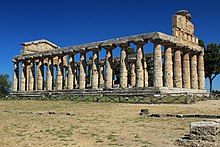
In ancient Greece, ritual made religion visible through the public life of the polis. Greek religion was not organized around a single sacred book, centralized priesthood, or uniform doctrine imposed across all communities. It lived instead through sanctuaries, sacrifices, festivals, processions, vows, hymns, athletic contests, healing rites, mystery initiations, household cults, and local calendars that bound divine presence to civic and communal identity. The gods were imagined as powerful, beautiful, dangerous, generous, offended, and intensely involved in human affairs, but they were encountered most concretely through practice. To honor Athena in Athens, Apollo at Delphi, Zeus at Olympia, Demeter at Eleusis, Hera at Argos, or Asclepius at Epidaurus was not simply to hold an opinion about divinity. It was to enter a ritual world of place, timing, offering, movement, and shared memory. Greek religion was plural and local, yet it was also recognizably connected by common patterns of sacrifice, sanctuary, myth, and festival.
Animal sacrifice stood at the center of this ritual system. The killing of a domestic animal, especially sheep, goats, pigs, or cattle, transformed ordinary food into sacred exchange and communal feast. The ritual could involve procession, purification, prayer, garlanding of the victim, sprinkling with water, barley grains, the cutting of hair, the fatal blow, the burning of portions for the gods, and the distribution of meat among participants. This act joined divine honor to human sociability. The gods received smoke, fat, bones, first portions, or dedicated offerings; humans received cooked meat in a structured meal that reinforced community. Sacrifice did several things at once. It acknowledged divine power, dramatized human dependence, marked the boundary between sacred and ordinary time, and turned killing into an ordered civic act. Its power lay partly in its tension. The community approached the gods through life taken from an animal that had been domesticated, adorned, led, and ritually transformed into an acceptable offering. The animal’s death was not hidden from the community but staged before it, and that visibility mattered. The rite made violence meaningful by surrounding it with consent, song, gesture, prayer, and distribution, though the moral unease of sacrificial killing was never entirely absent from Greek myth and thought. Myths of sacrifice, stories of divine anger, and later philosophical criticisms all suggest that Greeks could recognize the disturbing force beneath the ritual’s order. Yet this tension was part of sacrifice’s power. It joined mortality and communion, danger and festivity, divine distance and shared meat. At the altar, the polis confronted the fact that life, order, and celebration often passed through controlled destruction.
Festivals expanded sacrifice into civic time. Greek cities organized their calendars around recurring sacred occasions, each with its own processions, contests, sacrifices, songs, dances, banquets, and forms of public participation. The Panathenaia in Athens honored Athena with procession, sacrifice, athletic and musical competition, and the presentation of a woven robe. The Great Dionysia joined theatrical performance to civic religion, making tragedy and comedy part of ritual celebration rather than entertainment detached from sacred life. The Olympic Games, later remembered primarily as athletic competition, were rooted in festival worship of Zeus at Olympia, where contests, sacrifice, truce, spectatorship, and aristocratic display converged. Such festivals did not merely interrupt normal civic life. They helped define it. They taught citizens where they belonged, which gods protected the city, what stories mattered, how bodies should move in public, and how collective memory should be staged. Sacred time, in this world, was political time without ceasing to be religious.
Sanctuaries gave Greek ritual a geography that extended beyond individual cities. Some sanctuaries were local and deeply tied to a particular community; others, such as Delphi, Olympia, Delos, and Epidaurus, drew participants from across the Greek world. These places were not passive settings for worship. They accumulated dedications, treasuries, statues, inscriptions, altars, temples, victory monuments, and memories of repeated pilgrimage. At Delphi, Apollo’s oracle gave sacred authority to consultation, ambiguity, and interpretation. Individuals and cities sought guidance before colonization, war, political reform, or acts of crisis. The oracle’s answers did not remove uncertainty so much as relocate it inside a sacred framework, where ambiguous speech required interpretation by human communities who still had to act. At Epidaurus, Asclepian healing ritual joined sacrifice, purification, incubation, dream experience, and votive commemoration, allowing the sick to seek divine intervention while leaving material testimony to cure and gratitude. Such sanctuaries also created networks of competition and display. Cities dedicated treasuries, victors raised monuments, elites advertised piety and prestige, and pilgrims encountered a landscape crowded with remembered acts of devotion. Sacred geography worked as both devotional space and public archive. Greek sacred space made divine power visible through built form, accumulated offerings, and repeated travel. The sanctuary became an archive of relationship: between god and petitioner, city and deity, victor and memory, illness and healing, question and answer.
Greek ritual also displayed the gods through image, procession, and mythic performance. Cult statues were not identical to the gods themselves, but they provided focal points through which divine presence could be addressed, honored, adorned, and approached. Processions carried sacred objects, offerings, animals, maidens, elders, citizens, foreigners, officials, musicians, and priests through civic space, temporarily remapping the city as a sacred route. Drama, hymn, dance, and choral performance gave myth a public body, allowing stories of gods and heroes to be reenacted, questioned, mourned, and celebrated before the community. The gods were made visible not by reducing them to human control but by giving them forms through which the city could encounter them. Greek ritual did not erase the distance between mortals and immortals. It dramatized that distance. The gods could be honored, pleased, consulted, and celebrated, but they remained unpredictable powers whose favor could not be possessed permanently.
The Greek ritual world was civic, sensory, competitive, local, and pan-Hellenic at once. It joined sacrifice to feasting, festival to calendar, sanctuary to travel, oracle to political decision, theater to divine celebration, and athletic contest to sacred honor. Yet it also carried exclusions and hierarchies. Participation differed by gender, status, citizenship, age, and local custom, even when festivals presented themselves as communal occasions. Greek ritual created belonging, but it also defined who belonged fully, who served, who watched, who processed, who sacrificed, and who stood at the margins. Its lasting importance lies in this double function. It made the gods visible in the life of the city, but it also made the city visible to itself. Through ritual, Greek communities learned to see their gods, their histories, their bodies, their rivalries, and their civic order as parts of a shared sacred world.
Rome: Do Ut Des, Public Priesthoods, Auspices, and Ritualized Power

Roman ritual developed around the disciplined management of relations between human communities and divine powers. Like Greek religion, Roman religion was not centered on a single sacred book or a fixed creed in the modern sense, but Rome gave ritual obligation an especially formal, legal, and public character. The gods were not imagined as remote abstractions but as powers whose favor could be cultivated, whose anger could be provoked, and whose signs had to be interpreted before the community acted. The phrase do ut des, “I give so that you may give,” captures one important Roman pattern of reciprocal exchange, but it must be understood within a broader ritual system of vows, offerings, expiation, auspices, priestly offices, sacred calendars, public festivals, household cults, and civic obligation. Roman ritual did not merely decorate public life. It structured the relationship between power and legitimacy. To govern, wage war, found colonies, dedicate temples, hold office, celebrate victory, or respond to disaster was to act in a world where divine approval mattered.
Sacrifice was central to this Roman system, but its meaning lay not only in the offering itself. Roman ritual emphasized correctness, sequence, wording, status, and public recognition. A sacrifice might involve purification, procession, prayer, the covering of the officiant’s head, music to mask disruptive sounds, inspection of the victim, the sprinkling of grain and wine, the killing of the animal, examination of the entrails, burning of portions for the gods, and consumption or distribution of the remaining meat. If the ritual was interrupted, mispronounced, polluted, or performed under improper conditions, it could be repeated. This concern for precision was not empty pedantry. It reflected the Roman conviction that relations with the gods required public order and procedural integrity. Ritual was an agreement enacted through form. The gods received what was owed, but the community also displayed its own seriousness, hierarchy, discipline, and capacity to maintain the pax deorum, the “peace of the gods.” The language of sacrifice also made Roman public life intensely visible. Magistrates, priests, attendants, musicians, animals, victims, altars, and spectators together created a civic scene in which hierarchy and divine obligation could be seen at once. The animal’s body became a medium of communication, especially when its entrails were inspected for signs of acceptance or warning. Public prayer named the deity, specified the request, and made the transaction audible before witnesses. Vows promised future offerings in exchange for divine assistance, while their fulfillment displayed both gratitude and institutional memory. Roman sacrifice was not only a moment of giving but a ritual grammar of accountability. The community promised, performed, inspected, repeated, recorded, and remembered. In that sense, Roman sacrifice was both religious performance and civic grammar. It taught Rome to imagine divine favor as something secured through regulated action rather than emotional spontaneity alone.
Priesthoods gave this ritual system institutional continuity. Roman priests were not usually a separate caste set apart from political life; many were elite men who held priestly offices alongside military, legal, and civic careers. The pontifices supervised sacred law, calendars, vows, funerary regulations, and the technical memory of ritual obligation. The augurs interpreted signs connected to public action, especially those involving the auspices. The Vestal Virgins guarded the sacred fire of Vesta, preserved ritual purity at the heart of the city, and embodied Rome’s continuity through a form of female religious authority both honored and tightly controlled. The flamines, the quindecimviri, the haruspices, and other priestly groups each carried specialized responsibilities within a wider sacred constitution. This distribution of offices made Roman religion collective, archival, and procedural. Ritual knowledge did not belong only to inspired individuals. It belonged to institutions that preserved precedent, guarded calendars, advised magistrates, interpreted prodigies, and linked ancestral practice to present decision.
Auspices and divination reveal how deeply Roman public action depended on divine signs. Magistrates did not simply act because they possessed political authority. They sought auspices before assemblies, elections, military campaigns, and other major acts of state. Birds, lightning, sacred chickens, prodigies, entrails, and other signs could be interpreted as indications of divine permission, warning, or displeasure. The Roman system did not eliminate political conflict; indeed, religious procedure could be used strategically within politics. Yet this does not mean auspices were mere cynical manipulation. Their power came from a shared assumption that public action required more than human will. The community needed signs that its choices did not violate the divine order on which Rome’s survival depended. Divination placed political time under sacred scrutiny. It slowed action, authorized action, delayed action, or forced reconsideration. The result was a culture in which ritual interpretation became part of governance itself. Roman politics was never simply secular politics wearing religious costume. It was a public world in which law, omen, office, sacrifice, and authority continually overlapped.
Roman ritual also expanded with empire. As Rome conquered Italy and then the Mediterranean, it encountered, absorbed, translated, regulated, and sometimes suppressed new cults and sacred practices. The city could invite foreign gods into its protection, as in the importation of the Magna Mater during the Second Punic War, while also policing religious groups perceived as socially dangerous, as in the senatorial repression of the Bacchanalia in 186 BCE. This combination of flexibility and control became one of Rome’s religious signatures. Roman public religion was not closed to new gods, but new cults had to be placed within acceptable civic boundaries. Expansion did not make Roman ritual less Roman. It made Roman ritual a tool for classifying, domesticating, and governing religious difference. Foreign deities could be honored, renamed, identified with Roman gods, assigned temples, given festivals, and folded into public life, but they could also be treated as threats if their rites seemed to undermine civic hierarchy, gender order, senatorial authority, or public discipline. Under the empire, ritualized power intensified through the imperial cult, in which honors to the emperor and the imperial household became a language of loyalty, hierarchy, and provincial integration. The emperor was not worshipped everywhere in the same way, and practices varied across regions, but imperial ritual gave the empire a shared symbolic vocabulary. Sacrifice, procession, oath, festival, altar, image, and priesthood could now bind local communities to Roman power through sacred performance. Provincial elites gained status by sponsoring temples, games, priesthoods, and festivals connected to imperial honor, while local cities expressed loyalty in forms that were recognizably Roman yet adapted to regional traditions. Empire did not merely spread Roman rule by roads, armies, taxes, and law. It spread a ritual language of belonging, one in which political submission, local ambition, divine favor, and public spectacle could be staged together before gods, emperors, and communities.
Roman ritual constructed power by making it visible, procedural, and divinely entangled. It linked household shrines to state cult, magistrates to auspices, armies to vows, victories to triumphs, disasters to expiation, priesthoods to aristocratic memory, and empire to sacred loyalty. Its apparent conservatism should not obscure its adaptability. Roman religion changed across the Republic and Empire, incorporating new gods, new rituals, new political forms, and new imperial realities, yet it continued to treat ritual as the proper language of relationship between humans and divine powers. The Roman genius was not theological abstraction but ritual administration: the capacity to organize sacred obligation into calendars, offices, vows, sacrifices, signs, and public acts. To perform ritual correctly was to make Rome legible to the gods and to itself. The city’s power was not imagined as merely military, legal, or economic. It was ritually sustained, publicly displayed, and repeatedly negotiated before powers whose favor Rome believed it could not afford to lose.
Celtic, Germanic, and Northern European Ritual Landscapes: Deposition, Sacred Violence, and Liminal Places

In Celtic, Germanic, and broader northern European ritual worlds, sacred action was often anchored less in permanent temple institutions than in landscapes marked by water, groves, wetlands, hills, boundaries, enclosures, and places of transition. This does not mean that these societies lacked built sacred spaces, priestly specialists, or formal rites, nor does it mean that “nature worship” is an adequate description. Rather, the surviving evidence suggests that sacred power was frequently encountered through places where ordinary categories seemed unstable: bogs that preserved bodies, rivers that carried offerings away, springs that emerged from hidden depths, groves that concentrated memory, and boundaries where one community, territory, or state of being gave way to another. Because much of the evidence is archaeological, and because many written accounts come from Greek and Roman observers with their own agendas, the ritual life of Iron Age and early medieval northern Europe must be reconstructed cautiously. Yet the pattern is clear enough to matter. Ritual was not confined to monumental buildings. It was distributed across landscapes where movement, deposition, violence, and memory made the sacred visible.
Deposition was one of the most striking forms of this ritual geography. Weapons, ornaments, vessels, tools, animal remains, and human bodies were placed in rivers, lakes, bogs, pits, and other liminal spaces, often in ways that removed valuable objects permanently from ordinary use. This act of giving up wealth was itself meaningful. A sword bent before deposition, a cauldron placed in a wetland, a hoard buried at a boundary, or a body consigned to a bog all suggest that ritual offering could involve withdrawal from circulation rather than display in a temple treasury. The object disappeared into water, earth, or marsh, but that disappearance was not loss in an economic sense alone. It was transfer. Like fire in Vedic sacrifice or smoke rising from a Greek altar, water and earth could serve as media through which offerings passed from human possession into sacred relation. In northern European contexts, deposition made landscape itself the recipient, witness, and archive of ritual action. The bog, river, or spring held what the community surrendered.
Sacred violence occupied a difficult but unavoidable place in these ritual systems. Classical authors described human sacrifice among some Celtic and Germanic peoples, though their testimony must be read critically because outsiders often used allegations of barbaric ritual to define conquered or threatening peoples as morally inferior. Archaeology provides a more complex picture. Bog bodies such as Tollund Man, Grauballe Man, and Lindow Man show forms of death, deposition, and preservation that have often been interpreted as ritual, though scholars continue to debate individual cases. Some bodies bear signs of strangulation, cutting, head trauma, binding, or careful placement; others may reflect execution, punishment, sacrifice, social exclusion, or several meanings at once. The danger is to make every unusual death “sacrificial” simply because it is dramatic. The equal danger is to strip ancient ritual violence of its sacred possibilities because they disturb modern expectations. In these societies, as elsewhere in the ancient world, killing could be transformed by ceremony, place, victim status, and collective meaning. Sacred violence did not stand outside social order. It revealed how order could be defended, dramatized, or repaired through the body.
The Roman encounter with Celtic and Germanic ritual landscapes intensified both observation and distortion. Julius Caesar’s account of Druids in Gaul, Tacitus’s descriptions of Germanic sacred groves and tribal rites, and later references to northern cult practices provide valuable but deeply mediated evidence. These writers were not neutral ethnographers. They wrote from within imperial, moral, political, and literary traditions that contrasted Roman order with foreign danger or simplicity. Yet their testimony cannot be dismissed outright, especially when it overlaps with archaeological evidence for groves, votive deposits, cult enclosures, weapon offerings, and watery sacred places. Caesar’s Druids, for example, appear as ritual specialists, teachers, judges, and guardians of sacred knowledge, but his presentation also serves Roman explanations of Gallic society and Roman justifications for conquest. Tacitus’s sacred groves convey the idea that some Germanic rites took place outside built temples, in places where divine presence was encountered through awe and restriction rather than through statuary display or monumental architecture. His language presents these spaces as morally and emotionally charged, but it also filters them through Roman assumptions about civilization, savagery, liberty, and discipline. The result is evidence that must be read in two directions at once: as testimony about northern ritual and as testimony about Roman imagination. Used carefully, these texts reveal not a transparent picture but a charged frontier of interpretation: Rome looked north and saw both religious otherness and a mirror of its own anxieties about power, purity, courage, and violence. The very act of describing northern ritual became part of Rome’s own ritualized politics of identity, marking where Roman order supposedly ended and dangerous sacred difference began.
Feasting, warfare, and elite display also shaped northern ritual practice. Cauldrons, drinking vessels, animal bones, weapon deposits, and rich grave goods suggest that communal consumption and martial identity could be ritually charged. The famous Gundestrup Cauldron, though difficult to place culturally with precision, shows how animal imagery, divine or heroic figures, warriors, and ritual scenes could be joined in elite symbolic language. In many Iron Age contexts, weapons taken in conflict appear to have been dedicated rather than simply reused, especially in wetland deposits such as those known from Denmark. Such offerings transformed military victory into sacred memory. Captured arms, broken equipment, and sacrificed animals could display not only triumph over enemies but submission of victory itself to divine or ancestral powers. Feasting likewise made hierarchy edible and visible. Meat, drink, seating, vessels, and distribution could turn political relationship into ritual experience. A feast could bind warriors to leaders, households to alliances, and communities to stories of ancestry, courage, debt, and obligation. The vessel mattered because it held more than drink; it carried status, memory, gift exchange, and the power to gather people around a shared performance of belonging. The animal mattered because its death and consumption could mark hospitality, sacrifice, victory, or seasonal renewal. The weapon mattered because its destruction or deposition could declare that martial power had been ritually redirected from battlefield use into sacred communication. As in Greece or Rome, sacred meals were not merely consumption. They staged rank, alliance, obligation, and belonging. In northern Europe, these acts often appear through the archaeological afterlife of the feast: bones left behind, vessels deposited, weapons broken, and elite objects removed from ordinary circulation as if the social energy of the gathering had to be transferred into land, water, or ancestral memory.
Northern European ritual landscapes complicate any simple model of ancient religion as temple-centered worship. They show that sacred order could be made through deposition rather than permanent display, through wetlands rather than sanctuaries, through groves rather than marble precincts, through bodies and weapons rather than formal liturgical texts. These practices should not be romanticized as pure nature religion or dismissed as barbaric spectacle. They belonged to societies with their own hierarchies, specialists, memories, and systems of meaning. Their rituals negotiated the same fundamental problems visible elsewhere in the ancient world: how to honor unseen powers, how to mark dangerous transitions, how to transform violence into order, how to remember the dead, how to bind communities to land, and how to make uncertainty bearable. In the north, the sacred was often reached at the edge: where land met water, where settlement met wilderness, where life met death, where wealth left human hands, and where the visible world opened into something deeper, darker, and more difficult to command.
Ritual Time: Calendars, Festivals, Agriculture, and the Repetition of Order

Ancient ritual did not merely take place within time; it helped create time as a meaningful social and cosmic structure. Agricultural seasons, lunar cycles, solar movements, royal anniversaries, civic festivals, funerary observances, purification days, market rhythms, and periods of taboo gave communities ways to experience time as ordered rather than chaotic. A calendar was never only a device for counting days. It was a map of obligations. It told a community when to plant, when to harvest, when to mourn, when to process, when to abstain, when to feast, when to sacrifice, when to remember the dead, and when to renew its bond with gods, ancestors, rulers, and land. Rtual time transformed repetition into stability. What returned each year did not simply happen again; it reaffirmed that the world could still be held together through proper action.
Agrarian life made this especially urgent. Farming communities depended on recurring natural processes that could be watched, anticipated, and worked with, but never fully controlled. Rainfall, river flood, germination, animal fertility, harvest abundance, pestilence, drought, and seasonal transition all placed human survival within cycles larger than human will. Ritual calendars translated that vulnerability into action. Offerings before planting, harvest festivals, rites for rain, first-fruit ceremonies, and seasonal sacrifices acknowledged that food was never merely economic production. It was a gift, a risk, a labor, and a relationship. In Egypt, the Nile’s inundation gave annual rhythm to land and sacred imagination; in Mesopotamia, agricultural cycles were tied to temple offerings, divine ownership, and New Year renewal; in Greece and Rome, rural festivals bound fields, households, boundaries, and civic calendars to divine favor. Ritual did not make crops grow by mechanical force. It made agricultural dependence culturally intelligible, giving communities a way to respond to uncertainty without pretending they had conquered it.
Festival time expanded this agricultural logic into civic and cosmic memory. The Mesopotamian Akitu festival, especially in Babylonian tradition, dramatized renewal through royal, divine, and cosmic themes, linking the city’s stability to the ordering of time itself. Egyptian festivals moved gods through sacred landscapes, renewing relationships among temple, king, river, and people. Greek city calendars arranged collective identity through festivals such as the Panathenaia, the Great Dionysia, and the Olympic festival of Zeus, while Roman fasti distinguished days for business, assembly, sacrifice, games, and divine observance. These festivals were not detachable from politics. They ordered civic participation, displayed hierarchy, redistributed food, organized public movement, and taught communities which stories mattered. They also made the community visible to itself. A procession showed who led, who followed, who carried sacred objects, who sang, who sacrificed, who watched, who ate, and who stood outside full participation. A festival could unite a city while also marking its internal distinctions. It could proclaim shared belonging, but it could also reveal the ranks, offices, gender roles, age groups, and civic privileges through which belonging was organized. A festival could commemorate divine myth, royal legitimacy, ancestral obligation, military victory, seasonal transition, or civic foundation, but its deeper force lay in recurrence. By returning, it made continuity feel real. The repeated festival declared that the gods had not abandoned the city, that the year could still be ordered, that memory had not dissolved, and that the community could still gather around acts older than any one generation.
Ritual time was also a way of controlling danger. Some days were auspicious; others were marked by restriction, mourning, impurity, or fear. Calendars could identify moments when ordinary action should pause, when purification was required, when divine anger had to be appeased, or when political business was forbidden. Rome’s sacred calendar is especially revealing here because it made distinctions among days legally and ritually consequential, but the broader pattern appears widely. Time itself could be charged, polluted, dangerous, favorable, or open to divine communication. Eclipses, prodigies, failed rains, unexpected births, epidemics, or battlefield disasters could interrupt normal time and demand ritual correction. Crisis rites, expiations, substitute rituals, fasts, laments, and emergency sacrifices show that ritual calendars were not only about predictable repetition. They also provided methods for responding when repetition broke down. When the expected order failed, ritual created extraordinary time: a period set apart for repair.
Ancestral time added another layer. In early China, ritual calendars connected living lineages to the dead through cycles of sacrifice, remembrance, divination, and obligation. Shang royal practice placed ancestors within the continuing operation of kingship, while Zhou ritual culture increasingly joined ancestral reverence to hierarchy, moral order, and political legitimacy. In household and civic traditions elsewhere, the dead also required periodic attention through offerings, tomb visits, funerary meals, commemorations, and rites of renewal. Such practices refused to let time become simple succession, in which the living merely replaced the dead. Ritual made the past active. Ancestors, founders, heroes, kings, and honored dead remained present through repeated acts that gave memory a schedule. This scheduling mattered because memory without ritual could become unstable, private, or accidental. Ritual gave remembrance a public discipline. It told descendants when to return, what to bring, what names to speak, what foods to offer, what gestures to repeat, and how to locate themselves within a chain of obligation older than their own lives. The dead were not only remembered as individuals. They helped structure the living community’s sense of legitimacy, inheritance, land, rank, and identity. To neglect them was not simply to forget emotionally. It could mean a rupture in the order that connected household, lineage, city, and cosmos. The community returned to them not only because it remembered, but because remembering had to be done properly, at the right time, in the right way, with the right objects, words, foods, and gestures.
Ritual time converted recurrence into order. It disciplined the year, but also the body, the city, the household, the field, and the imagination. Calendars did not eliminate uncertainty; they gave uncertainty a framework. Festivals did not freeze societies in timeless repetition; they allowed change to be absorbed into continuity. Agricultural rites did not remove dependence on nature; they ritualized that dependence. Ancestral observances did not defeat death; they made the dead socially durable. The repetition of ritual was not mindless conservatism. It was one of the most important ways ancient communities argued that the world still held. Each returned festival, each seasonal offering, each sacred procession, each commemorative meal, and each calendrical prohibition declared that time itself could be inhabited, ordered, and made sacred again.
Sensory Ritual: Blood, Smoke, Music, Movement, Image, and Emotion

Ancient ritual worked through the body as much as through the mind. It did not ask participants merely to assent to ideas about gods, ancestors, spirits, or cosmic order. It surrounded them with sights, sounds, smells, textures, movements, tastes, and emotional intensities that made sacred power feel present. Blood darkened the altar. Incense changed the air. Music organized movement and attention. Fire transformed offerings. Processions turned streets, fields, rivers, and temple routes into sacred pathways. Images of gods, ancestors, animals, kings, and mythic beings gave visible form to powers that could not otherwise be directly grasped. Feasting made ritual edible. Lamentation made grief public. Chant and formula disciplined breath into sacred sound. Ancient ritual was not simply symbolic communication. It was sensory construction, a way of making the sacred tangible enough to be approached, feared, honored, remembered, and shared.
Blood was among the most powerful ritual substances because it made the cost of sacred exchange visible. In Greek and Roman sacrifice, the death of an animal at the altar joined prayer, offering, examination, burning, and feasting into a single sequence of transformation. In Mesopotamian and Vedic contexts, sacrificial animals could become vehicles through which divine intention, purification, transmission, or cosmic relation was made manifest. In Shang China and some northern European contexts, ritual violence could extend to human victims, captives, retainers, or bodies deposited in sacred places, revealing the terrifying reach of sacrifice when political hierarchy and divine obligation converged. Blood marked transition. It showed that ritual was not always gentle, contemplative, or consoling. It could be dangerous, coercive, and morally charged. Yet blood did not operate alone. It was framed by words, gestures, altars, specialists, tools, music, fire, and place. Ritual transformed killing into an act that claimed meaning beyond violence, even when that claim exposed the brutality beneath sacred order.
Smoke and fragrance carried offerings into invisible realms while reshaping the atmosphere of ritual space. Incense, burnt fat, roasted meat, clarified butter, herbs, resins, and sacrificial fire all changed the sensory environment. The air itself became marked as sacred. In Egyptian temples, incense and purification helped prepare divine presence within restricted sanctuaries, while the burning of offerings participated in the renewal of ma’at. Fragrance could mark the god’s space as different from ordinary space, not only cleaner but more ordered, more charged, and more suitable for divine encounter. In Mesopotamian temple service, fragrant substances, food offerings, and carefully prepared spaces accompanied the daily care of divine images. The smell of offerings belonged to the service of the divine household, just as food, garments, music, and purified access belonged to the maintenance of the god’s presence. In Vedic ritual, fire consumed and transmitted offerings through Agni, making combustion a sacred medium rather than mere destruction. Greek sacrifice likewise depended on smoke rising from the altar, carrying the gods’ portion upward while the community prepared its own meal below. Smoke moved between worlds. It was visible and vanishing, material and intangible, local and ascending. Its power lay precisely in that in-between quality. It allowed participants to see something leave human possession and enter another order. Fragrance also lingered, marking bodies, clothing, sanctuaries, vessels, and memory after the visible act had passed. The smell of ritual could remain as a sensory trace of divine contact, a reminder that sacred presence had altered the ordinary atmosphere of the world.
Music, chant, and controlled speech gave ritual its rhythm. Sacred sound could summon, praise, lament, command, soothe, purify, or protect. Vedic ritual made this principle especially explicit, treating correctly transmitted speech, meter, accent, and formula as essential to sacrificial efficacy. Greek hymns, choral dances, and dramatic performances joined music to myth and civic celebration, while Roman prayers and formulae emphasized precision, audibility, and procedural correctness. Mesopotamian lamentation specialists gave voice to grief, divine anger, and restoration, especially in rituals responding to destruction or crisis. Egyptian temple rites, funerary ceremonies, and processional festivals likewise relied on recitation, hymn, and ritualized utterance. Sound mattered because it shaped time. It told participants when to move, when to pause, when to witness, when to respond, and when ordinary speech had given way to sacred language. It also carried authority across space. A chant could fill a sanctuary, a lament could gather a grieving city, a formula could formalize a vow, and a hymn could make myth present through repeated performance. Sacred sound did not have to be understood by every listener in the same way to be effective. Its cadence, repetition, intensity, and association with trained specialists could produce reverence, fear, discipline, or communal recognition. Silence mattered as well, because controlled absence of sound could mark moments of awe, secrecy, danger, or transition. Ritual sound could also gather emotion into form. A lament did not merely express grief; it organized grief. A hymn did not merely praise; it trained the community to hear divine presence through repeated words and melody.
Movement made ritual public and spatial. Processions, circumambulations, pilgrimages, dances, approaches to altars, entrances into sanctuaries, funerary journeys, and festival routes all turned bodies into instruments of sacred order. Egyptian festivals moved divine images along temple avenues and river routes, allowing hidden gods to become socially present without being fully exposed. Greek civic processions arranged citizens, priests, animals, maidens, elders, officials, musicians, and offerings into visible hierarchies of participation. Roman triumphs, sacrifices, and public festivals transformed political space into ritual theater, displaying military victory, divine favor, and civic discipline together. In northern Europe, movement toward bogs, rivers, groves, and liminal places could mark the passage of offerings from ordinary possession into sacred deposition. Movement mattered because it mapped relation. To walk behind a sacred object, lead an animal, carry a vessel, approach a shrine, descend into a tomb, or travel to an oracle was to enact one’s place within an ordered world. Ritual did not simply happen somewhere. It taught people how to move through sacred space.
Images and objects concentrated emotion, memory, and divine presence. Cult statues, bronze vessels, masks, altars, amulets, tomb paintings, votive limbs, inscribed bones, sacred implements, and deposited weapons did not function as passive decorations. They mediated relationships. A Mesopotamian divine statue could receive daily service as the god’s living presence within the temple. An Egyptian tomb image could help sustain the deceased’s identity and afterlife. A Shang bronze vessel could preserve lineage memory through repeated ancestral offering. A Greek votive object could materialize gratitude after healing, victory, or rescue. A Roman altar or inscription could record a vow fulfilled before gods and community. Northern European deposits could turn weapons, bodies, or vessels into offerings held by water and earth. Such objects carried emotional density because they endured after the ritual moment passed. They allowed fear, gratitude, obligation, triumph, grief, and hope to take material form. Through them, ritual could outlast performance and become memory.
The sensory force of ancient ritual explains why ritual could bind communities so powerfully. It was not only believed; it was experienced. Participants saw rank arranged in procession, smelled sacred smoke, heard controlled speech, watched blood fall, tasted sacrificial meat, touched vessels or offerings, and felt the emotional charge of crowd, danger, beauty, grief, relief, or awe. These experiences did not make ancient ritual simple or uniform. A priest inside an Egyptian sanctuary, a Roman magistrate leading sacrifice, a Greek citizen at a festival, a Shang king consulting oracle bones, a Vedic priest reciting over fire, and a northern European community depositing weapons in a bog inhabited different ritual worlds. Yet each depended on the body’s capacity to make the unseen socially real. The senses gave ritual its authority because they made sacred order difficult to ignore. Through blood, smoke, music, movement, image, and emotion, ancient communities did not merely think about the sacred. They entered it, staged it, smelled it, heard it, ate it, feared it, and carried it away in memory.
Ritual Specialists: Priests, Kings, Diviners, Shamans, Ancestors, and Mediators
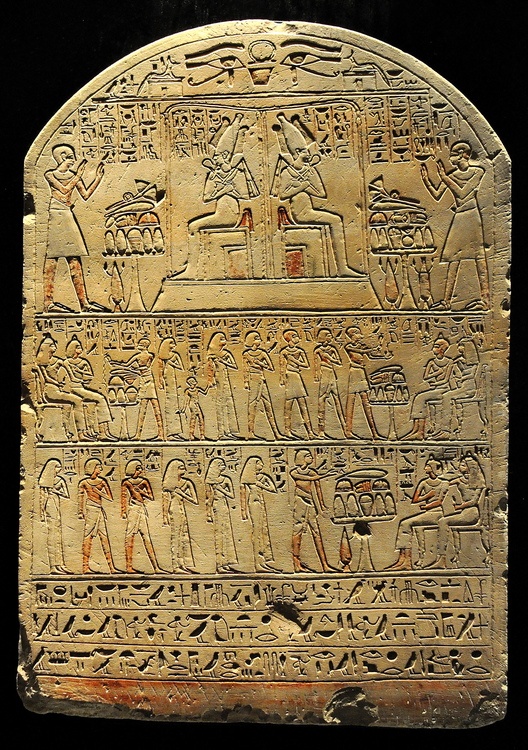
Ancient ritual required more than sacred places, offerings, calendars, and objects. It required people who knew how to make ritual work. Ritual specialists served as mediators between ordinary human life and powers that could bless, punish, communicate, heal, demand, or destroy. These specialists differed greatly from one society to another. A Mesopotamian diviner reading a sheep’s liver, an Egyptian priest entering a purified sanctuary, a Shang king cracking oracle bones, a Vedic priest reciting inherited formulas, a Greek priestess serving a local cult, a Roman augur observing signs, a northern European ritual expert presiding over deposition or sacrifice, and a shamanic healer negotiating with spirits did not belong to one universal category. Yet they shared a basic social function. They controlled access to procedures, words, places, substances, signs, memories, and beings that ordinary people could not safely or effectively approach without mediation. Ritual authority was not merely personal charisma. It was a disciplined capacity to stand at the threshold between worlds.
Kingship was one of the most powerful forms of ritual mediation. In Egypt, the pharaoh’s office made him the supreme ritual actor, even when priests performed the daily temple cult on his behalf. His task was to offer ma’at to the gods and receive life, order, and legitimacy in return. In Mesopotamia, kings restored temples, endowed offerings, consulted omens, participated in festivals, and ruled under the scrutiny of gods whose favor could not be assumed. In Shang China, royal authority was inseparable from divination and sacrifice. The king did not merely govern living subjects; he communicated with ancestors, interpreted cracks in oracle bones, and organized offerings that bound lineage, warfare, agriculture, weather, and power into one ritual field. In these contexts, the ruler’s political authority depended upon his ability to act ritually. A failed king was not simply an incompetent administrator. He could be imagined as a danger to cosmic and ancestral order. Kings ruled people, but ritual made them answerable to powers beyond the palace.
Priesthoods gave ritual authority continuity, specialization, and institutional memory. Egyptian priests purified themselves, entered restricted temple spaces, cared for divine images, recited liturgies, presented offerings, and guarded the secrecy of sanctuaries that most people could never see. Their work was repetitive, controlled, and often hidden, which made it no less politically and cosmologically significant. Mesopotamian temple personnel included priests, singers, lamentation specialists, exorcists, scribes, cooks, administrators, craftsmen, and diviners, showing how sacred service depended on a complex division of labor. Vedic ritual developed perhaps the most elaborate priestly specialization of the ancient world, with different officiants responsible for recitation, chant, offering, supervision, and correction. The rite’s success depended not merely on piety but on exact knowledge, remembered sequence, inherited sound, and the ability to repair ritual error. Roman religion distributed ritual expertise among pontifices, augurs, flamines, Vestal Virgins, haruspices, and other priestly groups, many of whom were embedded in elite political life rather than separated from it. Greek priesthoods were often local, civic, hereditary, elected, or purchased, and women could hold major priestly offices in ways that complicate simple assumptions about ancient religious authority. In all these cases, priesthood turned ritual into a preserved craft. It held memory in offices, calendars, formulas, gestures, and precedent. Priests did not merely perform ceremonies; they maintained the conditions under which ceremonies could continue to be recognized as valid, authoritative, and properly connected to the divine powers they addressed.
Diviners occupied another crucial position because they converted uncertainty into interpretable signs. Mesopotamian divination treated the world as communicative, reading celestial phenomena, dreams, birth anomalies, smoke, oil, and entrails as possible messages from the gods. The liver of a sacrificed sheep could become a map of divine intention, while the sky could become an archive of warning and permission. Roman augurs and haruspices likewise placed public action under divine scrutiny, interpreting birds, lightning, sacred chickens, prodigies, and entrails before assemblies, elections, campaigns, or expiatory rites. Greek oracles, especially Delphi, gave cities and individuals access to divine speech, though that speech often required interpretation rather than passive obedience. Shang oracle-bone divination preserved royal questions about rain, warfare, childbirth, sacrifice, illness, and ancestral response, making the bone itself both ritual instrument and historical record. Divination did not simply predict events. It disciplined decision-making. It required rulers and communities to pause, ask, interpret, and act with the awareness that human plans existed within a larger field of sacred signs.
Shamanic and spirit-mediating practices are more difficult to reconstruct in many ancient societies, partly because the evidence is uneven and partly because the term “shaman” can be used too loosely. Still, many early religious systems included specialists who negotiated with spirits, healed illness, entered altered states, interpreted dreams, guided souls, or mediated between human communities and nonhuman powers. In early China, discussions of wu suggest ritual figures associated with spirit communication, rainmaking, healing, and performance, though their precise historical roles varied across time and source traditions. Some may have functioned in court contexts, others in local or healing settings, and later elite texts often viewed them through changing moral and intellectual filters. In northern and central Eurasian contexts, later evidence of shamanic practice must be used cautiously, but it reminds us that ritual mediation did not always take priestly or temple-centered forms. Some specialists worked through trance, song, costume, ecstatic movement, spirit possession, or healing performance rather than through permanent sanctuaries or written liturgies. Their authority could come from bodily transformation, visionary encounter, inherited status, apprenticeship, gendered performance, or the community’s belief that certain people could survive contact with dangerous powers. Such figures reveal a different dimension of ritual expertise: the capacity to cross boundaries not by office alone, but through embodied performance. They stood at dangerous edges, where illness, weather, death, spirit attack, fertility, and communal fear demanded intervention. If priests often guarded order through repetition, spirit-mediators often confronted disorder directly, entering the unstable zone where ordinary categories of body, voice, identity, and presence could temporarily break open.
Ancestors themselves could also function as mediators, blurring the line between recipients of ritual and agents within it. In Shang China, royal ancestors were not merely remembered; they were consulted, fed, appeased, and feared as active powers within the government of the living. In Egypt, the blessed dead could remain socially effective if properly named, sustained, and ritually equipped. In Greek hero cult, the dead could become localized powers tied to tombs, cities, protection, fertility, or political identity. Roman household religion honored the dead and domestic spirits through rites that linked family continuity to sacred obligation. Ancestors mediated time. They connected living communities to origins, land, legitimacy, inheritance, and memory. Their authority did not require them to speak in ordinary human language. It existed in offerings, names, tombs, genealogies, tablets, bones, vessels, and repeated acts of remembrance. Through them, ritual specialists were not only living priests, kings, or diviners. The dead themselves could become powers through whom the living negotiated order.
The importance of ritual specialists lies in their ability to make sacred systems durable. Ritual is never only an idea. It must be known, repeated, corrected, guarded, interpreted, and authorized. Specialists performed that work. They preserved liturgies, handled dangerous substances, interpreted signs, entered restricted spaces, managed purity, spoke inherited words, cared for divine images, supervised sacrifice, regulated calendars, healed bodies, remembered ancestors, and turned political authority into sacred legitimacy. Yet their power was never neutral. Those who controlled ritual often controlled access to status, memory, land, gender roles, political hierarchy, and communal identity. Ritual specialists could protect communities from chaos, but they could also reinforce domination. They could mediate divine favor, but they could also define who was pure, who was polluted, who could enter, who had to watch, who could speak, and who could be sacrificed. The mediator stood between worlds, but also between people. That position made ritual authority one of the most consequential forms of power in the ancient world.
Crisis Ritual: War, Plague, Famine, Omen, Pollution, and Sacrificial Extremes

Ancient ritual became most intense when ordinary order appeared to fail. War, plague, famine, eclipse, drought, defeat, infertility, royal illness, monstrous birth, polluted bloodshed, or ominous signs could all suggest that the human community had fallen out of alignment with divine, ancestral, cosmic, or natural powers. Ritual was not simply a continuation of normal worship. It became emergency action. Communities sought to identify the source of danger, appease offended powers, purify contaminated spaces, transfer evil elsewhere, restore communication with gods or ancestors, and reestablish confidence that the world remained governable. Crisis ritual reveals the urgency beneath ancient religious practice. The ordinary calendar maintained order through repetition, but crisis rites responded when repetition no longer seemed enough. They were acts of repair performed under pressure, when the boundaries between fear, theology, politics, and survival narrowed sharply.
War generated some of the most dramatic forms of crisis ritual because battle placed communities before uncertainty, mass death, and the possibility of collective destruction. Mesopotamian kings consulted omens before campaigns, seeking divine approval before committing armies to danger. Greek cities sacrificed before battle and interpreted signs that might encourage, delay, or redirect military action. Roman commanders made vows to gods in exchange for victory, inspected auspices, and sometimes performed extraordinary rites when defeat or prodigy suggested divine displeasure. In northern Europe, captured weapons and military equipment deposited in wetlands could transform victory into sacred offering, removing the tools of violence from ordinary use and surrendering them to powers associated with land, water, or ancestral memory. War ritual did not make violence less violent, but it gave violence a framework. It asked whether battle was permitted, whether victory had been granted, whether the dead required attention, whether captured goods belonged to gods, and whether bloodshed had polluted the community that survived it. It also turned military action into a test of relationship. A defeated army might have been outmaneuvered, poorly led, or overwhelmed, but defeat could also be interpreted as evidence that divine favor had been lost, vows neglected, auspices ignored, or pollution left unresolved. Victory, by the same logic, could not be claimed as human achievement alone. It had to be acknowledged, repaid, dedicated, commemorated, and folded back into sacred order. The battlefield did not end at the battlefield. Its consequences moved into temples, sanctuaries, rivers, triumphal processions, funeral rites, dedicatory inscriptions, and communal memory. War made crisis visible in blood and ruin, while ritual tried to decide what that blood and ruin meant.
Plague, famine, and environmental disorder exposed another kind of crisis: the terrifying dependence of human life on forces beyond command. When crops failed, rains did not come, rivers did not rise properly, disease spread through households, or livestock died, ancient communities often interpreted the event not merely as misfortune but as a sign of broken relationship. Egyptian rites sought to preserve ma’at against forces of chaos that could appear in disorder, sickness, or cosmic instability. Mesopotamian prayers, incantations, and purification rituals addressed angry gods, demons, witchcraft, impurity, and ominous conditions that threatened bodies and cities alike. Greek communities could respond to plague or pollution through purification, sacrifice, consultation of oracles, and the identification of offenses that had disturbed divine order. Roman prodigy lists and expiatory rites show a public world in which unusual natural or social events demanded official religious response. These rituals did not separate practical survival from sacred repair. They worked within a worldview in which disease, hunger, and environmental failure were biological, social, and religious realities at once.
Omen and divination were central to crisis management because they promised that danger could be read before it became irreversible. Eclipses, lightning, malformed births, dreams, strange animal behavior, unexpected deaths, celestial movements, and anomalies in sacrificed animals could all become signs requiring interpretation. Mesopotamian omen science developed vast traditions for classifying such signs and advising royal action. Shang oracle-bone divination allowed kings to ask ancestors and high powers about illness, rain, warfare, childbirth, sacrifice, and misfortune, turning uncertainty into inscribed inquiry. Roman augury and haruspicy placed public decisions under divine scrutiny, while prodigies could trigger formal expiation by the Senate and priestly colleges. The point of divination in crisis was not merely curiosity about the future. It was control through interpretation. A sign identified danger, but it also opened the possibility of response. If the gods, ancestors, or cosmos warned, then ritual might still avert, transfer, delay, or soften disaster. Divination changed the emotional shape of crisis. It gave fear a grammar and transformed shock into a question that could be asked of the divine world. What does this mean? Who is angry? Which rite has failed? What sacrifice is required? Which day is dangerous? Which road, campaign, birth, illness, or political act should be delayed? These questions did not eliminate uncertainty, but they made uncertainty actionable. Crisis divination gave communities a fragile but powerful hope: catastrophe might not be meaningless if it could be read. The world might be terrifying, but it was not silent.
Pollution created crisis at the level of moral, bodily, and social boundary. Death, bloodshed, childbirth, sexual violation, murder, sacrilege, corpse contact, oath-breaking, and improper ritual could mark persons or places as dangerous until purified. Greek religion developed powerful ideas of miasma, pollution that could cling to individuals, households, cities, or lineages and require cleansing before normal relations with gods and community could resume. Roman religion likewise treated errors, prodigies, and ritual faults as matters requiring correction, repetition, or expiation. In Vedic contexts, ritual precision and purification protected sacrifice from disorder, while errors could demand repair through additional formulae or corrective acts. Egyptian temple service required purity before approach to divine images, and funerary rites transformed the dangerous disorder of death into a controlled path toward continued existence. Pollution mattered because it made disorder transferable. One person’s act, one corpse, one improper word, one unpurified body, or one violent death could endanger more than itself. Ritual purification responded by drawing boundaries again: clean from unclean, sacred from profane, living from dead, community from danger.
Sacrificial extremes show how far crisis ritual could go when ordinary offerings seemed insufficient. Human sacrifice, royal substitution, scapegoat rites, expulsion rituals, and symbolic transfers all reveal societies attempting to concentrate danger in a body, object, substitute, or victim and then remove it. Shang royal ritual could involve human victims in contexts of ancestral service, burial, warfare, or communication with powerful forces. Mesopotamian substitute king rituals responded to threatening omens by temporarily placing another person in the king’s role so that predicted doom might fall upon the substitute rather than the ruler. Greek and Roman traditions included forms of scapegoat, expiation, and exceptional sacrifice, though reports must be evaluated carefully according to period, genre, and evidence. Northern European bog bodies and weapon deposits may also belong, in some cases, to ritual responses to crisis, punishment, or sacred obligation, though certainty varies. Such rites expose the hardest edge of ancient ritual. They show that order could be imagined as something purchased through displacement, suffering, death, or surrender. Crisis ritual could console, but it could also destroy. It could heal a community by placing unbearable fear onto a victim or substitute whose removal made renewed order imaginable.
Crisis ritual reveals both the vulnerability and the violence of ancient sacred order. These practices were not irrational eruptions at the margins of religion. They belonged to the same ritual worlds that fed gods, honored ancestors, preserved calendars, maintained temples, and celebrated festivals. The difference was intensity. In crisis, the stakes became visible. A failed harvest, spreading disease, ominous eclipse, polluted killing, military defeat, or divine warning could make ordinary life feel suspended between order and collapse. Ritual answered by giving fear a procedure. It identified signs, named powers, purified bodies, transferred danger, sacrificed victims, consulted divine voices, and restored the possibility of action. That restoration could be beautiful, terrifying, or morally brutal. Yet it shows why ritual mattered so deeply in ancient cultures. When the world broke open, ritual offered a way to close the wound, even if the closing left scars.
Ritual, Power, and Social Order: Who Benefited from the Sacred?

Ritual created order, but order was never neutral. Sacred practice bound communities together through shared calendars, sacrifices, festivals, processions, ancestral rites, and crisis ceremonies, yet those same practices also distributed authority unevenly. Ritual asked who could approach the god, who could enter the sanctuary, who could speak the formula, who could interpret the omen, who could sacrifice, who could eat, who could watch, who could be remembered, and who could be offered. These questions were not secondary to religion. They were built into it. Sacred action made social hierarchy visible by arranging bodies, spaces, voices, foods, garments, offices, and privileges in ritual order. A festival might appear to unite an entire city, but it also showed who led the procession, who carried sacred objects, who supplied animals, who received honors, who stood at the margins, and who remained unseen. Ritual created belonging, but it also defined the terms on which belonging was granted.
Temple systems made this connection between sacred power and social organization especially clear. In Mesopotamia, temples were divine households, but they were also major economic institutions that controlled land, labor, offerings, storage, craft production, and redistribution. To feed the gods required fields, herds, administrators, scribes, brewers, bakers, shepherds, and ritual personnel, all organized within systems that linked sacred obligation to material resources. In Egypt, temple estates and priestly service similarly tied ritual maintenance to landholding, taxation, labor, royal patronage, and political legitimacy. The god’s house was never merely a spiritual refuge. It was a center of wealth and administration, and its rituals helped naturalize the social structures that made such wealth possible. Offerings rose toward the gods, but they also moved through human institutions. Grain, animals, beer, incense, linen, precious metals, and labor all passed through channels where ritual meaning and economic power reinforced one another. The sacred did not float above society. It was organized through society’s most durable structures. This organization made ritual both materially expensive and socially consequential. Someone had to cultivate the fields, raise the animals, brew the beer, bake the bread, weave the linen, transport the offerings, maintain the buildings, record the accounts, purify the spaces, and perform the ceremonies. Sacred abundance depended on human labor, and that labor was often invisible in the polished language of divine service. The temple could redistribute food, employ workers, sponsor craft, preserve learning, and stabilize urban life, but it could also concentrate surplus under elite and priestly management. Ritual transformed economic extraction into sacred duty. What might otherwise appear as taxation, tribute, corvée labor, or elite accumulation could be represented as provision for the gods, maintenance of cosmic order, or fulfillment of ancestral obligation. That transformation did not make the system false or insincere. It made it powerful. The temple stood where theology, administration, labor, and wealth became one structure.
Kings and elites benefited profoundly from ritual because sacred performance transformed power into legitimacy. The Egyptian pharaoh offered ma’at to the gods and received life and stability in return, making kingship appear as the necessary hinge between cosmos and land. Mesopotamian rulers restored temples, sponsored offerings, consulted diviners, and presented themselves as chosen or favored by gods whose protection validated political rule. Shang kings monopolized royal divination and ancestral sacrifice, giving their house privileged access to the dead and to divine decision-making. Zhou rulers reframed legitimacy through Heaven’s mandate, turning political success and failure into evidence of cosmic approval or withdrawal. Greek and Roman elites gained honor by financing festivals, sacrifices, temples, games, dedications, and priesthoods, converting wealth into public piety and public piety into status. The pattern is not difficult to see. Ritual made hierarchy appear meaningful. It did not simply say that rulers and elites had power. It staged that power as service, mediation, obligation, generosity, and divine relationship.
Yet ritual was not only a tool of domination from above. Ordinary people also found meaning, protection, food, healing, memory, and communal identity within sacred systems. Greek festivals gave citizens public participation, sacrificial meat, dramatic experience, and civic belonging. Roman household cults allowed families to honor domestic spirits and ancestors outside the grand machinery of state religion. Egyptian funerary ritual, though shaped by hierarchy and cost, offered a language through which death could be resisted, named, and transformed. Votive offerings at healing sanctuaries, local shrines, springs, temples, and sacred landscapes allowed individuals to materialize gratitude, suffering, hope, and dependence. In early China, ancestral rites structured family continuity as well as royal authority. Ritual power was uneven but not one-directional. It could reinforce elite control while also giving non-elites access to sacred care, social recognition, seasonal celebration, and emotional repair. This is precisely why ritual was so powerful. It served hierarchy best when it also met real human needs.
The deepest question, then, is not whether ancient ritual was sincere or political, communal or coercive, sacred or social. It was all of these at once. Ritual helped people survive uncertainty, honor the dead, seek healing, mark time, share food, and imagine the world as ordered. It also justified kings, enriched temples, elevated specialists, displayed elite generosity, regulated gender and status, sanctified violence, and defined outsiders. The sacred benefited those who could control its institutions, but it also mattered to those who entered its rhythms for protection, memory, and hope. Ancient ritual’s power lay in this double character. It made society appear cosmic and the cosmos appear social. It taught communities that hierarchy, obligation, reciprocity, purity, and authority were not merely human arrangements but part of the order of things. That belief could console. It could bind. It could also make power look eternal.
The Transformation of Ancient Ritual: From Sacrifice to Symbol, Philosophy, and Text
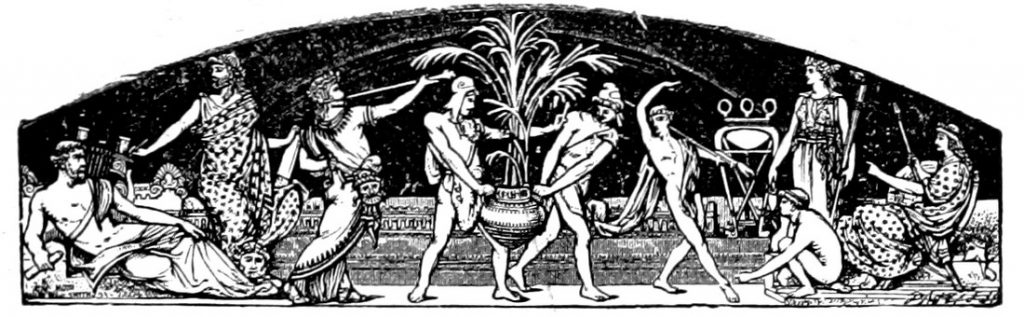
Ancient ritual did not remain fixed. Across the first millennium BCE and into late antiquity, older sacrificial and temple-centered systems continued to operate, but they were increasingly interpreted, debated, moralized, textualized, and sometimes interiorized. This was not a simple story in which “primitive” ritual gave way to “higher” thought. That model distorts the evidence and repeats an old prejudice against embodied religion. Sacrifice, procession, purification, divination, and festival remained powerful forms of sacred action, but their meanings became more contested as cities expanded, empires formed, literacy spread, philosophical schools developed, and religious communities learned to preserve identity through texts as well as rites. Ritual was still performed with bodies, animals, incense, images, priests, calendars, and sacred places. Yet it was also increasingly explained, defended, criticized, allegorized, regulated, and remembered through writing. The transformation of ancient ritual was not disappearance. It was a shift in emphasis, as sacred action became more visibly entangled with interpretation.
Greek philosophical criticism provides one important example of this change. Greek religion never became purely philosophical, and traditional sacrifice continued to structure civic life, but thinkers from the Presocratics through Plato, the Stoics, Epicureans, and later Platonists asked new questions about the gods, piety, myth, moral order, and the value of inherited practice. Some criticisms targeted popular stories about divine misconduct; others questioned whether gods truly needed sacrifices, meat, smoke, or gifts. Philosophical reflection did not abolish ritual, but it unsettled the assumption that correct performance alone was sufficient. Piety could be reimagined as moral likeness to the divine, intellectual contemplation, cosmic understanding, or disciplined self-ordering. Plato’s dialogues, for example, placed inherited religious practice under ethical and philosophical scrutiny, while later philosophical traditions often treated myth and cult as symbolic languages requiring interpretation. This did not mean that philosophers simply rejected civic rites. Many participated in them, defended them, or reinterpreted them as socially useful. But the center of gravity shifted. Ritual could now be judged not only by ancestral authority and civic correctness, but also by its relation to truth, virtue, and the nature of the divine.
In early South Asia, Vedic sacrifice generated its own internal reinterpretations. The Brahmanas had already elaborated sacrificial action into a dense system of correspondences linking altar, speech, body, year, deity, and cosmos. Later Upanishadic traditions did not merely discard this world. They redirected some of its symbolic force inward, toward knowledge, breath, self, consciousness, and liberation. Fire, offering, speech, and cosmic exchange could become interiorized metaphors for disciplined understanding. The sacrificial arena was not always abandoned, but its meaning could be relocated from external performance to insight into the hidden structure of reality. This process shows how a ritual tradition can become philosophical without ceasing to be ritual in imagination. The language of sacrifice remained available even when thinkers questioned whether external offerings were the highest form of religious knowledge. Ritual had become so conceptually powerful that even critique had to speak through it. To reinterpret sacrifice was still to acknowledge that sacrifice had once provided the grammar for thinking about relation, transformation, and cosmic order.
Early China offers another distinctive transformation through the development of li, often translated as ritual, rites, or ritual propriety. In the Shang world, ritual authority had centered heavily on royal divination, sacrifice, and ancestral power. Under the Zhou and later classical traditions, ritual became increasingly tied to hierarchy, moral cultivation, social order, and political legitimacy. Confucian thought did not reject ritual as empty formalism when properly understood. It elevated ritual as a discipline through which persons, families, courts, and states learned appropriate relation. Bowing, mourning, sacrifice, music, dress, speech, ancestral observance, and court ceremony became means of shaping the self and harmonizing society. This was a major transformation. Ritual was no longer only a technique for addressing ancestors or divine powers, though it remained that in many contexts. It became a moral and social pedagogy. The correctly performed rite trained emotion, restrained arrogance, organized grief, honored rank, and gave visible form to humane order. Chinese ritual thought moved powerfully toward the ethical interior of public form. Ritual shaped the person precisely because it was repeated, embodied, and socially visible.
Text also changed ritual by preserving, standardizing, and extending sacred authority beyond immediate performance. Mesopotamian omen series, Egyptian funerary compositions, Vedic recensions, Greek ritual calendars, Roman pontifical traditions, Chinese classics, and later Jewish, Christian, Buddhist, and other scriptural traditions all show different ways writing could reshape sacred action. Text did not replace ritual, but it altered ritual’s memory. A rite could now be copied, transmitted, commented upon, regulated, and debated across generations. The written word could preserve prayers for the dead, fix sacrificial sequences, record prodigies, classify omens, authorize priestly knowledge, or turn myth into a canon of interpretation. This textualization also changed access to religious authority. Scribes, teachers, exegetes, philosophers, jurists, monks, rabbis, bishops, and commentators could become ritual mediators in their own right, not always because they killed victims or tended divine images, but because they guarded the meaning of inherited words. Written ritual knowledge could travel farther than a local sanctuary, survive the death of a priest, outlast political collapse, and allow communities to reconstruct practice from memory embedded in texts. It also created new tensions. Once ritual was written, it could be compared, corrected, disputed, canonized, translated, censored, or accused of corruption. Text made ritual more durable, but also more vulnerable to interpretation. It invited questions about authenticity, authority, lineage, and proper transmission. Who owned the rite: the performer, the temple, the lineage, the school, the scribe, the interpreter, or the community that received it? In that question, ritual entered a new arena of power. Sacred action still required bodies and places, but its legitimacy increasingly depended on textual memory and learned interpretation.
By late antiquity, sacrifice itself became one of the great contested symbols of religious change. Traditional animal sacrifice continued in many places, but it also faced philosophical criticism, imperial regulation, Jewish reinterpretation after the destruction of the Jerusalem Temple, Christian rejection and transformation, and new forms of symbolic offering. In some traditions, prayer, almsgiving, ethical conduct, martyrdom, Eucharistic remembrance, ascetic discipline, or textual study could be framed as higher or transformed forms of sacrifice. This was not the end of ritual. Christianity, rabbinic Judaism, late antique philosophical schools, and emerging monastic movements all produced dense ritual worlds of their own, with calendars, liturgies, sacred meals, fasts, gestures, spaces, relics, readings, and communal disciplines. What changed was the status of blood sacrifice as the assumed center of public religion. The ancient world had long made order through offerings of animals, food, incense, bodies, and gifts. Late antiquity increasingly asked whether the truest offering might be memory, obedience, praise, moral life, disciplined body, sacred reading, or transformed self. Ritual survived the question. It simply entered a new historical form.
Conclusion: Ritual as the Ancient Grammar of Order
Ancient ritual was the grammar through which communities made the world intelligible. It taught people how to approach gods, ancestors, spirits, rulers, landscapes, bodies, and the dead through forms that could be repeated, remembered, corrected, and shared. Across the ancient Near East, Egypt, China, South Asia, the Mediterranean, and northern Europe, ritual gave structure to relationships that otherwise might have seemed terrifyingly unstable. Rain might fail, crops might die, kings might fall, children might sicken, armies might be defeated, ancestors might be neglected, omens might darken the sky, and death might rupture the household. Ritual did not remove these dangers. It gave them a language. It turned fear into inquiry, obligation into offering, memory into ceremony, violence into controlled action, and time into recurring order. The ancient sacred world was not built from belief alone. It was built from enacted forms: fire, blood, smoke, speech, procession, vessel, image, altar, tomb, calendar, feast, and sign.
The diversity of these ritual systems must be taken seriously. Mesopotamian temple service, Egyptian maintenance of ma’at, Shang oracle-bone divination, Vedic fire sacrifice, Greek civic festival, Roman auspices, and northern European deposition were not variations of one simple universal religion. They belonged to different languages, ecologies, political structures, material cultures, and theological imaginations. Yet their differences make the comparison more revealing, not less. Each culture faced the same human problem from within its own historical world: how could fragile communities live under powers they could not fully command? The answers varied. Some fed divine statues. Some preserved the dead for eternal life. Some cracked bones to question ancestors. Some sent offerings through fire. Some gathered cities around altars and games. Some read birds, livers, lightning, or prodigies. Some surrendered weapons, bodies, and wealth to bogs, rivers, and groves. Each answer made a claim about order. Each claimed that human action, properly performed, could enter relationship with forces larger than the human will.
Ritual also made power visible. It joined sacred order to kingship, priesthood, household, gender, rank, labor, and empire. It could console the vulnerable, feed the community, heal the sick, honor the dead, and bind people into shared memory. It could also legitimate hierarchy, absorb surplus, sanctify conquest, exclude outsiders, regulate bodies, and make domination appear natural. This double character is essential. Ancient ritual was not either sincere devotion or political theater. It was both, and more. Its power came precisely from the fact that it met real emotional, social, and existential needs while also organizing authority. A temple could be a house of the god and an institution of wealth. A festival could unite a city and display its inequalities. A king could perform cosmic service and consolidate political power. A sacrifice could express dependence and expose violence. Ritual did not stand outside society as pure religion. It was one of the ways society imagined itself as part of a cosmic order.
To study ancient ritual, then, is to see human beings refusing to let the world remain mute. They gave the gods food, the dead names, the seasons festivals, danger signs, grief laments, victory offerings, kings sacred duties, and landscapes memory. They built ceremonies around the most basic facts of existence: hunger, birth, sex, illness, death, weather, violence, time, and hope. Their rituals could be beautiful, brutal, disciplined, ecstatic, public, secret, conservative, adaptive, generous, or terrifying. But again and again, they answered the same need: to make life habitable under conditions of uncertainty. Ancient ritual was not decorative religion at the edge of history. It was a central human technology of meaning, one that arranged the visible world so that the invisible could be approached. Through repeated action, ancient communities did not simply describe order. They performed it, defended it, and tried, again and again, to bring it back into being.
Bibliography
Affiliate disclosure: Amazon links on this site are paid links. As an Amazon Associate I earn from qualifying purchases.
- Aldhouse-Green, Miranda. Dying for the Gods: Human Sacrifice in Iron Age and Roman Europe. Stroud: Tempus, 2001.
- —-. The Gods of the Celts. Stroud: Sutton Publishing, 1986.
- —-. Sacred Britannia: The Gods and Rituals of Roman Britain. London: Thames & Hudson, 2018.
- Allen, James P., trans. The Ancient Egyptian Pyramid Texts. 2nd ed. Atlanta: Society of Biblical Literature, 2015.
- Ando, Clifford. The Matter of the Gods: Religion and the Roman Empire. Berkeley: University of California Press, 2008.
- Assmann, Jan. Death and Salvation in Ancient Egypt. Translated by David Lorton. Ithaca, NY: Cornell University Press, 2005.
- —-. The Mind of Egypt: History and Meaning in the Time of the Pharaohs. Translated by Andrew Jenkins. Cambridge, MA: Harvard University Press, 2002.
- —-. The Search for God in Ancient Egypt. Translated by David Lorton. Ithaca, NY: Cornell University Press, 2001.
- Bagley, Robert W. “Shang Archaeology.” In The Cambridge History of Ancient China: From the Origins of Civilization to 221 B.C., edited by Michael Loewe and Edward L. Shaughnessy, 124–231. Cambridge: Cambridge University Press, 1999.
- Beard, Mary, John North, and Simon Price. Religions of Rome, 2 Vols. Cambridge: Cambridge University Press, 1998.
- Bell, Catherine. Ritual: Perspectives and Dimensions. New York: Oxford University Press, 1997.
- —-. Ritual Theory, Ritual Practice. New York: Oxford University Press, 1992.
- Bottéro, Jean. Religion in Ancient Mesopotamia. Translated by Teresa Lavender Fagan. Chicago: University of Chicago Press, 2001.
- Bradley, Richard. An Archaeology of Natural Places. London: Routledge, 2000.
- —-. The Passage of Arms: An Archaeological Analysis of Prehistoric Hoards and Votive Deposits. Cambridge: Cambridge University Press, 1990.
- —-. The Significance of Monuments: On the Shaping of Human Experience in Neolithic and Bronze Age Europe. London: Routledge, 1998.
- Bremmer, Jan N. Greek Religion. Oxford: Oxford University Press, 1994.
- Brereton, Joel P., and Stephanie W. Jamison. The Rigveda: A Guide. Oxford: Oxford University Press, 2020.
- Burkert, Walter. Greek Religion. Translated by John Raffan. Cambridge, MA: Harvard University Press, 1985.
- —-. Homo Necans: The Anthropology of Ancient Greek Sacrificial Ritual and Myth. Translated by Peter Bing. Berkeley: University of California Press, 1972.
- —-. Structure and History in Greek Mythology and Ritual. Berkeley: University of California Press, 1979.
- Caland, W., and V. Henry. L’Agniṣṭoma: Description complète de la forme normale du sacrifice de Soma dans le culte védique. Paris: Ernest Leroux, 1906–1907.
- Cauvin, Jacques. The Birth of the Gods and the Origins of Agriculture. Translated by Trevor Watkins. Cambridge: Cambridge University Press, 2000.
- Chang, K. C. Art, Myth, and Ritual: The Path to Political Authority in Ancient China. Cambridge, MA: Harvard University Press, 1983.
- Cicero. On the Nature of the Gods. Translated by H. Rackham. Loeb Classical Library. Cambridge, MA: Harvard University Press, 1933.
- Cohen, Mark E. The Cultic Calendars of the Ancient Near East. Bethesda, MD: CDL Press, 1993.
- Connelly, Joan Breton. Portrait of a Priestess: Women and Ritual in Ancient Greece. Princeton, NJ: Princeton University Press, 2007.
- Cunliffe, Barry. The Ancient Celts. 2nd ed. Oxford: Oxford University Press, 1997.
- David, Rosalie. Religion and Magic in Ancient Egypt. London: Penguin Books, 2002.
- Davidson, Hilda Ellis. The Lost Beliefs of Northern Europe. London: Routledge, 1993.
- Detienne, Marcel, and Jean-Pierre Vernant, eds. The Cuisine of Sacrifice among the Greeks. Translated by Paula Wissing. Chicago: University of Chicago Press, 1989.
- Eggeling, Julius, trans. The Śatapatha-Brāhmaṇa. 5 vols. Sacred Books of the East 12, 26, 41, 43, 44. Oxford: Clarendon Press, 1882–1900.
- Eliade, Mircea. The Sacred and the Profane: The Nature of Religion. Translated by Willard R. Trask. New York: Harcourt, 1959.
- Faulkner, Raymond O., trans. The Ancient Egyptian Book of the Dead. Austin: University of Texas Press, 1990.
- Feuchtwang, Stephan. The Anthropology of Religion, Charisma and Ghosts: Chinese Lessons for Adequate Theory. Berlin: De Gruyter, 2010.
- Foster, Benjamin R. Before the Muses: An Anthology of Akkadian Literature. Bethesda: CDL Press, 2005.
- Frankfort, Henri. Kingship and the Gods: A Study of Ancient Near Eastern Religion of the Integration of Society & Nature. Chicago: The University of Chicago Press, 1948.
- Glob, P. V. The Bog People: Iron-Age Man Preserved. Translated by Rupert Bruce-Mitford. Ithaca, NY: Cornell University Press, 1965.
- Gonda, Jan. Vedic Ritual: The Non-Solemn Rites. Leiden: Brill, 1952.
- Graf, Fritz. Roman Festivals in the Greek East: From the Early Empire to the Middle Byzantine Era. Cambridge: Cambridge University Press, 2015.
- Green, Miranda. Dying for the Gods: Human Sacrifice in Iron Age and Roman Europe. Stroud: Tempus, 2001.
- Hallo, William W., and K. Lawson Younger Jr., eds. The Context of Scripture. 3 vols. Leiden: Brill, 1997–2002.
- Harper, Donald. “Warring States Natural Philosophy and Occult Thought.” In The Cambridge History of Ancient China: From the Origins of Civilization to 221 B.C., edited by Michael Loewe and Edward L. Shaughnessy, 813–884. Cambridge: Cambridge University Press, 1999.
- Harrison, Paul, trans. The Samādhi of Direct Encounter with the Buddhas of the Present. Tokyo: International Institute for Buddhist Studies, 1990.
- Harvey, Susan Ashbrook. Scenting Salvation: Ancient Christianity and the Olfactory Imagination. Berkeley: University of California Press, 2006.
- Hedeager, Lotte. Iron Age Myth and Materiality: An Archaeology of Scandinavia AD 400–1000. London: Routledge, 2011.
- Heesterman, J. C. The Broken World of Sacrifice: An Essay in Ancient Indian Ritual. Chicago: University of Chicago Press, 1993.
- Hodder, Ian. The Leopard’s Tale: Revealing the Mysteries of Çatalhöyük. London: Thames & Hudson, 2006.
- Homer. The Iliad. Translated by Richmond Lattimore. Chicago: University of Chicago Press, 1951.
- Hornung, Erik. Conceptions of God in Ancient Egypt: The One and the Many. Ithaca: Cornell University Press, 1982.
- Howes, David, ed. Empire of the Senses: The Sensual Culture Reader. Oxford: Berg, 2005.
- Insoll, Timothy. Archaeology, Ritual, Religion. London: Routledge, 2004.
- Jacobsen, Thorkild. The Treasures of Darkness: A History of Mesopotamian Religion. New Haven, CT: Yale University Press, 1976.
- Jamison, Stephanie W., and Joel P. Brereton, trans. The Rigveda: The Earliest Religious Poetry of India. 3 vols. New York: Oxford University Press, 2014.
- Julius Caesar. Commentarii de Bello Gallico (Commentaries on the Gallic War). Translated by Carolyn Hammond. Oxford: Oxford University Press, 1996.
- Keightley, David N. The Ancestral Landscape: Time, Space, and Community in Late Shang China, ca. 1200–1045 BCE. Berkeley: Institute of East Asian Studies, University of California, 2000.
- —-. Sources of Shang History: The Oracle-Bone Inscriptions of Bronze Age China. Berkeley: University of California Press, 1978.
- Keith, Arthur Berriedale. The Religion and Philosophy of the Veda and Upanishads. 2 vols. Cambridge, MA: Harvard University Press, 1925.
- Knipe, David M. Vedic Voices: Intimate Narratives of a Living Andhra Tradition. Oxford: Oxford University Press, 2015.
- Lambert, W. G. Babylonian Creation Myths. Winona Lake, IN: Eisenbrauns, 2013.
- Larson, Jennifer. Ancient Greek Cults: A Guide. New York: Routledge, 1995.
- Lewis, Mark Edward. Writing and Authority in Early China. Albany: State University of New York Press, 1999.
- Lichtheim, Miriam, trans. Ancient Egyptian Literature. 3 vols. Berkeley: University of California Press, 1973–1980.
- Livy. Ab Urbe Condita. Translated by B. O. Foster et al. Cambridge, MA: Harvard University Press, 1919–1959.
- Loewe, Michael, and Edward L. Shaughnessy, eds. The Cambridge History of Ancient China: From the Origins of Civilization to 221 B.C. Cambridge: Cambridge University Press, 1999.
- Mikalson, Jon D. Ancient Greek Religion. 2nd ed. Malden, MA: Wiley-Blackwell, 2009.
- —-. The Sacred and Civil Calendar of the Athenian Year. Princeton, NJ: Princeton University Press, 1975.
- Morris, Ian. Burial and Ancient Society: The Rise of the Greek City-State. Cambridge: Cambridge University Press, 1987.
- North, John A. Roman Religion. Oxford: Oxford University Press, 2000.
- Olivelle, Patrick, trans. The Early Upanishads: Annotated Text and Translation. Oxford: Oxford University Press, 1998.
- Oppenheim, A. Leo. Ancient Mesopotamia: Portrait of a Dead Civilization. Rev. ed. Completed by Erica Reiner. Chicago: University of Chicago Press, 1977.
- Parker, Robert. Athenian Religion: A History. Oxford: Clarendon Press, 1996.
- —-. On Greek Religion. Ithaca, NY: Cornell University Press, 2011.
- —-. Polytheism and Society at Athens. Oxford: Oxford University Press, 2005.
- Pausanias. Description of Greece. Translated by W. H. S. Jones. Cambridge, MA: Harvard University Press (Loeb Classical Library), 1918.
- Pinch, Geraldine. Egyptian Mythology: A Guide to the Gods, Goddesses, and Traditions of Ancient Egypt. Oxford: Oxford University Press, 2002.
- Plato. Euthyphro. In Plato: Complete Works, edited by John M. Cooper, translated by G. M. A. Grube, 1–16. Indianapolis: Hackett Publishing, 1997.
- Pongratz-Leisten, Beate. Religion and Ideology in Assyria. Berlin: De Gruyter, 2015.
- Price, Simon. Religions of the Ancient Greeks. Cambridge: Cambridge University Press, 1999.
- Puett, Michael J. To Become a God: Cosmology, Sacrifice, and Self-Divinization in Early China. Cambridge, MA: Harvard University Asia Center, 2002.
- Rappaport, Roy A. Ritual and Religion in the Making of Humanity. Cambridge: Cambridge University Press, 1999.
- Rawson, Jessica. Chinese Bronzes: Art and Ritual. London: British Museum Press, 1987.
- Renfrew, Colin. Prehistory: The Making of the Human Mind. New York: Modern Library, 2007.
- Rochberg, Francesca. The Heavenly Writing: Divination, Horoscopy, and Astronomy in Mesopotamian Culture. Cambridge: Cambridge University Press, 2004.
- Rüpke, Jörg. Religion of the Romans. Cambridge: Polity Press, 2004.
- —-. The Roman Calendar from Numa to Constantine: Time, History, and the Fasti. Translated by David M. B. Richardson. Malden, MA: Wiley-Blackwell, 2011.
- Scheid, John. The Gods, the State, and the Individual: Reflections on Civic Religion in Rome. Translated by Clifford Ando. Philadelphia: University of Pennsylvania Press, 2013.
- —-. An Introduction to Roman Religion. Translated by Janet Lloyd. Bloomington: Indiana University Press, 2003.
- Scurlock, JoAnn. Sourcebook for Ancient Mesopotamian Medicine. Atlanta: Society of Biblical Literature, 2014.
- Scurlock, JoAnn, and Burton R. Andersen. Diagnoses in Assyrian and Babylonian Medicine: Ancient Sources, Translations, and Modern Medical Analyses. Urbana: University of Illinois Press, 2005.
- Shafer, Byron E., ed. Temples of Ancient Egypt. Ithaca, NY: Cornell University Press, 1997.
- Shaughnessy, Edward L. Sources of Western Zhou History: Inscribed Bronze Vessels. Berkeley: University of California Press, 1990.
- Smith, Jonathan Z. To Take Place: Toward Theory in Ritual. Chicago: University of Chicago Press, 1987.
- Staal, Frits. Agni: The Vedic Ritual of the Fire Altar. 2 vols. Berkeley: Asian Humanities Press, 1983.
- Stern, Sacha. Calendars in Antiquity: Empires, States, and Societies. Oxford: Oxford University Press, 2012.
- Stroumsa, Guy G. The End of Sacrifice: Religious Transformations in Late Antiquity. Translated by Susan Emanuel. Chicago: University of Chicago Press, 2009.
- Tacitus. Agricola. Germania. Dialogue on Oratory. Translated by M. Hutton and W. Peterson. Loeb Classical Library 35. Cambridge, MA: Harvard University Press, 1914.
- Teeter, Emily. Religion and Ritual in Ancient Egypt. Cambridge: Cambridge University Press, 2011.
- Thomas, Julian. Understanding the Neolithic. 2nd ed. London: Routledge, 1999.
- Thorp, Robert L. China in the Early Bronze Age: Shang Civilization. Philadelphia: University of Pennsylvania Press, 2006.
- Virgil. The Aeneid. Translated by Robert Fagles. New York: Viking, 2006.
- Watkins, Trevor. “Architecture and ‘Theatres of Memory’ in the Neolithic of Southwest Asia.” In Rethinking Materiality: The Engagement of Mind with the Material World, edited by Elizabeth DeMarrais, Chris Gosden, and Colin Renfrew, 97–106. Cambridge: McDonald Institute for Archaeological Research, 2004.
- Webster, Jane. “At the End of the World: Druidic and Other Revitalization Movements in Post-Conquest Gaul and Britain.” Britannia 30 (1999), 1–20.
- Wells, Peter S. The Barbarians Speak: How the Conquered Peoples Shaped Roman Europe. Princeton, NJ: Princeton University Press, 1999.
- Witzel, Michael. “Vedas and Upaniṣads.” In The Blackwell Companion to Hinduism, edited by Gavin Flood, 68–98. Malden, MA: Blackwell Publishing, 2003.
- Xunzi. Xunzi: The Complete Text. Translated and edited by Eric L. Hutton. Princeton, NJ: Princeton University Press, 2014.
Originally published by Brewminate, 05.15.2026, under the terms of a Creative Commons Attribution-NonCommercial-NoDerivatives 4.0 International license.
About the Author