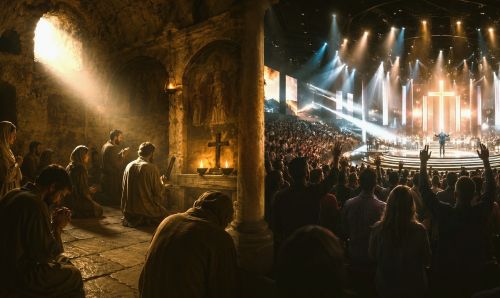
Christianity has always required public forms, but its history reveals the danger of ritual, doctrine, emotion, and identity without transformation.

By Matthew A. McIntosh
Public Historian
Brewminate
Introduction: Performing Belief and the Problem of Religious Sincerity
Christianity has always been a performed religion. Its faith has never existed only as inward conviction, private feeling, or abstract assent to propositions. From the beginning, Christianity took bodily, communal, and public form through baptism, shared meals, prayer, fasting, confession, almsgiving, preaching, martyrdom, song, discipline, and care for the vulnerable. The problem, then, is not performance itself. A religion without embodied practice becomes little more than opinion. The problem is the historical drift by which performance can separate from transformation, by which rituals, doctrines, symbols, emotions, and identities can remain in place after the costly demands that first gave them force have been softened, forgotten, or domesticated. Christianity’s history repeatedly exposes this tension. Faith must be enacted to become communal and durable, but once enacted forms become familiar, they can also be staged without being inhabited.
The earliest Christian movement emerged within Second Temple Judaism as a demanding way of life centered on repentance, baptism, table fellowship, eschatological hope, moral reorientation, and allegiance to Jesus as crucified and risen Lord. Its rituals marked entry into a community that claimed a new family, a new loyalty, and a new order of value. Yet even the earliest sources show that sincerity was never automatic. Paul’s rebuke of the Corinthian assembly over the Lord’s Supper reveals that Christian ritual could be performed in ways that contradicted its meaning almost from the start. A meal intended to proclaim unity in Christ could become a scene of inequality, humiliation, and social division. That early failure matters because it prevents romanticizing the primitive church as a flawless age of pure authenticity. Christianity did not move from total sincerity to total performance in a straight line. Rather, the danger of performed belief was present wherever outward participation could mask inward resistance, ethical failure, or social hypocrisy.
The historical problem intensified as Christianity expanded. A small, marginal, communal movement could demand costly identity with relative clarity, but a religion that spread through cities, adapted to Greek language, debated philosophy, organized episcopal authority, entered imperial favor, formed creeds, absorbed local customs, built monumental churches, disciplined populations, and eventually shaped nations could not remain socially simple. Expansion required translation, and translation required accommodation. Some accommodations gave Christianity intellectual depth, institutional durability, artistic beauty, liturgical richness, and political protection. Others made Christian belonging easier to inherit than to practice. As the faith moved from households and persecuted assemblies into basilicas, councils, imperial law, parish systems, national churches, revival tents, broadcast ministries, megachurch auditoriums, and digital platforms, the forms of Christian performance multiplied. Each new setting created new possibilities for devotion, but also new temptations toward display. The language of discipleship could be preserved while the social cost of discipleship declined. The cross could remain central in symbol while becoming less central as an ethic of self-denial, enemy-love, humility, and solidarity with the suffering. The faith that once asked believers to take up a cross could become a cultural atmosphere, a state identity, a family tradition, a badge of respectability, a doctrinal password, a national myth, or a managed emotional experience. Its forms could remain recognizably Christian while their social function shifted from transformation to affiliation.
I trace that long transformation chronologically, from early Christian communal practice to Hellenistic translation, imperial institutionalization, medieval sacramental culture, Reformation critique, Enlightenment privatization, revivalist emotionalism, cultural Christianity, entertainment worship, and digital performance. Its argument is not that ritual, doctrine, beauty, music, emotion, or public worship are corrupt in themselves. The Christian tradition could not have survived without them. The sharper claim is that every form capable of carrying faith is also capable of replacing it. Baptism can mark death and rebirth, or simply social belonging. Eucharist can enact self-giving communion, or become a habit empty of reconciliation. Doctrine can protect truth, or become tribal recitation. Worship can open the heart, or manipulate feeling. Public faith can witness to justice, or become branding. Christianity’s recurring crisis is not performance versus sincerity, as if the two were opposites. It is whether performed belief still bears the weight of repentance, sacrifice, love, humility, and transformed life.
The Earliest Christian Communities: Ritual as Costly Belonging

The earliest Christian communities emerged within the world of Second Temple Judaism, not outside it as a finished religion already separate from Jewish scripture, prayer, ethics, and eschatological expectation. Jesus’ first followers interpreted his death and resurrection through Israel’s sacred texts, Israel’s God, and Israel’s hope for renewal, judgment, forgiveness, and the coming reign of God. Their rituals did not begin as decorative church customs. They marked a dangerous reconfiguration of belonging. Baptism, common meals, prayer, almsgiving, healing, fasting, confession, and proclamation formed a community that understood itself as living between the old age and the new creation. To join such a movement was not merely to adopt a set of opinions about God. It was to enter a people whose loyalties, habits, economic responsibilities, and social boundaries were being remade around the crucified and risen Christ.
Baptism expressed this costly transition with particular force. In the earliest Christian imagination, baptism was not a sentimental ceremony of respectability or a family tradition performed because it was socially expected. It marked repentance, forgiveness, death, rebirth, incorporation, and transfer into a new community. Paul’s language in Romans 6 presents baptism as participation in Christ’s death and resurrection, making the rite a dramatic passage through judgment into a transformed life. The baptized person was not simply washed; he or she was reidentified. Old patterns of status, kinship, ethnicity, gendered hierarchy, and moral life were placed under the claim of a new body. This did not mean early Christian communities perfectly achieved equality, but their rituals declared a radical theological pressure against ordinary social divisions. Baptism made the body itself the site of conversion. It turned belief into an event that could be remembered, witnessed, and demanded as a way of life. The rite also created a before and after, a narrative line through which the believer’s life could be judged. To be baptized was to have publicly passed from one order of allegiance into another, and that passage carried obligations that could not be reduced to inward feeling. It meant a new relation to sin, money, violence, sexuality, family, strangers, enemies, and the poor. The water functioned as more than symbol in the weak modern sense. It was an embodied claim that the old self, old loyalties, and old measures of honor had been put under judgment. If later Christianity could turn baptism into a social marker or inherited custom, the earliest logic of the rite was sharper: one entered the water as a person claimed by one world and emerged as a person answerable to another.
The shared meal, later called Eucharist or the Lord’s Supper, likewise carried the weight of costly belonging. It remembered Jesus’ death, anticipated the coming kingdom, and enacted fellowship among those who claimed to belong to one body. Yet this ritual also reveals how quickly performance could betray meaning. Paul’s rebuke of the Corinthians in 1 Corinthians 11 is devastating because the problem was not that the community had abandoned the meal’s outward form. The problem was that they were performing the meal while humiliating the poor and reproducing the social divisions the ritual was supposed to overcome. Some ate abundantly while others went hungry. The form remained, but the body was fractured. Paul’s anger shows that Christian ritual was never supposed to be self-validating. A rite could condemn its own participants if it staged unity while practicing inequality. From the beginning, then, Christianity’s central meal carried an ethical demand: one could not proclaim the self-giving death of Christ while refusing self-giving responsibility toward the community.
The earliest Christian assemblies also practiced belonging through mutual obligation. Acts presents believers sharing goods, breaking bread, praying together, and caring for those in need, while Paul’s letters reveal networks of financial collection, hospitality, labor, discipline, and concern across scattered urban communities. These descriptions should not be romanticized as if every early church lived in perfect harmony. Conflict appears everywhere: disputes over food, circumcision, Gentile inclusion, spiritual gifts, leadership, wealth, sexual conduct, and relations with outsiders. Yet the conflicts themselves reveal the seriousness of the communal claim. Early Christianity was not imagined as a private spiritual preference that could be sealed off from money, meals, bodies, work, marriage, ethnicity, or household life. Faith reached into ordinary arrangements and disrupted them. The widow, orphan, slave, poor member, imprisoned believer, traveling apostle, and persecuted witness all became tests of whether ritual belonging had become actual solidarity. This is where sincerity became practical rather than merely emotional. A community could confess Christ, gather for prayer, and break bread, but the truth of that confession was exposed in how it treated those with the least leverage. Collections for impoverished believers, instructions about hospitality, warnings against exploiting the weak, and arguments over table fellowship all show that early Christian identity was negotiated in ordinary social transactions. The point was not that ritual disappeared into ethics, but that ritual demanded ethics as its proof. Belonging to Christ had to alter the household, the purse, the meal, the body, and the stranger at the door.
Martyrdom made the cost of belonging most visible. Not every early Christian was persecuted, and persecution varied by time, place, and political circumstance, but the memory and theology of martyrdom shaped Christian identity deeply. To confess Christ under threat was to refuse the idea that religious loyalty could be safely confined to inward belief. Roman society had many ways to absorb religious difference, but refusal to honor the gods, the emperor, or the civic order in expected ways could make Christians appear socially dangerous. Martyr texts presented faithful witness as a public performance of sincerity under conditions where performance could not easily be dismissed as social convenience. The martyr’s body became testimony. Torture, trial, endurance, and death dramatized a faith that could not be reduced to words, inherited identity, or empty ritual form. The scene of martyrdom also inverted the logic of Roman spectacle. The state could turn punishment into public display, but Christians reinterpreted suffering as witness, defeat as fidelity, and exposed weakness as participation in Christ’s own passion. That did not make martyr literature simple reportage; it was shaped by memory, theology, imitation, and community need. But its power lay in its insistence that faith becomes most legible when it costs something. The martyr could not merely “perform Christianity” as social theater because the performance risked blood, family rupture, humiliation, and death. The irony is sharp: early Christianity learned to distrust hollow public piety while also producing one of antiquity’s most intense forms of public religious performance, the staged witness of suffering.
Those early communities show that Christianity’s ritual life was embodied from the start, but embodiment was supposed to carry transformation. Baptism meant dying and rising, not simply joining. The meal meant communion, not status display. Prayer and fasting meant dependence, not religious theater. Almsgiving meant reordered economics, not public self-advertisement. Martyrdom meant witness, not spectacle for its own sake. The danger of performed belief was already present, because human beings could always imitate the form while resisting the demand. But the earliest Christian sources also preserved a fierce standard by which performance could be judged. Ritual was authentic only when it bore the marks of repentance, reconciliation, mercy, courage, and costly belonging. The first Christian communities did not escape hypocrisy, hierarchy, or conflict. Their importance lies elsewhere: they made the gap between ritual performance and transformed life impossible to ignore.
Hellenistic Language and Roman Forms: Translating Faith into Culture

As Christianity moved beyond its earliest Jewish matrix into the cities of the Greco-Roman world, it had to become intelligible in languages, categories, and social settings that were not its original home. The movement’s first claims were rooted in Israel’s scriptures, Jewish apocalyptic expectation, baptismal repentance, communal meals, and proclamation of Jesus as Messiah and Lord. Yet the Mediterranean world into which Christianity spread was shaped by Greek language, Roman law, urban patronage, philosophical debate, household hierarchy, imperial power, civic religion, and habits of public association. Translation was unavoidable. To preach Christ in Greek, defend Christian practice before Roman officials, organize mixed communities of Jews and Gentiles, and explain monotheism in a polytheistic empire required more than repetition of inherited formulas. Christianity had to speak across cultures. It had to make Jewish messianic claims audible in cities where most hearers did not share Israel’s covenantal memory, scriptural imagination, or apocalyptic expectation. That meant finding new verbal bridges without losing the scandal of the message itself. Words such as Lord, salvation, assembly, wisdom, body, spirit, and truth now carried Christian meaning through cultural vocabularies already crowded with political, philosophical, and religious associations. That translation gave the faith range, resilience, and intellectual force, but it also began the long process by which a disruptive way of life could become a culturally available system. Once Christianity could be explained in the empire’s languages, it could also be adapted to the empire’s habits of thought, hierarchy, respectability, and public persuasion.
Greek language changed Christianity not because language mechanically corrupts belief, but because every language carries conceptual possibilities. Terms such as logos, sōtēria, pistis, ekklēsia, kyrios, and sōma allowed early Christians to communicate the meaning of Christ, salvation, faithfulness, assembly, lordship, and communal body in ways that could be heard across the eastern Mediterranean. The Gospel of John’s use of Logos is the clearest example of this translation at work, linking Jewish creation theology and scriptural imagination to a term with deep resonance in Greek philosophical and religious thought. Justin Martyr later used philosophical language to present Christianity as the true philosophy, not merely a strange superstition. This was not a trivial accommodation. It gave Christianity a way to argue in public, answer critics, and claim that faith in Christ was not irrational disorder but the fulfillment of divine reason. Yet the same move shifted emphasis. A message first proclaimed through repentance, healing, table fellowship, and eschatological urgency could increasingly be defended as an intellectual account of God, world, reason, and truth.
Roman social forms also shaped Christian life. Early Christian assemblies met in households, used networks of patronage and travel, exchanged letters, collected funds, organized leadership, and adapted familiar forms of association to new theological purposes. The language of household order appears in several early Christian texts, where relations among husbands and wives, parents and children, masters and slaves, elders and communities were given Christian instruction. Such passages reveal the strain of translation. A movement that proclaimed a new creation in Christ still had to live inside the social architecture of Roman cities. It could challenge hierarchy, soften it, reinterpret it, or reproduce it under Christian language. The result was neither simple surrender nor pure resistance. Early Christianity created communities that could call slaves and masters members of one body while still struggling to imagine life beyond slavery as a social institution. It could proclaim a lord higher than Caesar while using the organizational habits of Roman urban life. It could gather around a meal of radical memory while still meeting in houses marked by wealth, patronage, gendered authority, and social rank. The household was both opportunity and danger. It gave Christians space to assemble, teach, pray, baptize, host travelers, and care for one another, but it also carried the assumptions of the world Christianity claimed to transform. Translation into culture made Christian community possible at scale, but it also made compromise inevitable. The faith could not enter Roman society without being pressured by Roman society’s ways of organizing bodies, households, honor, obedience, and power.
Apologetic writing deepened this cultural adaptation. Christians of the second and third centuries defended themselves against charges of atheism, immorality, irrationality, political disloyalty, novelty, and social danger. Writers such as Justin Martyr, Athenagoras, Tertullian, Clement of Alexandria, and Origen did not merely repeat liturgical formulas for insiders. They explained Christianity to outsiders using the tools of rhetoric, philosophy, legal argument, scriptural exegesis, and moral comparison. These defenses mattered because Christians were trying to survive in a world where public misunderstanding could become persecution. Apologetics also helped Christians understand themselves. To answer the empire’s accusations, they had to define what Christianity was: not cannibalism, not sexual disorder, not atheism, not sedition, but true worship, moral discipline, ancient truth, and rational devotion. This gave Christianity a sharper public identity. It also trained Christian leaders to think in the register of public argument, to present the faith as defensible before educated critics, magistrates, and rival schools. The result was a Christianity increasingly capable of appearing respectable without becoming fully safe. Apologists could insist that Christians prayed for emperors, lived morally, rejected idolatry, and worshipped the one true God, but this defense inevitably placed Christian identity before the standards of Roman judgment. The faith that had begun with proclamation now became an argument to be won, a case to be presented, a reputation to be managed. That was necessary, and sometimes courageous. But it also encouraged the faith to become something that could be presented, argued, classified, and defended according to the expectations of elite culture. The witness of life remained important, but the defense of belief became increasingly textual and intellectual.
The development of episcopal authority, canon consciousness, and the rule of faith likewise shows Christianity becoming more durable through form. As communities spread, disputes multiplied over scripture, Christology, ritual, authority, prophecy, asceticism, and the relation between Jewish inheritance and Gentile belonging. Figures such as Irenaeus argued that apostolic teaching, episcopal succession, and a coherent rule of faith were necessary to preserve the church against fragmentation. This was not empty institutionalism. Without boundaries, Christianity could have dissolved into competing revelations, local inventions, and incompatible interpretations of Jesus. Structure protected memory. It gave communities a way to say that not every performance of Christian language was faithful to the apostolic witness. Yet the creation of durable authority also changed the experience of belonging. The Christian life became increasingly tied to recognized teachers, authorized texts, correct confession, and stable offices. A faith once marked primarily by baptismal conversion, communal discipline, and eschatological urgency was becoming a tradition capable of policing its own borders.
The translation of Christianity into Hellenistic language and Roman form produced a deep historical ambiguity. Without it, Christianity might have remained a small Jewish sectarian movement or fractured under the pressure of expansion. Through it, Christianity gained philosophical vocabulary, literary sophistication, institutional continuity, doctrinal coherence, and public defensibility. But translation always carries a cost. The more Christianity became culturally articulate, the easier it became to participate in its language without undergoing its conversion. The more it learned to answer philosophy, the more faith could become intellectual assent. The more it adopted Roman organizational habits, the more community could resemble hierarchy. The more it defined orthodoxy, the more correct speech could be mistaken for transformed life. This was not yet the staged Christianity of empire, nation, consumer worship, or digital branding. But the groundwork was being laid. Christianity had learned how to perform itself in the public languages of culture, and from that moment forward, the struggle would be whether those performances still carried the scandal of the cross.
Pagan Custom, Christian Reinterpretation, and the Problem of Assimilation
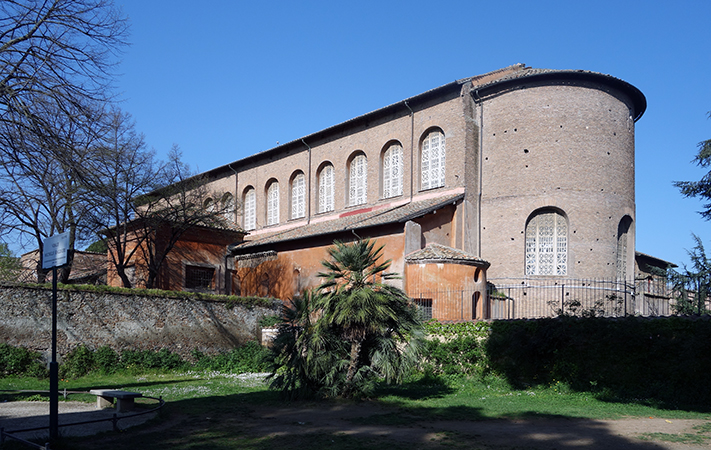
Christianity’s expansion did not take place in empty cultural space. It entered a late antique and early medieval world already thick with festivals, sacred places, seasonal customs, household rites, ancestral habits, civic ceremonies, healing practices, local gods, protective spirits, burial traditions, and agricultural rhythms. Conversion rarely meant the immediate disappearance of older forms. It more often meant contest, replacement, reinterpretation, discipline, absorption, and selective survival. Churches rose where temples had stood. Martyrs’ tombs became centers of devotion. Saints took on protective roles once associated with local divine or heroic figures. Seasonal feasts were given Christian meanings. Sacred time and sacred space were not simply abolished; they were re-scripted. This process helped Christianity become culturally powerful, but it also created one of its deepest ambiguities: the faith could conquer older ritual worlds partly by inhabiting them, and it risked becoming another layer of inherited custom rather than a disruptive call to transformed life.
The Christianization of time shows this tension clearly. The early Christian calendar developed around Easter, the weekly Lord’s Day, martyr commemorations, fasting practices, and eventually feasts such as Christmas, Epiphany, Lent, Pentecost, and saints’ days. Some of these observances arose from specifically Christian theological memory, while others took shape in a world where seasonal festivals, imperial calendars, civic holidays, and agricultural rhythms already structured public life. It is too simple to say that major Christian feasts were merely pagan festivals with new names, and many popular claims about direct borrowing are historically careless. The sharper point is that Christianity did not enter neutral time. It claimed time. It reorganized the year around Christ, saints, fasting, penance, resurrection, incarnation, and martyrdom. That act of reorganization was powerful because time is one of culture’s deepest structures. To rename a season, redirect a feast, reinterpret a day of gathering, or place Christian memory over older rhythms was to change not only belief but habit. People learned Christianity by living through its calendar, by eating and abstaining, mourning and celebrating, gathering and waiting, marking one season as penitential and another as joyous. But once Christian time became the public rhythm of society, participation could become habitual rather than intentional. A feast could be celebrated because the whole village celebrated it. A fast could be observed because the calendar demanded it. A holy day could become social custom long after its theological meaning had thinned. The calendar that once trained memory could also train routine. It could form disciples, but it could also produce people who knew when Christmas, Easter, Lent, or a saint’s day arrived without knowing what those days demanded of the conscience.
Sacred space underwent a similar transformation. Early Christians had gathered in houses, cemeteries, rented rooms, and places of relative vulnerability, but the post-Constantinian and early medieval church increasingly occupied monumental and culturally visible space. Some temples were closed, destroyed, or abandoned; others were converted or symbolically displaced. Churches were built over martyrs’ graves, at sites of memory, near older sacred locations, and within the civic centers of towns and cities. This was not merely practical real estate use. It was a declaration that Christian sacred geography had replaced or reinterpreted the old order. Yet the persistence of place mattered. Springs, groves, tombs, hilltops, crossroads, caves, and local shrines often retained emotional and ritual significance even when their official interpretation changed. A healing site could become associated with a saint. A local protective presence could be reframed through Christian intercession. A pilgrimage route could redirect older patterns of movement toward Christian relics and churches. The result was not always pure replacement. It was layered memory, where Christian explanation covered, redirected, or sometimes tolerated older habits of sacred approach.
The cult of the saints became one of the most important bridges between Christian theology and local religious imagination. Martyrs and holy figures gave Christianity a way to root cosmic salvation in particular places, bodies, stories, relics, and communities. The saint was not a pagan god in disguise, and the difference matters. Christian theology located saints within the communion of the church, under God, not as independent divine beings. Yet functionally, saints could occupy roles that felt familiar within the older Mediterranean and European religious worlds: healers, patrons, protectors of cities, guardians of professions, intercessors in danger, companions in illness, and holy powers tied to shrines. Relics made sanctity tangible. Pilgrimage made devotion mobile. Feast days made holy memory seasonal. A saint’s tomb could draw the sick, the grieving, the desperate, the grateful, the politically ambitious, and the merely curious into the same sacred economy. Local communities could come to understand themselves through “their” saint, whose body, story, miracle, or shrine gave a place religious prestige and emotional identity. This system could be spiritually profound, giving ordinary Christians concrete access to models of holiness and signs of divine nearness. It could teach imitation, courage, humility, endurance, charity, and hope by placing sanctity in human lives rather than in abstraction. But it could also encourage transactional devotion, local competition, relic prestige, and forms of sacred dependence that looked less like radical discipleship and more like negotiated protection. The saint could inspire imitation, but the saint could also become a spiritual utility. A martyr who had died refusing imperial religious performance could, in later devotion, be transformed into a patron invoked for benefits by Christians who risked very little. That irony does not invalidate the cult of saints, but it exposes the historical danger at the center of assimilation: holy memory can become sacred convenience.
Assimilation was especially visible in missionary contexts. Gregory the Great’s advice to Augustine of Canterbury, preserved by Bede, famously recommended that some pagan temples among the English not simply be destroyed if they could be cleansed and repurposed for Christian worship. The logic was pastoral and strategic: people might move more easily toward Christian faith if familiar places and festive habits were redirected rather than obliterated. This was not cowardice. It was cultural realism. Human beings do not abandon inherited worlds overnight. But the strategy had consequences. When Christianity blessed, redirected, or tolerated existing customs, it lowered the cultural cost of conversion. That could allow genuine transformation to begin, but it could also allow people to enter Christianity with minimal rupture. The old feast remained, the old gathering remained, the old seasonal joy remained, but the explanation changed. Over generations, the memory of the change itself could fade. What remained was “Christian tradition,” practiced because ancestors practiced it, celebrated because community expected it, defended because identity required it, even when its theological content was dimly understood. Assimilation made Christianity livable across cultures, but it also made Christianity easier to inherit without conversion.
The problem of assimilation, then, is not that Christianity borrowed or reinterpreted culture. Every religion that survives history must take material, linguistic, social, and seasonal form. The problem is what happens when reinterpretation becomes amnesia. A ritual once meant to proclaim Christ’s victory over death can become merely a spring custom. A feast of incarnation can become family nostalgia and market spectacle. A saint’s day can become local identity without moral imitation. A pilgrimage can become travel. A relic can become prestige. A church built over an older sacred site can sanctify memory while also concealing the violence or negotiation by which one religious order displaced another. Christianity’s genius was its ability to translate itself into many cultures. Its danger was the same ability. The more successfully Christian forms became woven into ordinary life, the easier it became for people to perform Christianity as culture while losing contact with the repentance, discipline, mercy, and costly allegiance that had once made the faith dangerous.
Constantine and the Imperial Church: From Marginal Discipleship to Public Power

The Constantinian turn changed the social meaning of Christianity more dramatically than almost any other development in its early history. Before Constantine, Christian communities had lived in a precarious position within the Roman world: sometimes tolerated, sometimes ignored, sometimes mocked, sometimes persecuted, and often suspected of refusing the civic-religious obligations that held Roman society together. After Constantine’s rise and the legalization of Christianity in the early fourth century, the faith entered a new public world of imperial patronage, legal privilege, monumental architecture, episcopal influence, and political visibility. This did not instantly make the empire “Christian” in any simple or uniform sense, nor did it erase older religious practices overnight. But it did alter the cost of Christian identity. A movement once associated with marginal assemblies, martyr memory, and refusal of imperial cult could now stand near the center of imperial favor. The cross, once an instrument of Roman shame, began its transformation into a public symbol of power.
Constantine’s patronage did not merely protect Christians from persecution; it reshaped the possibilities of Christian performance. Churches received imperial favor, bishops gained access to the court, disputes among Christians became matters of public consequence, and Christian worship moved increasingly into large, visible spaces. Basilica architecture changed the sensory and social experience of gathering. The small house assembly and vulnerable community meal did not vanish, but Christianity now possessed buildings capable of staging sacred authority on a civic scale. Space itself taught a new lesson. A church sponsored by imperial wealth, decorated with public grandeur, and placed within the urban landscape announced that Christianity was no longer simply a disciplined minority way of life. It had become a public institution. This visibility had obvious advantages: stability, protection, resources, charity, teaching, and the ability to organize communities across distance. But it also created a new temptation. Once Christianity could be seen as socially legitimate, publicly impressive, and politically useful, belonging to it no longer necessarily meant standing against the world’s structures. It could mean standing within them.
The Council of Nicaea in 325 CE reveals the new relationship between doctrine, unity, and imperial power. The theological conflict over Arius and the nature of the Son was not invented by Constantine, and the bishops who debated Christology were not merely imperial puppets. The doctrinal stakes were real and profound, touching worship, salvation, scripture, and the Christian understanding of God. If Christ was not truly divine in the fullest sense, Christian worship, redemption, and the meaning of incarnation were all at stake. Yet the council also marked a new political reality: Christian theological dispute had become important enough for an emperor to convene, sponsor, and seek to settle. Orthodoxy was no longer only a matter of local teaching, episcopal debate, or communal discipline. It had become tied to imperial order. The emperor did not create Christian doctrine out of nothing, but his presence changed the stage on which doctrine was contested. Bishops gathered not only as pastors and theologians but as participants in a public drama of unity before imperial power. The creed that emerged from Nicaea was a theological confession, but it was also a boundary marker with institutional consequences. To confess rightly was increasingly to stand within the authorized church; to dissent could mean not merely theological disagreement but exclusion, exile, or political suspicion. The desire for unity, so understandable after persecution and internal fragmentation, now carried the weight of public governance. Correct belief increasingly mattered not only because it guarded the truth of Christ, but because religious division could be imagined as a threat to the peace of the empire. This did not empty doctrine of meaning. It made doctrine more powerful, and more dangerous when used as a tool of public control.
The office of bishop also changed under imperial Christianity. Earlier bishops had already served as teachers, administrators, guardians of unity, managers of charity, and symbols of apostolic continuity. After Constantine, many became public figures with civic influence, legal responsibilities, access to patronage, and authority that extended beyond strictly liturgical life. Bishops could intercede with officials, manage wealth, supervise church building, negotiate disputes, and represent Christian communities before imperial power. This expansion strengthened the church’s capacity to organize care, defend the vulnerable, and shape moral life in the empire. But it also brought episcopal office closer to the machinery of status, ambition, faction, and public performance. A bishop could still be a pastor, theologian, ascetic, or defender of the poor, but he could also become a court-connected power broker. The office that once carried the memory of martyr witness could now attract those drawn to influence. Institutional Christianity did not eliminate holiness, but it created new rewards for looking holy, speaking correctly, and occupying sacred office.
Imperial Christianity also changed the meaning of conversion. When Christian identity was dangerous, the sincerity of belonging was not guaranteed, but it was at least socially costly enough to demand seriousness. Once Christianity received imperial favor, and especially after later emperors increasingly privileged Nicene Christianity, conversion could be entangled with advancement, respectability, local pressure, patronage, family expectation, or political prudence. This was the crucial shift from faith as risky allegiance to faith as public affiliation. The danger was not that every post-Constantinian Christian became insincere. Many were deeply devout, and the fourth and fifth centuries produced towering theologians, ascetics, pastors, monks, martyrs, and reformers of Christian life. The danger was structural. Christianity had become a religion one could join because the world was moving that way. Baptism could still signify death and rebirth, but it could also become delayed, managed, timed, or socially strategic. Church attendance could still form the soul, but it could also become the expected behavior of a respectable imperial subject. The empire did not abolish discipleship; it made discipleship easier to confuse with belonging to the winning side.
The Constantinian transformation stands at the heart of Christianity’s movement from costly communal witness to staged public faith. It solved real problems and created real goods. It ended persecution, funded churches, supported bishops, encouraged theological definition, expanded charity, and gave Christianity a visible place in public life. But it also altered the religion’s social gravity. The faith that had once survived without public power now had to decide what it meant to possess it. That question has never disappeared. When Christianity gains cultural dominance, it must continually ask whether it is converting the world or being converted by the rewards of visibility, respectability, and control. Constantine did not single-handedly corrupt Christianity, and the imperial church was not a simple betrayal of the gospel. The truth is sharper and more unsettling: imperial favor gave Christianity the power to perform itself magnificently before the world, and from that moment the church had to fight to keep spectacle from replacing sacrifice.
Doctrine, Orthodoxy, and the Intellectualization of Faith

Doctrine emerged because Christianity could not survive on emotional intensity, inherited memory, or local practice alone. A movement that worshipped Jesus, proclaimed one God, inherited Jewish scripture, baptized Gentiles, broke bread in Christ’s name, and preached salvation through crucifixion and resurrection eventually had to say with precision what it meant. Was Christ created or eternal? Was he divine in the same sense as the Father? How could one God be confessed while Father, Son, and Spirit were invoked in worship? How could Christ be fully human and fully divine? What had the cross accomplished? What did salvation require? These were not abstract puzzles invented by bored theologians. They arose from worship, scripture, prayer, baptism, Eucharist, preaching, controversy, and pastoral necessity. Doctrine gave Christianity intellectual durability. It protected memory from collapse into vagueness and guarded worship from contradiction. Yet doctrine also introduced a new danger: faith could be performed as correct speech. One could recite the formula, defend the boundary, condemn the heretic, and still remain untouched by the love, humility, repentance, and self-denial the doctrine was meant to serve.
The early creeds grew out of this pressure for clarity. Baptismal confessions, rules of faith, and eventually conciliar statements helped define Christian identity across communities separated by geography, language, custom, and conflict. The Nicene Creed did not appear out of nowhere; it condensed arguments about scripture, worship, metaphysics, and salvation into public language that could be taught, repeated, and used as a marker of communion. Such formulas were powerful because they made Christianity portable and recognizable. A believer in one city could confess the same core faith as a believer elsewhere. Bishops could appeal to shared language against teachers they regarded as distorting the apostolic witness. Communities could identify the difference between inherited faith and innovation. But the creed also changed the texture of belonging. To be Christian increasingly meant not only to be baptized into a transformed life, but to stand within authorized language. The confession that once summarized faith could become a test of affiliation, a verbal gate through which the believer entered institutional legitimacy.
The fourth and fifth centuries intensified this process through the great Christological and Trinitarian controversies. Nicaea in 325 CE, Constantinople in 381 CE, Ephesus in 431 CE, and Chalcedon in 451 CE were not merely bureaucratic exercises. They were attempts to preserve the coherence of Christian worship and salvation. If Christians prayed to Christ, sang hymns to Christ, were baptized in relation to Christ, and believed themselves saved by Christ, then the identity of Christ mattered at the deepest level. The debates over homoousios, divine generation, the relation of Christ’s natures, Mary as Theotokos, and the unity of Christ’s person were efforts to prevent the faith from saying one thing in worship and another in theology. The disputes were not pedantic quarrels over vocabulary, even when they turned on words of extraordinary technical precision. They asked whether the one worshipped in liturgy was truly God, whether the one who suffered was truly human, whether salvation meant divine union with humanity or something less intimate, and whether Christian prayer itself was coherent. Yet the councils also show how quickly theological precision could become entangled with politics, rivalry, exile, imperial pressure, episcopal prestige, and regional identity. Orthodoxy was not merely discovered in quiet contemplation. It was fought over in assemblies, letters, sermons, imperial courts, monastic networks, and urban crowds. Bishops could be deposed, restored, exiled, or celebrated as defenders of truth. Emperors could pressure settlements in the name of unity. Monks and laypeople could mobilize around theological slogans whose meanings were both devotional and political. The truth claims were real. So were the power struggles. That combination made doctrine both necessary and combustible. It could guard the mystery of Christ, but it could also turn that mystery into a battlefield where holiness and ambition stood uncomfortably close together.
The intellectualization of faith did not mean that ordinary Christians suddenly became philosophers. Rather, it meant that the church’s public identity increasingly depended on specialized theological language guarded by bishops, theologians, monks, teachers, and councils. Terms drawn from Greek metaphysics and philosophical argument became indispensable to explaining Christian claims about God and Christ. This created a paradox. Christianity had begun as proclamation, repentance, table fellowship, baptism, and costly allegiance to a crucified Lord. It now also required conceptual precision about essence, person, nature, will, generation, procession, grace, and salvation. Such precision could deepen worship by preventing shallow or contradictory speech about God. It gave Christians a way to say that the one encountered in prayer was not a lesser divine being, that the incarnation was not divine disguise, that salvation was not moral improvement alone, and that the God confessed in worship was not divided into competing powers. At its best, theological language protected the scandal and depth of Christian faith from flattening. But it could also distance faith from ordinary practice, making Christianity appear to reside in technical formulas rather than transformed lives. The language of orthodoxy could become the property of specialists, while ordinary believers learned to repeat authorized phrases without necessarily entering the moral and spiritual discipline those phrases implied. The danger was not thought itself. The danger was the separation of thought from discipleship. When doctrine becomes detached from formation, it can produce defenders of orthodoxy who know how to protect the wording of the faith while neglecting the cruciform life the wording exists to preserve. A church can become brilliant at defining Christ and poor at resembling him. That is the wound at the center of intellectualized faith.
Augustine represents both the brilliance and the risk of doctrinal Christianity. His reflections on Trinity, grace, sin, will, love, and the church gave Western Christianity a depth that cannot be dismissed as mere abstraction. His theology wrestled with the human heart, not just with concepts. Yet the Augustinian legacy also helped make Christianity a religion of interior analysis, doctrinal architecture, and intellectual inheritance. Later debates over original sin, grace, free will, sacraments, predestination, and atonement would repeatedly show the same pattern. Christian doctrine could illuminate the human condition with extraordinary force, but it could also become a system one mastered rather than a life one entered. Even the language of grace could be performed without graciousness. Even the doctrine of love could be weaponized in loveless ways. Even the confession of a crucified God could be recited by institutions that protected their own power more fiercely than they protected the wounded. Intellectual clarity did not guarantee spiritual truthfulness. It only made the distance between correct belief and converted life more visible.
Doctrine, then, did not corrupt Christianity by existing. Christianity needed doctrine because vague sincerity cannot carry a tradition across centuries of conflict, translation, and expansion. The church had to say what it meant by God, Christ, Spirit, creation, sin, salvation, sacrament, and hope. But doctrine became dangerous whenever it allowed believers to mistake verbal correctness for fidelity. Orthodoxy could defend worship from distortion, but it could also become a badge of tribe, empire, school, or party. Heresy could name real theological breakdown, but it could also become a weapon against rivals. The intellectualization of faith gave Christianity a powerful mind, but not always a converted heart. In the long history of performed belief, this was a decisive development: Christians could now stage sincerity through the correct confession of truth, even when the form of their lives contradicted the truth confessed.
Medieval Sacramental Culture: Ritual Depth and Ritual Mechanism

Medieval Christianity created one of the most ritually dense religious cultures in the history of the church. Birth, childhood, marriage, labor, sin, sickness, harvest, fasting, feasting, pilgrimage, confession, death, burial, and memory were drawn into a sacramental and liturgical world that gave Christian meaning to nearly every stage of life. The medieval church did not simply teach doctrine from a distance. It surrounded people with bells, candles, relics, images, processions, holy water, Eucharistic devotion, saints’ days, penitential practice, pilgrimage routes, parish obligations, and the repeated drama of the liturgical year. This was not shallow by nature. It gave ordinary believers a powerful religious imagination, one in which grace could be touched, seen, tasted, feared, confessed, and received. Yet the very comprehensiveness of medieval ritual culture created a new problem. When Christianity became the air society breathed, participation could become unavoidable, habitual, and socially expected. The sacred could fill the world so completely that it no longer necessarily demanded conversion.
The sacraments stood at the center of this religious universe. Baptism marked entry into Christian life, confirmation strengthened belonging, Eucharist joined the believer to Christ’s body and sacrifice, penance addressed sin, marriage regulated household and sexuality, ordination structured clerical authority, and anointing accompanied the sick and dying. The medieval sacramental system did not imagine salvation as mere inward belief. It placed divine grace in visible, ecclesially mediated forms. This gave Christianity tremendous ritual depth. The body mattered. Water, oil, bread, wine, touch, confession, absolution, and priestly words mattered. Yet the same system could also encourage a mechanical understanding of sacred action, especially when sacramental participation was absorbed into the ordinary social obligations of Christian society. A person could be baptized as a matter of communal expectation, confess because the church required it, receive the Eucharist because the calendar demanded it, marry under ecclesiastical form because society recognized no other legitimacy, and receive last rites as part of the expected choreography of death. None of that made the sacraments empty. It made their sincerity historically vulnerable. A rite could be spiritually transformative, but it could also be treated as something done to a person by the institution at the required stage of life.
The Eucharist became the most powerful and contested center of medieval sacramental culture. The development of Eucharistic theology, especially the doctrine of transubstantiation formalized in the high Middle Ages, gave extraordinary weight to the Mass as the real presence of Christ and the re-presentation of sacrifice. The elevation of the host, Corpus Christi processions, Eucharistic miracles, devotional gazing, and elaborate liturgical forms made the consecrated bread the focal point of wonder, fear, reverence, and communal identity. For many believers, this was not empty spectacle but a profound encounter with divine nearness. The Mass gathered the living and the dead, the parish and the priest, sin and grace, body and mystery, earth and heaven. It placed the drama of salvation at the center of communal life and gave even small parishes a ritual connection to the cosmic sacrifice of Christ. Yet Eucharistic devotion also reveals how ritual depth can become ritual distance. Laypeople often received communion infrequently, while seeing the host became itself a central devotional act. The priest performed the sacred action at the altar, frequently in Latin, within a structure whose theological meaning could exceed the comprehension of ordinary participants. The congregation could be emotionally and visually absorbed in the rite while remaining separated from its verbal and sacramental center. Reverence could become watching. Awe could become distance. Presence could become attendance. The Mass, in other words, could generate profound devotion while also training Christians to experience faith as something performed before them by sacred specialists. That distinction matters for the larger history of staged belief. Medieval Eucharistic worship did not lack depth; it overflowed with depth. But its very grandeur could allow the believer to confuse proximity to mystery with transformation by mystery. The host was lifted, bells rang, bodies bowed, candles burned, and the sacred entered view, but the ethical question remained unresolved: did the sight of Christ’s body form a people willing to become Christ’s body for one another?
Penance and confession likewise show the double character of medieval ritual life. On one level, penitential practice took sin seriously in ways modern sentimental religion often does not. It understood that wrongdoing damaged the soul, the community, and the relationship between human beings and God. Confession required speech, examination, shame, accountability, priestly mediation, absolution, and satisfaction. The penitential system gave Christians a structured way to confront guilt and seek restoration rather than simply deny moral failure. Yet penance also became part of an elaborate economy of obligation, discipline, and spiritual accounting. Sins were categorized, satisfactions assigned, indulgences developed, and the church’s authority over repentance became institutionally immense. The problem was not that medieval Christians cared too much about sin. The problem was that repentance could be ritualized into procedure without necessarily producing humility, reconciliation, or changed life. A person could confess, perform assigned satisfaction, and return to ordinary patterns with the ledger temporarily cleared. The rite created a path toward mercy, but it could also train believers to imagine spiritual repair as a transaction managed by authorized hands.
Saints, relics, pilgrimage, and sacred images extended sacramental imagination into the landscape of daily life. Medieval Christians traveled to shrines, venerated holy bodies, sought healing, made vows, touched relics, donated offerings, lit candles, and carried stories of miracles across regions. These practices gave the faith emotional and material immediacy. Holiness was not merely an idea. It could be located in a bone, a cloth, a tomb, a spring, a painted face, a road walked in pain, or a shrine reached after danger and expense. Pilgrimage could be penitential, hopeful, communal, and transformative. Relics could make the communion of saints feel near. Images could teach the illiterate and move the heart. Yet these practices also created an economy of sacred access. Shrines competed for prestige. Relics could be bought, stolen, duplicated, doubted, or promoted. Pilgrimage could become tourism, status display, or obligation. Devotion could slide toward bargaining, in which a saint became a patron to be negotiated with rather than an exemplar to be imitated. The medieval sacred world gave people countless ways to touch faith, but not every touch became conversion.
By the late Middle Ages, the strength and strain of sacramental culture were both unmistakable. Parish religion shaped communal life with extraordinary depth, but it also made Christianity difficult to distinguish from social belonging itself. The church baptized the infant, solemnized marriage, regulated fasting, heard confession, celebrated Mass, blessed fields, marked feast days, disciplined sin, buried the dead, and prayed for souls in purgatory. This gave medieval Christians a universe saturated with sacred meaning. It also meant that one could live and die inside Christian ritual without ever facing Christianity as a deliberate choice against the world’s values. That is the paradox at the heart of medieval sacramental culture. It preserved the body, matter, memory, and community against any thinly intellectualized faith. It refused to reduce Christianity to private opinion. But because it made ritual participation the normal structure of life, it also made performance easier to inherit. The Reformation would later attack this world as mechanical, superstitious, and corrupt, often unfairly but not without cause. Medieval Christianity had ritual depth beyond measure. It also had ritual mechanism, and the tension between them would reshape the Western church.
Reformation and Confessional Performance: Sincerity, Scripture, and New Forms of Staging Faith

The Reformation began as a protest against religious performance that had, in the eyes of reformers, become dangerously detached from faith. Late medieval Christianity had filled the world with sacraments, relics, pilgrimages, indulgences, images, fasts, feast days, priestly mediation, and penitential practices, many of which reformers believed had come to obscure the gospel rather than reveal it. Martin Luther’s attack on indulgences, clerical power, and works-righteousness was not simply an argument about ecclesiastical abuse. It was a demand that Christian life be returned to trust in God’s grace rather than confidence in ritual transactions. Other reformers, including Huldrych Zwingli, John Calvin, and more radical groups, pressed the critique further, questioning images, the Mass, priestly authority, sacramental theology, and inherited traditions not clearly grounded in scripture. The Reformation presented itself as a recovery of sincerity against mechanism, scripture against corruption, living faith against religious theater. Its force came from the claim that the church had not merely accumulated errors but had trained Christians to mistake religious activity for saving faith. A person could buy an indulgence, venerate a relic, attend Mass, confess mechanically, repeat inherited formulas, and still remain spiritually unchanged. Reformers attacked that gap with ferocity because they believed it endangered the soul. Yet history rarely allows reformers to escape the problem they expose. In attacking one form of performed belief, the Reformation created others.
Scripture became the great arena of this new sincerity. Reformers insisted that Christian faith had to be governed by the Word of God rather than by accumulated customs, ecclesiastical control, or sacramental routines that had lost evangelical meaning. Preaching moved to the center of Protestant worship, and the sermon became a major instrument of reform, discipline, consolation, and instruction. Vernacular Bible translation, catechisms, printed pamphlets, hymns, and confessions helped ordinary believers hear and repeat Christian teaching in new ways. This was a major democratization of religious life, but it was also a new form of formation and control. Christians were now expected not merely to attend ritual but to know, hear, confess, read, memorize, and explain. Faith became increasingly tied to verbal understanding, doctrinal clarity, and scriptural literacy. The critique of empty ritual produced a Christianity deeply suspicious of spectacle, but intensely committed to another kind of performance: the public hearing, speaking, singing, and confessing of the Word.
Confessions of faith became especially important because Reformation Christianity fractured quickly. Once the authority of Rome was rejected or limited, competing reform movements had to define what counted as true evangelical faith. The Augsburg Confession, the Heidelberg Catechism, the Westminster Confession, Reformed catechisms, Lutheran statements, Anglican formularies, Anabaptist testimonies, and Catholic decrees from the Council of Trent all worked to mark identity, settle doctrine, and discipline communities. This did not make them cynical documents. They emerged from fierce conviction and real theological struggle over grace, sacraments, church authority, justification, free will, scripture, worship, and salvation. But they also transformed sincerity into confessional alignment. To be a Christian in much of early modern Europe increasingly meant to belong to a defined doctrinal community whose formulas could be recited, taught, defended, and enforced. Correct belief remained vital, but it could also become a public uniform. A believer could stand within the right confession while still lacking mercy, humility, repentance, or love. The old medieval problem of ritual mechanism was now joined by a new Protestant and Catholic problem of confessional mechanism.
The Reformation also changed the stage on which Christian life was performed. In many Protestant regions, images were removed, altars simplified, saints deemphasized, Latin replaced, and preaching elevated. Churches were reordered to train the eye and ear differently. The drama of the Mass gave way, in many places, to the drama of the pulpit, the Bible, the psalm, the catechism, and the disciplined congregation. This was not a disappearance of ritual. It was ritual reform. Standing, sitting, listening, singing, receiving communion, answering catechism questions, attending sermons, observing the Sabbath, and submitting to moral discipline became visible signs of reformed belonging. The body still performed faith, but now the performance was often framed as anti-performance: plainness against ornament, sincerity against ceremony, hearing against gazing, inward faith against outward works. That very contrast became powerful enough to become theatrical in its own right. The stripped church, the long sermon, the open Bible, and the disciplined moral life could stage authenticity just as surely as incense, relics, and processions had staged sanctity. A plain room could preach as loudly as a painted ceiling. A bare table could make a theological argument against the altar it replaced. A congregation singing psalms in the vernacular could perform a new vision of Christian community, one in which the people heard, answered, and internalized the Word rather than watched sacred action from a distance. Yet these new forms also developed their own expectations, habits, and pressures. The person who sat under preaching, carried a Bible, rejected images, knew the catechism, and displayed disciplined sobriety could appear as the model of reformed sincerity even if the heart remained untouched. The Reformation did not abolish religious staging. It changed the scenery, the script, and the signs by which authenticity was recognized.
Catholic reform responded by defending sacramental Christianity while also confronting corruption, ignorance, and clerical failure. The Council of Trent clarified doctrine, reasserted sacramental theology, regulated clerical training, reaffirmed the Mass, and gave new energy to preaching, education, confession, missions, and devotional life. The result was not simply medieval Catholicism continued unchanged. It was a disciplined, self-conscious, reforming Catholicism that also understood the power of form. Baroque churches, processions, visual art, music, missions, catechesis, and Eucharistic devotion became part of a renewed Catholic religious culture that aimed to move the senses and the soul together. Protestant critics saw theatricality, manipulation, and idolatry. Catholic reformers often saw beauty, pedagogy, incarnation, and sacramental depth. Both sides accused the other of performance. Protestants saw Catholics performing ritual without gospel sincerity. Catholics saw Protestants performing private interpretation and doctrinal rebellion under the mask of purity. The Reformation did not end the problem of staged faith. It multiplied the stages and sharpened the accusations.
The tragedy and irony of the Reformation age is that movements seeking authentic faith became entangled with states, discipline, identity, and coercion. Confessional churches were often supported by princes, magistrates, city councils, and national authorities. Attendance, baptism, communion, marriage, moral conduct, and doctrinal conformity could be regulated by law or local discipline. Dissenters might be exiled, punished, silenced, or killed, whether by Protestant or Catholic authorities. This does not erase the sincerity of reformers or the depth of renewal that occurred. It does expose the recurring pattern at the heart of Christian history. A protest against hollow performance can harden into a new system of performance when faith becomes inseparable from public conformity. The Reformation recovered scripture, grace, preaching, congregational song, and moral seriousness with extraordinary force. It also produced new ways to stage belonging: the right confession, the right sermon culture, the right moral code, the right church order, the right refusal of the other side. Christianity had again tried to strip away the mask, only to discover how quickly sincerity itself can become a costume.
Enlightenment, Rationalism, and the Privatization of Faith

The Enlightenment did not simply destroy Christian faith, but it changed the conditions under which faith had to explain itself. From the seventeenth through the nineteenth centuries, European intellectual life was increasingly shaped by rational inquiry, scientific investigation, historical criticism, political liberalism, religious toleration, and suspicion toward inherited authority. Christianity had already survived translation into Greek philosophy, imperial power, medieval sacramentalism, and Reformation confessionalism. Now it faced a different pressure: the demand that religion justify itself before reason, conscience, evidence, utility, and private judgment. The older world in which ritual, doctrine, community, law, and public order were tightly interwoven began to loosen. This did not happen evenly, and it did not happen everywhere at the same pace. Churches remained powerful, revivals flourished, missions expanded, and many Christians understood modern change not as secular defeat but as a summons to renewed conviction. Still, the intellectual atmosphere had altered. Faith increasingly had to speak in a world where inherited authority could be questioned, miracles could be doubted, scripture could be studied historically, and churches could no longer assume that public obedience meant inward belief. Christianity did not vanish under this pressure. It adapted. But adaptation carried a cost. Faith increasingly became something one believed, defended, chose, doubted, moralized, or privatized, rather than the all-encompassing social world into which one was born, disciplined, and ritually formed.
The rise of rational religion exposed this shift with particular clarity. Deism, natural theology, and Enlightenment critiques of revelation did not always reject God. Many thinkers affirmed a creator, providence, moral order, or rational religion while questioning miracle, mystery, priestcraft, dogma, ecclesiastical authority, and confessional violence. John Locke’s defense of toleration, David Hume’s critique of miracles and natural religion, Immanuel Kant’s moral interpretation of religion, and Friedrich Schleiermacher’s later emphasis on religious feeling all show Christianity being forced into new categories. Was faith rational? Was it moral? Was it useful to society? Was it historically credible? Was it grounded in universal reason, inward feeling, or revealed truth? These questions changed the performance of Christianity. The believer was no longer only the baptized member of a sacramental community or the subject of a confessional church. Increasingly, the believer became an individual mind or conscience standing before arguments. Christianity had to become plausible.
This shift weakened older forms of public religious compulsion, and in many ways that was morally necessary. The wars of religion, confessional coercion, persecution of dissenters, and state enforcement of orthodoxy had shown how easily Christian truth claims could become instruments of violence. Toleration and disestablishment challenged the assumption that sincere faith could or should be produced by law. Yet privatization created its own distortion. When religion was relocated into private opinion, inward sincerity, or personal moral conviction, Christianity lost some of its older claim to organize the whole of life. Faith could become something respected as long as it stayed interior, polite, and socially manageable. The church might still worship, preach, and serve, but the modern public order increasingly asked religion to justify its social presence without commanding the terms of common life. The believer was free, but often free in a narrowed sense: free to believe privately, while economic, political, and scientific worlds developed according to logics that did not need Christian ritual or theology to function.
Biblical criticism intensified the transformation. Historical study of scripture, philology, archaeology, source criticism, and comparative religion forced Christians to confront the Bible not only as sacred text but as ancient literature produced through history. For some, this deepened faith by making scripture more human, textured, and historically complex. For others, it threatened inherited certainty. The Bible could no longer be received only as a unified voice delivered through ecclesiastical authority or devotional reading. It could be analyzed, dated, dissected, compared, and questioned. This did not automatically make Christianity shallow or false. It did change the location of authority. Scholars, critics, historians, linguists, and educated readers now joined bishops, pastors, and theologians as interpreters of Christian meaning. Scripture became a site of inquiry as well as proclamation. A sermon could still announce the Word of God, but the university lecture, critical edition, archaeological report, and historical monograph increasingly shaped what educated Christians thought scripture was. This divided Christian performance into new registers: devotional reading, scholarly analysis, apologetic defense, liberal reinterpretation, and fundamentalist resistance. Faith increasingly had to negotiate between devotion and analysis, pulpit and university, confession and criticism. In that negotiation, Christian belief could become more intellectually honest, but also more abstracted from communal practice.
Industrialization and urbanization further loosened the older parish world. In rural and premodern settings, church life had often been woven into locality, season, family, work, burial, and public identity. Modern cities disrupted those patterns. People moved for labor, lived among strangers, encountered religious pluralism, faced new class divisions, and participated in market systems that reshaped time and community. Sunday observance, parish discipline, household piety, and inherited local custom all had to compete with factories, newspapers, voluntary associations, political movements, mass literacy, consumer goods, and eventually mass entertainment. The rhythm of bells, feast days, and parish obligation increasingly met the rhythm of wage labor, commuting, political agitation, industrial timekeeping, and commercial leisure. Christianity responded in many ways: missions, Sunday schools, voluntary societies, reform movements, Bible societies, urban ministries, temperance campaigns, and evangelical revival. But these responses also show the new religious environment. The church now had to attract, persuade, organize, and mobilize people who were no longer held as tightly by inherited communal structures. Faith became more voluntary, and voluntary faith could be more sincere. It could also become more fragile, episodic, and dependent on persuasion. Once Christianity had to compete for attention in a crowded public marketplace, it began moving toward the modern condition in which religious commitment could be chosen, sampled, intensified, abandoned, branded, or replaced.
The Enlightenment and modernization did not simply replace sincere Christianity with unbelief. They produced a new kind of Christianity, one marked by choice, argument, conscience, moralism, historical anxiety, and private interiority. This Christianity could be thoughtful, humane, reforming, and courageous. It could resist superstition, challenge coercion, defend conscience, and force believers to distinguish faith from inherited habit. But it could also reduce Christianity to ethical respectability, private belief, intellectual assent, or cultivated feeling. The old medieval danger had been ritual without conversion; the Reformation danger had been confession without love. The modern danger became belief without embodiment. Christianity could now be performed by holding the right opinion, affirming religion’s social value, defending morality, or claiming private faith while leaving public life, economics, politics, and daily practice largely untouched. The stage had changed again. Faith no longer needed incense, altar, creed, or cathedral to become performance. It could be staged inside the self.
Revivalism, Emotion, and the Birth of Experiential Christianity
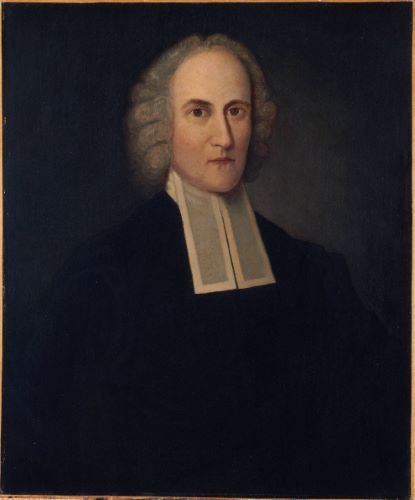
Revivalism arose as a protest against inherited, formal, respectable Christianity that seemed to possess correct structures without spiritual fire. From the eighteenth century forward, evangelical awakenings in Britain and North America insisted that Christian identity could not be reduced to baptism, parish membership, doctrinal inheritance, or moral respectability. One had to be converted. One had to know conviction of sin, receive grace, experience new birth, and live a changed life. This was a direct challenge to the older assumption that Christian belonging could be carried primarily by church, family, nation, sacrament, or confession. Revival preaching tore through that comfort. It asked whether the baptized were actually regenerate, whether the churchgoer had truly repented, whether inherited religion had become a mask for spiritual death. In that sense, revivalism was one of Christianity’s great rebellions against staged faith. It tried to strip performance away and force the soul into crisis before God.
Yet revivalism also made experience itself into a new kind of religious stage. The conversion narrative became central: conviction, struggle, surrender, assurance, testimony, and transformed conduct formed a recognizable pattern by which sincerity could be narrated and judged. George Whitefield’s dramatic preaching, John Wesley’s disciplined Methodism, Jonathan Edwards’s analysis of religious affections, and later Charles Finney’s “new measures” all reveal a Christianity increasingly focused on awakening the individual heart through intensified communication. The sermon was no longer merely instruction. It became an event. The preacher aimed to pierce, unsettle, move, expose, and persuade. Tears, trembling, groans, bodily collapse, cries for mercy, public testimony, and visible response became signs that the Word had moved beyond habit into experience. Revivalism did not invent Christian emotion, of course. Earlier Christianity had always wept, sung, feared, rejoiced, and trembled. But revivalism made emotional crisis a public marker of spiritual authenticity. It also made the self into a narrated spiritual drama. The believer was expected to look inward, identify sin, describe conviction, remember the moment of surrender, and testify to change in language the community could recognize. This could be profoundly liberating, especially for people trapped inside cold formalism or inherited religion without inward life. But it also created recognizable scripts of sincerity. The more conversion had a public shape, the easier it became to measure faith by whether a person could tell the right story, display the right emotion, or identify the right decisive moment. Revivalism sought the heart, but it also taught the heart how to present itself.
This created a powerful but dangerous shift. If medieval Christianity risked turning grace into ritual mechanism, and Reformation Christianity risked turning faith into correct confession, revivalism risked turning sincerity into felt intensity. The heart had to be moved, but how could one know whether movement was grace, suggestion, fear, crowd pressure, musical atmosphere, or emotional contagion? Edwards wrestled with precisely this problem in Religious Affections, insisting that intense feeling alone could not prove genuine conversion. True religion, for Edwards, had to bear fruit in holy love, humility, and transformed life. That warning would echo across later evangelical history, often ignored when revival techniques became more efficient. The altar call, anxious bench, inquiry room, testimony meeting, revival hymn, and repeated invitation gave religious experience a shape that could be spiritually serious, but also reproducible. A person could learn how conversion was supposed to feel, sound, and appear. The performance of brokenness could begin to substitute for repentance itself.
Camp meetings and frontier revivals intensified the public character of experiential faith. In the American context especially, revivalism flourished in settings where older parish structures were weak, populations were mobile, and denominational competition was lively. The Second Great Awakening democratized Christian expression, empowering Methodists, Baptists, and other groups that preached to ordinary people outside elite ecclesiastical control. Outdoor gatherings, extended meetings, popular hymnody, lay exhortation, and emotionally direct preaching created a religious culture that was mobile, persuasive, and dramatically accessible. This gave many people a faith that felt immediate rather than inherited, personal rather than imposed, and urgent rather than ceremonial. It also allowed women, the poor, enslaved and free Black Christians, frontier families, and lay exhorters to participate in religious life in ways that older establishments often restricted, though these opportunities remained uneven and shaped by the prejudices of their time. Revival spaces could disrupt hierarchy, but they could also create new forms of crowd discipline and emotional expectation. The mass gathering itself became a theater of decision, where the sight of others weeping, praying, collapsing, rising, confessing, or going forward intensified the pressure on each individual soul. But it also trained Christianity to operate through event, atmosphere, and response. The revival meeting became a religious technology: gather the crowd, heighten the emotion, press the decision, mark the convert, repeat the testimony. The gospel became inseparable from a staged moment of crisis. That moment could be real, life-altering, and morally serious. It could also become a repeatable method, a way of producing visible religious results that could be counted, reported, celebrated, and used to prove that God was moving.
The revivalist inheritance shaped modern evangelicalism and Pentecostalism in lasting ways. Holiness movements stressed sanctification and victorious Christian living. Pentecostalism placed intense emphasis on Spirit baptism, healing, tongues, prophecy, bodily expression, and divine immediacy. Evangelical churches built identities around personal testimony, Bible preaching, missionary zeal, conversion, and the demand for a conscious relationship with Christ. These traditions often recovered dimensions of Christianity that institutional religion had dulled: expectation, urgency, prayer, embodied worship, lay participation, and the conviction that faith must be personally real. Yet the same traditions could also produce new anxieties. If authentic Christianity is measured by experience, what happens when experience fades? If worship is judged by intensity, what happens when ordinary faithfulness feels quiet? If testimony becomes the proof of belonging, what happens to those whose spiritual lives are slow, wounded, uncertain, or undramatic? Experiential Christianity can rescue faith from dead formalism, but it can also make the believer perform aliveness.
Revivalism occupies an ambiguous but crucial place in the history of staged faith. It attacked nominal Christianity with moral force, insisting that no one should hide behind church membership, inherited doctrine, sacramental participation, or cultural respectability. It recovered the early Christian insistence that faith must transform the person. But it also shifted the center of Christian authenticity toward visible emotional experience, creating patterns that modern entertainment worship would later amplify with lights, music, pacing, branding, and atmosphere. Revivalism did not make Christianity superficial. At its best, it was a fire against superficiality. But fire can become spectacle when the production of heat becomes the goal. The revivalist question remains devastating: have you truly been changed? Its danger is equally clear: have you learned how to look changed in the moment everyone is watching?
Cultural Christianity: Identity Without Discipleship

Cultural Christianity emerged wherever Christian identity became easier to inherit than to practice. It is not simply hypocrisy, nor is it reducible to unbelief hidden beneath religious language. It is a social condition in which Christianity functions as background identity, family memory, national symbol, moral vocabulary, ethnic inheritance, holiday custom, political marker, or emotional nostalgia without necessarily demanding repentance, theological understanding, communal accountability, or costly discipleship. This condition did not appear suddenly in the modern world. Its roots stretch back through imperial Christianity, medieval parish life, confessional states, and national churches, wherever Christian belonging became embedded in social order. But in the modern period, especially as secularization weakened thick religious practice while leaving cultural symbols behind, cultural Christianity became increasingly visible. People could identify as Christian because their parents were Christian, their nation was imagined as Christian, their holidays were Christian, their morality was vaguely Christian, or their politics used Christian language. The name remained, but the burden of following could grow light.
This form of Christianity preserved many external signs while loosening their inner demands. Christmas could survive as family warmth, gift exchange, seasonal beauty, and public festivity even when the incarnation no longer disturbed anyone’s understanding of power, poverty, or divine humility. Easter could become springtime, clothing, candy, and attendance without serious confrontation with resurrection, judgment, or new creation. Baptism could become family ceremony. Church membership could become respectability. A cross could become jewelry, decoration, logo, campaign prop, or tribal signal. Prayer could become ceremonial language at civic events rather than disciplined dependence on God. Moral concern could narrow into public postures about other people’s sins while avoiding the Sermon on the Mount’s demands of mercy, forgiveness, enemy-love, secrecy in piety, and care for the poor. Even the language of “values” could detach Christianity from the person of Christ, turning a radical summons into a loose bundle of respectable preferences. Cultural Christianity does not necessarily deny doctrine. It often avoids doctrine by reducing Christianity to mood, memory, manners, and identity. It allows people to feel connected to the tradition without being seriously formed by it. The result is not always open unbelief, but something subtler: Christianity as atmosphere, Christianity as seasonal warmth, Christianity as inherited belonging, Christianity as moral accent. It keeps the furniture of faith while forgetting why the room was built.
National identity intensified this problem. In Europe and the United States, Christianity often fused with ideas of peoplehood, civilization, empire, race, law, and public virtue. Churches blessed monarchies, republics, armies, colonial projects, national myths, and civic ceremonies, sometimes resisting injustice but often sanctifying it. American civil religion, for example, has long drawn on biblical language, providential themes, public prayer, sacred sacrifice, and national mission while remaining distinct from historic Christian confession. This fusion can produce a powerful moral vocabulary for common life, but it also tempts Christianity to become chaplain to the nation rather than witness against its idols. When the flag and the cross are made to tell the same story, discipleship is easily replaced by belonging. The Christian becomes a good citizen, a defender of tradition, a guardian of “values,” or a participant in national destiny. But the gospel’s more dangerous questions remain: who is being excluded, who is being crushed, who is being forgiven, who is being fed, who is being protected, and who is being asked to carry the cross?
Modern consumer culture gave cultural Christianity still another form. Religion became one identity option among many, something selected, customized, branded, and consumed according to preference. Churches learned to present themselves through programs, aesthetics, family services, inspirational messages, lifestyle appeal, and marketable belonging. This was not always cynical. Congregations had to communicate in a competitive, mobile, media-saturated society where inherited parish loyalty had weakened. But the consumer model changed expectations. The worshipper could become customer, the church could become vendor, and discipleship could be quietly replaced by satisfaction. The hard edges of Christianity, forgiveness of enemies, economic generosity, sexual discipline, truth-telling, humility, repentance, solidarity with the suffering, and submission to a community, sat uneasily beside a culture trained to ask whether religious participation met personal needs. Cultural Christianity thrives in that environment because it lets people retain Christian identity without surrendering consumer sovereignty. Faith becomes useful, comforting, tasteful, or affirming, but not necessarily commanding.
Theological ignorance is one of cultural Christianity’s clearest symptoms, but it is not the deepest disease. Many people can lack formal theological education and still live lives of profound faith. The more serious problem is when ignorance becomes comfortable because the label itself does enough social work. If “Christian” primarily means decent, patriotic, traditional, respectable, spiritual, anti-secular, family-oriented, or not-something-else, then the actual content of Christianity becomes secondary. Christian Smith and Melinda Lundquist Denton’s description of “moralistic therapeutic deism” captured one version of this reduction among American youth: religion as being good, feeling better, and trusting a distant God who helps when needed. That pattern is not limited to youth, nor is it limited to America. It reflects a broader modern tendency to turn Christianity into moral uplift and emotional support without the thick claims of incarnation, cross, resurrection, church, sacrament, repentance, justice, and holiness. The issue is not that every believer must become a theologian or master doctrinal history. The issue is that Christianity cannot remain Christianity if its central claims become optional background decoration. A person may know little technical theology and still be deeply shaped by mercy, prayer, humility, and costly love. But when people neither know the faith nor practice its demands, the label begins to float free from its substance. Cultural Christianity does not always attack the faith. Often, more dangerously, it politely empties it. It smiles at the vocabulary, keeps the holidays, honors the family Bible, defends the symbols, and quietly removes the cross from the center.
Cultural Christianity represents one of the most successful forms of staged belief because it rarely looks like performance to those inside it. It feels normal. It feels inherited. It feels like family, nation, childhood, decency, or tradition. That is precisely why it is so powerful. Medieval ritual mechanism at least knew it was performing rites. Reformation confessionalism knew it was defending doctrine. Revivalism knew it was seeking experience. Cultural Christianity often mistakes identity for faith without noticing the substitution. It can preserve memory, beauty, belonging, and moral language, and those things are not worthless. But when identity replaces discipleship, Christianity becomes a costume tailored by culture. The cross becomes ornament. The church becomes heritage. The gospel becomes atmosphere. What remains may still call itself Christian, and in some residual sense it may be. But it no longer bears the weight of the early Christian claim that to follow Christ is to be made strange to the world’s ordinary arrangements of power, pride, wealth, violence, and self-protection.
Entertainment Worship: Concert, Atmosphere, and the Production of Feeling

Entertainment worship is not the beginning of Christian performance, but it is one of its most revealing modern forms. Christianity has always used sound, space, gesture, music, symbol, and emotion to form believers. Ancient liturgy, medieval chant, Reformation hymnody, revival preaching, Black church worship, Pentecostal praise, and Catholic procession all show that worship has never been cold information delivery. The problem is not music, emotion, technology, beauty, volume, lighting, or bodily response. The problem is the modern fusion of worship with entertainment design, consumer expectation, and affective production. In many contemporary settings, especially within megachurch and evangelical worship culture, the service can resemble a concert, motivational event, brand experience, and therapeutic gathering at once. The worshipper enters an environment designed to move the emotions before the sermon has even begun. Sound, lighting, pacing, screens, stagecraft, repetition, and atmosphere become tools for producing the feeling of encounter.
This shift did not emerge from nowhere. Revivalism had already made religious experience central to authenticity, teaching believers to expect conviction, surrender, assurance, visible response, and emotional intensity. Modern worship culture inherited that expectation and amplified it through technologies of production. The altar call became the worship set. The anxious bench became the dimly lit invitation. The revival hymn became the bridge repeated until the room swells. The preacher’s emotional crescendo became the carefully paced service arc. Contemporary worship leaders often function not merely as musicians but as directors of collective feeling, guiding the congregation through expectation, release, intimacy, triumph, surrender, and reassurance. The structure is familiar enough to be felt before it is analyzed: the opening song gathers energy, the slower song invites vulnerability, the repeated chorus creates surrender, the spoken interlude frames the emotion, and the final swell seals the encounter. This can be spiritually powerful. Music can soften resistance, give words to grief, unite strangers in praise, and open emotional honesty before God. Yet the same tools can blur the line between worship and emotional management. A room can be engineered to feel holy. A chord progression can cue tenderness. Darkness can suggest intimacy. Volume can create the sensation of being carried by something larger than the self. Repetition can induce absorption. None of these things is automatically manipulative, and none proves insincerity. But they do mean that emotional response is no longer spontaneous in any simple sense. It is cultivated by form. That does not mean God is absent. It means the feeling itself cannot be trusted as proof.
The architecture of contemporary worship often reinforces this ambiguity. Traditional churches placed attention on altar, pulpit, table, font, icon, choir, or gathered congregation in ways that varied by tradition. Entertainment worship frequently places attention on the stage. The stage carries the band, the worship leader, the preacher, the screen, the lighting design, and the visual focus of the room. Congregational singing may still be present, but the sound mix can make the platform dominant. The people sing with the band rather than as the primary body of song. This alters the experience of participation. Worship becomes something simultaneously joined and watched. The congregation is invited into intensity, but that intensity is often modeled, paced, and amplified from the platform. The worship leader’s closed eyes, raised hand, cracked voice, spontaneous prayer, and emotional expression become cues for the room. Again, this is not necessarily insincere. Many worship leaders are deeply devout. But the structure itself rewards visible sincerity. The platform turns devotion into a form that must be legible at scale.
Consumer Christianity deepens the problem because churches increasingly operate in a competitive religious marketplace. People choose congregations not only by doctrine, sacrament, discipline, or community obligation, but by experience: music quality, children’s programming, parking, aesthetics, preaching style, emotional tone, friendliness, livestream quality, and personal fit. Churches respond by becoming more professional, more polished, more branded, and more attentive to atmosphere. This may help people enter who would otherwise remain distant from church life. It can also make worship dependent on satisfaction. A service is judged by whether it “fed” the worshipper, whether the music was moving, whether the sermon was engaging, whether the room felt alive, whether the production was excellent, whether the experience justified return. Discipleship has never been identical with satisfaction. The church is not a venue, the sermon is not a product demo, and worship is not meant merely to deliver spiritual affect on demand. When consumer expectation governs worship, Christianity becomes vulnerable to one of modernity’s most seductive substitutions: the believer becomes an audience member whose primary question is whether the experience worked for them.
Celebrity pastor and worship celebrity culture makes staged faith still more visible. The modern church platform can produce religious figures whose authority depends not only on teaching, character, or pastoral care, but on charisma, image, reach, aesthetic, and emotional identification. Worship songs circulate as branded products; sermons become clips; church leaders become public personalities; congregations become audiences that extend through livestreams, podcasts, conferences, and social media. This can spread teaching and song widely, and it can genuinely encourage people. It can also detach religious influence from accountability. The person on stage becomes the symbolic carrier of spiritual vitality. Their confidence, vulnerability, wardrobe, voice, story, and platform presence become part of the message. Christianity has always had public teachers and revered leaders, but celebrity culture intensifies projection. It trains believers to confuse visibility with authority, giftedness with holiness, and emotional resonance with truth. It also creates an economy in which the visible leader must keep producing religious affect, public intimacy, and spiritual certainty for people who know them primarily as an image. The pastor’s pain becomes content. The worship leader’s intimacy with God becomes a model to be consumed. The church’s success becomes measurable through attendance, views, streams, followers, conference invitations, book sales, and brand recognition. This does not mean all prominent leaders are frauds. It means the system rewards performance even when the performer begins with sincerity. In the worst cases, the stage protects the performer while exposing the congregation to manipulation, scandal, or spiritual dependency. When charisma outruns accountability, staged faith becomes not only shallow but dangerous.
Entertainment worship reveals the latest version of an old Christian danger: the form remains, the feeling intensifies, but transformation may thin out. A worship set can produce tears without repentance, uplift without obedience, intimacy without community, surrender without sacrifice, and passion without justice. The danger is not that people feel too much. The danger is that feeling becomes the measure of whether worship happened. Historic Christianity judged worship by deeper fruits: love of God, love of neighbor, forgiveness, humility, truthfulness, care for the poor, endurance in suffering, reconciliation, moral courage, and participation in the body of Christ. Contemporary worship can still serve those ends. At its best, it gives modern people language for longing, grief, praise, and dependence in a world starved for transcendence. At its worst, it becomes a spiritual concert where the presence of God is simulated by atmosphere and the cross is softened into mood. The question is not whether the lights are too bright or the music too loud. The question is whether the worshipper leaves entertained, or formed.
Digital Christianity and the Performance of Faith Online
Digital Christianity did not create performed belief, but it has accelerated it with extraordinary force. Social media, livestream worship, podcasts, YouTube apologetics, TikTok sermons, Instagram devotionals, online prayer groups, Christian influencers, and algorithmic outrage have moved Christian identity into a space where visibility is not incidental but structural. Faith online is constantly displayed, captioned, shared, branded, debated, clipped, monetized, and measured. This does not mean digital religion is fake by nature. Online spaces can carry prayer, teaching, pastoral care, community, accessibility, and encouragement to people who are isolated, disabled, geographically distant, wounded by churches, or searching in private. Digital media can preserve sermons, widen theological conversation, connect dispersed believers, and expose abuses that institutions once hid. But the medium has its own discipline. It rewards speed, clarity, emotional charge, certainty, spectacle, outrage, vulnerability, and identity performance. Christianity enters the platform, but the platform also trains Christianity.
The online environment turns religious identity into content. A believer can post Bible verses, prayer requests, worship clips, theological hot takes, deconstruction stories, conversion testimonies, moral denunciations, political signals, church aesthetics, family devotionals, and public acts of compassion before an invisible audience. Some of this may be sincere. Some of it may be pastoral. Some of it may even be courageous. Yet the platform always asks the same hidden question: will this be seen, liked, shared, defended, attacked, or rewarded? That question changes the performance of faith even when no one consciously intends manipulation. Jesus’ warning in Matthew 6 against practicing righteousness “before others in order to be seen by them” becomes painfully modern. The public square is no longer only the synagogue, street corner, or temple court. It is the feed. Almsgiving becomes a photo opportunity. Prayer becomes captioned intimacy. Moral conviction becomes a brand lane. Suffering becomes testimony content. Even humility can be staged as an aesthetic. The danger is not simply hypocrisy. It is formation by visibility.
Digital platforms also intensify conflict as a form of religious belonging. Online Christianity often rewards the sharpest denunciation, the most confident thread, the quickest heresy accusation, the most viral rebuke, or the most emotionally satisfying takedown. Apologetics can become combat performance. Prophecy can become speculation economy. Discernment can become suspicion as lifestyle. Progressive, conservative, evangelical, Catholic, Orthodox, mainline, charismatic, exvangelical, and deconstructing communities all develop recognizable online scripts, heroes, villains, vocabulary, and visual cues. The result is not merely disagreement. It is identity formation through opposition. To be a certain kind of Christian online often means knowing whom to mock, whom to fear, whom to quote, whom to cancel, and which wounds to display as proof of credibility. The ancient Christian question, “How shall we live faithfully?” is easily displaced by the platform question, “Which side are you visibly on?” In that exchange, faith becomes legible as alignment, and alignment becomes a substitute for discipleship.
The influencer economy makes this especially dangerous because it detaches spiritual authority from embodied accountability. Pastors, worship leaders, theologians, apologists, prophets, activists, and lifestyle personalities can gather large audiences far beyond the communities that know their actual lives. Their authority may depend less on tested character than on charisma, aesthetics, confidence, relatability, pain narrative, rhetorical skill, or algorithmic reach. A person can become spiritually influential without being pastorally accountable to the people they influence. Audiences can form parasocial attachments, mistaking familiarity with posts or videos for genuine knowledge of a teacher’s life. This reshapes Christian leadership. The platform rewards the leader who is always available, always producing, always responding, always certain, always emotionally legible. But Christian formation has historically required slowness, presence, correction, patience, ordinary service, and a community that can see what the stage hides. Digital authority can spread truth. It can also spread performance faster than character can catch up.
Digital Christianity represents a new stage in the long history of performed belief. Earlier ages staged faith through sacrament, creed, pulpit, revival meeting, national identity, or entertainment worship. The digital age stages faith through visibility itself. The post, clip, livestream, testimony, profile, brand, and controversy become sites where Christianity is displayed and consumed. The result is not all corruption. Online spaces have given voice to the silenced, exposed abuse, democratized theological access, and helped many people find language for faith, doubt, grief, and repair. But they also make it easier than ever to perform Christianity without being formed by it. A person can defend orthodoxy online while neglecting love, post compassion while avoiding costly mercy, denounce hypocrisy while cultivating a platform, or narrate vulnerability while curating the self. The old question remains, now sharpened by the feed: does the visible performance of faith bear the hidden weight of repentance, humility, truth, service, and love? Or has Christianity become content wearing the language of witness?
The Persistence of Genuine Faith: Resistance within the Performance
The following video from FRONTLINE PBS discusses the rise of early Christianity:
The history of Christianity cannot be reduced to decline from sincerity into performance. That would be too simple, and worse, it would be false. At every stage in which Christian faith became entangled with culture, empire, ritual mechanism, doctrinal policing, nationalism, consumerism, or spectacle, believers also emerged who resisted the reduction. Some fled the prestige of imperial Christianity into deserts and monasteries. Some reformed corrupt institutions from within. Some challenged wealth, slavery, violence, racism, and nationalism in the name of the gospel. Some recovered prayer, poverty, service, mystical union, community, and solidarity with the suffering when official Christianity had grown comfortable. This resistance matters because it shows that the problem of staged faith has never exhausted the Christian tradition. Christianity has repeatedly generated its own critique. The same faith that can be performed as status, identity, doctrine, or spectacle can also produce witnesses who expose the performance and return attention to repentance, mercy, humility, and costly love.
Monasticism was one of the earliest and most influential forms of this resistance. As Christianity became publicly powerful after Constantine, the desert fathers and mothers sought a different kind of seriousness. They did not always reject the church, but they did reject the ease that came with Christian respectability. Antony, Pachomius, Syncletica, Macrina, Benedict, and later monastic traditions treated prayer, poverty, celibacy, discipline, labor, obedience, silence, and spiritual combat as ways of refusing a Christianity softened by social advantage. Monasticism could itself become institutionalized, wealthy, and performative, as all human forms can. But at its core, it preserved a radical memory: faith must shape the body, the day, the appetite, the tongue, the imagination, and the use of possessions. The monk or nun became a living protest against Christianity as mere affiliation. Their lives asked whether a believer could claim to follow a crucified Lord while remaining governed by comfort, ambition, vanity, and accumulation.
Reform movements carried that protest into later centuries. Francis of Assisi exposed the scandal of wealth in a church that preached poverty. Medieval mystics insisted that God could not be possessed by office, ritual, or system alone, but had to be encountered through love, surrender, and interior transformation. The Anabaptists challenged the fusion of church and state by insisting that baptism, discipleship, nonviolence, and community required adult commitment rather than inherited civic identity. Quakers rejected empty ceremony and clerical hierarchy in favor of inward light, simplicity, peace, and truthful speech. These movements differed profoundly in theology and practice, and none was free from its own failures. Yet each represents a recurring Christian pattern: when the public forms of faith become too comfortable, some believers insist that Christianity must again become strange. They refuse the assumption that the church’s survival depends on proximity to power, prestige, or inherited custom. They remind the tradition that discipleship is not simply belonging to the right institution, but living under the judgment and mercy of Christ.
Modern Christian resistance has often been most powerful where the cost of faith became inseparable from the struggle for human dignity. The Black church under slavery, segregation, and racial terror carried a Christianity that could not be reduced to cultural respectability because it was forged under oppression and hope. Enslaved and oppressed Christians heard in Exodus, the prophets, the cross, and resurrection a gospel that judged the Christianity of slaveholders and segregationists from within the same scriptures those oppressors claimed. Howard Thurman, Martin Luther King Jr., Fannie Lou Hamer, James Cone, and many unnamed pastors, mothers, singers, organizers, and martyrs bore witness to a faith that exposed staged Christianity with brutal clarity. A religion that praised Jesus while defending racial domination revealed itself as performance without conversion. The contrast was not abstract. It was visible in segregated sanctuaries, lynching trees, white Christian respectability, biblical defenses of slavery, and prayers uttered by people whose lives were threatened by those who claimed the same Lord. Similarly, figures such as Dietrich Bonhoeffer and Dorothy Day challenged comfortable Christian identity by demanding costly discipleship, resistance to violence, solidarity with the poor, and refusal of the state’s idolatrous claims. Bonhoeffer’s critique of cheap grace struck directly at Christianity as cultural possession without obedience, while Day’s Catholic Worker movement insisted that faith had to take material form in hospitality, poverty, labor, peace, and life among the marginalized. Their witness did not make Christianity pure, but it made falseness harder to hide. It showed that genuine faith survives not by escaping history, but by entering history at the point where comfort, power, and self-protection are most forcefully challenged.
The persistence of genuine faith does not solve the problem of performance, but it prevents despair. Christianity’s history is not a clean line from authenticity to corruption. It is a long argument between the stage and the cross. The same sacraments can become mechanism or mercy. The same doctrine can become tribal weapon or truth confessed in humility. The same worship can become entertainment or formation. The same public faith can become nationalism or justice. The same digital platform can inflate ego or expose abuse. What distinguishes genuine faith is not the absence of form, because Christianity cannot exist without form. It is whether the form remains answerable to the life of Christ. Wherever Christians return to repentance, enemy-love, care for the poor, truth without domination, humility without display, worship without manipulation, and courage without cruelty, the performance is interrupted. The stage does not disappear. But someone turns again toward the cross, and the old script loses its power.
Conclusion: When Ritual Remains but Transformation Leaves
Christianity has never existed without form. It has always needed water, bread, wine, words, bodies, songs, scriptures, gestures, calendars, teachers, communities, and public acts through which faith becomes visible and durable. The question is not whether Christianity should be performed. A disembodied Christianity would not be Christianity at all. The deeper question is whether its performances still carry the burden of transformation. Baptism, Eucharist, preaching, confession, doctrine, worship, revival, testimony, service, and public witness can all become vessels of grace, memory, truth, and conversion. They can also become religious theater. The same act can either draw a person deeper into repentance, mercy, courage, and love, or allow that person to appear faithful while remaining unchanged. This tension has followed Christianity from its beginning, because every embodied practice can become a mask when the body performs what the heart refuses.
The history traced here is not a simple fall from a pure early church into modern falseness. The first Christian communities already struggled with hypocrisy, inequality, pride, and ritual contradiction. Paul’s rebuke of the Corinthian meal shows that staged faith was not a late invention. Yet the scale and form of the problem changed as Christianity moved through history. Hellenistic translation made faith intellectually portable, but also easier to treat as concept. Imperial favor gave Christianity public power, but also made belonging socially advantageous. Doctrine guarded truth, but could become verbal performance. Medieval sacramental culture filled the world with sacred meaning, but could turn grace into mechanism. The Reformation attacked empty ritual, but produced confessional staging of its own. Enlightenment privatization made conscience central, but could reduce faith to inward opinion. Revivalism recovered urgency, but made emotion a test of authenticity. Cultural Christianity preserved symbols while thinning discipleship. Entertainment worship and digital Christianity then intensified the problem by turning feeling, visibility, and platform identity into marks of spiritual life.
The danger, then, is not ritual, doctrine, emotion, beauty, tradition, technology, or public identity by themselves. The danger is detachment. Ritual becomes dangerous when it no longer demands reconciliation. Doctrine becomes dangerous when it no longer forms humility. Emotion becomes dangerous when it no longer bears fruit in obedience. Worship becomes dangerous when it produces intensity without sacrifice. Public faith becomes dangerous when it brands the self rather than witnesses to Christ. Cultural Christianity becomes dangerous when it preserves the name while evacuating the cross. The problem is not that Christians kneel, sing, confess, preach, post, process, study, or gather. The problem is when those acts no longer answer to the one whose life they claim to display. When Christianity becomes performance without repentance, spectacle without service, doctrine without love, identity without discipleship, and emotion without transformation, it has not preserved the faith. It has staged its remains.
And yet Christianity’s own history keeps interrupting that performance. The tradition repeatedly produces witnesses who return faith to costly practice: martyrs, monks, reformers, mystics, abolitionists, peacemakers, servants of the poor, truth-tellers, and ordinary believers whose lives are hidden from every stage. Their witness does not abolish ritual. It redeems it by forcing form back into alignment with life. The Christian answer to staged faith is not formless sincerity, because sincerity without discipline quickly becomes another performance of the self. The answer is embodied faith made accountable to Christ: prayer that teaches mercy, worship that forms justice, doctrine that produces humility, sacraments that make community, public witness that protects the vulnerable, and emotion that matures into love. When transformation leaves, ritual remains as costume. But when transformation returns, the same ritual becomes dangerous again. It ceases to be theater and becomes discipleship.
Bibliography
Affiliate disclosure: Amazon links on this site are paid links. As an Amazon Associate I earn from qualifying purchases.
- Acts of the Apostles. In The New Oxford Annotated Bible: New Revised Standard Version with the Apocrypha. 5th ed. Edited by Michael D. Coogan, Marc Z. Brettler, Carol A. Newsom, and Pheme Perkins. New York: Oxford University Press, 2018.
- Anselm of Canterbury. Cur Deus Homo. In Anselm of Canterbury: The Major Works, edited by Brian Davies and G. R. Evans, 260–356. Oxford: Oxford University Press, 1998.
- Aquinas, Thomas. Summa Theologica. Translated by Fathers of the English Dominican Province. New York: Benziger Bros., 1947.
- Athanasius of Alexandria. The Life of Antony. Translated by Robert C. Gregg. New York: Paulist Press, 1980.
- —-. On the Incarnation. Translated and edited by John Behr. Yonkers, NY: St Vladimir’s Seminary Press, 2011.
- Athenagoras. Embassy for the Christians and The Resurrection of the Dead. Translated by Joseph Hugh Crehan. Ancient Christian Writers 23. New York: Newman Press, 1956.
- Augsburg Confession. In The Book of Concord: The Confessions of the Evangelical Lutheran Church. Edited by Robert Kolb and Timothy J. Wengert. Minneapolis: Fortress Press, 2000.
- Augustine of Hippo. The City of God against the Pagans. Edited and translated by R. W. Dyson. Cambridge: Cambridge University Press, 1998.
- —-. The Trinity. Translated by Edmund Hill. Hyde Park, NY: New City Press, 1991.
- Ayres, Lewis. Nicaea and Its Legacy: An Approach to Fourth-Century Trinitarian Theology. Oxford: Oxford University Press, 2004.
- Beaty, Katelyn. Celebrities for Jesus: How Personas, Platforms, and Profits Are Hurting the Church. Grand Rapids, MI: Brazos Press, 2022.
- Bebbington, David W. Evangelicalism in Modern Britain: A History from the 1730s to the 1980s. London: Routledge, 1989.
- Bede. Ecclesiastical History of the English People. Translated by Leo Sherley-Price. Revised by R. E. Latham. London: Penguin Books, 1990.
- Bell, Catherine. Ritual Theory, Ritual Practice. New York: Oxford University Press, 1992.
- Bellah, Robert N. “Civil Religion in America.” Daedalus 96:1 (1967), 1–21.
- Benedict of Nursia. The Rule of Saint Benedict. Edited and translated by Timothy Fry. Collegeville, MN: Liturgical Press, 1981.
- Bonhoeffer, Dietrich. Discipleship. Dietrich Bonhoeffer Works, Vol. 4. Edited by Geffrey B. Kelly and John D. Godsey. Translated by Barbara Green and Reinhard Krauss. Minneapolis: Fortress Press, 2001.
- The Book of Common Prayer: The Texts of 1549, 1559, and 1662. Edited by Brian Cummings. Oxford: Oxford University Press, 2011.
- Brown, Callum G. The Death of Christian Britain: Understanding Secularisation, 1800-2000. London: Routledge, 2001.
- Brown, Peter. The Body and Society: Men, Women, and Sexual Renunciation in Early Christianity. New York: Columbia University Press, 1988.
- —-. The Cult of the Saints: Its Rise and Function in Latin Christianity. Chicago: University of Chicago Press, 1981.
- —-. Power and Persuasion in Late Antiquity: Towards a Christian Empire. Madison: University of Wisconsin Press, 1992.
- —-. The Rise of Western Christendom: Triumph and Diversity, A.D. 200–1000. 10th anniversary rev. ed. Malden, MA: Wiley-Blackwell, 2013.
- Bynum, Caroline Walker. Christian Materiality: An Essay on Religion in Late Medieval Europe. New York: Zone Books, 2011.
- —-. Wonderful Blood: Theology and Practice in Late Medieval Northern Germany and Beyond. Philadelphia: University of Pennsylvania Press, 2007.
- Calvin, John. Institutes of the Christian Religion. Translated by Henry Beveridge. Peabody, MA: Hendrickson Publishers, 2008.
- Cameron, Averil. Christianity and the Rhetoric of Empire: The Development of Christian Discourse. Berkeley: University of California Press, 1991.
- Campbell, Heidi A. Digital Religion: Understanding Religious Practice in New Media Worlds. London: Routledge, 2012.
- Chadwick, Henry. The Early Church. Rev. ed. London: Penguin, 1993.
- Chadwick, Owen. The Secularization of the European Mind in the Nineteenth Century. Cambridge: Cambridge University Press, 1975.
- The Chalcedonian Creed. In Creeds and Confessions of Faith in the Christian Tradition. Vol. 1. Edited by Jaroslav Pelikan and Valerie Hotchkiss. New Haven, CT: Yale University Press, 2003.
- Cheong, Pauline Hope, Peter Fischer-Nielsen, Stefan Gelfgren, and Charles Ess, eds. Digital Religion, Social Media and Culture: Perspectives, Practices and Futures. New York: Peter Lang, 2012.
- Clement of Alexandria. The Stromata, or Miscellanies. In The Ante-Nicene Fathers. Vol. 2. Edited by Alexander Roberts and James Donaldson. Buffalo, NY: Christian Literature Publishing, 1885.
- Cone, James H. The Cross and the Lynching Tree. Maryknoll, NY: Orbis Books, 2011.
- Council of Trent. Decrees of the Council of Trent. Translated by H. J. Schroeder. St. Louis: B. Herder, 1941.
- Davie, Grace. Religion in Britain: A Persistent Paradox. 2nd ed. Malden, MA: Wiley-Blackwell, 2014.
- Day, Dorothy. The Long Loneliness: The Autobiography of Dorothy Day. New York: Harper & Row, 1952.
- The Didache. In The Apostolic Fathers. Vol. 1. Edited and translated by Bart D. Ehrman. Loeb Classical Library. Cambridge, MA: Harvard University Press, 2003.
- Drake, H. A. Constantine and the Bishops: The Politics of Intolerance. Baltimore: Johns Hopkins University Press, 2000.
- Duffy, Eamon. The Stripping of the Altars: Traditional Religion in England, 1400–1580. New Haven: Yale University Press, 1992.
- Edwards, Jonathan. A Treatise Concerning Religious Affections. Edited by John E. Smith. New Haven, CT: Yale University Press, 1959.
- Eire, Carlos M. N. Reformations: The Early Modern World, 1450–1650. New Haven, CT: Yale University Press, 2016.
- Eusebius of Caesarea. Ecclesiastical History. Translated by Kirsopp Lake. Cambridge, MA: Harvard University Press, 1926.
- —-. Life of Constantine. Translated by Averil Cameron and Stuart G. Hall. Oxford: Clarendon Press, 1999.
- Finney, Charles G. Lectures on Revivals of Religion. Cambridge, MA: Belknap Press of Harvard University Press, 1960.
- Flint, Valerie I. J. The Rise of Magic in Early Medieval Europe. Princeton, NJ: Princeton University Press, 1991.
- The Fourth Lateran Council. In Decrees of the Ecumenical Councils. Vol. 1, Nicaea I to Lateran V. Edited by Norman P. Tanner. Washington, DC: Georgetown University Press, 1990.
- Francis and Clare: The Complete Works. Translated by Regis J. Armstrong and Ignatius C. Brady. Mahwah, NJ: Paulist Press, 1982.
- Fredriksen, Paula. When Christians Were Jews: The First Generation. New Haven, CT: Yale University Press, 2018.
- Gordon, T. David. Why Johnny Can’t Sing Hymns: How Pop Culture Rewrote the Hymnal. Phillipsburg, NJ: P&R Publishing, 2010.
- Gorski, Philip S. American Covenant: A History of Civil Religion from the Puritans to the Present. Princeton: Princeton University Press, 2017.
- Gregory, Brad S. The Unintended Reformation: How a Religious Revolution Secularized Society. Cambridge, MA: Belknap Press of Harvard University Press, 2012.
- Gregory the Great. The Letters of Gregory the Great. Translated by John R. C. Martyn. 3 vols. Toronto: Pontifical Institute of Mediaeval Studies, 2004.
- Gregory of Nazianzus. On God and Christ: The Five Theological Orations and Two Letters to Cledonius. Translated by Frederick Williams and Lionel Wickham. Crestwood, NY: St Vladimir’s Seminary Press, 2002.
- Hatch, Nathan O. The Democratization of American Christianity. New Haven, CT: Yale University Press, 1989.
- Hauerwas, Stanley, and William H. Willimon. Resident Aliens: Life in the Christian Colony. Nashville: Abingdon Press, 1989.
- Hume, David. Dialogues Concerning Natural Religion. Edited by Norman Kemp Smith. Indianapolis: Bobbs-Merrill, 1947.
- Hurtado, Larry W. Destroyer of the Gods: Early Christian Distinctiveness in the Roman World. Waco, TX: Baylor University Press, 2016.
- Hutchings, Tim. Creating Church Online: Ritual, Community and New Media. London: Routledge, 2017.
- Ignatius of Antioch. Letters. In The Apostolic Fathers. Vol. 1. Edited and translated by Bart D. Ehrman. Loeb Classical Library. Cambridge, MA: Harvard University Press, 2003.
- Ingalls, Monique M. Singing the Congregation: How Contemporary Worship Music Forms Evangelical Community. New York: Oxford University Press, 2018.
- Irenaeus of Lyons. Against Heresies. Translated and annotated by Dominic J. Unger. Ancient Christian Writers 55. New York: Paulist Press, 1992.
- James, William. The Varieties of Religious Experience: A Study in Human Nature. New York: Longmans, Green, 1902.
- Justin Martyr. The First and Second Apologies. Translated by Leslie William Barnard. Ancient Christian Writers 56. New York: Paulist Press, 1997.
- Kant, Immanuel. Religion within the Boundaries of Mere Reason. Edited and translated by Allen Wood and George di Giovanni. Cambridge: Cambridge University Press, 1998.
- Kelly, J. N. D. Early Christian Doctrines. Rev. ed. San Francisco: HarperSanFrancisco, 1978.
- King, Martin Luther Jr. A Testament of Hope: The Essential Writings and Speeches of Martin Luther King, Jr. Edited by James M. Washington. San Francisco: Harper & Row, 1986.
- Lambert, Frank. Inventing the “Great Awakening”. Princeton, NJ: Princeton University Press, 1999.
- Le Goff, Jacques. The Birth of Purgatory. Translated by Arthur Goldhammer. Chicago: University of Chicago Press, 1984.
- Lenski, Noel, ed. The Cambridge Companion to the Age of Constantine. Cambridge: Cambridge University Press, 2005.
- Lieu, Judith M. Christian Identity in the Jewish and Graeco-Roman World. Oxford: Oxford University Press, 2004.
- Locke, John. A Letter Concerning Toleration. Edited by James H. Tully. Indianapolis: Hackett Publishing, 1983.
- Luther, Martin. On the Babylonian Captivity of the Church. Translated by A. T. W. Steinhaeuser. Philadelphia: Fortress Press, 1959.
- —-. The Freedom of a Christian. In Luther’s Works. Vol. 31, Career of the Reformer I. Edited by Harold J. Grimm. Philadelphia: Fortress Press, 1957.
- MacCulloch, Diarmaid. The Reformation: A History. New York: Viking, 2003.
- MacMullen, Ramsay. Christianizing the Roman Empire (A.D. 100–400). New Haven: Yale University Press, 1984.
- Markus, R. A. The End of Ancient Christianity. Cambridge: Cambridge University Press, 1990.
- Marsden, George M. Jonathan Edwards: A Life. New Haven, CT: Yale University Press, 2003.
- Marti, Gerardo. Worship across the Racial Divide: Religious Music and the Multiracial Congregation. New York: Oxford University Press, 2011.
- The Martyrdom of Polycarp. In The Apostolic Fathers. Vol. 1. Edited and translated by Bart D. Ehrman. Loeb Classical Library. Cambridge, MA: Harvard University Press, 2003.
- McDannell, Colleen. Material Christianity: Religion and Popular Culture in America. New Haven: Yale University Press, 1995.
- McLeod, Hugh. Religion and the People of Western Europe, 1789–1989. 2nd ed. Oxford: Oxford University Press, 1997.
- Meeks, Wayne A. The First Urban Christians: The Social World of the Apostle Paul. 2nd ed. New Haven: Yale University Press, 2003.
- Miller, Donald E. Reinventing American Protestantism: Christianity in the New Millennium. Berkeley: University of California Press, 1997.
- The New Oxford Annotated Bible: New Revised Standard Version with the Apocrypha. 5th ed. Edited by Michael D. Coogan, Marc Z. Brettler, Carol A. Newsom, and Pheme Perkins. New York: Oxford University Press, 2018.
- The Nicene Creed. In Creeds and Confessions of Faith in the Christian Tradition. Vol. 1. Edited by Jaroslav Pelikan and Valerie Hotchkiss. New Haven, CT: Yale University Press, 2003.
- Noll, Mark A. America’s God: From Jonathan Edwards to Abraham Lincoln. Oxford: Oxford University Press, 2002.
- Origen. On First Principles. Translated by G. W. Butterworth. Gloucester, MA: Peter Smith, 1973.
- Paul. First Corinthians and Romans. In The New Oxford Annotated Bible: New Revised Standard Version with the Apocrypha. 5th ed. Edited by Michael D. Coogan, Marc Z. Brettler, Carol A. Newsom, and Pheme Perkins. New York: Oxford University Press, 2018.
- Pelikan, Jaroslav. The Christian Tradition: A History of the Development of Doctrine, Vol. 1: The Emergence of the Catholic Tradition (100–600). Chicago: University of Chicago Press, 1971.
- Phillips, Whitney. This Is Why We Can’t Have Nice Things: Mapping the Relationship between Online Trolling and Mainstream Culture. Cambridge, MA: MIT Press, 2015.
- Porter, Roy. The Enlightenment. 2nd ed. New York: Palgrave, 2001.
- Putnam, Robert D., and David E. Campbell. American Grace: How Religion Divides and Unites Us. New York: Simon & Schuster, 2010.
- Rappaport, Roy A. Ritual and Religion in the Making of Humanity. Cambridge: Cambridge University Press, 1999.
- Rebillard, Éric. Christians and Their Many Identities in Late Antiquity, North Africa, 200–450 CE. Ithaca, NY: Cornell University Press, 2012.
- Roof, Wade Clark. Spiritual Marketplace: Baby Boomers and the Remaking of American Religion. Princeton, NJ: Princeton University Press, 1999.
- Rubin, Miri. Corpus Christi: The Eucharist in Late Medieval Culture. Cambridge: Cambridge University Press, 1991.
- Salzman, Michele Renee. The Making of a Christian Aristocracy: Social and Religious Change in the Western Roman Empire. Cambridge, MA: Harvard University Press, 2002.
- Schleiermacher, Friedrich. On Religion: Speeches to Its Cultured Despisers. Translated by John Oman. London: Kegan Paul, Trench, Trubner, 1893.
- Smith, Christian, and Melinda Lundquist Denton. Soul Searching: The Religious and Spiritual Lives of American Teenagers. Oxford: Oxford University Press, 2005.
- Smith, James K. A. Desiring the Kingdom: Worship, Worldview, and Cultural Formation. Grand Rapids, MI: Baker Academic, 2009.
- Smith, Jonathan Z. To Take Place: Toward Theory in Ritual. Chicago: University of Chicago Press, 1987.
- Southern, R. W. Western Society and the Church in the Middle Ages. London: Penguin Books, 1990.
- Swanson, R. N. Religion and Devotion in Europe, c. 1215–c. 1515. Cambridge: Cambridge University Press, 1995.
- Taves, Ann. Fits, Trances, and Visions: Experiencing Religion and Explaining Experience from Wesley to James. Princeton, NJ: Princeton University Press, 1999.
- Taylor, Charles. A Secular Age. Cambridge, MA: Harvard University Press, 2007.
- Tertullian. Apology. Translated by T. R. Glover. Cambridge: Harvard University Press, 1931.
- The Theodosian Code and Novels, and the Sirmondian Constitutions. Translated by Clyde Pharr. Princeton, NJ: Princeton University Press, 1952.
- Thompson, Deanna A. The Virtual Body of Christ in a Suffering World. Nashville: Abingdon Press, 2016.
- Thurman, Howard. Jesus and the Disinherited. Boston: Beacon Press, 1976.
- Veyne, Paul. When Our World Became Christian, 312–394. Translated by Janet Lloyd. Cambridge: Polity Press, 2010.
- Wacker, Grant. Heaven Below: Early Pentecostals and American Culture. Cambridge, MA: Harvard University Press, 2001.
- Ward, W. R. Christianity under the Ancien Régime, 1648–1789. Cambridge: Cambridge University Press, 1999.
- Wesley, John. The Works of John Wesley.14 vols. Grand Rapids, MI: Zondervan Publishing House, 1958.
- The Westminster Confession of Faith. Glasgow: Free Presbyterian Publications, 2003.
- White, James F. Introduction to Christian Worship. 3rd ed. Nashville: Abingdon Press, 2001.
- Whitefield, George. George Whitefield’s Journals. Edinburgh: Banner of Truth Trust, 1960.
- Whitehead, Andrew L., and Samuel L. Perry. Taking America Back for God: Christian Nationalism in the United States. Oxford: Oxford University Press, 2020.
- Wilken, Robert Louis. The Christians as the Romans Saw Them. 2nd ed. New Haven, CT: Yale University Press, 2003.
- —-. The Spirit of Early Christian Thought: Seeking the Face of God. New Haven, CT: Yale University Press, 2003.
- Williams, Rowan. Arius: Heresy and Tradition. Rev. ed. Grand Rapids, MI: Eerdmans, 2002.
- Wuthnow, Robert. After Heaven: Spirituality in America since the 1950s. Berkeley: University of California Press, 1998.
- —-. All in Sync: How Music and Art Are Revitalizing American Religion. Berkeley: University of California Press, 2003.
- Yoder, John Howard. The Politics of Jesus. 2nd ed. Grand Rapids, MI: Eerdmans, 1994.
- —-. The Priestly Kingdom: Social Ethics as Gospel. Notre Dame, IN: University of Notre Dame Press, 1984.
- Young, Frances M. The Making of the Creeds. Philadelphia: Trinity Press International, 1991.
- —-. From Nicaea to Chalcedon: A Guide to the Literature and Its Background. 2nd ed. Grand Rapids, MI: Baker Academic, 2010.
- Zwingli, Huldrych. On True and False Religion. Edited by Samuel Macauley Jackson and Clarence Nevin Heller. Durham, NC: Labyrinth Press, 1981.
Originally published by Brewminate, 05.15.2026, under the terms of a Creative Commons Attribution-NonCommercial-NoDerivatives 4.0 International license.
About the Author