Explore the Black Hand, Serbian nationalism, the Sarajevo assassination, and how secret networks contributed to the crisis that sparked World War I.

By Matthew A. McIntosh
Public Historian
Brewminate
Introduction: Secret Societies and the Crisis of the Balkan Order
The early twentieth century Balkans formed one of the most politically volatile regions of Europe. Imperial decline, competing national movements, and the strategic ambitions of the great powers created an unstable environment in which local conflicts could easily assume continental significance. Serbia, a relatively small but increasingly assertive kingdom, occupied a particularly sensitive position within this landscape. Following the gradual retreat of Ottoman authority from southeastern Europe, the region became a contested frontier between emerging nation-states and the Austro-Hungarian Empire. Within this atmosphere of rivalry and uncertainty, nationalist organizations often adopted clandestine methods, believing that covert action could accomplish political goals that conventional diplomacy could not.
Secret societies were not unique to Serbia, but in the Balkans they acquired a distinctive political function. Nationalist activists viewed conspiratorial networks as instruments of liberation capable of bypassing imperial censorship, surveillance, and repression. These organizations combined elements of military hierarchy, revolutionary ideology, and ritualized secrecy designed to reinforce loyalty among members. The tradition drew inspiration from earlier European revolutionary movements, particularly the Italian nationalist conspiracies associated with Giuseppe Mazzini and the broader pattern of clandestine activism that accompanied nineteenth-century struggles for national unification. These earlier organizations demonstrated how small, disciplined networks could coordinate political agitation and revolutionary activity across borders while evading state authorities. In environments where overt political organizing risked imprisonment or execution, secrecy itself became an operational necessity rather than merely a symbolic gesture. For many Balkan nationalists living under imperial rule, clandestine organization appeared to offer a practical model for pursuing political transformation in territories where conventional political participation remained severely restricted.
The emergence of the Serbian secret society known as Ujedinjenje ili Smrt (“Unification or Death”), more commonly called the Black Hand, reflected these broader historical forces. Founded in 1911 by a group of Serbian military officers, the organization sought to unite all South Slavic territories not governed by Serbia or Montenegro. Its leaders believed that political unification required both ideological mobilization and covert action. The Black Hand developed a network linking military intelligence, nationalist activists, and revolutionary youth movements across the region. By operating simultaneously within official institutions and clandestine circles, the organization blurred the boundary between state policy and underground conspiracy.
The historical significance of the Black Hand lies not simply in its secrecy but in the political environment that allowed such an organization to flourish. The tensions between Austria-Hungary and Serbia intensified dramatically after the Austro-Hungarian annexation of Bosnia-Herzegovina in 1908, an event that inflamed Serbian nationalist sentiment and sharpened imperial rivalries. Within this climate of escalating hostility, clandestine networks provided a mechanism through which militant nationalists could challenge imperial authority without direct confrontation between states. The actions of these networks, particularly their connection to the assassination of Archduke Franz Ferdinand in Sarajevo in 1914, would transform a regional conflict into the diplomatic crisis that ultimately precipitated the First World War.
The Balkans after the Ottoman Retreat: Nationalism and Rival Empires
The gradual retreat of the Ottoman Empire from southeastern Europe during the nineteenth century fundamentally reshaped the political landscape of the Balkans. For centuries the Ottoman administration had governed a complex mosaic of ethnic, linguistic, and religious communities through a system designed to maintain imperial stability rather than promote national identity. As Ottoman authority weakened, however, these communities increasingly embraced nationalist ideologies inspired by developments elsewhere in Europe. The decline of imperial power did not immediately produce stable nation-states but instead created a political vacuum in which competing national claims, external interventions, and revolutionary movements collided. By the late nineteenth century, the Balkans had become a region where the aspirations of emerging nations intersected with the strategic interests of the major European powers.
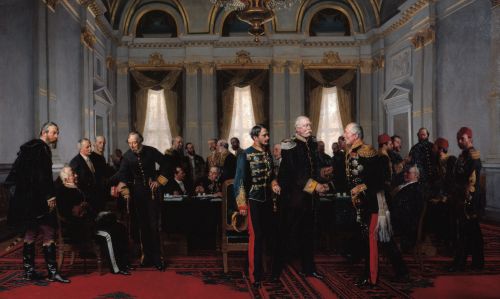
Serbia emerged as one of the most ambitious actors within this transforming environment. Having secured de facto autonomy earlier in the nineteenth century and formal independence at the Congress of Berlin in 1878, the Serbian state began to cultivate a broader national vision that extended beyond its existing borders. Serbian intellectuals and political leaders increasingly argued that large populations of South Slavs living under Austro-Hungarian rule in Bosnia-Herzegovina, Croatia, and other territories were part of the same cultural and historical community as the inhabitants of the Serbian kingdom. This idea of a wider South Slav political unity, sometimes framed as Yugoslavism, did not necessarily possess a single ideological formulation. For some, it implied the expansion of the Serbian state; for others, it suggested a new multinational South Slav polity. In either case, it generated persistent tension with the neighboring Habsburg Empire, which governed many of the territories that Serbian nationalists hoped eventually to incorporate into a unified political structure.
Austria-Hungary viewed these developments with increasing concern. The Dual Monarchy ruled over a diverse population that included substantial South Slav communities, particularly in Croatia, Slovenia, and Bosnia-Herzegovina. The spread of nationalist ideas among these populations threatened to destabilize imperial authority and potentially fragment the Habsburg state. Vienna pursued policies designed both to maintain political control and to limit Serbian influence among Slavic populations within the empire. These policies included administrative reforms, efforts to cultivate loyalty among local elites, and measures intended to suppress nationalist agitation. Austrian officials regarded the growth of Serbian nationalism as a direct strategic challenge, fearing that Belgrade might attempt to destabilize imperial territories through propaganda, covert networks, or support for revolutionary groups.
The annexation of Bosnia-Herzegovina by Austria-Hungary in 1908 dramatically intensified these tensions. Although the Habsburg administration had occupied the province since 1878 under the terms of the Congress of Berlin, the formal annexation represented a decisive assertion of imperial sovereignty and a rejection of the ambiguous international arrangements that had previously governed the territory. For Serbian nationalists, Bosnia-Herzegovina held deep symbolic and political significance. The province contained a substantial population of South Slavs and occupied a prominent place in the historical memory of Serbian medieval statehood, particularly through its association with the cultural and political traditions of the medieval Serbian realm. The annexation provoked widespread outrage in Serbia, where many political leaders and nationalist activists interpreted the move as an attempt by Austria-Hungary to permanently block the realization of South Slav unification. Public demonstrations erupted in Belgrade, nationalist organizations intensified their propaganda, and the Serbian government briefly mobilized its military forces. Although Serbia ultimately accepted the annexation under intense diplomatic pressure from the major powers, the crisis deepened hostility between Belgrade and Vienna. The episode also convinced many Serbian nationalists that conventional diplomacy alone could not reverse the geopolitical realities imposed by the Habsburg Empire.
These tensions were further compounded by the Balkan Wars of 1912–1913, which radically altered the regional balance of power. A coalition of Balkan states defeated the Ottoman Empire and expelled it from most of its remaining European territories. Serbia emerged from these conflicts significantly strengthened, both territorially and militarily. Its expanding influence alarmed Austria-Hungary, whose leaders feared that a larger and more confident Serbia would intensify nationalist agitation among South Slavs within the empire. The wars deepened the rivalry between Belgrade and Vienna, reinforcing a pattern in which local conflicts increasingly intersected with broader European politics.
By the early twentieth century, the Balkans had become a region in which imperial decline, nationalist ambition, and geopolitical competition interacted in unstable ways. Serbia sought to position itself as the center of a broader South Slav movement, while Austria-Hungary struggled to preserve the integrity of a multinational empire under growing strain. Nationalist organizations and clandestine networks found fertile ground. Political actors who believed that conventional diplomacy could not achieve their objectives increasingly turned to covert methods and political violence. The emergence of such movements would play a decisive role in shaping the chain of events that eventually culminated in the outbreak of the First World War.
The May Coup of 1903: Regicide and the Radicalization of Serbian Politics
The assassination of King Alexander Obrenović and Queen Draga on the night of 28–29 May 1903 marked a decisive turning point in the political culture of the Kingdom of Serbia. The coup was carried out by a group of Serbian Army officers who had grown increasingly dissatisfied with the king’s rule and his perceived submission to Austro-Hungarian influence. Their resentment was intensified by Alexander’s controversial marriage to Draga Mašin, a widow widely disliked among sections of the Serbian political and military elite. By the early twentieth century, many officers believed that the Obrenović dynasty had undermined Serbia’s national interests and compromised its political independence. The conspiracy that formed within the officer corps sought not merely to remove the monarch but to fundamentally redirect the political orientation of the Serbian state.
The conspirators launched their operation during the early hours, storming the royal palace in Belgrade after cutting communications and neutralizing palace guards. The attackers searched the building for several hours before discovering the king and queen hiding in a concealed chamber. Both were brutally killed, along with several senior officials associated with the royal government. Contemporary accounts describe the violence as chaotic and intensely personal, reflecting the depth of hostility many officers felt toward the ruling couple and their political circle. The king and queen were shot repeatedly and their bodies mutilated before being thrown from a palace window into the courtyard below. Several ministers and royal aides also lost their lives during the assault. The brutality of the coup shocked contemporary observers across Europe, where regicide had become increasingly rare by the early twentieth century and where monarchies still formed the backbone of the continental political order. Yet within Serbia the conspirators quickly succeeded in imposing a new political arrangement. The Obrenović dynasty was replaced by the rival Karađorđević dynasty, whose accession was welcomed by many political leaders who believed the new ruling house would pursue a more assertively nationalist policy and distance the country from the diplomatic orientation associated with the previous regime.
Among the officers involved in the conspiracy was Captain Dragutin Dimitrijević, later known by the nickname “Apis.” Although not yet the dominant figure he would later become, Dimitrijević emerged from the coup with considerable prestige within sections of the Serbian military establishment. His participation helped solidify a network of officers who had demonstrated both their willingness and their capacity to intervene directly in political affairs. The coup replaced one dynasty with another and created an enduring culture of conspiratorial activism within parts of the officer corps. Political violence, once employed successfully, became viewed by some nationalist officers as a legitimate instrument for achieving broader national objectives.
The new Serbian government initially sought to distance itself from the brutality of the coup in order to restore diplomatic relations with European powers that had been alarmed by the regicide. Nevertheless, the influence of the conspirators persisted within the military and intelligence structures of the state. Many of the officers who had participated in the overthrow of the Obrenović dynasty continued to occupy important positions within the Serbian Army. Their shared experience fostered a sense of solidarity and ideological commitment that extended beyond ordinary military professionalism. Networks formed during the coup gradually evolved into more organized nationalist circles that sought to pursue the unification of South Slavic territories under Serbian leadership.
The events of 1903 had consequences that extended far beyond the immediate dynastic change. The coup altered Serbia’s diplomatic orientation, strengthened nationalist currents within the political elite, and legitimized clandestine political activity among certain military officers. These developments created the conditions in which secret societies such as the Black Hand could later emerge. By demonstrating that a determined group of conspirators could successfully reshape the Serbian state, the May Coup helped establish a precedent for political action through secrecy, discipline, and violence. The memory of the coup also continued to shape Serbian politics in more subtle ways. It reinforced the perception that the military possessed both the authority and the responsibility to defend national interests when civilian leadership appeared weak or compromised. In the years that followed, the networks forged during the coup persisted within the officer corps and intelligence services, providing the institutional and personal connections that later facilitated the creation of clandestine nationalist organizations dedicated to expanding Serbian influence throughout the Balkans.
Founding the Black Hand: Organization, Ritual, and Ideology
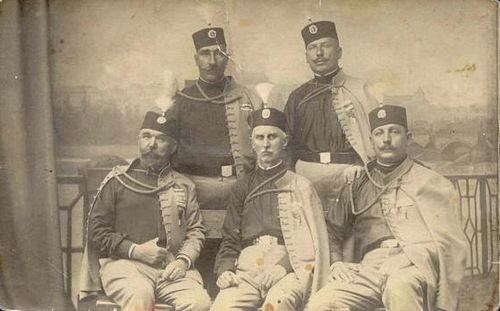
The Black Hand, was formally established in Belgrade in May 1911 by a group of Serbian military officers and nationalist activists. The founders sought to create a disciplined clandestine organization dedicated to the unification of all territories inhabited by South Slavs that remained outside the control of Serbia or Montenegro. Although the movement drew support from civilian nationalist circles, its core leadership emerged from within the Serbian officer corps, particularly individuals who had been shaped by the conspiratorial culture that developed after the May Coup of 1903. From the outset, the organization was designed to operate in secrecy, emphasizing loyalty, hierarchical command, and ideological commitment to a broader South Slav political project.
The organization’s founders believed that conditions in the Balkans required methods that went beyond conventional activism. Diplomatic negotiations and parliamentary politics, in their view, had failed to resolve the question of South Slav unification in territories governed by Austria-Hungary. As a result, the new society was conceived as a covert instrument capable of coordinating propaganda, intelligence gathering, and revolutionary activity across imperial borders. While the organization did not officially represent the Serbian government, many of its members held positions within the military and intelligence services, giving the society access to resources, networks, and strategic information that enhanced its operational capabilities. These connections allowed the organization to draw upon the logistical infrastructure of the Serbian state while maintaining formal deniability. Weapons, training, and communication networks could be arranged through overlapping personal and institutional relationships that linked officers, border agents, and nationalist activists. The Black Hand represented not merely an underground movement but an informal extension of the nationalist ambitions circulating within sections of the Serbian military establishment.
The structure of the Black Hand reflected the conspiratorial traditions that had influenced earlier nationalist movements in Europe. Membership was organized through a hierarchical cell system designed to protect the secrecy of the organization and limit the damage that might result from arrests or infiltration. New recruits were typically sponsored by existing members and carefully vetted before admission. The leadership maintained strict control over communication within the organization, ensuring that many members knew only a limited number of other participants. This structure allowed the society to operate across multiple regions while maintaining discipline and secrecy.
Ritual played a central role in reinforcing loyalty among members. Initiation ceremonies required recruits to swear a solemn oath pledging absolute dedication to the cause of national unification. The oath was administered in a ritual setting that incorporated nationalist symbolism and emphasized the commitment being undertaken. Members promised to carry out all orders issued by the leadership and to maintain secrecy even under threat of death. Such rituals were intended to cultivate a sense of moral obligation and shared identity among participants, transforming the organization from a simple political network into a brotherhood bound by ideological and personal loyalty. The ceremony itself reportedly involved symbolic elements such as religious imagery, nationalist emblems, and references to historical struggles against foreign domination. By framing membership as a sacred duty rather than merely a political affiliation, the organization strengthened internal cohesion and reinforced the expectation of unquestioned obedience to its leadership.
The ideology of the Black Hand combined Serbian nationalism and broader South Slav political aspirations. Many members believed that Serbia had both the historical responsibility and the strategic capacity to serve as the nucleus of a unified South Slav state. Their vision was shaped in part by the example of nineteenth-century national unification movements in Europe, particularly the consolidation of Italy and Germany. These precedents suggested that fragmented cultural communities could be united through determined political action, even when that process involved conflict with established empires. For Black Hand leaders, the struggle against Austro-Hungarian rule in Bosnia-Herzegovina and other territories represented a continuation of this wider European pattern of nationalist transformation.
Despite its ideological ambitions, the Black Hand operated within a complicated relationship to the Serbian state. Some civilian political leaders viewed the organization with suspicion, fearing that its conspiratorial activities could provoke international crises or undermine governmental authority. Others tolerated or quietly supported its efforts, believing that clandestine activism could advance Serbian national interests without formally implicating the state. This position allowed the society to function in a gray zone between official policy and underground nationalism. The networks and ideological commitments forged within the organization would later intersect with revolutionary youth movements in Bosnia-Herzegovina, creating the conditions under which the Black Hand would become associated with one of the most consequential political assassinations in modern history.
Apis and the Military Intelligence Network
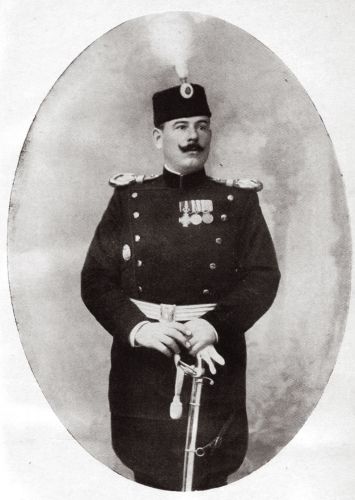
Dimitrijević emerged as one of the most influential and controversial figures in the nationalist politics of early twentieth-century Serbia. Born in Belgrade in 1876, Dimitrijević entered the Serbian Military Academy and quickly distinguished himself within the officer corps. His career developed alongside the rise of militant nationalism within segments of the Serbian Army, particularly among officers who believed that Serbia’s historical mission was to liberate and unite South Slavic populations living under imperial rule. Dimitrijević’s reputation was cemented through his participation in the May Coup of 1903, where he played a central role in the conspiracy that overthrew the Obrenović dynasty. The success of that coup elevated his standing among fellow officers and established him as a leading figure within a network of military conspirators who would remain active in Serbian politics during the following decade.
Following the dynastic change of 1903, Dimitrijević’s career advanced steadily within the Serbian military establishment. By 1913 he had become head of the intelligence division of the Serbian General Staff, a position that placed him at the center of the kingdom’s intelligence and counterintelligence operations. This role provided him access to sensitive information, communication channels, and personnel operating along Serbia’s borders. The Balkan Wars further expanded the scope of Serbian military intelligence, as the army sought to monitor developments across newly contested territories and along the frontiers of the Austro-Hungarian Empire. Dimitrijević’s office coordinated reconnaissance activities, cultivated informants, and maintained contact with nationalist activists operating beyond Serbia’s borders.
The position of military intelligence chief gave Dimitrijević unusual influence over the intersection of official policy and clandestine activism. Although the Serbian government did not formally endorse revolutionary conspiracies within neighboring empires, intelligence networks frequently interacted with nationalist organizations that pursued similar goals. Border agents, smugglers, and political activists often served as intermediaries between the Serbian state and underground movements in Bosnia-Herzegovina and other South Slav regions. Through these channels, information, propaganda, and occasionally weapons moved across frontiers that were porous both geographically and politically. Dimitrijević’s authority within the intelligence service allowed him to supervise or influence many of these operations, even when they operated beyond the formal structures of government policy.
Within the Black Hand itself, Dimitrijević exercised considerable authority. Although the organization contained multiple senior members and committees, his prestige within the officer corps and his intelligence position enabled him to shape the society’s strategic direction. Apis believed that Serbia’s long-term security depended upon weakening Austro-Hungarian control over South Slav territories, particularly Bosnia-Herzegovina. The intelligence networks under his supervision overlapped with the clandestine structures of the Black Hand, creating a complex web of relationships between official military personnel, covert operatives, and nationalist activists. This network functioned less as a rigid bureaucracy than as a set of personal alliances held together by shared political goals and mutual trust.
These overlapping relationships also created tension within the Serbian state. Civilian political leaders, including Prime Minister Nikola Pašić, were often wary of the influence exercised by nationalist officers and secret societies. Pašić recognized that clandestine operations directed against Austria-Hungary could provoke diplomatic crises that Serbia might not be prepared to confront militarily. He attempted at times to restrain the activities of radical nationalist networks, particularly when intelligence suggested that conspiratorial operations might trigger international consequences. Yet the political reality of Serbia limited the effectiveness of such efforts. The army enjoyed immense prestige after its victories in the Balkan Wars, and many officers who shared Dimitrijević’s nationalist outlook held influential positions within the military hierarchy. Moreover, the boundary between official intelligence operations and clandestine activism was often blurred by personal relationships and overlapping loyalties. As a result, the government found it difficult to fully control the activities of nationalist conspirators without risking conflict with powerful figures inside the armed forces.
By the eve of the First World War, the intelligence networks associated with Dimitrijević had become deeply embedded in the political environment of the Balkans. Their connections extended from Belgrade into Bosnia-Herzegovina and other Austro-Hungarian territories where nationalist agitation remained active. These networks facilitated the movement of people, information, and resources across imperial boundaries, providing underground groups with logistical support that would otherwise have been difficult to obtain. The influence exercised by Apis and his associates represented more than a personal ambition; it reflected the convergence of military authority, nationalist ideology, and clandestine organization that characterized Serbian political life in the years immediately preceding the Sarajevo assassination.
Young Bosnia: Revolutionary Youth and South Slav Idealism
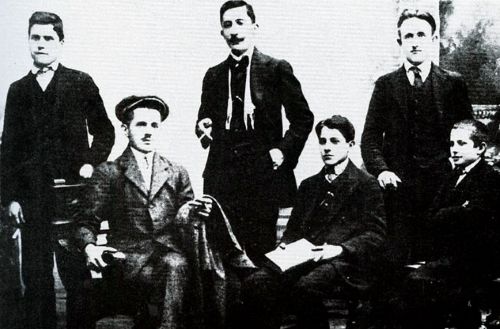
The revolutionary youth movement known as Mlada Bosna (“Young Bosnia”) emerged in the early twentieth century among students and young intellectuals living under Austro-Hungarian rule in Bosnia-Herzegovina. Unlike the Black Hand, which was rooted primarily in the Serbian military establishment, Young Bosnia developed within an environment shaped by cultural repression, political frustration, and the growing influence of nationalist ideas among educated youth. The movement did not operate as a centralized organization with a rigid hierarchy but rather as a loose network of individuals united by shared ideological commitments. Its members were typically students, writers, or political activists who viewed imperial rule as an obstacle to both national liberation and social transformation. Their ideas circulated through informal discussion circles, underground literature, and student associations that flourished in cities such as Sarajevo.
Young Bosnia drew inspiration from a wide range of intellectual influences that reflected the ideological diversity of early twentieth-century revolutionary movements. Some participants embraced Serbian nationalism or broader Yugoslav ideals centered on the unification of South Slavs. Others were influenced by anarchism, socialism, and romantic notions of revolutionary sacrifice. European literature played a significant role in shaping their worldview. Works by writers such as Fyodor Dostoevsky and Friedrich Nietzsche circulated widely among the group, encouraging reflections on individual rebellion, moral responsibility, and the transformative potential of radical action. Russian revolutionary thought, particularly the writings associated with nineteenth-century nihilist and populist movements, also resonated with young activists who believed that small groups of determined individuals could provoke wider political upheaval. These intellectual currents blended with local experiences of imperial rule, producing a worldview that combined philosophical radicalism with intense nationalist sentiment. For many members of the movement, the idea of personal sacrifice for the national cause became both a moral obligation and a defining element of their political identity.
Among the most prominent members of Young Bosnia was Gavrilo Princip, a Bosnian Serb student whose life reflected many of the social and political tensions experienced by young people in the province. Born in rural Bosnia, Princip moved to Sarajevo for his education and soon became involved in nationalist student circles. Like many of his contemporaries, he experienced the Austro-Hungarian administration as an oppressive system that restricted political expression and marginalized local aspirations for self-determination. These frustrations were intensified by the annexation of Bosnia-Herzegovina in 1908, which many activists interpreted as a definitive assertion of imperial control over a territory they believed should ultimately belong to a South Slav state.
Although Young Bosnia operated independently, its members occasionally came into contact with nationalist networks connected to Serbia. These connections were not always systematic or formally organized, but they proved important in certain circumstances. Serbian intelligence agents and Black Hand sympathizers recognized the potential value of revolutionary youth movements operating inside Austro-Hungarian territory. Through informal channels, some Young Bosnia activists obtained assistance in the form of training, weapons, and logistical support that would otherwise have been difficult to secure. The movement’s decentralized nature meant that not all participants were aware of these connections, and many activists continued to view their struggle primarily as a spontaneous expression of local resistance rather than a coordinated international conspiracy. Nevertheless, the presence of cross-border networks provided crucial practical support at key moments. These interactions did not transform Young Bosnia into a direct instrument of Serbian policy, but they did create a relationship in which revolutionary idealism among students intersected with the strategic calculations of nationalist conspirators operating beyond the boundaries of Bosnia-Herzegovina.
The ideological fervor of Young Bosnia reflected the broader political climate of the Balkans in the years before the First World War. For many young activists, the existing political order appeared both unjust and historically fragile. They believed that decisive acts of resistance could inspire broader movements of liberation and accelerate the collapse of imperial domination. This belief in the transformative power of revolutionary action ultimately shaped the decisions made by several members of the movement in 1914. Their willingness to embrace political violence would intersect with the clandestine networks operating beyond Bosnia’s borders, producing one of the most consequential assassinations in modern European history.
The Sarajevo Assassination Plot
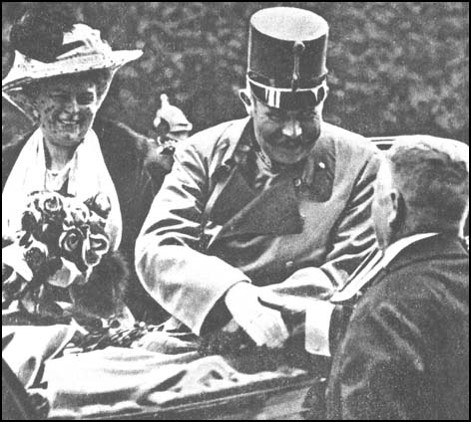
The plan to assassinate Archduke Franz Ferdinand, heir to the throne of the Austro-Hungarian Empire, emerged from the convergence of revolutionary nationalism within Bosnia-Herzegovina and clandestine networks operating in Serbia. Franz Ferdinand’s scheduled visit to Sarajevo on June 28, 1914, carried particular symbolic weight. The date coincided with Vidovdan, the Serbian national commemoration associated with the medieval Battle of Kosovo in 1389, an event deeply embedded in Serbian historical memory. For militant nationalists, the archduke’s presence in Bosnia on such a day appeared as a provocation that underscored the continued domination of South Slavic territories by the Habsburg monarchy. Within this atmosphere of heightened symbolism and political tension, a group of Young Bosnia activists began to consider the possibility of an assassination that might draw international attention to their cause.
The conspirators who ultimately carried out the plot included Gavrilo Princip, Nedeljko Čabrinović, Trifko Grabež, and several other young activists connected to the Young Bosnia movement. Although their motivations were rooted primarily in nationalist and revolutionary ideals, the practical execution of the plot depended upon assistance from individuals linked to Serbian intelligence networks. Weapons and explosives were supplied in Belgrade, and several of the conspirators received rudimentary training before crossing the border into Bosnia-Herzegovina. A clandestine route organized through sympathetic agents and border officials allowed the group to move covertly across the Drina River and into Austro-Hungarian territory. These connections reflected the complex relationship between independent revolutionary activists and the broader nationalist networks that operated throughout the region.
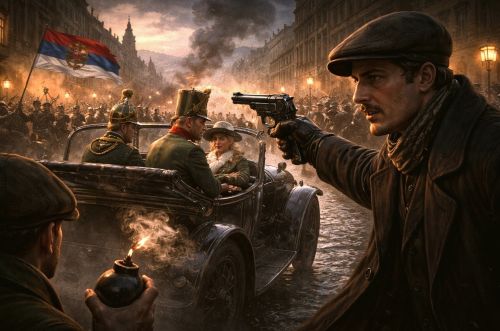
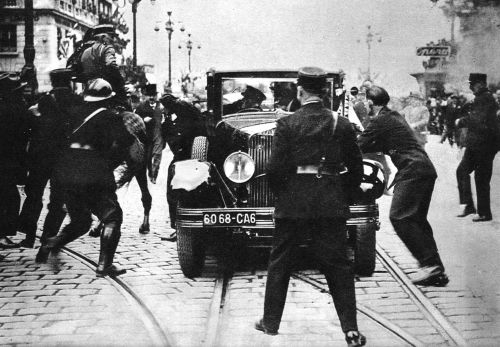
On the morning of June 28, the conspirators positioned themselves along the planned motorcade route through Sarajevo as Franz Ferdinand and his wife, Sophie, Duchess of Hohenberg, traveled through the city. The first attempt occurred when Čabrinović threw a bomb at the archduke’s car, but the explosive deflected off the vehicle and detonated behind it, injuring several members of the following entourage. Čabrinović attempted to take his own life by swallowing poison and jumping into the Miljacka River, but he survived and was immediately arrested. Despite this attack, the archduke insisted on continuing with the official program of the visit. The motorcade proceeded to the city hall, where Franz Ferdinand delivered a brief address despite visible frustration with the security failures that had already occurred. After the ceremony, the archduke decided to visit those who had been injured in the earlier explosion. During the attempt to redirect the motorcade to the hospital, confusion among the drivers caused the vehicles to take a wrong turn and momentarily stop while attempting to reverse direction. At that moment Princip happened to be standing near a café along the route. Recognizing the unexpected opportunity created by the stalled car, he stepped forward and fired two shots at close range, fatally wounding both Franz Ferdinand and Sophie. The archduke died shortly afterward, and the duchess succumbed to her wounds soon after being transported from the scene.
The assassination shocked European governments and triggered a diplomatic crisis that escalated rapidly during the following weeks. Austria-Hungary interpreted the attack as evidence of Serbian complicity in terrorist activity directed against the empire. Although the precise degree of official Serbian involvement remained contested, the existence of cross-border nationalist networks provided Vienna with grounds to issue a harsh ultimatum to Belgrade in July 1914. The confrontation that followed, shaped by alliance obligations and strategic calculations among the major European powers, transformed a regional dispute into a continent-wide war. The events in Sarajevo illustrate how the actions of a small group of conspirators, operating within a volatile geopolitical environment, could precipitate consequences far beyond their immediate intentions.
The July Crisis: From Assassination to Global War
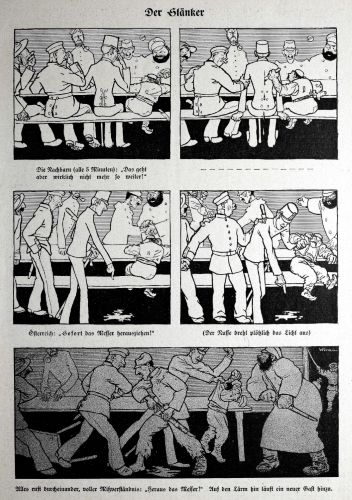
The assassination of Archduke Franz Ferdinand on June 28, 1914, immediately created a diplomatic crisis whose consequences extended far beyond the Balkans. Austria-Hungary regarded the killing not merely as an isolated act of terrorism but as a political challenge to imperial authority. Many leaders in Vienna believed that the attack was linked to nationalist networks supported from Serbia, and they feared that failure to respond decisively would encourage further unrest among South Slavic populations within the empire. The assassination presented the Austro-Hungarian leadership with a moment of strategic decision. Some officials advocated a limited diplomatic response, while others argued that Serbia must be confronted with force in order to preserve the credibility of the empire.
Within the Austro-Hungarian government, influential figures increasingly concluded that the assassination provided an opportunity to resolve the long-standing rivalry with Serbia. Officials within the foreign ministry and military command believed that Serbia’s growing influence in the Balkans posed an existential threat to the stability of the empire. They began preparing a diplomatic ultimatum designed to impose severe restrictions on Serbian sovereignty. Before acting, however, Austria-Hungary sought assurance from its principal ally, the German Empire. During meetings in early July 1914, German leaders offered what later became known as the “blank check,” promising diplomatic and military support for Austria-Hungary should a conflict with Serbia escalate. This assurance proved decisive in shaping Vienna’s calculations. German leaders, including Kaiser Wilhelm II and senior military officials, believed that a firm stance against Serbia would strengthen the position of the Central Powers and discourage further Russian involvement in Balkan affairs. Some German policymakers assumed that the crisis could be contained locally and that a limited conflict might be resolved before other powers intervened. These expectations would soon prove dangerously optimistic.
Armed with this support, Austria-Hungary delivered its ultimatum to the Serbian government on July 23, 1914. The document contained a series of demands that required Serbia to suppress nationalist propaganda, dismantle revolutionary organizations, and permit Austro-Hungarian officials to participate in investigations within Serbian territory. Several of these provisions directly challenged Serbian sovereignty and were intended to place Belgrade in an extremely difficult position. The Serbian government accepted most of the demands but rejected the requirement allowing foreign investigators to operate within the country’s judicial system. Serbian leaders recognized that outright rejection of the ultimatum might provoke immediate war, and they crafted a reply designed to appear conciliatory while preserving core elements of national sovereignty. The response accepted the majority of the demands and proposed arbitration through international mechanisms for the remaining points of dispute. Despite these concessions, Austrian leaders declared the reply unsatisfactory. Their decision reflected not only dissatisfaction with Serbia’s response but also a broader determination within Vienna to settle accounts with Serbia through military action.
The crisis rapidly expanded beyond the immediate dispute between Vienna and Belgrade as the alliance system of European powers came into play. Russia, which viewed itself as the protector of Slavic peoples in the Balkans, began mobilizing its military forces in support of Serbia. Germany interpreted Russian mobilization as a direct threat and responded with its own military preparations. Diplomatic efforts to defuse the situation failed as each government acted according to its strategic calculations and alliance commitments. Within days, a regional confrontation had transformed into a general European war involving multiple great powers.
The July Crisis demonstrated how the political structures of early twentieth-century Europe allowed a localized event to trigger a global conflict. Long-standing rivalries, rigid military planning, and mutual suspicions among the great powers created an environment in which diplomatic flexibility was limited. The assassination in Sarajevo provided the spark, but the rapid escalation that followed reflected deeper tensions within the European international system. By early August 1914, Austria-Hungary had declared war on Serbia, Germany had declared war on Russia and France, and the conflict soon expanded into a worldwide struggle that would become known as the First World War.
Suppression of the Black Hand: The Salonika Trial of 1917
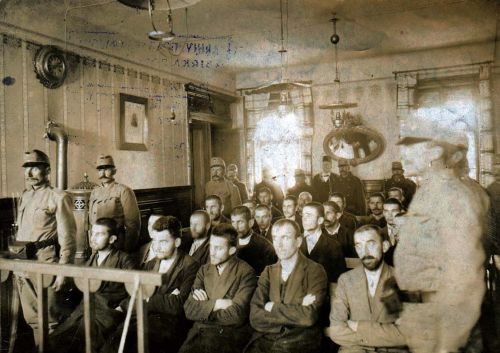
By the middle years of the First World War, the secret networks that had once helped advance Serbian nationalist ambitions increasingly appeared to threaten the authority of the Serbian state itself. The Black Hand, whose members occupied influential positions within the military and intelligence services, had long operated with a degree of autonomy that troubled civilian political leaders. During the wartime period, as the Serbian government struggled to maintain unity while operating in exile alongside Allied forces on the Salonika front in Greece, the existence of clandestine organizations within the army became a source of growing concern. Political leaders feared that conspiratorial factions could undermine discipline, interfere with strategic decisions, or even attempt to manipulate the leadership of the state.
These tensions were closely connected to the complex relationship between the Serbian civilian government and the military establishment. Prime Minister Nikola Pašić and Regent Alexander Karađorđević increasingly viewed the influence of Dimitrijević as politically dangerous. Dimitrijević had risen to prominence through his role in the 1903 coup and his subsequent position within the military intelligence service. Although he had been instrumental in building intelligence networks during the Balkan Wars and the early years of the global conflict, his continued influence over clandestine nationalist circles created anxiety among those responsible for maintaining political stability during wartime. Serbian leaders worried that officers associated with the Black Hand possessed loyalties that extended beyond the formal chain of command.
In 1917 the Serbian authorities initiated a dramatic effort to dismantle the organization and neutralize its leadership. Dimitrijević and several other officers were arrested and charged with conspiring to assassinate Regent Alexander. The alleged plot, which authorities claimed had been uncovered through intelligence investigations, provided the legal basis for a military tribunal convened in Salonika. Historians have long debated the extent to which the charges reflected a genuine conspiracy or a politically motivated attempt to eliminate a powerful rival faction within the military. Some scholars argue that Serbian leaders feared that Apis and his associates retained the ability to mobilize networks of loyal officers and nationalist activists who might challenge the regent’s authority. Others suggest that the government, already struggling to maintain unity among exiled political and military elites, viewed the Black Hand as an unpredictable force whose continued existence could destabilize wartime leadership. Regardless of the precise origins of the accusations, the trial represented a decisive effort by the Serbian leadership to reassert control over networks that had once operated with considerable independence.
The proceedings of the Salonika Trial were conducted before a military court and involved multiple defendants linked to the Black Hand. Dimitrijević and several associates were accused of organizing a conspiracy against the regent and undermining the authority of the state during wartime. The trial relied heavily on testimony and documentary evidence presented by military prosecutors, although later scholars have questioned the reliability of some of the evidence used to secure convictions. Defense arguments emphasized the patriotic record of the accused officers and suggested that the charges had been exaggerated or fabricated for political purposes. Despite these efforts, the tribunal ultimately found Dimitrijević and several others guilty.
The verdict resulted in severe punishments for the principal defendants. In June 1917 Dimitrijević and two of his associates were executed by firing squad, bringing an abrupt end to the career of one of the most controversial figures in Serbian nationalist politics. Other participants received lengthy prison sentences. The executions effectively dismantled the leadership of the Black Hand and weakened the clandestine networks that had once linked military intelligence with revolutionary activism across the Balkans. For the Serbian government, the trial served both as a judicial proceeding and as a political statement that the authority of the state would no longer tolerate independent conspiratorial organizations within the army. In the years that followed, the episode became a subject of intense historical debate. Some historians interpreted the trial as a necessary step in consolidating state authority during a period of extraordinary national crisis, while others viewed it as a politically motivated purge designed to eliminate a powerful rival within the Serbian officer corps. The controversy surrounding the case continued well into the twentieth century, reflecting the enduring complexity of the Black Hand’s role in Serbian political life.
The Salonika Trial marked the final stage in the rise and fall of the Black Hand. The organization that had once sought to reshape the political future of the South Slavic world through clandestine action was dismantled by the very state whose interests many of its members believed they were serving. In the aftermath of the trial, the Serbian leadership consolidated its control over the military and sought to distance itself from the conspiratorial traditions that had characterized earlier phases of nationalist activism. Although debates over the fairness and motivations of the trial have continued among historians, the suppression of the Black Hand demonstrated how wartime pressures and political rivalries could transform former allies into perceived threats to state authority.
Historiography: Conspiracy, Responsibility, and Historical Debate
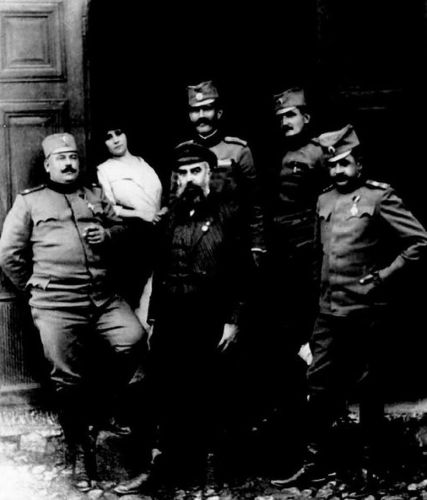
The historical interpretation of the Black Hand and its role in the outbreak of the First World War has generated extensive scholarly debate for more than a century. From the earliest investigations into the Sarajevo assassination to contemporary historical analysis, historians have struggled to determine the precise relationship between clandestine nationalist networks, the Serbian state, and the broader diplomatic crisis that followed the assassination of Archduke Franz Ferdinand. These debates reflect larger questions about agency, responsibility, and the extent to which secret organizations could influence the course of international politics in the early twentieth century. The Black Hand occupies a particularly controversial place in this discussion because it operated at the intersection of military intelligence, revolutionary activism, and nationalist ideology. Historians have approached the subject from multiple angles, including diplomatic history, political biography, and the study of revolutionary movements in the Balkans. Each perspective has produced different interpretations of the organization’s significance, revealing how deeply the story of the Black Hand is intertwined with broader debates about the origins of the First World War and the nature of nationalist politics in southeastern Europe.
Early interpretations of the assassination often reflected the political agendas of the governments involved in the conflict. Austro-Hungarian and German officials argued that the murder of the archduke had been orchestrated by Serbian authorities or by conspirators acting with official support from Belgrade. This interpretation portrayed the assassination as evidence of deliberate state-sponsored terrorism directed against the Habsburg monarchy. Such claims played an important role in the diplomatic justification for Austria-Hungary’s declaration of war against Serbia in July 1914. In the years immediately following the war, however, some historians began to question these assertions, emphasizing the fragmented and often informal nature of the networks that connected Serbian military intelligence, nationalist activists, and revolutionary youth movements.
During the twentieth century, historians increasingly examined the internal structure and motivations of the Black Hand itself. Scholars studying the organization emphasized that it was not a conventional political institution but rather a clandestine association operating within the Serbian military establishment. Its members believed that national liberation required covert action, propaganda, and support for revolutionary movements beyond Serbia’s borders. Yet historians have also noted that the relationship between the organization and the Serbian government remained ambiguous. Some officials tolerated or quietly supported its activities, while others viewed its influence as politically destabilizing. This ambiguity has complicated efforts to determine whether the assassination plot represented an organized strategy coordinated by senior figures within the Serbian state or the initiative of smaller networks operating with only partial official awareness.
Another major area of historiographical debate concerns the broader question of responsibility for the outbreak of the First World War. Earlier scholarship sometimes focused heavily on the role of the assassination itself, treating the event as the central cause of the war. More recent historians have emphasized the importance of structural factors within European diplomacy, including alliance systems, military planning, imperial rivalries, and nationalist movements across the continent. Within this broader interpretation, the Black Hand and the Sarajevo conspirators appear less as the primary architects of global conflict and more as participants in a volatile political environment that had already become highly unstable. The assassination provided a catalyst for the July Crisis, but the escalation into world war depended on decisions made by multiple governments across Europe. Scholars studying diplomatic archives from Germany, Austria-Hungary, Russia, France, and Britain have increasingly demonstrated how the crisis unfolded through a series of interconnected decisions made under conditions of uncertainty and mutual suspicion. The historiography of the First World War has gradually shifted from assigning singular blame toward examining the complex interactions that transformed a regional conflict into a global catastrophe.
Contemporary historians tend to approach the Black Hand as part of a complex network of actors operating within the turbulent political landscape of the Balkans before 1914. Rather than presenting the organization as a single decisive force responsible for triggering global war, modern scholarship often situates it within the wider dynamics of nationalism, imperial competition, and diplomatic miscalculation. The historiography of the Black Hand illustrates how historical interpretation evolves as new sources, methodologies, and perspectives reshape scholarly understanding. Debates over conspiracy, responsibility, and political agency remain central to the study of the Sarajevo assassination and the origins of the First World War.
Conclusion: Nationalism, Violence, and the Fragility of the European Order
The history of the Black Hand reveals how secret political movements could emerge within the volatile intersection of nationalism, imperial decline, and military culture in the early twentieth century. Born from the radicalized atmosphere of Serbian politics following the May Coup of 1903, the organization embodied a form of militant nationalism that regarded clandestine action as a legitimate instrument of political transformation. Its members believed that the liberation and unification of South Slavic peoples required methods that extended beyond conventional diplomacy or parliamentary politics. The Black Hand reflected broader patterns within the Balkans, where revolutionary traditions and nationalist aspirations frequently merged with the strategic calculations of state actors.
Yet the activities of the organization also demonstrated the dangers inherent in the blurred boundaries between state authority and covert political networks. Officers within the Serbian military intelligence apparatus were able to support revolutionary movements and nationalist conspiracies while operating within the structures of the state itself. This ambiguous relationship created conditions in which clandestine initiatives could influence international politics without the full oversight of formal governmental institutions. The Sarajevo assassination plot illustrated how such networks could generate consequences far beyond their original intentions. What began as an act of political violence directed at a representative of imperial authority rapidly escalated into a diplomatic crisis that reshaped the political order of Europe. The episode revealed how small conspiratorial groups could act within larger political systems whose leaders were already confronting mounting strategic tensions. Nationalist militancy in the Balkans interacted with imperial insecurity in Vienna, alliance commitments in Berlin and St. Petersburg, and military planning across the continent. The result was a chain reaction in which the actions of a handful of conspirators became entangled with the strategic calculations of great powers.
The outbreak of the First World War cannot be understood solely as the product of a single conspiracy or the decisions of a single organization. The actions of the Black Hand and the young revolutionaries associated with Young Bosnia formed only one element within a far more complex historical process. The July Crisis unfolded through the interaction of nationalist agitation, imperial anxieties, alliance commitments, and military planning across multiple European powers. In this broader context, the assassination in Sarajevo functioned less as the origin of conflict than as the spark that ignited a geopolitical environment already saturated with tension. The fragile equilibrium that had sustained the European balance of power during the late nineteenth century proved incapable of containing the forces unleashed by the crisis.
The legacy of the Black Hand continues to shape historical interpretations of the origins of the First World War. The organization has often been portrayed either as the decisive conspiratorial force behind the conflict or as a marginal revolutionary network whose actions were magnified by the structural tensions of the European state system. Modern scholarship tends to situate the Black Hand somewhere between these extremes, recognizing both the significance of its activities and the broader political context that allowed a regional assassination to trigger a global war. The story of the organization ultimately illustrates the fragility of the European order on the eve of 1914, when nationalist movements, imperial rivalries, and secret political networks converged in ways that transformed a localized act of violence into a world-shaping catastrophe. The historiography surrounding the Black Hand underscores the importance of examining both individual agency and structural forces in historical explanation. Conspiratorial networks did not operate in isolation; they functioned within political environments shaped by imperial decline, ideological movements, and the institutional dynamics of modern states. The events surrounding the Sarajevo assassination serve as a reminder that the stability of international systems often depends on delicate balances that can unravel quickly when confronted with political violence and diplomatic miscalculation.
Bibliography
Affiliate disclosure: Amazon links on this site are paid links. As an Amazon Associate I earn from qualifying purchases.
- Albertini, Luigi. The Origins of the War of 1914. 3 vols. Oxford: Oxford University Press, 1952.
- Çeku, Ethem. “The Annexation of Kosovo by Serbia in 1912-13.” Cogent Arts & Humanities 12:1 (2025).
- Clark, Christopher. The Sleepwalkers: How Europe Went to War in 1914. New York: Harper, 2012.
- Dedijer, Vladimir. The Road to Sarajevo. New York: Simon and Schuster, 1966.
- Fay, Sidney Bradshaw. “The Black Hand Plot That Led to the World War.” Current History (1916-1940) 23:2 (1925), 196-207.
- Hall, Richard C. The Balkan Wars 1912–1913: Prelude to the First World War. London: Routledge, 2000.
- Jelavich, Barbara. History of the Balkans, Volume 2: Twentieth Century. Cambridge: Cambridge University Press, 1983.
- MacKenzie, David. Apis: The Congenial Conspirator: The Life of Colonel Dragutin T. Dimitrijević. New York: Columbia University Press, 1989.
- MacMillan, Margaret. The War That Ended Peace: The Road to 1914. New York: Random House, 2013.
- Malcolm, Noel. Bosnia: A Short History. New York: New York University Press, 1994.
- Pavlowitch, Stevan K. Serbia: The History of an Idea. London: Hurst, 2002.
- Strachan, Hew. The First World War. New York: Penguin Books, 1993.
- Sugar, Peter F. Industrialization of Bosnia-Herzegovina, 1878–1918. Seattle: University of Washington Press, 1963.
Originally published by Brewminate, 03.18.2026, under the terms of a Creative Commons Attribution-NonCommercial-NoDerivatives 4.0 International license.
About the Author