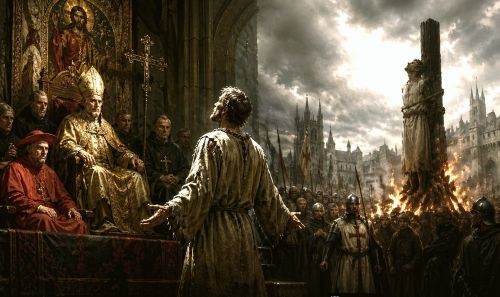
In the medieval world, claiming divinity was not just heresy but a direct challenge to social order, provoking swift and often violent suppression by Church and state.

By Matthew A. McIntosh
Public Historian
Brewminate
Introduction: Divinity as Social Order in the Medieval World
In the medieval world, belief in God was not merely a matter of private conviction but a foundational element of social, political, and intellectual life. The structures of authority that governed daily existence (from kingship to law, from education to communal identity) were deeply intertwined with theological assumptions about divine order. The Church functioned not simply as a religious institution but as a central organizing force, shaping norms of behavior, systems of knowledge, and the legitimacy of power itself. Ecclesiastical authority influenced not only matters of doctrine but also the administration of justice, the regulation of moral conduct, and the interpretation of history, embedding religious meaning into nearly every aspect of life. Even secular rulers derived legitimacy through association with divine will, reinforcing the idea that political authority was inseparable from theological validation. God was not an abstract idea but a pervasive presence embedded within the fabric of society, informing both individual understanding and collective organization in ways that were both visible and assumed.
This integration of divinity into social structure created a framework in which theological boundaries were also political boundaries. Orthodoxy defined not only correct belief but acceptable participation in the community, while deviation carried implications that extended beyond the spiritual realm. Heresy was understood as a form of disorder, capable of undermining the unity and stability of Christian society. The regulation of belief became a central concern of ecclesiastical and secular authorities alike, who worked to maintain coherence through doctrine, discipline, and, when necessary, coercion.
Claims to divinity by individuals represented an especially profound challenge. Unlike other forms of heretical belief, which might reinterpret or reject aspects of doctrine, the assertion of personal divinity directly contested the hierarchical relationship between Creator and creation that underpinned medieval theology. It also threatened the institutional authority of the Church, which positioned itself as the mediator between humanity and the divine. By collapsing this distinction, individuals who claimed divine status disrupted not only theological categories but the very structures that sustained social order, placing themselves in direct opposition to both religious and political authority.
The rarity and severity of medieval claims to divinity can only be understood within this broader context of divinity as social order. Such claims were not merely expressions of personal belief or even theological error but acts that carried profound implications for the organization of society itself. Their emergence, typically in moments of crisis or instability, reflects the capacity of individuals to challenge established frameworks under extreme conditions, while the responses they provoked reveal the limits of tolerance within a system structured around divine authority. By examining these dynamics, it becomes possible to better understand the relationship between belief, power, and the boundaries of acceptable thought in the medieval world.
Theological Boundaries: Why Claiming Divinity Was Heresy
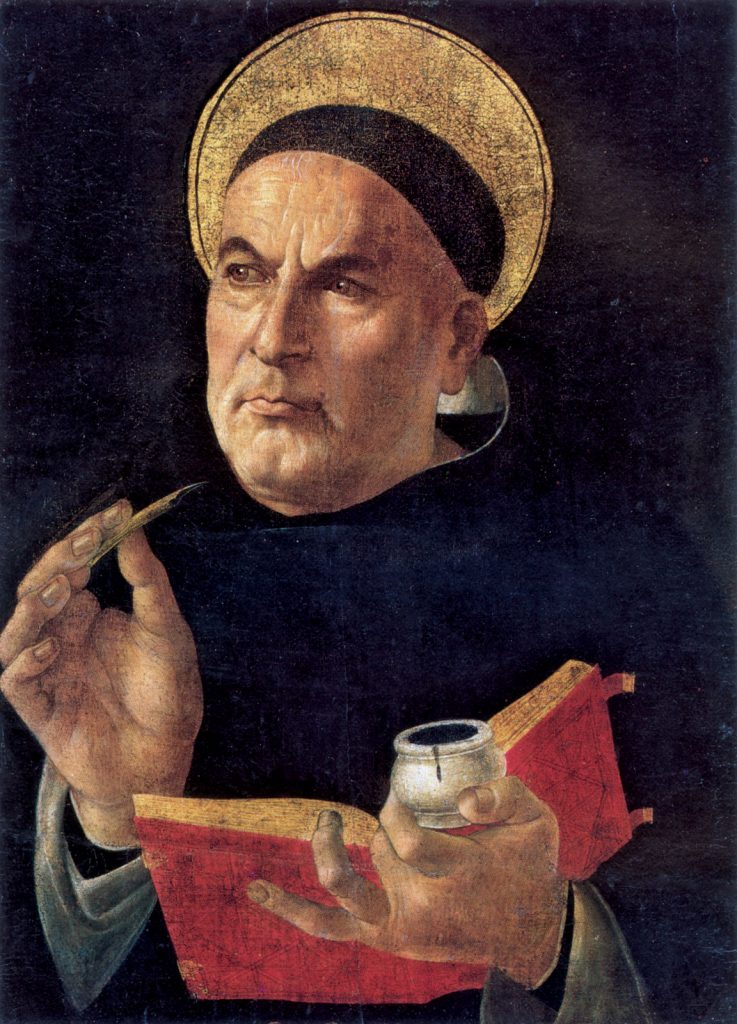
Medieval Christian theology was structured around a clear and uncompromising distinction between Creator and creation, a boundary that defined the limits of all religious thought. God was understood as wholly transcendent, eternal, and uncreated, while humanity existed as contingent and dependent upon divine will. This ontological divide was not merely philosophical but foundational to the entire theological system, shaping doctrines of salvation, incarnation, and moral responsibility. The possibility of a human being claiming divinity was not simply improbable but fundamentally incoherent, violating the most basic principles of Christian belief.
The doctrine of the Incarnation further reinforced this boundary by presenting the person of Jesus Christ as the unique union of divine and human natures. Christ’s status as both fully God and fully human was understood as a singular and unrepeatable event, central to the redemption of humanity. Medieval theologians, drawing on the decisions of early Church councils, emphasized that this union could not be replicated or extended to other individuals. The formulations established at councils such as Nicaea and Chalcedon clarified that Christ’s dual nature was a mystery grounded in divine action, not a model for human attainment. Any claim to personal divinity directly contradicted established doctrine, not only by challenging the uniqueness of Christ but by undermining the theological coherence of the Incarnation itself. Such claims risked collapsing the distinction between divine grace and human nature, suggesting a form of self-deification that bypassed the redemptive framework central to Christian belief. Assertions of personal divinity were not isolated doctrinal errors but threats to the entire structure of salvation history as understood in medieval theology.
The classification of such claims as heresy was rooted in both doctrinal and institutional concerns. Heresy was defined not simply as incorrect belief but as a deviation that threatened the unity of the Church and, by extension, the stability of Christian society. The assertion of personal divinity represented an extreme form of deviation, one that bypassed the Church’s role as mediator between humanity and God. By claiming direct identification with the divine, individuals effectively rejected the structures through which religious authority was exercised, positioning themselves outside the accepted framework of belief and practice.
The mechanisms for identifying and responding to heresy were well established by the High Middle Ages, involving both theological evaluation and judicial process. Ecclesiastical authorities, including bishops and later inquisitorial bodies, were tasked with investigating claims, assessing their doctrinal implications, and determining appropriate responses. The severity of the response often reflected the perceived threat posed by the individual or movement, with claims to divinity typically eliciting the harshest penalties. These measures were intended not only to correct error but to reaffirm the boundaries of orthodoxy, reinforcing the distinction between legitimate belief and unacceptable deviation.
The theological rejection of personal divinity reveals the extent to which medieval Christianity depended on clearly defined boundaries of belief. By maintaining the distinction between God and humanity, the Church preserved the integrity of its doctrinal system and the authority of its institutional structures. Claims that blurred or erased this distinction were treated as existential threats, prompting decisive and often violent responses. Heresy functioned as both a theological category and a tool of social regulation, illustrating how the defense of belief was inseparable from the preservation of order.
Charisma and Crisis: Conditions for Radical Religious Claims
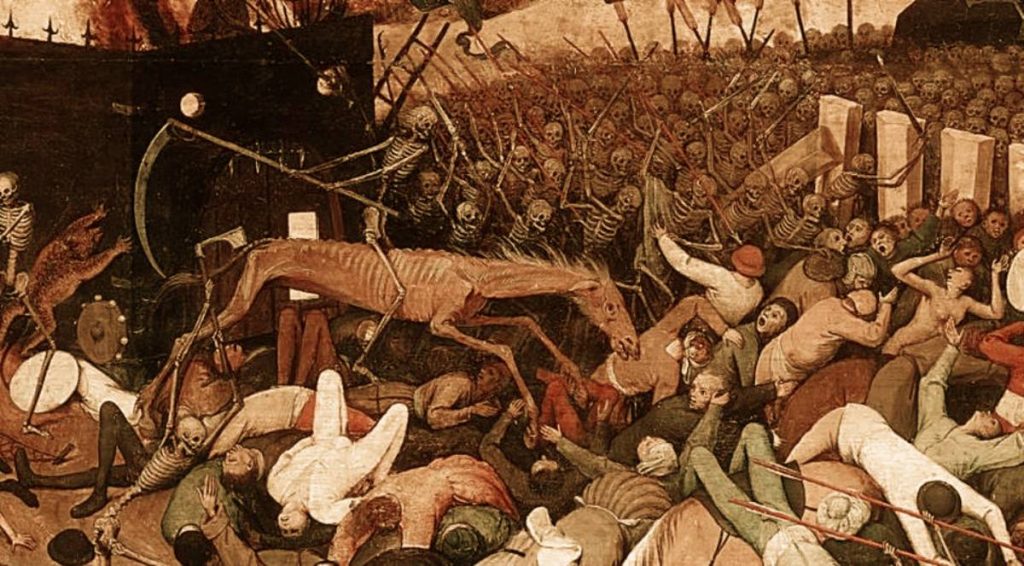
Radical claims to divinity in the medieval world did not emerge in isolation but were closely tied to moments of social and economic crisis that destabilized existing structures of authority. Periods marked by famine, war, plague, or political fragmentation created environments in which traditional institutions struggled to provide stability or explanation. Individuals and communities often sought alternative frameworks through which to understand their circumstances, turning to religious interpretations that could account for suffering and offer the promise of renewal. These conditions did not produce claims to divinity automatically, but they created the space in which such claims could gain attention and, in some cases, acceptance.
The concept of charismatic authority provides a useful lens for understanding how individuals were able to mobilize followers under these conditions. Charisma, as a form of authority grounded in perceived extraordinary qualities, allowed leaders to bypass established hierarchies and appeal directly to the experiences and expectations of their audiences. In the medieval context, this authority was often expressed through claims of divine inspiration, visions, or miraculous abilities, which reinforced the leader’s legitimacy in the eyes of followers. The effectiveness of such claims depended not only on the individual but on the broader environment, which shaped how they were received and interpreted.
Crisis amplified the appeal of charismatic figures by intensifying the demand for meaning and direction. When established systems appeared to fail, the promise of direct access to divine truth or power could become particularly compelling. Leaders who presented themselves as uniquely connected to the divine were able to offer explanations that resonated with existing beliefs while also providing a sense of agency in the face of uncertainty. This dynamic helped to transform personal claims into collective movements, as followers found both reassurance and a framework for action.
The boundary between accepted religious experience and heretical claim was often fluid, particularly in contexts shaped by mystical traditions. Medieval Christianity included a rich tradition of visionary and contemplative practice, in which individuals sought union with God through spiritual discipline. While orthodox theology maintained a clear distinction between union and identity, the language used to describe these experiences could blur that boundary. Mystics frequently employed metaphors of absorption, transformation, or indwelling presence to articulate experiences that were difficult to define within conventional categories, creating interpretive ambiguity even within accepted frameworks. In times of crisis, such ambiguities could be interpreted in more radical ways, contributing to the emergence of claims that extended beyond accepted limits. What might be understood as symbolic or experiential language in one context could be taken literally in another, particularly when mediated through charismatic personalities who framed their experiences as evidence of unique divine status. This slippage between metaphor and assertion highlights the fragile boundary that separated orthodoxy from heresy, especially when social instability heightened the stakes of interpretation.
The relationship between charisma and crisis reveals a recurring pattern in the medieval world, in which instability created opportunities for alternative forms of authority to emerge. These moments were often short-lived, as institutional responses quickly reasserted control, but they highlight the capacity of individuals to challenge established structures under extreme conditions. By examining these dynamics, it becomes possible to understand claims to divinity not as isolated anomalies but as part of a broader interaction between social context, religious belief, and the limits of institutional authority.
Eon de l’Etoile: Self-Deification and Rural Millenarianism (12th Century)
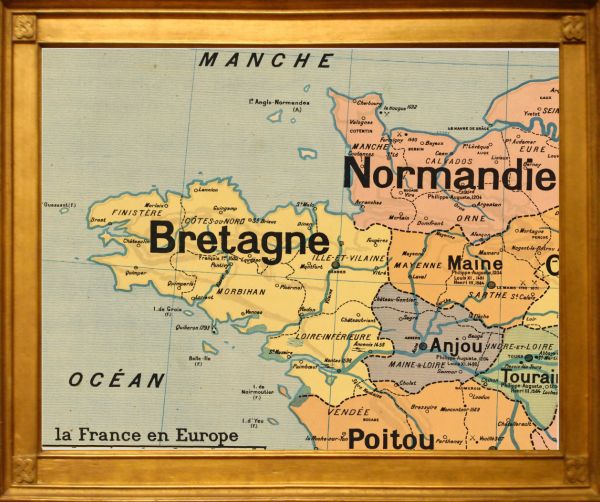
Eon de l’Étoile provides one of the clearest examples of explicit self-deification in the medieval West, emerging from the intersection of rural hardship, charismatic authority, and religious imagination. Active in Brittany during the mid-twelfth century, Eon appeared at a time when famine and instability had placed considerable strain on local populations. The boundaries between accepted belief and radical innovation could become porous, allowing figures who claimed extraordinary authority to attract attention. Eon’s emergence illustrates how local crises could create openings for individuals to reinterpret religious language in ways that challenged established structures.
Eon’s claim to divine status appears to have developed through a combination of scriptural misinterpretation and performative charisma. According to contemporary accounts, he interpreted the Latin phrase “per eum qui venturus est judicare vivos et mortuos” (“through him who will come to judge the living and the dead”) as a reference to himself, seizing upon the phonetic similarity between “eum” and his own name. This interpretive leap, while linguistically strained, provided a basis for asserting divine identity within a framework that retained the authority of scripture. By grounding his claim in recognized religious language, Eon was able to present his authority as both novel and continuous with established tradition. This blending of familiarity and innovation was crucial to the plausibility of his claims, as it allowed followers to interpret his assertions not as outright rejection of doctrine but as a revelation embedded within it. In a society where scriptural language carried immense authority, even unconventional interpretations could gain traction if presented with sufficient conviction and contextual resonance.
The symbolic practices associated with Eon further reinforced his claims and helped to structure the community that formed around him. One of the most frequently cited elements is the forked staff he carried, which he reportedly used as a sign of his power over heaven and earth. Whether understood as a ritual object, a symbol of authority, or a performative device, such elements contributed to the construction of a visible and tangible expression of his claimed divinity. Followers who participated in or observed these practices would have encountered not only a set of ideas but a lived experience that gave those ideas form and meaning. The use of physical symbols in this manner enhanced the immediacy of his authority, transforming abstract claims into concrete demonstrations that could be seen and interpreted within a shared framework. This performative dimension of leadership played a significant role in sustaining belief, as it allowed adherents to engage directly with the signs of divine power that Eon claimed to embody.
Eon’s movement also demonstrates the capacity of charismatic leadership to generate alternative social structures, even if only temporarily. He gathered a group of followers who recognized his authority and participated in a shared system of belief that operated outside the established Church. This community, though limited in scale, represented a direct challenge to ecclesiastical control, as it created a parallel framework for interpreting religious truth and organizing social relations. The existence of such a group underscores the extent to which individual claims to divinity could translate into collective action under the right conditions.
The response of ecclesiastical authorities to Eon reflects the perceived seriousness of this challenge. He was eventually captured and brought before a Church council in 1148, where his claims were examined and condemned. Contemporary accounts describe him as being treated as both heretic and madman, categories that often overlapped in medieval discourse. His imprisonment and subsequent death illustrate the mechanisms through which the Church sought to contain and neutralize threats to doctrinal and institutional authority, reaffirming the boundaries that his claims had transgressed. The proceedings against him also highlight the dual strategy often employed by ecclesiastical authorities, combining theological condemnation with efforts to discredit the individual personally. By framing Eon as both deluded and dangerous, officials could delegitimize his claims while reinforcing the authority of orthodox doctrine. This response reflects the broader imperative to maintain control over religious interpretation, particularly in cases where alternative claims threatened to attract significant followings.
Eon de l’Etoile encapsulates many of the themes central here, including the role of crisis, the power of charisma, and the limits of acceptable belief. His brief movement did not produce lasting institutional change, but it reveals the conditions under which radical claims could emerge and the speed with which they could be suppressed. In examining his story, it becomes possible to see more clearly how the medieval world managed the tension between pervasive belief in the divine and the strict regulation of who could claim to embody it.
Vilgard of Ravenna: Intellectual Heresy and Divine Claim (10th Century)
Vilgard of Ravenna offers a striking example of how claims to divine authority could emerge not only from rural or marginal contexts but also from within the intellectual life of the medieval world. Active in the late tenth century, Vilgard was reportedly a learned grammarian associated with the cultural revival often described as the Ottonian Renaissance. His background distinguishes him from those like Eon de l’Étoile, suggesting that the boundary between orthodoxy and heresy could be crossed even by those deeply embedded in elite intellectual traditions. This case underscores the breadth of contexts in which radical religious claims could arise. It also points to the increasing complexity of medieval intellectual culture, in which renewed engagement with classical texts and the growth of scholarly networks created new spaces for interpretation and authority. The line between legitimate scholarship and theological deviation could become difficult to maintain, particularly when intellectual ambition intersected with spiritual aspiration.
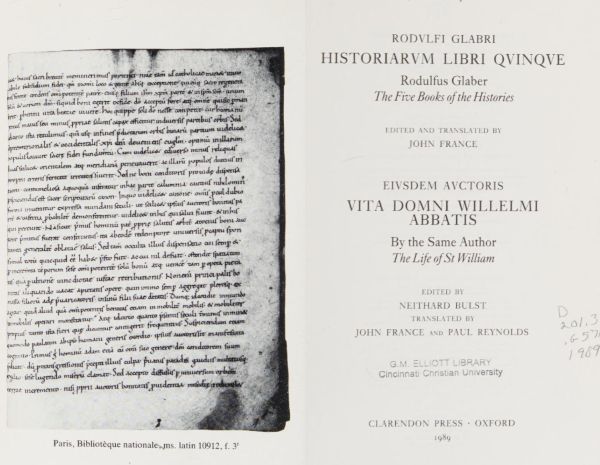
According to the chronicler Rodulfus Glaber, Vilgard experienced visionary encounters with figures he believed to be ancient authorities such as Virgil, Horace, and Juvenal. These apparitions, described as affirming his intellectual pursuits, appear to have reinforced his confidence in his own interpretive authority. This sense of validation reportedly expanded into theological claims that placed him in conflict with established doctrine. While the precise nature of his assertions is difficult to reconstruct due to the limitations of the source, the account suggests a progression from scholarly ambition to perceived spiritual elevation, illustrating how intellectual and religious domains could intersect in unexpected ways. The invocation of classical authors in this visionary context is particularly significant, as it reflects the tension between the revival of ancient learning and the dominance of Christian orthodoxy. By presenting them as sources of validation, Vilgard effectively positioned himself within an alternative intellectual lineage that bypassed ecclesiastical mediation, raising concerns about the legitimacy of his authority. This blending of classical and Christian elements may have amplified perceptions of deviation, contributing to the severity of the response he ultimately faced.
Vilgard’s case highlights the potential for learned culture itself to become a site of tension within medieval Christianity. The revival of classical texts and the emphasis on grammatical and rhetorical training created new opportunities for interpretation, but also new risks. Engagement with pagan authors and the cultivation of intellectual autonomy could be viewed with suspicion, particularly if it appeared to challenge ecclesiastical authority. Vilgard’s reported visions of classical figures may have been interpreted not only as signs of personal delusion but as evidence of improper engagement with non-Christian sources, further complicating his position.
The response to Vilgard reflects the mechanisms through which the Church sought to maintain doctrinal and intellectual control. He was condemned by ecclesiastical authorities and, according to available accounts, executed for his teachings. This outcome demonstrates the seriousness with which deviations from orthodoxy were treated, particularly when they involved individuals with the capacity to influence others through teaching and scholarship. The combination of intellectual authority and heterodox belief made such characters especially threatening, as they could potentially legitimize alternative interpretations within educated circles.
The historiographical challenges surrounding Vilgard’s case must be acknowledged. The primary account comes from a single chronicler whose narrative reflects the concerns and assumptions of his context. It is difficult to determine the extent to which Vilgard’s views were accurately represented or exaggerated for rhetorical effect. This uncertainty highlights the broader issue of source reliability in the study of medieval heresy, where surviving accounts often originate from hostile perspectives. Interpreting such cases requires careful consideration of both the content and the context of the sources. The possibility that elements of the narrative were shaped to serve moral or didactic purposes further complicates efforts at reconstruction, as medieval chroniclers often framed their accounts to reinforce orthodox positions. Consequently, Vilgard’s story must be read not only as a historical episode but also as a reflection of the ways in which deviation was conceptualized and communicated within medieval intellectual culture.
Despite these limitations, the story of Vilgard of Ravenna provides valuable insight into the range of circumstances under which claims to divine or exceptional authority could arise in the medieval world. His case demonstrates that such claims were not confined to marginalized or crisis-driven contexts but could also emerge from within established intellectual traditions. It reinforces the central argument here: that assertions of personal divinity, however they originated, represented a fundamental challenge to the structures of belief and authority that defined medieval society.
Mystical Union and the “Free Spirit” Movement
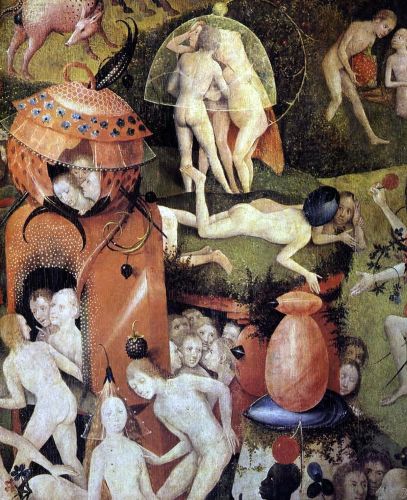
The so-called “Free Spirit” movement, associated with scattered groups and individuals in the fourteenth and fifteenth centuries, occupies a complex place in the history of medieval religious thought. Unlike figures who explicitly claimed to be God, those linked to this movement were often accused of articulating forms of mystical union so radical that they appeared to erase the distinction between the human and the divine. These accusations emerged within a broader context of intense spiritual experimentation, particularly in regions of northern Europe, where lay religious movements and vernacular theology flourished. The label “Free Spirit” itself was largely imposed by opponents, reflecting the polemical nature of the sources that describe these beliefs.
At the center of the controversy was the concept of union with God, a theme deeply embedded in Christian mystical tradition. Mystics sought an experiential closeness to the divine through contemplation, ascetic practice, and interior transformation, often describing this relationship in language that emphasized intimacy and unity. While orthodox theology maintained that such union did not imply identity, the metaphorical language used by mystics could be interpreted in ways that blurred this distinction. Statements suggesting that the soul could become “one” with God, or that a perfected individual no longer sinned, raised concerns among ecclesiastical authorities, who viewed such claims as potentially undermining the need for Church mediation and moral discipline.
The accusations directed at the Free Spirit movement often focused on the idea that individuals who achieved spiritual perfection transcended ordinary moral and religious obligations. According to hostile accounts, adherents were said to believe that once united with God, they were incapable of sin and not bound by conventional norms. Whether these claims accurately reflect the beliefs of those accused remains a matter of scholarly debate, as the surviving evidence is heavily filtered through inquisitorial and theological critiques. Nonetheless, the perception of such ideas as a threat highlights the sensitivity of medieval authorities to any suggestion that the established structures of religious life could be bypassed or rendered unnecessary.
The response to these perceived deviations was shaped by the broader development of mechanisms for identifying and suppressing heresy. Ecclesiastical authorities sought to clarify the boundaries of acceptable mystical expression, distinguishing between legitimate spiritual experience and doctrines deemed dangerous. This process involved both theological argument and judicial action, as individuals suspected of holding or promoting heterodox views were investigated and, in some cases, punished. The association of the Free Spirit movement with antinomianism, or the rejection of moral law, further intensified these responses, reinforcing the perception that such beliefs posed a threat to both religious and social order. In addition, theological treatises and sermons were used to articulate orthodox positions more clearly, providing guidance to clergy and laypeople on how to interpret mystical language within acceptable bounds. These efforts reflect a broader attempt to systematize and control spiritual discourse, ensuring that personal religious experience remained aligned with institutional authority. The tension between encouraging devotion and limiting doctrinal deviation highlights the delicate balance the Church sought to maintain in managing the growing diversity of religious expression during this period.
The Free Spirit movement illustrates the difficulties inherent in interpreting medieval mystical language and practice. It reveals how expressions of spiritual aspiration could be reinterpreted as claims to divine identity, particularly when viewed through the lens of institutional authority. It highlights the broader tension between personal religious experience and the structures that sought to regulate it. By examining these dynamics, it becomes possible to understand how the boundaries between orthodoxy and heresy were negotiated, and how the language of union could become a site of conflict in a world where the distinction between God and humanity was fundamental.
The Cathar Perfects: Dualism and Spiritual Divinity

The Cathar movement, which flourished in parts of southern France and northern Italy during the twelfth and thirteenth centuries, presents a distinct form of religious dissent that reconfigured rather than directly asserted claims to divinity. Rooted in a dualist cosmology, Cathar belief posited the existence of two opposing principles: a good, spiritual God and an evil or corrupt force responsible for the material world. This framework fundamentally altered the relationship between humanity and the divine, creating space for a form of spiritual identity that, while not explicitly claiming godhood, blurred the boundaries between the human soul and divine essence. Within this system, the material body was seen as a prison, while the soul was understood as originating from the realm of the good God.
Central to Cathar religious life were the “Perfects,” individuals who had undergone a rigorous process of initiation and spiritual discipline known as the consolamentum. These figures were regarded as living embodiments of the highest spiritual ideals, having renounced worldly attachments and committed themselves to a life of purity and asceticism. Although they did not claim to be God in the orthodox sense, their status placed them in a unique position within the community, as intermediaries who had achieved a degree of spiritual transformation that set them apart from ordinary believers. Their authority was grounded not in institutional hierarchy but in perceived moral and spiritual perfection.
The theological implications of this status were significant. By emphasizing the divine origin of the soul and the possibility of liberation from the material world, Cathar belief created a framework in which individuals could participate in the divine through spiritual purification. This participation did not equate to identity with God but did challenge orthodox understandings of the relationship between humanity and the divine. The emphasis on inner transformation and rejection of the material order stood in stark contrast to the sacramental system of the Church, which mediated access to divine grace through institutional channels.
The social organization of Cathar communities further reinforced this alternative vision of religious life. The distinction between the Perfects and the broader body of believers, often referred to as “credentes,” created a dual structure in which spiritual authority was concentrated in a relatively small group. The movement’s emphasis on personal commitment and moral discipline allowed it to attract a wide following, particularly in regions where dissatisfaction with ecclesiastical authority was pronounced. This combination of structured leadership and broad appeal contributed to the movement’s resilience and expansion. The relationship between Perfects and credentes was not merely hierarchical but also reciprocal, as the spiritual authority of the former depended in part on the recognition and support of the latter. Perfects relied on lay believers for material sustenance, while credentes looked to them for guidance, ritual leadership, and the promise of eventual spiritual advancement. This interdependence created a cohesive community structure that could sustain itself even under external pressure. The clear delineation of roles within the movement provided a sense of order and purpose that contrasted with the perceived corruption of the established Church, further enhancing its appeal and durability.
The response of the Catholic Church to the Cathar movement was both theological and military, reflecting the perceived magnitude of the threat it posed. The Albigensian Crusade, launched in the early thirteenth century, represented a coordinated effort to eliminate Catharism through force, while the establishment of inquisitorial mechanisms sought to identify and suppress remaining adherents. These actions underscore the extent to which the movement’s alternative theology and social organization were viewed as incompatible with established authority. The intensity of the response highlights the broader implications of Cathar belief for the structure of medieval Christian society.
The Cathar Perfects illustrate a form of religious deviation that did not rely on explicit claims to divinity but nonetheless challenged the boundaries that defined orthodoxy. By redefining the relationship between the human soul and the divine, the movement created a space in which spiritual identity could approach, without fully crossing, the line into divine participation. This ambiguity made it both compelling to followers and threatening to authorities, demonstrating that the limits of acceptable belief in the medieval world could be contested in ways that extended beyond direct assertions of godhood.
Jewish Messianic Claimants: Authority Without Direct Divinity
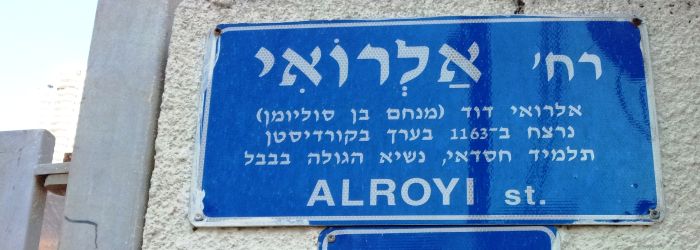
Medieval Jewish messianic movements present a parallel yet distinct form of religious authority that differed fundamentally from Christian claims to divinity. While individuals did at times claim to be the Messiah, they did not typically assert that they were God in an ontological sense. Instead, messianic identity was framed within a long-standing theological tradition that emphasized the role of a divinely chosen human agent who would restore Israel, bring justice, and inaugurate an era of redemption. This distinction is crucial, as it highlights how claims to extraordinary authority could exist within accepted religious frameworks without crossing into direct assertions of divine identity.
David Alroy illustrates how such claims could emerge in response to political and social pressures. Active in the twelfth century in the region of Mesopotamia, Alroy reportedly proclaimed himself the Messiah and sought to lead a movement aimed at restoring Jewish autonomy. His claims were shaped by the conditions of Jewish life under foreign rule, where restrictions and marginalization created a context in which messianic expectations could intensify. By presenting himself as a divinely appointed leader, Alroy offered a vision of liberation that resonated with followers seeking both spiritual and political transformation.
Messianic movements often combined elements of religious tradition with practical strategies for change. Leaders like Alroy did not simply articulate theological claims but also attempted to organize collective action, drawing upon networks of communication and shared identity within Jewish communities. The authority they claimed was grounded in scriptural interpretation and prophetic expectation, allowing them to position their movements within a recognized framework while extending its implications into the political sphere. This blending of religious and practical concerns reflects the adaptability of messianic thought in addressing the challenges of medieval life. Such leaders often framed their missions through the language of restoration and fulfillment, invoking prophetic traditions that emphasized divine intervention in history. This rhetorical strategy not only legitimized their claims but also provided a shared vocabulary through which followers could interpret their actions. The reliance on scriptural precedent created continuity with established belief, even as the movement itself represented a departure from ordinary expectations. This dynamic allowed messianic leaders to navigate the tension between tradition and innovation, grounding their authority in familiar texts while expanding their meaning to address contemporary circumstances.
The reception of such movements was shaped by both internal and external factors. Within Jewish communities, responses could vary, with some individuals embracing the promise of redemption while others remained skeptical or opposed. External authorities, including regional rulers, often viewed these movements with suspicion, particularly when they appeared to threaten established order. In the case of Alroy, his activities eventually provoked a response that led to his downfall, illustrating the limits imposed on such claims by the broader political environment.
The study of medieval Jewish messianic claimants reveals a form of religious authority that operated within defined theological boundaries while still carrying significant social and political implications. By stopping short of direct claims to divinity, these movements avoided some of the doctrinal conflicts present in Christian contexts, yet they could still challenge existing structures through their emphasis on transformation and renewal. They demonstrate the diversity of ways in which individuals and communities articulated extraordinary authority in the medieval world, expanding the comparative framework through which such phenomena can be understood.
Institutional Response: Inquisition, Punishment, and Control

The institutional response to claims of divinity in the medieval world was shaped by the perceived necessity of preserving both doctrinal integrity and social stability. Ecclesiastical authorities understood that challenges to the established order of belief could not be treated as isolated theological disputes but as potential threats to the cohesion of Christian society. The mechanisms developed to address heresy were designed not only to correct error but to reinforce the authority of the Church and its role as the sole legitimate mediator of divine truth. This dual function made the response to radical claims particularly decisive and, at times, severe.
The emergence of formalized inquisitorial procedures in the High Middle Ages marked a significant development in the regulation of belief. While earlier responses to heresy had been more localized and ad hoc, the establishment of institutions such as the papal Inquisition created a more systematic approach to investigation and judgment. Inquisitors were tasked with identifying individuals suspected of holding or promoting heterodox views, gathering testimony, and determining appropriate penalties. This process combined legal and theological elements, reflecting the integration of religious and judicial authority within medieval society.
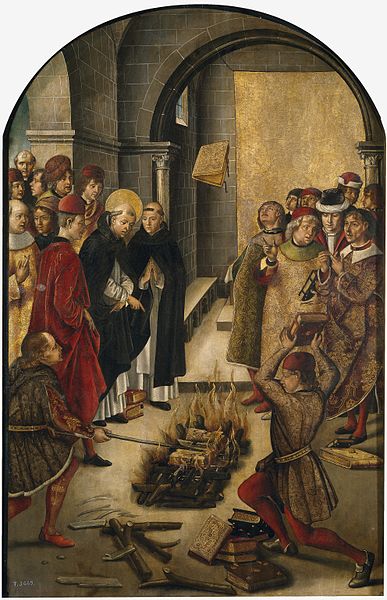
Punishments for heresy varied depending on the perceived severity of the offense and the willingness of the accused to recant. Lesser penalties might include penance, fines, or temporary imprisonment, while more serious cases could result in permanent incarceration or execution. Claims to divinity, given their direct challenge to fundamental doctrine, were typically treated as among the gravest offenses. The use of public punishment served not only to eliminate perceived threats but also to communicate the consequences of deviation to the broader population, reinforcing the boundaries of acceptable belief through visible demonstration. Public spectacles of punishment, including executions, functioned as powerful tools of social messaging, ensuring that the consequences of transgression were widely understood. These events were often staged in ways that emphasized the restoration of order, presenting the punishment as both justice and correction. In addition, the formal processes leading up to such outcomes, including confession and sentencing, were structured to reaffirm the authority of the Church at every stage. This combination of procedure and spectacle underscores the extent to which punishment operated as a means of reinforcing both doctrinal clarity and institutional control.
The role of the Inquisition extended beyond the punishment of individuals to the broader control of religious discourse. By defining and prosecuting heresy, inquisitorial authorities helped to shape the parameters within which religious ideas could be expressed and interpreted. This process involved the production of texts, the dissemination of doctrinal clarifications, and the training of clergy to identify and respond to deviation. The Inquisition functioned as both an instrument of enforcement and a means of intellectual regulation, contributing to the maintenance of orthodoxy at multiple levels.
The application of these mechanisms reveals the limitations of institutional control. Despite the efforts of the Church to suppress heretical movements and individual claims, such ideas continued to emerge, often in new and adapted forms. The persistence of these challenges suggests that the underlying conditions that gave rise to them (social tension, intellectual curiosity, and the search for meaning) could not be entirely eliminated. Instead, the institutional response became part of an ongoing dynamic, in which suppression and innovation interacted in complex ways. In some cases, repression may have even intensified commitment among followers, reinforcing group identity through shared opposition to authority. The necessity of continual vigilance and repeated intervention highlights the difficulty of fully controlling belief, particularly in a society where religious expression was deeply embedded in daily life. This ongoing tension illustrates the limits of institutional power, as well as the resilience of alternative forms of religious thought.
The response of medieval institutions to claims of divinity reflects a broader pattern in the relationship between authority and belief. By developing systems of investigation, classification, and punishment, the Church sought to maintain the coherence of its doctrinal framework and the stability of the society it helped to organize. Yet the very need for such systems underscores the presence of alternative voices and the potential for disruption inherent in religious life. In examining these responses, it becomes clear that the regulation of belief was both a central concern and a continual challenge within the medieval world.
Comparative Analysis: Patterns Across Medieval Divine Claims
When viewed across different regions and traditions, medieval claims to divine or quasi-divine authority reveal a set of recurring structural patterns despite their relative rarity. Whether in the case of Eon de l’Étoile, the intellectual deviation attributed to Vilgard of Ravenna, or the more indirect forms of spiritual elevation found in movements such as the Free Spirit or Cathar traditions, these phenomena consistently emerged at the intersection of belief, crisis, and authority. While the specific content of each case varied, their underlying dynamics demonstrate that claims approaching or asserting divinity were not random anomalies but expressions shaped by identifiable conditions within medieval society.
A central pattern is the role of charismatic individuals who were able to articulate and embody alternative forms of authority. These figures often combined personal conviction with performative elements, presenting themselves as uniquely connected to the divine in ways that resonated with their audiences. Their authority did not rely on institutional endorsement but on the recognition of followers, creating a form of legitimacy that operated outside established hierarchies. This dynamic allowed such individuals to attract and organize communities, even when their claims directly contradicted orthodox doctrine.
Another consistent feature is the relationship between these claims and periods of social or economic instability. Famine, political fragmentation, and broader uncertainty created environments in which traditional structures of explanation and control appeared insufficient. The appeal of individuals who offered new interpretations of divine authority was significantly heightened. The promise of transformation, whether framed as personal salvation or broader renewal, provided a powerful incentive for participation, enabling these movements to gain momentum despite the risks involved. These conditions also weakened the mechanisms through which orthodox authority was typically maintained, creating temporary gaps in oversight that could be exploited by charismatic types. In regions where institutional presence was limited or compromised, alternative leaders could establish localized systems of belief and organization that operated with relative autonomy. This convergence of hardship and opportunity helps explain why such movements, though rare, could achieve rapid and sometimes surprising levels of influence before encountering formal opposition.
The forms that these claims took were shaped by the theological boundaries of the societies in which they emerged. Direct assertions of personal divinity were rare, particularly within Christian contexts where such claims directly violated core doctrines. More commonly, individuals and movements approached the boundary indirectly, through concepts such as mystical union, spiritual perfection, or messianic identity. These forms allowed for the expression of extraordinary authority without always crossing into explicit self-deification, though they could still provoke strong institutional responses when perceived as threatening. The use of symbolic or metaphorical language played a significant role in this process, enabling individuals to articulate elevated spiritual status in ways that could be interpreted differently by various audiences. In some cases, ambiguity may have been intentional, providing a degree of protection by avoiding direct confrontation with doctrinal prohibitions. In others, it reflected genuine attempts to describe experiences that resisted clear categorization within existing theological frameworks. This adaptability in expression highlights the complexity of these movements, as they navigated the constraints imposed by orthodoxy while seeking to articulate alternative visions of divine relationship.
The institutional reaction to these claims represents a final and equally consistent pattern. Across different cases, the response of ecclesiastical and, at times, secular authorities was characterized by investigation, condemnation, and suppression. This reaction reflects the extent to which such claims were understood as challenges not only to doctrine but to the broader social order. The repetition of this pattern across time underscores the structural tension between individual expressions of religious authority and the systems designed to regulate them, highlighting the limits of acceptable belief in the medieval world.
Historiography: Madness, Heresy, or Social Phenomenon?
The following video from “The Histories” is a short history of the Cathars:
Interpretations of medieval claims to divinity have shifted significantly, reflecting broader changes in historical methodology and intellectual perspective. Earlier accounts, particularly those rooted in ecclesiastical sources, tended to frame them primarily in terms of heresy or madness. Chroniclers and theologians often portrayed individuals who claimed divine authority as either deliberate deceivers or deluded individuals, emphasizing moral and doctrinal failure. These interpretations were closely tied to the institutional priorities of the Church, which sought to reinforce the boundaries of orthodoxy and to delegitimize alternative forms of belief through narrative as well as action.
Nineteenth- and early twentieth-century historians frequently adopted and extended these perspectives, interpreting them through emerging frameworks of psychology and rationalism. Claims to divinity were often explained as manifestations of mental instability or as examples of primitive or irrational thought. While these approaches moved beyond strictly theological explanations, they often retained a reductive character, focusing on the individual at the expense of the broader social and cultural context. This tendency reinforced the view of such claims as anomalies rather than as phenomena embedded within historical conditions. In addition, the growing influence of positivist historiography encouraged scholars to seek rational explanations that aligned with modern assumptions about belief and behavior, often dismissing religious experience as inherently suspect or secondary to material factors. The result was an interpretive model that replaced theological judgment with psychological diagnosis without fundamentally rethinking the underlying assumptions about deviation. Such readings, while influential, limited the capacity to understand these people within the frameworks that made their claims meaningful to contemporaries.
More recent scholarship has sought to move beyond these limitations by situating claims to divine or quasi-divine authority within their social and historical environments. Influenced by developments in social history, anthropology, and the sociology of religion, historians have increasingly emphasized the importance of context in shaping both the emergence and interpretation of such claims. Rather than viewing those like Eon de l’Étoile or Vilgard of Ravenna as isolated cases of deviation, scholars now examine the conditions that made their claims intelligible and, to some extent, persuasive. This approach highlights the role of crisis, communal belief, and symbolic language in the formation of alternative religious authority. It also places greater emphasis on the shared frameworks within which these claims operated, recognizing that even the most unconventional assertions drew upon widely understood religious concepts and practices. By reconstructing the cultural and intellectual environments in which these figures acted, historians have been able to shift the focus from individual pathology to collective meaning, offering a more balanced and historically grounded interpretation.
Historians have become increasingly attentive to the nature of the sources on which these interpretations are based. Many of the surviving accounts of medieval heresy were produced by opponents, often with the explicit aim of condemning and discrediting the individuals or movements in question. These texts must be read critically, with attention to their rhetorical strategies and underlying assumptions. This awareness has led to more nuanced reconstructions that acknowledge both the limitations of the evidence and the possibility of alternative interpretations that are not fully captured in hostile narratives.
The historiography of medieval divine claims reflects a broader shift from judgment to analysis, moving away from categories such as madness or deception toward a more complex understanding of religious life. By integrating insights from multiple disciplines and critically engaging with available sources, modern scholarship has begun to uncover the underlying dynamics that shaped these phenomena. This approach does not deny the unusual nature of such claims but situates them within the broader patterns of medieval society, revealing how they functioned as responses to specific conditions and as expressions of the enduring tension between individual experience and institutional authority.
Conclusion: The Limits of Divinity in a Structured World
The medieval world was saturated with belief in the divine, yet it imposed strict limits on who could claim access to, or identity with, that divinity. God functioned not only as a theological concept but as a central organizing principle of society, shaping authority, law, and communal identity. Claims to personal divinity were not simply unusual but fundamentally destabilizing, challenging the structures that defined both religious and social order. Their rarity reflects not a lack of imagination but the strength of the boundaries that governed belief.
The cases examined here (from Eon de l’Étoile to Vilgard of Ravenna, alongside movements such as the Free Spirit and the Cathars) demonstrate that such claims emerged under specific and often extreme conditions. Crisis, whether economic, political, or cultural, created openings in which alternative forms of authority could be articulated and, for a time, sustained. These moments reveal the capacity of individuals to reinterpret established traditions in ways that resonated with their contemporaries, even when those reinterpretations crossed into prohibited territory.
The consistent and often severe responses to these claims underscore the importance of maintaining doctrinal and institutional control. The development of mechanisms such as the Inquisition, the use of public punishment, and the production of polemical narratives all reflect a concerted effort to define and defend the limits of acceptable belief. These responses were not merely reactive but integral to the maintenance of a system in which religious authority underpinned social stability. By confronting and suppressing deviation, institutions reaffirmed the boundaries that gave the system its coherence. Yet the persistence of such claims, however limited in scope or duration, reveals the limits of institutional authority over belief. Despite the structures designed to regulate religious expression, individuals and communities continued to explore alternative understandings of the divine, drawing on shared traditions while extending them in new directions. This dynamic highlights the tension between control and creativity in religious life, where the same frameworks that enable belief also provide the language through which they can be challenged.
The study of medieval claims to divinity illuminates a broader pattern in the relationship between belief and power. It shows that even in a world where God was understood as an unquestioned reality, the meaning and boundaries of that reality were continually negotiated. Claims to divine identity, though rare and often suppressed, expose the fault lines within a system that sought to integrate the human and the divine while keeping them distinct. They reveal the complex interplay between faith, authority, and the enduring human impulse to redefine both.
Bibliography
Affiliate disclosure: Amazon links on this site are paid links. As an Amazon Associate I earn from qualifying purchases.
- Aquinas, Thomas. Summa Theologica. Translated by Fathers of the English Dominican Province. New York: Benziger Bros., 1947.
- Barber, Malcolm. The Cathars: Dualist Heretics in Languedoc in the High Middle Ages. London: Longman, 2000.
- Baron, Salo W. A Social and Religious History of the Jews: Volume VII High Middle Ages (500-1200). New York: Columbia University Press, 1957.
- Brown, Peter. The Cult of the Saints: Its Rise and Function in Latin Christianity. Chicago: University of Chicago Press, 1981.
- —-. The Rise of Western Christendom: Triumph and Diversity, AD 200–1000. 2nd ed. Malden, MA: Blackwell, 1996.
- Cohn, Norman. The Pursuit of the Millennium: Revolutionary Millenarians and Mystical Anarchists of the Middle Ages. Oxford: Oxford University Press, 1957.
- Gil, Moshe. A History of Palestine, 634–1099. Cambridge: Cambridge University Press, 1992.
- Idel, Moshe. Messianic Mystics. New Haven: Yale University Press, 1998.
- Kaelber, Lutz. “Weavers into Heretics? The Social Organization of Early-Thirteenth-Century Catharism in Comparative Perspective.” Social Science History 21:1 (1997), 111-137.
- Kelly, Henry Ansgar. “Inquisition and the Prosecution of Heresy: Misconceptions and Abuses.” Church History 58:4 (1989), 439-451.
- Kieckhefer, Richard. Magic in the Middle Ages. Cambridge: Cambridge University Press, 1989.
- Krahenbuhl, Kevin. “The Albigensian Crusade: A Twist in the Story of the Crusades.” Medieval Warfare 3:4 (2013), 6-11.
- Lambert, Malcolm. The Cathars. Oxford: Blackwell, 1998.
- Le Goff, Jacques. Medieval Civilization 400–1500. Oxford: Blackwell, 1988.
- Lea, Henry Charles. A History of the Inquisition of the Middle Ages. New York: Harper & Brothers, 1888.
- Lerner, Robert E. The Heresy of the Free Spirit in the Later Middle Ages. Berkeley: University of California Press, 1972.
- McGinn, Bernard. The Flowering of Mysticism: Men and Women in the New Mysticism (1200–1350). New York: Crossroad, 1998.
- Moore, R. I. The Formation of a Persecuting Society: Authority and Deviance in Western Europe, 950–1250. Oxford: Blackwell, 1987.
- —-. “The Origins of Medieval Heresy.” History 55:183 (1970), 21-36.
- Orderic Vitalis. The Ecclesiastical History of Orderic Vitalis. Edited and translated by Marjorie Chibnall. Oxford: Clarendon Press, 1969–1980.
- Pelikan, Jaroslav. The Christian Tradition: A History of the Development of Doctrine, Vol. 1: The Emergence of the Catholic Tradition (100–600). Chicago: University of Chicago Press, 1971.
- Peters, Edward. Inquisition. New York: Free Press, 1988.
- Rodulfus Glaber. Historiarum Libri Quinque (Five Books of Histories). Edited and translated by John France. Oxford: Oxford University Press, 1989.
- Scholem, Gershom. The Messianic Idea in Judaism and Other Essays on Jewish Spirituality. New York: Schocken Books, 1971.
- Stock, Brian. The Implications of Literacy: Written Language and Models of Interpretation in the Eleventh and Twelfth Centuries. Princeton: Princeton University Press, 1983.
- Wakefield, Walter L., and Austin P. Evans, eds. Heresies of the High Middle Ages. New York: Columbia University Press, 1991.
- Weber, Max. Economy and Society: An Outline of Interpretive Sociology. Translated by Guenther Roth and Claus Wittich. Berkeley: University of California Press, 1978.
Originally published by Brewminate, 05.01.2026, under the terms of a Creative Commons Attribution-NonCommercial-NoDerivatives 4.0 International license.
About the Author