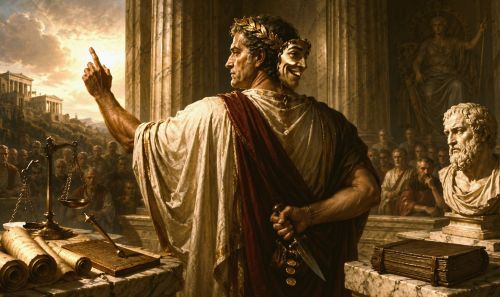
Ancient societies praised freedom, justice, piety, and virtue while often building power on slavery, empire, exclusion, and moral performance.

By Matthew A. McIntosh
Public Historian
Brewminate
Introduction: The Mask of Virtue in the Ancient World
The ancient world did not invent hypocrisy, but it gave later moral language one of its most enduring images: the mask. The Greek hypokritēs first belonged to the world of performance, referring to an actor, interpreter, or stage player, one who spoke from within an assumed role before a watching public. That theatrical origin matters because hypocrisy is never only private inconsistency. It is a public drama of virtue. The hypocrite does not merely fail to live up to an ideal; he performs loyalty to that ideal while benefiting from its violation. In that sense, hypocrisy belongs naturally to worlds of law, philosophy, religion, and politics, because those are the arenas in which societies declare their highest principles. Freedom, justice, piety, moderation, equality, wisdom, and civic duty become visible as public claims before they become measurable as lived realities. The mask appears when the claim survives but the conduct betrays it.
Here I approach ancient hypocrisy not as a simple catalogue of moral failure, but as a historical problem rooted in the gap between proclaimed ideals and operating systems of power. Athens praised freedom while commanding tribute from subject allies. Its democracy celebrated civic speech while prosecuting Socrates for impiety and corruption. Roman aristocrats exalted libertas while presiding over a republic and later an empire built upon enslavement, conquest, and hierarchy. Philosophers analyzed justice and virtue while often preserving sharp boundaries around citizenship, gender, class, and servitude. Early Christians announced a transformed community in which ethnic and ritual distinctions were overcome, yet the conflict at Antioch revealed how quickly social pressure could fracture theological principle. These were not all identical contradictions, and they should not be flattened into a single modern accusation. Yet they shared a recurring structure: an ancient community or thinker articulated a moral ideal, then limited that ideal when it threatened inherited privilege, civic order, imperial advantage, or institutional authority.
The point is not that ancient Greeks, Romans, Jews, or Christians were uniquely dishonest, nor that modern observers can stand above them untouched by similar contradictions. The more serious claim is that hypocrisy becomes historically visible precisely where moral language becomes powerful. A city that never speaks of freedom cannot be accused of betraying freedom in the same way as a city that makes freedom central to its identity. A ruling class that never praises restraint is less vulnerable to charges of luxury than one that turns self-mastery into public virtue. A religious community that never proclaims humility cannot be judged by the contrast between humility and clerical ambition. Ancient hypocrisy, then, was not merely a defect of character. It was often structural, generated by the same institutions that made virtue socially meaningful. Law courts, assemblies, theaters, philosophical schools, aristocratic households, imperial administrations, and churches all produced roles through which moral authority could be claimed, displayed, contested, and abused. The more elaborate the public vocabulary of virtue became, the more opportunities it created for contradiction. Ideals gave communities a way to justify themselves, but they also gave critics a language with which to expose them. This is why hypocrisy is so closely bound to civilization itself: it appears wherever power needs moral explanation, wherever domination seeks the language of order, wherever exclusion is defended as prudence, and wherever inherited privilege dresses itself in the garments of justice.
The mask of virtue offers more than an etymological curiosity. It provides a way to examine the ancient world without reducing it either to admiration or condemnation. Athens really did create forms of citizen participation that shaped later democratic thought, and it really did rule a coercive empire. Rome really did develop legal and civic traditions of enormous historical consequence, and it really did normalize slavery as a foundation of social life. Greek philosophy really did sharpen the vocabulary of justice, reason, and the good life, and it often confined those ideals within deeply unequal assumptions. Early Christianity really did radicalize moral criticism against pride, wealth, and religious display, and it still struggled with exclusion, status, and power as it moved from marginal community to public institution. To study hypocrisy in ancient law and philosophy is to study the pressure points where ideals met reality. It is to watch ancient societies step onto the stage, speak in the language of virtue, and reveal, sometimes unwillingly, what stood behind the mask.
Greek Beginnings: Hypokritēs, Theater, and the Performance of Public Morality

The language of hypocrisy begins not in a courtroom or a sermon, but in the theater. In classical Greek usage, hypokritēs referred to an actor, a respondent, or an interpreter, someone who answered, explained, or performed a role before others. The later moral meaning did not erase this theatrical origin; it deepened it. A hypocrite, in the fullest sense, is not merely someone who lies. He is someone who appears under a role, presenting one face to the public while concealing another pattern of conduct beneath it. Greek drama made this image concrete. The actor stood before the city in costume and mask, speaking words that were not simply his own, but that nevertheless disclosed truths about power, fear, ambition, divine justice, civic order, and human self-deception. The stage was never just entertainment. It was a civic mirror in which the polis watched moral language take bodily form.
The setting of Greek theater made that mirror intensely public. Athenian tragedy and comedy were performed within civic and religious festivals, especially the City Dionysia, where dramatic competition, ritual procession, public expenditure, and collective identity converged. Citizens did not encounter drama as isolated readers or private consumers. They encountered it as members of a political community watching stories about kings, warriors, mothers, exiles, gods, tyrants, and cities under judgment. That context matters because theatrical performance trained audiences to see morality as something staged before others. Honor could be displayed. Piety could be invoked. Justice could be claimed. Yet drama repeatedly showed that public claims and inward motives were not the same thing. A character could speak the language of law while pursuing revenge, invoke the gods while protecting status, or claim civic necessity while crushing human obligation. The audience, gathered as a civic body, was asked not merely to follow a plot but to judge the pressures that turned noble language into dangerous action. In that sense, the theater sharpened a habit of public discernment. It taught Athenians to listen for the strain between what a person said, what a person wanted, and what a person’s position made possible. The mask did not simply hide identity. It made identity legible as performance.
Tragedy was especially powerful because it dramatized moral contradiction without reducing it to simple villainy. In Aeschylus, Sophocles, and Euripides, characters often speak from within competing systems of obligation, each claiming legitimacy. Agamemnon can be imagined as a king obeying military necessity and as a father sacrificing his daughter to preserve command. Creon can defend civic order while violating kinship, piety, and the unwritten laws that Antigone claims stand above the state. Medea can expose the vulnerability of women and foreigners while committing an act that horrifies the moral imagination. These figures are not hypocrites in the shallow sense of saying one thing and doing another for trivial advantage. They reveal something more dangerous: the human ability to wrap destructive conduct in the language of necessity, justice, honor, or divine sanction. Tragedy exposed the moral elasticity by which people justify what they need, desire, or fear.
Comedy sharpened the same insight through ridicule rather than catastrophe. Aristophanic comedy presented public life as noisy, bodily, opportunistic, and absurd, dragging statesmen, intellectuals, jurors, generals, and ordinary citizens into a theater of mockery. In comedy, moral posturing is rarely allowed to remain dignified. The pompous speaker becomes ridiculous. The reformer may be revealed as self-interested. The city that praises wisdom may be shown chasing novelty, appetite, money, or power. Aristophanes’ treatment of Socrates in Clouds is historically unfair if taken as biography, but theatrically revealing as a satire of intellectual performance and civic anxiety. The philosopher appears as a public type, a man whose words seem to float above ordinary obligations while unsettling inherited norms. Comedy, then, did not merely laugh at hypocrisy. It exposed the vulnerability of every public role to parody. Politician, priest, soldier, philosopher, husband, juror, and citizen could all become masks.
This theatrical culture shaped the broader moral life of the polis because Greek public identity depended heavily on visibility. Reputation, speech, gesture, ritual participation, military service, courtroom argument, and assembly debate all required performance before others. The citizen had to appear as a citizen. The litigant had to present himself as honorable. The general had to claim courage and prudence. The orator had to persuade the city that his advice served the common good rather than private ambition. Such a world did not automatically produce hypocrisy, but it created the conditions in which hypocrisy could flourish and be recognized. The same practices that made virtue public also made virtue theatrical. A democratic culture of speech and judgment depended on appearances, and appearances could be managed. This was especially true in Athens, where political authority depended not on hidden bureaucratic machinery but on persuasion before fellow citizens. Public life rewarded those who could make private interest sound like common interest, fear sound like prudence, vengeance sound like justice, and ambition sound like service. The danger was not only that bad men might deceive good citizens. It was that the structures of civic life made moral performance unavoidable even for those who sincerely believed in the ideals they invoked. This is why Greek political and philosophical writing so often worried about seeming versus being, opinion versus truth, reputation versus character, and persuasion versus justice.
The Greek beginning of hypocrisy, then, lies in more than vocabulary. It lies in a civilization that made public life intensely performative and then developed dramatic and philosophical tools for interrogating that performance. Theater gave the image: the mask, the actor, the role, the voice that both reveals and conceals. Civic life gave the problem: citizens, leaders, litigants, priests, and thinkers all had reasons to appear virtuous before the city. Philosophy would later press the question more abstractly, asking whether justice was merely what people praised or something rooted in the soul, reason, nature, or divine order. But the theater had already staged the dilemma. The ancient hypocrite emerged from a world in which virtue had to be seen, named, enacted, and judged, and where every public claim of morality carried the unsettling possibility that it was only a role being played well.
Democratic Athens and Imperial Violence: Freedom for Citizens, Domination for Allies
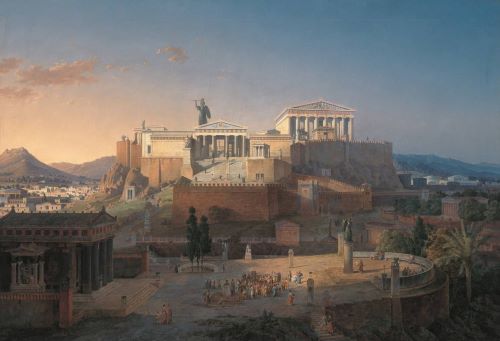
Athens presents one of the most powerful ancient examples of moral contradiction because its democratic identity and imperial conduct were not separate accidents of history. They developed together. In the fifth century BCE, Athens became a city that spoke with unusual force about freedom, citizen equality, public deliberation, and resistance to tyranny. Its male citizens voted in the Assembly, served on juries, debated policy, held magistracies, and imagined themselves as participants in a political order unlike monarchy or oligarchy. Yet the same city presided over an empire that extracted tribute from allied states, enforced obedience through naval power, and punished communities that attempted to withdraw from Athenian control. The contradiction was not simply that Athens failed to live up to its ideals in some abstract moral sense. It was that Athenian freedom was sustained, funded, and dramatized through relationships of domination outside the citizen body. The democracy that taught later generations to admire civic liberty also taught an older lesson: freedom can become a privilege guarded by those willing to deny it to others.
The origins of this contradiction lay in the aftermath of the Persian Wars. The Delian League began as an alliance of Greek states organized against Persia, with Athens as the leading naval power. In principle, the alliance could be presented as a cooperative defense of Greek autonomy. It gradually hardened into Athenian command. Allied contributions, whether in ships or money, became increasingly subject to Athenian control, and the transfer of the league treasury from Delos to Athens symbolized a deeper political transformation. Tribute helped finance not only naval readiness but also the public architecture, festivals, payments, and civic prestige that made Athens appear so magnificent to itself and to others. The empire was not an external contradiction sitting beside democracy; it was woven into the material conditions that magnified democratic Athens. The Parthenon, the courts, the fleet, the festivals, and the confident rhetoric of civic greatness all stood in the shadow of tribute. Athens could praise equality among citizens while treating allied communities as resources to be managed. The very language of alliance became strained by the reality of hierarchy, since “allies” who could not freely depart were no longer partners in any meaningful political sense. What began as collective security against Persia became an Athenian system of extraction, surveillance, and punishment, one in which naval supremacy turned consent into dependence. This evolution matters because imperial domination did not arrive as a sudden betrayal of democracy from outside. It emerged through democratic decisions, public votes, strategic calculations, and fiscal choices made by the citizen body itself. Athens did not merely possess an empire; the democracy participated in making and maintaining one.
This tension is visible in Thucydides’ presentation of Pericles’ Funeral Oration, one of the most famous statements of Athenian democratic self-understanding. Pericles describes Athens as a model for others, a city governed by the many rather than the few, open in culture, courageous in war, and devoted to both public life and private refinement. The speech is not meaningless propaganda. It captures something real about Athenian civic experience, especially for citizens who enjoyed direct participation in political life. Yet its brilliance depends partly on what it does not foreground. The “freedom” celebrated in the speech is internal, bounded by citizenship and protected by power. The allies who paid tribute, the subject cities disciplined by the fleet, enslaved persons within Attica, women excluded from political participation, and resident foreigners who lived under Athenian law without citizen rights all stood outside the central promise. Pericles’ Athens could imagine itself as an education to Greece, but the empire experienced that education as command. The mask of democratic virtue did not require Athens to lie about its institutions; it required Athens to universalize the dignity of citizen freedom while narrowing the circle of those entitled to share it.
The most severe exposure of this contradiction comes in the Melian Dialogue. Thucydides stages the encounter between Athenian envoys and the neutral island of Melos as a stripping away of moral language. The Melians appeal to justice, neutrality, divine favor, and the hope that Sparta might intervene. The Athenians answer with the logic of power. They do not pretend that empire rests on equal right. They argue that justice has force only among those with equal power, while the strong do what their power permits and the weak endure what necessity requires. The horror of the episode lies not only in the eventual destruction of Melos, the killing of adult men, and the enslavement of women and children. It lies in the clarity with which Athens abandons the language of freedom when speaking to those beneath its power. The same city that celebrated open debate and civic equality among citizens could speak to a small island as an imperial master. In the Melian Dialogue, the mask slips. Athens does not cease being democratic; rather, its democracy reveals the imperial boundary of its moral imagination. The episode is especially devastating because the Athenians do not sound confused about what they are doing. They do not attempt to reconcile empire with justice by claiming that Melos has wronged them in some morally decisive way. Instead, they treat moral argument itself as irrelevant where power is unequal. This is hypocrisy at its most chilling, not because the Athenians speak piously while secretly acting brutally, but because their imperial speech exposes the limited field in which their democratic ideals were permitted to operate. Justice remained available among those recognized as political equals. Beyond that boundary stood necessity, fear, advantage, and command.
The contradiction also appeared in the treatment of rebellious allies. Naxos, Thasos, Mytilene, and other communities exposed the coercive structure beneath the language of alliance. Revolt was not interpreted as a claim to the same autonomy Athens cherished for itself, but as disobedience threatening the stability of empire. The Mytilenean Debate is especially revealing because it shows democratic deliberation operating inside imperial violence. The Athenians debate whether to execute the entire adult male population of Mytilene after revolt, and although the harsher decree is reversed, the discussion itself assumes Athens’ right to decide the fate of another polis. Cleon argues for severity, presenting mercy as weakness and empire as a tyranny that must be maintained by fear. Diodotus counters not with a purely humanitarian argument, but with a pragmatic case that moderation better serves Athenian interests. The debate shows Athenian democracy at work, but its object is domination. Citizens exercise freedom by deciding how harshly to rule others. That is the central hypocrisy: democratic procedure can coexist with imperial violence when the demos limits moral equality to itself. The episode also reveals how easily moral questions could be converted into administrative ones. Whether Mytilene deserved mercy became entangled with whether terror was useful, whether anger was politically wise, and whether mass punishment would preserve or weaken Athenian control. Even restraint, when it prevailed, did not necessarily arise from recognition of Mytilenean autonomy. It arose from a calculation about imperial management. In that sense, the debate did not solve the contradiction between democracy and empire; it made the contradiction visible in procedural form. A citizen assembly could deliberate carefully, reverse itself, and choose the less extreme policy, yet still operate from the premise that allied communities existed within the reach of Athenian judgment.
Athens forces a difficult conclusion. Its democracy was not a fraud, but neither was it innocent. It created real practices of citizen participation, legal accountability, public debate, and civic identity that deserve historical significance. Yet those practices were embedded in a world of exclusion and empire. The Athenian case is so important because it shows that hypocrisy does not always appear as a conscious deception by individuals who know themselves to be false. It can appear as a civic structure in which a community sincerely values freedom while defining freedom in ways that protect its own supremacy. Athens could denounce tyranny over Greeks in one context and behave tyrannically toward Greek allies in another. It could honor public speech at home while enforcing obedience abroad. Its citizens could experience democracy as liberation while others experienced Athenian power as coercion. The lesson is not that democratic language is empty. It is that democratic language becomes morally dangerous when a political community treats its own freedom as universal in theory but practically exclusive.
Piety, Law, and the Trial of Socrates: When Questioning Virtue Became Impiety
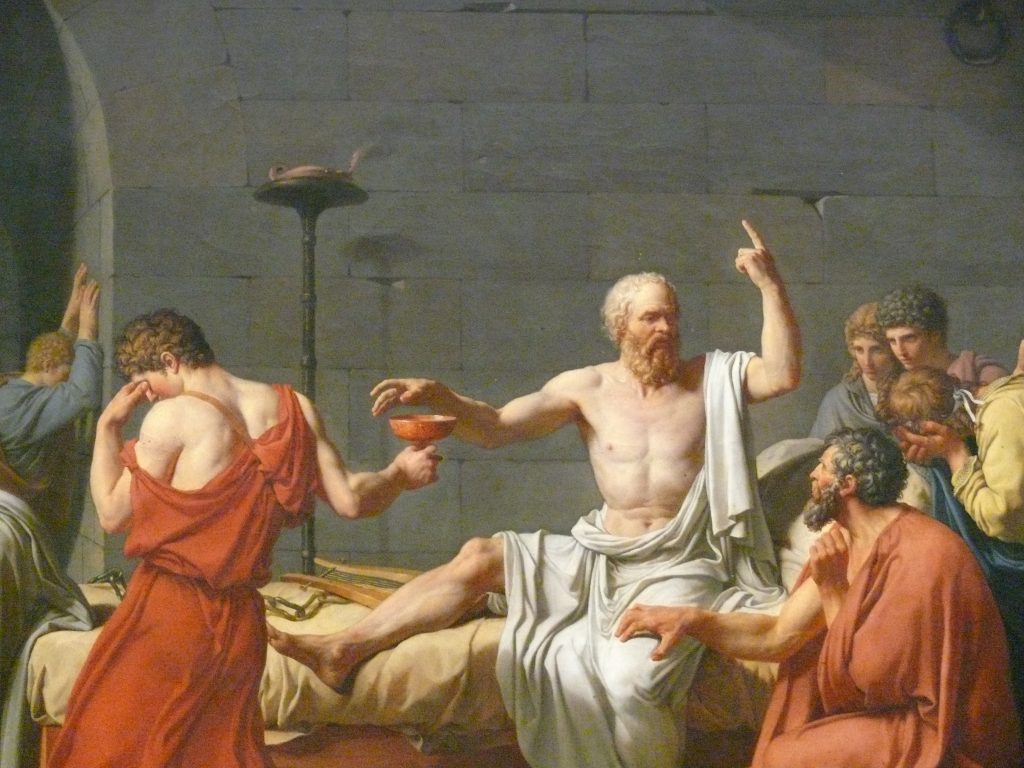
The trial of Socrates in 399 BCE exposed another fault line in the moral life of democratic Athens: the tension between a city that prized public speech and a city that feared speech capable of unsettling its gods, customs, and political confidence. Socrates was charged with impiety, with failing to acknowledge the gods recognized by the city, introducing new divine things, and corrupting the young. These accusations were not merely private grievances dressed in legal form. They belonged to a civic world in which religion, law, education, and public order were deeply intertwined. Athenian piety was not confined to inward belief. It was enacted through sacrifice, festivals, oaths, ancestral practices, and respect for the gods whose favor was understood to sustain the city. To challenge inherited assumptions about virtue, wisdom, authority, and divine knowledge could appear not as harmless philosophical inquiry but as a threat to the moral grammar of the polis itself. The hypocrisy lay in the fact that Athens honored public reasoning as a democratic virtue while punishing one of its most relentless practitioners when his questioning became too socially disruptive.
Plato’s Apology presents Socrates as a man who insists that he has served Athens precisely by refusing to flatter it. He claims that his questioning was a divine mission, a form of public service meant to awaken citizens from complacency and expose the ignorance hidden beneath reputations for wisdom. His method was not to present himself as the possessor of final answers, but to interrogate politicians, poets, craftsmen, and ambitious young men who believed themselves knowledgeable. In that sense, Socrates attacked one of the central masks of civic life: the appearance of virtue without self-knowledge. He did not merely ask whether Athenians behaved well. He asked whether they understood justice, courage, piety, moderation, and the good. That distinction made him dangerous. A democracy can tolerate disagreement more easily than exposure. Socrates did not simply oppose particular policies; he embarrassed the city’s public confidence by revealing that many who claimed moral authority could not define the virtues they performed. His trial became a legal answer to a philosophical embarrassment.
The charge of impiety is especially revealing because it converted moral inquiry into religious danger. Socrates’ accusers portrayed him as someone who destabilized traditional reverence, corrupted youth, and introduced strange divine influences. Yet the surviving accounts show a more complicated figure, one who speaks often of divine signs, obedience to the god, and the duty to care for the soul. The issue, then, was not simple atheism. It was the fact that Socrates relocated piety from conventional performance toward examined moral responsibility. In Plato’s Euthyphro, set just before the trial, Socrates presses the title character to define piety rather than merely perform confidence about it. Euthyphro claims to know what the gods require, even as he prosecutes his own father, but Socrates’ questioning exposes the instability of that certainty. The dialogue becomes a miniature of the larger civic problem. Athens possessed rituals of piety, laws concerning impiety, and public expectations of reverence, but Socrates asked whether piety could be reduced to approved behavior. For a city dependent on shared religious practice, that question was not merely theoretical. It threatened to separate true reverence from public conformity, and to expose piety itself as a possible mask.
The trial also cannot be separated from the political trauma of late fifth-century Athens. Socrates was tried only a few years after the city’s defeat in the Peloponnesian War and after the violent oligarchic regime of the Thirty Tyrants. Some of the men associated with Socrates, most notoriously Critias and Alcibiades, had become symbols of aristocratic arrogance, betrayal, or anti-democratic danger. Socrates was not legally tried for their crimes, but the memory of civic catastrophe surrounded the case. A restored democracy anxious about its survival could interpret philosophical criticism as aristocratic contempt and moral questioning as political subversion. This context does not make the verdict just, but it helps explain why democratic Athens reacted so harshly. The city that had once prided itself on intellectual brilliance now treated a philosopher as a contaminant. It defended civic virtue by killing the man who asked what virtue was. Here the hypocrisy becomes tragic rather than merely cynical: Athens punished Socrates in the name of moral order, yet the execution revealed the fragility of that order when confronted by persistent examination.
Socrates’ death belongs at the center of any history of ancient hypocrisy because it reveals how public ideals can turn coercive when they are questioned too deeply. Athens did not abandon piety, law, democracy, or civic virtue at the trial. It invoked them. That is precisely why the episode matters. The city used legal procedure to silence a man whose offense was bound up with asking whether citizens truly understood the values they claimed to honor. Socrates himself was hardly a neutral figure; he could be irritating, elitist in implication, and politically unsettling. Yet the deeper issue remains. A democratic society that celebrates speech must decide whether it values speech only when it confirms the city’s self-image or also when it exposes ignorance, inconsistency, and fear. In condemning Socrates, Athens showed that the performance of piety could become a defense against the examination of piety, and that civic virtue could become least secure precisely when it was most loudly protected.
Plato, Aristotle, and the Limits of Philosophical Consistency
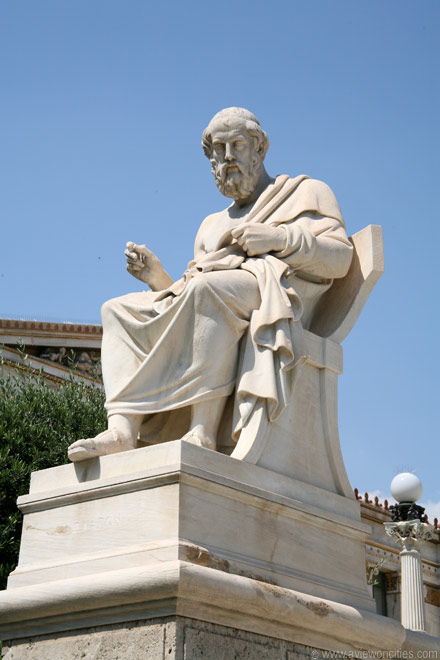
The trial of Socrates left Greek philosophy with a problem it never fully escaped: how could a society distinguish genuine virtue from its public performance? Plato and Aristotle both inherited that question, and both tried to answer it with systems of thought that reached beyond reputation, custom, and popular approval. Plato turned from the instability of democratic opinion toward the search for justice as an order of the soul and city. Aristotle examined virtue as habituated excellence, political life as the field in which human beings pursue the good, and law as a rational structure for civic formation. Both thinkers sought something firmer than appearance. They wanted to know whether justice was real or merely praised, whether virtue belonged to the soul or only to reputation, and whether political life could be organized around reason rather than appetite, honor, fear, or inherited convention. Yet both also reveal the limits of philosophical consistency in the ancient world. Their works exposed hypocrisy, but they did not stand outside the exclusions and hierarchies that made ancient moral life possible. They asked universal questions about justice, reason, virtue, and the good, while often restricting the fullest realization of those ideals to a narrow class of free male citizens. The result is not a simple indictment of philosophical failure, but a more revealing historical problem: the very thinkers who gave later traditions some of their strongest tools for unmasking pretense also showed how deeply moral reasoning could remain entangled with social privilege.
Plato’s Republic is the most famous attempt in Greek philosophy to tear away the mask of conventional justice. The dialogue begins with competing definitions, including justice as telling the truth, paying debts, helping friends, harming enemies, and in Thrasymachus’ challenge, the advantage of the stronger. Plato does not dismiss the danger of hypocrisy lightly. On the contrary, the early books of the Republic recognize that justice can become a costume worn for reputation, honor, and reward. Glaucon’s story of the Ring of Gyges sharpens the issue by asking whether anyone would remain just if invisibility removed the fear of punishment and public shame. The question cuts directly into the problem of moral performance. If people practice justice only because they are seen, praised, or constrained, then justice is not a virtue of the soul but a role performed before witnesses. Plato’s answer is radical: true justice must be an inward order, a harmony in which reason governs spirit and appetite, rather than a public mask maintained for advantage.
Yet Plato’s effort to rescue justice from mere appearance produces its own contradictions. The ideal city of the Republic is organized around hierarchy, censorship, controlled education, selective breeding, communal arrangements among the guardian class, and the famous “noble lie” meant to secure civic unity. Plato exposes the instability of democratic rhetoric, but his alternative permits deception in the service of philosophical order. This is not hypocrisy in the crude sense of Plato secretly loving falsehood while praising truth. It is a deeper inconsistency within the architecture of his political thought. The philosopher who insists that truth is superior to opinion allows a founding myth when truth appears politically dangerous. The thinker who seeks justice as harmony constructs a city in which individual freedom is subordinated to functional necessity. The city becomes just by assigning each person a role, yet that assignment depends on rulers who claim knowledge unavailable to the ruled. Plato’s suspicion of theatrical politics leads to another kind of performance: a civic order in which the rulers manage belief, regulate poetry, supervise education, and cultivate public myths for the sake of stability. The result is a troubling philosophical mask: an anti-hypocritical project that condemns false appearances yet authorizes managed illusion when the rulers are presumed wise enough to know what the city requires.
Aristotle approaches the problem differently. He is less utopian than Plato, more empirical in method, and more attentive to existing constitutions, civic practice, household management, and the formation of character through habit. In the Nicomachean Ethics, virtue is not a performance for applause but a stable disposition cultivated through repeated action, guided by practical wisdom and oriented toward the human good. Aristotle’s account is powerful precisely because it distinguishes seeming virtuous from being virtuous. The truly courageous person is not merely one who performs courage before others, but one whose fear, judgment, action, and purpose are rightly ordered. The generous person does not merely give in public; he gives to the right people, in the right way, for the right reasons. Aristotle offers one of antiquity’s strongest conceptual tools against hypocrisy: virtue requires the alignment of character, reason, action, and motive. Moral appearance alone is insufficient because virtue must become part of the person’s formed nature.
But Aristotle’s political and social thought exposes the boundaries of that moral vision. In the Politics, he describes the polis as the natural community in which human beings achieve the good life, yet his account of who can fully participate in that life is sharply restricted. Women, enslaved persons, manual laborers, foreigners, and many non-citizens are placed outside the fullest sphere of political agency. Most notoriously, Aristotle defends the possibility of “natural slavery,” arguing that some people are suited by nature to be ruled because they possess reason only in a limited or subordinate way. This creates one of the most glaring contradictions in ancient philosophy. A thinker committed to teleology, rational excellence, and the fulfillment of human capacities also supplies philosophical language for domination. The contradiction is sharpened by Aristotle’s own ethical seriousness. He does not treat virtue as decoration or empty praise; he treats it as the proper realization of human nature through reasoned action. Yet when he turns to the household and the polis, the full dignity of that rational nature is distributed unequally. Some human beings become the subjects of ethical formation, while others become instruments within the social order that permits citizens to pursue leisure, deliberation, and excellence. The problem is not that Aristotle had no concept of virtue. The problem is that his concept of virtue operated within a social world that denied equal moral and political capacity to large categories of human beings. His philosophy could distinguish true virtue from performance, but it could also convert inherited hierarchy into nature.
The inconsistency in Plato and Aristotle is not merely personal. It is civilizational. Greek philosophy could ask what justice is, whether virtue is real, whether law should educate desire, and whether reason should govern the soul and the city. These are not shallow questions, and their seriousness explains why Plato and Aristotle remained foundational for later ethical and political thought. Yet their philosophical universality was repeatedly limited by the social assumptions of the polis. The free male citizen remained the central subject of moral and political development. The household was treated as a necessary but subordinate sphere. Enslavement, gender hierarchy, civic exclusion, and suspicion of manual labor were not incidental background details; they shaped who could be imagined as fully capable of philosophical and political flourishing. Ancient philosophy sharpened the critique of hypocrisy while participating in another kind of masking: it presented reason as universal while often reserving the complete life of reason for those already privileged by status.
This does not make Plato and Aristotle worthless as moral thinkers. It makes them historically revealing. Their greatness lies partly in the fact that they gave later readers tools with which to criticize even their own exclusions. Plato’s distinction between appearance and reality, and Aristotle’s insistence that virtue must be rooted in character rather than display, both remain powerful ways to expose hypocrisy. Yet the limits of their consistency show that philosophical systems are not immune to the worlds that produce them. The ancient philosopher could unmask democratic vanity, sophistic manipulation, rhetorical ambition, and moral pretense, while leaving intact deeper structures of domination that appeared natural, necessary, or politically prudent. In that sense, Plato and Aristotle belong squarely within the history of ancient hypocrisy. They did not merely diagnose the mask. At times, they helped refine it.
Hellenistic Kingship and Philosophical Self-Mastery: Virtue Under Monarchy

The conquests of Alexander the Great transformed the political world in which Greek moral thought operated. The classical polis did not disappear, but it no longer stood alone as the primary horizon of political imagination. After Alexander’s death in 323 BCE, his successors divided his empire into large monarchies ruled by kings who commanded armies, founded cities, issued coinage, patronized temples, sponsored scholars, and presented themselves as benefactors of Greek civic life. This new world intensified the problem of moral performance. Kings could speak the language of order, protection, generosity, piety, and civilization while ruling through dynastic ambition, military force, taxation, and courtly dependence. Greek cities still cherished older ideals of autonomy and civic honor, but they increasingly negotiated those ideals within systems of royal power. The result was not the disappearance of freedom as a public value, but its transformation into something performed through decrees, honors, embassies, benefactions, and negotiated submission. Virtue under monarchy became theatrical in a new way: kings had to appear generous, cities had to appear grateful, philosophers had to appear independent, and all three often depended on arrangements that compromised the ideals they proclaimed.
Alexander himself became the first and most enduring figure in this new moral theater. Ancient writers remembered him as heroic, brilliant, excessive, generous, violent, philosophical, and dangerously self-divinizing, often all at once. He could be presented as a student of Aristotle and a spreader of Greek civilization, yet his career was built on conquest, destruction, forced submission, dynastic ambition, and the creation of a personal monarchy that strained older Greek ideas of lawful civic rule. The contradiction was sharpened by Alexander’s own image-making. He cultivated heroic association, adopted elements of Persian court ceremony, founded cities bearing his name, and increasingly occupied a space between king, conqueror, and semi-divine figure. Later traditions could admire his magnanimity and courage while recoiling from his anger, drunken violence, and demand for obedience. In him, the old Greek suspicion of tyranny collided with the glamour of world conquest. Alexander’s moral ambiguity mattered because Hellenistic rulers after him inherited not merely his territories, but his problem: how could monarchy present itself as virtuous when its authority rested on victory and force?
The successor kingdoms developed elaborate languages of royal benefaction to answer that question. Kings were praised as saviors, founders, protectors, and benefactors, and cities inscribed decrees honoring them for grain gifts, tax relief, military defense, temple patronage, or diplomatic protection. These honors were not always empty. Hellenistic monarchs did build cities, support sanctuaries, endow institutions, and sometimes protect communities from rival powers. Yet the language of gratitude also concealed dependence. A city that crowned a king as benefactor might be acknowledging generosity, but it was also participating in a political script shaped by unequal power. Royal gifts could appear voluntary while functioning as instruments of loyalty. Civic honors could appear spontaneous while expressing necessity. The king’s virtue had to be displayed, praised, and remembered, because public benefaction helped transform domination into legitimacy. This was hypocrisy at the level of political ritual, not because every royal benefaction was false, but because benefaction allowed power to wear the mask of generosity. The city thanked the ruler, and the ruler accepted gratitude as evidence of virtue, even when the entire exchange rested on the city’s inability to stand fully apart from royal authority.
Philosophy also changed under these conditions. The Hellenistic schools turned with new intensity toward self-mastery, inner freedom, emotional discipline, and independence from fortune. Cynics, Stoics, Epicureans, and Skeptics differed profoundly, but they shared a world in which the old confidence of civic self-rule had been shaken. If the citizen could no longer assume that political freedom secured the good life, then philosophy had to locate freedom elsewhere: in the disciplined soul, the rational will, the rejection of vain desire, the pursuit of tranquility, or the refusal to mistake convention for nature. This inward turn did not mean withdrawal from moral seriousness. It was often a direct challenge to the hypocrisies of status, wealth, courtly ambition, and public reputation. The Cynic tradition, especially in stories told about Diogenes of Sinope, pushed this challenge to theatrical extremes. Diogenes rejected property, convention, rank, and polite respectability, turning his own body and behavior into a counter-performance against civic and royal masks. His shamelessness was not mere eccentricity; it was a deliberate assault on the social theater that made wealth, office, lineage, and royal presence appear naturally honorable. By refusing the ordinary scripts of respectability, the Cynic exposed how much of public virtue depended on costume, audience, and approval. The famous tradition of his encounter with Alexander, whether historically exact or not, captures the philosophical ideal perfectly: the king possesses the world, but the philosopher who needs nothing is freer than the king. The scene endures because it reverses the expected hierarchy of power. Alexander can command armies, cities, and treasuries, but Diogenes commands himself, and in Hellenistic moral thought that self-command could be imagined as the only freedom no monarchy could grant or confiscate.
Yet philosophical self-mastery under monarchy carried contradictions of its own. Philosophers criticized wealth, flattery, fear, anger, and dependence, but many operated within elite networks, accepted patronage, taught aristocratic students, or addressed audiences whose leisure depended on the very inequalities philosophy often failed to dismantle. The court philosopher could admonish kings while relying on royal favor. The moral teacher could praise simplicity before audiences formed by privilege. The Stoic could proclaim that virtue alone is good, while social life continued to reward birth, wealth, office, and access to power. Epicureans rejected political ambition and taught withdrawal from empty striving, but even withdrawal could be made possible by social stability and material security not equally available to all. The problem was not that Hellenistic philosophers were insincere. Many were deeply serious in their critique of false values. The difficulty was that the philosophical performance of independence could itself become a privileged role, one available most fully to those with education, leisure, and protection. Self-mastery might free the soul from monarchy’s moral pressures, but it did not necessarily free society from monarchy’s structures.
The Hellenistic world deepened the ancient history of hypocrisy by moving the mask from the citizen assembly into the court, the royal inscription, the philosophical school, and the disciplined self. Kings presented conquest as order and benefaction as virtue. Cities preserved civic dignity through rituals that often acknowledged their dependence. Philosophers attacked the false goods of wealth and power while negotiating their place within societies organized by both. This was not a simple decline from the freedom of the polis into the corruption of monarchy. Classical civic freedom had already carried exclusions and imperial contradictions. But Hellenistic kingship made the gap between moral language and political reality more visible on a grander scale. The age asked whether a ruler could be virtuous when rule was born from conquest, whether a city could be free when its survival depended on royal favor, and whether a philosopher could be independent while living in a world structured by patronage and power. The answers were never clean. That is precisely why the period matters. It shows virtue surviving under monarchy, but often as performance, negotiation, and self-defense.
Roman Republican Liberty and the Slave Society Beneath It

Rome inherited and transformed the ancient contradiction between public virtue and social domination. In the Republic, libertas became one of the most powerful words in Roman political life. It evoked release from kingship, protection from arbitrary power, the dignity of citizens under law, and the right of Roman men to participate, however unequally, in the civic order of the city. Roman aristocrats praised ancestral virtue, legal restraint, patriotic service, and resistance to tyranny. They remembered the expulsion of the kings as the founding drama of republican freedom and treated monarchy as a moral as well as political danger. Yet this culture of liberty rested upon a society saturated with unfreedom. Enslaved people worked Roman farms, households, mines, workshops, building projects, and estates. They served as tutors, accountants, laborers, attendants, concubines, secretaries, agricultural workers, and symbols of elite status. The Republic’s language of freedom did not contradict slavery accidentally; it depended on slavery as one of the chief ways Romans defined what citizen freedom was not. To lose liberty was to fall into a condition Romans could see all around them, embodied in people whose lives were legally subordinated to another person’s will. This proximity made republican freedom simultaneously emotionally vivid and morally narrow. Roman citizens could fear domination intensely because they lived in a world where domination was ordinary, profitable, and legally protected when directed at the enslaved.
The contradiction sharpened as Roman conquest expanded. War brought captives, captives fed slave markets, and slave labor helped support the estates and households of the very elites who spoke most loudly about public duty and civic honor. The growth of large agricultural estates, especially in Italy, intensified the relationship between imperial expansion and domestic hierarchy. A senator could denounce domination by a rival Roman faction while presiding over a household organized by absolute mastery. A citizen could fear enslavement as the ultimate loss of civic status while benefiting from the enslavement of others. Roman political language was deeply relational: to be free was not merely to possess abstract rights, but to stand above those who could be owned, bought, sold, punished, and commanded. Republican liberty was meaningful, but it was not universal. It was a guarded status within a world of visible inequality. The slave’s body made the citizen’s freedom legible.
Roman aristocratic morality made this contradiction even more striking. Elite Romans praised virtus, gravitas, dignitas, pietas, and service to the res publica, presenting themselves as custodians of a disciplined civic order. The ideal Roman noble was supposed to master himself, subordinate private appetite to public duty, and preserve the liberty of the citizen body against tyranny or corruption. But mastery of the self existed beside mastery over others, and the two could be rhetorically entangled. Household command became a training ground for public authority. The paterfamilias, like the magistrate, exercised power within a hierarchy assumed to be natural, necessary, and honorable. This did not mean that Romans saw no moral problem in cruelty. Philosophers, jurists, and moralists sometimes criticized excessive brutality or praised humane conduct toward enslaved persons. Yet the institution itself remained broadly accepted. The ethical question was often not whether one human being should own another, but how a master should behave while doing so. That is where hypocrisy took its Roman form: liberty was defended as a public good while domination was normalized as a private and economic necessity.
The speeches and writings of Marcus Tullius Cicero reveal both the power and the limits of republican moral language. Cicero could write with extraordinary force about law, duty, justice, constitutional balance, and the dangers of tyranny. In On Duties, he argued that moral obligation must govern public life and that usefulness should not be separated from honor. In his political career, he attacked conspirators, defended senatorial authority, and warned against those who would dominate the Republic through violence or personal rule. Yet Cicero lived fully within a slaveholding society and assumed many of its structures. His household, correspondence, and social world included enslaved and formerly enslaved persons whose labor supported elite literary and political life. The contradiction is not best understood as a cheap exposure of Cicero as uniquely false. It is more revealing than that. Cicero’s moral universe allowed him to speak sincerely about justice among citizens while leaving slavery largely outside the circle of republican concern. His thought shows how a moral vocabulary can be both genuine and bounded, eloquent in defense of one class of freedom while quiet before another class of unfreedom.
Slave resistance made the contradiction harder to ignore. The great slave revolts of the Republic, especially the uprising associated with Spartacus from 73 to 71 BCE, exposed the violence beneath Roman order. To Roman authorities, such revolts were not liberation movements but terrifying inversions of the social world. Enslaved persons who seized weapons and moved through Italy challenged the assumption that mastery was stable, natural, and uncontested. They also exposed the fear at the center of a slave society: that those treated as instruments might act as political and military agents. The Roman response was correspondingly brutal. The suppression of Spartacus’ revolt and the mass crucifixions that followed displayed the state’s determination to restore hierarchy through exemplary terror. Punishment was not only retribution; it was communication. It announced to the enslaved that rebellion would be answered with spectacular suffering, and it reassured citizens and masters that the social order could still be defended. Here again the Republic’s mask becomes visible. Rome feared kingship and citizen servitude, but it preserved liberty for citizens through punishments inflicted on those denied civic standing altogether. The image is almost unbearably stark: a society that remembered freedom from kings as its founding virtue lined roads with crucified slaves to reassert the power of masters.
Roman republican hypocrisy, then, did not consist simply in saying “freedom” while practicing “slavery.” It lay in the way freedom was defined, protected, and celebrated through exclusion. Roman citizens could experience libertas as real because it did protect them from certain forms of arbitrary treatment, especially when contrasted with monarchy, foreign domination, debt bondage, or enslavement. That reality should not be dismissed. But neither should it be purified. The Republic’s freedom was a status privilege, not a human principle. Its moral language could be expansive when defending citizens against tyrants, but narrow when confronting the people whose labor made elite citizenship possible. Rome belongs near the center of any history of ancient hypocrisy because it shows how a political culture can be sincere in its devotion to liberty while building that liberty atop systematic unfreedom. The mask was not merely worn by individual senators. It was carved into the structure of the Republic itself.
Moralists, Stoics, and the Problem of Elite Virtue

Roman moral philosophy inherited the Republic’s language of duty and self-command, but it increasingly developed under the conditions of empire, court politics, and enormous social inequality. Stoicism became especially important because it offered a powerful language for distinguishing outward status from inward freedom. The truly free person, Stoic thinkers argued, was not the citizen protected by law, the senator honored by office, or the wealthy man surrounded by clients and enslaved attendants, but the rational person whose judgment remained governed by virtue rather than passion, fear, luxury, or ambition. This was a profound challenge to Roman status culture. If virtue alone was good, then wealth, birth, office, health, reputation, and even legal freedom were not ultimate goods. Stoicism possessed real anti-hypocritical force. It stripped away the public masks by which elite Romans measured themselves and asked whether the supposedly honorable man was inwardly ruled by greed, anger, vanity, or fear. Yet the philosophy’s social location created an unavoidable tension. Many of its most influential Roman voices belonged to the very elite world whose values they criticized.
Lucius Annaeus Seneca embodies this contradiction more than any other Roman moralist. His writings denounce luxury, uncontrolled anger, cruelty, dependence on fortune, and the slavery of the soul to wealth or ambition. In the Moral Epistles, he repeatedly insists that philosophy should transform life, not merely decorate speech. His famous discussion of enslaved persons in Letter 47 is unusually humane by elite Roman standards, urging masters to remember that those they enslave are human beings, companions in fortune, and potential moral equals. Yet Seneca was also fabulously wealthy, politically entangled with the imperial court, and associated with Nero’s regime, first as tutor and adviser and later as a compromised figure within a violent political order. The contradiction is tempting to treat as simple personal hypocrisy, and ancient critics themselves sometimes did. But the deeper issue is more revealing. Seneca’s moral thought exposed the emptiness of elite values while being produced from within elite privilege. He could see the chains created by wealth and power, but he never fully stepped outside the structures that gave him both his audience and his authority.
The Stoic distinction between inner freedom and external condition was ethically powerful, but it could also soften the moral urgency of social domination. If the enslaved person can be inwardly free and the emperor inwardly enslaved, then moral philosophy can radically invert conventional status. That inversion mattered. It allowed thinkers such as Epictetus, who had himself been enslaved, to insist that no master could command the rational will unless the person surrendered judgment. But the same doctrine could also leave external institutions largely intact. A master might learn to treat enslaved persons more humanely without questioning the institution of enslavement. A senator might despise luxury while retaining wealth. A court adviser might speak of virtue while serving power. Stoicism criticized moral dependence more readily than political domination, and that distinction could become a mask of its own. The philosophy taught that the soul must not be enslaved by externals, but Roman society continued to enslave bodies, extract labor, and rank persons by law, status, and access to power. Inner liberty could become a profound resistance to oppression, but it could also become a way for privileged moralists to avoid confronting the material conditions that made their own freedom possible.
Epictetus complicates the picture because his life and teaching reveal a different relationship between philosophy and social power. Unlike Seneca, Epictetus did not speak from senatorial wealth or courtly influence. Born into slavery and later freed, he developed a rigorous account of freedom grounded in the disciplined use of judgment. For Epictetus, what belongs to us is not office, property, reputation, or the body itself, but the faculty of moral choice. This teaching could be austere, even severe, but it carried a moral clarity sharpened by experience. The person who depends on externals will always be vulnerable to those who control them; the person who disciplines desire and aversion can refuse inward submission. That message gave philosophical dignity to people whose social condition denied them honor, and it denied moral superiority to masters who mistook possession for excellence. Still, even here the problem of ancient hypocrisy does not disappear. Epictetus’ philosophy dignified the enslaved by locating freedom in reason, but it did not become a program for abolishing slavery. It attacked the false prestige of masters more than the legal structure of mastery. His teaching could make domination spiritually unstable by showing that the master might be morally servile and the enslaved person morally free, but it left the public world of law, ownership, and punishment largely untransformed. In that sense, Stoicism could morally destabilize hierarchy without politically dismantling it. It unmasked the arrogance of power, but often left power standing.
Roman moralism stands at a difficult crossroads in the history of ancient hypocrisy. Its best insights were genuinely penetrating. Seneca, Epictetus, and other Stoic writers understood that public honor could conceal inward servitude, that luxury could masquerade as success, that anger could call itself justice, and that power could corrupt the person who possessed it as much as the person who suffered under it. They gave antiquity one of its strongest languages for exposing the distance between reputation and character. Yet Roman Stoicism also shows how moral critique can become entangled with privilege. The elite moralist could denounce greed in beautiful prose while remaining wealthy, condemn cruelty while accepting slavery, and praise freedom while living within an imperial order sustained by coercion. The problem was not that Stoic virtue was empty. It was that Stoic virtue, when separated from institutional critique, could become another polished mask: a philosophy of inward freedom spoken fluently by those who benefited from outward domination.
Imperial Law, Peace, and Violence: Rome’s Civilizing Mask
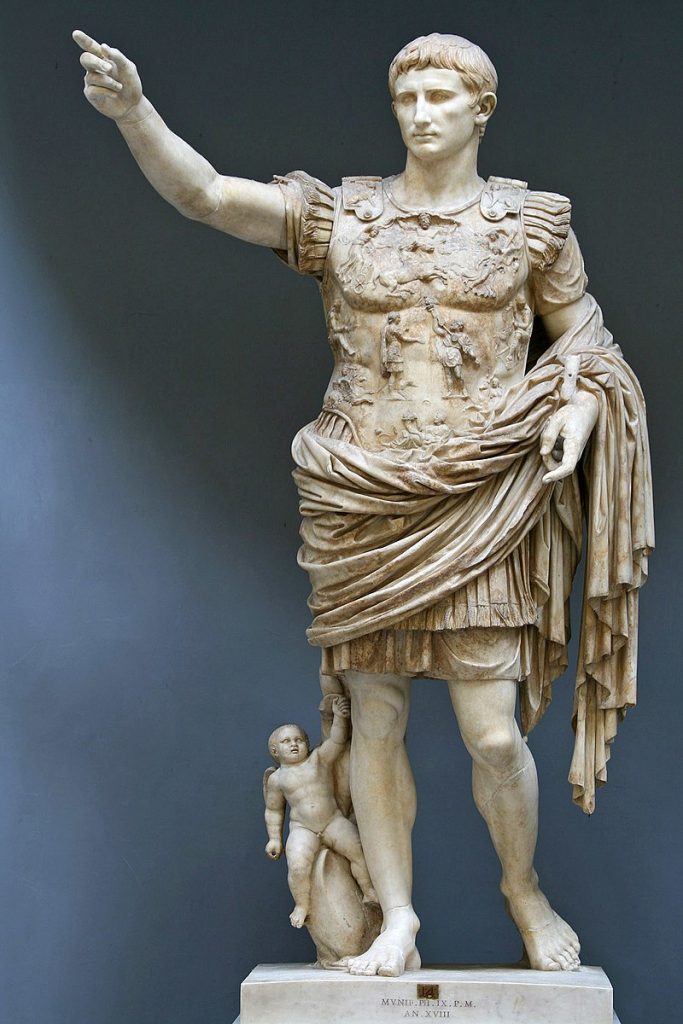
The Roman Empire inherited the republican language of law, order, and public virtue, but expanded it onto a scale the Republic had never fully imagined. Under imperial rule, Rome presented itself not merely as a conquering power but as the maker of peace, the guardian of civilization, and the administrator of justice across a vast Mediterranean world. Roads, aqueducts, colonies, courts, provincial governments, military camps, tax systems, and citizenship policies all helped transform conquest into an ideology of order. The empire did not deny that it ruled; it claimed that rule itself was beneficial. Roman power promised stability after civil war, security after disorder, law after local violence, and prosperity under imperial protection. This was the central civilizing mask of empire: domination appeared as peace because Rome defined peace as the condition that followed successful submission. The sword did not disappear behind the law. The law rested upon the sword, then taught the conquered to call that arrangement order.
The phrase Pax Romana captures both the achievement and the contradiction. The empire did create long periods of relative stability across many provinces, especially when compared with the violence of conquest, piracy, dynastic war, and local conflict that had preceded Roman consolidation in some regions. Trade moved across the Mediterranean with remarkable intensity. Cities grew. Local elites entered imperial service. Provincial communities adopted Roman legal forms, public architecture, civic titles, and patterns of elite competition. Yet peace under Rome was not the same as freedom from coercion. It was a managed peace, enforced by legions, governors, tax collectors, informants, courts, and exemplary punishments. The provinces were not simply invited into a shared civic order; they were incorporated into a hierarchy backed by military power. Even where Roman rule produced genuine security, that security depended on the suppression of alternative sovereignties and the disciplining of local resistance. A city could flourish under Roman protection, but that protection often required obedience to imperial demands, acceptance of taxation, and cooperation with provincial administration. Local elites might gain prestige by adapting to Roman rule, yet their advancement also helped translate imperial dominance into familiar civic forms. Rome could sincerely believe that its rule brought stability, but that belief was inseparable from a refusal to see conquest from the perspective of those who had been defeated, taxed, displaced, enslaved, or disciplined. Imperial peace was real, but it was not innocent.
Tacitus understood the mask with unusual sharpness. In the Agricola, he places in the mouth of the Caledonian leader Calgacus one of antiquity’s most devastating critiques of empire: Rome plunders, slaughters, and seizes, then calls the result empire, and where it makes desolation, it calls it peace. Whether or not Calgacus spoke those words as Tacitus reports them is less important than the moral function of the passage. Tacitus, a Roman senator writing within the imperial order, imagines the empire as it might appear from the outside. The speech reverses the Roman civilizing story. Roads become routes of military movement and extraction. Taxation becomes plunder regularized by administration. Peace becomes the silence imposed after resistance has been crushed. The passage matters because it shows that Romans themselves could perceive the hypocrisy of imperial virtue. Rome’s language of peace did not merely conceal violence from others. It also troubled Roman moralists who understood that an empire built by conquest could not be purified simply by governing efficiently afterward.
Roman law deepened this ambiguity. On one hand, imperial law was one of Rome’s most enduring achievements. It created structures of procedure, property, citizenship, contract, punishment, appeal, and administration that shaped later legal traditions long after the empire’s political structures changed. The extension of Roman citizenship, culminating in the Constitutio Antoniniana in 212 CE, widened the formal legal identity of free inhabitants of the empire. Provincial elites could appeal to Roman authority, participate in civic life, and use Roman legal categories to protect property or negotiate status. Yet law also made domination orderly. It classified persons, protected ownership, enforced taxation, regulated inheritance, preserved slavery, and punished rebellion. Legal order did not necessarily mean moral equality. It often meant that hierarchy became legible, recordable, and enforceable. The same imperial system that gave some provincial subjects access to legal remedies also upheld the authority of masters, fathers, governors, soldiers, and emperors. Rome’s legal genius carried a moral contradiction: it could restrain arbitrary violence while institutionalizing unequal power. The mask of law made empire appear rational, but rational domination remained domination.
Public spectacle made the contradiction visible in another form. The empire staged power through triumphs, amphitheaters, executions, gladiatorial games, animal hunts, imperial ceremonies, and monuments celebrating victory. These spectacles were not peripheral entertainments. They taught subjects how to see Roman order. The defeated enemy became a captive in procession. The condemned criminal became a body displayed before the crowd. The gladiator dramatized discipline, courage, and expendability. The amphitheater turned violence into civic experience, binding spectators to the state through pleasure, fear, and hierarchy. Rome could praise clemency, law, and peace while making public violence central to imperial culture. The contradiction was not hidden. It was performed. Spectacle made hierarchy emotionally persuasive by transforming domination into ritual, punishment into entertainment, and conquest into memory. A triumph did not merely celebrate victory; it arranged the world visually, placing Rome at the center and the defeated at its feet. The amphitheater likewise trained spectators to accept a graded humanity in which some bodies could be exposed, wounded, or destroyed for the instruction and pleasure of others. The empire’s order was not communicated only through statutes, roads, or administrative commands. It was communicated through scenes of controlled violence that taught viewers who possessed power and who existed beneath it. The spectacle announced that the empire possessed the power to kill, spare, punish, reward, and define civilization against barbarism. In that sense, Roman public violence was not a failure of the civilizing mask. It was part of the mask’s construction. Peace appeared most convincing when the consequences of resisting it were made unforgettable.
Imperial Rome offers one of the clearest examples of hypocrisy as a political structure rather than a mere individual vice. The empire’s claims were not wholly false. Roman rule did build institutions, facilitate exchange, spread legal forms, and create durable systems of provincial administration. Many local elites found advantage within it, and many communities learned to speak its language of citizenship, honor, and order. But the empire’s moral self-presentation depended on a disciplined forgetting of its own coercive foundations. Conquest became pacification. Extraction became administration. Hierarchy became law. Cultural dominance became civilization. Violence became the precondition of peace. Rome’s civilizing mask was powerful precisely because it joined real achievements to moral concealment. It did not ask subjects to believe in a pure fiction. It asked them to accept the benefits of order while overlooking the brutality that made that order possible. That is why imperial Rome belongs so centrally in the history of ancient hypocrisy: it turned domination into a language of peace and taught much of the world to speak it.
Early Christianity and the Hypocrisy of Boundary-Making: Peter at Antioch
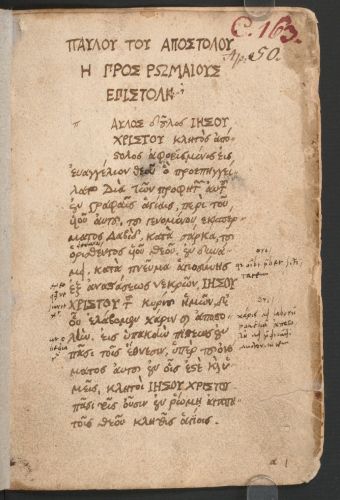
Early Christianity entered the ancient world with a moral claim that cut across inherited boundaries of ethnicity, ritual status, and social rank. The movement began within Judaism, drew upon Israel’s scriptures, and proclaimed that the promises of God had reached a decisive turning point through Jesus of Nazareth. Yet as Gentiles entered the movement in growing numbers, the question of belonging became urgent. Could non-Jews become full members of the people of God without adopting the full obligations of Torah, including circumcision and dietary separation? Was fellowship at the table a sign of theological equality or a boundary marker preserving older distinctions? These were not minor social questions. In the ancient Mediterranean world, meals created identity. To eat with someone was to recognize a form of shared standing, and to withdraw from table fellowship was to mark difference. Early Christian hypocrisy emerged, then, not merely from private inconsistency but from the difficulty of living out a new universal claim within communities still shaped by older boundaries, inherited fears, and social pressure.
Paul’s account of the confrontation at Antioch in Galatians 2 is one of the earliest and sharpest examples of this tension. According to Paul, Cephas, commonly identified with Peter, had been eating with Gentile believers in Antioch, behaving in a way that acknowledged their full inclusion. But when certain people came from James, Peter withdrew and separated himself, fearing those associated with circumcision. Paul says that other Jewish believers joined in this behavior, including Barnabas, and he describes their conduct as inconsistent with “the truth of the gospel.” The issue was not simply Peter changing seats at dinner. It was the public contradiction between what the community proclaimed and what its behavior enacted. If Gentile believers were accepted by God through Christ, then refusing table fellowship under pressure implied that they remained religiously or socially deficient. The meal became a test of whether theology would survive contact with social risk. Peter’s earlier practice had embodied one claim: that Gentiles could share full fellowship without becoming Jews. His withdrawal embodied another: that their inclusion could be suspended, qualified, or hidden when stricter observers entered the room. That shift made the contradiction visible because the body often betrays what doctrine tries to finesse. A person may confess equality in principle, but where he sits, with whom he eats, and whom he avoids can reveal the actual boundaries of belonging. The mask here was not piety in the old theatrical sense but boundary-making disguised as caution. Peter’s action allowed an inclusive theology to remain verbally intact while social practice reintroduced separation.
The power of the Antioch episode lies in the fact that Peter was not an outsider to the inclusive claim. In the wider New Testament tradition, Peter is associated with the opening of fellowship to Gentiles, especially in Acts 10–11, where his encounter with Cornelius dramatizes the conviction that God shows no partiality. That makes the Antioch incident morally sharper. Peter does not appear as someone ignorant of the principle at stake. He appears as someone who knows the principle but retreats from its social cost. This is why Paul’s criticism is so severe. Hypocrisy often appears most clearly not when a person rejects an ideal outright, but when he affirms it until the room changes. Peter’s withdrawal suggests the force of communal pressure within a movement negotiating its identity before Jewish authorities, Gentile converts, and internal factions. The problem was fear: fear of scandal, fear of criticism, fear of appearing lawless, fear of losing standing among those who interpreted Gentile inclusion differently. The result was a public performance of separation that contradicted the very equality Peter’s earlier practice had implied.
Paul’s response shows that early Christian moral thought did not treat hypocrisy as a merely personal weakness. He understood conduct as theological argument. Peter’s table behavior taught something, whether Peter intended it or not. By withdrawing from Gentile believers, he effectively pressured them to Judaize, suggesting that their status remained incomplete unless they conformed to Jewish boundary practices. Paul confronted him “before them all,” because the action had public meaning. This public character matters. Ancient hypocrisy was often visible where moral claims became social scripts, and Antioch was precisely such a stage. The meal table became a theater of belonging. Peter’s separation spoke one doctrine while his previous fellowship had spoken another. Paul’s accusation exposed the contradiction between announced grace and enacted hierarchy, between the claim that Gentiles were included and the performance that made them appear second-class. Antioch belongs alongside Athens and Rome in the larger argument: ideals do not fail only in laws, empires, and philosophical systems. They also fail in gestures, seating arrangements, meals, and the quiet movements by which communities decide who really belongs.
The episode also reveals the difficulty of translating radical moral claims into durable communal practice. Early Christianity did not emerge into a neutral world of abstract persons. It emerged among Jews and Gentiles, men and women, enslaved and free people, citizens and non-citizens, household heads and dependents, urban elites and laborers, all embedded in social worlds marked by honor, purity, kinship, patronage, and law. Paul’s own letters contain sweeping claims of transformed belonging, yet his communities still had to negotiate ordinary life within unequal social structures. Antioch shows how quickly a universal message could be narrowed by inherited categories. It also shows that hypocrisy can be collective. Peter’s withdrawal influenced others; Barnabas was carried along; the community’s practice shifted under pressure. The problem was not only one leader’s inconsistency. It was the community’s vulnerability to reproducing boundaries after proclaiming that those boundaries had been overcome. That is why the incident has remained so significant in Christian interpretation. It captures a recurring religious danger: the tendency to preach grace while practicing exclusion, to confess unity while managing status, and to announce a new creation while smuggling the old hierarchy back to the table.
Peter at Antioch marks a crucial transition in the ancient history of hypocrisy. In Athens, the contradiction appeared between democratic freedom and imperial domination. In Rome, it appeared between republican liberty and slavery, or between imperial peace and coercive violence. In early Christianity, it appeared inside a community whose central moral claim challenged boundary itself. The hypocrisy was quieter than the destruction of Melos or the crucifixion of rebellious slaves, but it was no less revealing. It showed that moral revolution does not automatically dissolve social fear. A person or community may sincerely believe in equality before God and still retreat into inherited patterns when reputation, pressure, and identity are at stake. Paul’s confrontation with Peter was not merely an argument about food laws or ethnic custom. It was an argument about whether a proclaimed truth would become a lived reality. The ancient mask remained, but it had changed shape: it now appeared wherever religious inclusion was confessed with the lips while denied at the table.
Christian Moral Critique and the New Danger of Religious Performance

Early Christianity sharpened the ancient critique of hypocrisy by turning moral attention inward. In the Gospels, hypocrisy is not merely inconsistency between speech and conduct; it is the corruption of religious life by performance. Prayer, fasting, almsgiving, teaching, purity, and public honor could all become stages on which piety was displayed before human audiences rather than directed toward God. This critique drew on Jewish prophetic and wisdom traditions that had long warned against ritual without justice, sacrifice without mercy, and speech without obedience. Yet the Christian attack on hypocrisy gave the theme a distinctive urgency because it placed outward righteousness under the judgment of divine inwardness. A person could appear devout, generous, orthodox, or disciplined before others while remaining governed by pride, ambition, cruelty, greed, or contempt. The ancient mask was no longer only theatrical, civic, philosophical, or imperial. It became spiritual. The hypocrite was the one who used religion itself to conceal the disorder of the soul.
The Gospel of Matthew offers the most concentrated early Christian language of religious hypocrisy. In the Sermon on the Mount, Jesus warns against practicing piety “before others in order to be seen by them,” applying the warning to almsgiving, prayer, and fasting. The issue is not that public religious acts are inherently false, but that they can be converted into social currency. A gift to the poor can become self-advertisement. A prayer can become a performance of holiness. A fast can become a visible claim to discipline. Later, in Matthew 23, the critique becomes sharper and more polemical, as scribes and Pharisees are accused of honoring the outward signs of righteousness while neglecting justice, mercy, and faithfulness. These passages must be handled historically with care because they belong to intra-Jewish debates and later Christian polemics that too often became weapons of anti-Jewish interpretation. Their significance is not that one religious group uniquely embodied hypocrisy. It is that early Christian moral teaching recognized a danger present in every public religion: the more visible holiness becomes, the more easily it can be imitated without being inhabited. Matthew’s critique does not simply condemn false individuals; it exposes the structural vulnerability of religious life itself. Religion gives people sacred language for mercy, purity, repentance, and justice, but that same language can be performed for recognition, authority, and control. The warning is severe because the mask of holiness is harder to challenge than the mask of political ambition. A tyrant may reveal himself through violence, and a demagogue through flattery, but the religious hypocrite can cloak ambition in reverence and cruelty in zeal.
This critique did not disappear when Christian communities formed their own practices. On the contrary, it became more dangerous because Christianity itself developed recognizable performances of virtue. Baptism, Eucharistic fellowship, almsgiving, fasting, sexual restraint, care for widows and orphans, martyr courage, ascetic discipline, teaching authority, and communal leadership all became marks of Christian identity. Many of these practices were ethically serious and socially transformative. Early Christian communities did create forms of mutual obligation that challenged ordinary hierarchies of household, ethnicity, status, and patronage. Yet every visible practice also created the possibility of a visible mask. The generous patron could become a seeker of honor. The teacher could become a controller of conscience. The ascetic could despise the less disciplined. The martyr could be remembered in ways that turned suffering into prestige. The community that condemned pagan vanity could develop its own systems of recognition, authority, rivalry, and exclusion. Christian morality widened the critique of hypocrisy, but by doing so it also widened the field in which hypocrisy could appear.
The problem was especially acute because early Christian ethics often joined humility with moral certainty. Humility demanded self-suspicion, repentance, forgiveness, and awareness of sin. Moral certainty demanded discernment, discipline, correction, and sometimes exclusion from fellowship. That combination could be powerful, but it could also become unstable. Leaders who believed they guarded truth might exercise authority harshly while naming it pastoral care. Communities that valued holiness might turn boundary enforcement into spiritual superiority. Believers who condemned pride might become proud of humility itself. The New Testament letters already show communities wrestling with factionalism, status competition, disputes over food, sexual conduct, wealth, spiritual gifts, and the treatment of poorer members at communal meals. These conflicts reveal that Christian hypocrisy was not an accidental later corruption. It appeared wherever the movement’s moral claims entered the ordinary pressures of communal life. Paul’s rebuke of status divisions at the Lord’s Supper in Corinth is especially revealing because a meal meant to display shared belonging became a scene of inequality, with wealthier members eating ahead while poorer members were humiliated. James likewise condemns favoritism toward the rich, showing that communities capable of confessing faith could still reproduce the social deference of the wider world. These examples matter because they show religious hypocrisy functioning through ordinary habits rather than spectacular betrayal. No one needed to deny Christian teaching outright to contradict it. They only had to preserve old rankings under new names, turning fellowship into hierarchy, discipline into status, and holiness into a badge of superiority. The church could denounce the world’s honor system while reproducing honor contests under religious names.
Christian moral critique introduced a new stage in the ancient history of hypocrisy. Greek theater had supplied the mask; Athens and Rome had exposed the contradictions of civic and imperial virtue; philosophy had distinguished appearance from inward character; and early Christianity now placed the performance of righteousness before the judgment of God. This made hypocrisy more intimate and more searching. It also made it more dangerous, because religion could become the most convincing mask of all. To perform justice, humility, charity, or holiness before a believing community was to claim not merely civic honor but spiritual authority. The Christian attack on hypocrisy remains historically important because it understood the problem with unusual clarity: virtue can be counterfeited most effectively by those who know its language best. Yet Christianity itself was not exempt from the danger it named. Its own practices, leaders, and communities would have to face the same question posed throughout the ancient world: whether moral language would transform power, or merely teach power to speak more beautifully.
Late Antiquity: Bishops, Emperors, and the Institutionalization of Moral Authority

Late antiquity transformed Christian hypocrisy from a problem of communal practice into a problem of public power. In the first centuries of the movement, Christian moral critique often spoke from the margins, warning against pride, wealth, public display, and the violence of imperial society. By the fourth century, Christianity increasingly moved into alliance with imperial authority. Constantine’s conversion, the legalization and patronage of Christianity, the Council of Nicaea in 325 CE, and the later imperial support given to Nicene orthodoxy altered the social location of Christian moral speech. Bishops became public figures, churches received wealth, theological disputes gained political consequence, and emperors increasingly presented themselves as guardians of divine order. The old critique of religious performance did not disappear. It became more complicated. A faith that had warned against worldly honor now had to decide what to do when honor, office, wealth, law, and imperial favor entered the church’s own bloodstream.
The bishop was central to this transformation. In many late antique cities, bishops became moral teachers, judges, patrons, negotiators, advocates for the poor, and representatives of civic identity. Their authority was not merely liturgical or doctrinal. It extended into disputes over property, charity, discipline, public order, and relations with imperial officials. This could produce genuine moral achievement. Bishops sometimes defended vulnerable communities, organized relief, criticized elite greed, intervened in legal matters, and gave institutional form to Christian obligations of mercy. Yet the expansion of episcopal authority also created a new arena for religious performance. A bishop could preach humility while exercising civic power. He could condemn ambition while competing for office, influence, or doctrinal victory. He could speak for the poor while becoming part of an elite network of patronage and imperial access. The office itself carried a dangerous ambiguity: it could embody pastoral care, but it could also turn moral authority into a public role guarded by ceremony, hierarchy, and institutional prestige. The bishop’s body, speech, household, dress, patronage, and public gestures all became signs through which holiness could be recognized, contested, or staged. Late antique communities expected bishops to be both humble servants and commanding public authorities, both spiritual fathers and civic brokers. That double expectation made the office unusually vulnerable to contradiction. The more the bishop became the visible face of Christian virtue, the more episcopal authority risked becoming another form of elite performance, now sanctified by theology rather than ancestry, wealth, or magistracy.
The emperor’s Christianization deepened the contradiction. Roman emperors had long claimed a sacred or providential role in maintaining order, victory, and peace. Christian emperors adapted this older imperial grammar to new theological language. Constantine and his successors could present themselves as servants of God, defenders of the church, and sponsors of true worship, while continuing to rule through taxation, military force, legal compulsion, dynastic politics, and punishment. Imperial Christianity did not abolish the Roman civilizing mask; it baptized parts of it. The emperor who funded churches and convened councils also commanded armies and enforced law. The ruler who praised peace might wage war. The sovereign who honored humility might surround himself with the ceremonial distance of monarchy. This was not simply personal bad faith. It was the structural contradiction of Christian empire: the language of divine service now attached itself to institutions of coercive rule. The cross could become a sign of devotion, but it could also become an emblem under which imperial authority justified itself.
Doctrinal conflict made the problem even sharper. Late antique Christians cared intensely about truth, and theological disagreements over Christology, the Trinity, ecclesial authority, sacraments, and schism were not minor intellectual quarrels. They shaped worship, community, salvation, and the meaning of Christian identity. Yet once Christianity became entangled with imperial power, the defense of truth could become inseparable from the enforcement of conformity. Councils, creeds, exiles, depositions, confiscations, and imperial edicts all became tools in struggles over orthodoxy. The danger was not that doctrine did not matter. It mattered profoundly. The danger was that communities formed by a crucified teacher could begin to treat coercion as a servant of truth. A bishop persecuted under one emperor might seek imperial support against rivals under another. A defender of orthodoxy could become an administrator of exclusion. A church that had once remembered martyrs killed by the state now had to ask whether the state could rightly punish heretics, schismatics, or pagans in the name of religious unity. Moral authority was no longer only preached; it was increasingly institutionalized, legislated, and enforced.
Augustine of Hippo reveals both the depth and the difficulty of this late antique moment. No Christian thinker was more searching about pride, self-deception, disordered love, and the divided will. In the Confessions, Augustine presents the self as opaque to itself, capable of loving truth while fleeing it, desiring God while clinging to status, ambition, and habit. That introspective power made him one of the great analysts of hypocrisy in the broadest moral sense. Yet Augustine also lived as a bishop in a fractured North African church shaped by conflict with Donatists, imperial intervention, and disputes over the boundaries of true communion. He eventually came to defend limited coercion against schismatics, arguing that discipline could serve correction and unity. The contradiction is historically revealing because Augustine was not a shallow authoritarian wearing a Christian mask. He was a profound theologian of grace and humility who nonetheless accepted coercive measures when he believed they served ecclesial truth. His case shows how moral seriousness itself can become implicated in power. The more certain one is that truth heals, the easier it becomes to justify force as medicine. Augustine’s language of correction was not the language of naked domination, and that is exactly why it matters. Coercion could be redescribed as charity, discipline as rescue, and pressure as pastoral responsibility. The danger was not that Augustine ceased caring about the soul, but that care for the soul could become entangled with institutional compulsion. His thought exposes a recurring late antique problem: when religious leaders believed they possessed saving truth, the boundary between persuasion and coercion became morally unstable.
Late antiquity marks the institutional thickening of ancient hypocrisy. The mask was no longer only the actor’s mask, the democratic city’s self-praise, the philosopher’s inconsistency, the Roman language of peace, or the communal failure at Antioch. It became the public face of a Christianized order in which bishops and emperors claimed moral authority through offices, councils, laws, ceremonies, and institutions. This did not make late antique Christianity merely corrupt. That would be too simple and historically false. The period produced serious charity, theological brilliance, pastoral care, monastic critique, and new forms of moral imagination. But it also revealed that the ideals of humility, truth, mercy, and spiritual authority became more vulnerable as they gained public power. The church could denounce pride while building hierarchy, preach peace while accepting imperial violence, defend truth while coercing dissent, and serve the poor while accumulating prestige. Late antiquity brings the central theme into its most enduring form: hypocrisy becomes most consequential when moral language is no longer merely spoken by individuals, but housed inside institutions that can compel the world to recognize it.
Conclusion: Hypocrisy as a Structure of Ancient Power
The ancient history of hypocrisy begins with a mask, but it does not end with individual disguise. Across Greek theater, Athenian democracy, Roman republicanism, Hellenistic monarchy, imperial administration, Stoic moralism, and early Christian community, hypocrisy appeared wherever public virtue became useful to power. The hypokritēs was first an actor, but the broader ancient world showed how easily cities, empires, philosophers, senators, bishops, and rulers could become actors in a moral drama of their own making. Athens spoke of freedom while ruling allies. Rome praised liberty while depending on slavery. Imperial rulers named conquest peace. Philosophers distinguished true virtue from reputation while often leaving inherited hierarchy intact. Christian teachers attacked religious performance while Christian institutions later faced the temptations of authority, prestige, and coercion. The pattern is not accidental. Hypocrisy became visible when ideals were proclaimed loudly enough to be measured against conduct.
This does not mean ancient moral language was empty. That would be too easy and too cynical. Athens really did create forms of citizen participation that changed political history. Roman law really did produce durable structures of administration, citizenship, and legal reasoning. Stoic philosophy really did challenge the tyranny of wealth, fear, anger, and status. Early Christianity really did intensify moral criticism of pride, exclusion, and public piety performed for human approval. Late antique bishops really did build institutions of charity, mediation, pastoral care, and theological reflection. The problem was not that ancient ideals were always false. The problem was that they were partial, bounded, and often protected by the very inequalities they claimed to transcend. Freedom, justice, peace, reason, humility, and piety were real moral languages, but they were repeatedly narrowed by citizenship, gender, class, slavery, ethnicity, empire, orthodoxy, and institutional interest. Ancient hypocrisy was powerful precisely because it joined genuine ideals to selective application. That is what made the mask convincing.
The deepest lesson, then, is that hypocrisy is not merely the failure of weak individuals to obey high principles. It is often a structure of power. A political order needs moral language to explain itself. A ruling class needs virtue to legitimate privilege. An empire needs peace to rename conquest. A philosopher needs reason to distinguish wisdom from opinion. A religious institution needs holiness to authorize discipline and leadership. In each case, the ideal can restrain power, but it can also adorn it. That double capacity is what made ancient hypocrisy so durable. Moral language created standards by which domination could be judged, yet domination learned to speak that same language in its own defense. The mask did not simply hide corruption; it helped organize authority. It gave power a face that could be admired, obeyed, praised, and sometimes mistaken for virtue itself.
To study hypocrisy in ancient law and philosophy is to study the uneasy relationship between ideals and institutions. The ancient world does not offer a simple story of noble principles betrayed by bad actors, nor a story of sham virtue exposed as fraud. It offers something more unsettling: societies often believed in their ideals most sincerely at the very moments they restricted them most fiercely. Athenians could love freedom and deny it to allies. Romans could fear domination and enslave others. Stoics could preach inner liberty while leaving social mastery intact. Christians could proclaim humility while building structures of sacred authority. The mask of virtue endured because it was not always consciously false. Sometimes it was worn by people, cities, and institutions that believed the role they were playing. That is why the ancient problem remains so recognizable. Hypocrisy survives wherever power speaks the language of virtue without allowing virtue to judge power in return.
Bibliography
- Aeschylus. Oresteia. Translated by Alan H. Sommerstein. Loeb Classical Library. Cambridge, MA: Harvard University Press, 2008.
- Ambrose. On the Duties of the Clergy. Translated by H. de Romestin. In Nicene and Post-Nicene Fathers, Second Series, Vol. 10. Edited by Philip Schaff and Henry Wace. Grand Rapids: Eerdmans, 1896.
- Ando, Clifford. Imperial Ideology and Provincial Loyalty in the Roman Empire. Berkeley: University of California Press, 2000.
- Annas, Julia. An Introduction to Plato’s Republic. Oxford: Clarendon Press, 1981.
- Appian. The Civil Wars. Translated by John Carter. London: Penguin Classics, 1996.
- Aristophanes. Clouds. Translated by Jeffrey Henderson. Cambridge, MA: Harvard University Press (Loeb Classical Library), 1998.
- Aristotle. Aristotle on the Athenian Constitution. Translated by F. G. Kenyon. London: G. Bell and Sons, Ltd., 1912.
- —-. Nicomachean Ethics. Translated by Terence Irwin. 2nd ed. Indianapolis: Hackett, 1999.
- —-. Poetics. Translated by Stephen Halliwell. Loeb Classical Library. Cambridge, MA: Harvard University Press, 1995.
- —-. Politics. Translated by C. D. C. Reeve. Indianapolis: Hackett, 1998.
- Augustine of Hippo. Confessions. Translated by Henry Chadwick. Oxford: Oxford University Press, 1991.
- —-. Letters. Translated by Roland Teske. Hyde Park, NY: New City Press, 2001–2005.
- —-. The City of God Against the Pagans. Translated by R. W. Dyson. Cambridge: Cambridge University Press, 1998.
- Austin, M. M. The Hellenistic World from Alexander to the Roman Conquest: A Selection of Ancient Sources in Translation. 2nd ed. Cambridge: Cambridge University Press, 2006.
- Balot, Ryan K. Greek Political Thought. Malden, MA: Blackwell, 2006.
- Barclay, John M. G. Paul and the Gift. Grand Rapids, MI: William B. Eerdmans Publishing Company, 2015.
- Beard, Mary. The Roman Triumph. Cambridge, MA: Harvard University Press, 2007.
- Bradley, Keith R. Slavery and Society at Rome. Cambridge: Cambridge University Press, 1994.
- Brickhouse, Thomas C., and Nicholas D. Smith. Socrates on Trial. Princeton: Princeton University Press, 1989.
- Brown, Peter. Augustine of Hippo: A Biography. Revised ed. Berkeley: University of California Press, 1967.
- —-. The Body and Society: Men, Women, and Sexual Renunciation in Early Christianity. New York: Columbia University Press, 1988.
- —-. Power and Persuasion in Late Antiquity: Towards a Christian Empire. Madison: University of Wisconsin Press, 1992.
- Cameron, Averil. Christianity and the Rhetoric of Empire: The Development of Christian Discourse. Berkeley: University of California Press, 1991.
- Cassius Dio. Roman History. Translated by Earnest Cary. Cambridge, MA: Harvard University Press, 1914–1927.
- Chaniotis, Angelos. War in the Hellenistic World: A Social and Cultural History. Malden, MA: Blackwell, 2005.
- Charles, Michael B. and Eva Anagnostou-Laoutides. “The Sexual Hypocrisy of Domitian: Suet., Dom. 8, 3.” L’Antiquité Classique 79 (2010), 173-187.
- Cicero. De Officiis (On Duties). Translated by M. T. Griffin and E. M. Atkins. Cambridge: Cambridge University Press, 1991.
- —-. On the Republic and On the Laws. Translated by Clinton W. Keyes. Loeb Classical Library. Cambridge, MA: Harvard University Press, 1928.
- Diogenes Laertius, Lives of Eminent Philosophers. Translated by R.D. Hicks. London: William Heinemann, 1925.
- Drake, H. A. Constantine and the Bishops: The Politics of Intolerance. Baltimore: Johns Hopkins University Press, 2000.
- Dunn, James D. G. Jesus Remembered: Christianity in the Making, Volume 1. Grand Rapids, MI: William B. Eerdmans Publishing Company, 2003.
- —-. The Theology of Paul the Apostle. Grand Rapids: Eerdmans, 1998.
- Easterling, P. E., ed. The Cambridge Companion to Greek Tragedy. Cambridge: Cambridge University Press, 1997.
- Edwards, Catharine. The Politics of Immorality in Ancient Rome. Cambridge: Cambridge University Press, 1993.
- Epictetus. Discourses, Fragments, Handbook. Translated by Robin Hard. Oxford: Oxford University Press, 2014.
- Euripides. Medea. In Euripides: Heracles and Other Plays, translated by Robin Waterfield. Oxford: Oxford University Press, 2002.
- Eusebius of Caesarea. Life of Constantine. Translated by Averil Cameron and Stuart G. Hall. Oxford: Clarendon Press, 1999.
- Finley, M. I. Ancient Slavery and Modern Ideology. Expanded ed. Princeton: Markus Wiener, 1980.
- —-. Democracy Ancient and Modern. Revised ed. New Brunswick: Rutgers University Press, 1973.
- Flower, Harriet I. Roman Republics. Princeton: Princeton University Press, 2010.
- Fredriksen, Paula. From Jesus to Christ: The Origins of the New Testament Images of Jesus. 2nd ed. New Haven, CT: Yale University Press, 2000.
- —-. Paul: The Pagans’ Apostle. New Haven: Yale University Press, 2017.
- Garnsey, Peter. Social Status and Legal Privilege in the Roman Empire. Oxford: Clarendon Press, 1970.
- Goldhill, Simon. Reading Greek Tragedy. Cambridge: Cambridge University Press, 1986.
- Green, Peter. Alexander to Actium: The Historical Evolution of the Hellenistic Age. Berkeley: University of California Press, 1990.
- Griffin, Miriam. Seneca: A Philosopher in Politics. Oxford: Clarendon Press, 1976.
- Hall, Edith. Greek Tragedy: Suffering Under the Sun. Oxford: Oxford University Press, 2010.
- Henderson, Jeffrey. The Maculate Muse: Obscene Language in Attic Comedy. 2nd ed. New York: Oxford University Press, 1991.
- Hopkins, Keith. Conquerors and Slaves. Cambridge: Cambridge University Press, 1978.
- Inwood, Brad. Reading Seneca: Stoic Philosophy at Rome. Oxford: Clarendon Press, 2005.
- Johnson Hodge, Caroline. If Sons, Then Heirs: A Study of Kinship and Ethnicity in the Letters of Paul. Oxford: Oxford University Press, 2007.
- Joshel, Sandra R. Slavery in the Roman World. Cambridge: Cambridge University Press, 2010.
- Kallet, Lisa. Money, Expense, and Naval Power in Thucydides’ History 1–5.24. Berkeley: University of California Press, 1993.
- Kapust, Daniel. “On the Ancient Uses of Political Fear and Its Modern Implications.” Journal of the History of Ideas 69:3 (2008), 353-373.
- Kelly, Benjamin. Petitions, Litigation, and Social Control in Roman Egypt. Oxford: Oxford University Press, 2011.
- Kraut, Richard. Aristotle: Political Philosophy. Oxford: Oxford University Press, 2002.
- —-. Socrates and the State. Princeton: Princeton University Press, 1984.
- Lear, Jonathan. Aristotle: The Desire to Understand. Cambridge: Cambridge University Press, 1988.
- Levine, Amy-Jill. The Misunderstood Jew: The Church and the Scandal of the Jewish Jesus. New York: HarperOne, 2006.
- Liddell, Henry George, Robert Scott, Henry Stuart Jones, and Roderick McKenzie. A Greek-English Lexicon. 9th ed. Oxford: Clarendon Press, 1996.
- Lieu, Judith M. Neither Jew nor Greek? Constructing Early Christianity. London: T&T Clark, 2002.
- Livy. Ab Urbe Condita. Translated by B. O. Foster et al. Cambridge, MA: Harvard University Press, 1919–1959.
- Long, A. A. Epictetus: A Stoic and Socratic Guide to Life. Oxford: Oxford University Press, 2002.
- —-. Hellenistic Philosophy: Stoics, Epicureans, Sceptics. 2nd ed. Berkeley: University of California Press, 1986.
- Marcus Aurelius. Meditations. Translated by Gregory Hays. New York: Modern Library, 2002.
- Markus, R. A. The End of Ancient Christianity. Cambridge: Cambridge University Press, 1990.
- Mattingly, David J. Imperialism, Power, and Identity: Experiencing the Roman Empire. Princeton: Princeton University Press, 2011.
- Meeks, Wayne A. The First Urban Christians: The Social World of the Apostle Paul. 2nd ed. New Haven: Yale University Press, 2003.
- —-. The Origins of Christian Morality: The First Two Centuries. New Haven: Yale University Press, 1993.
- Meiggs, Russell. The Athenian Empire. Oxford: Clarendon Press, 1972.
- Millar, Fergus. The Emperor in the Roman World. Ithaca: Cornell University Press, 1977.
- Miller, Fred D. Nature, Justice, and Rights in Aristotle’s Politics. Oxford: Clarendon Press, 1995.
- Nanos, Mark D. The Irony of Galatians: Paul’s Letter in First-Century Context. Minneapolis: Fortress Press, 2002.
- Ober, Josiah. Mass and Elite in Democratic Athens: Rhetoric, Ideology, and the Power of the People. Princeton: Princeton University Press, 1989.
- —-. Political Dissent in Democratic Athens: Intellectual Critics of Popular Rule. Princeton: Princeton University Press, 1998.
- Parker, Robert. Athenian Religion: A History. Oxford: Clarendon Press, 1996.
- Patterson, Orlando. Slavery and Social Death: A Comparative Study. Cambridge, MA: Harvard University Press, 1982.
- Plato. Apology. In Plato: Complete Works, edited by John M. Cooper. Indianapolis: Hackett Publishing, 1997.
- —-. Euthyphro. In Plato: Complete Works, edited by John M. Cooper. Indianapolis: Hackett Publishing, 1997.
- —-. Crito. In Plato: Complete Works, edited by John M. Cooper. Indianapolis: Hackett Publishing, 1997.
- —-. Gorgias. In Plato: Complete Works, edited by John M. Cooper. Indianapolis: Hackett Publishing, 1997.
- —-. Republic. In Plato: Complete Works, edited by John M. Cooper. Indianapolis: Hackett Publishing, 1997.
- —-. Statesman. In Plato: Complete Works, edited by John M. Cooper. Indianapolis: Hackett Publishing, 1997.
- Pliny the Younger. Letters. Translated by Betty Radice. Loeb Classical Library. Cambridge, MA: Harvard University Press, 1969.
- Plutarch. Alexander. In Lives. Translated by Bernadotte Perrin. Loeb Classical Library. Cambridge, MA: Harvard University Press, 1919.
- —-. Crassus. In Lives. Translated by Bernadotte Perrin. Loeb Classical Library. Cambridge, MA: Harvard University Press, 1916.
- —-. Demetrius. In Lives. Translated by Bernadotte Perrin. Loeb Classical Library. Cambridge, MA: Harvard University Press, 1920.
- —-. Pericles. In Lives. Translated by Bernadotte Perrin. Loeb Classical Library. Cambridge, MA: Harvard University Press, 1916.
- Polybius. The Histories. Translated by Robin Waterfield. Oxford: Oxford University Press, 2010.
- Rapp, Claudia. Holy Bishops in Late Antiquity: The Nature of Christian Leadership in an Age of Transition. Berkeley: University of California Press, 2005.
- Reydams-Schils, Gretchen. The Roman Stoics: Self, Responsibility, and Affection. Chicago: University of Chicago Press, 2005.
- Rhodes, P. J. The Athenian Empire. Oxford: Oxford University Press, 1985.
- Sallust. Catiline’s War, The Jugurthine War, Histories. Translated by J. C. Rolfe. Revised by John T. Ramsey. Loeb Classical Library. Cambridge, MA: Harvard University Press, 2013.
- Schofield, Malcolm. Plato: Political Philosophy. Oxford: Oxford University Press, 2006.
- Seneca. Epistulae Morales ad Lucilium. Richard M. Gummere, trans. London: William Heinemann, 1917.
- —-. On Anger. In Moral Essays. Translated by John W. Basore. Loeb Classical Library. Cambridge, MA: Harvard University Press, 1928.
- —-. On Clemency. In Moral Essays. Translated by John W. Basore. Loeb Classical Library. Cambridge, MA: Harvard University Press, 1928.
- Shipley, Graham. The Greek World After Alexander, 323–30 BCE. London: Routledge, 2000.
- Shklar, Judith N. Ordinary Vices. Cambridge, MA: Harvard University Press, 1984.
- Sophocles. Antigone. Translated by Hugh Lloyd-Jones. Loeb Classical Library. Cambridge, MA: Harvard University Press, 1994.
- Stone, I. F. The Trial of Socrates. Boston: Little, Brown, 1988.
- Stowers, Stanley K. A Rereading of Romans: Justice, Jews, and Gentiles. New Haven: Yale University Press, 1994.
- Strootman, Rolf. Courts and Elites in the Hellenistic Empires: The Near East After the Achaemenids, c. 330 to 30 BCE. Edinburgh: Edinburgh University Press, 2014.
- Suetonius. The Twelve Caesars. Translated by Robert Graves. London: Penguin Classics, 2007.
- Tacitus. Agricola. Germania. Dialogue on Oratory. Translated by M. Hutton and W. Peterson. Loeb Classical Library 35. Cambridge, MA: Harvard University Press, 1914.
- The New Revised Standard Version Updated Edition Bible. Isaiah 1:10–20; 58:1–12.
- —-. Matthew 6:1–18.
- —-. Matthew 23:1–36.
- —-. Mark 7:1–23.
- —-. Acts 10:1–11:18.
- —-. Romans 14:1–15:13.
- —-. 1 Corinthians 8:1–13; 10:14–33.
- —-. 1 Corinthians 11:17–34.
- —-. Ephesians 2:11–22.
- —-. Galatians 2:11–14.
- —-. James 1:19–27; 2:1–13.
- Theocritus. Idylls. Translated by Neil Hopkinson. Loeb Classical Library. Cambridge, MA: Harvard University Press, 2015.
- Theodoret. Ecclesiastical History. Translated by Blomfield Jackson. In Nicene and Post-Nicene Fathers, Second Series, Vol. 3. Edited by Philip Schaff and Henry Wace. Grand Rapids: Eerdmans, 1952.
- Thiessen, Matthew. Paul and the Gentile Problem. Oxford: Oxford University Press, 2016.
- Thucydides. History of the Peloponnesian War. Translated by Rex Warner. Revised by M.I. Finley. London: Penguin Classics, 1972.
- Vlastos, Gregory. Socrates: Ironist and Moral Philosopher. Ithaca, NY: Cornell University Press, 1991.
- Waterfield, Robin. Why Socrates Died: Dispelling the Myths. New York: W. W. Norton, 2009.
- Wiles, David. Greek Theatre Performance: An Introduction. Cambridge: Cambridge University Press, 2000.
- Williams, Bernard. Truth and Truthfulness: An Essay in Genealogy. Princeton: Princeton University Press, 2002.
- Wirszubski, Chaim. Libertas as a Political Idea at Rome During the Late Republic and Early Principate. Cambridge: Cambridge University Press, 1950.
- Woolf, Greg. Becoming Roman: The Origins of Provincial Civilization in Gaul. Cambridge: Cambridge University Press, 1998.
- Xenopon. The Apology. In The Shorter Socratic Writings: Apology of Socrates to the Jury, Oeconomicus, and Symposium. Translated by Robert C. Bartlett. Ithaca: Cornell University Press, 1996.
- —-. Hellenica. Translated by Carleton L. Brownson. Cambridge, MA: Harvard University Press, 1918.
- —-. Memorabilia and Apology. In Xenophon: Memorabilia and Oeconomicus, translated by E. C. Marchant. Cambridge, MA: Harvard University Press, Loeb Classical Library, 1923.
Originally published by Brewminate, 05.13.2026, under the terms of a Creative Commons Attribution-NonCommercial-NoDerivatives 4.0 International license.
About the Author